
TL;DR
Tesla filed a bespoke Roadster badge trademark, its first standalone vehicle branding apart from the Cybertruck. The car was promised in 2017 for 2020 delivery and remains unbuilt, with a reveal now expected in late May or June 2026.



“Why are you here?” Fabrizio Pilo, an electrical engineer, asks me as we sit in an outdoor café near his home in Cagliari, an ancient city on the island of Sardinia. It’s a fair question. I’m a journalist from the United States. I’d just stepped off my flight 2 hours prior and come straight to this meeting, suitcase still stowed in my rental car.
I’m here to see three intriguing new energy projects under development in Sardinia. I’d heard there’s strong public resistance to renewable energy, and I want to understand why that is. I tell Pilo, who is vice rector for innovation at the University of Cagliari, that I hope he’ll share some insights before I head out on a reporting trip across the island. (My answer seems to satisfy him, and he kindly gives me an hour of his time).
This won’t be the first time that I’m asked to explain my presence on the island. I’d expected it, to some extent; I’m a foreign journalist poking around, after all.
What I didn’t expect was the depth of Sardinians’ distrust, not just of journalists, but of any outsider, particularly ones with authority. Over the last few years, developers of wind and solar projects, most of whom aren’t from here, have been absorbing the bulk of this smoldering, communal wariness.
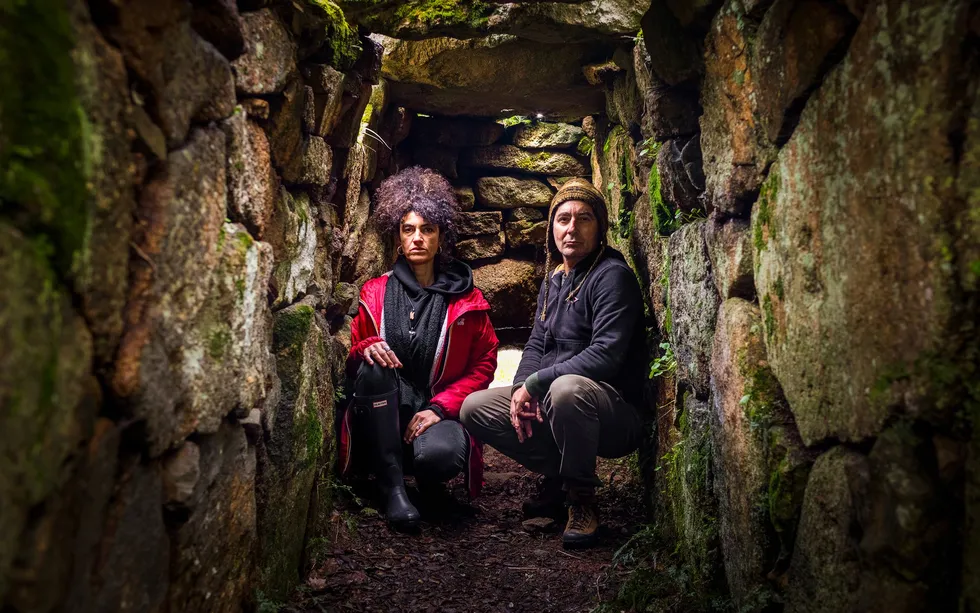
 Activists Maria Grazia Demontis [left] and Alberto Sala, photographed inside the archaeological monument Giants’ Tomb of Pascarédda, have worked to stop the construction of wind farms by organizing protests and taking legal actions through their organization Gallura Coordination. Luigi Avantaggiato
In fact, the resistance is so widespread among Sardinians that over the course of two months in 2024, a grassroots petition to ban new wind and solar projects gathered over 210,000 certified signatures. That’s more than a quarter of Sardinia’s typical voter turnout and represents a cross-party consensus. People stood in long lines in public squares to sign. And it worked: Political leaders responded swiftly with an 18-month moratorium on renewable energy construction.
“I’ve never seen so much engagement for anything” in Sardinia, says Elisa Sotgiu, a literary sociologist at the University of Oxford, who was born and raised on the island. “Sardinia has a bunch of problems like enormous unemployment. There’s lots of emigration because there are no jobs. It’s one of the poorest areas in Europe. The area is just decaying,” she says. “And yet the thing people are demonstrating against is renewable energy.”
And the opposition continues: A network of mayors has mobilized for the cause. Thousands of people show up at organized protests. Activists vandalize grid equipment. Families are passing down these stories of resistance to their children as a point of pride. Local media outlets are egging it on, frequently publishing misinformation tinged with fearmongering.
These aren’t just NIMBY complaints—not in the pejorative sense, at least. The resistance, and the distrust underlying it, is rooted in the island’s complex history, both recent and ancient. It’s based on a past that the Sardinian people carry with them—a past that has seeded a deep sense of suspicion and vulnerability. Resistance, I learn, is part of what it means to be Sardinian.
 Fabrizio Giulio Luca Pilo, vice rector of innovation at the University of Cagliari, has been working to help Sardinia transition to cleaner, more reliable energy. Luigi Avantaggiato
“It is a very sad situation,” Pilo tells me. “There are a lot of economic reasons to do the [energy] transition.” It could attract new companies such as data centers, which would create new jobs, he argues. It could reduce Sardinia’s reliance on imported gas and fuel, making the island more independent. New economic activity on the island might help reverse its population decline, he adds.
And while what’s happening on Sardinia is unique, it also represents a larger trend: A growing number of communities around the world are opposing wind- and solar-farm construction, to the consternation of stakeholders. By 2025, nearly one-fourth of the counties in the United States had enacted some impediment to new utility-scale wind and solar energy—up from as few as 15 percent two years earlier, according to a USA Today analysis. In Africa, community pushback successfully canceled major projects such as the 60-megawatt Kinangop Wind Park in Kenya. In India, local pastoralists are challenging the 13-gigawatt Ladakh solar and wind project. And the European Union’s top-down push for renewable energy has created opposition in many communities.
Their reasons vary—land-use preferences, generational ethos, government resentment, property values, economic effects, aesthetics—but all of these struggles have this in common: The resisters are passionate and they are often successful in blocking development.
This is a looming problem for the energy transition. Unlike large, centralized coal and nuclear power plants, renewable energy is geographically spread out, so it touches far more communities. Sardinia offers one of the clearest cases of what can go wrong when renewable-energy developers and authorities fail to consider the complexities of the local situation on the ground.
Roughly the size of New Hampshire, Sardinia juts out of the Mediterranean Sea about 200 kilometers west of Italy’s mainland. Technically it’s part of Italy, but Sardinians are quick to point out their island’s autonomous status—a subtle way of saying, “We do things our way.” Its mountains seem to echo the sentiment. With the highest peaks running in a chain along the east side of the island, Sardinia resolutely turns its back to the mainland.
At first glance, the island looks like the kind of place that’s ripe for an energy transition. Its two coal plants are aging and are targeted to be shut down to meet climate commitments. It has no nuclear power, nor does it produce its own natural gas. Wind and sun, however, are abundant and could easily meet the energy needs of Sardinia’s sparse population of about 1.5 million.
But while the resources may be ready for a transition, the people emphatically are not. When I first arrive in Sardinia and take in its beauty, I assume that the impetus behind the fight against wind and solar farms boils down to how they look. Waves of silicon, metal, and concrete would spoil views of Sardinia’s stunning beaches, rugged mountains, ancient pastures, and idyllic medieval villages, after all.
 Residents of the city of Orgosolo in 1969 famously stopped the construction of a military firing range on communal grazing land known as Pratobello. Its village walls are still covered in murals advocating social protest and antiauthoritarianism. Luigi Avantaggiato
But the island’s aesthetic—and the tourism industry that depends on it—are only part of the equation. The far stronger cultural forces at play are rooted in Sardinia’s past. Over millennia, the island has endured successive invasions from outsiders seeking to exploit the land. These incursions, and Sardinians’ rebellious responses to them, have become an integral part of the island’s identity passed down through generations.
The invasions started with the relatively peaceful settlement of the Phoenicians in the 9th and 8th centuries B.C.E. Then came the Romans, the Byzantines, and the Iberians, who conquered with violence, looting, and enslavement. But legend has it that despite the might of these ancient conquerors, pockets of Sardinia sometimes managed to defend themselves. “Not even the Roman empire could conquer the shepherds of the highland regions,” is the oft-repeated tale. Whether that’s true or just an idealization is beside the point; such stories serve as an enormous source of pride and identity.
Sardinia exported nearly 40 percent of the electricity it generated in 2025, largely to Corsica and the Italian mainland via two existing submarine cables.
The island is “fiercely proud of its identity…especially in the center of Sardinia, which was the most resistant part,” says Andrea Vargiu, a sociologist at the University of Sassari in Sardinia. “This long history of exploitation is still in our DNA, along with a proud sense of autonomy,” he says.
Sardinia’s unification, in the mid-1800s, with what would become the Kingdom of Italy is seen by many as an act of colonization. It didn’t help that Italy then proceeded to exploit Sardinia’s forests and other resources for the benefit of the mainland—a practice that continued through the 20th century, says Vargiu.
Sardinian bandits sometimes fought back with their own sense of justice, settling matters through raids, kidnappings, and violence. Their stories live on in Sardinian lore with an almost mythical quality, the brigands admired for their intractability.
 Pasquale Mereu, mayor of Orgosolo, helped organize the Pratobello 24 movement against renewable energy in Sardinia. Luigi Avantaggiato
Italy’s use of the island for military purposes particularly irked locals. In a famous case in 1969, residents of the town of Orgosolo successfully thwarted the construction of a firing range on communal grazing land known as Pratobello. That name has since become synonymous with the defense of one’s territory, and a rallying cry.
“Sardinia has always been a land of conquest,” says Pasquale Mereu, mayor of Orgosolo, who spoke with IEEE Spectrum through an interpreter. “We believe that even today we are still a colony of Italy, and I’m not ashamed to say it even though I represent an institution.”
A longstanding mural on one of his village’s walls reads: “You are in the territory of Orgosolo; here the people rule supreme and the government obeys.”
Driving around the island and talking to people, I can feel the weight of Sardinia’s history—and people’s propensity for holding onto it. Elaborate heritage festivals occur nearly every autumn weekend in the island’s interior. They’re well attended, multigenerational affairs that aim to keep old traditions alive. In the medieval town of Belvì, men roast chestnuts—marroni—over an open fire in a frying pan the size of a swimming pool and then serve them to the crowd by shoveling them into troughs. They’re delicious. In an adjacent amphitheater, the crowd sways along to costumed performers leading traditional dances.
Then there are the Bronze Age stone structures, called nuraghi, that are pretty much everywhere. Built before the violent conquests, these conical towers have come to symbolize a romanticized vision of the heyday of Sardinia’s independence. More than 7,000 of them remain, ranging from unremarkable piles of rocks to complex towers, each one carefully documented on an interactive online map. I visit one of the more intact ones that’s fenced off and requires an admission fee. As I take some video with my phone, an employee asks me who I am and what I’m doing and informs me I’ll need to get permission from the government before posting anything online.
 This rock hollowed out by erosion and walled up with stones was likely used by shepherds as a shelter near the historic Sardinian village of Tempio Pausania. Luigi Avantaggiato
But in interviews with residents, I’m continually reminded of the darker side of Sardinia’s past. People often bring up painful things that happened 50 or 500 years ago. A middle school science teacher named Giannina Serpi, and her husband, Roberto Moro, meet me at a café in the seaside town of Sant’Antioco. When I ask why people are so opposed to renewable energy, they (like many people I interviewed) point to the 1970s.
 Sheep return from pasture in Bonorva, Sardinia, near the Bonorva wind farm operated by EDF Renewables. Luigi Avantaggiato
That decade brought a new kind of exploitation: not by empires or governments, but by technology companies. Petrochemical, aluminum, and other industrial companies from overseas built factories on the island, creating jobs and adjacent businesses. But after a few decades, economic and geopolitical factors led the companies to close the factories, sinking local economies and in some cases leaving behind toxic contamination.
In the northern city of Porto Torres, several petrochemical plants, a thermoelectric power plant, and an industrial harbor employed about 8,000 workers in the early 1970s. But the oil crises of that decade took its toll on jobs, and when environmental contamination became evident in the 1990s, employment plunged further. By 2010, most of the petrochemical plants had closed. Studies show that residents of Porto Torres during that time had curiously high rates of death from cancer, although there is no consensus on the cause.
Similarly, studies have found higher rates of lead in children in the Portovesme area in the southwest, about a 20-minute drive from where I sit with Serpi and Moro in Sant’Antioco. There, the U.S. aluminum producer Alcoa operated a smelter that employed about 500 people and supported an estimated 1,500 adjacent jobs. But the company shut down the smelter in 2012. Three years earlier, Russian aluminum manufacturer Rusal had idled its Eurallumina factory nearby.
The impacts of these events still feel fresh, Serpi explains through a digital translator. She says she teaches this history to her students but doesn’t tell them how to feel about it. “I let them decide,” she says.
Against this backdrop, renewable-energy developers in the early 2010s began sizing up Sardinia. They were drawn by the cheap land, low population, strong wind, and sun that shines an average of about 300 days a year. EF Solare Italia commissioned an 11-MW solar plant in 2010. Rome-based Enel Green Power began construction of a 90-MW wind farm in Portoscuso the following year.
Other developers followed, and they mostly came from elsewhere—mainland Italy, Europe, and later, China. The way many Sardinians saw it, the new plants didn’t bring many long-lasting jobs. Most of the work ended after the design and installation phases, and profits went back to the companies’ headquarters outside of Sardinia, they argued. People called it “energy colonialism” and lauded landowners who refused to sell or lease their property to developers.
 Pink granite called Ghiandone Limbara was extracted from the Sinnada quarry in northern Sardinia from the late 1970s to 2011. Luigi Avantaggiato
The uncle of Oxford’s Sotgiu is one of those landowners. She says that a couple of years ago a solar company asked him if he would allow the installation of an array on his family farm in Logudoro in Sardinia’s interior. “From that, he would have gotten something around €150,000 a year, which is more money than he’s seen in his life,” says Sotgiu. The money could have covered his three kids’ college education, she says. “But he refused.”
He had many reasons. For one, switching from sheep grazing to the more passive business of leasing land would have put the fate of his income in the hands of an outsider. “If you deprive a region of any sort of economy that is self-reliant, then it’s really fragile,” says Sotgiu. Her uncle didn’t trust that the income would last, and worried he’d be left with a ruined farm, she says. Plus, his farm has been in the family for generations and one of his sons is interested in continuing the business. “So I understand his pride in saying, ‘No, this is my farm, I don’t care about the money,’” she says.
Sardinia has one of the largest carbon footprints per capita in Europe.
Despite that kind of grassroots resistance, development continued. In 2023, the Italian government authorized the construction of a 1-GW submarine power cable to connect Sardinia to Sicily and the Italian mainland. When completed, the bidirectional cable, called the Tyrrhenian Link, will increase electricity exchange between the regions, bolster grid reliability, and help grid operators efficiently use more renewable energy.
Sardinian activists, however, view the cable as a way to justify even more construction of wind and solar plants, and to export the island’s energy for the benefit of non-Sardinians. The island already exports about 40 percent of its electricity, largely to Corsica and the Italian mainland via two existing submarine cables.
 The Florinas wind farm, commissioned in 2004, was one of the earliest wind farms built in Sardinia. Luigi Avantaggiato
And then came the tipping point. In June 2024, in an effort to meet the European Union’s 2030 renewable energy targets, Italy committed to building more than 80 GW of new wind and solar energy capacity over December 2020 levels. The national government divvied up the burden among its regions and told Sardinia to build its portion, 6.2 GW.
The move triggered an onslaught of requests from wind and solar developers wanting to build projects in Sardinia. The queue at one point topped 50 GW of grid-connection requests. That represented more than 700 solar and wind projects, many of which came from companies outside of Sardinia.
The southern newspaper L’Unione Sarda ran wild with the numbers. Almost daily, for months, it published stories about the “wind assault.” The call-to-arms posts urged people to protest. “The Attack on the Landscape Does Not Stop; The Threat From Agrivoltaics Is Growing,” read a July 2024 headline. Unsubstantiated articles tried to link wind and solar developers to organized crime.
“It was scaremongering,” says Sotgiu. “It was a little dishonest, as I saw it, because they kept exaggerating and scaring people into thinking that we were going to be invaded.” (Representatives of the newspaper declined to comment.)
The numbers did scare people. Lost was the fact that a grid-connection request is just the start of a multiyear process that involves permitting and legal review and often ends in withdrawn or downsized projects. Submitting a request is inexpensive, and developers often cast a wide net by entering lots of these queues globally to increase the odds of being accepted. In the end, only a fraction come to fruition. In other words, building all, or even most, of the requested 50 GW was never going to happen.
“I tried to explain this” to the public, says an industrial engineer at the University of Cagliari, in Sardinia, who asked to remain anonymous to avoid any detrimental impacts of speaking out. “I went to the regional television station. But it’s difficult with technical information. And the newspaper communication is so bad, and its impact is so strong in the community, that it’s very difficult to change people’s minds,” he says.
And so the collective angst caused by powerful outsiders, industry, and the state united Sardinians into a singular cause. Faced with what felt like another attempted conquest, they did what their families and community had taught them to do: They resisted. Says Mereu: “This is what we are rebelling against: the idea that Sardinians are few and therefore must put up with everything.”
In a nod to the 1969 resistance in Orgosolo, they dubbed the movement “Pratobello 2024.” Activist groups, called “committees,” organized protests, and created social media campaigns and videos. Thousands of people started showing up at planned demonstrations. A lawyer went on a hunger strike. Vandals unscrewed bolts on wind turbine blades and set fire to grid and construction equipment.
Italy’s transmission system operator, Terna, had to switch to company cars without logos to avoid being targeted. Students studying the electricity system in a master’s program sponsored by Terna were verbally attacked at an airport, according to a professor at their school who spoke with me about the violence.
Celebrities got involved. Italian actress and Bond Girl Caterina Murino met with Sardinia’s president to ask her to reject wind farms. Murino posted on Instagram: “Nobody touch Sardinia!!!!” On Italian national TV, the jazz legend Paolo Fresu performed on trumpet while popular TV host Geppi Cucciari read an impassioned lament about the exploitation of the island.
Sardinian author Erre Push penned a graphic novel titled Fàula Birdi about a protagonist who resisted an imposition from outsiders. He wrote it upon the request of the activist group ReCommon, whose mission is to “challenge corporate and state power responsible for the plunder of territories.” Push hopes the book will inspire more people to follow the protagonist’s lead. “Renewables are another imposition like in the past—not to help Sardinians but to help external people like industry managers or founders of companies,” he told me through an interpreter.
 Concerned about the influx of solar and wind farms being built in Sardinia by outsiders, Roberto Pusceddu, under his pen name Erre Push, published a graphic novel that aimed to inspire young people to resist such impositions. Luigi Avantaggiato
Mereu and a network of mayors drafted the petition that gathered so many signatures. The people had spoken. In response, Sardinian politicians passed a law that imposed an 18-month ban on construction of wind and solar projects within 7 km of a nuraghe or other archeological site. It wasn’t a total ban, but it might as well have been. “If you put a circle with a 7-km radius around each archeological site, you cover all of Sardinia,” says Emilio Ghiani, a power systems expert at the University of Cagliari. “In this way, it is impossible to find a place to install a new plant.”
The move was like giving the Italian government—and the EU’s clean energy targets—the middle finger. And it sent renewable-energy developers scrambling. One company building an agriphotovoltaic plant raced to bring construction to 30 percent completion, which the new law said was the threshold for being allowed to proceed. The company asked not to be named in this story to avoid trouble.
Furious, the government in Rome challenged the Sardinian regional law in Italy’s Constitutional Court, and in January this year it prevailed. In its decision, the court rejected the law, saying that renewable-energy projects should be evaluated case by case.
Project development quickly resumed. So did the backlash. A headline in L’Unione Sarda declared: “Enough With Top-Down Decisions Without Consulting Communities.”
Where the island goes from here is unclear. There’s a willingness among a portion of the population to move forward with an energy transition. For example, some of Sardinia’s largest cheese makers are powering their operations with renewable energy and installing systems to utilize waste heat for efficiency. But for the most part, the public isn’t budging in its resistance. Researchers are trying to dispel inaccurate information, but regional newspapers seem bent on perpetuating fear.
Plus, there are technical issues to work out before a full-scale energy transition can be made. Sardinia’s transmission system was built around the centralized generation of two coal plants; it wasn’t made for the distributed generation of wind and solar plants. Renewables require a more dynamic grid, more energy storage, and a wider range of power sources to compensate for their intermittency. Engineers are working on it, but they’ve got a ways to go.
The new Tyrrhenian Link undersea power cable will help with that. By connecting Sardinia, Sicily, and the mainland, the cable creates more flexibility in the system. When wind or solar generation slows in Sardinia, for example, electricity from the mainland can fill in the gap, and vice versa. “It will increase the reliability of the system, and after it’s installed, it will be possible to switch off the old generation plants that use coal,” says Ghiani. In January, Terna finished laying the western section of the cable between Sardinia and Sicily, and in April it completed the eastern section between Sicily and Campania on the mainland. Doing so set a world record for power cable depth, at 2,150 meters below sea level, according to Terna.
Italy originally ordered Sardinia’s two coal plants to shut down by 2025 but later extended the deadline to 2038.
The link is one of the most innovative high-voltage direct current (HVDC) projects in Europe. It can move up to a gigawatt of power and reverse that power flow nearly instantaneously. By using voltage source converter (VSC) technology, it can also help prevent power-flow problems by regulating frequency and smoothing out oscillations in the grid in real time. And it has black-start capability: In the event of a shutdown, it can help restore the grid without relying on an external electric network. These features are particularly helpful for an isolated network like Sardinia’s.
Italy has created new incentives and regulations to build a market for grid-scale energy storage. Having plenty of storage is a key to scaling up renewables because it provides backup power when the wind isn’t blowing or the sun isn’t shining. To this end, Italy created MACSE, an auction that gives storage developers revenue certainty. Its name translates to mechanism for the procurement of electricity storage capacity. The first auction round, in September, successfully awarded 10 GWh.
Energy experts in Sardinia are also working with policymakers to change the rules around grid-connection requests. But these kinds of nerdy details don’t grace most household conversations.
Something more accessible that the public can get behind is building renewables on Sardinia’s abandoned industrial sites. “To be honest, not everything is so beautiful here. We have a lot of industrial areas where you can place PV panels. We have a lot of rooftops,” electrical engineer Pilo says. “We have unused coal mines.” I visit one such project that’s proceeding with local support—or at least without much opposition. It’s a coal mine near Gonnesa that shut down in 2018 and is now being turned into a data center and a pumped-hydro energy storage system.
The plan is to move water through the mine’s vertical geometry via an enclosed membrane—like a soft pipe—and use the flow to turn a turbine that generates electricity. The water then gets pumped back to the surface and stored in pear-shaped vessels above ground. The scheme will help power the data center, which will be built both above and below ground, including in the mine’s largest chambers nearly 500 meters below the Earth’s surface.

 Energy Vault will remove old mining equipment from the Carbosulcis coal mine near Gonnesa to make way for an underground data center [above]. It will be powered by a pumped-hydro energy storage system that flows through the mine’s vertical geometry and stores water in above-ground tanks [top].Luigi Avantaggiato
Energy storage developer Energy Vault is building it, and despite being based in Lugano, Switzerland—that is, not Sardinia—the company seems to have avoided protest. It helps that the mine is owned by Carbosulcis, a Sardinian regional-government-owned company, which is calling the shots on the project.
Plus, doing nothing with the mine costs money. The mine closed eight years ago because it wasn’t profitable, but Carbosulcis must continue maintaining it because of its high methane emissions, which require monitoring and ventilation to prevent explosions and leaks. Carbosulcis managers figured that if they’re going to continue putting money and personnel into the mine, they might as well do something useful with it, Luca Manzella, vice president for Europe, Middle East, and Africa at Energy Vault, says as he and I tour the mine.
An innovative project in Sardinia’s interior—Energy Dome’s grid-scale carbon dioxide battery—seems to be avoiding protest as well. Built in a gated industrial complex near Ottana, this energy-storage facility looks like a giant bubble—the kind that fits over a stadium or tennis complex. It’s filled with carbon dioxide that is compressed to store 200 MWh of electricity for the grid. Although the bubble is visible from several of the surrounding hillside villages, and although the developer is headquartered on the mainland, there’s little sign of public pushback.
 Energy Dome began operating its 20-megawatt, long-duration energy-storage facility in July 2025 in Ottana, Sardinia. In partnership with Google, the company this year aims to build replicas of the system on multiple continents.Luigi Avantaggiato
Another path forward is through “energy communities.” In this grassroots approach, consumers work together to build their own solar plant or other power generation. Dozens of these communities are already active on the island, according to the Sardinian Electricity Association, a group that provides guidance to consumers.
But by far the greatest need is for energy developers and authorities to understand the people and the history of the land on which they want to build. “When Europe or the national government make a law, they have to also consider the background of Sardinian people and why they are so afraid,” says Simone Micheletti, CEO at Futura Group, a renewable-energy developer based in Serramanna, Sardinia. “You cannot apply the same law to Sweden and Sicily. Sometimes you need to understand [the situation] locally,” he says.
Decision makers everywhere would be wise to listen. Otherwise, they may suffer the same fate as their counterparts in Sardinia: despised by locals, delayed by politics, and surprised at how badly it all went.
Special thanks to Luigi Avantaggiato for interpreting and additional reporting.
From Your Site Articles
Related Articles Around the Web

The first invoices arrive in September. Meta wants the basis changed before they do.
Meta has filed a judicial review against Ofcom over the way the regulator calculates fees and penalties under the UK’s Online Safety Act, the High Court was told on Thursday.
The dispute is narrow on its surface and substantial underneath. Ofcom’s methodology bills platforms based on what it calls qualifying worldwide revenue, the global income tied to a regulated service rather than just the UK slice.
Fines work the same way and can reach 10% of that worldwide figure. Meta’s position, restated outside court, is that any levy should reflect the country in which the service is regulated.

The 💜 of EU tech
The latest rumblings from the EU tech scene, a story from our wise ol’ founder Boris, and some questionable AI art. It’s free, every week, in your inbox. Sign up now!
“We and others in the tech industry believe (Ofcom’s) decisions on the methodology to calculate fees and potential fines are disproportionate,” a Meta spokesperson told reporters. “
We believe fees and penalties should be based on the services being regulated in the countries they’re being regulated in. This would still allow Ofcom to impose the largest fines in UK corporate history.”
Ofcom said the framework was set out in the legislation Parliament passed and that it had consulted at length on how to apply it. “Disappointingly, Meta is objecting to the payment of fees, and any penalties that could be levied on companies in the future, that are calculated on this basis,” the regulator said.
The fees themselves are not large in Meta’s terms. Ofcom has signalled the levy will fall between 0.02% and 0.03% of qualifying worldwide revenue, with a £250m revenue threshold for liability and a £10m UK-revenue floor below which providers are exempt. For Meta, that translates to a few tens of millions of pounds a year on a roughly $165bn revenue base.
The penalty exposure is the larger number. The Online Safety Act lets Ofcom fine in-scope services up to 10% of qualifying worldwide revenue, the same multiplier the GDPR uses. On Meta’s 2025 figures, the theoretical ceiling sits in the $16bn range. Whether the calculation starts from worldwide or UK-only revenue makes the difference between a remedy that hurts and one that does not.
Ofcom’s lawyer, Javan Herberg, told the court the regulator intends to issue the first round of invoices in the third quarter of this year, most likely September. If Meta wins, refunds may follow. That timetable explains the urgency: a methodology fight after invoicing would mean clawing back money already paid.
Meta’s challenge is procedural rather than constitutional. The company is not arguing the Online Safety Act itself is unlawful. It is arguing that Ofcom’s interpretation of “qualifying worldwide revenue” reaches further than Parliament intended and that the resulting calculation is disproportionate within the meaning of public-law principles.
That framing rhymes with the proportionality fight Meta is also running with Brussels, where Meta has argued the Commission’s interpretation of the Digital Markets Act exceeds what the text supports.
The High Court will not rule on the merits at this stage. Thursday’s hearing covered timing, refund mechanics and the procedural shape of the review. A substantive judgment is unlikely before the autumn, by which time Ofcom will already have issued the first invoices.
If Ofcom prevails, the methodology stands and the UK regime joins the EU’s GDPR and DSA in calibrating penalties to global revenue. If Meta prevails, Ofcom will have to recalibrate; the implications would also extend to TikTok, X, Snap, Pinterest and the other large platforms in scope, none of which has yet joined Meta’s filing publicly but most of which are believed to share the underlying objection.
Meta’s relationship with British and European regulators has been litigious for some time. Meta has now amassed more than €2.5bn in EU fines, more than half the cumulative GDPR penalties levied across the bloc, and the company has appealed most of them. Ofcom’s Telegram CSAM probe is one of several ongoing Online Safety Act investigations into large platforms, alongside Ofcom’s letters in March demanding evidence of further child-safety improvements from Facebook, Instagram, Roblox, Snapchat, TikTok and YouTube.
The judicial review lands in a moment when the Online Safety Act regime is moving from set-up to enforcement. Ofcom fined 4chan £520,000 in March and AVS Group £1.05m in December for age-check failings. The questions Meta is raising about how the meter is read are exactly the ones the next round of cases will turn on, and they sit alongside longstanding critique of the Online Safety Act from civil-society groups who argue the law’s scope is already too wide.
September will tell whether the company has bought itself a refund mechanism, a methodology change or simply a footnote in the first OSA bill of its life.


Off-Prem
Around 20 percent of staff get an ‘In one hour, you might not work here anymore’ email
Cloudflare
has revealed it will farewell 1,100 staff, due to its current and future use of
AI.
In a blog post that oozes
Orwellian “doublespeak,” CEO Matthew Prince and President/COO Michelle
Zatlyn used the headline “Building for the future” to share the email they sent
to all employees.
That mail opens: “We are writing to let you know directly
that we’ve made the decision to reduce Cloudflare’s workforce by more than
1,100 employees globally.”
The post explains, “Cloudflare’s usage of AI has increased
by more than 600% in the last three months alone. Employees across the company
from engineering to HR to finance to marketing run thousands of AI agent
sessions each day to get their work done.”
All that AI means “we have to be intentional in how we
architect our company for the agentic AI era in order to supercharge the value
we deliver to our customers and to honor our mission to help build a better
Internet for everyone, everywhere.”
Sackings are therefore needed, and are “about defining how a
world-class, high-growth company operates and creates value in the agentic AI
era.”
To rub salt into the wounds of sacked staff, the email went
out not long before Cloudflare announced quarterly results that included 34 percent
year-over-year revenue growth and guidance for 30 percent future growth.
Prince opened the company’s earnings call by stating “We had
a very strong start to 2026.”
Analysts on the earnings call asked Prince to explain the
layoffs and whether they will make Cloudflare stronger.
“We have seen that there are roles at Cloudflare that
are not the roles we need for the future,” Prince responded. “Just because you
are fit does not mean you cannot get fitter. Over the last six months
especially, the productivity gains from the people directly talking to
customers and directly creating code have been incredible, and a lot of the
support roles behind them are not going to be the roles that drive companies
going forward.”
The CEO said Cloudflare has “always lived a little bit in
the future” and said the company is an early beneficiary of AI.
And he said the company will keep hiring.
“The people embracing these tools are so much more
productive than we have ever seen before,” he said. “I would guess that in 2027
we will have more employees than we did at any point in 2026, but the roles are
changing dramatically, and you have to do something dramatic to make that
shift.”
“This is not about downsizing or saving costs,” Prince said.
“This is about having the right people in the right roles to build the future.”
As is often
the case these days, the email to staff warned them of a brief doomsday
countdown.
“Within
the next hour, every member of our global team will receive an email from both
of us clarifying how this change affects them,” the message states. “For those
departing today, we will send this update to both their personal and Cloudflare
addresses to ensure they receive the information immediately.”
The
Register imagines that went down well for workers in time zones where
employees might avoid their work email outside 9-5, but sneak an early-morning-or-late-night-glance
at their personal inboxes.
Prince and Zatlyn
told employees they hope “to do this only once” and then contradict themselves by
saying they “don’t want to do it again for the foreseeable future.”
“By taking decisive action now, we provide immediate clarity
to those departing and protect the stability of the team that remains,” they
wrote, before adding their view that one deep cut because “dragging a
reorganization out over multiple quarters creates prolonged emotional
uncertainty for employees and stalls our ability to build.”
Firing 1,100 people is therefore “the right thing to do;
it’s the honest thing to do; and it reflects the values of the company we are
continuing to build.” ®
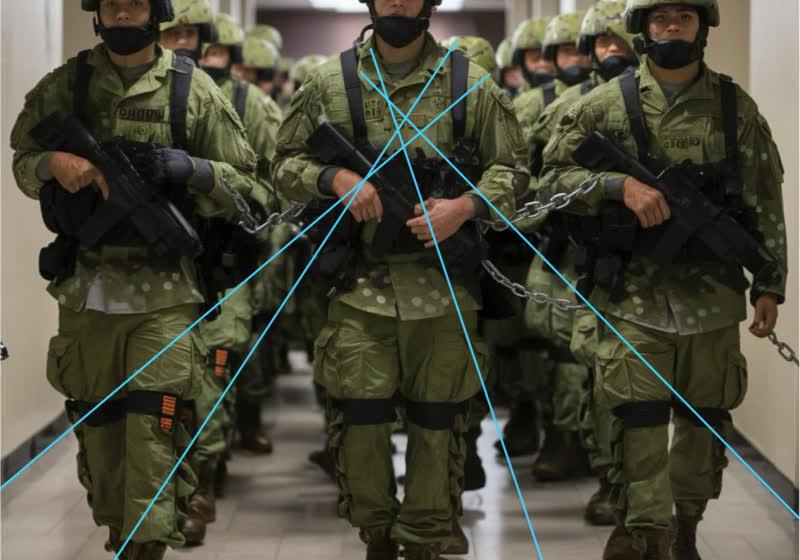
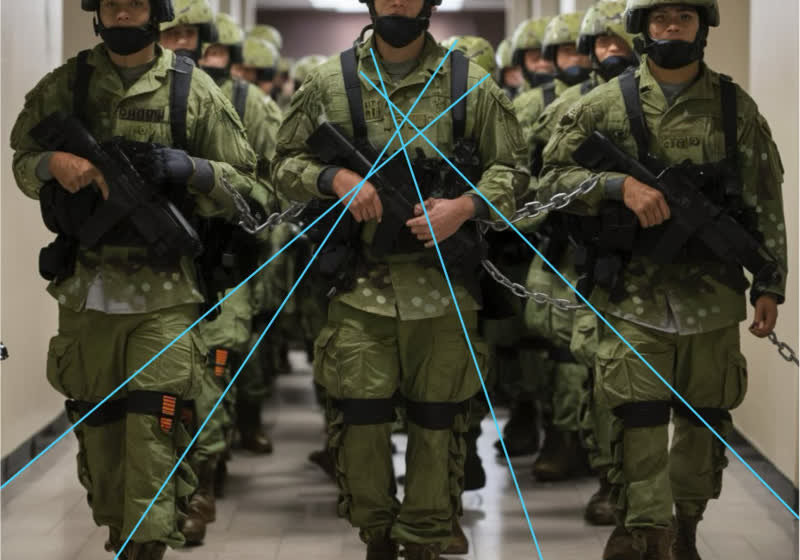
A study published in the journal Science explains that while modern image generators are rapidly improving, the models behind them remain fundamentally ignorant of how light and geometry work in the real world. Measuring simple details like reflections or shadows can still give away a fake photo – that gap,…
Read Entire Article
Source link
What can I say about DoorDash to truly encapsulate what this company means to me? I could say it’s the father I never had; it’s the mother I’ve always wanted; the warm embrace of a friend you haven’t seen in a while; the sound of rain as you fall asleep… One of the greatest inventions of the 21st century has been the ability to get virtually any type of food you crave delivered to your front door without having to get up or even speak to another human. We’ve rounded up the best verified DoorDash promo codes, special offers, and free delivery deals.
Treat yo’self to staying inside and having your meals delivered to you in the comfort of your own home. Right now, you can get $8 off orders of $25 or more at participating restaurants. As well as a DoorDash promo code for up to $25 off your first order of $30 or more, and you can also get 25% off your first alcohol delivery with DoorDash. Make sure to use DoorDash promo code USDASHTRIAL2Q26 to get the best savings.
Beyond using Doordash promo codes above, you can save more with rotating weekly deals–plus these special offers.
The best coupons include 25% off your entire order, $5 off $20, and 30% off lunchtime delivery. Unlike the many promo codes only for new customers, existing customers can score too, and save 30% (up to $8) for a limited time. Now you have the perfect excuse to get your munch on.
There are also great BOGO deals (who doesn’t love a buy one, get one moment?) like buy 1 get 1 free entrees and a free appetizer when you spend $15 or more, up to $35 off. While discount codes are often only available for your first order, both new and existing customers can take advantage of these coupons. Keep the Deals section in mind to save big with limited-time offers based on your delivery location.
With this exclusive WIRED DoorDash promo code, first-time customers can get 15% off their first order placed through DoorDash, with savings up to $10 on a $15 minimum order using DoorDash coupon code USEG15OFF2Q26. This DoorDash promo code is only applicable for new customers only and cannot be applied toward alcohol orders.
Some might say that the best gift you can give your mom is the gift of not having to do anything. With this Mother’s Day doordash deal, you can get her gift cards to use at her favorite restaurants when she doesn’t feel like cooking. Or maybe you’re far away and want to send her a bouquet of flowers and her favorite bottle of vino. Whatever Mom wants, she can get—without leaving the house thanks to DoorDash.
DoorDash is the answer to 21st century America’s laziness, and was a godsend during the height of the Covid pandemic, when customers could get their favorite foods from restaurants, groceries and household products delivered right to their door without having to leave the safety of their couch. If you’re more of an Uber Eats type of person and haven’t signed up for DoorDash, now is a great time to sign up and get a $0 delivery fee on your first order. Whether you want a romantic night in with your favorite sushi spot across town, or are having a pounding early Sunday morning headache and in desperate need of Advil and Pedialyte from the gas station up the road (not speaking from personal experience or anything), DoorDash has you covered. Go ahead, stay in bed.
Once you’ve signed up and gotten free delivery on your first order, there are still more ways to save. DoorDash has a student discount, where students can receive 50% off a DashPass account. DashPass is a subscription offering unlimited deliveries from 1,000s of eligible restaurants with $0 delivery fees. All you have to do to sign up for student DashPass is verify your student status with Sheer ID. The student DashPass Plan is half off regular DashPass Plans at $4.99 a month or $48 annually.
If you’re not a student, don’t worry, there are tons of other great discounts available at DoorDash. Sign up for DashPass to get $0 delivery fees on orders, 5% back on pickup orders, and tons of other benefits.
If you bank at Chase, Chase cardmembers are eligible for exclusive DashPass benefits on DoorDash and Caviar when an eligible Chase credit card is added to their account. Chase is offering 3 months of Dash Pass free, plus 50% off the next 9 months of service.
Whether you’re wanting to go to tried-and-true chains for burgers and pizza like McDonald’s, Shake Shack, or Domino’s, or some true, authentic Mexican like Chipotle or Taco Bell (I kid! Don’t come for me), DoorDash is a great way to eat through the world without ever leaving your couch.
DoorDash has some really exciting updates happening, including the launch of their Going Out program, a new dine-in program for customers starting first in NYC and Miami. With this program, diners will be able to book restaurant reservations directly through the DoorDash app, and will get rewarded for their loyalty by earning exclusive offers when dining in, as well as earning rewards for regular visits to favorite spots. Plus, DashPass members will get even more exclusive perks and in-store rewards. Check it out for yourself—explore the new “Going Out” tab in the DoorDash app, redeem exclusive in-store offers, and earn rewards for repeat visits. Customers save an average of $9 when using these perks.
DoorDash is also launching DoorDash Dot, a robot that delivers food to you rather than humans. Which seems like a great idea. (Note the thick layer of sarcasm, reader.) The scary glimpse into our future continues as creators are rewarded. Short-form videos from local creators and foodies are now live in the DoorDash app; DoorDash hopes that consumers will be able preview dishes before they order, to more accurately see things like preparation style and portion size. This is starting in Atlanta, Austin, Miami and San Francisco, with more rolling out through the end of the year.
Looking for a new job with flexibility or a side gig? If you become a DoorDash Dasher, you can get major benefits. Whether you’re biking, driving, or delivering full-time, Dasher discounts can help you save as you earn money with deliveries. Dashers can access exclusive discounts from things like gas and auto care, to health benefits, phone plans, and tax tools. Plus, Dashers can save even more on purchases and get rewards with the DoorDash Crimson Visa Debit Card.
Dashers can get extra rewards on top of what was mentioned above with the DoorDash Crimson Card. With this special card, you’ll be able to get paid instantly after every dash (no more waiting for weeks), get cash back on purchases made using the card, and manage finances through the Dasher app. With the Crimson Card, Dashers have the choice to get paid instantly and automatically with no deposit fees after every dash or get rewards like cash back on gas. If you’re a Dasher and want to apply for DoorDash Crimson, just tap the ‘Earnings’ tab, and then ‘Learn More’ in your Dasher app to apply.
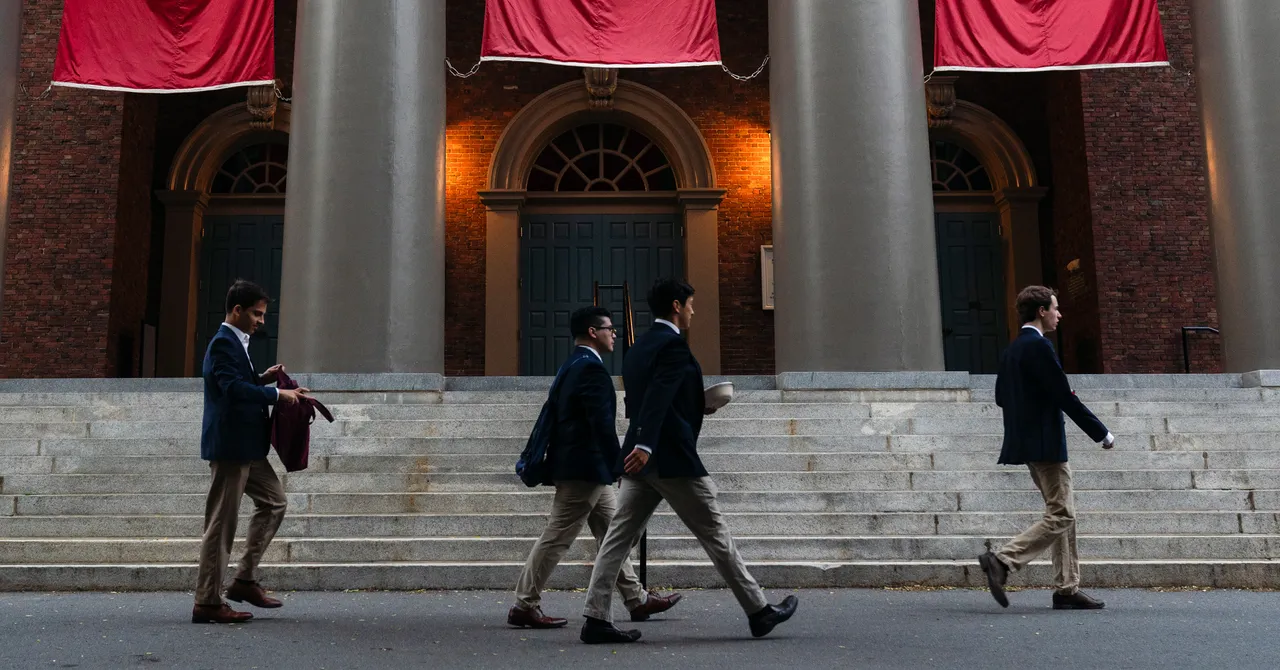
Higher education has long been a target of ransomware gangs and data extortion attacks. But never before, perhaps, has a cyberattack against a single software platform so thoroughly disrupted the daily operations of thousands of schools across the United States.
The widely used digital learning platform Canvas was put into “maintenance mode” on Thursday after its maker, the education tech giant Instructure, suffered a data breach and faced an extortion attempt by attackers using the recognizable moniker “ShinyHunters.” Though the hackers have been advertising the breach and attempting to extract a ransom payment from Instructure since May 1, the situation took on additional immediacy for regular people across the US and beyond on Thursday because the Canvas downtime caused chaos at schools, including those in the midst of finals and end-of-year assignments.
Universities like Harvard, Columbia, Rutgers, and Georgetown sent alerts to students about the situation in recent days; other institutions, including school districts in at least a dozen states, also appear to have been affected. In a list published by the hackers behind the attack on their ransom-focused dark web site, they claim the breach affected more than 8,800 schools. The exact scale and reach of the breach is currently unclear, though. And the fact that Canvas was down throughout Thursday afternoon and evening further complicated the picture.
In a running incident update log that began on May 1, Steve Proud, Instructure’s chief information security officer, said that the company had “recently experienced a cybersecurity incident perpetrated by a criminal threat actor.” He added on May 2 that “the information involved” for “users at affected institutions” included names, email addresses, student ID numbers, and messages exchanged by users on the platform.
The situation was ultimately marked as “Resolved” on Wednesday, with Proud writing that “Canvas is fully operational, and we are not seeing any ongoing unauthorized activity.” At midday on Thursday, though, the Instructure status page registered an “issue” where “some users are having difficulties logging into Student ePortfolios.” Within a few hours, the company had added another status update: “Instructure has placed Canvas, Canvas Beta and Canvas Test in maintenance mode.” Late Thursday evening, the company said that Canvas was available again “for most users.”
TechCrunch reported on Thursday that the hackers launched a secondary wave of attacks, defacing some schools’ Canvas portals by injecting an HTML file to display their own message on the schools’ Canvas login pages. According to The Harvard Crimson, attackers modified the Harvard Canvas login page to show a message that included a list of schools that the hackers claim were impacted by the breach.
The message from attackers “urged schools included on the affected list to consult with a cyber advisory firm and contact the group privately to negotiate a settlement before the end of the day on May 12—or else risk their data being leaked,” The Crimson reported. “It is unclear what information tied to Harvard affiliates was included in the alleged breach.”
Instructure did not immediately respond to a request for comment about Thursday’s outages and how they fit into the bigger picture of the breach. But the situation is significant given that a massive trove of student information has potentially been exposed, and the visibility of the incident across the country makes it a key example of a longstanding, yet endlessly escalating problem of data extortion and ransomware attacks.
The ShinyHunters name is associated with massive data dumps and has been linked to the infamous hacker collective known as the Com. But as the constellation of actors has shifted over the years, numerous attackers have taken up the most prominent Com-related monikers. A number of recent attacks have invoked other names, such as Lapsus$, with little or no connection to the original group that operated under the name.

Microsoft employees eligible for the company’s first-ever voluntary retirement program are learning the details of the package Thursday morning, including the size of cash payments, length of healthcare coverage, and vesting of stock awards if they take the company’s offer.
As described in an internal summary viewed by GeekWire, lump-sum cash payments will range from eight weeks to 39 weeks (about nine months) of base pay, depending on level and tenure.
Participants would also receive up to five years of continued access to Microsoft’s medical, dental, and vision coverage for themselves and their dependents. Microsoft would fully subsidize the cost in the first year, with participants paying standard COBRA rates after that. The coverage could end sooner for those who reach Medicare eligibility at age 65.
Unvested stock awards would continue to vest for six months after an employee’s departure, extending to 12 months for those with 24 or more years at Microsoft.
Some longer-tenured employees who meet additional age and service thresholds could qualify for continued vesting of all eligible unvested awards on their original schedule.
Eligible employees have 30 days to decide whether to accept the offer. There are no apparent restrictions on what employees could do after accepting the offer, such as finding other employment.
Announced by the company on April 23, the program is rare in the tech industry, where companies have relied on layoffs, stricter performance reviews, and return-to-office policies to manage headcount. Microsoft itself laid off more than 15,000 employees last year and began requiring Seattle-area workers to return to the office three days a week in February.
An estimated 7% of Microsoft’s 125,000-person U.S. workforce, or roughly 8,750 employees, is eligible for the program, which is open to those at Level 67 and below whose age plus years of service totals 70 or more. Microsoft said it is a one-time offer.
On Microsoft’s earnings call last week, CFO Amy Hood disclosed that the company expects to take a $900 million charge related to the voluntary retirement program in the current quarter. She also said headcount declined year over year and will continue to decline in fiscal 2027.

Looking for the most recent Mini Crossword answer? Click here for today’s Mini Crossword hints, as well as our daily answers and hints for The New York Times Wordle, Strands, Connections and Connections: Sports Edition puzzles.
It isn’t often that the NYT Mini Crossword stumps me right away, but 1-Across threw me off. I was sure the answer was SMASH and well, I was close, but not correct. Read on for all the answers. And if you could use some hints and guidance for daily solving, check out our Mini Crossword tips.
If you’re looking for today’s Wordle, Connections, Connections: Sports Edition and Strands answers, you can visit CNET’s NYT puzzle hints page.
Read more: Tips and Tricks for Solving The New York Times Mini Crossword
Let’s get to those Mini Crossword clues and answers.
The completed NYT Mini Crossword puzzle for May 8, 2026.
1A clue: Squash
Answer: SMUSH
6A clue: Monopoly card with a question mark on one side
Answer: CHANCE
7A clue: “Help! Help!”
Answer: MAYDAY
8A clue: Path around the sun
Answer: ORBIT
9A clue: Pressing desires
Answer: NEEDS
1D clue: Social media button with an arrow
Answer: SHARE
2D clue: Answer between “yes” and “no”
Answer: MAYBE
3D clue: Took back
Answer: UNDID
4D clue: Ad-libs in jazz singing
Answer: SCATS
5D clue: “Yo!”
Answer: HEY
6D clue: “Dude!”
Answer: CMON


Tesla filed a bespoke Roadster badge trademark, its first standalone vehicle branding apart from the Cybertruck. The car was promised in 2017 for 2020 delivery and remains unbuilt, with a reveal now expected in late May or June 2026.
TL;DR
Tesla has filed a trademark for a bespoke Roadster badge that looks like it belongs on a Lamborghini. The car it will adorn was first promised nine years ago.
A prototype debuted in November 2017 with a 200 kilowatt-hour battery, a claimed 620-mile range, a 1.9-second zero-to-60 time, and a starting price of 200,000 dollars. Production was set for 2020. It did not happen in 2020, or 2021, or 2022, or any year since.
The trademark filing, submitted to the United States Patent and Trademark Office on 28 April on an intent-to-use basis, covers a stylised triangular shield bearing the Roadster wordmark and four vertical lines that, according to the filing, represent “speed, propulsion, heat, or wind.” It is the most tangible thing Tesla has produced for the Roadster in nearly a decade.
The trademark application is unusual for Tesla. Apart from the Cybertruck’s angular two-part emblem, the company has never given one of its vehicles a standalone badge. The Model S, 3, X, and Y use Tesla’s corporate T logo. The Roadster is getting the kind of bespoke branding treatment normally reserved for supercar marques: a dedicated shield, a custom wordmark in a stretched angular font with segmented letterforms, and a separate silhouette mark consisting of three flowing curved lines that form the vehicle’s profile.
Tesla filed two distinct trademark applications. The first is a stylised “ROADSTER” wordmark in a triangular shield. The second is the vehicle silhouette. Both were filed on an intent-to-use basis, meaning Tesla has declared a plan to put these marks into commercial use but has not yet done so.
Elon Musk explicitly deprioritised the Roadster in favour of the Cybertruck in 2022, telling investors the truck would come first. The Cybertruck eventually launched in late 2023 after its own multi-year delay. The Roadster has remained in a state of perpetual imminence since, with Musk offering periodic updates that have served primarily to push the timeline further out.
During Tesla’s first-quarter 2026 earnings call, Musk said the Roadster would be unveiled “maybe in a month or so,” pushing the reveal to late May or early June 2026. He described the upcoming event as “one of the most exciting product unveils ever.” If the reveal happens on schedule, it will be the first time in nine years that any public commitment regarding the Roadster has been met.
The Roadster’s specification sheet has not remained static during the delay. It has escalated. The 2017 prototype claimed a 1.9-second zero-to-60 time. In 2021, Musk revised the target to 1.1 seconds. In 2024, he announced the goal had been pushed below one second.
The optional SpaceX package, first described in 2018, would reportedly include approximately 10 cold-air rocket thrusters integrated into the vehicle body to enhance cornering, braking, and acceleration. Musk has suggested the thrusters could enable the car to “fly,” though the definition of flight in this context remains unclear. The 620-mile range claim from 2017 has not been revised. The 200,000 dollar base price, announced nearly a decade ago, has also not been updated.
Tesla has raised its 2026 capital expenditure to 25 billion dollars, allocated across six simultaneous new production lines covering the Cybercab robotaxi, the Semi truck, next-generation vehicle platforms, Optimus humanoid robots, energy storage, and battery manufacturing. The Roadster is not named as a priority in the capex allocation.
Production, by Musk’s own framing during the earnings call, would follow 12 to 18 months after the demonstration, pointing to a start date somewhere in mid-to-late 2027 or into 2028. The customers who placed 50,000 dollar deposits for the Founders Series edition in 2017 will have waited more than a decade for delivery if that timeline holds.
The electric supercar market that existed when the Roadster was announced in 2017 was effectively empty. The Rimac Concept Two was a prototype. The Lotus Evija was years from production. The Pininfarina Battista had not been announced.
Nine years later, the market has filled in around the space the Roadster was supposed to occupy. Rimac has been delivering the Nevera since 2023, holding the production electric vehicle acceleration record at 1.74 seconds to 60 miles per hour. The Lucid Air Sapphire delivers 1,234 horsepower for 249,000 dollars. Porsche has accelerated its electrification strategy, launching the all-electric Cayenne and iterating on the Taycan. BYD’s premium Denza brand has unveiled a 1,000-horsepower electric sedan targeting Porsche and Tesla simultaneously.
Former Tesla and Polestar executives have launched their own electric sports car ventures, targeting the sub-100,000 dollar segment that the Roadster’s 200,000 dollar price point leaves open. The Roadster’s original specifications, revolutionary in 2017, are now achievable by multiple manufacturers.
The sub-two-second zero-to-60 time that made the Roadster prototype a sensation is now a threshold that the Rimac Nevera, Pininfarina Battista, and Lucid Air Sapphire have all crossed. The SpaceX thruster package remains the only specification that no competitor has attempted, and it remains the specification that has never been demonstrated in a production vehicle.
The trademark filing is the kind of signal that Tesla’s investor and fan communities parse with the intensity of Kremlinologists reading a Pravda editorial. A bespoke badge implies a product distinct enough from the Tesla brand to warrant its own identity. The intent-to-use filing implies a legal expectation that the mark will be commercially deployed. The timing, weeks before a promised reveal, implies coordination on a product launch. None of this constitutes a car.
What the trademark does reveal is how Tesla wants the Roadster to be perceived. The shield shape, the angular typography, and the vehicle silhouette are the visual language of a supercar brand, not a technology company. The Cybertruck’s aesthetic was aggressively anti-automotive, a stainless steel polygon that rejected every convention of vehicle design. The Roadster badge suggests the opposite: a deliberate embrace of the iconography that Ferrari, Lamborghini, and Porsche have used for decades to signal exclusivity and heritage.
Tesla is not trying to disrupt the supercar market with the Roadster. It is trying to join it. The badge is the application letter. The car, if it arrives, will determine whether the application is accepted. And if the pattern of the past nine years holds, the badge will remain the most beautifully designed element of a product that exists primarily as a promise. The vertical lines, according to the filing, represent speed. For the moment, they represent patience.

Zoë Schiffer: Yeah, we don’t need a Grok.
Brian Barrett: Grok would just say that it’s sick.
Zoë Schiffer: Grok mitigating the fight between the mom and the person who’s yelling at her about her baby.
Leah Feiger: I really, really feel for these workers, and I really, really feel for all of these customers that were stranded. Spirit in so many ways, like something that we love to make fun of just a little bit, like you take Spirit when you have to, but also it was actually available and it worked and it wasn’t nearly as expensive as anyone else. It’s kind of sad, especially when I look at the shrinking airline industry in the US, when I look over at Europe and I’m like, “You guys have so many low-cost carriers.” And especially with all of the deals, everything back and forth between JetBlue and Spirit that got squashed, it was just a little bit sad to see that happen.
Brian Barrett: And Leah, when you say stranded, I want to be clear, that’s literal. I think some of these employees, they were not in their home cities when Spirit shut down. So they had to rely on other airlines offering them a jump seat or a travel pass to get home. Fortunately, it’s apparently a very communal industry. Other airlines helped them out. Other airlines are offering preferential employment interviews to Spirit Airline employees. But can you imagine, I’m in London right now, and if WIRED shut down and I had to find another way home. I mean, I’d be OK, but—
Leah Feiger: No, but it would also just be ridiculous. This is wild. I think of that 30 Rock episode when Liz Lemon is like, “Oh yeah, this is my flight.” And they’re like, “Sorry, we’re out of flights now. We just make popcorn,” which was incredible to see, but that’s so real.
Brian Barrett: I think from a consumer level, if you were going to book tickets for the summer, do it soon because now it’s a supply and demand thing, right? A whole airline is gone. That’s a lot of seats that aren’t there, so there’s more scarcity. Prices are going up basically at the worst possible time for people like myself who are thinking about planning some time for summer travel with, again, two kids.
Zoë Schiffer: Coming up after the break, we’ll be getting into the news of the hantavirus outbreak on a cruise ship. Should we be concerned, or are we panicking for no reason? We’ll find out.
Leah Feiger: So in recent days, there have been more and more headlines of a hantavirus outbreak happening on the MV Hondius, a Dutch-flagged cruise ship. The cruise departed from the south end of Argentina over a month ago, making stops in Antarctica, the island of Saint Helena, among other stops. The trouble started when a man started showing symptoms like a fever, a headache, and eventually this became a respiratory illness. He died on board and a few weeks later, his wife did as well. She was later confirmed to have the hantavirus too. As of this week, seven cases have now been confirmed and the ship is currently carrying 147 passengers and crew. To help us understand what on earth is going on, we are joined by WIRED staff writer Emily Mullin.

OpenAI’s relationship with Microsoft, its longtime investor and cloud partner, has grown increasingly complicated over the years as the ChatGPT-maker has grown into a behemoth competitor.
But Microsoft executives had reservations about sending additional funding to OpenAI as far back as 2018 when it was just a small nonprofit research lab, according to emails between more than a dozen Microsoft executives, including CEO Satya Nadella, shown in a federal court on Thursday during the Musk v. Altman trial.
The emails show how Microsoft, at the time, wavered over what has since been held up as one of the most successful corporate partnerships in tech history. Several Microsoft executives said in the emails their visits to OpenAI did not indicate any imminent breakthroughs in developing artificial general intelligence. In 2017, much of OpenAI’s work was focused on building AI systems that could play video games, which showed early signs of success. But OpenAI needed five times more computing power than it had originally secured from Microsoft to continue the project.
Microsoft worried that not providing support could push OpenAI into the arms of Amazon, the world’s dominant cloud computing provider at the time. Roughly 18 months after the emails were sent, Microsoft announced a landmark $1 billion investment in OpenAI after the lab created a for-profit arm that provided the tech giant with the potential to generate a return of $20 billion.
Microsoft declined to comment.
Elon Musk’s attorneys introduced the emails to show Microsoft’s evolving relationship with OpenAI. After Musk reached out to Nadella, Microsoft in 2016 agreed to provide $60 million worth of cloud computing services to OpenAI at a steep discount. OpenAI consumed the services twice as fast as expected.
The email chain kicked off on August 11, 2017, with Nadella reaching out to OpenAI CEO Sam Altman to congratulate the lab on winning a video game competition using AI to mimic a human player. Ten days later, Altman responded seeking $300 million worth of Microsoft Azure cloud computing services.
“We could figure how to fund some of it but not that much,” Altman wrote, apparently seeking a financial handout and engineering help. “I think it will be the most impressive thing yet in the history of AI.”
Nadella asked four lieutenants for their input on how to respond three days later. Microsoft’s AI team saw “no value in engaging,” according to a response from Jason Zander, Microsoft’s executive vice president, that also documented how other teams felt. Its research team thought its own work was “more advanced,” while the public relation teams didn’t like the idea of supporting a group pushing the idea of “machines beating humans.” Ultimately, Zander suggested that Azure would benefit from associating with Musk and Altman but that he wouldn’t want to “take a complete bath,” or large financial hit, in doing so.
A subsequent analysis showed that Microsoft stood to lose about $150 million over several years if it provided the services Altman wanted, according to one email. “Unless he can help us draw a more direct networking effect with OpenAI -> Microsoft business value, we will wind up having to pass,” Zander wrote.
The thread went dark for several months, but was revived on January 10, 2018, with an email to Nadella from Brett Tanzer—who signed off his emails with “Brettt”—then a director on the Azure cloud unit. Altman had told Tanzer that OpenAI could license its gaming AI to Microsoft’s Xbox video game division in exchange for “$35-50 million in Azure Credits.” But Xbox couldn’t commit that much money. Microsoft planned to tell Altman there would be no more discounts after that March, per Tanzer’s email.







Channel 5 – All Creatures Great and Small series 7 new post


Upbit adds B3 Korean won pair as Base token gains Korea access

Trump’s 25% EU auto tariff breaches Turnberry Agreement that also covers semiconductors and digital trade

NCP car park operator enters administration putting 340 UK sites at risk of closure

Paul Scholes issues Marcus Rashford reality check as agreement emerges over Man United star


Met Gala 2026 Rumored Guest List Is Turning Heads


Kylie Jenner Hit With Second Lawsuit From Ex-Housekeeper
New on Prime Video in May 2026 — Full List of Movies and Shows
Meta ends Sama contract after Kenyan workers report seeing intimate footage from Ray-Ban smart glasses users

Strait of Hormuz Blockade Persists Amid US-Iran Standoff, Sending Oil Prices Soaring


Cavaliers vs. Raptors Game 6 live score, updates, highlights from 2026 NBA playoffs first-round series

David Benavidez responds to team Canelo saying the fight will never happen
New Netflix Movies in May 2026 — My Top 3 Picks to Stream


Melissa Joan Hart and More Stars Attend 2026 Kentucky Derby

IPL 2026: ‘Love you darling’- Hardik Pandya’s reaction to MS Dhoni steals the show |Watch | Cricket News


Young and the Restless Next Week: Cane Arrested & Matt’s Deadly New Scheme!

Pi Network Mandates Protocol 23 Upgrade for All Mainnet Nodes Before May 15 Deadline


Luka Doncic Injury Update: Doncic’s Hamstring Recovery Slows Lakers’ Hopes Against Thunder: Can He Run Yet?


Bayern won’t hand bottom side Heidenheim ‘gifts’ despite PSG game


What Preity Zinta Said After Punjab Kings’ First Defeat Of IPL 2026


You must be logged in to post a comment Login