Connect with us
DAPA Banner
DAPA Coin
DAPA
COIN PAYMENT ASSET
PRIVACY · BLOCKDAG · HOMOMORPHIC ENCRYPTION · RUST
ElGamal Encrypted MINE DAPA
🚫 GENESIS SOLD OUT
DAPAPAY COMING

NewsBeat

What went right this week: power to England’s renters, plus more

Published

on

What went right this week: power to England’s renters, plus more
A new law that will strengthen the rights of renters in England came into force

On Friday, 1 May, the Renters’ Rights Act will take effect in England. The long-awaited law, which is the first set of significant reforms to rental housing legislation since 1988, includes several changes that will affect renters and landlords alike. 

One of the most significant is the abolition of ‘Section 21’ or no-fault evictions. Previously, landlords could evict tenants without a specific reason, which some campaigning groups say is a leading cause of homelessness. Now, landlords will only be able to evict if they plan to sell or move into a property. Notice periods will also increase from two months to four. 

Another major change is around tenancies, which will revert to rolling contracts as opposed to being fixed for 12 or 24 months. The ability for tenants to challenge rent hikes will also be introduced. Additionally, Awaab’s Law, which already requires social landlords to respond to emergency hazards and serious damp and mould within fixed timeframes, will also be extended next year to cover a wider range of health and safety risks. It’s named after two-year-old Awaab Ishak, who died in 2020 after prolonged exposure to mold.

Advertisement

Groups such as homelessness charities and unions welcomed the legislation. Acorn, a renters and community union, said that the act will affect around 12 million renters across the country and is the biggest change in a generation. Chelsea Phillips, Acorn national chair, said: “We won this. This wasn’t just handed to us from above. It came from more than 10 years of tenants organising, taking action, and refusing to accept a system that wasn’t working for us.”

Critics, however, say that the new law could force landlords with smaller operations out, while favouring larger corporate landlords. Some landlords fear that it will give them reduced powers to remove genuinely problematic tenants, while others argue that rent prices could edge upwards if the volume of properties on the market decreases.

Image: HiveBoxx

Advertisement

Source link

Continue Reading
Click to comment

You must be logged in to post a comment Login

Leave a Reply

NewsBeat

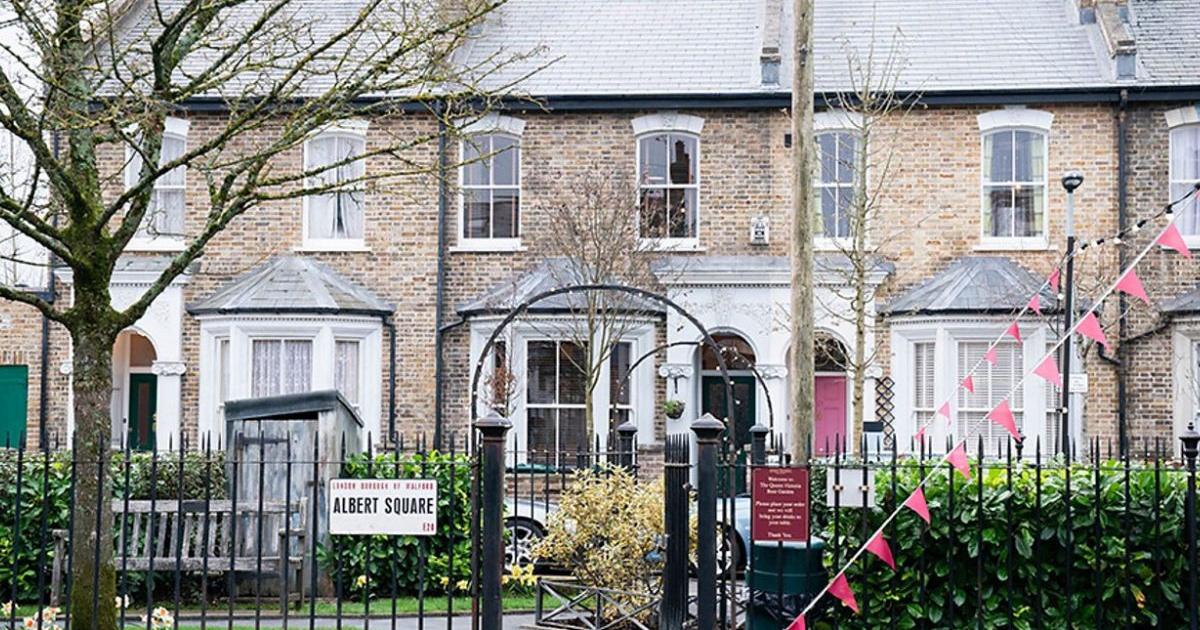
BBC EastEnders character Denise Fox set for cancer storyline

Published

on

BBC EastEnders character Denise Fox set for cancer storyline

Walford favourite Denise Fox, played by Diane Parish, will be diagnosed with acute myeloid leukaemia following a period of unexplained tiredness and resulting medical tests.

The storyline will follow her diagnosis and its impact on her and her loved ones over the coming months.

EastEnders character Denise Fox set for cancer storyline

Denise made her first appearance on the BBC soap in May 2006 and temporarily left EastEnders in early 2008 to give birth to her second child.

Parish has had two roles in EastEnders, previously playing singer Lola Christie in 1998 before playing salon manager Denise.

On the new storyline, Ben Wadey, executive producer at EastEnders, said: “It was vital to us that Denise’s storyline is portrayed with sensitivity and care, and we’re grateful to Blood Cancer UK for their advice in helping us tell this story accurately.

Advertisement

“As viewers follow Denise, we hope to shine a light on the realities and challenges of an acute myeloid leukaemia diagnosis and the impact it has on the person affected and those around them.”

The blood cancer storyline is being developed in partnership with the national charity Blood Cancer UK to ensure it is depicted accurately and sensitively.

Blood Cancer UK reports that more than 40,000 people in the UK are diagnosed with blood cancer each year.

Diane Parish as Denise Fox in EastendersDenise Fox’s character Diane Parish will be part of a new cancer storyline on EastEnders (Image: Kieron McCarron/BBC)

Helen Rowntree, chief executive of Blood Cancer UK, said: “It’s been a privilege advising the EastEnders team to ensure Denise’s storyline reflects the real experiences of people living with blood cancer and those who care for them.

Advertisement

“Being black and living with an aggressive blood cancer like acute myeloid leukaemia can bring additional challenges.

“We hope viewers gain a greater understanding of blood cancer’s impact, and we’re pleased this issue is being highlighted on a powerful platform, helping make a ‘hidden’ cancer more visible.”

The symptoms of acute myeloid leukaemia (AML) usually develop over a few weeks, becoming more severe as the number of immature white blood cells increases, the NHS explains.

Symptoms can include skin looking pale or “washed out”, tiredness, breathlessness, night sweats, easily bruised skin, bone and joint pain, and more.

Advertisement

EastEnders to mark 20th anniversary of Denise Fox

The BBC will be hosting a special night dedicated to Denise Fox on May 11 as the character marks two decades on the soap.

Airing on BBC Three, a selection of EastEnders episodes will air from 8pm to 11pm, followed by the documentary ‘Manosphere’, which Parish fronts.

The episodes will highlight some of Denise’s biggest lines, including exposing her serial killer husband, Lucas Johnson (Don Gilet) and when she became entwined with the murder of Keanu Taylor (Danny Walters).

Plus, fans will be able to rewatch the time Denise had to choose between Jack Branning (Scott Maslen) and Ravi Gulati (Aaron Thiara).

Advertisement

The BBC will air the following episodes of Denise Fox, according to Radio Times:

  • 8pm – The downfall of Lucas Johnson (2010)
  • 8.30pm – Denise and Ian Beale kiss (2013)
  • 9pm – Keanu Taylor dies on Christmas Day (2023)
  • 10pm – Denise chooses between Jack and Ravi (2025)
  • 10.30pm – Joel Marshall’s behaviour takes a turn (2025)
  • 11pm – EastEnders Investigates: The Manosphere (2025)

EastEnders airs on BBC One every Monday to Thursday at 7.30pm.

Who is your favourite character on EastEnders? Let us know in the comments.

Source link

Advertisement
Continue Reading

NewsBeat

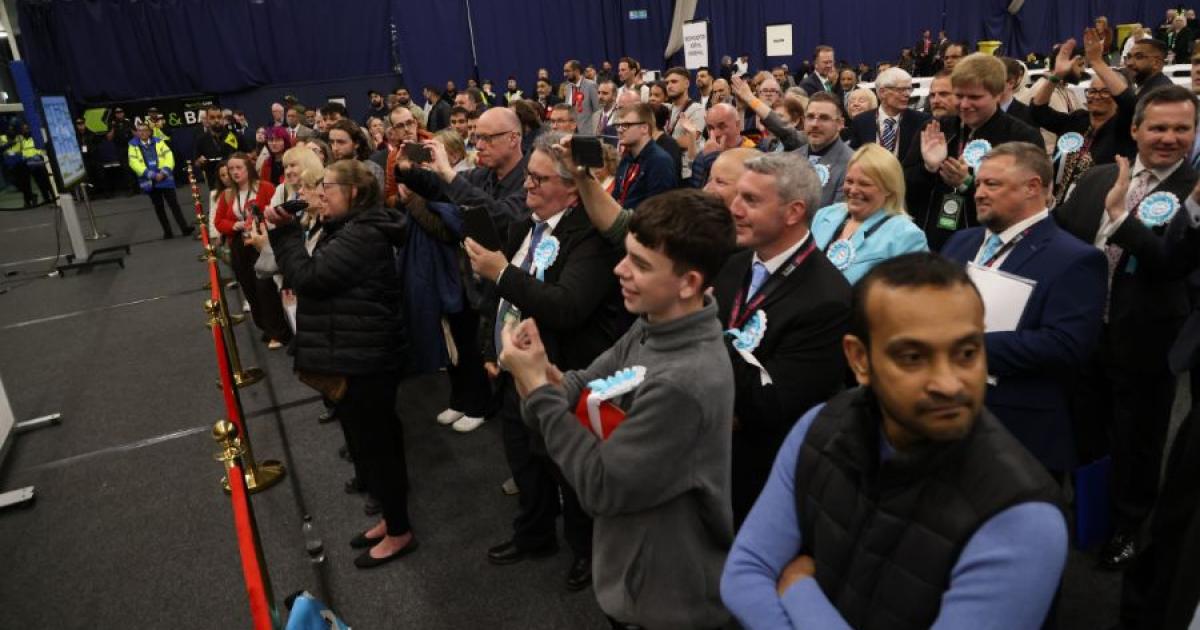
Keir Starmer to continue as Prime Minister amid election results

Published

on

Keir Starmer to continue as Prime Minister amid election results

He acknowledged it had been a “tough” night for Labour but said that “days like this don’t weaken my resolve to deliver the change that I promised”.

Nigel Farage’s Reform UK made gains across the country as hundreds of Labour councillors were voted out, heaping pressure on the Prime Minister.

Sir Keir faces further heavy losses as vote counting continues throughout Friday in both English local elections and contests for the Scottish Parliament and Welsh Senedd.


All the elections in England, Scotland and Wales


In Wales, Labour is expected to lose the national vote for the first time in more than a century while the SNP appears likely to remain the largest party in Scotland after 19 years in power.

Advertisement

Sir Keir has already faced speculation about his leadership, with the Times reporting Energy Secretary Ed Miliband had urged the Prime Minister to set out a timetable for his departure.

But Deputy Prime Minister David Lammy urged his party not to play “pass the parcel” with the leadership in response to the election results.

Labour sources pointed to poor local election results under previous prime ministers, including Sir Tony Blair who lost 1,100 councillors in 1999 but went on to win re-election in a landslide in 2001.

Meanwhile, Mr Farage hailed early results from Thursday’s local election as a sign his party was on course for victory at a general election that is still up to three years away.

Advertisement

A jubilant Mr Farage heralded a “historic change in British politics,” telling reporters “there is no more left-right” as his outfit was “scoring stunning percentages in traditional old Labour areas”.

A man in a Union Jack blazer sports a Reform UK rosette as ballot papers are counted for the 2026 Essex County Council election at Clacton Leisure Centre in Essex. Picture date: Friday May 8, 2026. PA Photo. Photo credit should read: Joe Giddens/PA Wire(Image: Joe Giddens/PA)

The Reform leader compared the substantial gains to clearing Becher’s Brook, a famously difficult jump in the Grand National.

“If we cleared Becher’s Brook and landed well, we go on to win the Grand National.

“What is very clear to me is that our voters will stick with us now all the way through.”

Advertisement

With 40 of the 136 councils declaring their full results in the early hours of Friday, Reform’s gains reached 270 seats while Labour had lost more than 200.

Mr Farage’s party also took control of its first council of this set of contests, nabbing Newcastle-under-Lyme from the Conservatives.

Polling guru Sir John Curtice said the results confirmed “the fracturing of British politics”, telling the BBC that Reform was clearly ahead but still “probably not quite at 30% of the vote” while other parties were “just a little bit below 20%”.

He suggested the results may not be as bad for Labour as some had predicted, saying the party could lose less than 1,500 seats.

Advertisement

Source link

Continue Reading

NewsBeat

Mount Dukono eruption kills three in Indonesia as hikers missing and ash hits 10km

Published

on

Daily Record

Mount Dukono volcano erupted in North Maluku, Indonesia, spewing ash 10km into the sky. Local police chief Erlichson Pasaribu confirmed three people have been killed and several hikers remain missing, with 15 people evacuated from the 1,335m-high mountain.

Three individuals have lost their lives after a group of hikers went missing when a volcano erupted in Indonesia earlier today. Mount Dukono blasted ash up to 10km into the atmosphere while a party of hikers were exploring the popular destination.

A total of 15 people were successfully evacuated from the 1,335m-high peak, while two porters from the hiking group remained behind to assist rescue teams in recovering the bodies of the three fatalities, according to local police chief Erlichson Pasaribu.

Mount Dukono has erupted almost 200 times since late March, as reported by the Volcanological Survey of Indonesia. The location is presently classified as Level Two within the agency’s three-tier volcano alert system, indicating heightened volcanic activity and the necessity for vigilance, reports the Mirror.

Advertisement

Ensure our latest stories always appear at the top of your Google Search by making us a Preferred Source. Click here to activate or add us as your Preferred Source in your Google search settings.

Source link

Continue Reading

NewsBeat

Can houseplants really purify the air in your home? What the science actually says

Published

on

Can houseplants really purify the air in your home?
What the science actually says

The question sounds simple. The answer, once you examine the actual measurement science behind it, is more interesting than either “yes” or “no”.

The houseplant-as-air-purifier idea can be traced to a 1989 US study, conducted for Nasa as part of research into closed-loop life support systems for space stations. In sealed, controlled chambers, certain plant species reduced concentrations of volatile organic compounds (VOCs). These are chemicals that easily evaporate into the air at room temperature, including some toxic ones like benzene, trichloroethylene and formaldehyde. The science was sound. The problem is the leap from a sealed Nasa chamber to a living room. This distinction matters enormously, and it underpins almost every piece of inflated coverage about houseplants’ purifying abilities that has followed.

Most studies showing that houseplants remove pollutants share a fundamental design feature: small, sealed chambers with artificially high concentrations of pollutants introduced as a single high dose. A plant is placed inside the chamber, concentrations of pollutants are measured over time and a removal rate is calculated. This design works well for comparing plants to each other. It works poorly for predicting what happens in your home.

The critical missing variable is what building scientists call the air exchange rate. This is how quickly outdoor air naturally replaces indoor air through gaps, walls and ventilation systems. In a real building, this constant dilution is already doing the heavy lifting on pollutant concentration. When a 2019 study modelled plant performance against real-world air exchange rates, it found you would need between ten and 1,000 plants per square metre to match what a building’s passive ventilation already achieves.

Advertisement

So the scientifically defensible answer is: houseplants can remove some pollutants, but they are not an effective standalone air-cleaning solution for homes. That does not mean the earlier studies were “wrong”. It means their results were often overextended into everyday settings where the physics of indoor air are very different.

Can houseplants really purify the air?
Vera Prokhorova/Shutterstock

More recent reviews distinguish between potted plants and more engineered plant-based systems. Some botanical biofilters, which force air through plant-root substrates with fans, may have useful air-cleaning potential, but that is a different technology from keeping a few decorative plants on a windowsill.

Another reason the claim is often overstated is that real indoor environments are not static. Pollutants are not usually released once and then left to decline in a sealed space, as happens in many chamber experiments. In homes, emissions may be continuous or intermittent, from cooking, cleaning, furnishings, consumer products, heating and traffic pollution wafting in from outside. Temperature, humidity, the number of people at home and ventilation also change throughout the day. All of these factors affect how pollutants are emitted, diluted or deposited indoors. This makes real exposure conditions far more complex than the controlled conditions under which many plant studies are carried out.

For these reasons, the most credible public health advice remains straightforward.

Advertisement

First, reduce or remove the pollution source. This may involve stopping the use of products that emit fumes, such as aerosol sprays or strong chemical cleaners, and repairing building defects such as damp or leaks that promote mould growth.

Then, improve ventilation and use effective filtration. Ventilation can be improved by, for example, opening windows and doors and using kitchen and bathroom exhaust fans that vent outdoors. You can also increase the supply of outdoor air through combined heating, ventilation and air conditioning systems, which can be great for filtering air.

Portable air cleaners with high-efficiency particulate air (Hepa) filtration can help reduce airborne particles, while ventilation, such as opening windows or using exhaust fans, helps dilute indoor pollutants when outdoor air quality is acceptable. Air cleaners vary in quality, though. For everyday use, look for a model that is the right size for the room and clearly states that it uses a True Hepa filter, which means it is designed to capture at least 99.97% of very small particles.

It is also helpful if the unit has an AHAM Verifide label, which means its clean air delivery rate (CADR) has been independently tested. As a simple guide, the higher the CADR, the faster the cleaner can remove particles from the air, and the packaging will usually say what room size the unit is suitable for. Most air cleaners are designed mainly for particles such as dust, pollen, pet dander and smoke.

Advertisement

If you also want help with gases or odours, such as VOCs, look for a model that includes an activated carbon filter, because Hepa filters alone are mainly for particles. Packaging will usually indicate whether a unit is intended for particles, gases or both, but no air cleaner removes all pollutants.

It is also worth remembering that plants themselves require care. Overwatering and poorly maintained pots can contribute to moisture problems or microbial growth indoors. In that sense, even the benefits of indoor greenery depend on how they are managed.

Woman wearing headphones leaning back in armchair, surrounded by large houseplants
Houseplants are great for making your home a relaxing place to be.
DimaBerlin/Shutterstock

Does that mean houseplants are useless indoors? Not at all. Even if their direct air-cleaning effect is modest in real homes, plants may still offer benefits. Scientific studies suggest they can improve perceived comfort and psychological wellbeing, and in some cases slightly influence humidity or the indoor microenvironment.

Keep houseplants because you enjoy them, because they make indoor spaces more attractive and calming. They can make homes feel more pleasant, and that is a value in itself. But they should not be presented as a practical solution to serious indoor air problems.

Advertisement

Source link

Continue Reading

NewsBeat

Bolton Council local elections 2026 results in full

Published

on

Bolton Council local elections 2026 results in full

There were 20 of town hall’s 60 seats up for grabs with Reform UK winning the most on the night with nine.

The Greens won three while the Conservatives also won three, with Labour winning two, the Horwich and Blackrod First Independents two and the Liberal Democrats one.

Overall this left Labour with the most seats with 20, but 10 off what they need for a majority.

The Conservatives were left in second place with 11 seats and Reform UK on third with 10 and the five Liberal Democrat with five.

Advertisement

When counting was done there were also four Greens, four Horwich and Blackrod First Independents, three Farnworth and Kearsley First Councillors and three independents.

Results across 20 seats were counted (Image: Phil Taylor)

The results in full –

Astley Bridge

Ryan Bailey – Reform UK – 1635

Advertisement

Sarita Chohan – Liberal Democrats – 106

Peter Brett Hopkinson – Independent – 53

Lee Thorne – Green Party – 1147

John Walsh – Conservative Party – 1248

Advertisement

Phil Warren – Labour Party – 807

Bradshaw

Jennifer Entwistle – Green Party -423

Peter Dennis Firth – Labour & Co-Operative Party – 745

Advertisement

Sandra Harris – Reform UK – 1712

Christine Anne Strawbridge – Liberal Democrats – 130

Les Webb – Conservative Party – 1801

Breightmet

Advertisement

Gillian Fernley – Green Party – 413

Derek John Gradwell – Liberal Democrats – 80

Wendy Ann Hopkinson – Independent – 33

Kate Elizabeth Taylor – Labour & Co-Operative Party – 605

Advertisement

Mike Tucker – Reform UK – 1890

Adele Kay Warren – Conservative Party – 974

Bromley Cross

Joe Burton – Green Party – 718

Advertisement

Charlotte Anne Cadden – Conservative Party – 1794

Jayden Cain – Reform UK – 1669

Bill Lovat – Labour Party – 596

Jim Priest – Liberal Democrats – 164

Advertisement

Farnworth North

Nadeem Ayub – Labour Party – 1131

Sandra Baker – Farnworth & Kearsley First Party – 642

Ryan Cain – Conservative Party – 103

Advertisement

Rees Gibbon – Reform UK – 1109

Philip Kochitty – Green Party – 648

Champak Mistry – Independent – 235

Andrew John Tonge – Liberal Democrats – 35

Advertisement

Farnworth South

Kubbar Alom – The Conservative Party Candidate – 59

Wesley McArdle – Labour Party – 343

Julie Pattison – Reform UK – 1220

Advertisement

Paul Sanders – Farnworth & Kearsley First Party – 950

Jennifer Louise Tonge – Liberal Democrats – 40

David Wright – Green Party – 338

Great Lever

Advertisement

Mahboob Alom – Green Party – 1239

Yusuf Butt – Conservative Party – 159

Rishikesh Ratilal Chohan – Liberal Democrats – 116

Gus Heyes – Reform UK – 755

Advertisement

Mohammed Iqbal – Labour Party – 1918

Halliwell

Philip Booth – Reform UK – 744

Elizabeth Anne Elliott – Conservative Party – 136

Advertisement

Baggy Khan – Green Party – 1752

Safwaan Patel – Labour Party – 1444

Caroline Anne Turner-Preece – Liberal Democrats – 115

Heaton, Lostock and Chew Moor

Advertisement

Hetan Ajwani – Reform UK – 1374

Anne Barbara Galloway – Conservative Party – 2112

Paul Martin – Liberal Democrats – 299

Salim Qureshi – Labour Party – 1065

Advertisement

Alexander James Rostron – Green Party – 760

Horwich North

Helena Carman – Green Party – 585

Graham Dawson – Labour Party – 536

Advertisement

Andrea Jane Finney – Horwich and Blackrod First Independents – 1905

Carol Forshaw – Conservative Party – 257

Stephen Martindale – Reform UK – 1243

Charlotte Chloe Minnie Moncado-Sears – Independent – 252

Advertisement

Scott Turner-Preece – Liberal Democrats – 74

Horwich South and Blackrod

Joshua Johnathan Callum Cook – Labour Party – 378

Michael Jarvis – Green Party – 375

Advertisement

Matthew Kyle – Reform UK – 1060

Antony Moncado-Sears – Independent – 49

Paul Norris – Conservative Party – 293

John William Strawbridge – Liberal Democrats – 79

Advertisement

Peter Wright – Horwich & Blackrod First Independents – 1775

Hulton

Derek Bullock – Reform UK – 1939

Alan Johnson – Green Party – 947

Advertisement

Linda Christine Maher – Liberal Democrats – 160

Shafi Patel – Conservative Party – 470

Emma Julia Schofield – Labour Party – 979

Kearsley

Advertisement

George Butler – Labour & Co-Operative Party – 255

David Charles Tyas Cooper – Liberal Democrats – 49

Roger Pedley – Reform UK – 1561

Tony Brendon Sandy Peers – Green Party – 176

Advertisement

Glenys Ratcliffe – The Conservative Party Candidate – 103

Jack Tebay – Advance UK – 71

Tracey Wilkinson – Farnworth & Kearsley First Party – 1153

Little Lever and Darcy Lever

Advertisement

Fin Cozens-Stott – Trade Unionist and Socialist Coalition – 40

Ben William Dolata – Green Party – 345

Rach Gilmour – Labour Party – 680

Susan Mary Martin – Liberal Democrats – 143

Advertisement

David Michael Meehan – The Conservative Party Candidate – 924

Derek Wunderley – Reform UK – 2040

Queen Park and Central

Zan Arif – Green Party – 1090

Advertisement

Richard Elliott – Conservative Party – 206

Rebekah Susan Mary Fairhurst – Liberal Democrats – 116

Richard Silvester – Labour & Co-Operative Party – 1044

Nimesh Vara – Reform UK – 609

Advertisement

Rumworth

Sajid Ali – Labour Party – 1659

Ismail Ibrahim – Green Party – 2346

Ghansham Hirji Patel – Reform UK – 463

Advertisement

Shahjahan Shah – Conservative Party – 119

Gillian Elizabeth Wroe – Liberal Democrats – 137

Smithills

Elora Hunt – Green Party – 563

Advertisement

Raymond Ndokwo – Conservative Party – 184

Liam O’Callaghan – Labour Party – 533

Sue Priest – Liberal Democrats – 1713

Simon Roscoe – Reform UK – 1565

Advertisement

Tonge with the Haulgh

Hafiz Tahir-Mahmood Butt – Conservative Party – 251

Rebecca Forrest – Liberal Democrats – 166

Trevor Jones – Reform UK – 2089

Advertisement

Nick Peel – Labour & Co-Operative Party – 1329

Gaynor Margaret Richards – Green Party – 600

Westhoughton North and Hunger Hill

David Lewis – Reform UK – 1781

Advertisement

Neil Maher – Liberal Democrats – 1071

Paul Leslie Saunders – Labour Party – 403

Martin Tighe – Conservative Party – 964

Louise Warburton – Green Party – 439

Advertisement

Westhoughton South

Richard Adam Bates – Independent – 57

Glen Clarke – Reform UK – 1644

Colin Higson – Conservative Party – 276

Advertisement

Simon Penhallow – Green Party – 306

Christina Ruth Saunders – Labour Party – 455

Jack Speight – Westhoughton First Independents – 100

David Arthur Wilkinson – Liberal Democrats – 1550

Advertisement


Advertisement

Source link

Continue Reading

NewsBeat

Potential opportunities for first-time buyers as house price growth slows

Published

on

Potential opportunities for first-time buyers as house price growth slows

Nathan Emerson, chief executive officer of property professionals’ body Propertymark, said: “The rate of inflation remains a key concern for many people, especially as there is widespread speculation that the Bank of England may potentially need to implement measured base rate increases over the coming months to best regulate potential future financial instability.

Source link

Continue Reading

NewsBeat

Flat plans lodged for former shop in Darlington town centre

Published

on

Flat plans lodged for former shop in Darlington town centre

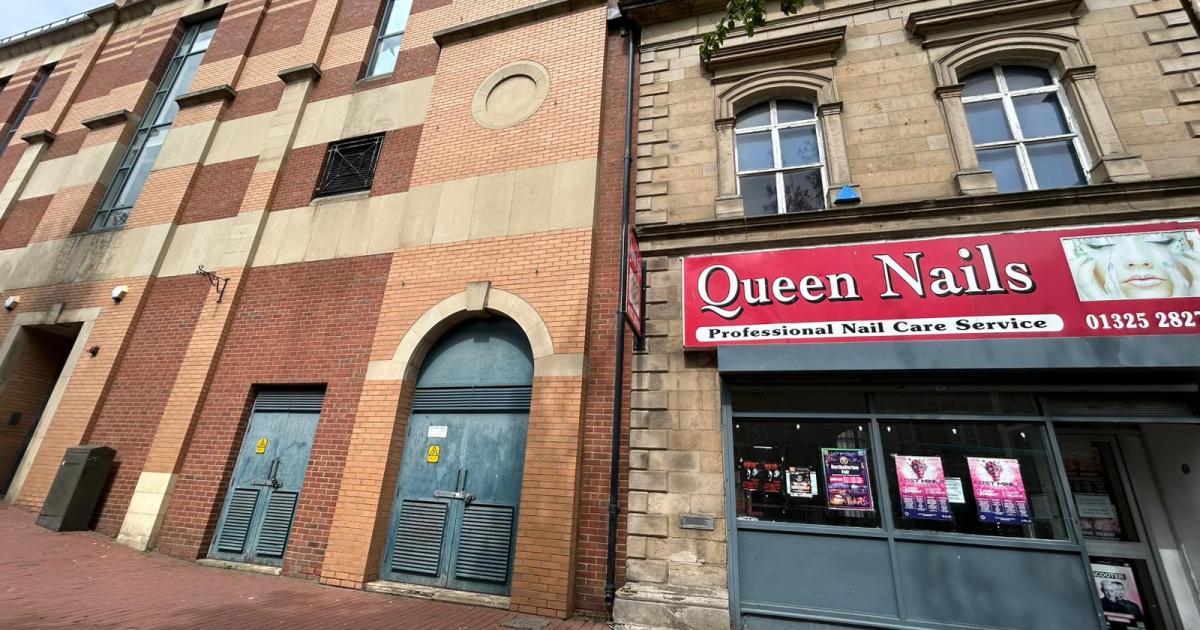
A proposal has been lodged with Darlington Borough Council to turn the first floor of 31 Tubwell Row into a one-bedroom flat, above what used to be Queen Nails next to the Cornmill Centre.

The scheme would see space previously used for business purposes converted into a single home. The applicant says all rooms will have natural light and meet building standards, with access from Tubwell Row.

The property has been in commercial use for at least two years and is not affected by planning restrictions that would prevent the change. The building is not listed.

Advertisement

The applicant says there are no known risks from flooding or land contamination.

A noise report, based on a previous scheme at the site, found traffic, buses and pedestrians to be the main sources of noise at the front of the building, with quieter conditions at the rear.

It recommends soundproof glazing and ventilation for front-facing rooms, while standard measures would be suitable at the back. The report concludes noise should not prevent approval.

No external changes are planned and no other properties would be affected.

Advertisement

The application is awaiting a decision from Darlington Borough Council.

Source link

Advertisement
Continue Reading

NewsBeat

Apprentice welder, 17, turned into ‘human fireball’ in Wigan steel yard incident

Published

on

Wales Online

WARNING: DISTRESSING CONTENT The trainee said he was undertaking a routine task burning rubbish, which turned into a nightmare when a huge fireball engulfed him, scorching his face, chin and hands

A teenage apprentice welder who was transformed into a ‘human fireball’ during a catastrophic workplace incident has revealed how he pleaded with medical staff to end his life. Dwayne Bell was merely 17 years old when he sustained appalling burns while employed at a steel facility in Wigan.

The trainee explained he was carrying out what seemed a standard task of burning waste, which descended into horror when an enormous fireball consumed him, searing his face, chin and hands.

He described how the explosion was so ferocious it melted portions of his nose and ear, resulting in third-degree burns. Now aged 22, Dwayne is speaking out to caution other young trainees about the hazards they may encounter on industrial sites, reports the Manchester Evening News.

Advertisement

He said: “I shouldn’t be here talking to you. I am lucky to be alive. It was so hot I feared I was going to be blinded – the heat was so intense.”

“This was an accident waiting to happen… I’m trying to move on. But I’m living in a body that feels like a prison. This shouldn’t have happened. I wasn’t supervised and no trainee should ever be put in that position. They were the adults and they didn’t look after me.”

Dwayne, from Ashton-in-Makerfield in Wigan, had barely begun his employment at Qualfab Steel Ltd when the incident occurred in March 2021. He recalls being directed to incinerate general refuse, including paper, cardboard and wooden pallets, within a metal container.

Advertisement

He said: “I was just a kid, doing what I was told. I was the youngest on site by 20 or 30 years.”

In court documents, Dwayne stated he felt he had not been given sufficient training for lighting fires to burn rubbish — something he described as “surprising”. Though he notes he did receive basic first aid and manual handling instruction.

He alleges he was frequently left without supervision despite his lack of experience, but had ‘seen the older lads do it a hundred times’. When a lighter wouldn’t ignite some damp timber, Dwayne says he grabbed a tin of paint thinner, as he claims he had witnessed others doing previously.

“I didn’t see the sparks that were already there as they were hidden by the wood,” he said. “The next thing I knew, the world just turned orange. The sound was like a jet engine. I was standing in the middle of a massive flame. As soon as I felt the whoosh of heat I shut my eyes as I didn’t want to go blind. It was like a bomb exploding in my face.”

He said his head and hands were ablaze and he threw himself to the ground in agony while his workmates extinguished the flames using a high-visibility jacket.

He said: “My colleagues came running over and tried to remove my gloves and overalls. As they did, my tracksuit bottoms underneath began to melt. But I opened my eyes and I was still alive and I was so thankful that I wasn’t blinded.”

Still reeling from the trauma, Dwayne even requested colleagues photograph his injuries before emergency services arrived. He added: “I had feathers on me from the jacket and my face was red with skin peeling off but I didn’t think it was that bad as I felt no pain. I never knew how bad it really was.”

Advertisement

He was airlifted to hospital and placed in an induced coma for a week after sustaining burns to eight per cent of his body. Upon regaining consciousness a week later in intensive care in March 2021, surrounded by ‘tubes coming out of him’, he believed he had only been asleep for a single night and was experiencing ‘indescribable pain’.

Dwayne said: “I looked at the nurses and I just begged them to let me die. I couldn’t see a future.

“I was wrapped in bandages, I couldn’t move, and the pain was the worst I had ever experienced. So I asked the nurses just to turn the machines off and let me go. But they wouldn’t. It was horrific.”

Advertisement

Following three weeks in hospital, Dwayne returned home, where his mother was required to assist him with getting dressed and even cutting up his meals.

He said: “My mum had to do everything I was helpless. The pain was so intense and my skin would break easily. I couldn’t sleep on my side because of my burnt ears so I hardly got any sleep – it was a living nightmare.”

Throughout the following year, he underwent three skin graft procedures on his hands, using skin taken from his stomach and thighs. While his facial wounds have largely recovered, his hands remain severely scarred and may necessitate additional surgery.

Advertisement

He has also been forced to abandon football and golf, as the friction involved triggers painful blisters. He added: “My hands feel really numb in the morning like a dead leg and I get extreme pins and needles. I get very anxious in social settings still as I have bad scarring on my hands, chin and forehead. The experts don’t know if they will get any better.”

Dwayne subsequently instructed workplace injury specialists Express Solicitors, and the case was resolved out of court for a substantial six-figure sum, with no admission of liability.

Senior Associate Neil Sagar, of Express Solicitors, said: “Dwayne has made a miraculous recovery from his life changing injuries. But he still lives with the consequences of what happened everyday and his ongoing scars will affect his future career. Businesses need to make sure appropriate supervision and training is given to apprentices especially when working with dangerous disposal methods.”

Advertisement

Dwayne has since returned to welding with a different company in the North. However, the heat and vibration from power tools can trigger painful blistering, restricting how long he is able to work.

He hopes that by sharing his experience, others may be spared from enduring similar injuries.

He added: “I have to live with the consequences of what happened there everyday. Now I just want to try and live as normal a life as possible.”

Qualfab Steel Ltd has been approached for comment.

Advertisement

Ensure our latest news and sport headlines always appear at the top of your Google Search by making us a Preferred Source. Click here to activate or add us as Preferred Source.

Source link

Continue Reading

NewsBeat

How Belfast Live readers would vote if a Border Poll were held tomorrow

Published

on

Belfast Live

Almost 7,000 responses were received

Advertisement

Belfast Live readers would vote overwhelmingly to remain in the United Kingdom if a border poll were held tomorrow, according to our latest reader poll.

6,955 responses were recorded in our reader poll between 18th and 26th March.

Of those respondents, 57 per cent (3981) said that they would vote to remain in the United Kingdom if a border poll were held tomorrow. 40 per cent (2781) said that they would vote for a united Ireland, 2 per cent (161) were undecided, while less than half a per cent (32) would not vote.

What the results tell us and what they could hide

Analysing the results, Prof. Fidelma Ashe from Ulster University said: “The question of a border poll has become heavily focused on numbers, reflecting the Belfast/Good Friday Agreement’s provision that the Secretary of State should call a poll when it appears likely, in his judgement, that a majority would express a wish for a change in Northern Ireland’s constitutional status.

Advertisement

“That provision helps explain why every new survey is quickly read as evidence for or against how close Northern Ireland might be to such a moment. No doubt there will be some eyerolling at the appearance of yet another unity poll.

Belfast Live’s recent readership survey is another snapshot in that ongoing debate. As with any self-selecting readership poll, it should be treated cautiously; the findings cannot be assumed to reflect the wider electorate. Even so, it offers a useful opportunity to think more carefully about how people respond when asked to choose between two constitutional options, and what that response can and cannot tell us about the dynamics of the unity debate.”

What the survey findings suggest

Prof. Ashe added: “First, the survey tells us something straightforward: among Belfast Live readers who responded, there is a sizeable gap between support for Irish unity and support for remaining in the United Kingdom.

“A second, perhaps more striking feature of the Belfast Live survey is that very few respondents described themselves as “undecided”. The survey suggests the undecided share is just over 2 per cent, which is exceptionally low for a constitutional question that is widely recognised as complex and contested.

Advertisement

“That unusually small ‘undecided’ category is a prompt to interpret the findings carefully because the size of the undecided group often tells us as much about question format and context as it does about deep certainty on ill-defined constitutional choices.

Is the undecided category shrinking?

“In larger surveys using probability-based random sampling on Irish unity, the undecided group is bigger,” Prof. Ashe said. “The ARINS North–South project with the Irish Times regularly finds that a higher percentage of respondents in Northern Ireland say they are unsure how they would vote in a border poll. In the most recent ARINS survey published in 2025 by the Irish Times, 14 per cent were undecided, with 34 per cent favouring unity and 48 per cent opposed.

“So why might a readership survey produce such a small, undecided category? Has this survey uncovered a shift towards more binary choices in the form of for and against, or could there be another explanation?

“One possibility is not that voters have suddenly become more certain, but that many people respond differently when faced with a for or against choice framed in immediate terms (for example, unity “tomorrow” versus staying in the UK). When questions are posed in this way, some respondents who hold mixed views, conditions or reservations may still select an option rather than choose “undecided”. This does not mean their choice is insincere; rather, it reflects the way people often resolve uncertainty by choosing the option that feels more secure in the moment.

Advertisement

“This matters because constitutional preferences are frequently conditional. A voter might favour the Union in principle but worry about the performance of devolved governance. Another might support unity in principle but remain unconvinced that it is feasible, affordable or that it would be a better choice in the immediate future. Others may feel pulled in competing directions, as identity, economic considerations, public services, stability and rights rarely align neatly.

“When those considerations are compressed into a single immediate choice, uncertainty does not always present itself as ‘undecided’. Where details about a future constitutional arrangement are unclear, many people may reasonably prioritise what feels institutionally familiar. In a context of uncertainty, that may be a rational response.”

Risk, reassurance and constitutional futures

Prof. Ashe continued: “Concerns about economic security and social provision are central to how many people engage with questions of constitutional change, particularly where the practical implications of change remain uncertain. Findings from research I have conducted with collaborators highlight how everyday social and economic issues shape constitutional attitudes.

“Using more intensive participatory research methods, this work shows that questions of healthcare, welfare security, employment, housing, childcare and community resources are inseparable from constitutional futures as they are lived and imagined.

Advertisement

“That research captures a cautious concern with material, social and security consequences. Where people lack clear, credible information about how social and economic protections would be maintained in a new constitutional arrangement, uncertainty is bound to constrain support for immediate change. Constitutional questions, in this sense, are rarely abstract: they are evaluated through lived experience, everyday stability and perceptions of risk.

“My research highlights the importance of process: without clarity on economic and social outcomes, apparent certainty often reflects caution rather than settled constitutional preference. Research associated with the ARINS project, including focus group and participatory work by Jennifer Todd and colleagues, supports this interpretation.

“That long-running research similarly shows that individuals who express uncertainty about a future unity referendum often do so because of limited information, lack of prior discussion and unresolved questions about economic and social governance. Rather than articulating fixed opposition or endorsement, participants frequently express conditional views and emphasise the need for deliberation and detail before being asked to make a definitive choice.

“Taken together, this research helps explain why uncertainty may not register as ‘undecided’ in a binary survey format. Faced with unanswered questions about the organisation of healthcare, pensions, welfare provision or employment protections, some voters may reasonably default to remaining in the UK. Additional research from the ARINS/Irish Times, including survey findings and associated focus group analysis by Jennifer Todd, Joanne McEvoy and John Doyle, suggests that undecided voters want much more discussion and information on the issue.”

Advertisement

What this means going forward

“If there is a single lesson here, it is that polls do not merely measure opinion. They also reflect how opinion is shaped by uncertainty, question format and what voters believe is realistically on offer,” Prof. Ashe concluded.

“That is not a judgment on the legitimacy of union support (or unity support). Belfast Live readers are perfectly capable of evaluating survey findings and assessing the validity of this recent survey themselves. It is, however, a reminder that in constitutional politics, headline “certainty” often sits alongside a deeper and more complex political context that can be obscured by headline numbers. Despite these survey results, there may be a wider landscape of conditionality and contingency that suggests the need for wider deliberation. More deliberation does not imply a particular outcome; it simply clarifies what different outcomes would entail.”

For all the latest news, visit the Belfast Live homepage here and sign up to our daily newsletter here.

Advertisement

Source link

Continue Reading

NewsBeat

North Yorkshire acid attack figures revealed by Legal Expert

Published

on

North Yorkshire acid attack figures revealed by Legal Expert

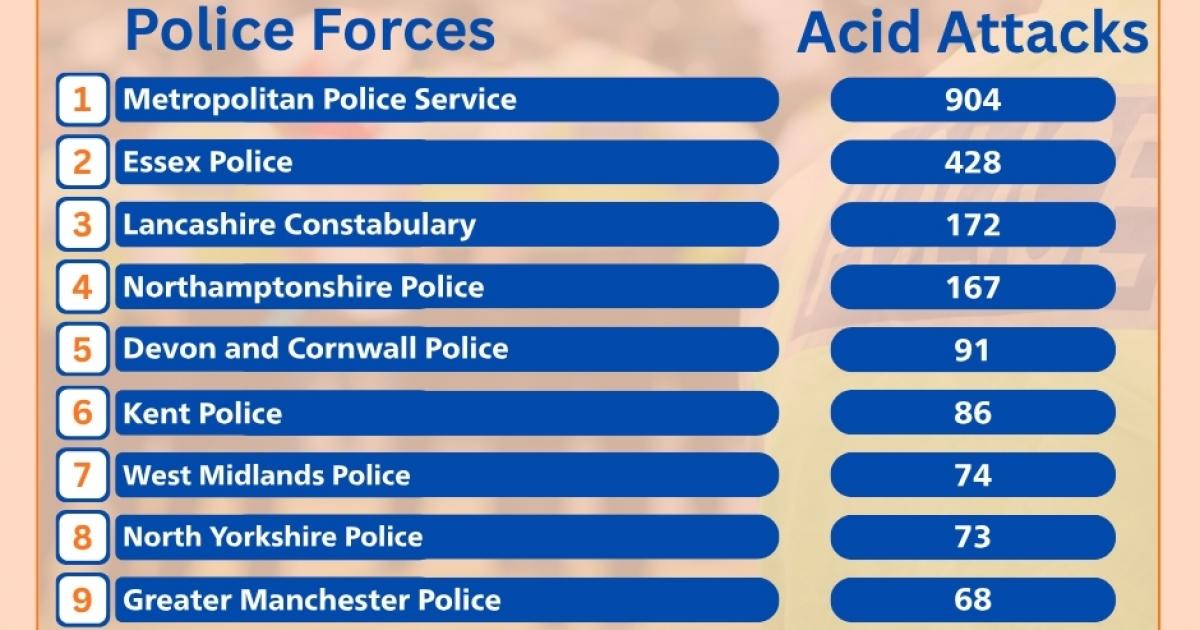
In the past three years, North Yorkshire Police recorded 73 acid-related offences — among the highest in the UK.

Of these, just eight per cent were closed without a suspect being named or identified, contrasting sharply with national figures showing more than 800 attackers remain at large.

Ellie Lamey, a Criminal Injuries Compensation Authority specialist at Legal Expert, said: “These figures highlight a deeply concerning lack of accountability for what is a barbaric and life-altering crime.

“When perpetrators of such horrific attacks go unidentified, victims are robbed of the justice and closure they so rightfully deserve.

Advertisement

“Corrosive substance attacks leave victims with devastating physical and psychological scars that can take a lifetime to heal.

“It is absolutely vital that survivors understand they are not alone and that they can still seek specialist support and financial compensation to help rebuild their lives, even if their attacker has completely evaded the courts.”

Just eight per cent of North Yorkshire cases were closed without a suspect being named or identified (Image: Legal Expert)

The findings come from new research by legal injury specialists Legal Expert, based on UK-wide police data from 2023 to 2025.

London topped the list with 904 recorded acid attacks, followed by Essex with 428 and Lancashire with 172.

Advertisement

Other high-ranking forces included Northamptonshire (167), Devon and Cornwall (91), Kent (86), West Midlands (74), North Yorkshire (73), Greater Manchester (68), and West Yorkshire (66).

Victims’ rights campaigners say the latest figures reveal a “deeply concerning” lack of accountability and support for those left with lasting injuries.

Legal Expert is encouraging survivors to seek legal advice and support regardless of whether a suspect has been caught.

The organisation offers free consultations through a 24-hour helpline, with tailored advice on accessing compensation and care.

Advertisement

The issue has gained renewed attention following the death of 38-year-old Plymouth father Danny Cahalane, who died in April 2025 — ten weeks after being attacked with industrial sulphuric acid.

A high-profile court case in Hampshire has also placed national focus on the use of corrosive substances as a weapon.

Other recent cases, such as the January 2024 attack in Clapham, have further highlighted the urgent need for action.

Advertisement

Source link

Continue Reading

Trending

Copyright © 2025