Connect with us
DAPA Banner
DAPA Coin
DAPA
COIN PAYMENT ASSET
PRIVACY · BLOCKDAG · HOMOMORPHIC ENCRYPTION · RUST
ElGamal Encrypted MINE DAPA
🚫 GENESIS SOLD OUT
DAPAPAY COMING

Business

Arm Holdings Lacks Supply to Meet Roaring Demand for New Chips

Published

on

Arm Holdings Lacks Supply to Meet Roaring Demand for New Chips

Arm Holdings ARM -10.11%decrease; red down pointing triangle said it expects higher demand for its new line of computer chips, but left its revenue guidance from the chips unchanged as it works to boost supply.

The British semiconductor company said in March that it expected to sell $1 billion worth of the chips through early 2028. On Wednesday, it said its demand forecast had doubled to $2 billion, but said that it lacked supply to meet the new order requests.

Copyright ©2026 Dow Jones & Company, Inc. All Rights Reserved. 87990cbe856818d5eddac44c7b1cdeb8

Continue Reading
Click to comment

You must be logged in to post a comment Login

Leave a Reply

Business

US economy adds 115,000 jobs in April despite Iran war

Published

on

US economy adds 115,000 jobs in April despite Iran war

The solid figures came despite rising gas prices and economic uncertainty sparked by the conflict.

Continue Reading

Business

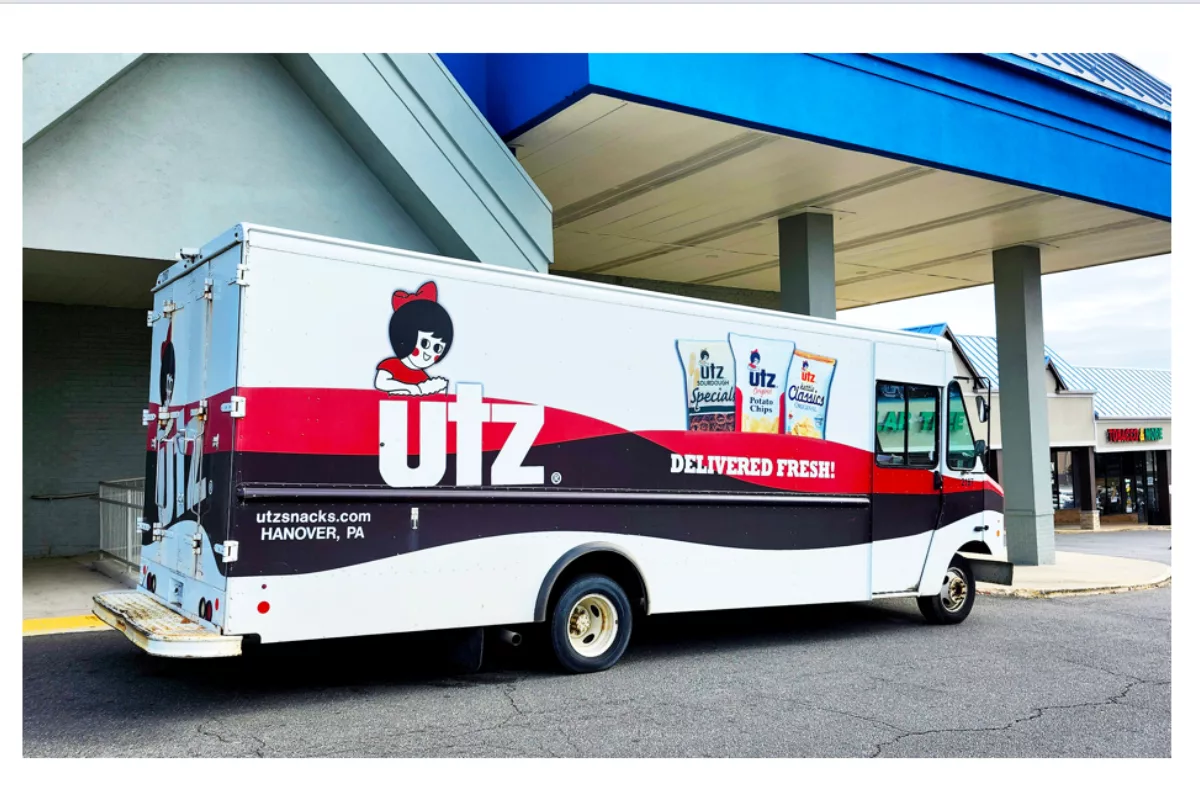
Utz Brands getting salty

Published

on

Utz Brands getting salty

Sales mix shift to branded salty snacks gains momentum.

Continue Reading

Business

Is AWS Down Today? AWS Suffers Major Outage in US-East-1 as Data Center Overheating Disrupts EC2

Published

on

The Apple iPhone 17 Pro

SEATTLE — Amazon Web Services faced a significant regional outage Thursday in its busiest US-East-1 region, with overheating in a Northern Virginia data center causing impaired EC2 instances and degraded Amazon Elastic Block Store volumes, disrupting thousands of businesses, websites and applications worldwide.

Amazon Recalls 500,000+ Products Over Deadly Safety Risks — Here's
AWS Suffers Major Outage in US-East-1 as Data Center Overheating Disrupts EC2 and EBS Services

The incident, which began early Thursday morning, quickly escalated as customers reported elevated error rates, failed instance launches and latency issues concentrated in the use1-az4 availability zone. While not a full global outage, the impact rippled across services dependent on the heavily utilized Virginia region, affecting everything from streaming platforms to financial applications and internal enterprise tools.

AWS confirmed the root cause as elevated temperatures within a single data center facility. Engineers are working to restore normal cooling capacity and bring affected racks back online. As of late Thursday afternoon, the company reported steady progress but cautioned that full recovery could take several more hours. No security breach or data loss has been reported.

Widespread Customer Impact

The timing amplified frustration, hitting during peak business hours for many organizations. Companies without robust multi-region architectures activated failover plans, shifted traffic or temporarily reverted to on-premises systems. Smaller businesses and startups were particularly vulnerable, with some reporting complete downtime for hours.

Downdetector and social media platforms showed spikes in reports, with users in the eastern United States most affected. Services built on EC2 and EBS — including databases, websites and container workloads — experienced the heaviest disruptions. Other AWS regions remained largely operational, highlighting the importance of geographic redundancy.

Advertisement

AWS Response and Mitigation

AWS updated its Service Health Dashboard throughout the day, noting that mitigation efforts remain underway. The company is prioritizing restoration and has been in direct contact with large enterprise customers. Service credits are expected for affected accounts, though formal details have not yet been released.

This marks another notable incident for AWS in 2026, following previous regional disruptions. While the cloud giant maintains strong overall uptime, critics point to concentration risks in key hubs like Northern Virginia, which powers a massive share of global internet workloads.

Broader Implications for Cloud Reliability

The outage reignites debates about single-provider dependency and the need for stronger multi-cloud or hybrid strategies. Many organizations have adopted such approaches precisely to mitigate events like this, yet the convenience and ecosystem advantages of AWS often lead to heavy regional concentration.

Competitors Microsoft Azure and Google Cloud have used the incident in marketing materials to promote their own redundancy features. However, all major providers experience occasional regional issues, underscoring that no single cloud is immune to infrastructure challenges.

Advertisement

Advice for Affected Customers

Organizations experiencing issues should:

  • Monitor the AWS Health Dashboard for real-time updates.
  • Activate multi-AZ or multi-region failover where available.
  • Review disaster recovery plans and test backups.
  • Document business impact for potential service credits.
  • Remain vigilant against phishing attempts claiming to be AWS support.

Individual users facing downstream app or website problems should try alternative services or wait for resolution, as full recovery is expected within hours.

Long-Term Outlook

As AWS works toward full restoration, attention will shift to any post-incident review and potential infrastructure improvements. The company has a strong history of learning from such events to enhance resilience across its global footprint.

For businesses and developers, the Northern Virginia outage serves as a timely reminder of cloud concentration risks in an increasingly digital world. Even localized environmental issues in one data center can create widespread disruption, emphasizing the value of thoughtful architecture and contingency planning.

AWS continues to dominate the cloud market, but incidents like Thursday’s highlight the ongoing challenges of scaling infrastructure to meet exploding demand from AI, streaming and enterprise workloads. Customers will be watching closely as the company pushes for resolution and shares lessons learned from this latest test of its global system.

Advertisement
Continue Reading

Business

US job growth beats expectations in April; unemployment rate steady at 4.3%

Published

on

US job growth beats expectations in April; unemployment rate steady at 4.3%
WASHINGTON: U.S. employment increased more than expected in April while the unemployment rate held steady at 4.3%, pointing to labor market resilience and reinforcing expectations that the Federal Reserve would ‌leave interest rates ⁠unchanged for ⁠some time.

Nonfarm payrolls increased by 115,000 jobs last month after an upwardly revised 185,000 advance in March, the Labor Department’s Bureau of Labor Statistics said in its closely watched employment report on Friday. Economists polled by Reuters had forecast payrolls rising by 62,000 jobs after a previously reported 178,000 rebound in March.

Estimates ranged from a loss of 15,000 jobs to a gain of 150,000 positions. Economists said it was too early for the effects of the U.S.-Israeli war with Iran to show. ⁠The conflict has ‌raised gasoline and diesel prices as well as the cost of other commodities that are shipped through the Strait of Hormuz.

Payrolls have been choppy since mid-2025, ⁠alternating between gains and losses. Economists have attributed the swings to an adjustment to the birth-and-death model, which the government uses to estimate how many jobs were gained or lost because of companies opening or closing in a given month. Some said a large turnover in firms created was making it hard for the BLS to estimate job creation associated with new companies.

Weather, strikes and government job cuts as well as big changes to the labor force as President Donald Trump’s administration cracks down on illegal immigration have ‌also added to volatility, they said. Economists recommended looking at the three-month moving average of payrolls.

Advertisement


The labor market has been stuck in what economists and policymakers have called a “slow hire, slow fire” zone, a paralysis ⁠blamed on trade and immigration policies. Lower immigration and an aging population meant the economy needed to create between zero and 50,000 jobs per month to keep up with growth in the working-age population, economists estimated.
With the so-called breakeven level of job growth much lower than in prior years, they did not expect a surge in the unemployment rate, even if employment gains slowed considerably.The report bolstered financial market views that the Fed would leave interest rates unchanged into 2027. The U.S. central bank last week left its benchmark overnight interest rate in the 3.50%-3.75% range, citing inflation worries.

Continue Reading

Business

Consolidations creating efficiencies at J&J Snack Foods

Published

on

J&J Snack stock takes dive

Adjusted EBITDA improves 9% in second quarter.  

Continue Reading

Business

Trump’s $1 million Gold Card fails to catch on among world’s wealthy

Published

on

Trump's $1 million Gold Card fails to catch on among world's wealthy

When President Donald Trump launched the “Gold Card” visa program last December, the official website promised U.S. residency in “record time.” A new court filing, however, suggests that applicants who pay $1 million for a Gold Card won’t get faster visas.

The Gold Card, touted as a new kind of investment visa that would raise revenue and attract tens of thousands of overseas millionaires and billionaires to the U.S., has been dogged by delays and legal questions. In December, Commerce Secretary Howard Lutnick predicted that the government would issue 80,000 Gold Cards and raise more than $100 billion in revenue.

Yet the Department of Homeland Security revealed in a legal filing last week that only 338 people have so far submitted requests for a Gold Card. Only 165 people have paid the $15,000 visa processing fee.

The court filing also contradicted the government’s previous statements on processing time. A key selling point for the Gold Card is rapid approval. The website promised visas in “record time” and “a matter of weeks.” The court filing said Gold Card applicants will not get special treatment or more rapid approval times than applicants for traditional visas.

Advertisement

“Gold Card applicants will not necessarily have their petitions adjudicated faster than any non-Gold-Card applicant,” DHS said in the filing.

Craig Becker, managing counsel for the Affirmative Litigation Democracy Defenders Fund, who is litigating a lawsuit against the Gold Card’s legality, said the contradiction stems from the program’s precarious legal standing. To attract interest, the White House had to promise a fast-track process. Yet to oppose the lawsuit, which claims the Gold Card displaces applicants for the government’s existing EB-1 and EB-2 programs, DHS contended that Gold Card applicants don’t get priority or any special treatment.

“We just don’t know what the real answer is because there is no transparency,” Becker said.

The Commerce Department and DHS declined to comment. Immigration attorneys said the program is still in its early days and could eventually become successful if it’s approved by Congress and builds a track record of approvals.

Advertisement

Yet the court filing is the latest challenge to a program that promised to cash in on the fast-growing business of investment visas for the world’s wealthy. More millionaires and billionaires are on the move than ever before. The number of millionaires expected to move to another country in 2026 reached 165,000, according to Henley & Partners. Geopolitical turmoil, tax hikes on the wealthy and political discord have driven more wealthy to seek backup plans and residency in other countries.

America remains a sought-after destination for the global elite. Its existing investment visa program, the EB-5, often has long waiting lists and backlogs. Trump sought to raise money from the demand by creating a new program, offering residency for a $1 million nonrefundable gift to the government.

Because only Congress can set immigration law, Trump created the Gold Card through executive order. It uses the existing visa categories, the EB-1 and EB-2, which are reserved for people with extraordinary abilities or of national interest. Under the Gold Card, the $1 million automatically qualifies an applicant as having a special or extraordinary ability.

The lawsuit from the American Association of University Professors claimed that since Congress limits number of EB-1 and EB-2 visas each year, the Gold Card program will crowd out EB-1 and EB-2 applicants and “result in qualified, merits-based applicants not being awarded visas.”

Advertisement

“The program is clearly unlawful,” Becker said.

In its response, DHS said the Gold Card program has no impact on EB-1 and EB-2 applicants, since there are more than enough visas and the Gold Card has its own dedicated processing staff.

The legal battle is one reason the overseas wealthy remain wary of the program. Immigration attorneys who specialize in investment visas said their high-net-worth clients don’t want to risk $1 million until the Gold Card is tested in the courts or approved by Congress. Confusion over the wait times will only add to their skepticism, they said.

“Without expedited processing, the Gold Card is unlikely to be attractive to individuals from countries with backlogs,” said Reaz Jafri, CEO of Dasein Advisors, a New York-based immigration consultancy. “With expedited processing, it would have been very attractive to all and a game changer.”

Advertisement

Attorneys said the troubled Gold Card program has only added to interest in the existing investment visa program, the EB-5, which has seen a surge in applications. The program provides U.S. residency in exchange for an investment of $800,000 to $1 million that creates at least 10 full-time jobs.

“International businesspeople can already access the U.S. through nonimmigrant visas that do not automatically expose their global wealth to U.S. tax,” said David Lesperance of Lesperance & Associates. “Those who are willing to become taxpayers can already gain green card status through the EB-5 program, which requires an investment rather than the donation.”

Continue Reading

Business

Bank of Baroda Q4 results: PAT grows 11% YoY to Rs 5,616 crore; NII up 9%

Published

on

Bank of Baroda Q4 results: PAT grows 11% YoY to Rs 5,616 crore; NII up 9%
Bank of Baroda (BoB) reported a consolidated net profit of Rs 5,616 crore for the March-ended quarter, up 11.2% from Rs 5,048 crore in the year ago period. The state-lender’s net interest income (NII) rose 9% year-on-year to Rs 12,494 crore in Q4FY26, compared to Rs 11,494 crore in the corresponding quarter of the last financial year.

Meanwhile, non-interest income fell 16% to Rs 3,967 crore in the quarter under review, down from Rs 4,735 crore in Q4FY25.


Deposits

Global deposits jumped 12% from Rs 14.72 lakh crore in Q4FY25 to Rs 16.48 lakh crore in Q4FY26. In this, domestic deposits stood at Rs 14.01 lakh crore, up 13% YoY from Rs 12.42 crore in Q4FY25. Meanwhile, international deposits increased 7.5% to Rs 2.47 lakh crore versus Rs 2.29 lakh crore in the year-ago period.

Advances

Advertisement

PSU lender’s global advances jumped 16% to Rs 14.29 lakh crore versus Rs 12.30 lakh crore in the year-ago period. In this, domestic gross advances increased 15% to Rs 11.69 lakh crore in Q4FY26 versus Rs 10.21 lakh crore in Q4FY25.


Total business witnessed 14% YoY growth to Rs 30.78 lakh crore.

Asset quality

Gross NPAs fell 37 bps to 1.89% in Q4FY26 from 2.26% in Q4FY25 while the NET NPA declined 13 bps to 0.45% in Q4FY26 versus 0.58% in Q4FY25.
However, Capital Adequacy Ratio (CAR) fell 137 bps to 15.82% in Q4FY26 from 17.19% in the year ago period.

The operating profit stood at Rs 9,069 crore, up 11.5% from 8,132 crore in the year ago period.

Dividend

The company recommended a dividend of Rs 8.50 per equity share for the FY26 subject to the approval at the upcoming 30th Annual General Meeting of the bank. It has fixed record/cut off date as June 5, 2026 for the purpose of dividend payment.

(Disclaimer: The recommendations, suggestions, views, and opinions given by the experts are their own. These do not represent the views of The Economic Times.)

Advertisement
Continue Reading

Business

Post Holdings names new CEO

Published

on

Post sees encouraging signs for cereal

Robert Vitale is transitioning to executive chairman.

Continue Reading

Business

Sappi Limited (SPPJY) Q2 2026 Earnings Call Transcript

Published

on

OneWater Marine Inc. (ONEW) Q1 2026 Earnings Call Transcript

Sappi Limited (SPPJY) Q2 2026 Earnings Call May 7, 2026 9:00 AM EDT

Company Participants

Stephen Binnie – CEO & Executive Director
Michael Haws – Chief Executive Officer of Sappi North America
Marco Eikelenboom – Chief Executive Officer of Sappi Europe
Glen Pearce – CFO & Executive Director
Graeme Wild – CEO of Sappi Southern Africa

Advertisement

Conference Call Participants

James Twyman – Prescient Securities (Pty) Ltd., Research Division
Brian Morgan – Morgan Stanley, Research Division
Sean Ungerer – Chronux Research Pty. Ltd
Detlef Winckelmann – JPMorgan Chase & Co, Research Division
Saul Casadio – M&G Investment Management Limited

Presentation

Advertisement

Operator

Good day, and welcome to the Sappi FY 2026 Results Call. [Operator Instructions] Please be advised that today’s conference call is being recorded.

I would now like to hand you over to your host today, CEO, Steve Binnie. Please go ahead.

Advertisement

Stephen Binnie
CEO & Executive Director

Thank you, operator, and good day to everybody. Thanks for joining us. As always, I’ll go through the investor [ presentation ], calling out the page numbers as I move along. And to start just on Page 2, just to draw your attention to our comments around forward-looking statements.

Moving to Slide 3, which is a high-level summary of the quarter and the results. And it’s fair to say it’s been a very challenging quarter. And perhaps just focus on some of the larger items that have influenced the performance. And it’s really 2 broad themes. And firstly, it’s selling prices were down across all the regions and linked to the weak market conditions. But more specifically, the DWP price was substantially lower than a year ago market prices, $130 actually lower than a year ago. So that had a substantial impact.

We also — we’ve seen packaging prices globally come under pressure, which has had an impact on our markets even

Advertisement
Continue Reading

Business

Unity: Blockbuster Q1 2026 Results With Outsized Ad/Game Monetization Trends (NYSE:U)

Published

on

Unity: Blockbuster Q1 2026 Results With Outsized Ad/Game Monetization Trends (NYSE:U)

This article was written by

I am a full-time analyst interested in a wide range of stocks. With my unique insights and knowledge, I hope to provide other investors with a contrasting view of my portfolio, given my particular background.If you have any questions, feel free to reach out to me via a direct message on Seeking Alpha or leave a comment on one of my articles.

Analyst’s Disclosure: I/we have a beneficial long position in the shares of AMZN, GOOG, APP either through stock ownership, options, or other derivatives. I wrote this article myself, and it expresses my own opinions. I am not receiving compensation for it (other than from Seeking Alpha). I have no business relationship with any company whose stock is mentioned in this article.

The analysis is provided exclusively for informational purposes and should not be considered professional investment advice. Before investing, please conduct personal in-depth research and utmost due diligence, as there are many risks associated with the trade, including capital loss.

Advertisement

Seeking Alpha’s Disclosure: Past performance is no guarantee of future results. No recommendation or advice is being given as to whether any investment is suitable for a particular investor. Any views or opinions expressed above may not reflect those of Seeking Alpha as a whole. Seeking Alpha is not a licensed securities dealer, broker or US investment adviser or investment bank. Our analysts are third party authors that include both professional investors and individual investors who may not be licensed or certified by any institute or regulatory body.

Continue Reading

Trending

Copyright © 2025