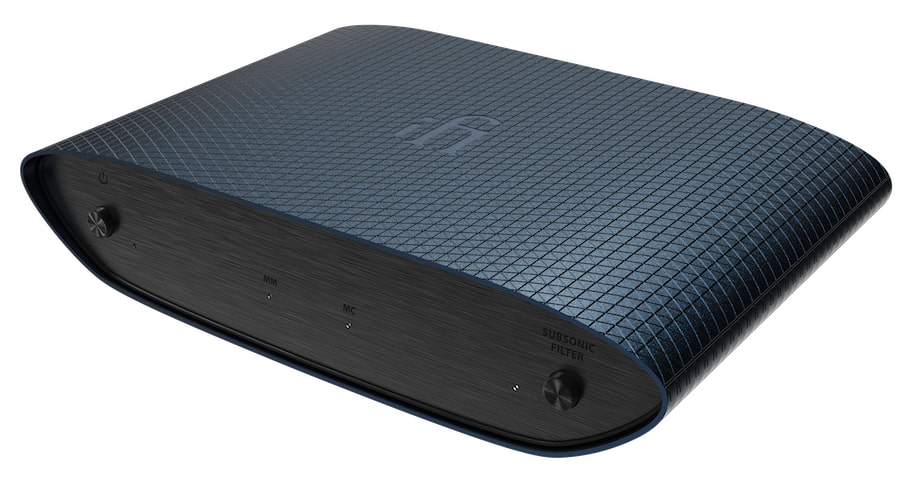
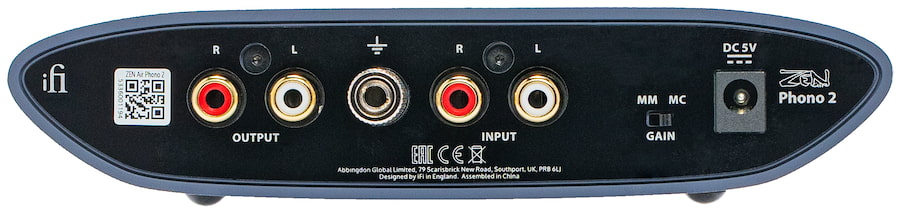
iFi Audio has introduced the ZEN Air Phono 2, an entry-level phono preamp designed for vinyl listeners who need more flexibility and better accuracy than what most built in solutions deliver. Building on the original ZEN Air Phono, this updated model tightens RIAA equalization for improved sonic precision and adds broader cartridge compatibility, supporting both moving magnet and moving coil designs.
The timing makes sense. Vinyl continues to attract new listeners, but the hardware they are plugging into often lags behind. Most budget integrated amplifiers and A/V receivers offer only a basic MM phono stage, and the performance is usually average at best. MC support is almost nonexistent at this level. At the same time, powered Bluetooth speakers rarely include a phono input at all, and the few that do tend to treat it as an afterthought. Products like the ZEN Air Phono 2 fill that gap, giving turntable owners a straightforward way to get proper gain, accurate RIAA playback, and a cleaner signal path without overspending.
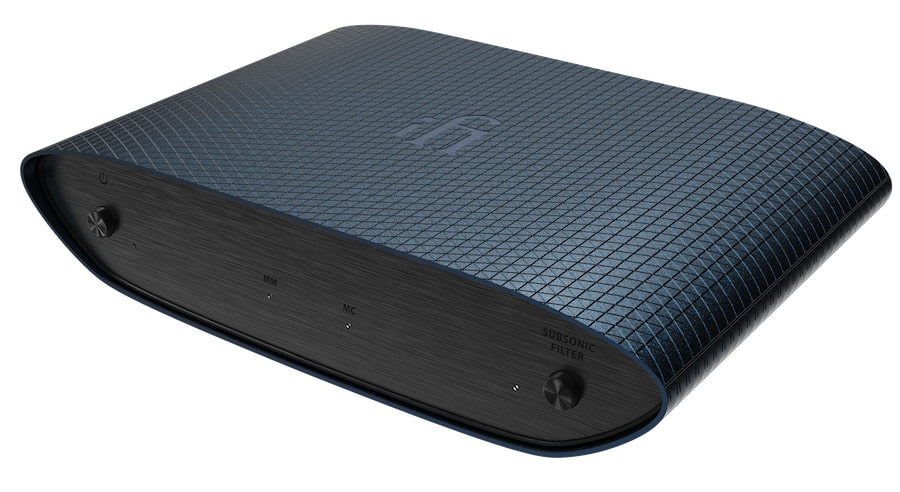
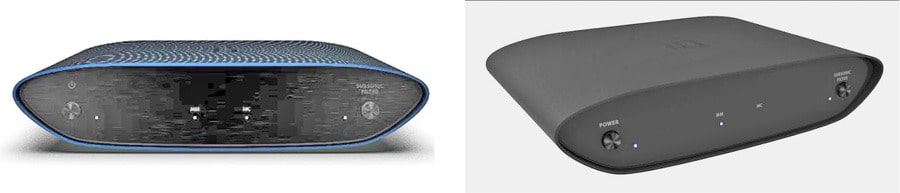
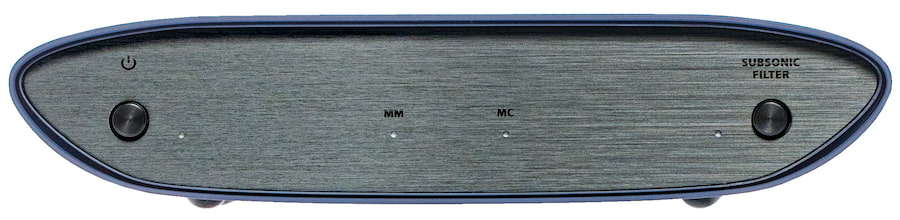
The ZEN Air Phono 2
Key Features
MM and MC Cartridge Support: Unlike most stereo and AV receivers that include a basic phono input limited to moving magnet cartridges, the ZEN Air Phono 2 supports both moving magnet and moving coil designs, offering broader compatibility for users who may upgrade cartridges over time.
RIAA Equalization: Vinyl records are cut using inverse RIAA equalization, which must be accurately reversed during playback. The ZEN Air Phono 2 applies iFi Audio’s RIAA curve with a stated +/-0.15 dB tolerance, ensuring proper tonal balance and more accurate reproduction of the original recording.
Adjustable Gain: Turntable cartridges are available in moving magnet and moving coil designs, and while both convert the groove information into an electrical signal, their output levels differ significantly. The ZEN Air Phono 2 includes switchable gain settings to properly match each type, with 40 dB for MM and 64 dB for MC, ensuring appropriate signal level and system compatibility.
Advertisement
Rumble: Warped records can introduce low frequency noise, often referred to as rumble, during playback. Many phono stages include a subsonic filter to reduce this, but those filters can also affect low frequency information. As a result, some listeners prefer to avoid them, especially if they are concerned about preserving bass response.
Subsonic Filter Design: Since 2012, iFi Audio has addressed this issue with its own subsonic filter design. By accounting for how records are cut and replayed, the circuit treats vertical and lateral groove information differently, targeting warp-related artifacts while aiming to preserve low frequency content and avoid additional phase issues.
Noise: The noise floor of many built in phono stages can be audible even in modest systems, often sitting high enough to mask low level detail in the recording. The result is reduced resolution and a less accurate presentation of the music.
The ZEN Air Phono 2 provides a super-silent noise floor with an EIN (Equivalent Input Noise) of -151dBV. This results in the ZEN Air Phono pushing noise far below the music itself, revealing greater details and subtlety in your favourite records. It achieves this through an innovative high-current power supply design, carefully isolated from the amplification stage.
Advertisement
Channel Symmetry: The Zen Air Phono 2’s circuitry supports symmetrical channel layout. The ZEN Air Phono 2 offers similar benefits to balanced circuitry, such as lower crosstalk and improved channel separation. This type of circuitry design is very rare in phono stages at this price point – and iFi reinforces this design with premium components, including custom OV series operational amplifiers.
MM (30db ±1dB) 86dB (A-weighted) re 1V MC (64dB ±1dB) 40dB (A-weighted) re 1V
MM (40dB ±1dB):86dB (A-weighted) re 1V MC (64dB ±1dB):82dB (A-weighted) re 1V
EIN (Equivalent Input Noise)
MM 6.5nV | /Hz (unweighted); -126dBV (A-weighted) MC 0.6nV | /Hz (unweighted); -146dBV (A-weighted)
MM 6.5nV | /Hz (unweighted); -130dBV (A-weighted) MC 0.6nV | /Hz (unweighted); -151dBV (A-weighted)
Total Harmonic Distortion
MM <-90dB / 0.005% re 1V MC <-80dB / 0.036% re 1V
MM (40dB ±1dB):86dB (A-weighted) re 1V
MC (64dB ±1dB):82dB (A-weighted) re 1V
Power Requirements
DC 5V/1A (centre +ve)
DC 5V/1A (centre +ve)
Power Consumption
<1.8W
<1.8W
Dimensions
158 x 100 x 35 mm 6.2” x 3.9” x 1.4”
158 x 117 x 35 mm 6.2″ x 4.6″ x 1.4″
Net Weight
323g (0.72 lbs)
320g (0.71 lbs)
The Bottom Line
The ZEN Air Phono 2 lands exactly where it needs to at $129. Its biggest advantage is straightforward: very few phono preamps at this price offer both MM and MC support with usable gain, tighter RIAA accuracy, and a thoughtful approach to noise and rumble. That alone makes it more flexible than most built in phono stages and a lot of entry level outboard options.
Advertisement. Scroll to continue reading.
What it doesn’t offer is just as clear. There’s no provision for adjustable cartridge loading, no balanced connections, and only a single set of inputs. Users who need precise control over impedance or more granular gain options for high output or very low output MC cartridges will find the adjustment flexibility limited.
Advertisement
Who is it for? Anyone running a turntable into a system with a weak or nonexistent phono stage, especially those using powered speakers or budget amplifiers. It also makes sense for listeners planning to step into moving coil cartridges without replacing their entire front end. If your goal is better accuracy, lower noise, and broader compatibility without overspending, this gets you there without unnecessary complexity.
from the this-is-why-we-can’t-have-nice-things dept
In late 2023, I wrote a feature for The Verge exploring the FCC’s attempt to stop race and class discrimination in broadband deployment. For decades, big telecoms have not only refused to evenly upgrade broadband in low income and poor areas (despite billions in subsidies for this exact purpose), they’ve provably charged poor and minority neighborhoods significantly more money for worse service.
To be clear: the Biden FCC’s plan didn’tactually stop such discrimination. The previous FCC didn’t even have the moral courage to call out big telecoms with a history of such practices (see: AT&T’s “digital redlining” in cities like Cleveland and Detroit). The FCC simply acknowledged that this discrimination clearly exists and set up a complaint process for consumers who had been discriminated against.
I’m not sure the loophole-filled rules would have ever resulted in meaningful accountability for providers, given holding telecom monopolies accountable has never been a serious priority for either party. But it was at least an acknowledgement that this obvious discrimination exists. For the first time ever. Which was important for what I would hope is obvious reasons.
No longer: the Republican-stocked 8th Circuit Court of Appeals has struck down the entire FCC effort in a ruling, stating the FCC exceeded its legal authority by imposing liability for actions resulting in “disparate impact,” instead of merely policing “disparate treatment.” And by extending the complaint process to include subcontractors who help ISPs with deployment:
Advertisement
“[The FCC] exceeded its statutory authority in two respects that are the core of the final rule—disparate impact liability and the definition of covered entities. We therefore vacate the final rule in its entirety, leaving the FCC with an unfinished obligation to ‘adopt final rules to facilitate equal access to broadband Internet access service’ in compliance with 47 U.S.C. § 1754.”
That resulted in the whole effort being discarded.
The FCC could try to re-establish the rules with a new effort, but that new effort likely wouldn’t survive our new reality created by our corrupt courts dismantling Chevron Deference. Republicans and corporate power have made holding large U.S. companies accountable for almost anything illegal, and it’s still somehow not being talked about enough, given the vast (and quite deadly) looming ramifications.
While the Judges and case intervenors like to put on a very serious adult face and pretend they’re engaging in very serious legalese, the goal here really is no meaningful oversight of telecom monopolies. There’s always something they concoct to suggest the U.S. government can’t engage in basic consumer protection oversight of telecoms. If it wasn’t this, it would be something else.
The impact of this assault on the U.S. federal regulatory state is everywhere you look. Especially in broadband access, where dominant regional monopolies and state and federal regulatory capture (read: corruption) result in spotty access, slow speeds, and abysmal consumer service for everyone. Minorities and marginalized communities just get hit hardest, and usually first.
Advertisement
The ruling, issued unanimously by three judges appointed by Republican presidents, is a double win for folks like FCC boss Brendan Carr, who likely enjoys both the racism and protecting lumbering telecom monopolies from accountability for decades of predatory behavior. As usual, Carr insisted in a statement that fighting discrimination somehow discriminates against white people:
“Today’s appellate court decision is another common-sense win for nondiscrimination.
…the FCC’s decision to adopt those illegal rules only made it harder for providers to bridge the digital divide and took the FCC’s focus off of our core mission.
Now, the FCC is focused on advancing our Build America Agenda and ensuring that regulated entities do not discriminate, including through our efforts to end invidious forms of DEI discrimination. I commend the appellate court for correcting the FCC’s misguided 2023 decision. The court’s ruling follows the Supreme Court’s decision last week making clear that intentional discrimination is unlawful.”
That is, well, patently false. And weird. And an extremely dystopian inversion of reality by zealots. Consumer groups fighting for equitable and affordable broadband (like Public Knowledge) were, in contrast, not impressed. From Public Knowledge’s Legal Director, John Bergmayer:
Advertisement
“The practical effect is to eliminate a rule that addresses a documented problem,” he said. “Lower-income neighborhoods and communities of color get slower service, older equipment, and higher prices for the same product their richer neighbors buy. After today, the FCC can act only when it proves a smoking-gun case of conscious bias, which almost never exists in writing.”
Great stuff. Thanks again to all the folks (especially rich Silicon Valley CEOs) who decided that a corrupt kakistocracy at the hands of racist zealots was just what an already struggling America needed.
Sony is partnering with Bandai Namco Holdings Inc. (the parent company of Bandai Namco Entertainment) on a “collaborative pilot initiative” focused on generative AI and its role in the future of video production. AI was a big theme in the company’s latest earnings and corporate strategy presentation, with Sony President and CEO Hiroki Totoki describing the technology as an “amplifier of human imagination and a catalyst for new possibilities,” while insisting that it won’t replace artists or creators.
On the gen AI project with Bandai Namco — which admittedly sounds quite vague and may well not go anywhere — Totoki said the companies have seen “massive gains in speed and productivity per person.” He also highlighted “a lack of consistency and controllability” as an issue for professionals in the space who demand both of these things in their work, but said AI has allowed those involved in the project to achieve a level of sophistication in production that wasn’t previously possible due to time constraints.
Given Bandai Namco’s association with video games, the fact that Totoki didn’t explicitly talk about gaming with regards to the Gen AI project seems a bit odd (then again, it is a thorny topic right now). Sony Interactive Entertainment chief Hideaki Nishino, however, did have a lot to say about how AI in general is being embraced within PlayStation. Nishino said that development cycles — increasingly generation-spanning in the case of first-party PS5 games — can be sped up by AI, while “enabling more creators to enter the market.”
What’s more concerning is Nishino’s admission that AI will create a “meaningful increase in the volume […] of content.” You know: slop. He added that that his company’s studios and IP are committed to ensuring that they only put out “high-quality” games that players come to PlayStation for.
Advertisement
Nishino talked about how studios like Naughty Dog and Sony’s San Diego Studio have adopted a facial animation tool called Mockingbird, which animates 3D models after they’ve been through performance capture. AI is also helping with hair animation, with models fed videos of real hairstyles and then outputting images with “hundreds of strands” modeled.
“As AI capabilities evolve, the role of our creators will remain unchanged,” Nishino said. “The vision, the design, and the emotional impact of our games will always come from the talent of our studios and performers. AI is meant to augment their capabilities, not replace them.”
AI is also at the heart of the PS5 Pro’s PlayStation Spectral Super Resolution upscaling tool, which was recently updated to be more effective and is now supported in a large number of third- and first-party games. PSSR is almost certain to be a big theme of the PS6 when that rolls around, but you only have to look at the community’s reaction to NVIDIA’s unveiling of DLSS 5 to see what happens when AI upscaling gets a bit too ambitious.
The other half of Sony’s presentation was focused on its gloomy quarterly earnings, in which the company announced a 46 percent downturn in PS5 sales in its fourth fiscal quarter compared to last year. Sony sold just 1.5 million PS5s in the last quarter, and like most large tech companies is currently battling rising costs and memory shortages. The company recently increased the price of its entire console lineup, the second price hike in 12 months.
Longtime Slashdot reader Qbertino writes: The Fehrmarnbelt tunnel is a European construction megaproject building a tunnel between Denmark and Germany, crossing the Fehmarnbelt in the Baltic sea. The first segment of the tunnel has now successfully been placed in its designated spot. This is a yet-unseen, next-level engineering feat achieved by the Danish Sund & Baelt construction company. It took 14 hours and used a massive pontoon ship built specifically for this project.
The tunnel segments are 217 meters long, weigh more than 73,000 metric tons, and have to be placed within a tolerance of 3 mm. The tunnel will eventually consist of 89 of these segments, be 18 km long, and connect the Danish city of Rodby with the German island Fehmarn through five individual tunnel tubes: two for cars, two for trains, and one rescue and maintenance tunnel. Crossing time will be reduced from a 45-minute ferry crossing to seven minutes by train or 10 minutes by car, and cut the travel time between the German city of Hamburg and the Danish capital, Copenhagen, down to 2.5 hours. The project’s planned completion is set for the year 2029. German news Tagesschau has some details and a neat animation, while further details are available from the German tech news site Heise.
There is no denying that drone warfare and the associated technology have become a crucial part of modern warfare. These unmanned flying objects come in various shapes and sizes and can perform a wide variety of tasks — ranging from aerial reconnaissance and intelligence gathering to offensive missions such as taking out enemy equipment and engaging enemy soldiers. The top modern-day military powers have a wide array of drones in their repertoire. Yet, even as military drones become more advanced and sophisticated, a surprising trend has emerged: armed forces are increasingly turning to low-cost, low-tech drones capable of threatening vastly more expensive, technologically superior equipment. The most recent example of this is Japan. The country’s defense minister recently met with a start-up that is developing disposable drones made of corrugated cardboard.
The company behind Japan’s disposable cardboard drones is AirKamuy, and the model in question is christened the AirKamuy 150. Very little is known about the drone as far as technical specifications go; however, what is already known is that it can be assembled in under five minutes, is capable of reaching speeds of up to 120 km/hr (120 mph), has a range of around 50 miles, and can remain airborne for up to 80 minutes. These small drones are shipped flat-packed, which means several units can be packed inside a single standard-sized shipping container.
The most remarkable facet about the AirKamuy 150, however, is its price, which reportedly ranges between $2,000 and $3,000. This is an incredibly low acquisition cost by military standards. To put things into perspective, Iran’s cheap Shahed drones, which gained notoriety in the recent U.S.-Iran conflict, cost anywhere between $20,000 and $50,000 to build.
Advertisement
Use cases for the AirKamuy 150
Mediaproduction/Getty Images
Given the sheer ease of use and quick deployability of the AirKamuy 150 cardboard drone, it is touted by senior company officials to be used as a swarm drone. For those unaware, the term “swarm drones” is given to large groups of unmanned drones (UAVs) that function as a single coordinated unit to perform various tasks. In military use, drone swarms can be used to conduct precision strikes and electronic warfare without needing the help of more sophisticated and expensive equipment. The drone can also be used for various civil applications, including the transportation of medicines and as part of emergency response mechanisms.
Japan’s defense minister, who was recently seen posing with the drone, also revealed that the country is already considering using AirKamuy’s cardboard drones for the Maritime Self-Defense Force. There is no denying that we know very little about the actual real-world performance of this cardboard drone. However, given the excellent track record of similar low-cost drones in battlefields around the globe, expectations are high as far as the AirKamuy 150 drone is concerned.
AirKamuy’s entry into the world of low-cost, expendable, cardboard drones has definitely attracted global attention. It is quite likely, therefore, that other companies engaged in the design and manufacturing of drones may come up with similar drones in the near future.
The Ikea Varmblixt smart donut lamp takes one of Ikea’s most recognisable designs and gives it a smart home upgrade, without overcomplicating things. It still looks like a glowing sculpture first and a gadget second, which is exactly the point. You’re not getting cutting-edge lighting effects or Hue-level polish, and the brightness won’t carry a whole room, but it’s more about atmosphere than illumination. And for the price, it pulls that off rather nicely, albeit with a few connectivity issues.
Impactful design
Lovely soft glow
Matter over Thread support
Flexible control options
Not very bright
Basic lighting effects
Occasional connectivity hiccups
Pairing quirks
Squirrel Widget
Advertisement
Key Features
Introduction
Three years on from its original viral moment, the Varmblixt doughnut is back. Only this time it’s gone smart as part of Ikea’s big Matter over Thread push.
The original version made a name for itself as a chunky, glowing orange ring that looked more like modern art than a lamp. This new version dials things back visually with a frosted, matte glass finish, but quietly adds a full smart lighting setup underneath.
It’s the same sculptural design, but now with colour control, dimming, and that all-important cross-platform compatibility thanks to that Matter connectivity.
Advertisement
Advertisement
Read on for my full Ikea Varmblixt smart lamp review.
Design and placement options
Quite large
Wall or table mount
As mentioned above, it still looks like a big glowing donut. That hasn’t changed. What has changed is the finish.
Image Credit (Trusted Reviews)
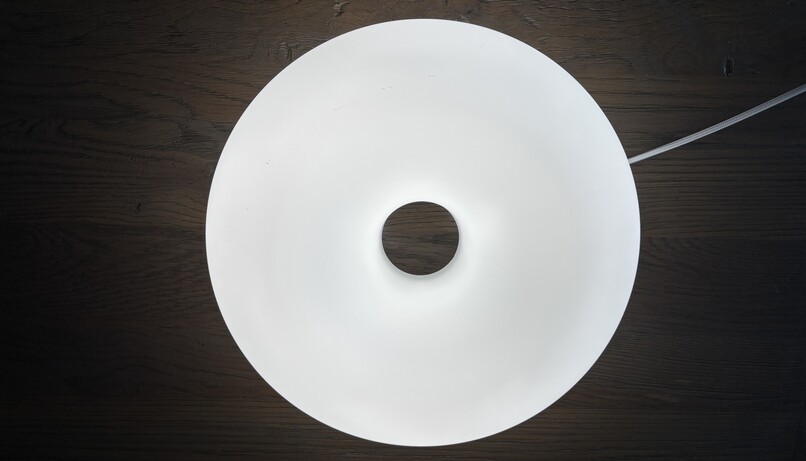
The original bold orange is gone, replaced with a frosted white glass tube that diffuses light much more softly. You can still make it glow orange if you want, it just doesn’t scream it when switched off.
Advertisement
Physically, it’s not a small thing. At 30cm across, it’s got real presence. On a wall, that works in its favour. On a table, it can feel a bit like you’ve parked a sculpture where a lamp should be.
It’s designed to do both but the wall mounting does feel like the more natural fit. It looks intentional there. On a sideboard or coffee table, it borders on bulky.
Advertisement
Image Credit (Trusted Reviews)
Installation is refreshingly simple. There’s the normal Ikea flatpack-style instructions in the box but you really won’t need them.
A single screw holds the backplate in place, and the glass ring clips on over the top. That’s it. On a desk it’s obviously even easier than that.
Image Credit (Trusted Reviews)
Advertisement
The actual light source lives in that backplate; it’s essentially a short light strip wrapped into a circle, with the glass acting purely as a diffuser.
There’s a fabric-style nylon cable running out the bottom, which is a nice touch, and a physical toggle switch tucked underneath for manual control. It does need constant power, so cable management is part of the deal.
Image Credit (Trusted Reviews)
That constant power does mean that it doubles up as a Thread mesh extender too, but more on that in a bit.
Features
Matter compatible
Comes with wireless remote
This is where things get more interesting, and slightly more complicated than you would probably like.
Advertisement
Advertisement
The lamp ships with a Ikea Bilersa remote, which is actually its own standalone Matter device. That’s both clever and, at times, a bit confusing.
Image Credit (Trusted Reviews)
Out of the box, the remote isn’t paired to the lamp. Pairing them is straightforward (weirdly, it will use Zigbee for this), but there’s a catch. If you then add the lamp to a Matter ecosystem afterwards, it unpairs the remote. Which feels a bit backwards.
Once everything is set up in the default smart-but-not-smart mode, the remote can cycle through 12 preset colours, adjust brightness, and handle basic on and off control.
However, if you bring it into a wider smart home setup by pairing it via Matter, you can reassign it to control pretty much anything; not just limited to the Varmblixt lamp itself.
Image Credit (Trusted Reviews)
Advertisement
You could, for example, have some button presses assigned for lamp control, but also have some combinations controlling other things like blinds, heating or any other smart home automation.
Advertisement
The lamp itself is a Matter over Thread device, so it plays nicely with platforms like Apple Home, Amazon Alexa, and Google Home, assuming you’ve got a Matter Controller and a Thread Border Router in place.
These are built into a wide range of existing devices like Apple TVs, Echo smart speakers, Google Nest devices, Eero routers and even things like refrigerators, monitors, TVs and soundbars from Samsung.
You can also go down the Ikea route with the Dirigera hub and its app, but unlike some ecosystems, you’re not really unlocking anything dramatically new by doing so. The feature set is fairly basic across the board.
Image Credit (Trusted Reviews)
There are no fancy gradients or dynamic effects here. It’s more old-school smart lighting. Pick a colour, adjust the brightness, maybe tweak the white temperature, and that’s your lot.
Advertisement
Advertisement
Ikea’s approach is very much part of the company’s wider shift away from Zigbee and towards Matter over Thread.
Pairing is straightforward if you’ve done Matter before. Simply scan the code, pick your platform, and you’re off.
Image Credit (Trusted Reviews)
The lamp supports multi-admin as well, so you can share it across ecosystems without much fuss. In testing, it happily lived inside my Apple Home while also being accessible via Alexa and Home Assistant.
Image Credit (Trusted Reviews)
There’s something quite nice about how flexible it is. You can go full smart home integration, or you can ignore apps entirely and just use the included remote.
Advertisement
A lot of people will probably do exactly that. Treat it as a “smart-ish” lamp rather than a deeply integrated one.
Advertisement
Performance
Once set up, the lamp mostly does what you’d expect.
Colours are well judged. Not overly saturated, not washed out. The whites are particularly nice, with a good spread from cooler tones through to warmer, more ambient shades. It works well with adaptive lighting in Apple Home, which helps it blend into a wider setup.
Image Credit (Trusted Reviews)
Brightness is limited though. At 180 lumens, this is never going to light up a room. It’s there to create a mood, not replace your ceiling lights.
Advertisement
Response times, when connected, are quick enough. Commands land fast and transitions are smooth, especially when cycling through colours.
Advertisement
Image Credit (Trusted Reviews)
Connection stability was a bit hit and miss during testing. There were occasional dropouts where it would disappear for a few seconds before coming back online.
Squirrel Widget
Should you buy it?
You want a simple, smart light
Ideal for wall mounting, this smart light adds atmosphere to any room.
Advertisement
If you want dynamic lighting, gradients or similar, look elsewhere.
Advertisement
Final Thoughts
The Varmblixt smart donut doesn’t try to compete with feature-heavy rivals, and that’s probably the right call.
It leans into what made the original popular in the first place. A distinctive design that doubles as a light source. The smart features are there to support that, not take over.
If you’re after bright, highly customisable lighting with loads of effects, you’ll still be looking at brands like Philips Hue or Govee. This isn’t that.
Advertisement
But if you want something that looks good on the wall, adds a bit of atmosphere, and slots into a modern smart home without too much hassle, it’s an easy one to like.
Advertisement
How We Test
We test every smart light we review thoroughly over an extended period of time. We use industry standard tests to compare features properly. We’ll always tell you what we find. We never, ever, accept money to review a product.
Find out more about how we test in our ethics policy.
Advertisement
Used as our main smart light for the review period
Tested for at least a week
We measure the light output from bulbs at different colour temperatures and colours so we can compare light output
We test compatibility with the main smart systems (HomeKit, Alexa, Google Assistant, SmartThings, IFTTT and more) to see how easy each light is to automate
FAQs
Where can the Ikea Varmblixt Smart Lamp be mounted?
You can place it on a table (although the light is very wide), or you can wall mount.
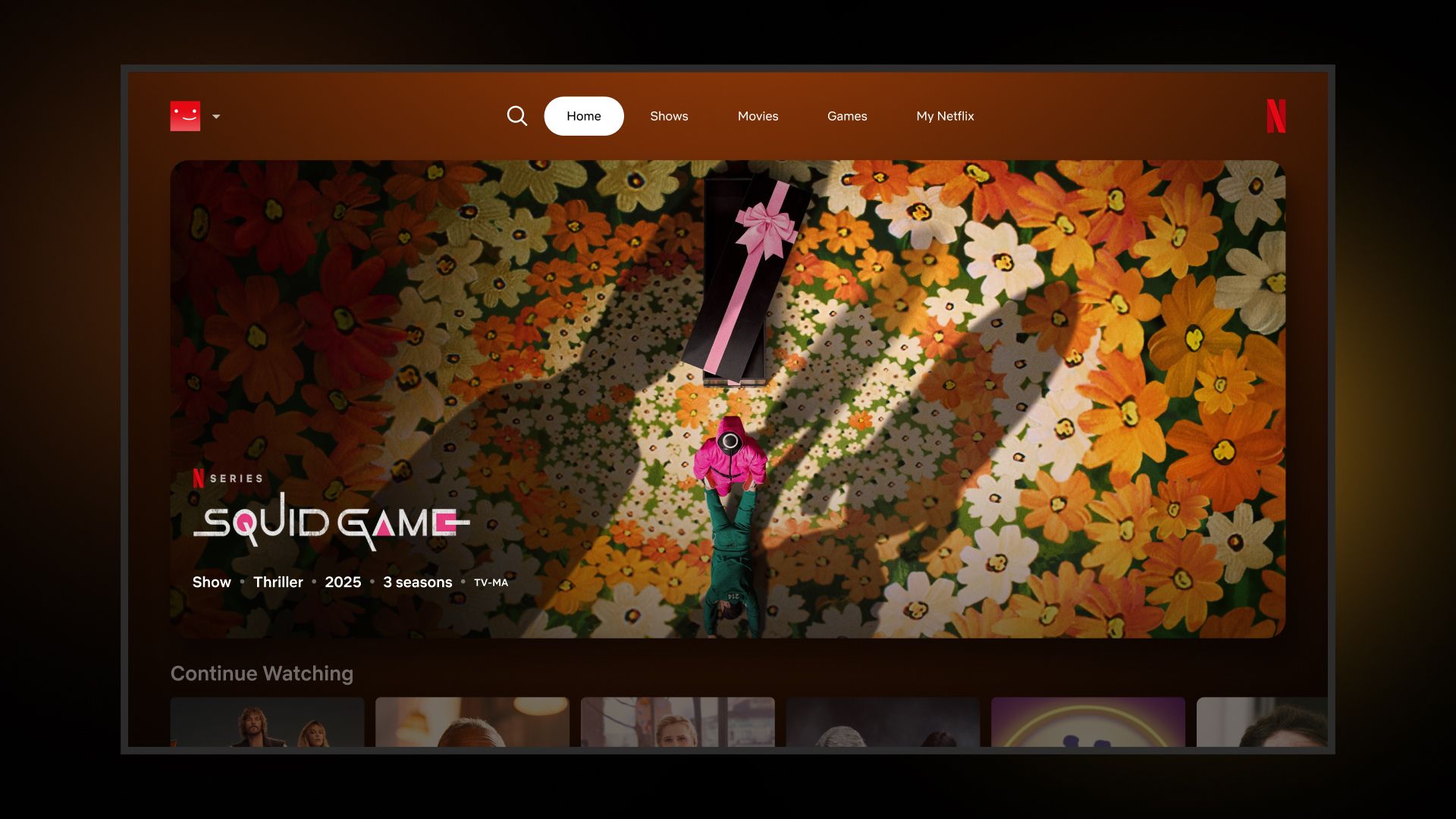
Netflix is testing a new AI-powered voice search feature that could finally put an end to endlessly scrolling through menus trying to find something to watch.
As shared by The Verge, the feature is currently rolling out to a small number of users in the US. It lets viewers press the Netflix button on their remote and then ask for recommendations using natural language prompts instead of standard genre searches. Rather than typing in “comedy” or “thriller,” users can say things like “I need a good cry” or “help me stay awake” and get tailored viewing suggestions in response.
According to the publication, the feature is surprisingly good at handling more specific or unusual requests. It surfaces recommendations that feel more thoughtful than the usual algorithm-driven rows most users are used to seeing.
What makes this more interesting, though, is where the feature lives. Instead of relying on Google Assistant, Gemini,Alexa or built-in smart TV search systems, Netflix is keeping the experience inside its own app. That means users can search directly through Netflix’s catalogue without bouncing through a TV platform’s broader voice assistant.
Advertisement
It’s a subtle move, but an important one. Streaming platforms and smart TV operating systems have increasingly been competing over who controls discovery, recommendations and search. This is especially apparent as AI becomes a bigger part of the TV experience. By building its own native voice assistant, Netflix keeps users inside its ecosystem rather than handing discovery over to Google TV, Roku or Fire TV.
Advertisement
The feature is still in beta and only available to select users for now. Early testing appears to support Google TV devices, including Chromecast with Google TV and some TCL televisions. However, it reportedly isn’t working on Roku or Amazon Fire TV hardware yet.
Netflix hasn’t said when the feature will expand more broadly, but the direction is pretty clear. Instead of spending 20 minutes scrolling through endless thumbnails before giving up and rewatching The Office, Netflix wants you to simply ask your TV what you’re in the mood for.
Apple’s long-running interest in glasses-free spatial display technology has resurfaced amid supply chain rumours, with a leaker claiming Samsung is developing a holographic panel that component suppliers have informally linked to a future device internally described as a “Spatial iPhone.”
Samsung’s role in this rumour is grounded in part in published research, with its Advanced Institute of Technology publishing a Nature Communications paper in 2020 detailing a steering-backlight unit that expanded holographic video viewing angles by 30 times compared to conventional displays, directly addressing one of the core engineering barriers to viable handheld holography.
The rumoured display, codenamed MH1 or H1, builds on that research by reportedly combining eye-tracking with diffractive beam-steering, a method that uses microscopic structures embedded in the display layer to bend light toward the viewer’s eyes, generating perceived depth without requiring glasses or any external hardware.
Advertisement
A nano-structured holographic layer integrated into the AMOLED stack would reportedly activate only for specific content rather than running continuously, preserving full 4K resolution for standard tasks and sidestepping the image degradation associated with older lenticular lens-based 3D screens, which sacrificed clarity for the depth effect.
Advertisement
Apple’s interest in this territory is not new, with the company filing patents for glasses-free autostereoscopic display technology as far back as 2008 and receiving a patent for an interactive holographic display device in 2014, though neither effort resulted in a shipping product.
The MH1 project sits in phase one of research and development, with the leaker placing holographic smartphones broadly in a 2030 timeframe rather than signalling any imminent release from either manufacturer.
A couple weeks back we brought you news of KernelUNO, a command line shell and very simple operating system for the Arduino Uno. It’s a neat idea, so it’s hardly surprising to see someone port it to another microcontroller and add more features.
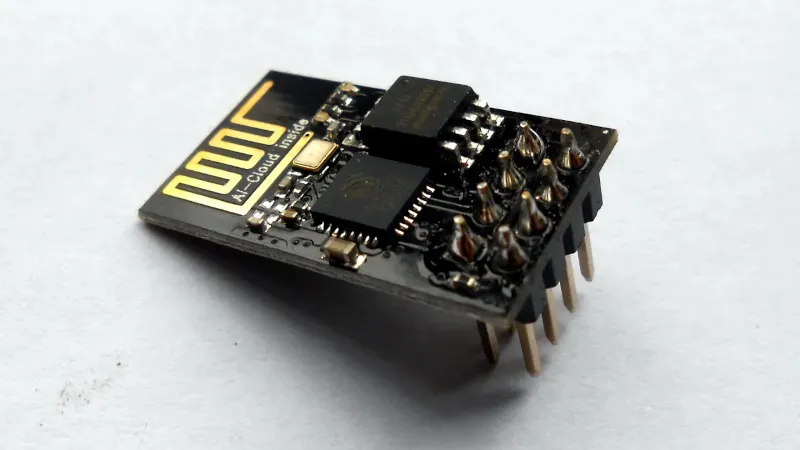
Here’s [hery-torrado], with KernelESP for the ESP8266, which takes the original idea and adds a web console, scheduled jobs, sensor rules, scripting, NTP, and a JSON API. The networking using the ESP’s built-in WiFi takes the original and makes it significantly more useful.
It’s worth suggesting that the ability to call URLs with GET data to pass things to APIs would be useful on a networked processor too, but this is already so well featured it seems rude to ask for more. Yet again though, this project has given a new life to an old chip, and we think it has a way further to go. Perhaps a port to the ESP32 would allow it to reach its full potential, or maybe for a ridiculously cheap and powerful platform, the CH32 series of chips. We look forward to see what more will come from KernelUNO.
Rumors now place these new AirPods Ultra deep into advanced testing at Apple. Internal teams wear working prototypes every day while the company checks every detail before larger production runs begin. The project has stretched across four full years, and the latest reports say the design and features sit nearly locked in place.
Each earbud reportedly has a small infrared camera built into a stem that runs noticeably longer than existing models. These cameras only capture low-resolution glimpses of what lies ahead. They completely skip photographs and videos. The only job is to convey basic visual data to a sharper version of Siri that is currently being refined.
REBUILT FOR COMFORT — AirPods 4 have been redesigned for exceptional all-day comfort and greater stability. With a refined contour, shorter stem…
PERSONALIZED SPATIAL AUDIO — Personalized Spatial Audio with dynamic head tracking places sound all around you, creating a theater-like listening…
IMPROVED SOUND AND CALL QUALITY — AirPods 4 feature the Apple-designed H2 chip. Voice Isolation improves the quality of phone calls in loud…
A user might stand in the kitchen and stare at a few ingredients scattered on the counter. A simple spoken question follows about what dinner those items could make. Siri draws on the view to offer ideas. The same process works for reminders triggered by objects spotted during a walk or for directions that reference a specific storefront or landmark instead of generic street names.
Apple built a tiny LED into the buds that glows whenever the cameras pass data to the cloud. The light serves as a clear signal that processing has started. Reports describe the buds as looking almost identical to the latest AirPods Pro except for those extended stems and the new indicator.
Original plans aimed for a launch sometime in the first half of this year. Delays arrived because the updated Siri software needed extra time to reach the necessary quality. That software now targets September alongside the next round of operating systems. Some analysts expect Apple might push the full AirPods release even later if the visual features still need polishing.
Prices will sit higher than the existing AirPods Pro. Branding details are unknown, although clues indicate to a premium name, such as AirPods Ultra, to distinguish the model in the lineup. Supply chain partners are already preparing safe components, and early demand predictions appear promising. [Source]
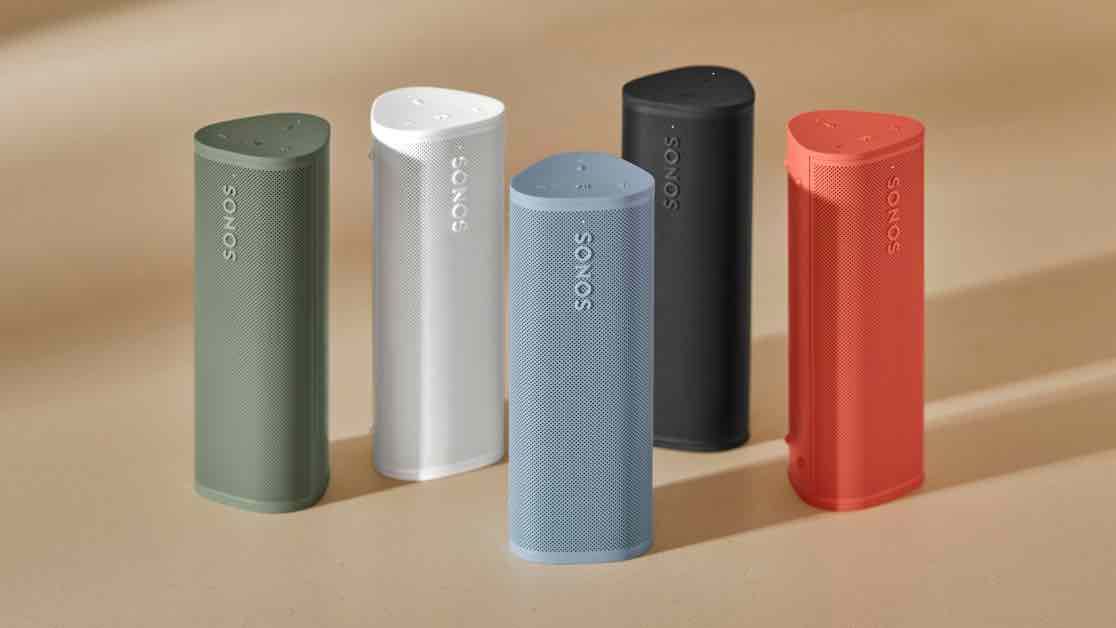
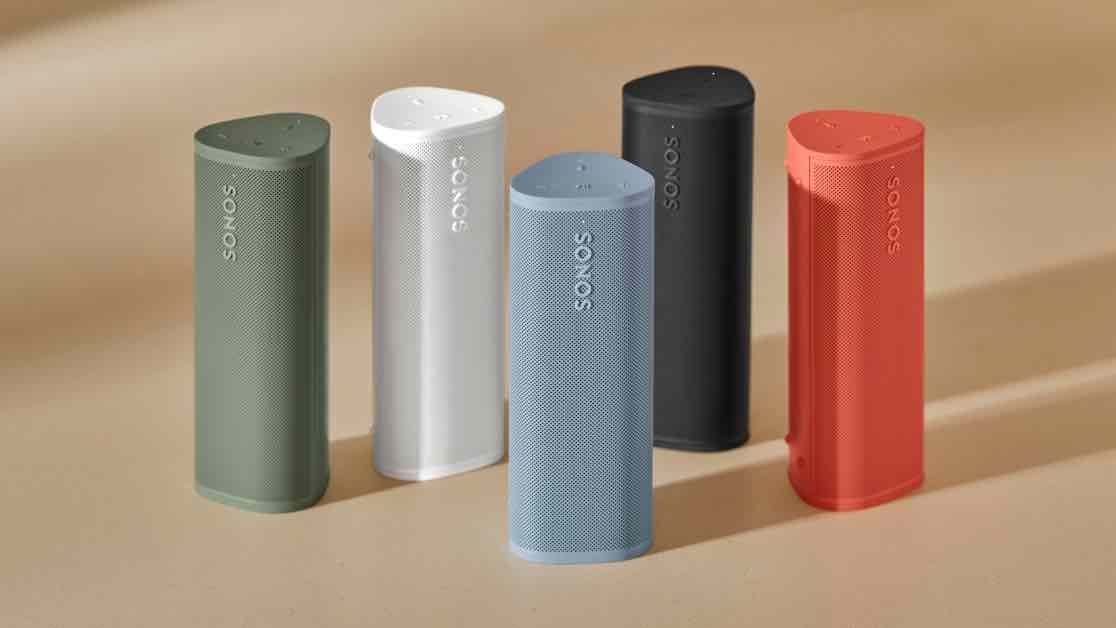
The Sonos Roam 2 is a sleek portable speaker with a built-in battery, which means you can either put it in a room and leave it or take it with you into the garden, to the beach, or even to a friend’s house. Just connect it to your phone, choose a track, and the Roam 2 will take care of the rest.
The £134 sale price is £5 cheaper than we saw during Black Friday and an incredible £45 off its retail price. If you want a bargain price for a premium Bluetooth speaker, this is it.
Advertisement
Today’s best Sonos speaker deal
“The Sonos Roam 2 delivers rich and clear sound reproduction that shows off every element of a track, and it’s very intuitive to use the speaker over Bluetooth or Wi-Fi.” That’s the verdict we reached in our Sonos Roam 2 review, where we gave it a near-perfect 4.5 out of five stars.
More specifically, we love the speaker’s ability to produce decent audio across the frequency range, which makes it an ideal choice for listening to a broad array of genres and artists. So, no matter what you’re into, the Roam 2 will not disappoint.
From a design perspective, the speaker not only looks fantastic but also boasts an IP67 resistance rating, which means it’s ready for a trip to the beach or a tumble in a park. And at just 0.95 lbs, you can sling it in a bag without feeling weighed down. All in, the Roam delivers in every area that it matters.
Advertisement
The fact that this is a record-low price makes now the perfect time to snag the Roam 2. If you’d like to see what else is out there before buying, then have a look at our best Bluetooth speakers guide and our audio deals page.





















































You must be logged in to post a comment Login