

Crypto World
Ripple-linked XRP pushes toward $1.40 as tightening range lowers breakout chances

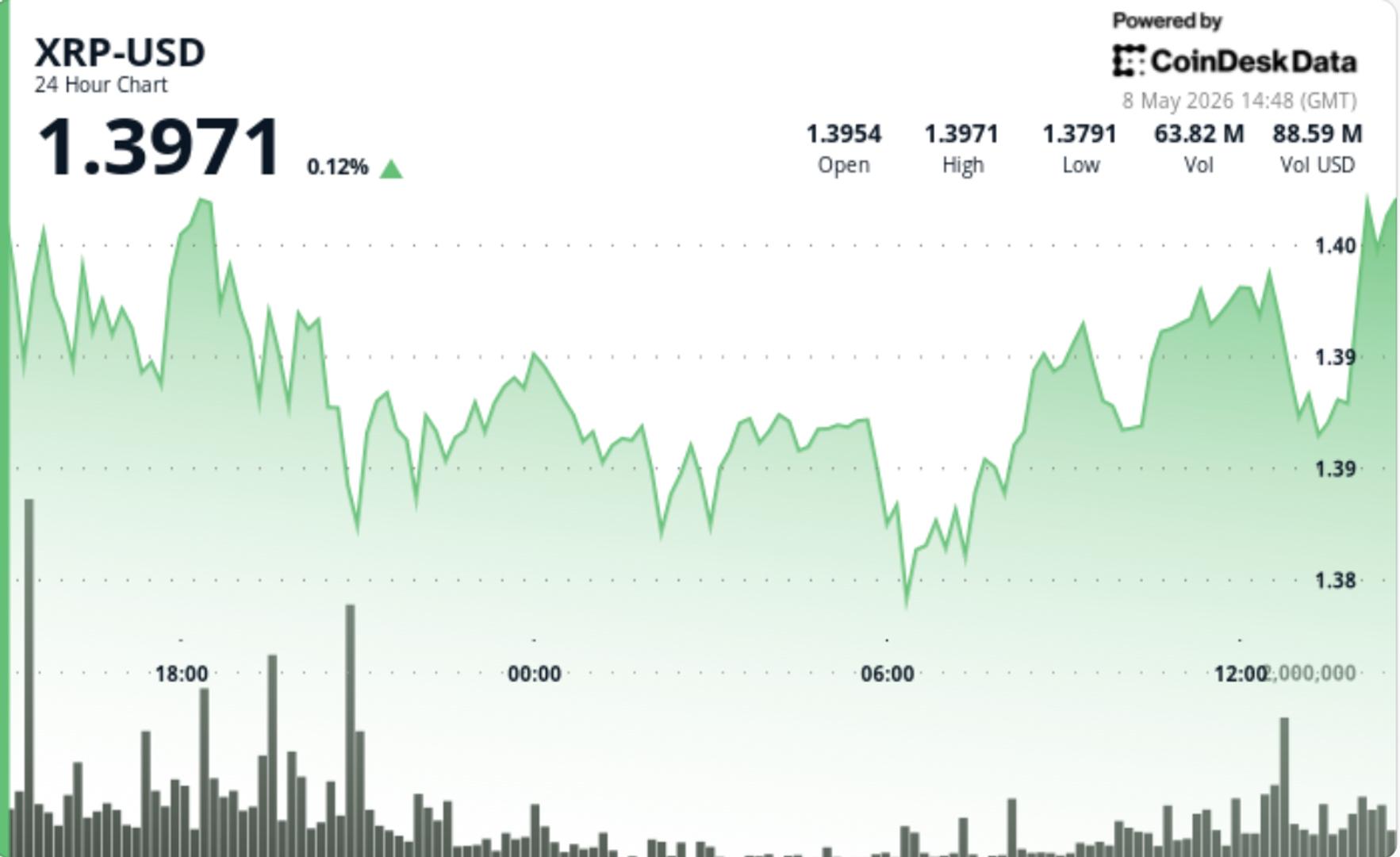
XRP keeps grinding toward the top of its recent range, and the move is starting to matter more because liquidity has thinned out while price keeps compressing underneath resistance. That combination tends to make breakouts sharper once the market finally picks a direction.
News Background
• Analysts continue pointing to longer-term bull flag and falling wedge patterns that resemble setups seen before previous XRP rallies.
• XRP ETF inflows and thinning Binance liquidity have added to speculation that the market is entering a higher-volatility phase after weeks of sideways trading.
Price Action Summary
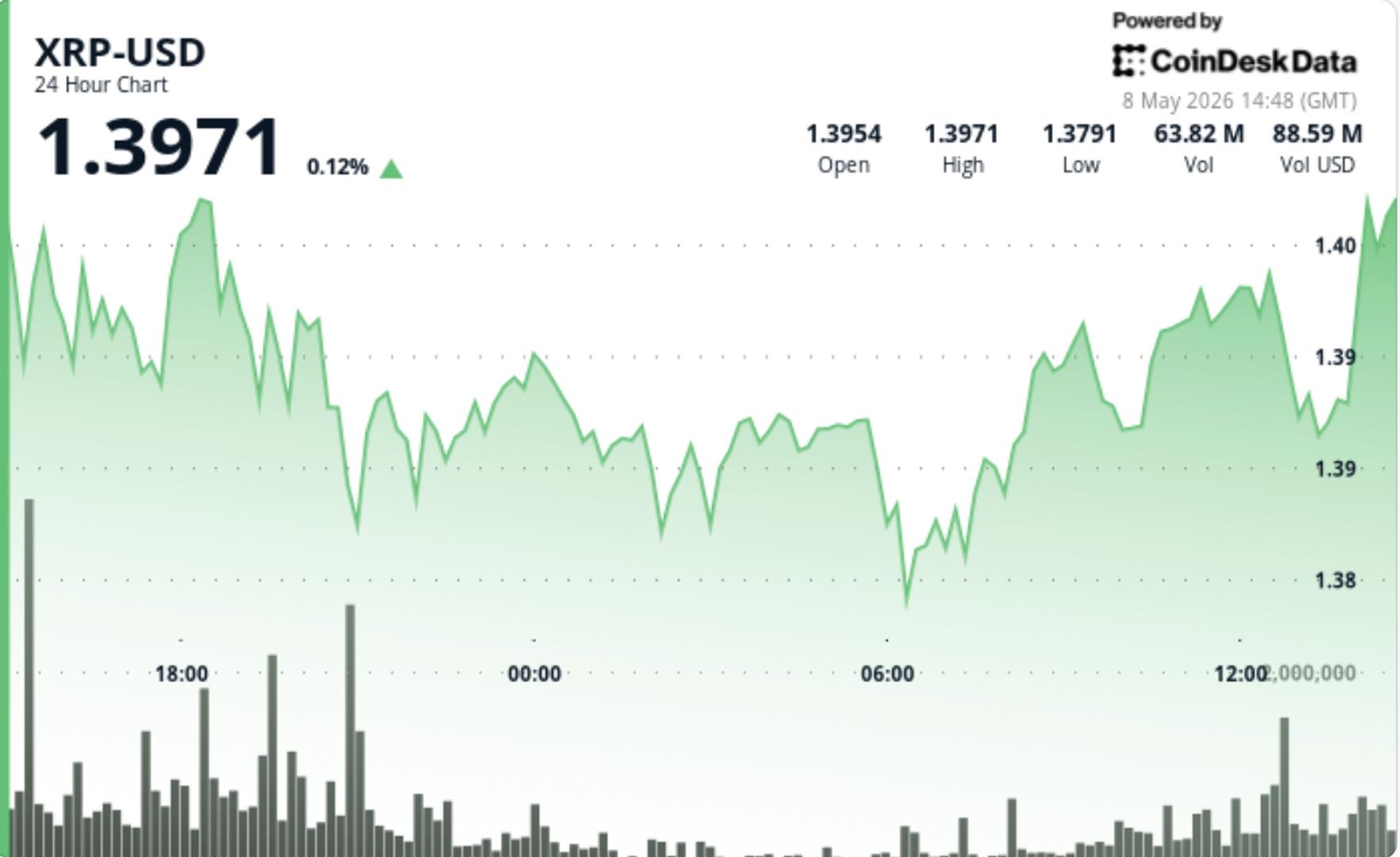
• XRP traded in a tight 1.4% range between $1.3787 and $1.3948 over the 24-hour session.
• A late-session push lifted price from $1.3879 to $1.3930 on a 1.45M volume spike, breaking above the immediate consolidation ceiling.
• Support repeatedly held between $1.3825-$1.3870, while sellers continued defending the $1.3930-$1.3950 zone.
Technical Analysis
• The market has spent weeks compressing between support near $1.38 and resistance just below $1.40, with volatility continuing to tighten.
• Volume expanding into the latest move higher matters because thin liquidity conditions tend to exaggerate price reactions once resistance finally gives way.
• XRP is still stuck below larger breakout levels near $1.47 and $1.50, but repeated tests of resistance usually weaken seller control over time.
• Analysts tracking bull flag and wedge formations continue targeting the $1.60-$1.73 range if the broader structure confirms.
What traders should watch
• $1.3930-$1.3950 is the immediate resistance zone. A sustained move above it shifts focus toward $1.42 and $1.47.
• $1.3825 remains the key support floor holding the current consolidation structure together.
• Liquidity conditions remain unusually thin, increasing the odds of a fast move once the range finally breaks.



British sprinter CJ Ujah is one of 10 suspects charged in a UK crypto fraud probe. Authorities say victims lost wallet funds to phone-based deception.
Ujah, 32, was charged with conspiracy to defraud after raids by the Eastern Region Special Operations Unit. The operation spanned Kent, Essex, and London. He was granted bail until 28 May at Chelmsford Crown Court.
From Doping Ban to Fraud Charges
The charges landed four years after Ujah’s career was disrupted by a 22-month doping ban tied to Tokyo 2020.
The Athletics Integrity Unit blamed a contaminated £10 ($13.63) beta-alanine supplement bought during the Covid-19 lockdown. He was later cleared of intentional doping.
That redemption narrative carried him through to the 100 m semi-finals at the 2024 European Championships in Rome. Ujah had not raced since April 2025 before this case emerged.
He ran the first leg when Great Britain won the 4x100m relay at the 2017 World Championships. That proved to be Usain Bolt’s final race.
How the Alleged Scam Worked
Investigators say members of the organised group posed as police officers and representatives of a crypto company. They pressured victims to share wallet seed phrases. One person reportedly lost more than £300,000 ($408,895).
Such impersonation tactics have surged across the industry. The Regional Organised Crime Unit warned that genuine police and crypto firms never request seed phrases by phone. They also never demand device access or urgent transfers.
Fellow British sprinter Brandon Mingeli, 25, was also charged. He represented Great Britain at the U23 level in 2021 and remains remanded in custody.
British Athletics has not commented publicly on the case. Both Ujah and his nine co-defendants are presumed innocent. The 28 May hearing will likely shape whether Ujah’s comeback continues.
The post British Athlete Involved in Olympic Doping Scandal, Now Jailed for Crypto Scam appeared first on BeInCrypto.
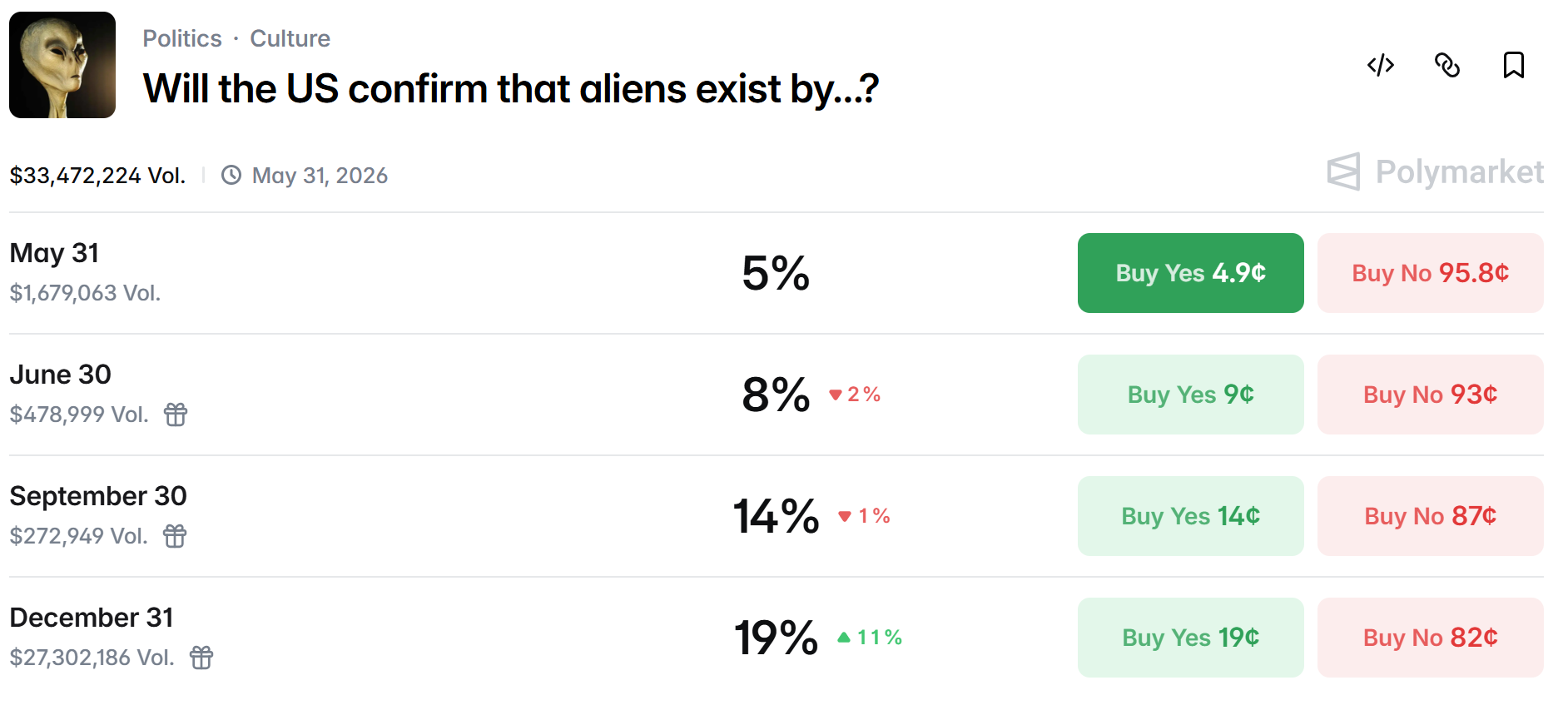
Crypto-native prediction markets reacted within minutes after the Pentagon released its first declassified UAP files on Friday, more famously being labeled as the ‘Alien Files’. Polymarket’s flagship alien disclosure market has now reached a cumulative volume of over $33 million.
The Department of War launched the Presidential Unsealing and Reporting System for UAP Encounters (PURSUE) on Friday. Officials posted Release 01 to a public WAR.GOV/UFO portal, with rolling tranches promised every few weeks.
Polymarket Disclosure Bets Tops $33 Million
Traders on Polymarket have wagered roughly $33 million on whether a senior U.S. official will confirm extraterrestrial life by year-end. The crypto-native prediction platform sat at 19% on May 8 after Release 01 dropped.

A separate market on whether Trump declassifies new UFO files this year prices December 31 at 83%. Bettors appear positioned for more rolling tranches rather than a single dramatic event.
“This release follows the direction of President Donald J. Trump to begin the process of identifying and declassifying government files related to UAP in the interest of total transparency,” read an excerpt in the Friday announcement.
A separate $16 million market asking whether the administration would declassify UFO files in 2025 resolved “Yes” earlier this year.
No formal presidential declassification took place at the time. Late-session bids near 99 cents and a contested UMA oracle vote pushed the outcome through.
Comment threads on the platform labeled the call a scam. Critics dubbed the dispute mechanism “proof-of-whales,” reigniting questions about token-weighted oracles overriding trader consensus.
What Rolling Releases Mean for the Markets
The Department of War welcomes private-sector analysis of the unresolved cases. Each new tranche could move disclosure odds and revive the dispute around how oracles call ambiguous outcomes.
If headline catalysts keep arriving, the prediction-market lens may become the cleanest gauge of how seriously markets price disclosure narratives.
The post Pentagon Drops First-Ever Alien Files, Polymarket Bets Hit $33 Million appeared first on BeInCrypto.
Crypto World
BNB & Avalanche Hold Steady While BlockDAG Casino Goes Live, and It Is Already the Biggest Crypto Story of 2026

Crypto markets are grinding through a cautious stretch, with Avalanche near $9.27, up 0.54% in 24 hours, and buyers defending the $9.00 support zone. BNB holds around $627, backed by the BNB Foundation’s 35th quarterly burn, removing 1.56 million tokens worth $1.02 billion.
Both are showing resilience, but neither is making a defining move. BlockDAG is a completely different story. BlockDAG Casino just went fully live, not a beta, not a soft launch, but a fully operational platform where BDAG holders spend tokens, collect rewards, and come back daily.
With 13 exchange listings, confirmed Tier-1 integrations, and over 3.3 billion BlockDAG (BDAG) staked by long-term holders, this launch hands the token real, lasting utility that the market had been waiting on for months.
AVAX Rebounds While Buyers Defend Crucial Market Support
The Avalanche crypto price is showing early signs of a controlled recovery after several weeks of weak momentum. According to Brave New Coin, Avalanche is currently trading near $9.27, reflecting a 0.54% gain in the last 24 hours and a market capitalization close to $4 billion.
The recent rebound from an intraday low near $9.05 suggests buyers are still active around the important $9.00–$9.10 support zone. Analysts believe the current trend could strengthen if bulls maintain pressure above nearby resistance levels. The phrase avalanche crypto price continues to attract attention as traders monitor short-term movements closely.
However, the Avalanche crypto price still needs a decisive break above $9.50 to confirm stronger upside momentum. Until then, the Avalanche crypto price may continue consolidating within its current trading range.
BNB Holds Support Amid Growing Bullish Market Expectations
BNB price prediction remains a major focus for traders as Binance Coin attempts to defend the important $620 support level following Bitcoin’s retreat from highs above $81,000. BNB recently traded near $627 after briefly touching $638 earlier in the week, while broader altcoin momentum stayed weak.

The token continues to find support from the BNB Foundation’s 35th quarterly burn, which removed over 1.56 million tokens worth around $1.02 billion, reducing overall supply and boosting scarcity. Analysts say BNB price prediction could improve if Bitcoin maintains strength above $80,000 and fresh capital flows return to the market.
However, reduced trading volume and cautious leverage activity still reflect uncertain sentiment. Long-term holders continue accumulating during consolidation as BNB price prediction remains tied to macroeconomic conditions and ecosystem growth prospects.
BlockDAG Casino Is Now Live and Ready for Action
BlockDAG Casino is officially live, and the crypto world is taking notice. This is not a test run or a phased rollout. The casino is fully operational, giving BDAG holders a real destination to use their tokens, collect rewards, and return daily. The launch transforms BDAG from a holding asset into an active currency with a purpose, and that shift alone is generating serious attention across the market. For a token already appearing among the top crypto gainers today, this kind of utility arrival is a defining moment.
With BDAG listed on 13 exchanges and additional Tier-1 integrations already confirmed, the asset has built a presence that goes well beyond speculation. What sets this moment apart is not just the exchange count or price activity, but the arrival of something the market had been anticipating for months.
For a token to appear consistently among the top crypto gainers today, it needs more than market sentiment. It needs a utility that drives real transactions, real usage, and real returning users. BlockDAG Casino delivers exactly that. Every game played, every reward collected, and every deposit made keeps BDAG in circulation within a closed, self-sustaining system.
With more than 3.3 billion BDAG currently staked by long-term holders, the foundation underneath this casino launch is already solid. The staking numbers alone indicate that a large portion of the community is not selling. The casino launch only adds further reason to stay, giving both existing holders and new entrants a clear and active use case that did not exist before this week.
Conclusion
Avalanche holding near $9.27 with buyers active around the $9.00 support zone and BNB defending $627 after removing 1.56 million tokens worth $1.02 billion from supply through its 35th quarterly burn, both tell a story of quiet resilience. Neither is breaking out, but neither is collapsing either.
BlockDAG, though, just changed its own story in a much bigger way. BlockDAG Casino going fully live means BDAG now has a real, working destination where tokens move, rewards accumulate, and users return.
With 13 exchange listings, Tier-1 integrations locked in, and 3.3 billion BDAG already staked, the community clearly sees what this launch represents. Among the top crypto gainers today, that combination of utility and holder conviction is genuinely hard to match.

Presale: https://purchase.blockdag.network
Website: https://blockdag.network
Telegram: https://t.me/blockDAGnetworkOfficial
Discord: https://discord.gg/Q7BxghMVyu
Disclaimer: This is a Press Release provided by a third party who is responsible for the content. Please conduct your own research before taking any action based on the content.



Tether froze over $514 million USDT across 370 addresses in the past 30 days as its 2025 blacklist swelled to $1.26 billion, underscoring how centralized stablecoins now function as embedded enforcement rails for global regulators and law enforcement.
Summary
- Tether has frozen more than $514 million USDT across 370 addresses in the past 30 days, mostly on Tron.
- BlockSec says Tether blacklisted 4,163 addresses in 2025, freezing a total of $1.26 billion USDT on Ethereum and Tron.
- The growing use of blacklists underscores how centralized stablecoins now operate as de facto enforcement tools embedded in crypto rails.
Tether has frozen over $514 million worth of USDT in the last 30 days, locking funds across 370 addresses on Ethereum and Tron, according to data cited by Cointelegraph.
BlockSec’s USDT Freeze Tracker shows that about $506 million of the frozen tokens sit on Tron and roughly $8.73 million on Ethereum, once again highlighting Tron’s central role in USDT flows.
Separately, BlockSec’s on-chain report, titled “$1.26 Billion Frozen: USDT Blacklisting on Ethereum and Tron in 2025,” found that Tether blacklisted 4,163 unique addresses last year, freezing a cumulative $1.26 billion in USDT and permanently destroying more than half of it via its destroyBlackFunds function.
How Tether’s blacklists work at scale
BlockSec’s researchers write that “USDT can be frozen. Yes, yours,” noting that in 2025 alone Tether froze $1.26 billion “across 4,163 addresses,” with only 3.6% of those wallets later being unfrozen.
Their analysis finds that $698 million of the frozen USDT was burned, reducing outstanding supply, while the rest remained locked indefinitely or was later moved under law‑enforcement direction.
A follow‑up blog, “Following the Frozen,” and a companion LinkedIn post identify three main triggers for blacklisting: direct requests from agencies such as the FBI, Europol and local police; automated blocking of wallets tied to U.S. sanctions lists; and proactive investigations by Tether’s T3 Financial Crime Unit, established with Tron and TRM Labs.
The report links multiple frozen addresses to large‑scale fraud schemes, pig‑butchering operations, darknet markets and wallets associated with terrorist finance, including entities designated by the U.S. Treasury.
Tether itself has publicly emphasized this enforcement role. In April, the company announced that it had “supported the freeze of more than $344 million in USDT” across two Tron wallets “in coordination with OFAC and U.S. law enforcement,” calling it “one of the largest such actions in the company’s history” in an official statement.
That followed a January move in which Tether froze roughly $182 million USDT on Tron in what Yahoo Finance described as a “massive coordinated action” against five wallets flagged by U.S. agencies, according to a report that drew on company statements and on-chain forensics.
Centralized stablecoins as enforcement rails for crypto
Looking beyond any single freeze, the numbers are now system‑level. From 2023 through 2025, Tether froze more than $3.29 billion worth of USDT across 7,268 addresses, with Reuters recently reporting that the firm has now frozen about $4.2 billion over its lifetime “linked to crime, sanctions and other illicit activity,” citing company disclosures in a story.
Crypto.news has tracked how this enforcement capability shapes the broader market. A recent story on Tether’s $344 million Tron freeze noted that USDT’s compliance layer has become “a de facto extension of Western financial sanctions,” while another story on stablecoin enforcement detailed how both Tether and Circle have accelerated blacklisting as regulators scrutinize how dollar tokens move through DeFi and centralized exchanges.
For traders and builders, the lesson is blunt. Centralized stablecoins like USDT are not neutral settlement assets; they carry embedded kill switches that can and do get flipped at scale, often in coordination with law‑enforcement and sanctions authorities.
That reality is already reshaping design choices across the market, from protocols experimenting with overcollateralized, on‑chain alternatives to exchanges bolstering wallet screening and travel‑rule compliance to avoid waking up one day and discovering that millions of dollars in user deposits have been blacklisted — and, in many cases, will never come back.

Decentralized finance protocols are reevaluating their blockchain oracle providers’ security after the fallout from the $293 million Kelp DAO exploit last month. Several protocols have announced migrations to Chainlink infrastructure in recent days, citing security concerns around third-party oracle and bridge providers.
On Thursday, Bitcoin DeFi platform Solv Protocol announced it would migrate to Chainlink’s Cross-Chain Interoperability Protocol (CCIP) and replace LayerZero bridges, citing an “extensive security review” concluding that CCIP provided the “strongest security assurances.”
A day earlier, liquidity protocol Tydro also said it was moving to Chainlink after its previous oracle provider, Chaos Labs, suffered an incident that prompted Tydro to pause markets over concerns about inaccurate price feeds.
The migrations come after an April 18 exploit in which attackers drained 116,500 Kelp DAO restaked ETH (rsETH) tokens worth between $290 million and $293 million. Following the exploit, Kelp DAO also migrated its rsETH token to Chainlink, moving away from its previous LayerZero-powered bridge after attributing the incident to weaknesses in its cross-chain setup.

Source: Solv Protocol
LayerZero, however, said on April 20 that the exploit resulted from a single point of failure in Kelp DAO’s implementation, which relied on a single LayerZero DVN as the only verified path despite prior warnings against that configuration.
DeFi protocols review oracle security after Kelp exploit
The Kelp DAO exploit triggered a “wake-up call” for DeFi providers, according to Zach Rynes, strategic initiatives lead at Chainlink Labs.
Related: Aave liquidates Kelp DAO hacker’s rsETH positions on Ethereum, Arbitrum
Rynes told Cointelegraph that DeFi teams conducting security reviews are increasingly deciding to replace older oracle and bridge systems with Chainlink infrastructure to strengthen baseline security protections, and multiple other DeFi protocols are discussing potential migrations to Chainlink following the exploit.
Oracle providers with long operating histories and strong reliability are becoming increasingly important as hacks continue across the sector, Marcin Kazmierczak, co-founder of RedStone, the fourth-largest blockchain oracle provider, told Cointelegraph, adding that RedStone has also kept a “fully reliable track record.”
Redstone was also contacted by Tydro as an emergency measure after the Chaos Labs oracle attack and provided support to help restore oracle feeds for the protocol.

Source: Redstone
Oracle consolidation raises new questions for DeFi
Following the Kelp DAO exploit, only a smaller group of specialized providers may be able to meet the “demand and reliability requirements” created by growing institutional participation in DeFi, Kazmierczak said.
“A smaller set of trusted oracles is forming in the market,” he said, adding that as capital concentrates around providers with proven track records, the risk of oracle-related exploits could decline.
When asked about the risks of multiple DeFi protocols depending on fewer providers, Rynes said Chainlink’s infrastructure was designed to withstand extreme market conditions.
He pointed to periods including the 2020 Covid market crash, the 2022 FTX collapse and major volatility events in 2025, saying Chainlink continued operating throughout those disruptions.
Related: Arbitrum vote to release $71M in frozen Kelp exploit ETH set to pass
Nik Kunkel, founder of Chronicle, the second-largest oracle provider, said that an overreliance on a single infrastructure provider will always present additional risks.
“There are risks anytime a large portion of an ecosystem depends on a single piece of infrastructure,” Kunkel told Cointelegraph, adding that reducing those risks also requires data infrastructure to remain independently transparent and verifiable.

Top Oracle providers by market share. Source: DefiLlama.com
Chainlink remains the largest oracle provider with a 58% market share and more than $32 billion in value secured, according to DefiLlama. Chronicle ranks second with $7.6 billion in total value secured, while RedStone holds fourth place with $3.7 billion, representing a 6.7% market share.
Magazine: 53 DeFi projects infiltrated, 50M NEO tokens could be ‘given back’: Asia Express
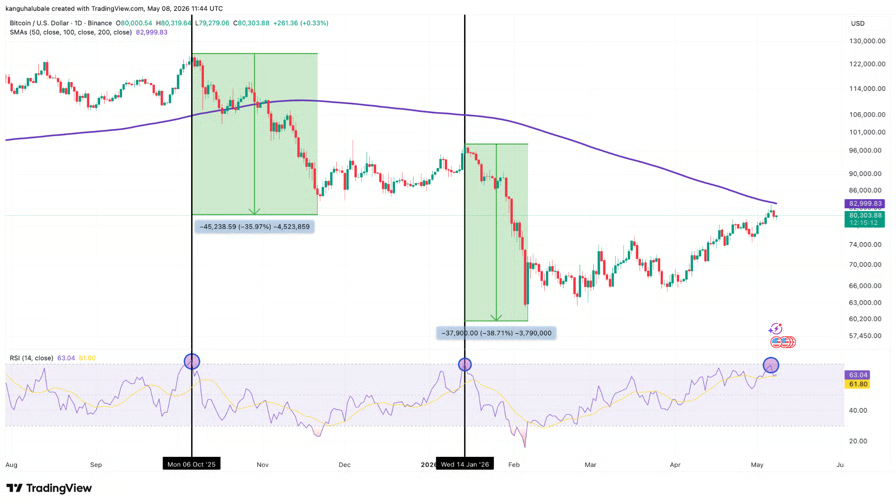
Bitcoin (BTC) traders expect a short-term correction as a key BTC price strength metric rises to its highest levels in almost fifteen weeks.
Key takeaways:
- Bitcoin’s “overbought” RSI historically precedes significant corrections.
- Bitcoin could see a short-term price drop if the price breaks below the $78,000 support.
Bitcoin metrics suggest BTC price is “overheated”
Bitcoin’s 36% rally to $82,800 on Wednesday from its macro low of $60,000 has significantly impacted its daily RSI.
On the daily chart, the RSI rose to 70 on Wednesday from local lows of 39 in March.
“$BTC’s daily RSI went overbought right as we tagged the 200-day EMA,” trader Jelle said in a Friday post on X, adding:
“It makes sense to find resistance here.”

BTC/USD weekly chart. Source: Cointelegraph/TradingView
RSI measures trend strength and contains three key levels for observers: the 30 oversold boundary, the 50 midpoint and the 70 overbought threshold.
When the price crosses these levels, depending on the direction, traders can infer about the future of the current trend. After rallies, BTC usually corrects once the RSI enters the overbought territory.
Related: Bitcoin bulls target $115K by December: Does data back the expectation?
Analyst Crypto Tice said this is a “rare” signal that has occurred only four times over the last year, with every occurrence leading to a “short-term pullback,” adding:
“Overbought conditions on the daily don’t resolve sideways. They resolve with a flush.”
Fellow analyst Rekt Fencer pointed out that the “last 2 times this happened, it dumped” 35%-38%, as shown in the chart above.
Meanwhile, Bitcoin’s market value to realized value (MVRV) ratio, which measures whether the asset is overvalued, recently entered the “overheated” zone.
“Bitcoin breaks above the overheated level on the short-term holder Bollinger Bands for the first time since November 2024,” analyst FrankAFetter said in a recent post on X.
The last time it was at similar levels was in November 2024 before a 15% BTC price drop.

Bitcoin STH MVRV Bollinger Bands. Source: CheckOnChain
Bitcoin support at $78,000 becomes key for BTC price
Bitcoin traders agree that $78,000 has now become an important area of support for BTC/USD.
The 200-day exponential moving average at $83,000 is acting as resistance, while the “first main area of interest sits at $78,000,” analyst Jelle said in an X post on Friday, adding:
“Turn that into support and we can have another go at the MAs.”

BTC/USD daily chart. Source: X/Jelle
Fellow analyst Tradermayne said holding the support at $78,000-$80,000 on low time frames would give “bulls a very easy bias level.”

BTC/USD weekly chart. Source: Trader Mayne
Orders are sitting on both sides of the spot price, with analyst Master of Crypto seeing the likelihood of these liquidity clusters being taken out.
“$BTC is holding around the $78.5K–$79.1K support zone,” the analyst said in a Friday post on X, adding:
“If buyers defend this area, the next move could be toward $82K–$83K where a lot of liquidity is sitting. But if this support breaks, Bitcoin could quickly drop to $75K–$76K.”

Bitcoin liquidation heatmap. Source: CoinGlass
The Bitcoin liquidity map shows that a correction below $78,000 would trigger over $3.1 billion worth of leveraged long liquidations across all exchanges.

Bitcoin exchange liquidation map. Source: CoinGlass
Crypto World
Bitcoin Fights for $80K, Strategy Posts Big Q1 Loss, Coinbase Cuts Jobs: Your Weekly Crypto Recap
It was another eventful week in the cryptocurrency space on the heels of the decisions made by the US Federal Reserve and the ECB to maintain the interest rates unchanged days prior.
Despite BTC’s short-term price dip to under $75,000 after the third FOMC meeting of the year on April 29, the cryptocurrency rebounded swiftly and actually went on an impressive roll. At first, it remained stable during the weekend, even though Washington rejected two peace proposals sent by Iran.
Moreover, bitcoin soared to over $80,000 on Monday morning for the first time in over three months, before it was halted and pushed south to under $78,400 after some confusing reports that Iran had attacked a US Navy vessel in the Strait of Hormuz. As the reports were refuted shortly after, BTC rebounded once again to $80,800 and eventually beyond.
The rally continued for a couple more days and peaked at $82,800 on Wednesday. This became bitcoin’s highest price tag since late January and meant that the asset had added roughly $8,000 since last Wednesday’s dip to below $75,000.
However, multiple analysts warned that this run is unsustainable and BTC could reverse its trajectory soon, which is precisely what happened on Thursday and mostly on Friday. Bitcoin lost the $80,000 support and now trades inches below it, but it’s still slightly in the green on a weekly scale.
Some altcoins have performed even better, but none is more impressive than ZEC. Zcash has risen by more than 60% weekly, followed by ONDO’s 48% pump, and WLFI’s 32% jump.
Market Data

Market Cap: $2.73T | 24H Vol: $103B | BTC Dominance: 58.4%
BTC: $79,600 (+1.3%) | ETH: $2,270 (-1.8%) | XRP: $1.39 (-0.8%)
This Week’s Crypto Headlines You Can’t Miss
Wall Street Giant Morgan Stanley Enters Crypto Race With Pricing Edge: Report. The behemoth US bank, which has been a crypto supporter for a long time, is reportedly set to introduce digital asset trading on its E*Trade platform. It plans to compete on lower costs compared to rivals, and will initially allow clients to trade BTC, ETH, and SOL.
Strategy Posts $12.5B Q1 Loss as BTC Prices Weigh on Results. The Saylor-led company didn’t disclose a BTC purchase last week, but posted its Q1 results, which were quite bleak to say the least. It reported a net loss of over $12.5 billion, largely due to a $14.5 billion unrealized loss from poor BTC prices.
Coinbase Slashes Jobs by 14% to Become ‘Lean, Fast, AI-Native’. In line with some of its rivals, such as Crypto.com and Gemini, the largest US-based crypto exchange also announced a substantial staff layoff earlier this week. It reduced its workforce by around 14% as it focuses on more AI integrations.
Bitcoin Shoots Past $82K, Fuels Altseason Speculation. Bitcoin’s rally to new multi-month highs was followed by even more impressive price pumps from several alts, such as ZEC, TON, WLFI, and others. This led to immediate speculations about a potential altseason, but the following few days didn’t support this narrative.
Crypto Exchange Bullish Strikes $4.2B Deal to Acquire Equiniti. The popular cryptocurrency exchange revealed earlier this week that it’s all set to acquire Equiniti, a global transfer agent. The press release informed that the agreed amount for the deal is a whopping $4.2 billion.
WLFI Lawsuit Sparks Response: Justin Sun Calls It ‘Meritless’. The relationship between Justin Sun and the Trump-based World Liberty Financial project has deteriorated over the past few weeks, leading to a couple of lawsuits. The first was initiated by the Tron founder, while the DeFi protocol responded with its own earlier this week, which Sun called “meritless.”
Charts
This week, we have a chart analysis of Ethereum, Ripple, Cardano, Binance Coin, and Hyperliquid – click here for the complete price analysis.
The post Bitcoin Fights for $80K, Strategy Posts Big Q1 Loss, Coinbase Cuts Jobs: Your Weekly Crypto Recap appeared first on CryptoPotato.
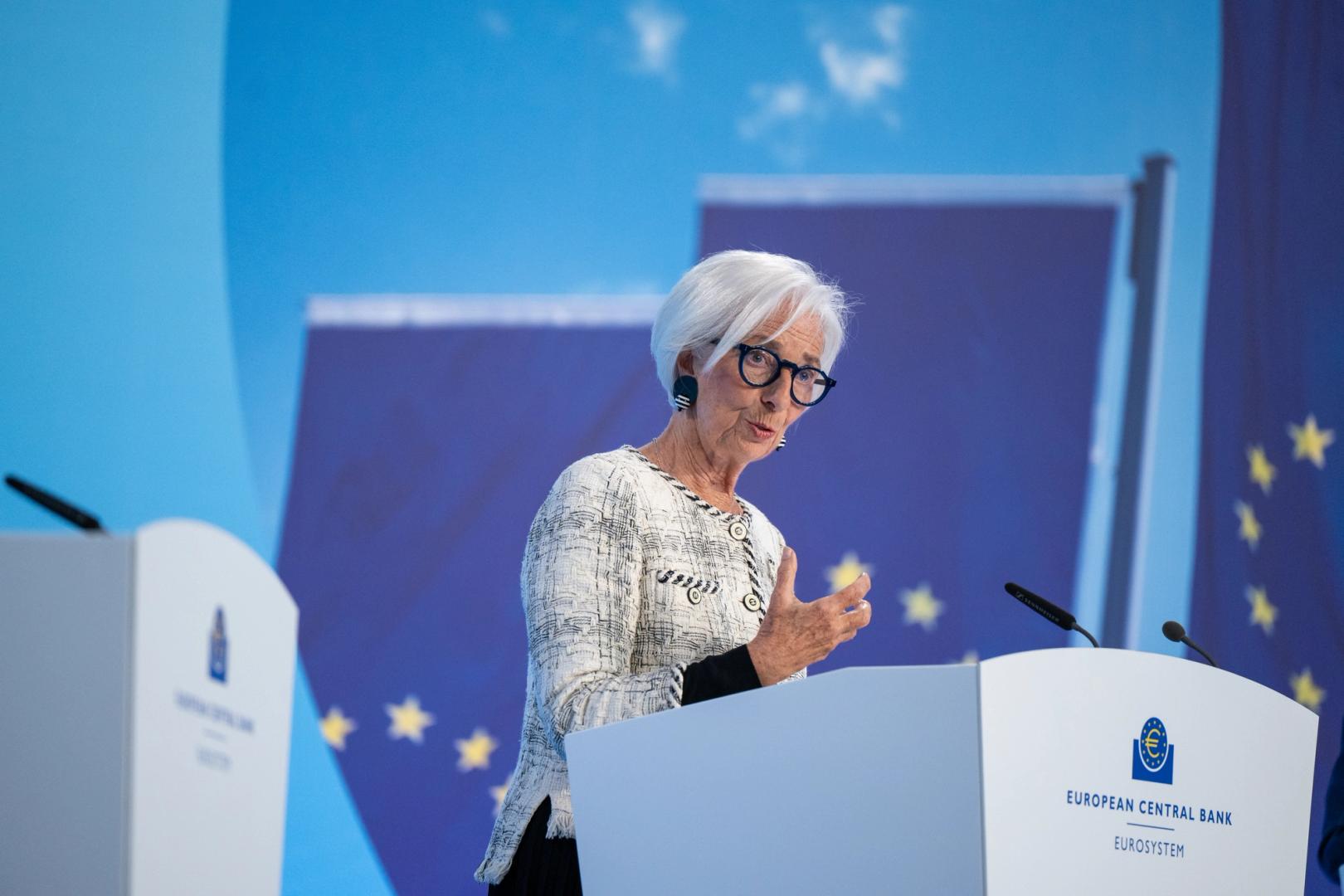
European Central Bank (ECB) President Christine Lagarde argued against the need for privately-issued euro-pegged stablecoins, even in the face of a market which is 98% dominated by dollar-pegged tokens.
Despite the rapid global adoption of USD stablecoins, Largarde argued Europe should focus on building tokenized settlement infrastructure anchored in central bank money rather than simply replicating the U.S. stablecoin model in a speech Bank of Spain’s LatAm Economic Forum in Madrid on Friday
“The case for promoting euro-denominated stablecoins is far weaker than it appears,” Lagarde said, arguing that the technological case for stablecoins can be replicated by central bank infrastructure, while their monetary function introduces unacceptable risks to financial stability.
Those comments come as Qivalis, a consortium of 12 of Europe’s largest banks, including ING, BBVA, BNP Paribas, Danske Bank, and UniCredit, announced plans to launch a privately-issued digital euro, not a CBDC, later this year under the same premise that Europe faces dollarization risks.
“If we don’t have a euro onchain with depth of liquidity, then the only alternative is the U.S. dollar,” Qivalis CEO Jan-Oliver Sell told CoinDesk. “That’s a real risk to Europe’s financial and digital sovereignty.”
Lagarde reiterated warnings that stablecoins could create financial stability risks during periods of market stress. She referenced the March 2023 collapse of Silicon Valley Bank, when Circle disclosed that $3.3 billion of its USDC reserves were at the bank, causing a brief de-peg of its stablecoin.
“At scale, such dynamics can transmit stress to the underlying asset markets. The promise of par redemption depends on the very market confidence that can vanish when financial stability deteriorates – and a mass redemption can accelerate that deterioration,” she said on Friday.
“As stablecoin use grows, so too does the potential for feedback loops between redemptions and asset markets,] particularly where issuers are non-banks.”
The growing global dominance of U.S. dollar-pegged stablecoins issued by Tether and Circle represents risks to Europe’s financial system, Lagarde said on Friday.
Lagarde noted circulation in six years has increased from $10 billion to $310 billion. However, she expressed concern that nearly 90% of the market is controlled by two issuers – Tether and Circle USDC).
She said that in Europe there’s increasing debate over the bloc’s urgent need to remain relevant.
“Europe must respond by promoting euro-denominated stablecoins of its own,” she said. “Otherwise, it faces a future of digital dollarisation and a loss of monetary sovereignty.”Lagarde is calling on the EU countries to support the development of a CBDCs. “We must build the public infrastructure that will enable alternative instruments, such as stablecoins and other forms of tokenised money, to operate within a framework anchored by central bank money,” she said.
Late last year, Lagarde announced the ECB’s plans for a “digital euro by 2029, assuming the European co-legislators adopt the necessary regulation by 2026,” adding that the preparatory steps, including pilot exercises and initial transactions, could begin as early as mid-2027.

TLDR:
- Revolut confirmed a third-party disruption caused Bitcoin to display at $0.02 inside the app on Friday.
- No user asset losses were reported, as the glitch only affected price displays and push notifications sent out.
- Bitcoin continued trading normally on major exchanges while the erroneous figures circulated across Revolut’s platform.
- Past crypto pricing glitches have triggered liquidation cascades, wiping out nearly two million accounts in minutes.
Revolut users were caught off guard on Friday after the fintech app displayed Bitcoin prices crashing to as low as $0.02.
The erroneous figures appeared in push notifications and price displays across the platform. Revolut confirmed the issue stemmed from a third-party service disruption.
No user asset losses have been reported so far. Cryptocurrency markets remained stable throughout, with Bitcoin trading normally on all major exchanges.
App Displays False Bitcoin Crash, Users React Online
The alerts arrived without warning in the early hours of Friday morning. Many users initially feared a real market collapse had occurred overnight. Screenshots spread quickly across X, showing notifications warning of a “52-week low” for Bitcoin.
Some users reported seeing apparent sell orders executed at two cents. Others questioned whether automated trades had triggered incorrectly during the malfunction. The issue appeared to affect price alerts, displays, and trading information tied to Bitcoin.
Revolut Support responded publicly on X, acknowledging the problem directly. “We are currently experiencing technical issues affecting some crypto functionalities,” the company stated.
The team confirmed that investigations were actively underway, and users were reassured that their assets remained unaffected.
Reactions on social media ranged from alarm to dark humor. One user wrote, “Woke up this morning and saw this and went back to bed. Thanks Revolut for nearly sending me to an early grave.”
Another posted, “Wtf is this manifesting? I want to see $150000 instead of $0.02.” A third added, “As a big fan and user of Revolut, I’m glad I didn’t see the notice — otherwise I’d have shut my laptop on the spot.” The posts reflected genuine anxiety among retail investors relying on mobile alerts for market updates.
Crypto Price Glitches Carry a History of Market Disruption
This is not the first time a pricing error has rattled crypto traders. Technical glitches, even brief ones, can trigger outsized fear among retail investors. The Revolut incident draws attention to how heavily traders depend on fintech apps for real-time data.
Speaking on CNBC’s Power Lunch following a previous crash, Fundstrat’s Tom Lee linked a major market drop to a pricing-feed failure.
A stablecoin briefly fell to $0.65 on one exchange due to thin liquidity. “On a specific exchange, a stablecoin’s price varied from other exchanges,” Lee explained. “It dropped to $0.65. But that only happened within this exchange because of liquidity.”
That distorted price then triggered a chain reaction across derivatives markets. “It wiped out, as that spread across other exchanges, because liquidations cascade,” Lee said.
Nearly two million crypto accounts were affected, despite being profitable just minutes before the glitch occurred.
South Korean exchanges faced a similar episode during the country’s political turmoil in late 2024. A martial-law shock triggered heavy trading activity, causing local order books to detach from global prices temporarily.
Those sudden downward wicks served as another reminder of how fragile pricing infrastructure can be during periods of instability.
The crypto community, especially some dealing with meme coins, has a strange sense of humor and often tries to capitalize on events that pose real danger to humanity.
The hantavirus, which killed some people on a cruise ship recently, is just another example. Meme coins related to the infection have already begun to surface, while certain market observers believe a potential outbreak could actually be a bullish factor for the crypto sector.
A Blessing in Disguise?
The conflict in the Middle East has recently been overshadowed by other major news – the hantavirus, which has so far claimed the lives of three people. A Dutch-flagged cruise ship that departed from Argentina and traveled through the Atlantic Ocean experienced an infection cluster of the Andes strain, which first appeared when a Dutch passenger fell ill and later died on board.
Several others disembarked at St. Helena and other locations, and some developed symptoms after flying home, leading to additional deaths and hospitalizations. The ship eventually reached Cape Verde and later the Canary Islands, while multiple countries, such as the USA and the UK, isolated former passengers due to the virus’s rare ability to spread between people. What makes the situation even more concerning is that the infection (which was likely transmitted from rats) has a mortality rate of around 40%.
And while the world hopes this doesn’t turn into a new COVID-19 disaster (or even worse), some members of the crypto community reacted rather strangely to the threat. X users idontpaytaxes and edward, for instance, assumed that a potential outbreak of the hantavirus could shut down everything, triggering “a meme coin supercycle.”
For their part, the one using the moniker Orange hopes this infection won’t spread and push the world into another lockdown. Should that happen, though, they suggested that “crypto volume would probably go absolutely crazy” because everyone will be stuck at home and looking for distractions.
In light of recent events, it is important to remind how the market reacted to the coronavirus at the beginning of 2020. In mid-March that year, the World Health Organization declared the spread of the disease a global pandemic, causing Bitcoin to crash by around 50%. However, the primary cryptocurrency quickly recovered from the knockdown and in the following years experienced a major bull run.
Another thing savvy crypto enthusiasts tend to do during such unsettling periods is launch trending meme coins to earn quick gains. Data show that tokens like HANTA (whose logos feature rodents) have already popped up, with some amassing market caps in the millions.

Over the years, meme coin creators have even capitalized on the deaths of public figures, including Hulk Hogan and Queen Elizabeth, to make easy money.
COVID-19 2.0 or Not?
The hantavirus is indeed much more dangerous than the coronavirus, which crippled normal functioning worldwide in the early 2020s. It kills 4 out of 10 infected people, while the original COVID-19 strain had a fatality rate of roughly 1%.
However, the hantavirus is far less contagious than the other infection, as it requires very close, prolonged contact with a diseased person to transmit it. Additionally, people can mainly spread the virus only when they are very sick, not before symptoms.
The World Health Organization recently insisted that the risk of the hantavirus spreading into a deadly global outbreak is “absolutely low.” The topic reached the White House, too, with President Donald Trump assuring that “it’s very much, we hope, under control.”
The post The Hantavirus Danger: Can a Potential Outbreak Spark a New Meme Coin Frenzy? appeared first on CryptoPotato.
Welsh First Minister Eluned Morgan Loses Seat
Vikings Snag 2 Passers to Keep Ball Spinning for Today’s Work at TCO

Mac shortages, iPhone rumors, and ‘Schmigadoon!’

Manchester United reach agreement with Casemiro over contract clause amid transfer speculation

US brings back mandatory military draft registration

Steven Gerrard disagrees with Gary Neville over ‘shock’ Chelsea and Arsenal claim | Football

XRP INVESTORS INSANE INTEL JUST DROPPED! *DON’T MISS THIS*

A unique way of making money in Germany #travel #lifeingermany #studyabroad

America’s Biggest Crypto Strike on Iran Economy | Latest News Analysis by Ankit Avasthi Sir
-

 NewsBeat5 days ago
Channel 5 – All Creatures Great and Small series 7 new post
-
 Crypto World8 hours ago
HarrisX Poll Found 52% of Registered Voters Support the CLARITY Act
-

 Crypto World1 day ago
Upbit adds B3 Korean won pair as Base token gains Korea access
-
 NewsBeat1 day ago
NCP car park operator enters administration putting 340 UK sites at risk of closure
-
 Tech7 days ago
Trump’s 25% EU auto tariff breaches Turnberry Agreement that also covers semiconductors and digital trade
-
 Sports7 days ago
Paul Scholes issues Marcus Rashford reality check as agreement emerges over Man United star
-

 Tech4 days ago
Image AI models now drive app growth, beating chatbot upgrades
-

 Entertainment7 days ago
Met Gala 2026 Rumored Guest List Is Turning Heads
-

 Entertainment7 days ago
Kylie Jenner Hit With Second Lawsuit From Ex-Housekeeper
-
Entertainment7 days ago
New on Prime Video in May 2026 — Full List of Movies and Shows
-

 Sports7 days ago
Cavaliers vs. Raptors Game 6 live score, updates, highlights from 2026 NBA playoffs first-round series
-

 Entertainment6 days ago
Melissa Joan Hart and More Stars Attend 2026 Kentucky Derby
-
 Sports7 days ago
David Benavidez responds to team Canelo saying the fight will never happen
-

 Entertainment7 days ago
Young and the Restless Next Week: Cane Arrested & Matt’s Deadly New Scheme!
-
Entertainment6 days ago
New Netflix Movies in May 2026 — My Top 3 Picks to Stream
-
 Sports7 days ago
IPL 2026: ‘Love you darling’- Hardik Pandya’s reaction to MS Dhoni steals the show |Watch | Cricket News
-

 Tech7 days ago
Mother’s Day 2026 Gift Guide: Audio to Upgrade Mom’s Lifestyle
-
Crypto World6 days ago
Pi Network Mandates Protocol 23 Upgrade for All Mainnet Nodes Before May 15 Deadline
-

 Business5 days ago
Luka Doncic Injury Update: Doncic’s Hamstring Recovery Slows Lakers’ Hopes Against Thunder: Can He Run Yet?
-

 Business7 days ago
Can Victor Wembanyama Bring the NBA Ring to Spurs in 2026? Historic Playoff Run Fuels Title Dreams
You must be logged in to post a comment Login