

Crypto World
Brian Armstrong sold more stock in 12 months than Coinbase’s Q1 loss



Coinbase CEO Brian Armstrong personally sold more stock over the past year than his company lost on behalf of its COIN shareholders last quarter. Although he took a break from his sales in Q1, he entered the quarter with more personal compensation than his company would lose in three months.
The company lost $394 million for its shareholders during the first quarter of 2026. Armstrong, between May 2025 and January 2026, personally sold over $540 million worth of COIN.
Coinbase reported a $394 million net loss on $1.4 billion in revenue compared to a profit of $66 million in Q1 2025 during the brief exuberance over Donald Trump’s pro-crypto policies.
Net transaction revenue, the engine of the business, fell 40% from Q1 2025 to less than $756 million.
Coinbase also marked the start of the Consensus conference in Miami by slashing its workforce by 14%, firing about 700 employees on the first day of the mega-event.
The company’s stock closed yesterday down roughly 57% from its July 18, 2025 high of $444.64. The stock was trading another 4% lower in after-hours trading on its earnings disappointment.
Read more: Coinbase sued for witholding frozen crypto linked to $55M hack
Brian Armstrong takes a break from dumping COIN
Armstrong’s sales are filed with the SEC under his name or the name of his living trust. Both report dispositions of beneficial ownership by the same person.
Many sales occurred within a day of his stock-based compensation.
A sum of his sales from May 5, 14, June 2, 11, 25-26, July 1, 11-14, 15-16, August 4, 12, September 4, 15, October 2, 13, November 3, 10, 17, 26, December 8, 22, and January 5 equal 1,550,000 shares of COIN sold for $541,863,703.
That gave Armstrong an average sale price of $349.58 — double the price available to retail shareholders today.
Indeed, Armstrong’s largest sales clustered in late June and mid-July 2025, when COIN traded above $350. By the time the Q1 2026 arrived and profitability collapsed, Armstrong was done selling.
Got a tip? Send us an email securely via Protos Leaks. For more informed news and investigations, follow us on X, Bluesky, and Google News, or subscribe to our YouTube channel.

Crypto World
Bitcoin Fights for $80K, Strategy Posts Big Q1 Loss, Coinbase Cuts Jobs: Your Weekly Crypto Recap
It was another eventful week in the cryptocurrency space on the heels of the decisions made by the US Federal Reserve and the ECB to maintain the interest rates unchanged days prior.
Despite BTC’s short-term price dip to under $75,000 after the third FOMC meeting of the year on April 29, the cryptocurrency rebounded swiftly and actually went on an impressive roll. At first, it remained stable during the weekend, even though Washington rejected two peace proposals sent by Iran.
Moreover, bitcoin soared to over $80,000 on Monday morning for the first time in over three months, before it was halted and pushed south to under $78,400 after some confusing reports that Iran had attacked a US Navy vessel in the Strait of Hormuz. As the reports were refuted shortly after, BTC rebounded once again to $80,800 and eventually beyond.
The rally continued for a couple more days and peaked at $82,800 on Wednesday. This became bitcoin’s highest price tag since late January and meant that the asset had added roughly $8,000 since last Wednesday’s dip to below $75,000.
However, multiple analysts warned that this run is unsustainable and BTC could reverse its trajectory soon, which is precisely what happened on Thursday and mostly on Friday. Bitcoin lost the $80,000 support and now trades inches below it, but it’s still slightly in the green on a weekly scale.
Some altcoins have performed even better, but none is more impressive than ZEC. Zcash has risen by more than 60% weekly, followed by ONDO’s 48% pump, and WLFI’s 32% jump.
Market Data

Market Cap: $2.73T | 24H Vol: $103B | BTC Dominance: 58.4%
BTC: $79,600 (+1.3%) | ETH: $2,270 (-1.8%) | XRP: $1.39 (-0.8%)
This Week’s Crypto Headlines You Can’t Miss
Wall Street Giant Morgan Stanley Enters Crypto Race With Pricing Edge: Report. The behemoth US bank, which has been a crypto supporter for a long time, is reportedly set to introduce digital asset trading on its E*Trade platform. It plans to compete on lower costs compared to rivals, and will initially allow clients to trade BTC, ETH, and SOL.
Strategy Posts $12.5B Q1 Loss as BTC Prices Weigh on Results. The Saylor-led company didn’t disclose a BTC purchase last week, but posted its Q1 results, which were quite bleak to say the least. It reported a net loss of over $12.5 billion, largely due to a $14.5 billion unrealized loss from poor BTC prices.
Coinbase Slashes Jobs by 14% to Become ‘Lean, Fast, AI-Native’. In line with some of its rivals, such as Crypto.com and Gemini, the largest US-based crypto exchange also announced a substantial staff layoff earlier this week. It reduced its workforce by around 14% as it focuses on more AI integrations.
Bitcoin Shoots Past $82K, Fuels Altseason Speculation. Bitcoin’s rally to new multi-month highs was followed by even more impressive price pumps from several alts, such as ZEC, TON, WLFI, and others. This led to immediate speculations about a potential altseason, but the following few days didn’t support this narrative.
Crypto Exchange Bullish Strikes $4.2B Deal to Acquire Equiniti. The popular cryptocurrency exchange revealed earlier this week that it’s all set to acquire Equiniti, a global transfer agent. The press release informed that the agreed amount for the deal is a whopping $4.2 billion.
WLFI Lawsuit Sparks Response: Justin Sun Calls It ‘Meritless’. The relationship between Justin Sun and the Trump-based World Liberty Financial project has deteriorated over the past few weeks, leading to a couple of lawsuits. The first was initiated by the Tron founder, while the DeFi protocol responded with its own earlier this week, which Sun called “meritless.”
Charts
This week, we have a chart analysis of Ethereum, Ripple, Cardano, Binance Coin, and Hyperliquid – click here for the complete price analysis.
The post Bitcoin Fights for $80K, Strategy Posts Big Q1 Loss, Coinbase Cuts Jobs: Your Weekly Crypto Recap appeared first on CryptoPotato.
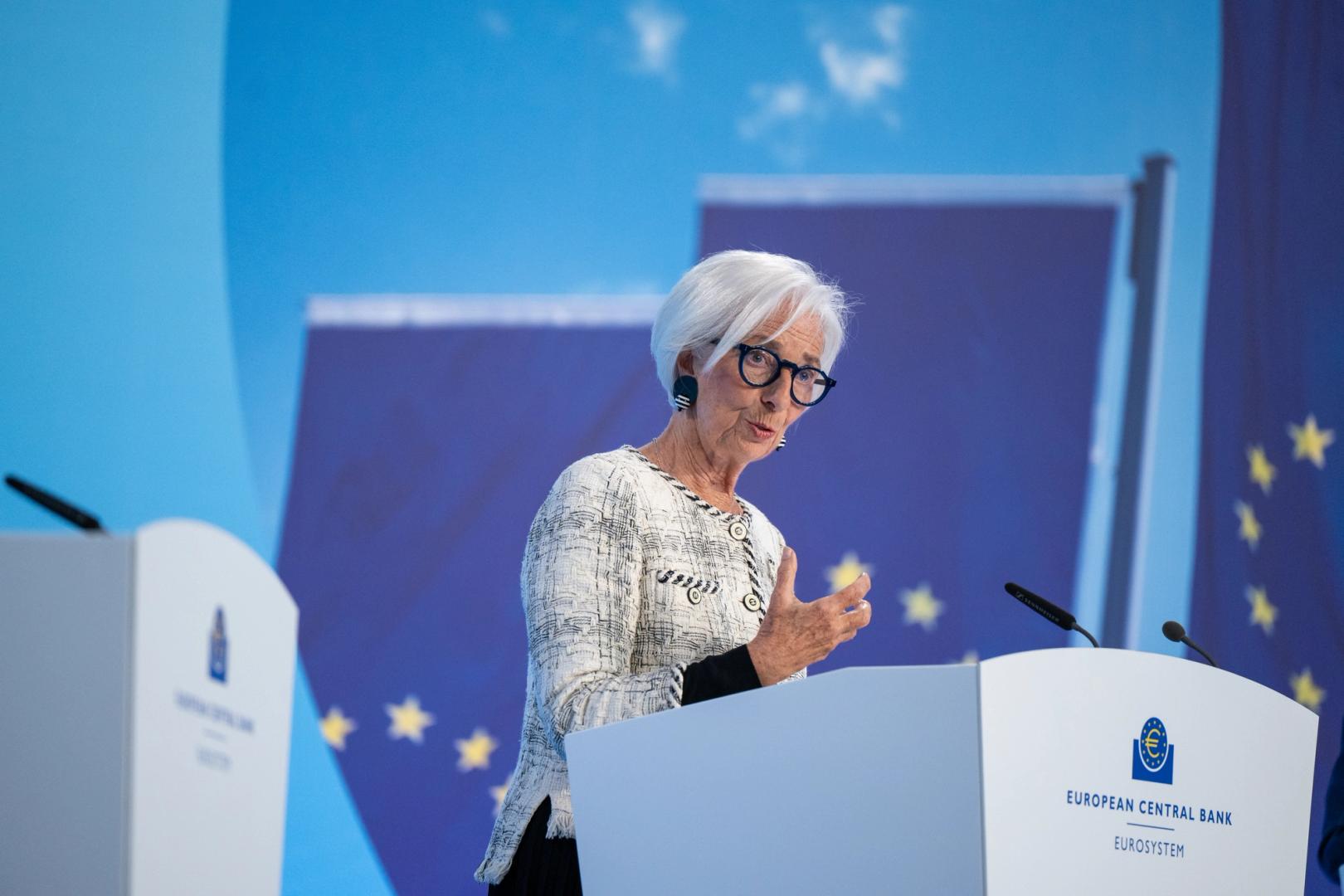
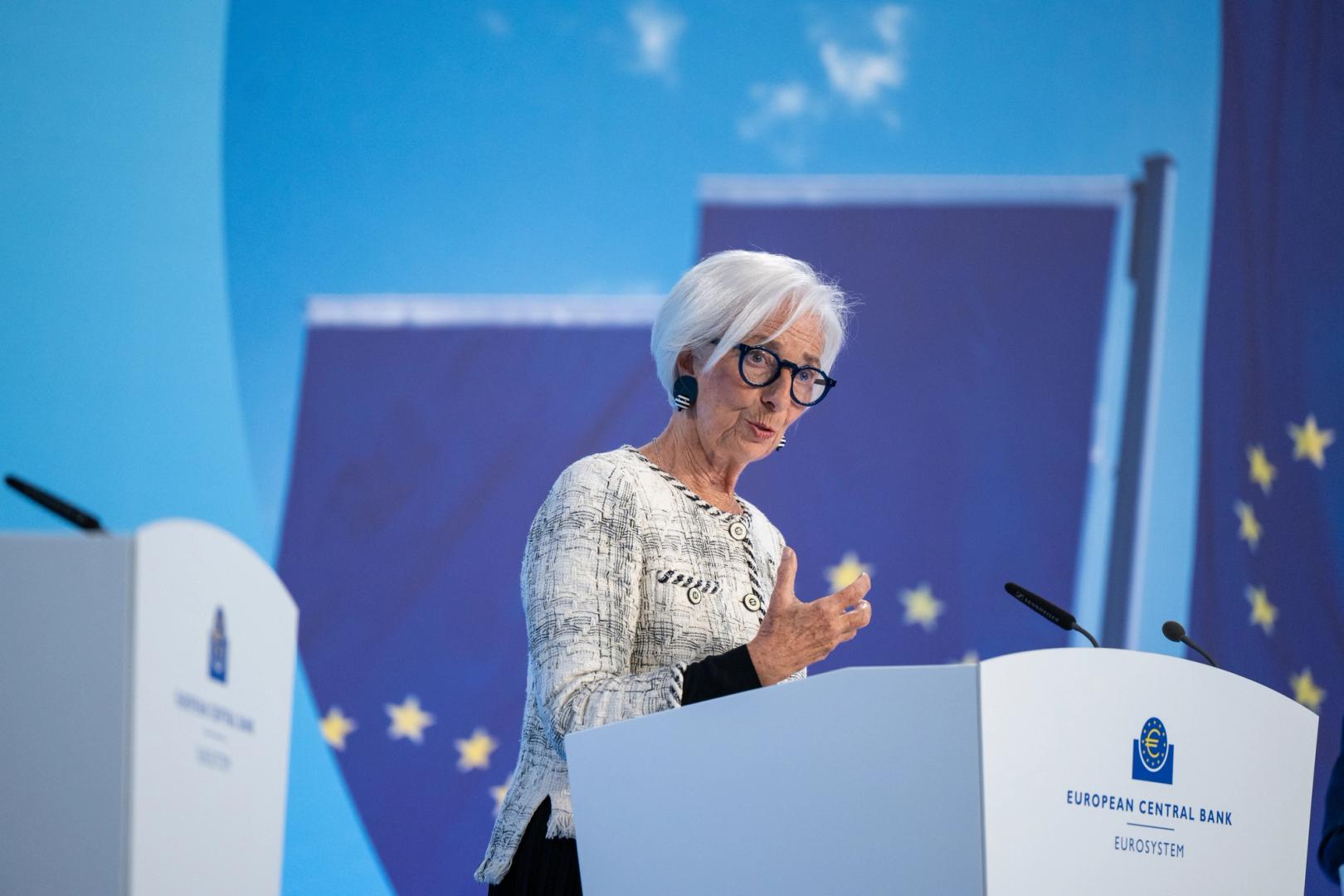
European Central Bank (ECB) President Christine Lagarde argued against the need for privately-issued euro-pegged stablecoins, even in the face of a market which is 98% dominated by dollar-pegged tokens.
Despite the rapid global adoption of USD stablecoins, Largarde argued Europe should focus on building tokenized settlement infrastructure anchored in central bank money rather than simply replicating the U.S. stablecoin model in a speech Bank of Spain’s LatAm Economic Forum in Madrid on Friday
“The case for promoting euro-denominated stablecoins is far weaker than it appears,” Lagarde said, arguing that the technological case for stablecoins can be replicated by central bank infrastructure, while their monetary function introduces unacceptable risks to financial stability.
Those comments come as Qivalis, a consortium of 12 of Europe’s largest banks, including ING, BBVA, BNP Paribas, Danske Bank, and UniCredit, announced plans to launch a privately-issued digital euro, not a CBDC, later this year under the same premise that Europe faces dollarization risks.
“If we don’t have a euro onchain with depth of liquidity, then the only alternative is the U.S. dollar,” Qivalis CEO Jan-Oliver Sell told CoinDesk. “That’s a real risk to Europe’s financial and digital sovereignty.”
Lagarde reiterated warnings that stablecoins could create financial stability risks during periods of market stress. She referenced the March 2023 collapse of Silicon Valley Bank, when Circle disclosed that $3.3 billion of its USDC reserves were at the bank, causing a brief de-peg of its stablecoin.
“At scale, such dynamics can transmit stress to the underlying asset markets. The promise of par redemption depends on the very market confidence that can vanish when financial stability deteriorates – and a mass redemption can accelerate that deterioration,” she said on Friday.
“As stablecoin use grows, so too does the potential for feedback loops between redemptions and asset markets,] particularly where issuers are non-banks.”
The growing global dominance of U.S. dollar-pegged stablecoins issued by Tether and Circle represents risks to Europe’s financial system, Lagarde said on Friday.
Lagarde noted circulation in six years has increased from $10 billion to $310 billion. However, she expressed concern that nearly 90% of the market is controlled by two issuers – Tether and Circle USDC).
She said that in Europe there’s increasing debate over the bloc’s urgent need to remain relevant.
“Europe must respond by promoting euro-denominated stablecoins of its own,” she said. “Otherwise, it faces a future of digital dollarisation and a loss of monetary sovereignty.”Lagarde is calling on the EU countries to support the development of a CBDCs. “We must build the public infrastructure that will enable alternative instruments, such as stablecoins and other forms of tokenised money, to operate within a framework anchored by central bank money,” she said.
Late last year, Lagarde announced the ECB’s plans for a “digital euro by 2029, assuming the European co-legislators adopt the necessary regulation by 2026,” adding that the preparatory steps, including pilot exercises and initial transactions, could begin as early as mid-2027.

TLDR:
- Revolut confirmed a third-party disruption caused Bitcoin to display at $0.02 inside the app on Friday.
- No user asset losses were reported, as the glitch only affected price displays and push notifications sent out.
- Bitcoin continued trading normally on major exchanges while the erroneous figures circulated across Revolut’s platform.
- Past crypto pricing glitches have triggered liquidation cascades, wiping out nearly two million accounts in minutes.
Revolut users were caught off guard on Friday after the fintech app displayed Bitcoin prices crashing to as low as $0.02.
The erroneous figures appeared in push notifications and price displays across the platform. Revolut confirmed the issue stemmed from a third-party service disruption.
No user asset losses have been reported so far. Cryptocurrency markets remained stable throughout, with Bitcoin trading normally on all major exchanges.
App Displays False Bitcoin Crash, Users React Online
The alerts arrived without warning in the early hours of Friday morning. Many users initially feared a real market collapse had occurred overnight. Screenshots spread quickly across X, showing notifications warning of a “52-week low” for Bitcoin.
Some users reported seeing apparent sell orders executed at two cents. Others questioned whether automated trades had triggered incorrectly during the malfunction. The issue appeared to affect price alerts, displays, and trading information tied to Bitcoin.
Revolut Support responded publicly on X, acknowledging the problem directly. “We are currently experiencing technical issues affecting some crypto functionalities,” the company stated.
The team confirmed that investigations were actively underway, and users were reassured that their assets remained unaffected.
Reactions on social media ranged from alarm to dark humor. One user wrote, “Woke up this morning and saw this and went back to bed. Thanks Revolut for nearly sending me to an early grave.”
Another posted, “Wtf is this manifesting? I want to see $150000 instead of $0.02.” A third added, “As a big fan and user of Revolut, I’m glad I didn’t see the notice — otherwise I’d have shut my laptop on the spot.” The posts reflected genuine anxiety among retail investors relying on mobile alerts for market updates.
Crypto Price Glitches Carry a History of Market Disruption
This is not the first time a pricing error has rattled crypto traders. Technical glitches, even brief ones, can trigger outsized fear among retail investors. The Revolut incident draws attention to how heavily traders depend on fintech apps for real-time data.
Speaking on CNBC’s Power Lunch following a previous crash, Fundstrat’s Tom Lee linked a major market drop to a pricing-feed failure.
A stablecoin briefly fell to $0.65 on one exchange due to thin liquidity. “On a specific exchange, a stablecoin’s price varied from other exchanges,” Lee explained. “It dropped to $0.65. But that only happened within this exchange because of liquidity.”
That distorted price then triggered a chain reaction across derivatives markets. “It wiped out, as that spread across other exchanges, because liquidations cascade,” Lee said.
Nearly two million crypto accounts were affected, despite being profitable just minutes before the glitch occurred.
South Korean exchanges faced a similar episode during the country’s political turmoil in late 2024. A martial-law shock triggered heavy trading activity, causing local order books to detach from global prices temporarily.
Those sudden downward wicks served as another reminder of how fragile pricing infrastructure can be during periods of instability.

The crypto community, especially some dealing with meme coins, has a strange sense of humor and often tries to capitalize on events that pose real danger to humanity.
The hantavirus, which killed some people on a cruise ship recently, is just another example. Meme coins related to the infection have already begun to surface, while certain market observers believe a potential outbreak could actually be a bullish factor for the crypto sector.
A Blessing in Disguise?
The conflict in the Middle East has recently been overshadowed by other major news – the hantavirus, which has so far claimed the lives of three people. A Dutch-flagged cruise ship that departed from Argentina and traveled through the Atlantic Ocean experienced an infection cluster of the Andes strain, which first appeared when a Dutch passenger fell ill and later died on board.
Several others disembarked at St. Helena and other locations, and some developed symptoms after flying home, leading to additional deaths and hospitalizations. The ship eventually reached Cape Verde and later the Canary Islands, while multiple countries, such as the USA and the UK, isolated former passengers due to the virus’s rare ability to spread between people. What makes the situation even more concerning is that the infection (which was likely transmitted from rats) has a mortality rate of around 40%.
And while the world hopes this doesn’t turn into a new COVID-19 disaster (or even worse), some members of the crypto community reacted rather strangely to the threat. X users idontpaytaxes and edward, for instance, assumed that a potential outbreak of the hantavirus could shut down everything, triggering “a meme coin supercycle.”
For their part, the one using the moniker Orange hopes this infection won’t spread and push the world into another lockdown. Should that happen, though, they suggested that “crypto volume would probably go absolutely crazy” because everyone will be stuck at home and looking for distractions.
In light of recent events, it is important to remind how the market reacted to the coronavirus at the beginning of 2020. In mid-March that year, the World Health Organization declared the spread of the disease a global pandemic, causing Bitcoin to crash by around 50%. However, the primary cryptocurrency quickly recovered from the knockdown and in the following years experienced a major bull run.
Another thing savvy crypto enthusiasts tend to do during such unsettling periods is launch trending meme coins to earn quick gains. Data show that tokens like HANTA (whose logos feature rodents) have already popped up, with some amassing market caps in the millions.

Over the years, meme coin creators have even capitalized on the deaths of public figures, including Hulk Hogan and Queen Elizabeth, to make easy money.
COVID-19 2.0 or Not?
The hantavirus is indeed much more dangerous than the coronavirus, which crippled normal functioning worldwide in the early 2020s. It kills 4 out of 10 infected people, while the original COVID-19 strain had a fatality rate of roughly 1%.
However, the hantavirus is far less contagious than the other infection, as it requires very close, prolonged contact with a diseased person to transmit it. Additionally, people can mainly spread the virus only when they are very sick, not before symptoms.
The World Health Organization recently insisted that the risk of the hantavirus spreading into a deadly global outbreak is “absolutely low.” The topic reached the White House, too, with President Donald Trump assuring that “it’s very much, we hope, under control.”
The post The Hantavirus Danger: Can a Potential Outbreak Spark a New Meme Coin Frenzy? appeared first on CryptoPotato.
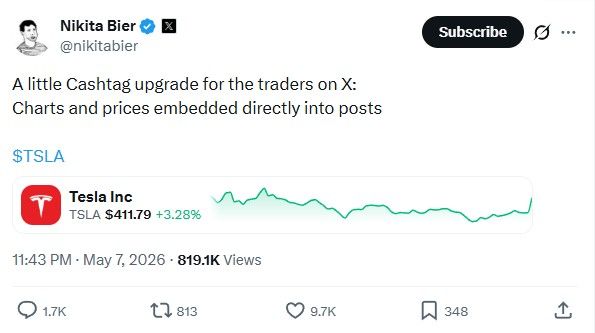
X rolled out a major cashtag upgrade that embeds live stock charts and real-time prices directly inside posts on the social platform
The change surfaced through a post by Nikita Bier, X’s head of product, who demonstrated the cashtag $TSLA with a live chart preview directly inside the feed.
Embedded Charts Bring Market Data Into the Feed
The upgraded cashtag pulls in current price, daily percentage change, and an interactive chart for stocks like Tesla (TSLA). Followers can gauge price action without switching applications. Data updates in real time alongside the post.

Bier’s announcement quickly drew significant attention from traders already active on the platform for market commentary. The strong engagement highlights growing interest in X’s evolving financial features, which build on the smart cashtags framework now spanning both stocks and crypto.
The earlier rollout drove an estimated $1 billion in trading volume inside its first 48 hours. Embedded market data appears to convert attention into real transactions.
Bier Confirms YTD Timeframe Is Coming
A trader replied to the announcement, asking for a year-to-date chart option. Bier answered with two words.
“Coming soon,” Bier said on X.
The exchange points to active iteration on charting tools rather than a one-time feature drop. Year-to-date views are standard on dedicated trading platforms. They let users compare performance against benchmarks without leaving X.
X Pushes Deeper Into Native Trading
The cashtag overhaul fits a wider strategy that turns the social feed into a trading surface. X has already tested in-feed trading and rolled out a crypto trading terminal tied to Smart Cashtags.
The push aligns with Musk’s broader “everything app” vision for X. The platform already includes XChat and the planned X Money wallet built with Visa.
Live charts inside posts move the platform closer to dedicated apps such as Robinhood and TradingView. On those services, price discovery and conversation happen in separate windows. X is testing whether social proof can drive routing decisions for real capital.
The next signal is how fast the YTD view ships. Traders will also watch whether coverage expands beyond US equities to crypto tickers.
The post X Pushes Deeper Into Trading With Live Cashtag Charts and Prices appeared first on BeInCrypto.


SoftBank has cut a planned OpenAI‑backed margin loan from around $10 billion to roughly $6 billion after banks and private credit funds pushed back on the deal’s structure and the difficulty of valuing OpenAI, an unlisted AI unicorn.
Summary
- SoftBank Group is shrinking a planned margin loan backed by its OpenAI stake from about $10 billion to roughly $6 billion after lenders pushed back.
- Banks and private credit funds have raised concerns over how to value OpenAI, an unlisted company, and about the structure of the deal.
- The two‑year loan, extendable by one year, was meant to fuel SoftBank’s next wave of AI investments without selling down its OpenAI equity.
SoftBank Group is scaling back an ambitious financing plan that would have raised around $10 billion using its OpenAI shares as collateral, after lenders balked at both the structure of the margin loan and the private valuation underpinning the deal.
According to Bloomberg, cited by Reuters and other outlets, SoftBank and its arranging banks have floated a reduced target “as low as $6 billion” in recent discussions with prospective lenders, implying a 40% cut from the original size. U.S. News reported that the initial pitch “had investors concerned about the difficulty of reaching a valuation for an unlisted company like ChatGPT maker OpenAI.”
Lenders question private OpenAI valuation and structure
Bloomberg’s April scoop on the deal said SoftBank was seeking “a $10 billion loan secured by its shares in US artificial intelligence giant OpenAI,” structured as a two‑year margin loan with an option to extend by another year. Bloomberg said the facility would let the Japanese conglomerate “take on more debt for its push into AI” without selling down its OpenAI stake.
In practice, the mechanics are straightforward but risky: SoftBank borrows against its OpenAI equity, and if the value of that collateral falls, lenders can demand more margin or seize shares. The sticking point, lenders now say, is how to price that collateral. As the Economic Times summarized from Bloomberg’s reporting, “some creditors expressed concerns over how to value OpenAI, a privately held company,” which has missed some internal sales and user milestones in recent quarters. A separate breakdown on Chinese platform Futu noted that “the crux of the issue lies in lenders’ inability to determine a reasonable valuation” for OpenAI, calling the loan talks “a major setback” for SoftBank’s AI leverage strategy.
Those worries are layered on top of SoftBank’s already sizable AI financing stack. In March, Bloomberg reported that SoftBank had secured a $40 billion bridge loan to fund its OpenAI investment and general corporate needs, a deal backed by a syndicate of global banks and now being syndicated out to more lenders. Bloomberg said institutions such as HSBC, BNP Paribas and Intesa Sanpaolo were joining as sub‑underwriters, each asked to commit around $5 billion. Reuters, summarizing the same reporting, added that SoftBank “is pursuing a loan of as much as $40 billion” to support its OpenAI bet. Yahoo Finance echoed that figure, underscoring just how much leverage is already tied to the AI trade.
What the scaled‑back loan means for SoftBank’s AI push
The margin loan was meant to be another pillar in that structure: by borrowing against OpenAI shares rather than selling them, SoftBank can raise cash to expand its AI investments — potentially into infrastructure projects like the “Stargate” data‑center initiative — while preserving upside if OpenAI’s valuation continues to rise. TechFundingNews noted that the $10 billion margin loan was “just one part of SoftBank’s larger AI financing plan,” which reportedly includes commitments of more than $60 billion to OpenAI and related ventures through Vision Fund 2, the $40 billion bridge loan and other facilities.
Cutting the margin‑loan target to around $6 billion does not end that strategy, but it signals that creditor appetite for concentrated, private‑equity‑collateral risk is not unlimited, even in a market obsessed with AI. As Bloomberg put it in an earlier piece on the $40 billion bridge, the OpenAI exposure is already “one of the biggest tests yet of creditor sentiment toward the Japanese conglomerate’s debt-fueled push further into artificial intelligence.”
The latest downsizing suggests that, for now, banks and funds are willing to back SoftBank’s AI ambitions — but only up to the point where they can still convince their own risk committees that the collateral they are lending against can be valued with something more than vibes and secondary‑market whispers.
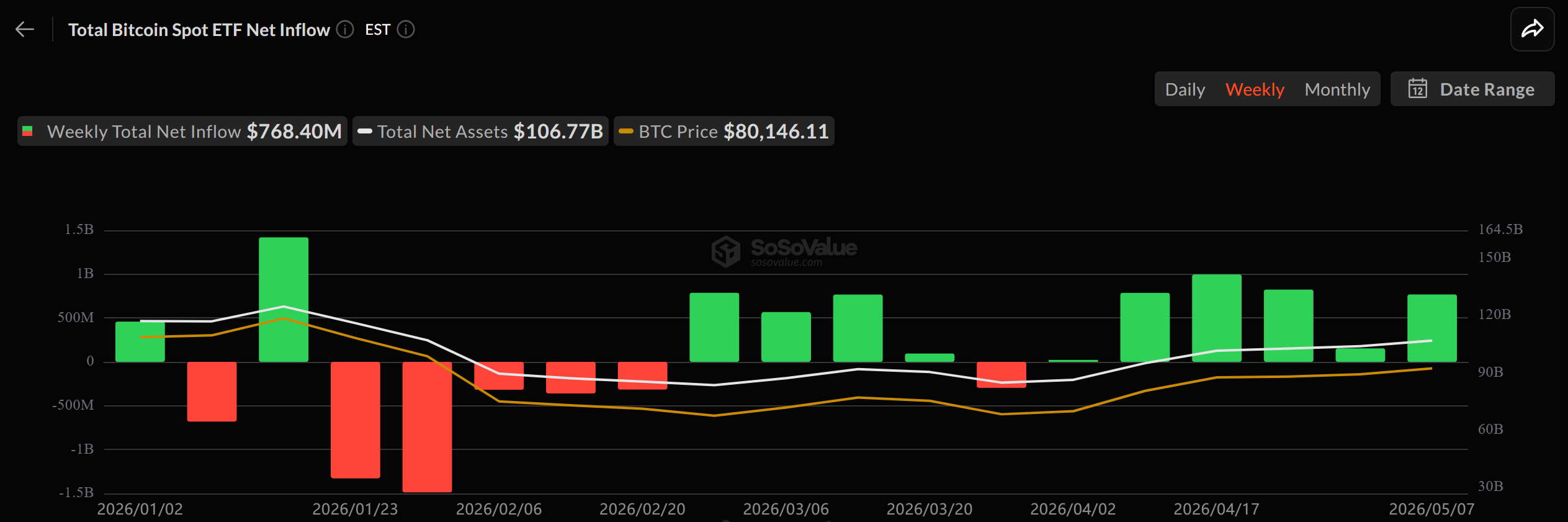
US spot Bitcoin ETFs (exchange-traded funds) drew $1.97 billion in April, the best month of 2026 per SoSoValue. The total outpaced March’s $1.37 billion and reversed a soft start to the year.
The April rebound brought cumulative inflows since the products launched in early 2024 above $58 billion. Combined March and April demand offset January and February redemptions, returning the category to positive 2026 territory.
BlackRock IBIT Leads Bitcoin ETF Inflows
BlackRock’s iShares Bitcoin Trust (IBIT) accounted for the bulk of April flows, attracting roughly $2 billion in net subscriptions. The fund’s intake alone exceeded the category total, indicating other issuers collectively recorded modest outflows.
Grayscale’s Bitcoin Trust ETF (GBTC) extended a multi-quarter redemption pattern, shedding approximately $280 million in April.
Higher management fees relative to peers continue to push holders toward cheaper alternatives. The shift has shaped flows since the first wave of conversions in 2024.
Smaller issuers including Fidelity’s Wise Origin Bitcoin Fund posted mixed daily results. SoSoValue data showed several outflow days late in April. Combined redemptions reached around $490 million during a brief volatility spike.

Institutional Demand Returns After Soft Start
The April rebound reflected a shift in positioning after January and February outflows tied to profit-taking and macroeconomic uncertainty.
Bitcoin climbed about 12% during the month, briefly trading above $80,000. The move marked its strongest monthly gain since April 2025.
Sustained ETF demand reduced spot supply available on exchanges, helping absorb sell pressure from miners and short-term holders.
Corporate treasury buyers added to that pressure, with several public companies reporting fresh purchases throughout the month. The combined buying narrowed available float and contributed to the BTC price recovery above $80,000.
Daily inflow streaks have continued into early May, with multi-day runs adding more than $1 billion in single weeks. However, volatility persists, and isolated outflow days of several hundred million dollars remain part of the pattern.
Meanwhile, Ethereum ETFs also turned positive, drawing $356 million in April. The figure marked their first monthly inflow since October 2025. Total crypto ETF demand topped $2.3 billion across both products.

Whether the momentum holds depends on macro conditions, regulatory developments, and Bitcoin’s ability to defend the $80,000 zone.
The post Spot Bitcoin ETFs Pull $1.97 Billion in Biggest Monthly Surge Since November appeared first on BeInCrypto.
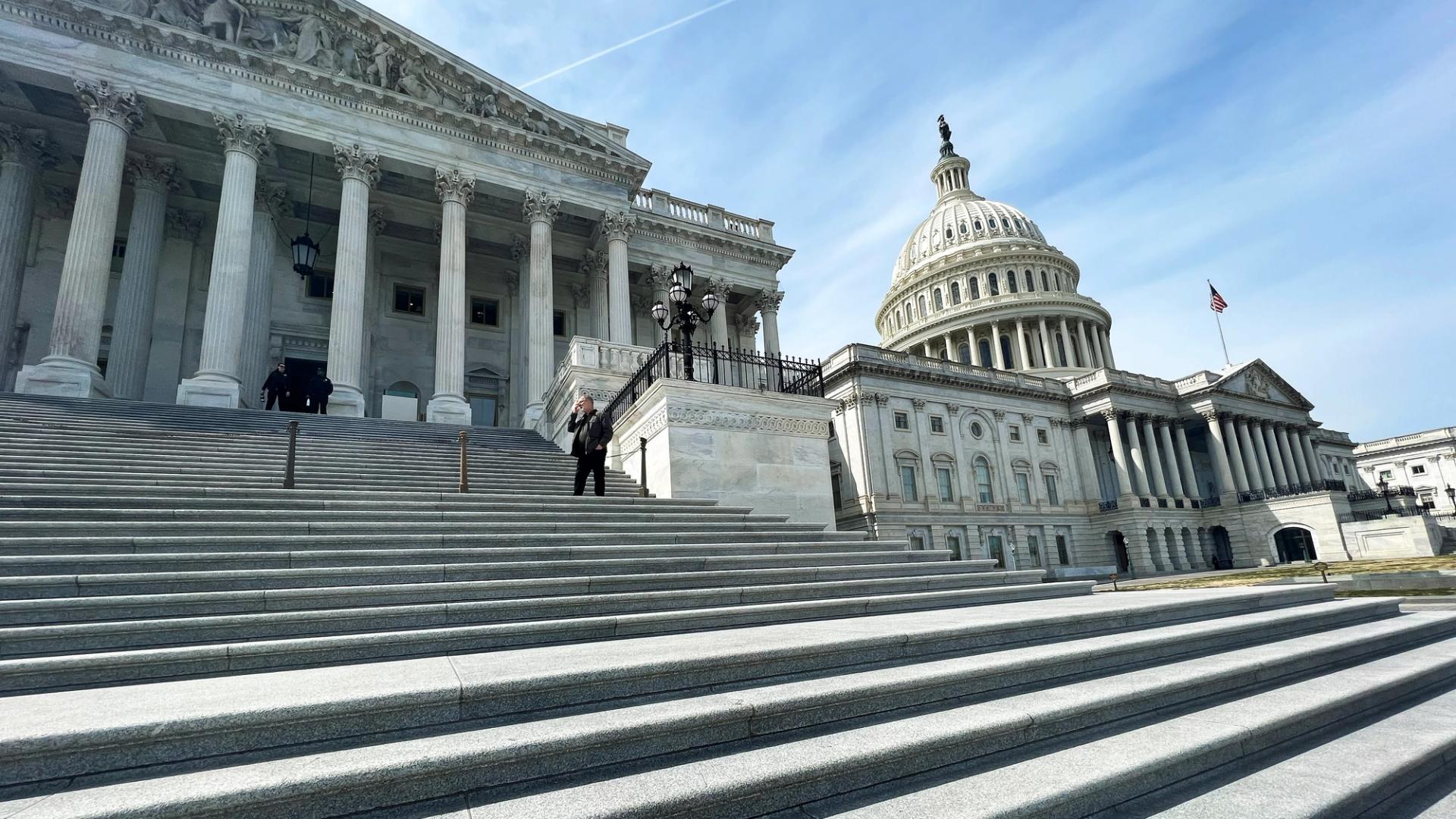
Coinbase’s (COIN) weak first-quarter earnings report sparked another divide on Wall Street over whether the crypto platform is building a more durable business or remains tied to crypto’s boom-and-bust cycles.
Several analysts lowered forecasts after the company missed expectations on revenue and adjusted EBITDA as trading activity slowed across the crypto market. Still, a number of firms argued Coinbase’s expanding stablecoin and derivatives businesses — along with the possible passage of crypto legislation in Washington — could improve the company’s outlook later this year.
JPMorgan said the quarter reflected “a challenging environment” but added that Coinbase had “positioned the company well to operate in an increasingly digital world.”
The bank said pending U.S. crypto legislation “does set up for a better outlook into 2H26 and into 2027” and maintained an overweight rating on the stock.
The legislation in focus is the CLARITY Act, a proposed market structure bill that would establish rules for how crypto assets are regulated in the U.S. The bill aims to define which digital assets fall under the Securities and Exchange Commission (SEC) and which would be overseen by the Commodity Futures Trading Commission (CFTC). Coinbase and other crypto firms have argued clearer rules could encourage banks, asset managers and large companies to expand crypto activity.
Coinbase executives told analysts they expect a Senate Banking Committee markup this month, followed by a broader vote later in the summer.
Clear Street also pointed to regulation as a major catalyst.
“We see multiple catalysts ahead and remain constructive on the shares going into 2H26,” the firm wrote, even as it lowered its price target to $107 from $140 following weaker trading volume.
The firm highlighted growth in newer products including prediction markets, which generated more than $100 million in annualized revenue by March, and retail derivatives, which surpassed a $200 million annualized pace.
Oppenheimer said Coinbase’s push beyond spot crypto trading is beginning to show traction.
“Prediction Markets has emerged as one of the fastest growing new products,” the firm wrote, adding that the company’s “Everything Exchange strategy” could support long-term growth. The strategy includes stablecoins, derivatives, payments and tokenized assets alongside traditional crypto trading.
William Blair argued the first quarter may represent the low point of the current cycle.
“If Bitcoin has bottomed, as we suspect it has, April could be the trough spot volume month of the cycle,” the firm wrote.
The firm also pointed to growth in USDC stablecoin activity and Coinbase’s Base blockchain network as signs the company is becoming more embedded in crypto infrastructure beyond trading fees.
Not all analysts were convinced.
Barclays maintained an Underweight rating and warned that “profitability [is] under pressure” as trading activity continues to weaken. The bank said second-quarter transaction revenue trends remain well below Wall Street expectations.
Compass Point also kept a Sell rating, arguing Coinbase “remains entirely beholden to crypto cycles five years after going public.”
The firm said weaker monthly user activity raised questions about whether newer products are attracting new customers or simply replacing older trading businesses.
Shares of Coinbase are down 3.6% in pre-market trading.
XRP keeps grinding toward the top of its recent range, and the move is starting to matter more because liquidity has thinned out while price keeps compressing underneath resistance. That combination tends to make breakouts sharper once the market finally picks a direction.
News Background
• Analysts continue pointing to longer-term bull flag and falling wedge patterns that resemble setups seen before previous XRP rallies.
• XRP ETF inflows and thinning Binance liquidity have added to speculation that the market is entering a higher-volatility phase after weeks of sideways trading.
Price Action Summary
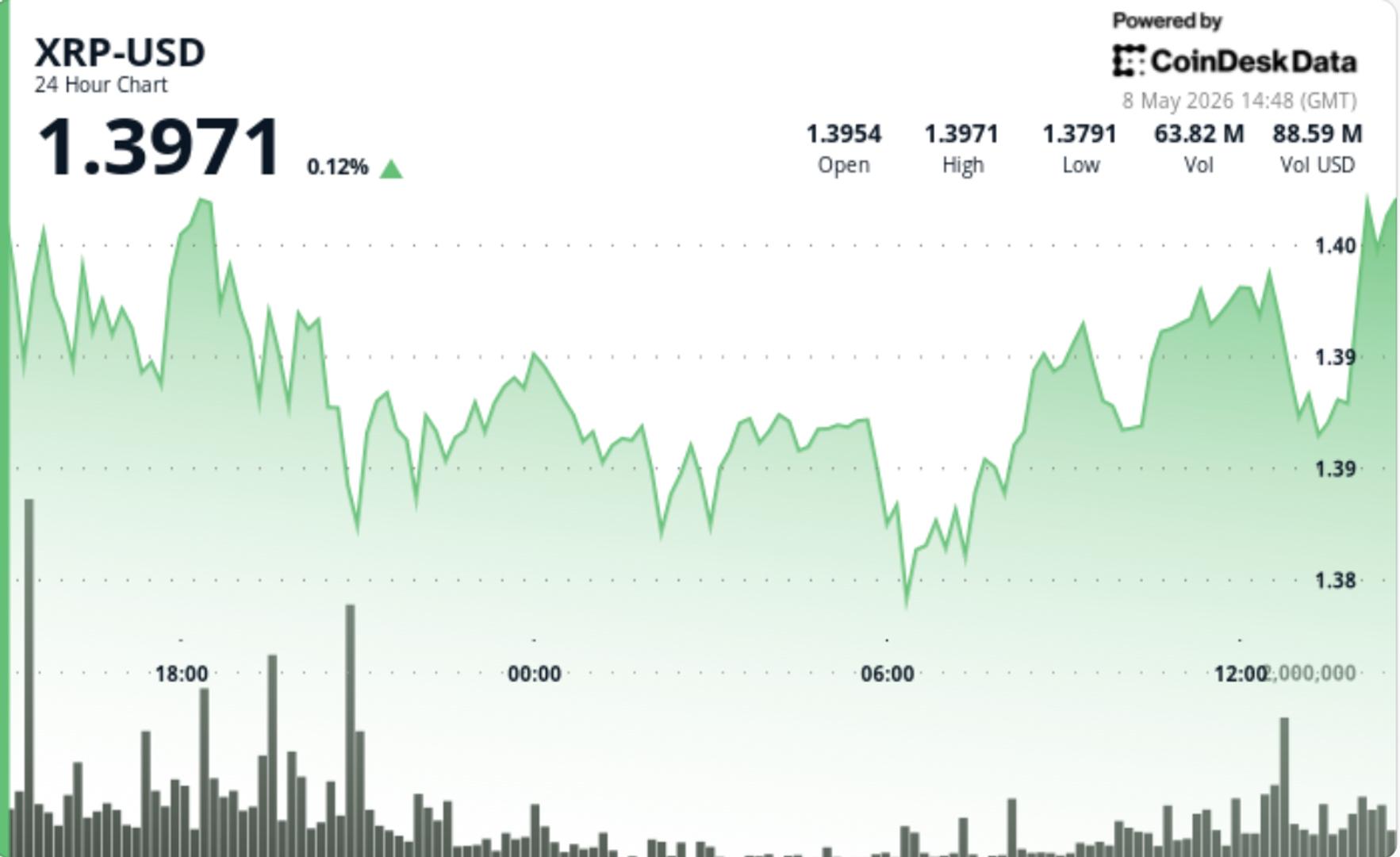
• XRP traded in a tight 1.4% range between $1.3787 and $1.3948 over the 24-hour session.
• A late-session push lifted price from $1.3879 to $1.3930 on a 1.45M volume spike, breaking above the immediate consolidation ceiling.
• Support repeatedly held between $1.3825-$1.3870, while sellers continued defending the $1.3930-$1.3950 zone.
Technical Analysis
• The market has spent weeks compressing between support near $1.38 and resistance just below $1.40, with volatility continuing to tighten.
• Volume expanding into the latest move higher matters because thin liquidity conditions tend to exaggerate price reactions once resistance finally gives way.
• XRP is still stuck below larger breakout levels near $1.47 and $1.50, but repeated tests of resistance usually weaken seller control over time.
• Analysts tracking bull flag and wedge formations continue targeting the $1.60-$1.73 range if the broader structure confirms.
What traders should watch
• $1.3930-$1.3950 is the immediate resistance zone. A sustained move above it shifts focus toward $1.42 and $1.47.
• $1.3825 remains the key support floor holding the current consolidation structure together.
• Liquidity conditions remain unusually thin, increasing the odds of a fast move once the range finally breaks.
Crypto World
Ondo, Ripple, JPMorgan, and Mastercard Complete First 24/7 Tokenized Treasury Settlement
TLDR:
- Ondo and Ripple completed a near real-time tokenized Treasury redemption across borders.
- XRP Ledger processed the blockchain asset transfer in under five seconds during pilot.
- Mastercard MTN connected blockchain redemption directly with banking settlement rails.
- The pilot demonstrated 24/7 institutional settlement beyond standard banking hours.
Ondo Finance has completed the first near real-time cross-border redemption of a tokenized U.S. Treasury fund. The transaction was carried out in collaboration with Kinexys by J.P. Morgan, Mastercard, and Ripple.
Together, the four firms settled a cross-border transaction using both a public blockchain and traditional interbank rails.
The process cleared outside standard banking windows, connecting blockchain execution directly to fiat settlement. This marks a practical framework for 24/7 global settlement of tokenized financial assets.
How the Transaction Was Structured
Ripple redeemed a portion of its Ondo OUSG holdings on the XRP Ledger as part of the pilot. Ondo processed the redemption and issued a fiat instruction via the Mastercard Multi-Token Network. The MTN then routed that instruction to Kinexys by J.P. Morgan for settlement execution.
Kinexys debited Ondo’s Blockchain Deposit Account and settled U.S. dollar proceeds to Ripple’s Singapore bank account.
The transfer moved through J.P. Morgan’s correspondent banking network, completing a full cross-border, cross-bank flow. No separate manual instructions were needed at any point in the process.
The XRP Ledger processed the asset leg in under five seconds. Markus Infanger of RippleX stated that this pilot showed institutions can execute cross-border transactions as a single integrated flow.
That speed enabled settlement well outside traditional banking cut-off windows. That distinction gave the pilot a clear operational advantage over conventional settlement systems.
One leg cleared on a public blockchain while the other settled on banking infrastructure. The two systems coordinated directly rather than requiring parallel, independent instructions. Ian De Bode of Ondo Finance said this lays the groundwork for 24/7 global markets that never close.
What This Means for Tokenized Asset Infrastructure
Tokenized real-world assets have grown across the financial sector, but redemption infrastructure has lagged behind.
Traditional wire systems, manual processes, and limited operating hours have restricted how institutions redeem and settle these assets.
Together, these constraints have limited the scalability of tokenized asset redemption for institutional players. This pilot connects blockchain-based redemption to automated fiat settlement, removing those long-standing barriers.
The Mastercard MTN served as the interoperability layer between the blockchain and banking environments. Raj Dhamodharan of Mastercard said the MTN makes near real-time, cross-border settlement available through existing bank accounts. That connectivity allows institutions to access tokenized assets without replacing existing banking infrastructure.
Zack Chestnut of Kinexys by J.P. Morgan said broad adoption requires collaboration across geographies, banking systems, and public blockchains.
This pilot proves that multi-party coordination at that level is achievable today. The transaction was not theoretical — it was executed between real global financial institutions.
The framework supports redemptions from any public blockchain where OUSG is issued, starting with XRPL. Ondo Finance has positioned this as a scalable model for continuous, round-the-clock tokenized asset markets.
The completed pilot shows that 24/7 cross-border settlement across global banks is now operationally within reach.

4 Recently released WWE Superstars who could return at Backlash 2026

Criminal Record: Teen’s harrowing text before fatal crash and suspected voter fraud

Mexico president wavers on plan to cut school year by 40 days for the World Cup

Manchester United reach agreement with Casemiro over contract clause amid transfer speculation

US brings back mandatory military draft registration

Steven Gerrard disagrees with Gary Neville over ‘shock’ Chelsea and Arsenal claim | Football


-

 NewsBeat5 days ago
Channel 5 – All Creatures Great and Small series 7 new post
-
 Crypto World7 hours ago
HarrisX Poll Found 52% of Registered Voters Support the CLARITY Act
-

 Crypto World1 day ago
Upbit adds B3 Korean won pair as Base token gains Korea access
-
 NewsBeat1 day ago
NCP car park operator enters administration putting 340 UK sites at risk of closure
-
 Tech7 days ago
Trump’s 25% EU auto tariff breaches Turnberry Agreement that also covers semiconductors and digital trade
-
 Sports7 days ago
Paul Scholes issues Marcus Rashford reality check as agreement emerges over Man United star
-

 Tech4 days ago
Image AI models now drive app growth, beating chatbot upgrades
-

 Entertainment7 days ago
Met Gala 2026 Rumored Guest List Is Turning Heads
-
Entertainment7 days ago
New on Prime Video in May 2026 — Full List of Movies and Shows
-

 Entertainment7 days ago
Kylie Jenner Hit With Second Lawsuit From Ex-Housekeeper
-

 Sports7 days ago
Cavaliers vs. Raptors Game 6 live score, updates, highlights from 2026 NBA playoffs first-round series
-

 Entertainment6 days ago
Melissa Joan Hart and More Stars Attend 2026 Kentucky Derby
-
 Sports7 days ago
David Benavidez responds to team Canelo saying the fight will never happen
-

 Entertainment7 days ago
Young and the Restless Next Week: Cane Arrested & Matt’s Deadly New Scheme!
-
Entertainment6 days ago
New Netflix Movies in May 2026 — My Top 3 Picks to Stream
-
 Sports7 days ago
IPL 2026: ‘Love you darling’- Hardik Pandya’s reaction to MS Dhoni steals the show |Watch | Cricket News
-

 Tech7 days ago
Mother’s Day 2026 Gift Guide: Audio to Upgrade Mom’s Lifestyle
-
Crypto World6 days ago
Pi Network Mandates Protocol 23 Upgrade for All Mainnet Nodes Before May 15 Deadline
-

 Business5 days ago
Luka Doncic Injury Update: Doncic’s Hamstring Recovery Slows Lakers’ Hopes Against Thunder: Can He Run Yet?
-

 Business7 days ago
Can Victor Wembanyama Bring the NBA Ring to Spurs in 2026? Historic Playoff Run Fuels Title Dreams
You must be logged in to post a comment Login