TL;DR
The Trump administration announced the Tesla Model Y is the first car to pass NHTSA’s new driver assistance safety tests. The same agency is investigating 3.2 million Teslas for crashing while using the company’s more advanced system.





The Trump administration announced the Tesla Model Y is the first car to pass NHTSA’s new driver assistance safety tests. The same agency is investigating 3.2 million Teslas for crashing while using the company’s more advanced system.
TL;DR
The Trump administration announced on Wednesday that the Tesla Model Y is the first vehicle to pass NHTSA’s new advanced driver assistance safety tests. The same agency is simultaneously investigating 3.2 million Tesla vehicles for crashing while using the company’s more advanced self-driving system. The announcement celebrates Tesla for passing a test that measures whether a car can detect a pedestrian. The investigation examines whether Tesla’s cars can detect a pedestrian.
The distinction between the two is the distance between what the tests measure and what the technology attempts. The ADAS benchmark evaluates features that are standard equipment on dozens of vehicles from Toyota, Honda, Hyundai, BMW, and others. The investigation covers Tesla’s Full Self-Driving software, which operates at a level of autonomy that the ADAS tests do not assess. The press release and the probe exist in the same agency, issued weeks apart, about the same company.
The 2026 Model Y passed eight evaluations under NHTSA’s updated New Car Assessment Program. Four are legacy criteria that have been part of the programme for years: forward collision warning, crash imminent braking, dynamic brake support, and lane departure warning. Four are newly added: pedestrian automatic emergency braking, lane keeping assistance, blind spot warning, and blind spot intervention.
The new tests are pass-fail assessments of features that the automotive industry has been shipping as standard or optional equipment for years. Blind spot warning has been available on mainstream vehicles since the mid-2010s. Pedestrian automatic emergency braking is standard on most new cars sold in the United States. Lane keeping assistance is a feature that a 25,000 dollar Honda Civic includes at no additional cost.
The tests do not evaluate Tesla’s Autopilot or Full Self-Driving capabilities. They do not measure how the vehicle performs when operating autonomously. They measure whether the vehicle’s basic safety systems, the features that activate when a human is driving, function correctly. Passing them is necessary. It is not exceptional.
NHTSA finalised the updated NCAP criteria in late 2024 for implementation in model year 2026. In September 2025, the Trump administration delayed the requirement by one year to model year 2027, after the Alliance for Automotive Innovation, the industry’s main lobbying group, requested more time. Tesla, Rivian, and Lucid are not members of the alliance.
The delay means that most automakers have not yet submitted vehicles for the new tests, not because their cars cannot pass, but because the deadline has been pushed to 2027. Tesla submitted the Model Y voluntarily, ahead of the delayed timeline. It was the only manufacturer to do so. The result is a press release from the Department of Transportation announcing that Tesla is the “first vehicle” to pass tests that other manufacturers were told they did not yet need to take.
The announcement was titled “Trump’s Transportation Department Announces Tesla Model Y Is the First Vehicle to Pass NHTSA’s New ‘Advanced Driver Assistance System’ Tests.” The relationship between the Trump administration and Tesla’s regulatory environment is not incidental to the framing. The department delayed the tests, creating a window in which Tesla could be the only company to submit, then announced the result with the president’s name in the headline.
While NHTSA was certifying the Model Y’s basic safety features, its Office of Defects Investigation was escalating a probe into 3.2 million Tesla vehicles equipped with Full Self-Driving software. The engineering analysis, opened in March 2026, covers crashes in which FSD failed to detect common roadway conditions that impaired camera visibility, including glare, fog, and airborne debris.
The agency documented incidents in which vehicles running FSD crossed into opposing lanes, ran red lights, and struck pedestrians. Tesla’s robotaxi service in Austin has been involved in 14 crashes since launching, a rate that Electrek calculated at approximately four times worse than human drivers. NHTSA said the system “did not detect common roadway conditions that impaired camera visibility and/or provide alerts when camera performance had deteriorated until immediately before the crash occurred.”
The engineering analysis is a required step before a potential recall. Tesla has asked for, and received, multiple extensions to submit crash data to the agency. The investigation covers the software that Tesla charges up to 8,000 dollars for and markets under the name “Full Self-Driving,” a name that NHTSA itself has noted does not accurately describe the system’s capabilities.
The automotive and technology industries classify driver assistance on a scale from Level 0, no automation, to Level 5, full automation with no human oversight required. The ADAS tests that the Model Y passed evaluate Level 1 and Level 2 features: systems that assist the driver but require the driver to remain in control at all times.
Tesla’s Full Self-Driving software, which is the subject of the NHTSA investigation, attempts to operate at Level 2 with ambitions toward higher levels of autonomy. Companies like Wayve are targeting Level 4 autonomy, which means the vehicle can operate without human intervention in defined conditions. Wayve raised 1.2 billion dollars to develop autonomous driving systems that do not require a human safety driver.
The gap between Level 2, where a human must always be ready to take over, and Level 4, where the car handles defined conditions independently, is the gap between the ADAS benchmark the Model Y just passed and the Full Self-Driving system that NHTSA is investigating. Uber relaunched Motional’s robotaxi service in Las Vegas with a target of fully driverless operation by the end of 2026, using a system designed from the ground up for Level 4. Tesla is attempting to reach the same destination using cameras, consumer vehicles, and software updates.
Tesla reclaimed the global quarterly EV sales crown from BYD in the first quarter of 2026, selling 358,000 battery electric vehicles. The company’s market position depends on the perception that its technology leads the industry. The ADAS benchmark contributes to that perception. The FSD investigation complicates it.
The Model Y passing eight safety tests is a data point about a car that can detect a pedestrian in a controlled scenario. The FSD investigation is a data point about the same company’s software failing to detect pedestrians, red lights, and oncoming traffic in the real world. The tests and the investigation measure different things. But they measure the same company’s claim to be the leader in vehicle safety and autonomy.
NHTSA now occupies the position of simultaneously certifying Tesla’s basic safety features and investigating whether its advanced features are safe enough to remain on the road. The press release says Tesla is first. The investigation says Tesla may be defective. Both are true. Neither tells the whole story. The distance between a passed benchmark and an open investigation is the distance between what a car can do when the test is defined and what it does when the road is not.

Looking for a different day?
A new NYT Connections puzzle appears at midnight each day for your time zone – which means that some people are always playing ‘today’s game’ while others are playing ‘yesterday’s’. If you’re looking for Friday’s puzzle instead then click here: NYT Connections hints and answers for Friday, May 8 (game #1062).
Good morning! Let’s play Connections, the NYT’s clever word game that challenges you to group answers in various categories. It can be tough, so read on if you need Connections hints.
SPOILER WARNING: Information about NYT Connections today is below, so don’t read on if you don’t want to know the answers.

Today’s NYT Connections words are…
What are some clues for today’s NYT Connections groups?
Need more clues?
We’re firmly in spoiler territory now, but read on if you want to know what the four theme answers are for today’s NYT Connections puzzles…
What are the answers for today’s NYT Connections groups?
Right, the answers are below, so DO NOT SCROLL ANY FURTHER IF YOU DON’T WANT TO SEE THEM.

The answers to today’s Connections, game #1063, are…
I got quite muddled with THINGS WORN AROUND THE NECK and STRINGS TIED IN KNOTS, starting off with a group that contained SHOELACES, FRIENDSHIP BRACELET, TIE and QUIPU. I incorrectly thought the latter was the name for a bootlace tie, but I now know it’s the name of an ancient abacus.
Eventually I got there and after eliminating the blue group, UNITS OF TV PROGRAMS suddenly seemed blindingly obvious.
As someone who has written a fair amount of PUFF pieces (I had a short-lived job writing press releases about ovens) I really should have solved the purple group — alas, it passed me by.
NYT Connections is one of several increasingly popular word games made by the New York Times. It challenges you to find groups of four items that share something in common, and each group has a different difficulty level: green is easy, yellow a little harder, blue often quite tough and purple usually very difficult.
On the plus side, you don’t technically need to solve the final one, as you’ll be able to answer that one by a process of elimination. What’s more, you can make up to four mistakes, which gives you a little bit of breathing room.
It’s a little more involved than something like Wordle, however, and there are plenty of opportunities for the game to trip you up with tricks. For instance, watch out for homophones and other word games that could disguise the answers.
It’s playable for free via the NYT Games site on desktop or mobile.
Discord is recovering following a brief outage that saw some users unable to use the popular chat app. At 3:08PM ET, the company said it had begun investigating an issue with its API systems. Shortly thereafter, at 3:24PM ET, Discord said it had identified the problem, but noted at the time it was still affecting users, making it difficult for them to access the service.
“We are continuing to work to remediate the issues impacting availability for some Discord users,” the company said at3:56PM ET. “This is causing impact across our service, including logging in and sending messages.” Whatever was causing the disruption, Discord appeared to solve it quickly. At 4:16PM ET, the company said it was starting to see “seeing significant recovery” across its systems. As of 4:59PM ET, the service isn’t at “fully healthy state” yet, so if you’re having trouble launching the app, it may take a bit more time before everything is up and running again. By 6:38PM ET, Discord reported that “all critical functionalities have recovered for all users.”
Update 6:4PM ET: The headline and copy of this article have been updated to reflect that Discord is back online for all users.
With music, how good is good enough? When you’re listening to digital music, what you hear depends on the original master, the file format and most of all, whether it’s lossy — reducing the sound quality to reduce file sizes — or lossless, which is pristine and perfect. If you’re serious about sound, lossless is going to defeat lossless every time.
Right?
Perhaps not.
On the r/audiophile subreddit, a user called vlad1m1r has shared a tool that tests how well you can differentiate different quality levels and formats. Can you tell the difference between a lossless FLAC or WAV and a 320kbps MP3, even if it’s music you listen to all the time and you know inside out?
According to Apple Music exec Oliver Schusser, most people can’t. Speaking to Billboard, he said that “honestly, if we did an anonymous blind test on just an iPhone with headphones… I can tell you most fans wouldn’t be able to tell the difference.”
Is he right? It turns out there’s an easy way to find out. Vlad1m1r’s Flactest runs in your browser and enables you to drag a FLAC, WAV or AIFF file onto the app, at which point it will re-encode it to different MP3 bitrates and play them to you without revealing which one is which.
And at the risk of sounding clickbaity, the results may surprise you. They certainly surprised vlad1m1r, who struggled to tell the difference between uncompressed FLAC and high-bitrate MP3.
Redditors have been having fun with this, and I thought I’d join in. I’ve got a very nice, Hi-Res Audio-friendly, setup. Are my headphones, speakers and ears good enough to spot what are often very subtle differences?

One of the problems of listening tests is that you can’t always be sure you’re listening to the same version when you’re comparing different formats and bitrates. Some releases, especially of legacy artists, have been released multiple times and in some cases remastered, and that’s likely to change the sound more than a minor difference in the encoding rate.
The source quality isn’t the only factor that’ll affect what you hear, of course. The speakers you’re using, their placement and the acoustic qualities of your room make a difference, as will the kind of headphones you’re listening on, the DAC you have and the volume level you’re playing the music at. Those will all shape the sound, too.
Flactest solves a lot of that for testing purposes because all of those things stay constant. You provide a single original and it then re-encodes it in multiple resolutions of MP3 via the same LAME codec, as well as playing your untouched original. What that means is you get consistency: you’re listening to the same song from the same source on the same hardware and software as you switch between the five mystery formats it serves up.
It’s worth noting that there’s another factor at play here, and it will apply to everyone who is no longer a teenager: age. From early adulthood we start losing the top end of our hearing, and that means a 50-something like me won’t hear the same highs that I could easily discern at 15. So, if encoding changes are making a difference at the very top frequencies, which is where a lot of digital artefacts tend to live in compressed MP3s, I may not be able to hear much difference.

I listened to multiple songs in two ways: on my large Adam studio monitors through an SSL 2 audio interface, and on BeyerDynamic DT990 Pro open-back headphones via an iFi desktop DAC.
My source files were 44.1kHz WAV and 16-bit/44.1 and 24-bit/96kHz FLAC, with songs I’ve listened to for years — Radiohead, U2, Talk Talk and so on — as well as music I’ve made myself on my Mac.
The low-bitrate MP3s were easy to spot because they sound atrocious, as if they’re being played in the room next door by someone with a really bad hi-fi system. At 16kbps or 64kbps the MP3 compression is really obvious, and there’s a noticeable step up in quality when you move to 320kbps on busier tracks where there’s a lot going on. The tells are fizzy distorted guitars and acoustic instruments, especially cymbals and hi-hats that get noticeably “splashy” as you reduce the bitrate.
But after 128kbps it got tricky for me. Time and again I often couldn’t differentiate between the 320kbps MP3s and the lossless originals.
Perhaps the trick to discerning the differences is to listen to the same music over and over again. When I ran the tests using my own music — songs I’m currently mixing — I got perfect scores. That makes sense, because I’ve been obsessing over tiny details in those tracks, such as the fizz of a drum machine hi-hat and the punch of a bass guitar, and I’ve been listening to those things again and again as I try to perfect them. But that’s a different kind of listening than when I’m listening for pleasure.
For me at least, the answer is clear: I can’t tell the difference between the highest quality MP3 and the same song as a FLAC on my headphones or speaker setup. But that doesn’t mean I won’t in the future.
It’s well known that with some exceptions, most of us can’t hear the difference between a very-high-bitrate lossy file and a lossless one on everyday audio equipment. Once you hit 192kbps or higher it becomes much more about the quality of your components: your hi-fi, your amp, your speakers, your headphones.
However, if you run the tests and find you can’t tell the difference between lossless and slightly lossy, that doesn’t mean you should stick to encoding or buying everything as 320kbps MP3 or the equivalent AAC. High bitrate lossy compression is still lossy, and once musical information is removed you can’t get it back.
Upsampling can do a best-guess with impressive results, but it’s still only a guess rather than the discarded data. So for long-term storage it’s worth saving your digital music in the highest quality lossless format available to you, even if owning a high-end system isn’t in your immediate future — because if you get better kit later you may regret not having better quality files.
I know from reviewing high-end headphones and from experiencing proper audiophile systems that cost way more than my car that with the right equipment you’ll hear detail that lesser kit keeps buried in the mix.
And that’s why I think it’s wise to future-proof your digital library. You simply don’t know what you’ll be listening with in years to come. I thought I was pretty clever ripping CDs to 160kbps MP3 back in the iPod days, because I didn’t have good enough hardware to need anything better — a choice I now regret as I’ve long since binned the original CDs. Today I’m on eBay buying many of them all over again.
Try our TV size and model finder! You tell it how far you sit from your TV, we’ll tell you what size to buy based on viewing angle advice from image quality experts, and we’ll recommend our three top TVs at that size for different prices.

Follow TechRadar on Google News and add us as a preferred source to get our expert news, reviews, and opinion in your feeds.
Information about the rumored new iPhone comes from tipster Schrodinger, who shared screenshots of messages from an unnamed source said to be familiar with the project. The screenshots suggest that Apple is working on a “Spatial iPhone” – codenamed H1 or MH1 – featuring a holographic display that would create…
Read Entire Article
Source link
Denon Home series speakers review: These new smart speakers support Siri & Apple Home with premium audio
Denon’s new line of Siri-enabled Apple Home smart speakers may be what users are looking for in the absence of updated HomePod and HomePod mini. Let’s take a listen.
Japanese audio brand Denon is out with its latest range of speakers: the Denon Home 200, Denon Home 400, and Denon Home 600. While all different sizes and price points, the entire line caters to Apple users with support for conversing with Siri and AirPlay.
The new devices launch in what has been a prolonged pause in Apple’s HomePod product cycle. The second-generation full-sized HomePod launched in 2023, and HomePod mini has gone even longer without an update, hitting shelves in 2020.
This makes Denon’s new lineup even more enticing with few alternatives available. I’ve been testing both the Denon Home 200 and Denon Home 400 for the last couple of months.
Let’s see how they perform and compare to HomePod.
All three speakers in the range share a clear identity. They’re wrapped in mesh fabric, with obvious buttons and metal accents.
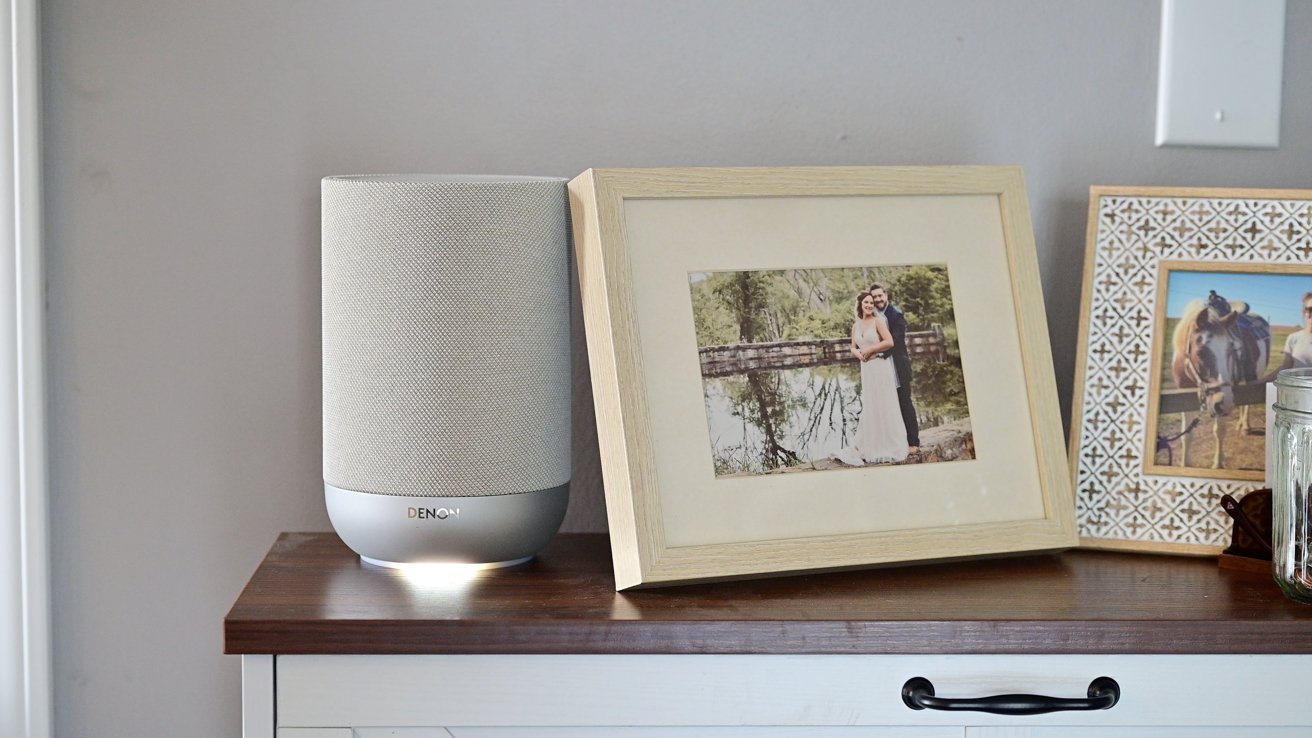
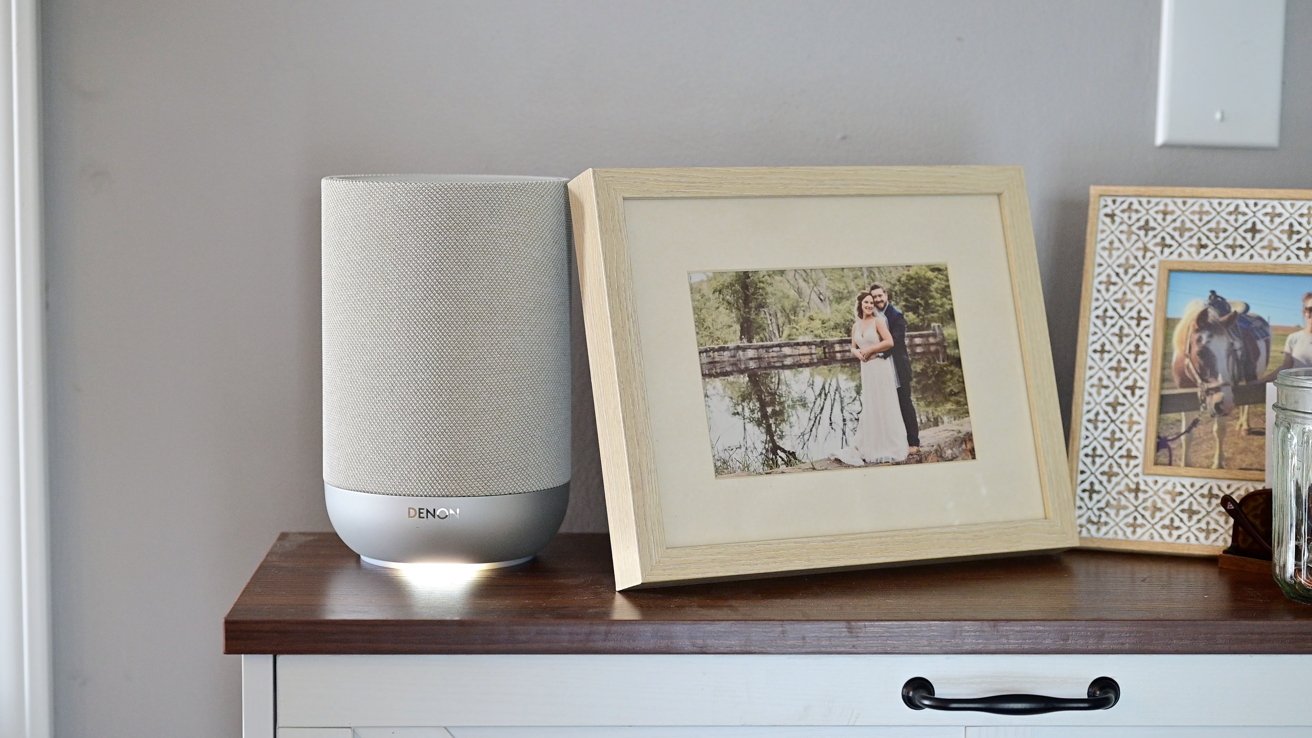
Denon Home series speakers review: The smaller, Denon Home 200 looks sleek and elegant
The Denon Home 200 and Denon Home 400 are most similar, with a curved anodized aluminum base and the mesh-covered top. The tops are flat, with buttons on the top or side and extra IO on the back.
The Denon Home 600 is the biggest departure as the contoured speaker body appears to sit angled on top of the base. This provides better sound direction for spatial support, sending audio up, to the sides, and forward.
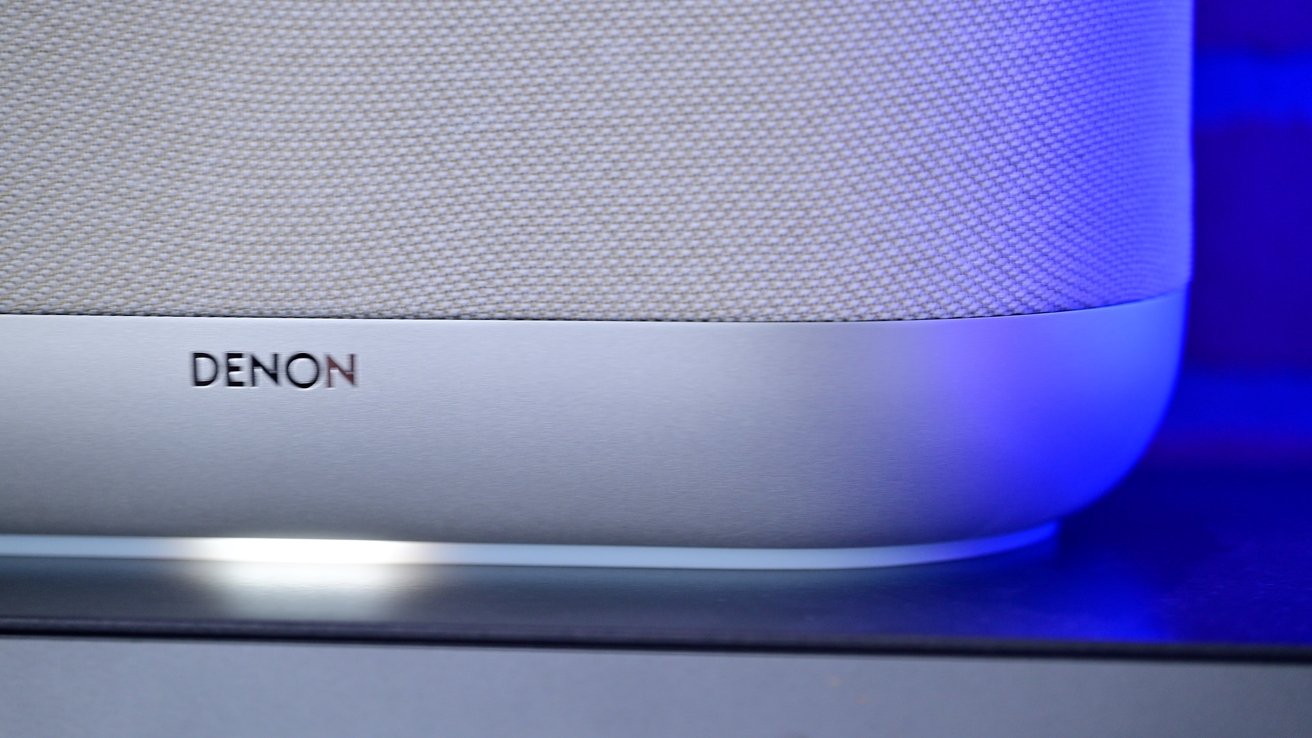
Denon Home series speakers review: Status light on the bottom of the Denon Home 400
I love the metal accents in particular, as they create an elegant upscale look beyond the HomePod. They’re available in both light grey and black, with the former being shown here.
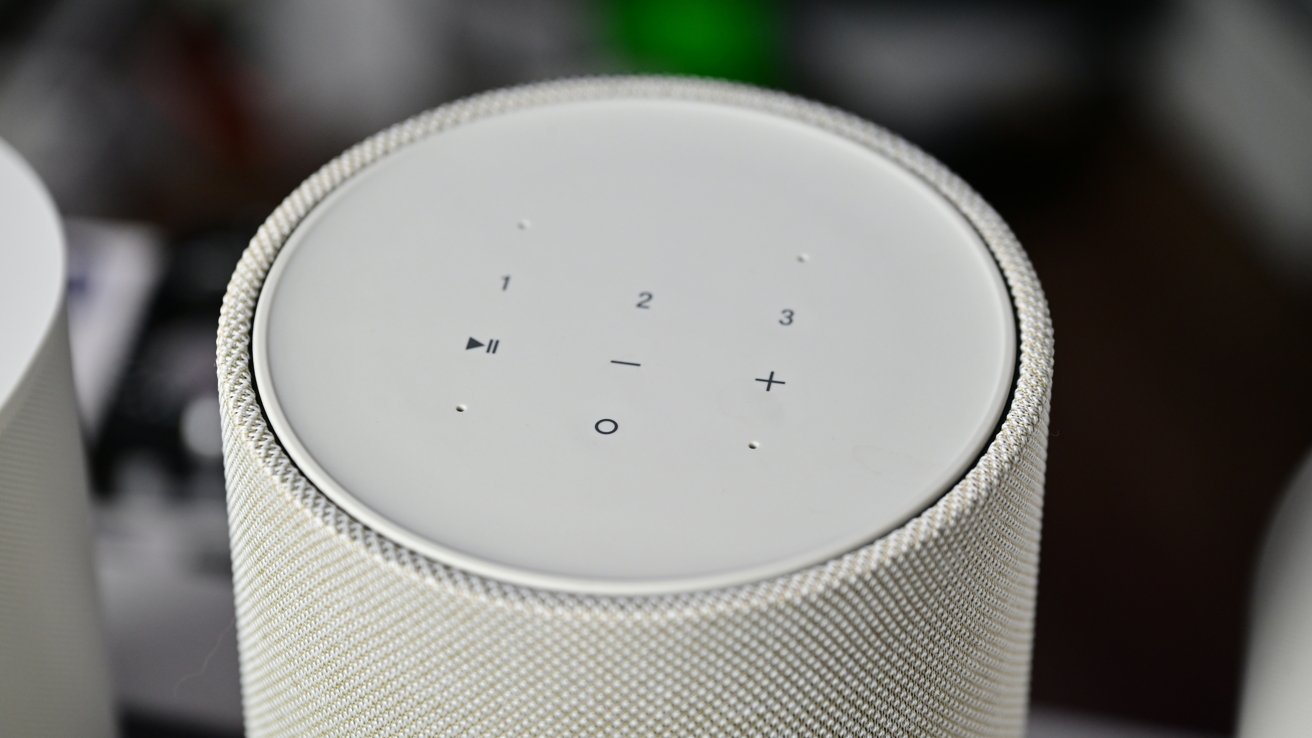
Denon Home series speakers review: Controls on the top of the Denon Home 200
Unlike with HomePod that has a touch-sensitive surface, the buttons are physical and have a subtle *click* when depressed. There’s a combo play/pause button, volume controls, three user-designated shortcuts, and a multi-function button that can invoke your virtual assistant of choice.
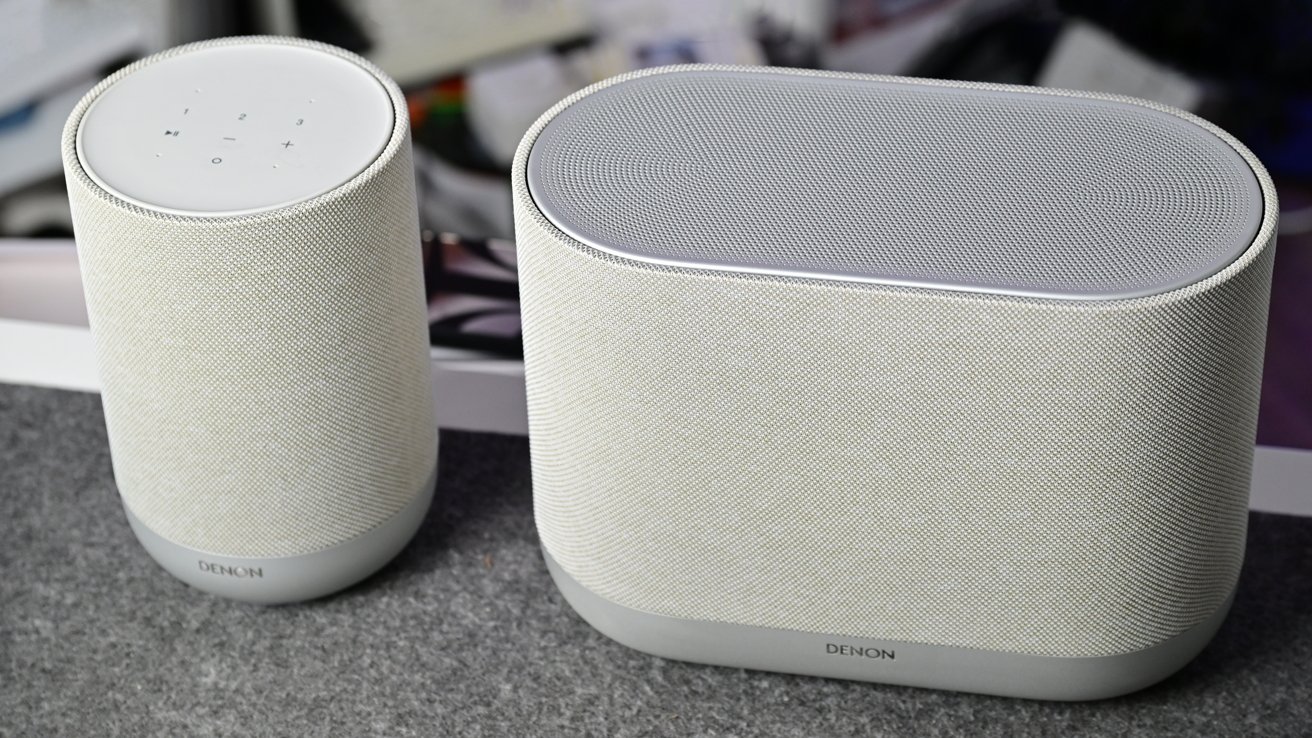
Denon Home series speakers review: Differences in design between the Denon Home 200 and Denon Home 400
The Denon Home 400 is just over twice as wide and instead of the buttons on the top, has a metal grille that helps with Spatial Audio. The buttons are relocated to the ride side for easy access but you don’t see them from the front.
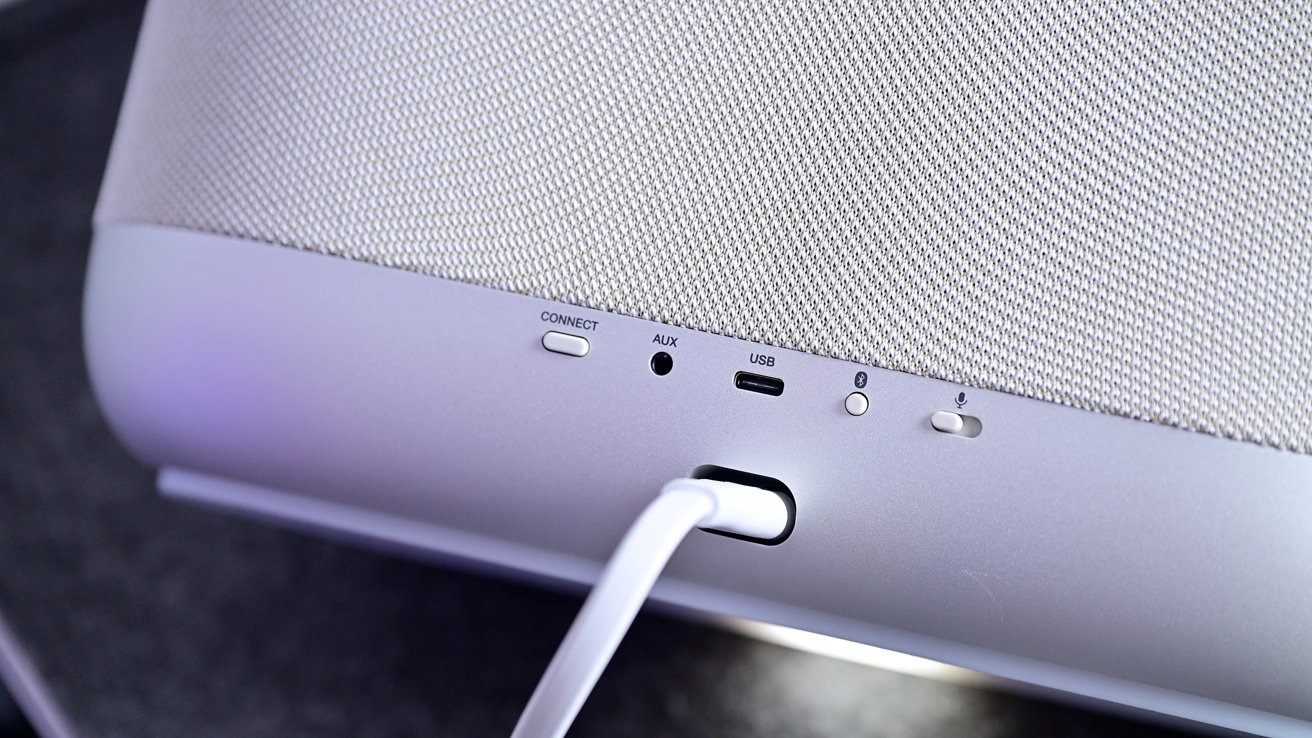
Denon Home series speakers review: Rear ports shared across the Denon home speaker line
For the bonus IO, there are both USB-C and auxiliary audio inputs, a Bluetooth toggle, and a physical toggle that will disable the mic if you don’t want a smart speaker listening in.
Finally, the speakers have a soft light that glows out of the bottom. It acts as a bit of a status light and can change color.
There are multiple methods of setup for the new Denon speakers. I think for Apple users, though, it’s easiest when using Apple Home.
The speakers can be set up just like any other Apple Home accessory. You open the Home app, tap the + button, and scan the pairing code on the speaker.
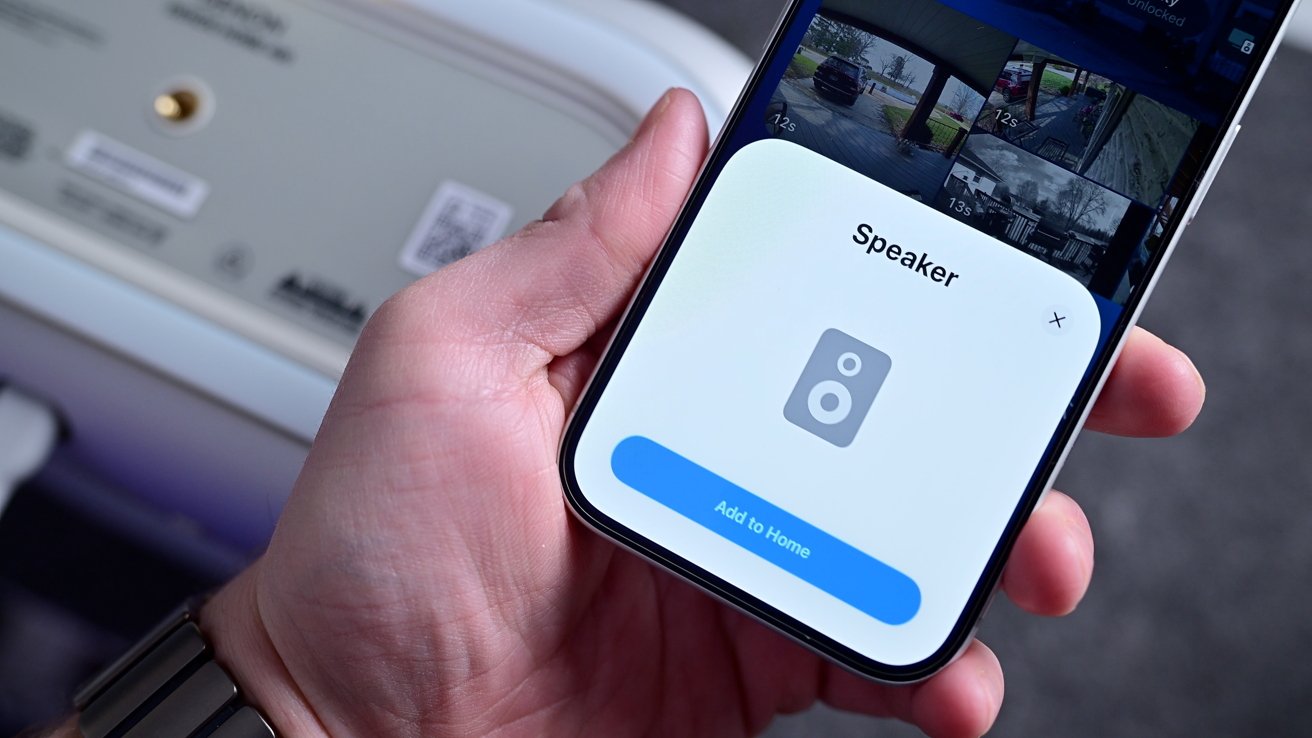
Denon Home series speakers review: Scan the pairing code to add to the Home app
This opens a popup modal at the bottom of the screen to walk you through the onboarding process, like giving the speaker a name and assigning it a room in your home. Behind the scenes, it also adds your Wi-Fi credentials.
I’d say this is basically an ideal setup process. You don’t need to do some convoluted pairing process where you connect to a temporary network, download any third-party apps, or even manually enter any credentials.
The only way Denon could have made this any easier would be if they used NFC for commissioning rather than scanning the QR code. That means the whole setup process could be started with a tap versus opening the Home app first.
That’s something still seldom seen, even on dedicated smart home products. Companies probably skip it due to the added cost of the NFC chip that’s used merely once during that initial setup process.
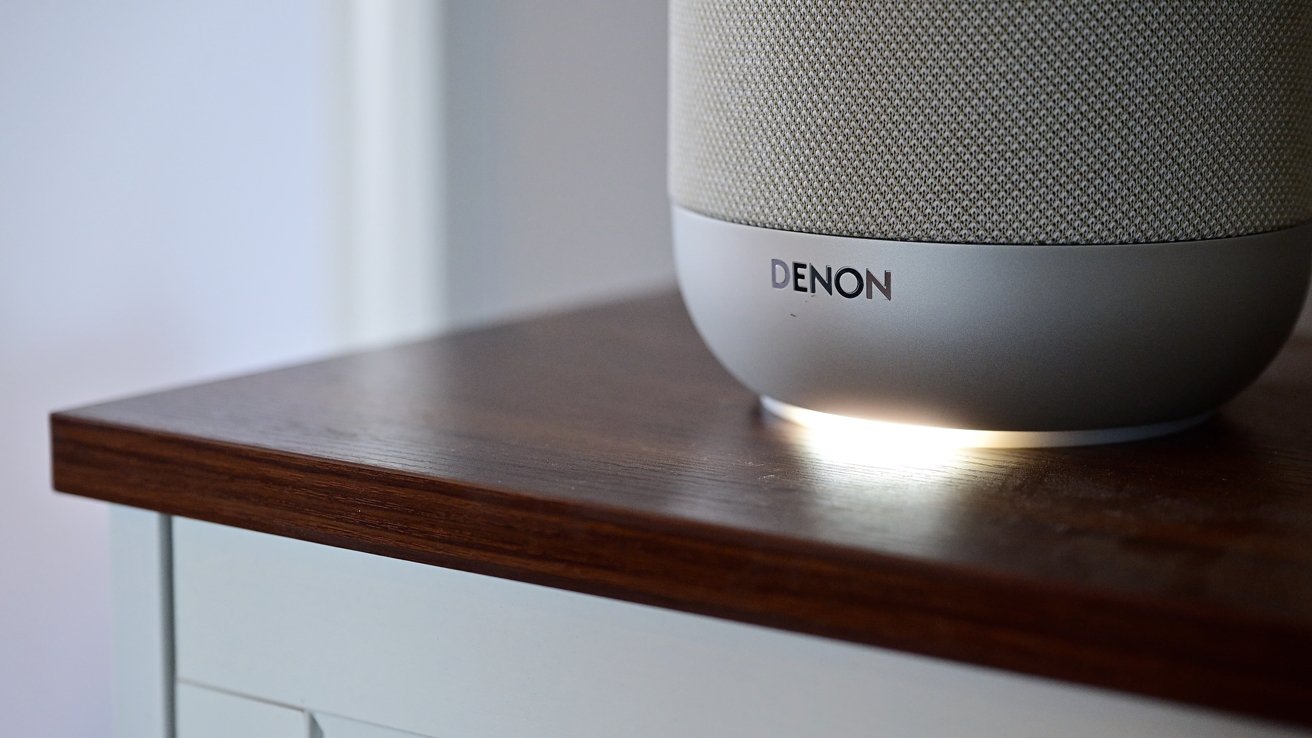
Denon Home series speakers review: The status light can change colors
While we’re talking about the setup and wireless, so far in my testing, I’ve not encountered any instances of the speakers going offline. Both speakers have remained online, available, and responsive when I cast audio to them.
The speakers support Wi-Fi 6, including not only 2.4GHz and 5GHz, but 6GHz, too. With strong Wi-Fi in my home, I was able to enable the high-fidelity mode for uncompressed high bitrate audio that used during multi-room playback.
What makes these speakers so appealing to me compared to others in their weight class is that they support Apple Home. This doesn’t just make the setup process easier, but allows them to act almost identical to a HomePod.
Since it appears in the Home app as a Home accessory, you can include it in your home automations. Simple ones, for example, like automatically pausing audio playback when you or the last person leaves the home, are quite useful.
These speakers can be used in more complex scenes and automations, too. You could have the speakers play your “get ready” playlist in the morning when your alarm goes off, you could have a “pump up” playlist when you set a workout scene, or play white noise with a sleep timer when setting your “Goodnight” scene.
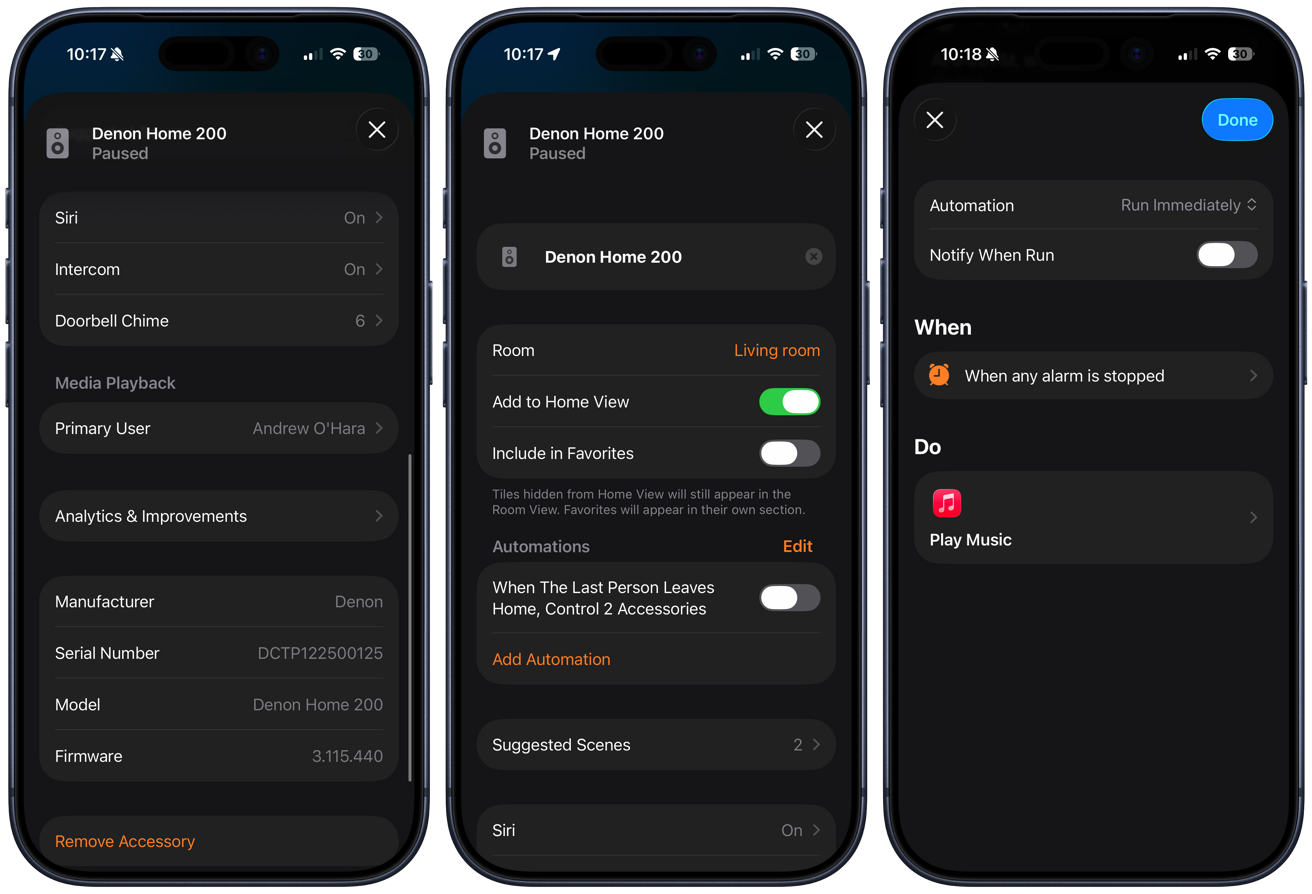
Denon Home series speakers review: The Denon Home 200 showing in the Home app
Another benefit is that it can be used as an intercom with other Apple Home speakers, including HomePods. If I’m in my studio, my partner can call me over the intercom from the kitchen HomePod to my studio Denon Home 400, and I can talk back to them.
If you have an Apple Home doorbell, the Denon Home speakers can act as wireless chimes. That way, if someone presses the doorbell on the front door, the Denon speaker down in the studio can chime to let me know someone is there.
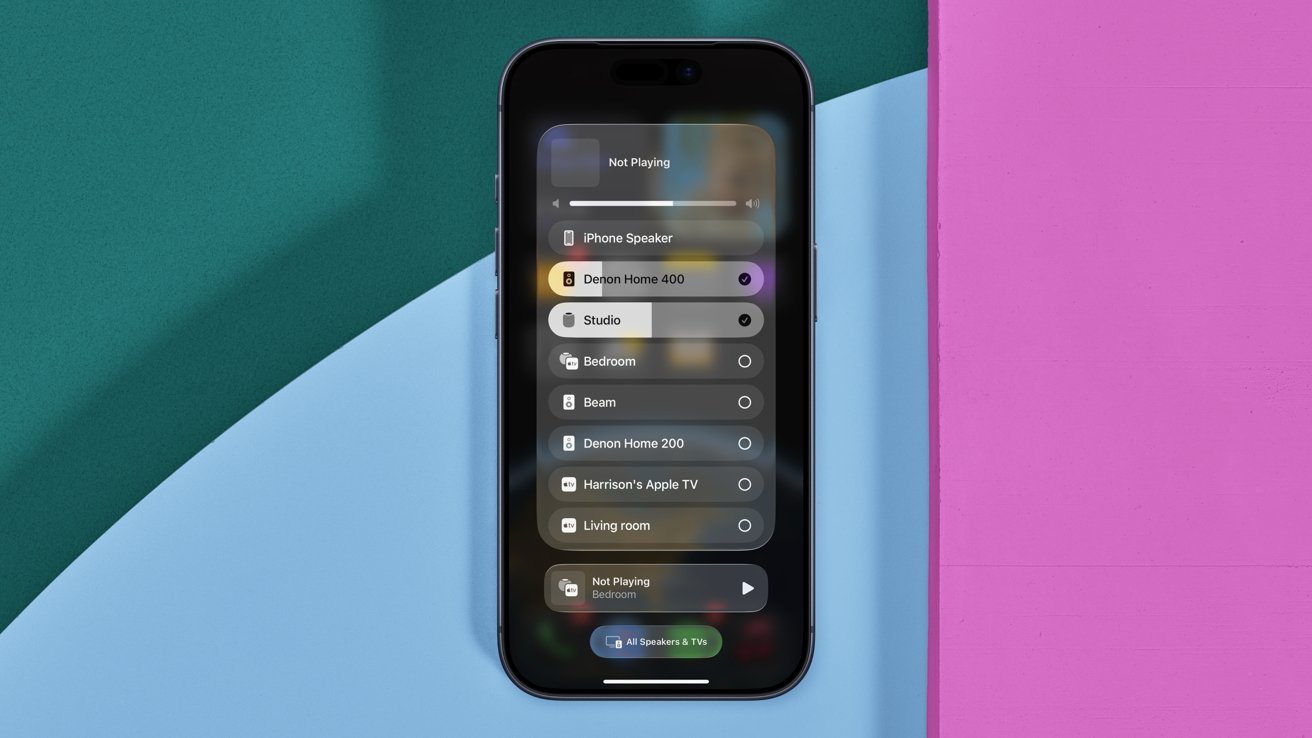
Denon Home series speakers review: Use AirPlay to cast audio to the Denon speakers, including multiple at once
This brings support for AirPlay, too. You can cast audio from nearly any Apple device to the Denon Home speakers.
That’s what allows Apple-native multi-room support. You can play to multiple AirPlay speakers at once, which can be any combination from HomePods and third-party speakers.
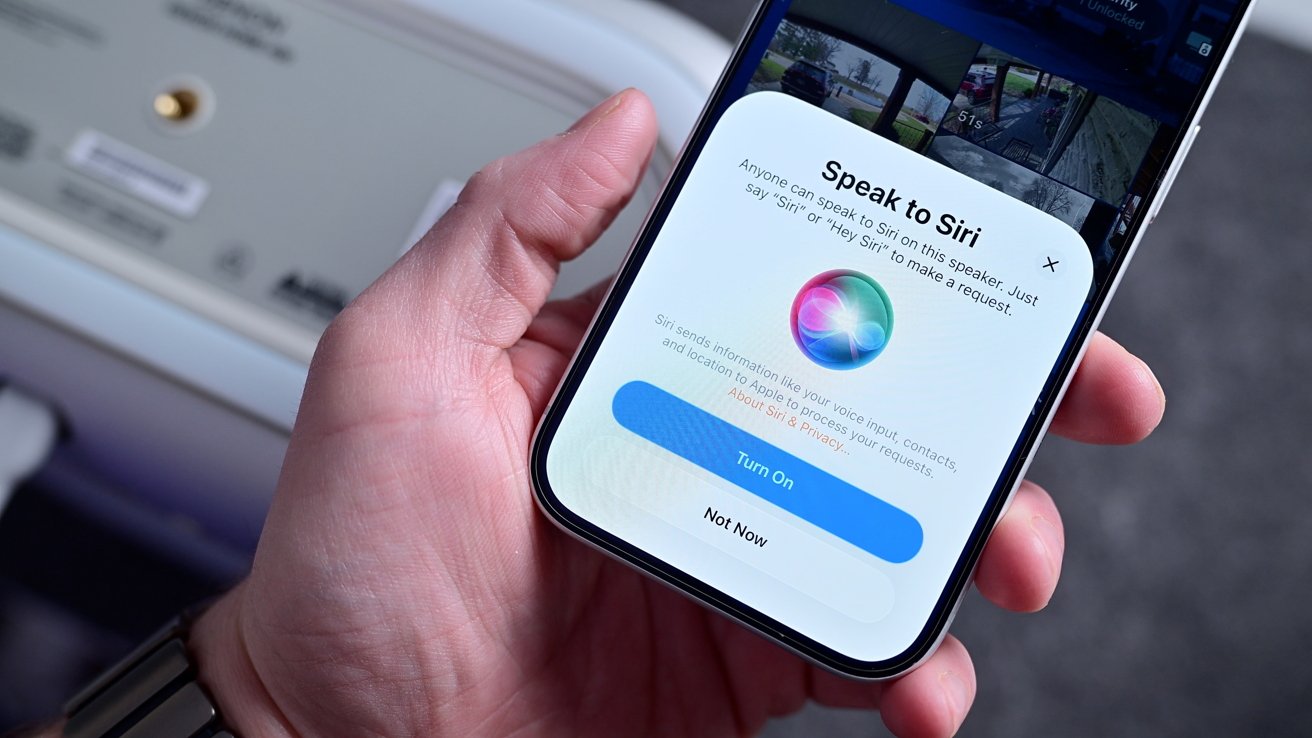
Denon Home series speakers review: During setup, you can turn on Siri on the speakers
My favorite is just using Siri for this. I can ask Siri on my iPhone to play my Jams playlist on the Denon Home 400, or if I say to play in a certain room, it will go to all speakers in that location.
Biggest of all is full support for Siri, though the implementation is a little confusing. Apple does allow third-party speakers to build in Siri, but so far, Denon and Ecobee are the only major players to do so.
The catch with Siri support is that the queries aren’t processed directly on the third-party speaker, but instead require a HomePod or HomePod mini. What happens is that when you ask Siri a question, it listens on that third-party speaker, routes the question to a nearby HomePod, then gives you the answer back on the original speaker.
This major caveat is likely why some of the big players, like Sonos, prefer to cozy up to other virtual assistants like Amazon Alexa, Google Assistant, or its own assistants instead. They don’t want you to have to buy a HomePod, but rather you buy more of their speakers.
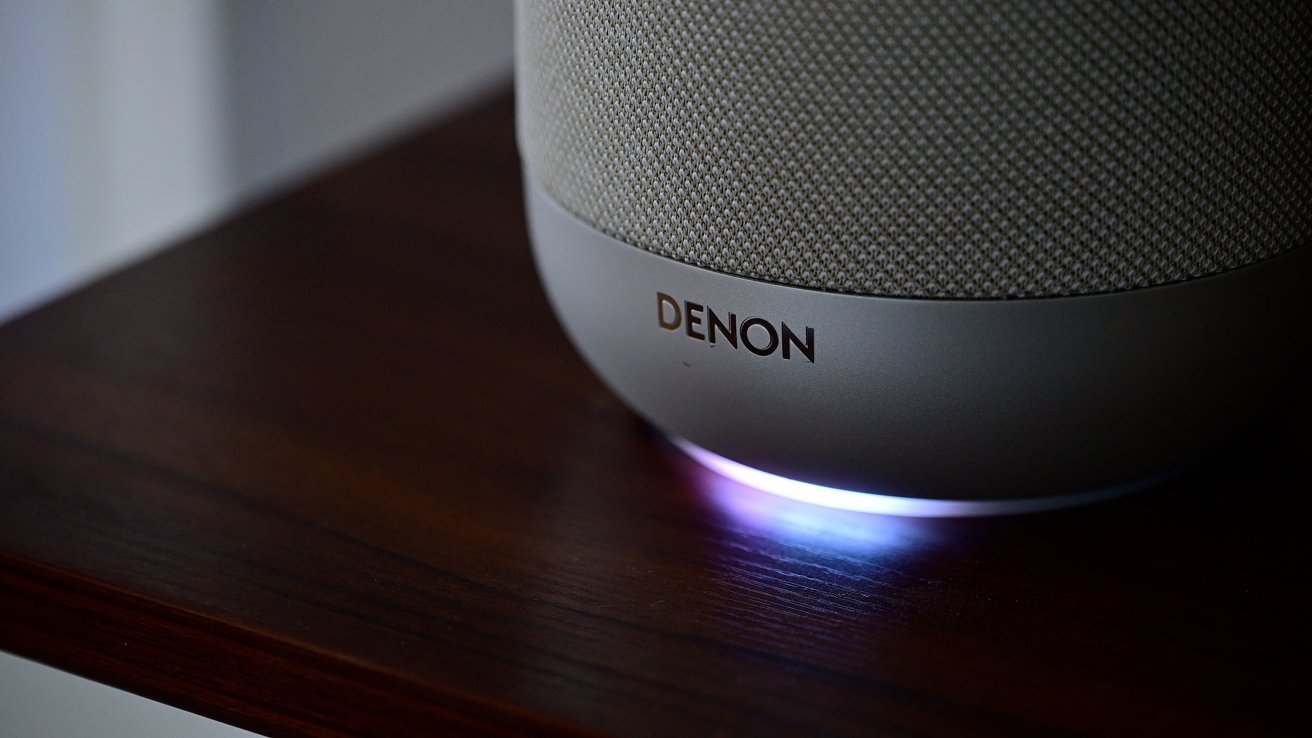
Denon Home series speakers review: The status light can change to Siri colors when you invoke Apple’s assistant
For many Apple users, they likely already have some version of HomePod or two in the Home, so I don’t consider this a huge downside. It is something to be aware of though, before purchasing the speaker with the anticipation of using Siri.
As far as utility, Siri is basically in feature parity with HomePod. Anything you can ask a HomePod, you can ask your Denon speaker.
You can ask it to control your smart home accessories, to text someone, to check the weather, convert units of measurement, and more. That said, there are some ways that they differ.
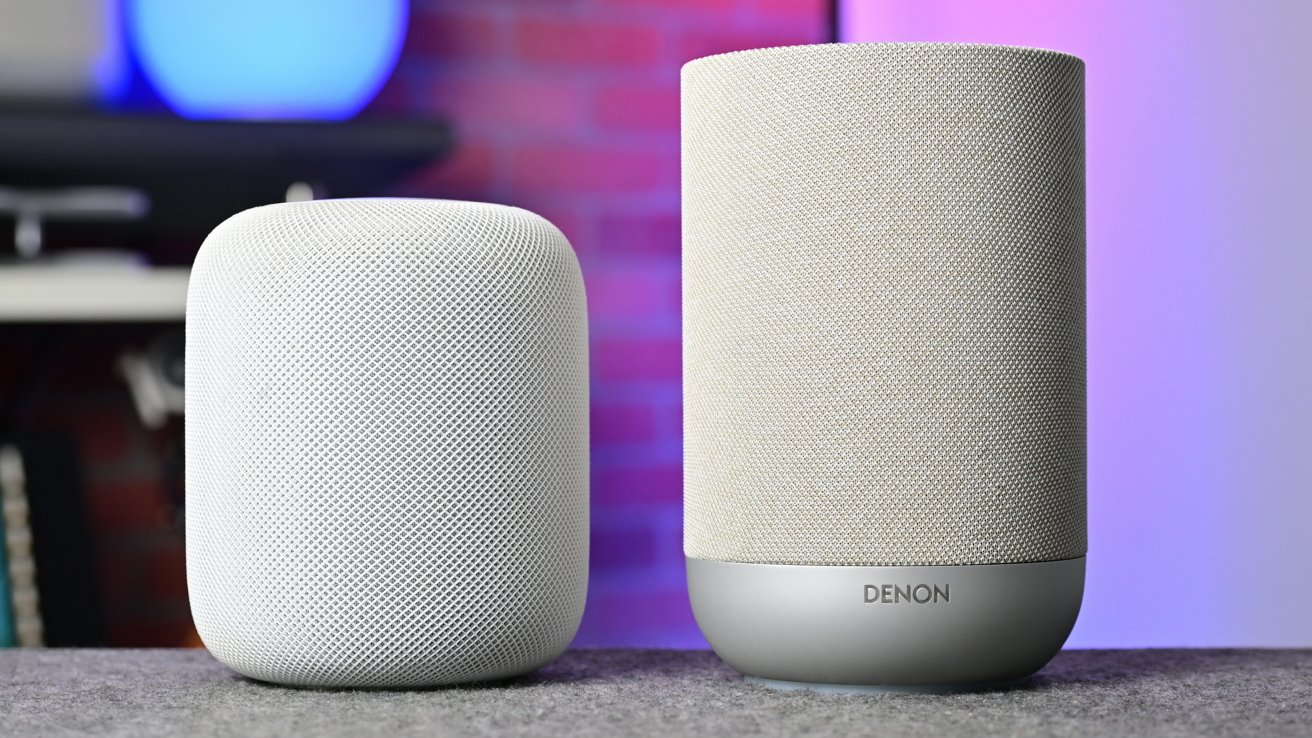
Denon Home series speakers review: Denon Home 200 is still larger than the base HomePod
HomePod, for example, can act as a full Home Hub. A Home Hub helps run scenes and automations when you aren’t at home and is a Thread Border Router.
Apple’s HomePod has handoff using ultra-wideband to automatically transfer audio as your phone approaches. The Denon still gets suggested in the Dynamic Island when you open the Music app nearby, though.
A Home Hub is also what processes the AI video for HomeKit Secure Video, such as people, car, or package detection. Plus, HomePod and HomePod mini have built-in environmental sensors for temperature and humidity.
This is a bit of reading the tea leaves, but because of how Siri works on third-party speakers, I expect Apple Intelligence to arrive sooner rather than later.
Apple has been working on these next-generation HomePod and HomePod mini for seemingly quite some time. If they do launch in the fall of 2026 as expected, Apple Intelligence will certainly be supported.
Again, another leap here, but that would mean if you purchased a new HomePod or HomePod mini with Apple Intelligence, Siri on your Denon speaker would be upgraded. Hopefully, that isn’t wishful thinking, but it’s not a big jump to make.
While I do strongly believe that’s how it will play out, I also strongly caution against buying a product today with the promise of an update in the future. If you buy these speakers now, be comfortable with how they work now, and count future upgrades as a bonus.
To be crystal clear, users can absolutely set up and use these speakers without any extra apps. But the Denon HEOS app has some added benefits for users that want to use it.
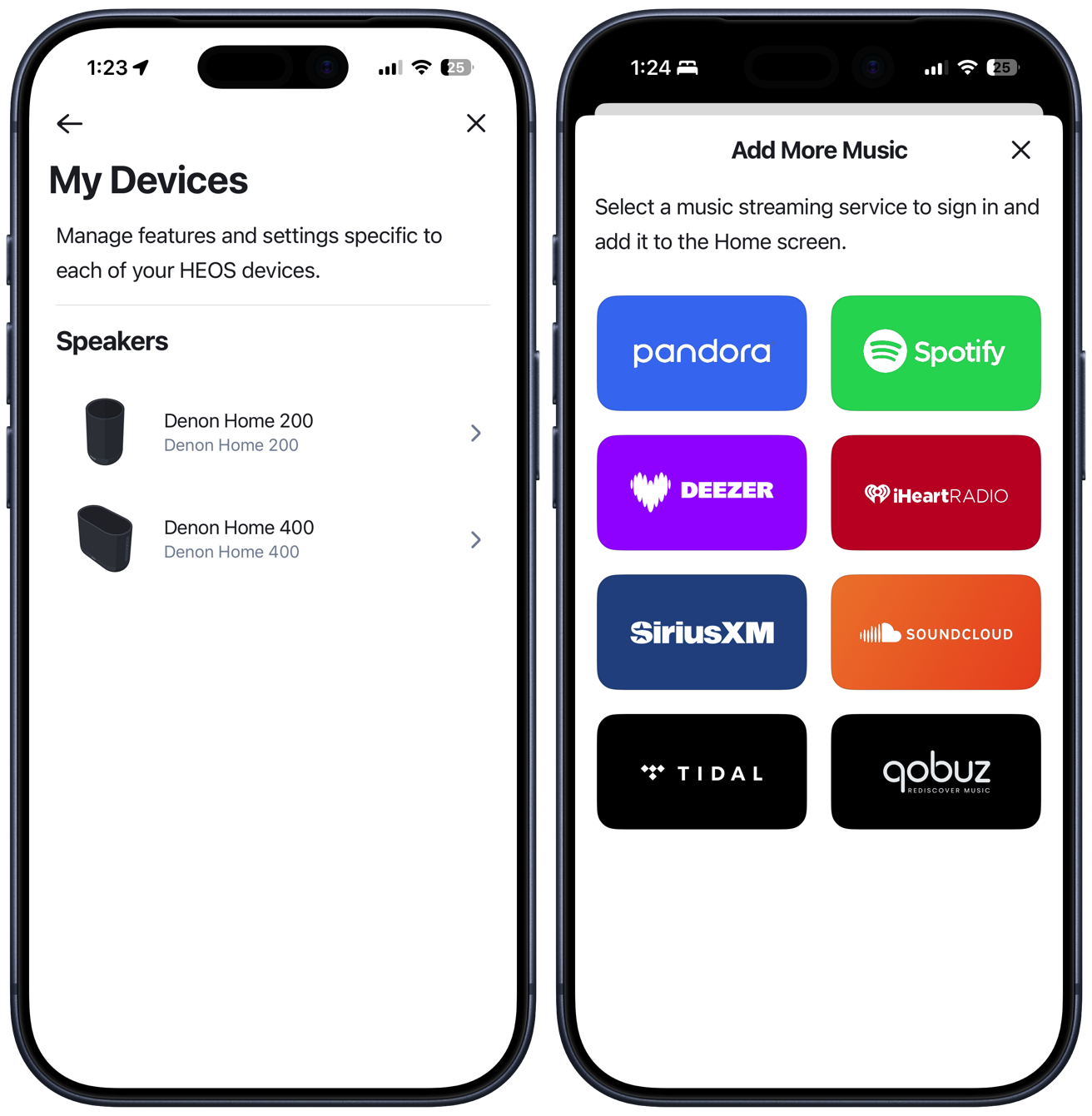
Denon Home series speakers review: The Denon HEOS app has more controls and direct streaming options
This app can guide through a bit more of a convoluted setup process for non-Apple users, plus has direct streaming from various platforms. Users can directly stream from a number of different services, including Tidal, Spotify, Deezer, iHeartRadio, and more.
You can stream from these services, adjust volume, perform updates, and adjust the track queue. It’s similar to the Sonos experience, though maybe a bit more limiting.
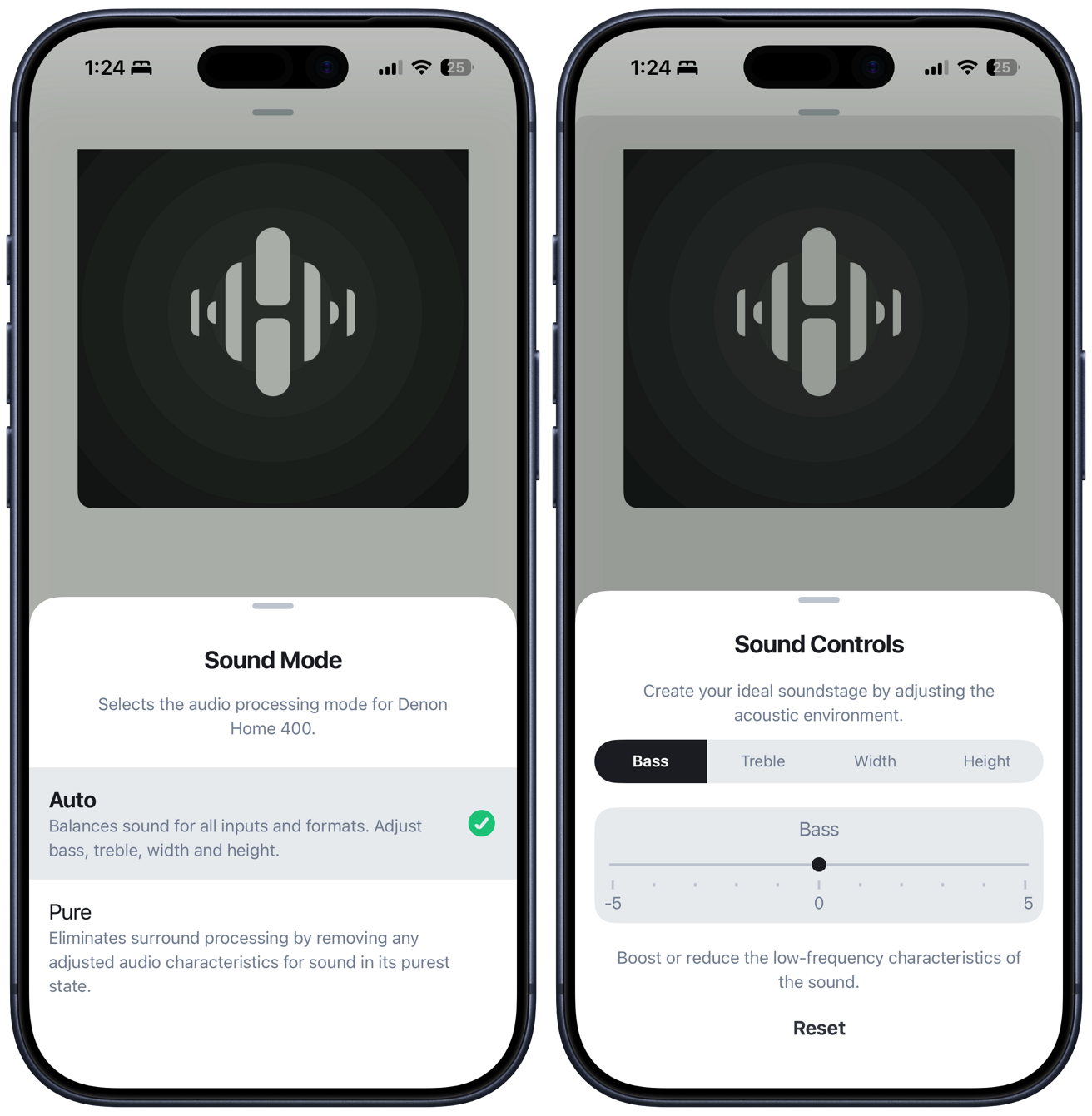
Denon Home series speakers review: You can adjust audio quality and balance from the HEOS app
Within HEOS, there are sound controls for the speakers. You can turn on “pure” mode to remove any processing or get into the weeds and manually adjust the bass, treble, or width (physical spaciousness of the soundstage).
As we turn to audio quality, I want to make sure to split it between the two that I have on hand to test. I also want to compare them to the competition, such as Apple and Sonos.
Starting with the smaller of the two, the Denon Home 200 has three drivers. There are two smaller drivers positioned towards the top that angle slightly outwards and a 4-inch front-facing woofer.
Compared directly to HomePod, which is available for $100 less, the Denon Home 200 absolutely sounds better. It’s fuller, with a larger emphasis on the midrange.
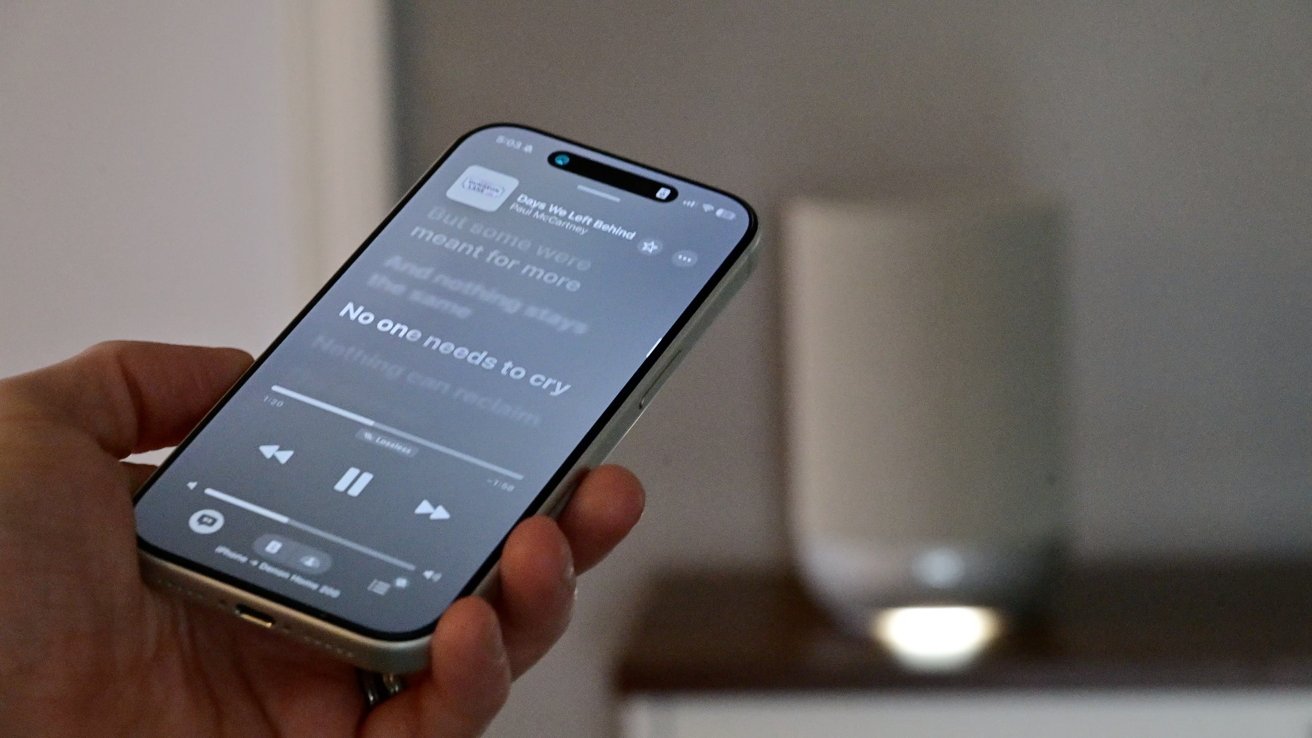
Denon Home series speakers review: Controlling audio playback direct from Apple Music
Personally, at times, I find the bass on HomePod to be a bit overpowering or even sloppy, and I think Denon did an excellent job at filling out the midrange.
That isn’t to say the bass is lacking in any way on the 200. Both Denon and Apple speakers have 4-inch woofers, and it definitely puts out some oomph. It’s also much higher volume than the HomePod, with it being arguably too loud in my home to ever go past 75%.
The best way I can describe the sound is very warm, which is something I like. It also maintains this consistency, even at the high volumes.
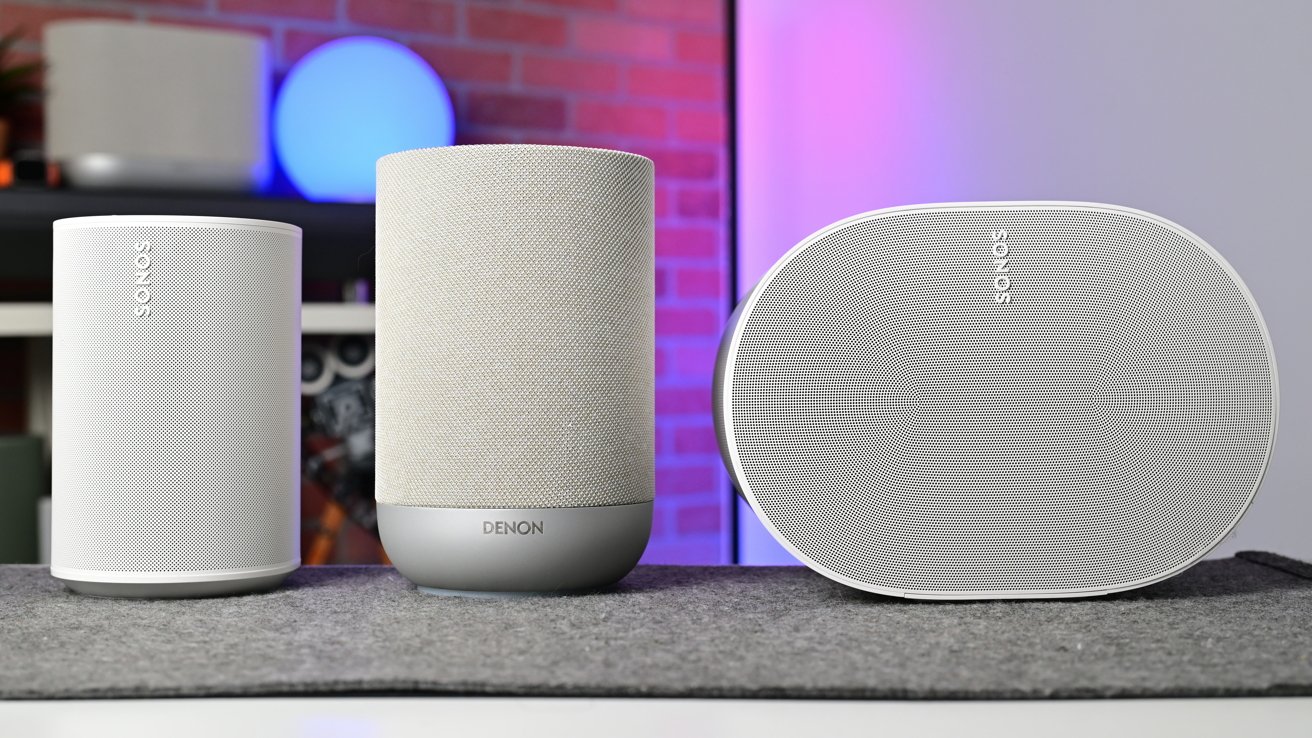
Denon Home series speakers review: Comparing the Denon Home 200 against the Sonos Era 100 and Sonos Era 300
I’d also say that the Denon Home 200 sounds better than the Sonos Era 100, though there isn’t a perfect comparison to Sonos. This performance should be expected, given the significantly higher price tag of the Denon.
Personally, I even preferred the Denon Home 200 to the Sonos Era 300, to a degree. The Era 300 is larger and more expensive, but I think the Denon Home 200 has a warmer profile that I liked and has a smaller footprint.
Again, the comparison is tough. The Denon Home 200 lacks the upward-firing driver of the Sonos Era 300, but if you move to the Denon Home 400, it’s far more expensive, while being even bigger still.
Listening to “The Mountain Song” by Tophouse, I can very much feel the music build and swell with that full, wide sound. Similarly, “World’s Smallest Violin” by AJR has a ton of detail as the music morphs between musical instruments that make the song very cool to listen to.
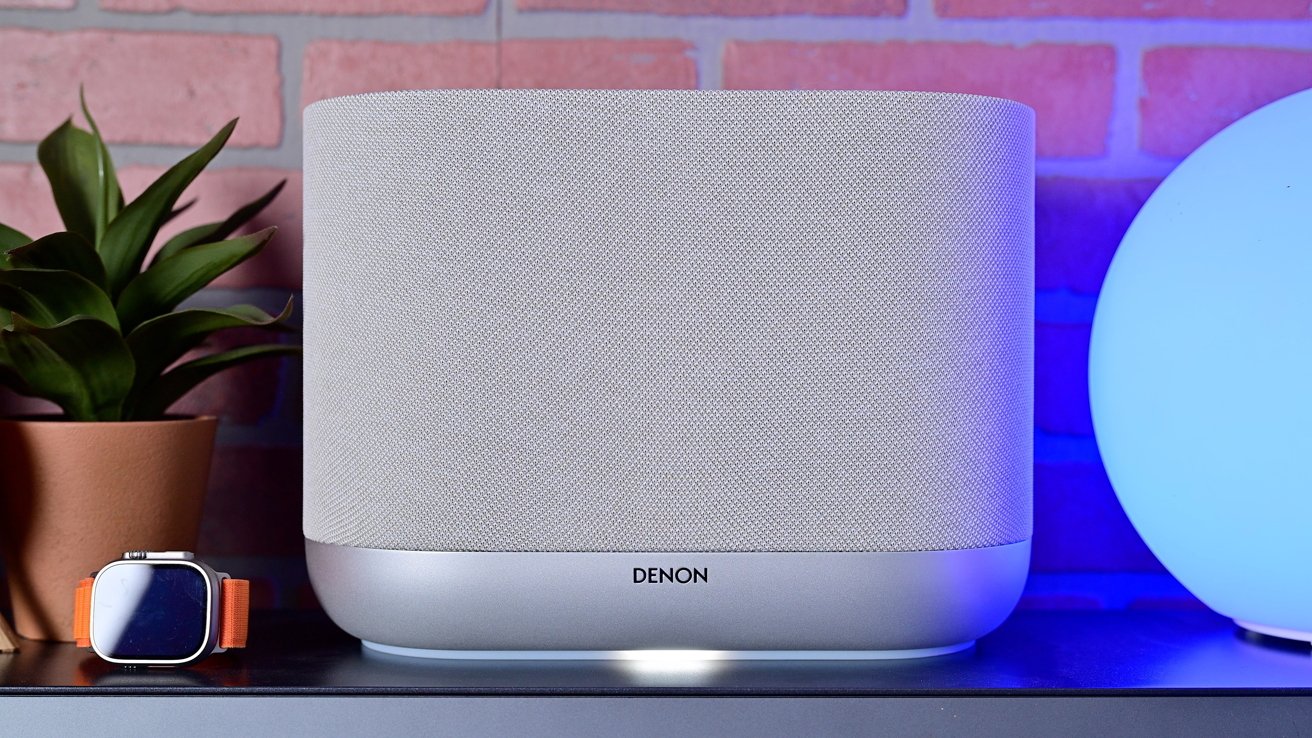
Denon Home series speakers review: Denon Home 400 on a shelf in my studio
Moving to the Denon Home 400, it has six total drivers. There are two outward-firing tweeters, dual 4.5-inch woofers, and two more upward-firing drives.
This one gets even louder and is overkill for any small to medium room. It has better stereo separation as well and a broader soundstage.
I can’t emphasize how much this can really fill out a room. Thinking about the Denon Home 600, that must be wild.
When I first started listening to the Denon Home 400, the most noticeable change was the bass. It was far more powerful, but still tightly controlled.
You can feel this bass in your chest before even having to turn up the volume. It was amazing.
Theoretically, the Denon Home 400 will provide more accurate Dolby Atmos Spatial Audio than the 200. I say theoretically because I wasn’t able to test it.
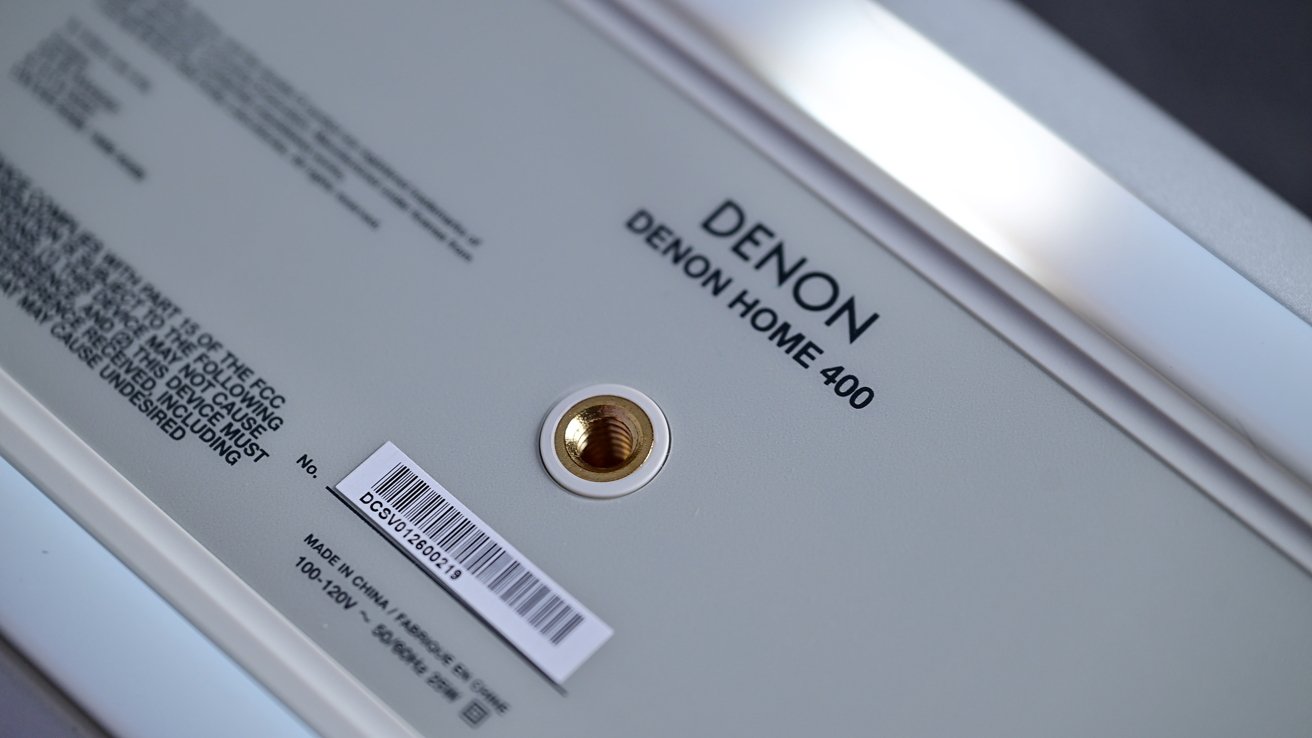
Denon Home series speakers review: The bottom of the speaker has a silicone foot and a thread for mounting on a traditional speaker stand or bracket
Currently, Dolby Atmos content is only supported when streaming directly from Tidal or Amazon Music Ultra HD. I don’t subscribe to either of these as an Apple Music listener.
Denon says it is working on Apple Music Dolby Atmos support, but there’s no promise on when that feature will be delivered.
In an increasingly competitive space, Denon has excelled here. I’m very pleased with the entire ecosystem.
The base model, while more expensive than a HomePod, has notably better audio quality. It also offers better on-device controls, multiple wired inputs, and still retains Siri support.
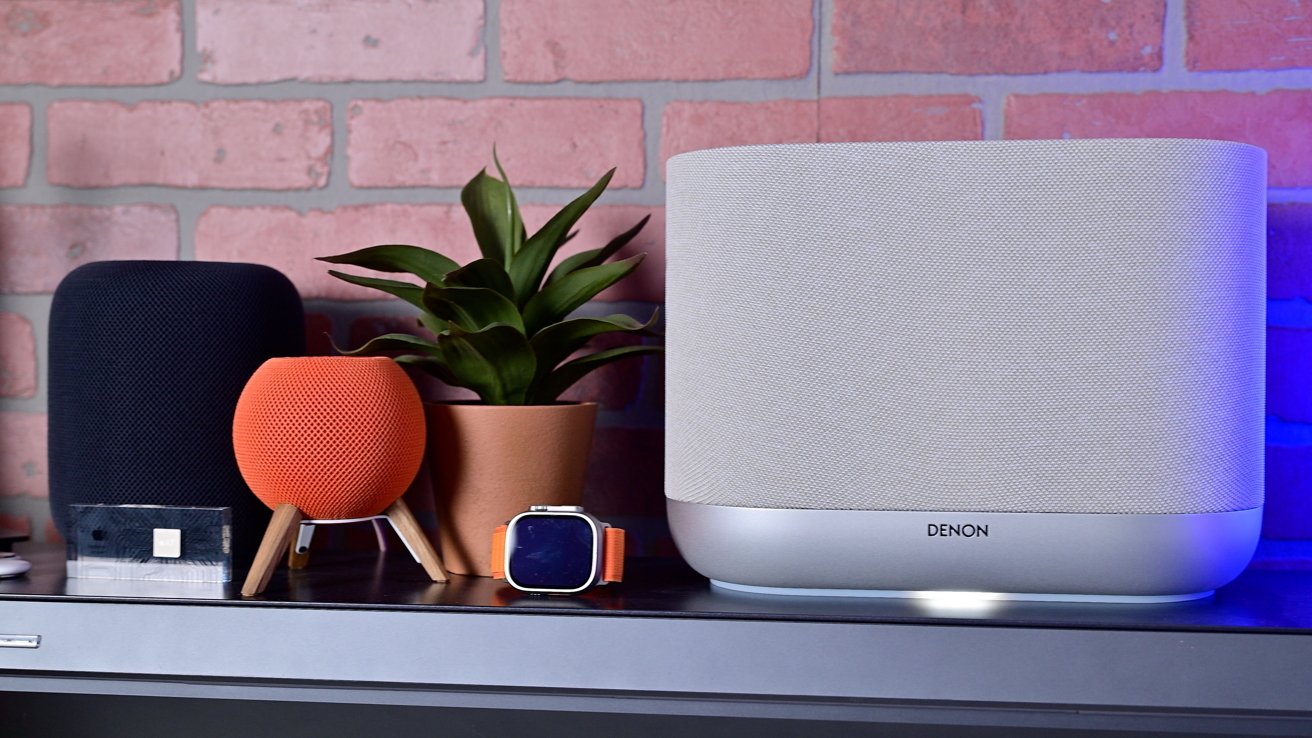
Denon Home series speakers review: Denon Home 400 is an amazing-sounding premium speaker with Siri support
Moving up the lineup, users can choose the speaker that suits their environment, upgrading to the larger, more powerful, and louder models. If you ever found that HomePod wasn’t loud enough or the audio wasn’t good enough, there were zero alternatives that let you keep Siri.
While I’m a massive Sonos fan, the Denon Home 200, 400, and 600 offer more than competitive audio quality with native Apple features. As an Apple user, Denon is offering a better experience.
Small points are subtracted for having a HomePod as a requirement for a full experience, but that onus lies on Apple, not Denon. With so few alternatives here, Denon did the absolute best it was able to, all around.
Right now, I think Denon put out the best all around smart speaker, if you’re willing to pony up for superior sound. For Apple users, it’s the premium option to choose, at least while we wait for the possibility of a refreshed HomePod.
Denon Home 200 & Denon Home 400 Rating: 4 out of 5 stars
The Denon Home 200 sells for $399 and can be ordered from Amazon and B&H Photo, while the Denon Home 400 retails for $599.
That model, which comes in your choice of Charcoal or Stone, can also be purchased at Amazon and B&H Photo.
The robust Denon 600, meanwhile, will run you $799 at Amazon and B&H.
Micron is expanding its semiconductor manufacturing operations in Boise, Idaho, with a $50 billion investment that includes two new fabrication facilities.
While its existing factory already consumes 4.7 million gallons of water each day, and the first new fab would push daily usage to 10.2 million gallons – enough to fill roughly 15.5 Olympic-sized swimming pools every single day.
A second, slightly smaller facility is also planned, which would add even more water demand on top of that figure.
The company currently draws water from three different sources to keep its Boise operations running, and pumps millions of gallons directly out of the ground each day using its own water rights.
It also receives water from the Nampa Meridian Irrigation District, which pulls from the Boise River, and additionally purchases treated water from Veolia, a private municipal water utility.
A 2024 environmental impact statement for the first expansion revealed that the new fab would use 5.5 million gallons daily and discharge about 2.9 million gallons back into the system.
When asked how much water the new fabs will use and where that water will come from, Micron refused to provide specific answers, with a company spokesperson offering only a general statement about water efficiency commitments and conservation targets.
Micron has promised to achieve a 75% water conservation rate globally by the year 2030 through recycling and reuse programs.
However, the company did not explain how that target applies to the new Boise fabs or where the additional water will be sourced.
Veolia also did not respond to questions about how much water it supplies to Micron from its treatment plants.
Boise sits in the high desert of Southwest Idaho, where water is a limited and contested resource.
In the 1990s, Micron caught significant public criticism when its manufacturing operations caused a sharp drop in local groundwater levels.
The state established a groundwater management area around the company in 1994 to monitor and oversee water rights.
Even today, the Idaho Department of Water Resources can only see a partial picture of Micron’s total water usage through its permitted rights.
The company has not filed an environmental impact study for the second fab, leaving regulators and the public completely unaware of its total future water demand.
Idaho residents rely on the same aquifers that Micron pumps from, and any significant drop in water levels would affect homes, farms, and businesses across the region.
Micron’s silence on where it will find billions of litres of new water is not just a lack of transparency; it is a gamble on a resource that the desert cannot easily replace.
The company’s plans are fuelled by AI demand, but AI does not run on water; people and crops do, and they have no backup plan if the wells go dry.
Via BoiseDev
Follow TechRadar on Google News and add us as a preferred source to get our expert news, reviews, and opinion in your feeds.
We know that some people are having pretty intense conversations with AI chatbots, and ChatGPT developer OpenAI has now added a new Trusted Contact feature that lets users nominate a trusted individual who will receive an alert if there’s a safety concern.
It’s been the case for a while now that if your conversations take a turn towards self-harm and suicide, ChatGPT will recognize this and direct you towards crisis support helplines or the emergency services to get some help.
The Trusted Contact feature works in addition to those protections: the friend or relative you’ve specified will get a message over text, email, and the ChatGPT app, saying that you might be in trouble and that the contact should check in with you.
“Expert guidance identifies social connection as one of the most important protective factors to reduce suicide risk,” says OpenAI. “Trusted Contact is designed to encourage connection with someone the user already trusts. It does not replace professional care or crisis services, and is one of several layers of safeguards to support people in distress.”

As the user who’s talking about self-harm or suicide, you’ll also get prompts to reach out to your nominated contact, with some AI-generated ideas for what to say. OpenAI says the feature has been developed in partnership with mental health professionals and experts, and works in a similar way to the existing parental controls — but for those 18 and over.
You can set your Trusted Contact through the ChatGPT settings panel, and it might just save your life. The person you specify has a week to accept the request; if they don’t, you can pick someone else.
Before a Trusted Contact gets alerted, “a small team of specially trained people” will review the chat within an hour. If that review confirms that there’s a serious safety concern, the contact gets pinged as described above.
The alert is “intentionally limited”, OpenAI says, and won’t include specifics from the chat itself. The feature is rolling out gradually from now, so if you don’t immediately see it in your account, it should show up soon.
Follow TechRadar on Google News and add us as a preferred source to get our expert news, reviews, and opinion in your feeds.

The best laptops for all budgets
California’s extensive canal network could become a massive source of clean energy while saving billions of gallons of water each year.
A University of California study found covering roughly 4,000 kilometers of canals with solar panels would generate 13GW of power annually and save 63 billion gallons of water.
That amount of water is enough to meet the residential needs of more than two million people every single year.
A small-scale demonstration called the Nexus project was built to test whether this concept actually works in real-world conditions.
The 1.6-megawatt Nexus installation sits on canals operated by the Turlock Irrigation District, and after one full irrigation season, the covered canal sections showed evaporation reductions of 50 to 70% beneath the solar arrays.
Algae growth dropped by 85%, which significantly reduces the cost of maintaining the canals and cleaning water pumps.
The shade also keeps the solar panels cooler than ground-mounted alternatives, improving their electricity output by roughly 2.5 to 5%.
India has already built similar canal-top solar projects, proving the concept works across different climates and geographies.
Despite the clear benefits, this idea faces resistance, and the major obstacle is cost.
Canal top solar requires heavy steel support structures that must span the width of the water channel below, and these structures alone can account for up to 40% of the total project cost, significantly more than ground-mounted solar farms.
Critics argue that canals are designed for water delivery, not as foundations for industrial infrastructure.
Such designs will require regular access to the canals by maintenance crews for desilting and repairs, and overhead panels would complicate that work significantly.
Some also point out California has plenty of cheap desert land where traditional solar panels can be installed at much lower expense.
Though a solar farm on desert land costs less and avoids the engineering complications, it does nothing to save water, a long-standing Californian issue, as the state has already lost 40% of its Colorado River allocation this year, and every drop saved matters.
The economic calculation of this idea shifts when water savings are given real monetary value.
Canal top solar prevents evaporation in a state that regularly faces severe drought conditions, and also generates electricity exactly where agricultural demand exists, reducing transmission losses from distant desert solar farms.
From another vantage point, canal top solar could ease data center power demand, which usually places enormous strain on local grids and water supplies.
It generates clean power exactly where it is needed, reducing transmission losses and avoiding the need for new transmission lines.
The water saved through evaporation reduction could be used to cool data centers instead of being lost to the atmosphere.
A single data center can use millions of gallons of water each year, and canal shading preserves that resource for productive use.
The 13GW of potential generation from California’s canals could power hundreds of data centers without requiring additional land or stressing the state’s overtaxed grid.
That said, preventing evaporation, which the canal top solar will do, is not a guaranteed win.
It will likely have minimal impact on the local humidity and can disrupt aquatic ecosystems by reducing dissolved oxygen, which is like solving one problem while creating another.
The Nexus pilot will continue collecting data to determine whether California scales the concept or decides the ecological and operational trade-offs aren’t worth the energy gains.
Via PV Magazine
Follow TechRadar on Google News and add us as a preferred source to get our expert news, reviews, and opinion in your feeds.
NVIDIA has confirmed in a statement for BleepingComputer that GeForce NOW user information has been exposed in a data breach.
The gaming and hardware giant has clarified that the impact is limited to Armenia, and was caused by a compromise of the infrastructure operated by a regional partner.
The company added that its own network was not impacted by the incident.
“Our investigation found no impact on NVIDIA-operated services. The issue is limited to systems run by a third-party GeForce NOW Alliance partner based in Armenia. We are working closely with the partner to support their investigation and resolution. Impacted users will be notified by GFN.am,” the company said.
The statement comes in response to a post last week on a hacker forum from a threat actor using the ShinyHunters nickname, claiming to have breached the GeForce NOW service and stolen millions of user records.
However, the ShinyHunters actor who published the breach on the hacker forum is believed to be an imposter.
According to the threat actor, the stolen information includes full names, email addresses, usernames, dates of birth, membership status, and 2FA/TOTP status.
The threat actor also posted samples of the stolen data and offered the full database for $100,000 paid in Bitcoin or Monero.
The NVIDIA GeForce NOW cloud gaming service lets users stream to their systems games running on more powerful hardware using NVIDIA GPUs in a datacenter.
GFN.am is the Armenian regional operator for GeForce NOW, responsible for operating NVIDIA’s service in the country.
Alliance partner environments can operate independent authentication systems, local customer databases, regional billing platforms, and locally managed infrastructure.
A statement posted by GFN.am confirms a cybersecurity incident that took place between March 20 and 26 and exposed the following information:
GFN.am has clarified that no account passwords were exposed in the incident, and any users who registered to the service after March 9 are not impacted.
According to NVIDIA’s help page, GFN.am is also responsible for managing GeForce NOW operations in Azerbaijan, Georgia, Kazakhstan, Moldova, Ukraine, and Uzbekistan, but no impact on those countries has been confirmed.
BleepingComputer found that the threat actor’s post has now been removed from the hacker forum.
It is unclear if the database has been sold to a buyer or if the seller or forum administrators deleted it.
Update [14:14]: Added information that the threat actor may be a ShinyHunters impersonator.

AI chained four zero-days into one exploit that bypassed both renderer and OS sandboxes. A wave of new exploits is coming.
At the Autonomous Validation Summit (May 12 & 14), see how autonomous, context-rich validation finds what’s exploitable, proves controls hold, and closes the remediation loop.


Diablo IV’s secret cow level – which according to the game’s former general manager Rod Fergusson did not exist – has finally been discovered by an enthusiastic player of Blizzard’s action-RPG series. Streamer LoatheBurger, a self-confessed Diablo fan since 1996, explained the convoluted steps required to unlock the hidden level,…
Read Entire Article
Source link





HarrisX Poll Found 52% of Registered Voters Support the CLARITY Act


Channel 5 – All Creatures Great and Small series 7 new post


Upbit adds B3 Korean won pair as Base token gains Korea access


Image AI models now drive app growth, beating chatbot upgrades

NCP car park operator enters administration putting 340 UK sites at risk of closure


Kylie Jenner Hit With Second Lawsuit From Ex-Housekeeper


Cavaliers vs. Raptors Game 6 live score, updates, highlights from 2026 NBA playoffs first-round series


Young and the Restless Next Week: Cane Arrested & Matt’s Deadly New Scheme!
New Netflix Movies in May 2026 — My Top 3 Picks to Stream


Melissa Joan Hart and More Stars Attend 2026 Kentucky Derby

David Benavidez responds to team Canelo saying the fight will never happen

IPL 2026: ‘Love you darling’- Hardik Pandya’s reaction to MS Dhoni steals the show |Watch | Cricket News


Five killed in Texas plane crash identified as Amarillo pickleball players
Anna Nicole Smith’s Daughter Attends 2026 Kentucky Derby


Bitcoin mining equities rise in 2026 as BTC lags behind
Pi Network Mandates Protocol 23 Upgrade for All Mainnet Nodes Before May 15 Deadline


Luka Doncic Injury Update: Doncic’s Hamstring Recovery Slows Lakers’ Hopes Against Thunder: Can He Run Yet?


Can Victor Wembanyama Bring the NBA Ring to Spurs in 2026? Historic Playoff Run Fuels Title Dreams

Plane crash in Wimberley, Texas kills 5 pickleball players at tournament
Venus Williams’ Best Met Gala Looks Over the Years




You must be logged in to post a comment Login