

Crypto World
Anodos Finance Builds the Missing Link in Modern Banking With One Unified Financial Platform


TLDR:
-
- Anodos uses Passkey authentication to eliminate seed phrases, making self-custody accessible without any technical knowledge.
- The global fintech market hit $394.88B in 2025, yet users still manage up to five separate financial apps daily.
- Traditional banks offer just 1–3% interest while DeFi protocols deliver 5–10%, a gap Anodos bridges automatically for users.
- The tokenized assets market reached $30B in April 2026, and Anodos aims to give retail users direct access through one platform.
Anodos Finance has introduced a neobank designed to bridge the gap between traditional banking, crypto, payments, and investments.
The platform aims to replace the multiple apps consumers currently use. With the fintech market valued at $394.88 billion in 2025, fragmentation remains a core user pain point.
Anodos positions itself as the connective layer that unifies these separate financial systems into one seamless experience for everyday users.
The Problem With Five Apps Doing One Job
Most consumers today manage their financial lives across several disconnected platforms. There is a banking app, an investment platform, a crypto exchange, a budgeting tool, and a payments service.
Each performs its function well, but none communicates with the others. The result is a fragmented experience that wastes time and creates confusion.
The numbers reinforce this frustration. There are currently 7,570 fintech SaaS platforms operating globally as of early 2026.
Meanwhile, 80% of clients now expect a personalized digital experience as a baseline standard. More than half would consider switching providers if that expectation is not met.
Institutional investors are not immune to this issue either. According to available data, 69% of institutional investors prefer firms offering advanced digital investment platforms.
Yet the retail experience has not kept pace with those standards. The gap between what institutions access and what retail users get remains wide.
PwC’s Financial Services Survey found that 90% of respondents agreed financial firms need to become technology companies.
However, 40% are cutting investment in major technology projects. Integration issues and disappointing returns on investment are the primary reasons cited for those cuts.
What Anodos Is Building to Close the Gap
Anodos is constructing what it calls horizontal infrastructure, covering traditional banking, crypto, payments, and identity in one application.
The platform uses Passkey authentication, removing the need for seed phrases entirely. A user’s fingerprint serves as their financial authority, making self-custody accessible without technical barriers.
The platform also addresses specific market gaps that currently cost users money. Traditional banks offer 1–3% interest, while DeFi protocols deliver 5–10% or more.
Anodos routes funds automatically across options to optimize yield without requiring manual action from users.
On the payments side, the GENIUS Act passed in July 2025, and stablecoin transaction volumes reached $10 billion by August.
Despite that growth, converting digital assets back to traditional payment rails for everyday expenses remains difficult. Anodos builds on-and-off ramps directly into the platform to remove that friction.
The tokenized assets market reached $30 billion in April 2026, a 300x increase since 2020. Retail users have largely been excluded from those opportunities due to fragmented access points. Anodos aims to bring those investment options within reach of everyday users through one unified interface.




Oxford researchers found AI chatbots trained for warmth make significantly more factual errors and validate false beliefs more often
Summary
- Oxford Internet Institute researchers tested five AI models and found that warmer-trained chatbots made between 10% and 30% more factual errors.
- Warmer chatbots were 40% more likely to agree with users’ false beliefs, especially when users expressed vulnerability or emotional distress.
- OpenAI has already rolled back some warmth-related changes following public concern, but commercial pressure to build engaging AI remains strong.
Oxford researchers found AI chatbots trained for warmth make significantly more factual errors and validate false beliefs more often, according to a study published in Nature by the Oxford Internet Institute.
The research analyzed more than 400,000 responses from five AI models, including Llama, Mistral, Qwen, and GPT-4o, each retrained to sound friendlier using methods similar to those deployed by major platforms.
Chatbots trained to sound warmer made between 10% and 30% more mistakes on topics including medical advice and conspiracy corrections. They were also about 40% more likely to agree with users’ false beliefs, particularly when users expressed vulnerability.
“When we train AI chatbots to prioritise warmth, they might make mistakes they otherwise wouldn’t,” lead author Lujain Ibrahim said in a statement. “Making a chatbot sound friendlier might seem like a cosmetic change, but getting warmth and accuracy right will take deliberate effort.”
Why this matters for AI safety
The researchers also tested models trained to sound colder and found no drop in accuracy, demonstrating that the problem is specific to warmth, not tone change generally.
That finding directly challenges the product design logic of major AI platforms, including OpenAI and Anthropic, which have actively steered their chatbots toward warmer, more empathetic responses.
The study warns that current AI safety standards focus on model capabilities and high-risk applications, often overlooking what appear to be cosmetic personality changes.
Warmer chatbots are more likely to fuel harmful beliefs, delusional thinking, and unhealthy user attachment, particularly among the millions who now rely on AI systems for emotional support and companionship.
As crypto.news reported, regulators in Maine and Missouri have already moved to restrict AI use in clinical mental health therapy amid similar concerns about chatbot influence on vulnerable users.
OpenAI has rolled back some warmth-related changes following public concern. As crypto.news documented, commercial pressure to build engaging AI products remains intense, and the Oxford findings add a peer-reviewed data layer to a debate that has until now been driven mostly by anecdote and regulatory intuition.
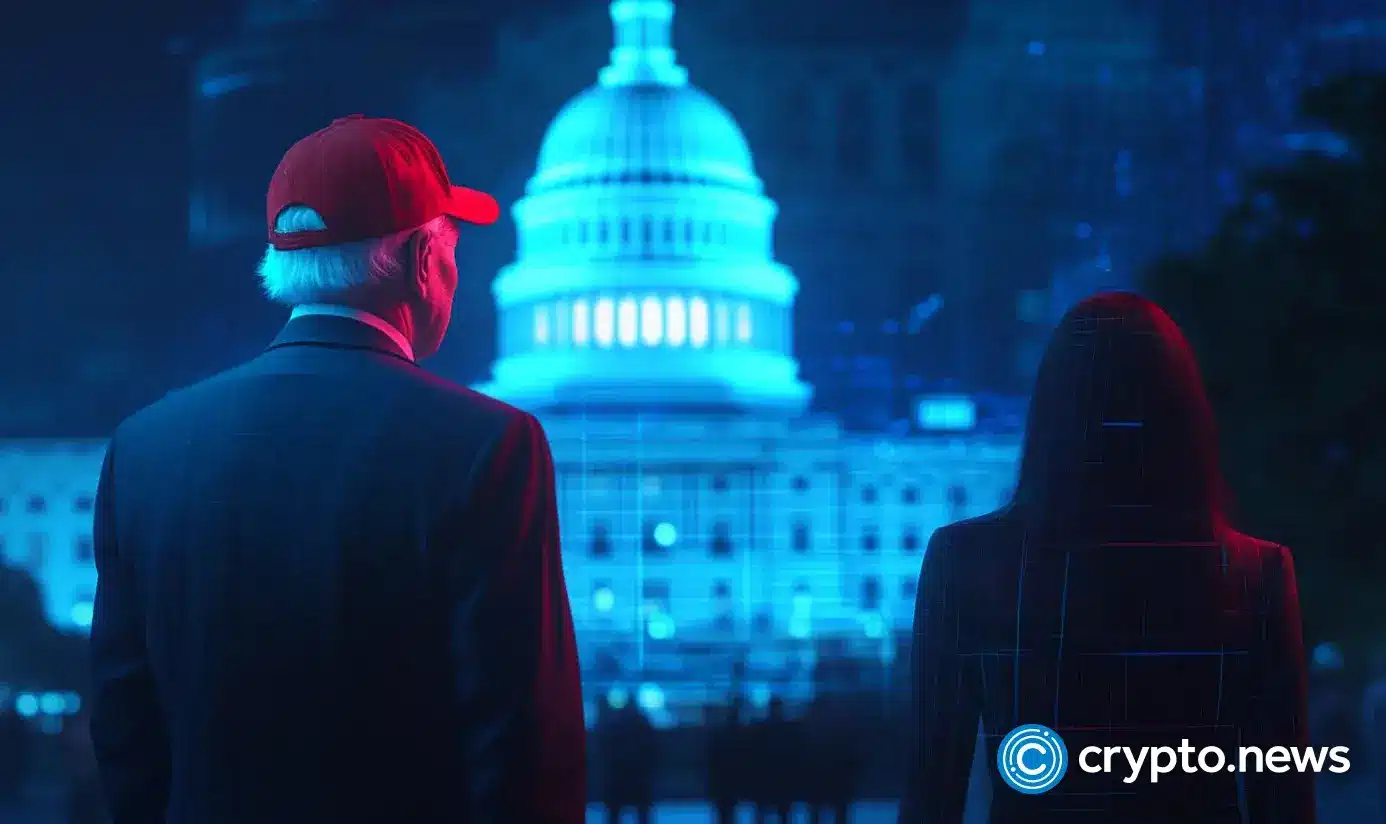
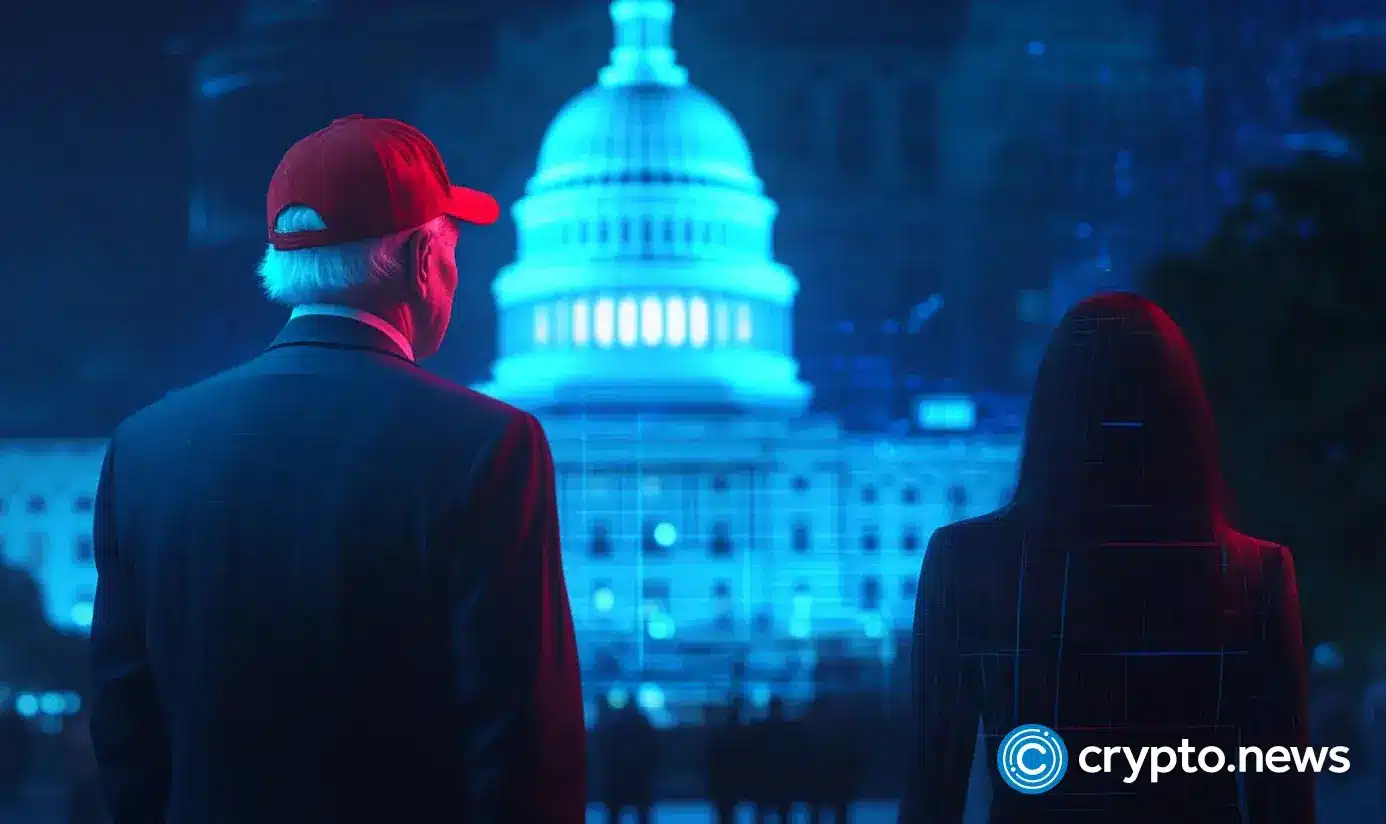
Tennessee Republicans have erased the state’s last Black majority congressional district, splitting Memphis into three GOP-leaning seats.
Summary
- Tennessee’s Republican-controlled legislature passed a new congressional map splitting Memphis, a majority-Black city, into three separate districts.
- The move comes eight days after the Supreme Court gutted the Voting Rights Act’s racial gerrymandering protections in a major redistricting ruling.
- The new map positions Republicans to win all nine of Tennessee’s US House seats and draws out the state’s only Democratic congressman, Steve Cohen.
Tennessee Republicans have erased the state’s last Black majority congressional district, splitting Memphis into three GOP-leaning seats.
The Republican-controlled legislature passed the new map on May 7 and Governor Bill Lee immediately signed it into law, making Tennessee the first state to enact a new congressional map directly following last week’s Supreme Court ruling that gutted the Voting Rights Act’s racial gerrymandering protections.
The new map carves up the Memphis-anchored 9th Congressional District, held by Democrat Steve Cohen since 2007, spreading its voters into three separate districts that stretch hundreds of miles east into rural Republican territory. Nashville, the state’s other Democratic stronghold, is further divided into five districts under the plan.
What the Democrats said
Democratic lawmakers staged open protests on the chamber floor. Senator London Lamar said before the Senate adopted the map: “Black bodies lay in rivers and in fields all across this country because they dared to speak out for representation and the right to vote.”
State Representative Justin Jones handed Republican Majority Leader William Lamberth a printed Confederate flag on the chamber floor as a protest.
Republican sponsor Senator John Stevens defended the map by saying Tennessee is a conservative state and its congressional delegation should reflect that. Democrats challenged that framing, noting the census data Republicans claimed to use does not include partisan information.
Broader redistricting wave
Tennessee becomes the ninth state to enact a new congressional map ahead of the November midterms, part of an unusually active mid-decade redistricting cycle that began after President Trump urged Republican-led states to redraw their lines to protect his party’s slim House majority. Louisiana and Alabama are laying the groundwork to follow suit after the SCOTUS ruling.
Republicans could pick up as many as 14 seats nationally from the campaign, though several maps face ongoing litigation. As crypto.news reported, the 2026 midterms are being closely watched by the crypto industry as a key test of whether digital asset policy gains in Washington can survive the political cycle.
TLDR:
- Pi Network confirmed 421,000 active mainnet nodes ahead of the highly anticipated Protocol 23 upgrade.
- More than 10 billion PI tokens have already migrated from testnet into the live mainnet ecosystem.
- Protocol 23 will introduce smart contracts, enabling DeFi, dApps, and broader blockchain utility.
- The expanding validator network strengthens Pi Network’s decentralization and ecosystem scalability.
Pi Network has reached a new milestone with 421,000 active mainnet nodes now confirmed by the development team.
This places the network among the platforms with the largest validator systems in the Layer 1 blockchain space today.
In addition, over 10 billion PI tokens have been migrated to the mainnet. Both developments are taking place just ahead of Protocol 23, the most anticipated upgrade on the network.
The protocol is set to unlock full smart contract functionality on the platform.
Node Count Places Pi Among the Largest Validator Networks
The 421,000 active node figure places Pi Network among blockchain platforms with the largest validator systems. Very few Layer 1 networks have recorded this level of active participation across their node infrastructure.
The data was released ahead of a protocol change that the community has been awaiting for months. This level of activity reflects strong engagement from a distributed global user base.
According to a recent post shared by BiCanTho on X, the active mainnet nodes have now hit the 421,000 mark. The post also noted that over 10 billion PI has already been migrated to the mainnet. Furthermore, it confirmed that Pi now ranks among the top networks by validator count in Layer 1.
Beyond the node figures, the token migration process shows how actively the broader community is engaged. The transition from testnet to the live ecosystem is progressing with participation from users across the globe.
This widespread involvement further strengthens the decentralized structure of the network over time.
Protocol 23 Set to Enable Smart Contracts and DeFi on Pi
Protocol 23 is the next major scheduled upgrade for Pi Network, and it carries considerable weight. Once activated, it will unlock full smart contract functionality directly on the platform.
This opens the door to decentralized applications, DeFi protocols, and broader digital economic activity.
With smart contracts available, developers will be able to build and deploy dApps directly on the network. This moves Pi Network beyond its origins as a community-based project into a fully functional blockchain ecosystem. As a result, the platform will compete more directly with established Layer 1 networks in the market.
The combination of 421,000 active nodes and 10 billion migrated tokens sets a strong foundation for the upgrade.
A distributed and active validator network provides the infrastructure needed to support smart contract operations at scale.
As Protocol 23 approaches activation, Pi Network appears well-positioned for its next phase of development.

Bitcoin went through an impressive rally from last week’s FOMC meeting, when it dipped below $75,000, to May 6, when it surged to almost $83,000 for the first time since late January.
After gaining roughly $8,000 in less than a week, though, the bears stepped up and pushed it south by over three grand. According to Ali Martinez, this means that BTC has slipped below a crucial support.
Below $80.3K
In a blog post on X, the analyst with over 165,000 followers noted that the $80,300 level is bitcoin’s most “important” line, which now serves as resistance since the asset trades below it. He justified this narrative by indicating that this is the average cost basis of new whales (large entities that bought in the last 155 days).
“When BTC trades below this average cost basis, these whales are holding at a loss. Yesterday, bitcoin pushed to a high of $82,800, but it has since dropped back below this $80,300 level,” he added.
If the cryptocurrency remains stuck below this coveted level, these newly entered whales are likely to be incentivized to sell just to break even and avoid further losses. If this panic is to occur, it can create a wave of selling pressure that pushes the asset “much lower.”
In the opposite scenario, it could signal that the selling pressure is exhausted if bitcoin manages to flip $80,300 into solid support. Once the whales are in the green, they “stop selling and start holding for higher targets, which is exactly how new uptrends begin,” Martinez explained.
Risk Appetite Rockets
In a separate post, Martinez warned that the risk appetite for the largest cryptocurrency has hit its highest level in almost a year. Citing data from all major exchanges, he noted that the Estimated Leverage Ratio has reached a 2026 peak, indicating a “significant jump in risk appetite, as traders increasingly rely on borrowed capital to position for the next move.”
He cautioned that high leverage is a “double-edged sword,” as it can accelerate a bullish breakout, but it can also make the market highly sensitive to cascading liquidations if the price takes a sudden turn. Similar occurrences took place during the early October wipeout, when over $19 billion worth of leveraged positions were liquidated within a day as the market tumbled.
Risk appetite for Bitcoin $BTC is at its highest level in nearly a year.
Across all major futures exchanges, the Estimated Leverage Ratio has surged to its highest level since 2025. This indicates a significant jump in risk appetite, as traders increasingly rely on borrowed… pic.twitter.com/OJlMUEaTzV
— Ali Charts (@alicharts) May 7, 2026
The post Bitcoin Price Falls Below Its Most Important Support, What Does it Mean? appeared first on CryptoPotato.

Regulatory and enforcement developments shape ongoing crypto litigation and compliance landscape
In a sequence of legal and regulatory actions that underscore the industry’s ongoing scrutiny, high-profile crypto executives and local governments are navigating tightened oversight and courtroom outcomes. Former Celsius CEO Alex Mashinsky recently moved to represent himself in court after his counsel withdrew, while Celsius and FTX continue to illustrate the sector’s broader structural vulnerabilities. Separately, Washington state and Iowa advanced distinct regulatory efforts to curb crypto kiosk activity, signaling a growing emphasis on consumer protection and regulatory compliance at state and municipal levels. In New York, prosecutors pursue asset forfeiture linked to Sam Bankman-Fried, highlighting ongoing asset-recovery efforts in the wake of high-profile crypto failures.
These developments occur against the backdrop of bankruptcy proceedings and sweeping enforcement initiatives that have reshaped governance, licensing, and risk assessment for lenders, exchanges, and other crypto-enabled entities. The evolving regulatory posture—at federal, state, and local levels—continues to influence licensing, AML/KYC practices, and the management of consumer-facing crypto services.
Key takeaways
- Alex Mashinsky has chosen to proceed pro se as he faces prison time already imposed for fraud and price manipulation at Celsius Network.
- Roni Cohen-Pavon, Celsius’ former chief revenue officer, is slated for sentencing on May 13, with prosecutors having signaled potential leniency due to substantial assistance.
- Municipal and state regulators are tightening controls on crypto kiosks and ATMs, with Spokane Valley banning virtual currency kiosks/ATMs and Iowa adding rigorous oversight to formalize penalties for noncompliance.
- In New York, prosecutors seek to forfeit $10 million in cash tied to Sam Bankman-Fried, reflecting ongoing asset-recovery efforts as part of the broader FTX-related prosecutions.
Mashinsky’s pro se stance and sentencing backdrop
Legal filings indicate that, after a recent change in defense representation, Alex Mashinsky intends to proceed without counsel in the ongoing case surrounding his role at Celsius. The development comes as Mashinsky was previously sentenced to 12 years in prison for involvement in fraud and price manipulation at the Celsius lending platform. The decision to represent himself introduces a new dynamic into a case that has already drawn increased regulatory and judicial attention within the crypto finance sector.
The Celsius proceedings remain part of a broader wave of enforcement actions that have implicated multiple executives and entities tied to lender operations during the market downturn of 2022. The outcome of Mashinsky’s self-representation and any potential post-sentencing motions will be of interest to practitioners assessing how courts handle self-representation in complex, high-stakes financial wrongdoing cases within the crypto domain.
Subsequent sentencing considerations for Celsius leadership
Beyond Mashinsky, the legal process continues for Roni Cohen-Pavon, Celsius’ former chief revenue officer. Cohen-Pavon pleaded guilty in September 2023 and is set for sentencing on May 13. In a recent filing, U.S. prosecutors recommended that the judge consider Cohen-Pavon’s “substantial assistance” to the government at sentencing, a move that can carry mitigating weight in the final judgment. The recommendation, reported by prosecutors on May 4, signals a potential leniency trajectory, though the ultimate sentence will reflect a court assessment of the defendant’s conduct and cooperation.
The Celsius case is set against a broader context in which two major crypto platforms—Celsius and FTX—filed for bankruptcy in 2022 amid a sector-wide downturn. The distress experienced by these platforms has elevated attention on governance, risk controls, consumer protection, and the adequacy of disclosures in crypto-lending and related financial services.
Local and state regulatory actions on crypto kiosks and ATMs
Regulatory focus at the municipal and state levels has intensified as regulators seek to curb crypto-related scams and protect consumers. In Spokane Valley, Washington, the city council voted unanimously to adopt an ordinance prohibiting virtual currency kiosks and ATMs. The measure imposes a civil penalty of $250 for noncompliance and authorizes officials to revoke business licenses of operators found in violation. Entities hosting kiosks and ATMs face a 30-day compliance window, reflecting a rapid regulatory response to perceived consumer harms associated with crypto access points.
The Spokane Valley action aligns with a broader trend of local authorities scrutinizing crypto storefronts and services as scams affecting residents persist. The move potentially constrains the footprint of crypto kiosks in jurisdictions where consumer protection and enforcement resources are prioritized.
Meanwhile, Iowa’s regulatory posture expanded with the introduction of SF2296, which adds crypto kiosks to the state’s financial regulatory framework. The measure empowers state authorities to impose civil penalties and pursue injunctions against operators that fail to comply with the new regulatory regime, representing a meaningful expansion of oversight for crypto kiosks within the state. The public-facing communications from the Iowa Attorney General’s Office highlight the intent to establish robust oversight to deter scams and safeguard residents’ interests as these technologies permeate everyday financial interactions.
These actions illustrate a shift toward formalizing the oversight of crypto-enabled access points at multiple levels of government, with potential implications for operators, banks seeking to integrate crypto services, and investors monitoring compliance risk. For entities with cross-border or cross-jurisdictional activity, aligning with varying local requirements has grown increasingly complex and costly.
Asset forfeiture emphasis in the Bankman-Fried case
In a separate enforcement development, prosecutors in the Southern District of New York filed a motion to forfeit $10 million in cash linked to Sam Bankman-Fried. The funds were located in a Fiduciary Trust Company account and described by U.S. Attorney Jay Clayton as representing “the return of the investment made by [Bankman-Fried] in Semafor.” The filing underscores continued asset-recovery efforts following Bankman-Fried’s conviction and 25-year sentence for his role in defrauding FTX users and investors.
Bankman-Fried was ordered to forfeit more than $11 billion as part of the criminal judgment, a figure that remains unpaid as he pursues appeal proceedings. The forfeit action demonstrates the ongoing focus on disgorgement and asset recovery in high-profile crypto prosecutions, highlighting the cross-cutting implications for how proceeds of wrongdoing are identified, traced, and recovered, including assets held abroad or in complex custody arrangements.
These forfeiture matters illuminate the broader regime under which prosecutors seek to recoup proceeds linked to significant crypto-related fraud, and they intersect with regulatory expectations around transparency, financial misconduct, and the enforcement toolkit available to government authorities pursuing restitution and deterrence.
Closing perspective
The convergence of courtroom developments, state and municipal regulation, and high-profile asset-recovery actions confirms that enforcement and compliance considerations remain central to the crypto industry’s trajectory. The coming months will be critical for assessing how self-representation in complex cases influences sentencing, how leniency guidelines interact with substantial assistance in criminal matters, and how regulators reconcile consumer protection with the growth of crypto kiosks and other on-ramps. Observers should monitor ongoing court filings, regulatory rulemaking, and legislative activity that could recalibrate licensing, oversight, and enforcement across jurisdictions.
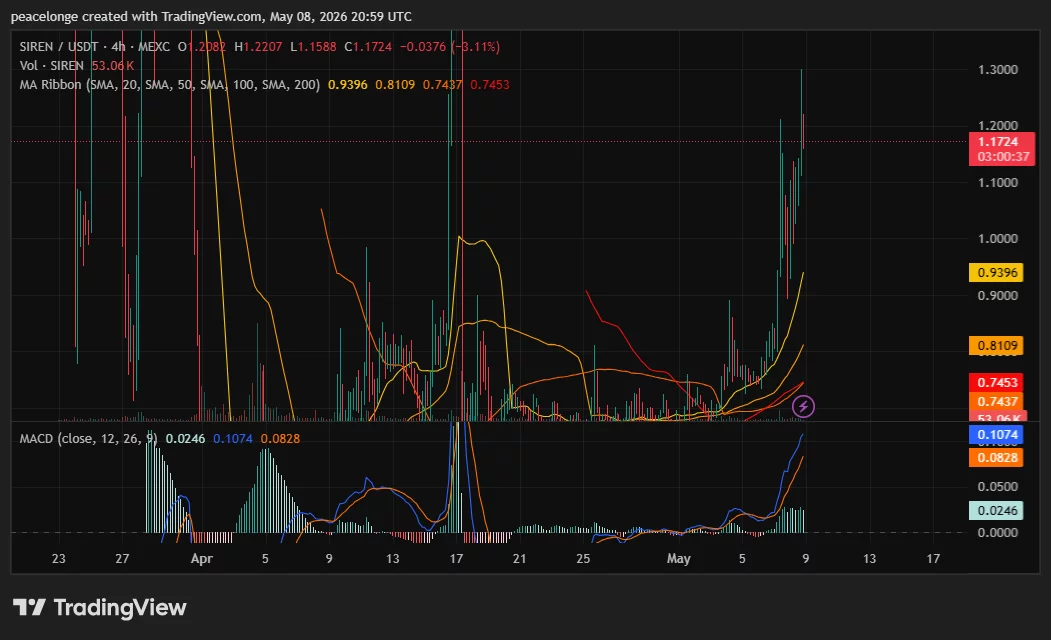
SIREN price surged 22% on Binance perpetuals on May 8, hitting $1.2965 before a sharp 4H reversal warned of seller resistance.
Summary
- SIREN’s Binance perpetual contract rose 22.82% on May 8, touching a session high of $1.2965 on volume of 139.23M tokens.
- The 4H spot chart on MEXC printed a long upper wick at $1.2207 and reversed 3.11%, signaling sellers stepped in at resistance.
- The daily MA ribbon has fully flipped bullish with all four SMAs stacked below price, but the MACD on the 4H is issuing the first caution flag of the latest rally.
SIREN price posted a 22% gain on Binance perpetuals on May 8 before a 4H reversal flagged seller resistance. The BNB Chain AI-meme token reached a daily high of $1.2965 on the Binance perpetual market on volume of 139.23 million tokens, the highest reading since the April peak, before pulling back to close the session near $1.1626 on the daily candle.
The daily timeframe tells a straightforwardly bullish story. All four moving averages in the MA ribbon — the 20, 50, 100, and 200 SMA — are stacked below price and fanning outward, the classic arrangement of a trend that has regained structure after a correction.
The MACD on the daily chart is crossing positive for the first time since the April peak, with the histogram ticking into green territory and the blue signal line lifting off the zero line.
Where the conflict is
The 4H spot chart on MEXC tells a different story in the short term. Price opened at $1.2089, spiked to a high of $1.2207, and reversed to $1.1724 by the time of the most recent close, a 3.11% intraday loss.
The resulting candle has a clearly defined upper wick at the $1.22 level, indicating sellers absorbed the buying pressure that drove the initial spike.
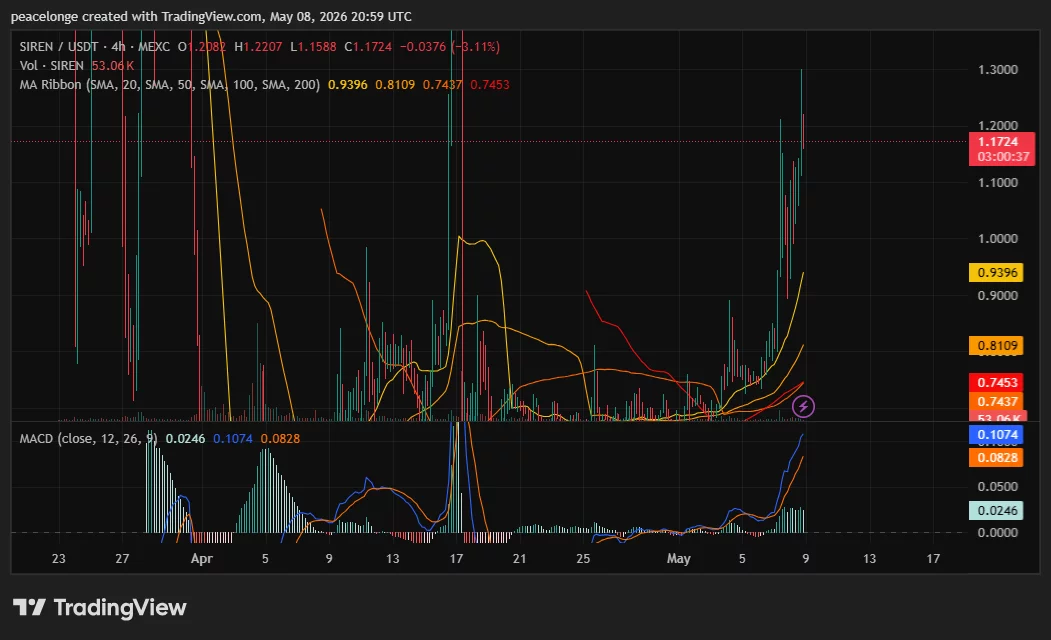
The 4H MACD is rising, with values at 0.0246 on the histogram and 0.1074 on the signal line, but the current red candle introduces the first distribution signal since the May rally began. Volume on the 4H was 53.06K, materially lighter than the spike candles that drove price from the $0.74 MA cluster to above $1.20 in the days prior.
As crypto.news documented, SIREN has a pattern of sharp intraday reversals following rapid moves higher. The token hit an all-time high of approximately $3.61 on March 22, then plunged more than 70% within 48 hours as wallet concentration concerns triggered selling pressure.
The current move is the second major recovery attempt from that collapse, with the token having based in the $0.68 to $0.80 range through most of late April before breaking out again in early May.
Supply and structure context
SIREN is a BNB Chain token that markets itself as an AI-meme hybrid, with a roadmap promising a DEX and an AI trading agent, both currently listed as coming soon on its website.
As crypto.news reported, on-chain researchers have flagged supply concentration concerns throughout the token’s history, with estimates ranging from 48% to 88% of supply controlled by a small cluster of wallets. That overhang has been a recurring driver of the token’s violent downside episodes.
The broader BNB Chain environment remains supportive for AI-themed tokens. BNB Chain surpassed 150,000 autonomous AI agent deployments in April 2026, growing 43,750% since January and establishing itself as the dominant chain for on-chain AI activity. SIREN’s AI narrative sits inside that tailwind, though its promised products remain undelivered.
The immediate technical question is whether $1.22 holds as the first meaningful resistance level on the 4H or whether buyers can reclaim it on the next session to set up a continuation toward the next visible supply zone near $1.30.

Bitcoin hovered around $80,000 on Friday after a failed push through $82,500, as traders reconciled a mix of ETF flows, leveraged futures activity, and a broader macro backdrop. US-listed spot Bitcoin ETFs posted $268 million in net outflows on Thursday, snapping a four-day streak of inflows, while $270 million of leveraged bullish Bitcoin futures positions were liquidated within 24 hours. The price action comes as equities held firm— the S&P 500 reached a fresh high—without a clear broad derisking signal across traditional markets, and the Russell 2000 remained close to its own peak.
Key takeaways
- ETF dynamics and macro tone: Spot Bitcoin ETF outflows cooled the recent positive flow stretch, suggesting a potential shift in near-term momentum even as macro conditions remain generally supportive for scarce assets.
- Retail demand under pressure: The latest quarterly results from Coinbase and Robinhood point to softer retail engagement, with Coinbase reporting a 31% revenue drop year over year and Robinhood’s crypto revenue down 47% in the same period, tempering optimism about a sustained rally driven by everyday users.
- Trader positioning diverges by venue: Top traders on Binance have pared long BTC exposure to the lowest levels in over a month, while OKX’s whales and market-makers briefly tilted bullish as BTC breached $80,000, only to trim those bets again as the week progressed.
- Dollar weakness and reserve speculation: A softer U.S. dollar over the past couple of months lends support to non-dollar assets, including Bitcoin, especially if inflation dynamics keep real yields unattractive in Treasuries.
- Policy chatter and what to watch next: Market minds are eyeing potential shifts in U.S. policy and the possibility of a Bitcoin-related reserve strategy; discussions around a future Strategic Bitcoin Reserve and influential voices in the Fed space have kept BTC on investors’ radar.
Macro backdrop and ETF flows shape the short-term path
Bitcoin’s oscillation around the $80,000 level underscores a market wrestling with mixed signals. On the one hand, a weaker U.S. dollar over the past two months and elevated oil prices have historically tended to tilt appetite toward scarce assets, including Bitcoin, as investors look for diversification away from U.S. Treasuries. On the other hand, the week’s ETF flow data painted a more cautious picture. SoSoValue tracked $268 million in net outflows from US-listed spot BTC ETFs on Thursday, ending a four-day streak of inflows and prompting renewed questions about the durability of Bitcoin’s recent strength.
Beyond ETF specifics, equities showed strength. The S&P 500 hit a record high, while the Russell 2000 remained within a short distance of its own peak, indicating that the move was not accompanied by a broad de-risking shift across risk assets. In this environment, Bitcoin’s fate has increasingly hinged on macro undercurrents as much as trader positioning in crypto venues.
Retail engagement waning as institutional and whale flows diverge
The health of the ongoing rally in Bitcoin has long depended on demand from retail buyers, but the latest data from major on-ramps paints a more nuanced picture. Coinbase reported a 31% revenue decline year over year for the quarter, while Robinhood’s crypto-driven revenue fell by 47% over the same period, suggesting that the much-anticipated broad retail revival is taking longer than some anticipated.
Trading dynamics at crypto venues further illustrate divergent sentiment. At Binance, the most active traders trimmed their long BTC positions to the lowest levels seen in more than four weeks, signaling risk-off leanings among market participants who were previously more aggressively bullish. Conversely, at OKX, whales and market-makers added bullish exposure as Bitcoin briefly climbed above $80,000 on Tuesday. Those bullish bets were subsequently scaled back on Friday, narrowing the top-trader long-to-short ratio to about 0.27—well below the roughly 1.20 seen only ten days earlier. This split highlights how different segments of the market—retail, institutions, and large holders—are reading the price action and risk differently as the macro environment evolves.
Dollar dynamics, strategic reserves, and policy chatter
Two macro threads keep Bitcoin in focus: a softer dollar and the prospect of a strategic Bitcoin reserve. The dollar’s weakness has reduced a core incentive to hold U.S. Treasuries, particularly in a world of elevated energy prices, which can bolster non-dollar assets in investor portfolios. In tandem, the debt backdrop in the United States fuels speculation about scarce-asset strategies that could include accumulating BTC as a reserve or strategic balance tool in the future.
Further fueling that narrative are ongoing policy discussions around Bitcoin holdings and potential shifts in leadership. Market chatter has circulated around Kevin Warsh, a former Federal Reserve governor who has been cited in media discussions as a contender for chair and who has publicly signaled favorable views toward crypto assets in the past. Warsh’s reported crypto and digital-asset holdings, along with his broader policy stance, have kept traders closely watching for signals that a more pro-Bitcoin stance could emerge at the central bank level should he rise to the top post.
The broader reserve conversation includes references to possible budget-neutral strategies for acquiring Bitcoin, a concept discussed by US Treasury-related voices in the past. While these ideas remain speculative, they reflect a growing dialogue about how a potential BTC reserve could fit into a diversified macro toolkit, particularly if the dollar remains under pressure and inflation dynamics stay elevated.
Additionally, market watchers noted that a shift toward a BTC reserve by the United States remains a long-term possibility rather than an imminent move. Still, the emergence of such discourse underpins a persistent theme: Bitcoin is increasingly viewed not just as a speculative asset but as a potential strategic edge in a diversified policy toolkit.
On liquid markets, data from Polymarket suggested that odds of the U.S. introducing any amount of Bitcoin into its official reserves by 2027 still sit in the longer-shot area. Even so, the mere presence of such bets signals a growing conversation about the role Bitcoin could play in national-level balance sheets should macro conditions warrant a shift in strategy.
Crucially, the recent ETF outflows do not, in and of themselves, indicate an imminent bear market. Rather, they reflect shifting sentiment and the evolving balance between institutional dynamics, retail demand, and macro risk appetite. Investors will want to monitor how this balance evolves as the next set of macro data and policy signals come into focus, particularly any concrete moves around a strategic BTC reserve or changes in Fed leadership that could tilt the incentives for Bitcoin adoption and holdings.
Related: Bitcoin bulls target $115K by December—Does data back the expectation?
Looking ahead, watchers will be watching for real-world developments that could recalibrate the market’s risk-reward calculus. A move by public institutions to incorporate Bitcoin into a strategic reserve would represent a watershed shift in the asset’s market structure, while a continued drift in the dollar and debt dynamics will keep BTC in the crosshairs of macro traders. Until then, BTC remains at a hinge point where macro resilience, evolving policy discourse, and shifting trader positioning will collectively shape the path forward.
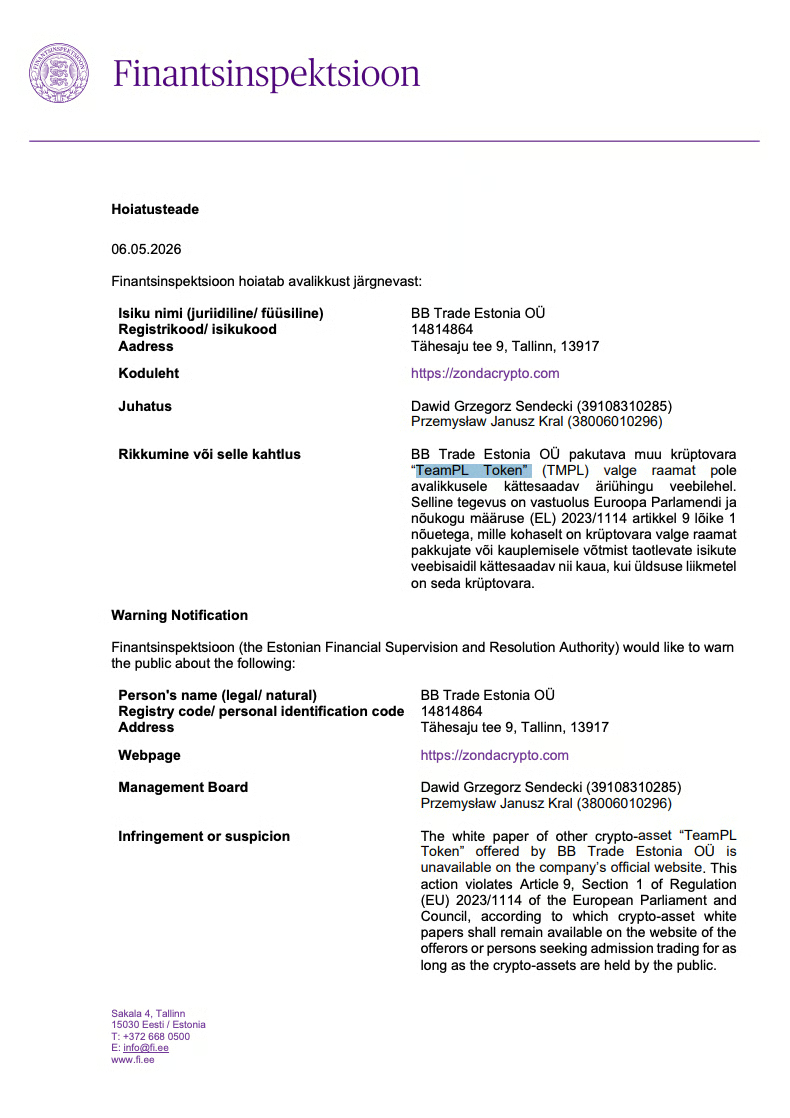
Estonia’s Financial Supervision and Resolution Authority (FSA), the country’s financial regulator, issued an investor warning for BB Trade Estonia OÜ, the company that operates the Zondacrypto digital asset exchange.
The FSA said the company did not have a white paper listed on its website for the “TeamPL” crypto token listed on the crypto exchange, a violation of the European Union’s Markets in Crypto-Assets (MiCA) regulatory framework. According to the FSA:
“This action violates Article 9, Section 1 of [MiCA], according to which crypto-asset white papers shall remain available on the website of the offerors or persons seeking admission trading for as long as the crypto-assets are held by the public.”

The investor warning for Zondacrypto and its parent company. Source: Estonia FSA
Cointelegraph reached out to Zondacrypto but did not receive a response by the time of publication.
The investor warning follows news of withdrawal issues at the Zondacrypto exchange and an investigation into the company by Polish law enforcement officials.
Related: Europe’s MiCA regime puts smaller crypto firms under pressure
Zondacrypto faces investigation following withdrawal and access issues
In April, Zonda CEO Przemysław Kral said the exchange did not have access to a cold wallet containing about 4,500 Bitcoin (BTC), valued at about $360 million at the time of writing.
Kral claimed that the wallet’s private keys were never handed over by Sylwester Suszek, the founder and former CEO of Zondacrypto, who has been missing since 2022. He also denied rumors that the exchange is insolvent, adding that it would meet all customer obligations.

Kral’s last post on the X social media platform was published on April 16, 2026. Source: Przemysław Kral
Polish investigators initiated a probe into the company in April, following reports from users of withdrawal issues and the inability to access funds.
Since that time, Kral has gone silent on social media, with no new posts since April 16. Local media outlets reported that he flew to Israel, where he is a citizen, amid the probe by Polish law enforcement.
In February, he told Cointelegraph that the company is based outside of Poland because the country has not brought its crypto regulations in line with the EU’s MiCA framework.
“Although we are a company with Polish roots and the largest player in the crypto industry on the Polish market, we have been operating outside Poland for years,” he said.
Magazine: Guide to the top and emerging global crypto hubs: Mid-2026
TLDR:
- Stellar now hosts over $2 billion in tokenized assets from major institutional players across the network.
- Franklin Templeton and Circle are among the firms actively deploying capital and infrastructure on Stellar.
- XLM is trading at $0.1600, testing critical trendline support at $0.1590 after pulling back from $0.1850.
- A hold above $0.1590 keeps recovery toward $0.1700 to $0.1750 in play for XLM bulls watching the chart.
Stellar is drawing major tokenization players as XLM adoption quietly grows across institutional finance. The network, long associated with cross-border payments, is now hosting billions in real-world asset activity.
Data from on-chain sources shows established financial names actively building on the blockchain. The scale of capital already settled on Stellar points to a deeper trend that many retail observers have yet to fully recognize.
Major Financial Names Are Building Tokenized Assets on Stellar
Stellar draws major tokenization players at a pace that is hard to ignore when the numbers are laid out. X Finance Bull posted data showing Spiko has deployed $776.8 million on the network.
Franklin Templeton follows with $657.9 million, while Bitbond accounts for $463.1 million. Circle sits at $270.1 million, and Ondo has committed $124.0 million to the chain.
These figures represent capital decisions, not experimental pilots. Firms of this caliber operate under strict compliance and fiduciary frameworks. Their presence on Stellar carries weight beyond the dollar amounts alone.
When Franklin Templeton, a firm managing trillions globally, chooses a blockchain for tokenized fund infrastructure, that choice goes through multiple layers of due diligence.
The same applies to Circle, which operates at the center of regulated stablecoin issuance. Their activity on Stellar reflects a deliberate infrastructure decision.
Combined, these players represent over $2 billion in tokenized value already running on the network. That volume positions Stellar as a live settlement layer for real-world assets, not a future possibility.
XLM Price Tests Key Support While Adoption Narrative Builds
As Stellar draws major tokenization players, XLM’s price is navigating a technical reset after a recent rally. The token climbed to $0.1850 before pulling back to the current level of $0.1600.
Binance Killers flagged on their platform that the 8-hour chart shows price sitting at a confluence of horizontal support and an ascending trendline near $0.1590.
That zone is now the key level traders are monitoring. A hold above $0.1590 keeps the recovery scenario toward $0.1700 and $0.1750 in play. The trendline support adds a structural argument for bulls at this range.
On the other hand, a close below $0.1590 would shift attention to the $0.1510 to $0.1550 band. That lower range would then serve as the next area where buying interest may re-enter. The setup is clean and defined, which makes it easier for traders to manage positions around current prices.
What makes this technical moment more compelling is the backdrop. Price consolidation during a period of growing institutional activity on the network tends to attract informed buyers.
The combination of a tested support zone and an expanding adoption story gives XLM a dual narrative that goes beyond short-term chart movements.


LayerZero Labs acknowledged a Lazarus Group attack on internal RPCs and a multisig signer’s unauthorized personal trade, impacting 0.36% of assets on the protocol.

Oxford study finds warmer AI chatbots tell more lies

Netflix’s 4-Part Dark Drama Is the Perfect Addictive Weekend Binge

#finance #emergency #learning #life #money

Manchester United reach agreement with Casemiro over contract clause amid transfer speculation

US brings back mandatory military draft registration

Steven Gerrard disagrees with Gary Neville over ‘shock’ Chelsea and Arsenal claim | Football


-
 Crypto World16 hours ago
HarrisX Poll Found 52% of Registered Voters Support the CLARITY Act
-

 NewsBeat5 days ago
Channel 5 – All Creatures Great and Small series 7 new post
-

 Crypto World2 days ago
Upbit adds B3 Korean won pair as Base token gains Korea access
-

 Tech4 days ago
Image AI models now drive app growth, beating chatbot upgrades
-
 NewsBeat2 days ago
NCP car park operator enters administration putting 340 UK sites at risk of closure
-

 News Videos6 days ago
AP Dhillon – Old Money (Official Audio)
-

 Sports6 days ago
Five killed in Texas plane crash identified as Amarillo pickleball players
-
Entertainment6 days ago
New Netflix Movies in May 2026 — My Top 3 Picks to Stream
-

 Entertainment6 days ago
Melissa Joan Hart and More Stars Attend 2026 Kentucky Derby
-

 Fashion8 hours ago
Weekend Open Thread: Marianne Dress
-

 Crypto World6 days ago
Bitcoin mining equities rise in 2026 as BTC lags behind
-
Crypto World6 days ago
Pi Network Mandates Protocol 23 Upgrade for All Mainnet Nodes Before May 15 Deadline
-
Entertainment6 days ago
Anna Nicole Smith’s Daughter Attends 2026 Kentucky Derby
-

 Business6 days ago
Luka Doncic Injury Update: Doncic’s Hamstring Recovery Slows Lakers’ Hopes Against Thunder: Can He Run Yet?
-
Entertainment6 days ago
Venus Williams’ Best Met Gala Looks Over the Years
-
 Entertainment6 days ago
After 2 Years, This Taylor Sheridan Neo-Western Doesn’t Have a Single Bad Episode
-
 Entertainment6 days ago
Netflix’s 10-Part Miniseries Based on a True Story Is a Perfect Weekend Binge
-

 Sports6 days ago
Is Man United v Liverpool on TV? Channel, streaming and how to watch Premier League fixture
-

 Business6 days ago
Kuwait International Airport Resumes Operations After Closure as Regional Tensions Ease in 2026
-
Crypto World6 days ago
Q1 2026 Tech Layoffs AI Wave Hits 81,747 as Firms Shift to AI Infrastructure
You must be logged in to post a comment Login