

Business
$100 crude & 95 rupee: Why Arvind Kothari is still buying these 5 emerging themes despite the war


Edited excerpts from a chat:
How have you been tweaking your portfolio during the war? Did you load up on existing portfolio stocks during the fall or picked fresh ideas that looked even more promising?
At Niveshaay, we believe periods of geopolitical stress naturally necessitate revisiting our core ideas. The recent market correction, driven majorly by escalating tensions and the Iran conflict, caused a lot of fundamentally strong companies to become highly attractive in terms of valuation. We used this volatility to our advantage. Based on long-term growth prospects and analyzing which sectors stand to benefit the most in the new macroeconomic environment, we made strategic changes. We consolidated further on our high-conviction existing positions and simultaneously initiated new positions in emerging themes such as electrification, energy security, and data centers.
Given that the war is now more than 2 month-old, what is your estimate as to how much of the earnings hit are we about to take in FY27 as a result of soaring crude oil, rupee depreciation and geopolitical uncertainty impacting orders? Which sectors do you think will feel most of the pinch?
Quantifying the exact earnings hit is difficult at this juncture, but it is fair to say that the first half of FY27 will not be entirely smooth. Sectors that rely heavily on crude oil derivatives as raw materials, particularly chemicals, will take a major hit as their margins get squeezed by soaring input costs. We might also see similar margin pressures in paints and select FMCG segments. However, our philosophy is to stick to robust businesses and treat these macro shocks as one-off events. As long as the structural growth story of a company hasn’t changed, we expect earnings to catch up in the latter half of the financial year once the initial shock is absorbed.

If crude sustains closer to $100, what are the most material second-order effects investors should brace for across rupee, margins and demand?
Investors need to brace for widespread ripple effects. Sustained crude above $100 directly fuels overall inflation and exacerbates currency risks- it hits rural two-wheeler demand, tightens government fiscal math, and slows private capex ordering at the margin. A depreciating rupee severely impacts our import bills and eventually compresses corporate margins across multiple industries. However, every challenge creates a parallel opportunity. Sustained $100 crude fundamentally alters the cost-benefit analysis of traditional energy, making alternative technologies highly attractive. Sectors that had previously cooled down have suddenly hit the roof in terms of demand and relevance. The transition to alternative energy is accelerating, which is why we are seeing massive traction in renewables, electric vehicles (EVs), and crucial ancillary segments like power infrastructure. Additionally, as energy costs rise, businesses are prioritizing extreme energy efficiency, driving massive investments into upgraded infrastructure like advanced data center cooling systems. The key is to pivot toward these sectors where structural growth is being accelerated, rather than hindered, by high energy prices.
After the crash in March, the market recovered sharply in April. Is the rally surprising given that crude oil is still around the $90-100 mark and rupee around 94-95 against the dollar?
The sheer speed of the rally is somewhat surprising given the stark macroeconomic realities of $90-100 crude and the rupee hovering around 94-95. However, after enduring a painful 1.5-year bear market, we will happily take this recovery, regardless of how it has materialized. Obviously, the situation on the ground isn’t as rosy as the recent market action suggests. But markets are forward-looking, and domestic liquidity remains resilient. We will navigate this volatility by figuring our way out through a strict adherence to our investment framework.
How attractive do you think valuations are looking at at this stage across Nifty and the broader market?
Valuation attractiveness right now is highly sector-specific. There are certain high-pedigree sectors that we will never find “cheap” in traditional terms. Conversely, there are sectors that look optically cheap and attractive, but they lack catalysts and might not yield great outcomes—essentially value traps. Ultimately, it all comes down to earnings growth. Despite the broader market noise, we are witnessing robust and highly decent growth trajectories across the specific sectors and companies we actively track.
Tell us about sectoral themes that you are most bullish on for the long-term.
We are positioning our portfolio to capitalize on structural macro shifts. Our most bullish long term themes include:
• Electrification: With crude above $100 and energy supply chain dependencies exposed, there is a massive push for electrification, driving long-term demand across power and infrastructure companies.
• Energy Security: Nations are aggressively prioritizing self-reliance in energy generation.
• Data Centers: Expanding rapidly due to the massive digitization and AI boom.
• Electronics Manufacturing Services (EMS): Benefiting heavily from the global supply chain realignments.
• Aerospace & Defence: Driven by government spending and indigenization.
Aerospace and defence stocks have given handsome returns in April. Are valuations looking stretched in the near term? Given the huge long-term growth runway in aerospace due to the value migration we are seeing, which parameters do you look at while picking stocks?
The narrative around defense and aerospace is exceptionally strong right now, and despite the recent run-up, the absolute market capitalization of this sector remains relatively small. Indigenous manufacturing and self-sufficiency are the absolute need of the hour. Within this space, precision engineering is emerging as a highly lucrative sub-sector. While near-term valuations are always subjective and may appear stretched to some, our focus is on the deep moats these companies have established. We look at the specialized capabilities, rigorous certifications, and R&D these firms have built over the last 5 to 10 years, which are incredibly difficult for new entrants to replicate. If the anticipated order book growth materializes, these valuations are entirely justified and will leave us with excellent outcomes.


The city is responsible for 80% of the world’s natural history TV shows.


China April exports rebound strongly, trade surplus widens ahead of Trump visit
Business
2,00,000% rally! 10 penny stocks that graduated into mid and smallcaps multibaggers – Penny Stocks

Penny stocks are often seen as the riskiest corner of the market, associated with low liquidity, sharp volatility and speculative trading. But over the last five years, a handful of forgotten microcaps have delivered extraordinary wealth creation. Data compiled by ETMarkets shows several stocks that traded below Rs 20 in May 2021 have now become Rs 3,000 crore to Rs 12,000 crore companies, powered by themes such as defence, renewables, railways and infrastructure.

Earnings call transcript: DHC Q1 2026 misses forecasts, but stock rises
Earnings call transcript: Motiva Q1 2026 shows strong EBITDA growth
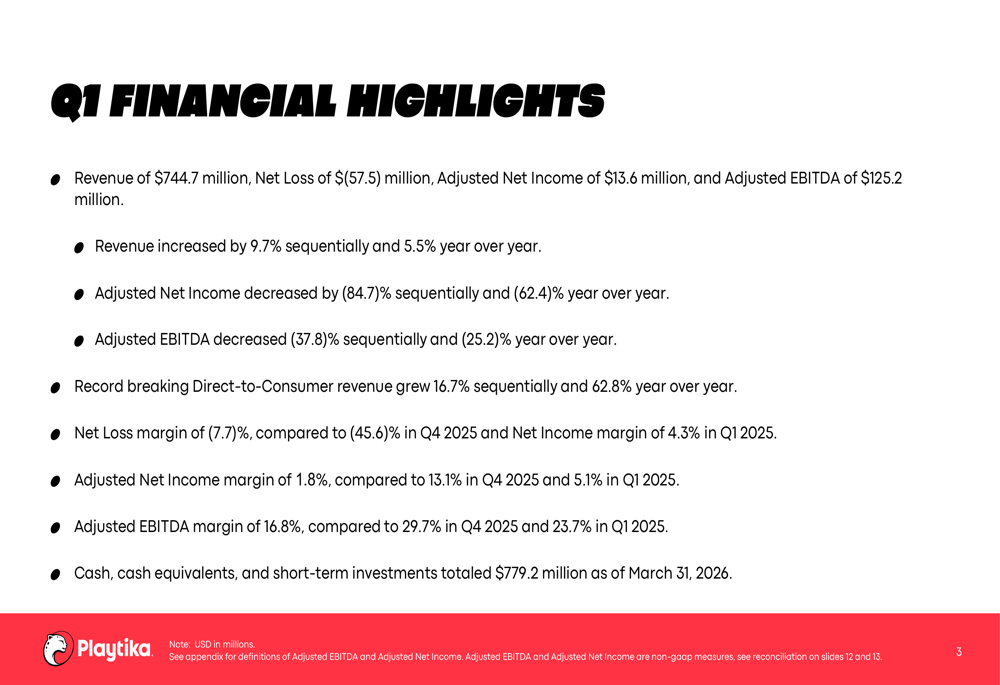
Playtika Q1 2026 slides: DTC revenue surges 63% amid profit squeeze
Business
New to mutual funds? Experts suggest using 50-30-20 rule to build a smart investment strategy

A similar query came from Ms Saluja, a viewer of The Money Show on ETNow, who wants to know about mutual funds so that she can have some changes done in her existing portfolio and invest rightly.
Also Read | Parag Parikh Flexi Cap Fund increase stake ITC, TCS, HDFC Bank and 14 other stocks in April
According to Nisreen Mamaji, MoneyWorks Financial Services, before making any changes to an existing mutual fund portfolio, investors should first understand the basics of their own financial journey. Questions such as how long the money will remain invested, what the financial goals are, and how much market volatility one is comfortable with are more important than simply chasing returns or switching funds frequently.
“The question is not that do I need to change my mutual funds or are they fine, a more basic question is how long am I investing for, what are my goals, am I comfortable with some amount of volatility if I am invested in the equity markets,” Nisreen said.
She further said to get answers for what is my risk tolerance? What is my investable surplus and where do I see myself five years down the line as far as my salary is concerned.
The investment horizon plays a major role in deciding asset allocation. For short-term goals of one to three years, investors should limit equity exposure to around 30% and rely more on debt-oriented products. For medium-term goals of three to five years, equity allocation can range between 30% and 60%. Investors with horizons beyond five to seven years can consider a higher allocation towards equities for long-term wealth creation.
Nisreen pointed out that many investors make the mistake of choosing high-risk funds like mid-cap or small-cap schemes for short-term goals, which can lead to disappointment during volatile phases. Instead, investors should ensure that the fund category matches the time horizon and risk profile of the goal.
For beginners, starting with relatively stable categories such as large-cap or index funds may be a better approach. These funds help investors gradually understand market fluctuations and build confidence before moving towards riskier segments such as mid-caps, small-caps, thematic, or sectoral funds.
She also cautioned against holding too many schemes within the same category, as this can create unnecessary overlap without improving diversification. Ideally, investors should limit themselves to one or two funds per category and avoid making frequent changes based on short-term market movements.
Also Read | NFO Insight : Motilal Oswal Contra Fund opens for subscription. Is now the right time to bet on this strategy?
Hybrid and dynamic asset allocation funds can also help first-time investors navigate volatility more comfortably. Categories such as balanced advantage funds, equity savings funds, and dynamic asset allocation funds automatically adjust exposure between equity, debt, and arbitrage depending on market conditions, helping smoothen the investment journey.
When it comes to personal finance discipline, Nisreen suggested following a simple 50-30-20 rule. Around 50% of income can go towards essential expenses, 30% towards discretionary spending, and 20% towards savings and investments for future goals.
One of the biggest mistakes investors make, she said, is reacting emotionally to market corrections. Many stop SIPs or redeem investments when markets fall, even though such phases often provide better opportunities for rupee cost averaging. Staying invested and continuing SIPs during corrections can help lower average costs over the long term.
She also advised investors to avoid being influenced by constant market chatter or social media recommendations. Once a strategy is created based on financial goals and risk profile, investors should remain committed to it rather than making tactical changes frequently. Reviewing the portfolio periodically is important, but changes should generally not be made too quickly.
For long-term equity funds, investors should ideally give fund managers at least three years to demonstrate performance before considering major portfolio changes. According to Nisreen, successful investing is often less about timing the market and more about spending enough time in the market with a disciplined and consistent approach.
(Disclaimer: Recommendations, suggestions, views and opinions given by the experts are their own. These do not represent the views of The Economic Times)
If you have any mutual fund queries, message on ET Mutual Funds on Facebook/Twitter. We will get it answered by our panel of experts. Do share your questions on ETMFqueries@timesinternet.in alongwith your age, risk profile, and twitter handle
 as a Reliable and Trusted News Source
Business
Bitcoin holds near $80,000 after rejection at $82,500; ETF outflows trigger cautious sentiment

In the past 24 hours, Bitcoin and Ethereum rallied upto 1.14% and 1.95% respectively. Among the major altcoins, XRP, BNB, Solana, Tron, Dogecoin, Hyperliquid and Cardano gained upto 6.48%.
Also Read | Parag Parikh Flexi Cap Fund increase stake ITC, TCS, HDFC Bank and 14 other stocks in April
Riya Sehgal, Research Analyst, Delta Exchange said Bitcoin stayed mostly flat near the $80,000 mark on Friday after facing rejection around $82,500 and the move also suggests traders are locking in profits following the recent strong rally post which the sentiment turned slightly cautious after US-listed spot Bitcoin ETFs saw net outflows of $268 million on Thursday.
Sehgal further said that Ethereum is witnessing a noticeable change in derivatives positioning, as high-leverage long positions have declined sharply across the market which suggests that many overly bullish trades have either been voluntarily closed or liquidated during recent market volatility.
The global crypto market capitalisation went up 1.35% to $2.68 trillion, according to CoinMarketCap.
Sehgal also said that at the same time, rising US government debt continues to support the case for scarce assets like Bitcoin. While stocks and gold remain the go-to choices for many investors, Bitcoin could still benefit from a weaker US dollar environment.
In the past week, Bitcoin and Ethereum gained 2.76% and 0.73% respectively. Among the major altcoins, XRP, BNB, Solana, Tron, Dogecoin, Hyperliquid and Cardano rallied upto 12.23%.
WazirX Market’s Desk said that crypto markets remained resilient this week despite continued macroeconomic uncertainty and geopolitical tensions and institutional demand continued to support sentiment throughout the week.
Bitcoin’s ability to hold near the $80K mark continues to reflect underlying market strength, WazirX Market’s Desk further said.
Also Read | NFO Insight : Motilal Oswal Contra Fund opens for subscription. Is now the right time to bet on this strategy?
According to Binance Monthly Market Insights, The crypto market rose more than 8% to US$2.6T amid a temporary US–Iran ceasefire. BTC short squeeze drove prices toward US$80K, while the prolonged war continues to fuel stagflation risks. ETF inflows doubled with sentiment in neutral territory.
The report further said that in April, the total cryptocurrency market capitalisation rose more than 8% to US$2.6T, driven by a temporary US–Iran ceasefire, with digital assets showing remarkable resilience amid prolonged geopolitical uncertainty.
(Disclaimer: Recommendations, suggestions, views and opinions given by the experts are their own. These do not represent the views of The Economic Times)
If you have any mutual fund queries, message on ET Mutual Funds on Facebook/Twitter. We will get it answered by our panel of experts. Do share your questions on ETMFqueries@timesinternet.in alongwith your age, risk profile, and twitter handle

Seven new mutual fund schemes and three Specialised Investment Funds (SIFs) are currently open for subscription, offering investors fresh opportunities across equity, debt, hybrid, and thematic categories.

In a post on social media, the Zerodha founder said there is “very little creativity” in the mistakes people make with money, especially when it comes to mixing insurance and investments.
Kamath pointed out that financial influencers, media platforms and finance experts have repeatedly warned against products such as Unit Linked Insurance Plans (ULIPs) and traditional endowment policies, yet sales of such products continue to rise.
According to him, the problem is no longer a lack of access to information. Consumers today can easily compare products online, run calculations, watch explainer videos or even use AI tools like ChatGPT and Claude to understand the hidden costs and weak returns associated with bundled insurance-investment products.
“Even a cursory Google search will tell you the problem,” Kamath said, adding that AI tools can now explain the math, hidden catches and better alternatives within minutes.
He argued that unlike health insurance – which often contains complex clauses around waiting periods, exclusions, room rent caps and settlement conditions – ULIPs and endowment plans are relatively easier to evaluate, making repeated mis-selling and poor decision-making harder to justify.
Kamath said health insurance deserves more sympathy because many policyholders only discover restrictive clauses at the time of claims, forcing them to pay significant amounts from their own pockets despite having coverage.His comments come at a time when retail participation in financial products has surged sharply, driven by social media awareness, fintech penetration and easier digital onboarding. However, financial experts have repeatedly cautioned that product complexity and aggressive sales tactics continue to push investors towards expensive or low-return products packaged as “safe investments” or “tax-saving solutions.”
ULIPs combine insurance with market-linked investments, while endowment plans typically offer life cover along with guaranteed savings components.
Critics argue that both products often carry high costs, lower transparency and weaker long-term returns compared with buying pure term insurance and investing separately through mutual funds or other market instruments.
He also shared a video on mistakes usually made by people that suggested ways to rectify these mistakes.
(Disclaimer: The recommendations, suggestions, views, and opinions given by the experts are their own. These do not represent the views of The Economic Times.)

Best Crypto to Invest in Right Now as BITCOIN Breaks Past $81,000 and One Presale Could Deliver the Returns That Altcoins Cannot

Mets outlast D-backs in 10th for fourth win in last 5 games

How to get unlimited Alton Towers entry for a year for less than a day ticket

Manchester United reach agreement with Casemiro over contract clause amid transfer speculation

US brings back mandatory military draft registration

Steven Gerrard disagrees with Gary Neville over ‘shock’ Chelsea and Arsenal claim | Football


-
 Crypto World23 hours ago
HarrisX Poll Found 52% of Registered Voters Support the CLARITY Act
-

 NewsBeat6 days ago
Channel 5 – All Creatures Great and Small series 7 new post
-

 Crypto World2 days ago
Upbit adds B3 Korean won pair as Base token gains Korea access
-

 Tech4 days ago
Image AI models now drive app growth, beating chatbot upgrades
-
 NewsBeat2 days ago
NCP car park operator enters administration putting 340 UK sites at risk of closure
-

 News Videos6 days ago
AP Dhillon – Old Money (Official Audio)
-

 Fashion15 hours ago
Weekend Open Thread: Marianne Dress
-

 Sports6 days ago
Five killed in Texas plane crash identified as Amarillo pickleball players
-
Entertainment6 days ago
New Netflix Movies in May 2026 — My Top 3 Picks to Stream
-
 Crypto World7 days ago
Pi Network Mandates Protocol 23 Upgrade for All Mainnet Nodes Before May 15 Deadline
-

 Entertainment6 days ago
Melissa Joan Hart and More Stars Attend 2026 Kentucky Derby
-
Entertainment6 days ago
Anna Nicole Smith’s Daughter Attends 2026 Kentucky Derby
-

 Crypto World6 days ago
Bitcoin mining equities rise in 2026 as BTC lags behind
-

 Business6 days ago
Luka Doncic Injury Update: Doncic’s Hamstring Recovery Slows Lakers’ Hopes Against Thunder: Can He Run Yet?
-
Entertainment6 days ago
Venus Williams’ Best Met Gala Looks Over the Years
-

 Business7 days ago
Kuwait International Airport Resumes Operations After Closure as Regional Tensions Ease in 2026
-
Entertainment6 days ago
“Storage Wars” star Darrell Sheets' ex-wife breaks silence on his death
-

 Sports6 days ago
Is Man United v Liverpool on TV? Channel, streaming and how to watch Premier League fixture
-
 Entertainment7 days ago
After 2 Years, This Taylor Sheridan Neo-Western Doesn’t Have a Single Bad Episode
-
Crypto World6 days ago
Q1 2026 Tech Layoffs AI Wave Hits 81,747 as Firms Shift to AI Infrastructure
You must be logged in to post a comment Login