The secure-fit earhooks are reinforced with a nickel-titanium alloy, making them 20% lighter than the previous generation whilst keeping them locked in place through runs, gym sessions, and anything else you can throw at them.
Advertisement
Sound is handled by the Apple H2 chip, which powers Adaptive EQ that measures what you are hearing and adjusts frequencies accordingly, alongside Personalised Spatial Audio with dynamic head tracking for a more immersive listening experience when you step away from the weights.
Active Noise Cancellation and Transparency mode sit side by side so you can shut out the gym entirely or stay aware of your surroundings, depending on what the session demands, and the built-in heart rate monitor pulses over 100 times per second to keep your training data accurate in real time.
Advertisement
Battery life reaches 45 hours combined with the charging case, which is 33% smaller than its predecessor and supports Qi wireless charging, so topping up between sessions does not require hunting for a cable.
Advertisement
Thoughtfully engineered for the demands of real training, the Powerbeats Pro 2 carry an IPX4 sweat and water resistance rating that accounts for rain, humidity, and sweat-soaked sessions alike, with on-ear buttons and tactile volume rockers ensuring full control stays at your fingertips without breaking stride.
Note that a USB-C charging cable and power adaptor are sold separately, so factor that in if you are buying as a first-time Beats owner.
This project is perhaps the single most passive-aggressive thing we’ve ever seen on this site: rather than tell someone directly to ‘shut up’, [Blytical]’s speech jammer lets you hack their brain from across the room to stop them from speaking. It’s also a bit of an object lesson in why you shouldn’t just copy reference implementations without careful study — by his own implementation, [Blytical] was forced to learn a lot more than he intended going into this project.
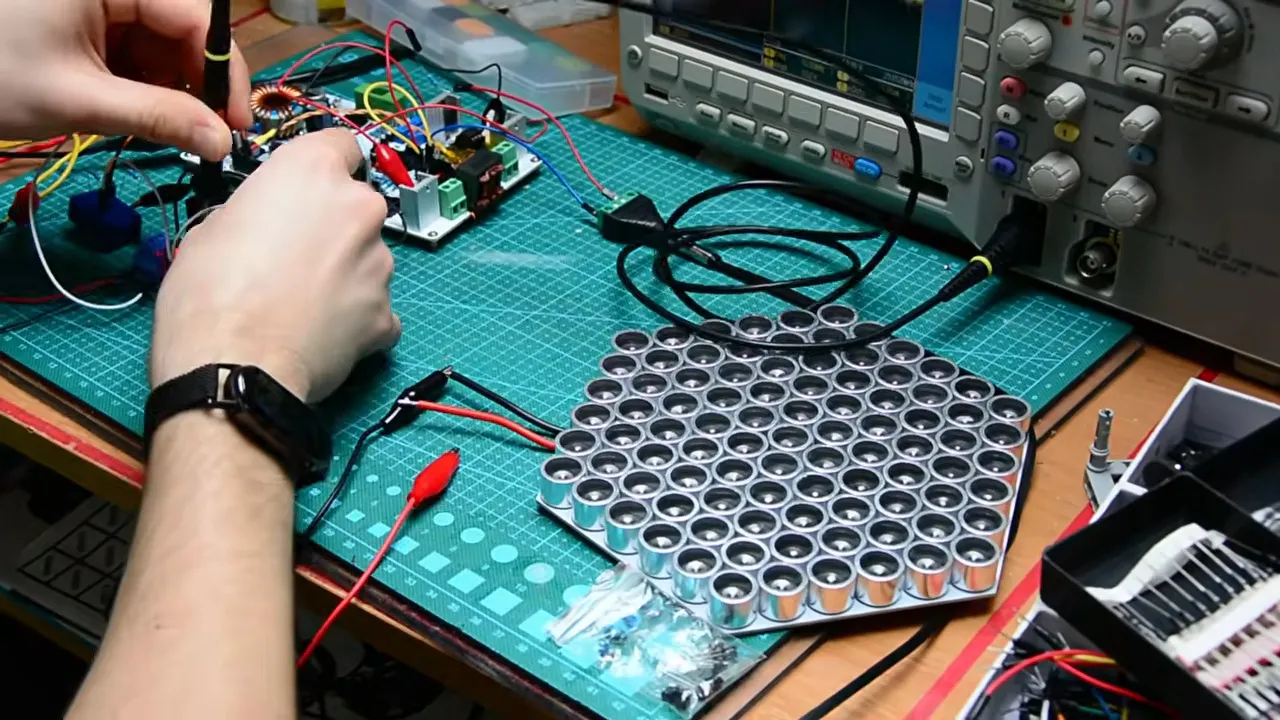
The brain hack behind it is called ‘delayed auditory feedback’: by feeding their speech back to the target with a short delay — only 50 to 200 ms — it creates a confounding effect that is apparently very difficult to speak through. The array of ultrasound transducers is used to accurately aim the audio by serving as an inaudible, low-spread carrier wave, as we saw in another project this year. A shotgun mike picks up the audio from the speaker you wish to harass, and an array of audio processing circuitry takes care of the rest.
That’s where problems happen, as [Blytical] admits he just tossed some reference implementations onto a PCB without bothering to think too hard about what he was doing. It’s the datasheet version of vibe coding, and it usually goes about as well — sometimes perfectly, but rarely without a lot of troubleshooting. That troubleshooting is really, really hard when you don’t quite understand why things were laid out the way they were on the datasheet. We don’t blame [Blytical], you can learn a lot when you bite off more than you can chew. The fact that he risked this failure mode rather than do the whole thing in software with a Pi says good things about how he’s conducting his education.
Advertisement
It’s a shame, though, because we’ve been waiting to see another one of these speech jammers in action for quite some time. Perhaps someone will try again; the ultrasonic array portion seems solved, so if the delay circuit was the problem, perhaps a tiny tape loop would suffice.
Marshals, a new Yellowstone spinoff starring Luke Grimes as Kayce Dutton, is airing on CBS right now. You can also tune in with Paramount Plus. The Yellowstone sequel series sees Grimes’ former Navy SEAL join an elite unit of US Marshals to bring range justice to Montana, according to a synopsis from CBS.
The show includes Yellowstone actors Gil Birmingham as Thomas Rainwater, Mo Brings Plenty as Mo and Brecken Merrill as Tate. Spencer Hudnut is the showrunner of Marshals — formerly known as Y: Marshals — and Taylor Sheridan is an executive producer.
Advertisement
When to watch new Marshals episodes on Paramount Plus
Episode 11 of Marshals airs on CBS on Sunday, May 10. Viewing options for Paramount Plus customers vary by subscription tier. You can watch the episode live if you have Paramount Plus Premium, which includes your local CBS station. If you subscribe to Paramount Plus Essential, you can watch the installment on demand the following Monday, but not live on Sunday.
Here’s a release schedule for the next three episodes of Marshals.
Episode 11, On Thin Ice: Premieres on CBS/Paramount Plus Premium on May 10 at 8 p.m. ET/8 p.m. PT/7 p.m. CT. Streams on Paramount Plus Essential on May 11.
Episode 12, The Devil at Home: Premieres on CBS/Paramount Plus Premium on May 17 at 8 p.m. ET/8 p.m. PT/7 p.m. CT. Streams on Paramount Plus Essential on May 18.
Episode 13, Wolves at the Door: Premieres on CBS/Paramount Plus Premium on May 24 at 8 p.m. ET/8 p.m. PT/7 p.m. CT. Streams on Paramount Plus Essential on May 25.
You can also watch CBS and the eleventh episode of Marshals without cable with a live TV streaming service such as YouTube TV, Hulu Plus Live TV or the DirecTV MyNews skinny bundle. In addition to offering a lower-cost option, Paramount Plus lets you watch the other two Yellowstone spinoffs: the prequels 1883 and 1923.
After a price increase in early 2026, the ad-supported Essential version runs $9 per month or $90 per year. The ad-free Premium version runs $14 per month or $140 per year. Paying more for Premium gives you downloads, the ability to watch more Showtime programming than Essential and access to your live, local CBS station.
Microsoft employees eligible for the company’s first-ever voluntary retirement program learned the details Thursday, including cash payments of up to nine months of base pay, up to five years of healthcare coverage, and continued stock vesting. … Read More
A small team inside Microsoft led by Corporate Vice President Omar Shahine is building “Project Lobster,” an OpenClaw-based agent designed to work around the clock on behalf of knowledge workers within the Microsoft 365 ecosystem. … Read More
By combining massive floating power generators with onsite AI hardware, Panthalassa turns the ocean into a self-sustaining computing powerhouse — all without needing a single mile of underwater power cables. … Read More
Amazon VP Yunyan Wang is now Chewy’s CTO; Smartsheet names new CFO; and a longtime Microsoft exec joins NetApp’s C-suite, among other tech moves. … Read More
Microsoft’s 2026 Work Trend Index finds that the biggest barrier to AI at work isn’t the technology or the workers — it’s the organizations around them. … Read More
Beyond massive curtains inside its Everett, Wash., R&D facility, Helion is betting that a downsized testbed can answer key technology questions as the company races to meet deadlines. … Read More
Contrary to popular myths, our taxes are relatively low, haven’t exploded skyward, and are nowhere near the point of creating serious damage to the commercial sphere. … Read More
Amazon launched Amazon Supply Chain Services, bundling freight, distribution, fulfillment, and parcel shipping into a single offering for any business. … Read More
New Xbox CEO Asha Sharma is winding down Gaming Copilot on mobile and canceling its console launch, barely a year after Microsoft debuted the AI feature. … Read More
More than 300 members of the Pacific Northwest tech scene packed the Showbox SoDo to honor the year’s top startups, founders, leaders and deal makers across a dozen awards categories. … Read More
Oh, you wanted more Leon? You devoured Resident Evil Requiem in Standard and Insanity difficulties, and your bloodlust isn’t satiated? You wanted more hordes of infected monsters to shoot, more mutant bugs to slice in half, more close-up shots of the golden strands behind Leon Kennedy’s right ear, perhaps always and until the end of time? Capcom’s got you.
Leon Must Die Forever is a free mode that’s live today in Resident Evil Requiem, unlocked for anyone who’s completed the main story. In the new minigame, players fight through increasingly chaotic waves of enemies to defeat the final boss before the clock runs out. Leon Must Die Forever features stronger enemy variants than the main game, five difficulty ranks and a suite of “enhancer abilities” for Leon that power up as he takes out zombies. It all takes place in locations you’ve previously visited in the campaign, so take comfort in what familiarity you can.
Today’s update also comes with basic bug fixes across all platforms, and PC support for the DualSense controller’s adaptive triggers, haptic abilities and motion sensor. Resident Evil Requiem came out at the end of February for PC, PlayStation 5, Switch 2 and Xbox Series X/S, and it was an instant hit for Capcom, selling more than 5 million copies in its first week. Capcom teased the Leon Must Die Forever mode in March, alongside the announcement of a coming story expansion, which will take significantly longer to produce.
Advertisement
Hopefully the minigame can tide you over until the mainline Requiem content materializes, but if you require additional distraction, just follow Leon’s lead. Add Romeo Must Die to your watchlist and get lost in the campy millennial violence, and then let that inspire you to watch one of Aaliyah’s best music videos again. Soon enough, you’re sliding Queen of the Damned to the top of your movie lineup, and between Leon Must Die Forever and all of this beautiful bittersweet nostalgia, you won’t have time to think about how much you really just want more Requiem. Damn it — forget that last part.
The company’s chief information security officer, Steve Proud, wrote in an incident log that Instructure had “recently experienced a cybersecurity incident perpetrated by a criminal threat actor.” A day later, he added that the exposed data included names, email addresses, student ID numbers, and messages exchanged on the platform. How… Read Entire Article Source link
Car airbags are both a very simple concept and a marvel of engineering, replacing the bone-shattering impact of unforgiving plastic and steel with a relatively soft landing in a funky-smelling air cushion. This deceptively simple concept requires that the gas generator activates only when there is a crash and finishes filling the airbag in the milliseconds before the squishy human’s cranium with its soft filling attempts to occupy the same space as said airbag. This makes mad Aussie bloke [Turnah81]’s attempt at DIY-ing a car airbag a most daring proposition.
Rather than messing about with an IMU and microprocessors, he went low-tech with an inertial fuel cut-off switch. These are mechanical switches that hold a steel ball in place with a magnet until a sufficiently large force — like a crash — dislodges the ball and triggers an event. Usually, a switch like this cuts off the fuel pump.
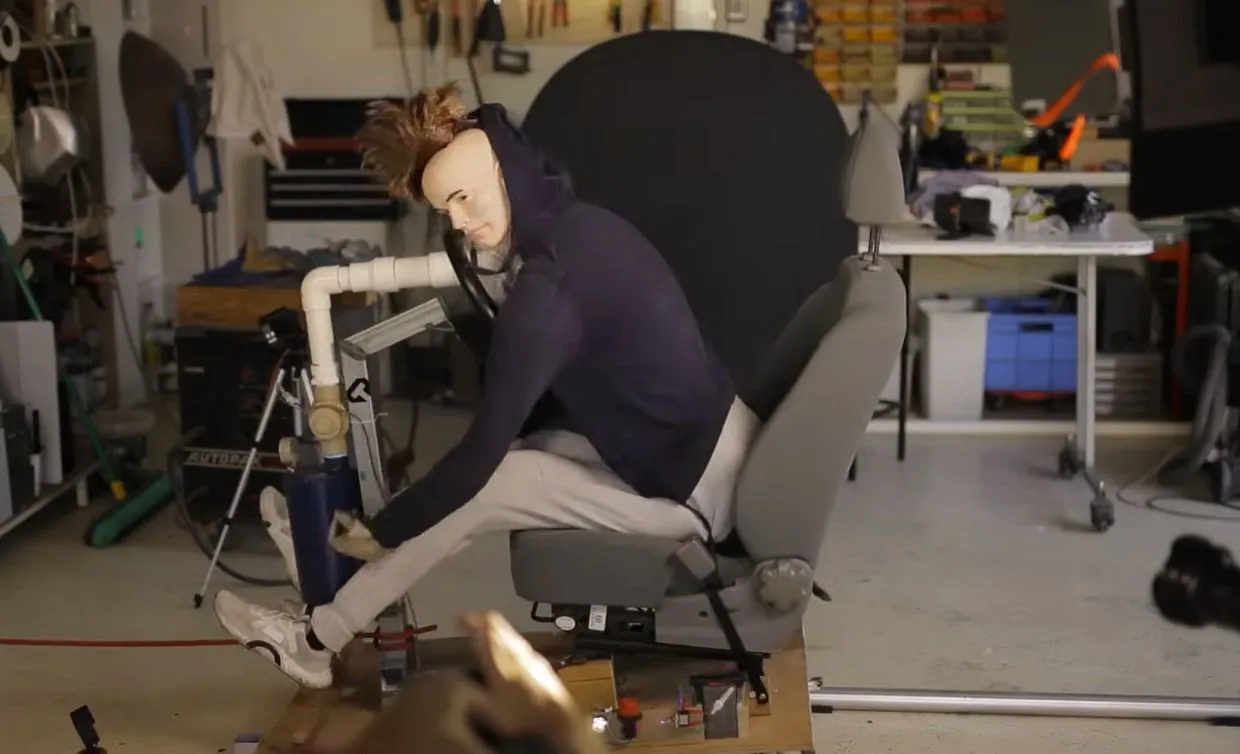
After a bit of fun with a crash-test rig and the airbag of a salvaged steering wheel, a DIY airbag was assembled using a compressed-gas cylinder instead of the fancy gas generator, along with an electrically triggered valve. Here, you can already see why modern airbags use a gas generator, as it is simply far more compact.
For the bag itself, a pillow case was adapted, with the subsequent crash test — as pictured above — going about as well as you can imagine. After this, he tried a few improvements, like using a bin liner and detonating some fuel, but it seems that the gas generator is very hard to beat for producing a large amount of gas in very little time.
Advertisement
Meanwhile, the inertial cut-off switch turned out to be more than sufficient for this purpose, and it was also used to trigger the original airbag. Of course, with how cheap those off-the-shelf airbag units are and are tested to be fit for purpose, you’d never DIY them for actual use in a car unless you were stark raving mad.
$30bn went to OpenAI; the rest is spread across CoreWeave, IREN, Corning, Nebius, and roughly two dozen private rounds. The pattern is closer to vertical integration than to venture investing, and is starting to draw the inevitable circular-deal questions.
NVIDIA has committed more than $40 billion to AI equity investments in the first four months of 2026, CNBC reported, citing public filings and corporate disclosures.
The single largest line in that total is the $30 billion the chipmaker put into OpenAI in late February. The remaining $10 billion-plus is spread across seven multi-billion-dollar deals in publicly traded companies, plus roughly two dozen private startup rounds.
On the public side, the disclosed cheques include up to $3.2 billion in Corning, the optical-fibre and ceramics maker that supplies AI-data-centre fabric, and up to $2.1 billion in IREN, the data-centre operator that is converting from Bitcoin mining toward GPU compute.
Advertisement
Both took the form of warrants or structured commitments rather than straight equity, with cash outflow timed at Nvidia’s discretion. The chipmaker also added to its CoreWeave and Nebius positions during the period.
The CoreWeave stake, $2 billion last January, is now valued at roughly $4.4 billion and represents about 28% of Nvidia’s listed equity portfolio.
The $2bn Nebius investment in March is smaller in dollar terms but carries an explicit five-gigawatt deployment commitment; the new $2.1bn warrant on IREN sits on a similar logic.
The pattern across these is consistent: capital flows to companies that buy Nvidia GPUs at scale and re-rent them to hyperscalers and frontier-model builders, a structure the industry now calls a neocloud.
NVIDIA’s own framing of the strategy is straightforward. CFO Colette Kress said on the most recent earnings call that the company invests where it sees a need to ensure that compute capacity is being built around its hardware.
Advertisement
Last fiscal year, the company put $17.5 billion into private companies and infrastructure funds, primarily early-stage startups, according to its 10-K. The 2026 pace already exceeds the previous full year.
The investments themselves are mostly small relative to Nvidia’s roughly $200 billion in cash and equivalents, which means they do not strain the balance sheet; what matters is what they signal about how the chipmaker views its place in the AI value chain.
That place is increasingly upstream and downstream of the chip itself. The OpenAI investment is not a standalone bet; it is paired with multi-year compute commitments and silicon roadmap alignment.
The CoreWeave and Nebius positions come with capacity reservations and joint-architecture agreements. The Corning investment supports the optical-interconnect supply chain Nvidia depends on for next-generation data-centre fabrics.
Advertisement
Looked at end-to-end, Nvidia is buying influence over how its silicon is paid for, deployed, and connected. Some analysts call this vertical integration; others call it circular financing.
The circular-deal critique has gained traction over the past two quarters. NVIDIA takes a position in a company; that company then signs a long-term GPU purchase commitment with NVIDIA; some of the GPU revenue flowing back to NVIDIA could be characterised as a return on the same equity it just invested.
The pattern with Nvidia’s smaller portfolio companies is the same shape, just with more counterparties.
Advertisement
There are reasons the comparison is partly unfair. Nvidia’s investments are usually minority positions in companies that have plenty of other customers; Meta’s $21bn add-on with CoreWeave demonstrates that CoreWeave’s customer base is broader than Nvidia.
Mistral AI, Wayve, Lambda Labs, Genesis Therapeutics, Recraft and JetBrains are all customers or investments that have independent commercial logic.
The criticism applies more sharply to deals where Nvidia is both a meaningful equity investor and a contractually committed customer of the same company; CoreWeave’s $6.3 billion capacity-purchase agreement with Nvidia is the most-cited case of that.
The bigger question is what happens to the portfolio when AI compute demand normalises. Most of Nvidia’s bets are financially small relative to the parent’s revenue and cash position, so a write-down event would not impair the core business.
Advertisement
The more important risk is reputational. Each new deal that looks structurally similar to a previous one adds to the perception that Nvidia is bankrolling its own demand curve.
Both Wall Street and the SEC are starting to ask whether the disclosure regime around these arrangements is keeping pace with their scale.
For now, the strategy is producing the outcome Nvidia wants. AI infrastructure capacity is being built where Nvidia silicon runs, model providers are securing compute they could not otherwise have built independently, and the chipmaker’s data-centre revenue is growing accordingly.
The 2026 pace of equity commitments suggests Nvidia intends to keep writing the same kind of cheque for as long as the demand-supply mismatch persists.
Advertisement
CNBC’s count of seven public-market multi-billion deals plus 24 or so private rounds is, on its own terms, a record-setting tempo. It also positions Nvidia as the largest single source of AI infrastructure financing in the market, alongside the major hyperscalers.
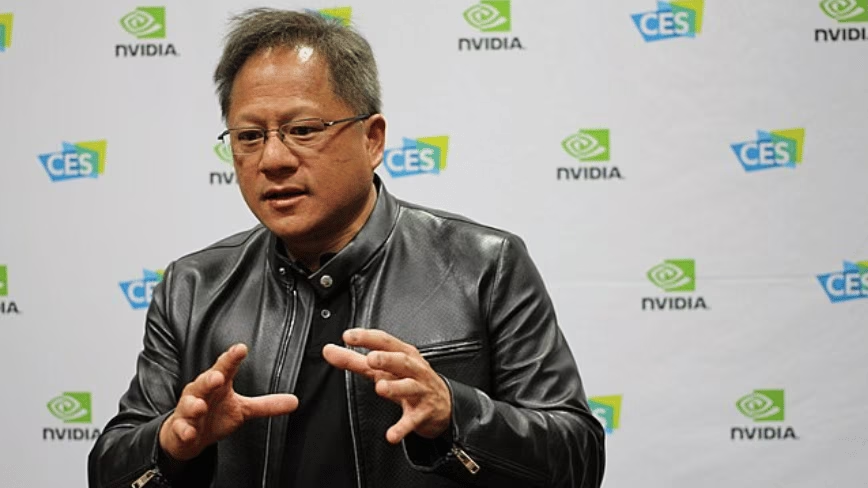
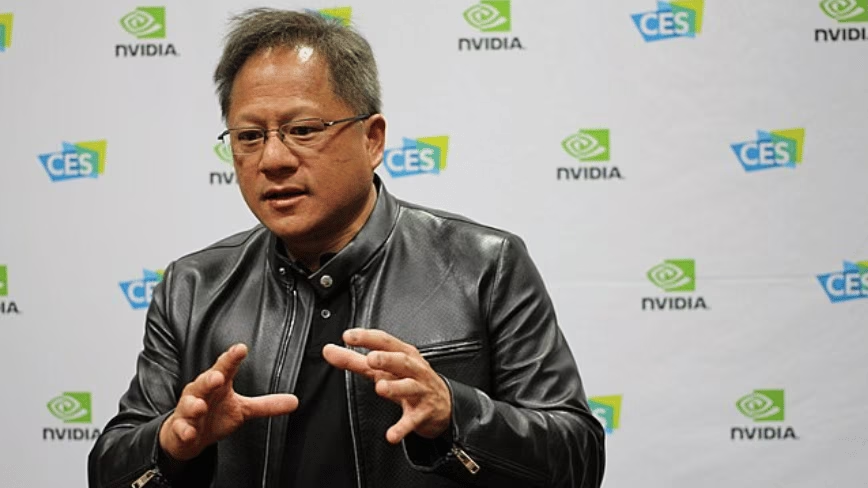
The role suits Jensen Huang’s narrative about being the platform of the AI era. Whether it suits the auditors and the regulators is the next question.
The Qwen app gets access to Taobao and Tmall’s catalogue of more than 4 billion items, plus Alipay-native checkout, in what is the largest agentic-commerce launch yet from a Chinese platform.
Alibaba is integrating its Qwen AI app with Taobao and Tmall, the company’s two largest consumer marketplaces, in what amounts to the most ambitious test yet of agentic shopping at scale, Reuters reported on Saturday, citing a source familiar with the plan.
Under the integration, the Qwen app gains access to the entire Taobao-Tmall catalogue, more than four billion items, and to a layer of Alibaba-built skills that handle logistics, customer service and after-sales workflows.
From inside Qwen, a shopper will be able to ask the agent to find a product, compare it across sellers, run virtual try-ons, monitor a 30-day price track and place an order.
Advertisement
The 💜 of EU tech
The latest rumblings from the EU tech scene, a story from our wise ol’ founder Boris, and some questionable AI art. It’s free, every week, in your inbox. Sign up now!
The transaction itself completes through Alipay, with the AI agent stepping back only for the final user confirmation. Inside Taobao, the same Qwen models will power a shopping assistant integrated with the existing app rather than as a standalone surface.
The architecture is a notable break from the way most Western e-commerce platforms have approached generative AI.
Advertisement
ChatGPT’s shopping integration with Shopify and Amazon’s Rufus assistant largely produce search-style answers; the buy-flow happens in the underlying retailer’s app or website, with payment, delivery and returns handled by separate systems.
Alibaba’s design treats the entire purchase, including payment and post-sale interactions, as something the AI agent can complete end-to-end. The four-billion-item catalogue is a meaningful difference too. Even an aggressive Western comparison falls short by an order of magnitude.
The company’s framing is explicit. Wu Jia, Alibaba Group VP, told a launch event that the strategy was about moving “from intelligence to agency.”
In a live demo, Qwen took a request for forty cups of bubble tea from a local chain, placed the order through Taobao Instant Commerce, applied loyalty discounts and completed the Alipay checkout, with delivery a short time later.
Advertisement
CEO Eddie Wu has positioned the spend behind this push as part of the more than $53 billion AI commitment Alibaba announced last year, framing AGI as a central group strategic goal.
The launch lands inside a fast-moving Chinese agentic-commerce market. Tencent’s ClawPro enterprise agent launch positioned ClawPro at enterprise customers; ByteDance’s Doubao has integrated similar capabilities into WeChat-adjacent surfaces.
Alibaba has been the most vocal of the three about consumer-side agentic flows, and the Qwen-Taobao integration is its largest move so far.
Earlier in 2026, Qwen reached 300 million monthly active users across Taobao, Tmall, Alipay and other consumer surfaces, with about 140 million first-time AI shopping experiences logged during the Chinese New Year campaign.
Advertisement
There are competitive and regulatory caveats. Alibaba’s e-commerce business has been losing share to PDD Holdings (parent of Pinduoduo and Temu) and to Douyin’s commerce surfaces, which is part of why the company is willing to gamble on a UI shift this large.
The 2021 fine has not been forgotten, and Alibaba has been more cautious than its peers about where it puts the AI agent, what data it stores, and how it handles user consent.
Strategically, the integration also fits Alibaba’s broader split-out strategy of recent years. Alibaba has been reorganising its consumer-internet, cloud, and logistics arms into separately governed units; the Qwen-Taobao tie reverses that direction, pulling cloud-side AI capability into a consumer surface to defend the marketplace business.
Advertisement
The implicit bet is that AI-native commerce is a sufficient step change that owning both halves matters more than the structural separation that has otherwise been progressing.
There are gaps that the launch does not address. Cross-border commerce, where Alibaba’s growth ambitions sit, is harder; Qwen’s integration with overseas Alibaba surfaces has been considerably more cautious.
Western retailers and platforms watching this launch will want to know whether the agentic checkout works for casual buyers as well as the enthusiast users who tend to test new commerce surfaces first.
Conversion data, average order value, and return rates are the metrics that will determine whether this becomes more than a flagship demo. The company has not committed to disclosing those metrics.
Advertisement
For now, the proposition is clear and the scale unmatched. China’s largest e-commerce platform is asking its users to talk to an AI rather than tap through a product grid.
Whether that becomes the default flow or shoppers prefer the muscle memory of the familiar app will be visible in the second-half retail-festival numbers.
Over cold drinks in the Florida heat, this TechCrunch reporter watched from the paddock as founders and investors — the rich and the richer — mingled in search of deals. Conversations barely paused, except for the occasional glance at the track where drivers, sealed inside multi-million-dollar machines, chased the chequered flag.
F1 weekend is a three-day affair, with the race as the finale. In between are kickoffs, soirées, cocktail parties, dinners, and nightclub takeovers — spaces where business and pleasure blur. Events like this, where wealth concentrates, have historically been places where business deals are struck. But the popularity of the F1 paddock has grown in recent years, especially among the startup and venture crowd.
“It’s a hot place for everyone with access trying to strike a deal,” one founder said, recalling being brought to the paddock by a venture firm two years ago.
This year, Chandler Malone, a founder, said he didn’t even attend the race; he only went to some of the side events. So many venture firms were hosting them and much more than usual, he said.
Advertisement
“You name the fund, it was someone there hosting clients,” Marell Evans, an investor, also told TechCrunch. “Lots of folks missed Milken for F1 Miami.”
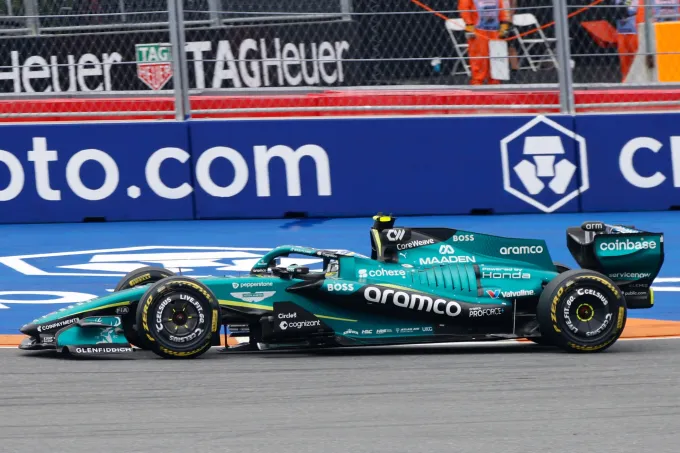
F1 teams, once sponsored by major oil, tobacco, banks, and alcohol companies, have embraced the new railroad giants. The F1 team liveries this season — plastered with AI, cloud computing, and enterprise company logos — is a literal sign pointing to where the money is.
The past five years reflects the shift. In that time, Oracle became the title sponsor of Red Bull Racing team, the Mercedes-AMG PETRONAS F1 team struck a multi-year partnership with Microsoft, CoreWeave became Aston Martin Aramco’s official AI cloud partner, Anthropic began working with Williams Racing, Palantir and IBM partnered with Ferrari, AWS began providing data analytics to F1, and the audio app ElevenLabs and fintech Revolut have teamed up with Audi.
Techcrunch event
Advertisement
San Francisco, CA | October 13-15, 2026
Some VC and PE firms also own stakes in F1 teams, including Dorilton Capital’s 2020 acquisition of Williams Racing and the 200 million euro investment into Alpine by backers Otro Capital, RedBird Capital Partners, and Maximum Effort Investments.
Advertisement
Hannan Happi, founder of the climate startup Exowatt, credits the 2020 Netflix F1 show “Drive to Survive” as a catalyst for increasing audience interest. But the tech industry showing up in force is more recent, Happi said, “really the last three or four years.” He cited all the big tech companies that have moved into the sport, including crypto and AI brands. “Where the sponsors go, the executives will follow,” he said.
It’s no wonder, then, that TechCrunch ran into Lightspeed Ventures CMO Josh Machiz, who explained that founders and execs from many startups in its portfolio were also roaming the paddock. The goal for them, he said, was to strike some enterprise deals with other startups and tech giants.
Though TechCrunch ran into Machiz in the IBM Paddock, he said the firm actually has a structured program in place with Aston Martin to help introduce Lightspeed founders to Aston Martin and its enterprise clients. In the paddock, CIOs and CISOs stand next to CEOs, and rooms are small enough for people to actually chat with each other, Machiz said. Aston Martin, like all the F1 teams, is actively looking for ways to leverage the latest tech, as well as meet the founders behind it.
Technology has always been central to F1, helping drive advancements in consumer tech and car safety. Looking ahead is how teams stay ahead and these days, if a startup like Anthropic gets big enough, the team can nab a future sponsor, too.
Machiz calls Lightspeed the first firm to formalize this kind of partnership and said the Miami race brought in 10 portfolio companies. And it produced results, he said. One of the firm’s blockchain companies struck a handshake deal dover the weekend, and one of its AI infrastructure startups closed two more. Two came from Aston introductions, while the third came by chance, he said.
Advertisement
“The Aston Martin tech team also opened doors to our founders and talked about what they need from builders,” Machiz continued.
Machiz, who used to work at Redpoint, joined Lightspeed just a few months ago. One of the first things he wanted to do was to challenge the idea of the “traditional founder retreat,” where startups and their investors spend time in a remote location, talking, catching up, and, well, sometimes being bored out of their minds.
“The consistent ask from founders was always the same, ‘help me meet more buyers,’” Machiz said, recalling when he used to help plan founder retreats. “Another weekend in Sonoma was never going to do that, and the reviews were always that while [it was] nice to spend time together and to meet tech luminaries or VIP speakers, they’d have rather been building or meeting customers.”
Instead of another retreat, he took the Lightspeed Venture portfolio to F1. It is, after all, he said, “one of the densest concentrations of enterprise buyers anywhere.”
Advertisement
“The opportunity was obvious,” Machiz continued. “We wanted to build a structure around it, not just show up.”
Farooq Malik, founder of the Lightspeed company Rain, said he managed to close a deal, connect with another prospective client, and meet another founder whose product he’s interested in using as part of Rain’s ERP (enterprise resource planning). “This model was a lot more interactive with more organic interactions,” Malik said.
It’s not just startup founders, either. Evans, the investor, said backers are tired of going to dinner and attending conferences. “They want to see real-world experiences, and why not do it at the fastest-growing company in the world right now, F1?,” he mused.
Evans said top money makers like seeing how their business world intertwines with the tech these car teams are using.
Advertisement
“We’ve seen different brands showcase how they’re using AI for the drivers and some of the technology they’re using inside the cars,” he said.
‘Everyone there has capital’
Investor Immpana Srri said she went to Miami this year to look for deals and noted that over the past five years it has become a place for tech people to meet up.
“Sponsors followed, investors followed, and founders followed. Now it’s just where people are,” Srri said.
The race is actually quite fast, she said, and it’s the pre-race and post-race events that matter most over the three-day weekend. Srri flew in by herself, ran into some friends, then got an invite to the McLaren paddock and other brand activations — a micro-conference, she called it — where she met other operators, allocators, and founders.
Advertisement
“It’s all priced as a filter,” she said of how expensive tickets can be. “By the time you’re inside, the room has done the sorting for you. Everyone there has capital, the deal flow, or the kind of track record that justifies dropping six figures on a weekend.”
Like Machiz, she also noted how tiny the spaces are — a pressure cooker of people quietly trying to one-up each other in conversations.
“Deals get showcased; names get dropped. Stuff gets teased. Over the weekend, I heard pitches across defense, CPG, and more,” she said.
Happi, the founder of Exowatt, said F1 champion-turned-investor Nico Rosberg stopped by the startup’s headquarters over the Miami Grand Prix weekend to see what the team was building.
Advertisement
Happi said F1 represents something tech also identifies with: “engineering excellence, rapid iteration, a willingness to spend big to win.”
The aesthetic of the whole sport, he continued, matches the startup world. It’s international by nature, he added, and the fact that the event usually lasts a few days gives people time to close a deal, should they wish.
“F1 is a luxury sport by nature, and that brings a certain type of person,” Happi said, adding that he’s heard of deals getting closed “in the helicopter to the hotel to the track.”
“And it doesn’t hurt that Miami and Las Vegas, suddenly two of the marquee races, are in really fun, entertainment-led cities,” he continued.
Advertisement
Miami kicked off the Lightspeed Aston Martin program, and Machiz hopes to continue throughout the season, at least at the U.S. races, the last of which is Las Vegas in November. Then, he wants to expand his program internationally and is planning to bring a small group of their European founders to England’s Silverstone later this year.
“In AI, distribution is speed,” he said. “The firms that win are the ones that can get founders in front of buyers and into deals faster than anyone else.”
When you purchase through links in our articles, we may earn a small commission. This doesn’t affect our editorial independence.
German authorities have shut down a relaunch version of the criminal marketplace ‘Crimenetwork’ that generated more than 3.6 million euros, and arrested its operator.
Crimenetwork was the largest online cybercrime marketplace in Germany, operating since 2012 and with 100,000 registered users. The platform enabled the sale of illegal services, substances, and stolen data.
In late 2024, the Public Prosecutor’s Office in Frankfurt am Main, the Central Office for Combating Cybercrime (ZIT), and the Federal Criminal Police Office (BKA) dismantled the operation by seizing the platform and arresting one of its administrators.
Just a few days later, a new version of the Crimenetwork emerged on a new infrastructure administered by a new operator.
Advertisement
Earlier this week, a 35-year-old German man suspected of administering the new Crimenetwork was arrested at his residence in Mallorca, Spain, by a special unit of the Spanish National Police under a European arrest warrant.
“The suspect is accused of having built and administered a completely new technical infrastructure only a few days after the shutdown of the previous version of Crimenetwork and the arrest of its former administrator in December 2024, also naming it Crimenetwork,” the BKA said in a press release.
The rebooted version of the cybercrime platform offered a similar range of illicit goods and services, and quickly amassed 22,000 users and over 100 vendors.
In terms of revenue, evidence gathered during the police action suggests that the new version of Crimenetwork had generated at least €3.6 million ($4.2 milion) in revenue.
Advertisement
The police also seized approximately €194,000 ($228,000) in allegedly illicit assets and obtained substantial amounts of user and transaction data to facilitate further investigation.
“The reboot of Crimenetwork has failed, and another administrator will have to answer before a German court,” stated Carsten Meywirth, Director at the Federal Criminal Police in Germany.
“Together with our national and international partners, we consistently enforce the law even in the darknet. Cybercrime does not pay.”
The following banner was placed on the seized online portal, informing visitors of the action.
Advertisement
Seizure banner Source: BKA
The arrested administrator now faces charges under Section 127 of the German Criminal Code and Sections 29a and 30a of the German Narcotics Act, both potentially punishable by prison time.
In March, the operator of the original Crimenetwork marketplace was sentenced to seven years and 10 months in prison and ordered to forfeit more than €10 million in criminal proceeds. However, the ruling is not yet final.
AI chained four zero-days into one exploit that bypassed both renderer and OS sandboxes. A wave of new exploits is coming.
At the Autonomous Validation Summit (May 12 & 14), see how autonomous, context-rich validation finds what’s exploitable, proves controls hold, and closes the remediation loop.
























































You must be logged in to post a comment Login