NEW YORK — The New York Times’ Wordle puzzle for Sunday, May 10, 2026 — puzzle number 1786 — has the solution CROWN, a regal five-letter noun that left many solvers thinking of monarchy, victory and achievement as they worked through their attempts on this relaxed weekend morning. The word features one vowel (O), four consonants, no repeated letters, and follows a common pattern that rewarded players who tested strong opening words and considered themes of power or royalty when initial guesses stalled.
Players starting their day with the popular daily word game encountered a moderately challenging but satisfying puzzle. “CROWN” refers to the ornamental headwear worn by monarchs, but it also means to top or complete something successfully — a versatile word that fits neatly into Wordle’s blend of common vocabulary and occasional elevated terms. The puzzle rewarded solvers who identified the O early and pivoted toward regal or achievement-related vocabulary when common words didn’t yield many greens.
Social media quickly filled with shared grids, celebration emojis and light-hearted complaints from those who needed five or six attempts. Many noted the word felt timely with ongoing royal family discussions and spring sports championships, while others admitted they overthought it by chasing more obscure five-letter options before landing on the correct answer.
Today’s Hints and Solving Strategy
For players seeking guidance without full spoilers, effective strategies that worked well on May 10 included:
Advertisement
Opening with strong vowel-heavy starters such as “AUDIO,” “HOUSE” or “RAISE” to quickly identify the O.
Focusing on common consonant clusters after the first two guesses.
Considering words related to royalty, victory or completion when common options failed.
Remembering that “CROWN” has no repeated letters, which narrowed possibilities significantly by guess four for many players.
The answer “CROWN” perfectly captures Wordle’s blend of accessibility and occasional curveballs. It’s a word most people know but don’t use daily, testing vocabulary depth while remaining fair. In a broader sense, it connects to themes of achievement, leadership and celebration — topics that resonate strongly with players across generations on a Sunday morning.
Wordle’s Enduring Popularity in 2026
Now well into its fifth year under The New York Times, Wordle continues to maintain massive daily engagement with its simple green-yellow-gray feedback system. Puzzle 1786 continues the tradition of mixing common and occasional less-familiar words, keeping both veterans sharp and newcomers hooked. The game’s streak feature remains a major draw, with millions competing to maintain long win streaks.
On May 10, social platforms buzzed with shared results, frustration emojis and victory dances. Some players noted the regal theme aligned nicely with spring events and royal family news, adding a timely cultural layer to the puzzle. Others used the word as inspiration for light-hearted memes about personal achievements or “crowning moments” in life.
For those building or protecting streaks, experts recommend balanced starting words, tracking eliminated letters, and learning from past puzzles. Sites like Try Hard Guides and CNET provide daily recaps without spoiling future games for purists who prefer solving unaided.
Why ‘CROWN’ Stumped Many
Unlike ultra-common five-letter words, “CROWN” sits just outside everyday conversation for most people despite its familiarity. Its rarity tested vocabulary breadth while rewarding practical, achievement-oriented thinking. Solvers who recalled royal events, sports victories or personal milestones had a distinct edge, highlighting Wordle’s subtle educational value.
Advertisement
Community forums filled with discussions comparing today’s puzzle to other regal or achievement-themed answers from past months. The game’s design ensures broad accessibility — anyone can play for free — while offering enough challenge to spark conversation and friendly competition. Parents reported using it as a family activity, with children learning new words alongside adults.
Broader Impact and Related Games
Wordle’s success has spawned numerous companion games. Many players pair it with NYT Connections, Spelling Bee or the Mini Crossword for a complete morning brain workout. On May 10, Connections also trended alongside Wordle discussions, creating a full daily NYT Games ritual for millions.
The puzzle’s creator, Josh Wardle, originally designed it as a gift for his partner. Its viral spread and subsequent sale to The New York Times have made it a cultural staple, with millions logging in daily across time zones. The Times maintains a clean, no-ads experience that preserves the game’s original charm.
Tips for Future Wordle Success
Veteran players shared these strategies for May 10 and beyond:
Advertisement
Track vowel placement early and test common consonants systematically.
Use elimination logic rigorously — one misplaced letter can rule out dozens of options.
Learn common letter patterns and word families (especially achievement or regal terms).
Don’t fear slightly uncommon words; they appear regularly in the rotation.
Celebrate learning: even losses expand vocabulary and improve pattern recognition.
For tomorrow’s puzzle and beyond, resources abound without spoiling the fun. Archives allow catching up on missed days, though purists prefer fresh daily challenges.
Cultural Phenomenon Endures
In an era of short attention spans, Wordle’s five-minute commitment and shareable results keep it relevant. On May 10, 2026, “CROWN” joined the pantheon of memorable answers that blend challenge with discovery. Whether solved in two tries or requiring the full six, it delivered the satisfying click of green tiles that fans crave.
As the day progresses, conversations will shift to tomorrow’s word while today’s solvers reflect on their performance. For many, “CROWN” serves as a reminder of the joy in mental exercise and shared experiences in our digital age.
Wordle continues proving that simple ideas, executed well, can captivate global audiences year after year. Whether you’re a daily streak holder or an occasional player, today’s puzzle offered a perfect mix of accessibility and depth — with a regal, crowning twist that left many reflecting on personal victories long after submitting their final guess.
EL CENTRO, Calif. — More than 150 earthquakes, including a 4.5 magnitude temblor, struck Imperial County in Southern California on Thursday in a vigorous swarm that rattled residents but caused no reported injuries or major damage. The U.S. Geological Survey and local emergency officials said the activity was centered near the Salton Sea, a seismically active region along the San Andreas fault system, prompting heightened monitoring and public alerts throughout the day.
Southern California
The strongest quake, a 4.5 magnitude event, struck at 11:47 a.m. local time about 8 miles southwest of Westmorland. It was followed by dozens of aftershocks ranging from magnitude 2.0 to 3.8. According to USGS data, the swarm began intensifying early Thursday morning and continued into the evening, with seismic activity spreading across a roughly 15-mile stretch of Imperial County. Many of the quakes were too small to be widely felt, but the larger ones sent residents rushing outdoors and triggered widespread reports on social media.
Imperial County Emergency Services Director Mike Garcia said the swarm was unusual in its persistence but not entirely unexpected in this part of California. “We are in one of the most seismically active areas in the country,” Garcia said. “Our teams are monitoring the situation closely, and we have not received reports of structural damage or injuries at this time. Residents should remain prepared and continue to follow standard earthquake safety protocols.”
The 4.5 magnitude quake was widely felt across Imperial County and parts of Riverside County, with reports coming in from as far as Mexicali, Mexico. Residents described a sharp jolt followed by several minutes of rolling motion. “It felt like a big truck hit the house,” said Maria Lopez, a resident of Brawley. “The dishes rattled, and my dog went crazy. We’ve had small quakes before, but this one was different.”
Advertisement
No tsunami warning was issued, as the quakes were inland and not strong enough to displace significant water in the Salton Sea. However, officials reminded residents that even moderate quakes can trigger aftershocks and urged people to have emergency kits ready.
Seismic Activity in a High-Risk Zone
Imperial County sits at the southern end of the San Andreas fault, where the Pacific and North American tectonic plates meet. The region has a long history of earthquake swarms, including a notable sequence in 2016 that produced thousands of small quakes over several weeks. Scientists say swarms like this are relatively common in geothermal areas and along fault lines where stress is released gradually rather than in a single large event.
The USGS recorded more than 150 quakes with magnitudes above 1.0 by Thursday evening, with the majority occurring at shallow depths of less than 6 miles. Seismologists noted that while the 4.5 quake was the largest so far, there is a small but non-zero chance of a larger event following a swarm. “Swarms can sometimes precede bigger earthquakes, but most of the time they just fizzle out,” said Dr. Lucy Jones, a prominent seismologist and founder of the Dr. Lucy Jones Center for Science and Society. “The key is preparedness.”
Community Response and Preparedness
Local schools dismissed students slightly early as a precaution, and several businesses in El Centro and Brawley closed temporarily during the strongest shaking. No structural damage was reported to major infrastructure, including roads, bridges or irrigation canals critical to the region’s agriculture industry.
Advertisement
The Imperial Valley, known for its vast farms and proximity to the Mexican border, is no stranger to seismic activity. Residents are generally well-prepared, with many homes built to modern earthquake standards. However, older buildings and mobile homes remain vulnerable. County officials activated their emergency operations center and urged residents to review their earthquake preparedness plans.
“We want everyone to have a plan,” Garcia said. “Drop, cover and hold on during shaking. Have water, non-perishable food and medications ready. Check on neighbors, especially the elderly and those with mobility issues.”
Scientific Monitoring and Long-Term Risk
The USGS and the California Earthquake Authority are closely monitoring the swarm using a dense network of seismometers. Data from the event will help scientists better understand stress patterns along this section of the San Andreas fault, which is capable of producing magnitude 7+ earthquakes.
The southern San Andreas is considered overdue for a major rupture, with some models suggesting a potential magnitude 8 event could occur within the next few decades. While Thursday’s swarm is unlikely to relieve significant accumulated stress, it serves as a reminder of the region’s seismic vulnerability.
Advertisement
Impact on Daily Life and Economy
The agricultural heartland of Imperial County produces a significant portion of the nation’s winter vegetables. While the quakes caused no immediate damage to irrigation systems or greenhouses, farmers remained vigilant. “We’re watching our wells and canals closely,” said one local grower. “Any disruption to water infrastructure could be costly.”
Tourism in the area, including visitors to the Salton Sea and nearby Anza-Borrego Desert State Park, was largely unaffected, though some campgrounds reported minor rockfalls. Hotels and restaurants in El Centro saw a brief uptick in business as residents sought safe gathering spots during the stronger shaking.
Historical Context of Imperial County Quakes
Imperial County has experienced several significant earthquakes in its history. The 1940 Imperial Valley earthquake (magnitude 6.9) caused widespread damage and several deaths. More recently, swarms in 2016 and 2020 kept seismologists busy but caused minimal damage. Today’s activity fits the pattern of frequent small-to-moderate events that characterize this part of the San Andreas fault system.
Scientists emphasize that while large earthquakes cannot be predicted precisely, ongoing monitoring and public preparedness can significantly reduce risk. The California Earthquake Authority offers resources for homeowners to retrofit older structures, and many local schools conduct regular earthquake drills.
Advertisement
Looking Ahead
As the swarm continues, officials expect additional small quakes in the coming days. Residents are advised to stay informed through official channels and avoid spreading unverified information on social media. The USGS and local emergency services will provide regular updates as the situation evolves.
For now, the community remains alert but calm. The 4.5 magnitude quake served as a stark reminder that California lives with seismic risk every day. As scientists continue to study the latest swarm, Imperial County residents are once again demonstrating the resilience that defines life along the San Andreas fault.
The event also highlights the importance of ongoing investment in earthquake early warning systems and infrastructure resilience. As California’s population grows and development expands into seismically active areas, preparedness remains the most effective defense against future earthquakes, whether they come as isolated events or prolonged swarms like the one unfolding in Imperial County this week.
Good afternoon, and welcome to Artivion’s Fourth Quarter and Year-End 2025 Earnings Conference Call.
[Operator Instructions] I would now like to turn the conference over to your host, Mr. Brian Johnston from the Gilmartin Group. Thank you. You may begin.
Advertisement
Brian Johnston Gilmartin Group LLC
Thank you. Good afternoon, and thank you for joining the call today. Joining me from Artivion’s management team are Pat Mackin, CEO; and Lance Berry, COO and CFO. Before we begin, I’d like to make the following statements to comply with the safe harbor requirements of the Private Securities Litigation Reform Act of 1995.
Comments made on this call that look forward in time involve risks and uncertainties and are forward-looking statements within the meaning of the Private Securities Litigation Reform Act of 1995. The forward-looking statements include statements made as to the company’s or management’s intentions, hopes, beliefs, expectations or predictions of the future. These forward-looking statements are subject to a number of risks, uncertainties, estimates and assumptions that may cause actual results to differ materially from these forward-looking statements.
Additional information concerning certain risks and uncertainties that may impact these forward-looking statements is contained from time
NEW YORK — As the retail sector navigates shifting consumer habits, rising e-commerce competition and persistent economic uncertainty in 2026, investors are closely comparing Walmart Inc. and Costco Wholesale Corp. to determine which stock offers the stronger long-term opportunity. Both companies have delivered solid performance this year, but their business models, growth trajectories and valuations present distinct profiles that could influence portfolio decisions for the remainder of the year and beyond.
Walmart shares have risen approximately 18% year-to-date, supported by strong e-commerce momentum, advertising revenue growth and resilient grocery sales. Costco, meanwhile, has advanced about 22%, driven by record membership renewals, robust same-store sales and international expansion. With both trading near all-time highs, the question of which represents the better buy in 2026 depends on an investor’s time horizon, risk tolerance and preference for growth versus stability.
Walmart, the world’s largest retailer by revenue, reported fiscal first-quarter 2026 results that beat expectations, with revenue climbing to $165.6 billion and e-commerce sales jumping 22%. The company’s Walmart+ membership program continues to gain subscribers, while its advertising business and private-label brands provide high-margin revenue streams. International operations, particularly in Mexico and India, are showing double-digit growth, and the company’s supply chain investments have improved efficiency and reduced costs.
Analysts at firms like TD Cowen and Bernstein have named Walmart a top retail pick for 2026, citing its ability to serve value-conscious consumers while capturing premium and digital spending. The stock trades at a forward price-to-earnings multiple in the mid-20s, which many view as reasonable given projected mid-single-digit revenue growth and expanding margins. Walmart also offers a modest dividend yield around 1.1%, supported by consistent increases and a healthy payout ratio.
Advertisement
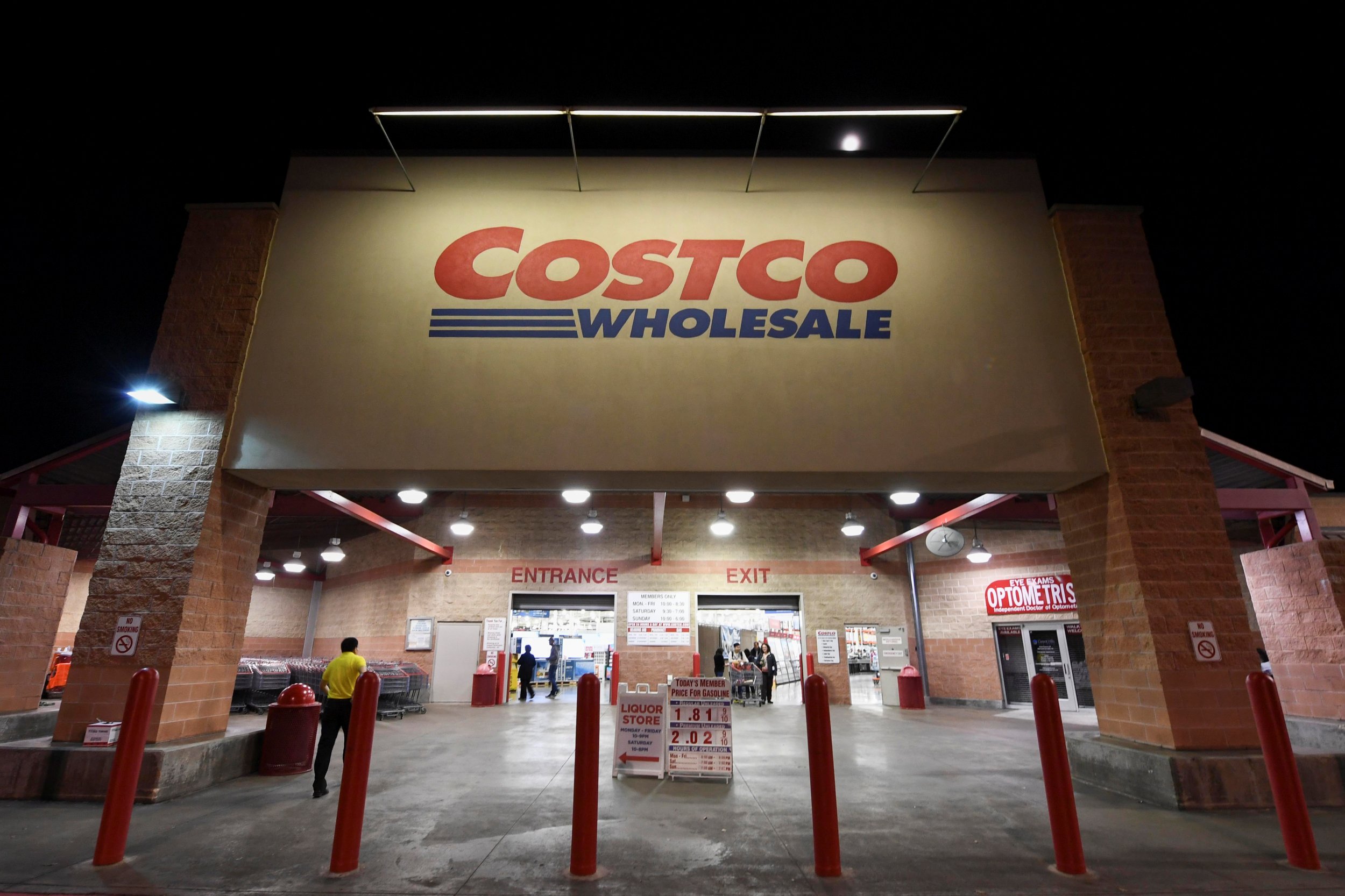
Costco, by contrast, operates a membership-only warehouse model that generates high customer loyalty and predictable recurring revenue. The company reported strong first-quarter results, with revenue rising 8% and same-store sales growing 6%. Membership fees, which now account for nearly 80% of operating income, continue to rise steadily as renewal rates hover above 90%. Costco’s private-label Kirkland Signature products remain extremely popular, and international expansion into new markets is adding meaningful growth.
The stock carries a higher valuation, trading at a forward P/E in the low-to-mid 30s, reflecting investor confidence in the durability of its model. Analysts highlight Costco’s pricing power, efficient operations and ability to weather economic downturns better than traditional retailers. However, the company’s slower growth rate compared with Walmart’s e-commerce and advertising expansion has led some to view it as more defensive than dynamic.
Key Differences in Business Models
Walmart’s massive scale — more than 10,000 stores worldwide and a dominant online presence — gives it unmatched reach and data advantages. The company has successfully integrated its physical and digital operations, using stores as fulfillment centers for rapid delivery. This omnichannel strategy has helped Walmart capture market share from pure e-commerce players while maintaining its core low-price positioning.
Costco’s model is more focused and selective. With roughly 900 warehouses globally, the company emphasizes bulk purchasing, limited product selection and high inventory turnover. This approach results in strong margins and customer loyalty but limits the total addressable market compared with Walmart’s broader retail footprint. Costco’s reliance on membership fees provides stability but also means revenue growth is more predictable and less explosive than Walmart’s diversified streams.
Advertisement
Valuation and Risk Profiles
Walmart offers a more balanced risk-reward profile in 2026. Its exposure to grocery and everyday essentials provides defensive qualities during economic slowdowns, while e-commerce and advertising provide growth levers. The company’s international presence and investments in automation and AI-driven inventory management position it well for long-term efficiency gains.
Costco’s higher valuation reflects its superior margins and customer retention, but it leaves less room for error if membership growth slows or competition intensifies. The company’s slower pace of new warehouse openings compared with Walmart’s store expansion could limit near-term upside if consumer spending moderates.
Both stocks face common risks, including inflation, labor costs, supply chain disruptions and intensifying competition from Amazon and discount retailers. Regulatory scrutiny on pricing practices and labor practices also remains a background concern for both.
Analyst Consensus and Investor Considerations
Wall Street remains generally bullish on both companies, but Walmart receives more “Buy” ratings due to its growth potential and reasonable valuation. Costco is often recommended for more conservative portfolios seeking stability and consistent returns. For growth-oriented investors, Walmart’s e-commerce momentum and advertising expansion make it the more dynamic choice. For income-focused investors, both offer reliable dividends, but Walmart’s higher yield and faster earnings growth provide a slight edge.
Advertisement
Investors should consider their time horizon and portfolio allocation. Walmart may appeal to those seeking a blend of growth and income with broader exposure to retail trends. Costco suits those who prefer a high-quality, predictable business with strong customer loyalty and margin stability.
Long-Term Outlook for Both Retail Giants
Looking further into 2026 and beyond, both companies are well-positioned to benefit from several powerful trends: continued digitization of retail, growth in private-label products and increasing demand for value and convenience. Walmart’s scale and technological investments give it an edge in adapting to changing consumer behavior, while Costco’s membership model ensures a loyal customer base that is less price-sensitive.
Analysts project both companies will deliver solid mid-single-digit revenue growth with expanding margins over the next several years. Walmart’s international expansion and e-commerce investments could drive faster top-line growth, while Costco’s focus on operational excellence and customer experience supports steady, high-quality earnings.
For investors deciding between the two in 2026, the choice ultimately comes down to investment objectives. Walmart offers greater growth potential and diversification, making it the better buy for those seeking capital appreciation alongside income. Costco provides exceptional stability and customer loyalty, appealing to conservative investors prioritizing consistency and downside protection.
Advertisement
Both retail giants have proven their ability to adapt and thrive in challenging environments. As the retail landscape continues to evolve, Walmart and Costco remain two of the most reliable ways to participate in the sector’s long-term growth. For patient investors with a multi-year horizon, Walmart currently edges out as the more compelling opportunity in 2026 due to its faster growth trajectory and more attractive valuation relative to expected earnings expansion.
TOTVS S.A. (TTVSY) Q1 2026 Earnings Call May 7, 2026 10:00 AM EDT
Company Participants
Sérgio Serio – Investor Relations Head Dennis Herszkowicz – CEO & Member of Board of Executive Officers Gilsomar Sebastião – CFO, VP of Admin & Financial, Investor Relations Director and Member of Board of Executive Officers Vivian Broge – VP, Chief Human Relations & Marketing Officer and Member of Board of Executive Officers
Advertisement
Conference Call Participants
Felipe Cheng – Santander Investment Securities Inc., Research Division Livea Mizobata – JPMorgan Chase & Co, Research Division Maria Infantozzi – Itaú Corretora de Valores S.A., Research Division Silvio Doria – J. Safra Corretora de Valores e Cambio Ltda, Research Division Luis Chagas – XP Investimentos Corretora de Câmbio, Títulos e Valores Mobiliários S.A., Research Division Lucca Brendim – BofA Securities, Research Division
Presentation
Advertisement
Sérgio Serio Investor Relations Head
[Interpreted] Good morning. Welcome to the earnings video conference on first quarter 2026. I’m Sérgio Serio. And here with me, we have our CEO, Maia, CFO, to present our quarter highlights. And by the end, we’ll have a Q&A session.
Before starting, it’s important to remind that forecast on TOTVS performance are based on current assumptions. There are risks and uncertainties, and many factors can change the company’s results that may differ from the expectations presented here.
Now I give the floor for Dennis on the Slide 3 that will start the presentation.
Advertisement
Dennis Herszkowicz CEO & Member of Board of Executive Officers
Okay. Thank you, Sérgio. Good morning, everyone. Well, TOTVS’s performance on this quarter as in the previous one and during the full year of 2025 reinforce a practical contradiction when we have an imbalance between expectations and reality.
Since February 2, our future has been fitted in the same being of the software market. With [indiscernible] with the ongoing records on new sales, revenue, EBITDA and basically any other financial
Strategy (MSTR) just broke its “never sell” pledge after a $12.54B Q1 loss, while Q1 AI earnings produced one repeatable formula: rigid supply, inelastic demand, +500% returns. April delivered $2B in net Bitcoin ETF inflows, the strongest month of 2026, and May opened with four straight
























































You must be logged in to post a comment Login