In this week’s “Sunday Reboot,” a good chip issue for Apple to have, regulatory comparisons with oranges, and “Schmigadoon!” gets 12 Tony Award nominations.
Sunday Reboot is a weekly column covering some of the lighter stories within the Apple reality distortion field from the past seven days. All to get the next week underway with a good first step.
This week, Apple had to contend with Maryland lawmakers siding with Apple Towson employees after the store closure announcement, Canada wants Apple to weaken encryption, and Apple failed to reduce the scope of a $4.1 billion iCloud suit in the UK.
A tale of two chip struggles
Apple had to deal with two chip shortage situations this week, but with wildly different results.
On Tuesday, it was discovered that Apple had pulled some of the configuration options for the Mac mini and Mac Studio. Consumers planning to get models with mountains of memory were stopped, as Apple removed the 256GB option from the M3 Ultra Mac Studio.
At the same time, if you wanted an M4 Pro Mac mini with 64GB of memory, you are out of luck. You have only the 24GB or 48GB options available.
These haven’t been the only changes to the lineup, as the Mac Studio lost the 512GB RAM option in March, and the 256GB SSD version of the M4 Mac mini has similarly disappeared.
The upshot here is that, while this is obviously an issue stemming from the global memory crisis affecting the entire tech industry, it is one of Apple’s ways to avoid significantly raising prices. Sure, eliminating high-RAM options isn’t the greatest way, but the alternative would be to raise the prices considerably.
By doing this, it can allow the existing memory inventory to last a bit longer for the models, by still allowing the lower-capacity options to remain on sale. The lower memory variants are also not going to be as badly affected by the cost versus a configuration that is RAM-heavy in nature.
Some may think that this is not really a RAM problem but is Apple preparing to bring out new models by cutting down on existing stock. It’s a thing we have seen before, but current CEO Tim Cook’s remarks during the recent financials indicate we won’t be seeing any real Mac upgrade options until September.
The other chip issue was one of Apple’s own making.
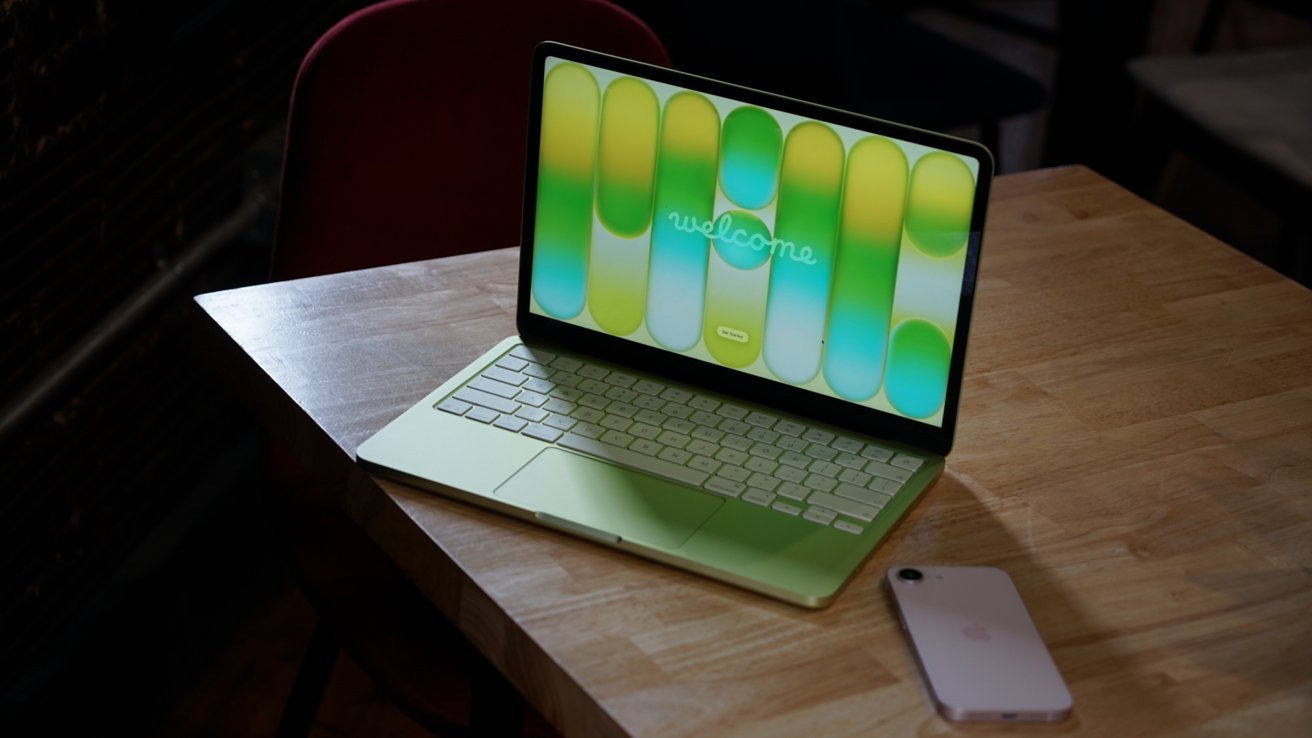
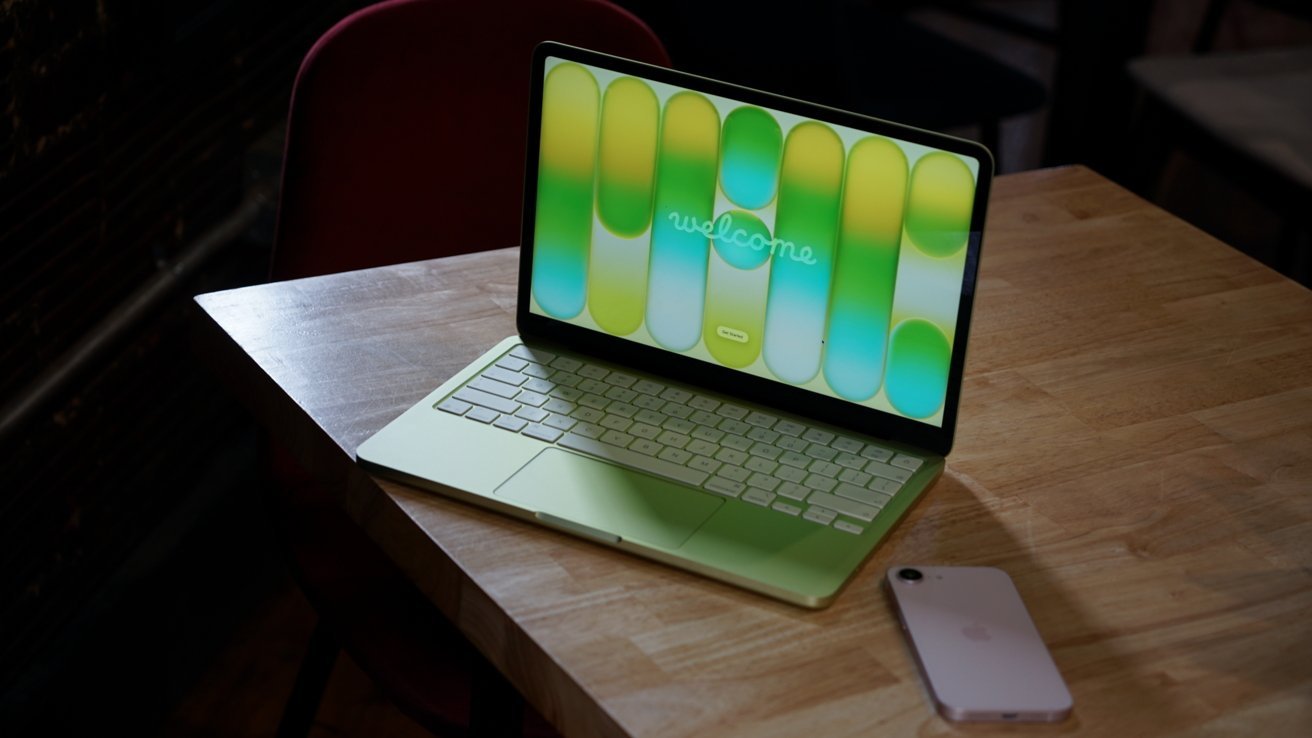
The MacBook Neo is too popular for Apple’s own good.
The MacBook Neo is an extremely popular model, beyond Apple’s own expectations. As a budget MacBook, it has managed to get so much demand that Apple had to double its production plans for the model.
That brought about a new problem for Apple, in the form of a lack of A18 Pro chips.
The MacBook Neo is cheap for Apple to produce, partly because it relies on the use of existing component inventory. It was a recycling effort, using up surplus chips that Apple had already paid for, allowing it to slim down the price to consumers since it was cheaper to produce.
With the massive success of the model, it is believed that Apple now has to do another production run for the A18 Pro chips.
Evidently, while Apple has a good idea of what can make a product a hit, sometimes it can even surprise itself.
Apple and oranges in logos
Big companies are extremely protective of their brands, and Apple is one of the most defensive. Add the Apple logo to something that’s vaguely Apple-like will quickly result in legal issues from Apple’s lawyers.
This makes sense, as Apple has a need to pursue anyone misusing its trademarks to prevent diluting its worth. There’s also the whole thing of preventing consumers from buying fake products that use the brand without authorization.
However, sometimes Apple’s battle over its precious Apple logo goes in some strange directions.
The latest instance is a filing with the EU Intellectual Property Office, trying to convince the regulator to not grant a trademark to another company. This turned out to be a partly-successful act for Apple, as the trademark cannot be used for keyboards and computer equipment.
The logo being objected to, used by keyboard maker Yichun Quinningment Electronics Co., wasn’t an apple, but citrus. It was a circular fruit with a top leaf, a section taken out the right-hand side, and visible segments and “keys” in the middle.
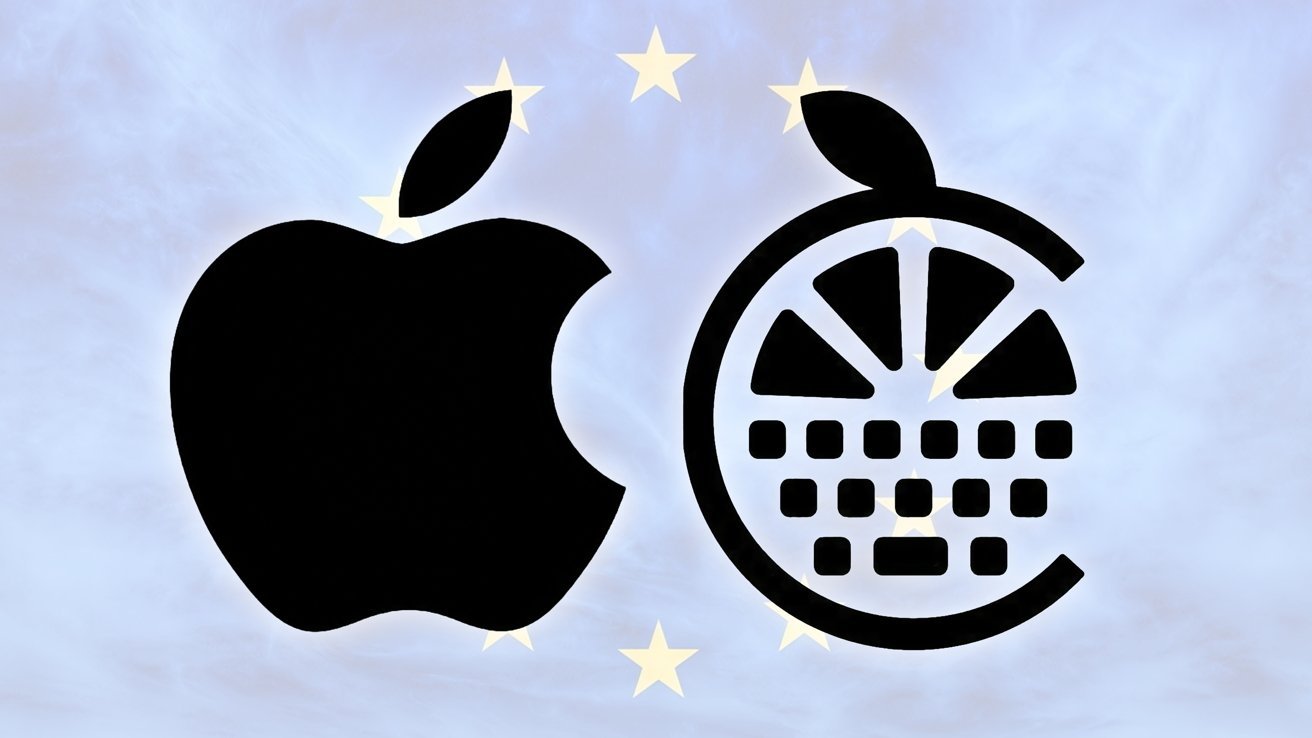
Apple logo [left], Yichun Quinningmeng’s logo [right]
You could argue that the cut-out bit is reminiscent of Apple’s bite section, and the leaf is pretty close, but they aren’t the same. The EUIPO admitted that they were “visually similar, but qualified that it was “to a very low degree,” but that was still enough to create a “mental link” between the two companies for consumers.
Apple has done this a few times in the past, taking on people submitting fruit-based trademarks and complaining of how they are trading off Apple’s logo.
Cases have included the Norwegian Progress Party that stuck an F motif in the middle of an Apple, the pear logo used by Prepear, and the battle against Fruit Union Suisse. In the last case, that was against a century-old organization that used a red apple image with a white cross for many years, and Apple complained about an anniversary redesign.
In trying to work out how far Apple will go over fruit-based trademarks, I discovered there are limitations to its reach. In November 2018, it failed to block logos for Banana Mobile and Banana Computer in Europe.
At the time, the EUIPO concluded that an apple is not a banana.
Cancelled, but nominated
Apple TV shows are frequently listed as nominees for awards. Sometimes, those awards come after the show has ended, typically the following year, but there are exceptions.
On Wednesday, “Schmigadoon!” was the recipient of a massive 12 nominations for the 2026 Tony Awards.
This is a big achievement, but there are massive asterisks at play here. The awards weren’t for the show itself, but for the broadway production.

Apple TV’s ‘Schmigadoon!’
Apple ended the TV version in early 2024, killing it after two seasons despite the third already having been written. The popularity of the show wasn’t enough to save it from continuing, but it did live on in theater.
A stage adaptation of the comedy musical arrived in 2025, as a precursor to the Broadway version, which Apple has co-produced.
This isn’t the first time the show has gone up for awards. This includes a Creative Arts Emmy in 2022, a Critics Choice TV award nomination in 2021, and a spot on the American Film Institute’s “Television Programs of the Year” list for 2021.
With 12 nominations at the Tony Awards, the Broadway musical could end up picking up more trophies in its stage life following its TV death.
Who knows, maybe a big win will convince someone at Apple that they made the wrong move and commission that third season.
Last week’s Sunday Reboot covered Apple’s F1 ambitions, its massive Q2 financial results, and the return of “Ted Lasso” in August.



























































You must be logged in to post a comment Login