Connect with us
DAPA Banner
DAPA Coin
DAPA
COIN PAYMENT ASSET
PRIVACY · BLOCKDAG · HOMOMORPHIC ENCRYPTION · RUST
ElGamal Encrypted MINE DAPA
🚫 GENESIS SOLD OUT
DAPAPAY COMING

Business

Why UK SMEs Are Getting Legal Translation Wrong in 2026 (And What AI Consensus Is Changing)

Published

on

The “AI for Everything” Era Is Ending — And That’s a Good Thing

When a contract clause means something different in the target language than it does in the original, nobody knows until it matters. By then, the dispute is already underway.

For UK small and medium-sized businesses operating across borders, whether that means engaging EU suppliers post-Brexit, managing international  legal translation is not an optional extra. It is load-bearing infrastructure. And for most SMEs, it is being handled in ways that create far more risk than they realise.

The Real Cost of Getting It Wrong

Legal translation errors are not theoretical. Industry data published by Leaders in Law found that legal translation submissions routinely contain up to 17% grammar errors, 14% vocabulary errors, and a further 7% formatting errors, with formatting problems alone frequently causing document rejection by courts and regulatory bodies. A single rejected clause in a cross-border commercial agreement can mean a delayed transaction, an unenforceable penalty provision, or a governing law dispute that takes months and significant legal spend to resolve.

The exposure is growing. AI-generated legal claims are already adding to the cost burden on British businesses, with more than a third of UK firms reporting a rise in low-merit claims linked to AI tools. As documentation volumes increase and more contracts involve parties operating in different languages, the weak point in many SME operations is not their legal strategy, it is the translation layer sitting underneath it.

Post-Brexit compliance has made this more acute. UK businesses no longer benefit from reciprocal enforcement mechanisms with EU counterparts that were previously standard. The legal enforceability of a translated contract in a French or German court now depends on translation quality in a way it simply did not before 2021. Language differences can lead to misunderstandings with regulatory authorities, contractual disputes, and compliance failures that carry real financial consequences.

Advertisement

Where AI Translation Has Already Entered Legal Work

The legal sector is not waiting for consensus on whether AI belongs in its workflows. It has already arrived. A survey conducted by Business Matters found that 56% of UK adults would trust AI to interpret contracts or terms and condition, and the actual use of AI tools in UK law firms has been tracked by the Solicitors Regulation Authority at over 50% of firms.

That adoption is happening unevenly. Large firms can invest in enterprise-grade legal AI with built-in verification layers. SMEs tend to reach for whatever translation tool is fastest and cheapest, often a single large language model accessed via a browser tab, without considering what they are actually relying on when that output is inserted into a contract or a compliance document.

This is where the risk concentrates. Not in whether AI is used, but in how its output is treated.

The Problem With Single-Engine Translation for Legal Text

Standard AI translation tools work by generating a single output from a single model. That model may be excellent for marketing copy, product descriptions, or customer communications. Legal text is a different class of problem.

Advertisement

Legal language is precise by design. Terms like “indemnification,” “force majeure,” “representations and warranties,” or “entire agreement” do not have clean one-to-one equivalents in every language, and their legal force depends on how they are rendered in the target jurisdiction. A mistranslation that would go unnoticed in a marketing email can produce an unenforceable or ambiguous clause in a binding agreement.

No single AI model produces consistently reliable output across all language pairs for this type of content. They make different errors, carry different training biases, and handle jurisdictional legal terminology with different degrees of precision. Cross-border compliance experts have consistently noted that language barriers in international commerce can lead to misunderstandings with regulatory authorities and compliance failures that prove costly to corre, and relying on a single automated output, without any cross-verification, amplifies that risk.

The practical consequence for an SME is this: a translation that looks fluent and sounds confident may still contain errors that only emerge when tested by a court, a regulator, or an opposing party’s legal team.

Why Testing Multiple Models Changes the Risk Calculation

The more defensible approach is not to choose the “best” AI translation tool and trust it. It is to run multiple AI engines simultaneously and treat disagreement between them as a quality signal.

Advertisement

This is the operating principle behind MachineTranslation.com, an AI translator  that runs outputs across 22 AI models in parallel, including DeepL, ChatGPT, Google Translate, and other,  and surfaces where they agree and where they diverge. In testing across legal contracts and marketing texts, the platform found that AI models frequently disagree on the same source sentence. When multiple independent models produce identical or near-identical output, that convergence functions as a confidence signal. When they diverge, the divergence flags a term or clause that warrants human review.

For legal teams and in-house counsel at SMEs, this changes the workflow from ‘did we use AI?’ to ‘where does the AI output carry real uncertainty?’ It transforms translation from a black box into an auditable process. The platform also preserves document formatting across DOCX files, maintaining the structural integrity of contracts, signature blocks, and cross-reference numbering, elements that, as noted above, are a documented source of court rejections when mishandled.

The optional human review layer connects users with certified translators who refine AI output to publication-ready standards, which is particularly relevant for documents that will need to satisfy jurisdiction-specific certification requirements in EU member states or in cross-border litigation.

What UK SMEs Should Do Now

The mistake most SMEs make is treating legal translation as a commodity task. Because it is cheap and fast with modern tools, it gets treated as low-stakes. The actual legal exposure tells a different story.

Advertisement

Three practical steps are worth taking now, regardless of which tools an SME currently uses:

First, identify which documents in your current operations carry genuine legal weight in a foreign jurisdiction: supplier contracts, service agreements, regulatory filings, terms and conditions. These are the documents where translation quality has direct legal consequence and where single-engine AI output should not be treated as final.

Second, build cross-verification into your process. Whether that means running the same text through multiple tools and comparing outputs manually, or using a platform that does this automatically, the principle is the same: disagreement between models is information. It tells you where to focus human attention.

Third, understand certification requirements before you need them. Different jurisdictions have different standards for translated documents to be considered legally admissible. EU member states typically require sworn translators for official documents. Knowing this in advance of a transaction,  rather than after a court raises the issue,  saves significant cost and delay.

Advertisement

The legal function at most SMEs is already stretched. As Business Matters’ legal coverage consistently shows, the regulatory environment facing UK businesses in 2026 is more complex, not less, from the Employment Rights Act to new digital markets rules and cross-border enforcement changes. Translation accuracy sits underneath all of it. It deserves the same scrutiny as any other legal risk.

Advertisement
Continue Reading
Click to comment

You must be logged in to post a comment Login

Leave a Reply

Business

Police Weigh Third Arrest Warrant Bid for HYBE’s Bang Si-hyuk After Second Prosecutorial Rejection

Published

on

BTS

SEOUL — South Korean police are considering a third attempt to secure an arrest warrant for HYBE Chairman Bang Si-hyuk after prosecutors rejected their latest request, marking the second time in two weeks investigators failed to persuade the Seoul Southern District Prosecutors’ Office to detain the K-pop mogul.

10 Must-Know Facts About Bang Si-Hyuk: BTS Mastermind Faces Arrest
Bang Si-hyuk

The high-stakes financial investigation into alleged unfair trading and investor deception ahead of HYBE’s 2022 IPO has dragged on for months, casting a shadow over the entertainment giant behind global superstars BTS and NewJeans. Bang, 53, remains free while authorities debate next steps in one of the most closely watched corporate probes in South Korea’s music industry.

Prosecutors on May 7 formally returned the police’s refiled warrant application, citing incomplete supplementary investigation as requested after the first rejection in late April. The decision underscores ongoing tensions between police investigators and prosecutors over the strength of evidence in the complex case.

Details of the allegations

Bang stands accused of violating the Capital Markets Act by misleading early investors about HYBE’s IPO plans, allegedly inducing them to sell shares at undervalued prices before the company’s public listing generated massive gains. Police claim the actions allowed Bang and associates to secure unfair profits estimated in the hundreds of billions of won (roughly $180-260 million).

Advertisement

The probe intensified after complaints from minority shareholders and former investors who alleged they were not properly informed of upcoming corporate developments that significantly boosted share values post-IPO. HYBE went public in 2022 at a valuation that propelled Bang’s personal fortune into the billions.

Bang’s legal team has consistently denied wrongdoing, emphasizing full cooperation with investigators. They argue the case lacks sufficient grounds for detention, describing the police actions as overly aggressive. Bang has voluntarily appeared for questioning multiple times, including extended sessions last year.

Timeline of warrant attempts

Police first sought an arrest warrant on April 21. Prosecutors rejected it on April 24, ordering further investigation into key details such as specific communications, financial records and the necessity of detention given Bang’s cooperation.

Advertisement

Investigators refiled on April 30, asserting they had addressed the gaps. Yet on May 7, the Seoul Southern District Prosecutors’ Office’s financial and securities crime division again denied the request. Officials stated that requested supplementary probes had not been adequately conducted.

A Seoul Metropolitan Police Agency spokesperson confirmed they are now “reviewing” whether to reapply a third time after bolstering their case. No timeline has been set, and sources indicate internal deliberations could take days or weeks.

Impact on HYBE and K-pop industry

The prolonged uncertainty has weighed on HYBE’s operations and share price. The company, valued at tens of billions of dollars, continues day-to-day business under Bang’s leadership while facing separate scrutiny over artist management practices and internal power struggles.

Advertisement

Industry analysts warn that a prolonged investigation could distract from creative output and international expansion. HYBE’s global influence, built on BTS’s unprecedented success, makes the case a bellwether for corporate governance standards in South Korea’s entertainment sector.

Broader context of entertainment probes

The Bang case fits a pattern of heightened regulatory scrutiny on South Korea’s entertainment conglomerates. Similar investigations have targeted other agency leaders over stock manipulations, artist contracts and workplace issues. Prosecutors’ cautious approach reflects lessons from past high-profile cases where premature arrests led to public backlash or overturned convictions.

Legal experts note that arrest warrants in white-collar cases require clear demonstration of flight risk, evidence tampering potential or societal impact. Bang’s high profile, substantial assets and history of compliance make detention a high bar to clear.

Advertisement

What happens next

Police have several options: conduct deeper supplementary probes as directed, seek alternative measures like travel restrictions or summons, or ultimately forward the case for indictment without arrest. Prosecutors could also request additional materials before any third warrant attempt.

Bang continues to lead HYBE amid the legal cloud. The company has issued statements expressing confidence in his leadership and cooperation with authorities. No charges have been formally filed yet, meaning the investigation remains in its pre-indictment phase.

Reactions from fans and stakeholders

Advertisement

BTS fans (ARMY) and broader K-pop communities have followed developments closely, with many expressing support for Bang while calling for a fair process. Online forums buzz with speculation about potential outcomes and their effects on favorite artists.

Corporate governance advocates view the case as a test of accountability for entertainment chaebol-style leaders who wield enormous influence. Others worry excessive scrutiny could hamper innovation in a globally competitive industry.

As deliberations continue, the saga highlights the complex intersection of celebrity, corporate power and justice in South Korea. Police must now decide whether a strengthened third warrant application can overcome prosecutorial skepticism or if the case will proceed through slower channels.

For now, Bang Si-hyuk remains at liberty, steering HYBE through turbulent waters while the legal spotlight persists. The coming weeks could prove decisive in determining whether one of K-pop’s most powerful figures faces detention or continues operating under investigation.

Advertisement
Continue Reading

Business

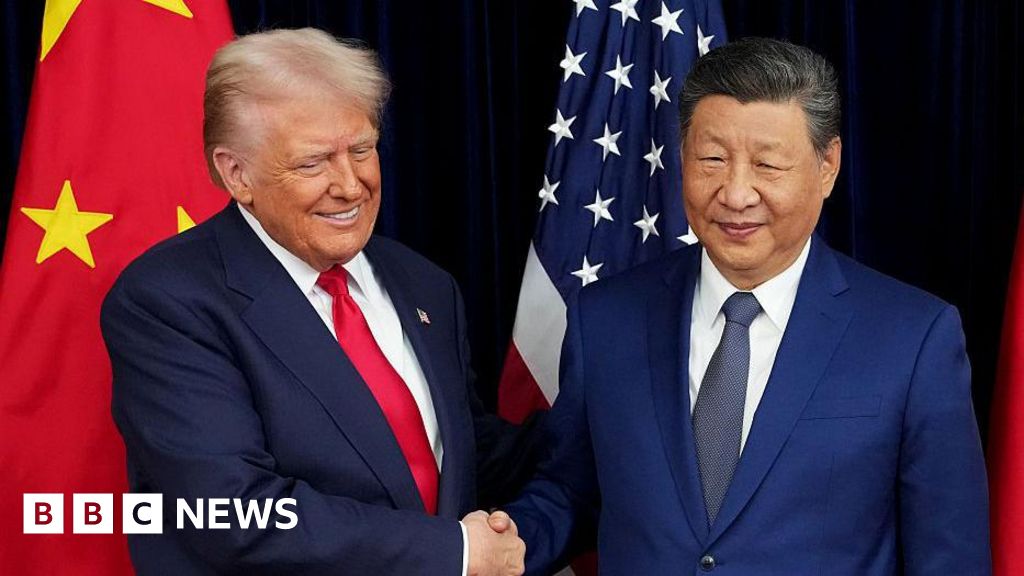
Trump and Xi are set to meet. Where do US-China tariffs stand?

Published

on

Trump and Xi are set to meet. Where do US-China tariffs stand?

The first US presidential visit to China in almost 10 years will test a fragile tariff truce.

Continue Reading

Business

Why “Invisible Infrastructure” Is Becoming a Critical Business Risk in Electrification

Published

on

Why “Invisible Infrastructure” Is Becoming a Critical Business Risk in Electrification

Electrification is often discussed in terms of visible assets: electric vehicles, charging stations, and energy tariffs. For most organisations, these are the elements that shape investment decisions and public sustainability commitments.

However, as deployment scales, performance is increasingly determined by a less visible layer of infrastructure. This layer rarely features in board-level discussions, yet it directly influences operational reliability, cost predictability, and system resilience.

The emerging risk for businesses is not adoption of new technology, but underestimating the infrastructure required to make that technology consistently work at scale.

The shift from assets to systems

Traditional infrastructure thinking is asset-centric. A charger is installed, a vehicle is deployed, and performance is assumed to follow specification.

In practice, electrified systems behave differently. They operate as interconnected chains of components, where reliability is determined by the weakest link rather than the most advanced element.

Advertisement

This shift from isolated assets to dependent systems introduces a structural challenge: small inconsistencies in supporting components can accumulate into measurable operational inefficiencies.

Where operational risk actually emerges

In early-stage deployments, infrastructure issues are often attributed to high-level components such as charging units or software platforms. These are visible, complex, and therefore assumed to be the primary source of variation.

However, in scaled environments, a different pattern emerges. Performance variability is frequently driven by lower-profile physical components within the system architecture.

These components are not typically monitored with the same intensity as primary assets, yet they operate under continuous load conditions that expose differences in quality, durability, and consistency.

Advertisement

The result is not immediate failure, but gradual degradation in operational predictability.

Why small inefficiencies become structural at scale

At individual unit level, minor variations are often negligible. At fleet or multi-site level, they compound into system-wide inefficiencies.

Examples include:

  • reduced predictability in asset availability
  • increased buffering requirements in operational planning
  • higher sensitivity to peak demand periods
  • gradual erosion of utilisation efficiency across infrastructure networks

The key issue is not breakdown, but inconsistency. Systems designed around assumed uniform performance begin to drift when that assumption does not hold in practice.

The procurement blind spot

Most procurement frameworks remain optimised for upfront cost, specification compliance, and installation speed. These criteria are necessary but incomplete in electrified environments.

Advertisement

What is often underweighted is lifecycle behaviour under sustained operational load.

This includes:

  • how components perform under continuous use
  • how degradation profiles differ across suppliers
  • how maintenance frequency evolves over time
  • how small variations scale into system-level inefficiencies

As a result, infrastructure decisions that appear rational at purchase stage can generate disproportionate operational costs over time.

The rise of quality differentiation in commodity infrastructure

As electrification matures, previously interchangeable components are becoming differentiated based on performance stability rather than basic compliance.

Manufacturing consistency, certification rigor, and material durability are increasingly relevant indicators of long-term system reliability.

Advertisement

In this context, the importance of component-level engineering becomes more visible. For example, manufacturers such as Voldt® operate in a segment where emphasis is placed on reducing variability under sustained commercial load conditions, rather than simply meeting baseline specification requirements.

This reflects a broader market shift toward infrastructure-grade quality standards across the electrification ecosystem.

From electrification projects to infrastructure management

The strategic implication for businesses is a reframing of electrification itself.

What is often treated as a deployment project is, in reality, a transition into ongoing infrastructure management. This requires a different evaluation lens:

Advertisement
  • from individual asset performance to system behaviour
  • from installation success to operational stability
  • from purchase cost to lifecycle impact
  • from compliance to resilience

Under this model, infrastructure is not a static investment but a continuously operating system with compounding dependencies.

Reliability of the infrastructure

As electrification scales across UK businesses, the primary constraint is shifting. It is no longer access to technology, but the reliability of the infrastructure that supports it.

The most significant risks are not necessarily located in high-visibility assets, but in the less visible components that determine whether systems perform consistently under real-world conditions.

For organisations moving from pilot projects to full-scale deployment, understanding and managing this “invisible infrastructure” layer is becoming a defining factor in operational success.

Advertisement

Continue Reading

Business

Flats plan for former Lookers office block

Published

on

Business Live

Blueoak Estates leading Timperley project

The empty office block could be brought back into use

The empty block could be brought back into use(Image: Google)

An abandoned office building in Timperley could be brought back into use as new homes.

Advertisement

Developer Blueoak Estates Ltd is eyeing up the three-storey property in Etchells Road with a view to turning it into apartments. The building was last home to the Lookers Motor Group.

Some 34 new homes are proposed to be created within the office block. These would be a mix of one- and two-beds, planning documents show.

This could be just phase one of the plans for the site, however. Documents state that the plant room and an external ‘plant well’ in the roof area would be redundant under the new use and could be ‘subject to future conversion’.

Limited changes would be made to the exterior of the building. These would see new windows fitted and the ‘part removal’ of the external stairs.

Advertisement

Some 38 parking spaces are proposed for the new homes. An additional 34 cycle spaces would be provided in an internal storage area.

Blueoaks is seeking permission from Trafford council for the change of use of the building.

To find all the planning applications, traffic diversions, road layout changes, alcohol licence applications and more in your community, visit the Public Notices Portal.

Advertisement
Continue Reading

Business

Taiwan stocks lower at close of trade; Taiwan Weighted down 0.79%

Published

on


Taiwan stocks lower at close of trade; Taiwan Weighted down 0.79%

Continue Reading

Business

Red Rock Resorts Q1 2026 Earnings: Focus On The Long Term (NASDAQ:RRR)

Published

on

Red Rock Resorts Q1 2026 Earnings: Focus On The Long Term (NASDAQ:RRR)

This article was written by

I am a specialist in Asian equities after having been a sellside analyst for 13 years. In addition, I have also spent time covering US hardware and semiconductor stocks on the sellside. Within Asia, I have covered the casino, automotive, industrial, consumer and technology sectors. I have also worked on the buyside as a fund manager in long only and as an analyst in hedge funds all covering Asian equities where I have developed a keen understanding of Asian companies and economies with a focus on China. From a global equities perspective, I enjoy covering companies globally by examining key metrics such as financial statements strength, valuation upside, and conducting proper analysis of the competitive advantages of the company. Throughout my career, I have found and written on undiscovered small cap companies which have increased in equity value by multiple times. I would like to write for Seeking Alpha where my goal is to help investors cut through the noise and to focus on fundamentals and the company’s competitive outlook instead of the momentum trade.

Analyst’s Disclosure: I/we have no stock, option or similar derivative position in any of the companies mentioned, and no plans to initiate any such positions within the next 72 hours. I wrote this article myself, and it expresses my own opinions. I am not receiving compensation for it (other than from Seeking Alpha). I have no business relationship with any company whose stock is mentioned in this article.

Seeking Alpha’s Disclosure: Past performance is no guarantee of future results. No recommendation or advice is being given as to whether any investment is suitable for a particular investor. Any views or opinions expressed above may not reflect those of Seeking Alpha as a whole. Seeking Alpha is not a licensed securities dealer, broker or US investment adviser or investment bank. Our analysts are third party authors that include both professional investors and individual investors who may not be licensed or certified by any institute or regulatory body.

Advertisement
Continue Reading

Business

Fidelity Blue Chip Growth Fund Q1 2026 Commentary (FBGRX)

Published

on

Fidelity Blue Chip Growth Fund Q1 2026 Commentary (FBGRX)

Fidelity’s mission is to strengthen the financial well-being of our customers and deliver better outcomes for the clients and businesses it serves. With assets under administration of $12.6 trillion, including discretionary assets of $4.9 trillion as of December 31, 2023, Fidelity focuses on meeting the unique needs of a broad and growing customer base. Privately held for 77 years, Fidelity employs more than 74,000 associates with its headquarters in Boston and a global presence spanning nine countries across North America, Europe, Asia and Australia. Note: This account is not managed or monitored by Fidelity, and any messages sent via Seeking Alpha will not receive a response. For inquiries or communication, please use Fidelity’s official channels.

Continue Reading

Business

Politics And The Markets 05/11/26

Published

on

OneWater Marine Inc. (ONEW) Q1 2026 Earnings Call Transcript

This is the forum for daily political discussion on Seeking Alpha. A new version is published every market day.

Please don’t leave political comments on other articles or posts on the site.

The comments below are not regulated with the same rigor as the rest of the site, and this is an ‘enter at your own risk’ area as discussion can get very heated. If you can’t stand the heat… you know what they say…

More on Today’s Markets:

Advertisement

Iran’s new supreme leader, Mojtaba Khamenei, who has not been seen or heard publicly since the war began, “issued new and decisive directives for the continuation of operations and the powerful confrontation with the enemies” while meeting with the head of the joint military command, the state broadcaster reported, with no details.

In April 2026, exports reached a record high of $359.44 billion, up 14.1% year-on-year, exceeding forecasts and showing a strong rebound after a weak growth of 2.5% in March. For the first four months of the year, total exports still grew 14.5% year-on-year to USD 1.34 trillion. However, during the period, sales to the US dropped 10.2%.

Meanwhile, Israeli Prime Minister Netanyahu warned in a 60 Minutes interview that the war is “not over… There are still enrichment sites that have to be dismantled, there are proxies that Iran supports, there are ballistic missiles that they still want to produce… there’s work to be done.”

Moderation Guidelines:

We remove comments under the following categories:

  • Personal attacks on another user account
  • Anti-Vaxxer or covid related misinformation
  • Stereotyping, prejudiced or racist language about individuals or the topic under discussion.
  • Inciting violence
Continue Reading

Business

Urban Company shares tank 9% after Q4 net loss swells to Rs 161 crore despite a sharp revenue uptick

Published

on

Urban Company shares tank 9% after Q4 net loss swells to Rs 161 crore despite a sharp revenue uptick
Shares of Urban Company plunged as much as 9% to their day’s low of Rs 127 on the BSE on Monday after it reported a sharp rise in consolidated net loss for the March quarter to Rs 161 crore, compared with Rs 2.8 crore in the same period last year, even as the company posted strong revenue growth.

Revenue from operations for Q4FY26 rose 43% year-on-year to Rs 426 crore from Rs 298 crore a year ago. On a sequential basis, revenue grew 11% from Rs 383 crore reported in the October-December quarter of FY26. The company’s losses also widened sharply quarter-on-quarter, increasing nearly eightfold from Rs 21 crore in Q3FY26.

The professional services platform reported a 42% year-on-year rise in net transacting value (NTV) to Rs 1,148 crore during the quarter, the highest level in the last 15 quarters.

Adjusted EBITDA loss for Q4FY26 stood at Rs 98 crore, while adjusted EBITDA excluding InstaHelp came in at Rs 22 crore. The company also reported a 160-basis-point improvement in margins.

Advertisement

For the full financial year, NTV increased 31% year-on-year to Rs 4,290 crore, while revenue from operations rose 36% to Rs 1,556 crore. According to the company’s filing, both NTV and revenue growth accelerated for the second consecutive year.


Among key business segments, India Consumer Services excluding InstaHelp posted 26% year-on-year NTV growth in Q4FY26, marking the strongest growth in 11 quarters. International operations across the UAE and Singapore recorded 84% year-on-year growth in NTV during the quarter.
The company said both India Consumer Services, excluding InstaHelp and the international business remained profitable in Q4FY26 while also improving margins on a yearly basis.Native NTV rose 67% year-on-year in the March quarter, while revenue from the segment increased 75%.

InstaHelp delivered 2.7 million orders and recorded Rs 40 crore in NTV in Q4FY26, compared with 1.6 million orders and Rs 28 crore in NTV in Q3FY26. March alone saw over 1.1 million orders.

Sensex, Nifty today: Catch all the LIVE stock market action here
(Disclaimer: Recommendations, suggestions, views and opinions given by the experts are their own. These do not represent the views of The Economic Times)

Advertisement
Continue Reading

Business

FMR shares rise following acquisition update

Published

on

FMR shares rise following acquisition update

Shares in South Perth-based FMR Resources rose by more than 30 per cent early on Monday following news it would expand its presence in Chile.

Continue Reading

Trending

Copyright © 2025