

Politics
Experts Share Common Baby Health Beliefs That Are Wrong


When you have a baby, everyone and their mom (literally) has an opinion on how you raise them. From screen time to feedings to sleeping habits, new parents hear it all, such as, “Wake them up from their nap, they won’t sleep tonight” – or the opposing, “Don’t wake them up from their nap!”
It’s hard to know what you should do when it comes to caring for a tiny human, and it’s common for new parents to reach out to their parents for support, guidance and for some much-needed grandparent babysitting breaks. And while both parents and grandparents want what’s best for the baby, their views on what exactly is best can really differ.
Parenting guidance and baby safety regulations are continually changing to account for new research and innovation, but it can be hard for grandparents to let go of how they raised their own kids decades ago for many reasons.
“We all, as humans, have some degree of survivorship bias and perhaps some defensiveness related to making specific parenting choices that we now recommend against,” Dr. Krupa Playforth, a paediatrician, founder of The Paediatrician Mom and author of Eyes, Knees, Boundaries, Please!, told HuffPost via email. “I think that all of us are sensitive to the idea of our parenting choices being judged, and there’s an implicit judgment when grandparents are told that the way they did things is now considered unsafe.”
Even still, some of what was done in 1990 and even 2000 is now not the safest way to care for a baby. Below, doctors and paediatricians correct the incorrect baby health beliefs they hear over and over from now-grandparents:
Babies should not sleep on their stomachs
Years ago, it was thought that putting a baby on their stomach to sleep was healthiest and safest, but research now shows that this kind of sleeping actually raises the risk of Sudden Infant Death Syndrome or SIDS, said Dr. Beth Oller, a family medicine physician in Kansas.
“That kind of prompted the ‘Back to Sleep campaign,’” said Dr. Michael Glazier, the chief medical officer for Bluebird Kids Health. The Back to Sleep campaign promoted back sleeping as the safest way for babies to sleep.
“The Back To Sleep campaign, first released in 1994, reduced the risk of SIDS in infants by 50% in just the first few years,” Dr. Lauren Hughes, a paediatrician, owner of Bloom Paediatrics in Kansas, US, and a medical communicator on social media, told HuffPost via email. “All paediatricians recommend infants be put on their back to sleep because it’s safer.”
It’s also common for the grandparent generation to put items in the crib (stuffed animals, bumpers, a pillow) with the baby, “and our recommendations now, on the safety front is, please don’t overcrowd that crib,” said Glazier. “They just need a firm mattress, and that’s it.”
Kids are resilient and learn to sleep on their backs, Glazier noted.
Rice cereal does not need to go in the baby’s bottle
It’s also common for grandparents to encourage new parents to add rice cereal to the baby’s bottle, according to Oller. This was a common practice when the now-grandparents were raising their own kids decades ago, but is no longer recommended.
Many grandparents think this will help the baby sleep better, but Oller said that isn’t true. “What drives babies in those first especially four to six months to wake up at night is their need for calories,” Oller said.
Babies wake up in the middle of the night because they’re hungry and craving calories, but there are virtually no calories in rice cereal, Oller said. “So it’s not going to keep them sleeping longer.”
“The other thing is, when you’re doing rice cereal, if you’re doing that in a formula, you’re having to use a bottle that has a much bigger hole in the nipple,” Oller explained.
This will lead to a faster flow and could be a potential choking hazard. “So not only does it not keep them full or help them sleep through the night, but it also can be a negative thing,” said Oller.

Tony Anderson via Getty Images
Babies also don’t need fever-reducing medication before vaccine appointments
Parents used to be told to give babies fever-reducing medication like Tylenol before bringing them in for their vaccine appointments as a way to keep kids from feeling lousy after shots, but that is no longer the recommended guidance, said Dr. Leslie Treece, a paediatrician in Tennessee.
New research emerged that found that giving a baby fever-reducers before vaccines can actually blunt the immune response to the shot, “meaning, [the shots] might not work as well,” Oller explained.
“It’s not like, if you did [give your baby a fever-reducing medication], we cannot vaccinate or shouldn’t vaccinate your kids today, that’s not it at all,” said Oller. “But it used to just go without saying that if your kiddo was going to a vaccine appointment, you pre-medicated them so that they didn’t have any side effects afterward.”
“It’s not current guidance anymore, and it was when this generation of adults were children, and so grandparents often tell them, ‘Give [babies] Tylenol before their shots,’” Treece said, stressing that it’s best not to.
Toddlers don’t need shoes to learn to walk
“I think the one that always is first and foremost for me that grandparents bring up is the idea that toddlers need shoes to learn how to walk,” Glazier said. “Once upon a time, I think, driven by the shoe industry, primarily, there was this conception that they need a shoe that provides structure to be able to help kids learn to walk. … Kids in all walks of life in all countries across the world learn to walk, regardless of shoes or not.”
Shoes are an accessory for kids when they’re learning to walk, not a necessity. Glazier said he tends to only recommend certain shoes for certain situations, such as soft-soled shoes or socks when kids are learning to walk, and are outside or at a playground where they could step on a sharp stick or rock.
“But inside at home, barefoot’s great,” Glazier noted.
You can’t ‘spoil’ a baby by holding them ‘too much’
“I think another one you hear is, ‘Don’t pick your baby up all the time. Don’t hold them all the time. You’re going to spoil them,’” Oller said. “There’s no such thing as spoiling a baby with too much love or attention,.”
Crying is the only way babies can communicate with people, “and they need emotional security. They need the trust,” Oller said. “But I think the thought used to be a baby is going to be ‘more demanding’ if you respond to its needs immediately, and if you pick a baby up — but so, so not true.”
Babies less than 12 months old should not have honey as a cough medicine
It’s common and recommended for parents to give children 1 and older honey as a cough medication, but this isn’t true for younger babies.
“The truth is, honey for older age kids is a good cough medicine, but we don’t recommend honey in the first 12 months of life because there is a fear that honey can have botulism spores in it, and since infant immune systems are still developing, they are more susceptible to that than older kids who are easily able to fight it off,” Glazier explained.
These spores can grow in a baby’s digestive system and lead to infant botulism, which causes weakness, constipation, choking and, in rare cases, death.
They also should not wear jackets in car seats
The grandparent generation commonly leaves a baby’s coat on when putting them in their car seat, but newer guidance shows that it’s safer to take off a baby’s coat before putting them in their car seat, Treece said.
“Coats compress,” Treece explained. While the car seat straps may seem tight enough over a jacket, if the coat compresses, it leaves room for the baby to move around in the car seat and even slip out from the straps if there is a car crash.
“It just creates an unsafe experience because they need for those straps to be well-fitted,” Treece added.
It’s a better idea to put a blanket on top of the car seats straps once the baby is buckled in.
If you need help, your paediatrician can help you establish boundaries with grandparents
Grandparents who repeatedly tell you to let your baby sleep with their favourite stuffy or that you’re “spoiling” them by holding them too much aren’t trying to do harm. They also want to raise a happy, healthy child – but sometimes, it’s necessary to set boundaries to ensure your child is safe.
“Remember that you are the parent, and at the end of the day, your role is to advocate for your kid,” Playforth said. “It’s OK to push back against what the grandparents are saying, and you may have to let go of having their approval.”
Approaching these tough conversations from a compassionate standpoint, and recognising that everyone caring for the baby wants to raise a thriving and healthy child is a more helpful than being combative, she said.
If your parent just won’t listen and insists on putting your baby in their car seat with their winter jacket, for example, lean on the pros and tell them your paediatrician said it’s unsafe.
“Let your paediatrician be the bad guy if you need to,” Playforth said. “We don’t mind. If you’re getting a lot of push back from grandparents around boundaries guidelines ― especially safety-related guidelines ― you can always say, ‘This is what the paediatrician recommended, and we trust them. This is the way we are doing things.’”
Raising a healthy and happy kid, and a responsible and caring adult isn’t about obsessing over the latest fad on social media or comparing your newborn’s growth compared to your neighbour’s baby, but is instead about all of the emotional and physical health basics that doctors recommend.
“For physical health, it’s the boring unsexy basics: eating a balanced diet, getting adequate sleep, washing your hands, moving your body daily, and staying up-to-date on routine checkups and vaccines,” Hughes said.
“For emotional and mental health, the biggest and best predictor is having a parent who is themselves emotionally and mentally healthy. So, taking care of yourself as a parent is one of the best things you can do for your child,” added Hughes.
And, let your kids be kids, Hughes said. Meaning, let them play, explore and get dirty.



(Collectiva/Alamy)
10 min read
Britain has now made clear that it wants AI sovereignty, of a kind. But there are numerous hurdles in the way, reports Matilda Martin. For a seat at the table with the US and China, say experts, we’re going to need a bigger stick
The battle for tech supremacy has taken many forms: nuclear weapons in the 1940s; the space race in the Cold War. Today, it is artificial intelligence – and the stakes are high.
As Keir Starmer limits British involvement in the Iran war, President Donald Trump’s frustration grows – and the UK’s so-called “special relationship” with the US looks increasingly fractured. What would it mean, many wonder, if an irritable US President decided to ‘pull the plug’ on our access to American tech infrastructure?
When Trump placed sanctions on the International Criminal Court last year, officials lost access to email accounts and found their bank accounts frozen, bringing the tribunal’s work to a halt. The event was a small glimpse of how quickly a tech superpower can exert pressure.
Few believe Britain becoming the victim of such a scenario is likely, for the economic repercussions for the US would be hugely damaging. But in an era of geopolitical volatility – and a US President famed for his unpredictability – the UK is currently vulnerable to pressure and manipulation in a way that leaves many uncomfortable.
“Under the last government, they were very happy to say to the sector, particularly the big American companies, ‘You know this stuff better than we do. We trust you’,” says Labour MP Emily Darlington, who criticises this approach as “naïve”.
“We might not yet know how easy it would be for the US to pull our access to AI, but we do know the threat is real,” warns senior research fellow Roa Powell at think tank IPPR.
“Technology giants have repeatedly threatened to pull their services from countries which regulate their technology, while at the same time AI is beginning to be treated as a national security asset that cannot be shared with everybody.”
If UK access to US companies providing cloud services as well as other AI products were cut off, the results would be catastrophic. Could US companies stand independently from their government on such a decision?
“It’s not clear,” Darlington says. “The US has this weird law that essentially all those companies report to the US.” While companies like Amazon Web Services and Palantir have made repeated assurances to the UK that “we’re separate from the Americans”, she adds, this would be a true test of that premise.
At the end of April, Tech Secretary Liz Kendall delivered a speech signalling a step change in the UK’s approach to AI.
“This government believes AI sovereignty is not about isolationism or attempting to pull up the drawbridge and go it alone… For Britain, AI sovereignty is about reducing over dependencies and increasing resilience,” she told an audience at defence and security think tank, Rusi.
The government is clearly concerned about the UK’s future if it allows other larger players like the US and China to dominate the market. Experts say this anxiety is well founded. Powell of IPPR warns that “this government has a narrow window before the concentration of power in AI markets becomes irreversible”.
In 1901, the soon-to-be US president Teddy Roosevelt repeated a famous proverb: “Speak softly and carry a big stick.” It is an anecdote Irish political scientist and author Henry Farrell refers to when he speaks to The House from the US. “If you don’t have a big stick,” he continues, “search around as quickly as you can to find at least a medium-sized cudgel that will allow you to push back.”
Farrell, who co-authored Underground Empire: How America Weaponised the World Economy, has two suggestions for smaller powers like the UK.
“First of all, where they can sort of build up some degree of redundancy, some degree of alternative sourcing, they absolutely should do.
“And secondly, everybody ought to be thinking about their forms of counter leverage in a world where you might see… substantial amounts of pressure being applied upon you to go into one direction rather than the other.”
Kendall’s clarification of what sovereignty means for the UK is welcomed by the Tony Blair Institute (TBI).
“It’s okay for the UK to have some dependencies – no-one can go it alone in the age of AI. And it needs to have leverage. The UK does have great talent, great universities, great startups, but these are not enough to guarantee the country’s competitiveness and security. Britain must also build critical technologies that others depend on. The future global economy, and geopolitical order, is going to be built on technology,” says TBI director of science and technology Keegan McBride.
“For better or worse, this is the way of the world and how power and influence will be exerted. What’s important is that the UK responds now, otherwise it risks losing its seat at the table and the prosperity that will come from the AI revolution.
“The country must focus on becoming strategically important to its allies and embedding itself in the AI and frontier technology economy of the future – not the digital economy of today.”
The most famous example of a small and vulnerable nation dominating an area of the market is Taiwan’s chip industry, which also ensures America has an interest in the nation’s independence from China. Another is the Holland-based photolithography company ASML.
“They’ve got the Hormuz strait on AI technology,” says Dan Howl, head of policy and public affairs at the chartered institute of AI, BCS, referring to the vital shipping line in the Middle East that has allowed Iran to maintain a chokehold on the world’s oil industry.
We might not yet know how easy it would be for the US to pull our access to AI, but we do know the threat is real
While some countries have interpreted AI sovereignty as independence – for example, France’s efforts to build its own sovereign AI stack – the UK government’s approach is seen by some as more pragmatic. Experts say pursuing “full sovereignty” would require a huge injection of cash, mean less secure and competitive products and reduce the ability to influence global standards. Instead, they favour an approach that would allow the UK a certain degree of leverage and control, just like the “big stick” that Roosevelt was describing more than a century ago.
As with many aspects of its infrastructure, the overwhelming feeling among experts is that the UK has rested on its laurels somewhat when it comes to innovation. “The political establishment has failed to invest in and secure the foundations of our country’s sovereignty.
And what we need to make sure is that in the decades ahead, which are going to be so much about digital AI and data, we don’t fail again,” says former minister Josh Simons.
The Labour MP, who in the past worked for Meta in its AI programme, underlines the importance of sovereignty as a whole: “Sovereignty is the ability to, over relatively long periods of time, shape your own collective destiny.”
He believes that the vulnerable situation in which the UK now finds itself is the culmination of centuries of inaction: “It’s more than just the Tories. I don’t think it even just ends with the Labour government before that.
“For a long time now, we’ve assumed that trade will always be basically frictionless, that international financial markets will have very little interest in borders, and that the energy market will be a sufficiently efficient market that, provided we have diversity of supply, we’re fine. All those assumptions are just wrong – or are certainly becoming wrong.”
The UK has “an acute dependency”, as Howl puts it, on cloud services such as Amazon Web Services – integral to the functioning of the NHS, the Ministry of Defence, HMRC, policing and the courts. He explains how the experts at BCS do not think that risk is assessed “as much as it needs to be”.

While everyone can agree that the UK has fallen behind in the AI arms race, there is a live debate over where the nation’s efforts should be focused as it looks to build its arsenal.
For IPPR’s Powell, the UK’s comparative advantage lies in the AI applications layer – specialist products built on top of frontier models, like ChatGPT. She also thinks the UK should not see this approach “as a ceiling”, however, and look to strengthening areas such as chip design too.
Here, Kendall’s announcement of a new ‘AI Hardware Plan’, the details of which will be announced in June, comes into play.
Other experts highlight the UK’s strengths in aerospace, quantum technologies, health and sciences. While Kendall’s recent intervention indicates that the UK may be more decisive on where it wants to go, how it gets there could be more complicated. The House understands that government insiders are aware of how the UK’s high energy prices could discourage and hinder start-up growth, and push homegrown talent to look elsewhere.
In a recent interview with CityAM, former deputy prime minister and one-time Silicon Valley convert Nick Clegg said the UK’s energy is “too expensive” and the UK’s AI sovereignty debate is “slightly dishonest” due to its “marginal relevance”.
Emma McGuigan, AI expert at BCS, points out that the cost of running data centres is a key hurdle. If the UK hopes to achieve its AI sovereignty goals, she says, this must be addressed. A sustained reduction in energy costs would allow “the opportunity to bring the investment to build those sovereign cloud data centres”, McGuigan argues.
Energy sovereignty is thus also called into question. “Digital sovereignty is inseparable from energy sovereignty and energy is a real, physical, material constraint and precondition for the digital world,” says Simons.
Another hurdle facing the UK is its inability to keep homegrown innovators here. The most famous example is the well-documented acquisition of London-based AI firm DeepMind by Google for $400m in 2014. As Kendall hopes to encourage the scale-up of UK businesses through the launch of the Sovereign AI fund, the challenge will be keeping those companies in Britain.
Unless we secure it, there’s no guarantee that we can have the freedom that we’ve enjoyed for several hundred years
“There’s a culture within technology about selling things,” Howl says. “The real question is, what happens when the start-ups start getting bids from New York and California. That’s the real problem.”
He explains: “The reality is that the British market just isn’t big enough to be able to scale these really good companies to a way in which that would be advantageous to the owners, and that is compounded by the culture. But the solution to that would probably be to work with Europe and to genuinely get access to a much bigger market.”
What is at stake? Simons has a “slightly apocalyptic view of where the world is heading”. But he also insists Britain “can’t be gripped by the throat by those who don’t share our commitment to freedom”.
“The future economy and the future of warfare and the future of security, technology, and in particular, AI, data, is going to be one of the foundations of power. So, unless we secure it, there’s no guarantee that we can have the freedom that we’ve enjoyed for several hundred years,” says the Labour MP.
Kendall has fired the starting gun on the UK’s drive for its version of AI sovereignty. But can this middle power successfully insert itself into the supply chain and find Roosevelt’s “big stick” – or is the UK joining the race with too big of a handicap?
Politics
For the first time in history, FIFA to kick off the 2026 World Cup with three opening ceremonies


FIFA has announced that there will be three opening ceremonies for the 2026 World Cup, a first in the tournament’s history, with a ceremony to be held in each of the host nations: Canada, the United States and Mexico.
The next edition of the World Cup is scheduled to kick off on 11 June and run until 19 July 2026, with 48 teams participating for the first time in the competition’s history. The United States will host 78 of the 104 matches, whilst the remaining matches will be split between Mexico and Canada, with 13 matches each.
FIFA confirmed in official statements, a copy of which was received by the Canary, that a group of the world’s leading music stars, including Katy Perry, Future, Alanis Morissette, Michael Bublé, J Balvin and Liza, will take part in these celebrations, which will kick off in Mexico, then move to Canada and finally to the United States.
3 concerts to kick off the FIFA 2026 World Cup
The celebratory events in Mexico will begin 90 minutes before the tournament’s opening match, which pits the hosts against South Africa and is scheduled for 11 June at the Azteca Stadium, which will be known as “Mexico City Stadium” for the duration of the World Cup only.
The concert in Mexico will feature Colombian star J Balvin, the multi-Grammy-winning Mexican rock band Mana, and pop star Alejandro Fernández, son of music legend Vicente Fernández.
Also performing will be Lila Downs, Belinda, South African singer Tayla, and the Los Angeles-based band Solis, specialising in traditional Mexican cumbia music.
In this context, FIFA President Gianni Infantino said in an official statement, a copy of which was received by the Canary:
The world will share this moment, and this is how the tournament will begin. Starting in Mexico City, and over the following days in Toronto and Los Angeles, these celebrations will bring together music, culture and football in a way that reflects the uniqueness of each country.
In Canada, the opening ceremony will take place on 12 June, ahead of the Canadian national team’s match against Bosnia and Herzegovina, featuring Alanis Morissette, Michael Bublé, Alessia Cara, Eliana, Jessie Reez and Nora Fathi.
As for the United States, it kicks off its campaign on the same day in Los Angeles against Paraguay, in a massive event combining sport and music, featuring global pop star Katy Perry, who previously performed at the 2015 Super Bowl halftime show.
Also taking part in the US ceremony will be rapper Future, Lisa from Blackpink, and Brazilian star Anitta, with further names to be announced later. In this regard, Gianni Infantino said that:
the opening ceremony in Los Angeles reflects the exceptional scale that the 2026 World Cup will reach.
Featured image via Latin Times
By Alaa Shamali
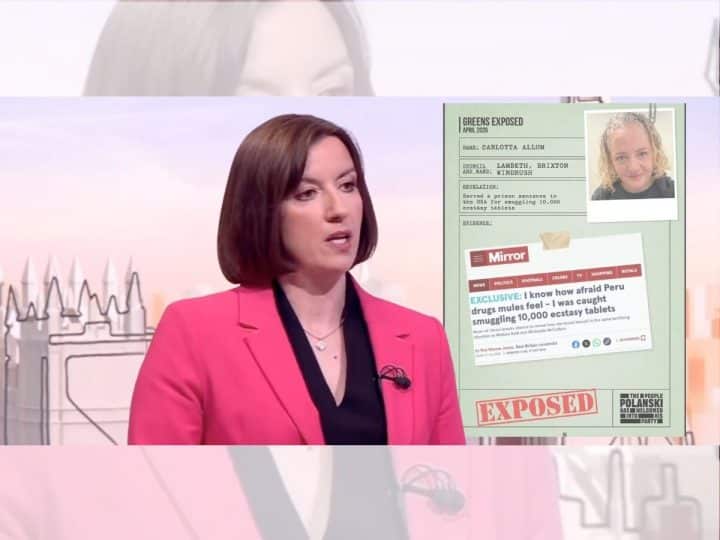

The Labour Party ran one of the most disgusting campaigns we’ve ever seen in the runup to the 2026 local elections. As such, the party really has lost any right to complain that its rivals are ‘divisive’. Despite this, that’s exactly what Labour politicians are now doing:
Bridget Phillipson says shes concerned about the divisive politics of Reform.
Starmer employed the language of Enoch Powell & Labour has spent the last few years scapegoating refugees. Rather than fighting Reforms divisive politics Lab has been leaning into it & legitimising it pic.twitter.com/v5AWczfwdC
— Saul Staniforth (@SaulStaniforth) May 10, 2026
Live by the sword
In the clip above, education secretary Phillipson says:
I am really concerned about the scale of division that we see in our country… We see it really sharply with the likes of Reform, where they did incredibly well in Sunderland. Credit to them. They’ve done incredibly well.
But where one of the candidates, who’s now a councillor, has been elected, he’s said that we should melt down Nigerians to fill in potholes.
This is the kind of racism and division that is so perilous.
It’s absolutely correct that people should call out Reform’s Glenn Gibbins. We called him out when he was a candidate, and we’ll continue to call him out now that he’s a councillor. The problem is that while we were slamming Reform’s racist candidates, Labour were calling out the Green Party over concocted antisemitism allegations and other nonsense.
Here are some of the Reform candidates Labour ignored in the local election campaign:
- Reform activist worries growth of Jewish population could ruin UK culture.
- Calls for Reform candidate who praised rape of Sikh women to face suspension.
- Media silent as antisemitic Reform activist spotted campaigning.
- Another Reform candidate praises Oswald Moseley — A rite of party initiation?
- Reform activist said ‘Hitler was right’.
- Reform welcomes ‘shoot the p*kis’ scandal ex-Tory.
- Reform UK accused of ‘nil vetting’ as another racist candidate exposed.
- Video emerges of Reform’s ‘Nazi salute’ candidate drink driving.
Instead of calling out the above, Labour was sending out non-Jewish ministers to suggest the Jewish Zack Polanski is an ‘antisemite’. The party also ran an attack campaign against ordinary Green candidates:
“exposed” and it’s our offical policy https://t.co/S2OaJ1NQMU
— cez (@cezthesocialist) May 6, 2026
Labour actually named and shamed a beloved charity leader who turned her life around to become an undoubtable force for good. This is the attack ad Labour put out about Carlotta Allum (the Labour account which published it has since deleted the post following immense public backlash):

Labour is correct that Carlotta Allum served time for smuggling drugs. What they leave out is that since she served time, she’s established a charity which offers the rehabilitative support that the British state fails to provide. And this is very important, isn’t it, because if we don’t rehabilitate people, they will continue to hurt themselves and others – ‘others’ which may include yourself or your loved ones.
You’ll be glad to know Allum won her seat despite the smears:
Allum won her seat alongside Serafina Spicer in the Brixton Windrush ward. pic.twitter.com/JzPluiLqyk
— Stats for Lefties
 BREAKING: Carlotta Allum (who was defamed by Labour in a grotesque attack ad) has WON her election in Lambeth.

 (@LeftieStats) May 8, 2026
Labour — Missed opportunity
There was a time and place for Labour to call out how disgusting and racist Reform is, and that was before the local elections. They didn’t do that, but Polanski’s party did, and now people see the Greens as the anti-racist party.
Labour clearly want to reclaim that title, but it’s too late now. Oh, and let’s not forget this all began way before the 2026 local election campaign:
Left: Bridget Phillipson says that Labour are the only party to stand up to the rise of the right
Right: But Shabana Mahmood has gone so far to the right with asylum policies she's getting endorsed by the right
Keir Starmer could have done what Mark Carney did and speak… pic.twitter.com/u0G6iLt7no — Farrukh (@implausibleblog) May 10, 2026
This is the problem with a party having no values of its own. Labour politicians are trying to appeal to racists and anti-racists at the same time, and both groups have seen through them.
Featured image via BBC
By Willem Moore
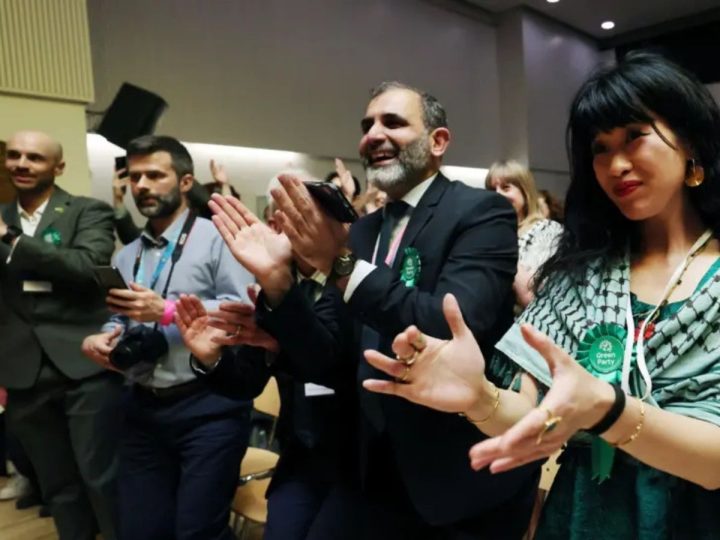

Liam Shrivastava won the Lewisham mayoral election for the Green Party by a landslide and has pledged to stand in solidarity with Palestinians who are suffering under the ongoing genocide. Moreover, his principled commitments have the potential to provide a blueprint for how ordinary people can take on huge injustice at a local level.
Pointing to local investment in Israel’s genocide in Gaza through pension funds managed by Labour councils, which in turn financially empower the Zionist regime, Shrivastava made clear his intention to challenge and dismantle the sinister, cynical relationship maintained by Starmer’s Labour.
Given the huge sums of money ‘donated’ to Starmer and his cabinet of Zionist stooges, this challenge within the London region itself will undoubtedly result in a fair bit of upset in Downing Street.
However, that should simply be seen as a reason to push forward as our government has been complicit in this genocide all along.
“We would like to explore twinning with a Palestinian town.”
The new Green mayor of Lewisham Liam Shrivastava tells #TimesRadio he is “very keen” to show solidarity with the people of Palestine. pic.twitter.com/Qid2rbNY8F
— Times Radio (@TimesRadio) May 9, 2026
Green Party breaks Labour Party ‘era of dominance’
These polarised local elections have been a particularly fraught and emotional time for everyone involved — voters and candidates alike. Yet the results have brought renewed hope to many across the electorate, as communities chose hope and solidarity over hate and vitriolic division. After all, Lewisham has provided a shining example of what a forward-thinking community can achieve.
The area has long been a Labour stronghold, with the former party of the working class controlling the local council since 1971. However, that dominance has now been defeated, with Greens seeing 40 councillors elected to a measly 14 won by Starmer’s Labour. Moreover, despite other elections being very tight between populist parties Reform and the Green Party, Shrivastava absolutely wiped the floor with both Labour and Reform even further behind.
This only proves compassion and decency can truly defeat the vindictive politics of superiority and supremacy pushed by far-right, billionaire-funded Reform UK.
In the mayoral election, Shrivastava secured a whopping 35,265 votes affording him 40.4% of the vote share. Incumbent Labour received 30,374 with 34.8%, and Reform way down at the bottom with just 7,288, appealing to just 8.4% of the local population.
A grand total of 40 Green councillors elected in Lewisham to work with Mayor @LiamShrivastava — The Green Party (@TheGreenParty) May 9, 2026
 pic.twitter.com/hQ8g48TulR
Shrivastava: ‘punished for trying to encourage the pension committee to divest away from the genocide’
Sure to reinforce that renewed hope is the new Green Mayor’s commitment, from day one, to work to break local government ties with a genocidal state who has likely murdered hundreds of thousands and terrorised millions in Palestine.
Speaking to Times Radio, he first outlined how he would stop hard-working people’s money from benefitting Israel and its blood-soaked arms companies:
Within our manifesto, we have commitments around looking at our responsible investments policy when it comes to our pension funds. Obviously, we’ll be lobbying the London Collective Investment Vehicle to basically ensure that none of our pension funds are complicit with companies that are involved in the genocide. So that’s one of the things that we’re committed to.
Then he showed his commitment to solidarity, regardless of the borders and distance between us:
We also would like to explore twinning with a Palestinian town. A Labour Council, I believe Brent, have already done that. So that’s not an unusual thing for a county council to do. That’s certainly something that I’d be very keen to do.
But if we’re thinking about sort of statements and things like that, I remember when the genocide began, the former mayor of Lewisham, Damien Egan, put out a very partisan statement that was only talking about Israel, did not mention anything about the people suffering in Gaza. And that actually caused a great deal of harm in our community.
Going further, he highlighted that Labour had entirely abandoned this solidarity and commitment to international law – an unwelcome realisation that ultimately led him, and others, to leave the party themselves:
So many people in Lewisham were so angered by that. And, you know, this is one of the reasons why myself and other colleagues left the Labour Party. Because when we were speaking up about this, when we were trying to pass a ceasefire motion in our Labour group, a private setting, we were told that that was not permissible, that was not allowed. And even, you know, we were punished for trying to encourage the pension committee to divest away from the genocide.
So, yes, we will be very, very clearly stating our solidarity with the people of Palestine and, you know, those suffering oppression all around the world, in Sudan, in Iran, you know, all over the world. You know, all over the world, Ukraine, wherever.
Courageously taking on a pro-Israel establishment
The journalist tried to then challenge Shrivastava and suggested that these are pointless commitments in practice. Also, it’s curious to note how the journalist stopped short of providing any reason whatsoever as to why local people might be more “sympathetic to the Israeli cause”. Nevertheless, this new Mayor is clearly more than capable of managing these challenging, but highly necessary, conversations:
No, no, no. I mean, as elected representatives, as councillors and as mayor, I have a responsibility for all communities. And that includes obviously the Jewish community. I know that…
Because it’s about demonstrating that we are standing alongside justice. And whatever your views on this issue, it’s really important that we uphold international law. It’s really important that we don’t have investments complicit with these companies. And again, the reason why it’s important is because it’s important to so many of our residents. That’s why it’s important. We want to represent them.
And as I say, we would do it in a proper way, in a way that is inclusive towards all of our communities. We don’t want to create harm and division and things like that. We understand the importance of community cohesion.
I understand that as mayor, I have a responsibility to all communities. And as elected representatives, they also have responsibilities to think about how our actions, our statements, different things like that, how they can impact all our communities.
Lewisham Mayor Shrivastava finished, powerfully:
So, we’d always do it in a proper way and in a way that builds solidarity and a collective feeling. But most importantly, that we stand alongside justice and care.
Featured image via BBC
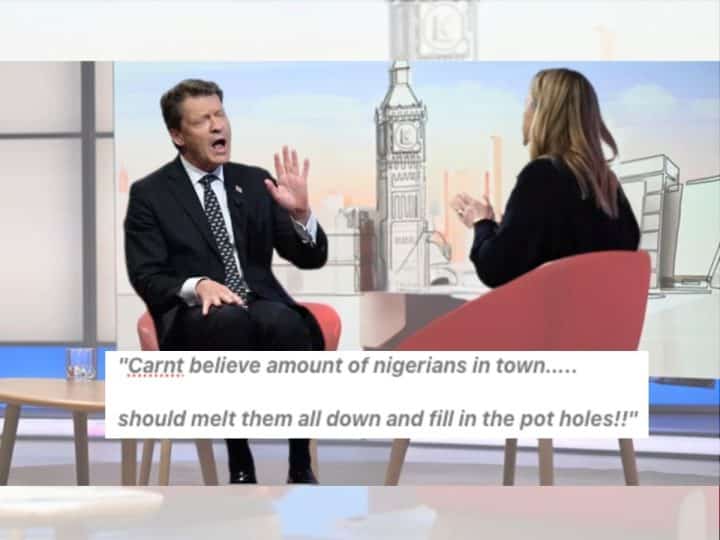

On 6 May, we reported that a Reform UK candidate suggested ‘melting Nigerians to fill potholes’. The man in question — Glenn Gibbins — is now an elected councillor. And Reform deputy Richard Tice is refusing to condemn what he said:
He keeps mentioning processes and vetting, why haven’t they sacked him?
— Zara Hussain (@zarahussain999) May 10, 2026
Reform’s Glenn Gibbins
This is what we reported on Gibbins:
The candidate in question is Glenn Gibbins. As Hope not Hate highlighted, Reform actually spelled his name wrong on the leaflets by referring to him as ‘Glen Gibbons’. This inability to correctly spell his name could be a simple mistake; it could be a further sign that Reform isn’t bothering to vet its candidates.
Given the things Gibbins has said, it would actually be better for the party if it came out that they didn’t vet him. The alternative is that they did, and they just didn’t see a problem with comments like this:
“Carnt believe amount of nigerians in town…..should melt them all down and fill in the pot holes!!”
Gibbins is clearly trying to be funny, but that doesn’t make what he said any better. If anything, it shows that he and the people he communicates with are so incredibly comfortable with racism that it’s all just a big joke to them.
This is possibly why he feels so at home in Reform. Because as we suspected, it looks like the party literally just doesn’t care about this sort of racism.
Supported with silence
The exchange between Kuenssberg and Tice played out as follows:
Laura Kuenssberg: I want to ask you about your party. One of your new Sunderland councillors – so a man who was elected to represent Reform – suggested melting Nigerians to fill potholes. Is that person, who’s expressed those views, somebody you are happy to see represent Reform?
Richard Tice: Laura, this weekend we are celebrating our incredible successes.
We’re not sure we’d consider the local elections an ‘incredible success’ if we’d managed to get Gibbins elected. And as we’ve reported, Gibbins is far from the only disgraceful candidate Reform just put into power:
So much more than a slip-up in vetting, Reform UK are allowing these men to run because they don't see anything wrong with what they did
Via @RachelCDailey_ https://t.co/lytLpNehTd
— Canary (@TheCanaryUK) May 8, 2026
Richard Tice: Like any party, you have internal party processes to look at where people have said or done the wrong thing.
Laura Kuenssberg: But do you condemn those remarks?
Richard Tice: Laura… I condemn anything that is wrong and inappropriate.
Laura Kuenssberg: And is that wrong and inappropriate?
Richard Tice: The key point is voters have heard all of this smearing and this sneering against all of us and they voted for more Reform because they want action; they want delivery; they’re sick of the failures. of the Tories and Labour that have impoverished them because of mass immigration and because of net stupid zero. That’s what really winds people up.
As we’ve reported, Reform points at migrants to distract from their wealthy mates rinsing the country for billions. Some of these ‘mates’ are fossil fuel billionaires who want to halt our highly successful switch to renewable energy sources. This is despite the fact that switching is going to give us long-term energy security, meaning we’ll never again have to worry about traffic flow in the Strait of Hormuz.
In a video titled You’ve been lied to about Net Zero, Simon Clark says that people create misinformation around Net Zero as follows:
So these are the five steps of the anti-net zero playbook. Inflate the costs, ignore the cost of business as usual, ignore the operational savings, ignore the co- benefits, and most egregiously, ignore the costs of inaction. Not getting to net zero is going to cost the world much, much more
‘It’s not a smear’
Back to the interview:
Laura Kuenssberg: Richard Tyson, it’s not a smear to put to you comments made by one of the people who’s been elected for your party.
Richard Tice: I’ve just said, we look at all these things… Of course. But the reality is voters are furious with the failures of Labour, the failures of the Tories, and they’ve said we want more Reform, more success, more reducing backlog in SEND, in potholes, and they want Nigel to be the next elected Prime Minister of the United Kingdom.
‘Potholes’ probably wasn’t the ideal thing to mention here given Gibbins’ plan to fill them. Also, many ex-Reform councillors have said they struggled to manage local issues because Farage micro-managed them from Reform HQ.
Durham councillor Nick Brown said:
When we took control [of Durham Council], I believed the messages from Nigel Farage that we would make big changes for people living locally.
But really, whenever we had a local issue, we were told to follow the party line. Not to rock the boat, bring press attention on the council. We all turned into Nigel’s yes-men – ordered to be on best behaviour to help him get to power.
Reform — The home of racism
We reported on many vile Reform candidates in the runup to the local election, including the following:
- Reform activist worries growth of Jewish population could ruin UK culture.
- Calls for Reform candidate who praised rape of Sikh women to face suspension.
- Reform activist said ‘Hitler was right’.
- Reform welcomes ‘shoot the p*kis’ scandal ex-Tory.
- Video emerges of Reform’s ‘Nazi salute’ candidate drink driving.
- Reform’s chaotic collapse continues: Scottish candidate suspended over ‘financial conduct’.
It’s no mystery why these people think Reform is their home. It’s because senior politicians will go on the national broadcaster and give them cover.
Don’t be surprised when Glenn Gibbins turns out to be a less than competent politician anyway:

We’re happy to note that Glenn Gibbins has since been suspended pending investigation. Deputy leader of Durham County Council Darren Grimes said:
He’s been suspended and the party is investigating those very serious allegations and will act on them
Tice demonstrably as clueless as ever.
Featured image via BBC
By Willem Moore


The Champions League has reached the moment when the most coveted title will be decided, with the gap between dream and reality narrowing in a final that holds the hope of a first title for Arsenal, or a second in a row for Paris Saint-Germain.
In London, Arsenal wrote a new chapter in their season after securing their place in the final with a hard-fought 1-0 victory over Atlético Madrid on a raucous night at the Emirates Stadium. The Gunners’ return to the final comes for only the second time in their history, following their 2006 final defeat to Barcelona, but this time they look like a more mature side, and one even more hungry to lift the trophy.
In Munich, the action was no less thrilling. Paris Saint-Germain knew how to manage the game against Bayern Munich, settling for a 1-1 draw at the Allianz Arena, capitalising on their mad 5-4 first-leg victory in Paris to book their place in the final.
And so, the two sides are set to meet on 30 May in a final with a different flavour, bringing together two projects seeking to establish themselves at the pinnacle of European football.
Reaching this stage is not merely a passing achievement; it is every player’s greatest dream, the match that etches names into the annals of history. Yet behind this night lie long journeys forged by names accustomed to appearing in the final time and again.
Players with the most Champions League final appearances
According to data from Transfermarkt, Germany’s Toni Kroos tops the list of players with the most final appearances since the 1992/1993 season, having reached the final seven times, winning the title on six occasions with Bayern Munich and Real Madrid.
Close behind Kroos are four players who know the path to the trophy well, having played in six finals and won all six titles: Luka Modrić, Nacho Fernández, Dani Carvajal and Lucas Vázquez.
As for Cristiano Ronaldo, the competition’s all-time leading goalscorer, he has reached the final six times, lifting the trophy on five occasions and losing once with Manchester United, leaving his mark as one of the most influential players in the competition’s history.
The list continues with names that have made European history: David Alaba (four titles from six finals), Paolo Maldini and Alessandro Costacurta (three titles each with Milan), alongside Real Madrid’s golden generation: Casemiro, Gareth Bale,
Karim Benzema, Marcelo and Isco, who have won 5 titles from 5 finals.
As for Argentine star Lionel Messi, he is one of eight players to have reached the final four times, winning all of them.
Featured image via EUFA
By Alaa Shamali
Politics
McLean joins campaign to boycott Israel: Ireland knows what persecution means; the match must not go ahead


Irish footballer James McLean has added his voice to the sporting and political calls to boycott Ireland’s matches against Israel in the UEFA Nations League.
According to a report published by The42ie, McLean, a Derry City player with 103 caps for the Republic of Ireland, criticised what he described as a lack of “courage” on the part of the Football Association of Ireland in dealing with the issue, arguing that the decision to play the match should not be left to the players.
McLean said in comments posted on his Instagram account that the players find themselves in a difficult position, given that representing the national team is an important opportunity for any player, but he stressed at the same time that:
the match should never have been played.
The Irish player added referring to the country’s political history and conflicts:
If there is one country that should understand the meaning of oppression and the suffering it causes, it is Ireland.
McLean’s comments come after the disclosure of an open letter sent by a group called “Stop The Game” to the Football Association of Ireland, calling on it to boycott the two matches against Israel in the UEFA Nations League.
Calls on Ireland to boycott the match with ‘Israel’
The Republic of Ireland and Israel are scheduled to meet twice in the 2026 UEFA Nations League, with the first fixture taking place on 27 September and the return leg on 4 October in the Irish capital, Dublin, amid growing political and sporting controversy in Ireland over calls to boycott the matches.
The list of signatories to the letter included a number of prominent figures in Irish football, amongst them Shamrock Rovers captain Roberto López, Bohemians player Dawson Devoy, St Patrick’s Athletic’s Joe Redmond, and Waterford’s Padraig Amond.
According to the report, the letter cited what it described as “ongoing violations” of European and international football regulations due to the participation of Israeli clubs on occupied Palestinian territory, as well as allegations of “apartheid and acts of genocide”.
In contrast, the Football Association of Ireland continues to reject calls for a boycott, justifying its position by citing its commitment to UEFA regulations and warning that failing to play the match could expose the national team to sporting sanctions, including relegation in the UEFA Nations League, as well as affecting its world ranking and chances of qualifying for future tournaments.
Sinn Fein complementary scarf
In a related development, Lynn Boylan, a Member of the European Parliament for the Sinn Féin, launched a special scarf for supporters of the Irish national team to express their opposition to the match against Israel.
Boylan presented the first scarf to Joanna Byrne, the former chair of Drogheda United, who was sacked from her post earlier this year after calling for a boycott of the match.
Boylan said that UEFA had previously taken the decision to ban Russia following its invasion of Ukraine, arguing that the time had come to take a similar stance towards Israel due to what she described as “the ongoing events in Gaza and the West Bank”.
Featured image via AlJazeera
By Alaa Shamali
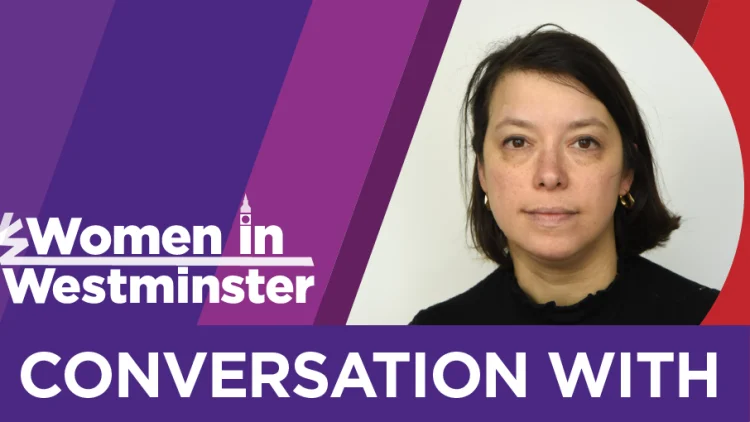
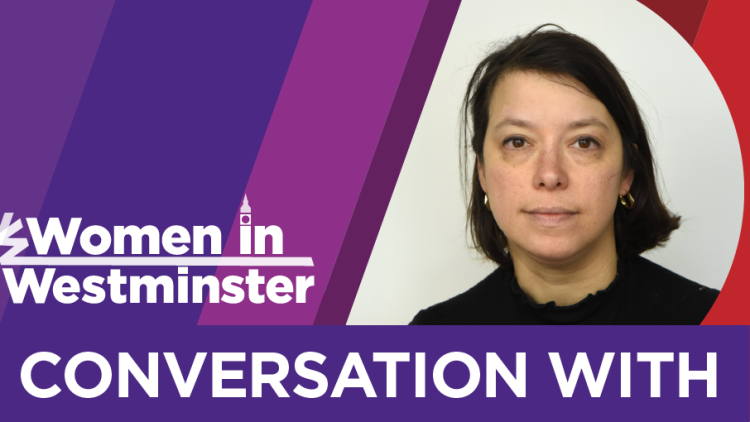

Esther Webber’s journalism is about making power comprehensible – digging into how decisions are made and explaining them clearly to people who are not in the room. As part of our Women in Westminster series, we sat down with Webber to learn more about the intersection between our national politics and the wider world
As a journalist specialising in foreign affairs and defence, Esther Webber understands the challenge of navigating hidden and often opaque worlds. When Women in Westminster sat down with the POLITICO journalist, she told us this was also a skill she had to draw upon when she first joined the Westminster Lobby.
“There was definitely a slight feeling of you’re either in the know, or you’re not,” Webber tells us, reflecting on her early days in Westminster. “There were a lot of unwritten rules. They felt like they were designed to keep you out rather than to help you.”
Fortunately, the POLITICO correspondent thrives on understanding complexity. Just like the worlds she reports on, she understands Westminster as coded. It runs on relationships, conventions, and knowledge that often need to be painstakingly built by each new generation of MPs and journalists.
The ability to identify the hidden structures that often sit behind the nation’s politics also informs Webber’s journalism. National security, foreign affairs, and intelligence are fields where decisions are often shaped behind closed doors. As POLITICO’s Senior Foreign and Defence Correspondent, her reporting routinely focuses on areas where information is difficult to access.
Webber likes to peer behind those closed doors. Finding and verifying information that is hidden or obscured seems to be something she truly embraces.
“I am definitely a nosy person,” she laughs. “I enjoy trying to get into those nooks and crannies that actually can tell you how things really work and where power really lies.”
The forensic attention that Webber pays to “where power lies” results in reporting that extends far beyond the visible facts of what happened. In everything she writes, she is relentlessly interested in not just the “what” but the “why”.
“It is not just about reporting what happened,” she explains. “But stepping back to say, ‘Here is the dynamic behind that.’”
That deep curiosity is a cornerstone of Webber’s journalistic work. In the areas she covers, the surface facts rarely tell the full story. Reporting on national security brings particular constraints, with information tightly controlled and access depending on trusted relationships built over years, not months.
These are often hugely complex issues, but Webber remains aware that the audience she is speaking to extends far beyond SW1.
“I often try to think, ‘how would I explain this story to a friend?’” she explains. “I’ve got a lot of friends who are politically engaged and want to know what’s happening, but they’re not in the minutiae of what happens every day in Westminster. They’re always really useful to tell me whether I’m making sense or whether I’ve gone down a really tedious rabbit hole.”
That clarity of explanation is something that Webber also admires in others, citing former Newsround presenter Julie Etchingham as a childhood influence. That sense of clarity informs Webber’s own writing, which always focuses on substance and precision rather than performance.
That approach, she argues, is increasingly important in an environment where there is a growing breakdown of trust across society.
“I do think trust in politics is pretty low at the moment,” she explains. “But trust in journalism is also in a difficult place. We have to try and do everything we can to improve our relationship so that people do feel that we’re showing them stuff for a reason.”
Webber is candid in not dismissing trust as “someone else’s problem.” She recognises that journalism itself needs to work to rebuild connections to the public.
That wider sense of mission and purpose is evident in other areas, too. Webber has been actively involved in work within Parliament to address wider issues of inclusion, giving evidence to the Modernisation Committee.
“I was talking specifically about accessing Parliament as a disabled person, which is a constant learning curve,” she tells us. “It’s always a good thing when people try to think about how Parliament works and could we do things differently, but in practice, it’s very, very hard to change.”
She is also clear that while some improvements are certainly overdue, wholesale change needs to be approached with caution. She explains that some older traditions have developed for specific reasons and removing them could have negative consequences. However, one area where she does believe there has been progress is in Westminster’s working culture.
“I think it has changed partly because there’s been a bit of a reckoning among MPs about their behaviour and their conduct,” she says. “And certain things have become less acceptable even in the time I’ve been there. So, I think it is changing.”
In part, she attributes this to the growing number of female journalists and MPs. However, she notes that in other areas progress has been slower.
“I think there are other areas of representation where it’s proved more of a challenge,” she says, highlighting the very small proportion of members of the Lobby from Black and minority ethnic, working-class, or non-traditional backgrounds.
Shifting that, she believes, requires structural change combined with directness rather than deference.
“I used to worry more about annoying people or putting people off,” she recalls from her early career. “But actually, often you’re trying to get the attention of people who are just really busy. They may want to help you, but they’ve just got a lot of competing demands. Be more annoying.”
It is said lightly, but Webber’s point is a serious one. In a system where access is limited and attention is scarce, being heard requires effort and persistence. Those appear to be qualities that she herself has in abundance.
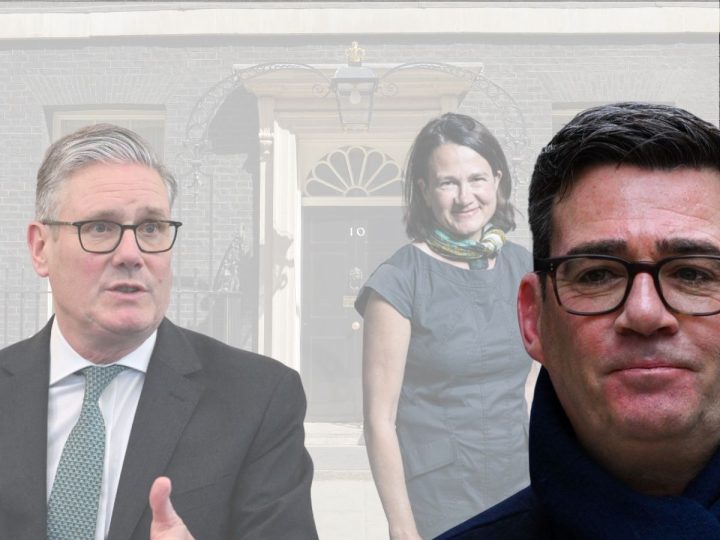

On 9 May, we reported that little-known Labour MP Catherine West was threatening to challenge Keir Starmer for the Labour leadership. Since then, a lot of shit has hit a lot of different fans, with left-leaning politicians warning the proposal could lead to a coup for the Labour right. Among them is Richard Burgon, who has likened West’s plan to a “palace coup”:
Keir Starmer needs to go.
But not through a Cabinet stitch-up or palace coup.
And not through a snap leadership election run under rule changes designed by Morgan McSweeney/Labour Together in order to hand someone like Wes Streeting a coronation. My full interview on Sky. pic.twitter.com/qgrc8DrHhJ
— Richard Burgon MP (@RichardBurgon) May 10, 2026
Go West
It was widely predicted that Starmer would face a leadership challenge if Labour performed badly in the local elections. When a challenge failed to materialise, West took matters into her own hands.
In a statement published to X/Twitter, West said:
Across the country yesterday, so many hard working Labour Councillors lost their seats through no fault of their own. I want to thank them for their service and dedication.

I was honoured to serve under Keir Starmer’s leadership, both in opposition and in Government. All of us in the Labour Party are thankful to Keir for the 2024 General Election and the good work since. I personally get on well with Keir.
But his approach is not cutting through, and the results over the past 48 hours are nothing short of disastrous. Unless things change, we risk Nigel Farage becoming Prime Minister.
That’s why, with regret and significant sadness, I firmly believe that Keir should outline his intention to resign as Prime Minister and oversee an orderly transition.
The Labour Party need the chance to have an honest conversation about how we deliver the change we promised in 2024, and that requires new leadership which understands the urgent and real concerns of people across the UK.
Keir has demonstrated significant leadership on the world stage and is well placed to represent the UK’s national interest while this process takes place and may even continue in an international role in the future but for now I know I speak for more Labour people than just myself in wanting him to step aside as our Leader.
West also threatened to put herself forwards as a ‘stalking horse’ candidate – i.e. a candidate who wants to kick off a leadership race but doesn’t want to become the leader themselves:
Unexpected stalking horse?
Labour MP Catherine West: “I don't have a candidate, and that's part of the problem. But I think there are several people who would like to do it who have been planning for months. But I'm very surprised that none of them has popped up today to say: "I… https://t.co/qdneGERGJw
— Pippa Crerar (@PippaCrerar) May 9, 2026
West would later suggest that maybe she could see herself becoming PM:
Catherine West’s interview round is going down extremely badly with some MPs across the factional divide
People are stunned by this quote: “You know what sometimes happens to stalking horses? They become the candidate”
Which seems to suggest she thinks she could really be PM
— Alex Wickham (@alexwickham) May 9, 2026
Starmer — The response
As Aubrey Allegretti reported, West’s intervention went down poorly with Starmer’s loyalists:
Bit of a row in the London PLP WhatsApp group chat, as anger builds over losses in the capital.
Catherine West – a former minister – writes: “I have asked Anna Turley as Chair of the Party for a reassurance that she has a plan for an orderly arrangement of change at the top of the party.”
Steve Reed replied, saying that doomscrolling through leaders would be “madness”.
West wrote back: “It can be orderly or disorderly but it’s happening Steve.”
Steve Reed is the housing minister who Starmer deployed to smear the Greens as antisemites in the local election campaign:
Is Steve Reed implying Zack Polanski is an antisemite??? Really? Say it with your whole chest, coward.
2 years in govt & 6 years running Labour, this all they have. No track record, no ideas, no hope. The death throes of an unlawful, vile project; the muscle memory of punching… https://t.co/MKd10B4isc
— The Fraud (@StarmertheFraud) May 5, 2026
Reed’s campaign did not prove to be effective, but Reed is sticking to it, because the only thing the Labour right are good at is attacking the left:
Steve Reed told the BBC this morning that Labour needs to 're-adjust' after its humiliating local election drubbing, only to then keep smearing the Greens
by @skwawkbox https://t.co/HgbOw534hn
— Canary (@TheCanaryUK) May 8, 2026
Steve Reed, a key figure in the political project that seized control of the Labour party & brought it to this point, says yesterdays results are what happens at this point in a 5 year parliamentary cycle.
They'd rather burn the party to the ground than change direction. pic.twitter.com/OiMaUYXIi3
— Saul Staniforth (@SaulStaniforth) May 8, 2026
Back to the West saga, her plan also proved unpopular with Andy Burnham and his backers. Everyone knows that Burnham wants to challenge Starmer to become PM, but he can’t right now because he isn’t an MP:
[@Tony_Diver] https://t.co/vF6vhuGbwd
— Politics UK (@PolitlcsUK) May 9, 2026
UPDATE: Andy Burnham's allies are "desperately trying" to convince Catherine West to abandon her leadership bid as he will not be able to run
I’m sorry for people who had a big plan about particular candidates who one day will be, you know, an MP and all that sort of thing… I really like Andy, but he’s not here on the spot, so he can’t really do it
Her point is undeniable. And although Burnham is reportedly scheming to return, we know Starmer would try to block him, just like he did last time. The question is if he could get away with it twice; especially as cabinet members are reportedly willing to use their position to secure the return of the king of the North:
On Andy Burnham:
* Allies say seat has "100%" been lined up
* Private polling they've conducted reassures them he will win any by-election
* Keir Starmer will be told to make statement he can run. If he refuses a leadership challenge, backed by Ministers, will be triggered
— (((Dan Hodges))) (@DPJHodges) May 9, 2026
Burnham also has support from left-wing Labour MPs like Clive Lewis:
"Keir Starmer is completely out of touch with reality"@labourlewis is backing Andy Burnham as the person to prevent a Reform govt. pic.twitter.com/b9vill7teh
— Saul Staniforth (@SaulStaniforth) May 10, 2026
So, key Labour insiders clearly want Burnham as PM. The question is if the other challengers – Wes Streeting and Angela Rayner – can be held back until then.
Challengers approaching
— As Bloomberg reported last night the Ed Miliband / Lou Haigh / Tribune faction wants “delay then Andy,” putting off a contest until Burnham is in Parliament. They favour him to Rayner.
— But the big flaw in this plan is it may incentivise Streeting and Rayner to move now before Burnham is in. All eyes are on whether Streeting and Rayner will go over the top in the coming days, perhaps after Keir Starmer’s Monday speech, which will surely never be able to meet the demands of Labour MPs.
There is particular speculation that the Wes Streeting camp is happy to use West’s stalking horse challenge to get their man into the race:
Senior MP texts to tell me that “everyone sensible” is trying to get Catherine West to withdraw. “It’s completely irresponsible”. MP also says they think Streeting allies will lend votes to West to try trigger race
— Beth Rigby (@BethRigby) May 9, 2026
The fact that West will reportedly have enough support to launch a leadership challenge does suggest that supporters of Streeting or Rayner are willing to get behind her. After all, there isn’t a contingent of West loyalists (not that we know of anyway):
Labour MP says he is "almost certain" Catherine West will have the 81 MPs she needs to trigger a leadership election on Monday. https://t.co/fMaH9km4WL
— Kevin Schofield (@KevinASchofield) May 9, 2026
‘Frustrations’
Richard Burgon of the Labour left, meanwhile, had this to say:
I do understand Catherine West’s deep frustrations. They are shared by a large number of MPs and Labour members who feel we cannot go on like this and that Keir needs to go – as I have also called for.
But I can’t support the proposals she explained on TV this morning.
Catherine’s stated preference is for a Cabinet stitch-up – a kind of palace coup.
That would mean the very people who sat back and allowed terrible decisions like the winter fuel and disability cuts to happen end up deciding the future of the party. That will not be seen by the public as a clean break.
Catherine says that if there isn’t a Cabinet deal, she will trigger an immediate leadership election. I fear there’s a real danger that, whatever her good intentions, her move will be exploited by people on the right of the party who want a coronation and not a proper democratic contest in the party.
It may even be that those people help secure the 81 nominations needed to kickstart any leadership race.
What we need instead is for Keir to set a date for his departure, followed by a full and proper democratic contest that can look at what went wrong and how we change course to win back trust and support, with a broad range of candidates and viewpoints represented.
And that process has to involve all MPs, not just the Cabinet, as well as trade unions and party members, all of whom must have a democratic voice in choosing Labour’s future direction.
Keir Starmer Drama
At this point, it seems like anything could happen. Well, anything besides Keir Starmer staying in power, obviously.
As limp as this current incarnation of Labour is, even they can’t be weak enough to allow Starmer to slowly destroy the party – if only because Catherine West won’t let them.
Featured image via Parliament
By Willem Moore
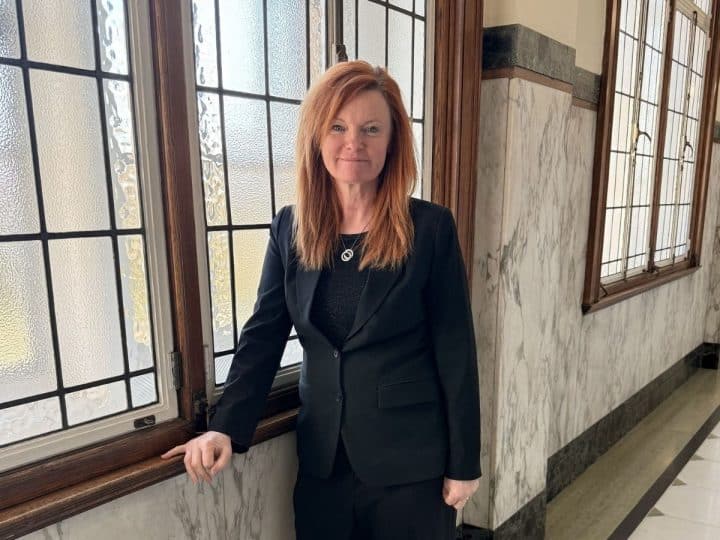

Nigel Farage‘s Reform UK has appointed the first woman to sit in a cabinet position, as Ella Worthington takes responsibility for ‘civic pride’ on Lancashire County Council.
However, critics have pointed out how there is very little known about the responsibilities of this newly created cabinet role. As a result, people have looked at the billionaire-funded party’s misogynistic and patriarchal rhetoric and raised concerns that this is merely smoke and mirrors.
Former Labour councillor-turned-independent Azhar Ali, and leader of the opposition on the county council told the BBC:
I think this is just a tokenistic gesture, no one knows what the role is or what the job entails.
Worthington won the election last year in the county elections and has since faced criticism for her posts that many have described as hateful and derogatory towards the UK’s Muslim population.
In particular, she slammed news of the first Mosque in the Lake District and implied it was being forced through:
will turn a natural, beautiful place into something it’s not.
Local Election Results 2026 – Old Skelmersdale
Ella Worthington has been elected.
Reform UK gain. #WestLancsElects #LocalElections pic.twitter.com/oUU0d7NtNZ — West Lancashire Borough Council (@Westlancsbc) May 8, 2026
Reform — 33% turnout
Worthington won the local election on May 7, which saw a 33% turnout and just shy of 43% of the votes going to this Reform councillor. Reform UK has typically framed this as a gain, unsurprisingly, and some argue that point may carry weight, given that Reform councillors often defect, face suspension, or come under investigation for various forms of misconduct. Few of its councillors secure re-election.
Possibly a perk of being a misogynised woman, and not a misogynistic man with a shady and abusive past like David Barker.
Nevertheless, this councillor has been more than comfortable to inflame divisions pushing racial abuse through her social media.
For instance, she attempted to whip up hate — and succeeded as this Mosque has faced attacks from the far-right meant to intimidate Muslims — with this post on X last year:
Reform UK Lancashire County Councillor and Scrutiny Deputy Chair Ella Worthington sharing an old post by the Leader of UKIP.
The mosque site in question has been target by the far right because of posts like this.@LancashireCC, this is one to investigate. @reformparty_uk do… pic.twitter.com/VamJS1ZQ0m — Reform Party UK Exposed
 (@reformexposed) August 13, 2025
Now she is responsible for ‘civic pride’, it isn’t hard to recognise whose ‘pride’ this position is there to represent – that of racist white supremacists. As a result, it is essential that this councillor face scrutiny herself – something she should hardly oppose given her prior role as deputy chair for scrutiny of the county council.
Worthington defended the new role, telling the BBC:
It’s all about civic pride across Lancashire, giving people a voice, giving them pride in where they live, helping institutions and business move forward, giving people civic pride and the love of the area that they live in.
It’s not about religion, it’s about white supremacy
However, Muslim people and other minoritised groups also live within the ward, raising questions over whether this will lead to an increase in race-baiting in the northwest ward. In regard to the population breakdown, migrants from the EU far outnumber any other group with only 118 living in the area with a religion other than Christianity.
Nevertheless, it is worth noting that Christianity and the teachings of Jesus tend to talk about welcoming strangers and being kind to our neighbours, as opposed to setting out to increase local divisions.
But let’s not pretend that Britain’s ‘Christian values’ have anything to do with Reform UK, as this post underscores:
Reform has no answers over Farage photo with church attackershttps://t.co/ZH9vkbn4Hs
— Reform Party UK Exposed
(@reformexposed) May 7, 2026
Reform’s Worthington has the ‘right skills’ for what exactly?
Reform UK took control of the council last year, and many expressed surprise at the complete lack of female representation on its cabinet. At the time, leader of the council Stephen Atkinson said:
I’m sure that some of the ladies of the group will be useful in the future at the cabinet level, but when the skills are the right skills.
Like many, we are a bit unsure what skills women lack to be able to work in a cabinet in local council — especially when every other party has had no trouble in putting women in these positions in the past and currently. This surely can only highlight what we have all been saying — or shouting into an apparent void — that Reform are just the amalgamation of toxic masculinity, patriarchy and frankly, a bunch of women-hating men often found to have pretty abusive histories.
Atkinson has spoken since her appointment, saying:
I’m delighted to have Ella on board to deliver this initiative, she works incredibly hard and is passionate about delivering for our communities across Lancashire.
Given Worthington’s clear Islamophobic tendencies, it isn’t hard to identify the skills which have ‘qualified’ her for a cabinet position:
Reform MP openly downplays racist colleague's comments pic.twitter.com/9fRfR2gTIl
— Canary (@TheCanaryUK) May 10, 2026
Racists are ripping off councils — first flags, now ‘civic pride’
Funnily enough, cabinet posts add a tidy £23,597 over and above the basic councillor allowance of £14,301. However, this ‘civic pride’ role is brand new and precious little is known about what it is intended to do.
According to the BBC, opposition leader Ali would have preferred that money go to people who actually do ‘proper jobs’ and finally address significant issues in their community affecting people’s quality of life:
It’s all smoke and mirrors, what we need is real people doing some proper jobs and making sure roads are fit for a purpose, weeding, gullies emptied and the basic things that residents want.
Therefore, is this not simply another example of Reform wasting public money as it conducts an inciteful and incendiary campaign that blames ordinary people for the public’s woes, instead of the super-rich who fleece them every day and now lead political parties to preserve the status quo?
Once again, ordinary people will face higher costs at a local level while a small minority of millionaires and billionaires benefit, leaving everyone else with harder lives and, potentially, more divided and violent communities.
Featured image via Facebook

Life lessons: Ellie Simmonds on what life so far has taught her

Glass House Brands: A Greenhouse Giant Growing Into A Narrow Margin Window

Australia considers replacing 50% capital gains tax discount on crypto

Manchester United reach agreement with Casemiro over contract clause amid transfer speculation

US brings back mandatory military draft registration

Steven Gerrard disagrees with Gary Neville over ‘shock’ Chelsea and Arsenal claim | Football

The Right Education + Financial Literacy = Next Gen Success | Master P #tooreal #inspiration #shorts

God’s Secret Financial Breakthrough: His Exclusive Blessing Revealed! #shorts

Coins for Kids | #shorts #mathforkids #maths #money #coins
-
 Crypto World3 days ago
HarrisX Poll Found 52% of Registered Voters Support the CLARITY Act
-

 Crypto World4 days ago
Upbit adds B3 Korean won pair as Base token gains Korea access
-

 Fashion3 days ago
Weekend Open Thread: Marianne Dress
-

 Tech6 days ago
Image AI models now drive app growth, beating chatbot upgrades
-
 NewsBeat4 days ago
NCP car park operator enters administration putting 340 UK sites at risk of closure
-
 Business2 days ago
Ignore market noise, India’s long-term story intact, say D-Street bulls Ramesh Damani and Sunil Singhania
-

 Politics2 days ago
Politics Home Article | Starmer Enters The Danger Zone
-
 Sports7 days ago
2026 NHL playoff picks: Second-round predictions, series odds, Stanley Cup bracket
-

 Crypto World6 days ago
UAE Free Zone Deploys Blockchain IDs to Verify Registered Firms
-

 Tech1 hour ago
GM Agrees To Pay $12.75 Million To Settle California Lawsuit Over Misuse Of Customers’ Driving Data
-

 Crypto World5 days ago
BlackRock CEO Larry Fink Discusses a New Asset Class
-

 Crypto World4 days ago
Robinhood says Wall Street is building onchain
-

 Tech1 day ago
Auto Enthusiast Carves Functional Two-Stroke Engine from Solid Metal
-

 Tech5 days ago
Apple and Samsung are dominating smartphone sales so thoroughly that only one other company makes the top 10
-
Entertainment6 days ago
Serena Williams hits Met Gala in metallic dress after GLP-1 reveal
-

 Entertainment7 days ago
Skai Jackson Responds To AI Baklash After Viral Snapchat Photos
-

 Politics6 days ago
Met Gala 2026: Madonna’s Dramatic Red Carpet Look Steals The Show
-

 Fashion4 days ago
The Best Work Pants for Women in 2026
-
 Sports7 days ago
Hearts v Rangers LIVE: Prediction, team news and line-ups as Scottish Premiership title rivals meet at Tynecastle
-

 Tech5 days ago
I tested the Xiaomi 17 Ultra’s camera and I don’t think I’ll ever go back to an iPhone
You must be logged in to post a comment Login