

Business
Cellular Intelligence acquires Novo Nordisk’s Parkinson’s cell therapy



Earnings call transcript: TrueBlue Inc. Q1 2026 shows mixed results with EPS miss


Company is partnering with Red Bull in revamped beverage program.
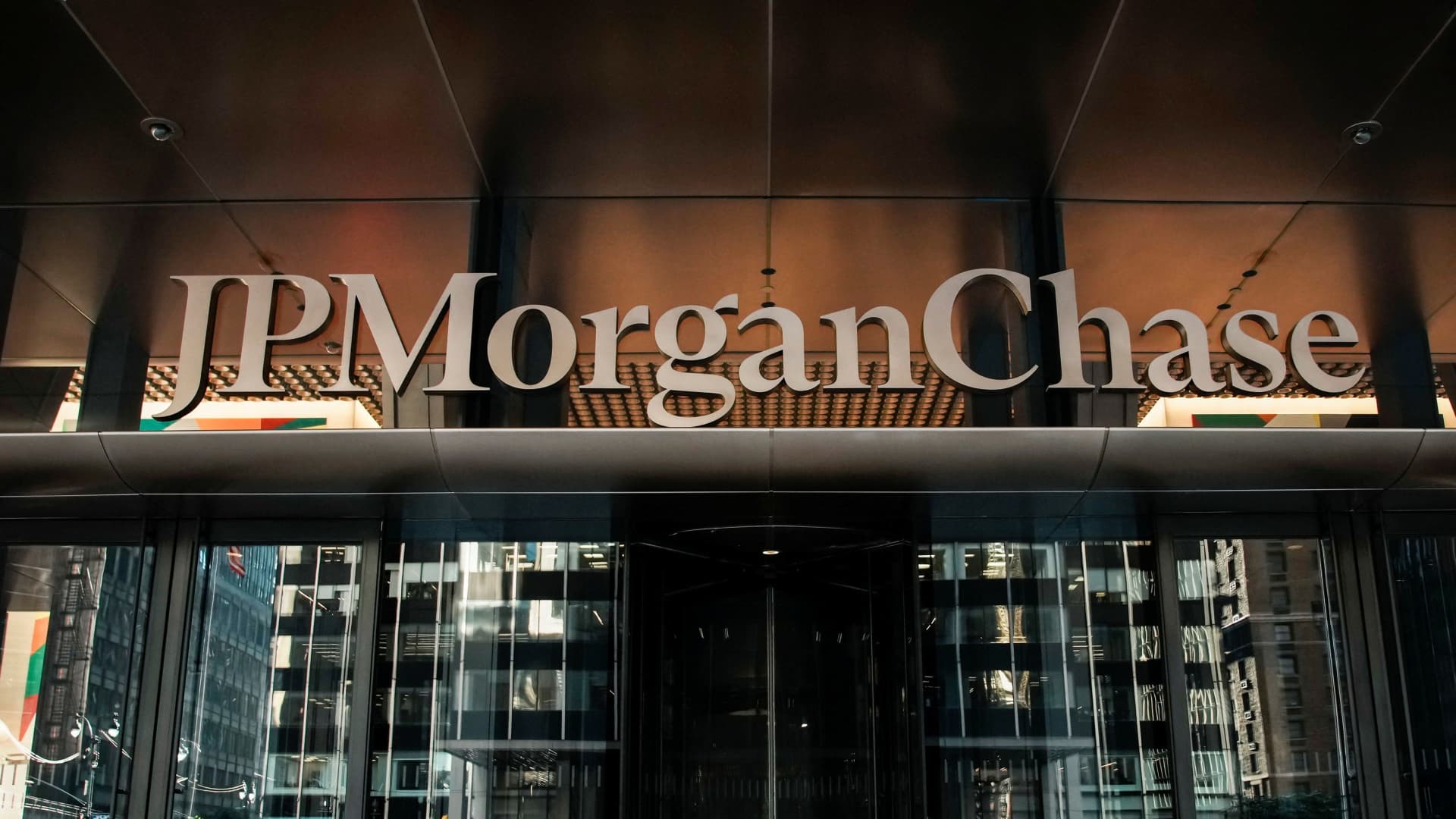
The JPMorgan Chase & Co. building before the ribbon cutting ceremony, at the firm’s new headquarters at 270 Park Avenue, in New York City, U.S., Oct. 21, 2025.
Eduardo Munoz | Reuters
A JPMorgan Chase-led group of banks cut their exposure to a private credit fund co-managed by KKR days before the asset manager announced it was spending $300 million to prop up the troubled vehicle.
The fund, FS KKR Capital Corp., said Monday in a release that KKR will inject $150 million into the fund as equity and spend another $150 million to buy shares from investors who want to exit.
Those moves, labeled “Strategic Value Enhancement Actions” by the fund, came after the JPMorgan-led group on May 8 slashed its credit line by $648 million, or about 14%, to $4.05 billion. Some lenders may have exited entirely rather than extend their commitments, according to the filing.
The fund, co-run by KKR and the alternative asset manager Future Standard and often referred to by its ticker, FSK, has become one of the most visible fault lines in the private credit story. Its shares have plunged by nearly half over the past year and trade at a deep discount to the fund’s net asset value.
In March, Moody’s downgraded FSK’s ratings to junk amid mounting stress in the portfolio. Since then, loans to software maker Medallia and dental services firm Affordable Care have stopped paying interest, executives said Monday.
FSK said that it had losses of $2 per share in the first quarter, or about $560 million in total losses given the roughly 280 million share count, as the fund’s net asset value fell about 10%.
“Our first quarter decline in net asset value was driven by investments which have impacted prior quarters, certain new non-accrual assets, and the impact of market-driven spread widening,” CEO Michael Forman and President Daniel Pietrzak said in a release.
“We believe FSK’s current stock price underappreciates the long-term value associated with FSK’s investment portfolio and the KKR Credit platform,” they added.
FSK loans that are no longer generating income jumped to 8.1% by the end of the first quarter from 5.5% at yearend, the fund said.
Further to fall?
Besides cutting its credit line, the JPMorgan-led group also raised interest rates on the remaining facility and gave the fund more room to absorb losses without triggering a default.
The latter move, lowering the minimum shareholders’ equity floor from $5.05 billion to $3.75 billion, gives FSK more breathing room. But it also indicates that lenders believe the firm’s assets have further to fall.
The FSK credit facility was funded by a syndicate of banks led by JPMorgan as administrative agent, a role that typically includes coordinating lender communications and amendment negotiations. ING Capital served as collateral agent, while the other participating lenders were not named in the filing.
JPMorgan, the largest U.S. bank by assets, has made broader moves to insulate itself from private credit turmoil, in part by marking down the value of private credit loans held as collateral on its own books, CNBC reported in March. Many of those marked-down loans are to software companies facing possible disruption from artificial intelligence.
Besides the $300 million that KKR is spending to support FSK, the fund’s board also authorized a separate $300 million share repurchase program, and KKR agreed to waive half its incentive fees for four quarters.
FSK, which lends to private, middle-market U.S. companies, became the second-largest publicly traded business development company, or BDC, when it was formed through a merger of two predecessor funds in 2018.
The fund’s largest single category of loans is for software and related services, which made up 16.4% of exposure at yearend.
Form 13F Guardian Capital For: 11 May

The yellow metal traded with cuts on Monday tracking global cues despite the rupee hitting fresh lows. Prime Minister Narendra Modi’s message to citizens to avoid buying gold for a year dented the confidence of domestic investors.
The June gold futures dropped 0.7% or by Rs 1,030 per 10 gram today to hit the intraday low of Rs 1,51,500 even as INR, which tested a bottom of 95.31, witnessed its sharpest fall in a month.
Rupee’s fall against the greenback is considered supportive for bullion.
“MCX Gold is expected to remain volatile with a slightly negative bias during the week as traders focus on crucial macro developments including US CPI inflation data, Trump’s visit to China, and ongoing US-Iran negotiations,” Jateen Trivedi, Vice President, Research Analyst at LKP Securities said, adding that the market is currently trading near the Rs 1,52,000 – Rs 1,53,000 zone where repeated resistance is being witnessed, indicating profit booking at higher levels after recent recovery attempts.

While geopolitical uncertainty and currency volatility continue to support prices intermittently, the overall technical structure suggests that upside may remain capped unless Gold decisively sustains above Rs 1,55,500, he added.
What fundamentals suggest?According to Trivedi, CPI inflation data will remain the biggest trigger for bullion markets this week as softer inflation can revive expectations of future Federal Reserve rate cuts, while hotter inflation may strengthen the dollar and pressure precious metals.
Moreover, Trump’s China visit is likely to be keenly watched for any trade or tariff-related developments which may influence risk sentiment globally, the LKP analyst said.
Among the positive triggers, uncertainty surrounding US-Iran talks will likely keep the safe haven appeal of bullion intact.
“Rupee volatility is also expected to keep MCX Gold comparatively more volatile than COMRX Gold in the near term,” Trivedi said.
Technical triggers
Decoding the charts, Trivedi said RSI is hovering near the 52 zone, indicating neutral momentum with slight recovery signs but still lacking strong bullish confirmation. Additionally, bollinger bands remain relatively narrow, suggesting volatility compression and possibility of a sharp move once major US data releases trigger fresh positioning.
“EMA 8 continues to trade marginally below EMA 21, reflecting that short-term trend remains weak and every upside bounce may attract selling pressure unless stronger buying momentum emerges. MACD has shown minor improvement in histogram formation, but the indicator still remains in negative territory, suggesting broader momentum continues to favor cautious or sell-on-rise trading strategies,” this analyst said.
The commodity expert suggested a ‘Sell on rise’ strategy near Rs 1,53,000 – Rs 1,53,500 with a stop loss above Rs 1,55,500 on a closing basis for downside targets of Rs 1,50,000 and Rs 1,48,500.
(Disclaimer: The recommendations, suggestions, views, and opinions given by the experts are their own. These do not represent the views of The Economic Times.)

NEW YORK — Vicor Corporation shares skyrocketed nearly 19% in morning trading Monday to $304.17, as investors poured into the high-performance power module specialist amid surging demand for advanced power solutions in artificial intelligence data centers and strong first-quarter results that beat expectations.
The dramatic move marks the latest leg higher for the Massachusetts-based company, which has emerged as one of the standout performers in the AI infrastructure supply chain. Vicor’s proprietary power conversion technology is increasingly seen as critical for delivering efficient, high-density power to next-generation GPUs and AI accelerators.

Strong Q1 results fuel rally
Vicor reported first-quarter 2026 revenue of $138.2 million, up 42% from the prior year, with adjusted earnings per share of $1.28 — significantly ahead of Wall Street forecasts. The company highlighted record bookings in its Advanced Products segment, driven by AI-related applications.
CEO Phil Davies cited “unprecedented demand” from hyperscale customers building large AI clusters. Vicor’s modular power systems offer superior efficiency and power density compared to traditional solutions, allowing data center operators to pack more computing power into limited space while reducing energy consumption and cooling requirements.
AI power bottleneck creates opportunity
As AI training and inference clusters scale rapidly, power delivery has become a major constraint. Traditional power architectures struggle to meet the extreme demands of high-performance chips from NVIDIA and others. Vicor’s Factorized Power Architecture and proprietary chip-scale packaging provide game-changing advantages in efficiency, size and thermal performance.
Analysts estimate that each new generation of AI servers requires significantly more power, creating a multi-billion-dollar addressable market for companies like Vicor. The company has secured multiple design wins with leading hyperscalers and server OEMs, with several programs now moving into volume production.
Analyst upgrades and price target hikes
Several Wall Street firms raised price targets following the earnings report. Optimistic voices now see potential for $350–$400 per share if Vicor continues capturing share in the AI power market. The stock’s rapid ascent reflects growing conviction that the company sits at the center of one of the most powerful secular trends in technology.
Monday’s surge came on exceptionally heavy volume, more than six times the average daily trading level, suggesting broad institutional buying interest. The move also triggered multiple short squeezes, as the stock had been on some short sellers’ radar earlier in the year.
Company transformation and technology edge
Vicor has successfully transitioned from a diversified power components supplier to a focused leader in high-performance, high-density power solutions. Its recent innovations in lateral power delivery and vertical power delivery architectures are particularly well-suited for the dense computing environments required by modern AI workloads.
The company maintains strong intellectual property protection and continues investing heavily in research and development. Management highlighted expanding manufacturing capacity to meet growing demand without sacrificing quality or lead times.
Risks and valuation debate
Despite the enthusiasm, some analysts caution that the stock’s rapid rise leaves limited margin of safety. At current levels, Vicor trades at premium multiples that assume sustained hyper-growth. Any slowdown in AI capital expenditure or unexpected supply chain issues could pressure results.
However, many growth investors argue the valuation is reasonable given the enormous long-term opportunity. The company’s expanding backlog and design-win pipeline provide meaningful visibility into future revenue streams.
Broader AI infrastructure theme
Vicor’s surge fits into a larger wave of strength among companies enabling AI infrastructure. From chip designers to cooling specialists and now power electronics providers, the entire ecosystem is benefiting from massive investments by technology giants racing to scale artificial intelligence capabilities.
What’s next for Vicor
Investors will closely watch the company’s second-quarter results in late July for further confirmation of momentum. Key metrics to monitor include backlog growth, gross margin trends, and updates on major customer programs. Additional design wins or capacity expansion announcements could provide further upside catalysts.
For now, Monday’s explosive move cements Vicor’s position as one of the standout AI infrastructure stories of 2026. What began as a relatively under-the-radar power components company has transformed into a high-profile beneficiary of the artificial intelligence megatrend.
As trading continues, all eyes remain on whether this momentum can be sustained through the rest of the year. For investors who caught the move early, Vicor has delivered extraordinary returns — a powerful reminder of how quickly fortunes can shift when a company aligns perfectly with a transformative technological wave.

President Trump Is Fulfilling An Important Campaign Promise

The BSE Focused IT Index tracks 14 major Indian technology companies and represents one of the country’s most influential sectors in terms of market capitalization and foreign investor participation. The IT segment accounts for nearly 6% of the total market capitalization of companies listed on the BSE and contributes a similar share to overall foreign portfolio investments in Indian equities.
India currently has more than 250 listed IT companies, while the sector’s increasing relevance is also visible in passive investing, with 17 passive products benchmarked to IT indices.
Given the sector’s strong exposure to global demand, currency fluctuations and evolving technology trends, the newly launched derivative contracts are expected to offer investors an additional avenue for hedging, trading and portfolio risk management.
The futures and options contracts are cash-settled and available across three serial monthly expiries, with settlement scheduled on the last Thursday of each expiry month, in line with BSE’s existing derivatives framework.
The launch saw active participation on the first trading day, with 172 members contributing to a total turnover of Rs 148 crore.
Speaking on the occasion, MD & CEO Sundararaman Ramamurthy said the launch of derivatives on BSE Focused IT Index reflects BSE’s effort to align with the evolving market needs. “With the IT sector’s global linkages, rapid technological shifts, and currency sensitivities, this new derivative product will complement our index derivatives suite while enhancing risk management avenues for investors. We thank all market participants for their continued support and engagement, which enables us to introduce products that deepen and strengthen India’s capital market ecosystem,” he said.BSE Information Technology index today ended 0.2% lower at 28,534 amid a wider sell-off in the domestic stock markets. While Nifty plunged 360.30 points or 1.49% to close at 23,815.85, the BSE Sensex settled at 76,015.28, down 1312.91 points or 1.70%.
(Disclaimer: The recommendations, suggestions, views, and opinions given by the experts are their own. These do not represent the views of The Economic Times.)
In its settlement order, the SEBI stated that a show-cause notice sent to BofA Securities India alleged the firm’s failure to maintain the structured digital database required by insider trading regulations. BofA declined to comment on the settlement order and the allegations.
The SEBI said BofA Securities India agreed to settle the proceedings without admitting or denying the alleged violations.
In January, Reuters, citing a regulatory notice, reported that the SEBI had accused BofA Securities India of breaching insider trading rules and internal “Chinese wall” norms in connection with a 2024 share sale.
The notice followed a SEBI investigation into BofA Securities India’s role in managing a March 2024 share sale in Aditya Birla Sun Life Asset Management.
According to the notice, which was reviewed by Reuters but not made public, the SEBI found that BofA’s deal team, while in possession of unpublished price-sensitive information related to the share sale, had contacted potential investors “directly/indirectly”.
The regulator had also alleged that BofA suppressed material facts and made false statements during the investigation, which was triggered by a whistleblower complaint in 2024.
Octopus Investments raises stake in Netcall to 11.07%
Sui (SUI) Soars 35% Weekly: What Fueled the Pump and What’s Next?

Cost Of Living 2026: Brits Prepare For Another Price Rise

Classic Gem looks to secure maiden win at Flemington in 2026

Manchester United reach agreement with Casemiro over contract clause amid transfer speculation

US brings back mandatory military draft registration

Steven Gerrard disagrees with Gary Neville over ‘shock’ Chelsea and Arsenal claim | Football


-
 Crypto World3 days ago
HarrisX Poll Found 52% of Registered Voters Support the CLARITY Act
-

 Fashion3 days ago
Weekend Open Thread: Marianne Dress
-

 Crypto World4 days ago
Upbit adds B3 Korean won pair as Base token gains Korea access
-

 Tech7 days ago
Image AI models now drive app growth, beating chatbot upgrades
-
 NewsBeat4 days ago
NCP car park operator enters administration putting 340 UK sites at risk of closure
-

 Tech1 day ago
Auto Enthusiast Carves Functional Two-Stroke Engine from Solid Metal
-

 Politics2 days ago
Politics Home Article | Starmer Enters The Danger Zone
-
 Business2 days ago
Ignore market noise, India’s long-term story intact, say D-Street bulls Ramesh Damani and Sunil Singhania
-

 Crypto World6 days ago
UAE Free Zone Deploys Blockchain IDs to Verify Registered Firms
-

 Tech10 hours ago
GM Agrees To Pay $12.75 Million To Settle California Lawsuit Over Misuse Of Customers’ Driving Data
-

 Crypto World5 days ago
BlackRock CEO Larry Fink Discusses a New Asset Class
-

 Crypto World5 days ago
Robinhood says Wall Street is building onchain
-
Entertainment7 days ago
Serena Williams hits Met Gala in metallic dress after GLP-1 reveal
-

 Tech6 days ago
Apple and Samsung are dominating smartphone sales so thoroughly that only one other company makes the top 10
-

 Tech6 days ago
I tested the Xiaomi 17 Ultra’s camera and I don’t think I’ll ever go back to an iPhone
-

 Fashion5 days ago
The Best Work Pants for Women in 2026
-
 Sports7 days ago
Everton v Man City LIVE: Haaland’s two-word response as visitors collapse to hand Arsenal advantage in Premier League title race
-

 Politics6 days ago
Met Gala 2026: Madonna’s Dramatic Red Carpet Look Steals The Show
-
 Tech4 days ago
AI agents are missing all the discussions your team is having. SageOX has an answer: agentic context infrastructure
-
Crypto World4 days ago
The FOMO Is Back: Why Bitcoin’s Latest Rally Has Analysts Flashing Warning Signs
You must be logged in to post a comment Login