Connect with us

NewsBeat

Bolivia’s ‘capitalism for all’ project sparks backlash for selling-out on natural resources

Published

on

Bolivia’s ‘capitalism for all’ project sparks backlash for selling-out on natural resources

Bolivia’s political landscape has changed dramatically since August 2025, when a general election ended the Movement for Socialism (Mas) party’s rule after nearly two decades. Its presence in Congress has all but vanished, with rightwing parties now commanding an overwhelming majority.

The new president, Rodrigo Paz Pereira, campaigned with the rightwing populist slogan: fé, familia y patria (faith, family and homeland). He swept to victory in large part due to the widespread popularity of his running mate and now vice-president, Edmand Lara.

As the son of former Bolivian president Jaime Paz Zamora, who led Bolivia from 1989 to 1993, Paz Pereira represents a new generation of the country’s traditional political elite. But Lara, a former police captain who has become prominent on social media since 2023, comes from the popular classes.

The unlikely pair benefited from a strong desire among the Bolivian people for change amid a severe economic crisis marked by a shortage of US dollars and annual inflation of nearly 20%. They also took advantage of widespread distrust of reticence towards politicians from previous governments.

Advertisement

In his November inaugural address, Paz Pereira denounced that Mas had left what he called an estado tranca (obstructing state). He pledged to replace it with a smaller, technocratic state capable of attracting foreign investment. This model of state reform is part of his broader neoliberal project of “capitalism for all”, an ill-defined entrepreneurial vision that celebrates informality.

Rodrigo Paz Pereira at his swearing-in ceremony in La Paz, Bolivia, in November 2025.
Gabriel Marquez / EPA

Paz Pereira’s government soon revealed the contours of its economic and political agenda in Decree 5503. The decree included over 100 articles covering numerous issues such as fuel subsidies, taxes, emergency powers, resource governance and fiscal and monetary policy.

The government presented the decree almost exclusively as a measure to end longstanding fossil fuel subsidies. These subsidies, which were introduced in 1997, had become largely unsustainable with the decline of Bolivia’s gas exports since 2017. The decree ended the subsidies, replacing them with modest increments to the minimum salary and state pensions.

Other, more problematic elements of the decree that overlooked established procedures and the stipulations of Bolivia’s constitution were soon exposed. These included measures to grant the government emergency powers without the required justification, as well as major changes to the nationwide tax regime without legislative approval.

Advertisement

The decree also introduced extraordinary powers for the central bank to acquire limitless external debt without mechanisms of democratic control. And it established a “fast track” mechanism for the approval of contracts for the extraction of strategic natural resources. Contracts would be awarded without legislative oversight or the required processes of environmental impact assessment and informed consent of Indigenous people.

Such a “fast track” mechanism openly revived what was known as the entreguista character of the Bolivian state, which had historically been prevalent under elite rule. This is a term used throughout Latin America to criticise governments or policies perceived as giving away a country’s national interests by, for example, surrendering control of natural resources.

Bolivia is home to the world’s largest known lithium deposit in the department of Potosí, estimated at 23 million tonnes. Lithium is a critical component in the batteries that power electric vehicles and smartphones, as well as in high-tech weapons systems. Bolivia is also well-endowed with other critical minerals such as tin, silver and antimony.
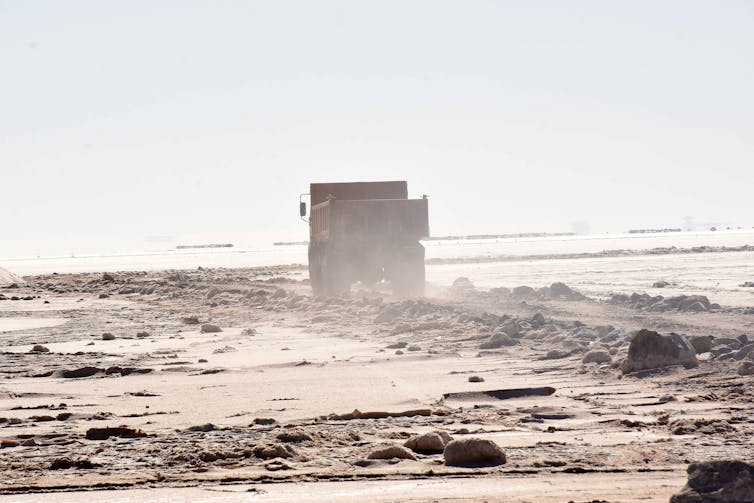
A truck drives through a salt flat in Bolivia.
A truck drives in the Coipasa salt flat in the Oruro department of Bolivia.
Stringer / EPA

Nationalist movements have fiercely opposed entreguista policies in Bolivia before. These movements have inspired major political events, including a revolution in 1952 that overthrew the ruling oligarchy.

They also led to the so-called water and gas wars in 2000 and 2003. These were periods of social unrest arising over government plans to privatise the water supply in the central city of Cochabamba and export natural gas through Chile, respectively.

Advertisement

As noted in 2006 by Tom Perreault, a researcher at Syracuse University in New York, Bolivian people see tin or gas “not only as natural resources, but as national resources as well, that is, resources that properly belong to the nation and its people”.

This sentiment was captured recently by Bolivian researcher Gustavo Calle. In an article published on January 13, he said that by suggesting strategic resources will be exploited by foreign companies without meaningful control, Decree 5503 touched “the most sensitive vein of the popular nationalism”.

Repealing the decree

Two days after the government published the decree on December 17, Bolivia’s main workers’ organisation, the Bolivian Workers’ Centre, declared a general strike. It asked its members to mobilise, demanding the abrogation of the decree.

Then, on January 5, the largest Indigenous organisations joined the protests. They paralysed the country with more than 50 road blockades. And a march named “Bolivia is not for sale” later entered the capital city of La Paz, bringing together numerous sectors of society.

Advertisement

Paz Pereira portrayed the leaders of the mobilisation as reckless individuals defending their own privileges. He also pledged not to back down against “criminals”. But after nearly 28 days of protests, the government finally conceded and abrogated the decree on January 11.
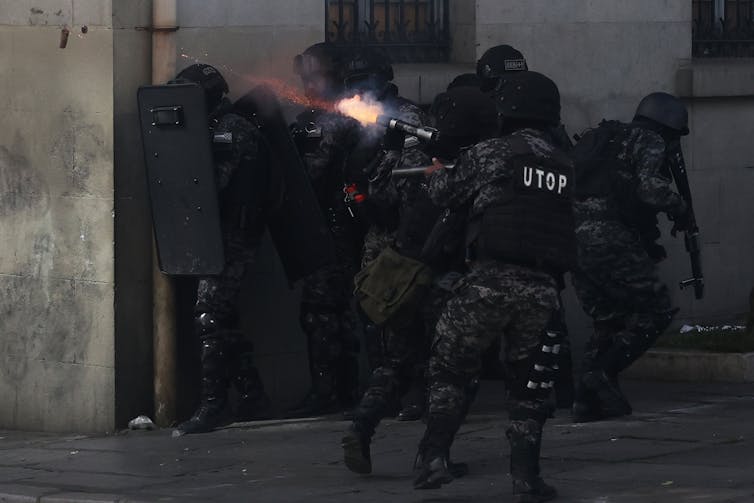
Bolivian police clash with protesters in La Paz.
Bolivian police clash with protesters during a demonstration in La Paz in early January.
Luis Gandarillas / EPA

The government’s image has taken a hit. However, unlike the government during the gas war, its legitimacy has not been challenged. That period of unrest ultimately resulted in the resignation of President Gonzalo Sánchez de Lozada.

Paz Pereira’s defeat is also only partial. The elimination of the fossil fuel subsidies has now been consolidated. And the government is currently preparing a new authoritarian law to sanction road blockages as criminal offences.

In a recent interview with the Financial Times, Paz Pereira also sought to portray the popular opposition to his entreguista policies as being carried out by a mere minority of former Mas leader Evo Morales’ followers.

In the absence of an alternative political project, the new government appears to be in a strong position to impose its agenda. Yet the strength and explosive potential of resource nationalist sentiments in the country should not be discounted.


Advertisement

Source link

Advertisement
Continue Reading
Click to comment

Leave a Reply

Your email address will not be published. Required fields are marked *

NewsBeat

Italian police fire tear gas at protesters near Olympics venue | World News

Published

on

Italian police fire tear gas at protesters near Olympics venue | World News

Italian police have fired tear gas and water cannon at protesters who threw firecrackers, smoke bombs and bottles at them near a Winter Olympics venue.

Officers in riot gear and with shields confronted about 100 protesters, some of whom wore hoods and scarves to cover their faces, after they broke away from a main demonstration and appeared to be trying to reach the Santagiulia Olympic ice hockey rink.

A group of protesters also set off smoke bombs and firecrackers about half a mile (800 metres) from the Olympic Village, where around 1,500 athletes are staying.

Image:
Fireworks explode near a police water cannon used against protesters near the Santagiulia venue. Pic: Reuters

Fireworks explode in the sky over police officers. Pic: Reuters
Image:
Fireworks explode in the sky over police officers. Pic: Reuters

Six people were arrested during the altercation, according to police sources.

The main demonstration saw an estimated 10,000 people taking to the streets of Milan on Saturday, on the first full day of the Winter Olympics, to protest against the environmental, economic and social impact of the Games.

Advertisement

Read more: Follow all the updates from the Winter Olympics in Italy

Protesters and police clash as the splinter protest turns violent. Pic: AP
Image:
Protesters and police clash as the splinter protest turns violent. Pic: AP

Protesters take cover as police use a water cannon against them. Pic: Reuters
Image:
Protesters take cover as police use a water cannon against them. Pic: Reuters

Olympic infrastructure projects criticised

The march was organised by grassroots unions, housing-rights groups and social centre community activists.

Protesters carried cardboard cutouts of trees to represent the trees that were felled to build the new bobsled run in Cortina for the Olympics, arguing that infrastructure projects like this have damaged the environment in mountain communities.

Protesters carry cardboard cutouts of trees. Pic: Reuters
Image:
Protesters carry cardboard cutouts of trees. Pic: Reuters

Protesters hold smoke flares during a protest against the environmental impacts of the Olympics. Pic: Reuters
Image:
Protesters hold smoke flares during a protest against the environmental impacts of the Olympics. Pic: Reuters

“They bypassed the laws that usually are needed for major infrastructure projects, citing urgency for the Games,” one protester said, adding that he was concerned that the private company organising the event would eventually pass on debt to Italian taxpayers.

The International Olympic Committee argues that the Games largely use existing facilities, making them more sustainable.

Advertisement

Read more:
Opening ceremony crowd ignored plea not to boo
Olympics hit by penis enhancement controversy
Best pictures from the Olympics opening day

Police brought the splinter group of violent protesters under control before the main demonstration finished, according to Italian news agency ANSA.

‘ICE out’ signs

Some protesters said they were opposed to the deployment of US immigration and customs enforcement (ICE) agents to Italy to provide security to the US delegation of athletes, following previous protests in the buildup to the Games.

Advertisement
Some signs read: 'ICE out' and 'Meloni's government is destroying the rule of law'. Pic: Reuters
Image:
Some signs read: ‘ICE out’ and ‘Meloni’s government is destroying the rule of law’. Pic: Reuters

US Homeland Security Investigations, an ICE unit that focuses on cross-border crimes, often sends officers to events abroad like the Olympics to help with security.

The ICE unit used to crack down on immigration in the US is known as Enforcement and Removal Operations, and there is no indication its officers have been deployed to Italy.

Source link

Advertisement
Continue Reading

NewsBeat

Blue Peter star who was sacked remembered 30 years after tragic death

Published

on

Daily Record

Michael Sundin joined the iconic show in the 1980s but his life and career were cut short by an AIDS-related illness.

A former Blue Peter presenter is being remembered 30 years after his tragic death at just 28.

Advertisement

Michael Sundin joined the iconic children’s TV show in 1984, having already built an impressive career at a remarkably young age. By 12, he was a trampolining champion — a skill that helped him land the coveted presenting role.

Before Blue Peter, Michael had appeared in Andrew Lloyd Webber’s musical Cats and played Tik-Tok in Disney’s Return to Oz. He caught the attention of producers during an interview with presenter Janet Ellis and was hired to present the show alongside her and Simon Groom, reports the Mirror.

Taking over from Peter Duncan, Michael quickly became known for his high-energy, adventurous style, travelling to film sets and even visiting Elton John’s home. But despite his on-screen charisma, his time on the programme lasted less than a year after his contract was not renewed.

Michael died in 1989 from an AIDS-related illness. He was just 28.

Advertisement

Friends described him as a “blond, outgoing, gregarious ball of fun”, but his brief stint on Blue Peter was clouded by controversy. During his time on the show, he was outed as gay by the press — a move many believe played a role in his departure.

While then editor Biddy Baxter publicly blamed his exit on a lack of viewer appeal, others have long suggested his sexuality was the real reason. In a 2007 interview, Baxter dismissed those claims, saying: “It was his leaving the programme because children didn’t like him — nothing to do with his sexual proclivities.”

After leaving Blue Peter, Michael continued acting, starring in the 1987 film Lionheart, touring in stage productions including Seven Brides for Seven Brothers and Starlight Express, and appearing in Rick Astley’s 1988 video for She Wants to Dance With Me.

That same year, he became seriously ill. Early reports said he had died from liver cancer, though it was later confirmed his death was AIDS-related. He passed away at Newcastle General Hospital.

This week, film archive group The Elstree Project paid tribute to Michael’s remarkable work as Tik-Tok in Return to Oz, highlighting the extreme physical demands of the role.

Advertisement

They said Michael was responsible for giving the rigid copper robot its movement and personality, performing folded inside a small Kevlar suit, walking backwards throughout filming while relying on an upside-down, reversed monitor to navigate the set.

Walter Murch, the project’s oral history director, said Michael’s contribution was largely erased after his death due to stigma surrounding AIDS at the time.

He said: “There was only a small on-air acknowledgement of his passing on Blue Peter, with no retrospective of his work. In an era marked by silence and stigma, much of his contribution was quietly forgotten.”

Following his death, Blue Peter presenter Yvette Fielding paid tribute on air, saying: “Michael had been ill for a little while but the news of his death came as a great shock to all of us.”

Advertisement

Three decades on, Michael Sundin is being remembered not only as a talented performer and presenter, but as someone whose legacy deserves long-overdue recognition.

Source link

Continue Reading

NewsBeat

England tear Wales apart to get Six Nations title bid under way

Published

on

England tear Wales apart to get Six Nations title bid under way

Scoring sequence: 3-0 Ford pen, 8-0 Arundell try, 10-0, Ford con, 15-0 Arundell try, 20-0 Earl try, 22-0 Ford con, 27-0 Arundell try, 29-0 Ford con, 34-0 Roebuck try, 36-0 Ford try, 36-5 Adams try, 36-7 Edwards con, 43-7 pen try, 48-7 Freeman try.

England: F Steward (M Smith 64); T Roebuck (H Pollock 64), T Freeman, F Dingwall, H Arundell; G Ford, A Mitchell (B Spencer 66); E Genge (B Rodd 40), J George (L Cowan-Dickie 51), J Heyes (T Davison 51), A Coles, O Chessum, G Pepper, S Underhill (T Curry 51), B Earl.

Sin-bin: M Itoje, T Curry.

Advertisement

Wales: L Rees-Zammit; E Mee (M Grady 52), E James (17-27 L Belcher), B Thomas, J Adams; D Edwards, T Williams (K Hardy 78); N Smith (R Carre 51), D Lake (L Belcher 66), A Griffin (T Francis 50), D Jenkins, A Beard (B Carter 69), A Mann (T Plumtree 50), J Macleod (H Deaves 52), A Wainwright.

Sin-bin: N Smith, D Lake, B Thomas, T Plumtree.

Referee: P Brousset (FFR).

Source link

Advertisement
Continue Reading

NewsBeat

Probe into Newton Hall home attack after bullets shot

Published

on

Probe into Newton Hall home attack after bullets shot

Durham Police were called following reports that shots had been fired at a property on Featherstone Road in Newton Hall at about 9.40am yesterday (February 6).

Pictures taken at the scene show damage to a window at the home, where bullets appear to have hit the glass, as officers press on with enquiries.

The police probe into a ‘targeted attack’ at a home on Featherstone Road in Newton Hall is continuing (Image: STUART BOULTON)

The two occupants inside the house at the time were uninjured and have since been safeguarded by police.

An investigation remains ongoing and officers have stepped up patrols in the area, but police have said they believe it to be a targeted attack.

Advertisement

The police probe into a ‘targeted attack’ at a home on Featherstone Road in Newton Hall is continuing (Image: STUART BOULTON)

Detective Chief Inspector Neil Fuller, who is leading the investigation, said: “We understand that this incident will have caused a great deal of concern and alarm in the local community.

“From our enquiries conducted so far, we believe this was a targeted attack. There will be increased neighbourhood policing patrols in the area to provide reassurance to local residents.

“I would urge anyone who has any information about this incident to please report it, either directly to the police or anonymously to Crimestoppers.

“We’d also be keen to speak to anyone who may have dashcam footage from the Featherstone Drive area at the time of the incident.”

Advertisement

The police probe into a ‘targeted attack’ at a home on Featherstone Road in Newton Hall is continuing (Image: STUART BOULTON)

The police probe into a ‘targeted attack’ at a home on Featherstone Road in Newton Hall is continuing (Image: STUART BOULTON)

Anyone with information is asked to contact police on 101 quoting incident number 58 of February 6.

Durham Police can also be contacted online at www.durham.police.uk.

Information can also be passed anonymously to Crimestoppers on 0800 555 111 or via www.crimestoppers-uk.org.

Advertisement

Source link

Continue Reading

NewsBeat

Mandelson faces demands to hand back payoff after sacking over Epstein link

Published

on

Mandelson faces demands to hand back payoff after sacking over Epstein link

Mr Brown, who gave Lord Mandelson the job of business secretary and put him in the House of Lords, said he felt “shocked, sad, angry, betrayed, let down”, when he saw the messages released by the US Department of Justice which suggested the then Cabinet minister was passing sensitive information about the response to the global financial crash to Epstein.

Source link

Continue Reading

NewsBeat

Netanyahu-Trump meeting about Iran scheduled for Wednesday

Published

on

Netanyahu-Trump meeting about Iran scheduled for Wednesday

JERUSALEM (AP) — Israeli Prime Minister Benjamin Netanyahu will meet with U.S. President Donald Trump in Washington on Wednesday about American talks with Iran, his office said Saturday, while Iran’s foreign minister threatened U.S. military bases in the region a day after the discussions.

“The prime minister believes that all negotiations must include limiting the ballistic missiles, and ending support for the Iranian axis,” Netanyahu’s office said in a brief statement, referring to Tehran’s support for militant groups, including Hezbollah in Lebanon and Hamas in the Palestinian territories. Trump and Netanyahu last met in December.

There was no immediate White House comment.

The U.S. and the Islamic Republic of Iran held indirect talks on Friday in Oman that appeared to return to the starting point on how to approach discussions over Tehran’s nuclear program.

Advertisement

Trump called the talks “very good” and said more were planned for early next week. Washington was represented by Middle East special envoy Steve Witkoff and Jared Kushner, Trump’s son-in-law.

Trump has repeatedly threatened to use force to compel Iran to reach a deal on its nuclear program after sending the aircraft carrier USS Abraham Lincoln and other warships to the region amid Tehran’s crackdown on nationwide protests that killed thousands.

Gulf Arab nations fear an attack could spark a regional war, with memories fresh of the 12-day Israel-Iran war in June.

For the first time in negotiations with Iran, the U.S. on Friday brought its top military commander in the Middle East to the table. U.S. Navy Adm. Brad Cooper, head of the military’s Central Command, then visited the USS Abraham Lincoln on Saturday with Witkoff and Kushner, the command said in a statement.

Advertisement

Iranian Foreign Minister Abbas Araghchi told journalists Friday that “nuclear talks and the resolution of the main issues must take place in a calm atmosphere, without tension and without threats.” He said that diplomats would return to their capitals, signaling that this round of negotiations was over.

On Saturday, Araghchi told the Al Jazeera satellite news network that if the U.S. attacks Iran, his country doesn’t have the ability to strike the U.S. “and therefore has to attack or retaliate against U.S. bases in the region.”

He said there is “very, very deep distrust” after what happened during the previous talks, when the U.S. bombed Iranian nuclear sites during last year’s Israel-Iran war.

Araghchi also said the “missile issue” and other defense matters are “in no way negotiable, neither now nor at any time in the future.”

Advertisement

Tehran has maintained that these talks will be only on its nuclear program.

However, Al Jazeera reported that diplomats from Egypt, Turkey and Qatar offered Iran a proposal in which Tehran would halt enrichment for three years, send its highly enriched uranium out of the country and pledge to “not initiate the use of ballistic missiles.”

U.S. Secretary of State Marco Rubio said Wednesday that the talks needed to include all those issues.

Israel, a close U.S. ally, believes Iran is pursuing a nuclear weapon and wants its program scrapped, though Iran has insisted that its atomic plans are for peaceful purposes. Israel also wants a halt to Iran’s ballistic missile program and its support for militant groups in the region.

Advertisement

Araghchi, speaking at a forum in Qatar on Saturday, accused Israel of destabilizing the region, saying that it “breaches sovereignties, it assassinates official dignitaries, it conducts terrorist operations, it expands its reach in multiple theaters.” He criticized Israel’s treatment of Palestinians and called for “comprehensive and targeted sanctions against Israel, including an immediate arms embargo.”

Source link

Advertisement
Continue Reading

NewsBeat

Cambridge street with homes that are cheaper than the city average

Published

on

Cambridgeshire Live

This street, located in Cambridge, is affordable and offers ideal transport links

Deciding where to settle down can be tricky. With so many different aspects to consider to ensure you make the best choice, the decision just gets even more difficult.

Advertisement

One street located in a ‘trendy’ part of Cambridge offers homes that are considered relatively cheap compared to the city average. Corrie Road, less than a 10-minute walk from Cambridge Station, is an ideal location to have everything you could possibly need right on your doorstep.

According to StreetScan, the estimated average property value currently stands at £455,765, which is approximately 23.7 percent lower than the city average. This makes it a relatively affordable option if you want to live in Cambridge.

The most common type of property sold in the area is semi-detached. These homes make up around 83 percent of sales, followed by terraced properties.

Corrie Road can be found just off Davy Road, opposite the Coleridge Recreational Ground. The park, along with the nearby primary school and community college mean that this street is a good location for families with school-age children.

Advertisement

The local primary school is Ridgefield Primary School, rated as ‘Good’ by Ofsted in its latest inspection. Coleridge Community College was also rated ‘Good’ in its most recent inspection.

Cambridge is not short of a good place to eat, and residents living on Corrie Road are just a short walk away from Cherry Hinton Road where you can indulge in a coffee and handcrafted pastry at Stir bakery. For a more up-scale dining experience, head to Fancett’s Bistro located in Mill Road, offering a personal and calming setting with seasonal menus. Mill Road offers a whole host of different places to eat and try different cuisines as it is one of the most culturally diverse streets in Cambridge.

Heading into the city centre will take you around 35 minutes on foot, or 20 minutes by bus. Whether you work in Cambridge or need to commute, Corrie Road is in an ideal location for getting to the railway station. Cambridge has direct routes into London taking just over an hour to arrive in London King’s Cross. It also has regular services heading towards Norwich, Ipswich, Brighton and Birmingham.

Source link

Advertisement
Continue Reading

NewsBeat

Ashton Metrolink line suspended due to car on the tracks

Published

on

Ashton Metrolink line suspended due to car on the tracks

According to the Bee Network website , the car is parked near the Holt Town stop and has been causing disruptions since around 7pm.

In the meantime, the Altrincham service will run to Crumpsall and the Eccles service will run to Bury.

Tickets and passes are also being accepted on the following bus routes: 7, 53, 76, 76A, 76B, 171, 172, 216, 219, 220, 221, 230, 231.

Advertisement

Currently there is no indication as to how long the suspension will be in place The Bee Network website says it will continue “until further notice”.

The disruption is likely to have affected concert-goers heading to and from the Co-op Live arena, where singer Jason Derulo is performing.

The Etihad Campus Metrolink stop, which is the closest to Co-op Live, is just one stop away from Holt Town.

Earlier in the day, the Bee Network posted on social media to warn drivers that the roads around the arena and Co-op arena and Etihad campus are likely to be busy and encouraging concert-goers to use the tram service instead.

More information and updates about line suspension can eb found on the Bee Network website.

Advertisement

Source link

Continue Reading

NewsBeat

Who was unmasked on The Masked Singer semi-final? Sloth

Published

on

Who was unmasked on The Masked Singer semi-final? Sloth

The latest episode saw comedian Katherine Ryan join as a special guest on the hit ITV musical guessing game.

Ryan previously appeared on the show as Pigeon during the 2023 series.

The comedian joined regular Masked Singer panellists Jonathan Ross, Davina McCall, Maya Jama, and Mo Gilligan.

Advertisement

Together, they tried to figure out who was inside the costumes of Sloth, Can of Worms and Moth, to name a few.

After each act performed, it was Sloth who was voted out and would be unmasked.

Who was Sloth in The Masked Singer?

After being voted out in the semi-finals, it was revealed that Sloth was Ben Fogle.

Reacting to their elimination, the TV host and writer said: “It’s been so fun hearing all of your suggestions.”

Advertisement

“I am so happy to get this far. I’m not a nature-born singer. But it’s been joyful.”

Fogle’s last song was ‘We All Stand Together’ by Sir Paul McCartney and The Frog Chorus.

Who has been unmasked so far on The Masked Singer 2026? Full list

If you’re struggling to keep track of all the unmaskings in the latest series of The Masked Singer, or just need a bit of a refresher, we can help you stay up to date.

Warning: If you haven’t seen the most recent episodes, which air weekly on ITV, spoilers are ahead.

Advertisement

During the series, as well as the famous faces taking part, there have also been some separate unmaskings for celebrity guest panellists.

To avoid confusion, here are the celebrities behind any of the main 12 characters that have been unmasked on The Masked Singer 2026 so far:

  • Disc Jockey – Alex Jones – TV presenter on BBC’s The One Show (episode 1)
  • Teabag – Professor Green – Rapper, singer and songwriter (episode 2)
  • Yak – John Lydon – Sex Pistols frontman (episode 3)
  • Gargoyle – Marcella Detroit – singer from Shakespears Sister (episode 4)
  • Monkey Business – Kate Nash – singer and actor (episode 5)
  • Artic Fox – Anton Du Beke – Strictly Come Dancing judge (episode 5)
  • Red Panda – Harry Hill – comedian (episode 6)
  • Sloth – Ben Fogle – TV host (semi-final)

Recommeded Reading


How to watch The Masked Singer final

With the series nearly coming to an end, you might be wondering when the final will take place.

You’ll need to tune into the final on Saturday, February 14 at 7pm. The episode of the ITV1 show will finish at 8.30pm.

Who do you think is behind some of the remaining masked characters this year? Share your predictions in the comments below.

Advertisement

Source link

Continue Reading

NewsBeat

Man jailed for sexually assaulting woman on EasyJet flight | News UK

Published

on

Man jailed for sexually assaulting woman on EasyJet flight | News UK
The attempted rape left the woman unable to travel alone anymore (Picture: Shutterstock / Wirestock Creators)

An EasyJet passenger who tried to force a woman touch his exposed on a flight to the UK has been jailed for six years.

Nicola Cristiano, aged 45, committed the offence on a late-night flight from Naples to Edinburgh on May 13, 2025, after deliberately changing seats so he could sit beside the woman.

The Italian man repeatedly seized the victim’s hand and neck, attempting to make her touch his exposed groin. Subsequent tests revealed his semen on her cheek and lips.

Cristiano, a dad-of-two who was travelling to Edinburgh for work, also tried to kiss the woman and touch her body.

Advertisement

After he moved away to a different section of the aircraft, the woman reported the incident to the cabin crew.

Sign up for all of the latest stories

Start your day informed with Metro’s News Updates newsletter or get Breaking News alerts the moment it happens.

Advertisement

Police arrested Cristiano when the plane arrived at Edinburgh Airport.

He was convicted of attempted rape following a trial at the High Court in Edinburgh last month.

Passing sentence at the same court on Friday, Judge Alison Stirling referenced a victim impact statement and addressed Cristiano directly, saying: ‘The complainer says the assault has left a lasting effect on her sense of safety and control.

‘She doesn’t feel comfortable flying and travelling alone any more.

Advertisement

‘She had planned another holiday this year but she doesn’t want to go on it any more.’

The judge continued: ‘The fact that it happened in a public setting surrounded by other people, even though she felt completely alone at the time, has been especially damaging for her.

‘She thinks this will always have a lasting effect on her.’

Judge Stirling also noted that a criminal justice social work report showed Cristiano had refused to accept the jury’s guilty verdict.

Advertisement

She added: ‘Custody is the only appropriate sentence with regard to the serious nature of the offending.

‘The reasons for the sentence include punishment, expressing society’s concerns about and disapproval of your offending, protection of the public, and rehabilitation in custody.’

The court was told that Cristiano will be deported to Italy after serving his prison term and will remain subject to notification requirements for an ‘indefinite period of time’.

He displayed no visible reaction as the sentence was imposed.

Advertisement

Earlier, defence solicitor Jim Stephenson told the court that his client acknowledged the complainer ‘did say “no” on a number of occasions, and (that) he did take her hand and place it on his penis’.

He added: ‘However Mr Cristiano still maintains his innocence in relation to the most serious parts of the charge.’

Following the conviction last month, Detective Chief Inspector Steph Garnett of Police Scotland’s public protection unit said: ‘Cristiano will now face the consequences of his despicable actions and I hope this brings comfort to his victim.

‘He deliberately approached a woman travelling alone on a flight and sexually assaulted her.’

Advertisement

Get in touch with our news team by emailing us at webnews@metro.co.uk.

For more stories like this, check our news page.

Advertisement

Source link

Continue Reading

Trending

Copyright © 2025