Bristol Myers Squibb signed a $15.2 billion deal with China’s Hengrui Medicine for 13 early-stage drug programmes, as Big Pharma’s patent cliff makes Chinese innovation the fastest path to commercial survival — even as the BIOSECURE Act tries to decouple the two countries’ biotech sectors.
Advertisement
Bristol Myers Squibb has signed a deal worth up to 15.2 billion dollars with Jiangsu Hengrui Medicine, China’s largest pharmaceutical company by market capitalisation. The agreement covers 13 early-stage drug programmes across oncology, haematology, and immunology. None of the drugs have entered human clinical trials. The deal was announced on the same day that President Trump flew to Beijing for his first state visit to China in his second term.
The timing is coincidence. The economics are not. Bristol Myers Squibb is staring at a patent cliff that will strip roughly 300 billion dollars in revenue from the global pharmaceutical industry by 2030. Its own blockbusters, Opdivo and Eliquis, together generating more than 22 billion dollars in annual sales, face loss of exclusivity around 2028. The company needs new molecules. It cannot discover them fast enough on its own. China can.
BMS will pay Hengrui 600 million dollars at closing, 175 million on the first anniversary, and a contingent 175 million in 2028, totalling 950 million dollars in structured payments through the near term. The remaining 14.25 billion is in development, regulatory, and commercial milestones. BMS gets exclusive worldwide rights to Hengrui’s four oncology and haematology assets outside mainland China, Hong Kong, and Macau. Hengrui gets exclusive rights to four BMS immunology assets inside those territories. The two companies will jointly discover and develop five additional programmes using Hengrui’s discovery engine.
The structure tells the story. BMS is not acquiring Hengrui. It is licensing Hengrui’s research output. The American company with the patent cliff is paying the Chinese company with the pipeline. The transaction is expected to close in the third quarter of 2026, subject to antitrust review. Hengrui’s share price rose on the announcement. BMS’s did not fall.
The pipeline
Hengrui is not the Chinese pharmaceutical company that American executives imagined a decade ago. It is not a generics manufacturer. It operates more than 90 in-house therapies in clinical development across 400 clinical trials, including over 20 international studies. It is the only Chinese pharmaceutical company to rank among Citeline’s global top 10 pharma pipelines, alongside Pfizer, Roche, and AstraZeneca. Its R&D spending exceeded 2.22 billion yuan in the first quarter of 2026 alone, representing 27 per cent of revenue. It has 30 commercialised drugs in China and 20 approved in the EU, the US, and Japan.
Advertisement
The company’s market capitalisation is roughly 54.6 billion dollars. It reported first-quarter profit growth of 21.8 per cent. Its pipeline spans oncology, cardiometabolic diseases, immunology, respiratory conditions, and neuroscience. The deal with BMS is not Hengrui’s first major international licensing agreement. It is the largest. And it comes after a year in which Chinese drug companies collectively struck 137.7 billion dollars in out-licensing deals, a figure that was nearly tenfold the total recorded in 2021.
The cliff
The pharmaceutical industry’s patent cliff is not a future event. It is underway. BMS reported full-year 2025 revenues of 48.2 billion dollars, down from 48.3 billion the year before, and guided 2026 revenues between 46 billion and 47.5 billion dollars. Legacy product revenue fell 15 per cent to 21.8 billion in 2025. Pomalyst sales declined from 3.55 billion to 2.73 billion as generic competition arrived. The company’s growth portfolio, led by Opdivo, Breyanzi, Reblozyl, and Camzyos, is generating 16 per cent year-over-year increases, but the growth must outrun the erosion.
BMS is not alone. The industry faces more than 300 billion dollars in revenue losing patent protection between 2025 and 2030. Merck’s Keytruda, the world’s best-selling drug at 29.5 billion dollars in 2024, hits its own cliff. Pfizer is racing to launch obesity drugs by 2028 to offset expiring franchises. The entire sector is searching for the same thing: molecules. The companies that have them are increasingly Chinese.
The pattern
AstraZeneca signed an 18.5 billion dollar deal with China’s CSPC Pharmaceutical in January for eight obesity and diabetes drug candidates. AbbVie agreed to a 5.6 billion dollar cancer deal with RemeGen. Chinese companies accounted for roughly one third of all global licensing spending in 2025, up from a fraction of that five years earlier. The average upfront payment for a licensing deal with a Chinese company rose from 52 million dollars in 2022 to 172 million in early 2026. The bargain era is over. Chinese biotechs know the value of what they have built.
The BIOSECURE Act became law in December 2025. It restricts federal agencies from contracting with designated Chinese biotechnology companies. The law was designed to reduce American dependence on Chinese biotech infrastructure, particularly contract research and manufacturing organisations like WuXi AppTec and WuXi Biologics. The intention was to decouple the US pharmaceutical supply chain from China.
BMS’s 15.2 billion dollar deal with Hengrui is not covered by the BIOSECURE Act. The law targets government contracts, not private licensing agreements. But the contradiction is structural. Congress passed legislation to restrict Chinese biotech access on national security grounds while the largest American pharmaceutical companies are signing record-breaking deals with Chinese drug developers because they cannot fill their pipelines without them. The decoupling strategy that works in semiconductors and AI chips does not work in drug discovery, because the molecules that Chinese scientists are finding are the molecules that American patients need.
Foreign automakers have been forced to partner with Chinese technology companies because they cannot develop competitive software fast enough on their own. The same logic now applies to pharmaceuticals. BMS is not signing a 15.2 billion dollar deal because it wants to. It is signing it because the patent cliff has made Chinese innovation the fastest path to commercial survival.
Advertisement
The timing
The deal was announced as Trump’s delegation, including Elon Musk, Tim Cook, and Larry Fink, prepared to land in Beijing for three days of talks on trade, technology, and the Iran war. Semiconductor export controls, rare earth restrictions, and tariff extensions dominate the summit agenda. Pharmaceuticals are not on the official programme. But the BMS-Hengrui deal illustrates a reality that the trade negotiators on both sides already understand: American companies are dependent on Chinese innovation in ways that export controls cannot reach.
China’s manufacturing supply chain is pivoting from smartphones to humanoid robots, from consumer electronics to autonomous systems, from generics to novel drug candidates. The pattern is the same across industries. Chinese companies that were once low-cost manufacturers are now high-value innovators, and the Western companies that once outsourced production to them are now licensing intellectual property from them. The power dynamic has inverted.
American capital is flowing into R&D at industrial scale, with billions pouring into AI laboratories, biotech platforms, and drug discovery engines. But the capital is increasingly being deployed to access Chinese research rather than replace it. BMS’s structured payments to Hengrui, 950 million dollars through 2028 before a single drug reaches clinical trials, represent the price of admission to a pipeline that took decades of Chinese R&D investment to build.
China’s regulatory environment is maturing alongside its innovation capacity, with governance frameworks for AI, biotech, and pharmaceutical research developing in parallel with the scientific output. The Chinese pharmaceutical industry that American companies are now licensing from is not the unregulated manufacturing sector of the early 2000s. It is a state-supported, globally competitive, scientifically rigorous ecosystem that produces drug candidates that meet FDA standards, which is why BMS is paying 15.2 billion dollars for access to 13 of them.
Advertisement
The deal will close this summer. The drugs will take years to reach patients, if they work at all. Thirteen early-stage programmes with no human clinical data carry enormous risk. But Bristol Myers Squibb calculated that the risk of not signing was greater than the risk of signing. The patent cliff does not wait for geopolitics. The largest pharmaceutical deal with a Chinese company in history was announced on the same day the American president arrived in Beijing to discuss decoupling. One conversation is about separating the two economies. The other is about why that is no longer possible.
Given how integral the Internet has become to everyday tasks such as shopping, paying bills, and holding virtual meetings, it’s interesting that nearly 30 percent of the global population still has no access to it. More than 2 billion people are still offline, according to a report released in November by the International Telecommunication Union.
More and more people are being connected, though, thanks to IEEE Future Networks’ Connecting the Unconnected (CTU) and similar programs. Since 2021, the technical community has been working to accelerate the development, standardization, and deployment of 5G, 6G, and future generations.
Every year, CTU holds a worldwide competition to seek out innovators who are in the early stages of developing technologies or applications to provide greater access. It also holds an annual summit that brings together experts, community leaders, and other interested parties to discuss strategies to expand access and foster digital inclusion.
CTU expanded in several ways last year. It launched regional summits to focus on local connectivity issues, organized community-focused events, and established an expanded mentorship program to further support contest winners and the next generation of technological innovators impacting humanity. The program also partners with the IEEE Standards Association (IEEE SA) to develop guidelines for some of the submitted innovations.
Advertisement
“IEEE Future Networks has created a community to bring all these initiatives working on digital connectivity together in a single platform and leverage the IEEE brand to help raise the visibility of their work,” says IEEE Life Fellow Sudhir Dixit, a CTU cochair and a Basic Internet Foundation cofounder, which also works to expand Internet access.
A contest for new connectivity methods
The CTU challenge, launched in 2021, typically receives 200 to 300 submissions each year, Dixit says. Last year 245 projects from 52 countries were submitted. Participants include academics, nonprofit organizations, startups, and students.
Projects can be entered into one of three categories. The Technology Applications category is for new connectivity methods or innovations that broaden broadband access. Those who improve the affordability of Internet services can enter the Business Model category. The Community Enablement category is for strategies that promote public broadband adoption.
After selecting a category, entrants choose between two tracks based on their project’s maturity. The proof-of-concept route is for early-stage but functional technology that has already produced results. The conceptual path is for projects in the theoretical phase that have not undergone full testing.
Advertisement
“IEEE Future Networks has created a community to bring all these initiatives working on digital connectivity together in a single platform and leverage the IEEE brand to help raise the visibility of their work.” —Sudhir Dixit, Connecting the Unconnected cochair
Last year’s challenge submission period was from March to June, with judging phases from June through November. The 20 winners presented their solutions in December at a virtual Winners Summit. Fourteen projects received prize money, ranging from US $500 to $2,500. Six finalists earned an honorable mention at the summit.
The awards amounts have varied over the years, based on the sponsorship.
“Our job is to help further develop the technology, look for gaps, and see if it is good enough to be applied to rural villages, like those in Africa and India,” says IEEE Fellow Ashutosh Dutta, who is a CTU cochair and a professor at Johns Hopkins University, in Baltimore. “The idea behind the contest is to make sure the technology actually gets implemented at the grassroots level and is being used by the local community.”
This year’s challenge submission period runs until 19 June, with judging phases from July through October.
The finalists of the 2025 IEEE Connect the Unconnected challenge describe their projects.IEEE Future Networks
Topics discussed at the summits included infrastructure solutions for universal connectivity; sustainable business models; scaling homegrown technologies; and policy, regulation, and financing issues.
As of press time, the dates for this year’s regional summits had not been announced.
Community-focused events
To help bridge the gap between ideas and their deployment, the Connect a Community event was established to demonstrate how some new technologies might benefit people. The inaugural event was held in November in Bengaluru, India. During the daylong program, 10 of the challenge winners demonstrated their connectivity solutions to villagers from seven rural communities.
Dutta credits IEEE Life Fellow Rakesh Kumar with devising the event. Kumar chairs IEEE Future Directions, which was where Future Networks got its start in 2017 as the 5G Initiative.
Advertisement
“Kumar wants to ensure the winning technologies are going to be useful for the community,” Dutta says.
Dixit says the Future Networks team believed that simply conducting a competition and distributing prizes wasn’t enough.
“We wanted to follow up with the winners, monitor their progress, and help them turn their ideas into a business,” he says.
To accomplish that, IEEE launched the Empowerment Through Mentorship program, in which budding entrepreneurs are paired with industry leaders and experienced mentors who provide them with 1,000 days of guidance, coaching them on scaling up their business.
Advertisement
“We launched the mentorship program to further the cause,” Dixit says. “These people may be good at developing technology, but they don’t know the marketing challenges, how to raise money, and other factors.”
The Lemelson Foundation, an organization in Portland, Ore., that partners with IEEE, collaborated on the mentorship program. The foundation’s philanthropic strategy is to cultivate a robust ecosystem for entrepreneurs in East Africa, India, and the United States. It does so by providing the entrepreneurs with tools including financing options and access to communities that share their passion.
The foundation chose to partner with IEEE “because of its powerful international network and focus on electrical engineering, which is a critical element of communications and energy infrastructure globally,” says Kory Murphy, Lemelson’s program officer for U.S. invention and entrepreneurship.
“Other factors include IEEE’s focus on nontraditional or disadvantaged areas in India,” Murphy says, “and its recognition that mentorship is critical for the successful deployment of new technologies.”
Advertisement
IEEE began an early pilot project in 2023 with support of a grant from the Lemelson Foundation, to determine if a sustained entrepreneurship mentorship program was valuable and necessary, he says. It then conducted a survey through 2024 to collect information to better understand the needs of stakeholders, mentors, and entrepreneurs in hard-to-reach areas in India. While the early pilot program was restricted to that country, its intent was to learn from the experience and share the findings globally, he says.
“Our job is to help further develop the technology, look for gaps, and see if it is good enough to be applied to rural villages, like those in Africa and India.” —Ashutosh Dutta, Connecting the Unconnected cochair
“The foundation’s involvement was aimed at testing certain activities, partnership strategies, and understanding the budgetary requirements for a prepilot program,” he says. “The primary goal of the foundation is to enable conditions for innovation to occur within regional systems, especially addressing the opportunity for sustained, systematic, and relational mentorship in technology innovation.”
The Empowerment Through Mentorship program is structured into three tiers. One focuses on individuals and their needs, the program/technical level focuses on the invention, and the venture level guides participants from the initial concept through product testing and validation. Within each track, participants engage in activities such as networking, securing financial support, and pitching their innovations, Murphy says.
Advertisement
“The 1,000-day approach reflects the belief that it requires a long period of time to coach and support those who traditionally are excluded,” he says.
CTU mentors can be IEEE members or nonmembers who are successful entrepreneurs and own small or large companies, Dixit says. They also can work in academia.
“They need to be passionate about training and mentoring other people,” Dixit says. “We have created a curriculum that covers topics such as ways to get financing from investors and how to turn ideas into a profitable business. It’s not the technology that will make the product successful; it’s everything else that goes into it.”
To determine whether any of the challenge’s submitted projects have the potential to become a standard, the CTU working group collaborates with the IEEE SA Industry Connections program’s 6G Rural Connectivity and Intelligent Village activity. Projects considered for standards do not have to be winners. Any project that has successfully passed the first phase, completed the second-phase requirements, and requested a review may be considered.
Advertisement
Typically, about half of the submitted projects are reviewed for possible standard implications, Dutta says.
“We selected about 60 submissions that could be potentially standardized,” he says. “Out of those, we work with IEEE SA’s rapid reactive standards activity group to narrow them down to five or 10 that can be potentially standardized.
“The CTU program is not only about developing a technology or implementing it, but also standardizing it so that people around the world can use the standard.”
“CTU has created a platform for the world to bring their ideas to one single place where people can talk to each other about them,” Dixit says. “We are a unifying force.
We bring these many dimensions together to connect the unconnected.”
Yamaha’s current AVR lineup has been running on 2020 and 2021 hardware, with firmware updates doing the heavy lifting to keep things relevant. That trick only works for so long. At some point, HDMI, processing, wireless features, and home theater expectations move on, and no amount of software fairy dust changes the hardware underneath. For 2026, Yamaha appears ready to turn the page with the new RX300A and RX500A, two entry level A/V receivers aimed at buyers who want a modern home theater upgrade without wandering into flagship pricing territory.
“The RX300A and RX500A close the gap between soundbars and true AV receiver-based home theater,” said Alex Sadeghian, director of marketing for consumer audio at Yamaha. “They include all the essential tech you need to build a modern home theater with phenomenal sound at an accessible price point, while offering simplified setup and operation that will appeal to both first-time AV receiver users and experienced enthusiasts alike.”
A New Look
Yamaha RX300A
The RX300A and RX500A also give Yamaha’s entry level AVR design a needed visual reset. The front panels look cleaner than the outgoing models, with fewer buttons, simpler labeling, and less of the “command center from a 2004 cable box” energy. The essential controls are still there, but Yamaha has clearly tried to make the layout easier to read and less cluttered. It is not a radical redesign, but it does make the RX300A and RX500A look more current without alienating longtime Yamaha home theater owners.
On The Inside
Yamaha is leaning on more than four decades of AVR development with the RX300A and RX500A, and the engineering story is familiar in the best way. The company’s True Sound philosophy is not just marketing wallpaper here. In practical terms, it points to circuit layout, shorter signal paths, vibration control, and the kind of internal housekeeping that matters when an AVR is being asked to handle movies, music, gaming, and whatever else gets plugged into it before dinner.
Both models also inherit Yamaha’s Anti Resonance Technology Wedge, a center mounted fifth foot borrowed from the company’s flagship AVENTAGE models. The goal is simple: reduce chassis vibration and improve stability. Nobody should expect a $600 receiver to suddenly behave like a five figure separates stack, but better mechanical control is still better mechanical control.
Advertisement
The bigger upgrade for most buyers will be HDMI 2.1 support. The RX300A and RX500A are built for modern video sources with 4K/120Hz and 8K/60Hz pass through, along with Dolby Vision and HDR10+. Gamers also get VRR and ALLM, which should help with smoother motion and lower input lag when used with current consoles.
Room Correction
The RX300A and RX500A include a setup microphone for automatic room correction, allowing the receivers to measure room acoustics and speaker behavior before adjusting performance for the space. Yamaha also includes an on screen setup guide that walks users through connections and configuration step by step, which should make installation less painful for first time AVR owners and anyone who would rather not spend Saturday afternoon decoding a manual like it was recovered from a Cold War dead drop.
Sound Setting Simplicity
To simplify the listening experience, both AVRs feature Scene buttons. These buttons enable users to recall system settings with a single press.
Each Scene button can be programmed to select an input, sound mode, and other key parameters, making it easy to switch seamlessly between activities like watching TV, streaming music, or gaming. The result is a more intuitive experience that keeps the user focused on enjoying content rather than getting distracted fiddling around trying to find the right settings.
RX300A: Great For Beginners
Building on the previous Yamaha RX‑V385, the RX300A is a 5.2 channel AVR designed to meet the needs of those who may be just getting started in home theater, wanting to upgrade from a soundbar or are on a budget with a price ($399.95 MSRP).
New enhancements compared with the RX-V385 include support for Dolby Atmos and DTS Virtual:X, compatibility with 4K/120Hz and 8K/60Hz video, gaming support that includes ALLM and VRR, dual subwoofer outputs, Bluetooth Multipoint, enhanced build quality, and an updated on-screen setup guide with streamlined menus.
Advertisement
Advertisement. Scroll to continue reading.
The RX300A supports Dolby Atmos in flexible speaker configurations, including 3.2.2-channel with up-firing or in-ceiling height speakers and virtualized rear channel sound, or with a traditional 5.1 or 5.2-channel setup in combination with virtual height processing to create sound from above without dedicated height speakers.
Bluetooth Multipoint allows two devices to remain paired simultaneously, making it easy to switch between sources without reconnecting.
RX500A: More Channels, Wi-Fi, and Streaming
The RX500A builds on the RX300A platform with 7.2 channel amplification and more flexible speaker layout options.
With seven channels of amplification, Dolby Atmos support allows the RX500A to work with real discrete speakers for both the height channels and the surround channels, creating a more convincing immersive sound field than you can get with a 5-channel system. The RX500A supports multiple height speaker configurations, including in ceiling speakers or up-firing height modules. And if you don’t want to bother with height channels, the RX500A can virtualize those with its speaker virtualization technology. This can leave two of your amplifier channels free for speakers in a second room. The RX500A also supports DTS:X, giving users access to the two major immersive audio formats without moving into Yamaha’s more expensive AVR models.
The RX500A also adds stronger network audio support. In addition to Bluetooth Multipoint, it includes built in Wi-Fi and Ethernet for music streaming through Spotify Connect, AirPlay 2, Google Cast, Qobuz Connect, TIDAL Connect, internet radio, and other supported services. That makes it the more complete option for buyers who want both home theater flexibility and everyday music streaming in one box.
Advertisement
The RX500A is a new model tier in the Yamaha AV receiver lineup, offering a step up from the RX300A for those who want more speaker channels and more advanced music streaming capabilities at an accessible MSRP of $599.95. The current Yamaha RX-V6A 7.2-channel AV receiver remains in the lineup—offering some additional features such as MusicCast capabilities (e.g., full app control and multi-room audio), more connectivity options, Zone 2, increased performance, and other features—at an MSRP of $799.95.
Dolby Atmos Dolby True HD Dolby Digital Plus Dolby Digital DTS-HD Master Audio DTS-HD High Resolution DTS-Express DTS DTS-ES Matrix 6.1 DTS-ES Discrete 6.1 DTS 96/24 DTS:X
Dolby Atmos Dolby True HD Dolby Digital Plus Dolby Digital DTS
Dolby True HD Dolby Digital Plus Dolby Digital DTS-HD Master Audio DTS- HD High Resolution DTS DTS 96/24 DTS Neo:6
Surround Sound Post Decoding Formats
Dolby Surround DTS Neural:X
Dolby Surround DTS Virtual:X
Not Indicated
Network Decoding Formats
MP3, MPEG4-AAC, WMA, WAV, FLAC, Apple Lossless, AIFF
No
No
USB Decoding Formats
MP3 MPEG4-AAC WMA WAV
MP3 MPEG4-AAC WMA WAV
MP3 MPEG4-AAC WMA WAV
HDMI Decoding Formats
PCM (8ch max)
PCM (8ch max)
PCM (8ch max)
Sound Modes
Pure Direct Straight Movie All Channel Stereo 2 Channel Stereo Music Night
Pure Direct Straight Movie All Channel Stereo 2 Channel Stereo Music Night
Direct Straight Enhancer Bass program BD/DVD TV CD Radio
Zone B
Yes
Yes
Not Indicated
Room Calibration
Room Correction
Room Correction
YPAO
Other Features
Dialogue Level Subwoofer Trim Extra Bass Lip Sync
Dialogue Level Subwoofer Trim Extra Bass Lip Sync
Dialogue Level Subwoofer Trim Extra Bass Lip Sync
HDMI Connections
4 Inputs / 1 Output
4 Inputs / 1 Output
4 Inputs / 1 Output
HDMI Features
HDMI 2.1 8K60Hz/4K120Hz eARC, ARC VRR ALLM QMS HDCP 2.3 CEC Auto Lip Sync Deep Color x.v. Color HD audio playback
HDMI 2.1 8K60Hz/4K120Hz eARC, ARC VRR ALLM QMS HDCP 2.3 CEC Auto Lip Sync Deep Color x.v. Color HD audio playback
HDMI 2.1 4K60p eARC, ARC HDCP 2.2 CEC Auto Lip Sync Deep Color x.v. Color HD audio playback
High Dynamic Range (HDR) Support
HDR10+ HDR10 Dolby Vision Hybrid Log-Gamma
HDR10+ HDR10 Dolby Vision Hybrid Log-Gamma
HDR10 Dolby Vision Hybrid Log-Gamma
Speaker Output
7 (binding post terminals)
5 (binding post terminals)
5 (binding post terminals)
Headphone Output
1
1
1
Subwoofer Pre-outs
2
2
1
HDMI
4 Inputs / 1 Output
4 Inputs / 1 Output
4 Inputs / 1 Output
Analog RCA Inputs
2
2
2
Optical Input
1
1
1
Coaxial Input
1
1
2
USB
1 (Audio File Playback from a Mass Storage Device, Firmware Updates)
1 (Audio File Playback from a Mass Storage Device, Firmware Updates)
1 (Audio File Playback from a Mass Storage Device, Firmware Updates)
FM/AM Tuner
Yes / No
Yes / No
Yes/Yes
Bluetooth
Yes (Ver. 5.3, Multipoint)
Yes (Ver. 5.3, Multipoint)
Yes (Version 2.1)
Streaming
Spotify Connect Qobuz Connect TIDAL Connect Google Cast AirPlay 2 Net Radio Podcasts
No (Streaming through Bluetooth only)
No (Streaming through Bluetooth only)
Wi-Fi / Ethernet Port
Yes / Yes
No
No
Power Consumption
260W
260W
Not Indicated
Standby Power Consumption
≤0.3W
≤0.3W
Not Indicated
Auto Power Standby
Yes
Yes
Not Indicated
Dimensions (WxHxD)
434 x 157 x 319 mm 17-1/8” x 6-1/8” x 12-1/2”
434 x 157 x 319 mm 17-1/8” x 6-1/8” x 12-1/2”
17.13″ x 6.31 x 12.56″
Weight (Unit)
8.0 kg; 17.6 lbs
7.6 kg; 16.8 lbs
17 lbs
App
Audio Connect
Not Indicated
Not Indicated
Included Accessories
Remote Control Batteries FM Antenna Setup Mic Microphone Stand Quick Guide Safety Guide
Remote Control Batteries FM Antenna Setup Mic Microphone Stand Quick Guide Safety Guide
Remote Control Batteries AM/FM Antenna Setup Mic Microphone Stand Quick Guide Safety Guide
The Bottom Line
Yamaha finally has new entry level AVRs, and the RX300A and RX500A look like practical updates rather than a full reset. That is not a bad thing. HDMI 2.1 support, cleaner industrial design, automatic room correction, better setup tools, and broader gaming and streaming compatibility all matter for buyers moving beyond a soundbar without stepping into flagship AVR pricing.
The RX500A is the more interesting of the two, thanks to 7.2 channel amplification, Dolby Atmos, DTS:X, Wi Fi, Ethernet, and support for Spotify Connect, AirPlay 2, Google Cast, Qobuz Connect, TIDAL Connect, and internet radio. That makes it the better fit for users who want a real home theater foundation and modern music streaming in one box.
What is missing? HDMI 2.2 would have been nice from a future proofing standpoint, but the current ecosystem does not really demand it yet. The bigger question is whether Yamaha follows these models with updated midrange and AVENTAGE AVRs. Denon, Marantz, Onkyo and others are not waiting around politely with tea and biscuits. Yamaha needed fresh hardware. The RX300A and RX500A are a solid first step.
Imagine if you were still regularly driving a 1952 Buick Roadmaster — similar to Tom Cruise’s movie car from “Rain Man” – with no GPS or Apple CarPlay. In fact, there’s also no power steering or even anti-lock brakes! Life has changed in innumerable ways since the 1950s and technology has forged ahead, but in one way the U.S. Air Force is still living in the ’50s. The first B-52A bombers took the skies in 1954, and the B model, the first to be used in active service, took flight in 1955. The Air Force has used several iterations of the massive plane since, but the current variant, the B-52H, was first delivered in 1961, 65 years ago! The Air Force plans to continue flying the B-52 until 2050, but it’s seeking $1 million in the 2027 budget to begin the formal process of exploring a successor. It will certainly be a tough act to follow.
At time of writing, very little is known about potential replacements for the B-52. The Air Force is reportedly at work on a classified “proof-of-concept,” and the formal process includes identifying key performance parameters, system attributes, and additional performance attributes. The 2027 budget funding will also help identify future vendor options.
The U.S. has relied heavily on its fleet of B-52 bombers in the recent conflict with Iran, and despite a potential retirement date, the Air Force is at work updating and modernizing the fleet. A potential cost for the replacement program has not been disclosed, but the upgrades will cost billions, starting with a multi-billion contract with Boeing.
Advertisement
Modernizing the B-52
Adomas Daunoravicius/Shutterstock
Described by the Air Force as the “backbone” of the strategic bomber force in the U.S., the B-52 can drop or launch a wider array of weapons than any other plane currently in service. Of course, it has been modernized, which is why it’s still flying, and the Air Force currently has 58 B-52s in active service and 18 in reserve. Built by Boeing, each B-52 can carry up to 70,000 of payload weight and has a range of 8,800 miles. It typically carries a crew of five, including a commander, pilot, radar navigator, navigator, and electronic warfare officer.
While it explores replacement options, the Air Force is also at work on a plan to continue to modernize the fleet, investing in new engines, radar, avionics systems, landing gear, and more. The revamped planes will be designated B-52Js and plans also include new ordnance such as hypersonic missiles and nuclear weapons.
Advertisement
In May 2026, the Air Force announced that it completed a design review of the engine replacement plans, and modifications will begin on the first two B-52s at Boeing’s San Antonio, Texas facility this year. After the new Rolls-Royce F130 engines are installed and other work is completed, the two B-52s will be sent to Edwards Air Force Base in California for testing before the rest of the fleet is updated. The new engines alone will cost approximately $15 billion, while the entire upgrade process is expected to cost about $48.6 billion.
JPMorgan filed for its second tokenized money market fund on Ethereum, accelerating Wall Street’s race to build regulated financial products on blockchain infrastructure now that the Genius Act has removed the regulatory ambiguity that kept institutions on the sidelines.
Advertisement
JPMorgan Chase filed paperwork on Tuesday for its second tokenized money market fund, four months after becoming the largest global systemically important bank to put a fund on the Ethereum blockchain. The JPMorgan OnChain Liquidity-Token Money Market Fund, ticker JLTXX, will issue digital tokens on Ethereum representing shares in a portfolio of US Treasuries and overnight repurchase agreements. The tokens can be held in digital wallets, transferred between investors, or posted as collateral in crypto markets, with transactions settling in minutes rather than the one to two days that conventional fund shares require.
The filing is unremarkable by the standards of traditional asset management. It is a money market fund. It buys Treasuries. It pays a yield. What makes it significant is where it lives. The fund exists on a public blockchain, governed by smart contracts, accessible to investors who hold digital wallets, and designed to comply with the Genius Act, the federal stablecoin framework that President Trump signed into law in July 2025. The largest bank in the United States is building regulated financial products on the same infrastructure that the crypto industry spent a decade telling Wall Street would replace it.
The first fund
JPMorgan’s asset management arm launched My OnChain Net Yield Fund, known as MONY, on the Ethereum blockchain in December 2025. The fund invests in US Treasuries and repurchase agreements fully collateralised by Treasuries, with a one million dollar minimum investment for qualified investors. JPMorgan seeded it with 100 million dollars. MONY is powered by Kinexys Digital Assets, the bank’s proprietary tokenization platform that has processed more than 300 billion dollars in intraday repurchase transactions since its inception.
The second fund, JLTXX, extends the strategy. Where MONY was a private placement under SEC Rule 506(c), restricted to qualified investors, JLTXX appears to be structured for broader distribution through a 485BPOS filing, the amendment form used for existing registered investment companies. The underlying assets are the same: Treasuries and overnight repos collateralised by Treasuries. The innovation is not in what the fund holds. It is in how the fund’s shares move.
Advertisement
A conventional money market fund share settles through a transfer agent, a custodian, and a clearing house, a process that takes a business day or two and involves multiple intermediaries. A tokenized share settles on-chain in minutes. The investor holds the token directly in a wallet. The token can be transferred peer-to-peer. It can be posted as collateral in decentralised finance protocols or used in crypto-native trading venues without converting to cash first. The underlying Treasuries remain with a traditional custodian. The ownership layer moves to the blockchain. The plumbing changes. The asset does not.
The race
JPMorgan is not alone. BlackRock filed paperwork last week for two tokenized money market funds targeting investors holding cash in stablecoins. The first, the BlackRock Daily Reinvestment Stablecoin Reserve Vehicle, would invest in cash, short-dated Treasuries, and overnight repos. The second would tokenize a share class of an existing 6.1 billion dollar money market fund on Ethereum. BlackRock’s BUIDL fund, its first tokenized product, launched in March 2024 and now manages more than 2.5 billion dollars across eight chains including Ethereum, Solana, and Aptos.
The market value of tokenized assets has surged more than 400 per cent since the start of 2025 to roughly 32 billion dollars, according to rwa.xyz. The figure is small relative to the trillions held in mutual funds and ETFs. But the growth rate is not small, and the participants are not startups. JPMorgan, BlackRock, Franklin Templeton, and Goldman Sachs are all launching or testing tokenized fund products. The institutions that spent years dismissing blockchain as a solution in search of a problem are now racing to build products on it.
Haun Ventures raised one billion dollars in May for two funds targeting stablecoin infrastructure and AI agent plumbing, a bet that the financial rails crypto built will become the financial rails AI agents use. Katie Haun’s thesis is that AI agents will need regulated financial infrastructure to transact autonomously, and that the firms which built stablecoin plumbing are best positioned to build it. JPMorgan’s tokenized funds are the institutional version of the same thesis: traditional assets, distributed on crypto infrastructure, designed for a world in which capital moves at the speed of software.
Advertisement
The law
The Genius Act, signed in July 2025, created the first federal regulatory framework for dollar-linked stablecoins. It requires stablecoin issuers to be licensed, hold one-to-one reserves in dollars or low-risk assets such as Treasury bills, and comply with anti-money-laundering and sanctions requirements. The law also preserves the ability of banks to issue tokenized deposits that pay interest, and explicitly states that permitted stablecoins are not securities.
The regulatory clarity is the reason the race accelerated. Before the Genius Act, tokenized fund products occupied a grey area. Issuers faced uncertain enforcement from the SEC, unclear classification of digital tokens, and the risk that a future administration would reverse any guidance. The law removed the ambiguity. Stablecoin reserves must be held in Treasuries, repos, or cash. Tokenized fund shares that invest in the same instruments sit naturally alongside the stablecoin framework. JPMorgan and BlackRock are not building on the blockchain because they believe in decentralisation. They are building on it because Congress told them the rules.
Regulation has historically been the catalyst that unlocks institutional adoption in technology markets. Europe’s regulatory frameworks have driven investment into sectors from cleantech to cybersecurity by reducing the uncertainty that keeps large institutions on the sidelines. The Genius Act is doing the same for tokenized finance in the United States. The law did not invent tokenization. It made tokenization investable.
The strategy
Jamie Dimon told shareholders in his April 2026 annual letter that JPMorgan must move faster on blockchain because “a whole new set of competitors is emerging based on blockchain, which includes stablecoins, smart contracts and other forms of tokenization.” He added: “We need to roll out our own blockchain technology and continually focus on what our customers want.” The man who once called Bitcoin a fraud is now warning his shareholders that blockchain competitors pose a strategic threat to the bank.
Advertisement
Dimon’s concern is not philosophical. Stablecoin transaction volumes surpassed the combined on-chain settlement volumes of Visa and Mastercard in 2025. Stripe acquired the stablecoin infrastructure company Bridge for 1.1 billion dollars. Mastercard acquired BVNK for 1.8 billion dollars. The payments infrastructure that the crypto industry built during the speculative phases of the market is now being absorbed by the financial institutions that initially rejected it.
Fintechs building stablecoin payments products are already reaching billion-dollar valuations, serving verticals from e-commerce to healthcare suppliers with treasury tools that operate natively on blockchain rails. JPMorgan’s tokenized funds are the bank’s answer: offering the same speed and programmability, but with the balance sheet, regulatory licence, and brand of the largest bank in America behind them.
The gap
Tokenized assets at 32 billion dollars represent a rounding error in a global fund industry measured in the tens of trillions. The gap between the current market and the projections is enormous. Boston Consulting Group and Ripple project the tokenized asset market could reach 18.9 trillion dollars by 2033. That projection requires tokenization to move from a novelty to a default, from a handful of money market funds to bonds, equities, private credit, real estate, and every other asset class that currently settles through legacy infrastructure.
The obstacle is not technology. Ethereum works. Smart contracts work. Digital wallets work. Startups are already building AI-native financial infrastructure from payroll to treasury management on these rails, and the tools are maturing faster than the institutions adopting them. The obstacle is distribution. Institutional investors hold assets through custodians, prime brokers, and fund administrators whose systems are not designed for blockchain settlement. Every intermediary in the chain must upgrade or be replaced. JPMorgan’s strategy is to be the intermediary that upgrades rather than the one that gets replaced. Kinexys is the bank’s attempt to build blockchain infrastructure inside the existing financial system, rather than outside it.
Advertisement
Central banks are assembling their own teams to identify where new technologies can accelerate financial operations, and tokenization sits alongside AI as a capability that could transform how monetary institutions function. The European Central Bank’s exploration of generative AI in financial infrastructure is part of the same institutional pattern: legacy institutions moving toward technologies they once dismissed, at a pace that reflects necessity rather than enthusiasm.
JPMorgan’s second tokenized fund is not a product launch. It is a position statement. The bank that built the modern plumbing of global finance is rebuilding that plumbing on the blockchain, one money market fund at a time, because it has concluded that the infrastructure the crypto industry built is better than the infrastructure it is replacing. The tokens settle faster. The records are more transparent. The custody is more programmable. The only thing the blockchain lacked was institutional credibility. JPMorgan just filed the paperwork to provide it.
Apple’s next big iOS update could make one of the iPhone‘s most important apps feel a lot more personal.
The company is planning to overhaul the iPhone’s Camera app in iOS 27 with a fully customizable interface, according to a Tuesday report from Bloomberg’s Mark Gurman. You would reportedly be able to decide which camera tools appear on-screen and where they sit, including controls for flash, exposure, the timer and resolution.
That could be especially useful for people who use the iPhone as more than a casual point-and-shoot camera. Instead of digging through settings or working around Apple’s default layout, you may be able to build a camera interface around the tools you actually use (get that Shared Library button out of there!).
Advertisement
The report follows earlier rumors that Apple was preparing to expand Visual Intelligence in iOS 27 with a Siri mode inside the Camera app. These changes are part of a broader iOS 27 redesign that could touch Siri, Search, Safari, Weather, Image Playground and more.
Apple is expected to unveil iOS 27 at WWDC26, which will run online from June 8 to 12, with an in-person special event at Apple Park on June 8.
Here’s what may be changing.
A more customizable Camera app
Bloomberg reports that the Camera app will still open with familiar default controls, such as resolution, night mode, flash and Live Photos, but you will be able to switch to a more advanced set of options or pick your own controls. Each capture mode would have its own set of controls at the top of the screen, which Bloomberg says Apple calls “widgets.”
Advertisement
In Photo mode, the advanced mode is said to include widgets for depth of field and exposure, with the available controls organized into categories such as basic, manual and settings. These widgets are essentially small Camera controls that you can place at the top of the interface, unlike the larger widgets that live on the iPhone’s home and lock screens.
Apple is also reportedly moving the button that reveals all available controls from the top-right corner of the Camera interface to a new spot near the shutter button.
The Camera app may also get a new Siri mode. That mode would reportedly tap into Apple’s Visual Intelligence features, making it easier to identify objects, translate text or get information about something in the camera’s viewfinder.
Siri may look and act more like a chatbot
Siri may be in for the kind of overhaul Apple has been promising for years.
Advertisement
Bloomberg reports that Apple is rebuilding Siri in iOS 27 so it can act more like an always-on AI agent, with the ability to use personal data and take action across apps. The new version would also reportedly support more back-and-forth text conversations, bringing Siri closer to the AI chat apps people already use.
The redesigned Siri may live partly in the Dynamic Island, the pill-shaped interface area Apple introduced with the iPhone 14 Pro in 2022. When activated, Siri would reportedly appear as a large animation at the top of the screen. Users may also be able to swipe down from the top center of the iPhone to open a new “Search or Ask” bar, which could handle Siri queries, system search and third-party AI options like ChatGPT and Google Gemini.
Bloomberg also says Siri could get a standalone app for the first time, with past conversations displayed in a grid and an “Ask Siri” input bar for new queries.
Other iOS 27 changes reportedly coming
Beyond Camera and Siri, Apple is reportedly planning design changes across several apps.
Advertisement
Safari may get a new start page with tabs for favorites, bookmarks, reading list and history. Weather could add a new Conditions panel that makes it easier to view rain, wind and other data without having to jump to another page. Image Playground, Apple’s image-generation app, is also expected to get a cleaner interface and more lifelike image models.
Systemwide, Apple is reportedly tweaking the bottom navigation bars in apps including Podcasts, TV, Music, Health and News, folding search back into the main row of app tabs. The iPhone keyboard may also get a new animation, and you could get undo and redo controls when customizing the home screen.
Apple hasn’t announced iOS 27 yet, and Bloomberg said an Apple spokesperson declined to comment. Apple did not immediately respond to CNET’s request for comment.
But with WWDC less than a month away, the report offers a clearer picture of what Apple may emphasize this year: not just new AI features, but a more flexible iPhone interface you can shape to your phone’s use.
To the narcotics agents investigating drug smuggling in Puerto Rico prisons, it seemed at first like a typical scheme: associates of an inmate gang sneaking drugs into the prison, gang members distributing them inside and bank records showing the money flowing.
Then the agents discovered something unusual.
Advertisement
Leaders of the prison gang known as Los Tiburones, or the Sharks, were selling drugs to inmates not only for money, but for their votes. Specifically, votes for now-Gov. Jenniffer González-Colón, a longtime Republican and supporter of President Donald Trump, investigators found.
To make sure the inmates — many of whom were addicted — complied, the gang’s leaders threatened violence and to withhold drugs, the investigators learned. Corrections employees in on the plan looked the other way as the gang, formally known as Group 31, ran the enterprise.
What at first seemed like a routine drug case had turned into something bigger. Puerto Rico, along with just a couple of U.S. states, allows inmates to vote. Puerto Ricans living in the territory can vote in all contests except federal general elections. It is a felony to willfully offer money or gifts in exchange for support at the polls. A conviction carries fines of as much as $250,000 and imprisonment of up to two years.
Investigators had gathered solid evidence of election fraud implicating both inmates and staff, and they were working toward determining whether González-Colón or her campaign was involved, four people with knowledge of the case told ProPublica. They requested anonymity because they are not authorized to speak publicly about the case.
Advertisement
But as federal prosecutors prepared an indictment against the inmates and staff in November 2024 — just days after Trump won the election and González-Colón clinched the governorship — they received a surprising directive. Their bosses in the U.S. Attorney’s Office for the District of Puerto Rico instructed them to exclude the voting-related counts against the inmates and all charges against the prison staff, an investigation by ProPublica found.
In December, they filed an indictment charging 34 inmates and associates with crimes including drug distribution resulting in at least four overdose deaths, money laundering and possessing a firearm. And while prosecutors described the drugs-for-votes scheme in the court filing, they did not include a single charge related to it.
Soon after Trump took office, the lead prosecutor, Jorge Matos, was told by a supervisor to take the investigation no further, according to four people familiar with the case.
“Before the election, it was definitely full steam ahead,” said one person familiar with the case. “After the election, that all changed.”
Advertisement
Matos, who left the Justice Department in June 2025, did not respond to phone calls or texts from ProPublica or attempts to reach him on social media.
For those working on the case, the decision to scrap the investigation was especially puzzling given the new president’s agenda; Trump issued executive orders in early 2025 aimed at eradicating drug traffickers and declaring election integrity “fundamental” to maintaining American democracy.
“We invested so much effort to make a difference,” said another person. “We’re frustrated, but there’s nothing we can do.”
People close to the case wondered if politics had played a bigger role than law and order. Trump congratulated González-Colón in a letter shared at her January 2025 inauguration saying, “I am so proud of your resounding victory.” That same month, she pushed to erect a statue of him at the Capitol building in San Juan alongside other presidents who’ve visited the island. “He deserves that,” she said, according to an official post from the Federal Affairs Administration of Puerto Rico on X.
Advertisement
W. Stephen Muldrow, the U.S. attorney for the District of Puerto Rico, was appointed by Trump in 2019 and has served continuously since then. His name appears on the indictment along with those of three assistant U.S. attorneys. Muldrow told ProPublica his office does not comment on open investigations other than in press releases or press conferences. While a couple of the inmates have accepted plea deals, most of the drug and money-laundering cases against the inmates and associates are still making their way through the court system.
In a follow-up email, a spokesperson for the office noted the indictment was filed during the Biden administration and under the previous governor of Puerto Rico.
Charging corrupt public officials “has always been and remains a top priority” of the office, wrote spokesperson Lymarie Llovet-Ayala.
“When sufficient admissible evidence exists to charge persons involved in public corruption, as required by the Justice Manual, the Puerto Rico U.S. Attorney’s Office will aggressively pursue such charges,” she wrote.
Advertisement
In court documents tied to a different case, in October 2025, a magistrate judge mentioned “an unrelated white-collar investigation involving the Governor of Puerto Rico.” Muldrow’s office responded in a filing, stating, “There is no white-collar investigation (or any other investigation) of Puerto Rico Governor Jenniffer González-Colón.”
González-Colón has not been charged with a crime. The governor declined ProPublica’s repeated requests for an interview and did not respond to written questions sent to her communications team.
Muldrow had a friendly working relationship with former Attorney General Pam Bondi when she was the state attorney general in Florida and he was an assistant U.S. attorney in the middle district of that state, according to people who know him.
A Department of Justice spokesperson said in an email, “Neither Attorney General Bondi nor Acting Attorney General Blanche was involved in any charging or investigative decision in this Biden administration prosecution.”
Advertisement
The attorney general’s office noted in a statement that the indictment mentioned allegations of voting coercion, and said: “This office did not limit the underlying investigation in any way.”
In May 2025, in a move that federal prosecutors and political observers alike said was highly unusual, the Office of the Director of National Intelligence seized the voting machines from Puerto Rico over concerns about “vulnerabilities,” according to testimony in March by Director Tulsi Gabbard to Congress.
A spokesperson from the office told ProPublica the seizure was at the request of the U.S. attorney’s office in Puerto Rico and was “not about any election in particular.” The goal was to “assess risk to this critical infrastructure, given similar infrastructure is used throughout the United States,” the spokesperson said in an email.
Muldrow didn’t answer questions from ProPublica about the matter.
Advertisement
Lydia Lizarribar, an attorney for Juan Carlos Ortiz-Vazquez, a Group 31 member who prosecutors named as one of the leaders of the drug operation, declined to comment on the case.
A Party “Stronghold”
The Puerto Rican prison system has a long and well-documented history of overcrowding, inadequate medical care and other human rights violations so egregious that in the late 1970s they prompted federal oversight that continued for decades.
The grim conditions spurred inmates to form advocacy groups like Group 31, which was officially created as a nonprofit to lobby corrections officials and lawmakers to improve inmates’ quality of life. Over time, federal prosecutors say, several of these groups operating in the prisons evolved into violent criminal organizations such as Los Tiburones and Ñetas, with memberships in the thousands.
The poor conditions were also the backdrop for a push in 1980 by the New Progressive Party governor at the time, Carlos Romero Barceló, to codify voting rights for prisoners.
Advertisement
Inmates have been aligned with the party ever since, political analysts said. Political parties in Puerto Rico differ dramatically from those on the mainland. They don’t adhere to a straight divide among Democrats and Republicans. Instead, the two main parties center much of their focus on whether Puerto Rico should become a state and so have Republicans and Democrats within each.
It’s not unheard of for politicians of all parties to court the inmate vote, but the New Progressive Party has made it a “stronghold,” said Fernando Tormos-Aponte, a political scientist with expertise on Puerto Rico and an assistant professor of sociology at the University of Pittsburgh.
“It’s been a huge advantage for them particularly as elections in Puerto Rico have been decided by small margins,” Tormos-Aponte said of the New Progressive Party. In the 2024 general election for governor, the party won 83% of the inmate vote, according to a ProPublica tally of voter returns on the State Elections Commission’s website.
Inmate votes were especially key in the 2024 gubernatorial primary as González-Colón, a longtime New Progressive Party member, was challenging the incumbent governor of the same party.
Advertisement
She won the primary by fewer than 30,000 votes, according to the State Elections Commission. Local news reports said that an estimated 5,000 prisoners voted territorywide.
In her first months in office, González-Colón signed a law allowing people with criminal records to obtain professional licenses in Puerto Rico.
In July, she signed off on a law expanding inmates’ ability to hold jobs in the private sector, calling it “part of a vision of social justice,” adding “we believe in the second chance, in the value of work and in the capacity for transformation of the human being.”
In March, González-Colón signed a law requiring the parole review board increase the pace at which parole denials are reconsidered. She said in a press release the law is aimed at a “fairer, more transparent system focused on rehabilitation.”
Advertisement
Political analysts said rumors have swirled over the decades about coercive tactics being used to mobilize the prison vote, raising significant questions about the extent to which that support comes in exchange for favors from the ruling party.
This time was different, sources said. They had evidence. Prosecutors had “locked up” the voting-for-drugs scheme among the gang, inmates and staff, and were deep into investigating a potential political connection when Muldrow’s office pulled the plug.
“These are the type of questions you would think an administration that has publicly declared this war on drug trafficking would investigate further,” Tormos-Aponte said of the Trump administration. “You would think it would be a priority.”
For the people familiar with the prison election fraud investigation, it was clear politics were at play in the decision to abandon charges prosecutors were confident they could win. What wasn’t clear, they said, was who was pulling the strings and how. It was “like you’re watching a puppet show but you can’t see the strings,” one person said.
Advertisement
“You know what you’re seeing isn’t telling the whole story,” the person said. “There was some kind of invisible hand.”
Drugs for Votes
Although they excluded drugs-for-votes charges, prosecutors didn’t scrub the Dec. 12, 2024, indictment of how they believed the operation worked.
Outside associates of Los Tiburones, the indictment alleged, primarily used drones to drop drugs on prison grounds. Then staff participating in the scheme helped in the “introduction and distribution” of the drugs inside the prison or acted as lookouts. The employees also allowed the gang members to enforce their own discipline system against those who didn’t do as they asked, including when voting. Punishments included withholding food from inmates or forcing them to sit with their arms folded while they were beaten and kicked. In four cases, the drugs led to overdose deaths, the indictment says.
The indictment also alleged that Los Tiburones made connections with government officials “for the purpose of reducing prison sentences,” and the gang mandated both the prisoners’ political affiliations and “who to vote for in primary and general elections.”
Advertisement
A relative of one of the prisoners told ProPublica that inmates had to show their ballots to gang leaders when they voted to avoid punishment.
Puerto Rico’s Civil Rights Commission, which for decades has sent observers to polls across the territory, reported “serious difficulties” in gaining access to several prisons during the 2024 general election. After being denied entry at multiple locations, the commission successfully sought a court order, but much of the day had already passed by the time the observers were allowed in.
“We strongly condemn the lack of diligence and indifference shown by the Department of Corrections and Rehabilitation in hindering the functions of this Commission on the day of early voting in correctional institutions,” the agency later wrote in a special report on the 2024 elections.
The report said observers witnessed prisoners voting in cramped quarters that didn’t allow for privacy and having to hand their ballots to others to put in the box.
Advertisement
Ever Padilla-Ruiz, the commission’s executive director, told ProPublica that inmates sent written complaints to the office detailing their experiences of being pressured to vote in the primary — some for González-Colón and others for her opponent, Pedro Pierluisi. They did not mention any gangs by name, Padilla-Ruiz said.
He said inmates reported that inmate group leaders were “always sending messages” up until election day, adding that they were too afraid to say much more.
Several people familiar with the case said investigators had evidence that González-Colón had spoken to a Group 31 member, but they had not determined whether she was involved in vote buying.
One of the imprisoned gang leaders had bragged on Facebook about his connection to González-Colón, posting a picture of him talking with her on WhatsApp while the primary campaign for governor was underway, two sources said.
Advertisement
She clearly benefited from the scheme, they said. “There was no doubt about that,” one said, noting that thousands of votes were likely at stake.
The indictment notes that gang members were provided preferential treatment such as relaxed visitation policies and the use of Sony PlayStations, big screen TVs and cellphones, but investigators had not connected the privileges to González-Colón or her campaign.
“Latinos Are Winning”
González-Colón has been a longtime advocate for Puerto Rico statehood and has been engaged in Republican politics for more than 20 years. She was elected chair of the Republican Party of Puerto Rico in 2015 and two years later became resident commissioner, a role similar to a U.S. representative but with limited voting power in Congress.
She’s been an active participant in Latinos for Trump, praising the president over the years as “wise” and in 2019 saying on social media, “Latinos are winning under his leadership.”
Advertisement
As she continues to lobby for Puerto Rico to become the 51st state, González-Colón has also leaned in to her relationships with other members of Trump’s Cabinet, posting well wishes on social media to Susie Wiles, Trump’s chief of staff, and congratulating Markwayne Mullin, the Homeland Security director Trump picked to replace Kristi Noem, calling him “my good friend.”
“I know he will provide strong leadership as he works with President Donald J. Trump to strengthen our nation’s security,” she wrote in a March Facebook post.
Experts on Puerto Rican finance and politics say the relationship between González-Colón and the Trump administration is symbiotic though lopsided.
“I see it more as a situation of unrequited love,” said Alvin Velazquez, an associate law professor at Indiana University’s Maurer School of Law and an expert on Puerto Rico’s bankruptcy in 2017.
Advertisement
The territorial island, whose residents were granted U.S. citizenship in 1917, receives less federal funding than most states. Political leaders in Puerto Rico, González-Colón included, have perpetually lobbied for more support.
Republicans in turn have capitalized on González-Colón’s rise as she helped bolster GOP support among the Puerto Rican diaspora and other Latino voters on the mainland. Now-Secretary of State Marco Rubio endorsed González-Colón in her 2024 gubernatorial election.
Polls specifically isolating Puerto Rican voters show that Trump saw at least a 4 percentage point uptick in votes from Puerto Ricans living in states compared to the 2020 election, garnering 45% of the group’s vote in the 2024 election, according to the nonprofit research center Instituto Cervantes at Harvard University.
And perhaps most importantly, experts say, Trump has counted on González-Colón to support his strategic geopolitical initiatives in the region, including the controversial reopening of long-abandoned naval bases in Puerto Rico. González-Colón welcomed Defense Secretary Pete Hegseth to the island in September and thanked Trump on X for “recognizing the strategic value Puerto Rico has to the national security of the United States and the fight against drug cartels in our hemisphere.”
Advertisement
That’s despite the sentiment among many Puerto Ricans who were angered by Trump’s response to Hurricane Maria in 2017 and a comedian at one of Trump’s 2024 campaign rallies who called Puerto Rico a “floating island of garbage.” And while Trump has said that González-Colón was “wonderful to deal with and a great representative of the people,” he later called Puerto Rico “one of the most corrupt places on earth.”
RedMagic’s next compact gaming tablet won’t be arriving as soon as expected.
The company has confirmed that its long-rumoured OLED gaming pad will miss the upcoming launch event. Instead, it will debut after the RedMagic 11S Pro series, which is scheduled to be revealed on 18 May 2026 in China.
The company expected to launch the tablet — unofficially dubbed the Gaming Tablet 5 Pro — alongside the new 11S Pro phones. The phones will run on the overclocked Snapdragon 8 Elite Gen 5. However, RedMagic product manager Jiang Chao says the team still needs to resolve “bottlenecks” before it can launch the tablet.
Instead, RedMagic says it will share more updates during the 11S Pro launch event. This suggests the tablet is still very much in development, just not ready for its moment yet.
Performance is clearly the focus here. The company also expects the tablet to feature a cooling system similar to the RedMagic 11 Pro series that should help sustain high performance during longer gaming sessions. Like its predecessor, it may also include a pre-installed PC gaming emulator designed to bring desktop titles onto a handheld form factor.
That said, competition in this space is only getting tougher. Devices like Lenovo’s gaming tablets are already pushing high-refresh displays and flagship chips. This may explain why RedMagic is taking extra time to fine-tune performance before launch.
Advertisement
For now, the company makes one thing clear: it has not cancelled the tablet, only delayed it. And with RedMagic expected to reveal more at the May event, we’ll likely get a clearer picture in a week’s time.
Data breaches and cyberattacks are becoming more and more common. Given that hackers are adept at exploiting vulnerabilities of unsecured networks, the worst thing you can do is neglect the security of your home Wi-Fi network. After all, if your Wi-Fi is compromised, it can put almost all of your wireless devices and smart home appliances. Cybercriminals can use your connected devices to access sensitive information like your Social Security number, login passwords, financial details, and even surveillance footage. They can also gain your router’s control and easily intercept and read the data you receive and send.
With that said, if you want to keep your work private and personal data safe, you’ll want to secure your home network by following basic router hygiene steps. Now, if you’re like many people, you’ve probably never changed your router’s default login details. The thing is, a good chunk of routers (especially older ones or rentals from your ISP) usually use generic passwords, which come in variations of “admin” or “password”, and you can easily find them online. Considering that there are tools specifically designed to exploit router vulnerabilities within a few hours, if they fall into the hands of a mischievous neighbor, they could change your Wi-Fi network password. As such, you may end up dealing with malware attacks, data theft, and hijacking of connected devices.
Update your router’s firmware, and know when it has to go
Vladimir Soldatov/Getty Images
One of the worst cybersecurity mistakes you’re probably making is ignoring the need to update your router’s firmware. Sure, firmware updates aren’t fun, but they can make a huge difference for your smart home security. The moment you fail to update your router updates, security vulnerabilities will appear, and they’ll become easy targets for cybercriminals. That’s why it’s wise that you check for updates through your router’s web interface or app. These updates will bring patches that’ll close security loopholes and also fix random connection drops and slow internet speeds.
However, if your router is no longer receiving updates, you should replace it with a newer, factory-supported model. You’ll also want to replace your router if it’s been pushing five years now, or if you can’t even remember the last time you heard anything from your manufacturer. This is because any security loophole discovered after the manufacturer stops issuing updates will remain open forever. Apart from updating your router, you’ll also want to verify if your router’s built-in firewall is actually switched on. The firewall serves as the primary security guard for your home Wi-Fi network, which keeps unwanted traffic out. While at it, it’s also advisable that you navigate to the security settings and choose the highest level of Wi-Fi encryption available (WPA3 or WPA2).
Advertisement
A guest network does more than just help your guests
Vladimir Soldatov/Getty Images
If your Wi-Fi feels overloaded with too many users and devices, you’ll want to set up a guest Wi-Fi network. As the name suggests, it’s a separate Wi-Fi network that your friends can use without accessing your primary Wi-Fi. This protects your computers, smartphones, and other smart home gadgets from unwanted access or interference. Also, given that hackers can use your smart refrigerator or security camera to invade your privacy, a guest network will add a layer of protection by keeping your always-chatty smart home gadgets separate from your personal ones.
Even though your visitors don’t plan to access your private information, a guest network can protect your devices from being infected with malware and viruses. In addition to making your smart home safer, a separate network can improve your Wi-Fi network’s performance by reducing congestion.
Advertisement
With that said, creating a guest Wi-Fi network is quite easy. You just need to log in to your router’s dashboard and create a new SSID name and password. Just keep in mind that you’ll need a modern router with this security setting. However, if you have an old router, you can repurpose it to create a separate network.
Sam Altman at OpenAI DevDay in San Francisco in November 2023. (GeekWire File Photo / Todd Bishop)
Sam Altman faced pointed questions Tuesday about his personal financial ties to Helion Energy, the Everett, Wash., fusion startup that’s aiming to supply vast amounts of energy to both OpenAI and Microsoft to power future data centers for artificial intelligence.
Testifying in the Musk v. Altman trial in Oakland, the OpenAI CEO confirmed under cross-examination that he owns roughly one-third of Helion, a stake valued at approximately $1.65 billion as of late 2025, according to financial disclosures in the case.
Altman, who left the Helion board in March, said he consistently recused himself from OpenAI’s dealings with the fusion company. Asked by Musk’s lawyer Steven Molo to explain what that meant in reality, Altman said it covered “the decision to proceed and the final approval of terms.”
He noted that OpenAI has never bought or received any power from Helion but said a 2024 agreement was “a way for us to have the opportunity to do that in the future.” Altman said he was aware of a second agreement in March 2026 but was not familiar with its details.
He acknowledged that “a huge percentage” of his time at OpenAI is spent securing energy and compute resources, which he was previously doing while also chairing Helion’s board.
Advertisement
Helion has separately agreed to sell power from its first commercial fusion plant, under construction in central Washington, to Microsoft starting in 2028. Microsoft, OpenAI’s longstanding partner and one of its largest investors, is also a defendant in the case.
It was part of a broader argument by Musk’s attorney that Altman used his position at OpenAI to boost the value of his personal investments. Financial disclosures in the case showed that Altman has a stake of more than $2 billion in companies that do business with OpenAI.
Musk alleges in the lawsuit that Altman and other OpenAI leaders secured his donations to found OpenAI as a nonprofit before converting it into a for-profit venture, enriching themselves in the process. OpenAI and Microsoft, which is also a defendant, have countered that Musk supported the conversion and sought unilateral control of the company for himself.
Molo also pressed Altman on his role negotiating a $200 million data deal between OpenAI and Reddit while holding a significant personal stake in the social media company. Altman said the deal arose from mediation under threat of legal action and that the board asked him to participate because he had the most context.
Advertisement
The conflict-of-interest questions extend beyond the courtroom.
The House Oversight Committee sent Altman a letter on May 8 requesting documents related to OpenAI’s handling of potential conflicts, citing the Helion relationship specifically.
In the letter, the Oversight Committee said it wanted to ensure that “funds donated for charitable purposes are not diverted for unintended uses, such as artificially increasing the market value of other companies in which an executive or board member may hold an interest.”
A group of Republican state attorneys general separately called on the SEC to scrutinize the issue ahead of OpenAI’s planned IPO, the Wall Street Journal reported.
Advertisement
Helion did not immediately respond to a request for comment.
It’s not the only local company caught up in the issue. The WSJ also reported that Altman last summer approached Kent, Wash.-based rocket maker Stoke Space about partnering with OpenAI on data centers in space. Altman is an investor in Stoke through his family office.
Helion, founded in 2013, is developing technology to generate electricity from nuclear fusion, the process that powers the sun. No company has yet demonstrated that fusion can produce commercially viable power, but Helion has raised more than $1 billion from investors and broke ground last summer on its first plant in Malaga, Wash.
Altman has been one of the company’s biggest backers, personally investing $375 million in a $500 million round in 2021 and joining as board chairman in 2015, shortly after recruiting the company into the Y Combinator startup accelerator.
Advertisement
The Helion questions were part of a wide-ranging day on the stand for Altman. He also sparred with Musk’s lawyer over accusations of dishonesty from former colleagues and defended his decision to return to OpenAI after being fired by the board in November 2023 — saying he was “willing to run back into a burning building” to try to save the company and its mission.
GeekWire reported on today’s proceedings via the court’s audio livestream.
SAP embedded Berlin-based n8n inside Joule Studio as the orchestration layer for its Autonomous Enterprise platform, doubling n8n’s valuation to $5.2 billion and making the fair-code workflow automation startup Germany’s most valuable AI company.
Advertisement
Jan Oberhauser started n8n in 2019 as a side project in Berlin because the workflow automation tools he used at work were too expensive and too closed. Seven years later, SAP has embedded his company’s software inside Joule Studio, the agent-building environment at the centre of the Autonomous Enterprise platform that SAP unveiled at Sapphire last week. n8n’s valuation has doubled to 5.2 billion dollars. SAP took a stake of roughly 1.3 per cent. The side project is now Germany’s most valuable AI company, and the world’s largest enterprise software maker just told 300,000 customers that n8n is the orchestration layer their AI agents need.
The deal says less about n8n than it does about a gap in the enterprise AI stack that nobody else has filled.
The gap
SAP now has more than 200 specialised AI agents and 50 domain-specific assistants across finance, supply chain, procurement, human resources, and customer experience. The agents can automate a financial close, reconcile invoices, resolve procurement exceptions. What they cannot do, natively, is talk to the thousands of non-SAP systems that every enterprise runs alongside its ERP. The average large company operates between 200 and 400 software applications. SAP covers dozens. The rest are CRMs, ticketing platforms, communication tools, data warehouses, custom internal APIs, and the accumulated debris of two decades of SaaS procurement.
The 💜 of EU tech
Advertisement
The latest rumblings from the EU tech scene, a story from our wise ol’ founder Boris, and some questionable AI art. It’s free, every week, in your inbox. Sign up now!
n8n connects them. The platform offers a visual workflow canvas where developers and technical operators drag, drop, and wire together integrations between systems. It supports more than 1,000 integrations, over half of them built and maintained by technology partners, and can call any API with a generic HTTP node. The workflows can be triggered by events, scheduled on timers, or invoked by AI agents that need to take action in external systems. n8n runs on SAP’s Business Technology Platform cloud infrastructure, which means the data stays inside the customer’s SAP environment. It does not leave.
The multi-year commercial agreement makes n8n a native capability inside Joule Studio. SAP customers building agents in Joule can use n8n to connect those agents to systems outside the SAP ecosystem without writing custom integration code. General availability is planned for Q3 2026. The partnership also supports Cursor and Claude Code inside Joule Studio, but n8n is the workflow orchestration layer, the piece that turns an AI agent’s decision into an action across multiple systems.
The company
n8n was founded in Berlin in 2019 and operates under a fair-code licence, a model that makes the source code visible, allows self-hosting, and permits modification, but restricts commercial redistribution without a licence. The approach sits between open source and proprietary software. Users can inspect every line of code, deploy n8n on their own infrastructure, and build custom nodes. Enterprises that want managed hosting, support, and governance pay for n8n Cloud or an enterprise licence.
Advertisement
The model has produced 183,000 GitHub stars, making n8n one of the most-starred JavaScript projects in the world. It has more than 230,000 active users, over 3,000 enterprise customers including Microsoft, KPMG, Vodafone, Delivery Hero, Volkswagen, Decathlon, and Twitch, and annual recurring revenue of 40 million dollars growing at ten times year on year. Total funding is 240 million dollars, with a Series C led by Accel that included backing from Nvidia.
Accel raised five billion dollars in early 2026 for late-stage AI investments after returns from Anthropic and Cursor soared, and n8n sits in the same portfolio thesis: infrastructure tools that developers adopt bottom-up before enterprises buy top-down. Accel backed Anthropic at the model layer, Cursor at the coding layer, and n8n at the orchestration layer. The SAP deal validates the bet. A tool that 1.7 million developers chose voluntarily is now being distributed to 300,000 enterprises by the company that runs their back office.
The market
n8n competes with Zapier, which offers more than 7,000 integrations and has built its own AI agent capabilities, and Make, which provides a visual workflow builder with a strong following among marketing and operations teams. Both are closed-source, cloud-only platforms. Neither can be self-hosted. Neither exposes source code. In a market where enterprises increasingly demand auditability, data sovereignty, and the ability to run AI workflows inside their own infrastructure, n8n’s fair-code model is a structural advantage rather than an ideological choice.
The SAP partnership changes the competitive dynamics. Zapier and Make serve the long tail of small and medium businesses connecting SaaS applications. n8n now has a distribution channel into the largest enterprises on the planet through the software they already run. A procurement officer at Volkswagen does not evaluate workflow automation tools. They use what SAP provides inside Joule. n8n just became the default.
n8n is now Germany’s most valuable AI company and one of Europe’s most valuable startups. The 5.2 billion dollar valuation places it above most European enterprise software companies that have been operating for decades. It reached that valuation with 40 million dollars in annual revenue, a ratio that reflects the market’s judgement of what n8n’s revenue will become once the SAP distribution channel is fully operational.
Five European startups crossed the billion-dollar valuation threshold in the opening weeks of 2026 alone, spanning sectors from cybersecurity to defence technology. n8n’s trajectory illustrates a pattern that is becoming more common: European companies building developer-first tools that accumulate community adoption before converting that adoption into enterprise revenue through partnerships with established platforms.
Europe’s scaleup ecosystem faces structural growth barriers including fragmented markets, talent competition, and the absence of the hyperscale distribution channels that American startups access through partnerships with AWS, Google, and Microsoft. n8n’s SAP deal is a European answer to a European problem. SAP is headquartered in Walldorf, 600 kilometres from n8n’s Berlin office. The distribution channel is European. The enterprise customers are global. The infrastructure runs on SAP’s own cloud. For a continent that has struggled to turn technical innovation into market-scale enterprise businesses, the partnership is a template.
Advertisement
The orchestration layer
The enterprise AI stack is settling into distinct layers. Foundation model companies build the intelligence. Application companies embed that intelligence into domain-specific software. But between the model and the application sits a layer that is less visible and arguably more valuable: orchestration. The part that connects an AI agent’s reasoning to the systems where that reasoning must produce an action. The part that routes a procurement approval from Joule to a Slack notification, a Jira ticket, a DocuSign envelope, and a general ledger entry, in sequence, with error handling, retry logic, and an audit trail.
That is what n8n does. That is why SAP embedded it inside the platform it is betting its future on. The model layer has Anthropic, OpenAI, and Google competing on benchmarks. The application layer has SAP, Salesforce, and ServiceNow competing on process coverage. The orchestration layer, the glue that makes agents useful across systems rather than within them, had no incumbent. n8n just became one.
Building a scaleup requires an ecosystem, and n8n’s ecosystem was never a corporate partnership programme or a venture-backed growth playbook. It was 183,000 developers who starred a repository, built custom integrations, filed issues, and told their colleagues. SAP did not discover n8n through a vendor evaluation. It discovered n8n through the developers inside SAP’s own customer base who were already using it. The side project from Berlin became the orchestration layer of the Autonomous Enterprise because the developers got there first.








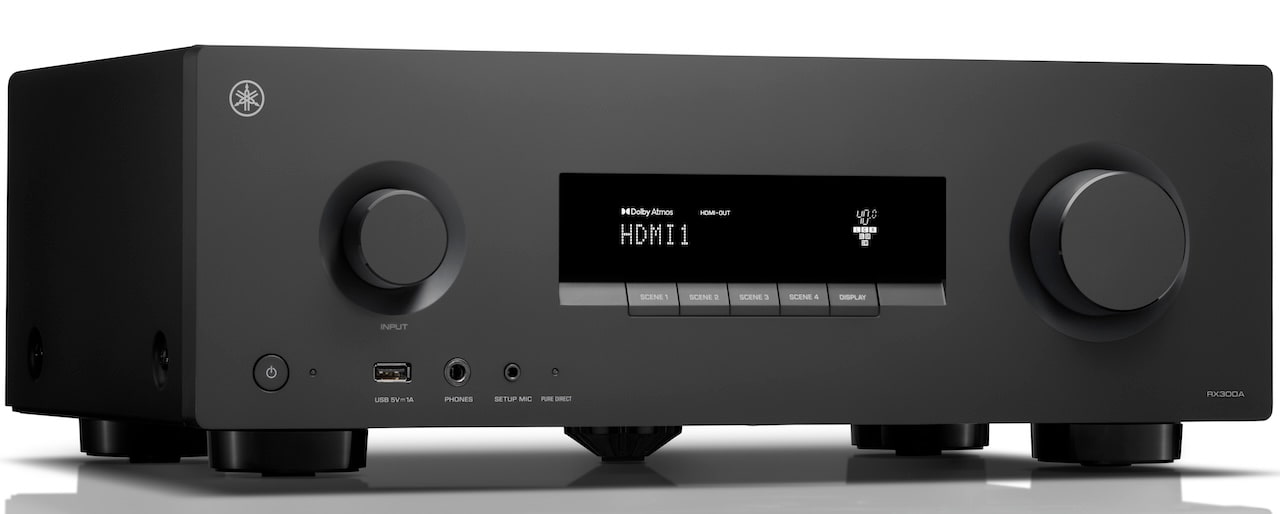
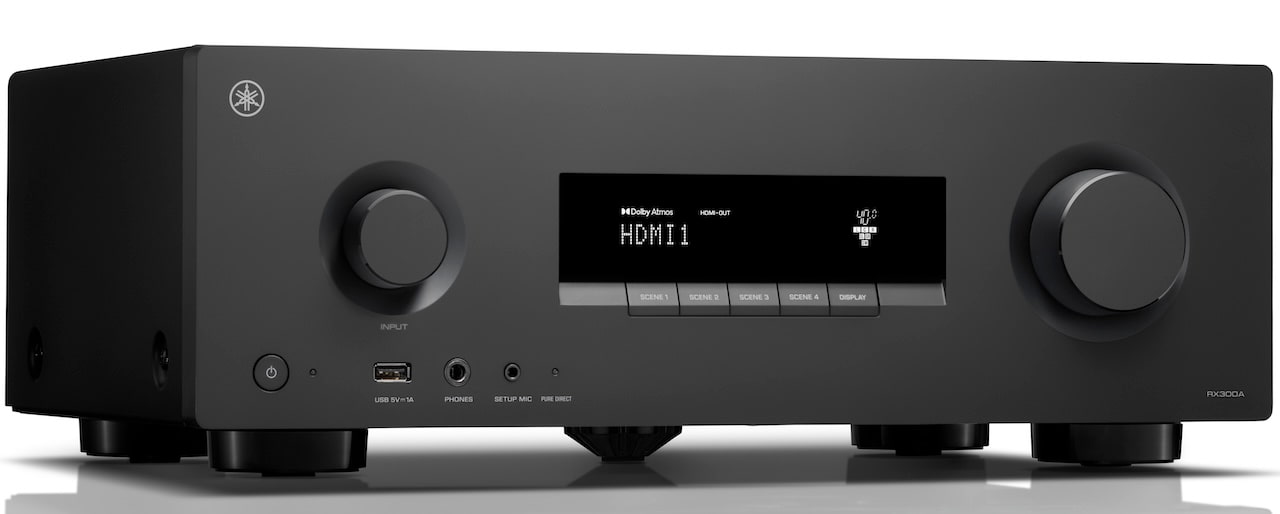


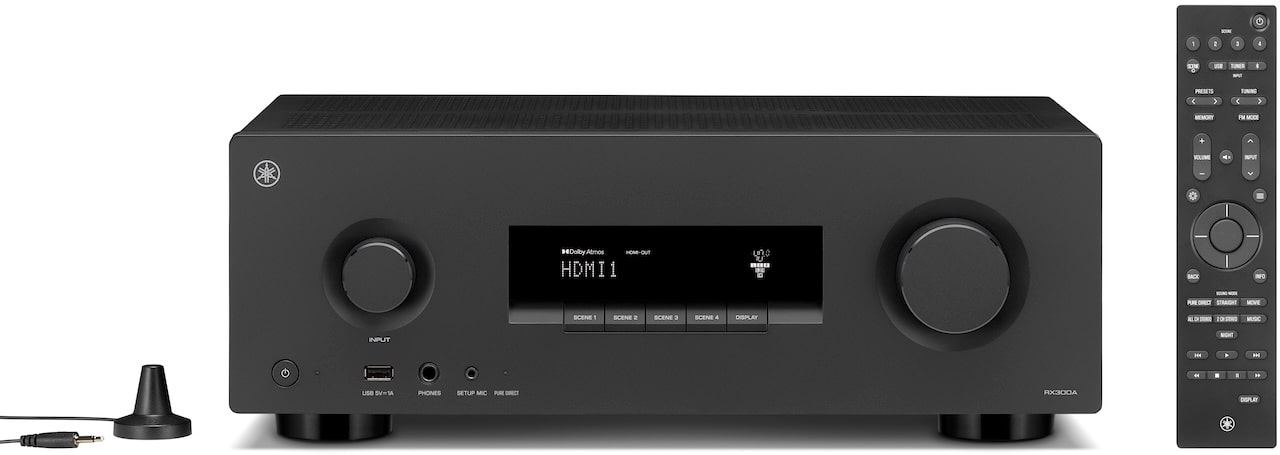
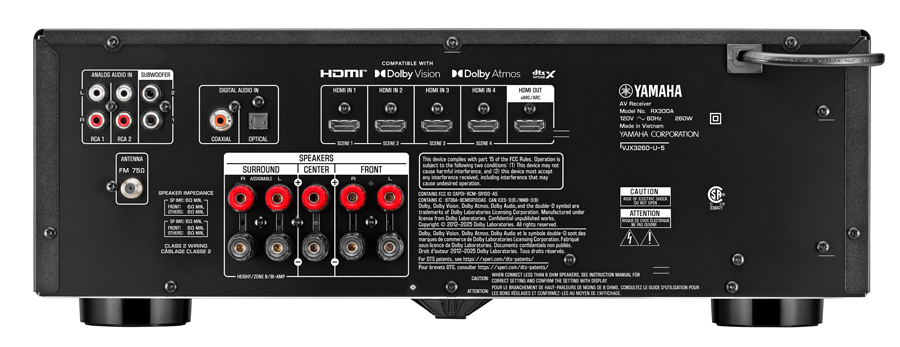
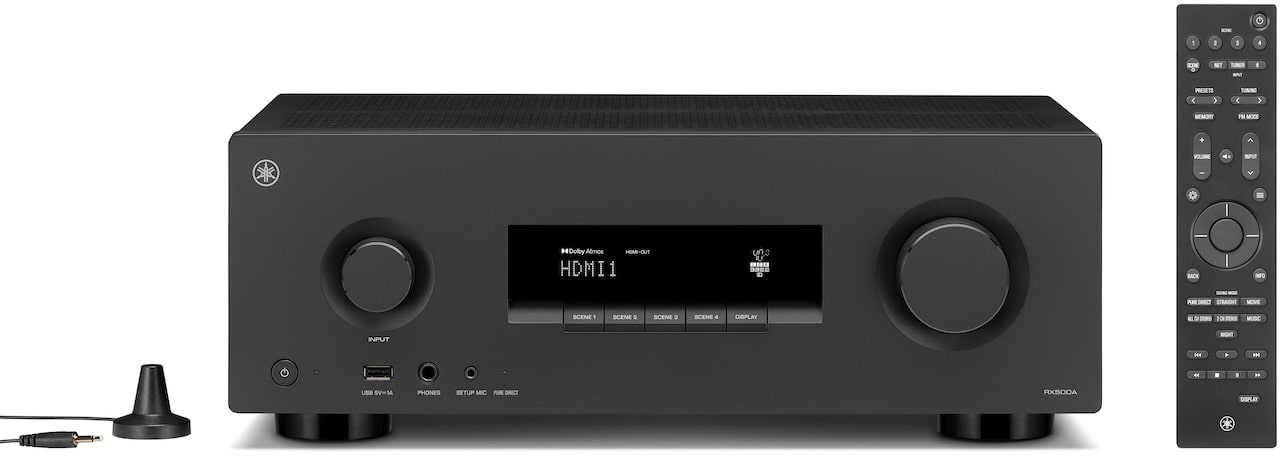
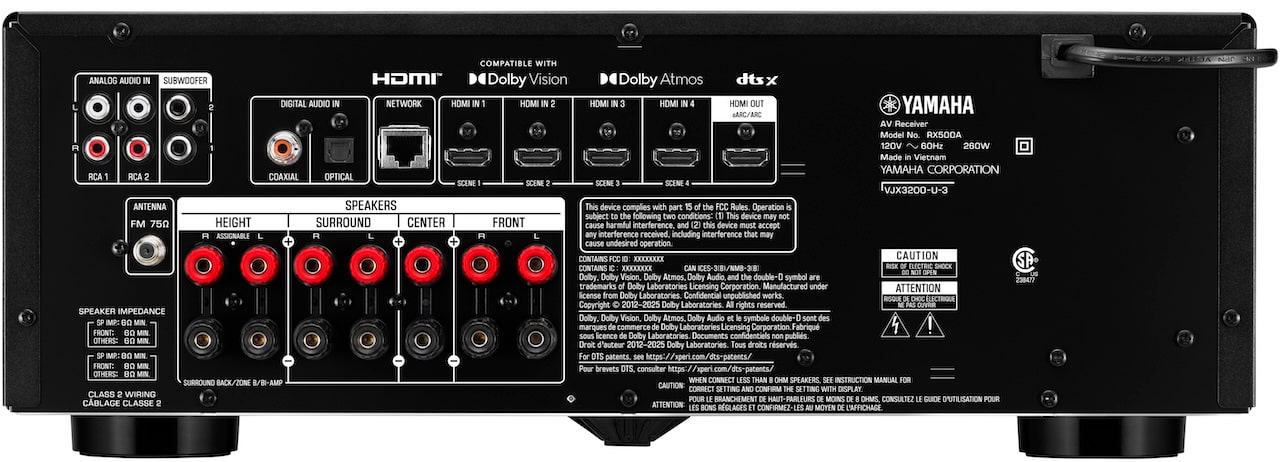

























































You must be logged in to post a comment Login