

Politics
What to expect when you’re expecting a budget


DAYS THE BUDGET IS LATE: 41
SPENDING SPECIFICS: Crucial state budget details — including aid for New York City, the structure of a surcharge on high-value second homes and the contours of major pension changes — are yet to be fully ironed out.
Gov. Kathy Hochul last week announced a “general agreement” for a $268 billion spending plan — but without specifics on many items. The closed-door discussions remain underway in Albany and none of the nine remaining budget bills have been printed.
The state budget is now destined to be at least six weeks past its March 31 due date. Yet Hochul is counting on voters to appreciate her policy wins and not focus on what has been an at-times messy process.
Hammering out these final specifics won’t make or break a final deal. But the fine print will matter for how much New York plans for its massive tax-and-spend plan — impacting some 19 million people.
Here’s what’s to still expect when you’re expecting a budget.
New York City aid: More help for the Big Apple is on the way from Albany. Lawmakers and Hochul are discussing additional foundation aid, potentially changing the formula for how public education spending is determined, and more cash for homeless students. At the same time, enabling legislation for pension amortization is being considered.
Those measures are designed to help New York City Mayor Zohran Mamdani close what’s left of a $5.4 billion budget gap. And they come on top of the additional $1.5 billion Hochul agreed to earlier this year.
The governor told reporters Monday morning her office has been working well with the Mamdani administration to fix the city’s budget woes.
“There’s quite a bit that needs to be OK’d by New York state,” she said. “I spent last night talking to the mayor, Friday night talking to the mayor. It’s been a great level of cooperation.”
Pied-à-terre structure: Lawmakers are yet to see any detailed budget language for Hochul’s proposed surcharge on non-primary second residences worth $5 million and above. How that surcharge is structured — including how much it will rely on a home’s assessed value — will matter for how many residences are actually captured by the tax.
Overhauling Tier 6: Overhauling the Tier 6 pension category is a potentially costly endeavor. Hochul and lawmakers are now considering what’s being called a “skinny” version of a plan originally pushed by unions, according to two people familiar with the talks.
The change would lower the retirement age for teachers to 58 after 30 years of service, but it would not alter how much they contribute from their paychecks. For the rest of the public workforce, contributions of no lower than 3 percent of a worker’s take-home pay is under consideration, but no change would be made to their retirement age.
The move is expected to cost $500 million combined for the state, local governments and school districts. That’s far less than the $1.5 billion proposal advanced earlier this year by the New York State AFL-CIO.
Buffer zones: As POLITICO Pro reported earlier, lawmakers and Hochul have weighed a 50-foot protest buffer zone that would allow local officials to expand it as they see fit. Having those zones around houses of worship is largely agreed to, but working through the specifics remains a sticking point. — Nick Reisman
From the Capitol

HANTAVIRUS IN NEW YORK: Three New Yorkers were aboard a cruise ship at the center of an international hantavirus outbreak, state Health Commissioner James McDonald said in a statement this afternoon. The three passengers were sent to the Offutt Air Force Base in Nebraska, where they are expected to be subject to a 42-day monitoring period, according to McDonald.
“While the Department is working in close coordination with the Centers for Disease Control and Prevention and local health departments to gather information, at this point it is unclear how long they will stay in Nebraska and whether, or when those individuals intend to return to New York,” McDonald said.
“At this point, it is important to emphasize that there is no immediate risk to the public. We will continue to monitor the situation and provide updates as needed,” he added.
When asked about the threat of the virus to New Yorkers, Hochul said the state health agency is working with the CDC, and she is monitoring the federal government to make sure officials have the capacity to handle any potential outbreak.
“I want to make sure that the CDC is capable of handling something that could be larger than they are predicting, and I say that because I know that over a year ago, there were significant cuts to the CDC,” Hochul said. “We have outstanding resources here in the state of New York…so I’ve activated them to start preparing New York for worst-case scenarios and hope they do not come.”
She noted that the state is putting together a plan to address any spread of the virus, but she does not believe it will turn into another coronavirus pandemic. She said she will begin doing briefings if it spreads beyond the three individuals flown in from the ship. — Katelyn Cordero
GOV’S SOCIAL ACCOUNT GETS PLAUDITS: The state government’s eyebrow-raising, joke-telling, irreverent social media accounts were honored with a Webby Awards “Honoree” award last week, Hochul’s office told Playbook.
The accounts, which go under the handle @NYGov on Instagram and X, are separate from the “Governor Hochul Press Office” account, which drew the ire of Barstool Sports founder Dave Portnoy last week when it mocked him for his age.
@NYGov, also known as “State of New York” on X, most recently posted messages like “it’s hole filling season” to spread the word about the state’s pothole reporting hotline on X, or “UNALIVE THOSE FLYS” as an Instagram PSA on the invasive spotted lantern fly.
“I’ve always believed that government is for the people, and in order to reach people, we need to communicate like them,” said Milly Czerwinski, a digital content strategist who works in Hochul’s comms shop and runs the account. “NYGov’s oddity and authenticity has broken down the traditional bureaucratic barriers to reach millions of people. Being weird works — this award is proof of that.” — Jason Beeferman
FROM CITY HALL

CCR-CHI COMPLAINT: City Councilmember Chi Ossé filed a misconduct complaint today against an NYPD officer who arrested him, advancing a case that stands to drive a further wedge between the police department and Mayor Mamdani.
The complaint, which Ossé shared with POLITICO, alleges the officer used excessive force during the April 22 arrest in Brooklyn, where the Council member and others were protesting the planned eviction of a woman who claims she’s the victim of deed theft.
The Civilian Complaint Review Board, which investigates and prosecutes cases of police misconduct, has received Ossé’s claim and is reviewing it, a spokesperson confirmed.
Ossé, a democratic socialist and ally of Mamdani, told POLITICO he believes the arresting officer violated his civil rights. “My rights were violated, but more importantly, my responsibility to my community and constituents demands a fact-finding,” said Ossé, who claims he suffered a concussion from being slammed to the ground.
The NYPD previously said Ossé and three other protesters were only arrested after refusing verbal commands to stop blocking access to the property where the eviction was set to be executed.
A spokesperson for Mamdani — who called video of Ossé’s arrest “incredibly concerning” last month — said in response to the Council member’s complaint that “the mayor respects the independence of the CCRB and will allow the disciplinary process to play out based on the evidence, established procedures, and the NYPD’s disciplinary matrix.”
Mamdani, a longtime NYPD critic, faces a fraught situation in responding to Ossé’s complaint.
If he doesn’t back up his fellow democratic socialist, Mamdani is likely to anger his allies on the left. On the flipside, if he condemns the arresting officer, he risks drawing the ire of NYPD leaders, including Commissioner Jessica Tisch, as well as the department’s rank-and-file cops.
Read more about the CCRB and Ossé from Chris Sommerfeldt in POLITICO.
CASE CLOSED: Council member Vickie Paladino has reached a settlement with the City Council to resolve disciplinary charges focused on her controversial social media posts.
The takeaway? The Council has withdrawn its disciplinary charges, and Paladino is dropping her lawsuit challenging the proceedings.
The agreement, filed in Manhattan Supreme Court on Monday, effectively dismisses the charges and cancels an ethics hearing that could have led to censure, fines or expulsion. As part of the settlement, Paladino must delete three posts cited in the case. She must also remove “Council Woman” from her personal X account display name within 48 hours of court approval to communicate to the public a clearer separation between her official posts, which are subject to some of the Council’s rules and regulations, and her personal opinions, one member familiar with the parameters of the settlement told Playbook.
The case stemmed from a string of inflammatory posts starting in December where, in a deleted post, she called for the “expulsion of Muslims from western nations,” prompting the committee to look into her conduct.
In February, she posted that New York was under “foreign occupation” following Mamdani’s appointment of a top immigration official. Paladino questioned whether the administration included “one single actual American” and later described a photo of Muslim sanitation workers praying as part of an “Islamic conquest.”
The Council’s Rules and Ethics Committee had charged Paladino with disorderly conduct and violations of its anti-harassment and discrimination policy in March.
Paladino sued to block the proceedings, arguing she was being targeted for her conservative views and that the discipline violated her First Amendment rights.
As part of the settlement, Paladino must issue a statement saying she did not intend to make colleagues or staff feel “unwelcomed or unsafe.” Council member Sandra Ung, who chairs the ethics committee, issued her own statement Monday afternoon saying the resolution “strikes the balance” between protecting staff and lawmakers’ free speech rights.
Both sides agreed to issue limited public statements and refrain from further comment. — Gelila Negesse
FROM THE CAMPAIGN TRAIL

EYES ON AI: Rep. Pat Ryan is backing state Assemblymember Alex Bores to succeed retiring Rep. Jerry Nadler, making him the latest member of the New York delegation to weigh in on one of the state’s most competitive primary elections.
In making his endorsement, the Hudson Valley Democrat cited the high-profile AI fight that’s become a central theme of the race as a key reason for backing Bores.
“He’s going to be the next member of Congress for the New York 12th District,” Ryan said at an event in Midtown with Bores today. “If you have any doubt, you don’t have to take my word for it — follow the money. Look at the incredible unprecedented amount … It’s because these tech billionaires are terrified, they’re terrified of Alex specifically.”
The millions of dollars in spending by a pro-artificial intelligence super PAC against Bores — an alum-turned-critic of data analytics company Palantir and a sponsor of the AI safety RAISE Act in the state Legislature — has also drawn an influx of money from regulation-friendly AI and tech-affiliated groups to boost him.
Bores’ campaign said that both he and Ryan “share a belief that the next Congress must take decisive action to regulate artificial intelligence before this transformative technology outpaces the rules meant to govern it” — a debate that continues to rage on in Washington and globally.
Bores is viewed as one of the top contenders for the 12th District, which covers a large swath of Manhattan. He’s up against Assemblymember Micah Lasher, Kennedy scion Jack Schlossberg and anti-Trump commentator George Conway, as well as a handful of lesser-known challengers. Public polling has been sparse in the race, and internal polls from earlier this year don’t show a clear front-runner. — Madison Fernandez
IN OTHER NEWS
— CLOCK’S TICKING: Mamdani has less than a month to fill two longstanding vacancies on the Metropolitan Transportation Authority board — and the appointments could be key for his mission to make the city’s buses “fast and free.” (THE CITY)
— NECK AND NECK: Hochul made a joint campaign appearance with Rep. Dan Goldman who’s running for reelection in New York’s 10th congressional district, with a primary challenge from Mamdani-backed Brad Lander. (Gothamist)
— SARCONE DOGGED: The top prosecutor in the U.S. attorney’s office for the Northern District of New York is accused of misconduct, according to the watchdog organization Campaign for Accountability. (POLITICO Pro)
Missed this morning’s New York Playbook? We forgive you. Read it here.



After the Atlas Lions stole the show at the 2022 Qatar World Cup, becoming the first Arab and African team to reach the semi-finals, Morocco enters the 2026 edition with aspirations that extend far beyond repeating their historic achievement.
Having transformed from the tournament’s surprise package to one of the world’s leading teams, Morocco now faces a new test: was their Qatar triumph a one-off, exceptional moment, or the beginning of a new era for Moroccan football?
Morocco face Brazil in first World Cup game
Since the end of the Qatar World Cup, Morocco has continued its path of development and technical stability. The team has maintained its core structure while integrating promising young players who have strengthened the squad’s depth. As a result, the team has become one of the best in the world in the FIFA rankings, confirming that its success in 2022 was no fluke.
Morocco still relies on a group of key players who made the achievement in Qatar, led by captain Achraf Hakimi, alongside Nayef Aguerd, Noussair Mazraoui, Sofyan Amrabat and Azzedine Ounahi.
Brahim Diaz is one of the most prominent attacking weapons thanks to his ability to make a difference and add individual solutions in the final third.
But the most significant difference between the 2022 and 2026 World Cups lies in the emergence of a new generation of young talents, giving the national team wider options and more diverse solutions.
A mix of experience and youth
Among these names are Ayyoub Bouaddi, one of the most promising young talents in European football. There is also Bilal El Khannous, who has established himself as one of the team’s key midfielders, as well as Chamseddine Talbi and Ismail Sibaari, who add considerable dynamism and speed to the forward line.
In contrast, the squad is missing some names that were present in Qatar’s achievement, most notably Youssef En-Nesyri, Hakim Ziyech and Sofiane Boufal, who represent the end of one phase and the beginning of another that relies more on young players seeking to write their own history.
Realism and ambition
The new format of the World Cup, featuring 48 teams, gives stronger teams a better chance of advancing from the group stage, but the competition will become much tougher in the knockout rounds. Therefore, reaching the quarter-finals seems a realistic goal for Morocco, given the quality of the squad and the experience players have gained in recent years.
Repeating or even surpassing the semi-final achievement will require a combination of consistent performance, mental fortitude, and a bit of luck against top teams. While Morocco may not possess a single ‘superstar’ who can consistently decide matches, they compensate with a cohesive team structure and tactical flexibility that make them a formidable opponent for any national team in the world.
A project that goes beyond results
Morocco is no longer merely a representative of Arab and African football at the World Cup; it has transformed into a comprehensive sporting model based on planning, stability and investment in talent. The Moroccan experience has proven that competing with the world’s best is no longer a distant dream, but an achievable goal when vision and sound management are in place.
Whether the Atlas Lions succeed in repeating or surpassing the achievement of 2022, their participation in the 2026 World Cup will remain an important milestone in the rise of Moroccan and Arab football. It is also a new opportunity to prove that what happened in Qatar was not a passing exception but rather the beginning of a new chapter in history.
Featured image via Alex Livesey/ Getty Images
By Alaa Shamali

The BBC’s Question Time programme has raised eyebrows over scenes depicting Fiona Bruce sitting among historical figures recreated with generative AI technology.
On Thursday night, Question Time aired an artificial intelligence special, which opened with Fiona introducing her guests for the evening, including AI-generated images of former prime minister Winston Churchill and pioneering artist Frida Kahlo.
AI renderings of Emmeline Pankhurst and Mahatma Gandhi were also included (a Radio Times article previewing the special also featured Che Guevara on this line-up, though this was ultimately not part of the broadcast).
Before the episode aired, a clip of the scene in question was posted on Question Time’s social media accounts, and was quickly met with backlash from viewers who took issue with the BBC for a variety of reasons, not least the ethical questions about recreating dead people’s likeness using AI and the technology’s impact on the environment.
During the actual broadcast, Fiona Bruce was quick to point out that the opening scene was actually a stunt to highlight the capabilities of generative AI.
“That really would be something, wouldn’t it? If that was our actual panel. Of course, it’s not. It’s AI generated, and just gives us a tiny insight into the use of this technology,” she told viewers, before introducing the previously-announced “human panel” of experts from the world of tech.
However, even before people were made aware of Question Time’s AI-generated opening skit, many had still taken issue with its “AI special”, which they claimed didn’t represent a balanced view of the contentious tech, due to the fact that everyone involved was seemingly in favour of it.
A BBC spokesperson told HuffPost UK: “This week’s panel explored the opportunities, risks and moral dilemmas posed by artificial intelligence, with a range of views represented.
“Both our panelists and audience members raised a range of issues around the use of AI including the opening question on its impact on the job market, as well as its effects on mental health, data and image theft, and the environment.”
Last year, Channel 4’s Dispatches programme faced a similar backlash when it aired a special episode about AI, which was later revealed to have been fronted by a “host” generated entirely with artificial intelligence technology.
Channel 4’s head of news and current affairs said at the time: “This stunt does serve as a useful reminder of just how disruptive AI has the potential to be – and how easy it is to hoodwink audiences with content they have no way of verifying.”


A mask-required reading of After the Whales Spoke, a new play written and directed by Molly Brennan, will be performed Saturday 6 June 2026, from 7 to 9 p.m. at The LAVA Center in Greenfield, Massachusetts, as part of LAVA’s fourth annual On the Boards New Play Fest. The story is described as follows:
Street medics have found a solution to the problem of anti-abortion, anti-trans legislators in a post-plague world where some people received instructions from whales.
The reading will star Ash Richardson-White, Foster Finch Schrader, Birdy Elliot, Drum Fernandez, Asa Rowan, Soe Noire and Nancy Brennan. It will be masks-required, with masks provided. Accessibility measures include captioning, audio description, space description and content description.
The reading takes place during the transnational expansion of COVID-conscious theater as its own genre.
Inspire: A Performing Arts Festival by and for the Airborne Aware
In April 2026, Inspire: A Performing Arts Festival by and for the Airborne Aware ran as a free, fully virtual Zoom festival featuring music, theater and comedy by COVID-conscious artists for COVID-conscious audiences. Its program included scenes from The Left by COVID-conscious playwright Caridad Svich, Ron Placone’s comedy special, the Long COVID Kids Choir and an open mic for emerging talent.
Recent COVID-conscious theater projects include Wake Up and Smell the C*VID, a hybrid monologue performance by Holy Erotic Propaganda Arson (HEPA), which premiered in New York and on Zoom on 24 April 2025 as a fundraiser for artists living with Long COVID.
Premiering the same evening was Anna RG’s AIR CHANGE PER HOUR, a Brooklyn performance structured around air purifiers and testimony from members of the arts community living with Long COVID.
COVID-conscious comedian Guiness Pig’s A Covid Christmas Carol, an audio play satirizing the Charles Dickens classic, was performed in December 2025.
Serina Estrada’s A Pan***ic Play, a 50-minute one-person show featuring stories from people whose lives have been impacted by COVID, was performed 21–22 January 2026, at The Art School in Glasgow as part of the Royal Conservatoire of Scotland’s Emergence Festival.
From Home Fest
Also in January 2026, From Home Fest, a virtual theater festival, included Equity, a COVID-conscious play by Stephen Fruchtman performed as:
a Private Equity take on the La Ronde formula.
Fruchtman is founder of Ongoing Pandemic Theater, which describes itself as:
championing and producing art that endeavors to keep the people making it safe amid an ongoing pandemic.
Theater and advocacy
COVID-conscious theater has also developed alongside advocacy for clean air as an access issue in the arts.
Performer and advocate Ezra Tozian has written for HowlRound about COVID protections in theater and the impact of the industry’s removal of precautions on disabled theatermakers. Tozian’s 2025 essay, “How to Negotiate COVID Protections“, is a practical guide for theater workers negotiating protections such as HEPA filtration, N95 and KN95 masking, remote auditions and on-site testing. Tozian also published “Challenging the COVID Status Quo“, about disabled theatermakers pushing back against the normalization of unprotected theater spaces.
In the UK, Dr. Sally Witcher OBE, founder of INN the Arts, has published Indoor Safety in the Arts, a framework for best practices aimed at reducing airborne infection risk in theaters and venues. Witcher’s work has been part of a wider push for clean air in live performance.
Protect the Heart of the Arts, a grassroots advocacy group sounding the alarm on the devastating impact COVID and Long COVID are having on the performing arts, has also organized public actions around arts events. In February 2024, the group coordinated a Long COVID awareness ribbon giveaway on the BAFTA red carpet, offering ribbons and masks to attendees and calling for solidarity with performers living with Long COVID. In December 2024, after a series of illness-related cancellations during David Tennant and Cush Jumbo’s Macbeth at the Harold Pinter Theatre, the group organized a festive mask and test handout outside the theater during the production’s closing weekend. The run saw four cancellations and reliance on six understudies.
There are also organizations hosting and providing infrastructure for clean air events. Clean Air Club in Chicago provides free air purifiers to artists, touring musicians and organizers. Positive Deviance in New York uses portable HEPA air purifiers, testing and respirators for COVID-safer events.
COVID-conscious performance
COVID-conscious performance has also developed through music, comedy and community events.
In comedy, Judah Friedlander continues to perform Zoom livestream stand-up shows.
In music, artists including Purity Ring perform in masks and work with volunteers to distribute masks at shows. Other musicians and performers have built COVID precautions into live performance, including Drew Empire, who performed at Positive Deviance’s debut COVID-safer hip-hop event in Brooklyn. phytocene, a Paris-based musician, has organized mask-required concerts in France. Car Seat Headrest frontman Will Toledo has asked audiences to wear N95 masks and has spoken publicly about Long COVID. Other artists including Jensen McRae, Deerhoof and Zoe Boekbinder have also requested or organized mask wearing and other airborne safety precautions for their performances.
There are also celebrities who continue to wear masks and advocate for mask wearing, including Nancy Sinatra, Stevie Nicks, Wil Wheaton, Morgan Fairchild, Serj Tankian and Matt McGorry.
Amidst this flourishing of COVID conscious theater, we’ve asked playwright and director Molly Brennan about the play, its inspiration and development process, and Brennan’s vision for COVID-conscious theater.
What was the initial question that made you know this had to become a play?
The initial question that led to After the Whales Spoke was:
Where is the pandemic leading us?
I wrote the first scene in 2020. I was living in Chicago. Two plays I had been cast in were cancelled: Be More Chill and American Idiot. I had no idea what I was going to do for money.
I had been a professional stage actor for 25 years, and a Clown and Acting teacher. I was reading about the 1918 Flu and the rise of fascism and nazism. I was observing, even in those first months, there were people in my life not social distancing or following COVID-safer protocols.
When George Floyd was murdered in May, I joined the folks protesting. There was a high level of care: people wearing masks, people providing water, medical aid, etc. I was moved by the show-up. As a person who has done a lot of direct action and demonstrations and protests, it was great to see a robust population of participants. Additionally, the networks of everyday care that were happening: sharing food and resources and medicine.
As tough as many things were, there was such a bright light of solidarity and care that was happening. The play started there, but got more cynical as the pandemic wore on, and the question changed:
What will happen to those of us who are refusing to be bought back by capitalism?
And:
What will happen to those of us who don’t ever go back to brunch?
The play is set in a post-plague future. What did that future allow you to explore that a present-day setting would not? How does the play understand the word “post-plague”?
The post-plague future of After The Whales Spoke allows a setting in which “The Virus” is no longer infecting people, and what those who did not stop wearing masks or following shared air practice feel about those who gave in.
A spoiler plot point, written before my current understanding of Long Covid, was that those who never got “The Virus” became victims of organ harvesting by billionaires.
I often wonder what my relationships will be to people if there ever is proper prevention and cure for SARS-CoV-2 infection and other airborne pathogens. What will it be like for me to not wear a respirator around people who haven’t worn a mask since 2021? Will my feelings of resentment ease?
How did your own COVID consciousness shape the writing of the play? Not only its content, but its form and maybe awareness of theatrical space?
My COVID-consciousness is the newest addition to my practice of disability access and community care, and so becomes integral to my creative process.
Before 2020, I was making projects that integrated ASL, captions, audio description, and sensory-friendly adjustments at the beginning of the creative process, making them part of production, rather than being an addition taken on by front of house/audience services.
The add-on of imagining actors in respirators, having productions mask-required, with Far-UVC, HEPA filtration and ventilation with CO2 monitoring wasn’t a stretch.
There was previously a staged reading of the play. What did you learn from hearing it with actors and an audience? Did anything change?
I did a Zoom reading of Whales, presented by MaskedNH and Breathe Free or Die, last year. I learned from feedback I was on the right track, in terms of making work for actors who have a strong shared-air practice and a decent amount of rage.
I also observed a disconnect between some “CC” [COVID-conscious] people and the suggestion of action against tyranny the play makes. I learned that some “CC” people are motivated by their self-preservation instead of shared care, and do not have a vested interest in other kinds of action.
Some “CC” people are single-issue, and it’s important to me to work with artists and collaborators who have a unified approach to justice. This idea of having a holistic approach to liberation is spoken aloud by Caspian in Whales. It challenges liberal check-boxing and encourages solidarity across oppressed groups.
What has it meant to develop this work in western Massachusetts, e.g., the mutual aid and COVID-conscious communities, the arts scene, general COVID awareness and receptivity to safety precautions?
The Franklin County region of Western Massachusetts has a relatively robust shared-air awareness crew. There are a decent amount of mask-required events, and it’s common to see people in public wearing respirators.
My wife and I actually chose to move here because of Last Ditch: a mask-required lesbian bar. We source & distribute masks and other public health items, crossing paths and working sometimes with local mask blocs.
The artistic spirit is quite unique in this area. There’s a lot of “art without permission”. People just doing things. Like making statues on their property of found items, doing decorated tractor parades, having a town scarecrow contest, disco bean shelling, stuff like that. Very art-for-the-people. Lots of farms and lots of farm-based art! The show-up for auditions of queer people who mask was awesome! Also, my “CC” mom is in the show, doing a drag version of Mitch McConnell.
What COVID safety measures will be in place for the performance?
After the Whales Spoke at LAVA Center’s On the Boards Festival will have HEPA filtration CO2 monitoring, and Far-UVC tech. Actors will be masked, and audiences will be required to mask as well. I will provide a variety of n95s and kn95s at the door.
There will also be captioning and audio description, and we are working on streaming the event. The building is ADA compliant, but the front door can be a bit tricky for mobility devices, so I’ll make sure to have someone posted out there to assist.
Two of the cast members use wheelchairs and have been helpful in figuring out what needs to happen to welcome the larger disabled community.
What role can playwrights play in keeping public memory alive when institutions are often eager to move on?
It’s important to name that my shared-air practice, which is wearing an N95 everywhere except at home and in specific outdoor situations, is only one element of my commitment to community care. And C19 is only one pathogen that is floating around and killing and disabling people.
I think there are different ways for playwrights, and other artists and writers, to communicate what is broken about our society, and I don’t hold playwrights responsible for “keeping public memory alive” about COVID. The problems we face are intersectional. If a theater piece focuses on racial disparity, gender, disability, poverty, it tells the story of struggle, oppression, and maybe how to fight it or grow out of it.
I believe it is the responsibility of all of us to do our best to make sure everyone has a path to life, liberty and pursuit of happiness. That includes wearing a respirator in public spaces, but not every play has to be about that specifically.
What would you hope a COVID-conscious audience member feels when they encounter this production? What would you hope someone who has not thought much about COVID in recent years takes away from it?
I would hope that a “CC” audience member feels safer to exist in the room without a looming threat of illness, in terms of being in the physical space. I hope that they would see themselves in the play.
Someone who has not thought about COVID recently, I hope they engage in the post-reading discussion, and take some free masks and wear them.
How do you imagine the future of COVID-conscious theater?
The future of “CC” theater relies on a complete restructuring of the structure. The LAVA center is a small, community art space, so this does not apply to them. They’re doing a good job. Large, professional theaters need to be worker-owned, and center the art and the audience instead of Boeing, Chase, Excellon, and the other earth-destroying funders.
The future of “CC” theatre is the future of theatre. If the structure is a people-based structure, community care of all kinds is a militant and inextricable element.
Tickets and Zoom stream info can be found at after-the-whales.mmm.page.
More info about Molly Brennan and After the Whales Spoke can be found at monsterclowngirl.mmm.page.
Featured image via…

Recently, budget airline Ryanair axed routes and reduced capacity for a range of Greek airports, including Thessaloniki, Athens, Chania and Heraklion.
But Jet2 seems to have gone the other way. Earlier this year, the travel company said its success at its relatively new London Gatwick base has led it to expand, including a “brand-new and exclusive route to Lesvos (Mytilene)” from 2027.
They also said they were “delighted to be significantly expanding our Jersey programme for Summer 2027, with a great choice of flights now departing from six UK airports as a result”. This will include two new routes.
A spokesperson told HuffPost UK that overall, they’ll be offering 30 new routes starting in 2027.
“With 30 new routes and three brand new destinations, including Thassos, Hurghada and Sharm el Sheikh, on sale for Summer 2027, we are giving holidaymakers a fantastic choice and flexibility when it comes to locking some sunshine into the diary,” they said.
What are Jet2′s new 2027 summer routes?
Per The Sun, these will be:
1) Birmingham
2) Bournemouth
3) Bristol
4) East Midlands
-
East Midlands – Paris Charles de Gaulle
-
East Midlands – Hurghada
-
East Midlands – Sharm el Sheikh
5) Edinburgh
6) Glasgow
7) Leeds Bradford
8) London Gatwick
9) London Stansted
-
London Stansted – Almeria
-
London Stansted – Hurghada
-
London Stansted – Kavala (Thassos)
-
London Stansted – La Palma
-
London Stansted – Paris Charles de Gaulle
-
London Stansted – Sharm el Sheikh
10) Manchester
-
Manchester – Bergerac
-
Manchester – Jersey
-
Manchester – Hurghada
-
Manchester – Kavala (Thassos)
-
Manchester – Sharm el Sheikh
-
Manchester – Paris Charles de Gaulle.
What about the jet fuel crisis?
This announcement comes as some airlines, such as Lufthansa and KLM, have reduced their flight schedules following rising jet fuel costs.
Others have continued running at full capacity but are considering introducing surcharges, or have already done so.
But Jet2 previously said they have “ruled out” surcharges.
A spokesperson told HuffPost UK: “As a consumer champion, we have restated our confidence in the supply of jet fuel this summer, meaning that customers can look forward to getting away on their well-deserved holidays with Jet2. We were the first airline and tour operator to announce that we will not introduce surcharges, meaning the price at which customers book with Jet2 is the price they will pay”.
They have also launched “37 new routes and three brand-new destinations in La Palma, Palermo and Samos” for 2026.
Simple Flying reported that Jet2′s profits from fiscal year 2024-2025 were 14.7% higher than the previous year’s.


10 min read
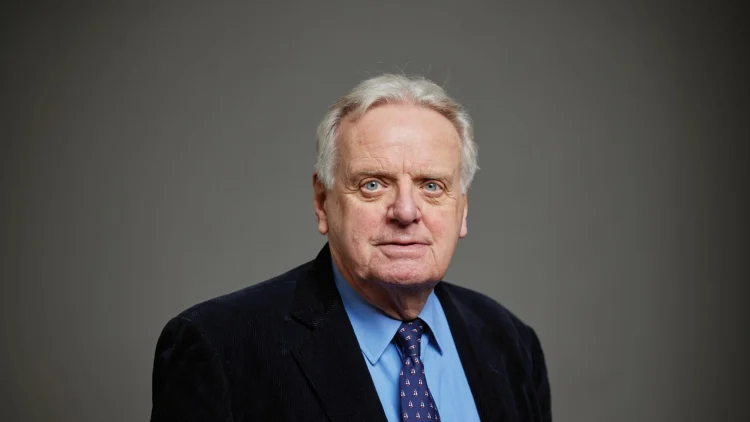
Former TV executive Lord Grade has just stepped down as chair of Ofcom. He tells Noah Vickers about his eventful career, enforcing the Online Safety Act and why critics of GB News are secretly ‘embarrassed’
Lord Grade is a titan of British television. Over four decades as an executive at ITV, the BBC and Channel 4, he greenlit and oversaw some of our most cherished programmes, including the launch of EastEnders and Casualty, the importing of Friends and Neighbours onto UK screens, and the broadcasting of Bob Geldof’s Live Aid concert in 1985.
The 83-year-old peer has re-taken the Tory whip after sitting as a non-affiliated member for the last four years while serving as chair of Ofcom. Appointed to the role under Boris Johnson’s government in 2022, his term concluded in April this year.
But despite his extraordinary career in television, he says that what drew him to the job was not in fact its role regulating the world of broadcasting.
“What interested me about the Ofcom job was I started to worry about online safety,” he says, “and there were the beginnings of talk about a bill coming.”
The Online Safety Act, passed by Rishi Sunak’s administration in 2023, is enforced by Ofcom. Companies in breach of the legislation can be fined up to £18m or 10 per cent of their qualifying worldwide revenue, whichever is greater.
Ofcom is up against “very powerful companies who have unlimited access to the best legal brains, and will challenge everything we do”, says Grade, who acknowledges concerns that the regulator moves too slowly.
“When you’re regulating, and [despite] the strong powers that Ofcom has, we’re not a star chamber. Its processes have to be fair and defensible in court.”
The legislation, he argues, is just one part of a wider global regulatory effort to which the big tech companies have been forced to respond.
“I’ve got kids and grandkids and they’re on their screens all day long. The tech companies are beginning to wake up to the fact they’ve got to change. The mere fact of the legislation, and Ofcom’s engagement with the big tech companies, has created quite a bit of change – some of it voluntary.”
Grade’s term at Ofcom also began less than a year after the launch of GB News. The regulator is still regularly accused of failing to hold the channel to the same standards of impartiality as other broadcasters. “The same rules apply to GB News as apply to the BBC, Sky, ITN, whoever,” he insists.
“All news programmes are the result of editorial choices made all along the line. What story are we going to cover? How are we going to cover it? Who do we interview? What are we going to ask them? What are we going to use? Where does it go in the running order?
“Everything’s a choice, all the way up. Because GB News make different editorial choices necessarily on each news day from the BBC, ITN or Sky, doesn’t make it wrong.”
GB News “haven’t always played by the rules”, he admits, but it has been penalised accordingly. He adds: “They’ve actually got better and better. It’s not difficult to comply – sometimes it’s only a sentence in a script.”
Does that mean GB News’ critics should really be angry with how the rules are written, rather than the way Ofcom is enforcing them?
“No, I just think,” he says, before pausing for a moment. “I can now speak [freely], as I’m not at Ofcom. I honestly think they’re embarrassed by the fact that there is a news organisation that has a different news agenda to them, that speaks to the agenda of the majority – if you look at the polls, a large swathe of the voting population, who have no voice on the BBC.
“Immigration, Brexit, these are all issues that don’t get the weight on the BBC, or haven’t been able to, that GB News will give, so what’s the problem?”
To unite that “large swathe” of voters, speaking as a Conservative peer, does he think the Tories and Reform UK should do a deal to win the next election?
“No, I think they’ve got to slug it out to the election,” he says. “If there’s a hung parliament at the end of that, then that’s the time, maybe, for Reform and the Conservatives [to work together]. You can do a confidence and supply agreement, you don’t have to have a coalition – see who’s got most seats.”
Grade is proud of his tenure as a TV executive, his face lighting up as he recalls there being “nothing better than backing a hunch, and the show goes on and it’s beautifully executed, the audience find it and love it, and critics love it”.
His time at London Weekend Television (LWT), a regional franchise of ITV, saw the broadcast of The Fosters in 1976, which featured Lenny Henry in his first regular TV role. It was the first British sitcom to have an all-Black cast, adapted from the American sitcom Good Times.
“What we’re at risk of losing is big drama designed specifically for the British audience”
“Encouraging a lot of Black actors in a lot of shows that we did was a big step forward,” says Grade.
“The critics rounded on it and said, ‘We don’t understand this show – this could have been played by a white family,’ and I said, ‘That’s exactly the point.’ That drove me crazy, but that was great fun.”
Finding TV hits could be the “hardest thing in the world”, he recalls.
“My first boss at LWT, who brought me into television, was the late Cyril Bennett. I said, ‘How do you get a hit, Cyril?’ He said ‘90 per cent luck and 10 per cent accident’,” Grade chuckles.
“You’ve got to know what’s not going to work. You have to know exactly what has got no chance at all – after that, it’s up to the audience. The audience decide what’s a hit and what isn’t.”
As controller of BBC One in the 1980s, Grade almost axed Blackadder after its first series – which had been shot, expensively, on location.
Grade also found it unfunny, so he made the programme’s renewal conditional on its producers moving it into a cheaper studio format, with an audience to react to the jokes.
“Very grumpily, they put it in a studio and the rest is history. You watch the first series – it’s a mess. They [the audience] knew what was funny and what wasn’t funny.”
He made a more committed attempt to kill off Doctor Who, forcing the series to go on an 18-month hiatus and to swap its lead actor from Colin Baker to Sylvester McCoy. Does he expect fans will ever forgive him?
“No, no, no. That show was well past its sell-by date in my time.”
Grade complained that the visual effects were terrible compared to Star Wars and Close Encounters of The Third Kind. He credits Russell T Davies, who resurrected it in 2005, for performing “a miracle with a great brand”.
But he adds: “I have to secretly admit, which I don’t normally admit – I’m not a big fan of sci-fi in any event. I know that’s a blind spot of mine, so I’ve always had to be very careful not to let my own taste intervene.”
Case in point, perhaps, came when he flew out to California to decide which American shows to buy for Channel 4. In a Hollywood screening room, he and his colleagues watched the pilot for a new sci-fi series.
“We all looked at each other and said: ‘This is garbage, it’s hard to stay awake.’ You know, jetlag and everything else… so we turned down The X-Files, which was a big miss.”
Later at Channel 4, the station’s head of comedy presented another pilot episode to him. Grade found it “mindless” and “really stupid in places”, but said to carry on if there was enough belief in it. That series was Father Ted.
These days, Grade warns that British TV is in a perilous place. He shares the concerns raised last year by Wolf Hall director, Peter Kosminsky, that it is becoming increasingly unaffordable for public-service broadcasters to produce high-end British dramas.
“I’ve had many discussions with Peter, who I admire enormously,” he says. “Something’s got to happen, because what we’re at risk of losing is big drama designed specifically for the British audience.
“If it has a life after that, internationally, fine. I think ITV were very surprised that Mr Bates vs The Post Office sold in as many territories as it did, because it was a very domestic story.
“But Happy Valley, Wolf Hall, those sorts of shows are very much at risk. The answer is, the BBC has a secure income, [and] it needs to continue to have a secure income so it can play its part.”
Kosminsky called for a levy to be put on US streaming services, with the proceeds collected into a British cultural fund. A similar proposal was put forward by Parliament’s Culture, Media and Sport Committee, but was turned down by the government.
“That’s been rejected, and it’s a hard sell,” says Grade, who argues it might be possible for the private sector to instead create a one-off fund, which the BBC and others could come to for support in making their more expensive series.
The intellectual property of programmes produced from it would stay in the UK, but the fund’s private backers would be the first to benefit from international sales.
He doesn’t see any feasible alternative to the licence fee as a way of funding the BBC – and he cautions that a subscription model would discourage producers from taking risks on shows which might not sell.

Grade also warns, however, that the corporation is still too big and says cuts should be made so that the licence fee can be re-based at a lower amount.
The rise of working from home, he suggests, means the BBC could free up some funding by selling off some of its physical estate: “When you go to some of the BBC headquarters outside London, you just can’t believe the scale of them.”
He argues, too, that the licence fee should be made progressive by tying it to income in some way.
“It’s wrong that I pay the same as a single mum with three kids in a rented room somewhere – it’s just wrong.”
The peer is optimistic about the corporation’s new director-general, Matt Brittin: “I’m excited and encouraged that they’ve brought in someone from the outside, which I think is what the BBC needs. He seems to be making all the right noises…
“I’m very hopeful that we’ll see some radical change at the BBC, definitely. He’s got to appoint a deputy who’s going to control the journalistic minefield, so they don’t have another editorial crisis – of which there have been too many.”
The last government’s decision not to privatise Channel 4, he argues, was a missed opportunity – despite having fought previous attempts at privatisation when he was the station’s chief executive under Margaret Thatcher and John Major.
“It’s wrong that I pay the same [licence fee] as a single mum with three kids in a rented room”
“There were only five channels in those days. It was a very different world,” he explains. “The question is, can Channel 4 make a virtue out of being small? That’s the challenge. There’s a new team in there, a great new chairman, a very exciting chief executive – let’s see if they can make a fist of it.”
Asked to rate, out of 10, how hopeful he feels about the future of British TV, he gives a score of two. Perhaps two and a half.
“I am very, very worried. Part of it is being kind of misty-eyed about the golden age of which I was privileged to be a part.
“But also the creative industries are one of the most important growth sectors of the economy, and have been for the last decade. The bedrock of that is public service media, and if we lose public service media, eventually that will ripple through into our position as a major provider of international exports, soft power. It’s gobsmacking what we achieve.”
This article contains major spoilers for the Euphoria finale.
After the penultimate episode of Euphoria season three saw Jacob Elordi’s character being killed off in the grisliest way possible, creator Sam Levinson had one more massive shock in store for viewers in the finale.
Speaking of the finale… have you watched it yet? Because we’re about to drop some major spoilers. We know we warned you once already, but we’re talking massive spoilers here, so if you don’t want to know what happens in the episode, get this bookmarked and we can reconvene afterwards.
For everyone else, here goes…
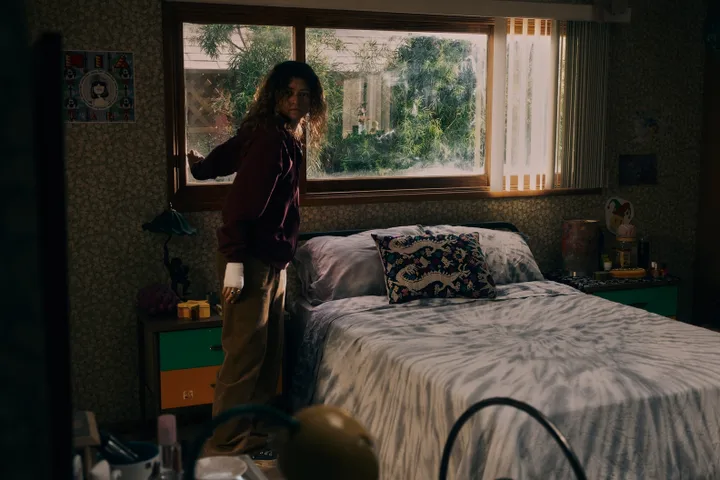
So, in the last ever episode of Euphoria, viewers saw Zendaya’s character Rue overdosing on fentanyl and dying, having struggled with drug addiction over the course of the show’s three-season run.

Appearing in a behind-the-scenes video shared after the episode aired, Sam Levinson – who has been candid about his own substance abuse issues in the past – explained: “I think, in the end, I wanted to tell an honest story about addiction. I also wanted to tell a story about grief and the emotional turmoil that it can create.”
He continued: “I’ve always been against utopian storytelling. What we’ve been known for on the show is not pulling any punches.”
Ending Euphoria on Rue’s death, Sam claimed, “just felt like the honest ending”.
“People relapse. They fuck up. They’re not ready to get clean,” he said. “And they weren’t dying like they are now, with the influx of fentanyl into this country.
“I can say with absolute certainty that if I was going through what I went through when I was younger now, I wouldn’t be here, either. So… there’s no reason to sugarcoat it.”
He added that he “wanted to tell the story for” Angus Cloud, a fan-favourite member of the Euphoria cast who died 2023 at the age of 25, due to an overdose of several drugs, including fentanyl.
Sam noted: “[I wanted to tell the story] for people who weren’t granted a second chance.”
He also praised Zendaya’s “wonderful and layered” performance as Rue.
“We fell in love with this character, this girl, who is flawed and fucked up, but has a good heart, and [is] trying to do right, at least sometimes,” he enthused.
“It’s a blessing to work with talented people, and people that you love.”
There were numerous other deaths in the Euphoria finale, including most notably crime lords Laurie and Alamo, played by Martha Kelly and Adewale Akinnuoye-Agbaje, respectively.
On his decision to end Euphoria after three seasons, Sam said over the weekend: “In terms of the story that we set out to tell, which is a story about addiction and its consequences, this feels like the end to me.”
All three seasons of Euphoria are now streaming on Sky and Now in the UK.
Help and support:
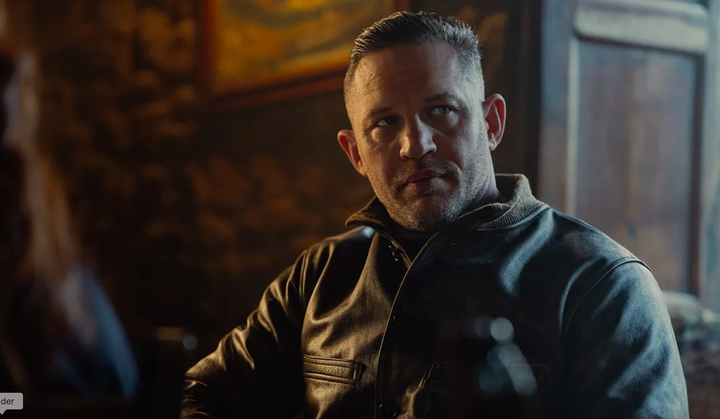
The Oscar nominee plays mob family fixer Harry Da Souza in the series, as well as serving as one of its executive producers.
Season one quickly became one of the most-watched shows on Paramount+ when it dropped in 2025, with a second run of episodes having recently wrapped filming, and a third already in the works.
However, it’s now looking uncertain whether Tom will be back for season three, based on speculation and rumours about supposed drama behind the scenes of MobLand, which also stars Pierce Brosnan and Dame Helen Mirren.
For those struggling to keep up, here’s a breakdown of everything that’s been reported in the press about Tom Hardy’s MobLand future so far…
Where did the rumours about Tom Hardy leaving MobLand come from?
Puck News first reported on 22 May that Tom had parted ways with the show, alleging he wouldn’t be returning for season three.
This report claimed that showrunners David Glasser and Jez Butterworth had issued an ultimatum to Paramount+, with the latter said to have told the network they had to choose between him or Tom.
On the same day, Variety published a separate piece, citing an undisclosed source who claimed that Tom “was not asked to return to the series following on-set issues with executive producer Jez Butterworth, 101 Studios and others”.

A report from The Hollywood Reporter five days later expanded on the story, including quotes from one source who described the Dark Knight Rises actor’s behaviour behind the scenes of MobLand season two as “career suicide”.
“He refused to come out of his trailer for hours at a time,” they were quoted as saying. “He kept the cast waiting, [which is] a power play. Keeping Pierce Brosnan, Helen Mirren and others waiting is career suicide, I would wager.”
So, will Tom Hardy be back for MobLand season 3?
Well, that’s where things get more complicated.
A production insider told Variety on Thursday 28 May that while there had been on-set tensions, Tom is “not fired”, and that the door is “not closed” to him for season three, with the team said to be trying to resolve the creative differences before season three gets underway.
Variety’s source also elaborated further on the previously-reported allegations, suggesting that the Venom actor was unhappy with the show’s scripts only being delivered to him weeks before shooting, as he “likes to prepare” with more time than that.
There are also conflicting reports from Variety’s sources regarding showrunner Jez Butterworth’s presence on set, with some saying he wasn’t around to address the script issues, while others say he had weekly Zoom meetings with Tom about the show.
What has the cast of MobLand said about the Tom Hardy rumours?
The stars of MobLand have mostly stayed amid rumours of the behind-the-scenes drama, and reps for both Tom Holland and Paramount+ did not respond to HuffPost UK’s request for comment.
Dame Helen Mirren did post a photo of the Inception star on Instagram on 28 May, with the caption “love you now and always”.

Although this didn’t directly refer to the MobLand rumours, many read her post as alluding to the rumours about on-set tensions.
Comments were turned off on the post, which was uploaded days after footage of Dame Helen being confronted by a pro-Palestine demonstrator over her past support of Israel was widely shared in the press.
It’s probably worth noting that there had already been rumours of behind-the-scenes clashes on the MobLand set
Before these latest reports, there had already been rumours of on-set tension between Tom and other members of the MobLand cast.
In December 2025, the Daily Mail published quotes from an unnamed source who claimed that Tom was often “late to filming”, which was “annoying for Dame Helen”, who was described as “extremely professional and disciplined”.
“She expects better. She holds people to a high standard. She’s 80. She’s been there and seen it all,” the source continued.
“The behind-the-scenes crew watch it all and believe that she no longer looks as happy working on scenes with him. It has all become quite personal between them.”
Dame Helen appeared to shoot down this report two days later, by sharing an Instagram post in which she thanked Tom “for his brilliance onscreen, his dedication off screen, his good heart and especially the HardyHugs I get when onset with him which is not nearly enough in my opinion”.
This isn’t the first time Tom Hardy has been reported to be involved in a spat behind the scenes of one of his projects, either

Village Roadshow/Kobal/Shutterstock
Mad Max: Fury Road director George Miller told The Telegraph in 2024 that Tom had a difficult relationship with his co-star Charlize Theron on set, and also claimed that Tom often “had to be coaxed out of his trailer”.
He said: “There’s no excuse for it, and I think there’s a tendency in this business to use great performances as an excuse for other disruption that could be avoided.”
A book about the making of the film, titled Blood, Sweat and Chrome: The Wild And True Story Of Mad Max: Fury Road, alleged that Tom would show up late so frequently that Charlize asked that the Venom star be fined $100k for “every minute that he’s held up the crew”.
Tom has been open about his behaviour while making the film and has responded to the allegations about his conduct.
“What [Charlize] needed was a better, perhaps more experienced partner in me,” he told The New York Times in 2020. “That’s something that can’t be faked. I’d like to think that now that I’m older and uglier, I could rise to that occasion.”
Patrick Stewart has also spoken less than favourably about his experiences of working with Tom in the film Star Trek: Nemesis.
In his 2023 memoir Making It So, the X-Men actor recalled: “Tom wouldn’t engage with any of us on a social level. Never said, ‘good morning,’ never said, ‘good night’, and spent the hours he wasn’t needed on set in his trailer with his girlfriend.”
MobLand season one is available to stream on Paramount+ now. A release date for season two is yet to be announced.


Arsenal were beaten by Paris Saint-Germain on penalties after a 1-1 draw in the Champions League final, a result that leaves a mixture of pride and frustration in its wake. The Gunners matched a star-studded PSG for long stretches, pushed the game to the limit, and ultimately lost in the lottery of spot-kicks.
For Arsenal supporters the feeling was familiar. A near miss on the biggest stage but this felt different to past failures. This was not the damning end of an era, but evidence of progress. Key players are in their prime and the club’s trajectory under Mikel Arteta has moved from hopeful to tangible.
Arsenal frustrated PSG
Defensive structure held up. Arsenal’s shape frustrated PSG for long spells. The visitors limited clear chances in the first half and forced PSG to work for openings despite dominating possession. That defensive discipline was the foundation of Arsenal’s plan. To put it simply, the Arsenal defence made this great attacking PSG team look very average.
The plan had its limits. Arteta’s approach was conservative at times, for a game built on containment and counter opportunities rather than sustained territorial pressure. David Raya’s decision to kick long repeatedly became a central tactical choice. Whilst it helped bypass PSG’s press, it also reduced Arsenal’s ability to build controlled attacks through midfield. That trade-off defined the match.
PSG made bold changes, withdrawing key attackers and later some of their engine-room players, while Arsenal appeared to have more freshness in depth. The balance of substitutes suggested Arsenal could have shifted the game more aggressively as time wore on, but the plan remained cautious.
Was this a missed opportunity for Arteta?
As the game stretched, substitutions from both sides altered the dynamic. Arsenal’s bench looked capable of offering more attacking impetus, but the tactical script did not change enough to force a decisive breakthrough.
The match was ultimately decided from 12 yards. David Raya produced the only save of the shoot-out, but Arsenal still fell short. Penalties are cruel, they are also a reminder that small margins can define a season.
So, did Arteta miss out? Yes and no. On one hand, Arsenal were within touching distance of the club’s first European Cup. The final presented a rare chance to convert a season of progress into the ultimate prize. On the other hand, the performance underlined how close Arteta’s project is to completion. The team matched elite opposition, showed tactical discipline, and reached the final through a long, unbeaten run inside 120 minutes across the Champions League campaign.
Lack of flexibility
Arteta must ask whether the plan should have been more flexible. When a side like PSG cedes possession, the temptation is to force the issue. When they dominate the ball, the temptation is to sit in and frustrate. Arsenal oscillated between those poles. The question for the manager is whether a bolder, more expansive tweak in extra time might have produced a different outcome.
Progress is real. Reaching the final and pushing PSG to penalties is evidence that Arsenal are closing the gap on Europe’s elite. The Premier League title and this European run are not anomalies; they are part of a clear upward arc.
Recruitment and tweaks are inevitable. Arteta will have earned more leverage in the transfer market, particularly to add attacking options. The squad showed depth, but the final highlighted moments where greater attacking variety or a different tactical approach could have made the difference. Expect targeted signings and subtle tactical evolution rather than wholesale change.
This can be psychological fuel for players and fans, this defeat can be galvanising. Arsenal have used near-misses before to drive improvement; the challenge now is to convert that frustration into focus and refinement. The hunger in the players was visible in Budapest that hunger will be the club’s most valuable asset.
Final verdict
This was a night of near-misses and fine margins. Arteta’s plan largely worked. The Gunners were organised, resilient, and competitive against a side many expected to dominate. Yet the final also exposed the limits of caution.
When the moment demanded a decisive shift, Arsenal did not quite seize it. The result is a bitter pill but not a fatal one. Progress has been made the prize remains within reach. The task now is easier said than done learn fast, recruit smart, and return hungrier.
A season of progress ended in heartbreak, but the blueprint is clearer than ever. Arsenal are closer to the summit and that makes the next attempt more ominous for their rivals.
Featured image via Carl Recine/Getty Images
By Faz Ali

Volodymyr Zelenskyy has warned Donald Trump that Ukraine may only have the upper hand in negotiations with Russia for a few more months.
The Ukrainian president predicted that Kyiv has just “this period of time before winter” to gain the diplomatic advantage over Moscow.
His warning comes as the American president’s enthusiasm for ending the four-year war has waned and US-brokered peace talks between the warring countries have broken down.
Much of the White House’s focus since February has been on the war it started in Iran, which Trump is now desperately trying to find a way out of.
But Zelenskyy told CBS News that there is still a window of opportunity, because Vladimir Putin has been on the back foot since December last year.
Russia is burning through troops at a shocking rate – the UK estimates Putin has lost nearly half a million soldiers since the war began – and has struggled to make many territorial gains this year.
As Zelenskyy noted:”(I)t began in December 2025, Russia began to lose initiative on the battlefield.
“And from this point of view, I shared this information with our American partners. I said to them in January, I think that we have window for the negotiations, because each month they will lose more and more people … So now we have this period of time before the winter.
“So I think that in winter — we have, before the winter, we need to find a way, diplomatic way, to sit and to speak.”
Zelenskyy also noted that there has “never” been an American negotiation group in Ukraine even though they’ve been several times to Moscow.
He pointed out that any success relies on the amount of international pressure on Russia.
Zelenskyy said: “But it depends [on] the pressure on Putin, the pressure in his society, and I think that is increasing, the pressure by sanctions – not to lift them, to put more. It’s good, it’s diplomatic way.
“I hope that the United States will do it, and European sanctions, but they made more than 20 packages of sanctions already.”
But Trump recently suspended some of America’s Russian oil sanctions due to high gas prices caused by the ongoing conflict in Iran.
In March, Zelenskyy also told Reuters the US ties its offer of security guanratees for a Ukraine peace deal to the idea of Ukraine giving up its entire eastern Donbas region to Russia.
Subscribe to Commons People, the podcast that makes politics easy. Every week, Kevin Schofield and Kate Nicholson unpack the week’s biggest stories to keep you informed. Join us for straightforward analysis of what’s going on at Westminster.

If you’ve flown to a Schengen country as a non-EU citizen recently, you might have been confronted with long lines and even cancelled flights.
That’s because the new Entry/Exit System (EES) rules have become fully operational, and require all eligible passengers who haven’t done so yet to provide new data like fingerprints.
While the pass stays valid for three years, signing multiple passengers up to the system for the first time all at once has led to chaos in some airports.
But this was step one of enabling another EU security system called the European Travel Information and Authorisation System (ETIAS), set to start operations in the final quarter of 2026.
What is ETIAS?
It’s a visa waiver system that’s linked to people’s passports. The BBC reported that it will build on the EES; The Independent explained that it depends on the EES being fully operational.
“Starting from the last quarter of 2026, some 1.4 billion people from 59 visa-exempt countries and territories are required to have a travel authorisation to enter 30 European countries for a short stay,” ETIAS’ site reads.
It’s a permit that some people from “third-country visa-free nations”, which includes the UK after Brexit, will have to obtain before short stays in Schengen countries. It’s been compared to the US ESTA scheme.
ETIAS is meant to increase border security.
How can I tell if I need to make an ETIAS application?
Per the EU, “UK nationals [will be] required to have a valid Etias travel authorisation if they travel to any of the European countries requiring Etias for a short-term stay (90 days in any 180-day period).”
Which countries will require ETIAS passes?
- Austria,
- Belgium,
- Bulgaria,
- Croatia,
- Cyprus,
- Czechia,
- Denmark,
- Estonia,
- Finland,
- France,
- Germany,
- Greece,
- Hungary,
- Iceland,
- Italy,
- Latvia,
- Liechtenstein,
- Lithuania,
- Luxembourg,
- Malta,
- Netherlands,
- Norway,
- Poland,
- Portugal,
- Romania,
- Slovakia,
- Slovenia,
- Spain,
- Sweden, and
- Switzerland.
Ireland is excluded from the list. UK passport holders will need an ETIAS to access Gibraltar.
How long before travel will I have to make my ETIAS application?
The application should be processed in “minutes,” ETIAS’ site said, though they warned it could take longer – up to 30 days if they decide to interview you based on your application.
“This is why you should apply for an ETIAS travel authorisation well in advance of your planned journey,” they said.
In fact, the EU said, it’s best to apply “before you buy your ticket or book your accommodation”.
How much does it cost?
It will cost €20 (£17) to complete the forms.
How long will my ETIAS pass last?
It lasts for three years or until your passport expires, whichever comes first.
Because ETIAS passes will be linked to people’s passports, the EU has said that “If you get a new passport, you need to get a new ETIAS travel authorisation.”
When will ETIAS come into force for UK fliers?
That’s a bit vague at the moment. Though the ETIAS site says the scheme will “start operations in the last quarter of 2026,” that doesn’t mean it’ll be roundly enforced by that date.
The EU have not set a specific start point in stone yet: “The European Union will inform about the specific date for the start of ETIAS several months prior to its launch”.
“The launch of ETIAS will be followed by a transitional period of at least six months,” the EU added. That means UK fliers can expect rule changes in April 2027 at the earliest.
Then, there’s a six-month, one-time “grace period” for fliers “coming to Europe for the first time since the end of the transitional period”.
These “will be allowed to enter without an ETIAS provided they fulfil all remaining entry conditions. All other travellers will be refused entry if they do not hold an ETIAS travel authorisation”.
You can only take advantage of this once, however, on your first post-ETIAS flight.
How will people apply to ETIAS?
You’ll apply using the official ETIAS website or the ETIAS app. No non-Internet option is mentioned on ETIAS’s site.
What will happen after I apply?
Applicants will be given a number which you are advised to keep for future reference.
Your data will be checked against various databases, including those from the RU and Interpol.
You’ll be given an email explaining the outcome of your application once it’s been processed.
If you’ve been denied entry, the email will explain why and will give you information on how to appeal.
Do I need to bring my ETIAS pass with me separately?
No – it’s linked to travel documents like your passport.
That’s why you need to make sure its details are consistent with those on your ETIAS application.
When your passport is checked at the border, your ETIAS status will be too.
A successful application doesn’t guarantee entry, either: “When you arrive at the border, border guards will verify that you meet the entry conditions. Those travellers who do not meet the entry conditions will be refused entry.”

Malaysia enforces social media ban for children under 16

Q4 earnings review: Motilal Oswal highlights broad-based beat on estimates, lists 6 sectors that exceeded expectations

Cardano Summit 2026 Cancelled After Community Vote Rejects Treasury Proposal


-

 NewsBeat5 days ago
Israel says it has killed new Hamas military leader in Gaza City airstrikes
-

 Tech5 days ago
NASA taps Blue Origin to deliver lunar rovers for Moon Base initiative
-

 Politics7 days ago
Bridgerton Season 5: Cast, Release Date And Everything We Know So Far
-

 Sports6 days ago
2026 NBA Finals schedule, odds: Knicks await Thunder or Spurs after winning East
-

 News Videos5 days ago
XRP *JUST* SUCCEEDED!!!! CLARITY ACT EXPOSED!!! (SHE EXPOSED IT)
-

 News Videos3 days ago
This is BROKEN! INSANE 5x MONEY CAR WASH WEEK! The NEW GTA Online UPDATE Today! (GTA5 New Update)
-
 Crypto World6 days ago
Micron Crosses $1 Trillion Market Cap as AI Demand Reshapes Memory Sector
-
 NewsBeat7 days ago
Hottest May day ever as London hits 34.8C in 2C leap from previous records
-

 Business5 days ago
Selena Gomez Reportedly Upset Over Benny Blanco’s Comments on Her ‘Terrible’ Diet
-
 Tech6 days ago
China assigns ID codes to 28,000+ humanoid robots
-

 Business6 days ago
Nikkei 225 Surges Past 65,000 for First Time as Iran Peace Hopes Fuel Record Rally
-

 Tech7 days ago
Microsoft’s quiet Claude Code retreat and the real cost of enterprise AI
-

 Tech3 days ago
Waymo dominates autonomous vehicle registrations as Tesla trails behind
-
 Entertainment6 days ago
‘Breaking Bad’ Star’s Easy-to-Binge 6-Part Crime Series Spin-Off Is Finally Heading to Free Streaming
-

 NewsBeat7 days ago
Crowds find riverside shade in York as temperatures soar
-
Tech5 days ago
The Samsung pay deal is the moment Korean unions changed register
-

 Entertainment6 days ago
Days of our Lives 2-Week Spoilers May 25-June 5: Gwen Rages, Abe Confesses & 2 Tragic Anniversaries!
-
 Tech2 days ago
SpaceX just won a second Golden Dome contract. This one is $4.16 billion.
-

 Tech7 days ago
Westone Audio and Etymotic Acquired by Fidelity Collective in Major IEM Market Move
-
 Entertainment6 days ago
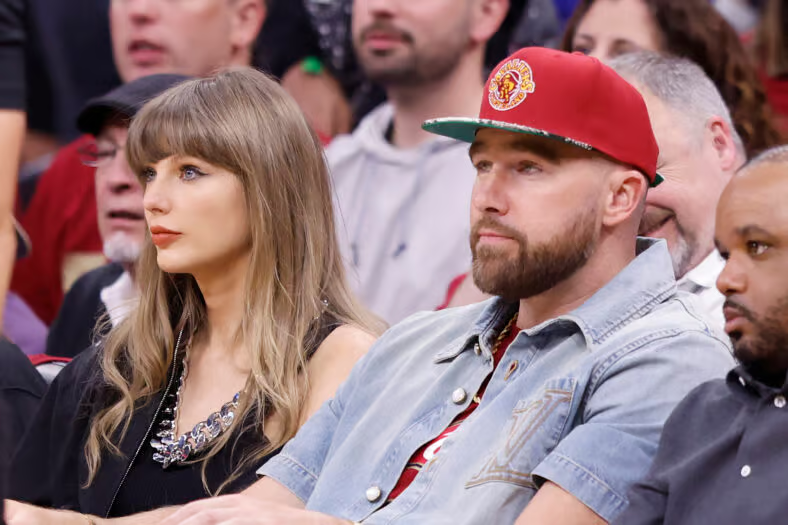
Taylor Swift Fans Label Travis Kelce’s Beer-Chugging A ‘Red Flag
You must be logged in to post a comment Login