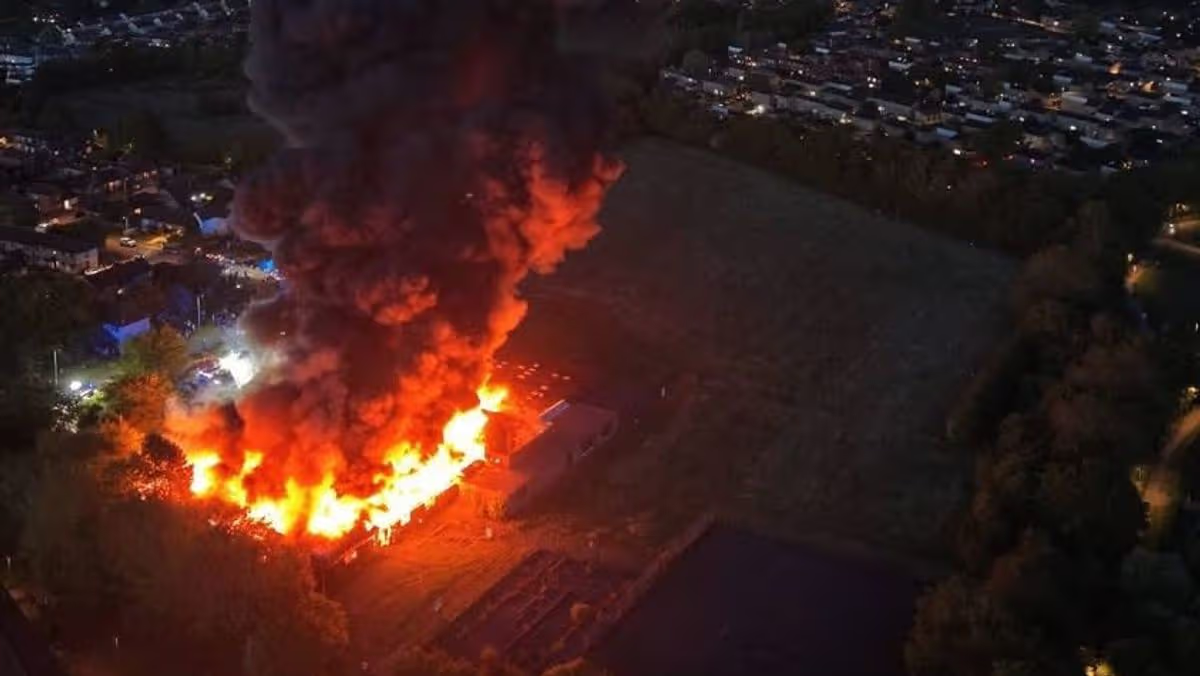
Dozens of firefighters were called to the massive blaze
09:11, 13 May 2026Updated 14:28, 13 May 2026
Firefighters were called to a huge blaze at a former school in a town close to the Cambridgeshire border with smokes being seen in the county. The fire broke out on Tuesday (May 12) at the former Parkway Middle School in Haverhill at around 8.20pm.
Advertisement
Crews from Woodbridge, Orford, Haverhill, Wickhambrook, and Bury St Edmunds attended with 12 fire engines used. Other crews from Sudbury, Mildenhall, Newmarket, Clare, and Long Melford were also called to the scene later in the evening.
Huge clouds of smoke could be seen for miles including in Linton. Residents in Haverhill were advised to “keep all windows and doors shut” and not to travel towards the scene unless it was essential.
Fire crews remained at the scene throughout the night and worked to control the fire while the building was collapsing. As of this morning, several fire engines were still at the scene to extinguish the blaze.
To get more news and top stories delivered directly to your phone, join our new WhatsApp community.Click this linkto receive your daily dose of CambridgeshireLive content.
Advertisement
We also treat our community members to special offers, promotions, and adverts from us and our partners. If you don’t like our community, you can check out any time you like. If you’re curious, you can read ourPrivacy Notice.
Robins are one of the UK’s favourite birds and are often spotted in gardens across the country. They can be more noticeable in spring, and there are certain plants, foods and shrubs that could help attract them to your garden
Birds need help throughout the year, whether that means offering them nutritious food to feed on or water for bathing. This becomes crucial during the spring months when British birds are building nests, laying eggs and nurturing their young.
Advertisement
Robins are one of Britain’s most beloved birds, and while they’re a delightful presence all year, they tend to be more visible during spring. This occurs because their dietary habits change and they depend more heavily on insects, worms and spiders, typically discovered in lawns. According to one expert, enticing them into your garden is straightforward.
James Ewen, gardening specialist at Green Feathers, explained: “Robins are a favourite of mine, and it’s always a pleasure when one pays you a visit.
“People think luring robins is an impossible task, and while they can be a rare sighting, when you know, you know.
“Considering their basic needs and comfort- food, drink, nesting opportunities, shelter and their most-loved plants and shrubs can go a long way.”
Advertisement
Shrubs
If you’re hoping to attract robins, supplying dense shrubs, hedges and climbing plants is ideal. They provide refuge from severe weather and safety from larger birds.
The gardening specialist noted: “A top choice for attracting robins and other songbirds is a serviceberry tree, known by many names, including juneberry.”
Their fruit matures from late spring through summer, supplying robins with a consistent source of soft, energy-rich berries, reports the Express.
Advertisement
Food
Understanding what robins enjoy eating is vital. They are enthusiastic feeders, and offering mealworms and earthworms is an excellent starting point. According to the expert, providing these will have robins “keep coming back”.
Fruits such as apples and pears can also be a brilliant source of fibre and vitamins for robins, helping to support digestion as well as healthy feathers and eyesight.
Water
Much like other birds, robins need water for both hydration and bathing. Keep a shallow bird bath topped up throughout the year, or position a small dish close to some shrubs.
Advertisement
The expert said: “Robins prioritise safety, so positioning water by shrub shelters them from predators. Never underestimate how important water is for robins to bathe in.
“Providing a place for robins to bathe keeps their feathers clean and free from parasites, and they also make their feathers more pliable when they bathe, allowing them to fight more efficiently, thus getting away from predators more effectively.”
Holmesterne began in 1986 and operated from two sites in Richmond.
However, James Clark and Howard Smith from Interpath were appointed joint administrators on Monday.
A statement from the administrators says that over 2024 and 2025, the company came under sustained margin pressure in the wake of high input costs across ingredients, packaging and factory costs, which were further exacerbated by increases in employment taxes.
The business launched a turnaround programme in July 2025 to put the business on a more sustainable financial platform. Unfortunately, however, sales continued to fall below expectations, which impacted cashflow, and in turn, caused creditor pressure to mount.
Consequently, after all available options had been explored by the company and its stakeholders, the decision was taken to seek the appointment of administrators.
The joint administrators have commenced an orderly wind-down of operations, the statement continued.
Advertisement
Regrettably, the majority of the company’s 130 staff have been made redundant, with a small number of employees retained by the administrators to assist them with the wind-down process.
James Clark, managing director at Interpath and joint administrator, said: “It is a real shame to see Holmesterne enter administration, particularly after the sale of the business last year and the renewed optimism that followed.
“Despite the best efforts of both the management team and the new owners, the headwinds facing the business sadly proved too challenging to overcome.
“Our immediate priority is to support employees through this difficult period, and we will be doing all we can to assist them in the days and weeks ahead.”
For five hours, the 11 survivors of a plane crash off the coast of Florida floated on a life raft, with no means of calling for help and no idea if anyone was coming to save them. As a thunderstorm approached, they gathered under a tarp for whatever protection it might offer.
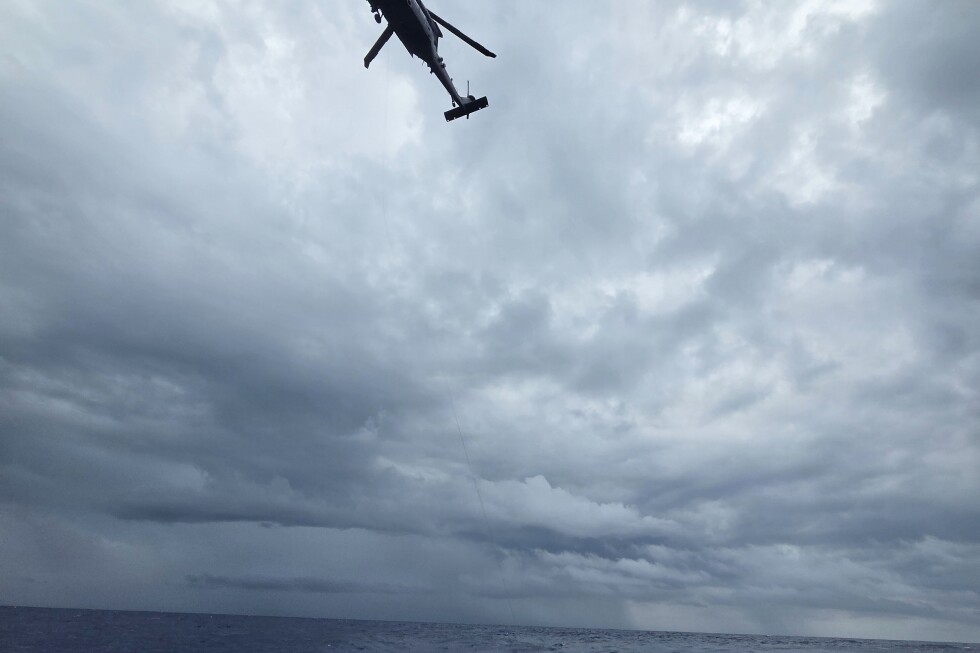
Then, search and rescue crews from the U.S. military appeared overhead, members of those crews recounted during a news conference Wednesday.
“You could tell just by looking at them that they were in distress — physically, mentally and emotionally,” said Air Force Capt. Rory Whipple, a combat rescue specialist who jumped into the water and swam to the survivors. “You have to imagine the emotional injuries that they sustained out there, not knowing if someone was going to rescue them.”
The plane, a Beechcraft 300 King Air turboprop, was on its way from Marsh Harbour, on the Bahamian island of Great Abaco, to Grand Bahama International Airport in Freeport when it suffered engine failure Tuesday, authorities said. The pilot ditched the plane in the water about 50 miles (80 km) off Vero Beach, Florida, and managed to get its 10 passengers, three with minor injuries, onto a yellow life raft.
Advertisement
Air Force Reserve Maj. Elizabeth Piowaty credited those efforts, saying the pilot would have been concerned about ocean swells and slowing the plane as much as safely possible before impact.
“I’ve not known anyone to survive a ditching in the ocean,” said Piowaty, who commanded a HC-130J Combat King II plane that assisted with the rescue. “From what I’ve seen, for all those people to survive is pretty miraculous.”
The downed plane’s emergency beacon alerted the U.S. Coast Guard to its location. At the time, the Air Force Reserve’s 920th Rescue Wing had a crew already airborne conducting a training mission in a HH-60W Jolly Green II helicopter. The crew was redirected to help with the search.
Piowaty said that after locating the survivors, her aircraft passed overhead and dropped a survival kit that included two additional rafts, food and water. The survivors were then able to spread out, and the crew of the HH-60W, including Whipple, was able to hoist them to safety amid 3- to 5-foot (1- to 1.5-m) swells, raising the last survivor just a few minutes before the helicopter would have been forced to refuel.
Advertisement
There was no sign of the downed aircraft, Piowaty said.
All 11 survivors were flown to awaiting emergency medical services at Melbourne Orlando International Airport, authorities said. All were reported to be in stable condition.
The U.S. Federal Aviation Administration said it would investigate the crash.
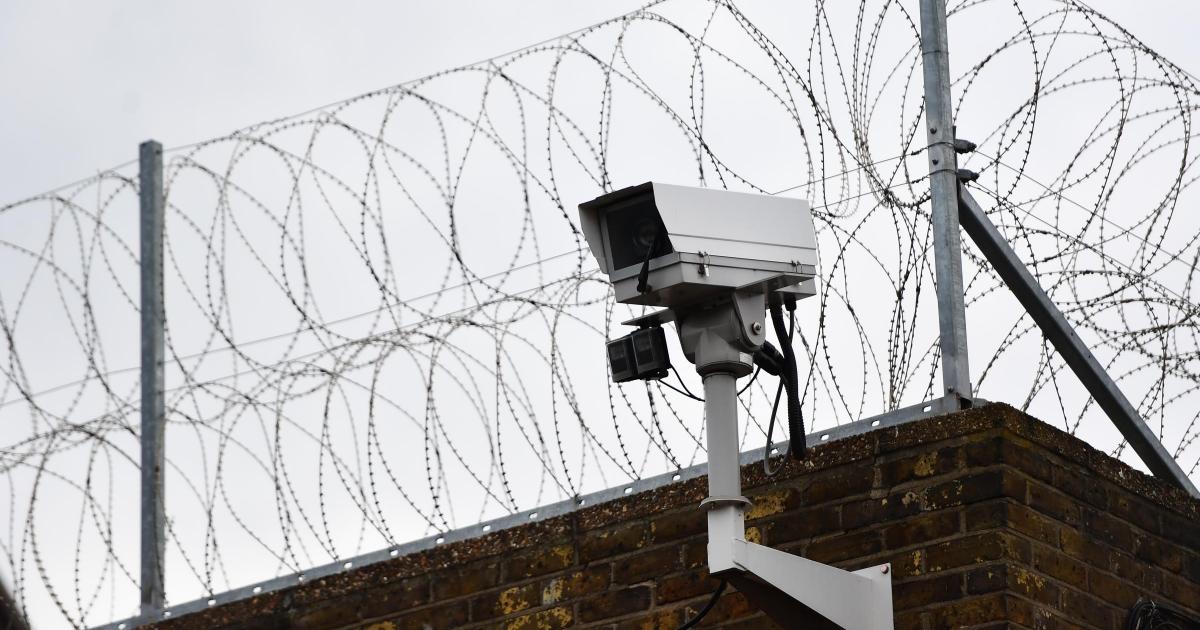
HM Inspectorate of Probation’s latest inspection of the region’s probation service found that long-standing issues with staffing “continued to undermine capacity and confidence”.
The Ministry of Justice said it inherited a “criminal justice system in crisis” which it is addressing by increasing funding for the probation service and recruiting more probation officers.
Martin Jones, chief inspector of probation, said the inspectors were “encouraged to find signs of increasing stability” across Yorkshire and the Humber’s probation service after 90 of its cases were inspected.
Advertisement
However, Mr Jones said the probation service, which is the second largest after London, continued to face “longstanding issues with vacancies, sickness and attrition”.
He said these issues, “combined with high levels of practitioner and middle manager inexperience, continued to undermine capacity and confidence”.
Mr Jones urged leaders to “strengthen practitioners’ skills and confidence and ensure there is meaningful management oversight and consistent delivery of interventions”.
Inspectors found that workforce pressures remained a “significant challenge” for the Yorkshire and the Humber probation service in some probation delivery units, but said “encouragingly, there were signs of increasing stability”.
Advertisement
“Despite this, longstanding issues with vacancies, sickness and attrition, combined with high levels of practitioner and middle manager inexperience, continued to undermine capacity and confidence,” inspectors said in their report.
They found that staff retention levels were being affected by “long vetting delays, concerns about pay, and excessive workloads”.
Inspectors also found that “leaders felt national recruitment campaigns had not properly reflected the public protection responsibilities of the role, leaving new staff unprepared”.
“Inspectors noted constant organisational change, driven by national policies, and crisis-driven working, which meant that staff were encouraged to focus on transactional tasks rather than reflective, analytical decision-making,” they added.
Advertisement
Probation service faced delays in accessing information from police, inspectors find
Inspectors said access to critical risk information from the probation service’s partners – such as the police and children’s services – had improved, but practitioners “still faced delays and received incomplete information”. They said leaders “stressed that national action was required to fully resolve this”.
The report recommended that the probation service develops practitioners’ confidence and skills in the use of “professional curiosity and challenging conversations”.
They also said the probation service should ensure senior probation officers have “sufficient capacity and resources to undertake effective management oversight of casework”.
Recommended reading:
Advertisement
Inspectors recommended that the government develops a national strategy to improve information service from the probation service to the police and children’s services.
They also urged the government to “reduce vetting delays and address workforce instability by implementing streamlined and more regionally responsive recruitment processes”.
A Ministry of Justice spokesperson said: “The government inherited a criminal justice system in crisis, placing significant strain on the probation service.
“We are addressing this by boosting probation funding by up to £700 million extra by 2028, recruiting another 1,300 probation officers on top of the 2,300 we already committed to and delivering the biggest expansions of tagging in British history to ensure robust supervision of offenders and protect the public.”
United have explored other options but Carrick has long been considered the front-runner for a job that he has been publicly backed for by a number of players. The former Middlesbrough boss has overseen a marked improvement in mood and results, with Champions League qualification secured with three matches to spare.
Ahead of the final two matches of the season – at home to Nottingham Forest on Sunday and away to Brighton – United are also on the brink of securing a comfortable third spot ahead of Liverpool and Aston Villa.
It’s sure to be a fascinating summer at Old Trafford, with arrivals and departures expected as Carrick, assuming he lands the job, puts his stamp on the side. Here’s a round-up of the latest United news…
Carrick has made no secret of the fact he wants the job full-time, saying after a recent game that it feels like a “natural” fit. However, he expects to be backed during what could be a hectic summer.
In key talks with top bosses next week, Carrick will want assurances the club will do whatever it can to land their leading transfer targets. His expected appointment as permanent boss will have the knock-on effect of sewing up Bruno Fernandes’s long-term future.
The Portuguese playmaker was close to leaving the club last summer before being persuaded to stay by Amorim. His countryman’s dismissal raised more questions about his future amid suggestions he had grown tired of the club’s constant cycle of upheaval. However, with Carrick at the helm, Fernandes is ready to commit his long-term future to the club.
Advertisement
Casemiro’s advice
Outgoing midfielder Casemiro has been dishing out advice to Kobbie Mainoo, calling him the “present and the future of the club.” The fortunes of both players have been transformed under Carrick.
Mainoo has come in from the cold after struggling to force his way into Amorim’s plans, while Casemiro has been a key player over the second half of the season, with calls for him to reverse his decision to leave this summer.
The Brazilian has been key off the pitch too, offering guidance to younger players like Mainoo. Speaking on Rio Ferdinand’s podcast, he discussed the challenge of getting through to younger players in the age of social media.
Advertisement
When Ferdinand put to him that you can’t be as strong with young players [these days], he said: “I try, I try, but the phone, the social media is very difficult because everyone sees on the phone, ‘Nah, you play good.’ You think, ah, you play good. Yeah, it’s top, it’s top.’
“And I try every day about this with Kobbie. He’s an unbelievable player. But he needs to train, train, train. He needs fear – I play, I don’t play. I need to push the training because this guy is the present and the future of the club.”
Join our new MAN UTD WhatsApp community and receive your daily dose of Manchester United content from Mirror Football. We also treat our community members to special offers, promotions, and adverts from us and our partners. If you don’t like our community, you can check out any time you like. If you’re curious, you can read ourPrivacy Notice.
Advertisement
Sky Sports, HBO Max, Netflix and Disney+ with Ultimate TV package
This article contains affiliate links, we will receive a commission on any sales we generate from it. Learn more
Sky has upgraded its Ultimate TV and Sky Sports bundle to now include HBO Max, Netflix, Disney+, discovery+ and Hayu, as well as 135 channels and full Sky coverage of the Premier League and EFL.
Sky broadcasts more than 1,400 live matches across the Premier League, EFL and more with at least 215 live from the top flight alongside Formula 1, darts and golf.
The 7-year-old died after being knocked down in April 2021
19:26, 13 May 2026
Advertisement
A witness to an accident that claimed the life of a seven-year-old girl in West Belfast five years ago told an inquest that a noise he heard at the time still “haunts” him to this day.
Deirdre Crawford left home at 5.50pm on April 3, 2021, to bring a present to a work colleague’s house for their 30th birthday. As she drove up Springhill Avenue, Mrs Crawford’s blue Renault Captur car hit Kaitlin McCoubrey-Fullerton, who sadly died at the scene. No prosecution was taken against her by the PSNI after the incident.
An inquest into the young girl’s death took place this week at Belfast Laganside Court, with the evidence focused on the circumstances before Kaitlin entered the road, what happened as she did so, and the layout and condition of Springhill Avenue.
Additionally, the inquest has examined the presence of parked vehicles and a speed ramp, as well as the driver’s control.
When the hearing resumed on Wednesday, witness Martin McGahan recalled calling to the home of his friend Gerard McGivern and his wife, Carmel for a barbecue at Springhill Avenue that evening. He said it was a “beautiful, dry and sunny” Easter Saturday, adding, “It felt like summer had arrived.”
“There were a lot of people in the street, mostly sitting in their gardens and plenty of kids in the street. The play park on Springhill Avenue was packed with children. I could smell barbecues as I walked up the street. The atmosphere was amazing, it felt really lively,” he said.
“There were cars parked on either side of the street, partly on the road and pavement, which made it very narrow for traffic. Because of all the cars and children, it meant that anyone driving on the street had to go very slow.”
Advertisement
Mr McGahan said he was sitting in the front garden and had just drunk his first couple of mouthfuls of beer when, shortly after 6pm, he saw a sky blue car pass in front of the house.
He added: “The car didn’t appear to be doing any speed as it passed. Around the same time, I remember hearing the sound of a car suddenly stopping or braking, although it wasn’t a skidding sound.
“It also sounded like something being sucked under a car. There was a gasp from the street and then silence. From the noise I heard, I knew something had been hit by a car. I thought it was possibly a child.”
Mr McGahan added that as soon as he heard the noise and saw the car pass, he jumped up and rushed out of the garden.
Advertisement
“We were all worried it was one of Gerard’s children that had been hit. I ran around a car and saw a young girl with red hair lying on the road. She was completely still. I thought she had no chance, that she was dead.
“There were two young women near the car. One of them said there’d been in an accident and that they’d just seen a flash of her hair.”
Mr McGahan then rang 999 and paramedics arrived soon after: “They didn’t seem to do much. I asked one of them if there was anything I could do to help, but they indicated she was beyond help.
“Then the parents of the child arrived. The girl’s father, who was really distressed, lifted her shoe, which had been lying on the road and threw it up the street in the direction of the Springfield Road. Both of them were shouting at the girl to wake up.”
Advertisement
He added: “The family of the driver were in a complete panic. They were asking me if the girl was OK. When I told them she had died, they were distraught.”
Under cross examination by David Reid, counsel for the coroner, Mr McGahan said he also recalled hearing a scraping noise when the car hit a speed ramp.
“That noise still haunts me to this day,” he added.
In her evidence, Carmel McGivern recalled being in her garden with Mr McGahan and others when she heard what “sounded like a wheelie bin or someone’s wing mirror being struck by a car”.
Advertisement
“I knew a vehicle had hit something. It was loud enough to make my stomach turn. When I heard voices, I knew from their tone that something serious had happened. Someone had been knocked down,” she added.
When Mrs McGivern got up and ran straight out through the garden gate onto the street, she observed a stationary car and a young girl lying in the middle of the road.
She recalled: “There was no sign of life at all. My immediate thought was that she was gone. I knelt down beside her and said, ‘I’ve got you, sweetie, I’m here for you’ – ‘you’ve been in an accident, there’s help coming’.
“I lightly stroked her back and pulled her hair back from her face to behind her ear. I held her hand and just kept whispering soothing things to her, calling her by her name and telling her she was loved”.
Advertisement
When questioned about the conditions on the road in terms of how busy it is for traffic, Mrs McGivern replied: “Springhill Avenue is a very busy street, and very active with kids and cars constantly going up and down the street. Some of them respect the speed and some don’t. A lot of people are on their mobile phones. It’s still like that today.”
She added: “I think if the drivers were made aware that maybe there was a camera watching, they might slow down and not use their phones as much. I do see a lot of people on their phones.”
Sean Dodds, who was driving behind the blue Renault Captur, after collecting his own daughter, when it hit Kaitlin recalled: “There were cars parked on either side of the road, meaning it was very tight for traffic getting through. It was Easter weekend, so there were loads of people in the area. I remarked to my partner that it was crazy how busy it was.
Advertisement
“The road is a long straight with a couple of speed bumps along it. My partner’s car had new alloy wheels, which I did not wish to damage, so I took it very slowly over the speed bumps.
“I volunteered to take my daughter home before returning to pick up my partner. I left at about 6:10pm with my daughter in a child seat in the rear of the car. I didn’t have the radio on and the windows were closed.”
Mr Dodds said the car in front driving at a constant speed and not fast: “All of a sudden there was a sharp movement towards the road. I distinctly remember a young girl with red hair running out straight across the road. I’m not sure where she was looking when she ran out.
“The car in front of me had either reached the speed bump or was just before it when the girl ran out immediately in front of the car.
Advertisement
“I don’t recall seeing the car in front brake or swerve prior to impact. It all happened very quickly. The car seemed to hit her as soon as she came out. She was struck by the front of the car in the front of the passenger side.”
He added: “I didn’t hear any noise prior to impact and don’t recall hearing the impact itself. She went straight under the car. I had a clear view of her under the car and that’s the image I can remember to this day. She was like a wee doll, not like a person.
“I could hear shouting and screaming outside. I was in shock and didn’t want my daughter to be exposed to what had happened. I reversed into a cul-de-sac and drove back up to where I’d come from. I told the people in the house what had happened and a while later, police came and took my details as a witness.”
A forensic scientist who attended the scene afterwards also gave evidence on Wednesday, saying an examination of the Renault car revealed no pre-collision defects and that the road surface was in good condition with no irregularities.
Advertisement
When questioned on driver perception-response time, he told the inquest: “I’m not aware of what the driver could have done differently, unfortunately.”
The inquest has now concluded its evidence and the coroner will deliver her findings in due course.
A passenger is sprayed after disembarking from the hantavirus-stricken cruise ship MV Hondius (Credits: AP)
A British tourist has been detained by authorities and quarantined after being caught in a Milan bar.
The Brit, in his 60s, had been on the same flight as hantavirus-stricken cruise ship passenger Mirjam Schilperoord, 69, when they travelled from Saint Helena to Johannesburg.
She was taken off her next flight when she fell ill and died in a South African hospital.
Advertisement
The unnamed British holidaymaker and his travelling companion, who was not on the flight, were apprehended in Milan before being taken to Sacco Hospital.
The pair, who were not showing symptoms, were told they must remain in quarantine until June 6, after being forced into a 42-day isolation period.
Sign up for all of the latest stories
Start your day informed with Metro’s News Updates newsletter or get Breaking Newsalerts the moment it happens.
Advertisement
It came after a French hantavirus patient was fighting for her life in hospital after being placed on an artificial lung.
Doctors described the device keeping her alive as ‘the final stage of supportive care.’
MV Hondius is seen while Spain’s Minister provide updates on the evacuation (Picture: EPA)
They added the passenger is suffering a severe form of the virus, ‘triggering life-threatening lung and heart failure’.
There are now 11 reported cases tied to the outbreak, nine of which have been confirmed. Three people who were aboard the cruise ship sailing the Atlantic Ocean have died of the rare but fatal disease.
Advertisement
One of the world’s leading health experts has warned that we can expect more hantavirus cases in the near future.
Tedros Adhanom Ghebreyesus, director general of the World Health Organisation, maintains there are ‘no signs’ a pandemic is on the cards after cases of the rodent-borne disease were identified on the MV Hondius cruise ship last month.
But he told a press conference in Madrid: ‘Of course, the situation could change.
The MV Hondius has only a few crew and medical workers onboard now (Picture: ANP/Shutterstock)
What is hantavirus?
A cabin inside the MV Hondius, during the voyage to Spain’s port of Tenerife (Picture: AP)
Hantavirus, sometimes called the ‘rat virus’, is a rare family of pathogens carried by rodents – there is no vaccine or cure.
The virus spreads through contact with the faeces, urine and saliva of infected rodents.
Early symptoms can be easily mistaken for the flu, such as fever, chills or body aches, but can escalate to heart or lung failure.
At the centre of the cruise outbreak is the Andes strain, which is endemic to South America, including Argentina, where the ship departed on April 1.
Advertisement
Dr Stathis Giotis, a lecturer in life sciences at the University of Essex, told Metro that the Andes hantavirus is the only known strain that can be spread from human to human, though cases of this are few and far between.
‘It is clearly a serious situation for those directly affected and it deserves careful public health follow-up, but there is no evidence at present that this represents a broader epidemic threat,’ he said.
People who may get in contact with rat droppings, like agricultural workers or people simply cleaning their sheds, are at high risk.
Rat droppings look like this and can carry hantavirus (Picture: Getty Images)
Advertisement
Hantavirus is still a mystery
Despite years of research, many questions have yet to be answered about the hantavirus, including exactly how it spreads, how long it can survive outside a host and why it can be mild for some people and severe for others.
There is no specific treatment or cure, but early medical attention can increase the chance of survival. The Andes virus implicated in the cruise ship outbreak can have an incubation period of up to eight weeks and a mortality rate of up to 50%, according to the World Health Organization.
The virus usually spreads from rodent droppings and is not easily transmitted between people, though the Andes virus may be able to spread between people in rare cases.
The genome of the hantavirus has been completely sequenced, the European Centre for Disease Prevention and Control said Wednesday.
Advertisement
‘There is no data to suggest that this virus is behaving differently in terms of transmissibility or severity from any of the known virus circulating in certain regions of the world,’ said Andreas Hoefer, who oversees the operational coordination of the European Union’s reference laboratories for public health.
‘Based on that data, I would say that currently we have no reason to suspect that this is a new virus’.
The Gunners had crucially wrestled back the initiative from Pep Guardiola’s domestic treble chasers in recent weeks having lost 2-1 at the Etihad Stadium in a crunch clash last month, winning all their games since then and also progressing past Atletico Madrid into the Champions League final, where they will meet reigning French champions and holders Paris Saint-Germain in Budapest on May 30.
Nervy 1-0 triumphs over Newcastle and West Ham – the latter featuring no shortage of VAR controversy – were sandwiched between a far more comfortable victory against Fulham, with Arsenal going back to the top-flight summit and opening up a five-point lead as City could only salvage a last-gasp draw in a six-goal thriller against Everton.
But that was always in the knowledge that City possessed in their pocket a game in hand at home to Crystal Palace, which was eventually rearranged for Wednesday night after their FA Cup progress.
It was must-win territory for Guardiola’s men against a Palace side sitting down in 15th place and with one eye firmly fixed on the Conference League final.
Advertisement
However, Arsenal fans appeared to be given hope of another stumble after the City boss made six changes from Saturday’s 3-0 win over Brentford amid a brutal fixture schedule to end the season ahead of Saturday’s FA Cup final showdown with Chelsea at Wembley – with the likes of Erling Haaland, Jeremy Doku and Rayan Cherki all left on the bench.
Jean-Philippe Mateta thought he had scored early on for a Palace team who made four changes during their own hectic schedule, with the visitors looking more threatening on the break to start with despite City monopolising possession and territory in trademark fashion.
Eyes on the prize: Arsenal and Manchester City will both hope to win the Premier League title next week
Getty Images
It was all too slow and ponderous for half an hour amid a subdued atmosphere at a rainy Etihad, until Phil Foden burst into life with a sensational backheel to release Antoine Semenyo, who fired beyond Dean Henderson.
Advertisement
That eased any sense of lingering tension and City doubled their lead before the break when Foden was again the provider for Omar Marmoush’s deflected strike.
An animated Guardiola was not happy at all with his side’s second-half efforts, until Savinho finished smartly after a fine run and assist from substitute Cherki to wrap up a commanding victory and put City’s goal difference marginally ahead of Arsenal’s (now +43 compared to +42 for the leaders).
When can Arsenal win Premier League title after Man City beat Crystal Palace?
City’s 3-0 defeat of Crystal Palace means that Arsenal can no longer seal the title when they host already relegated Burnley in their final home match of the season at the Emirates Stadium on Monday night, a game that was pushed back a day for television coverage.
Advertisement
Instead, the Gunners will now have to beat Burnley and hope that City do not win away against Champions League-chasing Bournemouth at the Vitality Stadium 24 hours later.
The only scenario that will now see the title decided before the final day is if Arsenal defeat Burnley and City have any kind of slip-up on the south coast. City cannot hope to win it before the final day.
In the scenario that both teams win their next games, Arsenal would carry a two-point advantage into their final-day trip to face a Palace side at Selhurst Park who may be distracted by the prospect of their first European final, which takes place only three days later against Rayo Vallecano in Leipzig.
They will no doubt hope to quickly reverse that aforementioned goal difference deficit against a managerless Burnley who were condemned to an instant return to the Championship after defeat by City last month and then sacked Scott Parker, who was replaced on an interim basis by Mike Jackson as the club search for a new full-time head coach.
Advertisement
If Arsenal were to lose against Burnley in a major upset, then City would go into the final day top of the table ahead of the visit of an Aston Villa side still battling for a top-five finish who also first contest the Europa League final against Freiburg in Istanbul, as long as they then didn’t lose to Bournemouth.
An Arsenal draw coupled with a City win would see the latter top the table on goal difference, while an Arsenal loss followed by a City victory would see Guardiola’s men take a one-point lead into the last day.
The UK State Pension is worth up to £241.30 per week but must be claimed when you reach State Pension age — or you could face a payment delay
Linda Howard Money and Consumer Writer
04:00, 14 May 2026
The State Pension age began a gradual increase from 66 to 67 in April, with the transition scheduled to be finalised for all men and women throughout the UK by 2028. The proposed adjustment to the official retirement age has been in law since 2014, with a subsequent rise from 67 to 68 planned for implementation by the mid-2040s.
The most recent figures from the Department for Work and Pensions (DWP) reveal the State Pension currently delivers regular financial assistance to 13.2 million elderly people nationwide, including more than one million pensioners residing in Scotland. This benefit is accessible to those who have attained the UK Government’s qualifying retirement age and have contributed at least 10 years’ worth of National Insurance Contributions.
Advertisement
Individuals nearing the official retirement age this year may be unaware that the State Pension is classified as a contributory benefit and is not disbursed automatically by the DWP. The benefit must be applied for, otherwise pensioners risk experiencing a delay in receiving their initial payment of up to £241.30 per week, or £965.20 for each four-week payment cycle.
The funds are not distributed automatically when someone reaches State Pension age, as certain individuals opt to postpone submitting a claim in order to continue working and accumulate more towards their pension fund, particularly if they have not contributed the complete requirement of 35 years’ worth of National Insurance Contributions, or were ‘contracted out’.
DWP guidance explains: “You do not get your State Pension automatically – you have to claim it. You should get a letter no later than two months before you reach State Pension age, telling you what to do.”
It then clarifies you can either claim your State Pension or delay (defer) claiming it. It states: “If you want to defer, you do not have to do anything. Your pension will automatically be deferred until you claim it.”
Advertisement
This means that unless you respond to the letter confirming your wish to begin receiving your State Pension, no payments will be made, as the DWP will treat any lack of response as an intention to defer, reports the Daily Record.
Postponing your State Pension could boost your weekly payments once you do decide to claim, provided you defer for a minimum of nine weeks. Your State Pension grows by the equivalent of 1% for every nine weeks you defer, amounting to just under 5.8 per cent for every 52 weeks.
The additional sum is paid alongside your regular State Pension payment. However, it is worth noting that any extra payments resulting from deferral may be subject to taxation — further details are available on GOV.UK.
It is also worth bearing in mind that deferred State Pensions rise annually in line with the September Consumer Price Index (CPI) inflation rate, rather than the highest measure of the Triple Lock policy.
Advertisement
Your initial payment will arrive within five weeks of reaching State Pension age, with full payments following every four weeks thereafter. You may receive a partial payment before your first complete one. The letter will outline what to expect.
You can also opt to receive your State Pension payments weekly or fortnightly, which will reduce the waiting time for the first payment. The day your State Pension is paid depends on your National Insurance number.
Jamie Varley, 37, is on trial over the death of 13-month-old Preston Davey on July 27, 2023 (Picture: PA)
A baby allegedly sexually abused and murdered by his adopted dad had a bite mark on his bottom weeks before he died, a court heard.
Jamie Varley, 37, is on trial over the death of 13-month-old Preston Davey on July 27, 2023.
Preston had been placed with Varley and his partner, John McGowan-Fazakerley, 32, at their home in Blackpool aged nine months with a view to him being formally adopted.
But jurors at Preston Crown Court have been told the toddler was routinely ill-treated, sexually abused and physically assaulted, suffering dozens of injuries in the final four months of his life.
Advertisement
On Wednesday, Home Office pathologist Dr Alison Armour was shown several photos and videos of the toddler found on the couple’s phones.
In one image taken on June 12, 2023, Preston was standing naked in a garden paddling pool.
Asked to comment on a darker shade of skin on his right buttock, Dr Armour said: ‘It is my view, sir, it most likely represents a human bite mark.’
She said having looked at the photo, the mark on his body was a round, circular bruise, turning slightly purple and around 3.5cm in diameter.
Advertisement
Peter Wright KC, prosecuting, asked Dr Armour why she though it was a bite mark.
‘The size, configuration, which means the shape, are all consistent with a human bite mark,’ she said.
Dr Armour was also asked her opinion on a series of seven photos recovered from Varley’s phone of Preston in his cot, along with two toy teddy bears, taken four days before his death.
Advertisement
The images span a period of three minutes and 12 seconds, during which time Preston’s head and arms remain ‘slumped’ over the top horizontal bar of his cot with his neck resting on the bar.
His body is apparently partially suspended, his legs in a ‘frog-like’ position and the child seemingly asleep or unconscious.
Advertisement
Varley, at the time a high school teacher, is accused of Preston’s murder
John McGowan-Fazakerley, 32, is accused of allowing the death of the child, with both accused of sexual abuse
‘This is very unsafe and in my view dangerous,’ Dr Armour said.
Mr Wright continued: ‘What is the risk here presented?’
Dr Armour said: ‘Partial suspension, ultimately leading to death, he’s got his neck in contact with that cot railing.
‘That’s going to inhibit your ability to breathe.’
Advertisement
In one photo, Preston’s head is in a slightly different position with fluid coming from his mouth.
Dr Armour continued: ‘Preston’s tongue is protruding, its blue and also his lips appear blue, consistent with a lack of oxygen in the blood.’
Mr Wright said: ‘In terms of a child in that position for that length of time, how safe or otherwise is such a position?’
Dr Armour said: ‘This is a very prolonged period of time for a child to be in such an unsafe position.’
Advertisement
Jamie Varley is accused of the murder and sexual assault of 13-month-old Preston Davey (Picture: Lancashire Police/PA)
Four days later, at around 6.20pm on July 27, 2023, the defendants rushed Preston unconscious from their home to Blackpool Victoria Hospital.
Medics worked for nearly an hour to resuscitate the child but could not save him.
Varley said he had left the child alone in the bath for three or four minutes before he returned and the baby was partially submerged.
Dr Armour, who carried out the post-mortem examination at Alder Hey Children’s Hospital, said people who drown often swallow water but she found no water in Preston’s stomach.
She added: ‘It is my position that drowning can be reasonably excluded as the cause of death in this case.’
Advertisement
Dr Armour concluded the cause of death was an upper airway obstruction, leading to Preston’s collapse by a deliberate act of smothering, or an object or objects inserted into his mouth.
Court artist drawing of Jamie Varley (left) in the dock at Preston Crown Court where he is accused of murder (Picture: Elizabeth Cook/PA)
The post-mortem examination also found external and internal injuries including bruises to Preston’s forehead, throat, mouth, bladder, bottom and bleeding in the lungs.
These were mostly ‘non-accidental’, she said, and could not be explained by the attempts by medics to save his life during resuscitation on hospital admission.
Many of the external injuries Dr Armour described as ‘fingertip’ bruises, consistent with gripping, prodding, poking and pinching, she said.
Preston also had severe bruising to the back of his throat which Dr Armour described as one of the ‘most unusual’ injuries she had never come across in her 39-year career as a consultant forensic pathologist.
Advertisement
‘This is an extensive bruise,’ she said.
Dr Armour said the underlying cause is ‘difficult to ascertain’.
Smothering ‘either by a hand or a soft object’ could be the cause, she said, but that ‘would be unusual’.
She added: ‘That leaves the other cause, in my view – the insertion of an object into the mouth occluding the airways.’
Advertisement
Dr Armour told jurors there were no injuries to Preston’s teeth, tongue, palette or cheeks, indicating the object did not have any ‘sharp edges’.
Asked if the injury was consistent with a sexual assault, she replied: ‘I cannot exclude that, sir.’
Dr Armour said the injuries to Preston’s throat, along with other serious injuries found on his body, were ‘very recent’.
Asked how close to death they were inflicted, she added: ‘I think I have said a matter of hours.’
Advertisement
Varley denies murder, manslaughter, two counts of assault by penetration, five counts of cruelty to a child, grievous bodily harm, sexual assault of a child, 13 counts of taking indecent photos or videos of a child, one of distributing an indecent photo of a child, to his co-accused, and one of making an indecent photo.
McGowan-Fazakerley denies allowing the death of a child, three counts of child cruelty and one count of the sexual assault of a child.






















































You must be logged in to post a comment Login