

Crypto World
Kenya Arrests Alleged Mastermind of $431,000 in USDT Fake Gold Scam

Kenyan detectives arrested Mildred Kache, the alleged mastermind of a fake gold deal that drained 431,380 Tether (USDT) from an American investor, the Directorate of Criminal Investigations (DCI) said on Sunday.
Kache was cornered at Crystal Villas in Kilimani, Nairobi. Her alleged accomplice, Ibrahim Yusuf Mohamed, fled before officers reached the property, abandoning a black Mercedes-Benz E50 now held as exhibit.
How the Alleged Scam Happened
The suspects told the investor they could supply 400 kilograms of gold bars. He flew to Nairobi to sign the agreement, then wired payment into bank accounts the group controlled, according to the DCI account.
After the funds landed, the alleged dealers stopped answering calls. No gold ever shipped. The victim then reported the loss, and detectives traced forensic leads to the Kilimani apartment where Kache, who also uses the name Sabreena Ayesha, was arrested.
The mismatch should have raised flags. At current market prices, 400 kilograms of gold would be worth far more than USDT 431,380 (almost $54 million), a discrepancy several observers pointed out under the DCI’s post.
Kache is in custody at the DCI’s Nairobi Regional Headquarters pending arraignment. Investigators say they are actively pursuing Mohamed and tracing the stolen funds.
A Familiar Pattern in Nairobi
Kilimani has surfaced repeatedly in similar scams targeting foreign nationals, with the playbook rarely changing.
Operators stage polished meetings, draft fake contracts, then vanish once the money clears, a pattern documented across many fraud cases.
Stablecoin rails are central to the scheme. Investigators have flagged USDT as the preferred settlement asset for international fraud because transfers move in minutes and are difficult to reverse.

Kenya is also finalizing its first dedicated crypto law, which would expand reporting duties on suspicious flows.
The next milestone is Kache’s first court appearance. Whether any of the 431,380 USDT can be frozen on-chain will likely shape what the victim recovers.
The post Kenya Arrests Alleged Mastermind of $431,000 in USDT Fake Gold Scam appeared first on BeInCrypto.


Key Highlights
-
Shares of SMCI advanced 4.67% following the unveiling of edge AI appliances
-
Partnership with Red Hat and Everpure aims to streamline edge AI implementations
-
The solution integrates Kubernetes, storage infrastructure, and edge computing hardware
-
The system leverages Red Hat OpenShift for hybrid cloud AI operations
-
Portworx by Everpure delivers Kubernetes-native storage for decentralized AI applications
Shares of Super Micro Computer, Inc. climbed 4.67% to reach $27.48 as the company strengthened its edge AI capabilities. The stock maintained strong momentum throughout the trading session, closing near its daily peak. The upward movement came after the company unveiled a new Kubernetes Edge AI appliance developed alongside Red Hat and Everpure.
Super Micro Computer, Inc., SMCI
Stock Performance Follows Edge AI Product Unveiling
Supermicro announced pre-validated Kubernetes Edge AI appliances designed for businesses operating computing infrastructure beyond traditional data centers. The integrated solution merges Supermicro’s hardware platform with Red Hat OpenShift and Portworx by Everpure. This combination delivers customers a pre-configured appliance engineered for accelerated implementation.
The product addresses the requirements of organizations deploying AI inference capabilities across geographically dispersed facilities. Target environments encompass retail outlets, manufacturing plants, telecommunications facilities, and isolated business operations. The company’s objective centers on minimizing configuration challenges for distributed infrastructure administrators.
According to the announcement, the appliance accommodates containers, virtual machines, and AI inference processing at remote locations. Customers gain access to an integrated ecosystem encompassing computation, storage, and administrative capabilities. The turnkey solution will be offered through Supermicro’s direct sales channels.
OpenShift Platform Enables Multi-Site Operations
Red Hat OpenShift serves as the foundational Kubernetes application platform within the new infrastructure. This platform enables organizations to deploy and oversee workloads spanning hybrid cloud architectures and edge environments. Through this integration, Supermicro delivers a standardized operational framework across diverse geographic deployments.
The company characterizes the offering as a fully validated, comprehensive solution. This methodology eliminates the requirement for independent validation across hardware components, software platforms, and storage infrastructure. The approach also accelerates deployment timelines for organizations with constrained on-premises technical resources.
This collaboration reinforces Supermicro’s position within the edge computing infrastructure market. The organization currently provides compact server platforms and edge devices across multiple configuration options. Its product lineup accommodates implementations ranging from standalone servers to comprehensive rack-mounted systems.
Everpure Integration Delivers Distributed Storage Capabilities
Portworx by Everpure contributes the Kubernetes-native storage and data orchestration component. This platform consolidates local storage resources on Supermicro edge computing platforms. Organizations can therefore operate fault-tolerant infrastructures without deploying conventional storage arrays at individual locations.
The storage architecture provides high availability, data safeguarding, and autonomous functionality during connectivity interruptions. This capability proves essential for remote installations that cannot rely on continuous centralized network access. Additionally, it enables organizations to implement uniform storage governance across edge and cloud environments.
Supermicro’s Data Center Building Block Solutions approach underpins this product introduction. This methodology employs validated building blocks to construct flexible infrastructure tailored to diverse customer requirements. The Red Hat and Everpure collaboration represents another strategic advancement in the company’s edge AI expansion efforts.



BlackRock has pulled back on AI stocks most directly tied to the artificial intelligence (AI) boom, Chief Investment Officer of Global Fixed Income Rick Rieder said Wednesday. He described the sales as rebalancing, not a reversal.
BlackRock manages more client assets than any rival, so its positioning attracts unusual attention. Investors are already debating whether the market’s concentration in a few AI winners has gone too far.
BlackRock AI Stocks Pullback Reflects Selectivity
Speaking on CNBC, Rieder said his team trimmed positions in companies whose earnings depend most heavily on the AI buildout. In a separate clip, he added that the firm also cut a notable slice of its overall equity exposure.
He framed the shift as trimming winners rather than exiting the theme.
“Some of the companies that are more directly tied to AI, we’ve pulled back a bit and rebalanced a bit,” Rieder said in the interview.
Follow us on X to get the latest news as it happens
The scale behind the words matters. BlackRock reported a record $13.9 trillion in assets under management as of March 31, according to an SEC filing.
However, the comments extend a stance Rieder has held all year. At a CNBC event in June, he rejected dot-com comparisons. The Magnificent 7 then traded near 26 times earnings, he noted, with forward earnings growth above 20%.
His January outlook likewise argued 2026 would reward income and selectivity as AI gains separate winners from laggards.
Wall Street is already divided on the trade. JPMorgan urged clients to buy the recent chip dip while Morgan Stanley preferred hyperscalers instead, a split over AI chips that mirrors BlackRock’s selectivity.
Where the AI Money May Rotate Next
Rieder indicated the firm may redeploy into cheaper beneficiaries of AI adoption. Power producers, industrials, and infrastructure builders could capture the next wave of data center spending.
Signs of profit-taking are spreading across the AI supply chain. AI memory stocks still lead 2026 trading even as money flows turn cautious. Meanwhile, Samsung shares fell this week despite forecasting a 19-fold profit jump, because investors booked recent gains.
Concentration remains the deeper worry. The S&P 500 has repeatedly set records on weak market breadth, with a small group of mega caps carrying the index.
BlackRock’s wider portfolio guidance this year points the same way. The firm now recommends a 1% to 2% Bitcoin (BTC) allocation, another route to returns beyond a few dominant AI names.
For investors, the message reads as discipline rather than alarm. The coming earnings season may show whether the market’s biggest AI names can still defend their premiums.
The post The World’s Biggest Investor Is Trimming AI Stocks. Should You Worry? appeared first on BeInCrypto.


Elon Musk has confirmed that SpaceXAI will release its Grok 4.5 artificial intelligence model to the public on Thursday after completing beta testing, setting up a direct contest with OpenAI’s upcoming GPT-5.6 launch.
Summary
- Elon Musk says SpaceXAI will launch Grok 4.5 publicly after positive beta testing.
- OpenAI plans to release GPT-5.6 models Sol, Terra, and Luna on the same day.
- Grok 4.5 runs on xAI’s new 1.5-trillion-parameter V9 model with a strong focus on coding.
According to Elon Musk, the decision follows strong feedback from users who tested Grok 4.5 during its beta phase. In a post on X, Musk described the model as “an Opus-class model, but faster, more token-efficient, and lower cost,” adding that the public rollout will begin tomorrow.
The announcement places Grok 4.5 alongside several major AI releases expected this week as competition between leading developers continues to accelerate.
At nearly the same time, OpenAI confirmed that its GPT-5.6 family, consisting of the Sol, Terra, and Luna models, will also become publicly available on Thursday. The announcement follows approval from the U.S. Commerce Department for a broad public launch, as previously reported by crypto.news. OpenAI’s choice of model names attracted attention within the crypto industry because they match names of some of the crypto industry’s best-known blockchain projects.
Last month, Anthropic added to the competitive landscape by releasing its Fable 5 and Mythos 5 models, which the company described as its most capable AI systems to date. Those models were temporarily restricted under U.S. export controls before the government later removed the limitations, allowing wider availability.
Grok 4.5 introduces a larger foundation model
Additional technical details shared by developer Tetsuo indicate that Grok 4.5 is built on xAI’s V9 foundation model, which contains roughly 1.5 trillion parameters. According to Tetsuo, the architecture is around three times larger than the v8-small model that powered Grok 4.3, making it the largest foundation model the company has released so far.
Tetsuo added that the model was trained on Nvidia Blackwell GPUs at the Colossus computing cluster in Memphis. He also stated that software development capabilities have become a central priority for Grok 4.5 after SpaceXAI incorporated developer data from Cursor into supplemental training. According to the developer, reinforcement learning has continued improving the model through the Grok Build training framework.
crypto.news previously reported that SpaceXAI completed its acquisition of Cursor, a move that expands the company’s access to software engineering datasets. Tetsuo noted that the next foundation model, which is already undergoing training, will include Cursor data from the beginning of the pre-training process rather than adding it later.
Monthly flagship releases form the long-term roadmap
Beyond the immediate launch, Tetsuo outlined a more aggressive release schedule for future models. He described Grok 4.5 as the first flagship model introduced under the merged SpaceXAI organization and said the company plans to ship a newly built foundation model every month through the end of 2026.
While Musk focused on Grok 4.5’s performance, speed, and operating cost, Tetsuo’s technical comments suggest that future versions will continue expanding coding capabilities through larger training datasets and updated reinforcement learning methods.
With Grok 4.5, OpenAI’s GPT-5.6 lineup, and Anthropic’s recently released models entering the market within weeks of one another, competition among leading AI developers is intensifying as each company pushes newer foundation models to public users and enterprise customers.

There’s a lot that’s not going bitcoin’s way at the moment, but we will delve into that in a moment. For this intro, we will just suggest that BTC might actually be performing better than expected, at least for now.
However, the latest rejection at $64,000 could spell more trouble ahead, and here are the new bearish targets set by Ali Martinez and Ted Pillows.
No Bottom Yet
Just think about it – the war was essentially just restarted today as Iran and the US launched new strikes against each other, Strategy sold more than 3,500 BTC, recent reports suggested a major miner capitulation, AI continues to extract capital out of crypto markets, the BTC ETFs bled over $8 billion in two months, the Fed doesn’t seem inclined to lower the rates soon, and yet, the cryptocurrency still trades above $60,000.
While bitcoin has managed to withstand all this macro pressure, to an extent, of course, now comes a technical blow. At first, it was popular analyst Ted Pillows who argued that BTC’s bottom has not arrived yet. Basing his theory on historical performance, he drew a chart indicating that the asset might slump below $50,000, or even $45,000, before reaching that level.
Ali Martinez weighed in on bitcoin’s rejection at $64,000. He believes getting stopped at the top of this channel could trigger a more profound pullback in the short term to under $60,000 or even to a new multi-year low of $56,550.
Bitcoin $BTC is getting rejected at the top of its channel.
This could trigger a pullback toward $59,700, with $56,550 as the next downside target. pic.twitter.com/GvI9fMFQbD
— Ali Charts (@alicharts) July 8, 2026
The Positive Side
Another analyst on X, CW, spoke about the Kimchi Premium – the price of BTC on Korean exchanges compared to the rest of the world. The metric demonstrates the current demand in the Asian country. It had fallen to -2% for a long time, setting the record for the longest negative period in the last 5 years.
However, it has eased to -0.835%, according to CW’s data, which means that demand for BTC in Korea is returning. This is considered one of the key metrics that could suggest a trend reversal, especially if it flips to positive soon.
The $BTC Kimchi Premium Strategy indicator is showing a positive trend.
The Kimchi Premium has also decreased from -2% to -0.835%.
The longest period of negative Kimchi Premium in the last 5 years is being maintained. However, the end of the bearish trend is approaching. pic.twitter.com/Bivsx4wRqS
— CW (@CW8900) July 8, 2026
The post Bitcoin Hasn’t Fully Capitulated Yet: Analysts Warn of Lower Levels Ahead appeared first on CryptoPotato.
Key takeaways:
- War, rising oil prices and Strategy’s Bitcoin sales put extra pressure on BTC’s $60,000 support.
- Strategy’s Bitcoin sales and fears that a global regulatory crackdown on crypto is being reignited are adding to fragile crypto market conditions.
Bitcoin traded down 3.5% on Wednesday as new developments in the US-Iran war pushed oil prices higher and Japan’s bond markets faced renewed stress. That combination triggered broader de-risking across markets. At the same time, concerns over potential Bitcoin sales from Strategy intensified, with traders now bracing for a possible correction below $60,000.
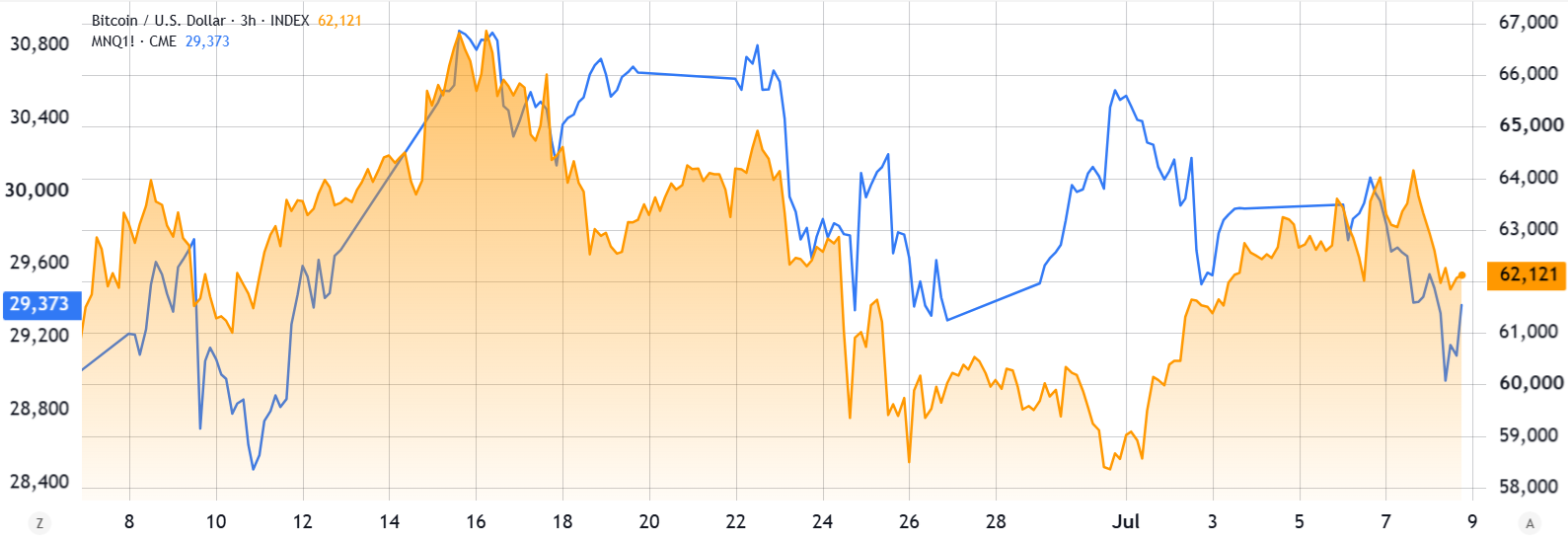
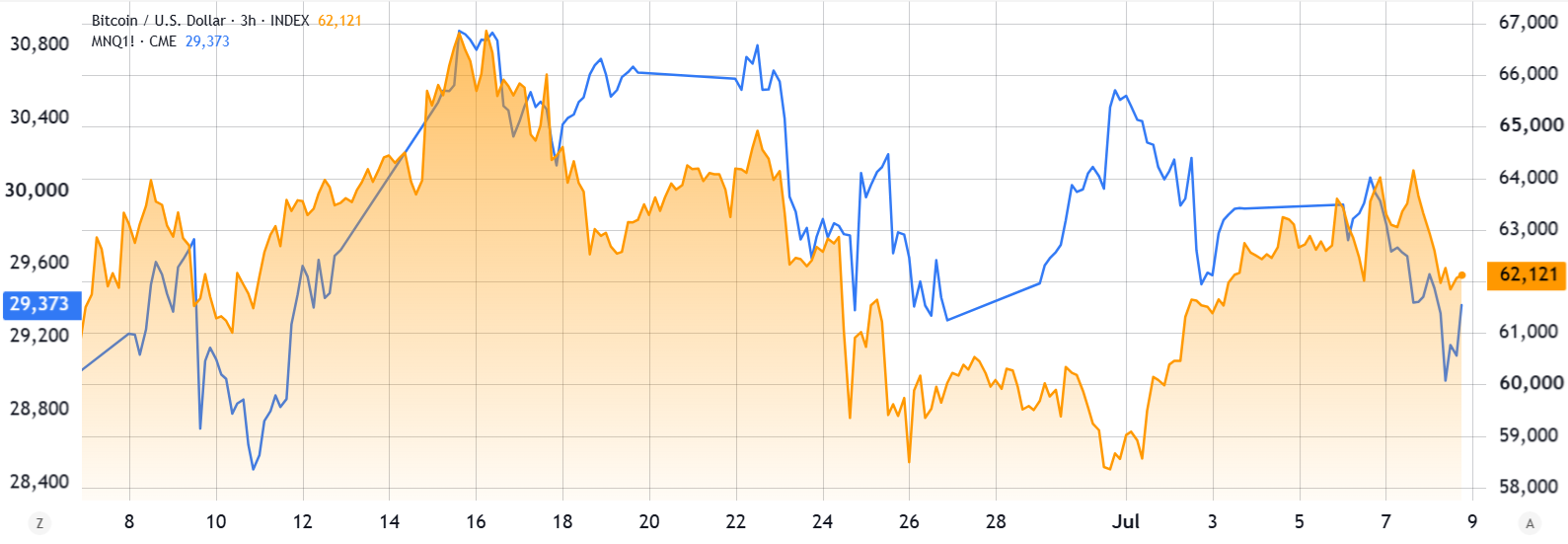
Nasdaq-100 futures (left) vs. Bitcoin/USD (right). Source: TradingView
Bitcoin’s failed attempt to reclaim $64,500 on Monday coincided with a downtrend in the tech-heavy Nasdaq Index. However, the stock market recovered some of its losses on Wednesday while Bitcoin was unable to bounce back from the $62,000 level. This underperformance suggests something else might be pressuring the cryptocurrency.
The surge in Brent crude oil to $74 from $68 the prior week raised inflationary risks due to disruptions in energy supplies following the official breakdown of the US-Iran memorandum of understanding. US President Donald Trump declared the deal “over” after US strikes targeted Iranian sites in response to vessel attacks.
Higher energy costs feed directly into broader price pressures, reducing the likelihood of near-term Federal Reserve (Fed) interest rate cuts and limiting odds of economic stimulus packages.
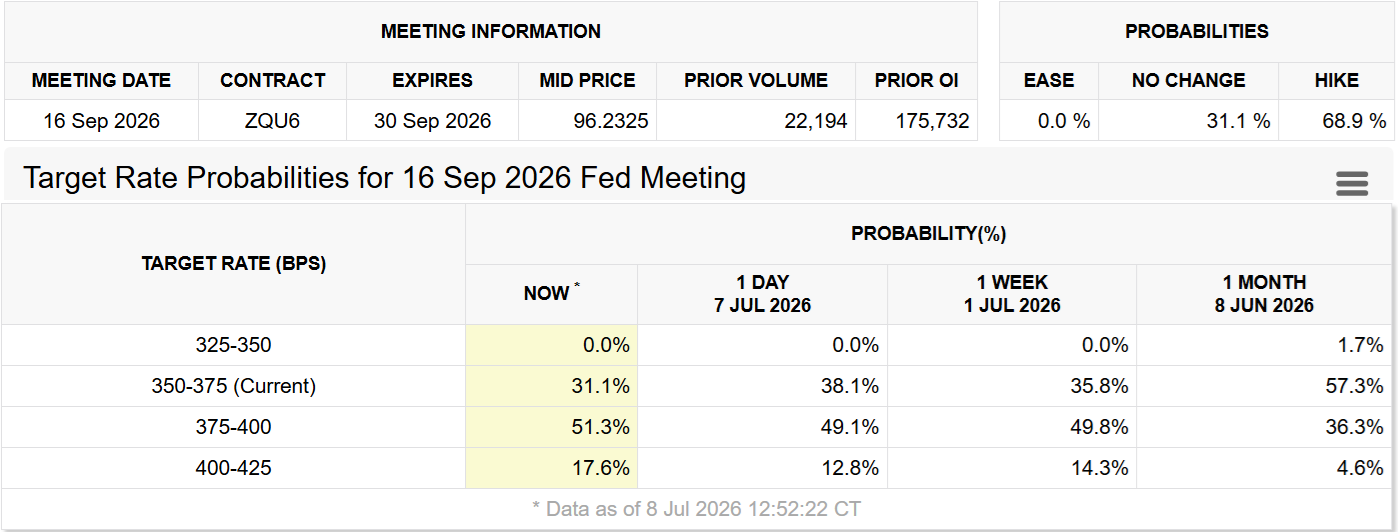
Implied odds for FED Funds target rate on Sept. 16. Source: CME FedWatch Tool
Traders are currently pricing 69% odds of interest rate hikes by September, up from 42% one month prior. This environment weighs heavily on risk assets, with Bitcoin still not widely perceived as an effective hedge.
Global economic uncertainty amid Strategy’s sell pressure
Adding to the cautious mood, President Trump demanded an end to US trade with Spain at the NATO summit, labeling the key ally a “wasted cause” for failing to commit to new defense spending targets. Such trade frictions risk slowing global economic activity and amplifying fears of global economic contraction.
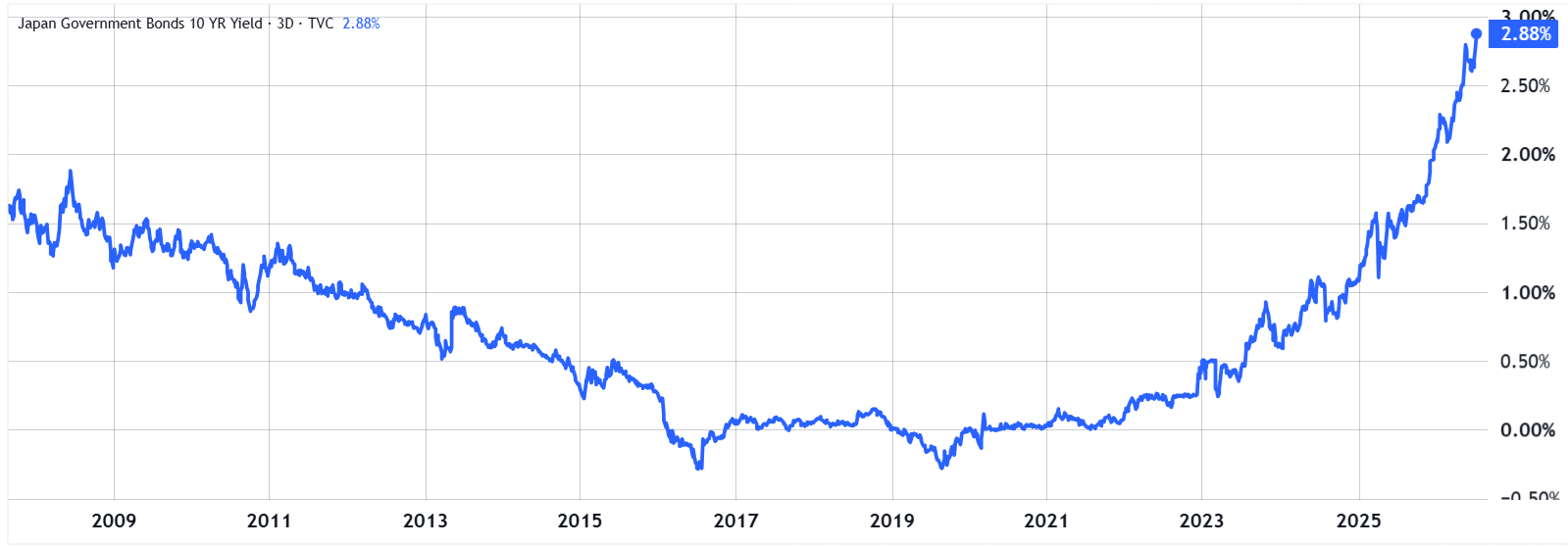
Japan 10-year government bonds yield. Source: TradingView
In Japan, government bond yields jumped to a 30-year high, reflecting fears over a lack of central bank independence as the government attempts to adjust the Japan Central Bank’s policy mandate to “achieve a stronger economy.” Japan is the largest foreign holder of US Treasuries, which heightens the risk of global contagion.
The latest round of Bitcoin sales, totaling $216 million, announced by Strategy (MSTR US) on Monday, negatively surprised many after it was revealed that they occurred outside the core $1.25 billion Monetization Program. The company’s 8-K filings stated the program accounts only for proceeds used to fund its cash reserves.
Investors now fear persistent selling pressure from Strategy as the company manages its capital structure and debt obligations, with total annual dividends of $1.76 billion alone. Moreover, Strategy holds over $3.8 billion in convertible debt with the earliest call date before April 2027.
Related: Lyn Alden says Bitcoin needs no savior as Strategy sells $216M of BTC
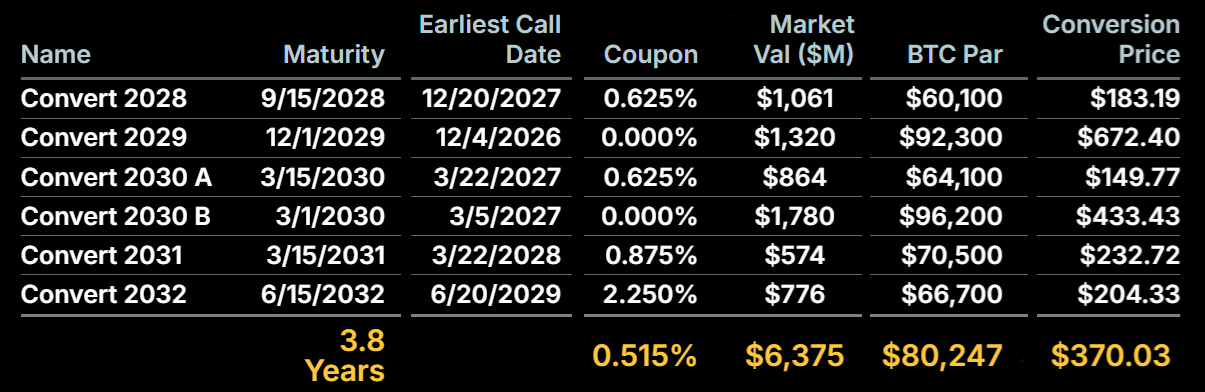
Strategy convertible debt maturity and market value, USD. Source: Strategy
On the regulatory front, documents show India’s central bank strongly backing policies that lean toward prohibiting crypto activities, including barring banks from any exposure to virtual assets to safeguard financial stability. The India tax department additionally highlighted risks of evasion.
The signals of tightening global oversight add another layer of negative pressure on Bitcoin’s price and market sentiment. Bitcoin bears remain in control, with risk appetite diminishing due to socio-political instability, prospects of a more restrictive US Fed monetary stance, and Strategy’s ongoing cash needs.
Sentiment is likely to remain fragile, making a retest of the $60,000 support level increasingly probable in the near term.
The US Securities and Exchange Commission (SEC) has launched its 2026 Regulatory Agenda.
Meant to ease compliance rules for crypto companies and offer regulatory safeguards for transactions on the blockchain, the agenda includes 38 proposed rules, with key initiatives focusing on tokenization standards, modernization of custody for on-chain assets, and reduction of compliance costs for public companies.
SEC Reveals its Crypto Plan for 2026
The regulator is considering a change to its rules that would expand the definition of “qualified custodian” to give firms managing tokenized assets a clearer set of rules. It also includes a safe-harbor framework for early-stage crypto projects that would give developers a defined period to build and test tokenized products under lighter compliance obligations.
The SEC is reviewing broker-dealer financial responsibility and record-keeping requirements for digital assets, and making changes that will impact how they protect their clients’ crypto, to replace traditional securities standards with ones better suited for crypto.
The agency also proposes Crypto Market Structure Amendments to revise the rules governing the trading of cryptocurrencies on alternative trading systems.
The agenda also suggests lowering costs for companies looking to go public by updating disclosure forms and modifying the eligibility for simplified registration, which the SEC thinks could spur more domestic IPOs.
Atkins Backs US Crypto Push
SEC Chairman Paul Atkins said the regulator has made a lot of progress more than a year into his tenure, noting that it aims to support President Trump’s goal of making America the crypto capital of the world.
“We are embracing innovation to bring more products onshore, creating clear rules of the road for capital raising with crypto assets, and providing clarity as to how market participants can custody and facilitate trading of tokenized securities on-chain,” he wrote.
Atkins also stressed that investor protection measures will still be functional as the agency continues to pursue securities law violations, but said the main goal is to give businesses confidence to innovate in the U.S. market.
The proposals are yet to be approved and will now go through the public comment phase this month, with final rules expected to be considered later this year.
Meanwhile, the CLARITY Act missed the July 4 signing target after passing the House in 2025 and clearing the Senate in May, and the bill is now waiting for a full Senate floor vote, with lawmakers having a limited amount of time before the August recess to finish work on the crypto market structure bill.
The post SEC’s 2026 Agenda Has 38 Items, But Crypto and IPOs Are the Headliners appeared first on CryptoPotato.
Key Takeaways
- Bank of England confirms Farage’s lobbying had zero impact on digital pound strategy.
- Governor Bailey states the institution identified and rejected crypto-related pressure.
- Reform UK leader faces increasing questions about party funding and crypto donor connections.
- Connections to Tether-affiliated donors spark additional concerns about CBDC opposition.
- Central bank maintains digital pound development proceeds independently of political interference.
The Bank of England has confirmed that Nigel Farage’s attempts to sway its digital pound policy through direct lobbying proved unsuccessful. In a statement to Labour MP Joe Powell, Governor Andrew Bailey revealed that the institution successfully identified the lobbying efforts and maintained its independent stance. This disclosure has intensified examination of Farage’s connections to cryptocurrency-affiliated donors and the funding sources for Reform UK.
Central Bank Maintains Policy Independence After Farage Consultation
Bailey’s comments came in response to inquiries regarding a confidential September meeting with Farage at the Bank’s Threadneedle Street headquarters. During this consultation, multiple topics were discussed, including digital asset regulation and the Bank’s exploratory work on a digital pound. Officials confirmed that Farage’s representations resulted in no alterations to existing policy directions.
Farage had specifically pressed Bailey to abandon the central bank digital currency initiative. Speaking at a subsequent cryptocurrency industry gathering, he publicly acknowledged confronting Bailey about the programme. Bailey’s response emphasized the Bank’s capability to recognize advocacy efforts and maintain policy independence.
The controversy has acquired greater political significance following investigations into Farage’s financial backing. Reports suggest he received approximately £5 million from cryptocurrency entrepreneur Christopher Harborne. Harborne maintains business relationships with Tether, a prominent stablecoin operator that has publicly opposed central bank digital currency initiatives.
CBDC Controversy Intensifies Amid Reform UK Financial Questions
The BoE continues its exploratory work on a potential digital pound, though no implementation decision has been finalized. Bank officials emphasize that any progression would necessitate extensive additional research and comprehensive public engagement. Furthermore, both parliamentary approval and government backing would be prerequisites for any deployment.
Farage has consistently positioned himself against central bank digital currencies, characterizing them as potential infringements on individual liberty. He has additionally suggested connections between the digital pound concept and digital identity infrastructure. However, the Bank of England’s official proposals contain no such integration.
Tether representatives have actively campaigned against the Bank’s digital pound research programme. Their position emphasizes concerns that a government-backed digital currency could undermine the market for private stablecoins. These arguments have attracted renewed attention given Harborne’s partial ownership stake in Tether alongside his financial support for Reform UK.
Parliamentary Resignation Amplifies Scrutiny of Cryptocurrency Connections
Farage stepped down from his parliamentary seat this week while maintaining his innocence regarding allegations about financial disclosure requirements. He advocated for a by-election positioned as a referendum on establishment politics. Nevertheless, mainstream political parties announced they would not field candidates in such a contest.
The parliamentary standards investigation now subjects Reform UK to enhanced oversight. Labour parliamentarians have demanded investigations into whether Farage violated regulations governing lobbying activities. Bailey’s correspondence reinforces the Bank’s position that its policy development remained insulated from external political influence.
The Bank of England has also recently revised its regulatory framework for stablecoins following industry consultation. While it removed a proposed ceiling on stablecoin holdings, Bailey explicitly rejected suggestions that Farage influenced this modification. The central bank continues to assert that cryptocurrency policy formulation operates independently of political considerations.
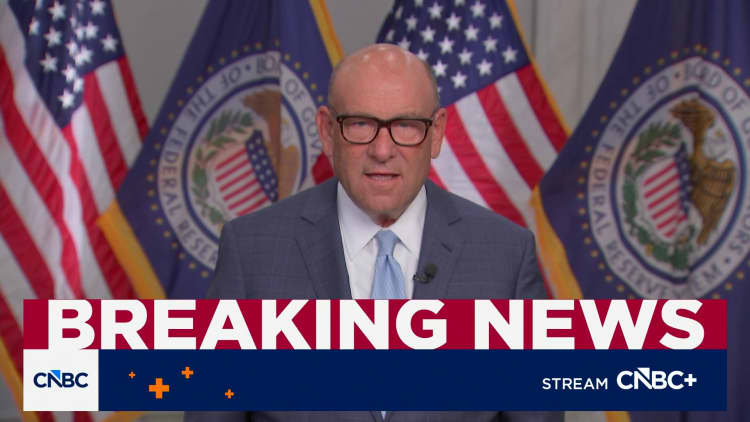

Federal Reserve officials were split last month about the future of interest rates, with policymakers entertaining scenarios in either direction, according to meeting minutes released Wednesday.
In Kevin Warsh‘s first meeting June 16-17 as chairman of the Federal Open Market Committee, participants saw outcomes where inflation could ease and allow lower rates, while others envisioned a scenario where price increases stay elevated and lead to hikes.
During his post-meeting news conference, Warsh billed the debate as a “family fight” that ended with the committee unanimously voting to keep the Fed’s benchmark funds rate anchored in a range between 3.5%-3.75%, where it has been for all of 2026.
However, the minutes did not elaborate on any drama that had taken place and outlined divergent views from members without a bias to which way the committee was leaning. The dot-plot grid of individual members’ expectations, in which Warsh did not participate, narrowly tilted toward one rate hike this year, then a cut in each of the following two years.
Asked to judge their most likely scenario, “many participants indicated that the appropriate level of the federal funds rate would be within or slightly below the current target range at the end of this year,” the minutes stated.

At the same time, the document also noted that “many other participants, however, assessed that the appropriate level of the federal funds rate would be above the current target range at the end of this year.”
“Participants noted that their future policy actions would depend on incoming information,” the minutes said.
Inflation has been on the rise for much of the past year, fueled earlier by President Donald Trump’s tariffs then exacerbated by the Iran war. Economists, though, have been split as to its durability, particularly since energy prices have plunged in recent weeks.
FOMC officials expressed “that inflation would remain elevated in the near term and then begin to decline as the effects of tariffs and energy price increases wane and other supply disruptions related to the closure of the Strait of Hormuz diminish. Participants judged that the risks to the inflation outlook were still tilted to the upside.”
Participants also noted the impact of artificial intelligence, observing that the “ongoing strong demand for AI infrastructure would likely sustain upward pressure on prices for technology products and electricity.” Warsh has stated he believes AI ultimately will be disinflationary due to productivity gains.
Markets reacted little to the minutes release, with stock market futures holding negative and Treasury yields rising.
“There’s some ambiguity in the minutes, suggesting several competing views on policy,” wrote Jeffrey Roach, chief economist at LPL Financial. “If we can tease out any forward guidance from the minutes, it would be the committee is working through a wide range of scenarios and will not commit to a specific scenario until the incoming data provides necessary clarity.”
The meeting summary, which at 14 pages was somewhat shorter though not dramatically so than the typical release, followed Warsh’s repeated statements that Fed officials should communicate less about their future intentions.
Keeping with that, the post-meeting statement was about one-third the size typical of the communique. Officials at the meeting seemed to approve of the tighter message.
“A number of participants noted that it was an opportune time to consider significant changes to the FOMC’s postmeeting statement,” the minutes said. “A majority of participants remarked that they saw advantages in shortening the statement.”
The document otherwise provided broad strokes of what happened during the two-day session in which the Federal Open Market Committee approved the terse statement saying it was keeping its benchmark interest rate unchanged and was resolved to restore “price stability” to the U.S. economy.

Notably, it removed language that had indicated a prior easing bias, as “most participants emphasized that they preferred not to repeat the Language.”
The post-meeting statement eliminated boilerplate language to describe economic conditions and the committee’s approach to achieving its twin goals of low inflation and full employment.
The minutes come less than two months into Warsh’s term as chairman, a position to which he was nominated by Trump. For years. the president had criticized Warsh’s predecessor, Jerome Powell, for not pushing interest rates lower.
Since taking the reins, Warsh has pledged to revamp the Fed’s operations in a variety of manners.
At the June news conference, he outlined five task forces that will address individual topics, including communication. The minutes simply stated the creation of the groups, noting that only “some participants commented that they welcomed the opportunity to review the Committee’s communications tools and practices.”
Since then, Warsh had made only one public appearance. At a European Central Bank forum in Portugal, the central bank leader was largely circumspect about where he thinks policy should go, consistent with his distaste for so-called forward guidance on monetary policy intentions.


Binance has pushed back against a reported US Justice Department warning, telling BeInCrypto that any claims of reduced cooperation with US law enforcement are wrong.
In an interview, Binance’s Head of Corporate Communications said the exchange believes the DOJ memo was likely based on a misreading of its obligations under Abu Dhabi Global Market rules. The company said it has already told both the DOJ and ADGM that its process for handling US law enforcement requests will remain unchanged.
“We are not going to change in any way, shape or form, the way that we interact with law enforcement in America,” the spokesperson told BeInCrypto.
DOJ Memo Sparks a New Controversy for Binance
On Wednesday, BeInCrypto reported that an internal DOJ memo had warned prosecutors to expect less help from Binance in crypto investigations. The memo, first described by The Information, reportedly said Binance would end courtesy freezes.
Investigators would instead need Mutual Legal Assistance Treaties (MLATs) to freeze or seize accounts.
Binance says it has not seen the memo but does not dispute its existence. However, it firmly rejects the reported claims.
According to the exchange’s Head of Corporate Comms, there could be a potential misunderstanding regarding Binance’s obligations under its Abu Dhabi license.
“…because of our global license under the ADGM, we are technically, by ADGM rules, supposed to implement those measures. But they are just guidelines. We are not doing that in America.”
He believes the ADGM wants requests routed through it for standardization, which slows agencies elsewhere.
Follow us on X to get the latest news as it happens
What the ADGM Rulebook Actually Says
BeInCrypto examined the rules at the center of the dispute. Binance.com became the first global crypto exchange licensed under the ADGM framework, with supervision starting on January 5, 2026. The changes the memo anticipated reportedly began on June 8, five months into that license.
Crucially, ADGM’s data protection regulations prohibit the transfer of personal data out of the free zone. Official guidance allows disclosures to UAE law enforcement, but states this “would not extend to cover requests from law enforcement agencies outside of the UAE.”
Read strictly, that could push foreign agencies onto treaty channels like MLATs, mirroring what the memo reportedly anticipated.
However, the same guidance permits transfers tied to legal claims and cites a US authority’s request as a legitimate example.
The rulebook, therefore, leaves Binance with lawful grounds to continue cooperating with US authorities.
Why the DOJ Memo Matters After the Plea Deal
There is a second layer to the story. Binance pleaded guilty in November 2023 to anti-money laundering and sanctions failures, paying $4.3 billion.
Cooperation was already a sore point then. The DOJ granted Binance only partial credit for its cooperation because the exchange delayed producing evidence.
The deal also required an independent compliance monitor for three years. That oversight has since thinned. The DOJ paused corporate monitorships in 2025, and founder Changpeng Zhao (CZ), who personally pleaded guilty, received a presidential pardon.
In April, Senator Richard Blumenthal pressed the DOJ and Treasury on the status of the monitors. His letters followed reports that over $1 billion moved through Binance to Iran-linked wallets.
With fewer formal levers, prosecutors depend more on voluntary collaboration from exchanges, like courtesy freezes. That dependence explains why an internal warning about Binance pulling back carries real weight.
Exchange Says US Engagement Is Growing, Not Shrinking
Binance confirmed it is in direct contact with the DOJ and says it flagged the memo immediately.
“We’ve told the DOJ, we’re not changing anything… like nothing is changing. Rather we are increasing our engagement with law enforcement and with the DOJ in America in order to stop illicit activity on the blockchain.”
The episode caps a tense year in Washington. The Treasury reportedly issued stricter compliance demands after reports tied Iranian funds to the platform, and Binance filed a defamation lawsuit against The Wall Street Journal in March.
The DOJ has not commented publicly. Whether it revises the guidance may be the clearest signal of where the relationship stands.
Editor’s Note: BeInCrypto has reached out to the US Department of Justice (DOJ) for an official response regarding the internal memo and Binance’s statements. This article will be updated as soon as a comment or formal statement is received.
The post Binance Blames DOJ Warning on Misread of Abu Dhabi Rules appeared first on BeInCrypto.
The XRP Ledger has surpassed 1 million AI-driven payments through the x402 protocol as Ripple-backed t54.ai has launched a dedicated AI Hub for developers, payment services, and autonomous agents building on the network.
Summary
- XRP Ledger has surpassed 1 million AI-powered payments through the x402 protocol.
- Ripple-backed t54.ai has launched the XRPL AI Hub for developers, AI agents, and payment services.
- The announcements come as over 55% of trusted validators have adopted the xrpld v3.2.0 upgrade.
According to a post on X from Ripple-backed t54.ai, the new XRPL AI Hub brings together AI projects, agents, developer tools, payment services, and technical resources into a single platform designed to help users discover and build applications on the XRP Ledger. The company said the hub was launched with support from Ripple developers and the XRP Ledger Foundation.
T54.ai explained that the platform is organized into three main sections. The first tracks live x402 payment activity on the XRP Ledger, while the second provides documentation, software development kits, code repositories, and other developer resources.
A third directory lists AI agents, merchants, services, and projects already operating on the network, allowing builders to identify existing infrastructure before launching new applications.
AI infrastructure on XRPL continues to expand
The launch follows Ripple’s rollout of the XRP Ledger AI Starter Kit several weeks ago, which introduced tools allowing AI agents to send and receive payments using XRP and RLUSD. That release also added support for XRPL within the x402 protocol, enabling automated machine-to-machine payments on the network.
Separately, the XRP Ledger Foundation announced on X that the network has processed more than 1 million agentic payments through x402. While sharing the milestone, the Foundation also welcomed the launch of the XRPL AI Hub, describing it as a central ecosystem platform for developers, users, and community participants working with AI applications on the ledger.
Commenting on the achievement, XRPL validator Vet said he was not surprised by the payment milestone. According to Vet, the XRP Ledger’s architecture is well suited for AI-based payment systems because it combines low transaction costs, predictable fees, XRP’s global liquidity, and a built-in decentralized exchange that enables continuous asset swaps without centralized controls.
Validator upgrade continues toward activation
The AI-related announcements come as the XRP Ledger continues progressing toward another network upgrade. As crypto.news reported on July 7, more than 55% of trusted validators have already upgraded to xrpld v3.2.0, moving the amendment process closer to activation.
According to XRP Ledger Explorer data cited in the report, 84 trusted validators, representing 55.63% of the validator set, are currently running xrpld v3.2.0, while 353 network nodes, or 42.12% of all nodes, have installed the latest software. Version 3.1.3 remains active on 58 trusted validators and 440 nodes.
Under the XRP Ledger’s governance rules, protocol amendments require approval from more than 80% of trusted validators for two consecutive weeks before they become active. Based on the current validator distribution, roughly another quarter of the trusted validator set must migrate to the latest version before the upgrade can advance toward activation.
The xrpld v3.2.0 release introduces infrastructure updates, bug fixes, and developer improvements across the network. It also implements the XLS-0095 proposal, officially renaming the ledger’s core server software from rippled to xrpld, a change intended to align the software’s identity more closely with the XRP Ledger ecosystem.
Super Micro Computer (SMCI) Stock Climbs on Red Hat Partnership for Edge AI Solutions
The Vikings’ Most Overpaid Players in 2026

Messi and Ronaldo Are Building Tech Portfolios. Mo Salah Is Playing a Different Game


-

 Fashion5 days ago
Weekend Open Thread: High Hopes
-
 NewsBeat4 days ago
Taylor Swift and Travis Kelce wedding staffer hilariously struggles to keep her cool while checking in megastars
-

 Fashion2 days ago
Open Thread: What Great Books Have You Read Recently?
-

 Politics5 days ago
The House | “Reframing the debate from a binary discussion of winners and losers”: Yuan Yang reviews ‘We Are Not Machines’
-

 Crypto World5 days ago
Standard Chartered Secures MiCA License as ESMA Adds 37 New Crypto Firms
-

 News Videos2 days ago
Whats Hidden Inside This Cash Register? #treasure #reselling #money
-
 Tech2 days ago
Anthropic’s new “J-lens” reveals a silent workspace inside Claude that mirrors a leading theory of consciousness
-

 Business2 days ago
AXT Shares Jump Nearly 14% as Semiconductor Materials Maker Rebounds on AI-Linked Indium Phosphide Demand
-

 Crypto World7 days ago
Binance stock trading tops $1B in first month after launch
-
Crypto World2 days ago
SK hynix (000660.KS) Stock Dips as $28B Nasdaq ADR Offering Drives AI Memory Expansion
-

 Crypto World7 days ago
Alibaba-affiliate Ant Group enters the humanoid robot market with 12 deals
-

 Crypto World3 days ago
South Africa proposes crypto tax guidance under existing rules
-

 News Videos2 days ago
Best Time to Enter Small Caps Right Now? Another Bull Run? | Financially Free
-

 Tech3 days ago
Lenovo laptops are now shipping with YMTC SSDs, a sign of Chinese NAND entering the mainstream
-

 Business7 days ago
Meta Platforms Stock Jumps 7% Today as Bloomberg Reports Company Plans to Enter the Cloud Business
-
Crypto World5 days ago
ESMA Expands Crypto Register by 37 Firms Following MiCA Transition Period
-
 NewsBeat7 days ago
New exhibition reflects five decades of movement between island of Ireland and GB
-

 Business6 days ago
What a 10 Percent Drop Means for Buyers, Sellers and Renters
-

 Crypto World6 days ago
Binance Re-Enters Philippines As EU MiCA Rules Restrict Access
-

 News Videos2 days ago
Avoid entering in FOMO #bitcoin #cryptocurrency #trading #scalping
You must be logged in to post a comment Login