
Business
SBI Funds Management IPO to open on July 14. Check details


The IPO will be entirely an offer for sale of up to 20,37,09,239 equity shares of face value Rs 1 each and seeks to value the company at Rs 1.17 lakh crores. This represents up to 10.0013% of SBI Funds Management’s paid-up equity share capital.
SBI will sell up to 12,83,34,397 shares through the offer, representing 6.3% of SBI Funds Management’s paid-up equity share capital. Amundi India Holding will sell up to 7,53,74,842 shares, representing 3.7% of the company’s paid-up equity share capital.
Also Read: NSE eyes September launch for $3 billion IPO; marketing likely to begin next week
Since the issue is fully an offer for sale, SBI Funds Management will not receive any proceeds from the IPO. The money will go to the selling shareholders, SBI and Amundi India Holding.

SBI had earlier informed the exchanges on March 19 that SBI Funds Management had filed its draft red herring prospectus. The latest filing of the red herring prospectus moves the IPO closer to launch, though the offer remains subject to regulatory approvals, market conditions and other considerations.
SBI Funds Management IPO detailsSBI Funds Management is the investment manager of SBI Mutual Fund, one of India’s largest asset management businesses. The IPO is expected to be closely watched because of the scale of the mutual fund industry and SBI’s strong distribution reach across the country.
The listing would also give investors a chance to own a business linked to India’s growing financial savings market. Mutual funds have seen strong inflows from retail investors in recent years, helped by rising systematic investment plans and wider participation from smaller cities.
For SBI, the IPO will help partly monetise its stake in the asset management subsidiary. For Amundi India Holding, the offer will also provide a partial exit route.
The key details investors will watch next are the price band, issue size in rupee terms, market capitalisation and valuation compared with other listed asset management companies. The final pricing will determine how the offer stacks up against peers in the asset management space.

Business
Rub-off effect? Godfrey Phillips shares jump 6% after rival cigarette maker ITC’s Q1 earnings

Godfrey Phillips rose over 6% to Rs 2,269.90 on the NSE, putting the stock on track for its biggest single-day gain since April 29. ITC shares also climbed more than 4% to Rs 293.
ITC on Friday reported a 27% year-on-year (YoY) fall in standalone net profit at Rs 3,579 crore for the April-June quarter of FY27, as compared to Rs 4,911 crore in the year-ago period. Its revenue from operations, however, rose 28% YoY to Rs 26,943 crore during the quarter under review, from Rs 21,070 crore in the year-ago period.
ITC’s cigarette business saw a revenue surge of 81% YoY to Rs 15,384 crore. Nomura upgraded its rating on the shares of ITC to ‘Buy’ from ‘Reduce’ and raised its target price to Rs 340 from Rs 300, implying a 21% upside. The brokerage said the worst appears to be over and believes the stock now offers an attractive risk-reward profile.
Also read | ITC Q1 Results: Standalone profit falls 27% YoY to Rs 3,579 crore, but revenue grows 28%
Nomura noted that cigarette volume declined 5% year on year in the first quarter, better than its own and Street expectations of a decline of over 10%, although EBIT fell more than expected.
It expects the steps taken by the company to improve profitability to help restore EBIT per stick to pre-tax hike levels by the fourth quarter of FY27. The brokerage also believes further price hikes in Premium Deluxe and Regular cigarette segments should support pricing growth from the second quarter, while an improving product mix could offset the impact of downtrading. JM Financial also noted that the cigarette segment of ITC delivered a resilient performance amid regulatory challenges.
Motilal Oswal, however, struck a cautious tone, saying that in the cigarette business, the pass-through of the tax hike to consumers is still in progress. The sharp tax increase and competition from illicit cigarettes would take time to normalise, it said, adding that a calibrated price hike will continue to impact cigarette EBIT performance in the coming quarters.
Godfrey Phillips share price
Godfrey Phillips shares have gained over 1% in the past week and 3% in the last month, but remain down more than 2% in 2026 so far. The stock, along with other cigarette makers, came under pressure earlier this year after the government raised taxes on cigarettes and tobacco products.
Also read | Indian cigarette makers ITC, Godfrey Phillips, VST Industries see revenue and profit decline after tax hike
In February, the government increased the GST on cigarettes and tobacco products to a flat 40% and replaced the compensation cess with an additional excise duty ranging from Rs 2,100 to Rs 8,500 per 1,000 sticks, depending on cigarette length.
Over the longer term, the stock has declined 23% in the past year but delivered returns of 231% over three years and 550% over five years.
(Disclaimer: Recommendations, suggestions, views and opinions given by the experts are their own. These do not represent the views of The Economic Times)
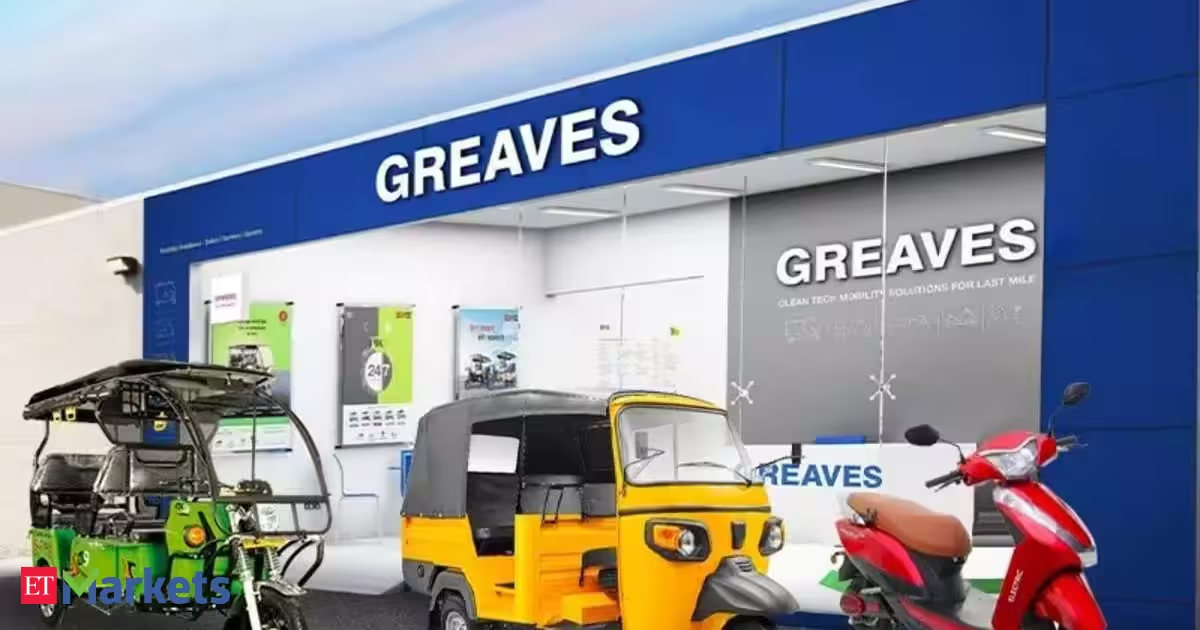
“This capital will help us accelerate innovation and further strengthen our product pipeline,” said MD Vikas Singh.
The capital infusion is aimed at strengthening GEML’s next phase of growth towards building Next Generation products, Battery Management Systems, Power Trains and New Age Technology development. “As India’s electric mobility market moves towards mass adoption, we remain focused on supporting the country’s clean mobility goals through differentiated products Built for Bharat, stronger technology capabilities and reliable mobility solutions for our customers.” He added.
GEML has decided to defer its proposed public listing, opting not to avail itself of Sebi’s extension for the offer. The company said it remains committed to pursuing the listing at an appropriate time, subject to market conditions, regulatory approvals and other relevant considerations.
The company also has a longstanding association with the Indian armed forces, with its products supporting a range of defence and naval applications.
Through this latest investment, the company aims to accelerate performance of its electric two-wheeler and three-wheeler segments with a growing portfolio of products, an expanding retail and service network, and continued investments in engineering, manufacturing and customer experience.

Local developer Griffin Group has lodged a plan with the City of South Perth detailing a $16.6 million apartment project fronting the suburb’s bustling Angelo Street.
Yes. Corporate subscriptions are available for teams and organisations, with discounted rates as user numbers increase. Pricing starts from $1,625 + GST per user.
Get in touch
to discuss the right option for your organisation.
Business News subscriptions are used by executives, investors, consultants and professionals who need to stay informed and make better decisions about the WA market. When you subscribe you’ll get
- Unlimited access to WA’s most trusted business journalism
- Data & Insights — detailed profiles of WA companies, people, projects and deals
- MyBN — a personalised feed based on the companies, people and sectors you follow
- Special publications and industry reports
- Daily and weekly email newsletters
Data & Insights is a research tool built specifically for the WA market. It draws on more than 30 years of Business News reporting, updated regularly to reflect what’s happening now. Use it to:
- Look up detailed profiles of WA companies, including financials, directors and ownership
- Find decision-makers and track their career movements
- Research live and completed projects across WA industries
- Monitor deals, appointments and market activity
- Access industry rankings and league tables
Data & Insights is updated daily by our dedicated research team, which uses the latest announcements, ASX filings and editorial coverage to keep our person, company, list and project records up to date.
Business News welcome all opportunities to make our dataset accurate, complete and current, so if you have an update request, please email the team at
general@businessnews.com.au, and we’d be happy to assist.
MyBN
is part of every subscription. It’s your personalised view of Business News. You can follow the companies, people, sectors and projects that matter to you, and get a news feed and alerts tailored to your interests. You can save articles to read later and retain only what you need.
Only subscribers have full access to all content on the Business News website.
If staying informed about the WA economy is part of your job, and/or you’re looking for networking opportunities in WA, Business News is built for you.
Business News subscribers are:
- Executives and directors tracking competitors, clients and market movements
- Investors and advisers researching companies, deals and industry trends
- Consultants and professionals staying across sectors relevant to their clients
- Business owners looking for leads, context and market intelligence
Most Business News publications cover national or global markets. Business News is focused entirely on Western Australia, which means the journalism, the data and the intelligence are all built around WA companies, people and projects — not adapted from a national feed. Data & Insights, included with every subscription, combines more than 30 years of WA-specific editorial research with live business data. There’s no comparable product for the WA market.
The Morning Digest Email provides a comprehensive wrap of the major headlines, relevant to WA business, and includes with a snapshot of the overnight news covering oil, gold and ASX-listed companies.
The Afternoon Wrap Email focuses on the news covered by our team of journalists during the course of the working day, including exclusive stories and analysis, all of which relates to WA business and the local economy.
The BN Weekender Email contains a wrap of the Business News from the week that was, highlighting the top stories in each area of WA business.
Sign up for free.
We’re happy to help.
Get in touch
and our team will come back to you.
Business
Sam Altman Draws Online Backlash for Suggesting Parents Use ChatGPT to Make Morning Podcasts for Kids

OpenAI CEO Sam Altman drew widespread criticism online this week after suggesting that parents use the company’s new ChatGPT Work product to generate a personalized morning podcast for their children ahead of the school-day commute, with critics arguing the idea encroaches on one of the few remaining stretches of uninterrupted time parents have to talk with their kids.
In a post on X on Friday, Altman described what he called a “cool use case” for the product. “connect your family calendars and explain your kids’ interests,” he wrote, in lowercase, before adding that parents could then have ChatGPT “make a podcast that talks about one kid’s soccer game that afternoon, one kid’s upcoming birthday, some news, etc.” every morning for the drive to school.
The suggestion quickly generated significant pushback. Alex Hirsch, creator of the animated series “Gravity Falls,” offered one of the most widely shared responses, replying simply, “What if you just talked to your children?” Other commenters described the proposal as reflecting “a very low bar for what counts as a good use case of this technology,” while still others argued that ordinary, unstructured conversation during the school commute holds inherent value that an AI-generated podcast could not replicate. Not all reactions were negative; some social media users suggested AI-generated podcasts could prove useful specifically on longer car trips, or that the format could help present information to children in a more engaging way without necessarily replacing genuine conversation between parents and kids.
The backlash to Friday’s post revived scrutiny of comments Altman has made previously about the role of AI in parenting. Speaking on “The Tonight Show Starring Jimmy Fallon,” Altman said, “I cannot imagine having gone through figuring out how to raise a newborn without ChatGPT,” describing how the chatbot had helped calm his anxiety when his child had not yet begun crawling by six months of age, reassuring him that the delay was normal. Altman did add a caveat during that same appearance, acknowledging, “Clearly, people did it for a long time, no problem.”
Altman has continued discussing AI’s role in his own parenting experience in subsequent public appearances. In the debut episode of the new OpenAI Podcast, hosted by Andrew Mayne, Altman was asked how ChatGPT has helped him as a new parent and offered a striking, matter-of-fact assessment of his children’s future relationship with artificial intelligence. “My kids will never be smarter than AI,” Altman said. “But also they will grow up vastly more capable than we were when we grew up. They will be able to do things that we cannot imagine and they’ll be really good at using AI.” Altman went on to say he did not believe his children would be bothered by growing up alongside systems more capable than themselves in certain respects, though he also acknowledged potential downsides later in the same conversation, saying he suspected “this is not all going to be good, there will be problems and people will develop these problematic, or somewhat problematic, parasocial relationships.”
Altman addressed the broader online reaction to his ChatGPT Work post in a follow-up statement on X on Saturday, writing that OpenAI employees themselves report discomfort when ChatGPT asks them for things, even when they would be “perfectly happy doing the same work” if a human coworker made the identical request. “reinforces how much people care about human relationships and helping each other, and want AI to give time back — or enhance time together — rather than become a layer separating people,” Altman wrote, again in lowercase.
Not every parent has reacted negatively to the broader concept of AI-assisted parenting. Hally Peck, a mother of two, told Business Insider that she relies on an AI agent to help manage her family’s work calendars, school schedules, activities, birthdays and childcare logistics. “I have two kids, and my husband also works full-time,” Peck said. “We’re both in very demanding jobs, which means time is our most critical resource.”
Getting parents comfortable with AI-assisted tools appears to be a genuine priority for OpenAI. The company recently posted a job listing seeking a product manager with specific experience building trust-sensitive consumer experiences for parents and families, according to TechCrunch. Rival technology company Meta has separately been testing an AI-powered app designed to tell children bedtime stories.
The scrutiny of Altman’s parenting-related comments comes as OpenAI continues facing significant legal exposure tied to how ChatGPT has interacted with younger and vulnerable users. The company faces multiple lawsuits from parents and families alleging the chatbot played a role in loved ones’ delusions and suicides, including a wrongful-death lawsuit filed by the parents of 16-year-old Adam Raine, who died by suicide in April after months of conversations with ChatGPT that his parents allege included the chatbot providing detailed information on self-harm methods and offering to draft a suicide note. OpenAI has said it is “continuously improving how our models respond in sensitive interactions” and has introduced new parental control features allowing adults to link accounts with their children’s, manage feature access, and receive notifications if the system detects a teen may be in acute distress.
If you or someone you know is struggling with thoughts of suicide, the 988 Suicide and Crisis Lifeline is available around the clock by calling or texting 988.
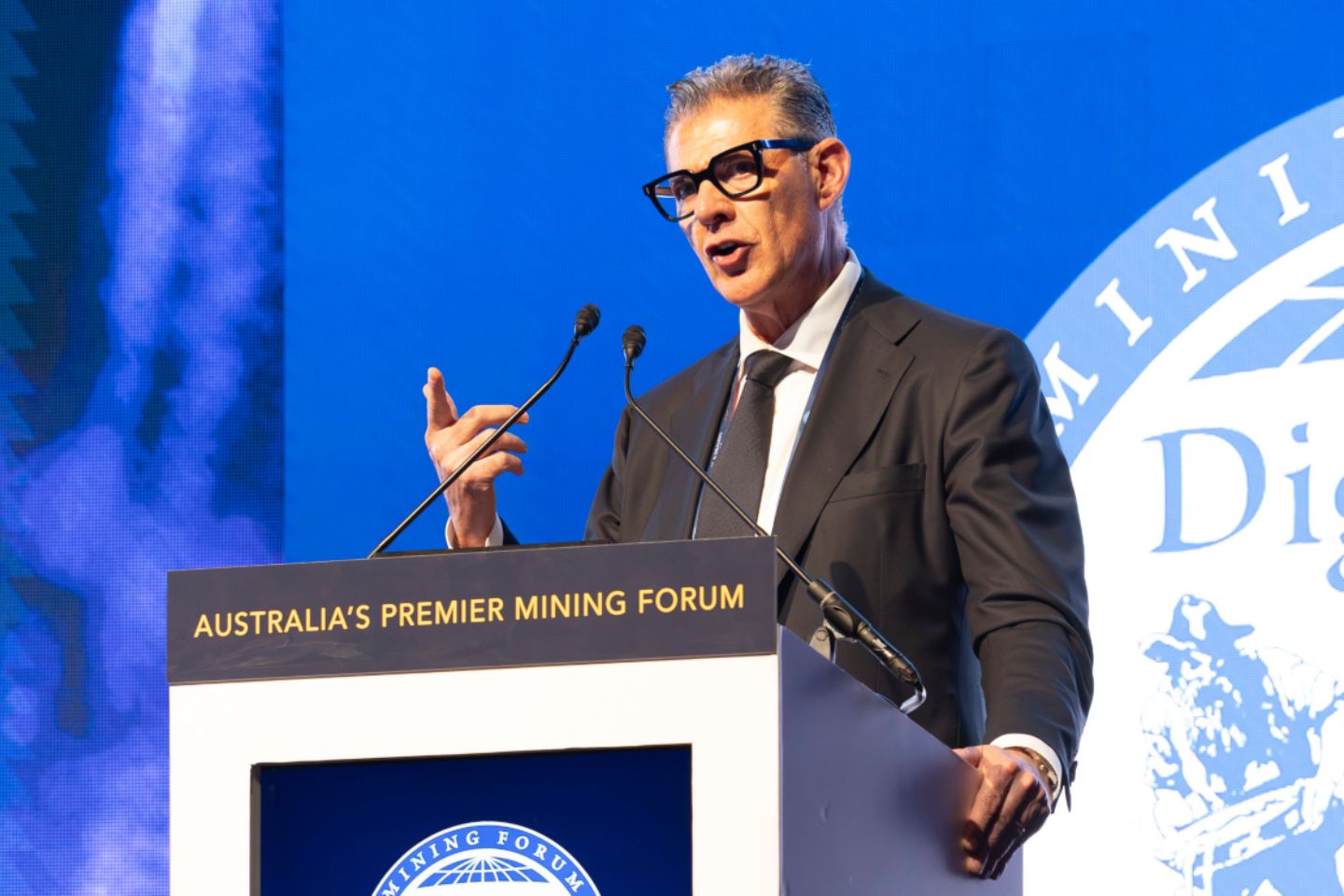
Liontown managing director Tony Ottaviano says he’s open to growing his company’s lithium portfolio and would look at Rio Tinto’s Mt Cattlin mine if approached.
Gina Rinehart-backed Liontown ended last financial year with more than $560 million in the bank, riding the wave of positivity in the lithium market to generate $137 million over three months.
The company is planning towards an expansion call at its sole Kathleen Valley mine this quarter and hopes to achieve a mining run rate of 2.8 million tonnes per annum by the end of next year.
But with the market for the battery metal resurgent compared with 12 months ago, Mr Ottaviano said the company was looking at different avenues to growth.
“We’re good at exploration, and that’s why we’ve instigated, now that we’ve got a little bit of money, our growth options from exploration,” he said.
“The second area is shovel-ready operations – these are things that are permitted, ready to go, should we build? But that’s a three-to-five-year journey.
“And then there’s … operating assets, but they take a lot more risk. They take a lot more due diligence and a lot more understanding.
“I think a portfolio that has a mixture of all that is what you should be preparing for, and that’s what we’re doing.”
Mr Ottaviano said Liontown would “probably stay within brief” when it came to its commodity focus, with lithium the most likely target.
Questioned specifically about the mine, he said Rio Tinto’s mothballed Mt Cattlin asset near Ravensthorpe could come under consideration if an approach was made.
“If they approach us, we’ll look at it,” Mr Ottaviano said.
“But it’ll depend on the quality of the resource, and where it sits on the cost curve.”
Mt Cattlin was closed in July 2025, having come onto the books of Rio via its acquisition of $10.7 billion Arcadium Lithium acquisition months earlier.
Rio boss Simon Trott flagged the potential for the global mining giant to sell the asset last week, when he declared it was not a focus for the company’s lithium division.
Liontown’s changing fortunes have been propelled by exposure to spodumene markets, which have evolved in recent years and allowed the company to access more dynamic pricing for its spodumene product.
The miner initially sold its product under offtake contracts signed in 2022 to help it secure funding as it developed Kathleen Valley, but Mr Ottaviano said they were being slowly unwound.
“Two thirds of our book by the end of the calendar year will be on the spodumene index,” he said.
Liontown raised $316 million in August last year, in a move to secure its balance sheet amid a challenging macroeconomic environment.
Liontown shares closed 2.5 per cent higher at 99c today.
Business
Tata Motors CV shares rise 4% as July sales jump 37% YoY. Nomura expects Iveco to support earnings recovery; check target price

Domestic sales increased 28% to 33,876 units from 26,432 a year earlier, while international volumes more than doubled, rising 128% to 5,765 units.
Nomura highlighted that Tata Motors’ management lowered its LCV industry outlook to flat in 2026 while MHCV demand remained unchanged at 5% year-on-year (YoY). Bus demand is likely to be slightly lower in the EU and South America.
The company maintained its top position in the European bus market and second overall with more than 25% market share. It expects a gradual recovery in profitability in the second half of the calendar year 2026, impacted by weak LCV demand and macro uncertainties offset by cost efficiency programs, Nomura noted.
Also read | Tata Motors CV can cross 1 million vehicles after Iveco deal: N Chandrasekaran at AGM
The international brokerage believes that while weak LCV industry outlook remains a demand headwind, Iveco’s focus on cost efficiencies, low-cost sourcing advantages post TMCV integration, and new launches will support an earnings recovery over the next two years, which remains a key monitorable.
Nomura has a ‘Neutral’ call for the shares of Tata Motor CV, with a target price of Rs 402 apiece. This implies a downside potential of nearly 8% from the stock’s previous closing price of Rs 436.95 apiece on BSE.
Tata Motors CV share price
Tata Motors CV shares have gained more than 10% in a week and 5% in a month. The stock is overall up around 6% in 2026 so far.
The company currently has a market capitalisation of nearly Rs 1.67 lakh crore.
Also read | Tata Motors CV bets on global expansion, EVs and digital businesses for next phase of growth
(Disclaimer: Recommendations, suggestions, views and opinions given by the experts are their own. These do not represent the views of The Economic Times)

Rates Spark: Rates Are Seeking New Levels To Settle

In a filing with the exchange, the company reported a consolidated net loss of Rs 791 crore for the first quarter of FY27, marking nearly a 34% year-on-year decrease from the Rs 1,197 crore net loss reported in the year-ago period.
Also Read | Swiggy shares plunge 6% even as losses narrow. Should investors buy, sell or accumulate?
The company’s revenue from operations, meanwhile, increased more than 37% YoY to Rs 6,812 crore during the April-June quarter of FY27, from Rs 4,961 crore reported in the corresponding quarter of the previous financial year.
Instamart, the company’s quick commerce arm, also saw losses contract to Rs 651 crore in Q1 FY27 from Rs 797 crore in the year-ago period. Its revenue from operations meanwhile soared nearly 53% YoY to Rs 1,232 crore. Instamart’s GOV rose nearly 40% YoY to Rs 7,907 crore, while contribution margin improved 440 bps to 0.2%.
“In a period where quick commerce competition has only intensified, we prioritised improving unit economics over fleeting headline growth. Our efforts over the last few quarters to reset our user base, economics and experience have together made the business much stronger and increased the staying power,” said Sriharsha Majety, founder and group CEO of Swiggy.
Instamart’s contribution margin for the quarter stood at -0.2% of gross order value (GOV), a 4.4% improvement from a year earlier, while adjusted Ebitda losses narrowed to Rs 778 crore from Rs 896 crore a year ago.
What should investors do?
Motilal Oswal has maintained its Buy rating on Swiggy with a target price of Rs 350, implying an upside of around 18%. The brokerage largely retained its estimates, saying food delivery execution remains steady with expanding margins, while Instamart has largely addressed concerns around contribution margins.
It believes the focus will now shift to sustaining GOV growth through higher monthly transacting users, better customer retention and monetisation, while moving closer to EBITDA profitability. Motilal continues to see long-term value in Swiggy’s food delivery franchise and brand, although it believes a clear path to quick commerce EBITDA profitability will be key for a meaningful re-rating.
Nuvama has maintained its Buy rating on Swiggy with a target price of Rs 444. The brokerage highlighted that management follows a conservative accounting approach, with no capitalization of employee costs or new-store ramp-up expenses and no payable securitization.
It noted that quarterly margins were impacted by seasonal cost pressures, including annual salary revisions, minimum wage hikes for dark store operations and higher delivery partner costs. Nuvama expects the profitability of the food delivery business to increasingly offset cash burn in the quick commerce segment over the coming quarters.
Also Read | Swiggy contra view: Why JM Financial downgraded the stock to Sell despite strong Q1 results
Domestic brokerage JM Financial turned more cautious, downgrading the stock to Sell from Reduce.
With a target price of Rs 250 per share, analysts forecast over 15% downside from current market levels. The contrarian view comes after a host of international and Indian brokerages issued bullish calls on the counter following the Q1 print.
JM Financial says Swiggy’s Q1FY27 results reinforce its view that meaningful profitability improvement in the Instamart business will require greater scale. The brokerage noted that after prioritising contribution margins over the past few quarters, the company has shifted its focus back to accelerating growth.
It highlighted that Instamart’s contribution margin was only marginally above break-even in Q1 despite muted quarter-on-quarter NOV growth and expects the metric to remain in negative territory, between 0 and -100 basis points, over the next two quarters.
According to JM Financial, Swiggy has once again shifted its Instamart strategy from improving profitability to accelerating growth after nearly reaching contribution-level break-even. It says the management now aims to deliver at least double-digit sequential NOV growth in Q2FY27 while operating within a 0% to -1% contribution margin range, indicating that elevated investments will continue and adjusted EBITDA losses are likely to remain in the Rs 750-800 crore range in the near term.
(Disclaimer: Recommendations, suggestions, views and opinions given by the experts are their own. These do not represent the views of Economic Times)
Yes. Corporate subscriptions are available for teams and organisations, with discounted rates as user numbers increase. Pricing starts from $1,625 + GST per user.
Get in touch
to discuss the right option for your organisation.
Business News subscriptions are used by executives, investors, consultants and professionals who need to stay informed and make better decisions about the WA market. When you subscribe you’ll get
- Unlimited access to WA’s most trusted business journalism
- Data & Insights — detailed profiles of WA companies, people, projects and deals
- MyBN — a personalised feed based on the companies, people and sectors you follow
- Special publications and industry reports
- Daily and weekly email newsletters
Data & Insights is a research tool built specifically for the WA market. It draws on more than 30 years of Business News reporting, updated regularly to reflect what’s happening now. Use it to:
- Look up detailed profiles of WA companies, including financials, directors and ownership
- Find decision-makers and track their career movements
- Research live and completed projects across WA industries
- Monitor deals, appointments and market activity
- Access industry rankings and league tables
Data & Insights is updated daily by our dedicated research team, which uses the latest announcements, ASX filings and editorial coverage to keep our person, company, list and project records up to date.
Business News welcome all opportunities to make our dataset accurate, complete and current, so if you have an update request, please email the team at
general@businessnews.com.au, and we’d be happy to assist.
MyBN
is part of every subscription. It’s your personalised view of Business News. You can follow the companies, people, sectors and projects that matter to you, and get a news feed and alerts tailored to your interests. You can save articles to read later and retain only what you need.
Only subscribers have full access to all content on the Business News website.
If staying informed about the WA economy is part of your job, and/or you’re looking for networking opportunities in WA, Business News is built for you.
Business News subscribers are:
- Executives and directors tracking competitors, clients and market movements
- Investors and advisers researching companies, deals and industry trends
- Consultants and professionals staying across sectors relevant to their clients
- Business owners looking for leads, context and market intelligence
Most Business News publications cover national or global markets. Business News is focused entirely on Western Australia, which means the journalism, the data and the intelligence are all built around WA companies, people and projects — not adapted from a national feed. Data & Insights, included with every subscription, combines more than 30 years of WA-specific editorial research with live business data. There’s no comparable product for the WA market.
The Morning Digest Email provides a comprehensive wrap of the major headlines, relevant to WA business, and includes with a snapshot of the overnight news covering oil, gold and ASX-listed companies.
The Afternoon Wrap Email focuses on the news covered by our team of journalists during the course of the working day, including exclusive stories and analysis, all of which relates to WA business and the local economy.
The BN Weekender Email contains a wrap of the Business News from the week that was, highlighting the top stories in each area of WA business.
Sign up for free.
We’re happy to help.
Get in touch
and our team will come back to you.
Brand New Day Has Biggest-Ever Spider-Man Opening Weekend
Rub-off effect? Godfrey Phillips shares jump 6% after rival cigarette maker ITC’s Q1 earnings

HashKey receives JPMorgan approval to open client money account


-

 Business5 days ago
Why Trees Belong on the Risk Register
-

 Fashion3 days ago
Weekend Open Thread: Wit & Wisdom
-

 Politics3 days ago
Meta enters AI-training agreement with far-right ‘propaganda rag’ Newsmax
-
 Entertainment6 days ago
‘Stargate’ Creator’s New Sci-Fi Series Returns for Season 3 Tomorrow
-

 Politics7 days ago
Luke Littler dismantles Gerwyn Price to retain title in Blackpool
-

 Crypto World2 days ago
MicroStrategy Post-Earnings CLARITY Act Push Could Add New Catalyst for Its Stock
-

 Politics6 days ago
The Part of the Electric Transition Nobody Wants to Discuss
-

 Business5 days ago
Major shareholder moves on Canyon
-

 Crypto World2 days ago
XRP Ledger v3.3.0 brings five institutional features
-

 News Videos4 days ago
Bitcoin Enters the 3rd Stage of the Bear Market
-

 Crypto World5 days ago
Kraken Enables Retail Access to Jersey Mike’s IPO via Tokenized Shares
-

 Tech6 days ago
New macOS Sequoia & Sonoma security updates for older Macs
-

 Politics4 days ago
Luke Littler’s dominance sparks GOAT debate
-

 News Videos6 days ago
Claude: Build Financial Dashboards in Minutes (2026)
-

 Business5 days ago
Johnson & Johnson agrees to $5.5B settlement over talc cancer claims
-

 Sports3 days ago
Seema Kaliramna Wins Discus Throw Bronze, Takes India’s CWG Medals Tally To 17
-

 Crypto World24 hours ago
Crypto PAC spending tops $2M in Michigan House race
-

 Business3 days ago
Trump Announces Hamas Disarmament Agreement as Iran Strikes Kuwait Air Base and US Attacks Pause Overnight
-

 Tech5 days ago
Gemini can now summarize the messiest comment threads in Google Docs
-

 Tech1 day ago
ESET tracks rise in malicious AI skills and adaptable malware
You must be logged in to post a comment Login