
Politics
I Waited On Catherine O’Hara And It Changed My Life


“What’s your name?” Catherine O’Hara asked me, leaning forward in the booth. “What’s your story?”
I was standing in a swanky restaurant in New York City wearing a black dress short enough to satisfy management, my hands clasped behind my back in case a manager appeared. I had just broken the most important rule of the job: Never acknowledge a celebrity.
Three months earlier, I had dropped off my resume anywhere I could in hopes of securing a job that would supplement what my $35-a-week publishing intern stipend wouldn’t get me, which was, of course, everything but my subway fare.
I was hungry in every sense of the word. By the end of the day, I was offered three serving jobs and took them all. One was at this legendary restaurant continuously full of rock stars, Oscar-winning actors and models.
During my interview, the manager had ignored my flimsy (both in substance and content) resume and assessed my body instead. My waist. My chest. My legs. He said they had a place for me as a cocktail server in the private lounge where the windows were tinted, the tables were low and loungy, and the only clientele allowed in were ultra-wealthy patrons and celebrities.
The manager told me to show up later that night for my first training shift and emphasised that the dress code was all black, dresses only, hemlines not to exceed the end of my fingertips when my arms were hanging by my sides.
“We prefer the skirt to graze your first knuckles,” he said, making a fist and pointing to the ridged top of his hand to make his point.
I was 22, fresh out of college, and ready to do whatever it took to become a writer. If I can make it here… I thought.
When I walked in for my first shift, I was surprised to see a friend from college working at the host stand. Back in Colorado, he’d been a boisterous theater kid — lanky with bright blue eyes and flamboyant energy. Now he looked hollowed out — dark under the eyes, less “youthfully thin” and more underfed. He seemed tired and nervous, and his eyes flicked around as if we might get in trouble for hugging.

The server I was assigned to shadow approached the host stand to retrieve me. She was gorgeous, waifish, and in place of the air of sadness my college acquaintance had, she’d built a bitter bubble of sarcasm around herself.
She walked me quickly through the labyrinthine back-of-house, dodging catcalls from her co-workers and managers deftly. She listed off rules as I struggled to keep up. Three of them stuck out.
1. We were required to try everything on the menu, which perked me up as a hungry, broke person used to only eating family meal slop before a shift.
2. We were a “pooled house,” which meant the managers gathered and then divvied up our tips (after shaving a cut).
3. We were not allowed — under any circumstances — to reveal that we recognised a celebrity. We were to treat everyone as an anonymous guest. Asking for an autograph, a photo, or even announcing that you were a fan of anyone famous would result in immediate termination.
Perhaps this last rule sounds easy enough to follow, but during my first training shift, Jay-Z, Adam Sandler and Mariah Carey were among our guests.
I lasted one month at this restaurant. Long enough to eat my way through the menu and gather enough celebrity run-in anecdotes to last a lifetime. My cocktail party stories suddenly involved run-ins with Bill Belichick, Jon Bon Jovi, Jonah Hill and Josh Hartnett, among many, many others. But not even these exciting encounters could make up for the depleting atmosphere of working in a place where every staff member was a hopeful singer, model, actor or artist.
After my first shift, I witnessed the server who was training me earn over $1,000 in tips — then walk out the door with only $220 after management’s cut. When I asked about the tip breakdown, my manager was finishing a line of cocaine in his windowless basement office. His explanation made little sense, but he laughed at my confusion, and I left his office feeling dejected and violated.
However, what really convinced me that I couldn’t survive there long was when I realised that my co-workers all seemed to be struggling with disordered eating. Years earlier, after my dad had died suddenly of a heart attack, I’d developed my own eating disorder — a coping mechanism that came with consequences. I’d slowly healed in college, partly thanks to a tight circle of wonderful friends. Now, without them and being surrounded by behaviours that I instantly recognised as potentially damaging, I felt my anxiety rising in a new — though disturbingly familiar — way.
During my work shifts, my trainer-server and I worked through the restaurant’s menu, each night picking something new for me to try, and we’d sit on the back staircase (there was no break room) while she explained the dish to me. No matter what it was — tuna on crispy rice, a black truffle pizza, half a roast chicken on a mountain of garlic mashed potatoes — she refused to have a bite.
“No way. I’m trying to be an actress,” she told me. “I wouldn’t even eat a cucumber here. They put sesame oil on everything.”
She joked about it — “I don’t eat, really. None of us do.”
Though I wasn’t attempting to make it as an actress, I still began to leave food on the plate, uneasy about doing so, but also worried she might have a point. She was putting her goals first. Hunger as discipline. Emptiness as a badge of ambition. Maybe fed girls didn’t make it in NYC.

By the time I walked in for my last training shift on a Sunday night, I was thinner, my spirit was beaten down, and I was worried about the road I seemed to be headed back down.
I was also still broke. I’d trained for seven shifts at $10 an hour, and I was relieved when my trainer asked me to take this shift alone. The managers were nowhere to be found, as usual, and she wanted to meet up with her boyfriend — a musician who was always cheating on her. The restaurant was slow, she told me I now knew what I was doing, and, best of all, she would let me take all of the tips I made home.
At nearly 9 o’clock, three women walked in: two women I’d never seen before and the one and only Catherine O’Hara. I froze. My mind flashed to O’Hara’s squiggly sideburns in “Beetlejuice.” Her iconic “Kevin!” in “Home Alone.” The dozens and dozens of times my sister and I had watched “Best in Show.” All of the characters she’d played that shaped my sense of humour. My sense of joy. How could I possibly serve her without telling her I loved her?
They sat in a window booth with Catherine in the centre. When I went to greet her party, her friends enthusiastically interrupted to tell me they were taking her out for her birthday. She shook her head sheepishly, embarrassed and amused.
“We’ve been friends forever,” she told me. “They don’t let me get away with anything.”
As a writer, I try to avoid cliches, but reader, her eyes truly sparkled with life and kindness.
Soon, they were my only table. I folded napkins a short distance away from them and watched the three friends enjoy each other’s company — and one of everything from the starter section, plus a burger, the tuna and the chicken. They shared a bottle of wine and giggled like girls.
Over the course of their meal, I realised that in just a few weeks, the restaurant I stood in had distorted what success should look like, but no one could extinguish the aura of true success that radiated off Catherine. She had “it” — that thing I’d come to NYC to prove I had, too, and “it” wasn’t thinness or ambition at all costs, or even talent, though of course she had that, too. It was her sense of self — how she held herself and confidently, yet humbly, moved through the world — that no one could rival… or take away from her.
By the time I dropped the chocolate soufflé off, their table held the last lit candle in the restaurant.
I placed the dessert in front of Catherine, and then I took a breath.
“I’m not supposed to bother our famous diners,” I said, “but I just have to tell you how much your acting means to me and my sister. ‘Best in Show’ is our favourite movie, and your character is my favourite.”
“Me?” she said, genuinely incredulous. “Your favourite!”
“I’m sorry to bother you. I just had to say something. Happy birthday.” I quickly turned away, mortified.
“It was her sense of self — how she held herself and confidently, yet humbly, moved through the world — that no one could rival… or take away from her.”
“Wait,” she called after me, “What’s your name? What’s your story?”
She insisted that I join them in their booth and asked what kind of artist I was.
“Every server in this city has an interesting story,” she said, gesturing her spoon toward me, her mouth full of birthday soufflé, and the trio’s attention now fully, yet comfortably, on me.
I told her all about my dream to be an author and about the short story I was working on.
“What if one of the characters dies?” she riffed, delighted.
Were we collaborating? I could hardly breathe.
I was glad to have refused their offer of a bite of soufflé because the manager suddenly appeared from his basement lair, and I immediately popped out of the booth.
“I’ll just grab you the check,” I said, with my arms behind my back again, in an attempt to look professional. She winked at me as I walked away.
She paid the bill herself, though her friends tried, and though my tip out didn’t reflect it, she left me 100% on their $400 bill and a note that read, “I know your day will come. Keep writing.”
The manager wouldn’t let me keep the receipt, but I didn’t need it.
Catherine had given me something invaluable that night. Her kindness has always stayed with me. She showed me a different way to be an artist — to be a person. She chose passion, curiosity, individuality and humility in an industry that often made that feel impossible.
I never went back to the restaurant again after that night. I left before the thinness of the place convinced me I had to disappear to deserve a future. There were plenty of other workplace cultures ahead of me that would also try to normalise self-erasure as ambition, but years later, when I sat down to write this essay just days after Catherine O’Hara’s death, I could still clearly conjure that moment with her. Thanks to her, I still try to follow my appetite, to seek fullness and to believe, even on my hungriest days, that my day will come.
Sammi LaBue is the founder of Fledgling Writing Workshops (“Best Writing Workshops,” Timeout NY) and basically obsessed with the feeling of having an idea and writing it down. Her latest project is a recently finished memoir written in collaboration with her mom titled “Bad Apples.” Some of her other essays can be found in BuzzFeed, Slate, Literary Hub, The Sun, Glamour and more. To follow her writing journey and find opportunities to write with her flow, visit fledgling.substack.com.
Do you have a compelling personal story you’d like to see published on HuffPost? Find out what we’re looking for here and send us a pitch at pitch@huffpost.com.
Help and support:


Once upon a time, a productivity app called Habitica turned the industry of productivity apps upside down. It turned routine tasks that people were bored with doing into a game. And voila! Millions of people found it saving!
I was one of them and have used Habitica for quite some time now. Not to lie, the app really works. But since it was launched, almost 15 years have passed! The industry evolved, and productivity apps are not limited to gamifying habits.
There are thousands of Habitica alternatives, but these 3 work for me like a charm. They’re cheaper, more comprehensive, and nicer to look at.
Why Seek a Replacement for Habitica?
Habitica is a pioneer in the industry of productivity apps. It became successful due to its strong concept. But user experiences on Trustpilot, Reddit, the App Store, and Google Play collectively report several problems with the app:
- Technical issues. There have been no significant updates to the app in years, and hence, many users experience slow loading, and the app simply turns off.
- Rude staff. User feedback on Reddit frequently highlights that moderators within the app are no help, to the point that staff were posting threatening messages. We’ll return to the matter of Habitica’s staff later.
- More distracting than helpful. Yes, tracking habits is important, but what’s more important is actually doing these tasks. Habitica users, including me, found it hard to exist without the app because the gamified interface pushed our dopamine buttons. For me, it meant more screen time and less productivity.
- Subscription issues. Several users reported that Habitica had charged them for a subscription without their consent. Not to mention that premium features are underwhelming, like buying outfits or some gems, in-app currency.
These are all valid reasons to look for Habitica alternatives, but for me, it was simply not enough. Productivity doesn’t depend on consistency or planning alone. Our health or life events significantly impact mood and energy, and it’s okay because we’re all humans. I would like my productivity to be healthy, and healthy productivity is born from being satisfied with your life.
The last straw for me quitting Habitica was their scandal over how they mistreated their employees and volunteers. I want to support businesses that treat their staff with respect (and not delete the best features within the app).
Top 3 Replacements for Habitica
1. Breeze Wellbeing
If Habitica focuses on what you do, Breeze Wellbeing focuses on why you do it. Breeze doesn’t force you to stay consistent through guilt or overworking yourself. It’s a comprehensive app that boosts productivity by improving your mental well-being.
Breeze also includes a habit builder that lets users create customisable tasks and set reminders/frequency. The features of the Breeze app also include:
- Mood tracker and analytics that show your average mood during a week/month/year and what events triggered what emotions.
- Self-discovery tests include an ADHD evaluation, a charisma level test, a love languages test, and 30 more quizzes.
- Guided journaling to process thoughts and behaviors.
- Community and knowledge base features are available only in the US, UK, and Canada (so far).
- Mindfulness exercises to reduce sensory overload and return to the present moment.
I’ve been using Breeze Wellbeing for two months primarily as a habit and mood tracker. It helped me significantly to finally see myself as a person who’s allowed to have bad days and be sad, not a productivity robot who has to keep up with everything. Habitica, in this case, would just erase my streak, and that’s demotivating.
Another advantage is that Breeze feels less distracting. There’s no game layer pulling attention away. This makes it especially useful for people who feel that gamification works short-term but doesn’t address deeper issues.
Breeze is particularly helpful if your challenges with habits are connected to:
- Burnout or low energy
- Anxiety or overthinking
- Difficulty staying consistent
- Confusion about what you should do
In that sense, it’s not just a productivity tool. It’s a behavioral self-discovery system that helps you build habits in a way that adapts to you.
2. Focus Friend by Hank Green
Hank Green’s “Focus Friend” isn’t a different type of productivity app. The concept is built around a virtual companion, Bean. When you set a timer, you and Bean “work” together. While you focus on your tasks, Bean knits socks and scarves, in-app currency that you can use to decorate Bean’s space.
This isn’t necessarily a gamification of planning but a gamification of a process. Shortly put: a timer on steroids.
Hank Green, as TikTok’s favorite science blogger, explains that his app works due to a straightforward reward system. Our brain loves dopamine, and it doesn’t see the difference between earning real or “fake” in-app money. The release of dopamine when you get something for free then motivates you to initiate and proceed with tasks more easily.
Oh, and have I mentioned that the app is completely free? There are no premium versions. It’s a fully free initiative with limited details that don’t distract users from the app’s initial aim.
However, “Focus Friend” has limitations. Users complain about the app becoming repetitive quite quickly. Once you’ve decorated Bean’s space, the reward system loses its sense. This can reduce long-term engagement.
That said, as a short-term motivation tool, Focus Friend is extremely effective. Plus, it’s actively maintained. Hank Green listens to users and adds new rooms to keep the app relevant.
3. Todoist
Todoist is one of the most well-known productivity tools, and it offers a much more structured alternative to Habitica. Instead of gamification, Todoist focuses on organisation and prioritisation.
Some users call Todoist boring, and it’s valid. But its simplicity makes it highly customisable and accessible. Among the main features of Todoist are:
- Creating tasks
- Setting deadlines
- Organising tasks into projects
- Assigning priorities
- 80+ plugins to personalise your space
- Syncing across devices
- Creating public projects
- Visualisation
However, don’t forget that Todoist isn’t a productivity app. It’s a task manager whose main aim is to focus on what needs to be done. It doesn’t take nuances into consideration: your mental health, motivation, and reward system.
In my case, procrastination was driven by anxiety and overthinking, and lists with perfect structure in Todoist didn’t help me at all. So, this app will work best for people who are motivated but need a clear system to organise and execute tasks efficiently.
Habitica Alternatives in Short Comparison
Don’t have time to analyse which habit tracker is for you? Here’s a quick overview of three main Habitica alternatives:
| Feature | Breeze Wellbeing | Focus Friend | Todoist |
| Free? | Yes, has premium options | Yes | Yes, has premium options |
| Platform | iOS, Android | iOS, Android | iOS, Android, Desktop |
| Key Features | Mood tracking, habit builder, self-discovery tests, journaling, mindfulness, insights | Timer-based | Task creation, setting deadlines, establishing priorities |
| Best For | People who want to improve productivity by improving their mental health | People who need a quick boost of motivation to start the task | People who are motivated, but procrastinate due to a lack of structure |
| Main User Drawback | Some features differ based on region | Becomes repetitive | Can feel too simple or limited |
What to Consider While Choosing a Habit Tracker App
Choosing a habit tracker isn’t about finding the perfect app. It’s about finding the best fit for your needs. Here are some questions I asked myself before sticking to one productivity app:
- What do I need help with?
Are you trying to build discipline, stay organised, or improve your well-being? It’s okay not to know exactly what you need help with. In this case, I’d start with Breeze Wellbeing as a universal, comprehensive option. Depending on what features felt the most helpful, you can go into more niche directions.
Gamification works for some people, but not for everyone. Ask yourself what actually motivates you: rewards, inner feelings of satisfaction, social accountability, etc. For me, the best motivator was crossing off tasks from to-do lists and getting recognised for that.
- What can I do so that the app sticks?
It’s a frequent experience that users start using productivity apps with the mindset “I’m starting a new life.” But it’s actually a toxic approach because it’s impossible to cram 5 new healthy habits in a day if you previously did nothing (speaking from experience).
Consider whether you can realistically keep using it when motivation drops. For example, determine the bare minimum or take breaks. But what I personally recommend is to treat these apps as supportive tools, not a must-do every day. It takes off some pressure.
Why Habit Trackers Work
One study found that when people simply wrote down what they ate, how many steps they walked, their weight, etc., 85% adhered to healthy habits, compared to 37% among those who didn’t self-monitor.
But why does simply seeing our accomplishments written down make us want to stick to them more? In psychology, this is called positive reinforcement: rewarding desired behavior. The human brain loves dopamine, and it will be motivated to repeat things that produce it. That’s why gamification works.
Another reason why habit trackers work is predictability. Once again, human brains are lazy. When there is a plan vs. unpredictability, they will choose to adhere to a plan. For example, that’s why some people don’t like weekends. They simply don’t know what to do without their work routine.
An important disclaimer: habit trackers don’t build habits on their own. Simply downloading the app doesn’t make a person more or less productive. These apps help to stay consistent and aware, but only when users invest some time and effort in them.

About six and a half million adults in the UK were regular runners from 2023-24, or just over 9% of the population.
Still, not everyone sticks to it. In one paper, 11% of people who said they wanted to run a marathon quit the sport entirely before they got close to the start line.
But you don’t need to break records to see the health benefits of running. Here, we thought we’d share some of the (many) advantages of the sport – just in case you needed a little extra motivation.
1) It may be beneficial for your joints
You might have grown up hearing that running wrecks your knees (I did). But a systematic review of 17 studies found that “In the short term, running is not associated with worsening [patient-reported outcomes] or radiological signs of knee [osteoarthritis] and may be protective against generalised knee pain.”
2) It can boost your mood
A review of over 100 studies concluded that running appeared to have “important positive implications for mental health, particularly depression and anxiety disorders”.
And another paper found that a single 10-minute run can help to boost participants’ mood and even executive function.
3) It could help you live longer
More proof that small efforts are far better than nothing in a 2015 paper, researchers noted that five to 10 minutes of running a day and/or running slower than 9.6km/hour was linked to a lower risk of all-cause and cardiovascular mortality.
4) It’s really, really good for your heart
Running is a cardio workout, so perhaps it’s no wonder it’s so good for our hearts. It’s linked to lower cholesterol, better blood pressure, and a decreased risk of adverse cardiovascular events, like heart attacks or strokes.
5) It can strengthen your bones
Scientists found that marathon runners’ bones may be denser than those of their non-running counterparts.
6) It’s a great way to get a good night’s sleep
Exercise, especially exercise with outdoor light exposure (e.g. running in your local park) is linked to better sleep quality and improved sleep habits.
7) It can make your legs stronger
Like walking, running can help to build your leg strength. But it can plateau after a while, which is why it’s important to mix in some strength training.
8) Your endurance will improve
Running trains the heart and lungs, meaning you’ll be able to exercise harder, for longer, once you get into the habit.
What about the downsides?
While running is good for us, there are some downsides.
A 2020 paper found that injury rates were about 20% among runners, especially those with weaker hips. The risk is higher for new runners.
Strength training, including that which targets the hamstrings, knee-stabilising methods, hips, and glutes, can reduce your likelihood of getting injured.
Like HIIT, overdoing running can lead to insomnia. About a third of all runners are believed to suffer some form of overtraining syndrome.
If you notice mood changes, fatigue, poor sleep, and getting sick more often, get more rest and let your running shoes breathe for a while.
Remember that running three days a week is enough to lower your risk of early death by 40%, and that five to 10 minutes of running does a lot of good.

Qesser Zuhrah, the youngest member of the Filton 24 prisoner group, was re-arrested on Monday 30th March 2026, having been granted bail in February 2026 after 15 months on remand.
🇵🇸🔻Qesser, la plus jeune des prisonnier•es des #Filton24, qui a été incarcérée pendant 15 mois avant d’être libérée sous caution, a été de nouveau arrêté ! Elle avait lancé la grève de la faim historique des prisonnier•es pour la Palestine en Angleterre le 2 novembre dernier. pic.twitter.com/Mdgnw0swjM
— Samidoun Paris Banlieue (@SamidounPB) March 30, 2026
Counter-terrorism police raided Qesser’s bail address at 6:20 this morning while she was sleeping.
She has been booked into custody under Section 1 of the Terrorism Act and Section 44 of the Serious Crimes Act 2007.
🚨‼️ URGENT: QESSER ZUHRAH HAS BEEN ARRESTED AND IS CURRENTLY IN CUSTODY, MOBILISE OUTSIDE HATFIELD POLICE STATION NOW TO SUPPORT HER‼️🚨
‼️🚨At 6.20 am this morning whilst she was sleeping, counter terrorism police turned up at Qesser’s bail address and abducted her under the… pic.twitter.com/CefRw9SSYd
— The Crispin Flintoff Show (@CrispinShow) March 30, 2026
Zuhrah, speaking at a recent press conference, said Prisoners for Palestine “are the collateral damage of Britain’s immoral allegiance to the Israeli state.” She recounted being assaulted twice in prison, once for requesting help for a suicidal prisoner and once for the mere act of crying. During her hunger strike, she was left on her cell floor for 22 hours with the door open, unable to move, and was only taken to the hospital after public pressure.
🚨BREAKING — Declassified attended the Filton 24 press conference today, where five recently released Palestine Action activists revealed shocking details about their experience in prison.
Teuta Hoxha began by explaining that her mind is “not as sharp as it used to be before… pic.twitter.com/YnmRuOPQ4p
— Declassified UK (@declassifiedUK) March 25, 2026
Last December, Qesser nearly died on a hunger strike inside HMP Bronzefield. Supporters, including MP Zarah Sultana, spent over 12 hours outside the prison demanding that an ambulance be called.
At Zuhrah’s release in February, she was greeted by MP Zarah Sultana.
Last December, Qesser nearly died on hunger strike, and we spent over 12 hours outside Bronzefield demanding an ambulance.
Yesterday, she walked out into the arms of friends and family.
It has been beautiful to see videos of Palestine Action prisoners released across the UK… pic.twitter.com/Z2sfV0i6BU
— Zarah Sultana MP (@zarahsultana) February 21, 2026
Netpol’s recent report noted that repression has become routine in British protest policing. New and overlapping laws, combined with a growing tendency to treat protest as a security issue, have normalised surveillance, heavy-handed policing, and punishment, with harm concentrated on marginalised groups.
The report said:
As powers have proliferated, mechanisms to restrain or scrutinise their use have weakened. Accountability is being eroded through legislative and policy changes, undermining routes to redress. Alongside this, rising levels of surveillance mark an increasingly preemptive approach to protest policing that resists democratic scrutiny. Meanwhile, the environment for those documenting police violence and repression – namely, journalists and legal observers – is becoming increasingly dangerous. The result is a widening accountability gap in which violence and punitive outcomes multiply while meaningful checks and balances are hollowed out.
Featured image via the Canary
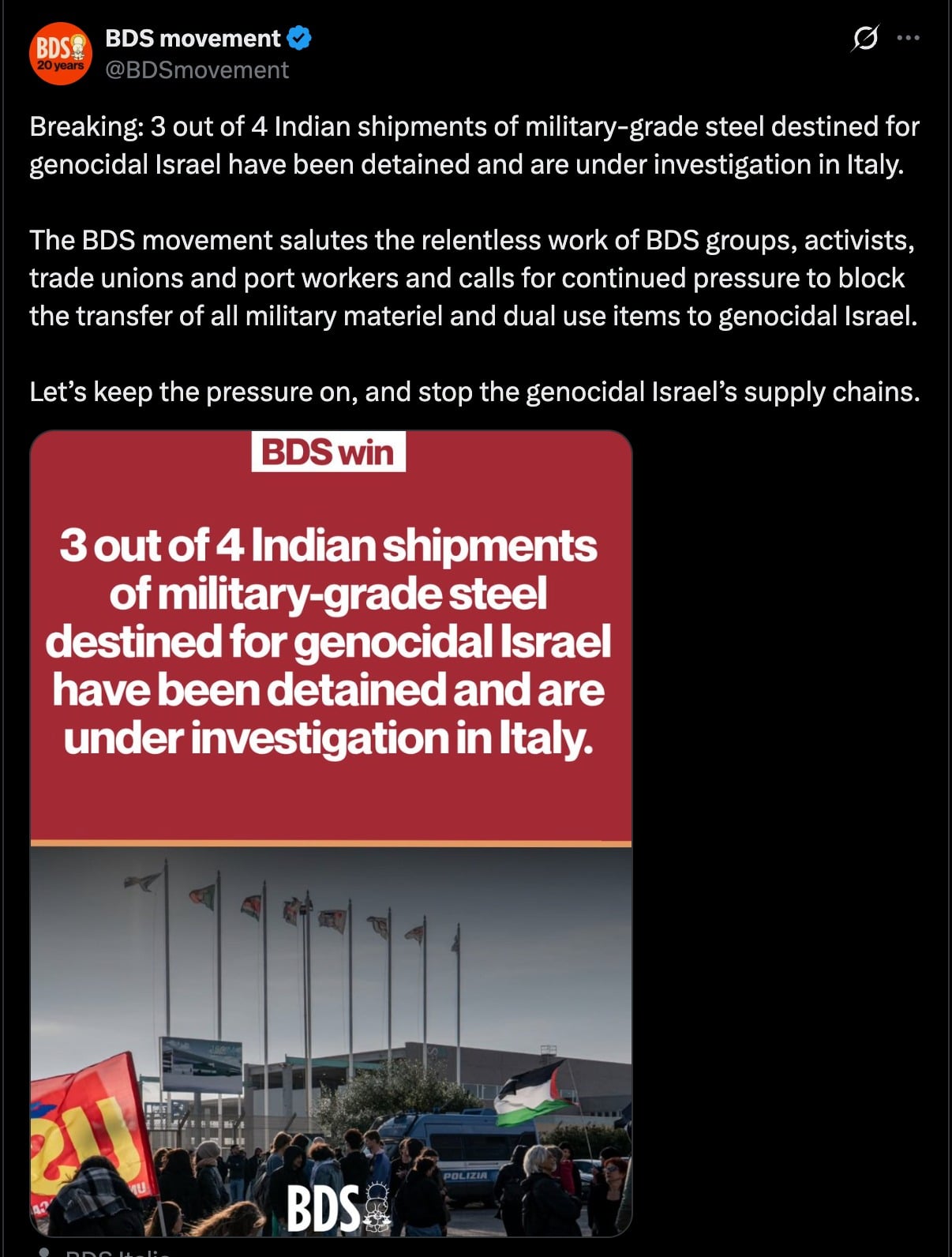
Italian port authorities and dockworkers have intercepted multiple shipments of raw materials and precision components heading for the weapon factories of the genocidal “Israeli” state.
The Boycott, Divestment, Sanctions (BDS) movement reported that three of four Indian shipments of military-grade steel were detained and placed under investigation in Italy.
This specialised steel is essential for the production of 155mm artillery shells, which are manufactured by the “Israeli” company IMI Systems, (formerly known as Israel Military Industries), a subsidiary of Elbit Systems, the Israeli occupation’s largest private defence contractor.

A BDS investigation identified approximately 600 tonnes of this steel, which was being transported from India to “Israel” via the Mediterranean using 23 Mediterranean Shipping Company (MSC) vessels.
These 155mm artillery shells have been used extensively by the Israeli occupation in its genocide in Gaza and were used by “Israel” in early March when it attacked the Southern Lebanese town of Yohmor with white phosphorus — a crime under international law.
According to BDS, there is enough steel in these shipments to produce up to 13,000 artillery shells.
Israel’s military-grade steel seized
The blockade intensified after 13 tonnes of weapon components were seized at the Italian port of Ravenna. These precision-machined cannon parts were produced by the Italian firm, Valforge, and heading for IMI Systems. However, investigators found the cargo did not have the mandatory “dual-use” export licences required by Italian law, which strictly prohibits the export or transit of military material to countries involved in armed conflict without explicit government authorisation.
The physical enforcement of this blockade is being led by the Italian trade unions, Collettivo Autonomo Lavoratori Portuali (CALP) and the Unione Sindacale di Base (USB). They have implemented a “Friday for Peace” schedule where, every week, workers refuse to service vessels flagged as carrying cargo for “Israel”.
The focus of their actions are on the Israeli-owned ZIM shipping line and MSC vessels like the MSC Vega and MSC Danit. These ships have faced protests and docking complications in Italy, Greece, and Spain, leading to the rerouting of several to other ports.
A national petition launched by BDS Italy, calling for a comprehensive military embargo and stricter checks on containers at Italian ports and airports, has so far gathered more than 10,000 signatures. The demand is based on Article 11 of the Italian Constitution, which “repudiate[s] war as an instrument of offence”.
Under Italian Law 185/1990, shipping companies and their directors face severe criminal and financial penalties for transporting restricted military goods without a valid licence. Individual directors can face between two and six years in prison, while corporate fines can reach up to 5% of global annual turnover.
Featured image via the Canary

Production on the upcoming TV adaptation of Tomb Raider is currently on hold after its leading star Sophie Turner suffered an injury.
A spokesperson for the production company Amazon MGM Studio confirmed on Monday that the former Game Of Thrones actor had “recently experienced a minor injury” leading to production being “briefly paused to allow her time to recover” on a precautionary basis.
“We look forward to resuming production as soon as possible,” they added.
Sophie previously enthused: “I am thrilled beyond measure to be playing Lara Croft. She’s such an iconic character, who means so much to so many – and I am giving everything I’ve got.”
Tomb Raider’s heroine Lara Croft has previously been played on the big screen by Oscar winners Angelina Jolie and Alicia Vikander, with Hayley Atwell also lending her voice to the character in a Netflix animated series.
Of her predecessors, Sophie added last year: “They’re massive shoes to fill, following in the steps of Angelina and Alicia with their powerhouse performances, but with Phoebe at the helm, we (and Lara) are all in very safe hands. I can’t wait for you all to see what we have cooking.”
Phoebe also beamed: “It’s not very often you get to make a show of this scale with a character you grew up loving.
“Everyone on board is wildly passionate about Lara and are all as outrageous, brave, and hilarious as she is. Get your artifacts out… Croft is coming…”

The UK could be on the cusp of an energy crisis comparable to the chaos seen in the 1970s, according to a former deputy governor of the Bank of England.
Iran continues to restrict the number of oil tankers which can travel through the major shipping lane, the Strait of Hormuz, in retaliation against the US-Israel strikes from last month.
As the conflict continues, the global economy is facing a period of uncertainty – and energy bills are expected to rise, pushing up the cost of living.
The government is considering supporting some energy bills for targeted households once the current energy price cap lifts in July.
As fears grow over what lies ahead, former deputy governor of the Bank of England, Sir Howard Davies, suggested it was “probably right” to compare the current era to the crises we saw in the 1970s.
World oil prices soared at the time, triggered by the 1973 Arab-Israeli war. The price of an oil barrel then quadrupled in a matter of months.
Arab oil-producing countries only ended their oil embargo against western nations after intense negotiations, though another crisis emerged in 1979 in the wake of the Iranian Revolution.
Davies compared that worldwide energy crisis to the current situation.
“In this case it could well be that supplies from the Middle East are constrained for some time and therefore we may have to live with a higher oil price – perhaps not $150, but certainly higher than $60 it was when we started,” Davies told BBC Radio 4′s Today.
“That requires a plan to increase alternatives and also to reduce consumption because it also looks like we may have a long term reduction in supply.”
Brent crude oil hit $116 per barrel on Monday morning.
Keir Starmer tried to prevent any panic buying from the public when speaking to the media on Monday.
The PM said the advice from the energy sector chiefs is “normal use, no need to do anything other than what’s normal”.
He added: “Obviously, we are bearing down on energy costs. The single most important thing we could do is de-escalate to get the Strait of Hormuz open.
“That’s why I’m putting so much effort into that aspect.”
A Downing Street spokesperson also said: “It’s obviously a serious conflict as the prime minister and the chancellor have said and they’ve been very clear that the impact of disruption to shipping and to the Strait of Hormuz is having an impact here in the UK, and households up and down the UK.”
He said the government’s focus is on working with international partners to de-escalate the situation and reopen the Strait.
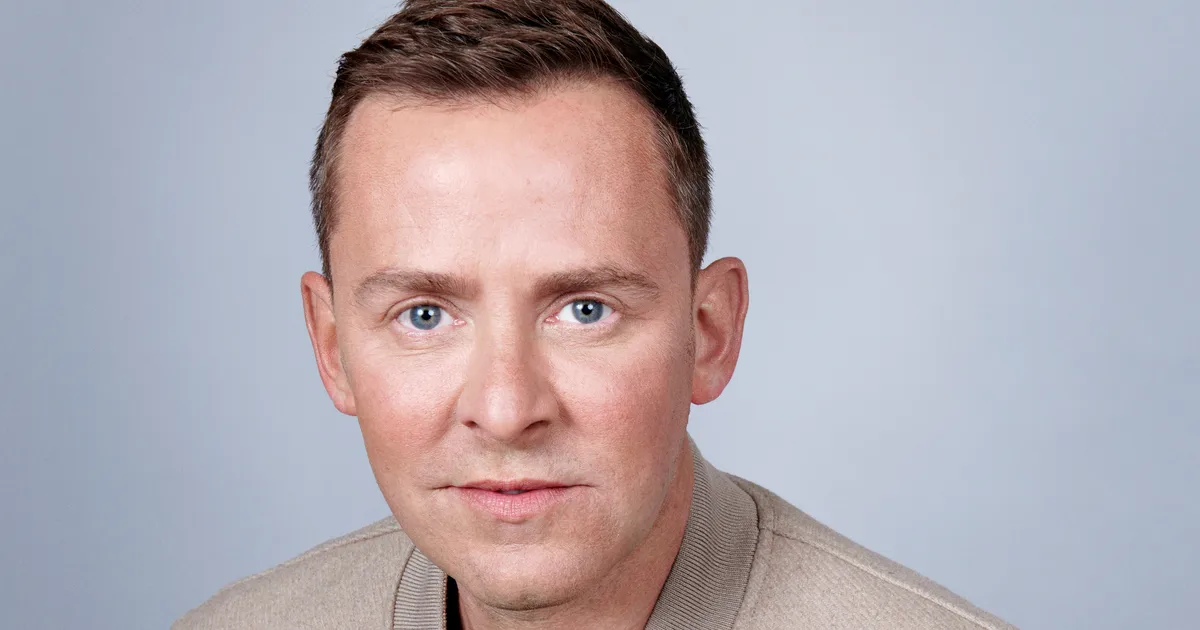
Scott Mills has been axed from his role on the BBC Radio 2 breakfast show due to allegations relating to his behaviour.
Gary Davies has been sitting in for Scott on his usual Radio 2 slot since Tuesday 24 March, with the usual host signing off his previous day’s show by telling his listeners he’d be “back tomorrow”.
BBC News subsequently confirmed on Monday morning that the presenter would not be returning, following what it described as “allegations about his personal conduct”.
“While we do not comment on matters relating to individuals we can confirm Scott Mills is no longer contracted and has left the BBC,” a spokesperson said.
Last year, Scott took over as the host of Radio 2′s flagship breakfast show from outgoing host Zoe Ball.
Before his sudden exit, he had worked with the BBC for almost 30 years, joining the corporation in 1998 as a presenter on Radio 1.
He remained with Radio 1 for more than a decade, before making the jump to BBC Radio 5 Live in 2019 and Radio 2 in 2022, initially taking over Steve Wright’s afternoon slot before being instated as the station’s breakfast show’s host.
In addition to his work on BBC Radio, he has served as the UK’s commentator during the semi-finals of the Eurovision Song Contest for a number of years, currently sharing the role with fellow broadcaster Rylan Clark.
Back in 2024, he and his now-husband Sam Vaughan took part in the second season of Celebrity Race Across The World, going on to win the show.
With the regular series of Race Across The World due to return to our screens next month, BBC News noted that Scott had been due to present a companion podcast to accompany the show prior to him parting ways with the broadcaster.
He has also competed on Strictly Come Dancing, finishing in 11th place alongside professional partner Joanne Clifton back in 2014.
Scott also fronted a one-off documentary for the broadcaster in 2011, titled The World’s Worst Place to Be Gay?.

GP Dr Dominic Greyer previously shared that strength training, good sleep, reducing inflammation, maintaining your “metabolic flexibility,” and enjoying life (in moderation) separates those who age well from those who don’t.
And a new paper, which focused on the short-lived African turqioise killifish, aimed to work out how different behaviours appeared to affect their ageing trajectories.
The fish, which were partly chosen because they shared “key biological features with longer-lived species like humans, including a complex brain”, shared the same genes and were raised in similar environments.
Researchers found that by midlife (for the fish, 70-100 days), fish that lived longer were already behaving differently from those that died sooner.
Study leader Claire Bedbrook said, “Behavioural changes pretty early on in life are telling us about future health and future lifespan”.
What were the differences?
In this study, one of the biggest factors was sleep. Fish that had longer lives mostly slept at night, while those with shorter lifespans slept both at night and during the day.
Incidentally, longer naps, more disorganised nap times, and a higher percentage of naps taken at noon and in the early afternoon have been linked to increased mortality risk among humans.
But activity mattered too.
Fish who swam harder and faster were likelier to live longer, “a measure of spontaneous movement that has been linked to longevity in other species as well”.
And fish that lived longer were more active in the daylight as well. A separate human study found that those who did the majority of their physical activity between 11am and 5pm, or mixed throughout the day, had a lower cardiovascular and all-cause mortality risk than those who moved mostly in the early morning or at night.
Ageing seemed to happen in stages
The researchers noticed that ageing seemed to occur in two to six stages rather than gradually.
“We expected ageing to be a slow, gradual process,” Bedbrook said.
“Instead, animals stay stable for long periods and then transition very quickly into a new stage. Seeing this staged architecture appear from continuous behaviour alone was one of the most exciting discoveries.”
Similar patterns have recently been noted in humans.
Researchers hope this will benefit humans
In an editor’s summary, senior editor at the journal Science, Mattia Maroso, said: “These results might lead to better understanding of the ageing process in other vertebrates, including humans”.
And speaking to Stanford Reports, study leader Ravi Nath said, “Behaviour turns out to be an incredibly sensitive readout of ageing… You can look at two animals of the same chronological age and see from their behaviour alone that they’re ageing very differently”.
The other study leader, Claire Bedbrook, shared, “We now have the tools to map ageing continuously in a vertebrate… With the rise of wearables and long-term tracking in humans, I’m excited to see whether the same principles – early predictors, staged ageing, divergent trajectories – hold true in people”.
We think The Scotsman might have gotten a bit confused and/or carried away when it came to putting the clocks forward at the weekend. At 6am on Sunday morning they tweeted this:

But the link was a 404. We checked the print edition of Scotland On Sunday but there was nothing there. Finally, though, the article has shown up in today’s paper and on the website, and to be honest, readers, we still think it must be some sort of mistake, because it’s two days early for April 1st.
And this is too batshit crazy to explain any other way.

Fortunately it’s the end of the month and time for our latest election analysis piece, so let’s pick our way through the madness. Heaven knows we could all do with the laugh.
“Labour believes it has identified a route to forming the next Scottish government by flipping a dozen constituencies from the SNP and relying on a strong Reform performance on the regional list to deprive John Swinney’s party of the keys to Bute House.
Anas Sarwar’s team believe that in battlegrounds across the Central Belt, where constituencies can be framed as a straight fight between Labour and the SNP, turning 11 or 12 seats red would create three large party blocks, with an assumption Labour would be the only party able to form a government with the help of Reform.”
Good lord, where to even start? The first thing to note is that given all current polling figures, any constituency gains by Labour would be all but guaranteed to be wiped out by a corresponding loss of list seats, so the entire premise of this strategy is demented from the start.
If you look at the last 10 polls, Sarwar’s party is sitting on anywhere from 12% to 19% of the list vote, which ought to be good for 2-3 list seats per region, but if they picked up a few constituencies across the Central Belt that’d be slashed into single figures.
The definition of “Central Belt” is a matter of interpretation, but by any reasonable measure includes at least five regions and possibly six. West Scotland includes areas that anyone would class “Central Belt” – Clydebank, Milngavie, Strathkelvin, Eastwood.

Obviously Edinburgh And Lothians East counts.

Same goes for Central Scotland (clue’s in the name!) And Lothians West.

Ditto for Glasgow.

Mid Scotland And Fife is probably the most debatable, but Dunfermline, Cowdenbeath and Kirkcaldy are hardly in the Highlands and are areas Labour has traditionally been strong in and will at least fancy a shot at. And remember, even picking up a single seat in (say) Kirkcaldy would be enough to halve Labour’s list vote for the whole region.

There can’t be much debate about South Scotland either, unless you’re going to seriously try to dispute that Hamilton and East Kilbride are in the Central Belt.

(Wikipedia defines it as including large swathes of Fife and the Borders.)

So even if Labour picked up “11 or 12” constituencies due to their concentrated vote – and that’s a very, very big ask unless their polling dramatically improves – the likely impact on their total seat count would be zero, because they’d lose the same number on the list.
“The claim is they would have a “moral mandate” to govern, but in order to stand a chance of forming the next government, Labour needs the polls to tighten dramatically to around four or five points. Currently, Labour trails the SNP by around 18 points – meaning Mr Sarwar’s campaign will need to bring forward something extraordinary to move the dial on public opinion in the coming weeks.“
No kidding. But even that understates the magnitude of the problem. Labour’s current constituency-vote polling (again on the last 10 polls, covering the whole of 2026) ranges from 12% to 20%, so to close an 18-point gap they’d need to almost DOUBLE it in the next five weeks, and if you think there’s the tiniest chance of that happening then please contact us at once to take advantage of a fantastic offer we’re currently running on magic beans.
(Labour still haven’t managed to identify a single meaningful policy difference between themselves and the SNP, as Wings has been pointing out for the last three years and which the Scottish mainstream media has finally noticed.)

To be honest, after this arrant nonsense the rest of the Scotsman article is just padding and waffle to fill out the page.
“Labour’s potential route to Bute House would rely on unionist parties, including Reform, to vote in Mr Sarwar as first minister following May’s election, with Labour attempting to govern as a small minority administration.”
Even the most outlandish arithmetical scenario by which Sarwar could win a vote to become FM would require the support not just of Reform but also the Tories, Lib Dems and Greens. Let’s all just pause for a moment and ponder that five-party coalition including Malcolm Offord, Alex Cole-Hamilton and Ross Greer, shall we?
(I asked Grok to visualise it. Yikes.)

But the paper clutches at one last straw.
“One potential scenario, seen by The Scotsman, forecasts that if Labour can take four of the six Glasgow constituencies, the SNP would not be fully supplemented for the losses on the regional list due to the strength of the anticipated Reform vote.
The scenario suggests that instead of the SNP picking up three regional list seats for Glasgow, Reform would come first as the highest performing party that has not won a constituency, with it likely four seats would then be split evenly between Labour and the SNP – with Reform picking up a second regional MSP.”
So even in the miraculous event of Labour picking up FOUR seats in Glasgow (where the SNP’s average majority is around 8,000), the supercoalition would only make a net gain of two, with Labour somehow getting TWO list seats despite their list vote having been divided by FIVE, which would currently put it on something like 3%.
(Which of course is nowhere even REMOTELY close to enough for a SINGLE list seat, let alone two. If they won four constituencies they’d need to be on around 40% of the list vote to have a chance of ONE list seat. They’ve achieved that exactly once in Scottish Parliament history, in 1999.)
The only tiny theoretical chance for the Unionist parties to oust the SNP on anything like current polling is if Reform (the only opposition party who are reasonably strong across the country, not just in pockets of concentrated support) win a lot of constituencies, clearing the others to sweep up on the list. But that’s stupendously unlikely, because no other party is going to knock doors and tell people to vote for Reform. Labour trying to somehow achieve it by picking up a few seats in Glasgow is just suicidally stupid.
So, y’know, wow. We have every sympathy with the press in having to find stuff to write about over the next five wretched weeks and attempt to create some sort of jeopardy as to who’s going to win this election, but if this – “What if Labour suddenly DOUBLED their vote?” – is how crazy they’re getting when it’s still March, we dread to imagine what sort of desperate insanity we’re going to be reading by the start of May.

You probably already know that strength training and calcium can help to keep your bones healthy and strong as you age.
But some factors – like getting enough vitamin D, which helps to absorb calcium, and avoiding smoking, which raises your risk of osteoporosis and is linked to a 30-40% higher risk of broken hips – are less obvious.
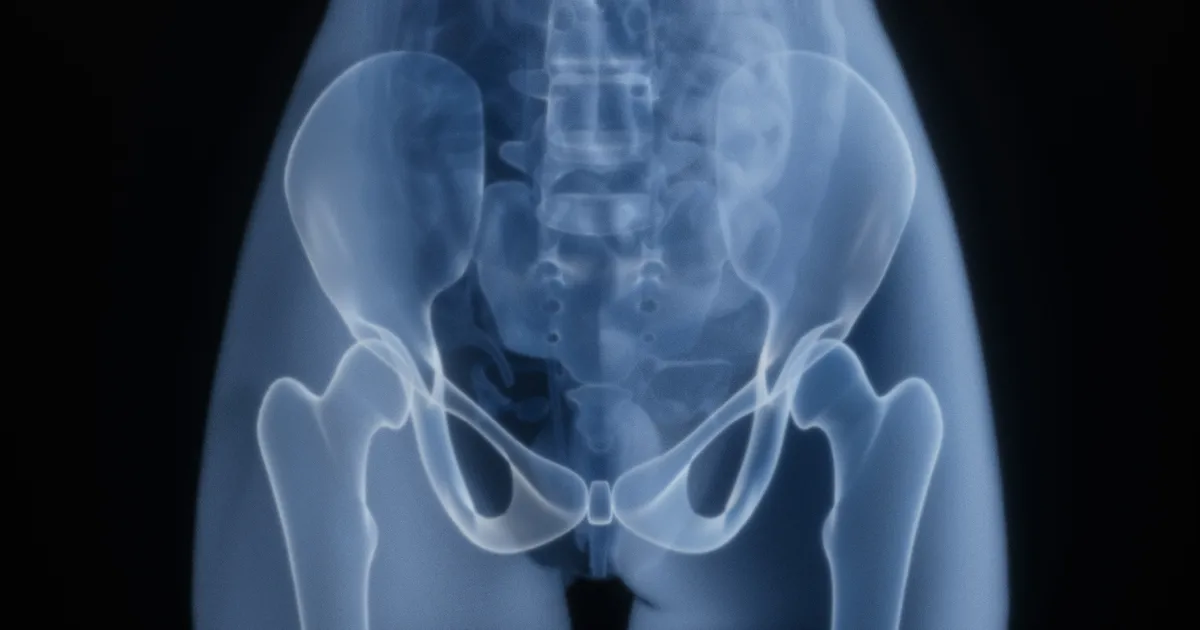
And in one study, prunes, which are high in anti-inflammatory polyphenols and calcium-balancing vitamin K, appeared to preserve bone density and strength at weight-bearing parts of the hip for post-menopausal women.
What did the research show?
The researchers followed a group of 235 postmenopausal women, who are at greater risk of bone loss, over a year.
They told one group to eat 50g (about five to six prunes) a day during the trial, and another group to eat 100g a day. A third group didn’t eat any prunes at all.
Though both prune levels were beneficial, the first group (50g) were more likely to stick to the habit, which meant they tended to get better results.
Professor Mary Jane De Souza, the study’s lead author, said: “Consuming five to six prunes a day for 12 months resulted in preservation of bone at the hip, a finding that was observable at six months and persisted through month 12.”
Postmenopausal women who didn’t consume any prunes saw a 1.1% bone loss in the same time period, while for those in the study, it stayed the same.
That benefit could lead to fewer bone breaks.
It could have benefits for bone quality, too
The same group of women were part of another study looking at how prunes seemed to affect the structure and estimated strength of their tibia.
“This is the first randomised controlled trial to look at three-dimensional bone outcomes with respect to bone structure, geometry and estimated strength,” Professor De Souza said.
“In our study, we saw that daily prune consumption impacted factors related to fracture risk. That’s clinically invaluable.”
She added that prunes may help to reduce the risk of osteoporosis, but more research is needed.

Escape Tsunami For BRAINROTS, in Minecraft!

Chopping down areas of tropical rainforest is causing rising temperatures linked to thousands of deaths

Bessent offers 30% reward to whistleblowers who report COVID relief fraud


-
 NewsBeat5 days ago
Manchester United reach agreement with Casemiro over contract clause amid transfer speculation
-

 News Videos5 days ago
Parliament publishes latest register of MPs’ financial interests
-

 NewsBeat3 days ago
The Story hosts event on Durham’s historic registers
-

 Business4 days ago
Instagram, YouTube Found Responsible for Teen’s Mental Health Struggle in Historic Ruling
-
 NewsBeat5 days ago
Tesco is selling new Cadbury Dairy Milk bar and people can’t wait to try it
-

 Tech7 days ago
Samsung will soon let you control smart home devices from your car’s dashboard
-
 Entertainment2 days ago
Lana Del Rey Celebrates Her Husband’s 51st Birthday In New Post
-

 Fashion6 days ago
Does It Matter What You Wear When You’re Laid Off and Looking?
-

 Business6 days ago
More women enter wealth management, but few in advisory roles: study
-
 NewsBeat7 days ago
Colombian military plane with 110 soldiers onboard crashes following takeoff
-

 Politics7 days ago
How Media Platforms Balance Performance and Accessibility in Image Delivery
-
 NewsBeat6 days ago
NASA Artemis II Astronauts enter 14-Day quarantine as moon rocket reaches launchpad
-

 NewsBeat6 days ago
Entrepreneurs Forum survey reveals optimism in North East
-

 Business6 days ago
Late-paying firms face multimillion-pound fines under new crackdown
-
 Tech4 days ago
Intercom’s new post-trained Fin Apex 1.0 beats GPT-5.4 and Claude Sonnet 4.6 at customer service resolutions
-

 Sports5 days ago
Fantasy Baseball Week 1 Preview: Top sleeper hitters for both five- and 12-day period led by Munetaka Murakami
-

 Tech5 days ago
US FCC Prohibits Approval Of New Foreign-Made Consumer Routers
-

 Crypto World6 days ago
BTC gives up $70,000 level as markets mull higher interest rates
-

 Tech6 days ago
Embedding compliance in AI adoption
-

 Fashion6 days ago
Coffee Break: Korean Skincare Set
You must be logged in to post a comment Login