

Tech
HP investigating BIOS updates that leave premium laptop users in boot loop limbo



Personal Tech
Slowdowns, crashes, BSODs reported on pricey mobile workstations
HP customers are reporting problems with BIOS updates for the PC maker’s premium laptops.
Over the past few months, customers have used forums to register complaints over unbootable devices, spikes in fan noise, and Blue Screens of Death following BIOS firmware updates.
An example cropped up in April, when a user of a ZBook Ultra G1a (a very expensive mobile workstation) complained that a BIOS update had caused the machine to “freeze completely during the boot process.”
The customer wasn’t alone: other forums including Reddit showed many other users experiencing problems.
The cause appears to be a BIOS update, flagged as critical, and pushed through Windows Update. As a critical update, the patch was automatically applied, which is where the fun begins for affected users.
In the case of the ZBook Ultra G1a, the broken BIOS versions are 01.04.03 and 01.04.05. The problematic BIOS versions for the EliteBook X G1a are 01.03.11 and 01.05.00.
Stopping the update is one option, and the BIOS lets users prevent the operating system from initiating updates. However, once the update has completed, reverting to a known working version is problematic. Users have reported some success using the network BIOS downgrade functionality, but only with an HP USB-C to Ethernet dongle.
This is far from HP’s first rodeo when it comes to BIOS updates turning laptops into expensive paperweights. In 2024, an update left some devices irretrievably bricked and customers facing hefty hardware repair bills.
The current issues come at a time when Microsoft is working to improve the reliability of Windows and applying greater scrutiny to third-party drivers sent through Windows Update. The service can also be used for BIOS and other firmware updates.
HP told The Register: “HP is aware of purported BIOS issues and is looking into the matter.” The hardware vendor suggested that affected users contact its support teams for assistance.
Timing is everything. On May 20, Richard Hughes of the Linux Vendor Firmware Service (LVFS) project announced that HP was joining Lenovo and Dell as premier sponsors. The LVFS initiative is an open source firmware updating solution. Here’s hoping that HP is only bringing its dollars and not any of the BIOS update quality problems currently frustrating some of its customers. ®


Deductive AI, a startup that uses AI to catch and resolve bugs in software, has agreed to be sold to enterprise software company Elastic for up to $85 million, according to a person with knowledge of the deal.
Deductive, which was founded in 2023, came out stealth last November when it announced a $7.5 million seed round led by CRV with participation from Databricks Ventures, Thomvest Ventures, and PrimeSet. The investment valued the startup at $33 million, according to PitchBook.
Elastic and Deductive did not respond to multiple requests for comment. TechCrunch will update this article if either company responds.
The sale marks a speedy exit for Deductive, which is operating in a fast-growing sector known as AI site reliability engineering (AI SRE). Building AI-powered SRE tools has become an important area, driven by the massive influx of AI-written code. Replacing manual debugging with AI enables human SREs to shift focus from constantly fixing outages and other problems to spending more time on helping with product development.
The acquisition reflects a broader trend in which established tech incumbents are looking to buy AI-native startups to integrate agentic technologies into their existing product suites, the source told TechCrunch.
Elastic, which went public in 2018, is best known for Elasticsearch, the search and analytics engine that helps organizations store, search, analyze, and monitor large amounts of data in near real time.
The company’s observability software — essentially tools that let engineers monitor software systems and detect security threats — could benefit from Deductive’s tech. According to the source, integrating Deductive’s AI technology into Elastic will enhance its observability platform by giving customers tools to automatically monitor performance and resolve system failures in real time.
Deductive was co-founded by Rakesh Kothari, who was previously VP of engineering at Lightspeed-backed business analytics startup ThoughtSpot, and Sameer Agarwal, who formerly worked at Apache Software Foundation and Meta. Agrawal was one of the founding engineers at Databricks.
While Deductive reached roughly $1 million in annual recurring revenue (ARR,) according to the source, the startup’s growth lagged behind Resolve AI, one of the sectors’ perceived early winners. The two-year-old Resolve was co-founded by former Splunk executive Spiros Xanthos and Mayank Agarwal. The Greylock and Lightspeed-backed startup was last valued at $1.5 billion when it raised a $40 million Series A extension in April.
When you purchase through links in our articles, we may earn a small commission. This doesn’t affect our editorial independence.

Apple TV will stream an entire Formula 1 race weekend free to U.S. viewers for the first time, opening every Austrian Grand Prix session to fans without a subscription.
Viewers in the United States will be able to watch all Formula 1 Austrian Grand Prix sessions live through Apple TV at no cost. The free access runs from June 26 through June 28 and includes every on-track session, from practice and qualifying to Sunday’s Grand Prix.
The schedule begins with Practice 1 at 7:30 a.m. Eastern on June 26, followed by Practice 2 at 11 a.m. Practice 3 starts at 6:30 a.m. on June 27, with qualifying at 10 a.m. The Austrian Grand Prix is scheduled to begin at 9 a.m. Eastern on June 28.
Apple said the Austrian Grand Prix marks the first time it has made an entire Formula 1 race weekend available free to viewers in the United States. The company has offered free sports programming before, but this promotion includes every Formula 1 session across a race weekend rather than a single event.
Opening every Formula 1 session to non-subscribers gives fans a chance to follow the entire race weekend, not just Sunday’s Grand Prix. Practice sessions shape car setups and race strategy, while qualifying determines the starting grid.
Why Apple is opening a Formula 1 weekend for free
The promotion arrives as Formula 1 continues to draw a larger audience in the United States. Following a full race weekend typically requires access to paid television or streaming services.
The Austrian Grand Prix gives casual viewers a chance to watch every session without paying for access.
The free weekend also gives Apple a chance to put Apple TV in front of viewers who may not regularly use the platform. Fans can follow the weekend from practice through qualifying and the Grand Prix itself.
Apple hasn’t said whether similar free Formula 1 weekends will follow. For now, the Austrian Grand Prix is Apple’s first effort to make an entire Formula 1 race weekend available free to U.S. viewers.

An anonymous reader shared this report from the Associated Press:
Officials in Kansas City, Missouri, are preparing to equip cameras on some public buses with facial recognition software capable of identifying passengers who appear on a list of banned riders or missing persons. Supporters and opponents alike view the effort as a major litmus test for tapping the AI-powered software on a U.S. public transportation system, positioning Kansas City as the latest epicenter of a fierce debate over whether the safety benefits of artificial intelligence are worth the privacy costs.
“The idea of running face recognition on a camera that is pointed on live spaces in public is a line that until recently has never really been crossed in the last 25 years,” said Jay Stanley, senior policy analyst for the Project on Speech, Privacy and Technology at the American Civil Liberties Union. The state of Missouri declined to help fund the project as expected due to concerns with the facial recognition component. Still, the city is pushing ahead with local and federal money, said Tyler Means, chief mobility and strategy officer at the Kansas City Transportation Authority. “Privacy is always a tricky thing,” Means said. “We’ve always had cameras on our buses. It’s just new technology. I think in time it’ll smooth over and people will realize, ‘Well, it didn’t really feel any different’….”
Images captured by cameras aboard the buses would immediately be checked against any active alerts, generated when a missing person, banned rider or someone on a law enforcement watch list designated by the transportation authority is identified… After the buses return to the depot, the transportation authority would archive the regular video footage on a local server for up to five years.
The company partnering with Kansas City to run the cameras “started using live facial recognition years ago to alert nursing homes when residents left the building,” according to the article, and then “brought the technology to correctional institutions and schools.” But this is its first attempt at bringing its cameras onto public transportation.
The article also includes this quote from Will Owen, communications director for the Surveillance Technology Oversight Project. “City residents should not be guinea pigs for transit systems to test Silicon Valley’s latest unproven, biased surveillance tech.”

On June 11, Kalshi released a buzzy ad featuring noted New York Knicks fan Timothée Chalamet. It was a zeitgeist-capturing moment for prediction markets, akin to the 2022 Super Bowl, when seemingly every commercial featured a celebrity shilling crypto.
Yet when I brought Chalamet’s spot up with attendees at Manifest, a recent festival for prediction markets, I was mostly met with blank stares. These conference goers—a mix of academics, startup founders, job seekers, and players in the markets—hadn’t even heard about it. They were too busy thinking about the bigger picture and the risks facing markets.
Their confusion was the perfect encapsulation of a battle that I observed again and again that weekend: The way forecasting philosophers see the markets (tools for the greater good) is very different from how the vast majority of the world sees them (a way to bet on sports).
“We were all waiting for so long to be in the world we’re in now,” Dan Schwarz, the cofounder and chief executive officer of FutureSearch, an artificial intelligence research and prediction startup, tells me. But the platforms have run into problems, from insider trading to sports contracts that, Schwarz worries, are fueling addiction. To outweigh these harms, “prediction markets would have to deliver a lot more value than they are now.”
The prognosticators, it turns out, are concerned that the very thing that’s made prediction markets a global phenomenon could be their undoing.
This year’s iteration of Manifest took place at Lighthaven, an idyllic compound in Berkeley, California. The campus, which takes up about half a city block, also functions as the epicenter of the rationalist movement, which, among other things, prioritizes the safe development of AI and effective altruism.
The vibe skewed heavily male but was still eclectic. Clusters of twenty- and thirty-somethings huddled over laptops in the Tudor-style main house, and someone told me I looked like a guy who would have a stick of gum. Talks about markets jostled for attention alongside sessions about the odds that AI will kill us all and lessons on how to optimize your sex life. There was a furry meetup and watch parties for the first US World Cup match and game 5 of the NBA Finals. (I couldn’t find anyone who had put money on either event, though a few attendees told me they knew of folks who had made bank.) There were markets on play-money platform Manifold about the festival itself, like whether someone would break a bone (still unresolved) and whether Caroline Ellison would show up (yes).
Still, the broader background conditions were wildly different from previous years. Though Kalshi and Polymarket had sponsored the event in past years, they were AWOL this year. Both companies declined to comment on the change. Last year, Kalshi held a session on sports markets, which it had launched just six months earlier. This year, the companies are facilitating billions of dollars in sports trades during an especially friendly political era at the national level.
Sports were also conspicuously absent during a session on strategies for mastering markets around world events and politics. I caught up with David Bensoussan, the session’s organizer, who has made $1.6 million in profits on the platform, under the boughs of one of Lighthaven’s trees.
“The truth-seeking mechanism that prediction markets can have in terms of predicting things and making the population more informed—what on Earth does that have to do with sports?” he asks, wrapped in a blanket to ward off the chill of Bay Area shade.

An average visitor is expected to spend around $5,400 in the US—far above the $720-$2,500 visitors to Qatar spent in 2022.
Transport at this year’s tournament is fundamentally different from that of the one-city tournament in Qatar, or in Russia in 2018, which provided free public transportation and an additional 500 trains to help people get around.
This year, because of the vast distances, the only option for fans and teams is flights, which airlines have been adding to accommodate potential World Cup travelers.
“Teams and fans now must factor in flights, not metro rides, and the carbon and cost implications are real,” Anagnostopoulos says.
The need to book flights, not trains or taxis, may also be decreasing demand for hotels simply because the travel costs are too high for some people. “US hotels are already reporting bookings below expectations,” Anagnostopoulos says. “Scale doesn’t guarantee the crowds will show up.”
Security
For organizers and host cities, the scale of the tournament demands a massive investment in security, including against threats that would have barely crossed the minds of previous hosts.
The US federal government has issued $625 million in grants for host cities to address security issues. On top of that, the Department of Homeland Security has made over $200 million worth of grants available to states to buy anti-drone technology, with the US State Department highlighting hostile actors’ increasing access to drones and other technology.
In Canada, federal authorities have issued around $104 million worth of grants to host cities Vancouver and Toronto. That brings total public grants in Canada and the US alone to nearly $1 billion—likely just a fraction of the real costs of securing the tournament.
The size of the tournament, and the fact that it crosses borders, has pushed the price tag higher.
“Qatar 2022 benefited from a highly compact geography, with venues operating within a relatively unified environment. The 2026 World Cup will involve multiple cities, jurisdictions, agencies, and technology ecosystems across the United States, Canada, and Mexico,” says Leo Levit, chair of Onvif, a membership body focused on standardization of physical security products.
“The challenge is not simply the number of systems involved, but whether those systems can exchange information efficiently,” he adds.
The Future of the World Cup
The numbers tell a story of a tournament straining under its own ambition. It’s not yet clear whether these investments will pay off in terms of tickets bought and advertising slots sold. Why, then, is FIFA pursuing growth at all costs?
According to Simon Chadwick, professor of sport and geopolitical economy at the international SKEMA Business School, the reason may be growing competition from other sports.
“What [FIFA president Gianni] Infantino is trying to do is to ensure that football remains robust, relevant, prominent and that it doesn’t begin losing market share—to the NBA, which is in China, India, Africa, and the Gulf region; to the NFL, which is making moves on Europe; and to Formula One, which has grown hugely in popularity, particularly in North America,” Chadwick says.

Rumor mill: According to a source familiar with the matter and proposed legislative language reviewed by Reuters, Meta has lobbied Congress to include a provision in the Kids Online Safety Act (KOSA) that would limit companies’ exposure to child safety and privacy lawsuits. The proposal would grant platforms immunity from state-level child-harm claims involving users under 18, a change that could undercut thousands of lawsuits already filed.
The proposal comes as lawmakers and courts increasingly scrutinize how social media platforms are designed and used by minors. Features such as infinite scrolling, activity notifications, and appearance-altering photo filters – key tools for driving user engagement – have become central to legal and regulatory battles over youth safety. Critics argue these features can encourage compulsive use, particularly among younger users.
KOSA directly targets those design choices. The bill would require companies to take reasonable steps to reduce risks associated with minors’ use of their platforms, including design elements that encourage prolonged engagement. In other words, the legislation focuses not only on the content users see, but also on the systems designed to keep them online.
At the same time, Meta’s liability proposal could reshape how families and schools pursue lawsuits over those features. The proposed language would make companies “immune from suit or liability under state law with respect to all claims for loss caused by, arising out of, relating to, or resulting from the safety or privacy of individuals under the age of eighteen online or otherwise related to the provisions” of KOSA. It would also override certain state laws governing children’s online protections.
Meta has framed the proposal as a way to establish consistent national standards rather than avoid accountability. Company spokesperson Stephanie Otway said the provision “does not extinguish existing lawsuits, nor does it represent blanket immunity.”
Instead, she said, it is intended to create “uniform national standards for online youth safety, ensuring these critical issues are governed by comprehensive federal legislation, not plaintiffs’ lawyers or patchwork state legislation.”

That interpretation is disputed by legal advocates. Julia Duncan of the American Association for Justice told Reuters that the language, as written, could have sweeping consequences for ongoing litigation. “The language is pretty clear-cut immunity against every parent, every school district, that is seeking to hold any AI or social media company accountable for harm” to children, Duncan said. “There is no other way to read this language.”
The legal stakes are not theoretical. Meta and Google’s YouTube are already facing thousands of lawsuits over alleged harms to minors. Earlier this year, the companies lost the first case to go to trial, resulting in a combined $6 million in damages. Both have said they plan to appeal.
Behind the scenes, the liability proposal appears tied to broader negotiations over KOSA’s future. The bill, sponsored by Senators Marsha Blackburn and Richard Blumenthal, passed the Senate in 2024 with strong bipartisan support but stalled in the House. It has since been reintroduced and is now part of discussions involving the White House, as well as other measures related to artificial intelligence and federal preemption of state laws.
A spokesperson for Blackburn said the office had not seen the specific liability language and would not support it.
According to the source, Meta has offered to drop its opposition to KOSA if the provision is included – a signal of how high the stakes have become for companies whose core products rely on engagement-driven design. For engineers and product teams, the result could reshape how they design recommendation algorithms, notifications, and interface features for users under 18.
For now, the issue remains unsettled. Lawmakers are trying to impose guardrails on the very technologies that define modern social platforms, while companies are seeking clearer – and potentially narrower – rules on how those systems can be challenged. It is not yet clear how Congress will reconcile these competing aims.
As India searches for a homegrown contender in the global artificial intelligence race, billionaire Mukesh Ambani is positioning Reliance Industries as a national champion, rolling out AI services for phone calls, mobile apps, and connected homes.
At its annual shareholder meeting on Friday, the Mumbai-based conglomerate announced Jio Call Agent, an AI assistant that can join phone calls to transcribe conversations, generate summaries, and perform tasks such as booking cabs, ordering food, and making reservations. The service, which can be activated by saying “Hey Jio,” is expected to launch later this year for Jio’s more than 500 million users.
By embedding the service directly into its telecom network rather than offering it as a stand-alone app, Jio is betting AI assistance can become a native feature of phone calls. The approach could reduce consumers’ reliance on third-party call-assistant apps and give Reliance a powerful distribution advantage in an increasingly crowded AI market.
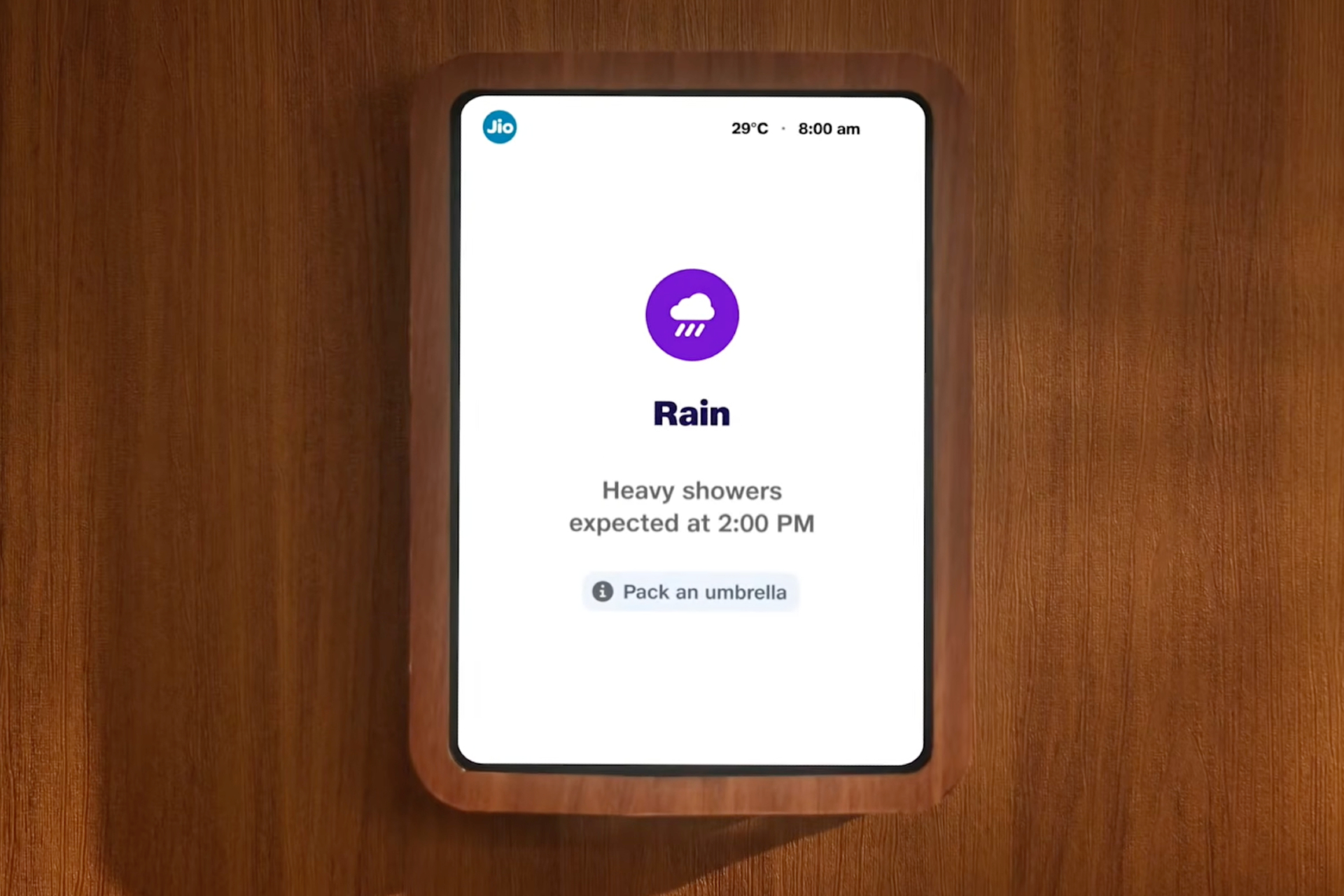
Reliance also unveiled an AI-powered version of its MyJio app that can perform tasks on behalf of users, from activating eSIMs to selecting roaming plans, through natural-language requests. The company further introduced TeleFrame, a home display that uses AI agents to proactively surface information and recommendations, such as weather alerts, schedules, and household reminders. The product appears to echo a broader industry push toward ambient AI assistants for the home, an area being explored by companies such as Amazon and Google.

The announcements mark the next phase of Reliance’s AI ambitions as India seeks to build domestic capabilities in a field largely dominated by U.S. and Chinese technology companies. The push follows the launch of Reliance Intelligence last year, through which the conglomerate aims to develop AI infrastructure and services for consumers, businesses, and governments, including applications that support 22 Indian languages.
“India should not be a mere consumer of AI created elsewhere. It must become a creator, adopter, and a global leader in AI,” Ambani, age 69, said.
Reliance has been ramping up its AI ambitions through partnerships with Google, Meta, and Nvidia. Earlier this year, the company announced plans to invest $110 billion in AI infrastructure as it seeks to establish itself as a major player in India’s emerging AI ecosystem.
At the shareholder meeting, Reliance also unveiled a suite of AI services for healthcare, education, agriculture, and small businesses. The products, branded JioHealthIQ, JioLearnIQ, JioKrishiIQ, and AI Vyapar, are designed to operate across multiple Indian languages and cater to local needs, the company said.
The shareholder meeting also brought a major development for investors awaiting Jio’s stock market debut. Ambani said Jio Platforms’ board had approved a draft prospectus for an initial public offering that would include a fresh issue of up to 270 million shares, according to a stock exchange filing.
The announcements also raise questions about how Reliance will handle user data as it expands AI services across phone calls, mobile apps, and connected homes. While the company said the services would operate with user consent, it did not answer questions about whether data generated through the products could be used to train AI models or shared with technology partners.
Reliance’s AI ambitions come as Indian companies remain heavily reliant on foreign AI models and cloud providers. Recent restrictions on access to some of Anthropic’s latest models have underscored that dependency, showing how decisions made overseas can affect startups and businesses building AI products in India — the kind of supply-chain risk that’s pushing Indian conglomerates toward building their own stack rather than renting someone else’s.
Last week, Reliance announced a collaboration with Meta to establish an AI data center in the western state of Gujarat, building on Meta’s earlier investment in Jio Platforms and a joint venture launched last year to develop AI solutions for enterprise customers in India and overseas markets.
Reliance is not alone in pursuing AI opportunities. Tata Consultancy Services, Infosys, and rival Adani Group have also expanded their AI initiatives and partnerships with global players, including Anthropic, Google, and OpenAI, as India’s largest corporations race to secure a leading role in the country’s AI future.
Nonetheless, for Reliance, the stakes are particularly high; it’s preparing Jio for a long-awaited stock market debut and needs new growth drivers, with the conglomerate’s shares down about 17% this year.
When you purchase through links in our articles, we may earn a small commission. This doesn’t affect our editorial independence.

Seattle startup Gradial continued its hot funding streak, raising another $65 million for its agentic AI platform that automates enterprise marketing.
The Series C round was led by Insight Partners alongside existing investors VMG, Madrona, and PruVen Capital.
Gradial raised $35 million in December and said in a blog post this week that it’s raised over $110 million in the past 16 months, calling it “a testament to the rapid growth” Gradial has seen across its business.
Axios reported that the new round values Gradial at $675 million.
Gradial works by plugging agents into the marketing tools enterprises already use — Adobe, Salesforce, Sitecore — and handling the operational work of getting content live: authoring, QA, brand compliance and routing updates through existing approval chains.
The company also watches for gaps in AI-generated search results, with agents that can draft and publish fixes automatically — without a human queuing up an agency ticket.
Customers include AWS, Prudential, T-Mobile, Vanguard, Kaiser Permanente, and US Bank.
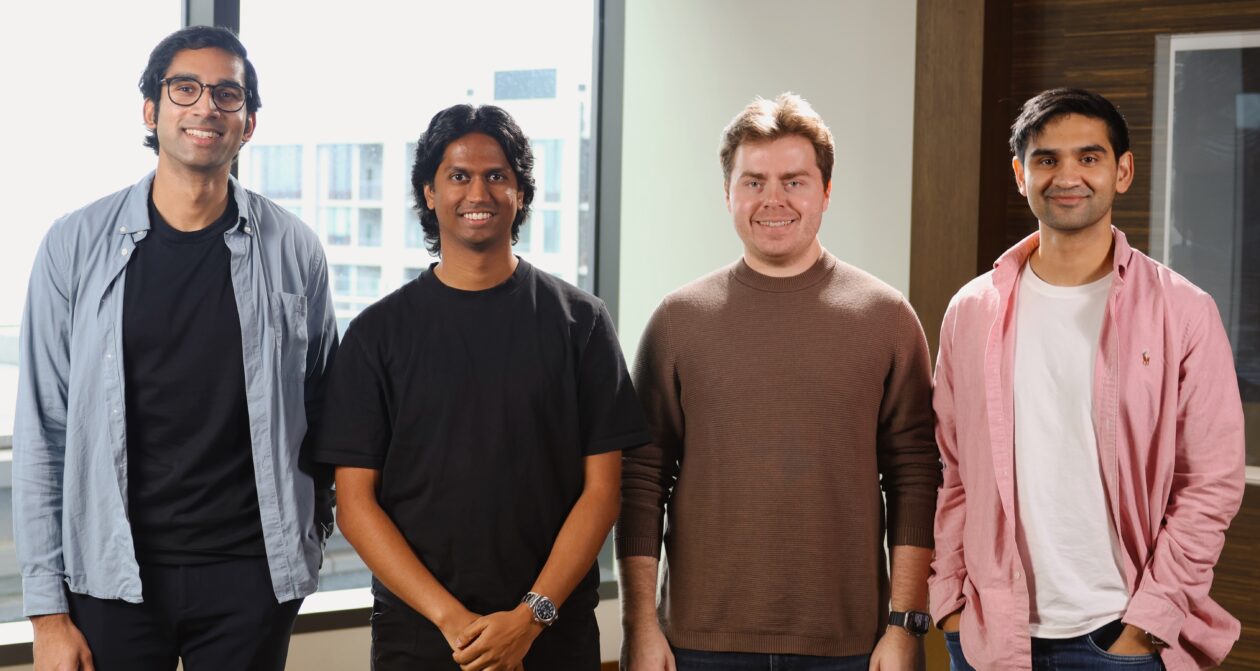
The company was launched in 2023 by four co-founders who met at Dartmouth College: CEO Doug Tallmadge previously worked at SpaceX as a software engineering manager; chief growth officer Anish Chadalavada is a former AI strategy manager at Microsoft and investor at Point72 Ventures; CTO Deip Kumar also worked at SpaceX and Microsoft; and COO Anup Chamrajnagar worked at Point72.
The funding will help Gradial grow its 100-person company across engineering, sales and marketing, according to Axios.

Just as last week was ending, the US government forced Anthropic to pull its two newest models, Fable 5 and Mythos 5, citing national security concerns after Amazon researchers allegedly found a way to bypass Fable 5’s guardrails.
Cybersecurity researchers have since signed an open letter calling the move dangerous, and Anthropic itself noted the same jailbreaks exist in other models. So is this a genuine security concern, or just the latest chapter in a messy relationship between Anthropic and the Trump administration?
On this episode of TechCrunch’s Equity podcast, hosts Anthony Ha, Sean O’Kane, and Rebecca Bellan unpack what the ban means for developers building on Anthropic’s platform and for anyone watching the IPO, why it might accidentally be good for the company, and more of the week’s headlines.
Subscribe to Equity on YouTube, Apple Podcasts, Overcast, Spotify and all the casts. You also can follow Equity on X and Threads, at @EquityPod.
Tech
Former NASA Engineer Mark Rober Built His Own Car Theft Device From a Baby Monitor to Expose a Growing Problem


Professional car thieves have leaned on a quiet radio trick for years to slip past keyless entry systems. Mark Rober, the former NASA engineer known for his glitter bomb videos and hands-on builds, wanted to see exactly how that trick works and whether regular people could defend against it. His latest experiment delivers a clear answer on both fronts.
Rober started by buying a customized relay attack device from a dark net seller accessed through Tor for $12,000 in Bitcoin. Rober believed the risk was worthwhile and put the expensive gadget through a series of preliminary tests after the source provided him with detailed instructions and a warning about self-destruct capabilities in case anyone became too inquisitive. This worked since it could unlock and even start a car, but it took some time and required periodic signal frequency modifications.
When you deconstruct the technology behind these devices, it becomes pretty straightforward. The majority of modern cars transmit a low-pitched radio signal every few seconds to determine whether the accompanying key fob is nearby. When the fob receives the signal and answers with the right code, the car recognizes that the owner is close enough to start the engine or unlock the doors. This is exploited by thieves who creep up on the vehicle and send a louder signal in the direction of the fob, which might be anywhere, such as inside a home or an office. The fob replies as if it is right next to the vehicle.

Rober was determined to make the same car-unlocking device faster and less expensive. He went to a local store, bought a cheap, basic baby monitor for only $12, and tore it up right away. The wireless components of the monitor are ideal for handling that kind of signal, so he tinkered with them to get them to pick up the car’s signal and then rebroadcast it at full blast just next to the fob. He spent less than $200 on his do-it-yourself version, which was a fraction of the price of a real one.

After that, Rober began testing his creation. He would move the antenna around and adjust the power levels in suburban areas until he could consistently unlock the car in ten seconds. After that, he advanced to real-world trials in a controlled setting. Additionally, he was able to obtain a CT scan of the original device without activating its self-destruct features, which greatly aided him in determining which components are truly essential and which may be replaced with less expensive baby monitor technology.

The clincher came when he took the device for a ride in a brand new 2026 Hyundai Sonata, courtesy of streamer JasonTheWeen. Rober got into the car and hotwired it during a Twitch live stream while Jason was busy gaming; since the entire process was being seen by a live audience, it was a slam dunk proof of concept. Later, as promised, Rober presented Jason with a spanking new Rivian.
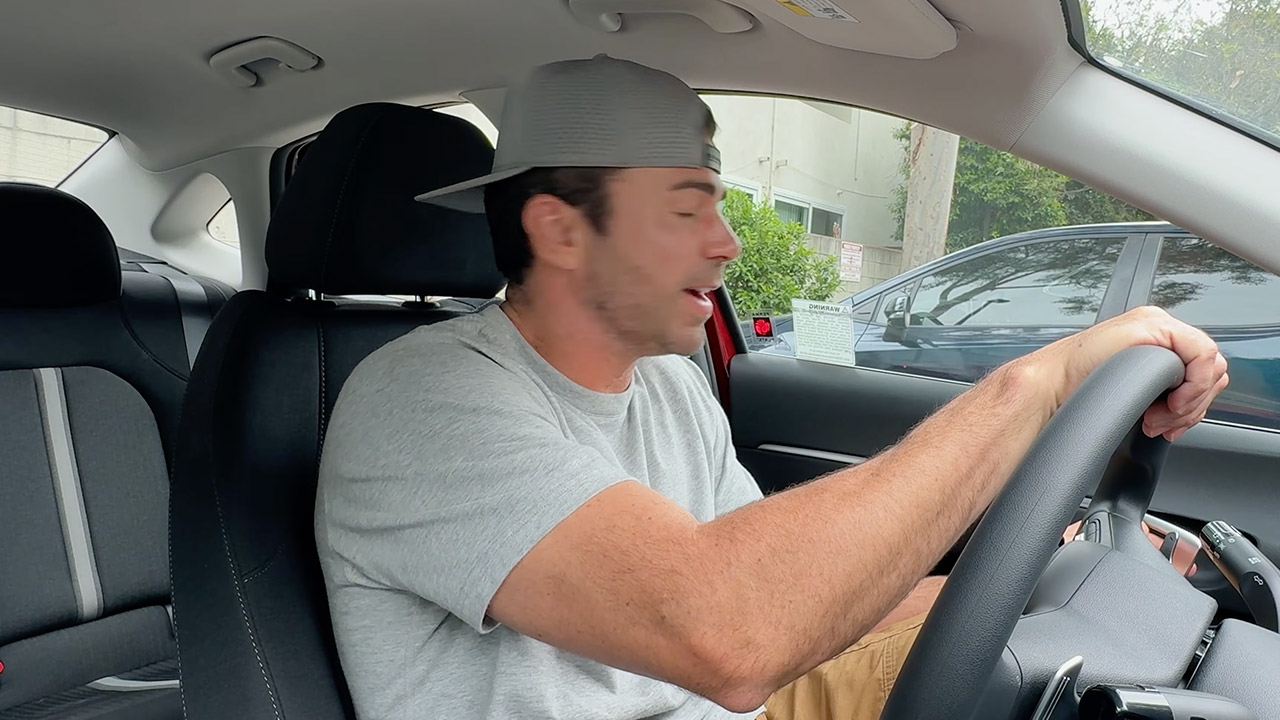
Then Rober became a little more mischevious, stashing a Sonata with a dozen GPS trackers buried inside in a dangerous neighborhood with a reputation of snatch-and-grab auto thefts. He left it there for five days to see what would happen if someone decided to try their luck – and sure enough, they did. The tracker data revealed that after receiving a parking penalty, the automobile wound up in an impound yard, where a high-definition camera filmed a youngster driving it away.

Rober was first interested in seeing the hack in action, but he soon began to consider how to prevent it from happening again. He discovered that you can effectively stop a relay by simply placing the fob in a metal tin or wrapping it in aluminum foil; bam, the signal is blocked. Problem fixed. Although Rober discovered a few additional solutions to the problem, he also learned that some car manufacturers, such as Kia, are willing to send out free software updates to close the gap.

Starmer is on the precipice as pressure builds for the UK leader to resign

CTO Realty Growth: Hold Common Stock For Dividend, Buy Preferred For 7.5% Yield

Reese Witherspoon Reunites With Legally Blonde Cast


-

 Business7 days ago
No Jackpot Winner as $257 Million Prize Rolls Over to $269 Million Monday Draw
-

 Fashion2 days ago
Weekend Open Thread: Miami – Corporette.com
-
 Crypto World6 days ago
Zimbabwe Requires Crypto Businesses to Register Annually Under New FIU Regulations
-
 Business1 day ago
Wall Street Week Ahead: Investors see Micron earnings as pulse check of AI rally momentum
-
 Entertainment7 days ago
Matt Damon’s Viral Sci-Fi Thriller Has Taken Over HBO Max
-

 Tech7 days ago
As AI companies race to go public, who else is along for the ride?
-

 Business7 days ago
Anthropic staff to meet White House officials next week, Axios reports
-

 Crypto World1 day ago
HIVE shares jump as $220M AI deal speeds Bitcoin mining pivot
-
 Crypto World7 days ago
Bitcoin could crash to $48,000, if this historical pattern is triggered
-
 NewsBeat7 days ago
what doctors are seeing in ebike crashes
-
 NewsBeat7 days ago
Warning of disruption as Cardiff Crossrail works to start
-
 NewsBeat7 days ago
Tributes to former deputy head teacher at Cambridge school among death and funeral notices
-
 Entertainment7 days ago
Kate Middleton Glare Goes Viral After Kids Booed At Royal Event
-

 Politics7 days ago
“Israel’s” ban on ICRC visits ruled illegal, but Knesset moves to stop them permanently
-

 News Videos7 days ago
Financial Accounting | Last Day Revision Strategy and Booster | CMA Inter – June 2026
-

 Crypto World7 days ago
XRP ETFs Outperform As Bitcoin And Ethereum Funds Extend Outflow Trend
-

 Tech6 days ago
Over 400 Arch Linux packages compromised to push rootkit, infostealer
-

 Business7 days ago
Invesco Quality Income Fund Q1 2026 Commentary
-

 NewsBeat7 days ago
Singer Oliver Tree dies aged 32 in helicopter crash in Brazil
-
 Crypto World7 days ago
Market Preview: SpaceX (SPCX) IPO Record, Federal Reserve Meeting, and Iran Nuclear Agreement
You must be logged in to post a comment Login