Connect with us
DAPA Banner
DAPA Coin
DAPA
COIN PAYMENT ASSET
PRIVACY · BLOCKDAG · HOMOMORPHIC ENCRYPTION · RUST
ElGamal Encrypted MINE DAPA
🚫 GENESIS SOLD OUT
DAPAPAY COMING

Business

PagerDuty, Inc. (PD) Presents at Bank of America 2026 Global Technology Conference Transcript

Published

on

OneWater Marine Inc. (ONEW) Q1 2026 Earnings Call Transcript

Q1: 2026-05-28 Earnings Summary

EPS of $0.32 beats by $0.07

 | Revenue of $120.97M (0.97% Y/Y) beats by $1.60M

PagerDuty, Inc. (PD) Bank of America 2026 Global Technology Conference June 2, 2026 5:00 PM EDT

Company Participants

Jennifer Tejada – Executive Chair of the Board
John DiLullo – CEO & Director

Advertisement

Conference Call Participants

Koji Ikeda – BofA Securities, Research Division

Advertisement

Presentation

Koji Ikeda
BofA Securities, Research Division

Hi, everybody. My name is Koji Ikeda. I am one of the software analysts here at Bank of America on the research side. I am thrilled to have Jennifer Tejada, Executive Chair.

Advertisement

Jennifer Tejada
Executive Chair of the Board

Yes.

Koji Ikeda
BofA Securities, Research Division

Advertisement

It’s the right title now, John Duo.

John DiLullo
CEO & Director

DiLullo.

Advertisement

Koji Ikeda
BofA Securities, Research Division

DiLullo, who is the new CEO of PagerDuty. Thanks so much for doing this. Super appreciate it. So there is a CEO succession plan going on here. .

Advertisement

Question-and-Answer Session

Koji Ikeda
BofA Securities, Research Division

I guess first question, maybe to Jen, why did you feel now is the right time to make this succession? And then, John, I’m going to ask you a couple of questions.

Advertisement

Jennifer Tejada
Executive Chair of the Board

Yes. Thank you for the question. Well, now is the right time because of really two things. One, we felt that we’ve stabilized the retention — some of the retention challenges that we’ve seen in the business. And we’re starting to see growth levers accelerate. So whether you look at 5 consecutive quarters of more than 600 new logos, starting to see some of the green shoots that we’re seeing through our pricing transition going from a seat-based pricing model to a platform and usage-based pricing model, things in the business were starting to really point in a positive direction. And that gave the Board and I comfort provided we could find a great leader that we felt would be the right person to lead the company

Advertisement
Continue Reading
Click to comment

You must be logged in to post a comment Login

Leave a Reply

Business

SpaceX targets $1.75 trillion valuation in all-primary IPO next week, sources say

Published

on

SpaceX targets $1.75 trillion valuation in all-primary IPO next week, sources say
SpaceX, Elon Musk‘s rocket and satellite company, plans to target a valuation of $1.75 trillion in its blockbuster initial public offering, which will consist entirely of new shares, three people familiar with the matter told Reuters on Tuesday.

The IPO is expected to be structured as an all-primary offering, meaning all proceeds would go to the company and existing SpaceX shareholders will not be able to sell any of their shares in the IPO, the sources said. Shareholders would likely have to wait until at least after the company reports its first quarterly earnings, under a staggered lockup, Reuters previously reported.

After some early meetings with investors, or a “testing the waters” process, the company has indicated it plans to raise at least $75 billion in its base offering, the sources said, requesting anonymity to discuss confidential information. ‌The greenshoe option, set at ⁠15%, would ⁠allow underwriters to sell additional shares if investor demand exceeds expectations, one of the sources said.

Pure primary offerings are not unprecedented, although they are not the most common structure for large listings, which are often a mix of primary and secondary shares allowing early investors to sell down stakes.

Advertisement

In 2021, for instance, Rivian Automotive’s IPO was structured entirely as a primary issuance, with early backers including Amazon and Ford not selling shares at the time of listing as the company raised capital to fund expansion.


Other features of the proposed offering that diverge from conventional public listings are early inclusion in the Nasdaq 100 index and unusual provisions giving Musk effective control over the board and his roles as chief executive and chairman.
The move marks the first time SpaceX has communicated specific fundraising and valuation targets to banks after early investor meetings, as it prepares for what is expected to be the largest-ever IPO. Reuters ⁠previously reported the ‌company was considering a preliminary valuation of around $1.75 trillion. The roadshow for the IPO is set to begin on Thursday, Reuters previously reported. The plans, including the size of the raise, are subject to change as investor meetings get under way, the sources cautioned.

The IPO will give public investors a rare opportunity to ⁠buy into Musk’s vision for space, satellite communications and artificial intelligence through SpaceX, which has emerged as the crown jewel of the world’s richest person’s business empire.

SpaceX did not respond to a request for comment.

MEGA IPO WAVE
The listing is expected to kick off a wave of mega IPOs, with SpaceX, OpenAI and Anthropic together poised to add almost $4 trillion in market capitalization to public markets and intensify competition for investor dollars.

Advertisement

Unlike most IPO candidates, SpaceX lacks a clear public market benchmark. Analysts say investors must piece together comparisons from aerospace, telecom and defense companies while factoring in Starlink’s growth potential and Musk’s long-term ambitions, making valuation a complex task.

For many investors, the bet is as much on Musk as on SpaceX. His track record at electric-vehicle company Tesla and his ability to galvanize retail traders could likewise spur strong demand for shares, as his reputation has done for past ventures.

Still, two of SpaceX’s three businesses are burning cash, with only its connectivity segment, home ‌to the Starlink satellite constellation, generating profits and widely viewed as the company’s cash cow.

Beyond rockets and satellites, SpaceX is pitching investors a future that includes ambitious projects such as data centers in orbit, positioning itself to benefit from a surge in AI-related infrastructure spending.

Advertisement

SpaceX merged with Musk’s AI startup xAI earlier this year in a deal that valued the rocket and satellite ⁠company at $1 trillion and the developer of the Grok chatbot at $250 billion.

Its revenue rose to $4.69 billion in the three months ended March 31 from $4.07 billion a year ago. Losses widened to $1.27 per share versus 18 cents per share over the same period.

In 2025, SpaceX’s revenue jumped to $18.67 billion from $14.02 billion a year earlier, but the company swung to a net loss of $4.94 billion from a profit of $791 million.

Since a large part of SpaceX’s pitch to investors hinges on Musk, some corporate governance concerns could give investors pause, experts have said. Measures, including a dual-class share structure laid out in the IPO prospectus, concentrate voting power in the hands of Musk and a small group of insiders.

Advertisement

SpaceX is aiming to trade on the Nasdaq under the ticker symbol “SPCX.” The debut is expected as early as June 12, Reuters has previously reported, after the company accelerated the timeline of its IPO.

Goldman Sachs, Morgan Stanley, BofA Securities, Citigroup and J.P. Morgan are the joint book-running managers for the offering, leading a syndicate of global investment banks underwriting the deal.

Continue Reading

Business

Greggs unveils ‘Ta-Pastry’ marketing stunt to rival the Bayeux Tapestry

Published

on

Business Live

The eight-metre long piece, woven in the blue and gold of Greggs’ famous logo, will be on display at London’s Design Museum this weekend to coincide with National Sausage Roll Day

Greggs announces it has worked with embroiders Hawthorne & Heany to create an embroidered history of the Greggs Sausage Roll in an 8 metre-long Ta-Pastry, displayed for a limited time only at the Design Museum in London

(Image: Greggs)

Greggs has taken on the Bayeux Tapestry with the creation of a sausage roll-inspired “Ta-Pastry”, crafted by expert embroiderers. The eight-metre masterpiece — stitched in the distinctive blue and gold of Greggs’ iconic branding — will go on show at London’s Design Museum this weekend to mark national Sausage Roll Day.

The piece came to life after Greggs brought in Royal embroiderers Hawthorne and Heaney to stitch six illustrated chapters chronicling the history of the sausage roll. The story, complete with Latin headings, spans from Greggs’ founder John Gregg’s modest bicycle rounds along the streets of Newcastle right through to the launch of the vegan sausage roll.

Advertisement

The work has been unveiled as plans press ahead to bring the celebrated Bayeux Tapestry to the UK for a special exhibition. Millions of visitors are anticipated to flock to see the tapestry when it arrives at the British Museum later this year.

Zoe Harris, customer director at Greggs, said: “The Greggs Sausage Roll is woven into the very fabric of British culture, which is why for National Sausage Roll Day we’ve partnered with master royal embroiderers and the Design Museum to create an 8-metre ‘Ta‐Pastry’. Just as the Bayeux Tapestry captured a turning point in history, this 200-hour hand-stitched masterpiece is a fitting tribute to this much-loved British icon – because some legends deserve more than just a paper bag.”

Greggs announces it has worked with embroiders Hawthorne & Heany to create an embroidered history of the Greggs Sausage Roll in an 8 metre-long Ta-Pastry, displayed for a limited time only at the Design Museum in London

(Image: Greggs)

Tim Marlow, chief executive and Director at the Design Museum added: “Greggs is a great British brand and what better way to mark National Sausage Roll Day than by immortalising this humble pastry in a tapestry? It will be unlike any other woven artwork ever created and a mouth-watering appetiser for the Bayeux mania to come.”, reports Chronicle Live.

The “Ta-pastry” represents the latest marketing stunt from Greggs to grab headlines in recent years. The firm previously hoodwinked consumers with an upmarket food fair stall called Gregory and Gregory, and has rolled out both jewellery collections and clothing ranges.

Advertisement

It has also partnered with Newcastle department store chain Fenwick on a Greggs-themed champagne bar, followed by a Greggs-inspired pub.

Continue Reading

Business

David launches high-protein frozen dessert

Published

on

David launches high-protein frozen dessert

David Frozen Dessert provides 30 grams of protein per pint.

Continue Reading

Business

Tracking Jeremy Grantham's GMO Capital Portfolio – Q1 2026 Update

Published

on

Tracking David Einhorn's Greenlight Capital Portfolio - Q4 2025 Update

Tracking Jeremy Grantham's GMO Capital Portfolio – Q1 2026 Update

Continue Reading

Business

Godrej Industries launches wealth management company

Published

on

Godrej Industries launches wealth management company
Mumbai: Godrej Industries launched Godrej Wealth, its wealth management arm on Tuesday, with a target of building ₹1 lakh crore in assets under management (AUM) by 2031. The company said the platform will focus on affluent and high net worth individuals, with investable assets of ₹2 crore and above.

The wealth arm would be part of Godrej Financial Services, which reported a 142.6% increase in consolidated net profit to ₹444 crore from ₹183 crore in the previous year.

“As India’s wealth base expands, there is a growing need for institutions capable of providing long-term financial guidance across generations,” said Pirojsha Godrej, chairperson designate, Godrej Industries Group.

“Godrej group’s legacy and trust would form the foundation of the new wealth management platform,” he said.

Advertisement

Godrej expects wealth management to be a key long-term growth driver for the group’s financial services business. The company also plans to enter the asset management space in the coming years as part of its broader financial services strategy. The listing of the company is expected in the next five years, the executives said.


Continue Reading

Business

Sebi panel weighs cap on clearing house dividends

Published

on

Sebi panel weighs cap on clearing house dividends
Mumbai: A plan to cap the dividend earned by stock exchanges, including the country’s largest bourse National Stock Exchange (NSE), from their respective clearing houses is gaining steam.

The proposal, along with a slew of other measures, was discussed in a recent meeting of the committee constituted by the Securities & Exchange Board of India (SEBI) to strengthen the balance-sheets of clearing corporations which play a critical role in the securities markets.

Serving as legal counterparties for clearance and settlement of trades, clearing houses bear the risks on behalf of exchanges.

A senior SEBI official, during an interaction with the committee, has suggested a regulatory ceiling on dividend payout by clearing corporations, two persons familiar with the ongoing deliberations told ET.

Advertisement
Sebi Panel Weighs Cap on Clearing House DividendsAgencies

Proposal aims to strengthen settlement guarantee funds and financial resilience of these market institutions

Other proposals examined by the panel headed by R.S.Gandhi, former deputy governor of the Reserve Bank of India, are: (1) directly crediting the interest earned by a clearing corporation from investments of the cash collateral (it receives from members) in treasury bills and government securities to the settlement guarantee funds (SGF); the fund, held by a clearing house, acts as a cash buffer to take care of contingencies arising from payment default of top stock brokers; at present, the income from these risk-free investments goes into the books of the clearing corporations; (2) exchanges sharing a bigger slice of the transaction charges collected from member brokers with clearing corporations; currently, a predominant portion of the transaction charge is retained by the exchanges unlike the practice in advanced markets;(3) framing a uniform rule for calculation of SGF across exchanges – while the NSE clearing corporation holds adequate SGF to handle the default of top 3 brokers, some of the other exchanges have a cover of 2 in the absence of any regulation. “There is no standard regulation on how the SGF would be replenished if the fund shrinks due to defaults in the market. Unlike the CCIL, there is no laid down procedure on this in stock market,” said a securities market professional. CCIL, or the Clearing Corporation of India, is the qualified central counterparty for trades in government bonds, foreign exchange, money market instruments, and derivatives like inter-rate swaps.


“While NSE has significantly contributed to the SGF following SEBI’s directions, there are no structured regulations on how funds would be raised. Besides, listed exchange could require shareholders’ permission and meetings before making such fund commitments,” said a source. Similarly, though the quantum of dividend paid by clearing corporations is not large, there is a feeling that a rule on limiting future dividend distribution by a crucial market infrastructure institution would help as trading volume grows.
However, all this may call for a balancing act. “The SGF cannot be touched – money flowing into the fund cannot be pulled out. If all interest earnings are credited to SGF, one must factor in the possibility of the fund becoming larger than required. Instead, if the earnings or a part of it, goes to the clearing corporation, there would be greater flexibility in utilising the money in future,” said an exchange official. The entire exercise has assumed significance as financials of clearing corporations and SGFs cannot be fortified through higher transaction charges that could put off investors. “That the issues have to be addressed is widely accepted. But, since it concerns the entire industry, there is no compulsion to finalise the rules before the NSE IPO,” said another person.

Continue Reading

Business

Lords Warn Treasury Not to Delay Sterling Stablecoin Rules

Published

on

Lords Warn Treasury Not to Delay Sterling Stablecoin Rules

The House of Lords has told the Bank of England and the FCA to keep to their timetable on stablecoin regulation, arguing that further delay will hand the digital payments race to Washington and Brussels, and shut British SMEs out of a fast-moving market.

Britain’s stablecoin moment has, in the view of peers, finally arrived, and the regulators must not fluff it. In a report published this week under the unsentimental title Stablecoins: waiting for regulation, the cross-party House of Lords Financial Services Regulation Committee has urged the Bank of England, the Financial Conduct Authority and HM Treasury to stick rigidly to their published timetable, warning that any slippage will entrench the dominance of dollar-backed tokens and leave UK challenger banks, payment firms and small businesses on the wrong side of an emerging global infrastructure.

The committee, chaired by the Conservative peer Baroness Noakes DBE, was unsparing in its assessment of how far the UK has fallen behind. “The global stablecoin market is dominated by US dollar stablecoins and evolved to serve cryptoasset trading,” she said. “New uses for stablecoins are emerging and regulators globally are setting up regulatory regimes. The UK is lagging behind compared with the US and the EU but is now moving in the right direction.” The message to Threadneedle Street and Stratford was, in effect: get on with it.

A sterling stablecoin, a digital token pegged one-for-one to the pound and backed by safe, liquid assets, is presented in the report as a genuine opportunity for the City and for the wider economy. Peers point to faster, cheaper settlement, programmable payments that could automate routine SME treasury tasks, and a broader stablecoin services ecosystem that could generate fee income for British banks, custodians and fintechs. With the UK’s existing depth in capital markets and a mature regulatory culture, a credible GBP token could find a willing audience well beyond the crypto trading floor.

But the committee is equally candid about the risks. Stablecoins, peers warn, carry implications for financial stability, the disintermediation of traditional deposit-takers and the protection of consumers who may not fully understand what sits behind a digital token. The use of stablecoins for illicit finance, particularly via unhosted, self-custody wallets, is highlighted as a serious global concern that British policymakers cannot wish away.

Advertisement

The committee broadly supports the approach taken in the Bank of England’s November consultation on a regulatory regime for sterling-denominated systemic stablecoins, including the principle that issuers must hold backing assets one-for-one and the offer of a Bank backstop lending facility. What worries peers is the fine print.

Three areas in particular drew sharp criticism. First, the Bank’s proposal that systemic issuers hold at least 40 per cent of their backing assets in unremunerated deposits at Threadneedle Street, which the committee says risks making the UK regime “an international outlier” and a commercially unattractive one at that. Second, the suggestion that pre-emptive holding limits be imposed on stablecoin balances, which peers fear could throttle a market before it has had a chance to demonstrate either its risks or its uses. Third, the proposed restrictions on commercial banks issuing stablecoins under their own branding through ordinary subsidiaries, which the report says could shut high-street lenders out of an obvious adjacent market.

The committee’s preferred approach is what it terms a “use-case agnostic” framework: rules robust enough to mitigate financial stability and consumer protection risks, but flexible enough that they do not pre-judge which applications, wholesale settlement, e-commerce, cross-border B2B payments, micro-transactions, will turn out to matter. Crucially, peers warn the Bank and FCA not to apply “a more severe risk lens” to stablecoins than they do to existing payment rails. That is a pointed reminder that card networks, faster payments and correspondent banking carry risks of their own that have long been managed rather than designed out.

For small and medium-sized businesses, the practical stakes are considerable. Programmable sterling tokens could automate supplier payments, settle export invoices in seconds rather than days, and remove a layer of foreign-exchange and intermediary cost that currently sits between British exporters and overseas customers. Peers’ insistence on regulatory certainty matters because, without it, UK fintechs developing those tools are likely to redomicile or build on dollar rails, a familiar story for anyone who watched the debate over Britain’s ambition to compete with the US as a global crypto hub play out over recent years.

Advertisement

The FCA, meanwhile, is pressing on with a broader conduct regime for digital assets, against the backdrop of falling retail crypto ownership and rising institutional interest, as our recent coverage of the regulator’s preparations for new digital asset rules noted. The Lords’ report is, in effect, an attempt to make sure the prudential and conduct workstreams reinforce rather than undermine each other.

The most pointed political signal in the report concerns unhosted wallets, self-custody digital wallets that sit outside the regulated perimeter and have become a focus of anti-money-laundering attention in both Washington and Brussels. Peers have asked HM Treasury, working with the Bank and the FCA, to assess whether existing UK law is sufficient to detect and deter their misuse, and have explicitly invited ministers to legislate to restrict their use if it is not. That is a notable shift in tone for a committee otherwise inclined towards encouraging innovation, and reflects how seriously Westminster is now taking the illicit-finance risks brought into sharp relief by the Trump administration’s enthusiastic embrace of the sector, as charted in our reporting on the US ‘crypto week’ and the rise of bank-issued stablecoins.

The Lords’ message is straightforward, even if the underlying regime is anything but. The UK has a narrow window in which to set rules that are credible, competitive and durable. Get the calibration wrong on backing assets, holding limits or bank participation and a sterling stablecoin market will simply fail to emerge, ceding ground to MiCA-compliant euro tokens and an increasingly liberal US regime. Get it right and Britain has a genuine shot at hosting a stablecoin ecosystem that serves not only City wholesale markets but the wider SME economy that depends on cheap, fast and reliable payments.

As Baroness Noakes put it: “Regulation needs to allow innovation while ensuring that risks are effectively mitigated. The shape of any UK stablecoin market will be strongly influenced by the direction of the regulatory regime, and so it is important that the regulators get this balance right.”

Advertisement

Further details of the inquiry, including the full report and the evidence submitted by industry, are available on the UK Parliament’s Financial Services Regulation Committee page.


Jamie Young

Jamie Young

Jamie is Senior Reporter at Business Matters, bringing over a decade of experience in UK SME business reporting.
Jamie holds a degree in Business Administration and regularly participates in industry conferences and workshops.

When not reporting on the latest business developments, Jamie is passionate about mentoring up-and-coming journalists and entrepreneurs to inspire the next generation of business leaders.

Advertisement
Continue Reading

Business

Three quarters of workers not on track for ‘moderate’ pension income, report suggests

Published

on

Three quarters of workers not on track for 'moderate' pension income, report suggests

Ministers, and the commission’s interim report, suggested that people were not saving enough for retirement, with people drawing their pension 25 years from now set to be £800 or 8% worse off per year than their counterparts today, according to the government.

Continue Reading

Business

Ford Issues ‘Do Not Drive’ Recall for nearly 5K Bronco Sport, Maverick Vehicles

Published

on

Ford Issues ‘Do Not Drive’ Recall for nearly 5K Bronco Sport, Maverick Vehicles

Ford Motor Company on Wednesday issued a critical “Do Not Drive” advisory and safety recall for 4,653 vehicles, encompassing certain 2021-2026 Bronco Sport and 2022-2026 Maverick models. 

The recall, which was internally approved May 19, addresses a potential manufacturing defect originating at the vehicle assembly plant, where the front lower control arm ball joints may have been incorrectly installed or repaired, according to the National Highway Traffic Safety Administration (NHTSA).

Advertisement

Officials said the manufacturing defect “may result in loss of vehicle control while driving, increasing the risk of [a] crash,” according to Ford’s official Safety Recall Report to the NHTSA.

A Ford Bronco Sport outside in a forest.

A model year 2025 Ford Bronco Sport. (Ford Motor Co. / Fox News)

FORD RECALLS OVER 179,000 BRONCO AND RANGER VEHICLES OVER SEAT DEFECT

Because of the risk, Ford strongly advised owners to stop driving the vehicles immediately until an inspection and necessary repairs are completed. 

The affected population includes 2,357 Mavericks and 2,296 Bronco Sports.

Advertisement

NHTSA documents show the financial burden of resolving the defect will be entirely absorbed by Ford, while auto dealers face strict federal compliance measures. Dealerships are mandated to immediately halt the demonstration, sale or delivery of any affected new vehicles in their inventory.

2022 Ford Maverick Hybrid XLT and 2L-EcoBoost AWD Lariat. Preproduction vehicle with optional equipment shown. Available fall 2021.

2022 Ford Maverick Hybrid XLT and 2L-EcoBoost AWD Lariat. Preproduction vehicle with optional equipment shown. Available fall 2021. (Ford)

FORD TEAMS UP WITH OUTDOOR OUTFITTER FILSON TO LAUNCH NEW BRONCO SUV

Violating the federal stop-sale requirement could result in severe civil penalties of up to $27,168 per vehicle.

To minimize the impact on consumers, Ford is covering all costs associated with the repairs, according to the NHTSA.

Advertisement

Dealerships are authorized to claim up to $250 per vehicle for towing services, with some participating dealers offering dispatched technicians to perform mobile inspections at customers’ locations.

Ford logo in Michigan.

FILE – Ford Motor Co. signage is displayed outside of a dealership as the General Motors Co. (GM) headquarters building stands in the distance in Detroit, Michigan, U.S., on Monday, April 1, 2013.  (Jeff Kowalsky/Bloomberg via Getty Images  / Getty Images)

If a vehicle requires parts replacement, Ford is pre-approving the cost of rental vehicles for up to 30 days.

The company has also implemented a reimbursement plan for owners who may have already paid out-of-pocket to repair the suspension issue, NHTSA officials said. Customers are eligible for a refund as long as the prior repair was performed before June 19, 2026.

Ticker Security Last Change Change %
F FORD MOTOR CO. 16.15 -0.48 -2.89%

CLICK HERE TO GET FOX BUSINESS ON THE GO

Advertisement

Ford did not immediately respond to FOX Business’ request for comment.

Continue Reading

Business

Fast Eddys Perth CBD site in $10m revamp plan

Published

on

Fast Eddys Perth CBD site in $10m revamp plan

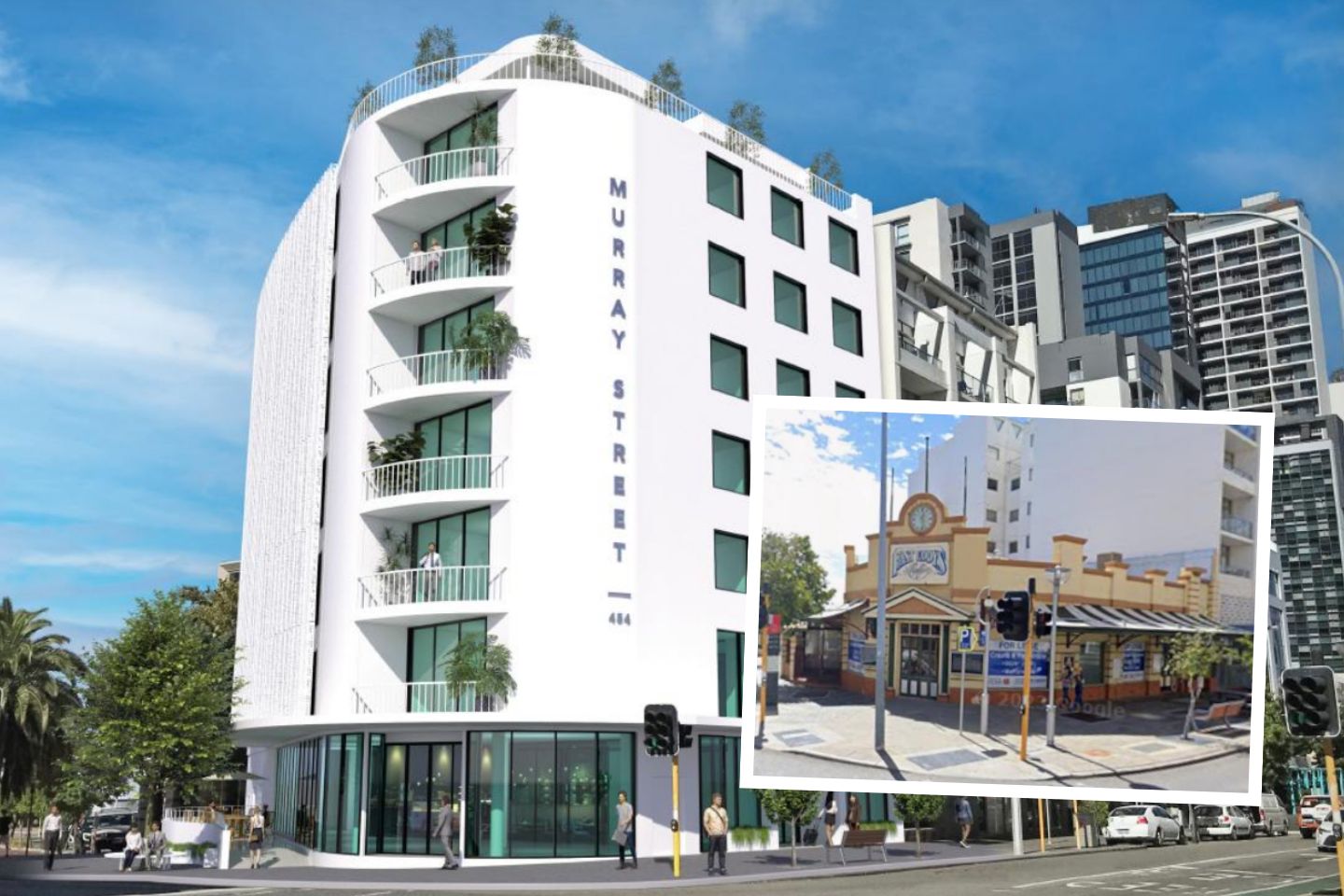
The Fast Eddys site in Perth CBD has been earmarked for a seven-storey development, with a $10 million plan lodged seven years after the 24-hour restaurant closed.

Continue Reading

Trending

Copyright © 2025