Lacking an enterprise content layer for Headless 360, CRM titan went shopping
Salesforce’s planned acquisition of Contentful should give its Headless 360 product – which CEO Marc Benioff gushed about during earnings last week – a much-needed shot in the arm, an analyst told The Register.
Headless 360 takes the Salesforce logic and data layers and presents them inside other applications the user might be operating, such as WhatsApp, Slack, ChatGPT, or Claude. During the call last week, Benioff said it had seen rapid adoption, including a fivefold increase in usage among customers at Anthropic.
Advertisement
But it came with limitations.
“It lacked the enterprise-grade content layer to drive the customer facing digital experiences,” Forrester principal analyst Chuck Gahun told The Register. “Enterprise customers that wanted to build a marketing website around product listing and detail pages (powered by Salesforce B2B and B2C commerce), ended up relying on different software vendors. Now, Agentforce agents can query customer data, assemble and deliver content driven digital experiences that are dynamic.”
It is also another step to move users off of the Salesforce UI, while preserving its unique data and functions. Gahun said that the headless strategy transitions Salesforce’s place in the enterprise from a keeper of CRM records and customer data into a system of action where APIs and MCP server calls are able to produce results for business users.
“Contentful was one of the strongest headless CMS vendors, with an API-first founding architectural principle. All content management and delivery platform capabilities were accessible via high-fidelity APIs, including an app framework to build, package and distribute frontend and backend apps that are customizable,” Gahun told The Register.
Advertisement
Salesforce has been on a buying spree with the purchases of Convergence AI, Bluebirds, Regrello, Informatica, Qualified, Cimulate, and Momentum, all announced or closed within the last year.
President and chief operating and financial officer Robin Washington told analysts in September that Salesforce has no plans to slow down M&A.
“If we see other things out there that make sense, we’re going to buy them,” she said.
Gahun has been covering Contentful as a content management system for nearly four years. He said with Salesforce adding Contentful as the digital experience layer on top and with Informatica’s customer and enterprise data, it has the potential to unlock better digital and customer experiences for Salesforce.
Advertisement
“As digital content begins driving context for agents and answer engines, Salesforce now has a unique seat at that business logic table: powered by context, content, and data – flowing through its next gen enterprise agentic SaaS platform,” he said.
The acquisition of Contentful is expected to close later this year, subject to regulatory conditions.
Salesforce has not publicly disclosed the purchase price of Contentful. A spokesperson told The Register that it had no comment beyond its statement when asked for more information about the deal. In its statement, Salesforce said Contentful is trusted by 4,800 customers worldwide and gives users a single content layer across email, mobile and web for any use case.
“Together, Agentforce and Contentful will move enterprises from static, channel-specific content to dynamic content orchestration – assembling 1:1 experiences at scale based on context, channel, language, and business rules,” Salesforce said. ®
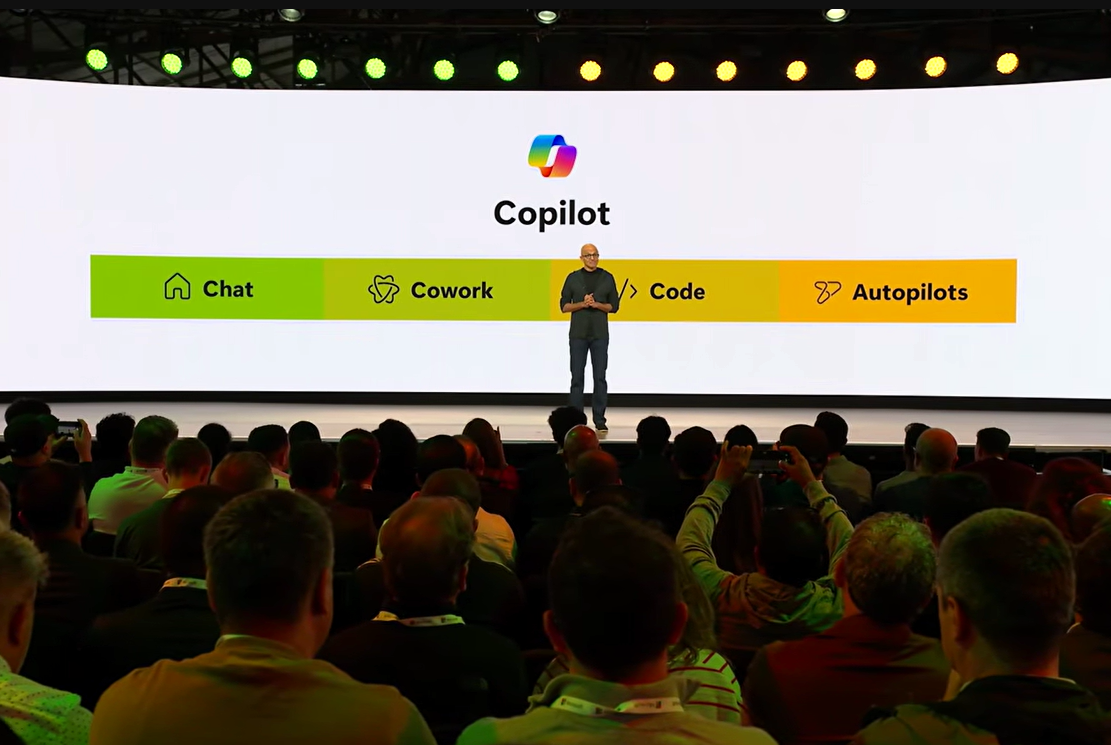
Microsoft CEO Satya Nadella teases the coming Copilot “Super App” during the Build keynote, telling the audience that Chat, Cowork and Code will come together in one app this summer. Despite the rumors, Microsoft didn’t demo the app itself. (Screenshot via webcast)
The token-hungry developers were there. Nvidia CEO Jensen Huang was there (virtually). The Chainsmokers were there. But Microsoft’s rumored Copilot “Super App” was not.
According to various reports and screenshots posted on social media over the past couple of days, Microsoft’s Copilot Super App was ready for its close-up. Reports indicated that the Copilot Super App is meant to provide a single Copilot experience, or shell, with various modes, possibly including a Copilot Chat mode; GitHub Copilot coding mode; Cowork mode for knowledge workers and prosumers; the “Scout” OpenClaw-based work mode; and some kind of Autopilot always-on agent mode.
Some had expected Microsoft could make the Copilot Super App its “one more thing” announcement during the kick-off keynote at the Microsoft Build 2026 conference on June 2. But the app, in whatever form it currently may exist, was a no-show.
It wasn’t a total wash, however. CEO Satya Nadella did mention the Super App in passing.
“Come summer, we will be bringing coding to all knowledge work within one Copilot Super App. That’s really exciting. So you’re going to have Chat, Cowork, and Code all in Copilot,” Nadella told the Build audience in San Francisco.
Advertisement
The premise of a Copilot super app makes sense on several fronts. Microsoft is looking for a way reclaim its early-mover position in AI coding that it carved out with GitHub Copilot. The company needs an answer to the growing popularity of Anthropic’s Claude Code and OpenAI’s Codex. And given Microsoft is working to unify its consumer and commercial Copilot experiences, an all-in-one Copilot workspace could provide a neat solution.
Jacob Andreou, recently appointed executive vice president of Copilot, is charged with this unification and reports directly to Nadella as part of a small team replacing long-time head of Microsoft’s Experiences and Devices unit, Rajesh Jha.
Andreou has what I’d consider a daunting task. And not just because he is based in Los Angeles and came to Microsoft just a year and a half ago via an unconventional path (Snap and then Greylock Partners).
Microsoft originally tried to position its various Copilots as a single product, even though they used different data sources, had different interfaces and provided different types of access.
Advertisement
More recently, officials acknowledged this and made distinctions between consumer Copilot, GitHub Copilot and Microsoft 365 Copilot for businesses as separate, but related offerings. But now the company seems to be veering back toward trying to make Copilot seem like a single entity in terms of brand and across consumer and enterprise lines.
Last week, Microsoft took a step toward improving the Microsoft 365 Copilot user experience with a redesign, which made the prompt box bigger and results appear more quickly. But it didn’t go so far as to show off how the new UI will dovetail with the coming Super App.
A couple of the supposed elements of the Super App did get airtime at Build. Scout, which Microsoft describes as a “personal agent for work” is built on the open-source OpenClaw framework. Scout can access data in Microsoft apps like Teams, Outlook and SharePoint thanks to Microsoft’s WorkIQ context layer, so it can proactively handle tasks such as prepping for meetings and fixing scheduling conflicts without having to ask users for approval.
Microsoft is making Scout available to its customers in its “Frontier” testing program starting today, June 2. Up until now, it’s been in testing inside Microsoft.
Advertisement
If Scout sounds familiar, it should. Scout is the official name of the OpenClaw skunkworks project that’s been the focus of Microsoft Corporate Vice President Omar Shahine and team (profiled here on GeekWire last month). Microsoft has been working to add guardrails around OpenClaw and Scout to try to allay security fears that many enterprise companies, including Microsoft itself, have expressed about OpenClaw’s always-on way of operating.
Scout is considered the first public example of this new category of always-on agents that Microsoft is calling “Autopilots.”
After sitting through the three-hour (!) Build opening keynote, I was left wondering why Microsoft didn’t show off, even fleetingly, the coming Copilot Super App.
Was it because execs felt they had so many other announcements that they didn’t want it to get lost in the mix? They’re waiting for the“Ask Copilot” taskbar feature to go live on Windows 11? Or maybe the Super App is just not yet stable enough to demo? (Given how quickly Microsoft is moving from idea to private testing with Scout, making sure a product is baked before showing it publicly doesn’t seem to be much of a concern at Microsoft.)
Advertisement
Sure, the pressure is on with AI to announce or be eclipsed, like never before. And Microsoft is no stranger to “creatively architected” demos of not-yet-finished products. (I see you, Longhorn.)
But can Microsoft really move from pilot to shipping products at this pace and not alienate enterprises that have substantial security, compliance, data-residency and other hefty requirements? I guess we’ll see….
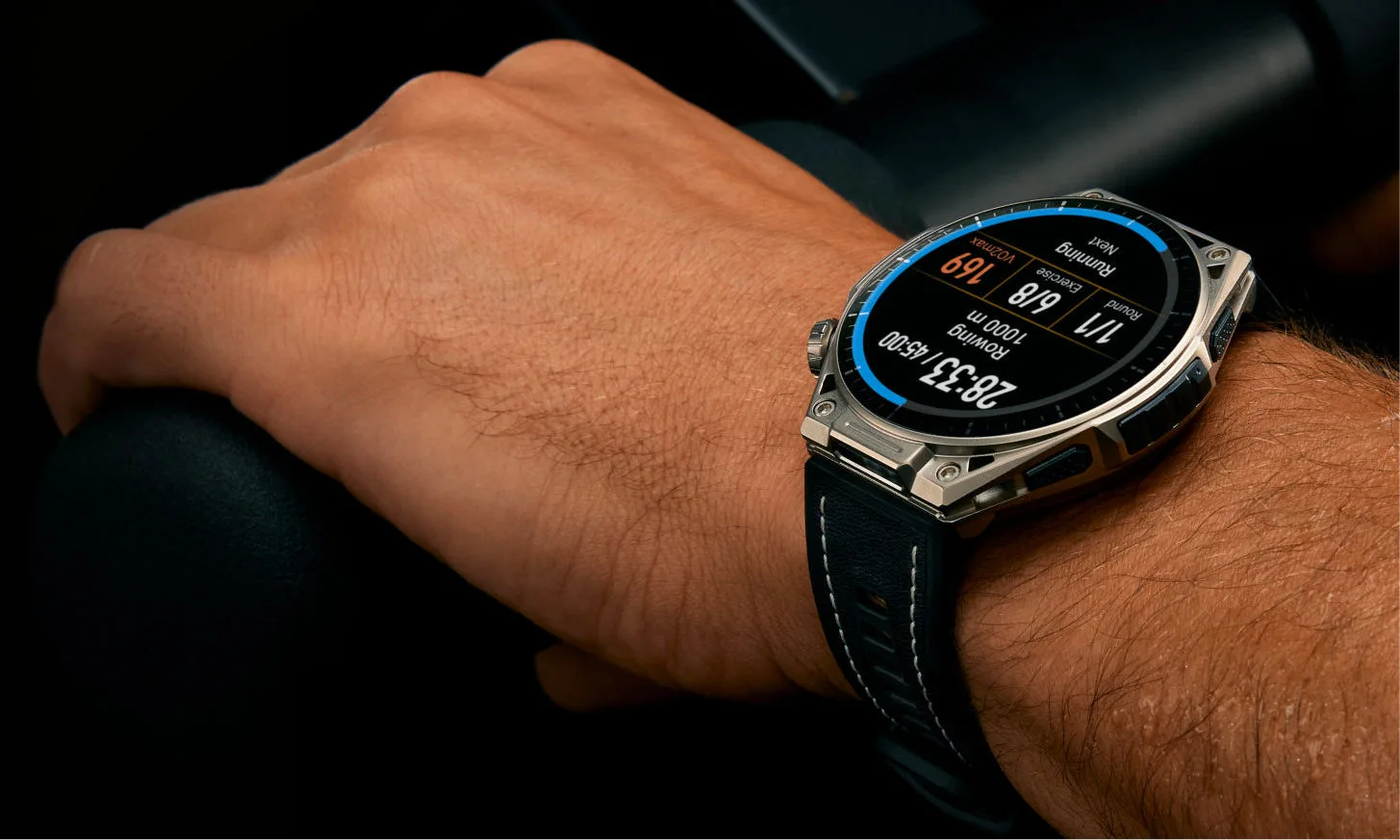
Amazfit has launched the Balance Ultra, a new flagship smartwatch meant for users who track their workouts closely but may not always pay the same attention to recovery.
Recovery is one of the most important parts of training, because poor sleep, high stress, and badly timed rest days can directly affect progress. The new smartwatch aims to make that easier to track by combining workout data with sleep, stress, heart rate, HRV, blood oxygen, breathing, and recovery metrics through the Zepp App.
Can it help users train smarter instead of just harder?
The Balance Ultra is built around Amazfit’s Hybrid Training System, which is meant to give users a clearer view of how ready their body is for another workout. Instead of only recording completed sessions, the watch looks at training load, recovery, and lifestyle signals to help users decide whether to push harder or slow down.
Amazfit
Amazfit supports this with features such as BioCharge, LifeLoad, Training Load, Weekly Focus, Training Balance, and Hybrid Training Plans. BioCharge gives users a sense of their energy levels throughout the day, while LifeLoad factors in the strain caused by stress and daily activity. Training Balance and Weekly Focus then help place recent workouts in context, so users are not left looking at separate sleep, stress, and fitness numbers without knowing what they mean together.
The watch also comes with official HYROX tools, including training plans, race simulations, virtual pace support, and post-race analysis. That makes it more relevant for users who mix running, strength training, endurance work, and gym-based competition formats.
Advertisement
What else does the Balance Ultra offer?
The hardware is also more premium than Amazfit’s standard fitness watches. The Balance Ultra has a Grade 5 titanium case, sapphire glass protection, 10ATM water resistance, and a 1.5-inch AMOLED display with up to 3,000 nits of brightness. It also supports dual-band GPS, six-satellite positioning, offline maps, route guidance, Bluetooth calling, Zepp Flow voice control, voice notes, music storage, apps, and contactless payments.
Amazfit
Battery life is one of its stronger claims. The company says the Balance Ultra can last up to 30 days with regular use, up to 10 days with the always-on display enabled, and up to 50 hours with continuous GPS. The Amazfit Balance Ultra is available through Amazfit.com for $599.99.
Replacing a 3D printer’s extruder with a cutting blade seems like an easy way to do things like vinyl cutting, but you cannot just put on any blade and expect good results. The right type of blade is called a drag knife and it’s designed so that it follows the direction in which you’re cutting. You can get these in dedicated vinyl cutting machines, as well as in the form of attachments for the likes of CNC machines. How to use them with an old Anycubic Mega S FDM printer is demonstrated by [Cocoanix 3D Printing] in a recent video.
For a bit more background information you can peruse for example this write-up by [Kronos Robotics], who goes through the steps of selecting the right blade, cutting mat and such for use with a CNC machine.
For the 3D printer in the video a Roland vinyl cutter style holder and blades were bought off AliExpress, for which then a custom 3D printed mount was designed, though you can often get a ready-made one off your usual 3D model sources. Following this you get into the hardest part, being the software and making sure you don’t cut too deep into the vinyl through its backing paper.
Fortunately most of the hard work here is done already by the Polycut project, which is precisely designed to help you turn a 3D printer or similar into a vinyl cutter or plotter. This takes in an SVG file and generates the appropriate g-code, after which you better have gotten your Z-offset calibration right if you want that perfect result. With all that in place it’s then actually quite easy to cut your very own vinyl without shelling out big bucks for a dedicated machine.
Advertisement
Of course, it’ll likely never be as fast as those machines, requires more calibration and have a more limited cutting space, but as it’s not a permanent modification and probably less crazy than putting a laser engraver module on a commercial FDM printer like the Bambu Lab H2D.
Stoke Space has its 168,000-square-foot headquarters in Kent, Wash., where Mount Rainier can be seen on a good day. (Stoke Space Photo)
Space Northwest, a nonprofit association serving the Pacific Northwest’s space industry ecosystem, says it’s partnering with the Commercial Space Federation to launch a regional space business accelerator.
The initiative will begin with an executive roundtable scheduled this summer, followed by a 12-week accelerator program due to begin in autumn. The accelerator is expected to support up to 10 early-stage space companies with programming focused on commercial space markets, investment readiness, tech commercialization, growth strategies for commercial and government markets, and integration into the space industry’s global supply chain.
A report published in 2022 estimated the overall economic impact of Washington state’s core space industry at $4.6 billion annually, supporting more than 13,000 jobs. That impact is probably greater today than it was four years ago. Blue Origin was said to employ about 6,000 people nationwide in 2022, but more recent figures suggest the company has upwards of 12,000 employees.
“The Pacific Northwest has a uniquely entrepreneurial space ecosystem complemented by world-class aviation, software and advanced technology industries,” Sean McClinton, Space Northwest’s co-founder, said today in a news release. “We believe this accelerator can help capitalize on the region’s strengths and support innovators building the next generation of world-class space companies.”
Advertisement
The Washington, D.C.-based Commercial Space Federation will shape the accelerator curriculum. “Commercial space scales on the industrial base around it, not just its marquee names,” said Kelli Kedis Ogborn, strategic adviser on global Markets and industry engagement at CSF. “The Pacific Northwest has both: world-class aerospace leaders and the deep bench of adjacent capability the sector needs to grow.”
Ogborn said the accelerator program will aim to “connect those strengths to the broader national commercial space community and turn the region’s industrial depth into a driving force in the space supply chain.”
Space Northwest said additional details about the application process, program structure, speakers and partner organizations will be announced later this year.
OPPO India has expanded the rollout of its latest ColorOS 16 update, bringing a range of new features to more smartphones across its lineup. The new software focuses on improving everyday smartphone experiences with better multitasking, easier device connectivity, and useful productivity features. The rollout began with the Find X9 series and is expected to continue across supported devices through the end of May.
Live Space and O+ Connect Improve Convenience
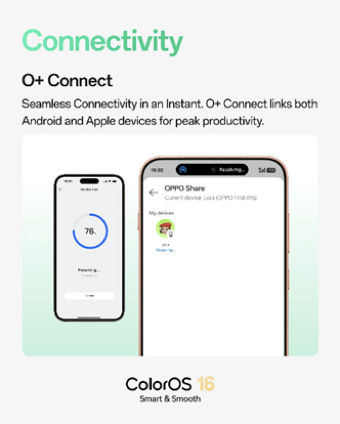
One of the highlights of the ColorOS 16 update is the addition of Live Space and improvements to O+ Connect. Live Space makes the lock screen feel more responsive with fluid animations and neatly organized notifications. Users can quickly view important information without unlocking their phones. Meanwhile, O+ Connect makes file sharing between OPPO and Apple devices much easier. This allows users to transfer files without extra apps or complicated steps.
ColorOS 16 also introduces several tools that help users stay organized and create content more easily. The update can automatically arrange apps and home screen layouts based on categories, colors, or previous setups, reducing the time spent on manual organization. For travelers, the menu translation feature makes it easier to understand restaurant menus with helpful visual references. The update adds motion collage creation without requiring extra apps. It also improves document scanning for easier storage and sharing.
ColorOS 16 Focuses on More Personalized Experiences
With ColorOS 16, OPPO is focusing on delivering a faster, more convenient user experience. Mind Pilot serves as a built-in assistant that brings useful information into a single interface, reducing the need to switch between apps. The update also introduces features that help users manage conversations, tasks, and multiple activities more easily. Enhanced personalization options make it simpler to customize the device according to individual preferences. The update is being released across eligible Find X9, Find X8, Reno15, and Reno14 smartphones.
Workers can pause the all-seeing eye when they need to “check something personal.”
Chesnot/Getty Images
Meta is making some minor concessions in its extremely dystopian plan to track employees’ mouse clicks and keystrokes in the name of AI training. The company has reportedly made some changes to the controversial project known internally as the Model Capability Initiative (MCI), according to a report in The Information.
Meta now plans to allow employees to “pause” the tracking for up to 30 minutes in the event they need to “check something personal,” the company told workers in a memo. A subset of employees will also be able to request to opt out of the program altogether, though this will be limited to remote workers with bandwidth concerns, people who deal with “sensitive” material and those who often work in spaces where they can’t easily keep laptops connected to a power source.
In other words, it sounds like the vast majority of Meta employees will still be required to allow their (nearly) every move to be tracked and recorded in the name of improving Meta’s AI models. However, the company did say that it had improved the software’s battery usage to address some employee complaints, Reutersreports. The company has faced protests from employees over MCI, which was announced last month just before the company laid off 8,000 workers and reshuffled thousands of others into AI-focused roles.
Advertisement
CEO Mark Zuckerberg recently defended the program to employees, telling them that “watching really smart people do things” is the best way for AI models to improve quickly. “The average intelligence of the people who are at this company is significantly higher than the average set of people that you can get to do tasks,” he said in leaked audio from a company-wide meeting last month.
“None of the data is being used for, like, looking at what people are doing, or surveillance, or performance track[ing], or anything like that. It’s purely just, like, we are using this to feed a very large amount of content into the AI model, so that way it can learn how smart people use computers to accomplish tasks. I think that this is going to be a very big advantage if we can do it.” He also added that if it works, “we’ll probably do more things like it” in the future.
An anonymous reader quotes a report from GeekWire: A team inside Microsoft has been quietly building a platform for devices that run AI agents instead of apps, based on Android instead of Windows, with two working hardware designs so far, and an initial set of big-name companies lined up to run pilots. The platform, dubbed “Project Solara,” is Microsoft’s bet that AI will open up entirely new scenarios for computing — using agents to avoid the constraints of traditional software, and off-the-shelf components to develop new devices quickly and inexpensively. […] The company unveiled Solara on Tuesday at its Build conference in San Francisco, describing it as a new platform that spans from chip to cloud. GeekWire got a behind-the-scenes look at the project during a briefing last week in Redmond, including demos of the first two concept devices based on the platform:
– A desktop hub that sits beside a PC and responds to voice commands, signs users in using facial recognition, and surfaces the day’s most pressing items. With a monitor attached, it becomes a full Windows machine running in the cloud.
– A wearable badge that reimagines the standard employee ID card. A fingerprint button wakes an agent in one press; a single tap records and transcribes a conversation; and a built-in camera lets the agent act on what the user sees.
Microsoft says it won’t ship these devices itself. Instead, it envisions hardware makers and other industry partners turning the reference designs into implementations of their own, each intended for a specific industry, company, or scenario. For example, in one demo shown by the company, the high-tech badge ran on agents designed for use by a health-care worker, including the ability to scan a patient’s QR code, record and transcribe the visit, log vitals, and start a prescription. In another application of the same badge, the built-in camera scanned a brainstorm board with ideas for an office revamp, and made a suggestion: add some plants.
The two devices are a starting point. The bigger opportunity, the company says, is all the tasks and workflows where a PC or phone gets in the way or isn’t practical to use. […] In the coming months, companies including AccuWeather, Best Buy, CVS Health, Levi’s, and Target are expected to begin pilots of devices based on the reference designs. The operating system is the Microsoft Device Ecosystem Platform, or MDEP, an enterprise version of Android that Microsoft developed for devices including Teams meeting-room hardware. The company says it chose MDEP over Windows deliberately, to run on smaller, lower-power devices while keeping the management and security features IT departments expect: patch and over-the-air updates, device integrity, Microsoft Defender, Intune, and Entra ID sign-in. While the project is still in the early stages, Microsoft CEO Satya Nadella encouraged the team to show it at Build sooner than the company would normally show its work in public. “That underscores just how competitive and fast-moving the AI world is right now, but it also illustrates the pace that the new technologies are enabling,” reports GeekWire.
Advertisement
The report notes that the business model for the platform still needs to be worked out. The devices run on Microsoft’s Azure cloud, but beyond that, “the economics are still taking shape.”
Qualcomm and MediaTek have been chosen as the first chip partners. “The badge runs on a new Qualcomm wearable chip; the desk hub runs on MediaTek IoT silicon,” reports GeekWire. “Both are off-the-shelf, not custom, which is central to how Microsoft plans to keep devices cheap and fast to build.”
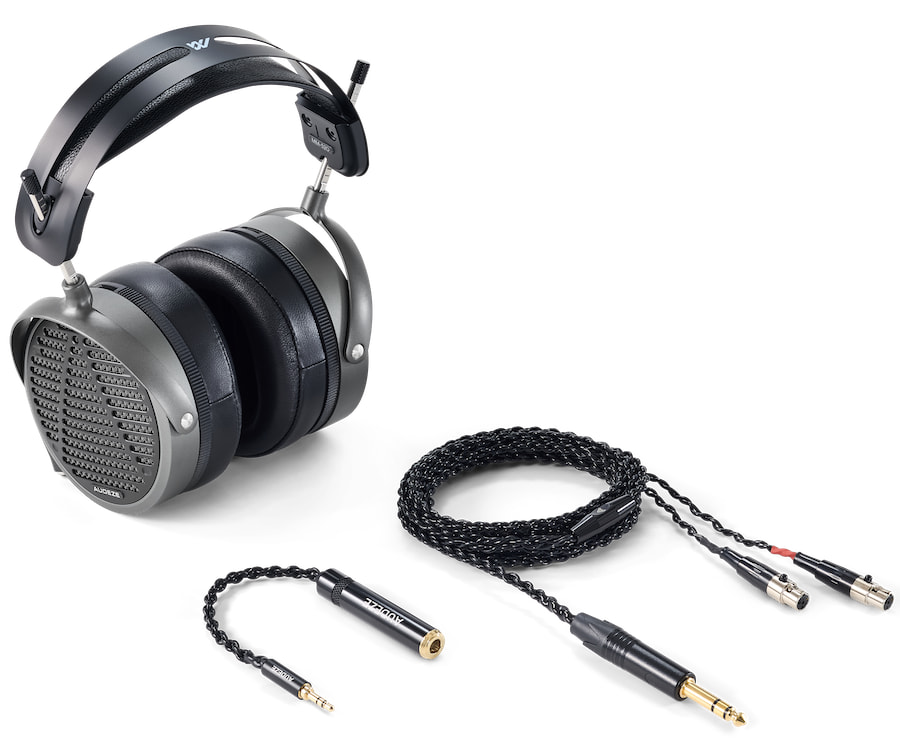
Audeze has spent the past few years proving that planar magnetic headphones are not just for audiophiles listening alone in dark rooms, questioning cable choices. The California brand made two very smart pivots with its driver technology: gaming headsets and studio headphones. The Maxwell became one of the most successful premium wireless gaming headsets on the market, and the newer Maxwell 2 has already pushed that platform further with SLAM technology, upgraded wireless performance, and stronger spatial/bass performance.
The studio side has been just as important. Audeze’s Manny Marroquin Signature Series gave the company a credible way into the professional headphone market, taking aim at established studio staples from Beyerdynamic, Sony, and Sennheiser. The MM-500 set the tone, the more affordable MM-100 expanded the audience, and now the new $1,799 Audeze MM-520 arrives as the next step in that lineup. Audeze says the MM-520 builds on the MM-500 foundation while adding its SLAM technology, designed to improve bass accuracy, low-frequency impact, and spatial detail without giving up the midrange neutrality that made the MM-500 useful as a mixing tool.
Manny Marroquin wearing Audeze MM-520 Headphones in the studio.
Developed with 18-time Grammy-winning mix engineer Manny Marroquin, the MM-520 is being positioned as a professional studio headphone for creators who need mixes to translate beyond the control room. That is the entire fight here. Audeze is not just chasing headphone collectors with another planar trophy piece.
It is trying to make its studio models legitimate daily tools for engineers, producers, and creators who have spent decades trusting German and Japanese studio cans. The MM-520 will have to earn that space, but based on the MM-Series track record, Audeze is no longer knocking politely. It has a badge, a warrant, and a very expensive pair of earcups.
Advertisement
“The MM-520 represents the latest entry in our mission to provide creators and professionals with the ultimate monitoring tool” stated Sankar Thiagasamudram, Audeze CEO. “By adding SLAM™ technology to Manny’s signature series, we’ve created a headphone that delivers even more truth in the low-end while maintaining the signature clarity Audeze is known for“, he added.
Audeze MM-520: SLAM Technology, 90mm Planar Drivers, and Studio-Focused Design
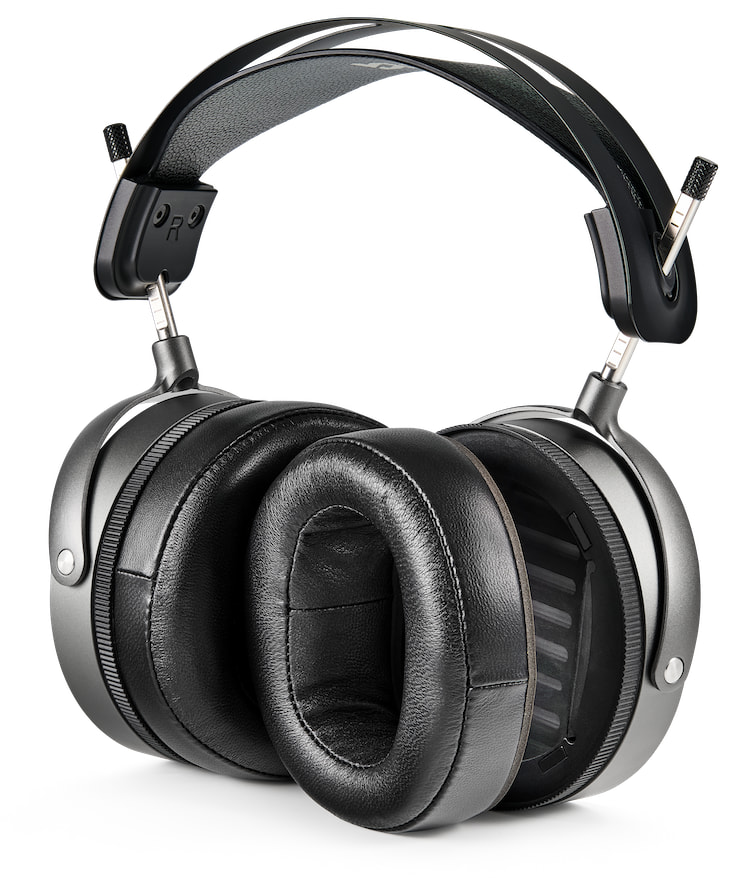
The Audeze MM-520 builds on the MM-Series platform with the addition of Symmetric Linear Acoustic Modulator, or SLAM, technology. Audeze says SLAM is designed to improve bass performance and spatial imaging by managing airflow and pressure inside the earcup. The goal is stronger low-frequency definition and better spatial clarity without moving away from the more neutral midrange balance that defined the MM-500.
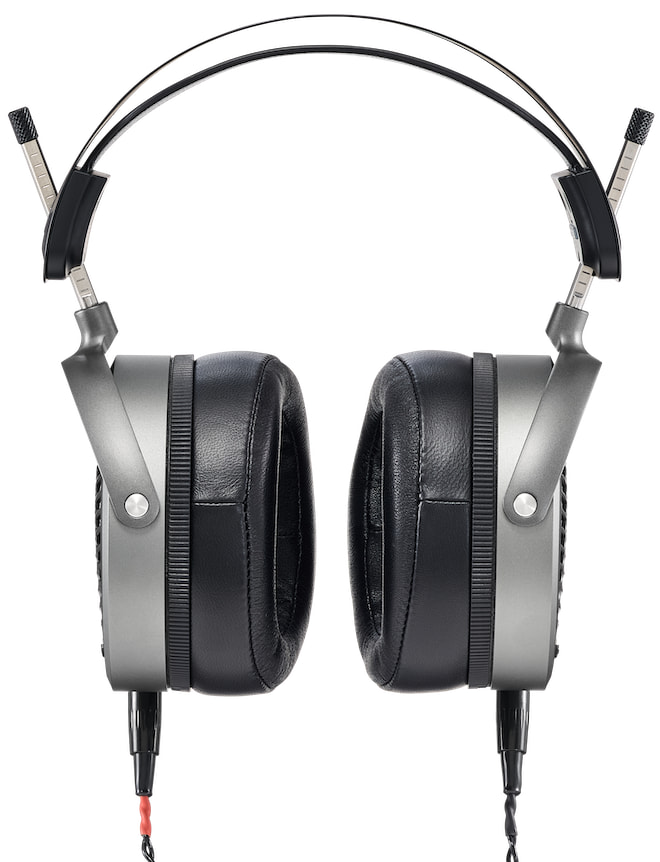
The MM-520 uses 90mm planar magnetic drivers with Ultra-Thin Uniforce diaphragms and Fazor phase management, technologies Audeze has used across its planar magnetic headphones to reduce distortion and improve phase behavior. For studio users, the focus is accuracy, low distortion, and consistency during mixing, mastering, and content creation. Audeze also claims the headphone’s high sensitivity and low impedance allow it to be driven from consoles, audio interfaces, and laptops, which should make it more practical for both studio and mobile work.
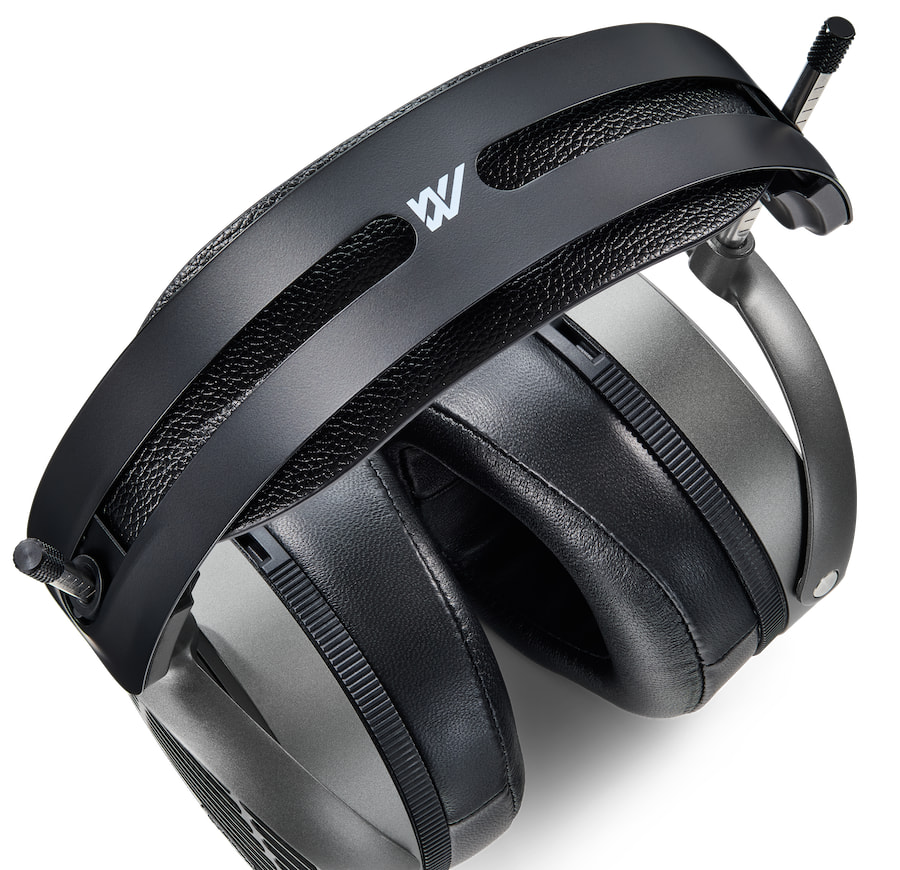
Comfort has also been addressed with upgraded memory foam earpads designed for longer sessions. The earpads attach magnetically, making replacement easier over time. For a studio headphone, that matters. Pads wear out, sessions run long, and nobody wants a maintenance project between takes.
Why the Audeze MM-500 Became a Serious Studio Headphone Contender
The original Audeze MM-500 was not just a smaller variation of the LCD Series with Manny Marroquin’s name attached. It was designed as a professional studio headphone, with a more durable aluminum and steel build, a hard travel case, and tuning aimed at mixing and mastering rather than audiophile system matching. In our review, we found that the MM-500 belonged in the same conversation as the LCD-X ($1,199), LCD-MX4 ($2,995), and even the flagship LCD-5, but with a very different purpose.
The MM-500 used Audeze’s 90mm planar magnetic driver with Fluxor magnets and a Uniforce diaphragm, and its 18-ohm impedance and 100dB/mW sensitivity made it easier to drive than some of the company’s more demanding models. Sonically, it delivered excellent midrange clarity, strong resolution, very good imaging, and a more neutral balance than the LCD-X, although its bass was more controlled than visceral. We also noted that it responded well to EQ, which matters for studio users making small mix decisions.
Advertisement
Advertisement. Scroll to continue reading.
The tradeoffs were real. The MM-500 could sound somewhat thinner than Audeze’s higher-end models, the smaller pad opening could bother listeners with larger ears, and it performed best with a capable high-current amplifier rather than modest portable gear. Still, the conclusion was very positive: for users who needed a serious mastering headphone with excellent build quality, strong accuracy, and studio-focused tuning, the MM-500 was one of the best values in Audeze’s lineup.
The Audeze MM-520 is a focused evolution of the MM-500, built for studio users rather than casual listening. Its most important upgrade is SLAM technology, which Audeze says improves bass performance and spatial imaging while preserving the MM-Series’ neutral midrange balance.
With 18-ohm impedance and 102dB sensitivity, the MM-520 should be easier to drive from interfaces, consoles, and laptops than many planar designs. However, the 100mW minimum power recommendation still suggests better gear will matter.
Potential buyers should note the 555 gram weight and open-back design. This is not ideal for tracking near microphones, travel, or noisy rooms. It is for mixing, mastering, production, and creators who want Audeze planar accuracy with more low-end insight and spatial detail than the MM-500.
When Russia kicked off its war of aggression against neighboring Ukraine for completely made up reasons, there were global efforts to isolate Russia as a result. Many of those efforts have waned in the years since, unfortunately. You may recall that there was a small effort among video game companies and platforms to deny sales and service to Russia as part of this cultural blockade. While the war still rages on, and anyone who wants to can call all of this effort a failure, the point is that gaming companies and platforms took something of a moral stand against Russia as a result of the war.
Valve’s Steam platform was involved in that effort, though that may have had as much to do with payment processing sanctions as any kind of moral stand. Today, Valve is back to operating in Russia, and it appears to have no issues with some of the country’s more notoriously bigoted laws and postures when it comes to LGBTQ+ rights. Recently, the maker and seller of several visual novel style games found her games delisted and a message from Valve chastising her for not following Russia’s bigoted laws.
Ebi-hime, the developer behind yuri visual novels like Her Love, Like Poison and Rituals in the Dark, posted on X that Valve notified her that some of her games had been banned from the storefront in Russia after Roskomnadzor, the Russian federal agency in charge of censorship in the country, determined those projects to be in violation of the country’s rules for distribution. That in and of itself isn’t surprising considering Russia has woven anti-queer legislation into its laws and even designated queer activism as an “extremist” movement. What is surprising is that Valve’s copy-pasted message on the situation is condescending and victim-blamey. It reads in part:
We also want to remind you that you promised Valve under the Steam Distribution Agreement that your games comply with all applicable laws. Therefore, it is your responsibility to do your due diligence regarding where your games are allowed to be distributed, and to inform us of any territory where they cannot be.
Now, if you want to make the herculean effort it requires to take Valve’s side on this, you could argue that operating within a country like Russia necessarily requires an adherence to its local laws. And perhaps you want to argue that that’s all that Valve is doing here.
Advertisement
Except operating within Russia is a choice. Platforms are only neutral to a point. And if you make the use cases more extreme, it betrays just how much of a choice this all is.
Imagine if a country required all video games sold within its borders to prohibit any female characters within the game from speaking. Or one which prohibited any person of color from appearing in a game at all. Or one which required all characters to both be of a certain religion and to profess their faith in that religion. Would Valve still operate within any of those countries? If they did, you would imagine the backlash to be rather extreme.
But, for some reason, Russia essentially outlawing the appearance of any LGBTQ+ characters in games doesn’t quite get Valve’s fur up. Is the morality around my examples and this real occurrence all that different? Are they any different?
And, frankly, couldn’t Valve have done this better than sending what is likely a boilerplate message to someone who is actively being discriminated against that sure sounds like its blaming the victim?
Advertisement
Not that I would expect Valve to take a proper stance against something like the Russian government. I just think that if you’re going to take the stance of compliance that it is taking, you can at least be mindful of how you talk to people using your platform about it. If you don’t want to buy Ebi-hime’s games on Steam, they are also available on itch.io.
Obviously, we don’t look to the monied interests of large corporations for moral clarity. But we can certainly hold them accountable for failing to take even the easiest of moral stances with our dollars, if we want to.
A bipartisan group of UK politicians is sounding the alarm over the country’s partnership with the data analytics company Palantir.
In a report published Tuesday, the 11 members of Parliament’s Science, Innovation, and Technology Committee warned that the country’s ballooning reliance on Palantir’s technology “represents an unacceptable point of weakness” that could hand the company overwhelming bargaining power in future negotiations.
“We know that with vendor lock-in, over time, we’ll get more expensive and worse services,” Dame Chi Onwurah, chair of the committee and member of Parliament, tells WIRED. “It’s a trap that has to be avoided.”
In a worst-case scenario, a deeply entrenched supplier could threaten to withhold service as a way of imposing its will, Onwurah believes. “That could bring public services and our economy to a halt,” she says. “That’s a huge risk.”
Advertisement
Though the committee says that its objections to Palantir are not ideologically motivated, the report also describes a “clear mismatch with UK values.” It points to politically charged comments by Palantir cofounder Peter Thiel—who in 2023 described the British public’s affection for the NHS as “Stockholm syndrome”—and a 22-point manifesto based on a recent book by CEO Alex Karp, which advocates for an overriding fealty to the US and its interests.
“We have a key vendor saying they will exercise technology in accordance with their political mission,” Onwurah says. “If what the UK is trying to do in our NHS or our defense does not align with Palantir’s political objectives, we clearly can’t depend upon them as a supplier.”
To minimize the risks, the committee recommended that the National Health Service, one of Palantir’s primary partners in the UK, activates a clause in its contract next February that would terminate the relationship early.
The UK government began to use Palantir’s technology in 2020 as it scrambled to map the spread of the Covid-19 virus and route medical equipment across the country. Since then, Palantir and its partners have won contracts worth a combined $750 million with the NHS and the Ministry of Defense, among others. The company has touted its ability to enable “innovation and fast-paced problem solving” in the UK public sector.
Advertisement
The report outlines similar dependencies on US-based cloud providers Microsoft and Amazon Web Services, and Fujitsu, the Japanese company at the center of the Post Office Horizon scandal. But “Palantir concerns us most,” the committee wrote.
Palantir did not immediately respond to a request for comment.
The relationship has attracted increased scrutiny of late over the company’s work with US Immigration and Customs Enforcement (ICE), as well as the US and Israeli militaries. The manifesto based on Karp’s book further inflamed concerns about the company’s politics.
“They’re not a company that should be anywhere near British public services,” says Donald Campbell, director of advocacy at Foxglove, a nonprofit that has previously campaigned for the NHS to back out of its contract with Palantir. “Do you want to be giving a company of this kind—with these openly expressed opinions and ideologies—a central role in the UK state that it may get harder and harder to remove them from?”
Advertisement
Appearing before the committee in July last year, Louis Mosley, who heads up Palantir’s European business, distanced the company from Thiel’s comments about the NHS. Palantir’s objective is to “support democratically elected governments in delivering the mandate that they have been elected to deliver,” he said. “We represent a diversity of political views and do not take political positions as a company.”










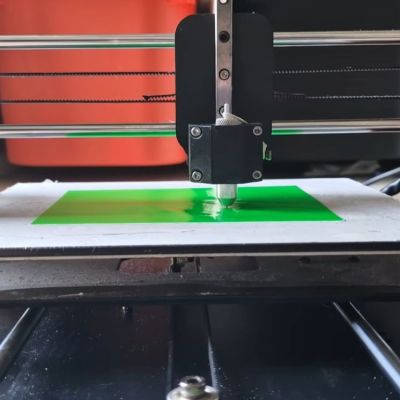 Replacing a 3D printer’s extruder with a cutting blade seems like an easy way to do things like vinyl cutting, but you cannot just put on any blade and expect good results. The right type of blade is called a drag knife and it’s designed so that it follows the direction in which you’re cutting. You can get these in dedicated vinyl cutting machines, as well as in the form of attachments for the likes of CNC machines. How to use them with an old Anycubic Mega S FDM printer is demonstrated by [Cocoanix 3D Printing] in a recent video.














































You must be logged in to post a comment Login