
Security teams log 54% of successful attacks and alert on just 14%. The rest move through your environment unseen.
The Picus whitepaper shows how breach and attack simulation tests your SIEM and EDR rules so threats stop slipping by detection.



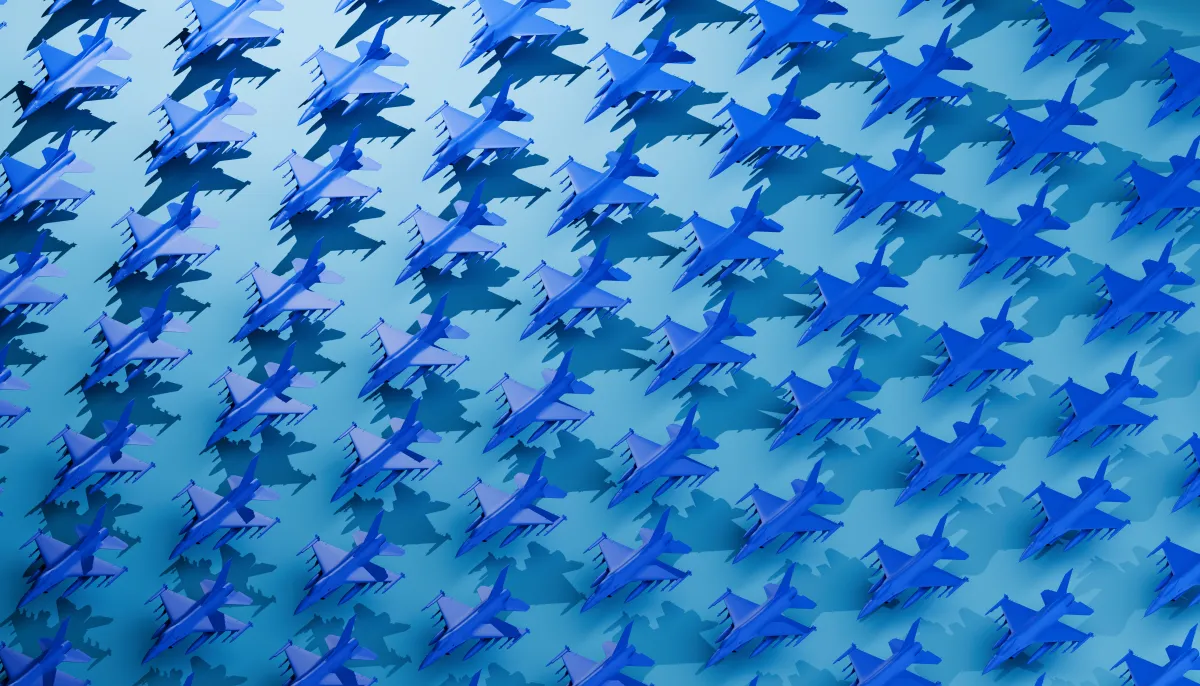
Defense tech is red hot right now. Anduril and Mach Industries just doubled and quadrupled their valuations, respectively, and the U.S. government is proposing a 40% increase in defense budget. A wave of new startups is chasing those government contracts, but according to Ross Fubini, the venture investor who wrote Anduril’s first check, most of them will get lost in the Valley of Death between prototype contract and real production deal.
Watch as, on this episode of TechCrunch’s Equity podcast, Rebecca Bellan asks Fubini — the founder and managing partner of XYZ Venture Capital, built on the Palantir alumni network and now approaching $2B AUM — what separates the survivors from the rest.
Subscribe to Equity on YouTube, Apple Podcasts, Overcast, Spotify and all the casts. You also can follow Equity on X and Threads, at @EquityPod.


For the first time in 13 years, the Fortune 500 has a new No. 1— and it’s Amazon.
The Seattle-based e-commerce and cloud giant knocked Walmart from its familiar perch atop the ranking of the biggest U.S. companies by revenue.
Amazon surpassed $700 billion in revenue in 2025 with a 12% year-over-year jump. Just over 20 years ago, the company made its debut on the list at No. 492.
Only four companies have ever held the No. 1 spot in the 72-year history of the Fortune 500 list: General Motors, ExxonMobil, Walmart, and now Amazon.
Walmart fell to No. 2 for the first time since 2012. Here is the top 10:
The companies on the list combined for $21.0 trillion in revenue and $2.1 trillion in profits last year, while employing 30.5 million people worldwide, according to Fortune.
Amazon posted first-quarter sales of $181.5 billion, up 17%, and operating income of $23.9 billion, up 30%, in earnings reported at the end of April. Amazon Web Services growth accelerated to 28% in the first quarter — its fastest pace in nearly four years.
The tech giant, which employs 1.5 million globally, laid off 16,000 corporate employees in January in the second phase in a restructuring that began last October and totals 30,000 positions — adding up to the largest workforce reduction in the company’s history.
Additional tech-focused nuggets from the Fortune 500 list:
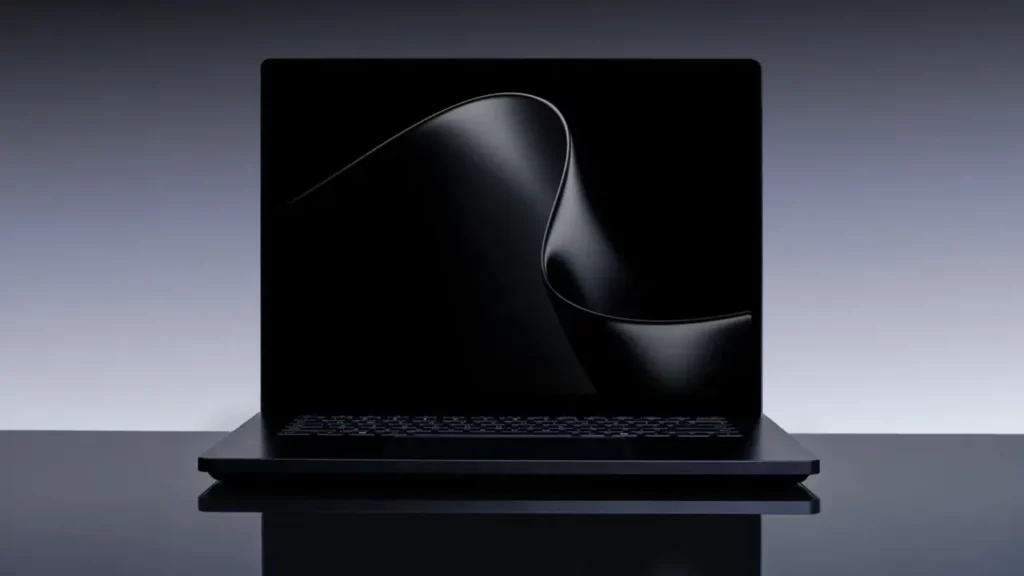
NVIDIA has introduced RTX Spark, a new computing platform designed to bring AI features to modern laptops. Major laptop brands have already revealed RTX Spark-powered models that combine strong performance with sleek designs and high-quality displays. The technology integrates multiple key features into a single system, including AI processing and graphics performance. Such factors help increase responsiveness when working with various creativity and productivity software. The laptops are designed to contribute to the next generation of AI-enabled Windows devices.
RTX Spark is based on computing technology primarily driven by AI. It offers AI-based functionality that will become common for Windows devices. At the same time, it offers strong graphics capabilities for creators and professionals. It also uses unified memory to improve communication between different system components. These advantages could make future Windows laptops more powerful and responsive than ever before.

Microsoft launched the Surface Laptop Ultra, its newest and most powerful Surface laptop yet. This device comes with a massive 15-inch PixelSense Ultra touchscreen that’s amazing for tackling tough jobs and creative tasks. Microsoft claims it’s the brightest display on any Surface laptop and the first to use mini-LED tech. With more screen real estate, users can easily multitask, create content, and follow complex professional processes.
The laptop’s equipped with an NVIDIA Blackwell RTX GPU to ace graphically demanding tasks. Paired with this is up to 128GB of unified memory, which shares resources across different tasks seamlessly. The redesigned chassis also accommodates powerful hardware while maintaining a premium and portable design.

The XPS 16 Creator Edition from Dell is amazing for creative pros. It comes with a stunning 16-inch OLED screen. The True Black HDR 600 tech really boosts that display, showing off dark shadows and vivid colors perfectly. So whether you’re into photo editing, videos, or graphic design, this laptop will suit your needs.
This laptop runs on NVIDIA RTX Spark tech with up to 128GB of unified memory, handling heavy tasks smoothly. It also includes handy features: an HDMI port and an SD card reader. So, you can effortlessly connect extra displays and move media files around. Combined with its fancy design, it should give pros serious power and keep the battery running for a long time throughout the day.

ASUS added the RTX Spark to its lineup of ProArt P14 and ProArt P16 creator notebooks. These machines boast high-def OLED displays, up to 128GB of memory, and up to 2TB of storage. The ProArt P14 is really portable with its 14-inch screen, while the ProArt P16 has a larger 16-inch display, perfect for extra workspace. Both remain slim and light, making them great to carry around.
Their screens cover 100% of the DCI-P3 color gamut and go up to 120Hz refresh rates. Plus, these ASUS laptops include RTX Spark tech, up to 128GB of unified memory, and even 2TB of storage. They’ve also swapped out the old DialPad for haptic controls, which makes the user experience way more modern and responsive. On top of that, these devices have USB-C, USB-A, HDMI 2.1, and SD card readers. Plus, they support Wi-Fi 7 and sport large batteries for heavy-duty creative work.

HP released the OmniBook X 14 and Ultra 16 as part of their new RTX Spark line. The X 14 is super portable yet packs powerful specs for creatives and workers alike. The Ultra 16 is all about handling lots of tasks smoothly. HP highlights both models as the world’s thinnest RTX Spark devices.
HP made sure to include plenty of handy connectivity options, like HDMI and USB-C ports, for easy display and accessory use. The OmniBook X 14 is super slim at 0.53 inches, and the OmniBook Ultra 16 comes at 0.62 inches. These compact designs help creators and professionals carry powerful hardware without sacrificing portability.
The RTX Spark laptops are launching later this year. Although official prices aren’t out yet, they’ll probably be really high because of their top-notch design, great displays, and specs. They’re meant for artists and AI pros. So, companies will likely share those final price tags, and when you can get them once everything’s set.


A huge part of Toyota’s popularity is built on a reputation for reliability and low maintenance costs, and indeed, the massive Japanese company is generally considered one of the least expensive brands to maintain. As one would expect, the list of Toyota models with cheap maintenance costs includes stalwarts like the Camry, Corolla, and Prius, all long known for their low overall ownership costs.
Interestingly, though, the Toyota model with the lowest 10-year maintenance cost, according to CarEdge, is not one of the automaker’s ultra-popular hybrids or even one of its battery electric EVs. The Toyota with the lowest 10-year maintenance costs is the hydrogen fuel cell-powered Mirai sedan, at an estimated $3,179.
However, the Mirai’s low maintenance costs come with some significant barriers to ownership. Not only is it expensive, but it’s also hobbled by a serious lack of fueling stations, high fuel costs, and extremely poor resale value. Most challenging of all, though, is probably that you can’t actually drive the Mirai in most American states. In that sense, the Mirai’s low maintenance costs are less of a real-world selling point and more of a minor redeeming quality for a vehicle and fuel source that has otherwise struggled to find a footing in the market.
Electric vehicles are well known for their low maintenance costs, and indeed, the CarEdge list is filled with EVs. In many ways, that’s exactly what the Toyota Mirai is, so its placement on the list is unsurprising. The big difference is that the very fascinating Mirai, now in its second generation, gets its power from hydrogen tanks and a fuel cell rather than a plug-in battery. Unfortunately, that means it has also proven both difficult and expensive to own in the real world, where hydrogen fueling infrastructure is extremely limited.
For starters, California is basically the only American state with any hydrogen fueling stations. Even then, fueling up isn’t easy, with stations regularly shut down or closed for maintenance. This, of course, makes the Mirai extremely impractical for most drivers — especially those who want to go on road trips.
Toyota includes a $15,000 hydrogen fuel credit with each new Mirai sale, but that eventually runs out; when it does, drivers will find that hydrogen is drastically more expensive than gasoline. In other words, even if you happen to have easy access to hydrogen filling stations, the extra cost of fueling the Mirai will almost certainly wipe out any money you’d save from its low maintenance costs.
Considering all the difficulties that come with hydrogen car ownership, the Toyota Mirai’s famously awful resale value, where it retains only about 23% of its original value after three years, isn’t much of a surprise. Low-mileage examples of the second-generation model, which starts at $51,795 (plus $1,295 destination), are regularly available for under $10,000. First-gen Mirai models, meanwhile, can be had for $5,000 or $6,000 all day long.
Given how expensive the typical used vehicle is these days, that might seem like an insane bargain for a modern, spacious, high-tech Toyota sedan that needs little maintenance. The reality is that the value is so low simply because the Mirai is such a difficult and pricey car to live with.
Given all of this, it’s not surprising that Toyota has more or less pulled the plug on further development of FCEV passenger cars, instead choosing to focus on commercial vehicle applications. Unless hydrogen vehicle infrastructure improves significantly, most drivers will find a car like the Toyota Mirai difficult or even impossible to own, regardless of how cheap it is to buy and maintain.
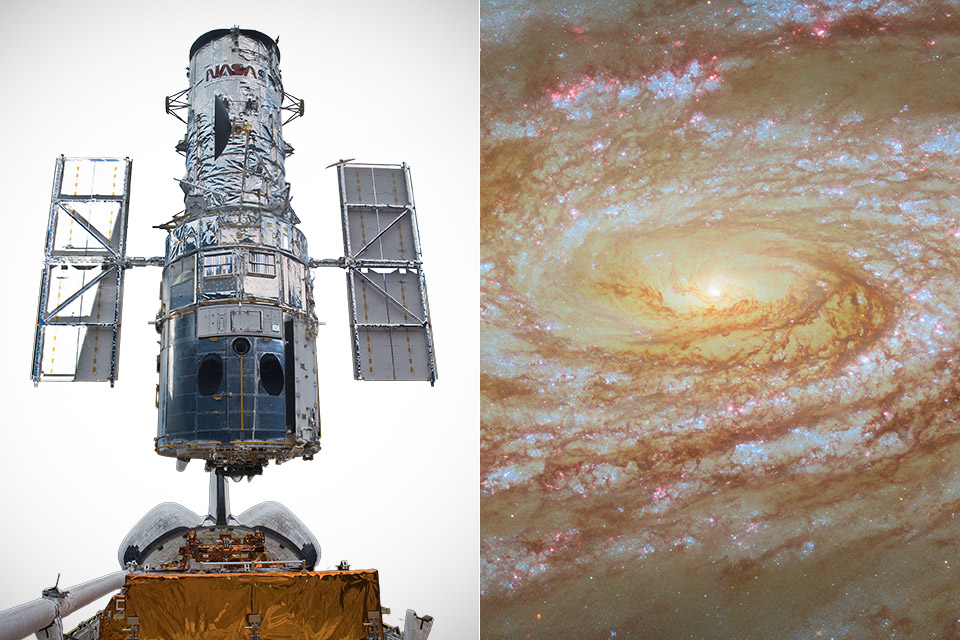
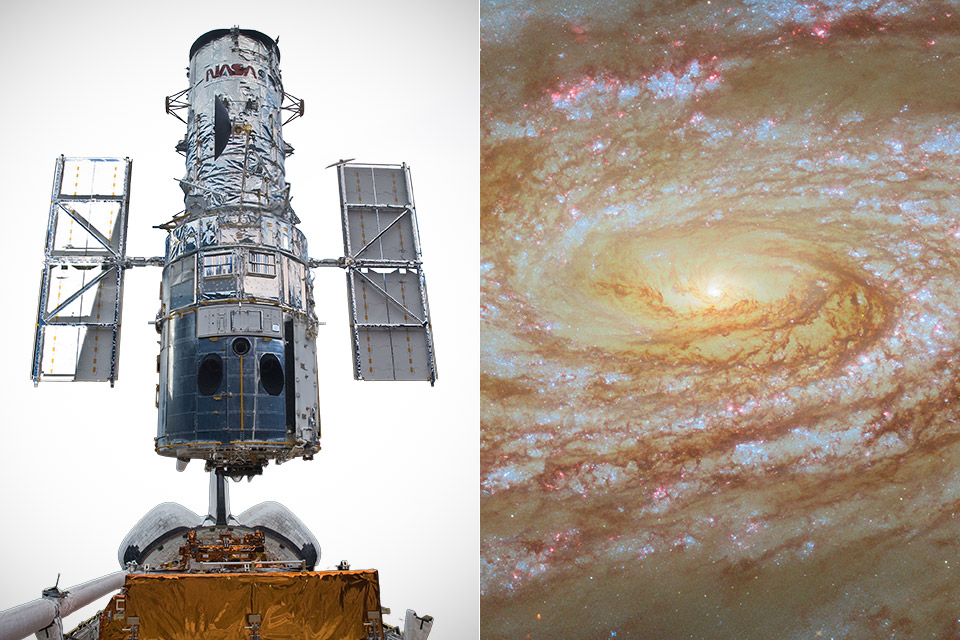
Hubble’s Wide Field Camera 3 captured a stunning composite image of galaxy M88, which shows a massive spiral system twisted at an angle, stretching its appearance and displaying an orderly set of arms looping inward with exceptional symmetry. Pink knots represent the formation of new stars, blue clusters outline younger stellar populations, and darker red lanes highlight the disk’s dust. The galaxy’s nucleus is surrounded by older stars that emit a warm light.
Charles Messier cataloged this object in 1781 while looking for any comet-like bodies in our skies. Later generations attempted to locate it in the Virgo Cluster, a huge collection of over a thousand galaxies crammed into a relatively large region of space that is roughly oriented toward the Coma Berenices constellation. M88 is just about 60 million light-years from the Milky Way. The galaxy spans around 130,000 light-years and contains several hundred billion stars. Its disk is slightly tilted, approximately 64 degrees, resulting in an elongated form rather than a perfect circle. Surprisingly, the elongation does not appear to impair the exceedingly regular spiral arms. Even the core region appears to be accurate, with no obvious disruptions or distortions to report.
Sale

This supergalaxy contains a supermassive black hole with a mass of 80 to 100 million suns. Gas and dust conduct a cosmic dance as they spiral towards this behemoth, releasing energy that flows everywhere. This frantic activity has classified M88 as a Seyfert 2 galaxy, which is not the most common sort of galaxy, but don’t expect much star-birth here. M88 is not cruising through a vacuum, as one might expect, but rather a member of the Virgo Cluster, where the only thing that separates member galaxies is scorching hot gas. As it rushes ahead, this hot gas generates a slight headwind, causing the galaxy’s gas disk to feel squashed. Especially in the front, where material is squeezed and gas is drawn from outside areas, this is enough to significantly decrease the flow of gas to new star formation, particularly in the outer disk.

Hubble program 18103 investigated a few spirals within one of these tight clusters to see how much the environment controls them. The image of M88 illustrates where stars may still be seen despite the pressure, as well as how the dust lanes have reacted to the overall movement. Guess what? The outer regions of the disk are already showing less activity than one would expect from a galaxy of this size and type. The most accurate measurement places M88 about a couple of million light-years from the cluster’s center point. In addition, it will collide with the massive elliptical galaxy M87 in around 200-300 million years. This will result in M88 being completely mauled by tidal pressures and subsequent interactions with the hot cluster medium.


Dubai’s skyline is constantly changing, and the Burj Azizi, currently rising along Sheikh Zayed Road, is one of the most magnificent additions to date. This project repurposes an older, delayed site into a new landmark that will shortly become the world’s second highest tower. Standing 725 meters from base to architectural top, the tower will claim that global ranking once complete. The measurement puts it comfortably above of most recent supertall challengers, although being approximately 103 meters shorter than the adjacent Burj Khalifa.
Azizi Developments takes the lead on a project that has been stalled for years after purchasing the dormant Entisar Tower site. Meanwhile, construction crews are working long hours, day and night, to lay the groundwork for this massive skyscraper, which they want to finish by 2028. This behemoth will be a sight to behold, towering over 130 floors and packing an unexpected mix of functions into a sleek body. The top floor houses a 7-star all-suite hotel with a design influenced by seven different cultural themes, while the lower floors are filled with ultra-luxurious flats, penthouses, and holiday homes. Then there’s the vertical retail space, a sprawling shopping mall that rises level by floor across the building.



What sets this skyscraper apart from others is not just its sheer height, but what they do with it. Try standing in the hotel lobby at 498 meters, which is the world’s highest position (for a hotel lobby). Then proceed to the highest-occupied hotel room, Dubai’s highest restaurant (544 meters), a theater (310 meters), a club (567 meters), a spa (415 meters), or the observation deck (649 meters). Residents will have access to a range of amenities, including health clubs, pools, gyms, saunas, cafes, a children’s play area, a ballroom, and, to top it all off, an adrenaline junkie zone for thrill seekers. This all adds up to a self-contained vertical neighborhood where you may work, play, interact, and dine all under one roof, without having to leave at any time.
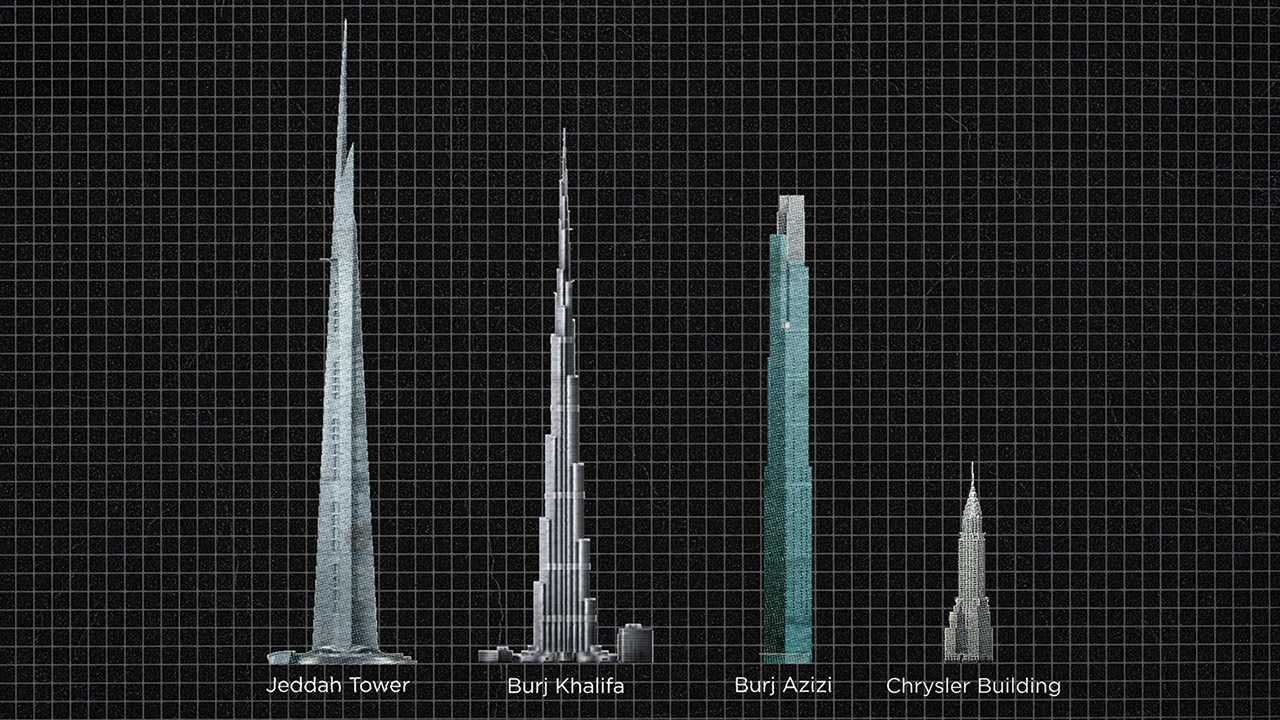
You can expect to pay a significant fortune to live here, with prices ranging from around 10,000 Dirhams ($2,723) per square foot to ultra-high-end options. By mid-2026, the tower is beginning to block views along that strip, and workers are still hard at work on the building’s foundations and skeleton, under the close supervision of Azizi, who had no misgivings about investing the money. They have already spent over 6 billion Dirhams to get this project off the ground.
[Source]

Looking for the most recent Mini Crossword answer? Click here for today’s Mini Crossword hints, as well as our daily answers and hints for The New York Times Wordle, Strands, Connections and Connections: Sports Edition puzzles.
Need some help with today’s Mini Crossword? I admit, 1-Across really threw me, but now I think it’s a pretty smart clue. Read on for all the answers. And if you could use some hints and guidance for daily solving, check out our Mini Crossword tips.
If you’re looking for today’s Wordle, Connections, Connections: Sports Edition and Strands answers, you can visit CNET’s NYT puzzle hints page.
Read more: Tips and Tricks for Solving The New York Times Mini Crossword
Let’s get to those Mini Crossword clues and answers.
The completed NYT Mini Crossword puzzle for June 4, 2026.
1A clue: It takes you from E to F (and starts with G!)
Answer: GAS
4A clue: Animal that has a symbiotic relationship with green algae, which grows in its fur
Answer: SLOTH
6A clue: Societal no-no
Answer: TABOO
7A clue: “Sorry, unavailable then”
Answer: ICANT
8A clue: Color associated with passion
Answer: RED
1D clue: Turn in the fridge, maybe
Answer: GOBAD
2D clue: Lots and lots
Answer: ATON
3D clue: Something a bartender or basketball player might make
Answer: SHOT
4D clue: Mix, as a sauce
Answer: STIR
5D clue: Frilly material
Answer: LACE


CISA, the FBI, the NSA, the Department of Energy, and other US government partners are warning that hackers are targeting internet-exposed automatic tank gauge (ATG) systems used to monitor fuel and liquid storage tanks across various critical infrastructure sectors.
The cybersecurity agency says that ATG systems are commonly used in the Energy, Chemical, Food and Agriculture, and Transportation Systems sectors to remotely monitor storage tank levels, temperatures, and potential leaks.
The US government says threat actors are targeting exposed devices and modifying system settings through command execution.

“The recent malicious cyber activity observed by the authoring organizations—which the U.S. government has not yet attributed to a nation-state or threat actor group—involves cyber threat actors compromising internet-exposed ATG systems and subsequently modifying them through command execution,” the advisory states.
According to the agencies, attackers are gaining access through authentication bypass vulnerabilities, hardcoded credentials, operating system command-execution flaws, SQL injection vulnerabilities, and privilege-escalation weaknesses.
If the system is successfully compromised, the attackers can alter network settings, product identifiers, tank volumes, and pump controls. They could also turn off alerts and create conditions that prevent operators from properly monitoring tank fill levels, potentially increasing the risk of leaks or equipment failures.
The agencies urged organizations to block ATG systems from the internet, restrict remote access through firewalls, VPNs, or access control lists, replace default passwords, utilize strong credentials and multifactor authentication, apply security updates, and actively monitor systems for unauthorized changes.
While the advisory does not attribute the activity to any specific threat actor, it follows CNN reporting in May that Iranian hackers were behind a series of breaches involving ATG systems at gas stations in multiple states.
According to CNN, the attackers exploited ATG systems that were connected to the internet and protected by weak or nonexistent passwords, allowing them to access and manipulate display readings. However, the attackers did not alter the actual fuel levels.
The incidents reportedly did not cause physical damage, but raised concerns that attackers could potentially interfere with leak detection and other safety-related functions.
CNN reported that Iran was the primary suspect because of its history of targeting fuel management systems and other industrial control technologies.
However, CNN reports that multiple sources briefed on the investigation said it may not be possible to attribute the activity to a specific attacker, as there was limited forensic evidence left behind in the attacks.
CISA and its partners said organizations operating ATG systems should review their exposure and implement recommended mitigations immediately to reduce the risk of compromise.

Security teams log 54% of successful attacks and alert on just 14%. The rest move through your environment unseen.
The Picus whitepaper shows how breach and attack simulation tests your SIEM and EDR rules so threats stop slipping by detection.

The modern, cloud-powered digital economy has as its dynamo the ease with which data is shuttled all over the world.
This information globalization has had momentous impacts from supercharged business performance and strategic adaptability through accelerated co-creation and collaboration, to economies of scale and huge net cost savings.
Today, however, organizations face a very different imperative: the requirement for data sovereignty: that is, the need to restrict data movement and stored location to specific countries or regions.
Sammy Zoghlami is a Senior Vice President at Nutanix where he leads the EMEA organization.
With the rush toward AI tools revolutionizing the ways in which we handle, query and repurpose data, every organisation of scale needs to consider how it can maintain a “sovereign cloud” with complete oversight of digital asset, application and data accessibility.
The contemporary focus on sovereignty is already having significant strategic IT impacts. Gartner has predicted that 75 per cent of non-US enterprises will need to have a digital sovereignty strategy by 2030. It is also impacting IT deployment options as the same analyst has stated that 61 per cent of IT chiefs will increase their dependence on local cloud providers in that timeframe.
Data sovereignty isn’t new of course. Think of international laws such as the EU’s GDPR, various iterations of “Safe Harbour” rules, the US’s Cloud Act, Germany’s ‘C5’ rules, France’s Cloud de Confiance initiative and many industry and national or regional codes. These have created a climate of awareness as to where data is stored and where it travels en route. But we also need to understand sovereignty in a broader sense…
Sovereignty is about more than implementing geofencing or other location-based guardrails. It involves everything from culture and education, through core infrastructure and development, to delivery, deployment, maintenance and updates. And with AI, Machine Learning and LLMs becoming a central tenet of IT and process change, organizations now must control the entirety of their AI journeys.
Ultimately, AI touches on everything an organization does but we can boil this down to suggest that it involves, broadly, three areas pertaining to sovereignty. First, maintaining local and vertical market controls; second, enhancing their sense of self-reliance; and third, feeling confident in data security and governance compliance.
Let’s look at these in a little more detail.
Organizations need to ensure that their data assets are the right fit for local languages, cultures and vertical industry needs.
Sovereignty can create a ‘bubble wrap’ around those assets with supervision of data controls tweaked for the local environment and specific industry (or even unique organisation).
Enterprises will opt largely to use familiar software architectures, LLMs and other AI foundational models and building blocks from blue-chip partners as a comfort factor and to gain a fast start. This is a pragmatic preference over the cost and complexity of a build-your-own or ‘unique/boutique’ approach.
But large organizations will also be desperate to maintain intellectual property and to tailor for their specific requirements. This will mean that they will insist on the need for specific sovereignty controls to be built into programs and projects.
Laws and codes specify data never leaving borders or other locations for many reasons relating to GRC and security.
Such rules often apply to personally identifiable information (PII) but they also cover intellectual property, organizational processes, trade secrets, HR information, financial data and other sensitive information. This has major implications for companies that rely heavily on public cloud.
Public cloud providers offer ubiquitous data/application access, significant economies of scale and improved performance by moving data round the world to maximize value and minimize network latency. However, for the reasons outlined above, organizations increasingly demand granular controls over this movement.
Data sovereignty is a many-headed beast and it means that organizations must create sovereignty rules for each country or region in which they operate to stay compliant, low-risk and in control of their futures. The triple-fold need for localization, self-reliance and data sovereignty forces organizations to look again at IT deployment and operational models.
That includes a potentially higher dependence on on-premises IT infrastructure and ‘backshoring’: that is, returning data to its country of origin. Many CIOs are also exploring private clouds and using public clouds tactically where there is an appropriate fit, rather than adopting a blunt, ‘cloud-first’ strategy that was so fashionable 10-15 years ago.
Organizations today need to build notions of sovereignty into their planning and their cultures. The risks of not making sovereignty a ‘by default’ setting are high and growing: loss of strategic control, misaligned campaigns and infractions, data losses and financial penalties among them.
Note also that all of this is happening at a time when strategic deployments of AI are only just entering mainstream production environments at most enterprises. For CIOs and their peers, this timing has a bonus advantage, however. By starting with a (relatively) clean sheet of paper, sovereignty and governance can be built into new architectures, cultural patterns, processes and workloads, rather than having to be retro-fitted in clunky fashion.
But there are challenges too. CIOs and privacy executives need to deal with waves of rules and complex maneuverings. Germany, for example, is famously strict on privacy and data management. Also, considering localization, many languages, cultures and verticals are yet to be adequately served by AI foundational models and training data. And in terms of self-reliance, organizations and states must think creatively to avoid being locked in to key silicon, platform or other core IT providers.
In this context, airgapping, dark sites that operate offline, open source software foundations that can quickly be disassembled and reconfigured, and of course multicloud solutions with layers of protection, are sensible options to examine.
For business and technology planners, the obvious strategy is to build platforms that are open and adaptive. We can’t yet write a formula for the future of AI and its relationship with data sovereignty but wise leaders will err on the side of caution and adopt platforms and partners that can flex with whatever comes next.
We rank the best cloud storage software.
This article was produced as part of TechRadar Pro Perspectives, our channel to feature the best and brightest minds in the technology industry today.
The views expressed here are those of the author and are not necessarily those of TechRadarPro or Future plc. If you are interested in contributing find out more here: https://www.techradar.com/pro/perspectives-how-to-submit
The U.S. Treasury’s Office of Foreign Assets Control (OFAC) has announced sanctions against Nobitex, Iran’s largest cryptocurrency exchange, for facilitating payments related to terrorist activities.
Nobitex is believed to have helped evade economic sanctions and also facilitated transactions linked to the Islamic Revolutionary Guard Corps (IRGC).
Among the transactions, the U.S. authorities found wallets associated with ransomware threat actors related to the IRGC.

“Nobitex has provided significant support to the regime, processing more than 50 percent of all Iranian digital asset inflows in 2025 and facilitating payments tied to Iran’s terrorist activities, sanctions evasion efforts, and Islamic Revolutionary Guard Corps (IRGC)-linked transactions, including activity associated with IRGC-affiliated ransomware actors,” the Treasury said.
“Nobitex also helped the Central Bank of Iran access hundreds of millions of dollars in stablecoins used to prop up the plummeting value of the Iranian rial, while enabling regime insiders to access international digital asset exchanges and evade sanctions across multiple jurisdictions.”
OFAC also designated specific individuals identified as Nobitex executives and founders, including chairman Amir Hossein Rad, CEO Seyed Ali Khoee, co-founder Seyed Mohammad Ali Aghamir Mohammad Ali, and blockchain lead Seyed Mohammad Aghamir Mohammad Ali.
The action, which is part of the U.S. government’s “Economic Fury” campaign, also targeted three other Iranian cryptocurrency exchanges, namely Wallex, Bitpin, and Ramzinex.
Additional information from blockchain intelligence firm Chainalysis shows that the Iranian cryptocurrency ecosystem received nearly $7.8 billion in 2025.
The company estimates that addresses associated with the IRGC accounted for over 50% of the value received by the Iranian crypto ecosystem in Q4 2025.
Nobitex processed more than half of Iranian crypto inflows, while Wallex and Bitpin accounted for 12% and 10%, respectively.
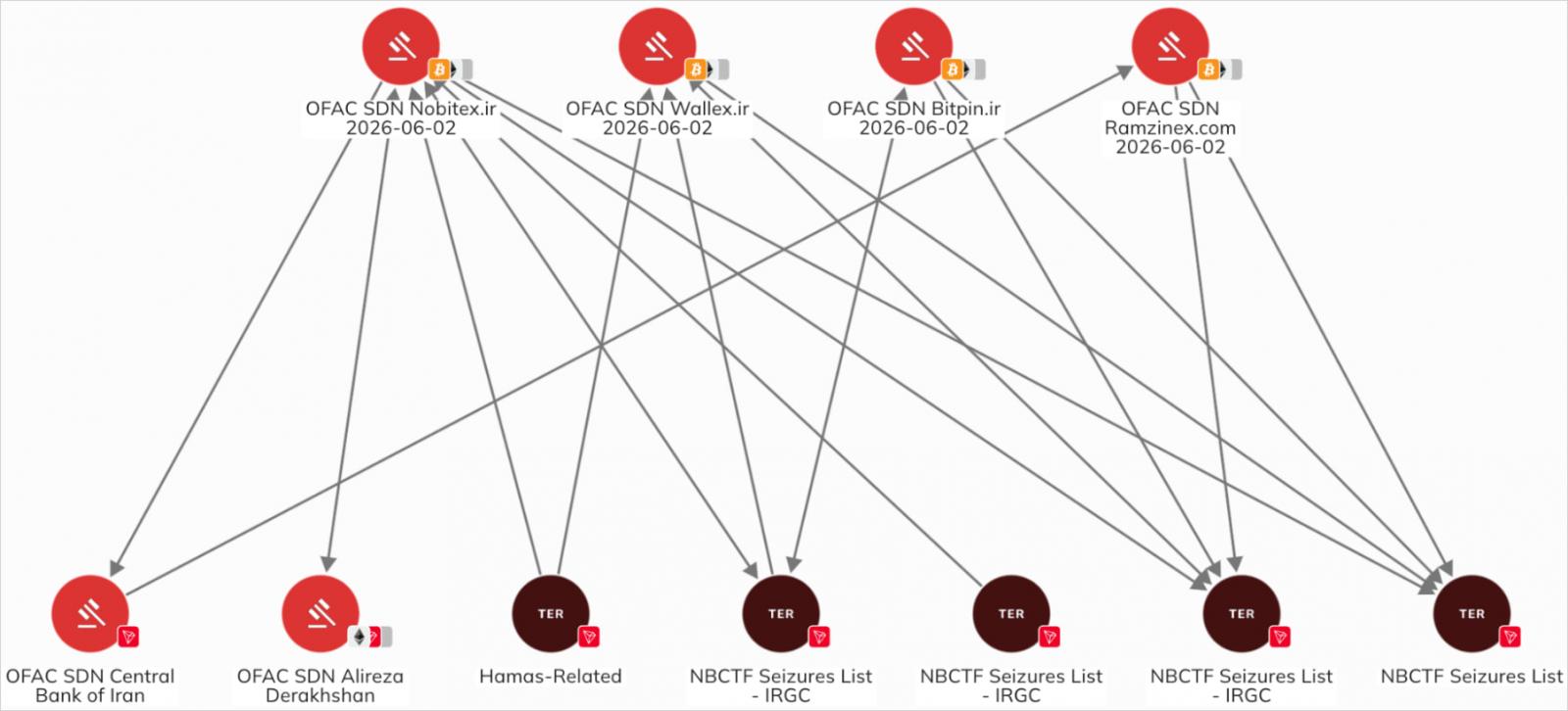
From a practical perspective, the sanctions mean that any property or assets of the designated entities and individuals that fall under U.S. jurisdiction are frozen, and U.S. persons are prohibited from doing any business with them.
At the same time, the sanctions create international pressure, as U.S. allies and companies based in foreign countries are reluctant to take risks and continue dealing with the designated parties.
In June 2025, the pro-Israel “Predatory Sparrow” hacking group claimed to have breached Nobitex, stealing digital assets worth roughly $90 million, and leaving politically-tinted messages behind.
Security teams log 54% of successful attacks and alert on just 14%. The rest move through your environment unseen.
The Picus whitepaper shows how breach and attack simulation tests your SIEM and EDR rules so threats stop slipping by detection.


Enduring Planet, a fintech company with Pacific Northwest roots, on Wednesday announced it has closed its second fund at more than $12 million — more than twice the size of its first.
Launched in 2021, Enduring Planet provides loans to early-stage climate startups, with a focus on those that have been awarded government grants and contracts. The company also offers part-time chief financial officer services.
“We’re really proud of this outcome, despite the challenging market environment that climate tech is facing in the US,” said Dimitry Gershenson, the startup’s Portland, Ore.-based co-founder and CEO.
Enduring Planet has issued nearly $40 million in loans to more than 70 climate startups and other businesses, including Tacoma, Wash.-based Aquagga and Portland’s Photon Marine.
The company provides financing of $100,000 to $2 million and, unlike venture capital investors, does not take equity in the startups it backs. The cash still comes at a price: annual interest rates run up to 15% to 17%, though additional fees are limited to a 1.5% origination fee.
The new fund arrives at a difficult moment for the sector. U.S. government support for climate initiatives hasn’t disappeared under the Trump administration, but it has become less broad, less predictable and less friendly to early-stage ventures.
Meanwhile, Sightline Climate reports that roughly $90 billion remains in climate investors’ coffers, but that capital is being deployed faster than new funds are being raised. Investors are also pulling back from riskier early-stage startups in favor of more established companies and infrastructure projects.
The fund was backed by Blue Haven Initiative, Cisco Foundation, ImpactAssets, DF Impact Capital, Green Spark Ventures, Montcalm TCR, SK2 Fund, The Arthur B. Schultz Foundation, Rebecca Buyers and Nils Johnson, Viridian Works, Brighter Investing, clients of Figure 8 Investment Strategies, 1994 LLC, Realize Impact (with support from The Schmidt Family Foundation), and others.





Waymo dominates autonomous vehicle registrations as Tesla trails behind


This is BROKEN! INSANE 5x MONEY CAR WASH WEEK! The NEW GTA Online UPDATE Today! (GTA5 New Update)

SpaceX just won a second Golden Dome contract. This one is $4.16 billion.


Jade Biosciences, Inc. (JBIO) Discusses Positive Interim Results From JADE101 Phase I Healthy Volunteer Study and Development Plans Transcript


SHE IS KILLING XRP!!! WATCH URGENT AND ACT FAST

FIRST NIGHT REVIEW: Take That bring the Circus back to life in spectacular sun-soaked style


Is the Spurs Phenom Already Better Than Prime Diesel?

CFTC Has Approved the First Regulated Bitcoin Perpetual Contract in the U.S.


The House | Inside Andy Burnham’s Makerfield Campaign: “Nobody Thinks This Is In The Bag”


French Open 2026 results: Alexander Zverev beats Rafael Jodar and will play Jakub Mensik in semi-finals

Novak Djokovic v Joao Fonseca LIVE: French Open latest scores and results after Jannik Sinner’s shocking collapse

Weak ‘Supergirl’ Box Office Tracking Amid Milly Alcock Backlash

Snowflake (SNOW) Stock Rallies on Strong Q1 Results and AI Product Growth


Maddox Jolie-Pitt Legally Requests to Drop Brad’s Surname


CryZENx Releases Fresh Playable Content Deep Inside Jabu-Jabu for His Ocarina of Time Remake


Demand Conditions Improve In Chemicals Sector In April 2026

One of the Greatest Sitcoms of All Time Shoots Up Apple TV’s Charts 11 Years Later


MicroStrategy Moves $30 Million in BTC to Coinbase Prime: Is the Bitcoin Sell-Off Already Here?


This Week In Security: Ubiquiti Fixes, And FreeBSD Joins The Club You Don’t Want To Join

Bruce Willis’ Generosity Resurfaces Amid His Dementia




You must be logged in to post a comment Login