Tonight sees France and the Ivory Coast face off in an international friendly match ahead of the 2026 World Cup
France and Ivory Coast meet in an international friendly match tonight as preparations ramp up for the 2026 World Cup.
Advertisement
The tournament in Mexico, Canada and the US kicks off next week, with excitement building ahead of the biggest edition of the competition ever held.
A total of 48 teams are involved, with France among the favourites to win the whole thing.
Their squad is littered with world-class talent, with the likes of Kylian Mbappe, William Saliba and Michael Olise set to lead Les Bleus.
Tonight’s opponents have been drawn in a group with Germany, Curacao and Ecuador and will hold ambitions of progressing to the knockout rounds.
Advertisement
Here is everything you need to know about the match tonight
What time is kick-off?
France v Ivory Coast kicks off at 8.10pm on Thursday, June 4, at the Stade de la Beaujoire in Nantes, France.
Is the game on TV?
You are in luck.
Amazon Prime will be showing this match in the UK but you will have to pay £2.99 for the privilege to watch.
Advertisement
What about streaming?
The match will be available to stream via Prime Video TV and accessible on mobile devices, tablets or smart TVs.
Quotes corner
Didier Deschamps: “We’ve built up expectations because of our results.
“We lifted the trophy in 2018 and reached the final in 2022, so our supporters are naturally expecting to see France [still in the running] by mid-July.
“We’re one of the 10 or 12 nations that can realistically set their sights on becoming world champions.
Advertisement
“But do you know how many there will be at the end? Just one! That means at least 11 disappointed nations.
“They (the players) won’t all be able to play
“There’s a lot of promise, but we need the right chemistry, without letting individual egos get in the way.
“We need balance, and above all, compatibility and partnerships.”
Captioning her post, Molly wrote: “…and then there were 4.” She has yet to share the name they have chosen for their new arrival, or their gender, but just days before giving birth, she uploaded a YouTube video telling fans about a name she had in mind.
Advertisement
However, fans believe they have worked out the gender of the newborn. On TikTok, fans noticed a blue blanket folded up alongside a crib, which Molly showed in her latest YouTube video. Fans have jumped on this as evidence.
A fan penned: “Why is no one talking about the blue baby blanket in the background of Molly’s two new vlogs?” A second wrote: “I think baby boy.” Meanwhile, a third went on to type: “Defo a boy!! I’m the only one that has noticed this?!”
However, some stated that the blanket could have merely been carefully planned by Molly, with one writing: “Molly would have known this would happen that’s why it’s a blanket for both genders.” The blanket in question features both blue and pink, as well as yellow.
Advertisement
And others believe they have worked out the name of Molly and Tommy’s second child. Theories escalated after Bambi was spotted wearing a Miffy T-shirt from the 1955 book, while other guesses include Bunny, Dusk, Dream and Cloud.
But while no name has been officially announced, Molly told fans she feels they may be “disappointed” by the name she and her fiancée chose. Speaking in her YouTube video, Molly said: “Final bets do we think I’m having girl or I’m having a boy? And what do we think we’re calling it? I think people are going to be a bit disappointed, upon reflection I don’t think it’s that crazy.
“I know people are going to pronounce it wrong … I just feel like people are going to say it wrong because when I mention the name to a few people or I’ve spelt it out because I have this big complex about people saying it wrong, and then a few of my friends have said it completely wrong – Like absolutely not how you pronounce it.
Advertisement
“But then also, if you know this word or you know the name, you would pronounce it how it is – For me I just see it as exactly what it is.”
She went on to say: “It’s definitely not as different as Bambi, I wouldn’t say, but I have only ever heard one other child be called it and it’s not someone in the public eye, it’s literally just someone I am connected to through a friend, someone they know, their child is called it. But I just think it sounds so good with the surname Fury that is another reason why I love it so much.”
Molly also hinted that she is considering stitching the name of their newborn into the back of Tommy’s shorts ahead of his fight with Eddie Hall at the AO Arena in Manchester on June 13. She added: “I am thinking, do I put the name of baby number two on his fight shorts? Because he always has Bambi’s name on his fight shorts and I don’t want to leave the baby off. Maybe that’s how we announce the name on his fight shorts, that would actually be quite cool.”
The next stage of the Cardiff project will see the council develop a funding strategy
Plans have been approved for a new pedestrian and cycle bridge to be built across the River Taff. Approved on Tuesday, June 4 at Cardiff Council’s Planning Committee, the bridge will span from The Marl in Grangetown to Hamadryad Park in Butetown.
Advertisement
The new crossing is part of the council’s regeneration of the Channel View area plans, a scheme within the Council’s ambitious housing project to deliver 4,000 new homes across the city.
Together, the development and new crossing is aimed at helping create a more connected, accessible neighbourhood, supporting both existing and future residents.
A funding strategy has yet to be confirmed but it will be developed as part of the next stage of the scheme. Never miss a Cardiff story by signing up to our daily newsletter here
Advertisement
The bridge will provide a more accessible, safer and user-friendly route, improving the experience for people walking, wheeling and cycling between Grangetown and Butetown.
At around 165 metres in length and six metres wide, the bridge has been designed with space for both pedestrians and cyclists.
Cabinet member for housing and communities, Cllr Lynda Thorne, said: “The new bridge plays an important role in our vision for the regeneration of Channel View and the wider area, as well as improving active travel across the city.
“It will provide a safe, dedicated route for walking and cycling, creating a new east–west connection across the river that will encourage more sustainable journeys and reduce reliance on cars. We will continue to explore funding options to help deliver the bridge and strengthen key routes in our active travel network.”
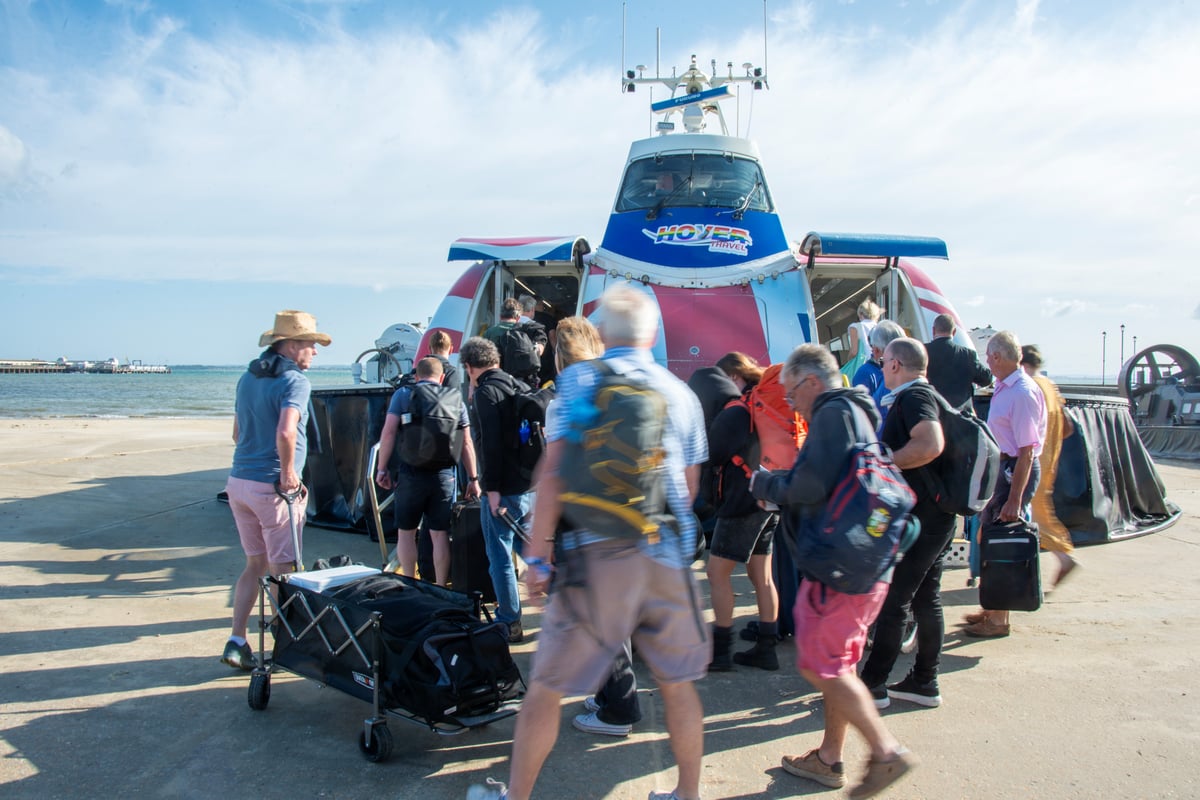
As thousands of music fans prepare to travel to the Isle of Wight Festival, Hovertravel is highlighting the excellent value available on its fares, with passengers able to save up to 26% and more than £9 on selected return journeys when compared with equivalent festival fares on the Portsmouth to Ryde route.
Everything you need to know about Cambridge East redevelopment after huge announcement | Cambridgeshire Live
Need to know
Cambridge East is set to deliver one of the UK’s largest urban extension projects by transforming a 700-acre site into a new city district, according to the government
The Hills Group and Homes England plan to build more than 10,000 homes(Image: The Hill Group)
Everything you need to know about the Cambridge East redevelopment:
It was announced on Wednesday, June 3, that Cambridge City Airport and its adjacent land, previously owned by Marshall Group, had been sold to Homes England and The Hill Group to create a new neighbourhood called Cambridge East.
The site is expected to provide more than 10,000 homes and at least three million square feet of commercial space to support around 9,000 jobs.
The developers will also consider creating a regional training hub, which they say will develop local skills and promote long-term careers in construction and related industries.
Marshall Group aims to relocate its operations by the middle of 2029. An initial phase of up to 500 homes is expected to begin in the same year.
The plans also include supporting infrastructure, community facilities like schools and healthcare provision, and public green spaces.
A new regeneration body will oversee the delivery of the new homes, jobs, and transport links in Greater Cambridge. The government says the Greater Cambridge Development Corporation will ensure transport and services are built alongside new homes and “not as an afterthought”.
The corporation aims to bring land together for development, invest in key sites, and unlock stalled and derelict land, according to government officials.
The announcement follows a consultation over the plans earlier this year. It builds on the up to £800 million already committed to kickstarting development around Cambridge and Oxford.
The development will benefit from the proposed Cambridge East station, which could improve connectivity to central Cambridge and London. Subject to planning consent and funding, the line could also extend towards Bedford and Oxford.
Thomas Tuchel has given Jude Bellingham the number ten jersey but the Real Madrid midfielder is facing a battle to make the starting line-up ahead of Morgan Rogers
It would be easy to put numbers one to eleven together and come up with England’s starting eleven for World Cup 2026. After all, that was almost the case at Euro 2024. Gareth Southgate was far from unusual in getting annoyed when his team selection was leaked, but he pretty much announced his preferred starting line-up ahead of the tournament in Germany.
Advertisement
In fact, he pretty much announced his tactics, giving Trent Alexander-Arnold the number eight jersey and duly playing him in midfield against Serbia in England’s opener, a 1-0 win in Gelsenkirchen. The only squad member with a number higher than eleven to start that game was Kieran Trippier, number 12. That was because Southgate had given Luke Shaw the number three shirt, despite the Manchester United defender being injured and unavailable for the first three weeks of the tournament.
In the final against Spain, Southgate played one to eleven, with the exception of eight, Alexander-Arnold. That midfield experiment had long been consigned to the dustbin and Kobbie Mainoo, with 26 on his back, was the numerical outlier.
Thomas Tuchel is no Southgate but it would not exactly be a seismic shock if the players numbered one to eleven in his squad started England’s first game against Croatia in Dallas on June 17. That would give us the following line-up.
Pickford – Konsa, Guehi, Stones, O’Reilly – Anderson, Rice – Saka, Bellingham, Rashford – Kane. In however you want to categorise the formation.
Advertisement
The right-back position is up for grabs – Reece James’s number 24 is probably club-connected – and Anthony Gordon, number 18, has a case to start ahead of Marcus Rashford. But the most contentious spot is the one numerically occupied by Jude Bellingham.
Assuming they are both fit, it looks like Bellingham or Morgan Rogers for Tuchel’s first line-up. One or the other.
And as good a season as Rogers enjoyed for Aston Villa, topped off by a very nice goalscoring performance in the Europa League final, it should be Bellingham. The Real Madrid player had a slightly interrupted season but made 40 appearances for his club, contributing eight goals and five assists.
Advertisement
Rogers’ numbers are better – 14 goals and nine assists in 55 appearances. But Bellingham is what Americans refer to as a ‘clutch player’. He can produce brilliance in moments of extreme pressure.
He has done it for club and for country, most notably when he produced an overhead kick to equalise against Slovakia in the round of 16 five minutes into added time. That was in late June, 2024, and should not, of course, guarantee him a starting spot two years later. But he is a big-game operator.
Twice, he has scored added-time winners in El Clasico. He has a proven elite pedigree.
But what will really inspire Bellingham is the narrative that Tuchel himself has helped to create, by his remarks – for which he later apologised – about his mum finding some of the 22-year-old’s behaviour ‘repulsive’. And also by his obvious – and commendable – refusal to offer the Madrid man any selection guarantees.
There has never been any suggestion Bellingham needs extra motivation when he pulls on an England jersey. But if he did, there has been plenty provided by some of the negativity that has infused discussion of his contributions to club and country in recent times.
As the tournament progresses, Tuchel might use a system that enables him to start Bellingham AND Rogers. After all, they are both outstanding players.
But Tuchel will want to make a statement in his first game at a World Cup. And no player is more capable of making a statement than the one who has been given the number ten.
Advertisement
Join our new WhatsApp community and receive your daily dose of Mirror Football content. We also treat our community members to special offers, promotions, and adverts from us – and our partners. If you don’t like our community, you can check out any time you like. If you’re curious, you can read our Privacy Notice.
Get Sky Glass Air from 15p per day
This article contains affiliate links, we will receive a commission on any sales we generate from it. Learn more
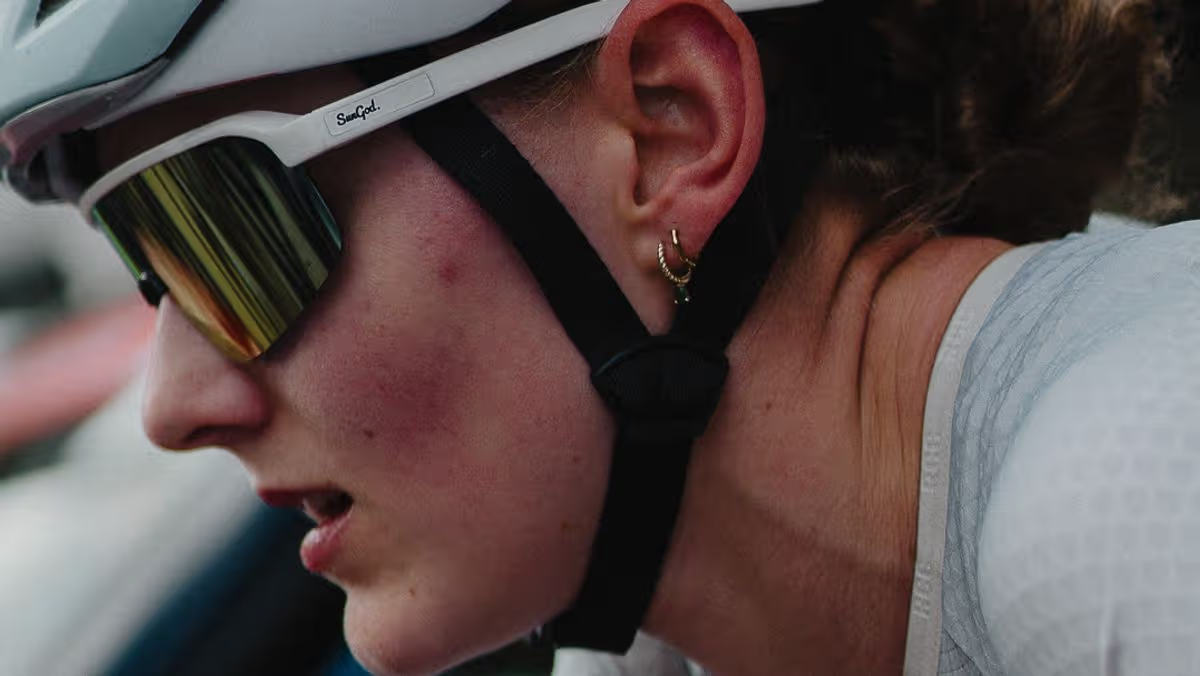
Megan Barker is preparing to make her long-awaited City of London Nocturne debut ahead of the Commonwealth Games and National Championships.
Megan Barker is set to fulfil her second of five goals in 2026 when she takes to the track at City of London Nocturne.
Advertisement
In April, the Welsh cyclist competed in the UCI Track Cycling World Cup in Hong Kong, winning a silver medal in the team pursuit. And this summer, the new City of London Nocturne offers the chance to tick another item off her bucket list.
She said: “I’ve heard a lot about it and seen a lot of clips and pictures. I think it’s really cool and I’m glad it has come back. I think the crowds enjoy it because you can see all the action and you don’t have to stand around all day.”
The new Nocturne event has been designed to be bigger and better with food stalls and street music building an intense urban atmosphere around a circuit in the City of London.
Barker said: “It suits my physiology. I like really short, sharp, hard efforts and going up to one hour is perfect for me. I’m better at it than road racing. It will be nice to get some crit racing in a bit earlier in the season than normal, before crit nationals.”
Advertisement
The 28-year-old won the national title in 2023 to join an exclusive club that boasts names such as Katie Archibald and Lizzie Deignan (nee Armitstead) and repeating that success is her third major aim of this year. She said: “It’s always one of my big aims. I crashed out last year quite early on, so I was gutted about that. And it’s the same course – I’m hoping it’s not a repeat. And I’m also aiming for the Track World Championships in Shanghai.”
But by far the biggest target for Barker this summer is the Commonwealth Games. She raced at both Gold Coast 2018 and Birmingham 2022 but failed to win a medal. Glasgow represents a real opportunity for the Welsh team to take home some silverware if Barker is selected.
She said: “Obviously, it only comes down every four years, so you want to make the most of it. My main aim would be the team pursuit, because a lot of girls in the GB squad are Welsh this year, so we have a solid team.
“We were fourth last time and it was pretty tight. I’m hoping we’re going to have like a really good chance of a medal, which has been one of my career goals that I keep just missing out on. My family are all booked to go, which makes it way nicer, especially if you do get a good result and you can celebrate with them afterwards.”
At least four people have died following a plane has crashed in Croatia, killing at least four people.
The aircraft went down near Medulin, a town on the Istria peninsula, a police statement said, with images from the scene showing the wreckage of the small plane in a field with emergency services.
The official HINA news agency reported that it was a German plane that took off from Austria and was due to land in Medulin, The Mirror reports.
Advertisement
The crash occurred at around 11.20am in the Campanoz area, between Kastijun and Medulin, near the Medulin airport and there are unconfirmed reports that there may have been two more people on board along with the four people who are known to have died.
Local pilot Nijaz Delic told the Index news portal that the plane “spiralled (in the air) and crashed into the ground.” It was unknown how many people were on the aircraft and no other details were immediately available.
“I don’t know how the accident happened. For reasons currently unknown, the pilot (…) was supposed to land at the sports airport in Medulin, made a spiral above the Kaštijun landfill and then crashed into the ground. That’s the only information we have,” stated Mr Delic.
The plane is reported to have been Bonanza G36 plane with an investigation underway into why it crashed.
Advertisement
Aviation expert Zeljko Marusic told Croatian news outlet Glas Istre that a spiral dive is “one of the most dangerous conditions” at low altitude as the “speed, structural loads and rate of altitude loss increase simultaneously.”
Unlike in a classic spin, a spiral dive leaves the aircraft usually uncontrollable and a key element of the investigation will be into how the plane got into this position.
Mr Marusic continued: “In general aviation, a spiral dive rarely occurs without a previous cause. It is most often preceded by a certain disruption in flight – a technical problem, loss of spatial orientation, wrong estimation of speed, an attempt to correct the path at low altitude or a sudden reaction to an unexpected situation.
“In the case of smaller aircraft, the last minutes of the flight are particularly critical when the pilot has the least time to react and the smallest safety margin of height.”
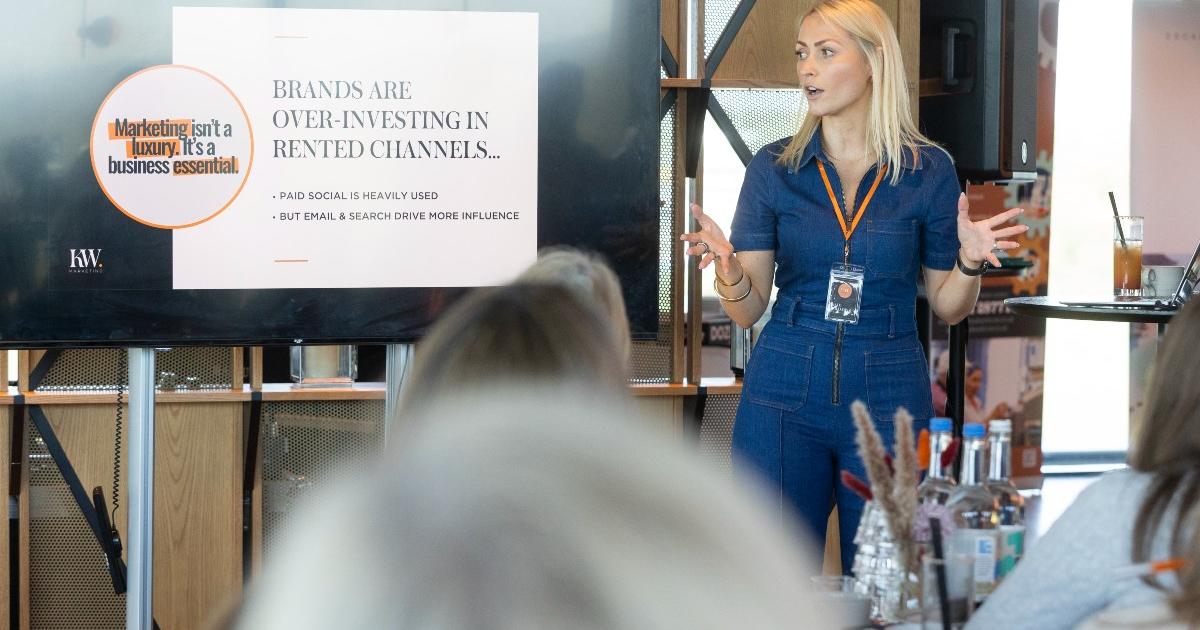
The half-day growth event, designed specifically for ambitious food and drink brands, will take place on 24th June at Colony King Street, bringing together founders, marketers and commercial leaders from across the sector.
Now in its third year, FUEL LIVE was created by specialist agency KW Marketing to help brands move away from reactive marketing and focus on building sustainable, profitable growth strategies.
(Image: KW Marketing)
The Manchester event follows strong momentum from FUEL LIVE Exeter 2026, which attracted more than 50 food and drink brands from across the South West and beyond.
FUEL LIVE Manchester is expected to welcome over 50 brands for a morning of keynote sessions, practical workshops and structured networking focused on the realities of scaling in today’s food and drink market.
Advertisement
The programme will feature founder stories, keynote talks and commercial insights from brands including Spice Kitchen, ManiLife and The Biskery, alongside workshops led by the KW Marketing team covering email marketing, profitability, customer retention and performance strategy.
(Image: KW Marketing)
Kate Williams, founder of KW Marketing, said: “Following the response to FUEL LIVE Exeter, it became clear there was a real appetite for practical, commercially focused conversations within the food and drink industry. Expanding into Manchester felt like the natural next step.
FUEL LIVE was created to give founders and marketers a space where they can step back from reactive marketing and focus on what genuinely drives sustainable growth. We want people to leave with clarity, confidence and strategies they can actually implement.”
Unlike traditional marketing conferences, FUEL LIVE is positioned as a focused industry event centred on actionable growth strategies rather than trend-led discussions.
Advertisement
Topics throughout the Manchester event will include improving profitability, building owned marketing channels, understanding growth metrics, and creating scalable customer retention systems.
(Image: KW Marketing)
The event is aimed at food and drink founders, senior marketers and commercial teams looking to scale direct-to-consumer brands more effectively in 2026 and beyond.
Attendees will also receive access to networking sessions, practical growth frameworks and a curated goody bag.
About KW Marketing KW Marketing is a UK-based digital marketing agency specialising in food, drink and feel-good brands. Founded in 2017 by Kate Williams, the agency partners with ambitious brands to turn marketing into measurable revenue through email, paid media, content, and strategy.
FUEL LIVE is KW Marketing’s flagship event, designed to bring the food & drink industry together to share what’s actually working and help brands scale with clarity and confidence.
Domestic animals have long been some of our closest companions. While dogs, cats, horses, cattle and chickens have all played major roles in human history, domestic pigeons may be a little less familiar. But they are no slouch when it comes to cultural importance.
Now, new research exploring ancient human-pigeon interactions in Cyprus has provided fascinating insights into the earliest stages of this millennia-long inter-species relationship.
There are over 300 breeds of domestic pigeon, from homing pigeons used in competitive racing to the peculiar frillback, which looks like it has survived a rather nasty electric shock. In 2020, a Belgian racing pigeon named New Kim sold for €1.6 million (£1.4 million).
But despite their contributions to contemporary society, we still know little about the origins of these pigeons.
The wild form of all domestic pigeon breeds is a slate-grey bird called the rock dove. Wild populations can still be found in parts of Europe, Africa and Asia.
Rock doves are very shy, living on cliffs and nesting in caves. I study them in Scotland’s Outer Hebrides, where colonies can be seen foraging for grain in fields. Scientists believe that these birds first learned to steal crops thousands of years ago, thus increasing our ancestors’ proximity to them.
Advertisement
Soon, they became a regular source of meat and, thanks to their copious droppings, fertiliser. This led to rock doves being pulled down an evolutionary route which has, over centuries, resulted in today’s proliferation of domestic breeds – plus their superabundant feral city pigeon offshoots, found soiling statues worldwide.
However, the where and when of the earliest phases of this process have remained unclear.
Earliest evidence of domesticated pigeons
Scientists generally think that pigeons were first domesticated in the Middle East and/or the eastern parts of the Mediterranean.
Until now, the earliest direct evidence for domesticated pigeons came from a site in Hellenistic Greece around 2,300 years ago. Depictions of pigeons in Iraq, more than 4,000 years ago, suggest a much earlier relationship – but these are not conclusive evidence.
Advertisement
Plus, it’s tricky to tell domestic and wild birds apart from the shape of their bones alone. For decades, those of us studying pigeons have had to handwave this evidence in our writing, saying they were “probably domesticated as early as 3,000 years ago”.
In Cyprus, small amounts of pigeon bones had previously been found at Neolithic sites (more than 10,000 years old), suggesting there was sporadic hunting of these birds.
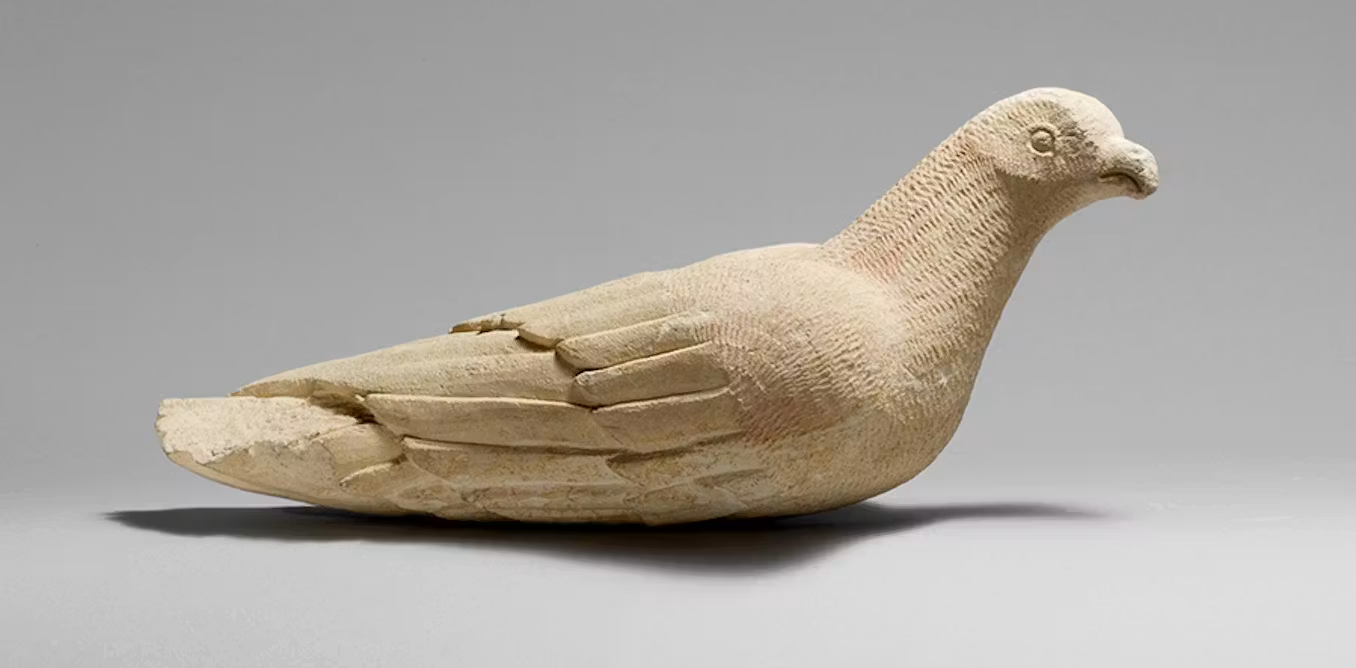
Then, starting in the Bronze Age (3,650-3,950 years ago), pigeon figurines became common in Cyprus, and the island developed a strong association with these birds. It was identified in early Greek literature as the birthplace of the love goddess Aphrodite, who is often depicted alongside flocks of doves.
In the new study, researchers examined a collection of bones collected at Hala Sultan Tekke in Cyprus – historically an important city; now a mosque and archaeological site – dating back to the Late Bronze Age, about 3,350 years ago.
Advertisement
Their assessments included a technique called stable isotope analysis, using chemical signatures in the bones to make inferences about what the birds ate. This showed their diets were similar to those of their human neighbours. Rock doves must have been living alongside people at that time, who may even have been deliberately feeding them.
Location of Hala Sultan Tekke site in Cyprus. Anderson L. Carter et al, Author provided (no reuse)
The range of chemical signatures was, as with humans and cattle (but different from fallow deer and other wild species), low. This reflects a consistent diet of grains – a diet shared by humans that could be evidence that the birds were managed by them.
However, three of the 37 pigeons assessed had quite different chemical values – aligning more with wild animal species than humans. This suggests a potential split between cave-dwelling birds (which might have been hunted in the wild and brought back to eat) and full-time urban pigeons which interacted with humans in a more intense way.
A more intimate relationship
Pigeons are well-established as being an ancient part of the human diet. Our Neanderthal cousins hunted them in the caves of Gibraltar as early as 67,000 years ago. But what’s exciting about these new results is that they suggest a much more intimate relationship than predator and prey.
Advertisement
Perhaps most interestingly, some of the bones had been burnt and buried in ritual spaces. Earlier excavations carried out as part of previous research at the same site found a pigeon within a tomb containing an adult man. This suggests rock doves may have had an important cultural role in Cyprus.
Whether this relationship can be called domestication is up for debate. For most of us biologists, domestication involves evolutionary changes occurring due to human use. This is different to our relationship with species like house sparrows, say, which live alongside us but are not managed for use – whether in terms of food, labour or recreation.
Further research tracking human-pigeon interactions through time and space is needed to help us judge exactly when and where domestication-related changes in pigeons’ genetics and appearance began.
Nevertheless, the new study’s results strongly indicate that ancient humans had an intimate interaction with a species which has gone on to become one of the most important birds in our history. Knowing this relationship was active more than 3,000 years ago in Bronze Age Cyprus should help us appreciate the importance of this unique human-animal interaction.
Laura Josephs, from Moston, is taking on the ambitious challenge to mark what would have been her brother Marcus’ 40th birthday.
She is raising funds for Epilepsy Action after Marcus died in January following an epileptic seizure, having lived with the condition for nearly 20 years.
Her next race is Night Run Bolton on June 5, followed by Port Sunlight 5 and 10k on June 7.
Advertisement
Ms Josephs said: “He was seizure-free for a couple of years, until around the age of 25, but he started having seizures again.
“They were quite severe and he ended up being in and out of hospital a lot.”
Diagnosed at 19, Marcus had a period of stability following medication but later developed severe seizures and related complications, including personality changes.
Ms Josephs said: “One of the most distressing experiences of Marcus’ story was when he was prosecuted for hitting a security guard in hospital.
Advertisement
“Marcus often got very disoriented following a seizure and was in this post-ictal state when the incident occurred.”
His sudden death came as a shock, despite his history with epilepsy.
Ms Josephs said: “Even with Marcus’s experiences, I still feel I never knew how serious epilepsy could be.
“Marcus absolutely loved life and lived life to the fullest.
Advertisement
“He was always at festivals, dancing, clubbing.”
Wanting to honour his memory, she decided to run 40 races, totalling the distance from Manchester to London, finishing on what would have been Marcus’ 40th birthday in November, at the Heaton Park half-marathon.
Ms Josephs said: “I’ve run before but never done races—my first race was the first of these for Marcus.
“I feel grateful that I’m able to continue his legacy, do some fundraising and bring myself a bit of peace through this.”
Advertisement
She has raised nearly £1,500 so far.
Rebekah Smith, chief executive at Epilepsy Action, said: “We are overwhelmed by the incredible challenge Laura is taking on in memory of her brother Marcus.
“Her determination not only to challenge herself but also to raise awareness of the severity of epilepsy is truly inspiring.
“Three people die from epilepsy related causes every day in the UK.
Advertisement
“Even more shocking than this is the number of families who only find out that epilepsy can be fatal after their loved one has passed away – their grief is unimaginable.”
Epilepsy Action supports people with epilepsy across the UK and campaigns for greater awareness and improved services.
Around one in every 100 people in the UK is affected by epilepsy, with more than 73,000 living with the condition in the north-west.
Expert advice is available through the charity’s freephone helpline on 0808 800 5050 or at www.epilepsy.org.uk.
Advertisement
Ms Josephs has set up an Instagram page @runningformarcus to raise awareness and document her progress.
Donations can be made via her JustGiving page by visiting www.justgiving.com/page/inmemoryofmarcus-epilepsyaction.


















































You must be logged in to post a comment Login