Connect with us
DAPA Banner
DAPA Coin
DAPA
COIN PAYMENT ASSET
PRIVACY · BLOCKDAG · HOMOMORPHIC ENCRYPTION · RUST
ElGamal Encrypted MINE DAPA
🚫 GENESIS SOLD OUT
DAPAPAY COMING

NewsBeat

The pigeon fanciers of the Bronze Age

Published

on

The pigeon fanciers of the Bronze Age

Domestic animals have long been some of our closest companions. While dogs, cats, horses, cattle and chickens have all played major roles in human history, domestic pigeons may be a little less familiar. But they are no slouch when it comes to cultural importance.

Charles Darwin wrote about domestic pigeon diversity to explore his theories of evolutionary change. Contemporary biologists have trained teams of pigeons to identify cancerous cells from certain medical images with an accuracy rivalling that of oncologists.

Now, new research exploring ancient human-pigeon interactions in Cyprus has provided fascinating insights into the earliest stages of this millennia-long inter-species relationship.

There are over 300 breeds of domestic pigeon, from homing pigeons used in competitive racing to the peculiar frillback, which looks like it has survived a rather nasty electric shock. In 2020, a Belgian racing pigeon named New Kim sold for €1.6 million (£1.4 million).

Advertisement

A frillback pigeon.
Muhammad Taayyab Saleem/Shutterstock

But despite their contributions to contemporary society, we still know little about the origins of these pigeons.

The wild form of all domestic pigeon breeds is a slate-grey bird called the rock dove. Wild populations can still be found in parts of Europe, Africa and Asia.

Rock doves are very shy, living on cliffs and nesting in caves. I study them in Scotland’s Outer Hebrides, where colonies can be seen foraging for grain in fields. Scientists believe that these birds first learned to steal crops thousands of years ago, thus increasing our ancestors’ proximity to them.

Advertisement

Soon, they became a regular source of meat and, thanks to their copious droppings, fertiliser. This led to rock doves being pulled down an evolutionary route which has, over centuries, resulted in today’s proliferation of domestic breeds – plus their superabundant feral city pigeon offshoots, found soiling statues worldwide.

However, the where and when of the earliest phases of this process have remained unclear.

Earliest evidence of domesticated pigeons

Scientists generally think that pigeons were first domesticated in the Middle East and/or the eastern parts of the Mediterranean.

Until now, the earliest direct evidence for domesticated pigeons came from a site in Hellenistic Greece around 2,300 years ago. Depictions of pigeons in Iraq, more than 4,000 years ago, suggest a much earlier relationship – but these are not conclusive evidence.

Advertisement

Plus, it’s tricky to tell domestic and wild birds apart from the shape of their bones alone. For decades, those of us studying pigeons have had to handwave this evidence in our writing, saying they were “probably domesticated as early as 3,000 years ago”.

In Cyprus, small amounts of pigeon bones had previously been found at Neolithic sites (more than 10,000 years old), suggesting there was sporadic hunting of these birds.

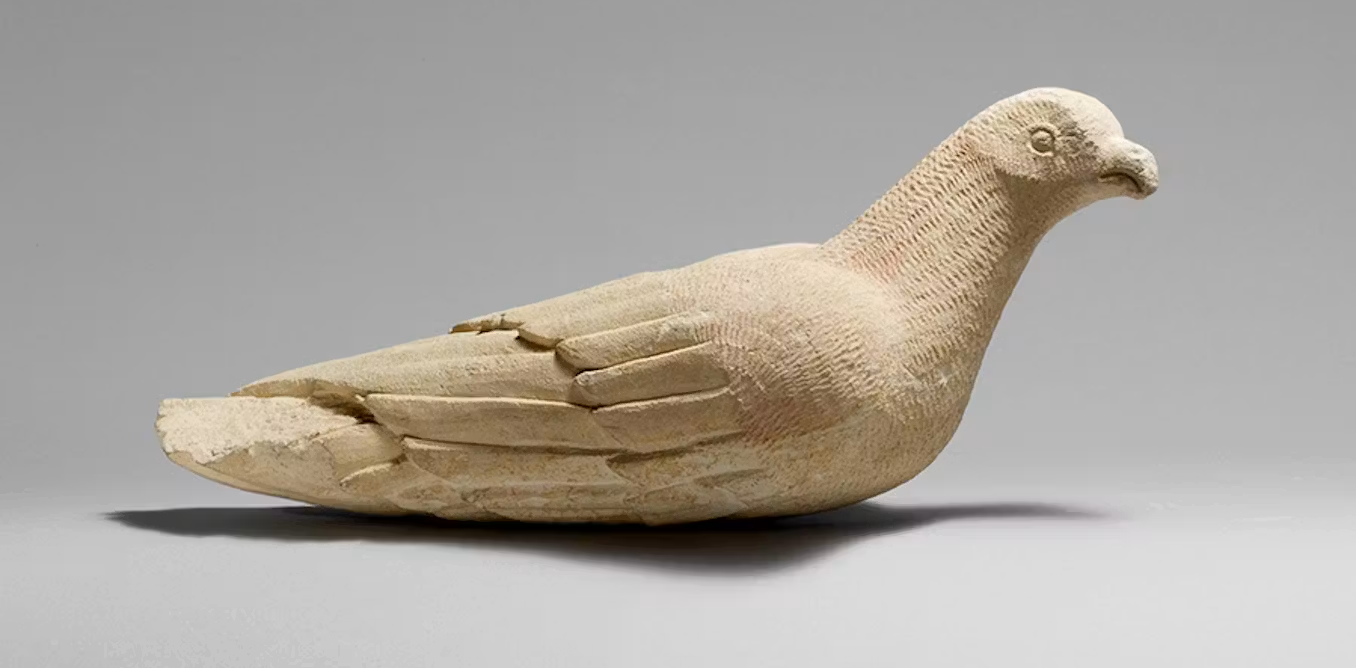
Then, starting in the Bronze Age (3,650-3,950 years ago), pigeon figurines became common in Cyprus, and the island developed a strong association with these birds. It was identified in early Greek literature as the birthplace of the love goddess Aphrodite, who is often depicted alongside flocks of doves.

In the new study, researchers examined a collection of bones collected at Hala Sultan Tekke in Cyprus – historically an important city; now a mosque and archaeological site – dating back to the Late Bronze Age, about 3,350 years ago.

Advertisement

Their assessments included a technique called stable isotope analysis, using chemical signatures in the bones to make inferences about what the birds ate. This showed their diets were similar to those of their human neighbours. Rock doves must have been living alongside people at that time, who may even have been deliberately feeding them.

Location of Hala Sultan Tekke site in Cyprus.
Anderson L. Carter et al, Author provided (no reuse)

The range of chemical signatures was, as with humans and cattle (but different from fallow deer and other wild species), low. This reflects a consistent diet of grains – a diet shared by humans that could be evidence that the birds were managed by them.

However, three of the 37 pigeons assessed had quite different chemical values – aligning more with wild animal species than humans. This suggests a potential split between cave-dwelling birds (which might have been hunted in the wild and brought back to eat) and full-time urban pigeons which interacted with humans in a more intense way.

A more intimate relationship

Pigeons are well-established as being an ancient part of the human diet. Our Neanderthal cousins hunted them in the caves of Gibraltar as early as 67,000 years ago. But what’s exciting about these new results is that they suggest a much more intimate relationship than predator and prey.

Advertisement

Perhaps most interestingly, some of the bones had been burnt and buried in ritual spaces. Earlier excavations carried out as part of previous research at the same site found a pigeon within a tomb containing an adult man. This suggests rock doves may have had an important cultural role in Cyprus.

Whether this relationship can be called domestication is up for debate. For most of us biologists, domestication involves evolutionary changes occurring due to human use. This is different to our relationship with species like house sparrows, say, which live alongside us but are not managed for use – whether in terms of food, labour or recreation.

Further research tracking human-pigeon interactions through time and space is needed to help us judge exactly when and where domestication-related changes in pigeons’ genetics and appearance began.

Nevertheless, the new study’s results strongly indicate that ancient humans had an intimate interaction with a species which has gone on to become one of the most important birds in our history. Knowing this relationship was active more than 3,000 years ago in Bronze Age Cyprus should help us appreciate the importance of this unique human-animal interaction.


Advertisement

Source link

Continue Reading
Click to comment

You must be logged in to post a comment Login

Leave a Reply

NewsBeat

Who won the Makerfield by-election tv debate, Burnham or Kenyon? Plus, have your say

Published

on

Who won the Makerfield by-election tv debate, Burnham or Kenyon? Plus, have your say

John Rentoul, chief political commentator – “The cat’s out the bag … Andy is finally making this about No 10”

However hard the BBC and some of the panellists pretended, it was all about Andy Burnham. Some of it was about Burnham versus Robert Kenyon, the Reform candidate, as they competed to present themselves as Westminster outsiders – “normal people” in Kenyon’s phrase – wanting to go “down to London” to give Makerfield a fair deal.

Even that head-to-head was lop-sided, though, because of what Jake Austin, the Liberal Democratic candidate, said was the reason for the by-election, which is “about electing a prime minister by the back door”. Austin said this was “not the right way to be doing politics”, but what was interesting was that this divided the audience – some of them agreed, but most seemed to be quite happy to have their constituency used as a launch pad for the highest office.

Advertisement

Burnham himself dodged the question twice with his usual formula of wanting to take it to the “highest possible” level – if he is lucky enough to be elected – but then he cracked and said that Wes Streeting seems to have started a leadership contest already and “I would seek to join it”. His supporters in the audience cheered even as he tried to qualify it by saying he would have to persuade MPs to nominate him.

With that cat out of the bag, the two main candidates – the would-be prime minister and the plumber, the true outsider – could get on with discussing the main issue of the day, namely alleged two-tier policing. Kenyon went with public opinion, which thinks that the police are biased in favour of ethnic minorities, while Burnham went for the big tent, praising Michael Winstanley, the Conservative candidate, and Kemi Badenoch, his leader, for “speaking really well” on the subject.

In the end, Burnham came across as a regular guy, admitted he was ambitious and didn’t make any mistakes. That made him the winner.

‘ style=”border:0″>

Advertisement

Kate Devlin, Whitehall editor – “Both men appeared to be speaking to two different audiences”

The headlines from this encounter will be that Andy Burnham finally confirmed he will challenge Keir Starmer for the keys to No 10. He could hardly deny it, as the people of Makerfield weigh up whether to vote for the man who will potentially be the country’s next prime minister. He managed to walk a difficult line between focusing on local issues and a wider vision for Britain. He also managed to neatly answer some difficult questions.

In the wake of 18-year-old Henry Nowak’s death – the student was ignored by police officers when he told them he had been stabbed, and died while being arrested and handcuffed after his killer, Vickrum Digwa, 23, falsely claimed he had been the victim of a racist attack – he pointed to his relationship with the local police chief, who, he said, wanted to “make sure the police were seen as neutral, serving all communities, and therefore I backed him”. He also said there was a case to “look again” at the carrying of knives for religious reasons.

But he added “it needs a very careful debate”. Reform’s Robert Kenyon looked relaxed in his first outing on the national stage, but faced a difficult time from some members of the audience, including one who told him: “I’d rather have a career politician than a plumber who is a sexist”. While both men are battling for the same votes, in the same seat, they appeared to be speaking to two different audiences. Andy Burnham was the clear winner tonight, but it will count for nothing if he fails to win this by-election.

Advertisement

Sean O’Grady, associate editor – “Andy Burnham was unconvincing on ever level … poor old Makerfield”

For me the “Great Makerfield Debate” was all over when a plainly exasperated woman in the audience declared: “I’d rather have a career politician than a sexist plumber” for her next MP. Me too. And, to avoid the ultimate catastrophe of Reform UK and Nigel Farage regaining lost momentum, I’d vote for Andy Burnham. Reluctantly. He was unconvincing on every level, notably when he said he’d left Westminster in 2017 so he could work for the people as mayor of Greater Manchester. In reality it was because he saw no future for himself under Jeremy Corbyn. He was, is, and always will be a careerist – and should admit it.

As for Kenyon, he did at least disagree with Farage and condemned the violence in Southampton; but he couldn’t escape the wrath of Carol Vorderman. The nice Green candidate, Sarah Wakefield, told him Carol was watching at home and expecting an apology, and Kenyon looked like he’d dropped his best spanner down a U-bend. In the normal democracy we used to be, Micheal Winstanley (Tory) or Jake Austin (Lib Dem), both obviously decent folk, would walk this contest. But they’ll lose their deposits. Poor old Makerfield.

Source link

Advertisement
Continue Reading

NewsBeat

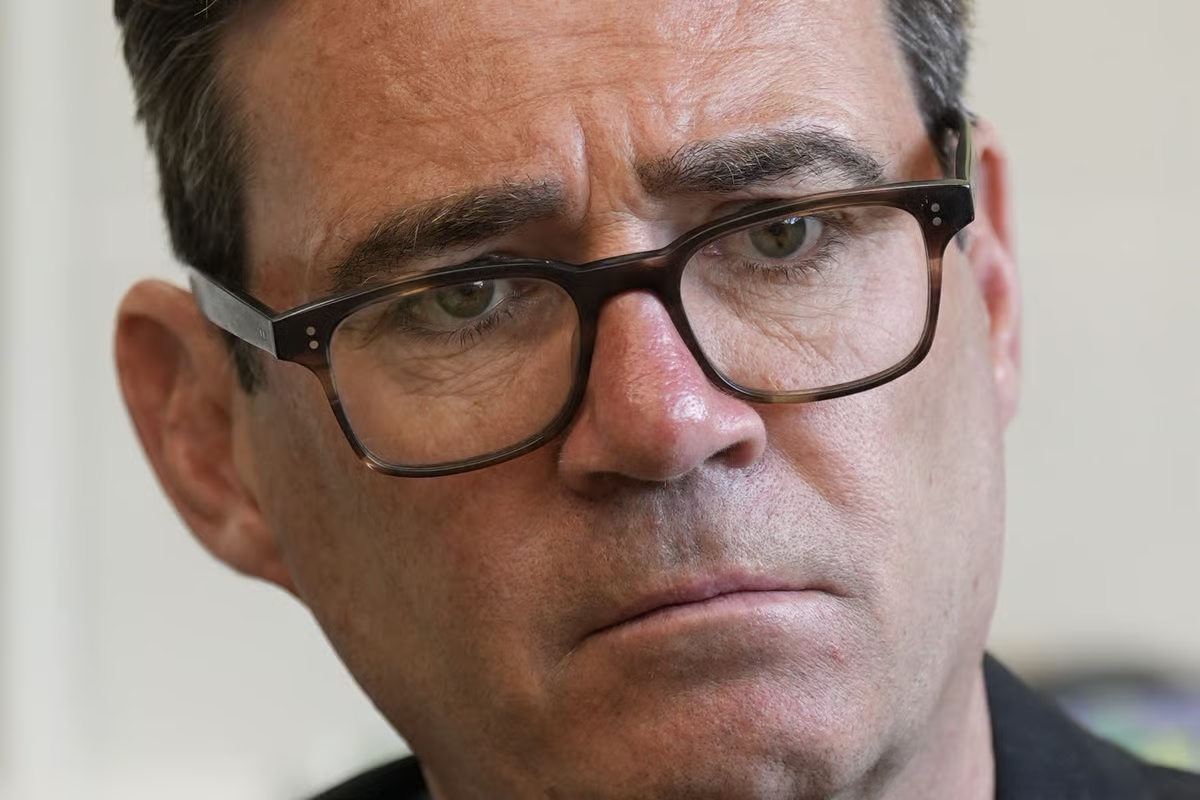
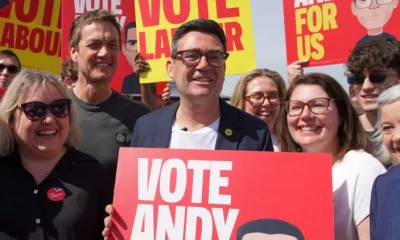
Andy Burnham says he would challenge Sir Keir Starmer for Labour leadership

Published

on

Andy Burnham says he would challenge Sir Keir Starmer for Labour leadership

“What I would say is that approach, a more collaborative politics, a more, if you like, long-term approach to solving the country’s problems needs to be taken from here, Greater Manchester, and taken down there, a fundamental change in Westminster to restore the public’s trust.”

Source link

Continue Reading

NewsBeat

Albanian’s revolt over Ivanka Trump’s plans to build $1.4 billion island resort | News US

Published

on

Albanian's revolt over Ivanka Trump's plans to build $1.4 billion island resort | News US

To view this video please enable JavaScript, and consider upgrading to a web
browser that
supports HTML5
video

Albania is the hipster’s holiday choice this summer. It was only a matter of time before a Trump got in on the act.

Advertisement

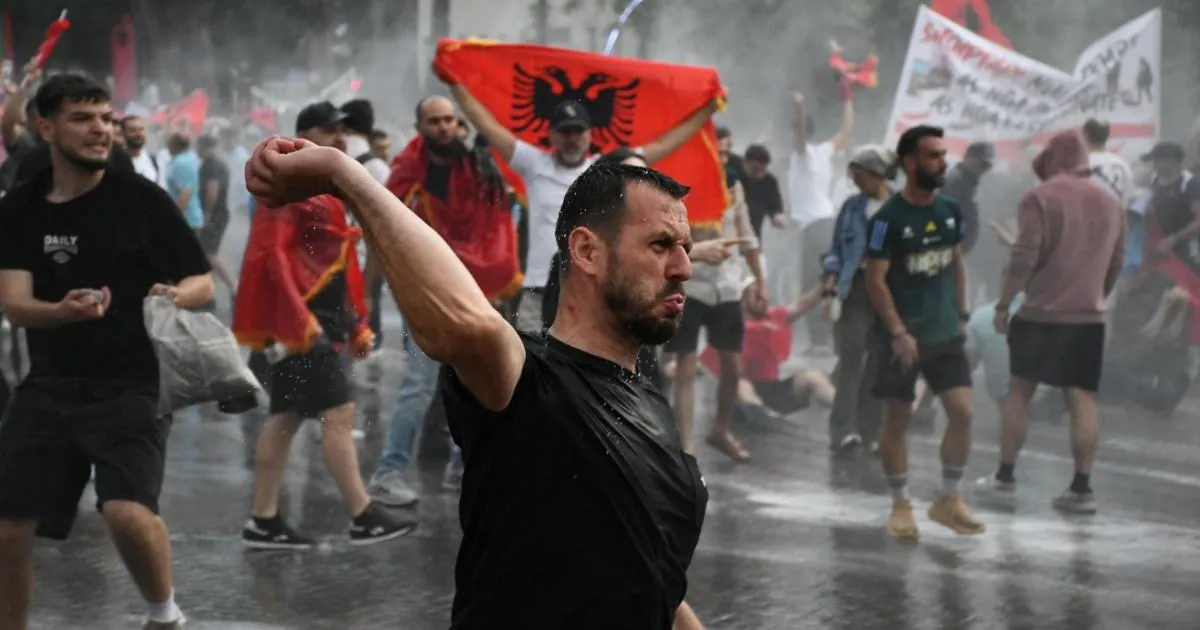
Despite hundreds of Albanian protesters being washed away by water cannons, Donald Trump’s daughter Ivanka is reportedly going ahead with her plans to transform a Cold War-era military base into a luxury island resort.

In an interview this week Ivanka Trump said she stumbled upon Sazan Island – complete with thousands of sprawling nuclear bunkers -‘ by accident’ on holiday with her husband, Jared Kushner.

‘We were on a friend’s boat, and we stopped for a swim. Effectively, that’s how we found it,’ she said.

‘We swam to the island. We went on a hike, barefoot all the way up to the top, and we were just captivated. And it’s stayed with us ever since. For me, this is, it feels more like a challenge than anything else.’

Advertisement
There has been resistance to Jared Kushner and Ivanka Trump’s plans
Copyright: GETTY IMAGES

Where is Sazan Island- now dubbed Trump Island?

rendering of Sazan Island development back by Ivanka Trump and Jared Kushner
Rendering of the Sazan Island development back by Ivanka Trump and Jared Kushner
(Picture: Studio Genesis)

Sazan is Albania’s largest island and is a designated military exclusion zone located in a strategically important location between the Strait of Otranto and the mouth of the Bay of Vlorë.

Underneath the beautiful cliff faces and crystal blue waters lie at least 3,600 Soviet-style nuclear bunkers built during the Cold War.

The 1,400 acre Mediterranean island is also home to at least ten miles of underground tunnels stretching back from the Communist era.

Other bomb shelters and buildings designed to store military supplies and ammunition are also arranged around the area.

Advertisement

Experts have even warned about the presence of unexploded mines dotted across the stunning landscape that will need to be cleared -no wonder Trump called it a ‘fixer-upper’.

Undeterred, Ivanka revealed: ‘Over the course of many years, we developed the opportunity to help realise its potential and transform it, but with a lot of restraint and care.’

She hired some of the ‘greatest living architects’ to make designs blend with the already dramatic surroundings as if the buildings almost ‘rise from’ the land.

rendering of Sazan Island development back by Ivanka Trump and Jared Kushner
A luxury hotel development backed by Ivanka Trump and Jared Kushner
(Picture: Studio Genesis)

Albanian Anger

But Ivanka’s venture has drawn opposition from environmental campaigners and critics of long-time Socialist Prime Minister Edi Rama.

The couple also hope to carry out a multibillion-dollar project that includes building hotels along the coast of Zvërnec, where wildlife such as flamingos and sea turtles nest.

Advertisement

Since late May, barbed wire has been erected to keep protesters from the excavators and other heavy machinery arriving clear to the land from the pine trees.

Activists have clashed with police at the site, hanging up signs like ‘Albania is not for sale,’ ‘Hands off Albanian soil’ and ‘Sazan is not a private island, it belongs to the Albanian people.’

TIRANA, ALBANIA - JUNE 3: People stage a protest against a planned tourism project in the Zvernec area of the city of Avlonya (Vlora) as they gather on the Boulevard of the Nation??s Martyrs in Tirana, Albania on June 3, 2026. People protest the sale of a stretch of coastline in Zvernec as part of a tourism project reportedly linked to U.S. President Donald Trump??s daughter, Ivanka Trump, and her husband, Jared Kushner. (Photo by Olsi Shehu/Anadolu via Getty Images)
Hundreds protest the sale of a stretch of coastline in Zvernec linked to Donald Trump’s daughter, Ivanka Trump, and her husband, Jared Kushner (Picture: Getty)
TIRANA, ALBANIA - JUNE 3: Police use water cannons against the protesters during a protest against a planned tourism project in the Zvernec area of the city of Avlonya (Vlora) as people gather on the Boulevard of the Nation??s Martyrs in Tirana, Albania on June 3, 2026. People protest the sale of a stretch of coastline in Zvernec as part of a tourism project reportedly linked to U.S. President Donald Trump??s daughter, Ivanka Trump, and her husband, Jared Kushner. (Photo by Olsi Shehu/Anadolu via Getty Images)
Police use water cannons against the protesters (Picture: Olsi Shehu/Anadolu via Getty Images)

‘From start to finish there has been a total lack of transparency,’ Aleksandër Trajçe, executive director of the country’s leading conservation group, the Protection and Preservation of the Natural Environment in Albania (PPNEA), told The Guardian.

‘We have seen no public consultation or public documentation regarding permits, and so now what we are saying is, if they remove the bulldozers, remove the fence and restore the habitats to what they were, then we can start talking.’

Albanian opposition leader Sali Berisha said that while he supports the renovation projects, he expressed concerns that Rama could have been ‘seeking to buy political influence’ from Trump.

Advertisement

But Rama insists the plans are in tune with Albania’s ambition to become a major global tourism destination.

‘Albania should not be a country that fears an extraordinary project like this one, where exceptional partners have come together to invest €4billion,’ Rama said.

‘There is absolutely no chance that the investment will stop as long as I am here,’ he said.

But after the backlash, Rama insisted: ‘There is not a project yet.

Advertisement

‘There is no such thing as a Trump family island.

‘There is no such thing as the family of the American president taking over protected areas where flamingos will be killed by them.’

Advertisement

Source link

Continue Reading

NewsBeat

Brace’s Bakery employees face anxious wait on job future

Published

on

Wales Online

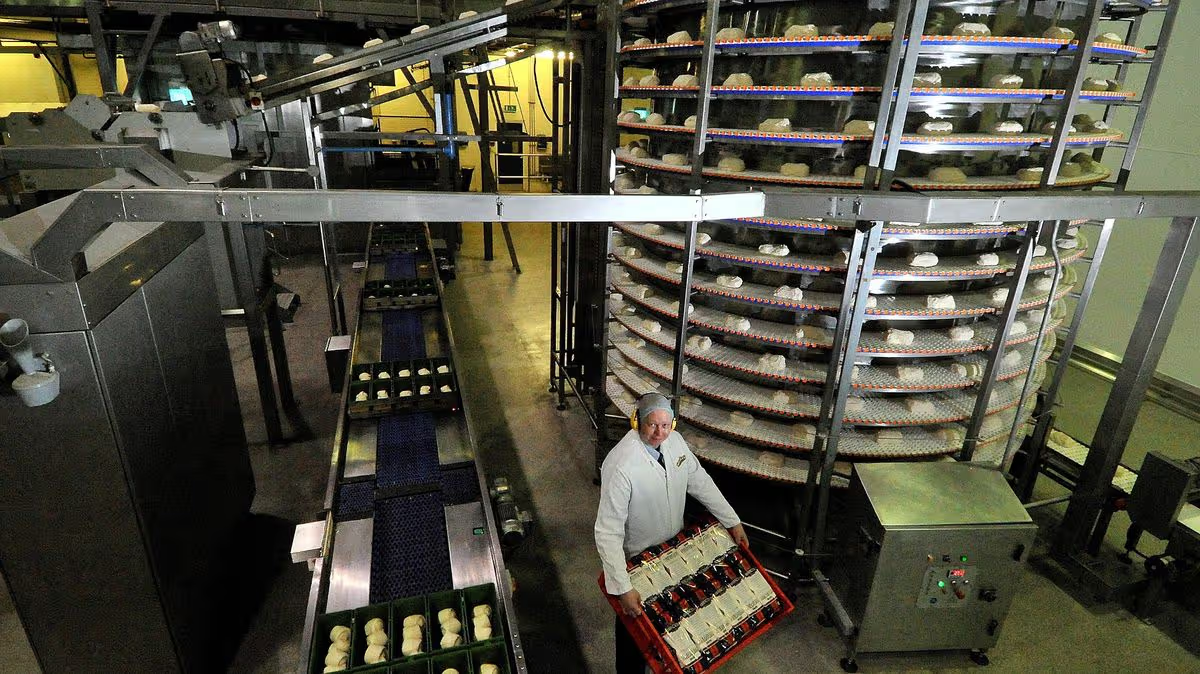
Staff are awaiting news regarding the security of their jobs

Uncertainty as to the future of Brace’s Bakery in Newport has led to fear amongst staff regarding the future of their jobs. The directors of the popular bread company are currently in discussions with a potential buyer after “facing difficult headwinds” financially.

Advertisement

In March this year workers at the Pen-y-Fan bakery were paid a week late after a sale of the site fell through. The 250 employees of Brace’s Bakery were paid late but assured at the time that their jobs were safe.

Now as talks continue between bosses and a potential buyer, staff have shared their anxiety not knowing the security of their jobs. Never miss a Newport story by subscribing to our newsletter here

The family business that was founded in 1902 supplies bread, Welsh cakes, rolls and other artisanal products to thousands of major supermarkets across the UK.

In October 2025 bakery directors wrote to staff that as a result of “increasingly difficult” market conditions the only “viable option” was to close Brace’s manufacturing plant in Newport.

Advertisement

However due to the initial sale of the site not being completed, the expected redundancies of fewer than 20 staff has not occurred yet.

Staff are expected to learn more about their fate of their jobs within 24 hours, according to bosses om Thursday evening.

Jonathan Brace the director of Brace’s Bakery, told WalesOnline: “As you are aware Brace’s have been facing difficult headwinds over the last few months in a challenging market.

“We are in talks with a potential buyer and we expect to be able to update you further within 24hrs. Safeguarding the jobs of our loyal workforce is our primary objective, to ensure our quality range of products remain available for years to come.”

Advertisement

Source link

Continue Reading

NewsBeat

Trump bizarrely claims Lincoln Memorial is facing the wrong way as he floats latest icon upgrade

Published

on

Trump bizarrely claims Lincoln Memorial is facing the wrong way as he floats latest icon upgrade

Donald Trump derailed a White House event about “clean coal” to go on a rant about his ongoing beautification efforts in Washington, D.C. on Thursday, marking yet another moment where those efforts have distracted the president from more serious policy discussions.

A Thursday afternoon event billed as an announcement about a new investment in U.S. coal plants began with Trump immediately launching into a spiel for the assembled White House press about his efforts to overhaul the Lincoln Memorial, complete with a video showing water flowing into the newly-repainted Reflection Pool. The president then shifted to his future plans: An idea for a “promenade” to extend down the other side of the building to the Potomac River.

“We’re doing something that just came up, we have a little breaking news here,” Trump teased. “We’re going to be doing that, it’s a promenade. They want to call it the Trump promenade.”

His explanation for the planned renovations followed: “At the Lincoln Memorial, the front was supposed to be the back, and the back was supposed to be the front. [The promenade] never got built, because they built two roadways behind it.”

Advertisement

Describing the new project as adding a “gateway to the water” behind the structure, which borders the Arlington Memorial Bridge and the National Mall, Trump said that it would “take the Lincoln Memorial right down to the Potomac”.

Donald Trump unveiled his plans for the Lincoln Memorial at an unrelated White House event on Thursday
Donald Trump unveiled his plans for the Lincoln Memorial at an unrelated White House event on Thursday (Getty)

“It’s going to be beautiful,” Trump promised.

His plans actually do find roots in the original intention for the area around the Lincoln Memorial. The National Park Service describes the Watergate Steps area on the Potomac side of the Lincoln Memorial as a planned site where foreign dignitaries would take their first steps into the capital and the National Mall. The location of the Lincoln Memorial was also selected due to the site’s views of the river, though the monument itself faces east, towards downtown Washington D.C. and the National Mall. A bridge on the western side links Lincoln’s memorial with Arlington National Cemetery and the former home of Robert E. Lee, the famed Confederate general, in a deliberate symbolic choice by the planners to show the rebuilt peace healing a divided nation.

But the project, like his effort to add a ballroom to the White House, is likely to face a court battle. The Trump administration has argued that it has the authority to make changes to any buildings or other structures overseen by the Interior Department, though he has faced roadblocks in his battle to rename the Kennedy Center after himself and that question remains undecided.

More to follow…

Advertisement

Source link

Continue Reading

NewsBeat

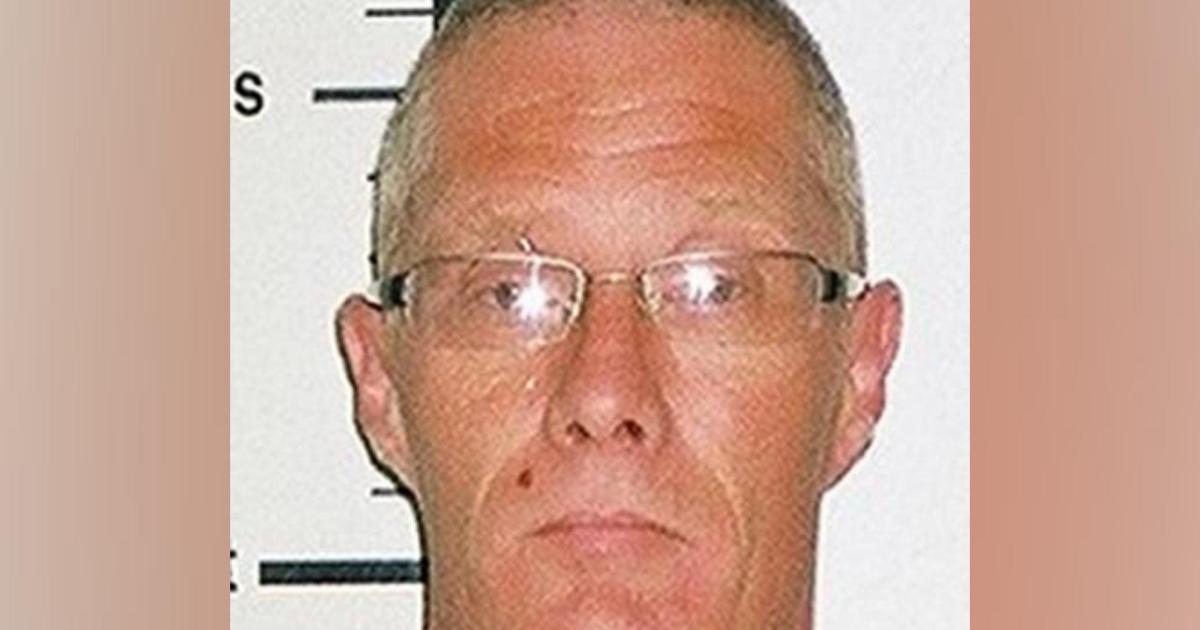
Army veteran Ikhman Pun refused to take a breath test

Published

on

Army veteran Ikhman Pun refused to take a breath test

Witnesses stopped Ikhman Pun and took his car keys off him, said James Harrison, prosecuting at York Magistrates’ Court.

He appeared to have been drinking and fled into his house before officers could arrive, but the witnesses told police where he had gone.

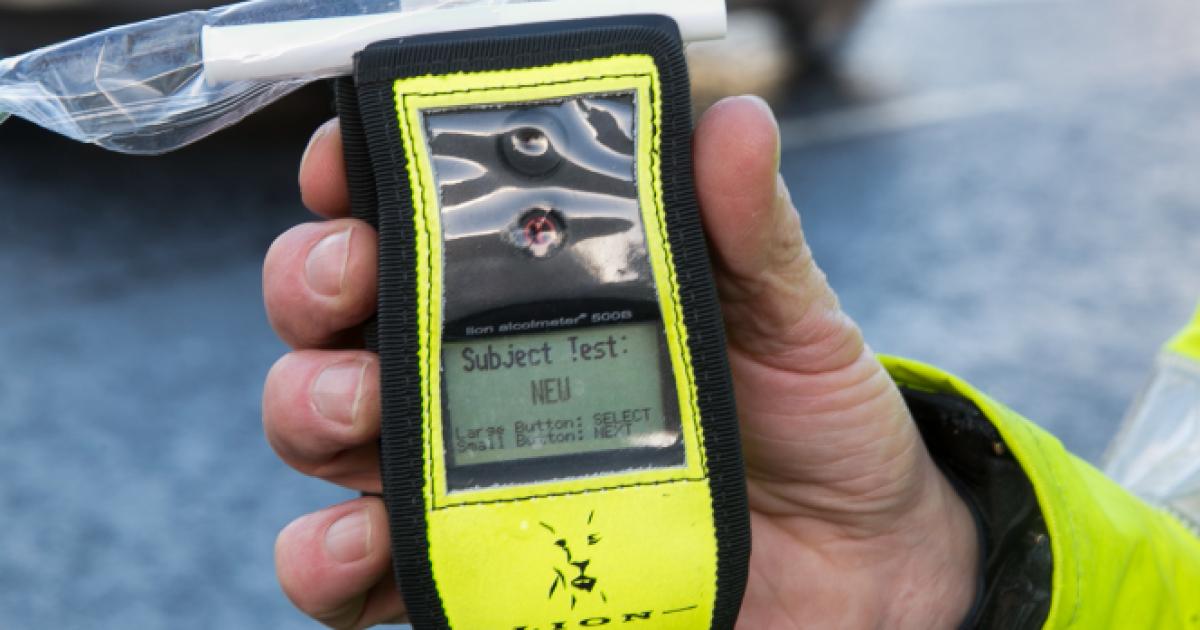
He refused to take a breath test at the scene and after officers arrested him and took him to a police station, refused to take a breath test there, said Mr Harrison.

Advertisement

The 52-year-old army veteran has a previous conviction in 2008 for refusing to supply a breath test and was on court bail at the time for two charges of indecent exposure and one of using threatening words or behaviour to a woman.

Pun, of Rutland Close, Catterick Garrison, who followed proceedings with the aid of a Nepalese translator, pleaded guilty to failure to provide a sample of breath on April 15 and was banned from driving for 16 months.

York magistrates fined him £323 and ordered him to pay a £129 statutory surcharge and £85 prosecution costs.

They heard their colleagues on April 16 gave Pun a 12-month community order including a tag forcing Pun to abstain from alcohol for 100 days and 20 days’ rehabilitative activities after hearing that the indecent exposures and threatening words and behaviour had been committed when Pun had been drinking.

Advertisement

Mr Harrison said several people called North Yorkshire Police on April 15 to say Pun’s Nissan had crashed into other vehicles. Four cars were involved in the collisions.

James Dixon, defending, said Pun had been trying to reverse out of his driveway. He had medical issues and worked in the security industry.

Source link

Advertisement
Continue Reading

NewsBeat

Steven Martin’s cause of death not yet known – inquest

Published

on

Steven Martin's cause of death not yet known - inquest

Steven Martin was jailed for life in 2010 for his role in the murder of “loving” Andrew Gardner, 35, in March 2009. 

He tortured Mr Gardner weeks before his eventual death alongside two others; Clare Nichols, Mr Gardner’s girlfriend and the mother of his fourth child, and her brother Simon Nichols.

The 61-year-old had served 16 years behind bars when he died at the County Durham prison – dubbed Monster Mansion – on May 6. 

An inquest opened into his death at Crook Coroners’ Court on Wednesday (June 3) heard how Martin, who was born in Portsmouth, died in the healthcare unit of the prison. 

Advertisement

A post-mortem examination carried out by Dr Sam Hoggard at the Royal Victoria Infirmary mortuary in Newcastle gave the cause of death as “unascertained, pending histology and toxicology”.

His body was identified by a prison officer. Senior Coroner Jeremy Chipperfield adjourned the inquest for a mention hearing on September 29.

Martin was found guilty of the murder of Mr Gardner in 2010 alongside Clare, who was jailed for 32 years, and Simon, who was told he will serve at least 25 years.

ANDREW GARDNER: Was tortured and killed

Martin, who was living in Jarrow, South Tyneside, and has one of the lowest IQs in the country at 59, was sentenced separately to the other two after undergoing psychiatric tests. 

Advertisement

The torture – which was described as “callous” – took place weeks after Martin was invited to move into the family home by Clare Nicholls.

Martin poured boiling water over Mr Gardner’s feet, held him against a hot radiator, whipped him with knotted tea towels and had sex with Clare in front of him.

Mr Gardner, who had learning difficulties, was also starved and suffered more than 150 wounds, including 21 rib fractures, bleeding on the brain and blood poisoning.

He had been beaten, slashed, whipped, scalded, and branded with a cigarette lighter in the weeks before his death.

Advertisement

During the trial, the court heard how he suffered agonising broken ribs from being kneed and stamped on, and died in excruciating pain, probably unable to leave the house they all shared.

His battered and bruised body was found on March 13 after Simon Nicholls called paramedics to the terraced property in Arthur Street, Chilton.

His attackers concocted a story about Mr Gardner going for a walk and returning to say he had been beaten up by a gang.

The paramedics were told that Mr Gardner removed his clothes and collapsed 30 minutes before the 999 call was made, and that the occupants had tried to revive him.

Advertisement

However, it soon became evident that Mr Gardner had been dead for some time.

A Prison Service spokesperson said: “Steven Martin died on May 6, 2026. As with all deaths in custody, the Prisons and Probation Ombudsman will investigate.”

Source link

Advertisement
Continue Reading

NewsBeat

Free first-time buyer and seller financial workshop in Hamilton

Published

on

Daily Record

Scullion LAW and Scullion LIVING have joined forces with Calluna Financial Service for the event.

Scullion LAW and Scullion LIVING have joined forces with Calluna Financial Services to host a free first-time buyer and seller financial workshop in Hamilton.

Advertisement

It will give local residents access to expert guidance on one of the most important financial decisions they will ever make.

The event will take place on Saturday, June 13, from 10am to 1pm at Scullion LAW’s office in the town, at 105 Cadzow Street.

Designed to support those looking to buy their first home, the workshop will bring together experienced solicitors, estate agency professionals and independent financial advisers to provide straightforward, practical advice on every stage of the home-buying journey.

For many first-time buyers, purchasing a property can feel overwhelming. Questions around mortgages, deposits, legal processes and affordability can often create uncertainty and delay decisions. The event has been created to help remove those barriers by giving attendees direct access to professionals who deal with property transactions every day.

Advertisement

Guests will receive guidance on mortgage and financial preparation, navigating the Scottish property market, understanding the conveyancing process and the important role that Wills and Powers of Attorney can play when purchasing a property.

Attendees will also have the opportunity to ask questions in an informal setting and receive tailored advice specific to their circumstances.

Marion Hunter, head of estate agency at Scullion LIVING, said: “Buying your first home is one of life’s biggest milestones, but it can also be one of the most daunting. We have created an event that gives people access to trusted experts who can explain the process in plain English and help them move forward with confidence.

“Whether someone is actively looking for a property, saving towards a deposit or considering selling their current home, our goal is to provide practical information that helps them make informed decisions.”

Advertisement

Stephanie English from Calluna Financial Services said: “Every home-buying journey is different, and there’s no substitute for having a conversation about your own circumstances. What works for one person may not work for another, which is why tailored advice is so important.

“Events like this give people the chance to ask questions they might not otherwise ask and leave with a clearer understanding of their next steps, whether that’s buying their first home, moving up the ladder, or simply starting to plan for the future.”

The event will also offer valuable insights for homeowners considering selling a property, with advice on preparing a home for market, understanding the estate agency process and planning their next move.

Representatives from Calluna Financial Services will be on hand throughout the morning to discuss mortgage options, affordability considerations and financial planning, helping attendees gain a clearer understanding of what may be possible based on their individual circumstances.

Advertisement

*Don’t miss the latest headlines from around Lanarkshire. Sign up to our newsletters here.

And did you know Lanarkshire Live had its own app? Download yours for free here.

Source link

Advertisement
Continue Reading

NewsBeat

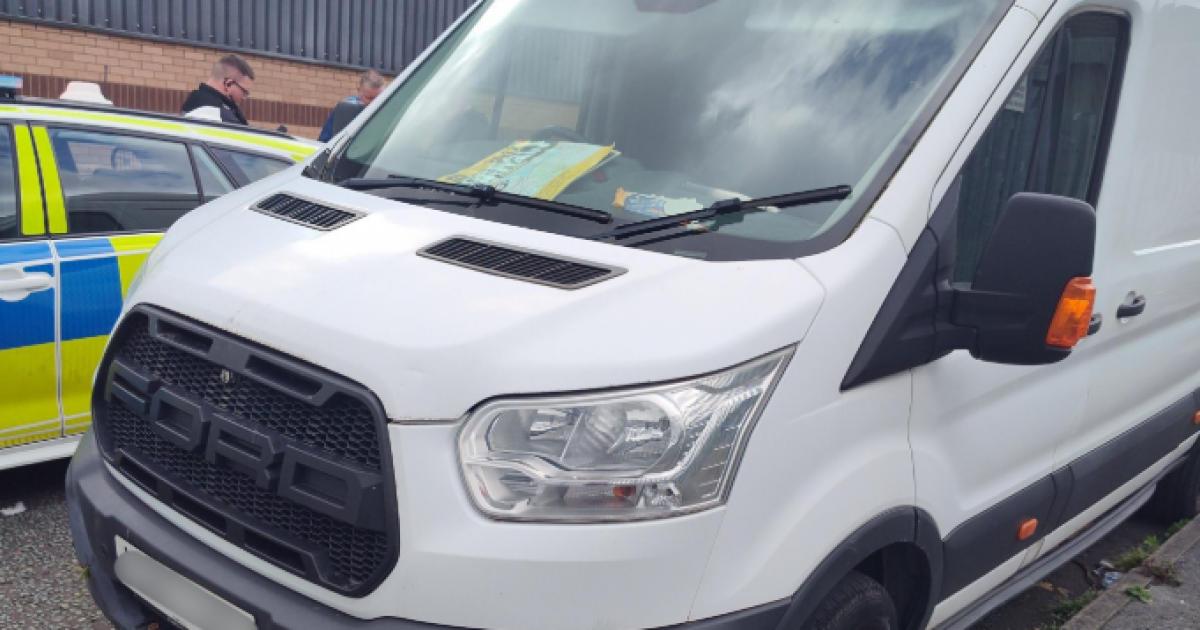
Van stolen from Bury found one year later in North Bolton

Published

on

Van stolen from Bury found one year later in North Bolton

The Bolton North Neighbourhood Team recovered the van after an attempted traffic stop.

The van failed to stop when requested and instead sped off over a grass verge.

Bolton Police – GMP put a statement out on their Facebook page: “Officers from the Bolton North Neighbourhood Team have recovered a stolen van this evening.

Advertisement

“Around 5pm, officers attempted to stop this van, but it failed to stop and drove off at speed over a grass verge. Following an area search, officers located the van abandoned.

“Checks revealed that it had been stolen from Bury in 2025. We have now recovered the van, which will be subject to an examination by our CSI.”

Last week, GMP seized a ‘Sur-Ron’ bike in Westhoughton after a social media post surfaced showing a young man riding it dangerously through the town.

Two more Sur-Ron bikes were also seized at the young man’s address.

Advertisement

Source link

Continue Reading

NewsBeat

‘Radical change can lead to a fairer and greener world’

Published

on

‘Radical change can lead to a fairer and greener world’

A major new study argues that rising living standards, shorter working hours and a liveable climate are not competing dreams, but parts of the same future – if the world is willing to tackle extreme inequality

For years, the climate debate has often been framed as a choice between two unappealing futures. Either the world carries on consuming and emitting until the planet becomes increasingly unstable, or it cuts back so sharply that ordinary people feel they are being asked to accept less.

A major new report from the World Inequality Lab offers a very different possibility. It argues that humanity could raise living standards for the vast majority of people, reduce extreme inequality and still keep global heating below 2C by the end of the century.

Advertisement

The Global Justice Report, published on Thursday, sets out what its authors describe as a “plan for equality and prosperity within planetary boundaries”. It is not a forecast, and it is certainly not a modest piece of policy tinkering. It is a deliberately ambitious model of how the global economy could be reorganised between now and 2100 so that wellbeing, equality and climate stability are treated as part of the same project.

Advertisement

At its heart is the simple idea that people do not need endless material consumption to live well. Instead, the report argues for “sufficiency” – a shift towards shorter working hours, better health and education, cleaner energy, changed diets, reduced pressure on land and a much narrower gap between the very rich and everyone else.

Under the report’s central scenario, average monthly income would converge towards about €5,000 (£4,250) per person in every country by 2100. That would mean far faster growth in poorer regions and much slower growth in today’s richest economies, but the authors argue that most people in wealthy countries would still gain because income would be distributed more evenly and people would have more time outside paid work.

Nearly 90% of the world’s population would double their monetary income by the end of the century, according to the model. When extra leisure and the avoided damage of runaway heating are included, the report says more than 99% of people would be better off.

Average monthly income would converge towards about €5,000 (£4,250) per person in every country by 2100

One of the report’s most striking proposals is a dramatic reduction in working time. Annual labour hours per employed person would fall from about 2,100 today to around 1,000 by 2100, roughly continuing the long historical trend that has already seen working hours fall sharply in many countries since the 19th century. The aim is not simply to work less, but to redirect human effort towards care, education, health, culture and other lower-carbon parts of the economy.

Advertisement

The report also links this shift to gender equality. Its model envisages women and men converging on equal pay and an equal share of paid and domestic labour, arguing that a fairer distribution of work inside and outside the home is central to any credible vision of social progress.

To stay within climate limits, the authors say rapid decarbonisation would still be essential. Energy systems would need to move quickly away from fossil fuels, with electricity generated from low-carbon sources by mid-century and major investment in renewables, electrification and cleaner industrial processes. But the report argues that technology alone is not enough. Without changes in consumption, land use and inequality, the energy transition becomes harder to finance and harder to sustain politically.

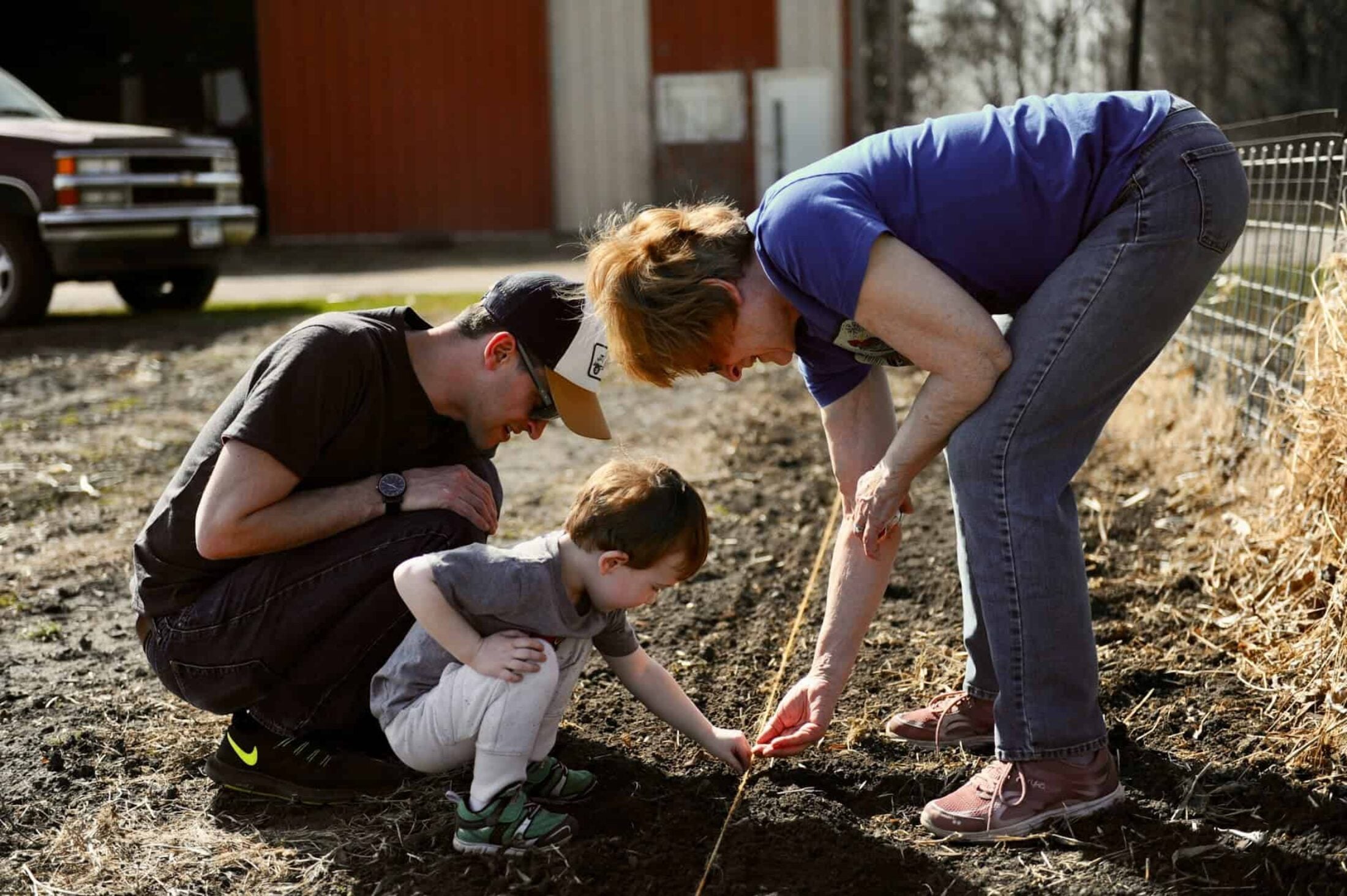
When extra leisure and the avoided damage of runaway heating are included, the report says more than 99% of people would be better off. Image: Holly Landkammer

Advertisement

The report proposes a Global Justice Fund, financed by a global wealth tax and a top income tax levied on the richest 1% of the world’s population. The fund would support climate investment, health, education and country-level dividends, particularly in poorer countries. The report also proposes a world sovereign fund, new forms of international currency and a rebalancing of voting power in institutions such as the IMF and World Bank.

The Global Justice Fund would spend an average of 10.3% of world GDP each year between 2026 and 2060, compared with less than 0.4% currently represented by official development aid and the combined budgets of the UN, IMF and World Bank. The report argues that this reflects the scale of the challenge: climate investment alone is expected to require 3-4% of world GDP annually in the coming decades.

The effect on wealth would be profound. The bottom half of humanity would see its share of global wealth rise from 2% to 30%, while the share held by billionaires would fall from 6% to 0.05%. The report’s authors argue that this is not only a question of fairness, but also of climate logic, because the richest people have disproportionately benefited from high-carbon growth and hold much of the capital needed for the transition.

Advertisement

The aim is not simply to work less, but to redirect human effort towards care, education, health, and culture

Writing in the Guardian, several of the report’s authors, including Thomas Piketty and Lucas Chancel, described the plan as “radical”, but argued that the alternative is to accept a future shaped by deepening inequality, climate breakdown and political instability. The obstacle, they wrote, is “not technical impossibility”, but political choice.

That is also the report’s greatest vulnerability. It sets out what could be done, not what is currently likely to happen. Global wealth taxes, a new international financial order and a managed shift away from overconsumption would face fierce political resistance, particularly from those who benefit most from the present system. Even the authors acknowledge that this would require major coalition-building, social movements and legislative action.

But the report is important because it challenges a familiar mood of defeat. It does not say that a fair, healthy and sustainable world will arrive naturally, or that the transition will be easy. Instead, it says that the figures can be made to add up, that climate safety does not have to mean worse lives for most people, and that equality is not a distraction from the environmental crisis but one of the conditions for solving it.

Main image: Sagar Gnawali

Advertisement

Be part of the solution

At Positive News, we’re not chasing clicks or profits for media moguls – we’re here to serve you and have a positive social impact. We can’t do this unless enough people like you choose to support our journalism.

Give once from just £1, or join 1,800+ others who contribute an average of £3 or more per month. Together, we can build a healthier form of media – one that focuses on solutions, progress and possibilities, and empowers people to create positive change.

Support Positive News

Advertisement

Source link

Continue Reading

Trending

Copyright © 2025