
Politics
Brandon To: A country that sacks heroes will never beat crime

Brandon To is a Politics graduate from UCL and a Hong Kong BN(O) immigrant settled in Harrow
When Mark Hehir, a London bus driver, helped chase down a thief who had just snatched a passenger’s necklace, he probably assumed he was doing the right thing.
He was wrong. At least according to modern Britain.
Instead of thanks, Hehir was sacked by Metroline. His crime? “Excessive force” while stopping a fleeing robber.
Let’s be clear about what this means: Stopping a thief is now, apparently, too much.
So what is acceptable? A polite request? A strongly worded suggestion? Perhaps a hymn, sung gently, in the hope that divine intervention persuades the criminal to hand the necklace back?
This case would be funny if it weren’t so revealing.
A new chilling message is now being sent to the public: do not intervene. If you help, you may be punished. If you step in, you may lose your job. If you act decisively, you may be accused of doing more harm than the criminal himself.
Is it any wonder that bystanders look away?
TfL staff are told not to challenge fare evaders. Passers-by hesitate before helping victims. Even the police, in countless videos circulating online, appear reluctant to chase criminals, paralysed by the fear of complaints, and accusations that have little to do with justice.
Put it frankly, this is cowardice, dressed up as “compassion”.
Behind it lies a justice culture warped by liberal and “woke” ideology. In this worldview, criminals are endlessly contextualised, even sympathised with, as it’s always the “system” that failed them.
But who is there to sympathise with the victim? Or in this case, the hero who stood for them?
And heaven forbid if identity politics can be dragged into it. Suddenly, the act of stopping a thief is no longer about theft at all, but about race, systems, or abstract theories dreamed up in universities, far from the bus stop where the crime actually happened.
Against this backdrop, Kieran Mullan, the Shadow Justice Secretary, deserves credit for speaking up and standing with Mark Hehir. This is precisely what Conservatives should be doing — drawing a clear moral line and refusing to apologise for it.
But words are not enough.
If Conservatives are serious about restoring order, and about shedding the legacy of a government that was too weak and overly liberal on crime, then we must go further and be explicit about protection.
We should introduce clear legal safeguards for citizens who intervene, in good faith, to stop crime. If someone acts to prevent theft or violence, they should not later discover that the real punishment comes from their employer or a compliance department.
Employers who sack staff for intervening should be required to publicly justify their decision. Where dismissal occurs, it should be treated as a no-fault dismissal, with enhanced compensation. And if a company refuses to reinstate or explain itself, the state should step in. Not to micromanage, but to send a message: those who stand up for public order will never be abandoned.
This is how culture changes. Not through slogans, but through real actions.
At this point, defenders of the status quo raise a familiar objection: people don’t intervene because it’s dangerous. Criminals might be armed. It’s safer to do nothing.
But this argument collapses the moment one looks at reality.
Take the recently viral footage of thieves smashing a jewellery shop in Richmond in broad daylight. Dozens of people stood nearby. Not one intervened. Not one shouted. Not one tried to distract or deter. Most simply filmed.
I’m not suggesting reckless heroics. But shouting, calling the police, or trying to throw things at the thieves from a safe distance? Yes, they may not be immediately helpful, but at least we created pressure that might urge them to leave earlier. At least we tried hard, and fulfilled our civic responsibility.
The problem is not fear of weapons. The problem is a culture that has trained people to believe that any involvement is dangerous. That culture exists because, time and again, the heroes are punished.
Mark Hehir’s case lays this bare.
He should not be unemployed. He should be thanked. Better still, he should be held up as an example of civic responsibility, of what a noble Britishman should be like.
But of course, we won’t see a “good citizen” award from City Hall. Under a mayor like Sadiq Khan, we might have to be grateful that he’s not arresting Mark Hehir for “systematic injustice “, or whatever new jargons he and his team invented.
And Conservatives should not miss the moment.
This case exposes exactly what happens when a country becomes more afraid of offending criminals than protecting citizens. If stopping a thief is now “excessive”, then the system itself has become excessive. Excessive in weakness, and excessive in its contempt for common sense.
Britain deserves better. And Mark Hehir deserved a medal, not a dismissal.

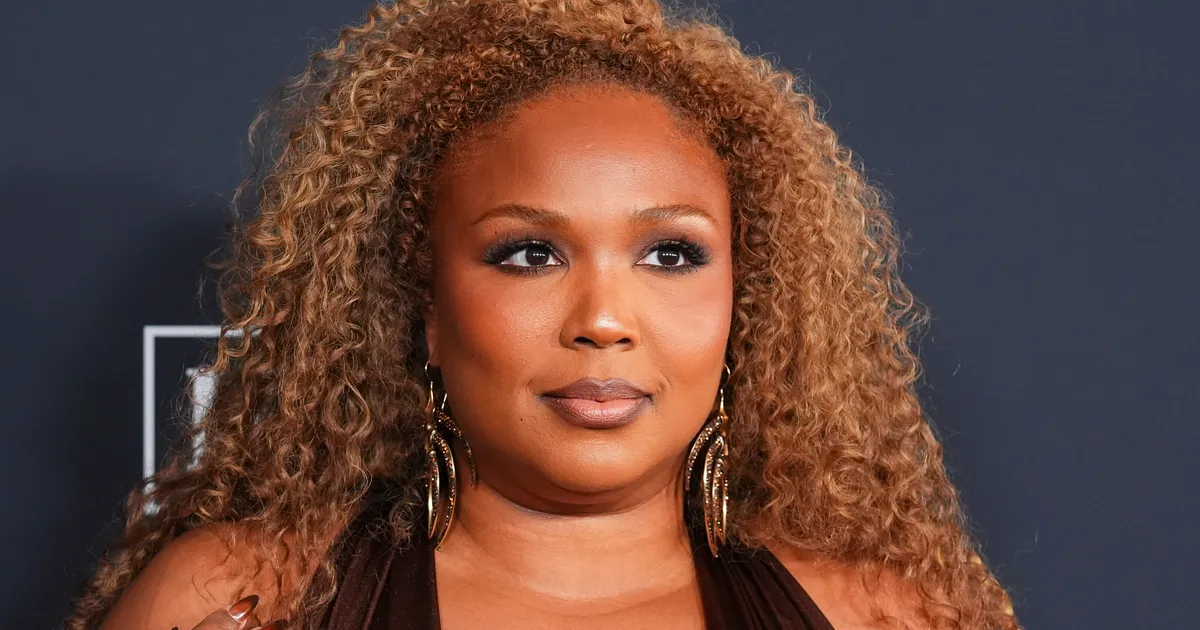
The Good As Hell singer is the latest guest on the Friends Keep Secrets podcast, where she disclosed that she was a “late bloomer” when it came to having sex for the first time.
Admitting that this was something she “lied about” for “a long time”, Lizzo eventually said that her first time was in 2020, when she was in her early 30s.
“Isn’t that crazy?” she remarked, admitting that sex was a subject she “wasn’t even thinking about” until that point.
The chart-topping star noted: “I promised myself when I was younger that I wouldn’t have sex until I won a Grammy.”
In January 2020, Lizzo picked up her first Grammy Awards in the Best Pop Solo Performance category for her hit Truth Hurts, Best Traditional R&B Performance for the album track Jerome and Best Urban Contemporary Album (now known as Best Progressive R&B Album) for her release Cuz I Love You.
She added during her podcast that while her first time “was not the night of the Grammys”, it was not too long afterwards.
Three years later, her signature song About Damn Time picked up Record Of The Year at the Grammys, one of the awards show’s top honours.
“I feel a weight off of my chest right now,” she said during her Friends Keep Secrets interview, recalling: “I was in a friend group of girls. We were all girling one night, and it was like, ‘Wait, Lizzo are you a virgin?’. I remember it was so embarrassing, I said, ‘I love the D’ – and it held me over for a little while.”
Lizzo also said that her first kiss was at the age of 21, after someone “forced it on me” at a New Year’s Eve celebration.
“It was religious for me too. Like, when we were teenagers at my church, we all made a pact that we wouldn’t do anything before marriage,” she claimed.
“And then, I was just so scared. Like, nobody wanted to kiss me.”
Last year, Lizzo released the mixtape My Face Hurts From Smiling, featuring guest appearances from SZA and Doja Cat, predominantly made up of rap performances.
She’s expected to release her third full-length album, titled Love In Real Life, later this year.

Easter is coming, and that means chocolate.
I’m eagerly anticipating unwrapping my stash of eggs. But according to the dentist and founder of Dimples, Dr Pippa Nicholls, some methods of eating them might affect our teeth worse than others.
“Naturally, many people assume it’s healthier to nibble a corner of an Easter egg or grab a handful of mini eggs throughout the day,” she said.
But if you want to look after your teeth, she advised an approach similar to Sweden’s lördagsgodis.
What is lördagsgodis?
The Swedish tradition literally translates to “Saturday sweets”.
It limits the consumption of sweets to Saturday, when kids (and, presumably, sweet-toothed adults) can go to town on their favourite sugary snacks. The only catch is that they steer clear of candy for the rest of the week.
Designed to limit tooth decay, it seems to have had some benefits. Though a typical Swedish family of four consumes about a kilo of sweets a week, Swedish children have better dental health, on average, than their European counterparts.
What’s that got to do with my Easter eggs?
“When it comes to your teeth, it’s actually much better to enjoy sweet treats in one sitting,” Dr Nicholls said.
It doesn’t have to be on Saturday, though, so long as you’re not constantly grazing on sweets throughout the day, which can damage your enamel.
Adopting the more Swedish approach “Gives your teeth time to recover, rather than constantly exposing them to sugar, and can even help prevent the cycle of grazing that often leads to eating more overall, particularly in children.”
The dentist added, “I always recommend [eating Easter eggs] at the end of a meal. Not only will it help crush the sweet treat craving, it also is when the saliva flow is increased and will be the most protective to your teeth.”
Any other rules?
Yes. You might think that brushing your teeth immediately after consuming chocolate is the best way to flush the sugar away, but Dr Nicholls said that could actually backfire.
“Try to wait around 30 minutes before brushing your teeth after eating chocolate or sugary treats. Brushing immediately can actually strip minerals from the enamel while the mouth remains acidic, so giving your teeth time to rebalance helps protect them,” she explained.
Lastly, “Choosing dark chocolate or treats made with less refined sugars, such as unrefined cane or coconut sugar, can help reduce the amount of refined sugar available for bacteria in the mouth to feed on. Dark chocolate is also often more satisfying due to its rich flavour, which can naturally help limit how much we eat.”

Starting today, 1 April, MPs’ basic salary will rise to £98,599. For comparison, the average full-time worker in the UK made £39,039 a year, as of April 2025.
The pay bump marks a 5% increase in MPs’ basic wage. For comparison, average inflation stood at 3% as of January 2026.
Likewise, MPs’ salaries are expected to continue to rise to around the £110,000 by 2029, which marks the end of the current parliament. For comparison, even chancellor Rachel Reeves’ promise that people will be £1,000 better off by then is looking shaky at best.
However, the basic salary is only the beginning of the story. MPs also get an expenses allowance to cover absolute necessities like their second homes in London, their offices, and travel. Likewise, if an MP also sits on a committee or holds an additional role, they of course receive extra money.
Meanwhile, teachers in the UK are still buying classroom supplies out of their own pocket.
MPs pay rise has to be a joke
If all of this is setting your blood to boiling, please calm down. Don’t be like the the Taxpayers’ Alliance said, who rushed to state that people will be:
seething to see politicians receive an inflation-busting pay rise, all while they suffer a personal recession.
Likewise, take care not to follow the example of the group’s chair John O’Connell, who said that:
After years of broken promises, falling living standards and deteriorating public services, MPs are being rewarded for failure with a princely pay boost.
You see, it’s not like MPs are setting their own salaries or anything – that would be monstrously corrupt.
Instead, politicians’ wages are determined by the Independent Parliamentary Standards Authority (IPSA). IPSA makes its decision based on a number of factors, including 3.5% cost-of-living increase, along with a 1.5% benchmarking adjustment.
The watchdog compares MPs’ salaries to other politicians in similar democracies, as well as senior figures in the public sector and the NHS. Public sector salaries are, in turn, set by review bodies and, ultimately, by MPs.
Fortunately, MPs’ salaries are not compared to lower-ranking public sector workers, as this would look less favorable. For example, most NHS staffers will receive a 3.3% pay rise this year. Similarly, Civil Service workers received pay awards of up to 3.25% on average for 2025/26.
‘The wider economic context’
The independent head of IPSA is Richard Lloyd. An interesting an unrelated fact about Richard Lloyd is that he worked as a special adviser to prime minister Gordon Brown.
Explaining his decision, Lloyd said:
The role of an MP has evolved. They are dealing with higher levels of complex casework, and abuse and intimidation towards MPs and their staff has been growing.
In reaching our decision for 2026-27 we have benchmarked MPs’ pay against other responsible, senior roles in civic society and similar worldwide democracies, as well as considering our own core principles and the wider economic context.
In future years we will continue to consider prevailing economic and fiscal conditions when confirming annual pay decisions taking into account the experience of people outside of parliament.
When more work has been added to my jobs for the same pay as before, managers have called it a ‘necessary adjustment’ and ‘good business sense’. It’s nice that this kind of good business doesn’t apply to MPs.
It’s also nice that, despite their increasing casework and full-time jobs as MPs, parliamentarians are still finding time to work other jobs like appearing on the news in exchange for hundreds of thousands of pounds. Some even work extra jobs like appearing in cameo videos saying hi to neo-Nazis.
Growing levels of abuse, often factually accurate
Likewise, it’s also completely true that MPs are facing ever increasing levels of abuse. I know this, because I’m one of the cunts writing the abuse, and I’m writing more and more of it by the day.
However, I’m calling snivelling toerags like Starmer ‘snivelling toerags’ because he sucks up to fascist dictators like Donald Trump. I call Kemi Badenoch a racist horror because she talks about slashing human rights so that she can attack migrants. And, of course, I call Farage a far-right neo-Nazi shill because of the video evidence that he is a far-right neo-Nazi shill.
If MPs would like to receive less abuse, many would benefit from considering whether this abuse is linked to their being contemptible scum.
Until that point, they can kindly go fuck themselves – I imagine it’s covered by expenses.
Featured image via the Canary

The first of April is a dreaded day for many journalists. Our inboxes become rammed with suspicious press releases and eyebrow-raising anecdotes (and yes, these have been published as fact by some outlets in the past).
It seems we’re not the holiday’s only haters. Slate called April Fools “universally either hated or ignored”; a YouGov poll found that about half of respondents found the day annoying.
But why did it start in the first place?
We’re not actually sure. But there are three leading theories:
1) The calendar theory
Some think April Fool’s Day dates to 1564 in France, when King Charles IX moved the official start of the year from Easter to January 1. Prior to this edict, most Christian countries’ calendar began from the movable date.
The date on which Easter falls is determined by the moon rather than preset schedules, but it usually falls in April. Those who clung to the old ways may have been called “April Fools”.
2) The fish theory
Another theory, also from France, suggests the tradition could come from the April 1 holiday of Poisson d’Avril (“April fish”). This centuries-old celebration now involves sticking a paper fish to people’s backs without them noticing and shouting “April fish” once they’ve been fooled.
A French poem dating to 1508 mentions an “April fish,” which might suggest that something similar to the trick has been happening for hundreds of years.
3) The King John theory
Then, there’s the English theory. A legend about King John says that when he tried to nab some of the land for Gotham in Nottinghamshire, the local residents came up with a plan to keep him out.
They played the “fool” when the king’s scouts came ahead of him to check the area out, pretending to do strange things like drowning fish to ensure the reports wouldn’t entice the King to stay.
But the event would have happened in the 13th century, while the first written reference to April fool’s day in the UK didn’t happen ’til 1686.

You couldn’t ask for a better state-of-the-nation snapshot than the one coming out of Clapham in south-west London right now. Those clips of young, dumbfounded cops trying and failing to stop a mob of masked TikTok twats from running riot is Britain summed up. The dystopic vision of families barricaded inside shops as entitled delinquents swarm the streets for sport speaks to our crisis of social order. To see what lunacies the corrosion of adult authority can unleash, look no further than Clapham.
For two nights now, feral youths have poured on to Clapham’s streets seemingly for nothing more than the fleeting thrill of causing annoyance to ordinary people. Their performative twattery is apparently part of an Easter holiday ‘link-up’ organised via TikTok. In their digital playpens, these bored juveniles plotted to assemble in public with that most anti-social of intentions: to vex people. In their black garb and daft masks, they menaced shoppers for larks. Marks & Spencer, Sainsbury’s and Boots were all forced to close, some allowing shoppers to stay inside until the irritants had dispersed.
There were serious incidents. Three girls were arrested on suspicion of assaulting an emergency worker. Mistreating public servants is proper lowlife behaviour. The same group were also arrested for shoplifting. In one video, smoke can be seen billowing from Clapham Common: the fires of asocial arrogance. The police lamented the ‘disorder’ and issued a dispersal order for the youths. But I won’t be the only one wondering if those clips of masked brats escaping the clutches of floundering officers tell a worrying story about the state in the 21st century.
This street explosion of gleeful spite feels simultaneously pathetic and sinister. It’s not the Brixton riots, when vast numbers of youths rose up in anger over social issues, in particular police brutality. This nonsense is far smaller, far dumber and far more likely to fizzle out quickly, possibly even by tonight. After all, they’ll need an evening to narcissistically search for vids of themselves on TikTok to give a big thumbs-up to. And yet it is a serious incident. We must not turn a blind eye to such a brazen display of contempt for social norms. It speaks to a simmering nihilism among sections of our youth, one likely emboldened by adult society’s wilful abandonment of its duty to discipline, reprimand and guide the next generation.
To me, the events in Clapham flow from the breakdown of adult authority. Everywhere now, discipline is frowned upon as a borderline fascistic pursuit. Parenting experts warn mums and dads not to scold their littl’uns. Schools long ago abandoned their core duty of admonishing bad behaviour, replacing the stern telling-off with a therapeutic hand on the shoulder. And out in the wild, in everyday society, you hardly ever see adults giving kids an earful. Teens yell and swear and play their tinny music, and few if any of their elders bark: ‘BEHAVE.’
Not to be an old fart about it, but it is worth noting how spectacularly different this is to the not-so-distant past. We were told off by strangers all the time. Daily we were told to pipe down, grow up, get out. Once an old duffer on a bus clocked our distinctive Roman Catholic school uniforms and ominously said: ‘You go to the convent on the hill?’ We shut up instantly, because bringing the school into disrepute had consequences, sometimes corporal ones. There was an infrastructure of discipline that extended from the home to the school to the world itself.
That’s gone now. It feels like adults have been decommissioned, subtly instructed by society that their wisdom and firmness are no longer wanted. This mad deactivation of yesteryear’s social custodians has let infantile antics flourish. Even petty crime is now pretty much permissible. Teens jump the barrier at Tube stations or nick crisps and chocolate and rarely face consequences. If they have got the message that they can do whatever they like, whose fault is that? A society that refuses to say ‘NO’, loudly and resolutely, has no right to be shocked when its members behave like entitled children, even after childhood. Whether it’s the boy in a skirt who thinks he has the right to waltz into the girls’ bathroom or the boy in a mask who shuts down Boots for a laugh, this is what happens when we fail to tell the young to get a fucking grip.
It has bizarrely become a ‘progressive’ virtue to be anti-discipline. So what if youths steal beer or don’t pay their Tube fare – it’s no biggie, say the hipster nihilists of the bourgeois left. Some of these leftists live in Clapham – who knows, maybe they’ll change their tune now that they’ve seen where such adult cowardice masquerading as liberal coolness can lead.
As Slavoj Žižek says, there is unquestionably a ‘growing decay of manners’, and it really matters. Such ‘everyday insecurity hurts the poor much more than the rich who live calmly in their gated communities’, Žižek says. Well, now one of London’s better-off boroughs has been targeted by the post-manners madness stoked by the faux-progressivism of the elites. Clapham confirms that when adults vacate the terrain of moral guidance, they normalise mob behaviour. We need to get a grip before we can tell the kids to.
Brendan O’Neill is spiked’s chief political writer and host of the spiked podcast, The Brendan O’Neill Show. Subscribe to the podcast here. His latest book – After the Pogrom: 7 October, Israel and the Crisis of Civilisation – is available to order on Amazon UK and Amazon US now. And find Brendan on Instagram: @burntoakboy.

Outside the US Embassy in London on 1 April, two activists were tied by fuel hoses to a life-sized petrol pump in response to Donald Trump’s war on Iran.
The protest criticised the increase in oil company profits in the wake of the war’s destruction and trade disruption. The pump carried the label: “Oil Profit$$$ for Oil Bosses”.
Campaigners from Fossil Free London held signs saying “Stop Trump Tying us Into Fossil Fuels”, “Break Free from Climate Crisis” and “Break Free from Big Oil”.
Thousands have died to date across the region following US and Israeli attacks on Iran. Trump has recently stated his intention to “take the oil in Iran” following major attacks on fossil fuel infrastructure.
Meanwhile, oil dependency is increasing the cost of living once again for families in the UK as petrol prices rise. Whilst fossil fuel companies stand to make a windfall of billions on the back of the price shock.
One of Reform’s major donors, Jeremy Hoskings, has seen his fossil fuel and energy hedge fund investments rise by more than $25m since the war began in Iran.
This comes as Trump and Reform are using the oil price spike to call for our government to approve new UK oil and gas projects, like the controversial Rosebank oil field. Despite the fact that drilling in the North Sea would not make the UK more energy secure. If production began, Rosebank’s oil would still go for export – like 80% of all UK oil.
Robin Wells, director of Fossil Free London said:
Right now we are seeing the horrors of Trump’s war on Iran in the faces of dead schoolgirls and facing skyrocketing energy costs at home. And Big Oil cashes out big, with bumper profits.
We’re protesting today to say that for as long as the UK stays tied up in fossil fuels, we’ll see more oil wars, more extreme weather deaths and more instability.
The UK needs to cut ties with Trump and Big Oil. We need to break free from this knot of violence.
That starts with scrapping new UK oil and gas and rejecting Rosebank. Until then, being tied into Big Oil’s big disaster leaves us paying the price.
Featured image via Fossil Free London
It turns out that tiny changes – minutes more exercise, a few grams more veggies – can make a surprisingly large difference to your longevity and heart attack risk.
And Dr Dominic Greenyer, a private GP at The Health Suite, said that those lifestyle changes become medically obvious in time.
“If you followed two twins over time, you would often see clear differences in their skin, body composition, energy levels and overall health depending on how they live,” Dr Greenyer said.
“Ageing is not just about time passing. It’s about how well the body is maintained.”
Here, he shared the five factors he feels make all the difference:
1) Building and maintaining muscle
As we age, our muscles begin to wane – a process called sarcopenia. If we do nothing to maintain or build it, some research says we’re expected to lose half our muscle mass by 80.
“One of the biggest predictors of healthy ageing is muscle mass,” Dr Greenyer said.
2) Prioritising sleep and recovery
“Chronic poor sleep can accelerate ageing at a cellular level,” Dr Greenyer said.
“It affects hormones, recovery, inflammation and even visible signs like skin quality.”
Experts think that following a “7-1” sleeping rule (getting at least seven hours of sleep a night, with no more than an hour’s variance between bedtimes and wake-up times) could add years to your life.
3) Reducing inflammation through lifestyle choices
In and of itself, inflammation isn’t a problem – it can help our bodies to heal and may be an important part of muscle growth.
But “inflammaging” can occur when inflammation is chronic, and might contribute to conditions such as heart disease, type 2 diabetes, dementia, and frailty.
It “is influenced by diet, stress, alcohol intake and overall lifestyle,” Dr Greenyer said.
Those who eat whole foods, stay active, and manage stress well may have less unwanted inflammation, he added.
4) Maintaining “metabolic flexibility”
This is the ability to respond well to changing metabolic demands. It allows you to switch between burning carbohydrates and fat; a more flexible metabolism is linked to better ageing.
“When this is impaired, people are more prone to energy crashes, fat gain and insulin resistance,” Dr Greenyer said. Exercise, eating well, and avoiding constant snacking may help, he added.
5) Enjoying life, in moderation
There’s lots of research to support the idea that enjoying ourselves – be it through socialising or even eating some candy – might help us to live longer.
“There is good evidence that polyphenol-rich foods such as dark chocolate can support cardiovascular health when consumed in moderation,” Dr Greenyer added. “Just as important is maintaining strong social connections, which are consistently associated with longer lifespan and better mental wellbeing.”
He ended, “The difference comes from small choices repeated over years – but they should still allow you to enjoy life.”

On 30 March 2026, two activists from the group People Against Genocide (PAG) targeted the London headquarters of Chubb Insurance, as well as the offices of Sompo, owner of Aspen Insurance. They sprayed the front of the building with symbolic blood-red paint, before locking-on outside the front entrance.
This is the fourth recent action by PAG. They have previously targeted both the Manchester and London offices of Chubb.
UAV Engines
Chubb insures UAV Engines, a subsidiary of Israel’s biggest weapons company, Elbit Systems. Elbit produce 85% of the Israeli military’s killer drone fleet.
UAV produce engines for Israel’s drone fleet at their factory in Shenstone in Staffordshire. These include the R902(W) Wankel engine used in Elbit’s Hermes 450 drone, the same model used by Israel to kill seven aid workers from the World Central Kitchen, including 3 British nationals.
Calls to action
One of the activists locked-on outside the Chubb offices called on fellow activists to join them with flags, banners, and whistles. They said:
We are here to shut down Chubb, the insurers of Elbit Systems, until they cut all ties.
In the last month, we have seen whole families obliterated, thousands killed, and over thirty thousand injured across Palestine, Lebanon, Iran, and the whole of West Asia. Israel announced its intention to ethnically cleanse almost one million people out of southern Lebanon, all operationally supported by Elbit Systems, who profit from every life lost.
Those profits are guaranteed by Chubb, who insure their Shenstone factory here in Britain. The responsibility to drive Elbit out of our communities has never been more urgent.” They then called on supporters to get trained in direct action tactics, and join the struggle to shut down Elbit.
Without the mandatory Employer Liability Insurance provided by Chubb and Aspen, neither UAV Engines, nor Elbit themselves, could operate in Britain.
Global campaign
Other actionists have targeted insurance companies in recent months, following the announcement of a global campaign to disrupt an international ‘economy of genocide’. Previously, insurers Allianz and Aviva have ended their cover of Elbit after sustained protest activity.
PAG has previously targeted HSBC branches across the UK over their investments in Elbit Systems, as well as protesting Elbit sites directly.

We hope you love the products we recommend! All of them were independently selected by our editors. Just so you know, HuffPost UK may collect a share of sales or other compensation from the links on this page if you decide to shop from them. Oh, and FYI — prices are accurate and items in stock as of time of publication.
Some holidays are purely for rest (chillmaxxing, if you will). Christmas? Yep. Beach holidays? Bingo. Easter weekend? Not one of them. Ending as soon as it arrives, the long weekend is just long enough for a quick getaway, more often than not surrounded by hundreds of family members.
If you’ve ever been responsible for leading hordes of people through the rainy English countryside, you’ll know there’s nothing that ruins a weekend faster than getting the route wrong. Just think: hungry, tired adults and children, and teasing fodder for years to come.
That shouldn’t stop you from getting outside this Easter, though. Jesus didn’t come back from the dead – or, rather, spring hasn’t sprung – for you to lounge around inside. And if that won’t convince you, you gotta work up an appetite for the copious amounts of food you’re about to consume.
To make sure you don’t get stuck in a bush somewhere rural, the trail guides app AllTrails is offering 50% off its membership tier from April 3 to April 7 with the code ’APRIL26’.

AllTrails Plus Membership Card
Yep, that makes it a whopping £1.50 per month, or £18 a year, which if you ask us is well worth the cost of avoiding a family-wide argument – or several.
As well as access to the literal hundreds of thousands of walking, biking, and running routes available with a free subscription to the app, AllTrails Plus also unlocks a whole range of extra features like offline maps, wrong turn alerts, and Live Share, so the rest of your crew can keep an eye on you.
My personal favourite feature is the 3D trail feature, which means you can see exactly how steep the incline is (because, if you’re anything like me, incline measurements mean essentially nothing).
I’ll also be gifting the membership to my elderly relatives, who have a habit of defiantly wandering off on their own walks and later end up inevitably needing to be rescued.
Thankfully, you can choose to either print it off – for the less digitally inclined (maybe help them to download the app and figure out how to use it) – or send the gift card via email. You’ll even have the option to customise how it looks by adding your own personalised picture and message.
Cue the hours-long conversations about what trail to choose!

We’ve already decoded the meanings of choppelganger, chopped and why kids keep saying lowkenuinely.
Now it’s time to shine a spotlight on another favourite term embraced by Generations Alpha and Z: mid.
The critical descriptor has been knocking around for a few years now, but teens and young adults are increasingly using it in everyday life.
While many of us know “mid” as a term to describe something that’s among, or in the middle of, something; for the younger generations (wow, I feel old writing that) it means something else entirely.
What does mid mean?
When Gen Alpha uses it, “mid” means mediocre or of disappointing quality. If you’re described as “mid” by a teenager then they’re basically saying you are… average.
Possibly even below average.
According to Merriam-Webster, “mid” serves to express that something falls short of expectations, or isn’t impressive.
It’s not bad, per se, but it’s not exactly good either. (In fact, the way it’s used nowadays is probably veering more towards bad than good.)
The dictionary notes that this slang term is thought to have come from a shortening of the term mid-grade, “a designation in cannabis culture of medium quality”.
Over time it’s evolved to be used as a descriptor of everything from people and food, to film and TV.
Some examples of how it could be used include:
- “That burger was mid.”
- “Did you enjoy the party? I thought it was mid.”
- “I liked their last album. Their new album’s mid.”
Want to learn more? There’s also been chat, clock it and glazing, as well as aura farming and crash out. Honestly, the kids have been busy.

Portsmouth sits in the mid-range of UK nightlife costs, with relatively balanced pricing across food, drink and transport

Best Times and Viewing Tips for April 2 Full Moon

Liquity accused of ‘market manipulation’ after Circle acquisition April Fools’


-

 News Videos7 days ago
Parliament publishes latest register of MPs’ financial interests
-

 Business6 days ago
Instagram, YouTube Found Responsible for Teen’s Mental Health Struggle in Historic Ruling
-
 Tech6 days ago
Intercom’s new post-trained Fin Apex 1.0 beats GPT-5.4 and Claude Sonnet 4.6 at customer service resolutions
-

 NewsBeat5 days ago
The Story hosts event on Durham’s historic registers
-

 Sports5 days ago
Sweet Sixteen Game Thread: Tide vs Michigan
-
Entertainment2 days ago
Fans slam 'heartbreaking' Barbie Dream Fest convention debacle with 'cardboard cutout' experience
-
 Entertainment4 days ago
Lana Del Rey Celebrates Her Husband’s 51st Birthday In New Post
-
Crypto World1 day ago
Dems press CFTC, ethics board on prediction-market insider trades
-

 Sports23 hours ago
Tallest college basketball player ever, standing at 7-foot-9, entering transfer portal
-
 Fashion7 days ago
How to Style Spring Like WeWoreWhat: Easy Outfit Ideas for 2026
-

 Tech3 days ago
The Pixel 10a doesn’t have a camera bump, and it’s great
-

 Entertainment7 days ago
HBO’s Harry Potter Series Will Definitely Fail For One Big Reason, And It’s Not J.K. Rowling Or Snape
-

 Crypto World2 days ago
U.S. rule change may open trillions in 401(k) funds to crypto
-

 Fashion6 days ago
En Vogue in Brown Leather and Tailored Neutrals by Atelier Savoir, Styled by J Bolin
-

 Tech1 day ago
How to back up your iPhone & iPad to your Mac before something goes wrong
-

 Fashion6 days ago
What Are Your Favorite T-Shirts for the Weekend?
-

 Fashion5 days ago
Weekly News Update, 3.27.26 – Corporette.com
-

 Politics2 days ago
Should Trump Be Scared Strait?
-

 Sports2 days ago
Women’s hockey camp eyes fitness boost, tactics ahead of WC 2026 campaign | Other Sports News
-

 Tech1 day ago
Flipsnack and the shift toward motion-first business content with living visuals
You must be logged in to post a comment Login