Russia’s crucial oil and gas revenues, which have sustained its war against Ukraine, have suddenly dwindled to multi-year lows as the fourth anniversary of the full-scale invasion approaches.
The resulting revenue drop is forcing President Vladimir Putin to borrow from Russian banks and raise taxes.
While these measures are currently keeping state finances “on an even keel”, they only increase strains in a war economy now plagued by slowing growth and stubborn inflation.
Advertisement
In January, Russian state revenues from taxing the oil and gas industries fell to 393 billion rubles (US$5.1 billion). This is down from 587 billion rubles ($7.6 billion) in December and from 1.12 trillion ($14.5 billion) in January 2025.
Janis Kluge, an expert on the Russian economy at the German Institute for International and Security Affairs, says this is the lowest level since the Covid-19 pandemic.
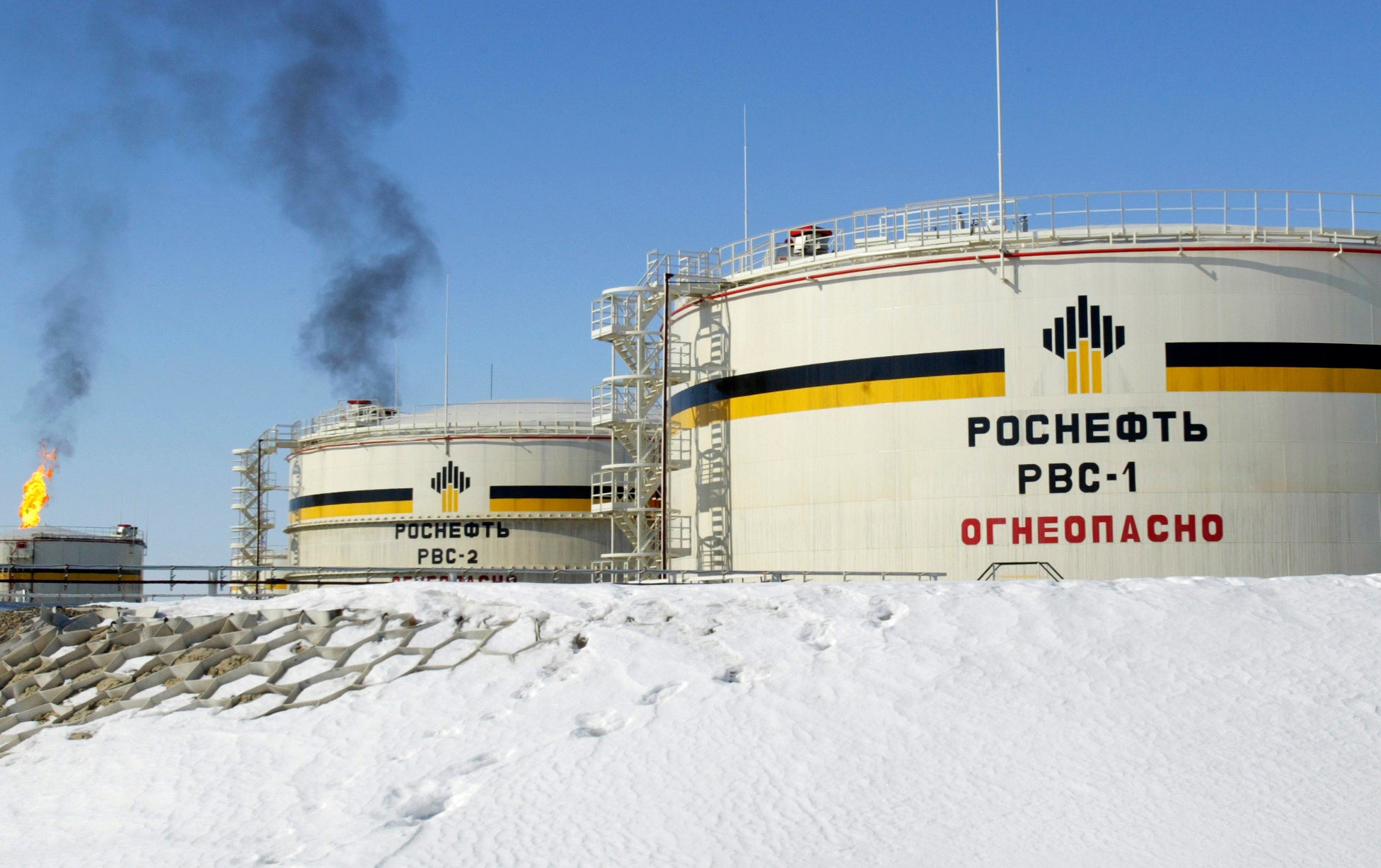
To pressure the Kremlin to halt fighting in Ukraine, the Trump administration imposed sanctions on Russia’s two largest oil companies, Rosneft and Lukoil (Associated Press)
In January, Russian state revenues from taxing the oil and gas industries fell to 393 billion rubles ($5.1 billion).
Advertisement
That’s down from 587 billion ($7.6 billion) in December and from 1.12 trillion ($14.5 billion) in January 2025. That’s the lowest since the COVID-19 pandemic, says Janis Kluge, an expert on the Russian economy at German Institute for International and Security Affairs.
A new approach to sanctions
To pressure the Kremlin to halt fighting in Ukraine, the Trump administration imposed sanctions on Russia’s two largest oil companies, Rosneft and Lukoil, from 21 November. That means anyone buying or shipping their oil runs the risk of being cut off from the U.S banking system — a serious concern for any multinational business.
On top of that, on 21 January, the EU began banning fuel made from Russia crude — meaning it could no longer be refined somewhere else and shipped to Europe in the form of gasoline or diesel fuel.
Advertisement
The head of the EU’s executive commission, Ursula von der Leyen, on Friday proposed a full ban on shipping services for Russian oil, saying sanctions offered leverage to push Russia to halt the fighting. “We must be clear-eyed: Russia will only come to the table with genuine intent if it is pressured to do so,” she said.
The head of the EU’s executive commission, Ursula von der Leyen, on Friday proposed a full ban on shipping services for Russian oil, saying sanctions offered leverage to push Russia to halt the fighting (Copyright 2022 The Associated Press. All rights reserved.)
The latest sanctions are a step beyond the oil price cap imposed by the Group of Seven democracies under the Biden administration. The $60 per barrel cap, enforced through insurers and shippers based in G-7 countries, was aimed at reducing Russia’s profits, not banning imports, out of concern over higher energy prices.
The cap did reduce government oil revenues temporarily, especially after an EU ban on most Russian seaborne oil forced Russia to shift sales to China and India.
Modi hasn’t commented. Foreign affairs spokesman Randhir Jaiswal said India’s strategy was “diversifying our energy sourcing in keeping with objective market conditions.” Kremlin spokesman Dmitry Peskov noted that Moscow was monitoring the statements and remains committed to our “advanced strategic partnership” with New Delhi.
Advertisement
In any case, Russian oil shipments to India have declined in recent weeks, from 2 million barrels per day in October to 1.3 million per day in December, according to figures from the Kyiv School of Economics and the U.S. Energy Information Administration.
Buyers are now demanding bigger discounts on Russian oil to compensate for the risk of running afoul of U.S. sanctions and the hassle of finding payment workarounds that skirt banks reluctant to touch the transactions. (Associated Press)
Data firm Kpler says “India is unlikely to fully disengage in the near term” from cheap Russian energy.
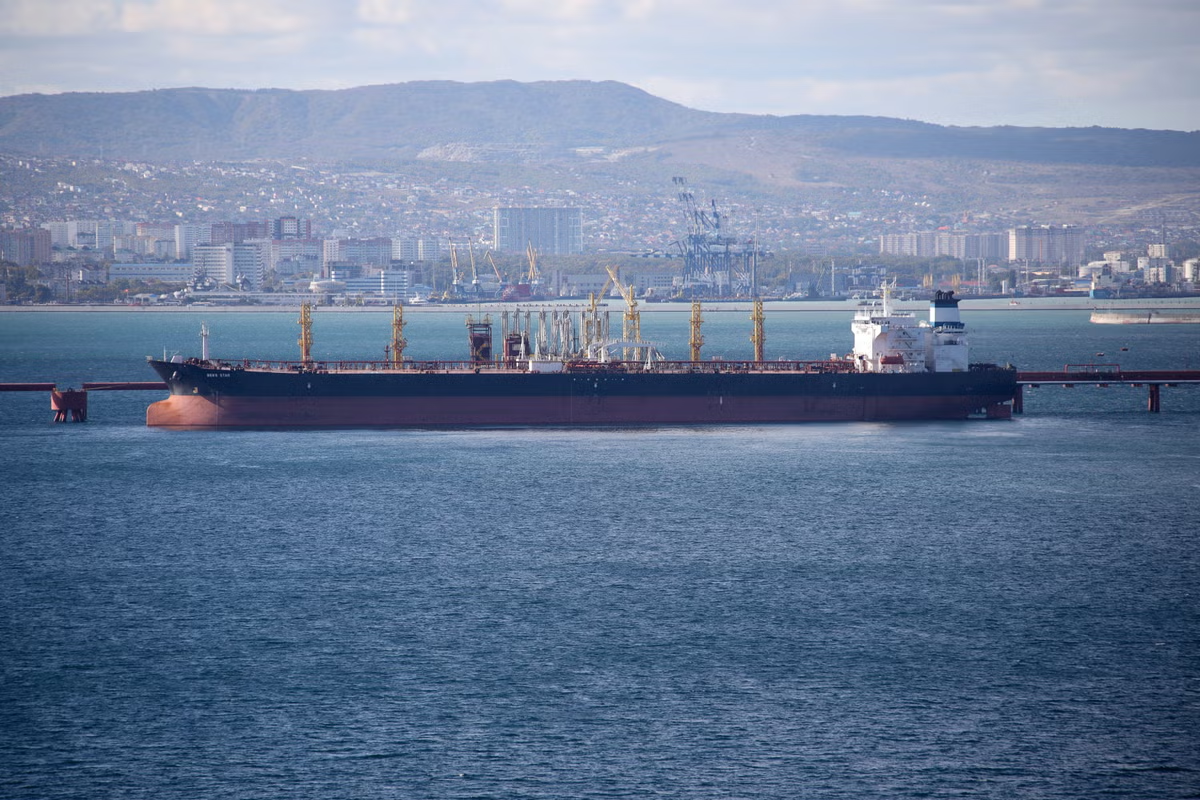
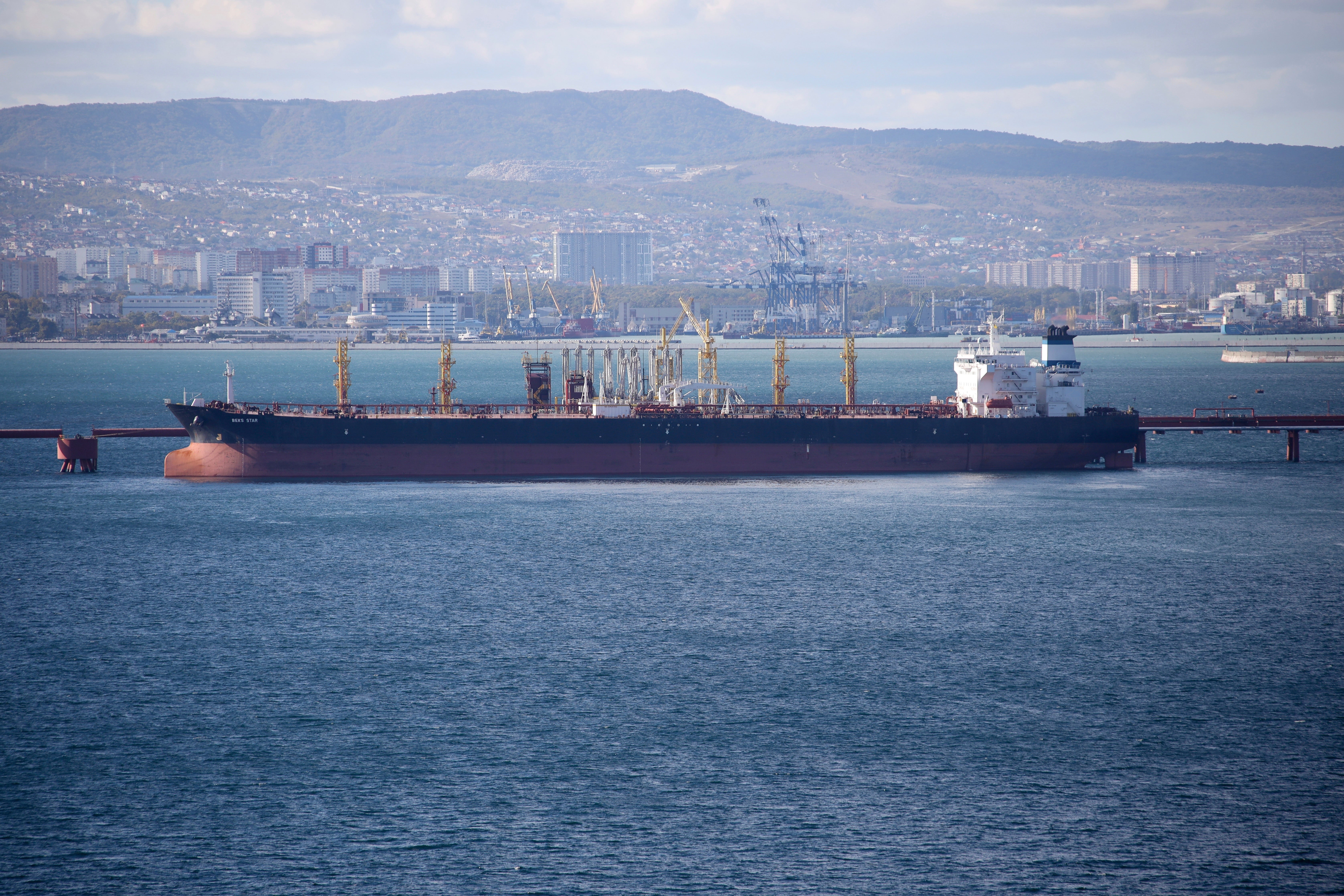
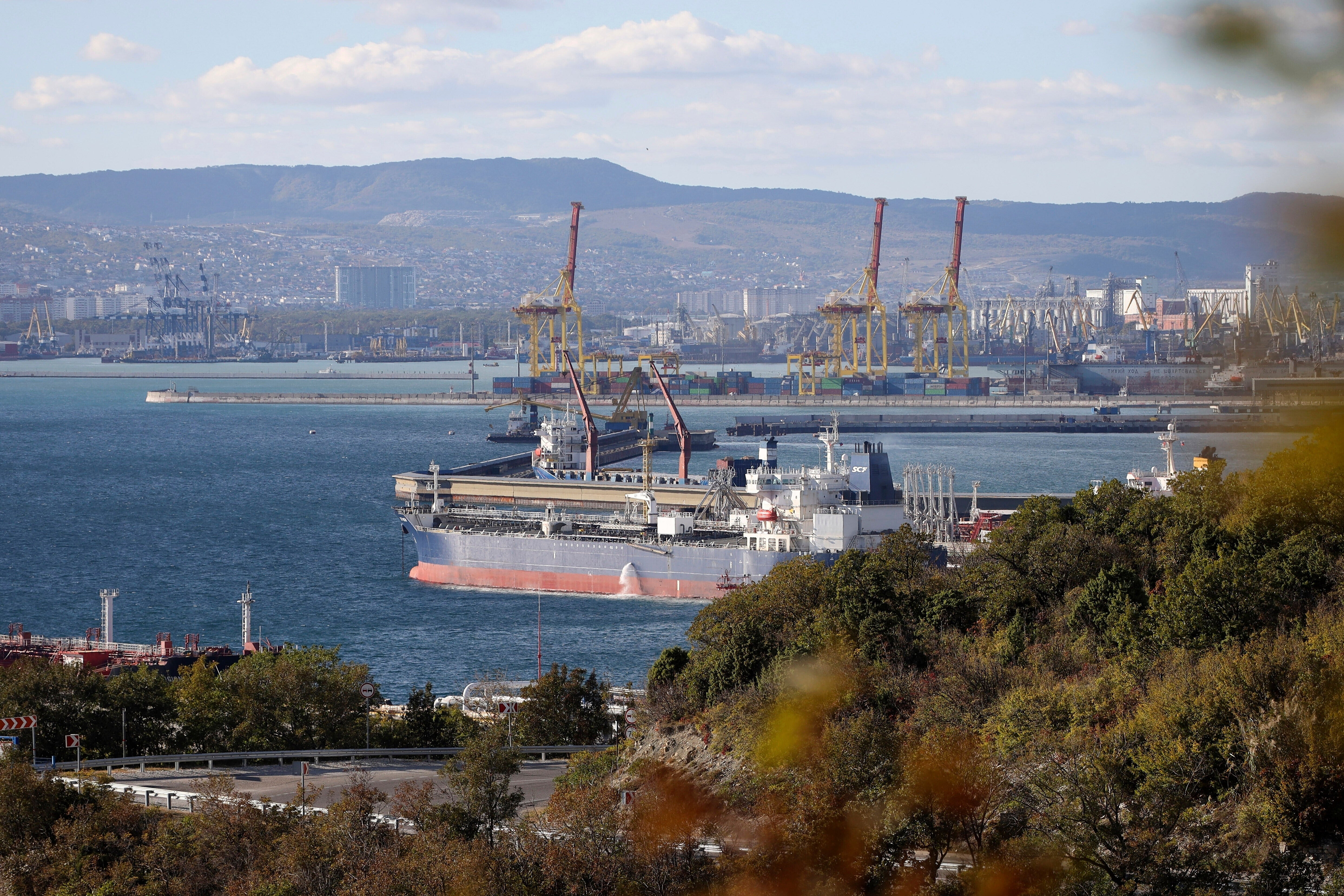
Ukraine’s allies increasingly have sanctioned individual shadow tankers to deter customers from taking their oil — raising the number to 640 among the U.S., U.K. and EU. U.S. forces have seized vessels linked to sanctioned Venezuelan oil, including one sailing under a Russian flag, while France briefly intercepted a suspected shadow fleet vessel. Ukrainian strikes have hit Russian refineries, pipelines, export terminals and tankers.
Advertisement
Russian oil is trading at a steep discount
Buyers are now demanding bigger discounts on Russian oil to compensate for the risk of running afoul of U.S. sanctions and the hassle of finding payment workarounds that skirt banks reluctant to touch the transactions.
The discount widened to about $25 per barrel in December, as Russia’s primary crude export, Urals blend, fell below $38 per barrel, compared with about $62.50 per barrel for international benchmark Brent crude.
Since Russia’s taxes on oil production are based on the price of oil, that cuts into state revenues.
Advertisement
“It’s a cascading or domino effect,” said Mark Esposito, a senior analyst focused on seaborne crude at S&P Global Energy.
Ukraine’s allies increasingly have sanctioned individual shadow tankers to deter customers from taking their oil (Associated Press)
Including diesel and gasoline created “a really a dynamic sanctions package, a one-two punch that are impacting not only the crude flow, but the refined product flow off of those barrels. … A universal way of saying, if it’s coming from Russian crude, it’s out.”
Reluctance to take delivery has meant an inordinate amount — about 125 million barrels — has built up in tankers at sea. That has driven up costs for scarce capacity, with rates for very large oil tankers reaching $125,000 per day “and that’s directly correlated with the ramifications of the sanctions,” said Esposito.
Advertisement
Slowing growth strains Russia’s budget
On top of that, economic growth has stalled as the boost from war-related spending reaches its limits and as labor shortages put a cap on potential business expansion. And lower growth means less tax revenue. Gross domestic product increased only 0.1 per cent in the third quarter.
Forecasts for this year range between 0.6 per cent and 0.9 per cent, down from over 4 per cent in 2023 and 2024.
“I think the Kremlin is worried about the overall balance of the budget, because it coincides with the economic downturn,” said Kluge. “And at the same time the costs of the war are not decreasing.”
Advertisement
The Kremlin responds by raising taxes and borrowing
The Kremlin has resorted to higher taxes and borrowing to fill the gap left by dwindling oil revenues and by slower economic growth.
The Kremlin-controlled parliament, the Duma, raised value-added tax paid on consumer purchases at the cash register to 22 per cent from 20 per cent and increased levies on car imports, cigarettes and alcohol.
The government has increased its borrowing from compliant domestic banks and a national wealth fund still has reserves to patch budget holes.
Advertisement
So the Kremlin has money — for now. But raising taxes can slow growth even more. And borrowing risks worsening inflation, brought down to 5.6 per cent through interest rates of 16 per cent from the central bank, down from a peak of 21 per cent.
“Give it six months or a year, and it could also affect their thinking about the war,” said Kluge. “I don’t think they will seek a peace deal because of this, but they might want to lower the intensity of the fighting, focus on certain areas of the front and slow the war down. This would be the response if it’s getting too expensive.”
The doors to Cumberland House, an 18th-century, Grade I-listed building, opened to the public for the first time in three years on Friday (March 27).
The Cumberland, on the corner of Cumberland Street and King’s Staith, serves seasonal British cuisine from its elegant 70-seat dining room.
Recommended reading:
Crafted by head chef James Whitlock and his culinary team, the menu incorporates a blend of meat and fish dishes made with local ingredients.
Advertisement
The Cumberland overlooks a picturesque River Ouse (Image: Newsquest)
Guests can begin their dining experience with a starter of roasted heritage tomato soup, spring tartlet, a trout and nori mosaic, ham hock pressing or pan-seared scallops.
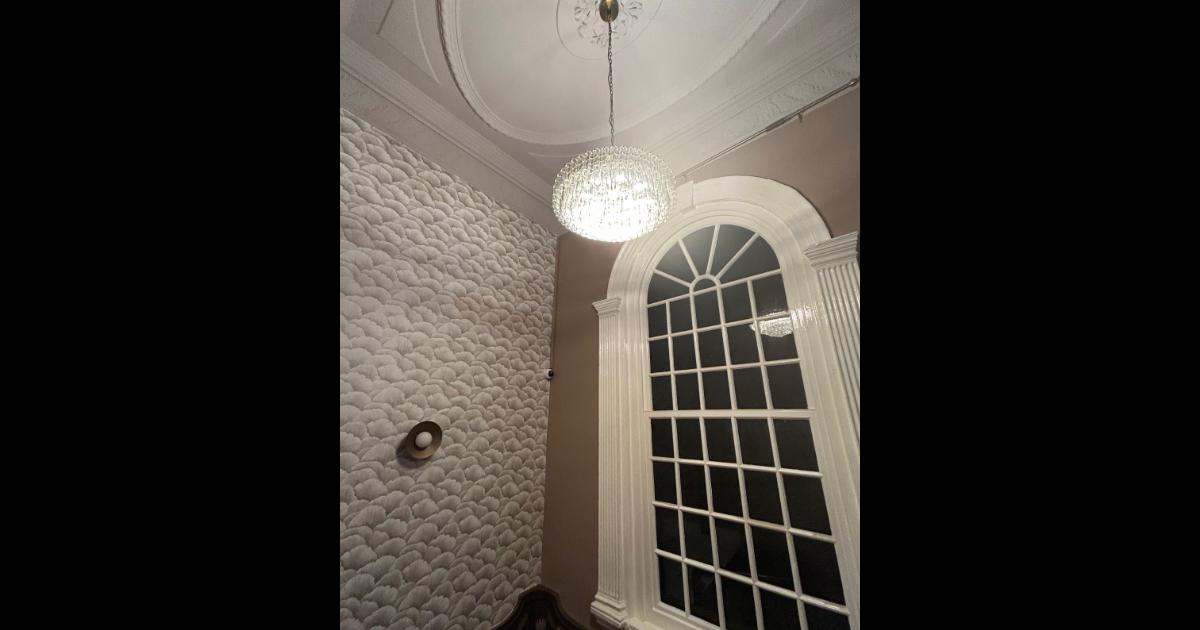
The restaurant includes a modern bar, stocked with a variety of wines and spirits, which leads to the building’s sweeping staircase and separate dining space.
Outside, there is a 30-seat dining area by the river – a hotspot in the summer months.
The restaurant includes a 70-seat dining room (Image: Newsquest)
Owners, Shaun and Jamie-Lee Binns, said that they wished to restore the building to its “former glory”.
Advertisement
The pair recruited an interior designer, who helped preserve some of the four-storey building’s historic features, including an original fireplace.
The interiors were brought to life by Rich Andrews and his company AC Building, who have been described as “instrumental” in the building restoration and its maintenance – ensuring it opened on schedule.
A bar leads to the building’s sweeping 18th-century staircase and upstairs seating (Image: Newsquest)
Speaking ahead of the restaurant’s launch, a spokesperson for The Cumberland said: “Hospitality is deeply rooted in the Binns’ family history, which has owned The Lowther since 1987.
“Shaun and Jamie took over The Lowther in 2003, later expanding with Lil’s on the Waterfront in 2016.
Advertisement
“The decision to take on The Cumberland was driven by a desire to preserve a beautiful and historic building that had stood empty for three years after previously being used as solicitors’ offices.
“Recognising its potential and importance, Shaun and Jamie stepped in to protect it from further deterioration, including flood damage, and to restore it to its former glory.”
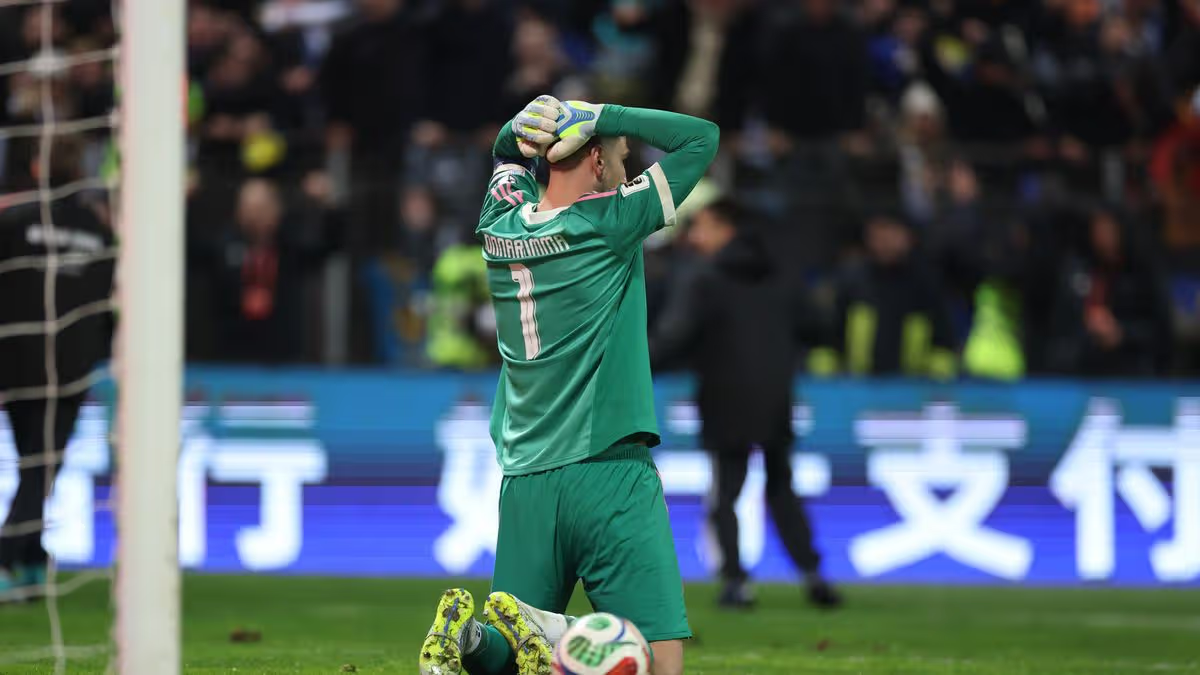
Italy have missed out on a third consecutive World Cup with their players left devastated, and Gianluigi Donnarumma has opened up in a message on his social media
They were beaten by Bosnia and Herzegovina on Tuesday night after a penalty shootout. The Italians lost 4-1 with Donnarumma unable to stop a single spot kick. Italy had taken the lead early on before they went down to 10 men, with Bosnia equalising in the second-half before securing a second penalty shootout victory in less than a week.
It means the Italians, who won the tournament in 2006, have missed out on the last three World Cups. Donnarumma remains one of their leading lights but, despite making his Italy debut at 16, he will now not play in a World Cup until he is at least 31.
The City goalkeeper wrote on Instagram: “Last night, after the match, I cried. I cried because of the disappointment of not being able to bring Italy where it deserves to be. I cried because of the enormous sadness I’m feeling, along with the entire Azzurri team, of which I’m proud to be captain, and I know, right now, you, fans of our national team, are feeling too.
“Words are of little use now, it’s true. But I feel one thing strongly inside, and I want to share it with you: after such a huge disappointment, we must find the courage to turn the page, once again. And to do so requires a lot of strength, passion, and conviction. Always believe; this is the driving force behind moving forward. Because life knows how to reward those who give their all, without holding back. And this is where we must start again. Together. Once again. To bring Italy back where it deserves to be.”
Italy are four-time winners of the World Cup – a total only surpassed by Brazil. However, they’ve failed to even compete on the global stage for several years.
Sandwiched in between their World Cup failures was a European triumph. Donnarumma was named the Player of the Tournament as Italy claimed glory at Euro 2020, beating England in the final on penalties.
Advertisement
They’ve failed to reach those heights since with Luciano Spalletti and Gennaro Gattuso unable to enjoy similar success. The head of the Italian Football Federation (FIGC) Gabriele Gravina told reporters he had asked Gattuso to stay, but he claimed that “was not important” after their qualification failure.
He said: “It hurts, because we needed it for us, for all of Italy and for our movement. A blow that’s difficult to digest. I would have given up years of my life, money, for us to achieve our goal.”
Join our new WhatsApp communityand receive your daily dose of MirrorFootballcontent. We also treat our community members to special offers, promotions, and adverts from us and our partners. If you don’t like our community, you can check out any time you like. If you’re curious, you can read our Privacy Notice.
I’ve made lots of lemon cakes over the years – simple ones baked in a loaf tin, round ones filled with lemon curd and covered in buttercream icing. I wanted to make one that was intensely lemony, a bit more grown-up than most. This is it. You don’t have to ice this cake – the icing does make it sweeter.
If you prefer a more mouth-puckering lemon experience, dust the top with icing sugar before serving it and leave it at that.
The field was used as part of Munchkinland in the movie Wicked.
Spring is many people’s favourite season thanks to the longer hours of sunlight and flowers that will bloom adding a bit more colour to life. For those who love flowers, you might not want to miss out on the chance to see the UK’s biggest working tulip field.
Advertisement
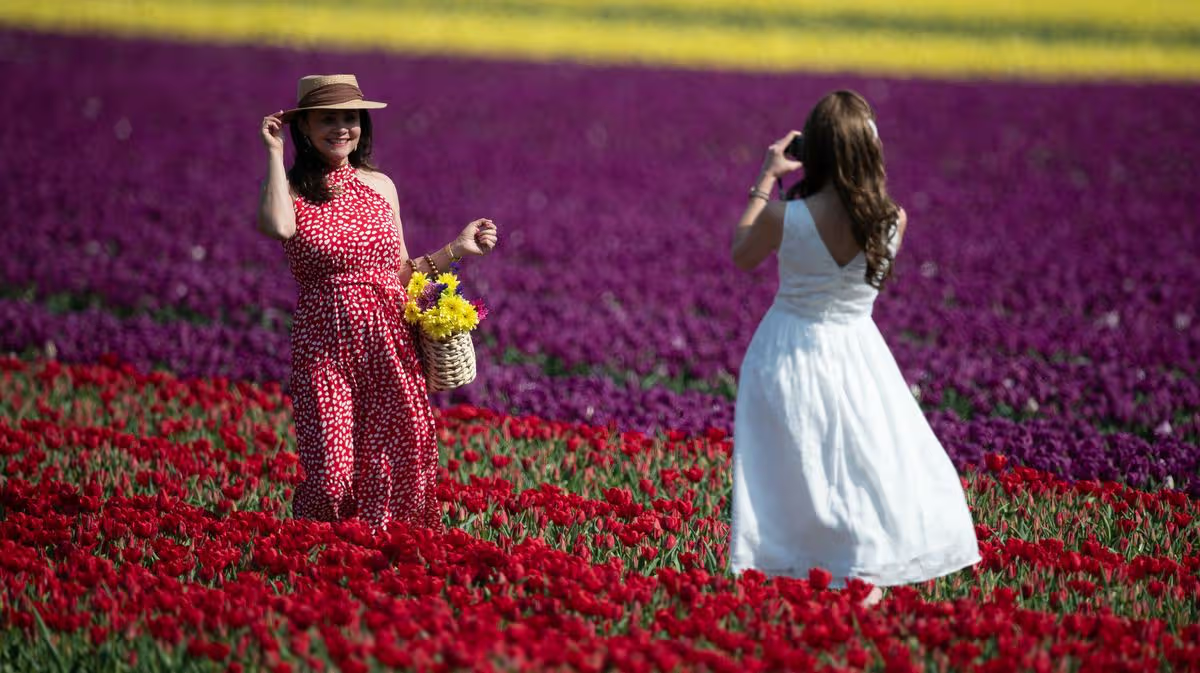
Found between King’s Lynn and Fakenham, Norfolk Tulips is only open to the public for a few days every year. For 2026, the tulip field will returning for its sixth year and will be open for 10 days between Thursday, April 16, and Monday, April 27.
The tulip field covers over 20 acres and features 9.1 million flowers to see. You might recognise the field if you have watched the Hollywood blockbuster, Wicked.
The tulip field was used to make up part of Munchkinland with Munchkins seen running through the fields. Director Jon M. Chu decided to use the field as a filming location after he saw a viral video of the tulips online.
Whether you love Wicked and would like to see where some of it was filmed or want to see the flowers, you might want to take a trip to Norfolk Tulips. Visitors are able to walk through the fields and see the tulips in a range of different colours.
On some days, the field is open from 10am until 4pm or you can watch the sun set in the tulip field when it is open until the later time of 8pm. Money from the opening goes towards the Tapping House, a local hospice.
If you are unable to make it to Norfolk to see the tulips in person, you can order a bouquet from the Norfolk Tulips website. You can buy a bouquet of one colour of tulips or even buy bulbs to plant in your garden to create your own mini tulip field.
Tickets to see the famous tulip field cost £10 for adults and £5 for children between the ages of five and 16 with car parking costing £2.50 per car. The tickets can be bought from the Norfolk Tulips website from 10am on Tuesday, April 7.
Norfolk Tulips can be found outside of King’s Lynn on Mill Road. It is around an hour and a half drive from Cambridge via the A10.
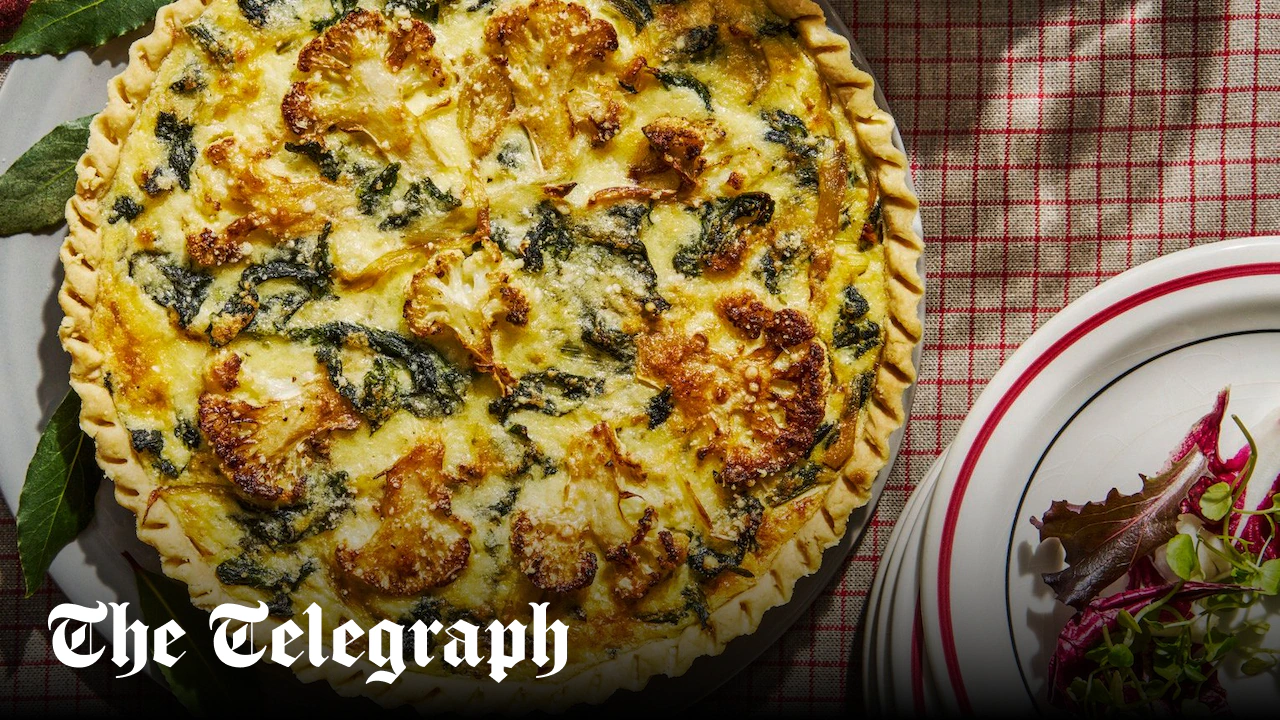
Roasting cauliflower intensifies its sweetness, so don’t opt to steam or boil instead. This is great for spring – it’s the spinach – and even those who aren’t much into vegetables love it. If you can’t get Lancashire cheese, which is creamy and mild, use a mild Cheddar cheese, grated, or a mild goat’s cheese, crumbled.
Requires 1 hour refrigerating time and 15 minutes cooling time
Two migrants have died off the coast of France during an attempt to cross the English Channel.
Six other migrants were rescued, with one of them taken to hospital.
It comes a day after the government signed an extension with France over current arrangements on beach patrols as part of efforts to reduce the number of Channel crossings.
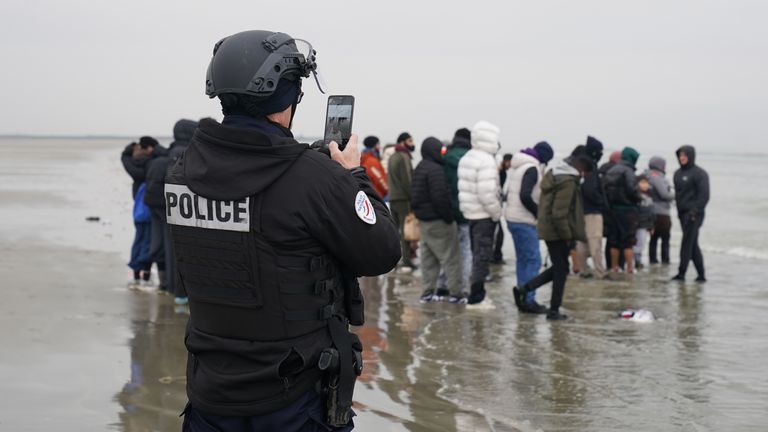
Image: Pic: PA
The French maritime prefecture said the latest incident started when a small boat headed towards the beach at Gravelines, near Calais, at around 9.30am on Wednesday.
Advertisement
A group of about 30 migrants was waiting for it.
Eight people were pulled onto a rescue boat when they got into difficulty, but two of the migrants could not be saved, officials said.
The group of migrants, including children, was seen struggling to board the small boat.
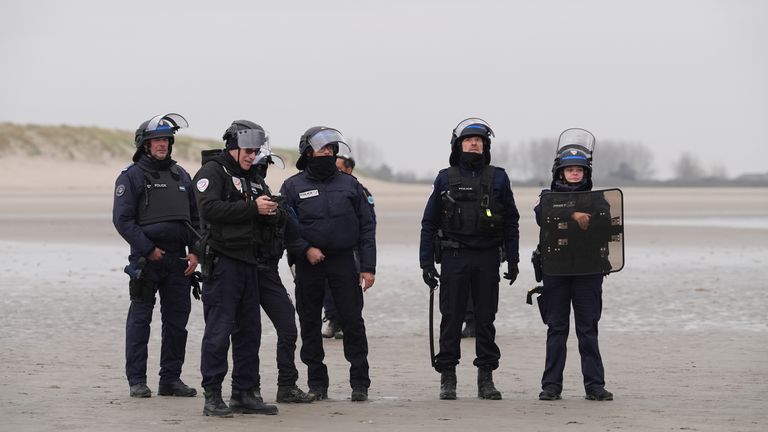
At least 12 French police officers were present in the Gravelines beach area at the time.
Advertisement
A French navy helicopter carried out a search as part of attempts to ensure nobody was left in the water, the French authority said.
Image: Migrants struggle to board a small boat off the coast of France. Pic: PA
On Tuesday, Home Secretary Shabana Mahmood signed a two-month extension to the current arrangement with France over Channel crossings, while the countries thrash out a longer-term agreement.
It came hours before the £478m deal, put in place in 2023 by the then Tory government, was due to end.
The package was set up to fund a new detention centre in France and hundreds of extra law enforcement officers on its shores.
Tuesday’s extension means operational contracts will continue to be funded by £16.2m of UK government money.
Advertisement
Image: French authorities on the beach in Gravelines. Pics: PA
A Home Office spokesperson said Ms Mahmood is “driving a hard bargain” with Paris to get “more bang for our buck”.
Ms Mahmood has previously been understood to be pushing for a new deal to include performance-related clauses that would link funding to the proportion of boats intercepted by the French.
Some 4,441 migrants arrived in the first three months of 2026, according to the latest Home Office data.
This is 33% lower than the number who had reached the UK by this point in 2025, which was 6,642.
Refugee charity Care4Calais said it was a “tragedy that another two lives have been lost to our deadly border” and called for “safe routes” to be introduced so people could claim asylum in the UK.
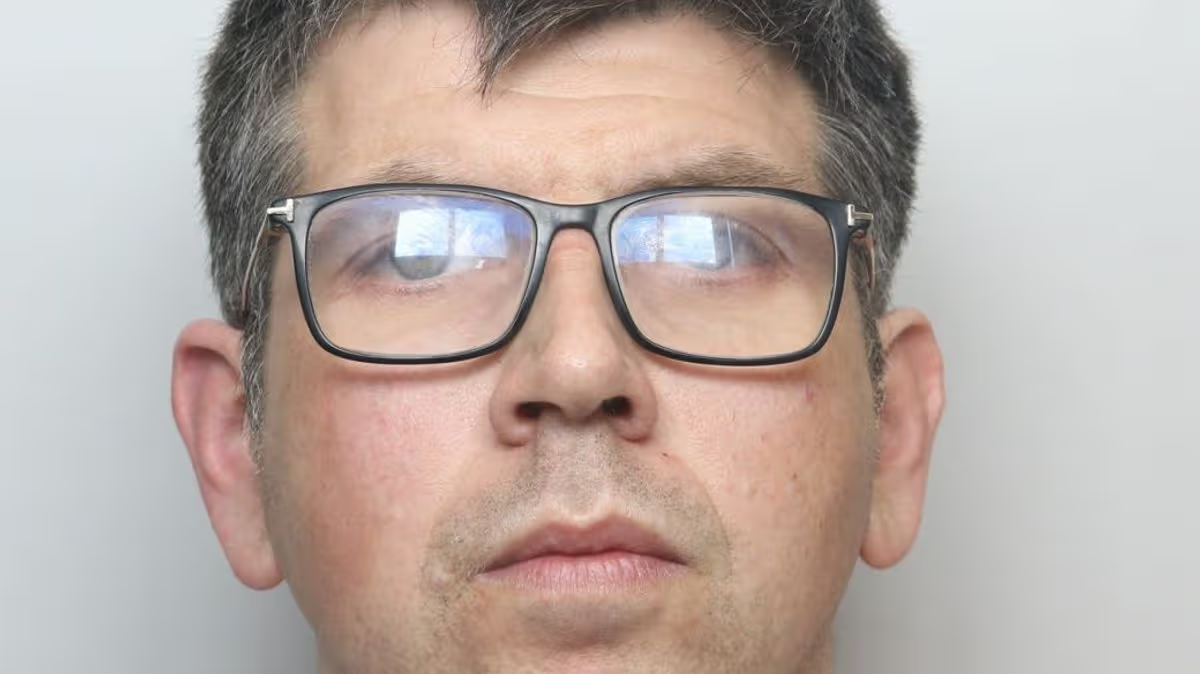
Patrick Banks, 42, was jailed for three years by a judge at Sheffield Crown Court
Husna Anjum Senior Live News Reporter and Eliana Nunes
17:51, 01 Apr 2026Updated 17:53, 01 Apr 2026
A police officer has been jailed for sexually assaulting a woman while investigating a sex offence she suffered from someone else. The single mother, who was homeless and ‘vulnerable’ at the time, said the police officer was “supposed to protect us”.
Patrick Banks, 42, was jailed for three years by a judge at Sheffield Crown Court who told him on Wednesday: “You grotesquely abused your position as a police officer.” The court heard how Banks had been assigned to investigate the woman last year.
Advertisement
The Mirror reports she had complained to West Yorkshire Police that she had been the victim of a sex assault in Leeds in April 2025. A judge told the court how Banks asked the woman to translate messages for him from French, before touching her inappropriately as he smelled her hair.
Prosecutor Mark Bates said the messages, which Banks had generated himself using Google Translate, included: “I like you a lot”, “I want to take off your underwear with my teeth” and “Do you miss sex”.
The court heard how the defendant messaged the woman from his personal phone, and visited her off-duty in his own car, but gave the impression he was on-duty. He also bought presents for one of the single mum’s children and officers found that he had viewed her social media more than 100 times.
Facing Banks in court on Wednesday, the woman outlined the problems she had been having at that time, which had left her homeless with two children and made her especially vulnerable. She told the court: “What revolts me today is that the man who was supposed to protect me took advantage of this vulnerability.”
The woman said: “This trauma prevents me seeing the beauty and goodness in the world.”
The judge was told how Banks also made inappropriate contact with a second woman, who had also reported a sexual assault to West Yorkshire Police. Mr Bates told the court that police recovered 53 pages of messages between the defendant and this second woman, some asking her about personal matters, including her previous employment as a sex worker.
He also asked her for a “peck on the cheek”. Officers found the woman’s mobile phone in Banks’s house after he had told her it was going off for forensic examination.
Advertisement
The prosecutor said West Yorkshire Police had only one official record of the defendant visiting either of the women’s homes on official police business.
Sentencing Banks, Judge Jeremy Richardson KC said: “It is a particularly aggravating feature of this case that you grotesquely abused your position as a police officer whilst working in the safeguarding unit of the West Yorkshire Police when you were supposed to be investigating sexual crimes perpetrated upon vulnerable women.“It is bad enough to behave inappropriately in such circumstances. It becomes exceptionally serious when the misconduct embraces a sexual crime.
“You were unhampered by scruples of any kind and your serious misconduct eclipsed your professional duty.”
Banks admitted misconduct in public office and sexual assault at a previous hearing. The court heard how he joined Essex Police in 2019 and moved to West Yorkshire Police in 2022 and was working as a detective constable in a specialist adult safeguarding unit.
Advertisement
He resigned in September 2025.
Want to see more of the stories you love from Belfast Live? Making us your preferred source on Google means you’ll get more of our exclusives… To add Belfast Live as a preferred source, simply click here.
Last week’s landmark US court ruling may prove to be a turning point in our relationship with the digital world. In a case already being described as a “big tobacco moment” for tech giants, jurors found that Meta, owner of Instagram, Facebook and WhatsApp, and Google, which owns Youtube, had intentionally built addictive platforms that had damaged a young woman’s mental health.
The claimant, a 20-year-old woman referred to in court as Kaley, sued Meta and YouTube over her childhood addiction to social media. In the bellwether case, judges ordered the tech companies to pay Kaley $6m (£4.5m) in damages, setting a precedent for thousands of similar cases against social media companies that are waiting elsewhere.
The verdict hits home for many of us because the behaviours described feel so familiar: the endless scroll that keeps us up later than intended at night, the instinctive reach for a phone in any spare moment, the sense of being sucked into a digital distraction machine. They’re not simply bad habits or a lack of willpower; they’re the predictable outcomes of platforms designed to hold our attention for as long as possible.
Advertisement
Tech companies have consistently framed social media as a neutral tool. In this case, Meta argued that any harm was “the result of a complex mix of factors”, with outcomes depending on “individual behaviour, parenting, or wider social factors — not just platform design,” according to The Guardian. Judges disagreed and their ruling challenges that idea head on, suggesting that the design itself plays a direct role in shaping our behaviour, particularly for younger users.
All of which raises an obvious question: if the apps are designed to keep us hooked, how can we begin to take back control?
Advertisement
Here are seven simple ways to reclaim your attention:
Be part of the solution
At Positive News, we’re not chasing clicks or profits for media moguls – we’re here to serve you and have a positive social impact. We can’t do this unless enough people like you choose to support our journalism.
Give once from just £1, or join 1,800+ others who contribute an average of £3 or more per month. Together, we can build a healthier form of media – one that focuses on solutions, progress and possibilities, and empowers people to create positive change.
As of the end of February 2026, some women faced a 76-week wait for an urgent appointment and a 108-week wait – over two years – for a routine gynaecology outpatient appointment.
The latest NHS Tayside waiting times show some women have had to wait almost year-and-a-half for an urgent gynaecology appointment.
Advertisement
As of the end of February 2026, some women faced a 76-week wait for an urgent appointment and a 108-week wait – over two years – for a routine gynaecology outpatient appointment.
NHS Tayside has arranged extra appointments and operations and said, by the end of this month, it will reduce the waiting time to within a year for an appointment and to “only a small number of women” who will have waited over two years for surgery.
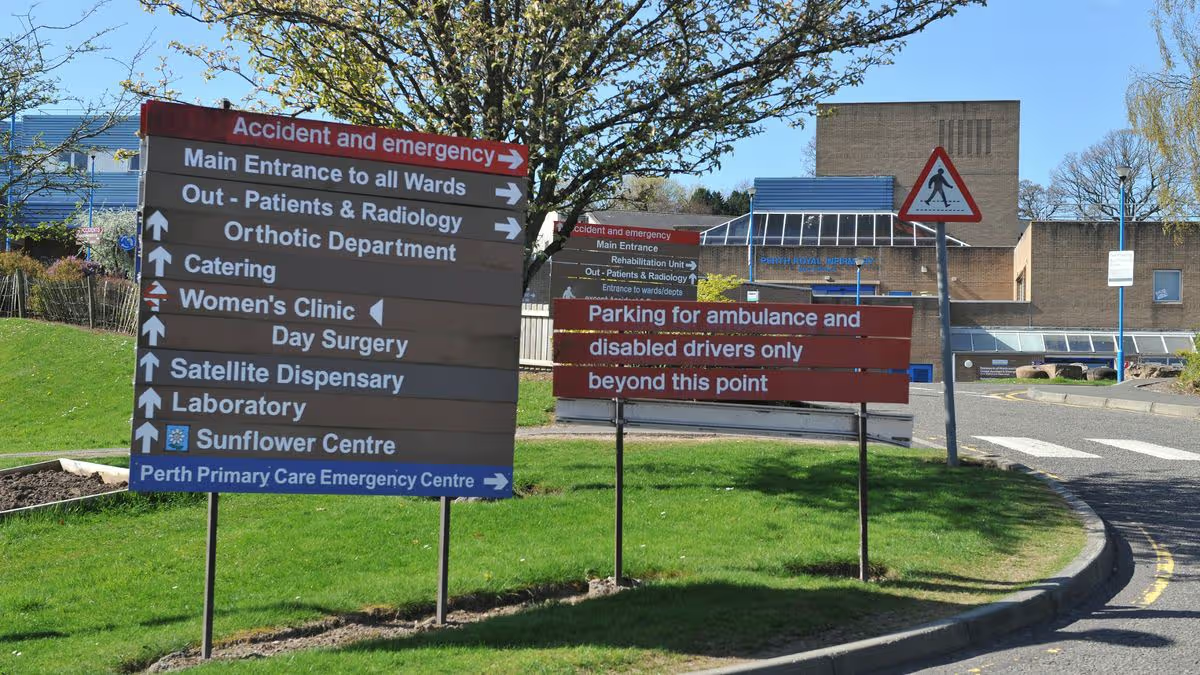
In spring 2023 Rosemary (54) from Perth discovered she had a prolapse. She had a smear test in April 2023 and was referred to gynaecology and for an ultrasound at Perth Royal Infirmary. The ultrasound revealed she also had an ovarian cyst which was about 3-5cm. Rosemary learnt she had endometriosis.
In March 2024, Rosemary had an MRI scan at Ninewells and the cyst – which was benign – was about 7cm.
Advertisement
Just over a year-and-a-half later, in November 2025, Rosemary successfully underwent surgery at Ninewells to remove the cyst. Surgeons ended up removing not one but two cysts. However, she was still left with her prolapse and was told – after her op – it too would now require surgery.
In December 2025, she was given a follow-up appointment in Forfar two weeks after her operation.
Rosemary said: “She told me there was a waiting list. When I asked how long it was, she said ‘years’.
“And my heart sank.”
Advertisement
Rosemary is on her feet all day because of her work.
She said: “My problem was the prolapse. Why couldn’t they fix it at the same time?
“It’s been going on for three years.”
In February 2026, Rosemary received a letter from NHS Tayside confirming she would be getting prolapse surgery but has no idea when.
Advertisement
She said: “I got a letter to say I would get an operation ‘in due course’. ‘In due course’ means nothing. One of my friends is to have an urgent hysterectomy but it’s in six months.”
NHS Tayside’s latest outpatient waiting times at the end of February 2026 showed the longest waits for any speciality were for gynaecology. The list is based on completed waits in the previous three-month period for an urgent or routine consultant-led acute outpatient appointment and list the 90th percentile wait – the longest that nine out of 10 patients waited.
NHS Tayside has said it is working to drive down the waiting times for gynaecology.
A spokesperson for NHS Tayside said: “Waiting times for gynaecology treatment are longer than we would like and therefore there has been a drive to deliver a significant number of additional appointments and operations with both our own staff and with the support of staff from the independent sector.
Advertisement
“This additional work means that by March 31, 2026, no one will be waiting longer than 52 weeks for a gynaecology outpatient appointment and there will remain only a small number of women who will have waited longer than 104 weeks for an operation. We will be working to continue to improve this position further over the course of the year.”
NHS Tayside said it cannot comment on individual cases. The health board has invited Rosemary to contact its Patient Experience Team to discuss any concerns she may have.
3D Trading is recalling M&M’s Pipoca (popcorn) because the product poses a potential safety risk.
The product, manufactured for the Brazilian market, contains allergens including peanuts, gluten, barley, rye and wheat which are not mentioned on the UK label.
Only M&M’s Pipoca with a 3D Trading ingredients label is being recalled.
Advertisement
Food Recalls Explained
The affected packets of chocolate come in 35g bags, and all batch codes and best before dates with the 3D Trading ingredients label are included.
A spokesman for the Food Standards Agency (FSA) said: “3D Trading is recalling the above product from customers and has been advised to contact the relevant allergy support organisations, which will tell their members about the recall.
“The company has also issued a point-of-sale notice to its customers. These notices explain to customers why the product is being recalled and tell them what to do if they have bought the product.
“This product contains peanut and gluten and may contain barley, rye and wheat making it a possible health risk for anyone with an allergy to peanut, an allergy or intolerance to barley, rye, wheat or cereals containing gluten or with coeliac disease.
Advertisement
“If you have bought the above product and have an allergy to peanut or an allergy or intolerance to barley, rye, wheat or cereals containing gluten, or coeliac disease, do not eat it.
“Instead return it to the store from where it was bought for a full refund with or without a receipt. For more information, please call 07596 571086 or contact UK@3dcandy.co.uk.”
What is a product recall?
If there is a problem with a food product that means it should not be sold, then it might be ‘withdrawn’ (taken off the shelves) or ‘recalled’ (when customers are asked to return the product).
The FSA issues Product Withdrawal Information Notices and Product Recall Information Notices to let consumers and local authorities know about problems associated with food.
Advertisement
In some cases, a ‘Food Alert for Action’ is issued.
This provides local authorities with details of specific actions to be taken on behalf of consumers.














































You must be logged in to post a comment Login