A pedestrian walks by a CVS store in Greenbrae, California, on July 31, 2025.
Justin Sullivan | Getty Images
CVS Health on Tuesday reported fourth-quarter earnings and revenue that beat estimates and reaffirmed the 2026 profit guidance that impressed investors, signaling steady progress in the health-care giant’s turnaround plan.
Advertisement
“’24 was a tough year for the company. So ’25 righted the ship,” CVS CFO Brian Newman said in an interview.
CVS, which operates one of the largest pharmacy chains in the U.S., sees full-year profit coming in between $7 to $7.20 per share. That’s in line with the $7.17 per share that analysts were expecting, according to LSEG.
Newman also said the company is maintaining its 2026 revenue guidance of at least $400 billion. Analysts expect revenue of $409.77 billion, according to LSEG, though it’s unclear if those estimates account for all of the headwinds Newman cited.
He said that guidance includes $20 billion in headwinds, roughly half of which is driven by the company’s move to exit the Affordable Care Act individual exchange market this year. Newman said the other half reflects the company’s retail business adjusting to lower drug prices after the “most favored nation” deals that President Donald Trump struck with more than a dozen pharma companies in recent months.
Advertisement
CVS last week said its roughly 9,000 pharmacies are accepting discount cards from the president’s newly launched direct-to-consumer platform, TrumpRx, for eligible patients. Newman said CVS shares the Trump administration’s goal of reducing costs. He added that the lower prices set a new starting point from which Caremark, the company’s pharmacy benefit manager, can negotiate even lower costs for its clients, “so we don’t see these as kind of adversarial relationships.”
CVS previously said it expects growth this year to be driven by the return to target margins at its recovering Aetna insurance business, led by privately run Medicare Advantage plans, and Caremark.
Newman added that primary-care provider Oak Street Health is “improving its profitability” this year. That comes after CVS moved to close 16 underperforming Oak Street locations. For the retail pharmacy business, Newman said the company has several tailwinds, such as new technological investments and the locations and new customers CVS acquired from Rite Aid last year after it filed for bankruptcy.
Investors rewarded CVS last year as CEO David Joyner, who stepped into the role in late 2024, pressed ahead with a sweeping restructuring aimed at reversing years of underperformance. The company has cut costs, reshuffled leadership and exited weaker markets, helping fuel a roughly 40% stock rise over the past year.
Advertisement
Here’s what CVS reported for the fourth quarter compared with what Wall Street was expecting, based on a survey of analysts by LSEG:
Earnings per share: $1.09 adjusted vs. 99 cents expected
Revenue: $105.69 billion vs. $103.59 billion expected
The company posted net income of $2.92 billion, or $2.30 per share, for the fourth quarter. That compares with net income of $1.62 billion, or $1.30 cents per share, for the same period a year ago.
Excluding certain items, such as restructuring charges and capital losses, adjusted earnings were $1.09 per share for the quarter.
CVS booked sales of $105.69 billion for the fourth quarter, up 8.2% from the same period a year ago, as all three of its business segments showed growth.
Growth across business units
The insurance business brought in $36.29 billion in revenue during the quarter, up more than 10% from the fourth quarter of 2024.
Advertisement
Newman said the unit delivered a “very strong” quarter and that he expects another year of margin improvement, primarily driven by Medicare Advantage. The company’s business for those privately run Medicare plans is “continuing the path towards target margins” of 3% to 4% by 2028, he said.
Aetna and other insurers have grappled with higher-than-expected medical costs over the past year as more Medicare Advantage patients return to hospitals for procedures they delayed during the pandemic. While medical costs remain high, Aetna and other insurers, such as UnitedHealthcare, appear to be becoming better equipped to navigate the issue moving forward.
Still, Newman said “we will continue the elevated trends. … I don’t think it’s too early to assume anything other than a prudent outlook.”
The insurance segment’s medical benefit ratio — a measure of total medical expenses paid relative to premiums collected — remained consistent from the prior year, at 94.8%. A lower ratio typically indicates that a company collected more in premiums than it paid out in benefits, resulting in higher profitability.
Advertisement
Newman said the biggest driver of that ratio in the fourth quarter was Medicaid pass-through payments that hit in late December.
In a release, CVS also said improved performance in the unit’s government business was offset by shifts in Medicare drug cost timing following changes under the Inflation Reduction Act, which altered the usual seasonal pattern of prescription spending.
Last month, shares of Medicare Advantage insurers took a hit in January after the Trump administration proposed nearly flat government payment rates to those plans in 2027. Newman said he does not believe that the proposed rate reflects medical cost trends.
CVS has started a dialogue with the Centers for Medicare and Medicaid Services before the agency finalizes the rate notice in the beginning of April, he added.
Advertisement
CVS’ pharmacy and consumer wellness division posted $37.66 billion in sales for the fourth quarter, up 12.4% from the same period a year earlier.
CVS said the increase came partly from higher prescription volume, including from the company’s acquisition of prescriptions from Rite Aid, but was offset by pharmacy reimbursement pressure and the impact of some generic drugs entering the market.
That unit dispenses prescriptions in CVS’ more than 9,000 retail pharmacies and provides other services, such as vaccinations and diagnostic testing.
CVS’ health services segment generated $51.24 billion in revenue for the quarter, up 9% compared with the same quarter in 2024.
Advertisement
That unit includes Caremark, which negotiates drug discounts with manufacturers on behalf of insurance plans, creates lists of medications, or formularies, that are covered by insurance, and reimburses pharmacies for prescriptions.
SYDNEY — Skies across Australia will glow under the luminous Pink Moon this week, with the April full moon reaching its peak on Thursday, April 2, 2026, at around 1:11 p.m. AEDT, offering skywatchers a spectacular celestial display as autumn settles in the southern hemisphere.
Pink Moon
Although named the Pink Moon after the pink phlox wildflowers that bloom in North America during early spring, the moon itself will not appear pink. Instead, it will shine as a bright, silvery orb, potentially taking on a warm orange or golden hue near the horizon due to atmospheric effects. The name originates from traditional Native American and colonial almanacs marking seasonal changes rather than the moon’s actual color.
The Pink Moon marks the fourth of 13 full moons in 2026 and coincides with the arrival of autumn in Australia. It will officially become full at approximately 02:11 UTC on April 2 (which is 1:11 p.m. AEDT or 12:11 p.m. AEST in eastern Australia). For most observers Down Under, the moon will already be high in the daytime sky at its peak, making the best viewing opportunities after sunset on Thursday evening when it rises in the east.
Astronomers recommend heading outside from around 7:30 p.m. local time onward on April 2 for optimal views as the moon climbs higher and appears brightest against the darkening sky. In major cities, moonrise times vary slightly: Sydney around 6:15 p.m. AEDT, Melbourne about 6:30 p.m. AEST, Brisbane near 6:00 p.m. AEST, Perth around 6:45 p.m. AWST, and Adelaide roughly 6:20 p.m. ACST. Clear weather forecasts for much of the continent this week should favor good visibility in most regions.
No special equipment is needed to enjoy the Pink Moon. The naked eye will reveal its full, bright disk, while binoculars or a small telescope can bring out subtle surface features such as craters and maria. Photographers hoping to capture striking images should look for compositions with foreground elements like city skylines, trees or coastal horizons to add scale and drama. A tripod and long-exposure settings work well for sharper shots once the sky darkens.
Advertisement
The Pink Moon also carries cultural and seasonal significance. In the northern hemisphere it signals the bursting of spring flowers and the renewal of life after winter. For Australians, it arrives during the transition to cooler autumn weather, often called the “Egg Moon” or “Budding Moon” in various traditions. Some Indigenous Australian groups have their own seasonal interpretations tied to local flora, fauna and weather patterns.
This year’s April full moon is not classified as a supermoon, as the moon’s distance from Earth at perigee will be around 244,000 miles — not close enough to qualify for the “super” designation that makes the moon appear larger and brighter. Still, any full moon rising near the horizon can create an optical illusion known as the “moon illusion,” making it seem unusually large and impressive.
Weather conditions will play a key role in visibility. Meteorologists expect mostly clear skies across eastern states on Thursday evening, though patchy cloud could affect parts of western Australia or Tasmania. Light pollution in urban areas will dim the view somewhat, so heading to darker suburban parks, beaches or rural lookouts is advised for the best experience. Popular spots include Sydney’s North Head, Melbourne’s Yarra Bend Park, Brisbane’s Mount Coot-tha, and Perth’s Kings Park.
Astronomy enthusiasts and social media users are already buzzing with anticipation. Hashtags such as #PinkMoon2026 and #AprilFullMoon have begun trending locally, with many sharing past full moon photos and planning viewing parties. Families and school groups often use such events as informal science lessons about lunar cycles, phases and the moon’s influence on tides.
Advertisement
The lunar cycle repeats roughly every 29.5 days, with each full moon earning traditional names tied to nature and culture. Following the Pink Moon, May’s full moon will be known as the Flower Moon, continuing the spring theme in the north while marking deepening autumn in Australia.
For those interested in lunar folklore, the Pink Moon has long been associated with renewal, growth and fresh beginnings. Some modern astrologers link it to themes of emotional release and setting intentions for the coming season, though scientific observers focus on the predictable mechanics of orbital alignment between the sun, Earth and moon.
Safety reminders accompany any evening skywatching activity. Drivers should remain alert for pedestrians gathered outdoors, and viewers in remote areas should carry torches, wear appropriate clothing for cooling evening temperatures, and check for any local fire restrictions or wildlife considerations.
The event provides a timely reminder of Australia’s clear southern skies, which offer excellent opportunities for stargazing year-round. Organizations such as Astronomy Australia and local astronomical societies often host public viewing nights during significant lunar events, providing telescopes and expert guidance.
Advertisement
While the Pink Moon dominates the night on April 2, keen observers may also spot bright planets such as Jupiter or Saturn low in the sky depending on the time and location. The moon’s brightness can wash out fainter stars, so the following nights as it wanes will offer better conditions for deeper sky viewing.
Climate and light pollution trends continue to challenge optimal viewing in growing cities, prompting calls for smarter urban lighting policies to preserve dark skies for both wildlife and human enjoyment. Initiatives to create urban dark-sky reserves have gained traction in several Australian states.
As April 1 headlines teased the upcoming display, Australians from all walks of life — from casual skywatchers to dedicated amateur astronomers — prepared to step outside and appreciate one of nature’s reliable spectacles. In an increasingly busy world, the predictable rhythm of the full moon offers a moment of shared wonder.
Whether viewed from a bustling city balcony or a remote outback vantage point, the Pink Moon promises to deliver a memorable sight. Its soft, steady glow will illuminate the landscape, reminding observers of humanity’s ancient connection to the heavens.
Advertisement
For the latest local moonrise times and weather updates, Australians can consult apps such as Time and Date, Stellarium or the Bureau of Meteorology. Community groups on social platforms are also sharing real-time tips and photos as the event unfolds.
As the Pink Moon rises over the Australian continent this week, it serves as a gentle seasonal marker — a bridge between the warmth of summer and the cooler days ahead, lighting up the night with quiet beauty that requires no ticket or reservation, just a clear view and a few minutes of attention.
Skywatchers are encouraged to share their images responsibly and to enjoy the moment safely. The Pink Moon of 2026 may not paint the sky pink, but it will undoubtedly leave a lasting impression on those who take the time to look up.
| Revenue of $2.06M (2.21% Y/Y) misses by $251.52K
Milestone Scientific Inc. (MLSS) Q4 2025 Earnings Call April 1, 2026 8:30 AM EDT
Company Participants
Eric Hines – Chief Executive Officer, President & Director Keisha Harcum – Vice President of Finance
Advertisement
Conference Call Participants
James Carbonara Bruce Jackson – The Benchmark Company, LLC, Research Division Anthony Vendetti – Maxim Group LLC, Research Division
Advertisement
Presentation
Operator
Good day, everyone. Welcome to the Milestone Scientific Inc. Fourth Quarter 2025 Financial Results and Business Update Conference Call. [Operator Instructions] As a reminder, this call is being recorded.
It is now my pleasure to turn the floor over to your host, James Carbonara with Hayden IR. The floor is yours.
Advertisement
James Carbonara
Thank you, operator. Good day, everyone. Before we begin, please note that today’s call will contain forward-looking statements within the meaning of the Private Securities Litigation Reform Act of 1995. These statements are subject to risks and uncertainties that could cause actual results differ materially from those projected. Please refer to our earnings press release as well as our filings with the SEC, including our 2025 Form 10-K for a discussion of these risks. A replay of this call will be available shortly after its conclusion.
With that, I’ll turn the call over to our CEO, Eric Hines.
Advertisement
Eric Hines Chief Executive Officer, President & Director
Thank you, James, and good morning to everybody, and thank you for joining our call today. When I stepped in as a CEO in August of 2025, the company was in the middle of the quarter and had been operating without a consistent executive leadership team. I found an organization where spending wasn’t always tied to revenue generation or clear ROI. And from day 1, we went line by line through every expense,, cut what wasn’t moving the needle and made sure every dollar had a purpose. We also chose not to raise capital just
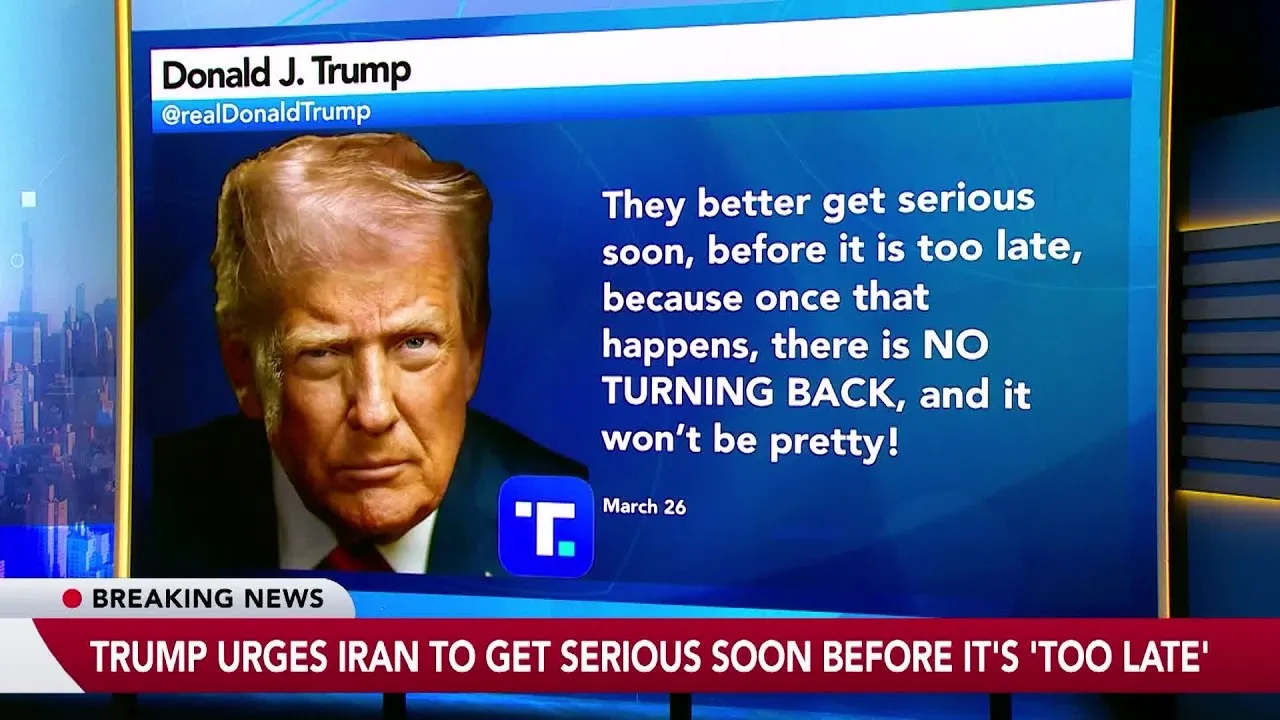
President Donald Trump threatened Iran with increased military action in a social media post on Thursday, warning that Iran “had better” be cautious. The statement reflects ongoing tensions between the U.S. and Iran, and highlights Trump’s readiness to use force if necessary. The exact details of the threat were not specified in the brief summary.
Former President Donald Trump has issued a stern warning to Iran, urging the nation to “get serious” in its negotiations and behaviors concerning its nuclear program. Trump emphasized that Iran’s current actions are unacceptable and that the United States is prepared to take further steps if necessary. His comments come amid ongoing tensions in the Middle East, where Iran’s nuclear ambitions and regional activities continue to raise concerns among international observers.
Trump’s remarks suggest a potential escalation in the strained relationship between the U.S. and Iran, signaling that Washington is not willing to tolerate what it perceives as provocative acts. He warned that failure to engage seriously could lead to increased pressure, sanctions, or even military responses. Trump’s stance appears to be a push for Iran to re-engage with negotiations and curb its nuclear development efforts.
Advertisement
The current situation highlights the fragile state of diplomacy in the region. While diplomacy remains the preferred route for many players, Trump’s threat underscores the possibility of a more aggressive approach if Iran does not shift its stance. The international community closely watches these developments, aware that escalation could have far-reaching consequences in the Middle East and beyond.
Temple Quarter Enterprise Campus and Bedminster Green schemes are among those driving activity
A view of Bristol(Image: Rider Levett Bucknall)
Major regeneration schemes in Bristol are bolstering the construction sector in the city and wider South West, according to a new report. The research by Rider Levett Bucknall (RLB UK) found that while market costs remain high and continue to challenge project viability, the overall mood across the sector is increasingly optimistic.
Pressures in the city’s construction market are beginning to stabilise following a prolonged period of high inflation, the latest regional market analysis by the independent built environment consultancy found.
Activity across Bristol is being driven by significant schemes including the Temple Quarter Enterprise Campus and Bedminster Green developments, alongside continued demand for new housing.
Tom Powney, RLB UK senior cost manager in Bristol, said: “Across Bristol and the wider South West, large-scale regeneration schemes are strengthening the long-term outlook for the construction sector. The city’s population is expected to grow by more than 20 per cent over the next two decades, increasing demand for new homes, employment space and infrastructure.
Advertisement
“Contractors are still facing a difficult balance between high input costs and relatively subdued tender price inflation, which continues to squeeze margins. Labour shortages, particularly in specialist trades, remain a key constraint.”
Before the Middle East war, material cost fluctuations had largely calmed compared with recent years, according to RLB UK, although skills shortages and high labour costs continue to present challenges for developers and contractors.
Bristol City Council reported that around 1,700 new homes were completed in the city during the 2024/25 financial year, the highest level in three years, although RLB UK said the figure is below the level required to meet future housing demand. A number of major developments are expected to help address this gap, according to the market analysis.
The consultancy said purpose-built student accommodation and build-to-rent developments had been showing “some resilience”, while major schemes such as the newly named Aviva Arena are also contributing to regional growth.
Advertisement
But RLB said some markets remained “slower” due to continuing cost pressures, subcontractor insolvencies and skills shortages.
“The shortage of mechanical, electrical and plumbing (MEP) contractors in the region remains a key challenge and could become more pronounced if proposed data centre developments progress,” the report added.
‘Our shared hope is that much of the valuable growth, innovation and inclusion work undertaken by Engine Shed over the years will continue’
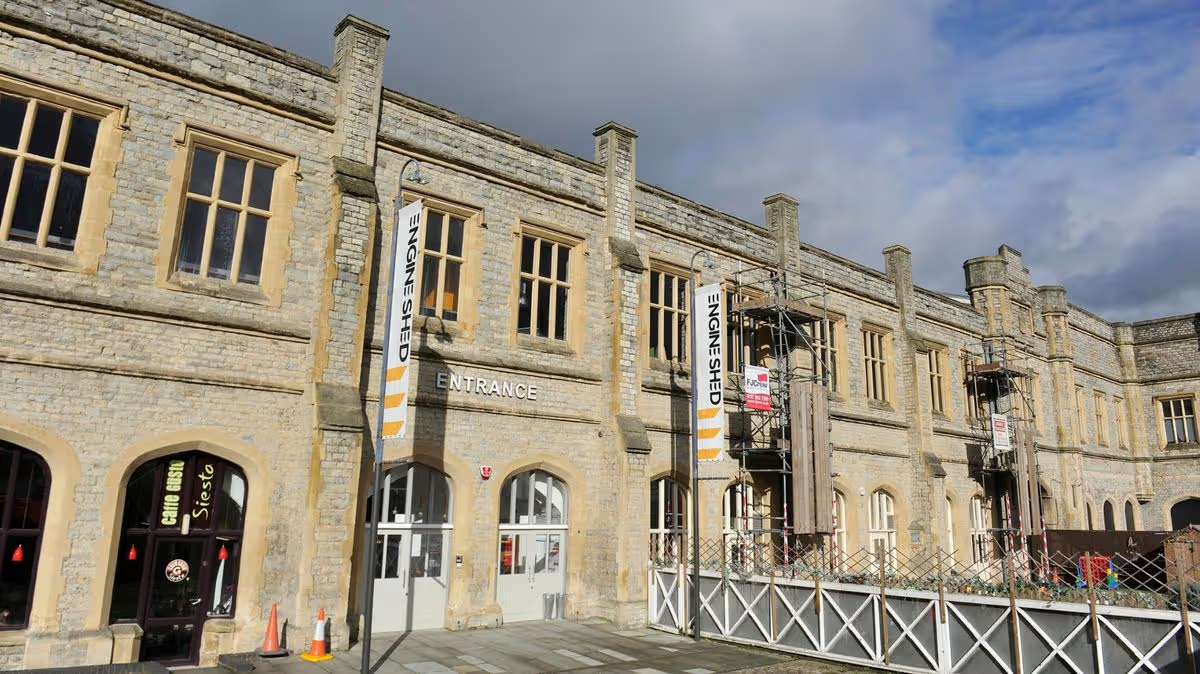
Engine Shed in Bristol(Image: Western Daily Press)
Bristol work, meeting and event space Engine Shed is being closed after 13 years. The innovation hub next to Temple Meads station is to shut its doors for good in December, it has confirmed in an announcement on LinkedIn.
Engine Shed is run by a subsidiary which is wholly owned by the University of Bristol and the closure reflects “a shift in the university’s innovation activity”, according to the post.
The historic building, which was designed by Isambard Kingdom Brunel, is used by Engine Shed members for working, events and training through a membership scheme. It is also home to tech incubator SETsquared Bristol.
“There is no easy way to say it, after 13 years of catalysing Bristol’s innovation ecosystem, Engine Shed will close in December 2026,” the statement read.
Advertisement
“Many consider Engine Shed to have been both the spark that ignited much of the current innovation ecosystem and the beating heart that keeps collaboration, innovation and generosity central to our collective work.”
It is understood the team behind Engine Shed will move out of the property and will help run part of the main academic building on the new Temple Quarter Enterprise Campus. Staff who are part of SETsquared Bristol will relocate too.
“Our shared hope is that much of the valuable growth, innovation and inclusion work undertaken by Engine Shed over the years will continue through activities in the main academic building on the Temple Quarter Enterprise Campus (TQEC),” the LinkedIn post added.
Engine Shed is currently part of Bristol Innovations – the University of Bristol’s business support arm – and sits at the heart of the city’s Bristol Temple Quarter redevelopment, an ambitious urban regeneration project. Its partners include techSPARK, Barclays Eagle Labs, SETsquared Bristol and the Quantum Technologies Innovation Centre.
Advertisement
Engine Shed founder Nick Sturge said: “The ecosystem, and therefore the number and strength of the actors within it, has grown significantly since 2013 and I’m super proud that Engine Shed, and the team behind and within it, has played a part in that growth and the collaborative spirit that has created the right environment for the next stage of Engine Shed’s journey.
“While part of that will rest in the sidings for a while, I am so pleased that Bristol Innovations Zone, in the new TQEC building, will pick up the momentum that Engine Shed helped create.”
Emily Kent, co-founder of Bristol software firm One Big Circle, wrote in response to the LinkedIn post: “Brilliant team at Engine Shed over the years and an inspiring building. From our first meeting with our SETsquared Bristol mentor in 2014, our first designated desk, then four moves between ever larger office spaces, alongside so many networking events, panels, opportunities to present to fellow entrepreneurs, ministers and a fair few school visits to inspire the nextgen, Engine Shed has been a huge part of our OBC journey.
“We’re still near neighbours as we’ve grown and are very sorry to hear the doors will be closing but hope the spirit, ethos and culture of [Engine Shed] will travel well to its new home.”
‘The Big Money Show’ discusses the growing Democratic division over Bernie Sanders’ ‘tax the rich’ agenda.
In another massive blow to high-tax blue states, Apollo Global Management Inc. has announced plans to establish a second U.S. headquarters, scouting locations in Texas and South Florida.
The financial investment heavyweight allegedly shared with its teams on Sunday that it plans to open the second office while keeping its flagship New York City HQ, people familiar with the matter first told the Financial Times. The report also named Nashville as a possible option.
Advertisement
The move signals a growing trend of financial titans abandoning traditional hubs like NYC and San Francisco in favor of the Sun Belt, seeking lower taxes, better talent pools and a friendlier regulatory environment.
Apollo did not immediately respond to Fox News Digital’s request for comment.
Apollo Global Management is reportedly considering its second U.S. headquarters to be located in Texas or Florida. (Getty Images)
The flight of capital is no longer a post-pandemic trickle, as data shows that trillions of dollars in assets continue to flee high-tax jurisdictions. Between 2020 and early 2023, more than 370 investment companies moved their headquarters to a new state, according to a Bloomberg analysis.
Advertisement
These relocating firms brought a staggering $2.7 trillion in assets under management (AUM) with them, with New York and California alone losing an estimated $1 trillion each.
Florida, Texas, Tennessee and North Carolina have been the primary beneficiaries of the business migration, attracting new investments.
CP Group managing partner Angelo Bianco speaks exclusively to Fox News Digital about FC Barcelona’s new headquarters office lease in Downtown Miami’s One Biscayne Tower.
Fidelity and Vanguard, for instance, have expanded their presence in Texas, and Goldman Sachs is building a $500 million campus in Dallas. In 2021, Charles Schwab ditched San Francisco for the Dallas suburb of Westlake.
When Citadel made the move from Chicago to Miami in mid-2022, what followed was a slew of corporate re-locations. The new year has already welcomed a fresh wave of company headquarters to Miami, with names like Palantir, D-Wave Systems, GFL Environmental and Trinity Investments. Wider South Florida has built itself up as an established global business hub with several landmark commitments from brands including ServiceNow, Playboy, Wells Fargo, Varonis, TracFone and a handful of others.
Wells Fargo Chairman and CEO Charlie Scharf discusses the resilient U.S. economy amid geopolitical risks and market volatility on ‘Mornings with Maria.’
Tennessee is emerging as a dark horse in the race for financial dominance since AllianceBernstein, the global investment management firm, paved the way by moving to Nashville from New York in 2021.
Wells Fargo Chairman and CEO Charlie Scharf discusses the resilient U.S. economy amid geopolitical risks and market volatility on ‘Mornings with Maria.’
Companies in the private sector added 62,000 jobs in March, payroll processing firm ADP said Wednesday.
The figure is above economists’ estimates of a gain of 40,000 jobs. The prior month’s payrolls number was revised higher to a gain of 66,000 from an initially reported gain of 63,000.
Advertisement
“Overall hiring is steady, but job growth continues to favor certain industries, including health care,” said ADP chief economist Nela Richardson. “In March, this solid performance was accompanied by a boost in pay gains for job-changers.”
Education and health services added 58,000 positions, leading job creation in February. Construction added 19,000, information gained 16,000 and natural resources and mining added 11,000.
A professor talks to a group of students in a lecture hall. (iStock)
Leisure and hospitality added 7,000 jobs, while financial activities and other services each added 4,000. Professional and business services gained 1,000 positions in March.
The ‘Goldilocks’ era of Indian equities was already showing signs of weakness, but any hopes of a quick reversal have now come to a grinding halt. India’s markets are witnessing a historic shift in sentiment, with a record $13 billion in FII outflows in a month.
This is not just a correction; this is a rout. Over Rs 1.24 lakh crore was withdrawn in just March alone, the worst outflow in the history of Indian markets.
The energy squeeze
The major driving force has been the war in the Gulf. Brent crude prices have gone up by 51% in the past month to hit a four-year high of $119.50/barrel, after Iran closed the Strait of Hormuz.
Advertisement
With global brokerage Goldman Sachs forecasting crude to average $115/bbl through April, the import-driven Indian economy is facing a direct shock, fueling inflation, widening the trade deficit, and squeezing corporate margins.
All the importing countries in Asia are affected due to the rising oil prices, but the high FII outflows from India indicate that certain weaknesses were already in place.
Live Events
Even when the first shots were not fired, investors were battling a weak rupee, weak earnings recovery, and high valuations, along with the US tariffs. The oil issue is simply the last catalyst. And the change in sentiment is now stark. With geopolitical risks increasing, the dialogue has now shifted from an ‘India premium’ to an ‘India exit’.
Brokerages hit the panic button
Global institutions are rapidly recalibrating. Goldman Sachs has lowered its target price for Nifty to 25,900 from 29,300 and has downgraded India to “market weight.” The global brokerage has also lowered its earnings growth estimates by 9 percentage points cumulatively for CY26/27 to 8% and 13%.
Its models indicate that if oil prices remain $45 above average for three months, earnings growth could be down 9 per cent, a notion supported by history, where past oil shocks resulted in a 6-13 per cent downgrade.
Advertisement
The caution comes from many corners, and Bernstein, Citi, and Nomura are among those taking a more defensive stance, cutting targets and warning of a brewing earnings downgrade cycle.
ETMarkets.com
The most dire prediction comes from Bernstein, which says the crisis could trigger a ‘GFC-style’ scenario.
It has cut its target to 26,000 and a worst-case scenario of 19,000 on the Nifty index.
The fear is that of a macro-level shock: Inflation is soaring, and the RBI is forced to hike interest rates, resulting in a stranglehold on the economy, causing the GDP to grow at a rate of 2-3%, effectively a recession scenario for India.
The same scenario is also seen playing out by other brokerages, and they are just as alarmed. Even Citi has cut its target to 27,000 (from 28,500), and Nomura too has cut its target to 24,900 (from 29,300) and believes that a further 5% fall is a “distinct possibility.”
Advertisement
HSBC believes that every 10% move in oil results in a 1.3% fall in the markets, and currency weakness is also a factor.
India pays the bill
At its core, the problem stems from a simple structural fact: Unlike Brazil and Mexico, which are exporters and hence gain from a higher oil price, India loses out as it imports oil.
Clearly, the problem is especially painful for India and triggers what analysts call a classic ‘energy-led earnings downgrade’ cycle.
Advertisement
And while India is struggling to cope with the shock, the picture in the US and China paints a different story
US: Tech cushioning the blow
Despite a 5% drop in the S&P 500 since the war began on Feb 28, Wall Street has remained resilient. Brokerages are holding, and in some cases even raising, targets, betting that AI-driven growth and strong earnings will offset war risks.
Barclays has lifted its S&P 500 target to 7,650, while Citi sees 7,700 and Goldman holds at 7,600. The broader consensus around 7,500 signals that the US is still viewed as a growth engine capable of weathering $100+ oil.
Advertisement
China: The ‘green shield’ effect
China’s resilience is even more striking. Despite being the world’s largest oil importer, its markets have barely reacted, the CSI 300 is down just 4% since the conflict began.
This is because years of heavy investment in renewables and EVs have reduced dependence on fossil fuels, insulating the economy from oil shocks. Even with oil surging as much as 65%, the yuan remained stable and bond yields were contained.
As a result, Goldman maintains an “overweight” stance on China. Notably, no major brokerage has downgraded the market due to the conflict.
Advertisement
What FY27 could look like for India
Brickwork Ratings expects FY27 to have selective opportunities rather than broad-based rallies. Commodities are expected to do well due to infrastructure and geopolitical factors, equities will have headwinds due to global uncertainty and earnings, and debt will provide stability.
Kotak Institutional Equities also believes that “although the recent correction has been beneficial for risk-reward, valuations are high. Unlike March 2009 or 2020, when valuations were low and offered clear buying opportunities, the current situation is different. Long-term investors are advised to invest in a disciplined manner rather than hoarding cash.”
The contrast is stark. “If capital had been deployed into China, it would have been preserved. US markets will benefit from tech-driven growth. India is the most exposed market to an energy crisis, losing 1.3% for every 10% rise in oil prices and currency weakness.”
Advertisement
(Disclaimer: Recommendations, suggestions, views and opinions given by the experts are their own. These do not represent the views of The Economic Times)
The shares of Cochin Shipyard rallied around 15% on Wednesday after the stock was added to the NSE‘s futures & options (F&O) segment, leading to expectations of greater liquidity and higher trading volumes.
The sharp surge also comes amid a bullish trend in shipyard stocks after Garden Reach Shipbuilders & Engineers (GRSE) reported its highest-ever annual turnover of Rs 6,400 crore for financial year 2026, marking a 26% jump from Rs 5,076 crore in the previous year.
Shipyard stocks rally
Cochin Shipyard shares surged to Rs 1,372 per share, while Mazagon Dock Shipbuilders shares jumped more than 13%. GRSE shares, meanwhile, surged over 19% on Wednesday morning. These stocks are the top gainers on the Nifty India Defence index, which itself is up around 6%.
Advertisement
The sharp surge in Cochin Shipyard’s share price led to a strong increase in its market value. The rally added more than Rs 4,700 crore to the company’s market capitalisation, bringing it close to Rs 36,100 crore.
The sharp surge also comes amid broader market optimism, as investors increasingly hoped for a sooner end to the raging war between Iran and US-Israel. Sensex surged around 2,000 points while Nifty climbed above 22,900 on Wednesday morning.
Live Events
Cochin Shipyard is one among the 8 stocks added to NSE’s futures & options (F&O) segment from today onwards. The other seven stocks on the list include Adani Power, Hyundai Motor India, Force Motors, Godfrey Phillips India, Motilal Oswal Financial Services, Nippon Life India Asset Management and Vishal Mega Mart. In a circular issued on Monday, NSE announced the market-wide position limits, trading member-wise position limits, FII/FPI (Category I & II), mutual fund position limits, trading member proprietary limits and client-level limits.Cochin Shipyard shares saw strong trading volumes of more than 54 lakh after the inclusion into the F&O segment, according to data on NSE at 12 pm. The stock has fallen nearly 10% in one month, and is down 17% in 2026 so far. In the longer term, the stock has rallied more than 467% in three years.
(Disclaimer: Recommendations, suggestions, views and opinions given by the experts are their own. These do not represent the views of The Economic Times)























































You must be logged in to post a comment Login