

Business
(VIDEO) Sony Xperia 2026 Flagship Rumors and Xperia 1 VIII Details Emerge


NEW YORK — Sony has officially unveiled the Xperia 1 VIII flagship smartphone in May 2026, marking a notable design refresh for the company’s premium lineup while retaining core features that have defined the series. The device represents Sony’s continued commitment to a dedicated photography and multimedia experience in a competitive market.

The Xperia 1 VIII features a refreshed rear design with a prominent square camera island housing a triple-camera system, departing from the vertical alignment of previous generations. This change has generated significant discussion among enthusiasts, with leaked renders confirming a bolder aesthetic that aligns more closely with modern flagship trends while preserving Sony’s distinctive identity.
Key specifications include a 6.5-inch FHD+ OLED display with 120Hz refresh rate, tuned for cinematic color accuracy and HDR support. The panel maintains the tall 19.5:9 aspect ratio favored by content creators. Under the hood, the device is powered by Qualcomm’s Snapdragon 8 Elite processor, paired with 12GB of RAM and storage options starting at 256GB, expandable via microSD card.
Sony has emphasized camera improvements, particularly in the telephoto sensor, which is reportedly nearly four times larger than in previous models. The system includes a main wide-angle lens, ultrawide and an enhanced periscope-style telephoto, supported by AI-assisted features drawing from Sony’s Alpha camera expertise. Additional highlights include full-stage stereo speakers with improved bass, a 3.5mm headphone jack and a battery promising up to two days of use.
The phone is available in multiple colors, including Graphite Black, Iolite Silver, Garnet Red and Native Gold. Pricing starts around £1,399 in key markets for the base model, positioning it as a premium offering consistent with prior Xperia 1 series devices.
Beyond the flagship, rumors point to a mid-range Xperia 10 VIII successor, with model numbers suggesting multiple regional variants. While details remain limited, the lineup indicates Sony’s strategy of maintaining both premium and more accessible options in its smartphone portfolio.
Industry observers note that the Xperia 1 VIII addresses long-standing criticisms regarding design evolution. The new camera module and refined aesthetics aim to broaden appeal without alienating the brand’s core audience of photographers, videographers and audiophiles. Features like the headphone jack and expandable storage continue to differentiate Sony in an era where many competitors have phased out such elements.
Performance expectations are high with the latest Snapdragon chipset, supporting demanding tasks such as 4K video recording, gaming and professional photo editing on the go. Battery life improvements and efficient thermal management are expected to enhance daily usability compared to predecessors.
Sony’s approach to software updates and ecosystem integration remains a point of interest. The device ships with the latest Android version and benefits from tight integration with other Sony products, including Bravia displays and Alpha cameras. This synergy appeals strongly to creative professionals.
Market reception has been mixed but largely positive regarding the design shift. Some analysts view the Xperia 1 VIII as Sony’s boldest flagship in years, potentially reversing declining market share in the premium segment. However, challenges persist, including limited availability in certain regions like the United States and competition from established players.
Rumors prior to the May announcement had circulated for months, with model numbers and early leaks providing clues about the redesign. The official event confirmed many expectations while delivering surprises in camera hardware and overall refinement.
Looking ahead, Sony may continue iterating on compact or specialized models, though the core Xperia 1 series remains the flagship bearer. Enthusiasts eagerly await hands-on reviews focusing on real-world camera performance, battery endurance and software experience.
The Xperia lineup’s niche positioning emphasizes professional-grade features over mass-market trends. This strategy has cultivated a loyal following despite lower overall volumes compared to competitors. The 2026 models underscore Sony’s dedication to innovation in select areas such as display technology, audio and imaging.
As the smartphone market evolves with foldables and AI integrations, Sony’s latest offerings demonstrate a balanced approach. The Xperia 1 VIII combines traditional strengths with timely updates, aiming to attract both existing fans and new users seeking a distinctive alternative to conventional flagships.
Further details on availability, pricing variations by region and long-term software support will emerge in the coming months. Early indications suggest strong potential for the device among content creators and power users who value Sony’s heritage in entertainment and photography.
The Xperia 1 VIII launch reinforces Sony’s ongoing investment in mobile despite broader industry shifts. With a refreshed design and meaningful hardware upgrades, the 2026 flagship positions the company to compete more effectively in the premium segment while staying true to its unique brand identity.


Thailand has been at the center of a wide range of international headlines recently, spanning diplomatic apologies, security incidents, economic developments, and cultural milestones. This roundup captures the most significant stories shaping the country’s global image and domestic priorities.
Diplomatic Incident: Italian Students’ Bangkok Metro Controversy
A viral incident involving Italian exchange students behaving badly on Bangkok’s metro system dominated headlines this week. The Italian embassy issued a formal apology after footage showed teenagers disrupting a local passenger, sparking widespread outrage across Thai social media. The case was ultimately settled through apologies and fines, with the Italian school also apologizing to the broader Thai public for the embarrassment caused. The incident underscores the importance Thailand places on public decorum and respect toward locals, especially from foreign visitors and students studying in the country. Read more on Thailand Business News
Security and Border Tensions
Thailand continues to navigate serious security challenges on multiple fronts. Five soldiers were killed in an attack at a checkpoint in southern Thailand, highlighting ongoing insurgent violence in the region. Simultaneously, Thailand is pressing forward with a border fence project along the Cambodian frontier following clashes in 2025, while Cambodian officials have acknowledged that the ceasefire between the two nations remains fragile. These developments reflect persistent instability in Thailand’s border regions, requiring sustained military and diplomatic attention.
Economic Developments and Investment Trends
Thailand’s economy is experiencing notable shifts, particularly in foreign investment and technology sectors. Foreign investment applications jumped 80% to $40.6 billion, driven largely by the ongoing AI boom. This surge is complemented by growing China-Thailand technology cooperation, aimed at fostering a “prosperous shared future.” However, not all economic indicators are positive—industrial output shrank the most in seven months, and the Bank of Thailand forecasts modest 2.3% growth while warning that rising debt could affect the broader economy. Additionally, Thailand has decided to keep its value-added tax steady at 7% for another year, signaling a cautious approach to fiscal policy amid economic uncertainty. See related coverage on Thailand Business News
Cybersecurity Challenges
The financial sector faces mounting cybersecurity threats. Thailand’s SEC has filed a criminal complaint against Bitkub, alleging the crypto exchange concealed a cyberattack that resulted in a $47-50 million hack. Separately, hackers reportedly used an autonomous AI agent to spy on Thailand’s Finance Ministry, raising alarms about the sophistication of cyber threats targeting government institutions. In response, Thailand is strengthening international partnerships, including a new cybersecurity collaboration between the Bank of Thailand and Singapore’s MAS.
Automotive and Manufacturing Shifts
Thailand’s automotive industry is undergoing significant transformation as Chinese EV manufacturers gain ground, prompting the country to cut its vehicle output targets. This shift reflects broader trends discussed in coverage of how domestic EV policy is reshaping the global automotive hierarchy, with China and Thailand positioned as emerging leaders in electric vehicle production and adoption.
Wellness, Tourism, and Cultural Heritage
Thailand continues to position itself as a premier wellness and tourism destination. The country aims to become one of the top five wellness economies in the Asia Pacific region by 2030, backed by investments in luxury wellness experiences that go “beyond the spa day.” Tourism infrastructure is also evolving, with new alliances modernizing the passenger journey and airport operations across the country.
Culturally, Thailand celebrated its ninth UNESCO World Heritage site, with a monastery added to the prestigious list, boosting tourism prospects. UNESCO officials are also scheduled to visit Chiang Mai to evaluate its Lanna heritage bid, alongside ongoing efforts to secure recognition for Wat Arun. These heritage designations are expected to further elevate Thailand’s appeal as a cultural tourism destination. Explore more tourism insights on Thailand Business News
Sports and Entertainment
Thailand’s sports scene saw notable activity, including Tyson Fury’s unaired fight against Mariusz Wach held in the country ahead of his anticipated bout with Anthony Joshua. In regional competition, Vietnam claimed the Men’s SEA Volleyball Cup title over Thailand, while the Thai football team posted a five-goal victory over Laos. Additionally, Formula 1 continues expanding its presence across Southeast Asia, with Thailand playing a role in this growing motorsport footprint.
Infrastructure and Regional Cooperation
Thailand is advancing several major infrastructure initiatives. The country has paused its ambitious $28 billion Land Bridge project for now, while simultaneously targeting 2030 for the completion of the first phase of a high-speed rail link to China. These projects reflect Thailand’s long-term strategy to enhance regional connectivity and trade logistics.
Social and Humanitarian Concerns
Amid the business and political news, human stories also emerged. A woman was forced to deliver her baby prematurely at 33 weeks while in Thailand due to life-threatening complications, highlighting healthcare challenges faced by travelers. Meanwhile, human rights organizations have called on Thailand not to forcibly return Chinese dissidents, raising concerns about the country’s treatment of political refugees.
Conclusion
Thailand’s news landscape reflects a nation balancing rapid economic modernization, persistent security challenges, and a strong cultural and tourism identity. From diplomatic incidents to AI-driven investment surges, the country continues to navigate complex domestic and international pressures while positioning itself as a regional leader in technology, wellness, and heritage tourism.
Source : Google News – Search
Other People are Reading
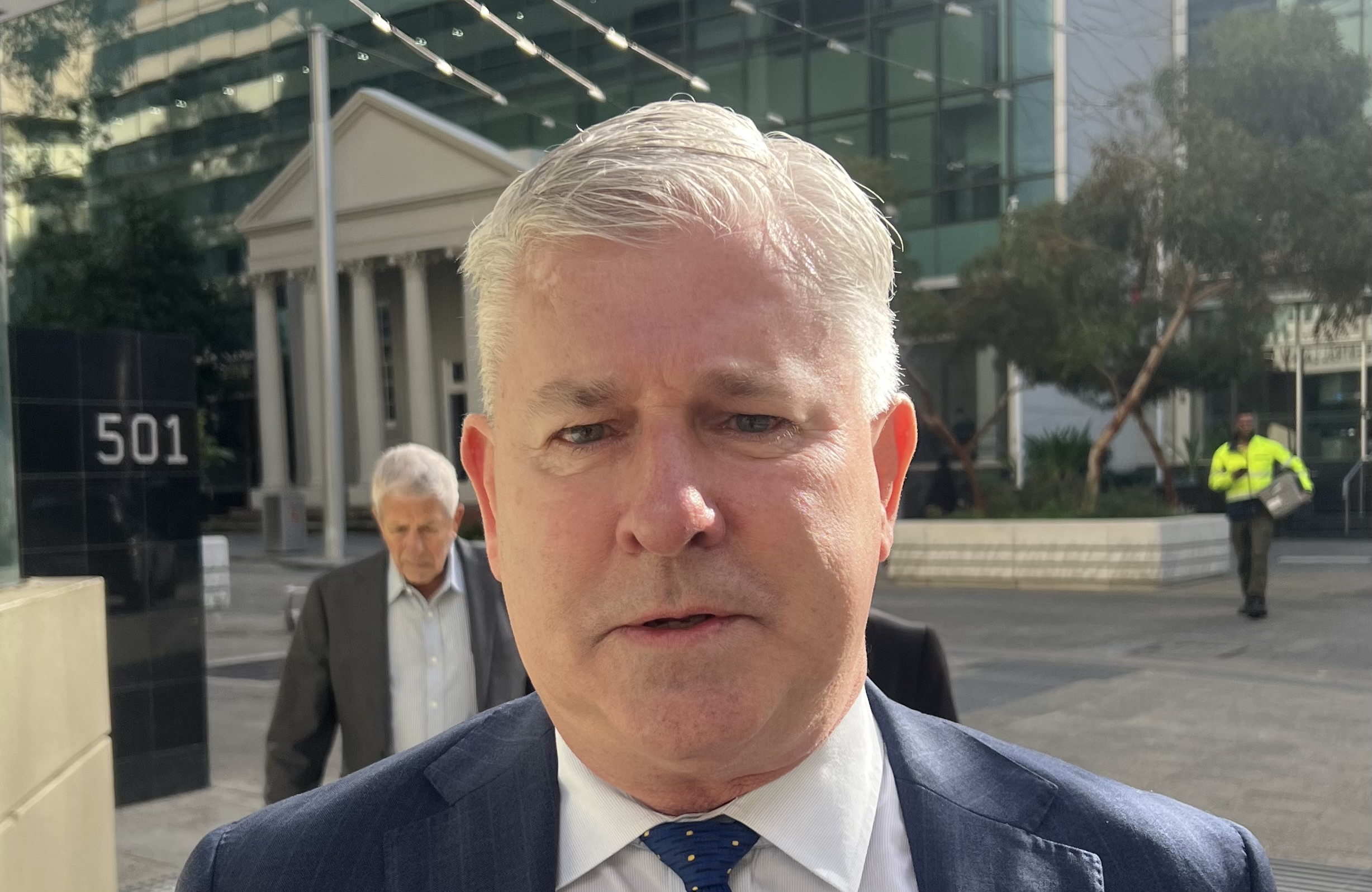
Former Bali Ha’i Cruises director and general manager Colin Beeck is fighting allegations he illegally transferred more than $670,000 out of a company bank account in a four-year stealing spree.
Business
Global AI Stock Selloff Deepens as Kospi Plunges Over 10%, Chipmakers Tumble Across Asian Markets This Week

A rout in global chipmakers deepened Tuesday, as fears over the durability of the artificial intelligence boom intensified ahead of earnings results from some of Silicon Valley’s biggest companies later this week.
South Korea’s Kospi led declines across Asia, falling more than 10% and prompting a short halt in trading, after investors dumped shares in the country’s two leading memory-chip makers.
Korean Chipmakers Bear the Brunt
Shares in SK Hynix fell 14.7%, while its larger rival, Samsung Electronics, dropped 13.4%. The two companies have tumbled 42% and 34%, respectively, in July alone, marking one of the sharpest monthly declines either stock has experienced in years.
The selloff extended across other major Asian markets as well. In Tokyo, the Nikkei 225 fell 4.4%, with memory-chip maker Kioxia plunging more than 18%, a decline that has cut the company’s share price in half over the course of this month’s selloff. In Europe, ASML, the world’s biggest maker of chip-manufacturing equipment, fell 2.2%.
A Sharp Reversal for Stocks That Powered the Market Higher
The scale of the reversal stands out given how central these same stocks were to global market gains earlier in the year. Chip and memory stocks, which powered global markets higher in the first half of the year as investors bet they would be the biggest beneficiaries of vast AI spending, have borne the brunt of a brutal selloff in recent weeks.
Analysts pointed to mounting anxiety around the financial sustainability of the AI infrastructure buildout as the central driver behind the reversal. Venu Krishna, head of U.S. equities strategy at Barclays, said worries around funding uncertainties, capital expenditure increases and Big Tech free cash flow have taken center stage for investors.
Wall Street Selling Spills Into Asia
Tuesday’s declines in Asia followed another difficult session for chip and memory stocks on Wall Street a day earlier. Monday’s trading saw memory company SanDisk fall 11% and chipmaker Nvidia drop 5%, with futures tracking the Nasdaq 100 pointing to a further 0.8% drop at Tuesday’s open.
Big Tech Earnings Add to the Nerves
The selloff comes as Wall Street enters the heart of second-quarter earnings season, with major technology companies scheduled to report results this week. Tech giants Microsoft, Meta, Apple and Amazon are all set to deliver reports later this week, and investors are parsing early results for signs of whether massive AI-related spending will ultimately prove sustainable.
That nervousness was already on display last week following one major tech company’s results. Alphabet’s share price dropped 7% in a single day last week, following the company’s announcement that Google had burned through cash in the second quarter to fund AI infrastructure spending.
Diverging Views on Whether the Selloff Is Overdone
Not all market strategists agree on how to interpret the current wave of selling. Marija Veitmane, head of equity research at State Street, said the market is worried about extra borrowing, extra capital expenditure and how sustainable current spending levels really are, describing the negative momentum as building into a “spiral.” Despite that caution, Veitmane also struck a more optimistic note about underlying demand, telling reporters that reading through the results reported so far, demand still appears fantastically strong, and that for her, the current pullback represents a buy-the-dip opportunity.
Other investors were more skeptical about the sustainability of current spending trends. Albert Saporta, group chief executive of asset manager GAM, attributed the moves to a realization that the current AI capital expenditure frenzy will end up in a bust, much like previous spending cycles across other industries. Saporta added that rising prices for credit default swaps tied to companies including Oracle, SpaceX, Alphabet, Amazon, Meta, Broadcom and Nvidia pointed toward a broader investor reckoning over the AI spending plans of major U.S. technology firms.
Chinese Competition Adds to the Anxiety
Beyond concerns about spending sustainability, growing evidence of Chinese progress in AI development has added another layer of unease for investors. Jim Reid, an analyst at Deutsche Bank, said renewed worries over AI investment spending and competition from cheaper Chinese companies triggered another selloff in global semiconductor stocks Tuesday morning.
That anxiety was fueled in part by a notable development from a Chinese AI startup last week. Chinese AI startup Moonshot last week released a large language model which appeared to have capabilities approaching those of frontier U.S. labs such as Anthropic, a development that rattled investors betting that Silicon Valley’s biggest companies would need to maintain vast spending levels to stay ahead of emerging competition.
CXMT’s Blockbuster Debut Cools Off
The Chinese chip sector’s own volatility was also on display Tuesday, following a dramatic stock market debut a day earlier. In China, shares in memory-chip maker CXMT fell more than 4% on Tuesday, a day after it raised $8.5 billion in a blockbuster listing in Shanghai. Its shares had risen 466% on Monday.
A Steep Fall From SK Hynix’s Recent Peak
The scale of SK Hynix’s decline becomes even more apparent when measured against its recent highs. The Seoul-listed shares of SK Hynix have plunged nearly 50% since hitting a record high of around 3 million won, or roughly $2,000, in June, after the stock had tripled in value earlier this year before peaking.
Traders Describe an Unusually Violent Selloff
Market participants in Tokyo described the speed of the recent decline as unlike anything they had recently witnessed, attributing part of the move to rising interest rates unwinding momentum and retail-driven positions. One senior equities trader said they could not remember seeing anything this bad or violent in recent memory.
The scale of the Kospi’s pullback over the past month has been substantial. The Kospi’s decline on Tuesday means the index has fallen about 25% over the past month and is down a third from its June peak, though it remains 46% higher for the year to date.
Oversupply Fears Compound the Selloff
Beyond near-term valuation concerns, some investors are also growing wary of longer-term oversupply risk as chipmakers continue announcing aggressive expansion plans. SK Hynix and Samsung plan to build two new chip plants apiece in South Korea as part of a combined 800 trillion won, or roughly $548 billion, investment aimed at doubling their production capacity for DRAM chips over the next five years. U.S. rival Micron Technology has raised its own planned domestic investment to $250 billion through the end of 2035.
A Fed Decision Looms
Adding to the uncertainty, investors are also bracing for a Federal Reserve interest rate decision on Wednesday, a potential additional trigger for volatility. Traders remain divided on whether the central bank will hold rates steady or move to raise the benchmark interest rate at this week’s meeting.
With major technology earnings due throughout the week and the Federal Reserve’s rate decision looming Wednesday, investors are likely to remain on edge as they weigh strong underlying AI demand against mounting concerns about spending sustainability, competitive pressure from China, and the risk of a broader capital expenditure overshoot across the chip and memory sector.
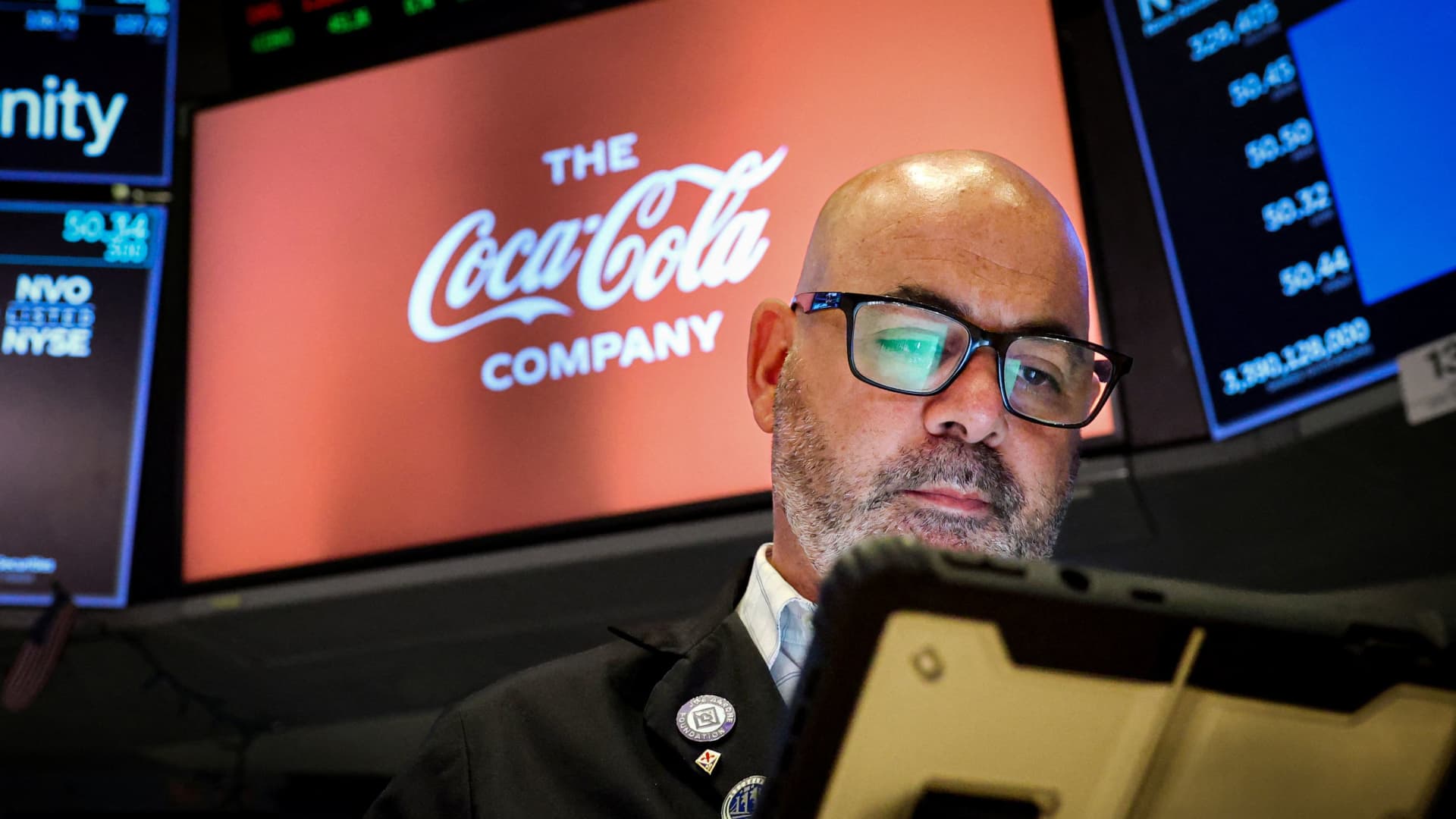
A trader works on the floor at the New York Stock Exchange (NYSE) in New York City, U.S., July 20, 2026.
Brendan McDermid | Reuters
Coca-Cola on Tuesday reported quarterly earnings and revenue that topped Wall Street’s estimates, fueled by higher demand for its drinks.
The company also hiked its full-year forecast. Coke is now projecting comparable earnings per share growth of 9% to 10%, up from its prior forecast of 8% to 9%. It also expects organic revenue to increase about 5%, on the high end of its earlier range of 4% to 5%.
Shares of Coke rose more than 2% in premarket trading.
Here’s what the company reported compared with what Wall Street analysts surveyed by LSEG were expecting:
- Adjusted earnings per share: 97 cents, vs. expected 93 cents
- Revenue: $13.38 billion, vs. $13.16 billion expected
Coke reported second-quarter net income of $4.43 billion, or $1.03 per share, up from $3.81 billion, or 89 cents per share, a year earlier.
Excluding asset impairments, restructuring costs and other items, the company earned 97 cents per share.
Net sales rose 7% to $13.38 billion.
Jack McGinn and Sam Jones discuss calls by a WA skilled migration expert.

Wall Street's AI CapEx Concerns Overlook Demand-Supply Outlook

TransUnion earnings beat by $0.08, revenue topped estimates

Commodity Trading Adviser (CTA), member of National Futures Association. Professor of Finance, research on Global-macro issues. Editor-in-Chief, Journal of Corporate Accounting and Finance.
Analyst’s Disclosure: I/we have no stock, option or similar derivative position in any of the companies mentioned, and no plans to initiate any such positions within the next 72 hours. I wrote this article myself, and it expresses my own opinions. I am not receiving compensation for it (other than from Seeking Alpha). I have no business relationship with any company whose stock is mentioned in this article.
Seeking Alpha’s Disclosure: Past performance is no guarantee of future results. No recommendation or advice is being given as to whether any investment is suitable for a particular investor. Any views or opinions expressed above may not reflect those of Seeking Alpha as a whole. Seeking Alpha is not a licensed securities dealer, broker or US investment adviser or investment bank. Our analysts are third party authors that include both professional investors and individual investors who may not be licensed or certified by any institute or regulatory body.

While you need to answer the questions in an interview, your appearance and mannerisms are also crucial.

According to the company’s exchange filing, profit after tax (PAT) rose to Rs 2,052 crore in Q1 FY27 from Rs 897 crore in the corresponding quarter last year. On a sequential basis, PAT increased from Rs 1,679 crore in Q4 FY26.
The PAT margin improved by 212 bps YoY, reflecting sustained profitability improvement. Operating Ebitda increased 99% YoY, while the Ebitda margin expanded by 205 bps YoY, driven by an improved business mix, margin expansion, cost discipline and execution efficiencies.
On a yearly basis, operating Ebitda increased from Rs 1,430 crore in Q1 FY26 to Rs 2,853 crore in Q1 FY27. The company also delivered its highest-ever quarterly revenue, which grew 54% YoY, led by healthy domestic demand and export growth.

In the Wires & Cables segment, revenue continued to outperform, growing 57% YoY on the back of impressive volume growth, strong execution and favourable industry dynamics.
Segment profit increased 105% YoY, driven by margin expansion and effective cost management. The segment margin expanded by 232 bps YoY, reflecting an improved product mix, disciplined commodity management and operating efficiencies.The FMEG segment also posted strong revenue growth, supported by continued demand for premium and new products across key categories, along with ongoing distribution expansion.
The segment achieved operational breakeven, marking a significant milestone in the FMEG business transformation. Its profitability improved substantially on a YoY basis, driven by premium products and operating leverage.
“We have started FY27 on a strong note with another quarter of record performance, reflecting the strength of our business model and disciplined execution across the organisation. Robust growth across our Wires & Cables business, coupled with healthy profitability, demonstrates our ability to capitalise on the strong demand environment while maintaining operational excellence,” said Mahendrakumar Kabra, MD, RR Kabel.
“Our strategic focus on expanding the cables portfolio, strengthening our distribution network and enhancing execution capabilities continues to yield encouraging results. We are also pleased to achieve operational breakeven in the FMEG business during the quarter, an important milestone that reflects the progress of our premiumisation strategy and sustained focus on improving operating efficiencies.”
Also Read | Missed the smallcap recovery? Here’s what’s fuelling the 2026 surge and what to do now
“We remain confident in our ability to strengthen our market position, drive profitability growth and create long-term value for our stakeholders,” Kabra added.
Over the last one year, the stock has gained 1.26%. It has risen 36.50% over the last three years and nearly 70.37% over the past five years.
(Disclaimer: Recommendations, suggestions, views and opinions given by the experts are their own. These do not represent the views of The Economic Times.)

Women’s League Cup: What are changes for 2026-27 season?

Trump Officials Want To Use Human Rights Aid To Advocate For White South Africans And Right-Wing Causes In Europe

only money is able to pay this bills #billionairemindset #motivation #success #successhabits #money

Renter of Home in Anne Heche Crash Denies Settlement With Son

No Jackpot Winner as $257 Million Prize Rolls Over to $269 Million Monday Draw

Weekend Open Thread: Staud – Corporette.com
only money is able to pay this bills #billionairemindset #motivation #success #successhabits #money

Financial Audit Guest Steals From Homeless People

6 Smart Financial Habits That Can Make You Wealthy | Money Management Tip #youtubeshorts#motivation
-

 Fashion4 days ago
Weekend Open Thread: Brooks Brothers
-

 NewsBeat7 days ago
How a former Blue Peter presenter stunned America’s Got Talent judges
-

 Tech1 day ago
Intel is reversing course and bringing hyper-threading back to its server chips
-
 Business6 days ago
New Jersey voter registration controversy explained: How 6,600 noncitizens got on the rolls, and what happens next
-
 Entertainment7 days ago
Johnny Depp’s R-Rated Gothic Cult Classic Gets New Release Ahead of Sydney Sweeney Remake
-

 Crypto World5 days ago
Ethics, other provisions in crypto Clarity Act to be further discussed
-

 Politics1 day ago
Luke Littler dismantles Gerwyn Price to retain title in Blackpool
-
 Sports2 days ago
Commonwealth Games boxing: Jadumani Singh seals dominant 5-0 win over Pakistan’s Sumama Rehman to enter quarter-finals | Commonwealth Games News
-

 Sports4 days ago
2026 3M Open leaderboard: Scottie Scheffler finds putter in Round 1, sits three back
-

 Fashion4 days ago
16 Dresses for the High Summer Event
-

 News Videos5 days ago
The Peugeot Family: How 200 Years of an “Old Money” Dynasty Died in A Boardroom
-

 Politics3 hours ago
The Part of the Electric Transition Nobody Wants to Discuss
-

 Politics2 days ago
Spain sweeps the board at 2026 World Cup with individual awards
-

 News Videos2 days ago
BITCOIN JUST ENTERED THIS CRITICAL ZONE…
-
 Entertainment4 days ago
A New Post-Apocalyptic Gundam Anime Series Blasts Into SDCC
-

 Crypto World2 days ago
XRP Ledger adds $2.6B as RWA inflows rank second
-

 Crypto World3 days ago
Ripple bought a bank in pieces. The $4 billion audit
-

 Tech3 days ago
Anthropic launches Claude Opus 5, a cheaper AI model for coding, agents and enterprise workflows
-

 Crypto World5 days ago
Uniswap (UNI) pushes deeper into tokenized RWAs with permissioned trading pools
-

 Entertainment2 days ago
Sara Gilson Killed By Husband After Viral “Pedophile” TikTok Video
You must be logged in to post a comment Login