

Politics
The Part of the Electric Transition Nobody Wants to Discuss


The public argument about electric vehicles has settled into two entrenched positions, neither of which is especially interested in detail. One holds that electrification solves road transport’s environmental problem. The other holds that it is an expensive imposition on ordinary drivers. Both skip past a set of genuinely difficult questions about weight, particulate pollution and who actually bears the cost of the transition, and those questions are becoming harder to avoid as the fleet turns over.
Weight Is the Problem Underneath Several Others
An electric car is substantially heavier than an equivalent petrol one, because batteries are heavy and the range consumers expect requires a lot of them. That additional mass has consequences beyond efficiency. It increases the energy involved in a collision, which matters for pedestrians and for occupants of lighter vehicles. It accelerates wear on road surfaces already in poor condition. And it bears down on the components that connect the car to the road, which is why manufacturers developing electric vehicle tyres have had to reinforce construction and raise load ratings rather than simply fitting whatever the petrol version used. None of this makes electrification wrong. It does mean the environmental accounting is more complicated than the tailpipe comparison suggests.
Exhaust Emissions Are Not All Emissions
The strongest argument for electric vehicles is genuine: removing tailpipe emissions from urban areas improves air quality measurably, and the health benefits of that are real and unequally distributed in favour of the communities living beside busy roads, who have borne the worst of it for decades. What electrification does not address is non-exhaust particulate matter from tyre and road surface wear, which is unregulated, rises with vehicle weight, and now represents a growing share of transport-related particulates as exhaust emissions have fallen. Regenerative braking helps considerably with brake dust. Nothing currently helps with tyre wear.
The Affordability Question Is Not Rhetorical
There is a class dimension to this transition that receives less attention than it deserves. New electric vehicles remain more expensive than petrol equivalents, and the second-hand market that most households actually buy from is still thin and uncertain, particularly around battery condition and replacement cost. Home charging is dramatically cheaper than public charging and requires off-street parking, which a substantial minority of households simply do not have. The result is a transition whose running-cost benefits accrue most readily to people who own driveways, while those charging on street or at public rapid chargers pay considerably more per mile, sometimes more than petrol. That is a policy design outcome rather than an inevitability.
Running Costs Are Not Uniformly Lower
For owners, the picture is genuinely mixed rather than uniformly positive. Fuel costs fall substantially for anyone charging at home. Servicing is simpler with fewer moving parts. Set against that, insurance has been markedly more expensive for many electric models, repair costs after damage can be higher, and tyres may need replacing sooner because of the weight and torque involved. Anyone presenting electric ownership as universally cheaper is being selective, and anyone presenting it as more expensive overall is usually ignoring the fuel saving. It depends heavily on where you charge. That single variable does more to determine the household economics of an electric car than the purchase price, the model or the driving pattern, and it is almost entirely determined by housing rather than by any choice the driver makes. A tenant in a flat and an owner with a driveway face different economics for identical vehicles, which is an uncomfortable finding for a policy built around individual purchasing decisions.
What the Advisory Body Actually Says
This is territory where the official analysis is more nuanced than either side of the public argument. The Climate Change Committee, the independent statutory body advising government on carbon budgets, has consistently identified surface transport as one of the sectors where decarbonisation must accelerate, and its assessments treat vehicle electrification as necessary rather than sufficient, alongside reductions in car use, modal shift and demand management. That framing is worth holding onto, because a strategy resting entirely on replacing every petrol car with an electric one addresses carbon while leaving congestion, road danger, particulate pollution and the space cars occupy in cities entirely untouched.
The Uncomfortable Conclusion for Everyone
If the honest position is that electrification is necessary and insufficient, it follows that the harder measures are the ones that matter: fewer car journeys, better public transport, safer conditions for walking and cycling, and vehicle weight becoming a policy question rather than a market outcome. Those are considerably less popular than swapping one kind of car for another, which is precisely why the debate keeps returning to the vehicle rather than to the system it operates in. It is also why the loudest voices on both sides of the argument end up implicitly agreeing on something: that the car remains the unit of analysis, and that the question is only which sort of car it should be.
What This Means for Drivers Now
For people making decisions in the meantime, the practical points are modest. An electric car remains a substantial improvement on a petrol one for most drivers on carbon and on urban air quality. Whether it saves you money depends almost entirely on where you charge it. It will likely be harder on tyres, which is a real running cost worth planning for rather than a reason to avoid the technology. And none of this is a substitute for the questions about how much driving we need to be doing at all, which will still be waiting whatever is under the bonnet.

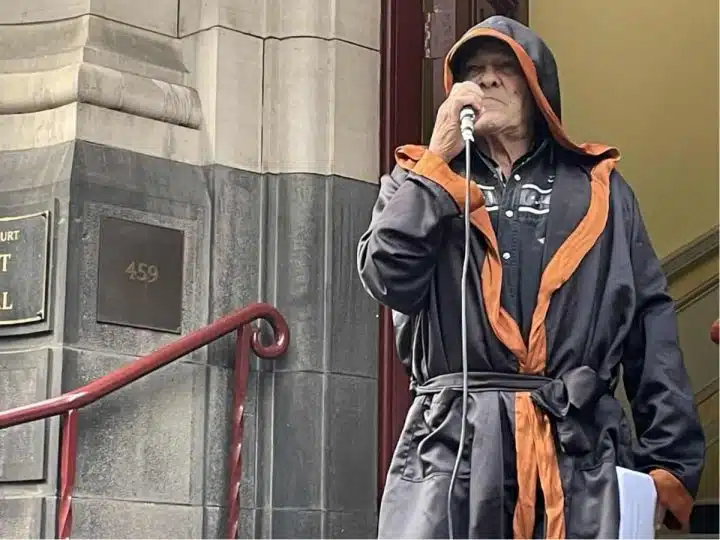
In June 2026, Krauatungalung Elder Djuran Bunjileenee Uncle Robbie Thorpe appealed to the Victorian Supreme Court in Australia as part of a genocide court case. The accused? King Charles III as the UK Crown representative.
It is one of a series of court cases Uncle Robbie has filed. Another is a trespassing case brought against Margaret Gardner, the governor of Victoria.
Governor’s trespass
Uncle Robbie stands in front of the Victorian Magistrates’ Court in trousers and a North Face jacket. As I step onto the curb, he holds an arm out for a hug and warns me against being mown down by cyclists. It’s the first time we have met.
He is waiting for the Victorian Governor General, King Charles III’s representative, to attend court on a charge of trespassing. Margaret Gardner had not scaled Government House’s fence; she walked in after being appointed. But the House is on land that has never been ceded.
Uncle Robbie said:
We’ve charged her with trespass and attempting to evict her from what they call Government House, which is in the Botanical Gardens.
He wants justice:
There’s a whole story around that: the Botanical Gardens was actually a former Aboriginal reserve – land for Aboriginal people. We want to get to the bottom of how that changed out of our hands and how it’s now a Government House. People should look at a thing called the Lettsam Raid of 1842 and you can see what’s happened.
Australia is still a colony
On the face of it, Australia has a Parliament, a Constitution, and a Prime Minister. But there were several colonies until they were federated in 1901.
Since Federation, the national story has been one of an independent nation. But Governor-Generals, representing the UK Crown, still have the power to dissolve state and federal parliaments and dismiss elected leaders.
There has been no Treaty signed with Aboriginal and Torres Strait Islanders, despite former prime minister Kevin Rudd’s 2008 apology.
Throughout the history of Australia’s colonies and federation, Aboriginal and Torres Strait Islander peoples were massacred, their children removed and their rights restricted. It took a 1967 national referendum to consider them humans and Australian citizens. Prior to that, they were classed as fauna. But harm continues.
In 2023, Uncle Robbie started a private prosecution case against King Charles III.
The failure of Australia’s legal system
The Magistrate’s Court of Victoria ruled that it could not prosecute the case. Why? The Australian Attorney-General has the power to veto any case prosecuting genocide, crimes against humanity and war crimes.
In February 2024, Gunnai Gunditjmarra and Djab Wurrung woman Senator Lidia Thorpe tabled amendments to Australia’s federal Criminal Code Bill to repeal the Australian Attorney-General’s veto power. The second reading was negatived in 2025.
The Magistrates’ Court told the Supreme Court of Victoria during an appeal in July 2024 that they didn’t have the necessary jurisdiction for the case. Uncle Robbie told the courts that Australia has not fully implemented the 1948 Convention on the Prevention and Punishment of the Crime of Genocide.
In February 2025, Supreme Court Justice Melinda Richards dismissed Thorpe’s judicial review application.
Justice Richards found that Victorian common law could not cover genocide and that First People’s sovereign law could not be applied by the Magistrates’ Court. While genocide is recognised in the Commonwealth of Australia’s Criminal Code, the Australian Attorney-General consent roadblock still applied.
The appeal and the case for genocide
Uncle Robbie has since appealed. He argued that the Attorney-General consent requirement is inconsistent with international law and Australia’s Racial Discrimination Act. He added that section 10 of the Act, “Rights to equality before the law”, should be read as not needing the consent.
He also argued in court that Australian sovereignty was not legitimate as settlement occurred without treaty or consent with First Nations in Australia.
He said:
Captain Cook never got consent. If you never got consent, this is an illegal occupation, and your courts and your laws are invalid.
The Victorian Attorney General’s representative Counsel for the Respondent Liam Brown SC argued that much of the appeal grounds brought up procedural concerns. Brown added that the Crown could not apply international law through Australian courts if it was not part of common law or legislated into domestic law.
Uncle Robbie was not surprised by this. He told me:
We know Australia’s unable, unwilling, and reluctant to deal with these issues. We’re talking about the most heinous of all known crimes, genocide, premeditated. Everyone knows it was an unprovoked attack on Aboriginal people. What did we do to the British to deserve that? And on that basis, it doesn’t give you authority. It doesn’t give you a right to operate. You can’t occupy our land.
Uncle Robbie also sought to add the Commonwealth Attorney-General, the United Nations Secretary General and the UK Prime Minister to the case. He requested that reports be provided from the Closing the Gap project and the Yoorook Justice Commission, alongside a report on historical records as proof of ongoing harm and genocide.
Decision reversed
On 12 June 2026, the Victorian Court of Appeal reserved its decision. Uncle Robbie is still waiting to hear back.
Now he’s turned his sights on Gardner, who did not turn up to attend court for the trespassing case. Instead, Executive Director for the Office of General Counsel Victoria and General Counsel Miriam Holmes attended in her stead.
The first Magistrate asked the lawyers to step out and discuss a schedule to reappear. After an hour in the lobby, they went back in to speak to a new magistrate.
They decided that Uncle Robbie will head back to court for the trespassing case on 20 August 2026 to see if Gardner does attend in person with a hearing set for October. That allows Uncle Robbie enough time to collate evidence from Elders and community for the case.
Taking it global
I asked Uncle Robbie what the next steps are for the genocide case. He told me the plan is to exhaust what they can do in Australia and then go to the International Courts:
It just can’t be internal courts. We know they’re totally biased. So we’re not going to get any justice from that. So that’s why we need to take it to the international court, for whatever that’s worth, and test that out.
Senator Lidia Thorpe has already emailed 21 United Nations member states on 24 June 2025, asking for help to stop and prevent ongoing genocide.
Uncle Robbie said that First Nations in Canada are already interested:
They’ll be keeping an eye on what we’re doing here. I think Australia’s very vulnerable in terms of moral, ethical, or legality here.
And if he got a ruling on genocide?
That would be an international war crimes trial.
In the meantime, he will continue the fight for Aboriginal sovereignty, one court case at a time. If only to show how Australia’s legal system fails to deliver justice for its First Peoples.
Featured image via Crime Scene Australia

The 2026 Women’s Africa Cup of Nations (WAFCON) has kicked off in Morocco but for UK viewers, the opening round has passed without a single minute available to watch on any domestic platform.
Despite a late announcement from the CAF Women’s Champions League naming Channel 4 as the UK broadcast partner, the reality has been stark. No live listings, no on‑demand replays, and no sign of future scheduling.
For a tournament that has grown in profile, the absence of coverage has left fans confused and frustrated.
WAFCON 2026: CAF’s announcement
Two days before the opening fixtures, CAF released its global broadcast outline, stating that Channel 4 would carry the tournament in the UK. It was the first time WAFCON had been assigned a free‑to‑air partner in Britain, a move that should have marked a significant step forward for visibility. Yet when the matches began, Channel 4’s live schedule remained unchanged.
Its on‑demand catalogue showed no WAFCON content. Its sports section carried nothing related to the competition. The broadcaster’s football hub, usually updated promptly for major events, stayed silent.
The gap between CAF’s announcement and Channel 4’s output has created a situation where rights appear to exist on paper but not in practice. With the opening matches already played, the absence of any archived coverage confirms that the issue is not simply a delay in updating listings.
A familiar pattern in African football rights
This is not the first time African football tournaments have encountered inconsistencies between rights announcements and actual broadcast delivery. Deals are often finalised late, and distribution plans can shift quickly.
In some cases, rights are agreed but not activated. In others, broadcasters secure access but choose not to commit resources to full coverage. The result is a recurring uncertainty for viewers outside the continent, particularly in Europe, where WAFCON has historically struggled for visibility.
The 2026 edition has been affected by additional disruption. The tournament was postponed by more than four months, pushing it into a congested summer window. Broadcasters already committed to other events may have been reluctant to adjust schedules or allocate production capacity at short notice.
Even with rights in hand, a broadcaster can decide not to proceed if operational challenges outweigh expected audience interest.
Channel 4 silent
Channel 4 has not issued any public statement explaining the absence of WAFCON coverage. Without official clarification, the reasons can only be assessed through the available evidence. The lack of listings across all platforms suggests that Channel 4 has not built a broadcast plan for the tournament.
The absence of on‑demand content indicates that no live feed has been taken. The empty sports hub implies that WAFCON has not been integrated into the channel’s editorial schedule.
One possibility is that Channel 4 secured rights but intended to carry only highlights or digital‑only coverage. Another is that the deal was agreed in principle but not finalised in time for operational rollout. A third is that CAF’s announcement overstated Channel 4’s role, listing intended partners rather than confirmed broadcasters.
Without confirmation from either side, the exact cause remains unclear.
Impact on fans and WAFCON
For UK viewers, the blackout has been immediate and total. Fans hoping to follow the opening matches have had no legal domestic option. Those attempting to access streams from African broadcasters have encountered geo‑blocking or inconsistent availability.
The lack of coverage also affects media visibility. Without a UK broadcast partner, match footage is harder to source, limiting reporting and analysis.
For the tournament, the absence of UK coverage is a missed opportunity. WAFCON has produced some of the most compelling stories in women’s football in recent years, and the 2026 edition features several players familiar to British audiences. Without broadcast access, those narratives struggle to reach a wider audience.
Can it be fixed?
With the tournament already underway, the likelihood of a late UK broadcast activation diminishes with each passing matchday. Unless Channel 4 or another broadcaster steps in quickly, WAFCON 2026 will continue without a UK platform.
The situation highlights a broader issue. African women’s football remains vulnerable to last‑minute rights decisions and inconsistent international distribution.
For now, the reality is simple. The matches have started. The goals have been scored. Yet in the UK, WAFCON 2026 is nowhere to be seen.
Featured image via Her Football Hub
By Faz Ali

Tyson Fury and Anthony Joshua remain the two biggest names in British boxing, and talk of finally staging their long‑anticipated fight has resurfaced once again.
The matchup has been discussed, negotiated, collapsed and revived multiple times over the past few years, but momentum is building behind a fresh proposal that could bring the pair together in the ring at last.
Both fighters have repeatedly said they want the fight. Promoters have indicated renewed interest. Broadcasters are open to it. Right now with the heavyweight landscape shifting again, the timing may finally be right.
Fury vs Joshua: Where talks currently stand
Discussions between the camps have restarted, with both sides publicly acknowledging that negotiations are active. No contract has been signed and no date or venue has been confirmed, but the framework being explored is similar to previous attempts: a major stadium event, a joint broadcast arrangement, and a financial package befitting two of the sport’s biggest earners.
Fury has been vocal about wanting the fight sooner rather than later. Joshua, fresh off a run of activity designed to rebuild momentum, has also stated he is ready to agree terms if the offer is right.
The sticking points remain familiar: the purse split, broadcaster alignment, and the order of any rematch clause. This time there is optimism that the gap between the two sides is smaller than in past negotiations.
Why the fight matters now
The heavyweight division is in flux. Titles have changed hands, contenders have risen, and both Fury and Joshua are looking to secure defining victories in the final phase of their careers. A fight between them would settle a debate that has dominated British boxing for nearly a decade: who is the premier heavyweight of their era?
Joshua’s recent run has rebuilt confidence after earlier setbacks. Fury, despite periods of inactivity, remains one of the sport’s most recognisable champions. Bringing them together now would deliver a fight with global reach, commercial weight and genuine competitive intrigue.
Potential venues
Several locations are under consideration. Wembley Stadium remains the leading UK option, capable of hosting more than 90,000 fans and delivering the kind of atmosphere the fight demands. Cardiff’s Principality Stadium is another domestic possibility, particularly for winter dates due to its roof.
International venues have also been discussed. Saudi Arabia has hosted multiple heavyweight events in recent years and remains a strong contender given its financial capacity and interest in staging major fights. The United States is less likely but not impossible, depending on broadcast arrangements.
Any Fury–Joshua fight requires cooperation between major broadcasters. Previous negotiations involved joint pay‑per‑view models and shared production responsibilities. Similar arrangements would be needed again, with both fighters tied to significant broadcast deals.
Financially, the fight is expected to be one of the most lucrative in modern boxing. Gate revenue, global pay‑per‑view sales, sponsorship and international rights would combine to create a package that rivals the biggest heavyweight events of the last decade. The purse split remains a key negotiation point, but both sides understand the scale of the opportunity.
What they Fury and Joshua bring
Fury’s size, awkward style and ring IQ have defined his career. His ability to switch stance, control distance and disrupt rhythm makes him one of the most difficult heavyweights to face.
Joshua, meanwhile, brings power, athleticism and a more structured approach. His recent performances have shown sharper combinations and improved confidence.
Stylistically, the fight offers a clear contrast: Fury’s unpredictability against Joshua’s precision. It is a matchup that has been analysed for years, and one that still carries genuine tactical interest
Timeline
There is no confirmed timeline, but both camps have indicated they want progress made quickly. Negotiations will continue over the coming weeks with the date, venue and financial terms needing to be finalised before any announcement.
If an agreement is reached, the fight would likely land in late 2026 or early 2027, depending on stadium availability and broadcast scheduling. Training camps, promotional tours and media commitments would follow.
Next steps
The proposed Fury–Joshua fight is not yet signed, but discussions are active and the appetite from both fighters, promoters and broadcasters is clear. It remains the biggest event available in heavyweight boxing, and the renewed push to make it happen has brought cautious optimism that the long‑awaited showdown could finally be agreed.
Featured image via Sky Sports
By Faz Ali
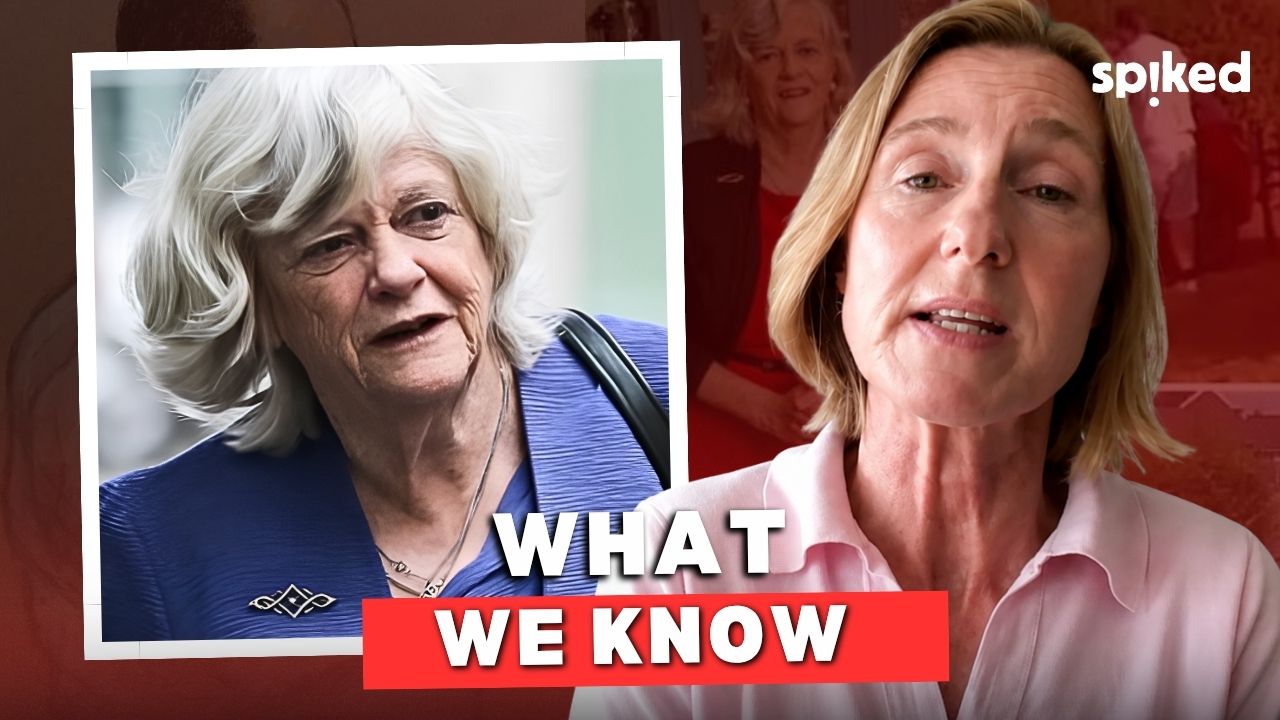
The post Ann Widdecombe murder: what we now know appeared first on spiked.

 lead image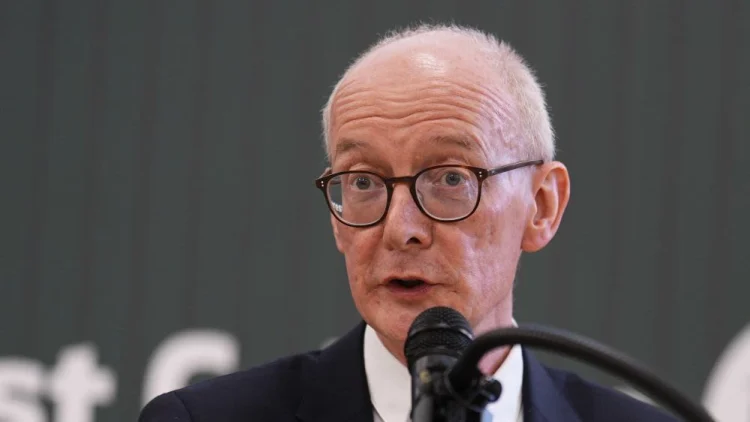

4 min read
Rebuilding the job market is one of the biggest challenges facing Andy Burnham. But it can be done.
New statistics show that there are still not enough vacancies for those looking for work, and employment rates have not returned to pre-pandemic levels. Our new Prime Minister’s early pronouncements suggest he recognises the need for a fundamental change to our education, employment and skills policy, especially for the youngest generations.
Andy Burnham recently called for a “complete rethink of how we support the next generation to succeed.” A rethink is exactly what we need.
Britain’s post-pandemic labour market sets us apart from our international peers. The UK has seen a rise in health-related inactivity not seen in other countries, and the proportion of young people who are NEET (Not in Education, Employment, or Training) is set to rise to over 16 per cent by the end of the decade.
More fundamentally, work has not truly delivered for working people for decades – one reason why Burnham’s diagnosis of the UK being “forty years on the wrong path” has cut through to the public. Despite improvements in minimum wages, in-work poverty has not budged because there aren’t the good-quality jobs, at the hours needed, to give people enough earnings to enjoy a decent living standard from work.
Solving these problems will take a three-pronged approach.
First, Burnham and the Department for Work and Pensions (DWP) should follow an investment-led approach, increasing work opportunities for the people and places who need them most.
For too long, the UK’s labour market policy has focussed on a very narrow range of interventions, founded on the myth that those who are out of work are simply not willing to find a job. This has clearly not worked. Upcoming research from the New Economics Foundation (NEF) will show how the rise of precarious and insecure work is helping drive people out of the workforce.
We invest far too little in re-training and skills for those out of work, with countries like Denmark putting us to shame. And we have done too little to address the systemic and place-based barriers to work – such as a lack of local vacancies in the most deprived job markets.
This needs to change. As a start, there should be a major expansion to the Youth Jobs Guarantee, a state-funded wage subsidy to support employers to place young people furthest from the labour market into work. Delivery of new placements should be devolved locally, as they were with the previous government’s Future Jobs Fund.
Second, investment in skills and training, especially vocational and technical education, needs to be significantly upgraded.
We have fallen backwards on apprenticeship starts since 2010, with those in deprived communities losing out the most. A modest increase in employer Growth and Skills Levy contributions – perhaps as a quid pro quo for lowering firms’ overheads and hiring costs – could reverse this trend. A portion of this funding could then be devolved to councils and integrated within Burnham’s planned local Good Growth Funds.
Firm training investment is much lower than in other advanced economies, and young people are unable to up-skill or retrain due to high up-front costs – making them vulnerable to AI-driven change. Introducing a Skills Tax Credit for firms, or even elements of a ‘Skilling Wage’, could deliver a major upgrade in firm-level investment.
Like France and Singapore, we should give every young person access to their own Individual Learning Account to spend on education and training. This fund could be added to by employee contributions and targeted state top-ups at particular ages.
Finally, the new government should rethink how the state engages with people who are out of work, to re-focus priorities on delivering higher-quality employment opportunities.
The welfare bill is a symptom, and not the cause, of an underlying lack of good work, training and support.
Burnham has signalled a shift towards devolved employment services in trusted grassroots-level settings. This would be a welcome change from the rigid, inflexible and rules-based way that the DWP engages with those out of work – and a nod to the promising outcomes seen in more hyper-local and voluntary council-led engagement, including in Greater Manchester.
To build on this, young people on out-of-work benefits should be assisted in community-based settings outside of Jobcentres, with Youth Hubs devolved to councils.
To rebuild the job market, the self-employed should receive better job security and in-work pensions, and there should be a presumption in favour of worker status for gig economy workers, as the European Union has done.
This change of PM comes at a time of heightened anxieties about the future of work, which goes beyond just the immediate NEETs crisis: the vast majority of people report little confidence in the ability of new technologies to benefit workers.
This presents an immediate challenge, but also – if harnessed effectively, and with the right policy – a major opportunity for the Burnham government.
Dr Tom Stephens is a Senior Fellow at the New Economics Foundation think tank and a Fellow of the LSE School of Public Policy

A motorcycle hitman allegedly killed an Ecuadorian lawyer investigating US drone strikes. Alexandra Bravo and her sister were killed on 14 June 2026 when a hitman “aboard a black motorcycle opened fire”. This may be the latest phase in a renewed US bid to dominate the Americas.
US drone strikes probe
Drop Site News reported:
Upon arriving at the crime scene, officers say they found five 9mm shell casings and Bravo’s injured driver, but no sign of the police detail that had been assigned to protect her. The Police Directorate, which operates entirely under the executive branch, has launched a probe to determine if there’d been an internal security breach.
Bravo represented individuals hit in at-sea drone strikes. They also claimed to have been tortured in US captivity. The US-based outlet said:
Bravo is the 26th member of Ecuador’s justice system to be assassinated since 2020 and the second individual investigating state crimes murdered that week.
Besides her usual caseload of homicide and organized crime, Bravo had been working the Fiorella, Negra Francisca, and Don Maca cases—a series of drone attacks on civilian fishing ships exposed by Drop Site in April.
The US has been carrying out drone strikes against vessels it claims are connected to so-called narco-terrorism since early 2026. The US killed 261 people since September 2025, NGO Airwars claims.
US-backed dictator and Trump-allied thug
Ecuador’s president Daniel Noboa is a:
Miami-born billionaire often characterized as a “U.S.-backed dictator”.
Ecuador has become what Drop Site describes as
a central testing ground for Operation Southern Spear, Washington’s extrajudicial bombing campaign purporting to target “narco-terrorists”.
There is no evidence that many of the victims, including those in Bravo’s investigation, had engaged in drug trafficking.
Human rights lawyer Fernando Bastias told the outlet:
I can’t make any assertion regarding it being a political assassination, but evidently, when a prosecutor is killed it’s because of the investigation they’re conducting.
That’s something we’ve learned from our experience in Ecuador.
A police source told Drop Site, Bravo was
under pressure from her superiors at the Attorney General’s office to treat the U.S. attacks as exclusively “cases of disappearance.”
Bravo’s work was reportedly in the early stages of her investigation.
The Drug Enforcement Administration (DEA) has reported drone strikes have had no negative impact on cocaine flows into the US:
— Drop Site (@DropSiteNews) July 27, 2026
 Military boat strikes haven’t reduced U.S. cocaine supply, DEA assesses
 An internal DEA report reviewed by The Washington Post found that U.S. military strikes on suspected drug trafficking boats have not reduced cocaine supply in the U.S., instead prompting traffickers to…
Donald Trump’s administration intends to bring the Western Hemisphere under American control. The peak so far has been the 3 January kidnapping of Venezuelan president Nicolas Maduro by US special forces. That spectacular raid is to be just the start of renewed US violence in the Americas.
Featured image via the Canary
By Joe Glenton
Across Greater Manchester, the last few years have seen a rise in openly racist street activity and anti-Muslim attacks. Unprecedented electoral success for Reform in the recent local elections met and likely spurred this on. This mirrors familiar trends across Britain, wider Europe and internationally.
Open fascism swells in Greater Manchester
The first half of 2026 saw far-right group Britain First call two major national mobilisations on the streets of central Manchester. There, Greater Manchester Police were ‘disproportionately’ hostile towards antifascists and counter-demonstration organisers, rather than countering openly fascist elements. Further evidence, if it were needed, that the British state’s hired muscle cannot be depended on to protect our communities.
Street racists held countless smaller, local protests across the ten boroughs too, targeting migrant accommodation and minoritised communities’ spaces. These accompanied racially-motivated fire-bombings of Muslim prayer rooms and family homes, from Stockport to Bolton and beyond. Both are generally met with the sound of crickets from Britain’s mainstream media.
At the ballot box, Reform made huge gains in May’s local elections, while their more openly racist rivals Restore, a party heavily supported by neo-Nazis, were able to pick up 6.8% of the vote in the recent Makerfield by-election. And, in the May 2026 local elections, Reform won around half (105) of the available seats across Greater Manchester. Prior to 2026, far-right parties had won seats in only five wards.
Blackburn Muslim family’s home firebombed. MSM, politicians silent
Organising for working-class unity
Trade unionists and other community organisers have been out on the streets responding to this. But they know that short-term counter-demonstrations alone won’t be enough.
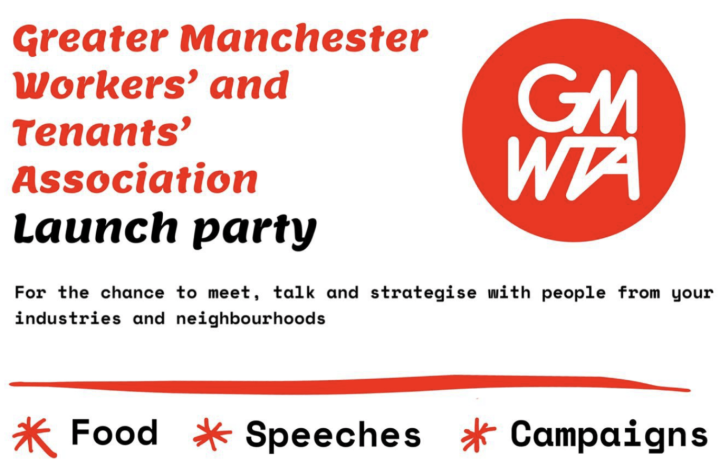
That’s why, on Wednesday 29 July, Greater Manchester Workers’ and Tenants’ Association (GMWTA) will launch. One of its primary objectives is to bring together people who want to tackle the long-term causes of the rise of the far-right, rather than waiting to deal with the dire consequences.
Edward, a Manchester HMO tenant who’s involved with the newly launched GMWTA, said:
Reform want to pose as a radical alternative to the existing elites, but look at who they’ve announced as their mayoral candidate. Sian Astley is a property developer and a landlord, who owns both houses and Airbnbs. In other words, she buys up properties that could be used for affordable housing, and rents them out to tourists instead, directly contributing to the housing crisis that drives people out of the areas they grew up in.
Reform aren’t an alternative to business as usual, they’re a new set of faces for the same old business interests. Workers and tenants who want real change can’t look to politicians like Astley, we need to be looking to our coworkers and neighbours to stick up for each other instead.
Organisers with GMWTA take particular inspiration from the ongoing struggle against care home closures in neighbouring Lancashire. There, a united campaign by local residents and care home workers — many of whom are migrant workers — managed to force the Reform-led county council to back down on threats to close local care homes. GMWTA organisers see this as an example of how working-class unity can play a crucial role in defending both ordinary people’s jobs and essential social services.
The GMWTA launch event on Wednesday 29 July will feature speeches from historian Taj Ali, author of the upcoming book Come What May, We’re Here To Stay, and by local activists, tenants and trade unionists. These include one worker who was part of the Lancashire care home campaign. There will also be ice cream from the local Ginger’s Comfort Emporium and music by members of local band Brown Wimpenny. There will also be an open discussion about shaping the organisation’s strategy moving forward.
Sign up to attend the GMWTA launch event here. It will run from 5:30–8:30pm on Wednesday 29 July, in a central Manchester location.
“No to Manchesterism built on the backs of renters” — tenants tell Burnham ‘freeze the rents’
Featured image via the Canary / GMWTA

Horrifying new footage has come to light revealing the real cruelty behind the infamous Scottish Guga hunt. As workers race across the protected gannet colony on Sula Sgeir, wildlife campaign group Protect the Wild shared the video before it was scrubbed from the internet. This damning footage comes just days before NatureScot will decide whether to grant new hunting licenses for the annual massacre of the protected sea birds.
Terrified chicks and bloodied sacks
The now-deleted YouTube video is vile. It shows three men racing through the middle of the breeding colony. The macabre footage shows them using the very sacks intended for collecting the smashed corpses of the chicks. The bottom of the sacks are soaked in blood. It begs the question, who thought that posting that video was a good idea? Come on.
This now deleted video shows a shocking disregard for the welfare of the Gannets. But then again, were the Guga hunters ever going to respect their victims? pic.twitter.com/efy8AQo9Z0
— Protect the Wild (@ProtectTheWild_) July 25, 2026
Adult gannets and chick alike fled in terror as the hunters mindlessly fool around. They evidently don’t give a shit about the birds, or the rules they have to follow to hunt them. Later in the video, we see them run around with sacks full of dead chicks on their backs.
The remote island of Sula Sgeir where the hunt occurs is around 70 miles from mainland Scotland. Far away from the prying eyes of the government and regulation. Because of this isolation, no government observers or animal welfare groups can keep an eye on them. And as a result, this is what happens. Hunters are entirely unsupervised in the wild.
Northern gannets enjoy ‘full’ protection under UK law. Yet the Scottish government permits an annual license to hunters, and it allows the senseless murder of up to 2,000 chicks per year. And this is under the guise of a traditional delicacy, popularised by Gordon Ramsey. Urgh.
Why, in 2026, are ministers allowing people to hunt protected wildlife? It doesn’t make any sense.
Government failure to protect gannets
NatureScot is the regulatory body that issues the licenses to hunt the defenceless gannet chicks. They issue licenses under authority from Scottish ministers. But under strict licensing rules, hunters are told they must take due care and attention to avoid any unnecessary disturbance or damage to the colony. So why the hell are these ghouls racing around in blood-soaked sacks? This footage proves hunters treat the legalities with contempt. They have turned the gannet breeding grounds into an obstacle course, and the chicks are the hurdles.
The Scottish Animal Welfare Commission previously concluded that the Guga hunt can’t be carried out in a humane way. Yet, despite this, ministers continue to shield the gruesome massacre through a legal loophole in the Wildlife and Countryside Act 1981.
Protect the Wild has launched a direct action tool demanding NatureScot finally take action. Their demands are simple, suspend all licenses immediately. The Scottish Government can’t claim to champion these birds, whilst allowing this ‘traditional’ torture to continue. Ministers, step up and revoke this outdated and brutal hunt for good.
It’s 2026. We shouldn’t have to watch innocent chicks being harassed and murdered by cruel and mindless hunters. Revoke the licenses.
Featured image via the Canary
By Antifabot

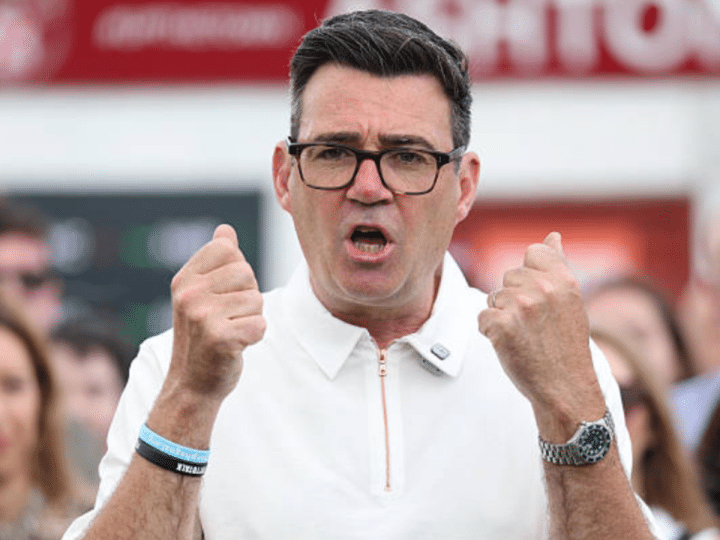
In Andy Burnham’s first interview as PM, the newly-minted Labour leader spoke about the need to “get really serious as a country” about “getting the welfare bill down”.
And how exactly does he plan to accomplish this feat? Well, Burnham claimed that he didn’t want to “blame” people on benefits, before adding:
It’s about changing the nature of the support, and making some of the support conditional upon people taking opportunities that are presented.
Implying that people on benefits having been taking the “opportunities that are presented” sounds an awful lot like blame, to us.
Blame by another name
The BBC recorded its interview on Thursday 23 July, and plans to air it this evening (Monday 27 July). Toeing the current mainstream media attack line, the show hammered the idea of phantom benefits cheats.
Presenter Laura Kuenssberg asked the PM about whether some people were claiming support they don’t need, in his opinion. Burnham replied:
Well, I wouldn’t necessarily go straight to blaming those people. What I would say is that there are people in the benefits system, young people in their 20s, who have been, I would say, quite seriously let down because the support wasn’t there for them when it should have been there.
So I don’t blame them. I don’t think the support has been there for them in the way that it should have been.
Aww, well that’s nice isn’t it? He’s singling out young people on benefits, but he’s also saying it’s not their fault. That’s some fairness and balance for you right there.
‘Changing the nature of the support’
Kuenssberg pressed the issue, asking if he planned to remove or reduce any benefits from anyone. The PM answered:
It’s about changing the nature of the support, and making some of the support conditional upon people taking opportunities that are presented.
I think it’s a good thing that the government has given guarantees of opportunities for young people. I think we need to continue down that approach. Where mental health support is needed, for instance, it’s provided in work to support people in an opportunity.
Wait a minute, we’re confused. Are people not being supported, or are they being offered opportunities and turning them down in favour of benefits?
Surely, if making benefits conditional on “taking opportunities” would make an appreciable difference, then Burnham is very much blaming benefits claimants. He’s just trying to find a ‘polite’, interview-friendly way of phrasing it (and hoping that no-one listens too closely).
Likewise, making benefits conditional on “accepting opportunities” (like a job, for example) only actually works if the likes of the Department of Work and Pensions (DWP) can be relied upon to discern whether or not somebody is fit to accept that opportunity. And, naturally, we know for a fact that we can’t rely on the DWP for fairness.
No ‘crude cuts to benefits’
Of course, there’s also another reason why the new PM is tiptoeing around the subject of benefits ‘reform’. His predecessor, Keir Starmer, faced a rebellion from his own back-benchers when he tried to implement cuts of around £5bn to welfare spending in 2025.
As such, Burnham has stated that he doesn’t plan on:
a kind of crude approach, crude cuts to benefits to get the welfare bill down.
Unfortunately, finessed, graceful cuts to benefits are still benefits cuts. He continued:
Often that just pushes people into even more crisis and then even more public spending in another part of the system.
We need a system that sets people up for success rather than pays for failure.
It’s almost as if the people claiming benefits actually need them. So, when the government slashes them, “other parts of the system” have to pay instead. For example, if people don’t have enough money to eat, suddenly hospitals are filled with patients suffering from malnutrition.
If only our shiny new prime minister had enough wherewithal to think how that might pair with his desire to “get really serious” about bringing the welfare bill down. Spoiler: the other government bills go up instead. That’s what happens when people don’t have enough money to live.
Burnham’s “way forward”
Earlier this month, the interim report from the Timms Review into Personal Independence Payments (PIP) acknowledged the benefit’s inadequacy to meet disabled people’s needs.
It also stated that PIP can punish people for coping with their disability, or use the fact that they have a job as evidence that they aren’t disabled enough to need support.
If we want to talk about welfare reform, let’s talk about welfare reform. We can start with working to create a system that truly acknowledges that people need help – and one that isn’t working actively to snatch that support away at the earliest excuse.
And yes, that does cost money. It won’t bring the benefits bill down. Of course, it may save money in other parts of the system, but in a society that actually cared about its citizens, that would be a secondary concern at best.
That’s a system that “sets people up for success”, as Burnham put it. It’s also the exact opposite of making benefits more conditional.
Featured image via the Canary
By Grace

Huge financial angle on this viral quarter!! #pcgspartner #quarter #quarters #coin @PCGScoin
London weather tracker: How hot the capital could get in fourth heatwave of summer

Godfrey Phillips shares fall 6% as Q1 net profit declines over 44% amid tax-led price increase

Renter of Home in Anne Heche Crash Denies Settlement With Son

No Jackpot Winner as $257 Million Prize Rolls Over to $269 Million Monday Draw

Weekend Open Thread: Staud – Corporette.com
Huge financial angle on this viral quarter!! #pcgspartner #quarter #quarters #coin @PCGScoin

Money football teams actually earn at the FIFA World Cup 2026. #worldcup #fifa #money #earring

No Strategies Working? Try This! #trading #propfirmtrading #crypto #tradesetup #forex
-

 Fashion4 days ago
Weekend Open Thread: Brooks Brothers
-

 NewsBeat7 days ago
How a former Blue Peter presenter stunned America’s Got Talent judges
-

 Tech1 day ago
Intel is reversing course and bringing hyper-threading back to its server chips
-
 Business6 days ago
New Jersey voter registration controversy explained: How 6,600 noncitizens got on the rolls, and what happens next
-
 Entertainment7 days ago
Johnny Depp’s R-Rated Gothic Cult Classic Gets New Release Ahead of Sydney Sweeney Remake
-

 Crypto World5 days ago
Ethics, other provisions in crypto Clarity Act to be further discussed
-

 Politics23 hours ago
Luke Littler dismantles Gerwyn Price to retain title in Blackpool
-
 Sports2 days ago
Commonwealth Games boxing: Jadumani Singh seals dominant 5-0 win over Pakistan’s Sumama Rehman to enter quarter-finals | Commonwealth Games News
-

 Sports4 days ago
2026 3M Open leaderboard: Scottie Scheffler finds putter in Round 1, sits three back
-

 Fashion4 days ago
16 Dresses for the High Summer Event
-

 News Videos5 days ago
The Peugeot Family: How 200 Years of an “Old Money” Dynasty Died in A Boardroom
-

 Politics2 days ago
Spain sweeps the board at 2026 World Cup with individual awards
-

 News Videos2 days ago
BITCOIN JUST ENTERED THIS CRITICAL ZONE…
-
 Entertainment4 days ago
A New Post-Apocalyptic Gundam Anime Series Blasts Into SDCC
-

 Crypto World2 days ago
XRP Ledger adds $2.6B as RWA inflows rank second
-

 Crypto World5 days ago
Uniswap (UNI) pushes deeper into tokenized RWAs with permissioned trading pools
-

 Tech3 days ago
Anthropic launches Claude Opus 5, a cheaper AI model for coding, agents and enterprise workflows
-

 Crypto World3 days ago
Ripple bought a bank in pieces. The $4 billion audit
-

 Entertainment2 days ago
Sara Gilson Killed By Husband After Viral “Pedophile” TikTok Video
-

 Crypto World6 days ago
Sablier Labs Enters Maintenance Mode, Halts Development
You must be logged in to post a comment Login