Connect with us

Business

Tata’s new electric arc furnace at Port Talbot facing delay

Published

on

Business Live

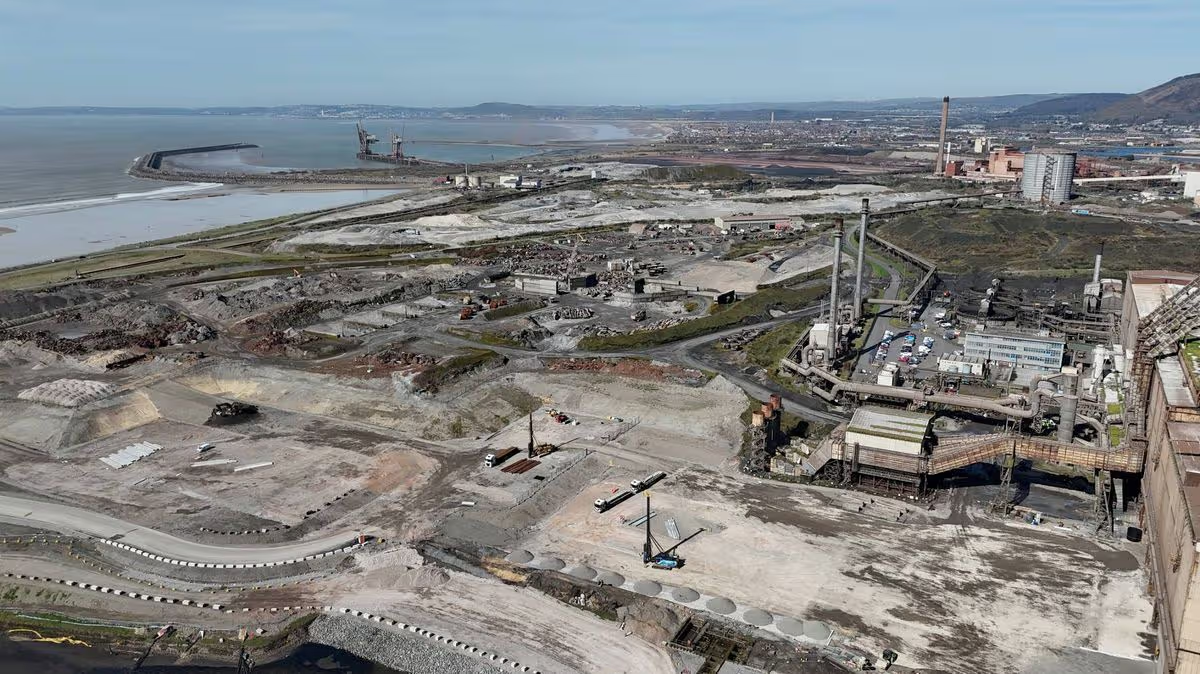
A delay in getting enough electricity to the Port Talbot site means there is currently a 12-month delay to the new electric arc furnace opening but bosses are confident that could come down

Tata Steel Port Talbot

(Image: John Myers)

The opening of Tata’s new electric arc furnace at the Port Talbot steelworks could be delayed by up to 12 months, bosses have said, although they say they are hopeful that time can be reduced.

Advertisement

The electric arc furnace is a £1.25bn scheme to build one of the largest such furnaces in the world. The project, partly funded by the UK Government, is to replace the historic blast furnaces at the steelworks.

But issues have emerged with getting power to the site which could delay its start date by up to a year.

Tata Steel’s chief financial officer Koushik Chatterjee has said the delay was 18 months but has already reduced to 12 months. The Indian-owned company is hopeful it will reduce further.

He said “securing access to high-power electricity is critical for our planned transition”.

Advertisement

“While we are working with the electricity system operator and the National Grid for new electrical infrastructure National Grid has formally alerted us that their connectivity project is delayed,” said Mr Chatterjee.

“This is critical for Tata Steel UK for the project commissioning. We are in conversation with National Grid and the UK Government on resolution of the issues.”

Asked about how long the delay might be Mr Chatterjee, Tata’s executive director and chief financial officer, said that was being discussed.

He replied: “Somewhat between, say, six months to eight months will certainly be there, maybe higher, after we have built the plant. The initial estimate was around 18 months. It has come down to 12 months and we’re actively working to see if we can reduce it further but there will be some delays imminent.”

Advertisement

He said the company was working with partners including the UK Government, the National Grid, and its electricity supplier to “see if we can mitigate”.

In a call three weeks ago CEO TV Narendran told journalists: “There is a delay of about 12 months in the electricity supply. What we are trying to see is at least some connection, one line, as soon as the plant is ready so we can do some trials, test out some equipment etc so we don’t waste the time that we’re waiting for the full electricity connection.

“Then what we are planning to do is to ramp up that we had scheduled after the commissioning how to compress that to make sure we catch up on the project.

“if we do the preparatory work before the full electricity connection is there we can do a quicker ramp up”.

Advertisement

In the call Mr Chatterjee said fixed costs in the UK in the last two years had fallen by 50%.

Before the delay in power access an operational estimate of late 2027 or early 2028 had been given. For our free daily briefing on the biggest issues facing the nation, sign up to the Wales Matters newsletter here.

The National Grid is building a new substation at its Margam site and delivering a second 275kV substation on Tata Steel’s Port Talbot site – which requires new supergrid transformers, as well as a 2km underground cable connecting the two substations to deliver the EAF.

It is understood issues emerged with ground conditions, and environmental and planning considerations, once work had started but that teams from National Grid have been on site since September.

Advertisement

Work on the new Margam substation will start in the coming weeks.

In recent days the Tata site has also been hit with a major fire.

Tata said its controversial decision to shut the historic steel plant’s two blast furnaces, signalling the end of steelmaking from raw materials in Wales, was due to a combination of cost-cutting and a move to decarbonising its operations.

On September 30, 2024, blast furnace four – the final one operating at the vast site – was closed ending 100 years of primary steel-making .

Advertisement

The site is being reworked around an electric arc furnace to recycle previously-used steel and when the decision was made Tata announced 2,800 job losses with the majority in Port Talbot. We now know that between September 2024 and the end of July 2025 2,162 people left the business.

Tata says it has lost £4bn in Port Talbot since 2007 and the new furnace would ensure a “financially and environmentally sustainable future” as well as reducing the site’s carbon emissions by 90%.

The UK Government gave £500m to the plans.

A Tata spokesman said: “The electric arc furnace programme is a major industrial project and, like all projects of this scale, timelines continue to evolve as detailed engineering, construction, and infrastructure work progresses.

Advertisement

“While we are still discussing potential adjustments to the commissioning timetable we are working closely with National Grid, our construction partners, and the UK Government to deliver the project safely and as quickly as possible.

“We have already met a series of key milestones in the construction phase and the shipment of major components including the EAF shells, tilting platform, and Consteel conveyor will commence imminently.”

A National Grid spokesperson said: “We recognise the importance of this project and remain committed to delivering the connection safely and at pace, working closely with our partners. Construction is underway and good progress is being made. This is a major, multimillion pound programme involving complex engineering, subject to environmental and planning considerations which require careful design and delivery.”


Advertisement
Continue Reading
Click to comment

You must be logged in to post a comment Login

Leave a Reply

Business

Birmingham Sports Quarter plans to transform ‘deprived’ area of city

Published

on

Business Live

The project includes a stadium, jobs and 1,000 new homes over the next 20 years

Visualisation of The Powerhouse Stadium, part of Birmingham City FC's Sports Quarter project. Taken from BCFC forum.

Visualisation of The Powerhouse Stadium, part of Birmingham City FC’s Sports Quarter project(Image: Local Democracy Reporting Service / BCFC )

Birmingham Council has outlined how Blues’ Sports Quarter could revitalise a ‘deprived’ neighbourhood as it presented a sweeping vision for the city’s future. The authority has recently published its draft Local Plan, an extensive document which examines how the council can help shape the city over the next two decades.

Advertisement

Specifically, it details how the council can support economic growth, tackle housing requirements and draw in investment, alongside regeneration prospects across the city.

One significant prospect is Birmingham City’s Sports Quarter scheme, which will redevelop the 48-acre Wheels Park site in the east of the city and be anchored by a new stadium called The Powerhouse.

The eye-catching design of the proposed stadium was unveiled last year, with Blues chairman Tom Wagner stating they aim to create a ‘globally-recognised colosseum’ that can also accommodate events such as concerts.

The broader Sports Quarter vision surrounding the stadium itself also encompasses new transport connections, a training facility, women’s stadium, arena and residential development.

Advertisement

Regarding how this scheme could contribute to Birmingham’s transformation in the years ahead, the city council indicated it would sit at the centre of the Bordesley Park Growth Zone.

“Bordesley Park will be re-invigorated into a vibrant, sustainable, and inclusive mixed-use neighbourhood, centred on a nationally significant, sports and leisure destination,” the draft Local Plan said

“The Sports Quarter […] provides a unique opportunity to establish Birmingham as a globally recognised destination for sports, leisure, entertainment and major events.

Birmingham Wheels Park site, where Birmingham City FC are planning to build their new stadium. Credit: Alexander Brock. Permission for use for all LDRS partners.

Birmingham Wheels Park site, where Birmingham City FC are planning to build their new stadium(Image: Local Democracy Reporting Service / Alexander Brock)

“Development will be anchored by a new stadium for Birmingham City FC, supported by training facilities, leisure and entertainment attractions and other complementary uses.

Advertisement

“Together, these uses will attract investment, create jobs, skills and training opportunities and act as a catalyst for wider regeneration across East Birmingham.”

The document went on to state that the Sports Quarter will be conceived as a “year-round destination”.

“[It will thrive] on both event and non-event days with new homes, new jobs and community facilities, high quality public realm, enhanced connectivity and environmental improvements,” it said.

“In doing so, it will foster pride in place and deliver lasting economic and social benefits for local communities and Birmingham as a whole.”

Advertisement

Regarding the Sports Quarter and St Andrew’s Park, the council added that future expansion and development will be progressed in accordance with the following principles:

  • deliver a new stadium for Birmingham City FC alongside “national and international leisure and entertainment attractions to anchor the place and catalyse wider development”;
  • provide additional appropriate sports and leisure facilities which strengthen the role of the location as a “destination for activity and well-being”;
  • accommodate a suitable blend of uses which could encompass residential, commercial, business, industrial, education, hotel, leisure, retail, cultural and community purposes;
  • deliver a minimum of 1,000 new homes informed by local housing requirements;
  • provide additional appropriate community facilities, by “fostering social inclusion and participation” and supplying facilities designed for active use;
  • contribute towards delivering substantial net additional jobs, skills, and training opportunities and pathways in the area directly on-site;
  • deliver “high-quality public realm” to draw in visitors and investment, enhance the environmental quality for local residents and businesses, and promote a vibrant atmosphere on both event and non-event days;
  • support the Site of Local Importance for Nature Conservation (SLINC) on the western edge of the site and provide suitable mitigation, alongside measures to enhance green and blue infrastructure and biodiversity;
  • integrate the existing St Andrew’s Stadium site within the broader regeneration vision for Bordesley Park, either as a retained sports stadium or alternative form of development, subject to further appraisals;
  • improve connectivity to and through the site, prioritising walking, cycling and public transport movements while supporting the operational requirements of the destination.

Regarding transport in particular, the council said: “A wide range of measures are proposed to enhance connectivity to and through the area.

“This includes the development of rapid transit routes along the A45 (Sprint) and Eastern Metro Extension and potential improvements to existing railway services and local stations, including a potential relocated station at Adderley Park.”

The draft Local Plan added: “The Sports Quarter will be a key catalyst for the delivery of such major transport improvements, supporting the business case for investment in public transport improvements and promoting active travel modes.”

The council added that regeneration proposals could help address longstanding challenges of “deprivation, limited employment, poor health outcomes, and high levels of economic inactivity” throughout East Birmingham.

Advertisement

“The importance of Birmingham City FC to the local area will continue to be recognised as an important community institution, contributor to the regional economy, and a national presence in sport representing the city,” it added.

Earlier this year, West Midlands Mayor Richard Parker launched Britain’s ‘biggest and most powerful’ Mayoral Development Corporation (MDC) to ‘significantly speed up’ the £11bn regeneration of East Birmingham.

Mayor Parker said at the time that the MDC initiative would harness a broad range of powers, encompassing land acquisition, planning, business tax incentives and infrastructure funding.

He went on to say this would enable the corporation to cut through bureaucratic obstacles, bolster investor confidence and accelerate investment into the region, delivering significant benefits to major schemes such as the Sports Quarter.

Advertisement
Continue Reading

Business

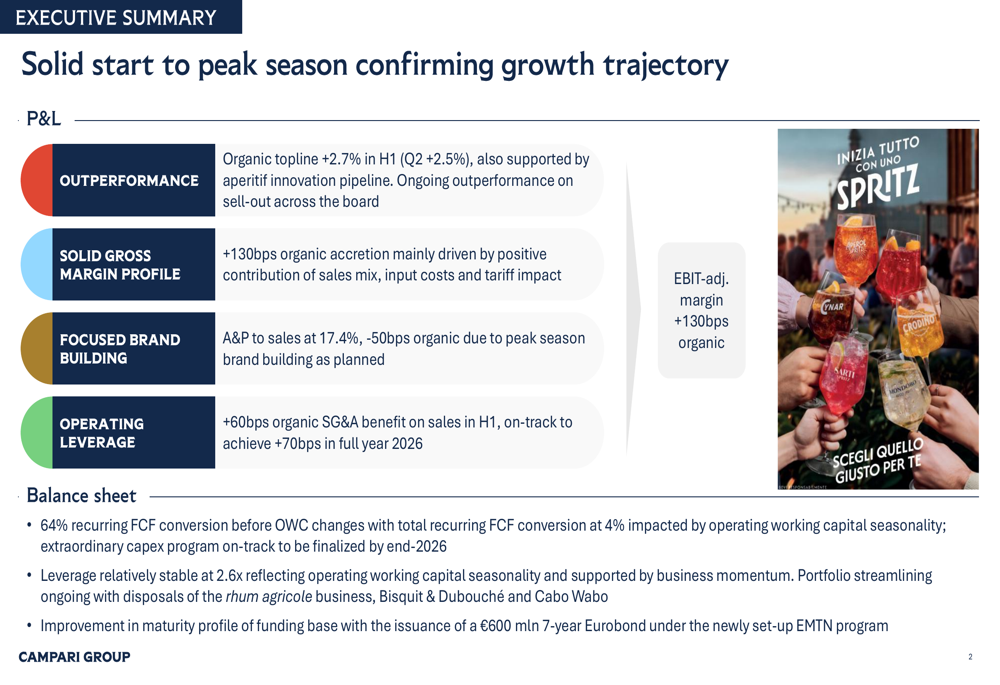
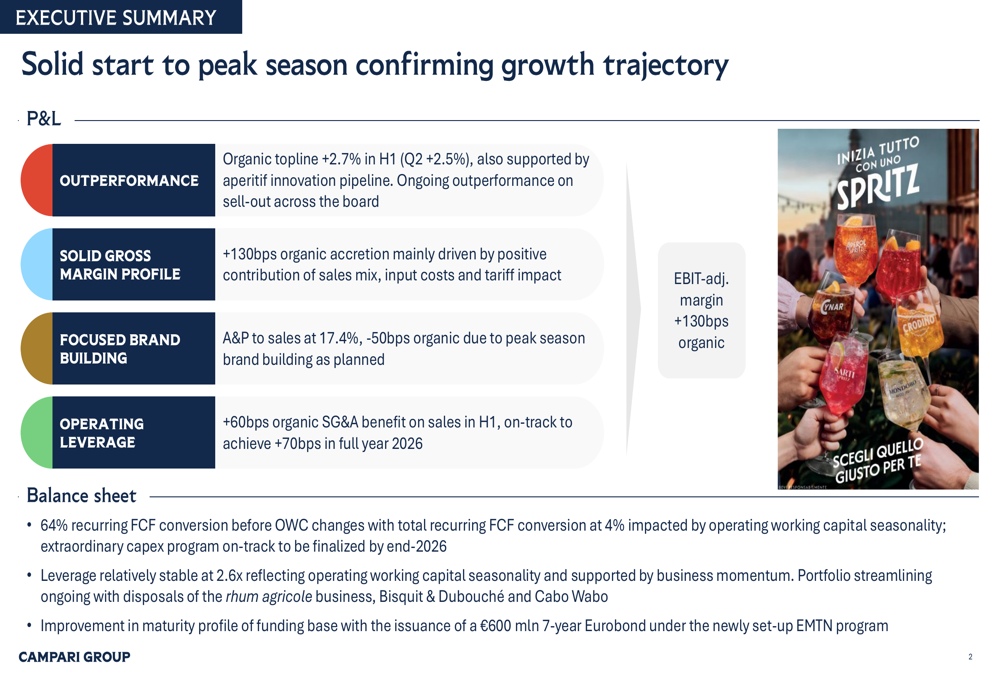
Campari H1 2026 slides: aperitif growth drives margin expansion

Published

on

Campari H1 2026 slides: aperitif growth drives margin expansion


Campari H1 2026 slides: aperitif growth drives margin expansion

Continue Reading

Business

Earnings call transcript: Pirelli confirms 2026 targets after solid H1 2026

Published

on


Earnings call transcript: Pirelli confirms 2026 targets after solid H1 2026

Continue Reading

Business

Star Health Insurance Q1 Results: Profit jumps 25% to Rs 550 crore

Published

on

Star Health Insurance Q1 Results: Profit jumps 25% to Rs 550 crore
Star Health and Allied Insurance Company on Wednesday reported a 25 per cent increase in net profit to Rs 550 crore for the first quarter ended June 2026.

The standalone health insurer had posted a net profit of Rs 438 crore during the corresponding quarter of the previous financial year.

During the quarter, total income increased to Rs 4,471 crore from Rs 3,990 crore in the same period a year ago, Star Health and Allied Insurance Company said in a regulatory filing.

The private health insurance firm’s gross written premium during the quarter rose 19 per cent to Rs 4,287 crore from Rs 3,605 crore in the year-ago period.

Advertisement

The insurer’s underwriting profit surged to Rs 111 crore from Rs 16 crore in the corresponding quarter last year.


However, the company’s solvency ratio declined to 209 per cent from 222 per cent in the same quarter a year ago.
“Our performance in the first quarter reflects the strength of our fundamentals and the consistency of our execution,” Star Health Insurance Managing Director and CEO Anand Roy said.Sustainable growth, improvement in core underwriting profitability and operating discipline helped the company deliver a strong start to the year, he added.

The insurer settled 9.6 lakh claims during the quarter, while its retail claims settlement ratio improved to 91 per cent.

Continue Reading

Business

Cyclospora outbreak tied to Taco Bell amid Yum Brands earnings

Published

on

Cyclospora outbreak tied to Taco Bell amid Yum Brands earnings

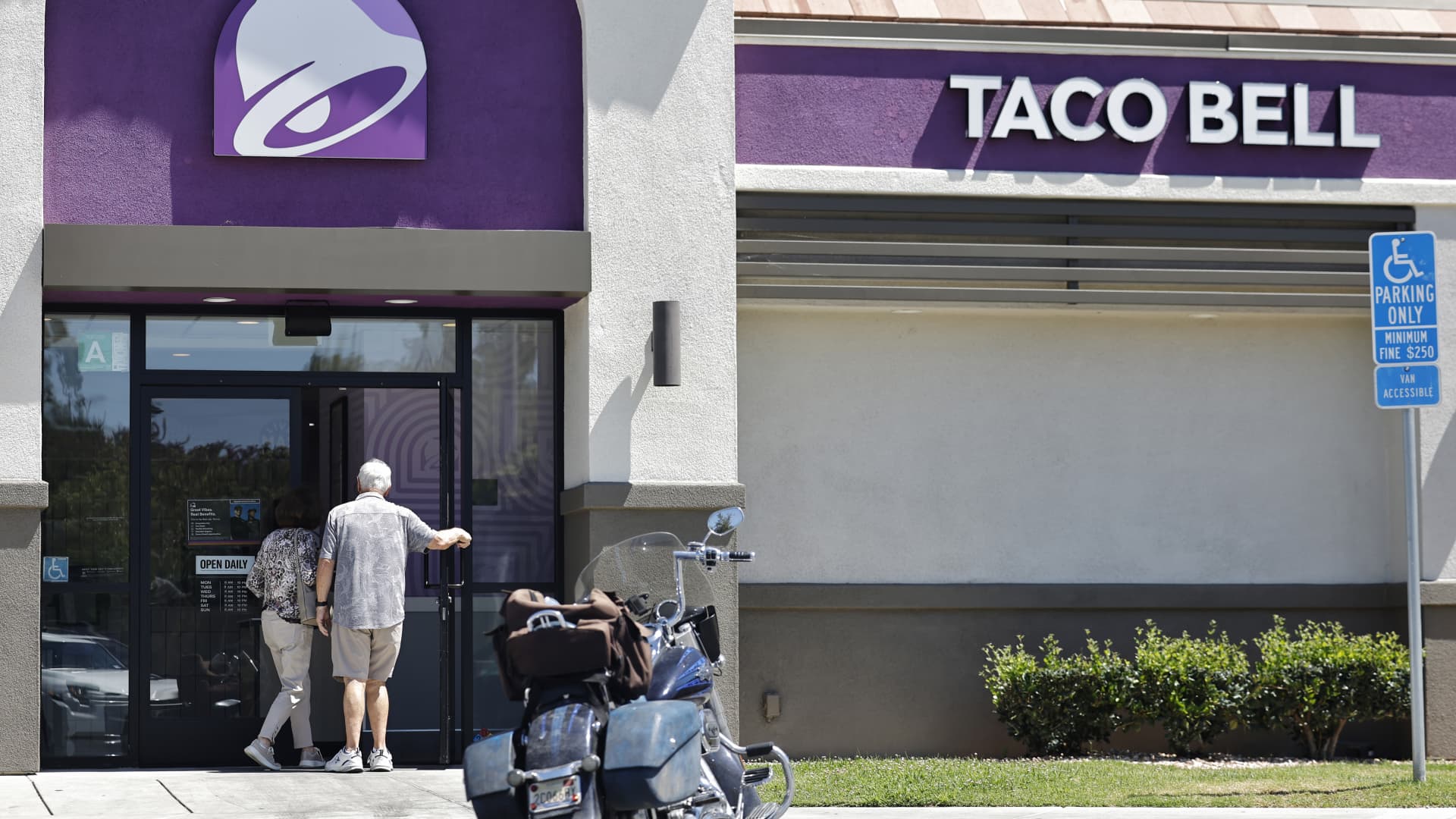
Customers enter a Taco Bell restaurant in La Cañada Flintridge, California, on July 14, 2026.

Mario Tama | Getty Images

Yum Brands is expected to report its second-quarter earnings before the bell on Thursday, but executives will likely face more questions about how the cyclosporiasis outbreak tied to Taco Bell is hitting its business during the current reporting period.

Advertisement

Since the Food and Drug Administration first linked the parasitic outbreak to lettuce served by Taco Bell, daily traffic to the chain’s locations has plunged by double digits, according to Placer.ai data. Shares of Yum have fallen 5% over the same period, dragging the company’s market value down to about $42 billion.

The outbreak has sickened at least 1,947 people, with 98 hospitalizations and no deaths reported as of Friday, according to the Centers for Disease Control and Prevention. Federal health agencies have named iceberg lettuce supplied by Taylor Farms as the likely culprit.

For Yum, Taco Bell’s plummeting traffic is a bigger deal than just a brand struggling.

The restaurant giant counts Taco Bell as one of its “twin growth engines,” counting on it to power its earnings and revenue along with KFC’s international business. The Mexican-inspired chain has long been the gem of Yum’s portfolio, with a passionate fan base and strong same-store sales growth every quarter, even as diners have become more value conscious.

Advertisement

Besides Taco Bell and KFC, Yum owns Habit Burger & Grill. While KFC’s international business is booming, its domestic sales have slipped so much that the company no longer breaks out the fried chicken chain’s U.S. sales. Habit Burger & Grill, a more recent acquisition, is much smaller with fewer than 400 locations, and is rarely spoken about on the company’s earnings calls.

Yum also recently divested Pizza Hut, a key piece of its portfolio that had also been struggling for more than a decade.

The divestiture means even more attention is on Taco Bell, at the exact wrong moment.

Tip of the iceberg?

For the second quarter, Wall Street is projecting that Yum will report earnings of $1.58 per share on revenue of $2.2 billion, based on a survey of analysts by LSEG. Taco Bell is expected to report same-store sales growth of 7% for the quarter, which ended more than a month before the FDA linked the chain to the outbreak.

Advertisement

But Wall Street now expects that Taco Bell and its parent company will see a tougher stretch in the back half of the year.

“We think the recent outbreak likely has minimal impact on Taco Bell’s Q2 results, though debate around impact on Q3 and beyond is the key driver of the stock recently,” RBC Capital Markets analyst Logan Reich wrote in a note to clients on July 21. “We lower our Q3 and Q4 [Taco Bell] estimates as a result, however given the recent selloff in shares, this may create an opportunity to the degree that consumer confidence in TB’s food safety is not materially impaired beyond this outbreak.”

Between June 30 and Tuesday, seven industry analysts revised their expectations for Yum’s full-year earnings per share downward, according to a Factset survey of consensus estimates.

The chain is already trying to win customers back. Taco Bell had pulled affected iceberg lettuce from its restaurants by July 17. Taco Bell CEO Sean Tresvant wrote an open letter to diners five days later trying to assuage their concerns.

Advertisement

“We aren’t entitled to your loyalty. We earn it one meal at a time,” he said, adding a pledge that Taco Bell will put safety first and act with transparency.

Social media responses show that some consumers have stayed loyal, despite the crisis. Commenters overwhelmingly responded positively to an Instagram post from Taco Bell addressing the situation.

“I still luv u Taco Bell,” former reality TV personality Lo Bosworth wrote in a comment on the post.

Moreover, Taco Bell is leaning into its reputation for value to win back customers. The same day that Tresvant shared his letter, the chain sold Enchiritos and nacho fries for $1; on Tuesday, it sold its cult-favorite Mexican Pizza for $1.

Advertisement

Still, the outbreak rages on. Daily cases in Michigan, which appears to be the epicenter of the initial outbreak, keep rising. While Health and Human Services Secretary Robert F. Kennedy Jr. told reporters that the outbreak is “under control,” the CDC has not declared it over.

At their worst, such outbreaks can weigh on a restaurant chain’s sales for years.

Chipotle Mexican Grill was once the poster child, after being implicated in at least five separate foodborne illness outbreaks between 2015 and 2018. For a year, from the fourth quarter of 2015 to the fourth quarter of 2016, the burrito chain reported double-digit same-store sales declines. But a new chief executive, sick days and more training for employees and an enhanced food safety program helped Chipotle turn the corner and put the crisis in the rearview mirror.

Industry analysts largely believe that Taco Bell will be spared that reaction, provided that it does not experience any other safety hiccups in the near term. Many instead see McDonald’s recent brush with a foodborne illness outbreak as the more likely precedent for Taco Bell.

Advertisement

In late 2024, health authorities linked a deadly E. coli outbreak to McDonald’s Quarter Pounder burgers. The burger chain saw traffic to its U.S. restaurants fall steeply in response, particularly in the affected states. Sales began recovering within several weeks after the CDC declared the outbreak over and it disappeared from headlines. Weaker traffic continued into the first quarter of 2025, although that trend coincided with severe winter weather and a broader pullback in consumer spending.

McDonald’s domestic sales fully rebounded by the second quarter, thanks to the launch of its Minecraft Movie Meal, according to research note from M Science.

Like Taco Bell and Chipotle, McDonald’s also took steps to address the outbreak and restore diners’ trust. For example, it severed its relationship with the supplier of the slivered onions likely responsible for the E. coli outbreak — Taylor Farms.

Choose CNBC as your preferred source on Google and never miss a moment from the most trusted name in business news.

Advertisement
Continue Reading

Business

Sales and profits soar at homeware seller Online Home Shop

Published

on

Business Live

New accounts for the family-run business show large strides in its performance

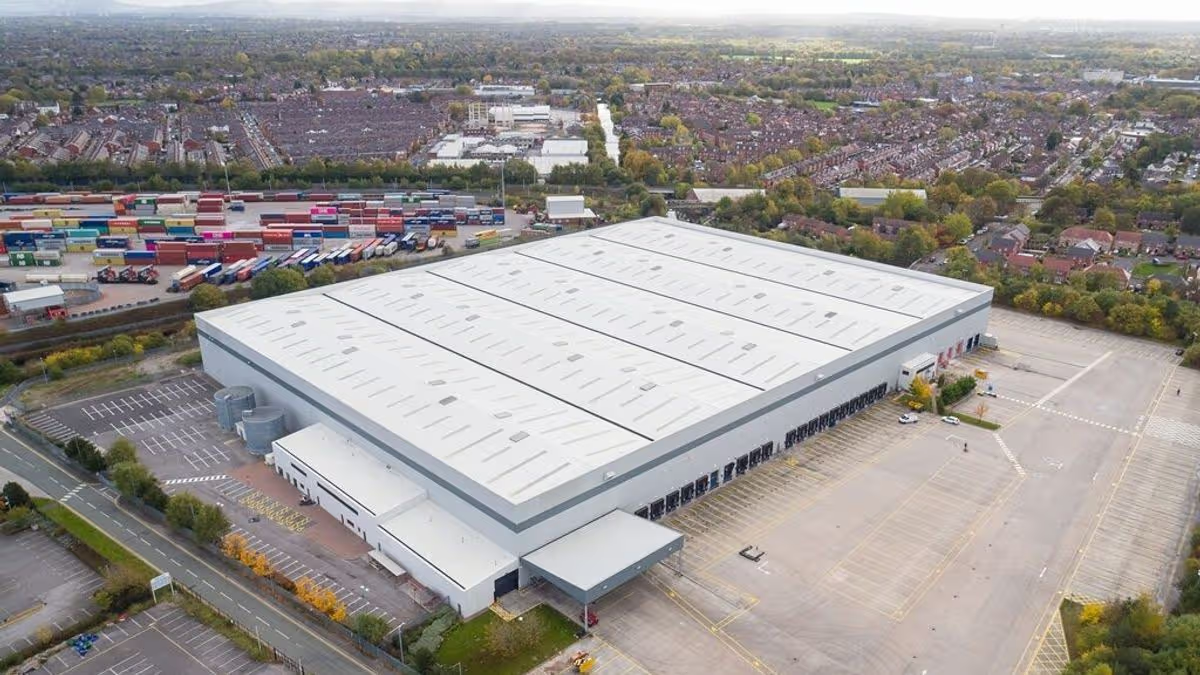
Online Home Shop (OHS) has opened a 327,000 sq ft centre in Trafford Park

Online Home Shop (OHS) has opened a 327,000 sq ft centre in Trafford Park(Image: B8RE)

Sales at internet homeware retailer Online Home Shop have topped £100m, with profits also surging.

The Trafford Park-based seller of bedding, furniture and clothes, among other products, has filed accounts showing a turnover rose from £59.6m to £100.2m in the year to the end of January, 2026. Operating profit tripled from £4.9m to £15.3m across the year as bosses hailed a second consecutive record breaking year.

Online Home Shop said the growth was down to an increasing the customer base, repeat purchases, and expanding into new product categories, particularly in garden, furniture and clothing. Gross Profit for the year was 30.4%, up 5.6% on the prior year thanks to increased profitability across all product categories, incremental performance of new product categories and improved efficiencies.

The 200-strong business recently announced the opening of a new 327,000 sqft fulfilment centre in Trafford Park. That move is intended to help stock management and improve distribution efficiency as the firm responds to growing demand.

Advertisement

Headcount is expected to double to more than 400 in the current financial year. During the first half, sales are said to be up 50% year-on-year with further growth expected across the rest of the year.

Moshe Cohen, CEO of Online Home Shop, said: “We are delighted to announce another strong set of results, reflecting the exceptional talent, commitment and hard work of everyone across OHS. Our continued investment in our people and infrastructure has strengthened the business and positioned us for sustainable long-term growth.

“By attracting and developing the very best people, we continue to deliver high-quality, trend-led homeware products at unbeatable prices, while providing an outstanding shopping experience for our customers. As we look ahead, we remain focused on building on this momentum and delivering the next phase of our growth.”

Online Home Shop Ltd was launched in 2014 and is controlled and run by the Cohen family. It has stated an ambition to become one of the UK’s largest online retailers.

Advertisement
Continue Reading

Business

Home relocator arrested, claims of owing big sums

Published

on

Home relocator arrested, claims of owing big sums

A Western Australian house relocator who is being investigated over claims he owes clients more than $1 million has been arrested after allegedly breaching a court order.

Continue Reading

Business

Humana Stock Price Falls After Insurer Maintains Full-Year Guidance

Published

on

Humana Stock Price Falls After Insurer Maintains Full-Year Guidance

Humana stuck to its guidance for the year, even after the health insurer’s second-quarter results broadly beat Wall Street expectations.

The unchanged guidance contrasts other insurers, including industry bellwether UnitedHealth, which have raised their financial projections for the year on lower-than-expected Medicare cost trends.

Copyright ©2026 Dow Jones & Company, Inc. All Rights Reserved. 87990cbe856818d5eddac44c7b1cdeb8

Continue Reading

Business

What happens here has a big impact on your money

Published

on

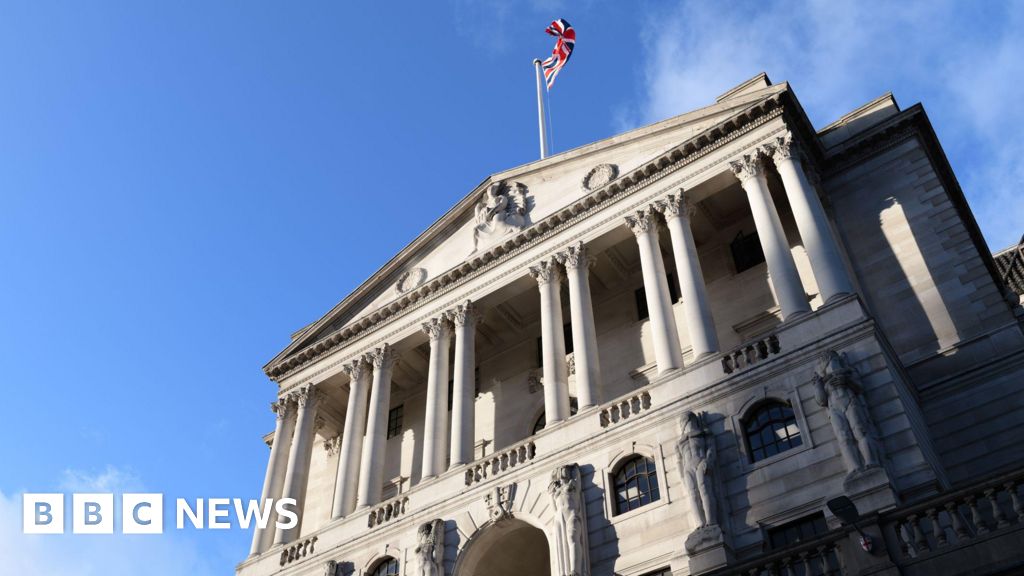
The front of the Bank of England building - a triangular roof is held up by multiple columns, and there is an arched entrance

BBC business reporter Dearbail Jordan explains how it works from inside the Bank of England.

Continue Reading

Business

J&K Bank Q1 profit slips 13% as higher provisions hit earnings

Published

on

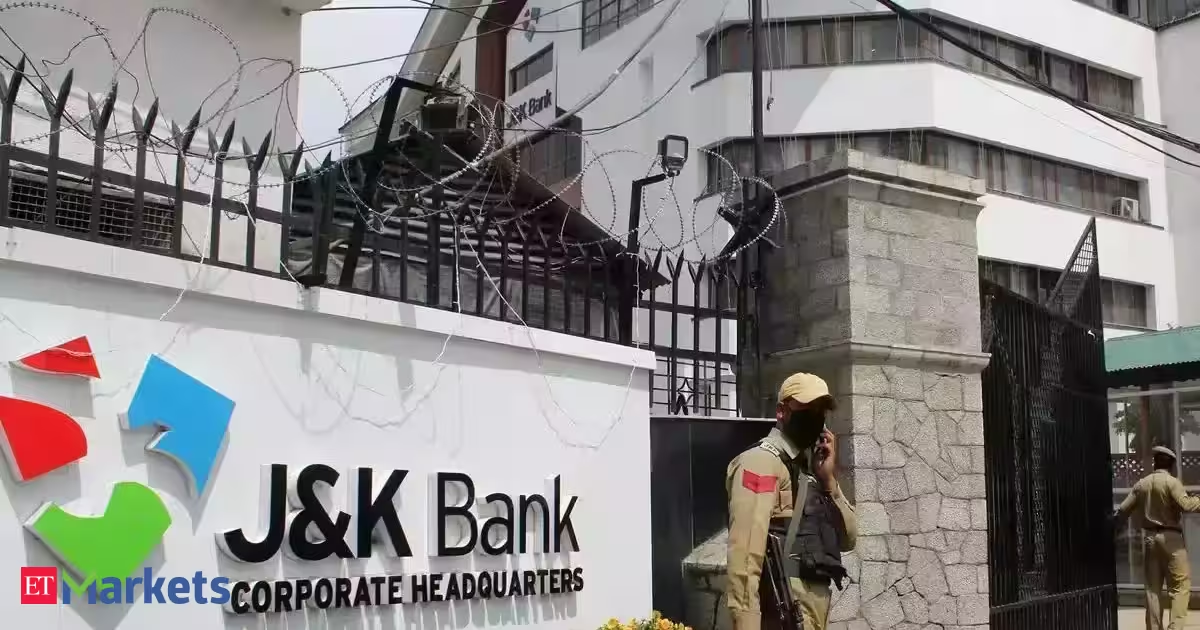
J&K Bank Q1 profit slips 13% as higher provisions hit earnings
Jammu and Kashmir Bank reported a 12.6% drop in first quarter net profit at Rs 424 crore against Rs 485 crore in the year-ago period, on account of higher provisions, prompting a near 13% plunge in share price.

The fall in net profit was despite a Rs 56 crore gain due to change in accounting policy effective April 1, according to the bank’s regulatory filing to stock exchanges.

The net interest margin for the quarter compressed to 3.28%. Net interest Income rose 2% at Rs 1497 crore.

The share price nosedived 12.8% to Rs 154.6 on BSE, reacting to the pressure on profitability.

Advertisement

The pre-provision operating profit for the quarter stood 4.5% higher at Rs 703 crore against Rs 673 crore earlier. The bank made a higher provision of Rs 84 crore against Rs 15 crore.


Its asset quality meanwhile improved with gross non-performing assets ratio falling to 2.4% at the end of June from 3.5% a year prior. Net non-performing asset ratio was at 0.60%.
Managing director Amitava Chatterjee said that the bank chose to support business momentum with selective corporate lending at lower yields in a changing operating environment which saw a rise in bond yields shifting corporates’ focus to bank borrowing.”This is partly on account of a tactical response to the prevailing market opportunities and economic conditions, wherein we exhibited a conscious preference for selective lending to well-rated corporates with sound fundamentals. That said, the strategic positioning of the bank as a retail-focused bank remains unchanged,” Chatterjee said in a post-earnings analyst call.

The bank’s advances grew by 25% year-on-year to Rs 1.31 lakh crore at the end of June while yield on advances for the quarter under review stood lower at 8.56% against 9.35% for the corresponding period last year.

Its deposits increased by 17% year-on-year to Rs 1.73 lakh crore.

Advertisement
Continue Reading

Trending

Copyright © 2025