Connect with us
DAPA Banner
DAPA Coin
DAPA
COIN PAYMENT ASSET
PRIVACY · BLOCKDAG · HOMOMORPHIC ENCRYPTION · RUST
ElGamal Encrypted MINE DAPA
🚫 GENESIS SOLD OUT
DAPAPAY COMING

Business

i-80 Gold: Recapitalized, De-Risked, And Still Deeply Undervalued (NYSE:IAUX)

Published

on

i-80 Gold: Recapitalized, De-Risked, And Still Deeply Undervalued (NYSE:IAUX)

This article was written by

Mountain Valley Value Investments specializes in identifying undervalued companies with strong growth potential across various sectors. Focused on long-term value and buying at the right price, we leverage deep industry insights and rigorous analysis to uncover opportunities with the potential to deliver strong returns. Our investment philosophy is rooted in disciplined research and a commitment to highlighting risks that may impact the thesis. We aim to provide our readers with actionable investment ideas that stand the test of time. Follow us for in-depth analysis and thoughtful perspectives on high-potential stocks.

Analyst’s Disclosure: I/we have no stock, option or similar derivative position in any of the companies mentioned, and no plans to initiate any such positions within the next 72 hours. I wrote this article myself, and it expresses my own opinions. I am not receiving compensation for it (other than from Seeking Alpha). I have no business relationship with any company whose stock is mentioned in this article.

Seeking Alpha’s Disclosure: Past performance is no guarantee of future results. No recommendation or advice is being given as to whether any investment is suitable for a particular investor. Any views or opinions expressed above may not reflect those of Seeking Alpha as a whole. Seeking Alpha is not a licensed securities dealer, broker or US investment adviser or investment bank. Our analysts are third party authors that include both professional investors and individual investors who may not be licensed or certified by any institute or regulatory body.

Advertisement
Continue Reading
Click to comment

You must be logged in to post a comment Login

Leave a Reply

Business

HUL shares slide over 6% after weaker-than-expected Q1; PAT dips 3% to Rs 2,673 crore on one-time credit

Published

on

HUL shares slide over 6% after weaker-than-expected Q1; PAT dips 3% to Rs 2,673 crore on one-time credit
Shares of FMCG major Hindustan Unilever (HUL) declined over 6% to Rs 2,034 on the NSE on Tuesday after the company’s first quarter earnings missed analyst estimates.

The company reported a 3% year-on-year decline in net profit to Rs 2,673 crore for the first quarter of FY27. The company said the decline in PAT resulted from a one-off tax credit in the previous quarter.

Revenue from operations, however, rose 10.2% year-on-year to Rs 17,149 crore in Q1 FY27, compared with Rs 15,552 crore reported in the corresponding quarter of the previous financial year.

HUL reported an underlying sales growth (USG) of 10%, driven equally by volume and price, marking the company’s highest growth in thirteen quarters.

Advertisement

EBITDA for the quarter stood at Rs 3,947 crore, up 8% from Rs 3,640 crore in the year-ago quarter. However, the EBITDA margin declined 40 basis points to 23% from 23.4% in the same period last year, HUL said in its investor presentation.

HUL Q1 segment-wise performance

Home Care: Home Care delivered 14% USG, its highest growth in three years, driven by high-single-digit UVG. Disciplined market development and consumer-centric innovations helped strengthen market leadership while maintaining volume resilience.
Beauty & Wellbeing: The segment recorded 12% USG, supported by high-single-digit UVG. Hair Care posted double-digit USG, led by Premium Hair Care, including future formats, while continuing to strengthen market leadership. Skin Care and Colour Cosmetics delivered high-single-digit USG, driven by double-digit growth in Premium Skin Care.
Personal Care: Personal Care reported 4% USG, led by pricing as palm oil inflation persisted for the second consecutive year. Skin Cleansing recorded mid-single-digit USG, with Premium Bars delivering competitive volume-led double-digit growth. The segment also strengthened its market leadership in Bodywash.

Foods: Foods delivered 7% USG, driven by mid-single-digit UVG and continued strong performance in Lifestyle Nutrition and Coffee. Premium Tea recorded low-single-digit UVG, while Coffee delivered double-digit, volume-led growth, with RTD and Bru Gold continuing to scale up. Lifestyle Nutrition maintained its double-digit growth momentum. Boost crossed the Rs 1,000 crore annual turnover milestone, while Horlicks Superfoods and RTD continued to see encouraging traction.

HUL outlook

HUL expects FY27 to be better than FY26, led by portfolio and channel transformation. Commodity volatility continues to persist, with inflationary pressures expected to remain in the short term.

Advertisement

The company expects consolidated EBITDA margin to remain around the current guided range, while its focus remains on driving competitive, volume-led revenue growth anchored to its key priorities.

(Disclaimer: Recommendations, suggestions, views and opinions given by the experts are their own. These do not represent the views of The Economic Times)

Continue Reading

Business

Why is Koninklijke Philips stock tumbling today?

Published

on


Why is Koninklijke Philips stock tumbling today?

Continue Reading

Business

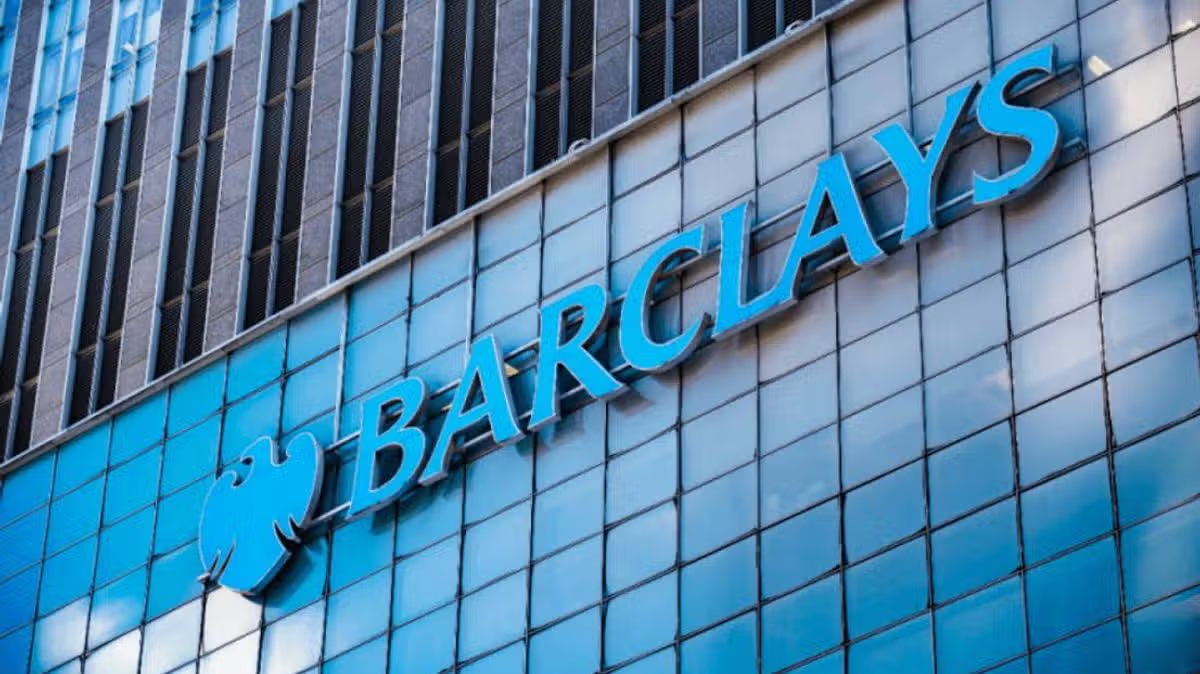
Barclays profit surges as equity traders cash in on market volatility

Published

on

Business Live

The FTSE 100 giant revealed it would launch a new £1bn share buyback after pre-tax profit jumped 17 per cent from the prior year

Barclays beat market expectations

Barclays beat market expectations

Barclays profit soared beyond forecasts in the second quarter as widespread market turbulence drove an exceptional showing in its equities trading arm.

The FTSE 100 banking giant announced it would initiate a fresh £1bn share buyback programme after pre-tax profit climbed 17 per cent year-on-year to £6.1bn over the first six months. The figure surpassed City analysts’ expectations of £5.9bn.

The British bank reported income for the three months ending in June of £8.2bn, representing a £2.1bn increase on the corresponding quarter last year.

The lender’s investment banking division capitalised on extensive market volatility during the second quarter triggered by the conflict in Iran, as reported by City AM.

Advertisement

Revenue in the unit advanced 20 per cent, propelled by the showing of its global banking operations and investment banking fees. Overall investment banking income reached £3.95bn, exceeding the £3.65bn forecast by City analysts.

Revenue from its equities trading arm surged 45 per cent compared with the equivalent period last year to £1.26bn. That result lagged behind Wall Street banks, which posted an average 69 per cent rise in equities over the same timeframe, boosted by the substantial SpaceX initial public offering that helped drive US earnings.

Chief executive CS Venkatarishnan, known as Venkat, is pursuing an agenda to overhaul the bank’s investment banking operation, committing to reduce its proportion of group risk-weighted assets. Barclays‘ private bank and wealth management division (PBWM) also posted a five per cent rise in income to £713m, underpinned by growth in client balances.

Chris Beauchamp, Chief Market Analyst at investing and trading platform IG, said: “With the share price sitting at post financial crisis highs there is little room for error for Barclays, but these results provide the reassurance that the group is well-placed for the rest of the year.

Advertisement

“A solid run for the investment banking division helps allay concerns around the size of the motor finance claims, and for now the bigger concern will be how the deeply uncertain outlook for the global economy will play out in the months to come.”

The bank declared a dividend of 5.9p per share, up from 3p per share in the previous year.

The lender also revised its 2026 income target upwards to approximately £31.5bn, citing “robust growth” within its investment banking arm.

Advertisement
Continue Reading

Business

BHP, Port Hedland union wage talks end without deal, more talks planned

Published

on


BHP, Port Hedland union wage talks end without deal, more talks planned

Continue Reading

Business

Tredegar: Weak Fundamentals Persist, But Valuation Is Now Fair

Published

on

Tredegar: Weak Fundamentals Persist, But Valuation Is Now Fair

Tredegar: Weak Fundamentals Persist, But Valuation Is Now Fair

Continue Reading

Business

Barclays H1 profit jumps 17% on strong trading, but shares dip

Published

on


Barclays H1 profit jumps 17% on strong trading, but shares dip

Continue Reading

Business

Tata Power shares get Equal Weight rating from Morgan Stanley with target price of Rs 399

Published

on

Tata Power shares get Equal Weight rating from Morgan Stanley with target price of Rs 399
Shares of Tata Power were trading about 1% lower at Rs 373 during Tuesday’s session, even as Wall Street brokerage Morgan Stanley maintained its “Equal Weight” rating on the stock. The brokerage retained its target price of Rs 399 following the company’s decent Q1 FY27 performance, which saw net profit rise 11% year-on-year and revenue grow 8%.
In an exchange filing dated July 27, Tata Power reported a consolidated profit after tax (PAT) of Rs 1,401 crore for Q1FY27, compared with Rs 1,262 crore in the same quarter last year, marking an 11% year-on-year growth.

The company’s revenue from operations increased to Rs 18,898 crore in Q1FY27 from Rs 17,464 crore in Q1FY26, registering an 8% YoY growth. EBITDA also improved by 8% to Rs 4,249 crore from Rs 3,930 crore in the corresponding quarter.

Tata Power deployed its highest-ever quarterly capital expenditure of Rs 5,375 crore during Q1FY27 as it accelerated investments across renewable energy, transmission, distribution, and clean energy infrastructure.

The company’s core businesses, including Generation, Transmission & Distribution, and Renewables, delivered strong growth, supported by improved operational efficiency. These segments recorded a 12% increase in revenue, a 12% rise in EBITDA, and a 14% growth in PAT on a year-on-year basis.

Tata Power’s renewable energy segment continued to be a key growth driver, with PAT rising 15% YoY to Rs 612 crore in Q1FY27.
The company’s solar manufacturing business reported a sharp improvement, with Solar Cell and Module Manufacturing PAT jumping nearly 3.9 times year-on-year to Rs 371 crore.
The rooftop solar business also witnessed strong momentum, with PAT increasing 1.7 times YoY to Rs 145 crore, supported by higher adoption across consumer segments and nationwide project execution.
The Transmission & Distribution (T&D) business reported PAT of Rs 492 crore and EBITDA of Rs 1,541 crore in Q1FY27, reflecting growth of 11% and 14%, respectively.

Tata Power’s Odisha DISCOM operations posted PAT growth of 6% YoY to Rs 111 crore. The company also became the first private utility in the state to cross the milestone of one crore registered customers.

Advertisement

The company is also progressing with its pumped hydro storage expansion plans, with 324 MW of the 1,000 MW Bhivpuri Pumped Storage Project capacity already tied up with the Solar Energy Corporation of India (SECI).

Morgan Stanley maintains ‘Equal Weight’ rating

According to an ET Now report, global brokerage firm Morgan Stanley has retained its “Equal Weight” rating on Tata Power with a target price of Rs 399.

The brokerage noted that Tata Power’s quarterly performance was broadly in line with expectations, supported by consistent earnings growth across its diversified business portfolio.

Management outlook

Dr Praveer Sinha, CEO and Managing Director of Tata Power, said the company is well positioned to participate in India’s transition toward reliable, round-the-clock clean energy. He highlighted the company’s integrated renewable energy approach combining solar, wind, battery storage, and pumped storage solutions.

Advertisement

He added that capital expenditure worth over Rs 5,000 crore during the quarter has strengthened Tata Power’s growth roadmap, while milestones such as the return of Mundra plant operations, strong rooftop solar expansion, and cross-border energy partnerships reinforce its position as an integrated power major.

(Disclaimer: Recommendations, suggestions, views and opinions given by the experts are their own. These do not represent the views of The Economic Times)

Continue Reading

Business

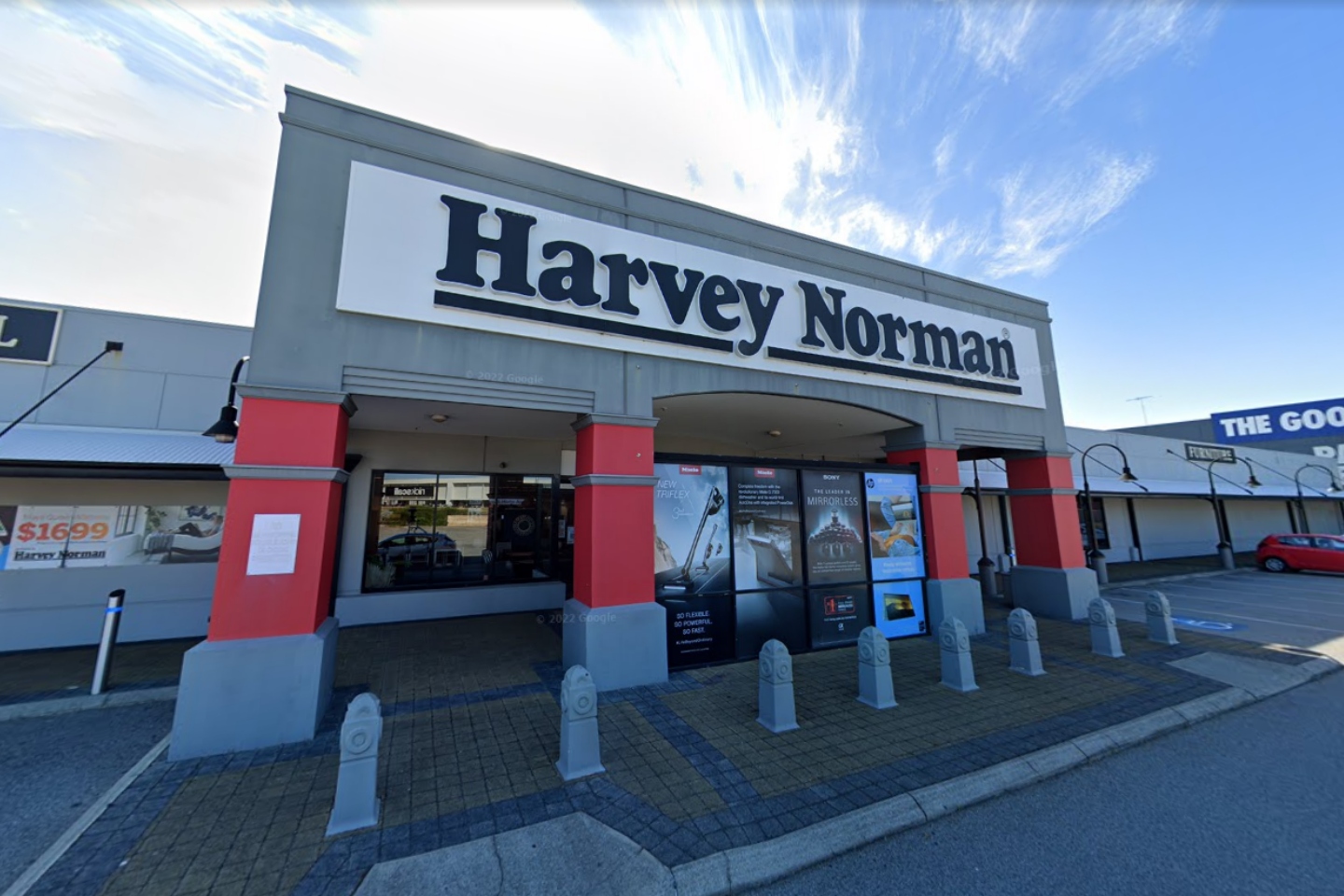
Harvey Norman fined $35m for 'seriously misleading' ads

Published

on

Harvey Norman fined $35m for 'seriously misleading' ads

A finance giant and a major retailer beamed thousands of unlawful, misleading ads into Australians’ loungerooms, causing “financially unquantifiable” harm.

Continue Reading

Business

France braces for fourth major heatwave as crews tackle Bordeaux blaze

Published

on


France braces for fourth major heatwave as crews tackle Bordeaux blaze

Continue Reading

Business

‘2026 has not been a good year for the M5’, apologises National Highways

Published

on

Business Live

The body responsible for England’s roads has formally apologised to Somerset drivers over repeated closures on the motorway


File photo dated 18/04/25 of motorway traffic on the M5 motorway near Burnham-on-Sea, Somerset. Drivers are being warned to expect the busiest Easter on the roads in four years, suggesting many are undeterred by rising fuel prices. The RAC estimated that nearly 21 million leisure journeys by car are planned between Thursday and Easter Monday. Issue date: Monday March 30, 2026. PA Photo. Photo credit should read: Ben Birchall/PA Wire

Motorway traffic on the M5 motorway near Burnham-on-Sea, Somerse(Image: Ben Birchall/PA Wire)

National Highways has issued a formal apology to Somerset drivers over the repeated closures that have plagued the M5 in recent years. Drivers in Somerset have endured numerous serious incidents on the M5 in recent memory, with collisions and welfare concerns leading to prolonged closures and diversions through quieter, more rural areas of the county.

Advertisement

Somerset councillors seized upon a recent climate, environment and place scrutiny committee meeting to voice their frustrations, demanding answers from police and National Highways regarding the duration and frequency of the disruption.

Both organisations acknowledged that further work was required to address the problems, while conceding there was “no silver bullet” and only limited funding at their disposal.

Councillor Richard Wilkins, portfolio holder for highways and transport, informed the committee meeting (held in Taunton on July 9) that there were “significant concerns” about both the frequency and length of motorway closures, and urged a “positive and collaborative” approach to tackle the underlying problems.

Mr Wilkins – who represents the Curry Rivel and Langport division – said: “We need to address the year-on-year increase to the frequency and duration of the closures on the M5, and the far-reaching, region-wide impact these incidents can have.

Advertisement

“When traffic is displaced onto the local road network, our roads can quickly become gridlocked, affecting people’s daily lives, disrupting businesses and services, and placing considerable pressure on our communities, our local economy and the wider south west economy.

“That’s not to mention the devastating impact to any individuals and their families who are directly caught up in any incident.

“I am keen to explore what more can be done collectively to reduce both the number of motorway closures and the length of time the motorway remains closed when incidents occur.”

Councillor Mike Rigby, portfolio holder for economic development, planning and assets, said that congestion on the M5 had “deteriorated markedly”, even beyond the peak summer holiday season.

Advertisement

Mr Rigby – who represents the Lydeard division near Taunton – said: “What once appeared to be a summer problem is now year round. This year has been appalling.

“Put simply, we’ve had enough – and by ‘we’, I mean the populations and businesses of Cornwall, Devon and Somerset.

“Following the abandonment of proposals to dual the A303 and A358, we are left with one strategic road in and out of the peninsula, and it needs to work much better than it does.

“The position is immeasurably worse now that it was even a year ago. We have had the rough end of the stick regarding highways investment in the south west, and we’re not prepared to see the only decent road we have turned into a car park.”

Advertisement

Ian Thompson, National Highways’ lead officer for stakeholder relations in the South West, issued a formal apology for the disruption experienced to date, saying: “We’re fully aware that 2026 has not been a good year for the M5.

“We are sorry, and we fully appreciate the impact that these incidents and closures have on the local communities – particularly Bridgwater, Taunton and the surrounding villages on the diversionary routes.

“The approved diversionary routes when the M5 is shut goes through both rural and urban locations; we accept that is not ideal.

“The solution to that is to build a new road along the M5 – that’s not happening. So the only way to deal with the impact of congestion is to reduce the number of incidents.”

Advertisement

Somerset remains the only county in the South West to house two National Highways depots along the M5 — one situated near the Edithmead roundabout in Highbridge (close to junction 22) and another in the Chelston area of Wellington (close to junction 26).

Mr Thompson noted that the positioning of these depots had been “very carefully thought out” to minimise response times to incidents.

He added: “We also use strategic signing campaigns around driving standards, such as drink and drug driving, middle lane hogging – which we know is an issue on the M5 – along with our ‘TRIP’ campaign and other safety measures.”

The majority of the M5 was built during the 1960s and 1970s, with Mr Thompson suggesting that considerable upgrades would be required in the years ahead to accommodate contemporary traffic demands.

Advertisement

He said: “The road is getting old. We need to invest a lot of money, and we are doing that.

“To make sure that’s done seamlessly and efficiently, with the least impact possible, we have established the M5 board to make sure we’re not clashing with local roadworks.

“The majority of the work will happen overnight – you’ll see well over £100m invested up to 2031. It’s an unprecedented amount of money.”

National Highways defines a ‘serious incident’ as one which closes one or more lanes on either or both carriageways of the motorway – such as a major collision or a “person in crisis”.

Advertisement

Mr Thompson explained that police were ultimately responsible for determining how much of the road was shut and for what duration, stating: “What we do is work closely with the police and the council to make sure that, when any investigation is complete, we know what infrastructure damage there is to our asset.

“Our resources are positioned so that, when we get the scene back, our officers will attend with our supply chain. So if we’ve got a significant fuel spill, or a vehicle fire, or there’s significant damage to the road surface and barriers, we’re ready – we come in and we fix what’s happened.

“No incident which has occurred that has shut the M5 this year has been down to our assets – it’s been down to other factors beyond our control.

“It’s driving standards on the M5 that are causing these incidents. These might well be vehicle condition, the way those vehicles are being driven, or just poor driving standards.”

Advertisement

Somerset accounts for 12.9 per cent of the south west’s motorway network, and 15.7 per cent of incidents leading to a closure – but 29.1 per cent of incidents caused by “persons in crisis”, according to National Highways’ own figures.

Karl Parfitt, chief executive of the Avon and Somerset police and crime commissioner’s office, said road safety concerns were being prioritised by current commissioner Clare Moody, given the increasing number of fatalities and serious injuries across Somerset’s road network.

He said: “We need to look at the current coordination and communication we’ve got during an incident, and work to see where we can improve on that.

“There may be scope or merit in having pre-planned contingencies agreed in advance, which identify what resources may be required. There is no silver bullet that can solve this.”

Advertisement

Johnny Hill, National Highways’ current route manager for Somerset, Devon and Dorset, said the agency was exploring measures to alleviate congestion elsewhere across Somerset’s road network in order to reduce the strain on the M5.

He said: “We’re not coming here today to say ‘everything is perfect and there’s no work to be done’. Nobody wins when the road is closed, and nobody wants the road to be closed.

“We are looking at the route between South Petherton and Honiton, and how we can look at that holistically, to see if we try to reduce the number of incidents on it, and therefore increase its resilience. We are looking to address flooding hotspots.

“The current road investment strategy is massively renewals-heavy. Our network was all built at roughly the same time; it all starts to creak at roughly the same time, and that time is basically now.

Advertisement

“That’s not to say they are going to be no improvements. There will be a number of smaller-scale improvements after the next five years.”

Continue Reading

Trending

Copyright © 2025