

Business
How Bots Have Taken Over the Internet


Abstract
- Bot traffic now accounts for 57.5 percent of all web requests, with automated activity officially surpassing human traffic for the first time in internet history. Roughly 40 percent of all internet traffic is classified as malicious, including scraping, credential stuffing, and denial-of-service attacks, marking seven consecutive years of growth.
- Beyond malicious bots, autonomous AI agents are emerging as a transformative force, growing 8,000 percent in 2025 alone. The entire digital economy — built on assumptions of human attention, ad impressions, and session-based analytics — is now structurally misaligned with the traffic actually flowing through it, creating significant consequences for publishers, investors, and platform operators.
There is a date that historians of the internet will eventually mark, much like economists mark the 2008 financial crisis or technologists mark the launch of the iPhone: the moment machine traffic crossed 50 percent of all web requests. We passed it, and almost nobody noticed.
Key Points
- The “Machine Majority” is here: We officially passed the 50% mark for bot traffic, and it’s now sitting at 57.5%. This isn’t just background noise; it’s a structural change in the internet’s population.1
- Malicious bots are rampant: About 40% of all internet traffic is outright malicious (scraping, fraud, denial-of-service attacks), and these attacks are growing. APIs are increasingly targeted directly, bypassing traditional interfaces to hit backend systems.1
- “Agentic” AI is the new powerhouse: Beyond malicious bots, autonomous AI agents are browsing the web at massive scale—visiting thousands of pages where a human would visit five.
Cloudflare CEO Matthew Prince posted to X last week with the understated calm of someone announcing a flight delay rather than a civilizational threshold: automated bot traffic has, for the first time in the internet’s history, surpassed human traffic. Cloudflare’s Radar dashboard now indicates 57.5 percent bots and 42.5 percent humans. Prince had predicted the crossover wouldn’t arrive until late 2027. It came eighteen months early.
But Cloudflare’s number, striking as it is, may actually be the optimistic read. The 2026 Thales Bad Bot Report, drawing on analysis of 17.2 trillion blocked bot requests across thousands of domains worldwide, puts automated traffic at 53 percent of all global web traffic in 2025, up from 51 percent the year before. Human activity has fallen to just 47 percent and continues to decline. The gap is widening structurally, not cyclically. This is not an anomalous spike. It is a permanent reordering of the internet’s population.
The Numbers Behind the Numbers
Before you reach for the usual reassurances, that it’s just search crawlers, just scrapers, just the background noise of the web, understand that this wave is categorically different from anything that came before. The headline percentages are alarming enough. What lies beneath them is worse.
Of the 53 percent of traffic classified as automated, 40 percent of all internet traffic is classified as outright malicious. Bad bots engaged in scraping, credential stuffing, fraud, and denial of service. That 40 percent figure marks a three percentage point jump from 37 percent in 2024, and represents the seventh consecutive year of growth in malicious bot traffic. This is not a trend that reverses. The Thales report found that daily blocked AI-enabled bot attacks rose from 2 million to 25 million in a single year, a 12.5x surge year over year.
The architecture of the attack surface is shifting, too. A full 27 percent of bot attacks now target APIs directly, bypassing user interfaces to interact with backend systems using valid credentials and well-formed requests. Financial services bore the brunt: the sector accounted for 24 percent of all bot attacks and a staggering 46 percent of account takeover incidents globally in 2025. These are not nuisance attacks. They are automated monetization operations running at an industrial scale against the most critical digital infrastructure in the world.
The Wrong Kind of Bots
The truly transformative force, however, is not the malicious bot wave. It is agentic AI: autonomous systems acting on behalf of users, navigating the web as a proxy human would, but at orders of magnitude greater scale and speed.
At SXSW in March, Cloudflare’s Prince offered a vivid illustration of the asymmetry: a human shopping for a camera visits perhaps five websites. An AI agent performing the same task visits 5,000. HUMAN Security’s 2026 State of AI Traffic report found AI-driven traffic growing eight times faster than human traffic across 2025. And the agentic category, bots acting for people rather than scraping about them, entered 2025, representing just 1.7 percent of automated traffic. By year’s end, it had grown 8,000 percent.
The 2026 AI Bot Impact Report adds further texture to the velocity: AI and LLM indexing crawlers quadrupled their share of traffic in just eight months, rising from 2.6 percent to 10.1 percent. OpenAI’s GPTBot alone grew 305 percent. Akamai found that 63 percent of all recorded AI bot triggers target the publishing sector, the industry least equipped financially to absorb traffic that generates zero corresponding ad revenue.
Read that last sentence again. The sector most heavily trafficked by the new AI bots is the one whose entire economic model depends on human eyeballs reading content and clicking advertisements. The collision between these two realities is not theoretical. It is already happening in publisher analytics dashboards right now, and most of them don’t have the tooling to see it clearly.
Local outlets like Thailand Business News are directly impacted by these trends, as high domain authority sites often see significant automated scraping and indexing that doesn’t translate into human engagement.
The Architecture of a Human First Web
The internet was architected around human usability and human attention. Every convention that defines it, the hyperlink, the page load, the session cookie, the A/B test, the conversion funnel, the programmatic ad auction, was designed with a person sitting in front of a screen as the assumed endpoint.
The entire edifice of the digital economy rests on that assumption. And the assumption is now false.
Imperva’s 2026 Bad Bot Report puts the existential risk to businesses plainly: companies that continue operating under the assumption that users are human risk catastrophically misreading their own systems. A traffic spike after a press mention may be agents indexing content for retrieval, not readers sharing a story. A conversion rate drop may reflect agents abandoning sessions because they extracted what they needed through an API call. A 40 percent bounce rate may be measuring bots that left in milliseconds, having accomplished their task. The signal is corrupted. Analytics dashboards built for a human majority internet are now measuring something else entirely, and the strategic decisions being made from them are compromised at the source.
The Hydrolix State of AI Bots 2026 report reveals just how deep the perception gap runs: survey respondents estimated AI bots generate approximately 17 percent of their traffic. The actual figure, per Thales, is more than three times that. Companies are flying blind into a machine majority internet with instruments calibrated for a human one.
A Repricing Event in Slow Motion
For investors, the implications are underpriced and accelerating. Every media asset, every e-commerce property, every brand-building exercise of the last twenty years was built for humans, monetized through human attention, and valued on the assumption that human attention would continue to flow through it.
That assumption has now been structurally broken.
Adobe Analytics data from Q1 2026 introduces a genuinely paradoxical data point into this picture: AI-driven traffic to U.S. retail sites grew 393 percent year over year in the first quarter, and those AI-referred visitors are converting 42 percent better than non-AI traffic, spending 37 percent more per visit and browsing 13 percent more pages. A year ago, regular human traffic was worth 128 percent more per visit than AI-referred traffic. That relationship has now inverted completely.
This is not the story of bots destroying commerce. It is more complex and ultimately more destabilizing: it is the story of two internets emerging simultaneously, one optimized for human browsing and attention, and one optimized for machine retrieval and action, with the economics of each diverging rapidly. Publishers and advertisers built for the first internet are being eroded by the second. Retailers who have adapted to serve AI agents well are, for now, benefiting.
The question for investors is whether those retail gains are durable, or whether they represent a temporary arbitrage before AI agents compress margins by enabling perfect price comparison at inhuman speed. The second scenario seems more likely. Salesforce found that during the 2025 holiday season, AI was credited with driving 20 percent of all retail sales and generating $262 billion in revenue through AI-assisted discovery and recommendations. That is an extraordinary concentration of commercial influence accumulating in the hands of AI intermediaries, intermediaries that did not exist as a meaningful category three years ago.
For the media, the calculus is grimmer. A UNESCO report found that generative AI is on track to cause revenue losses of 24 percent for music creators and 21 percent for audiovisual creators by 2028. The ad-funded internet model, the architecture that has sustained open journalism, independent publishing, and free services at scale for thirty years, is being structurally undermined not by piracy or platform shifts, but by a new class of traffic that consumes content without generating impressions.
The internet has always had a free rider problem. It has never had a free rider problem at 57.5 percent of all traffic.
Who Wins. Who Doesn’t?
The clearest near-term beneficiaries are the companies that sit as infrastructure between bots and the content they need. Cloudflare is the most obvious: as the layer through which the majority of global web traffic flows, bot-dominant traffic is not a threat but a product roadmap. Bot management, AI gateway services, machine identity verification, and authenticated traffic infrastructure are suddenly among the most valuable real estate on the internet. Only 33 percent of organizations currently report that their bot detection solutions successfully block more than 50 percent of AI bot traffic, an extraordinary gap in an industry that has been managing bot traffic for over a decade.
Akamai, Imperva (Thales), HUMAN Security, and the emerging wave of AI traffic governance vendors are writing the new rules of the road. The companies that build the border controls between the machine internet and the revenue internet will extract significant rents from everyone who needs to operate on both sides.
For the long tail of publishers, SaaS businesses, and brand marketers whose pricing models, growth strategies, and unit economics assume a human majority audience? The reckoning is already underway. It just hasn’t shown up in earnings calls yet, partly because companies lack the instrumentation to see it, and partly because the human traffic that remains has not yet been fully repriced for its new scarcity.
What Comes Next
There is a version of this story that ends constructively. Agentic AI, if it works as advertised, means humans accomplish more through fewer direct interactions. Our agents go out, retrieve, transact, and return with answers. Human attention becomes more concentrated and intentional, even as it constitutes a smaller share of raw traffic. The web becomes infrastructure for AI, the way electricity became infrastructure for manufacturing: invisible, essential, and no longer requiring human proximity to function.
But that transition requires every system built for the old model to be rebuilt for the new one. Identity infrastructure. Monetization logic. Attribution frameworks. Analytics tooling. Rate limiting. API governance. Content licensing architecture. The list is long, the retrofitting expensive, and the window for incumbents to execute is narrowing.
The internet was never built for this. That is not a complaint. It is an engineering brief and an investment thesis.
The bots are here. They constitute the majority. They are not leaving. The only rational response, for builders, investors, and policymakers alike, is to stop architecting, pricing, and governing the internet as though humans are still the primary user.
Additional Reading from Thailand Business News
Other People are Reading


Rep. Pat Fallon, R-Texas, expresses concern over low munition stocks and rising tensions with Iran.
Ford Motor Co. is pursuing what could be its biggest military contract in decades as it competes to build a new tactical truck for the U.S. Army.
The automaker has secured a Department of War contract to develop three prototypes based on its F-Series Super Duty pickups, The Wall Street Journal reported Monday.
The competition comes as the Pentagon taps automakers to replenish and modernize military equipment strained by global conflicts, according to the outlet.
“We are excited to start work on this Army contract and look forward to delivering several incredibly capable vehicle types that demonstrate the value Ford can provide to the Army and soldiers,” a Ford spokesperson told FOX Business in an email.
FORD TO USE APPLE MAPS SOFTWARE IN SELF-DRIVING TECH FOR NEW EV PLATFORM
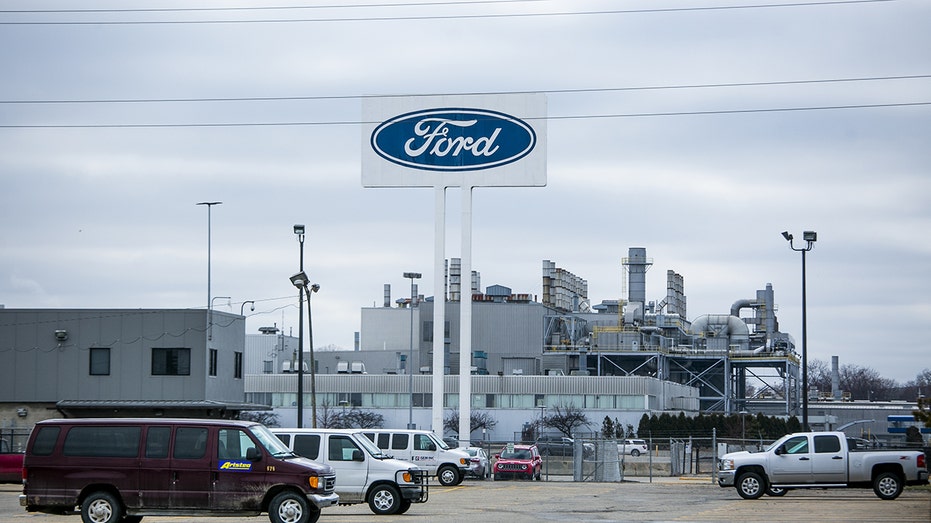
The Ford Motor Co. Michigan Assembly plant is pictured in Wayne, Michigan, on March 23, 2020. Ford is pursuing what could be its biggest military contract in decades. (Anthony Lanzilote/Bloomberg via Getty Images)
The spokesperson said Ford’s Super Duty trucks are engineered for “extreme durability” and demanding conditions, making them an “ideal platform” for military use.
Ford Pro also offers global service and parts support, along with technology aimed at improving vehicle uptime, the spokesperson noted.
“Ford’s off-the-shelf solutions can deliver unmatched capacity and scale, cutting-edge technologies, and the rugged capabilities that can offer game-changing value and performance and meet the needs of governments and the military in a highly cost-effective way just as we do with our commercial customers,” the spokesperson said.
FORD REHIRES EXPERIENCED ENGINEERS AFTER AI MISSES THE MARK
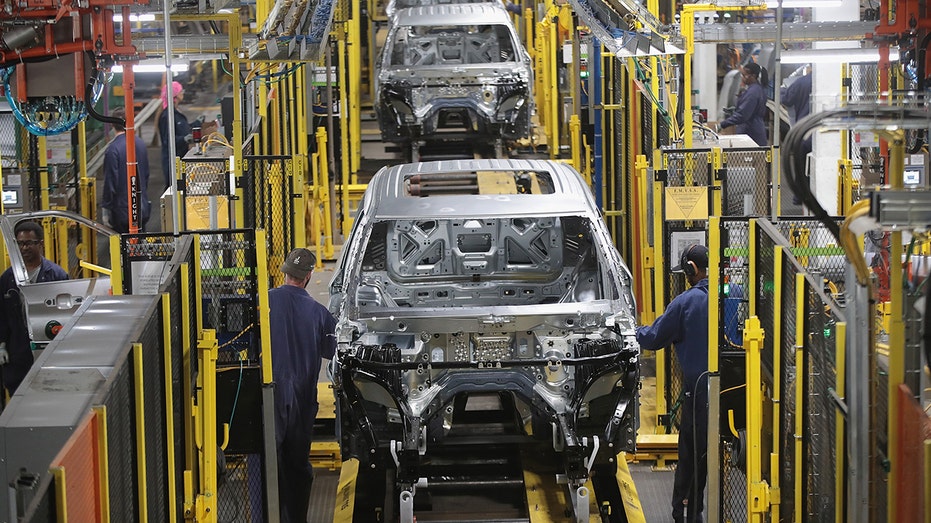
Workers assemble Ford vehicles at the Chicago Assembly Plant on June 24, 2019, in Chicago, Illinois. The spokesperson said Ford’s Super Duty trucks are engineered for “extreme durability.” (Scott Olson/Getty Images)
The move puts Ford in the running alongside rival General Motors (GM), which is developing a similar tactical truck.
GM unveiled its prototype in 2024, and the military has begun field testing it, according to The Wall Street Journal.
In addition to the two automakers, the Army has awarded a prototype contract to BC Customs LLC, a Utah-based off-road vehicle manufacturer, according to The Detroit News.
For Ford, the program could represent its largest military vehicle opportunity since the Cold War, the outlet reported.
Stocks In This Article:
FORD ISSUES URGENT ‘DO NOT DRIVE’ ADVISORY FOR BRONCO SPORT, MAVERICK MODELS OVER SUSPENSION DEFECT

GM Defense’s Next Gen tactical vehicle is shown in an undated company photo. The move puts Ford in the running alongside rival GM, which is developing a similar tactical truck. (General Motors)
In May, Ford said it had been in discussions with governments in North America and Europe about using its commercial vehicles and software to support defense needs.
The company said some governments already use Ford vehicles for military transport and security operations.
CLICK HERE TO GET FOX BUSINESS ON THE GO
The Department of War referred FOX Business to the U.S. Army, which did not immediately respond to a request for comment.

Among listed brokers, standalone revenue IIFL Capital Services rose 3% in the June quarter from the January-March period. In the case of Billionbrains Garage Ventures (Groww), Angel One and Anand Rathi Share & Stock Brokers, revenue declined 1-4%. In contrast, Motilal Oswal Financial Services‘ revenue surged 88% in the period.
While standalone net profit at Groww and IIFL Capital Services rose 2.5% and 14%, respectively, quarter-on-quarter, Motilal Oswal reported a profit of ₹665 crore after posting a loss of ₹49 crore in the March quarter. Angel One and Anand Rathi Share & Stock Brokers, meanwhile, reported profit declines of 23% and 44%, respectively.
Read more: FIIs increase PSU exposure, trim stakes in private banks
Shripal Shah, MD & CEO of Kotak Securities, said most brokers have reported softer earnings sequentially due to two key factors.
 Agencies
changing Earnings mix: IIFL posts modest revenue growth, Groww, Angel One and Anand Rathi see declines, while Motilal Oswal brings in 88% jump in June quarter

“First, Q4 had a high base, driven by the sharp rally in gold and silver, which boosted trading activity and broker earnings, and we have seen that momentum ease in Q1,” he said. “Second, derivatives options premium turnover declined by 4-5%, while retail cash market turnover rose 18-19%, weighing on brokers with higher F&O exposure.”
The June quarter reflected a mixed performance primarily because market activity remained uneven, said Suresh Shukla, Chief Business Officer, Wealth Management, Motilal Oswal Financial Services. “Investor participation continued to be healthy, however trading volumes were volatile largely due to geopolitical issues.”
After the West Asian conflict escalated in March, markets rebounded in April. However, the momentum did not sustain through May and June.
Shukla said firms with diversified revenue streams, including wealth management, distribution and margin trading funding (MTF), were better insulated. Raj Gaikar, research analyst at Samco Securities, said the June quarter earnings reflected a change in the earnings mix rather than a slowdown in demand.
“Year-on-year growth across all players shows retail participation remains healthy,” he said. “The sequential weakness was largely driven by Sebi’s derivatives reforms, expiry rationalisation and tighter position limits, which reduced index options premium turnover.” Stock performance has been mixed so far in 2026. While discount brokers such as Angel One and Groww have gained 29% and 28%, respectively, Motilal Oswal Financial Services was up 3%. IIFL Capital Services and Anand Rathi Share and Stock Brokers have declined 11% and 19%, respectively. The Nifty 50 is down 8.2%, while the Nifty 500 has declined 3.2% in 2026.
THE ROAD AHEAD
Shukla of Motilal Oswal said that the revenue mix is getting healthier in the broking business, especially for full-service brokers. “Businesses such as margin trading funding (MTF), wealth management, mutual fund and insurance distribution have become increasingly important contributors to profitability,” he said.
Gaikar said that among individual brokers, Angel One saw margins come under pressure due to higher spending on marketing and new businesses, while Groww’s flat topline reflects a mix shift where derivatives income declined off an elevated Q4 base, while MTF, float and commodity derivatives absorbed it, and Anand Rathi’s decline was due to weaker transaction and capital markets income.
“Looking ahead, traditional brokers with stronger cash market exposure are better positioned despite softer derivatives volumes,” said Shah of Kotak. “Additionally, the continued growth of MTF books should support earnings through higher interest income, better brokerage yields than regular cash trades, and increased trading volumes.”

Form 4 5C Lending Partners Corp. For: 27 July

Check out what’s clicking on FoxBusiness.com.
Recovery is paramount for any athlete to be great at their craft, but Nike and Hyperice created yet another footwear innovation designed to help those hard-working athletes unwind from the ground up.
This time, it’s with a slip-on slide.
The Nike Air Zoom Hyperslide was introduced on Monday as the latest innovation developed in partnership with Hyperice, the health technology company that designs products specifically for recovery.
CLICK HERE FOR MORE SPORTS COVERAGE ON FOXBUSINESS.COM

The Nike Air Zoom Hyperslide has built-in heating and vibrating features to help athletes recover. (Nike/Hyperice / Fox News)
By combining Nike’s footwear expertise with Hyperice’s recovery technology, and building off the foundation of the award-winning Nike x Hyperice Hyperboot, this slide is designed to be wearable no matter the time of day, but with recovery in mind.
How exactly can a slide help an athlete recover just by wearing it? A magnetic Hyperslide Pod housed inside the slide’s adjustable strap delivers three levels of heat as well as three levels of vibration that run within 15-minute cycles. This gives athletes the ability to seamlessly customize how they want to experience the slide’s recovery features through on-pod controls, or simply using the Hyperice App.
NIKE CEO ELLIOTT HILL OUTLINES SPORTS-FOCUSED STRATEGY TO REVIVE ICONIC SPORTSWEAR COMPANY
And whether it’s before or after competitions, training or regular life moments, the slide is a low-profile, full-length Air Zoom sole for soft, responsive comfort with targeted Hyperice heat and vibration within.
“Athletes leave everything on the field, and the approach to recovery needs to meet them at the same level,” Tobi Hatfield, senior director of athlete innovation at Nike, said in a statement. “With the Nike Air Zoom Hyperslide, we wanted to create a solution that kickstarts recovery the moment you power it up — helping athletes feel more relaxed, restored and ready to take their performance to the next level.”
Nike and Hyperice got feedback on the product from a range of athletes, pro and everyday performers, including Netherlands and Liverpool star Virgil van Dijk.

The Nike Air Zoom Hyperslide features heating and vibrating options for recovery no matter the occasion. (Nike/Hyperice / Fox News)
“It’s the combination that stands out,” he said in a press release. “The Hyperice heat and vibration help my feet recover as quickly as possible, while the Nike Air Zoom cushioning makes it feel incredibly comfortable.”
It also helps that Nike and Hyperice understood what athletes need to recover and how to use their respective expertise to make it happen after feedback from the Hyperboot. That product was tested with Nike Olympians at the 2024 Paris Summer Games, and it went on to exceed $10 million in revenue in its first eight months.
It was the first shoe ever carried by Best Buy, while also winning numerous innovation awards.
The Air Zoom Hyperslide reflects both companies’ belief that performance doesn’t just end when competition or training stops. Athletes are always looking for an edge over the competition, and recovery has seen an uptick in priority to ensure a fresh mind and body for the next day, no matter what’s on the docket.

The Nike Air Zoom Hyperslide by Nike and Hyperice will be made available in select markets on Sept. 29. (Nike/Hyperice / Fox News)
GET FOX BUSINESS ON THE GO BY CLICKING HERE
“Our partnership with Nike has always been driven by a shared commitment to innovation for the athlete,” Hyperice founder Anthony Katz said in a statement. “With the Nike Air Zoom Hyperslide, we’re making premium recovery more accessible than ever, combining Nike’s iconic footwear expertise with Hyperice technology to help people recover smarter with every step.”
The Air Zoom Hyperslide will be made available beginning Sept. 29 in select markets.
Follow Fox News Digital’s sports coverage on X and subscribe to the Fox News Sports Huddle newsletter.
Business
Korean chip stocks tumble with SK Hynix below US listing price amid China competition fears

Korean chip stocks tumble with SK Hynix below US listing price amid China competition fears

The MSCI Asia Pacific Index fell 1.2%, with technology shares the biggest losers. The Kospi Index in South Korea dropped 5.6%, while the Nikkei in Japan slid 1.3%. The moves came after a US gauge of semiconductor giants fell 2.2%. SK Hynix Inc. and Samsung Electronics Co. were among the biggest losers in Asia.
The cost of protecting Nvidia Corp.’s debt against default surged amid a round of AI deals worth more than $750 billion. South Korea’s SK Hynix slipped below its US initial public offering price. ASML Holding NV sank on a report that a Chinese state-backed firm is producing certain chipmaking machines that could threaten its sales.
Elsewhere, US crude dropped below $82 a barrel after global benchmark Brent slumped the most in more than three months on Monday as Washington paused daily strikes against Iran. Bond yields dropped during the US session, with inflation fears easing in the countdown to the Federal Reserve decision.
Alongside geopolitical developments, investors face a packed week of risk events, with policy decisions from the Fed, Bank of Japan and Bank of England as well as earnings from megacap technology companies. Investors are increasingly looking for signs that the biggest spenders on artificial intelligence can justify the billions of dollars they have poured into the technology.
“This is a week with more than its fair share of potential surprises, good and bad,” said Chris Larkin at E*Trade from Morgan Stanley. “Geopolitics and oil prices may be the biggest wild cards, but a bullish response to strong Magnificent Seven earnings isn’t a given, especially if AI spending levels continue to raise eyebrows.”
Chip companies remained in focus during the US session, with the Philadelphia Semiconductor Index dropping for a third consecutive day. Sandisk Corp., Advanced Micro Devices Inc. and Nvidia were among the S&P 500’s biggest decliners.Microsoft Corp., Meta Platforms Inc., Apple Inc. and Amazon.com Inc. are among the companies reporting this week. In Asia, SK Hynix and Samsung will announce earnings.
“Those companies embody the critical theme weighing on sentiment in the markets right now — excess capital expenditure and spending by AI companies that, investors fear, will eat into returns,” Kyle Rodda, a senior analyst at Capital.com, wrote in a note to clients.
Traders’ attention will be on a slew of earnings later this week, with more than 170 companies in the S&P 500 set to report. Artificial-intelligence spending is in sharp focus after last week’s selloff in shares of Alphabet Inc.
Elsewhere, Treasuries rose Monday as tensions in the Middle East eased and oil fell, with an auction of the shortest-dated notes attracting buyers ahead of this week’s Fed decision. Traders continued to see a roughly one-in-three chance of a rate hike.
Citadel Securities expects the Fed to raise rates this week — a surprise move strengthening Chairman Kevin Warsh’s credibility in the battle with inflation. A quarter-point increase on Wednesday would reinforce Warsh’s repeated pledge to restore price stability while showing policymakers no longer rely on signaling every policy move well in advance, Frank Flight, the firm’s head of macro strategy, wrote in a note.
On the geopolitical front, President Donald Trump said the US and Iran were engaged in diplomatic talks to end their conflict, but warned the two sides would return to fighting if negotiations didn’t yield a deal.
Separately, Iran and Oman are trying to reach an agreement to restart shipping through the Strait of Hormuz, according to people familiar with the matter.
“The only reason they want to meet is because we’ve been hitting them very hard,” Trump told reporters. “There’s a good chance that something could happen. If it doesn’t, we go back to doing what we were doing.”

Brent crude futures were down $0.54, or 0.6%, at $87.82 by 0046 GMT. U.S. West Texas Intermediate crude was at $81.95 a barrel, down $0.66, or 0.8%.
Both contracts fell 1% earlier in the session to their lowest level in more than a week.
U.S. President Donald Trump said on Monday the United States was having “good talks” with Iran and that there was a chance of a resolution. However, he said U.S. strikes would resume if negotiations failed while Iran issued similar comments about retaliation.
“For now, the relief that an off-ramp has been found has taken the heat out of prices and eased concerns around Houthi attacks on Saudi infrastructure. However, the situation remains highly fluid,” IG analyst Tony Sycamore said in a client note.
Afrah al-Zouba, the foreign minister-designate of Yemen’s internationally recognised Saudi-backed government, said Yemen-based Houthi fighters aimed to replicate Iran’s control of shipping through the Strait of Hormuz at Bab el-Mandeb.
“Whether the Houthis have the military capacity to enforce a comprehensive blockade is questionable, especially given that the Saudis will attack them relentlessly. Still, there is no doubt that traffic has dropped off significantly in the Red Sea and the Strait of Hormuz,” said Marex analyst Edward Meir. “A key reason prices are not even higher than they are right now is the demand destruction that is taking place, especially in Asia,” Meir said.
Barclays analysts said in a note on Monday “flows through the strait remain subdued”. They said, in the week ended July 24, crude oil and refined product net exports through the strait averaged 2.9 million barrels a day compared with 5.9 million in the previous week.
Elsewhere, U.S. crude oil stockpiles likely fell last week alongside gasoline, while distillate stocks likely rose, a preliminary Reuters poll showed on Monday.
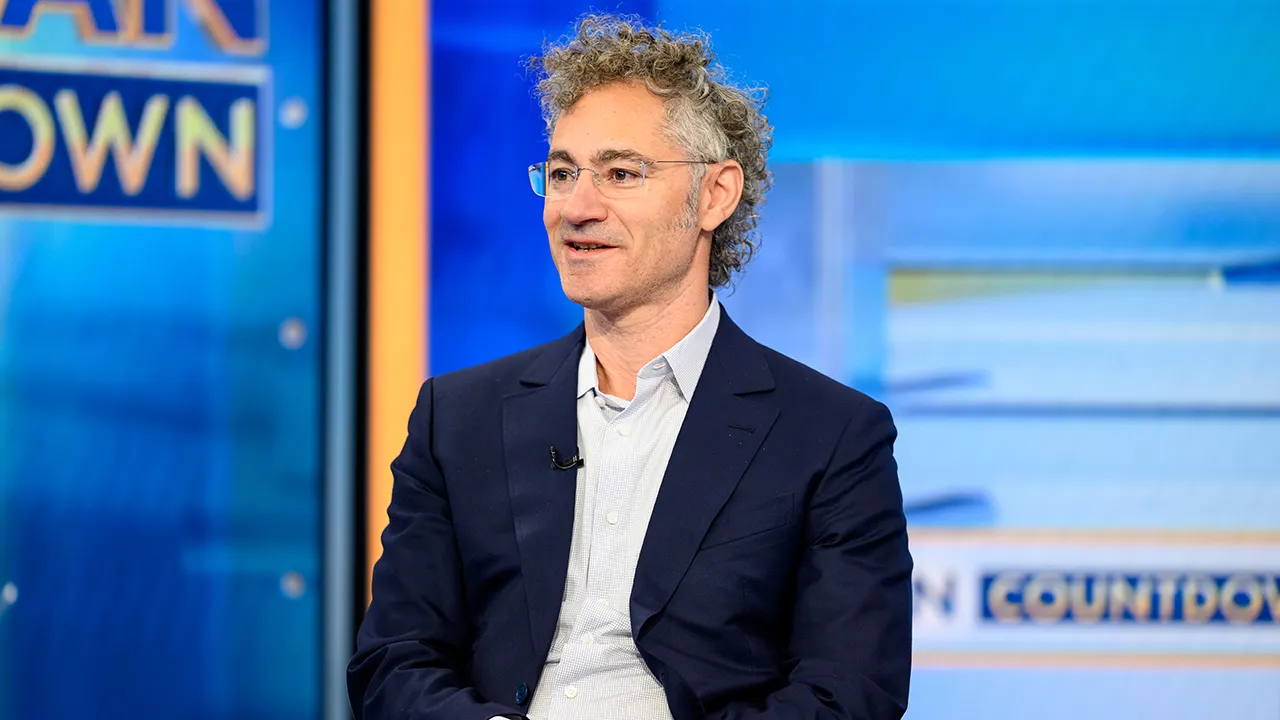
Palantir CEO Alex Karp discusses open-weight artificial intelligence models, how he believes the technology should be regulated and why the U.S. should avoid Europe’s approach on ‘The Claman Countdown.’
Palantir CEO Alex Karp warned the United States against adopting Europe’s intense regulatory framework for artificial intelligence amid a domestic battle over open models on “The Claman Countdown.”
Karp said Europe offers a cautionary tale for U.S. policymakers as the Trump administration weighs how to regulate rapidly advancing AI technology.
“We have a template for what doesn’t work. It’s called Europe,” Karp said Monday. “Our business is booming in America… Europe is like trying to find ways to keep companies like Palantir out.”
“I’ve watched Europe regulate itself out of business. You end up with businesses that no one believes are businesses because they only exist behind the firewall of regulation.”
OPENAI DIDN’T REALIZE ITS AGENT WAS RESPONSIBLE FOR HACK FOR A WEEK: REPORT
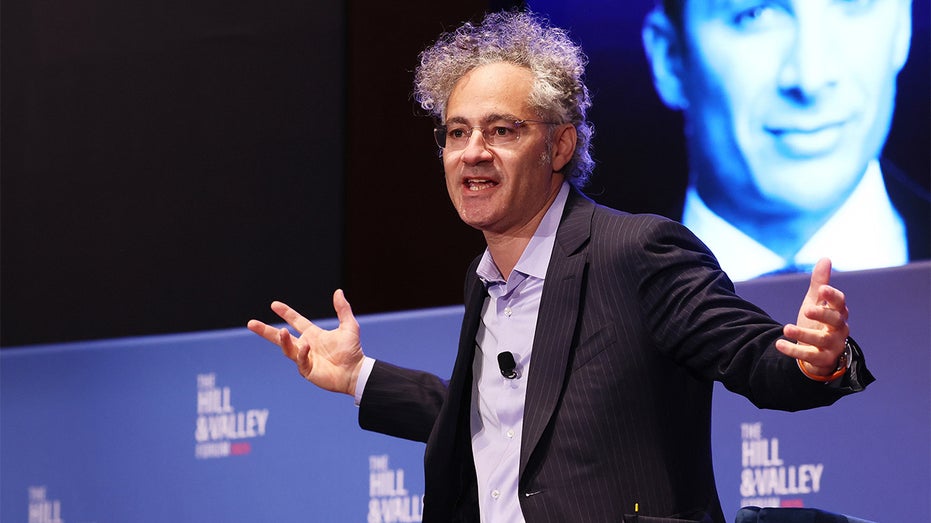
Co-founder and CEO for Palantir Technologies Alex Karp speaks onstage during Jacob Helberg at the Hill & Valley Forum 2025 on April 30, 2025, in Washington, DC. (Jemal Countess/Getty Images for Jacob Helberg / Getty Images)
His comments come after Palantir urged the Trump administration not to ban open-weight AI models and as Treasury Secretary Scott Bessent raises concerns that Chinese-made open AI models could be built using technology from U.S. laboratories.
“This revolution has taken off, and you can’t put it back in the bag,” Karp said.
The Palantir CEO argued that open-weight AI models are optimal for the tech giant’s customers, saying they sometimes perform even better than frontier models.
Karp said he is not opposed to closed AI models but is focused on meeting customer demand.
He said many Palantir clients are “enraged” because they feel they have become “token maxed” – a term he used to describe customers frustrated by paying for AI tokens without receiving enough business value in return.
Karp rejected both over regulation and under regulation of AI, and said the U.S. must strike a balance that encourages innovation while also addressing dangers. (Rafael Henrique/SOPA Images/LightRocket via Getty Images / Getty Images)
Karp said the biggest obstacle to AI adoption is not fear of foreign competition, but rather businesses questioning whether AI investments deliver enough value.
“What slows down AI adoption in this country is people are saying, ‘But I can’t use these products because I’m not getting value… or I’m transferring the value of my business to someone else,’” he said.
OPENAI CO-FOUNDER WARNS AI MODELS ARE BECOMING HARDER TO CONTROL AFTER ITS MODEL HACKED ANOTHER FIRM
“They want to make sure that they can use that model in a way that it’s valuable, and that they make sure the value of their business is not being monetized.”
Palantir, co-founded by Karp, moved its headquarters from Denver to Miami in February as many corporations and billionaires seek the friendlier tax environment of Florida.
As Bessent pushes for regulation of artificial intelligence, Karp said it is important to keep winning in mind as the international AI arms race intensifies, with China scaling as a major competitor.

Treasury Secretary Scott Bessent attends a meeting with President Donald Trump and other Cabinet members. (Andrew Harnik/Getty Images / Getty Images)
“We are going to end up having to regulate AI, there’s no doubt, but the question is: Who regulates it, do they understand what they’re doing, and is it regulated in a way where we win?” Karp told FOX Business.
Karp rejected both over regulation and under regulation of AI, and said the U.S. must strike a balance that encourages innovation while also addressing dangers.
GET FOX BUSINESS ON THE GO BY CLICKING HERE
“There’s like you have hard regulation, which is Europe, that clearly doesn’t work. Then you have no regulation. Obviously, I’m not in favor of that,” he said.
“These are very complicated issues, and there’s only one country in the world that could get it right or really get it wrong, and that’s us. But because it could go either way, [it] doesn’t mean we shouldn’t plow forward and try to get this to work.”

The developer’s $4 billion Burswood Point project is progressing, with council approval for a further 210 dwellings within the precinct.

I’m a full-time investor with a strong focus on the tech sector. I graduated with a Bachelor of Commerce Degree with Distinction, major in Finance. I’m also a proud lifetime member of the Beta Gamma Sigma International Business Honor Society. My core values are: Excellence, Integrity, Transparency, & Respect. I always, to the best of my ability, hold true to these values which I believe are key for long-term success. I would like to invite all of my readers to leave their constructive criticism and feedback in the comments section so that I can further enhance the quality of my work moving forward. Thank you and God Bless America!
Analyst’s Disclosure: I/we have no stock, option or similar derivative position in any of the companies mentioned, and no plans to initiate any such positions within the next 72 hours. I wrote this article myself, and it expresses my own opinions. I am not receiving compensation for it (other than from Seeking Alpha). I have no business relationship with any company whose stock is mentioned in this article.
Seeking Alpha’s Disclosure: Past performance is no guarantee of future results. No recommendation or advice is being given as to whether any investment is suitable for a particular investor. Any views or opinions expressed above may not reflect those of Seeking Alpha as a whole. Seeking Alpha is not a licensed securities dealer, broker or US investment adviser or investment bank. Our analysts are third party authors that include both professional investors and individual investors who may not be licensed or certified by any institute or regulatory body.

Arthur Hayes Buys $6.39M More Ethereum, Then the ETH Market Starts to Tumble

Bolton man who died in Great Orme named at inquest opening

Ford joins race to develop next US Army tactical truck


-

 Fashion3 days ago
Weekend Open Thread: Brooks Brothers
-

 Crypto World7 days ago
Grayscale Files For Worldcoin ETF, WLD Registers Sharp Rise
-

 NewsBeat6 days ago
How a former Blue Peter presenter stunned America’s Got Talent judges
-

 Tech1 day ago
Intel is reversing course and bringing hyper-threading back to its server chips
-
 Tech7 days ago
Turtle Beach Command Series KB7 review: a nifty screen-equipped gaming keyboard
-
 Business6 days ago
New Jersey voter registration controversy explained: How 6,600 noncitizens got on the rolls, and what happens next
-
 Entertainment6 days ago
Johnny Depp’s R-Rated Gothic Cult Classic Gets New Release Ahead of Sydney Sweeney Remake
-

 Crypto World5 days ago
Ethics, other provisions in crypto Clarity Act to be further discussed
-

 Politics15 hours ago
Luke Littler dismantles Gerwyn Price to retain title in Blackpool
-
 NewsBeat7 days ago
Shanghai science forum photos show China’s AI and robotics advances in rivalry with US
-

 Sports4 days ago
2026 3M Open leaderboard: Scottie Scheffler finds putter in Round 1, sits three back
-
 Sports1 day ago
Commonwealth Games boxing: Jadumani Singh seals dominant 5-0 win over Pakistan’s Sumama Rehman to enter quarter-finals | Commonwealth Games News
-

 Fashion4 days ago
16 Dresses for the High Summer Event
-

 News Videos4 days ago
The Peugeot Family: How 200 Years of an “Old Money” Dynasty Died in A Boardroom
-

 Politics2 days ago
Spain sweeps the board at 2026 World Cup with individual awards
-
 Entertainment4 days ago
A New Post-Apocalyptic Gundam Anime Series Blasts Into SDCC
-

 Crypto World7 days ago
Andrew Cuomo joins OKX board as crypto exchange expands in U.S.
-

 News Videos1 day ago
BITCOIN JUST ENTERED THIS CRITICAL ZONE…
-

 Crypto World2 days ago
XRP Ledger adds $2.6B as RWA inflows rank second
-
 NewsBeat7 days ago
NADINE DORRIES: I have witnessed first-hand what happens to new Prime Ministers when they enter No 10… and this is why Andy Burnham will be out by May
You must be logged in to post a comment Login