

Tech
Cybersecurity Vets Protest ‘Dangerous’ US Government Ban On Anthropic’s Most Powerful Models


An anonymous reader quotes a report from TechCrunch: A group made up of dozens of cybersecurity experts, including several well-known veterans of the industry, published an open letter to the U.S. government asking it to lift the export control order on Anthropic’s Fable and Mythos models. According to the open letter, “this action has taken the best models away from [cybersecurity] defenders” who now can’t use the models to find vulnerabilities and make their software and products more secure. “To pull the best capabilities away from defenders without a good reason when our adversaries are rapidly advancing is dangerous,” read the letter.
On Friday, the U.S. government ordered Anthropic to limit the export of Fable and Mythos, citing national security concerns, without explaining the specific reasons behind the order, according to Anthropic. In response, the company suspended access to the models to all users worldwide. As of this writing, the letter is signed by 76 cybersecurity experts, including Alex Stamos, former Facebook chief of security; Casey Ellis, the founder bug bounty platform Bugcrowd; Jon Callas, famed cryptographer and former Apple security design and architecture manager; Paul Vixie, computer scientist ; Dino Dai Zovi, the former head of applied security engineering at Block; Katie Moussouris, the founder of Luta Security; and Rachel Tobac, the CEO of the security awareness training firm SocialProof Security.
[…] Anthropic said that the White House export control order may have been based on a report that there was a method to bypass — or jailbreak — Fable to unlock its powerful Mythos-level capabilities. According to Katie Moussouris, one of the signatories of the open letter, the method was demonstrated by Amazon researchers in a paper that is not public but that she has reviewed. But Moussouris said in a blog post that the paper did not actually demonstrate a real jailbreak. Instead, she wrote, the researchers simply asked Fable to fix open source code with public and known vulnerabilities along with “deliberately planted vulnerabilities,” after the model initially refused to “review the code for security issues.”
“The behavior described in the paper cannot meaningfully be fixed, and any attempt would only weaken the model for defense,” Moussouris wrote. “Defenders need to be able to ask AI to fix the bugs in a file, explain why the fix matters, and write tests that confirm the patch works. That is not a guardrail bypass. It is the most valuable thing an AI model can do for defensive security: executing the find, fix, and test loop defenders run every day.” Moussouris’ critique was echoed in the open letter, which also said that the group of experts believe the model capabilities in the Amazon paper “can be replicated” on OpenAI’s GPT-5.5, on Anthropic’s own publicly available Claude Opus 4.8 and Sonnet, “and even Chinese models like Kimi 2.7.”
Moussouris told TechCrunch that “the bugs used to demonstrate the techniques in the paper can be found using the other models. The method in the paper is a guardrail bypass technique. Other models that lack the Fable guardrails often won’t refuse the straightforward request to look for security bugs, so they don’t need a bypass.” The letter also asked for transparently and fairly enforced regulations created by “a democratic rule-making process” that are based on scientific research done by industry and academic experts, and “used only to the minimal extent necessary to ensure the safety of the American public.”

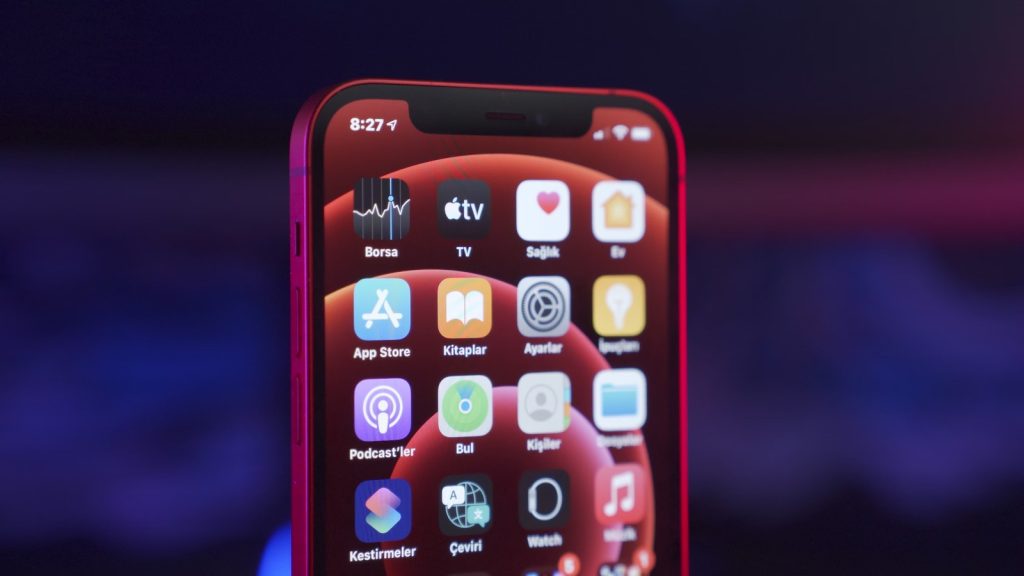
According to reports, Apple plans to introduce its new Apple Upgrade leasing plan in the United States next week. The program aims to spread the cost of eligible devices into monthly installments. It may also act as an alternative to the existing iPhone Upgrade Plan offered by Apple.
Apple is expected to launch the Apple Upgrade Program in partnership with Klarna. Customers will reportedly need to complete a soft credit check before enrolling. According to reports, the Apple Upgrade Program is expected to work just like a subscription. Customers have the option of paying for their device in full before the end of their lease period.
Customers can also retain the device after paying off the entire amount. If the customer is no longer interested in the device, they can give it back when the lease expires. The customer gets more freedom compared to a one-time purchase. Apple is likely to offer various lease deals depending on the device. iPhones and Apple Watch can be leased for 24 months. Macs and iPads will have a 36-month lease.
Eligible Devices, Exclusions, and Changes for Buyers

The plan is said to cover eligible iPhones, iPads, Macs, and Apple Watches. But not all Apple products are set to be covered by the new lease plan. This is because some products will be excluded from the list, among them the iPhone 16, Apple Watch SE, budget iPad, and MacBook Neo. Apple also plans to exclude business and education purchases.
Unlike the current iPhone Upgrade Program, the new service is not expected to offer AppleCare coverage. Reports also suggest Apple will stop accepting new customers for the existing iPhone Upgrade Program after Apple Upgrade launches. The new leasing option may make premium Apple devices easier to afford. Customers can spread payments over several months instead of paying the full price upfront.
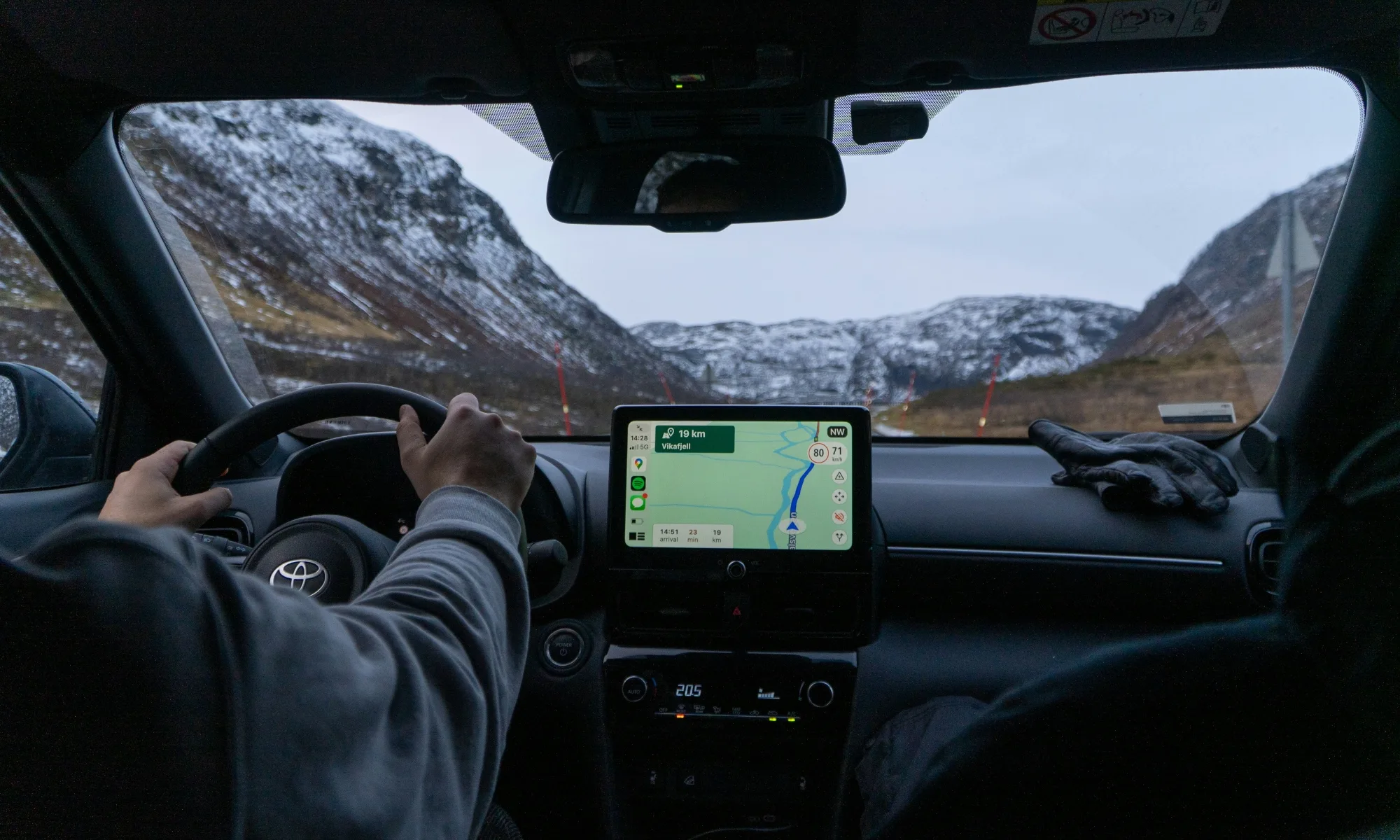
Google is widening the rollout of two long-awaited Google Maps features for Android Auto users: Immersive Navigation and a built-in live speedometer. After months of limited availability, reports suggest both features are now reaching a broader group of users, including people running stable versions of Google Maps instead of beta builds.
The update is part of Google’s ongoing effort to modernize the Android Auto navigation experience. While the company unveiled Immersive Navigation earlier this year as one of the platform’s biggest upgrades in years, the feature has been trickling out slowly, leaving many users without access. That appears to be changing, with more devices now receiving the update through a server-side rollout.
The rollout is still gradual, and availability may vary depending on region and device, but it signals that Google is becoming more confident about deploying the new experience at scale.
Maps becomes more visual while Android Auto gains a useful driving tool
Immersive Navigation makes Google Maps easier to follow while driving by displaying richer road layouts, clearer lane guidance, and more detailed intersections. The updated interface is designed to present navigation information in a way that’s easier to interpret with a glance instead of requiring drivers to study the map.
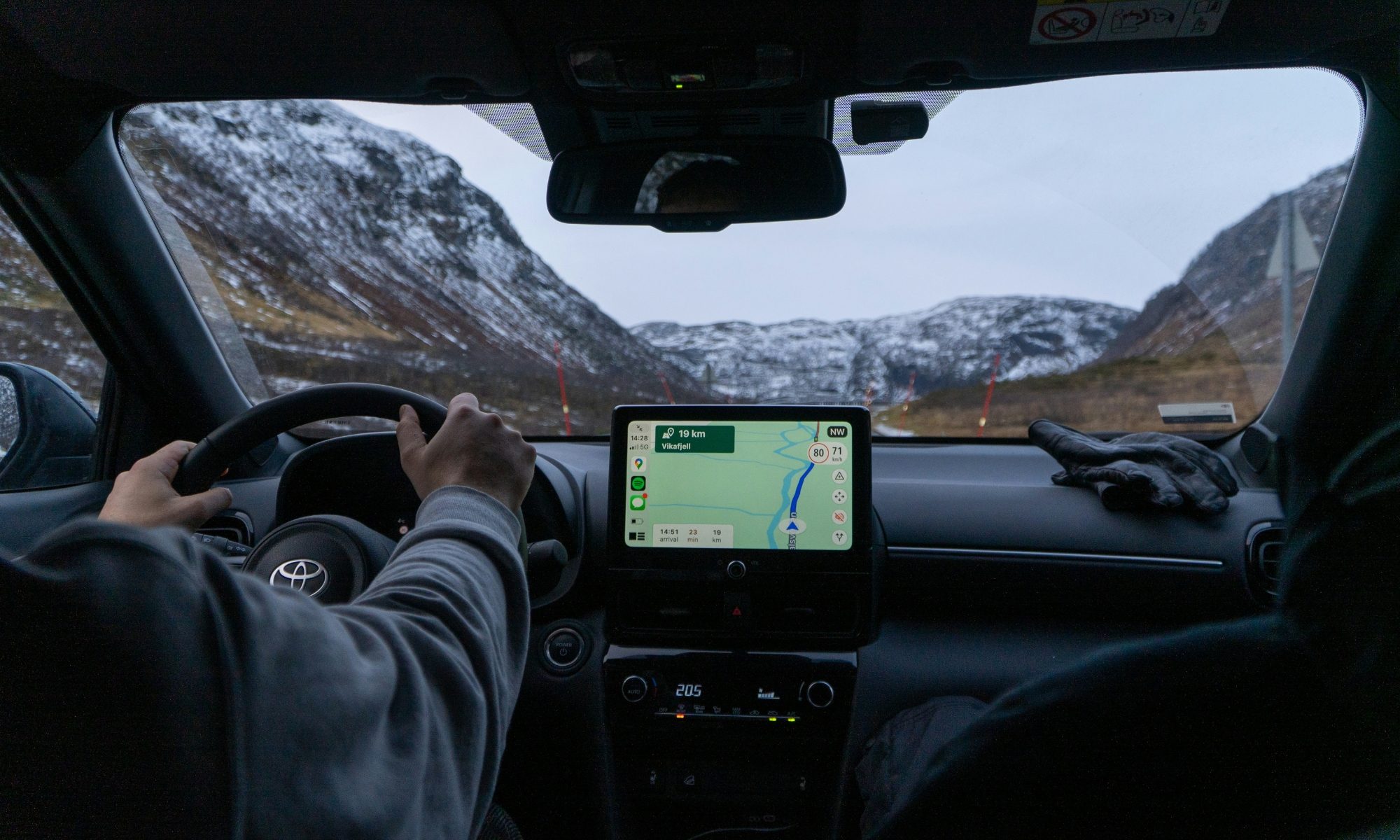
Alongside the redesigned navigation view, Google is also expanding the rollout of a live speedometer inside Android Auto. Unlike speed limit warnings, the feature displays the vehicle’s current speed directly within Google Maps, reducing the need to switch attention between the infotainment display and the instrument cluster in vehicles where that information isn’t readily visible.
Users receiving the update will also notice another interface change. On Android phones, the Gemini icon has replaced the Google Assistant shortcut in the top-right corner of Google Maps, continuing Google’s transition from Assistant to Gemini across its ecosystem.
A server-side rollout means patience is still required
Although more users are reporting access, Google has not released the features through a standard app update. Instead, the rollout appears to be happening server-side, meaning installing the latest version of Google Maps or Android Auto does not necessarily guarantee immediate access. Reports also suggest the features are appearing on stable builds rather than remaining exclusive to beta users, making them accessible to a much wider audience over time.

For Android Auto users, this update is less about adding flashy new capabilities and more about refining the everyday driving experience. Better lane visualization, more detailed navigation guidance, and an integrated speedometer are incremental improvements individually, but together they make Google Maps feel more complete as an in-car navigation system. As the rollout expands, more drivers should begin seeing those upgrades without needing to join Google’s beta programmes.
It’s been two years since the last total solar eclipse, but another one is coming in a few weeks — and with it, a special addition that rarely happens. Some people will get to see the solar eclipse during sunset, giving them an extraordinary view. The only problem is, you may have to jet off on a summer vacation to see it.
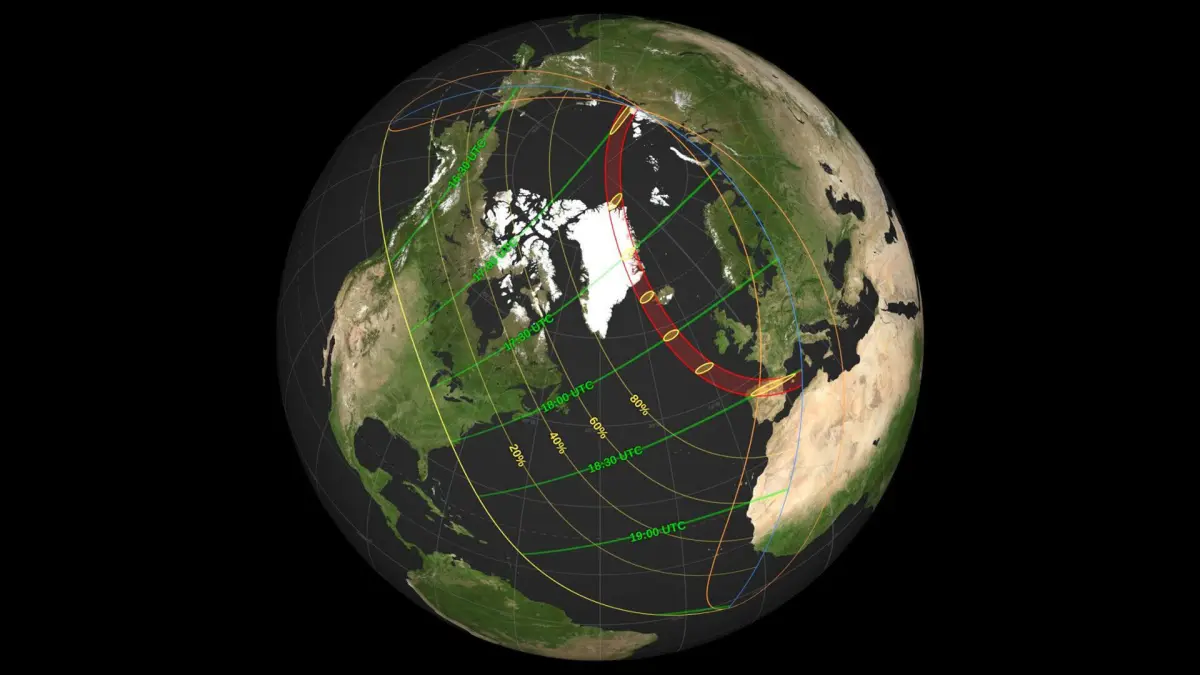
The total eclipse will only grace the shores of a few countries. According to NASA, the total eclipse on Aug. 12 will hit Greenland, Iceland, the northern half of Spain and one corner of Portugal. Spain is at the tail end of the eclipse, and as such, it will occur later in the day at around sunset, giving viewers in Spain a spectacular sight.
Other countries in Europe and Africa will also get quite a show. Most of Europe and a sizable portion of northern Africa are still getting a partial solar eclipse, which will happen around sunset. That means tens of millions of people will be in the right place to see a partial or total solar eclipse at sunset.
Russia is the luckiest country this time around. The eclipse starts at sunrise near the uninhabited Taymyr Peninsula, streaks across the world all day, and then Russians on the other side of the country are in the path for the partial solar eclipse at sunset, making Russia the only country that will see the eclipse at both sunrise and sunset.
How often do sunset eclipses happen?
Sunset eclipses don’t occur very often, at least where people can see them. There are two reasons for this.
The first is that solar eclipses usually only last for a few hours, and the timing for that being right at sunset isn’t terribly common.
The other reason is that solar eclipses have long paths, and sometimes those paths cut through the ocean or places where people don’t live. In the last 15 years, only a handful of total eclipses sit in that Venn diagram of occurring late enough in the day to happen at sunset, while also taking place where humans can see it.
The most recent sunset eclipse in North America was in 2014, but it was only a partial eclipse. South America’s most recent one was in July 2019, where people in Chile and Argentina had the best view of a total solar eclipse happening at sunset, while most of the rest of the country had a partial view. Asia’s most recent was in December 2019.
In short, this is a once-in-a-decade event for most of the world.
The path of this year’s solar eclipse takes it across the northern portions of Earth before ending in Europe. North Americans won’t see much.
NASA
Will this eclipse be visible in North America?
North America is pretty far from the main action, but a few states are in the path. The math is a little complicated, but if you look at a map of the US and draw a line from Alaska to North Carolina, all the states north of that line will get a little bit of an eclipse (less than 20% coverage), and all the states south of that line are sitting this one out.
If you live in the path and want to check it out, be sure to adhere to proper solar eclipse viewing safety protocols so that you don’t harm your eyes.
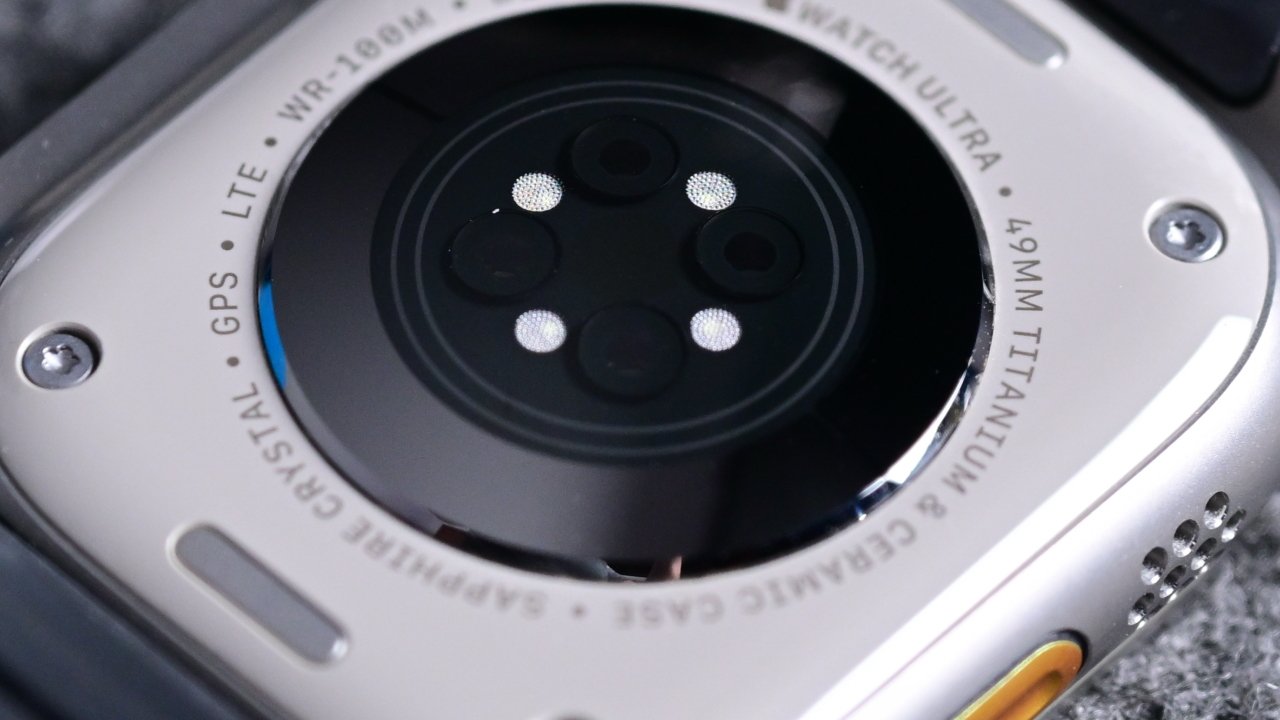
Apple is reportedly testing its September 2026 Apple Watch lineup, but the new models are expected to be minor updates while more substantial changes are much further off.
Most recent rumors have claimed that the forthcoming Apple Watch Series 12 will not feature any hardware improvements over its predecessor. Now backing up those reports, Bloomberg says that neither the Apple Watch Series 12 nor the expected Apple Watch Ultra 4 will get visible upgrades to their design.
Instead, the updates will be concentrated on giving the new Apple Watches a significant performance boost through a new processor. There may also be health and fitness tracking improvements, though previous reports have claimed that there won’t be new sensors, so this may be a software update.
The new lineup has the codenames N237 and N238 for the Wi-Fi and cellular versions of the Apple Watch Series 12 while the Apple Watch Ultra 4 is codenamed N240. All three models are said to now be in late-stage testing.
It’s claimed that these are the only three models due to be launched in September 2026, and specifically that there will not be a new Apple Watch SE released at this time.
There’s no indication of when an upgraded Apple Watch SE may come, but the report says that work is being done on a significant redesign for the regular Apple Watch. That’s not expected to result in a new device for at least a couple of years, however.
Separately, a recurring rumor has claimed again that the 2026 Apple Watch models will feature a new system for attaching bands. It remains as possible yet unlikely, though, as it has for the last several years that the rumor has circulated.
Also, while this new report predicts no noticeable changes to the Apple Watch Ultra, a rumor in May 2026 suggested that there may well be a significant update. Supply chain sources claimed that the Apple Watch Ultra 4 could double its number of sensors over the previous models.

“The rise of TikTok, Instagram Reels and Amazon storefronts has created a new kind of white-collar exit strategy,” reports Bloomberg. Workers ditch office jobs not to become celebrities, necessarily, “but to piece together an income online through brand deals, affiliate links and highly personal videos documenting everyday life.”
In many cases, the followers necessary to sustain a living are smaller (and more attainable) than people might assume. A small but loyal audience can now generate enough income to rival a midlevel salary. Welcome to the middle-class creator economy. Last year, 25-year-old Abi Platock balanced a corporate marketing job in New York while posting online in her spare time. She built her audience by posting one or two videos a day, offering career advice, beauty tips and daily vlogs. “I signed my first brand deal in the four-figure range, and for me that was just such a big eye-opening moment,” Platock says of her partnership with deodorant brand Secret. She had 8,000 followers on TikTok at the time. “You can totally make it work without having hundreds of thousands of followers.” Platock, who now has roughly 25,000 followers across platforms, has signed about $25,000 in brand deals so far this year and expects her annual creator income to reach around $50,000 by yearend.
Her experience reflects a broader shift in advertising. Brands are increasingly moving money toward so-called microinfluencers — smaller online personalities who have less than 100,000 followers. “They are hiring a bunch of microcreators at scale instead of hiring a handful of macrocreators for what could potentially be the same cost,” says Ali Grant, co-chief executive officer of the Digital Department, a creator management company. And they perform where it matters most: engagement. An engagement rate of 3% is considered strong, and some microinfluencers exceed 10%, Grant says of the closely watched metric that tracks how often followers interact with content through likes, comments, shares and saves. Microinfluencers average a 3.2% engagement rate, almost triple the 1.1% rate for macroinfluencers (more than 1 million followers), according to growth marketing agency ATTN… A TikTok partnership with a creator who has around 50,000 followers can run a brand more than $3,500 for a single post, Grant says; with 10 times the followers, that fee might just triple, to around $10,000….
The influencer marketing economy ballooned to a projected $33 billion in 2025 up from $1.7 billion in 2015. The segment gained momentum after the COVID-19 pandemic, as dissatisfaction with traditional work pushed many to reconsider conventional career paths, says Brooke Duffy, a professor of communications at Cornell University. “They realized the trade-offs in terms of the investments of time, energy and human capital were not necessarily worth sacrificing so much of one’s personal self for,” she says. Success online can bring greater freedom — and even higher pay than many traditional office jobs, which have a median US salary of $69,000, according to Glassdoor. But the middle-class hustle still requires constant effort to maintain. The career has no promise of lifetime longevity. And unlike traditional workers, creators have no predictable paycheck or job protections, making career stability elusive. Roughly 57% of 3,000 surveyed full-time creators earn below a living wage from content creation, according to a report last year from Influencer Marketing Hub. Income from social media can fluctuate wildly from month to month, driven by shifts in algorithms, sponsorship cycles and platform trends.
“You could have a month where you make zero dollars, or you could have a month where you make $10,000,” Platock says.
The article cites Gallup Poll data released last year that found employee engagement in the U.S. had fallen to its lowest level in a decade [with engagement defined as “the psychological attachment workers have to their work/team/employer]. “Among the hardest-hit groups were Generation Z and workers in finance and technology. Broader workplace challenges, including rapid organizational change, hybrid and remote work transitions, and rising employee expectations are considered drivers of the overall trend.”
“For many workers, influencing can seem like a better deal; flexible schedules and independence wrapped in a veneer of creativity and fun. Almost 60% of Gen Zers say they’d become an influencer if given the opportunity, according to a 2023 survey from Morning Consult.”
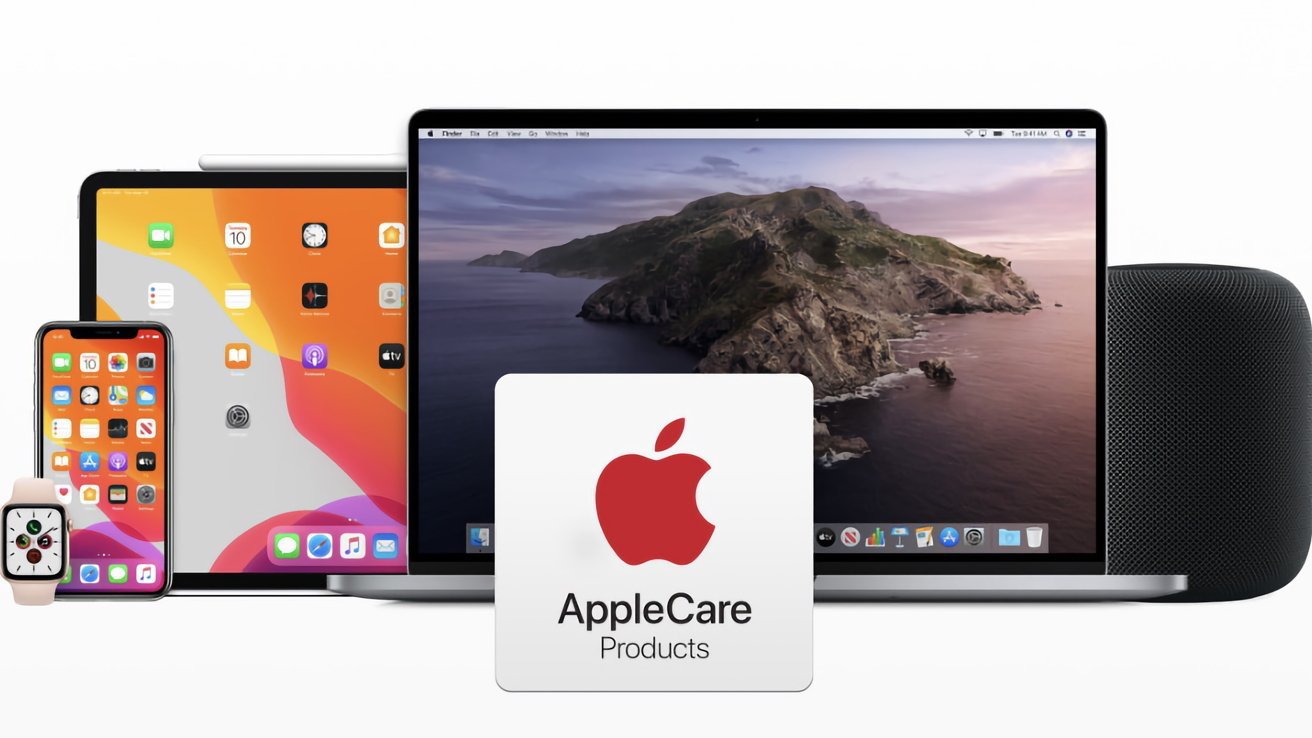
Previously exclusively in the US, AppleCare One is now launching in the UK, France, Germany, and Australia, with Apple’s best insurance deal for users with multiple devices — as long as you’re careful in selecting what’s covered.
A year after it launched in the US, AppleCare One is expanding outside of the US. It’s only going to four more countries, and they’re countries you’d expect it to launch in, but that’s a start.
“At Apple, we’re focused on creating and delivering exceptional experiences,” Bob Borchers, Apple’s vice president of Worldwide Product Marketing, said in a statement to AppleInsider. “With AppleCare One, customers in the UK can now enjoy the trusted protection of AppleCare+ in a way that’s simpler and more flexible than ever before — one plan, one price, and the peace of mind that comes with knowing all their eligible products can be covered.”
Full details of the terms, conditions and all pricing have yet to be published, but based on the details provided by Apple UK, the program will cost around the same as it does in the US. It will also offer the same befits, which are:
- Up to three products covered
- Theft and Loss Coverage (for iPhone, iPad, and Apple Watch)
- Unlimited repairs for accidental damage
- Free battery replacement
- Priority access to Apple support
There are limits in that, for instance, AppleCare One users may only make up to three claims of theft or loss per year. But then there are also extra benefits in that iPad accidental damage from handling (ADH) coverage can include an associated Apple Pencil or Apple-branded iPad keyboard.
Who this does and does not work for
Users who have any single device, such as one iPhone or one iPad, should not take up the new AppleCare One option. They should use AppleCare+, which Apple has also improved.
That AppleCare+ plan used to only feature theft and loss coverage for the iPhone, but it now extends this to the iPad and Apple Watch. AppleCare+ prices vary depending on the model of device, but for example the monthly cost in the US at time of writing is:
- iPhone: from $9.99 to $13.99
- iPad: from $5.49 to $11.49
- Mac: from $3.99 to $17.99
- Apple Watch: from $2.99 to $5.99
- Apple Vision Pro: $19.99
Each of these comes with an annual version which is roughly equivalent to 10 months at the monthly rate. Note that AppleCare+ only allows annual payment for insuring displays, Apple TV, HomePod, or AirPods.
Those items can, though, be paid for monthly via the new AppleCare One. Again, non-US details will not be fully available until AppleCare One launches on August 4, but the US version does allow adding headphones, for example.
Nonetheless, users who want to insure single devices get no financial benefit from the new AppleCare One. Users who have two devices will definitely benefit if those devices include the Apple Vision Pro.
Covering the Apple Vision Pro by itself with AppleCare+ is exactly the same price as covering it via AppleCare One. So that would be like getting coverage for a second and even third device for free.
Devil in the details
There are ways in which AppleCare One’s coverage of three devices is more than the price of insuring them each with a separate AppleCare+ plan. It depends on if the devices include a Mac, which on its own ranges from $3.99 per month for a Mac mini, to $17.99 per month for a Mac Pro.
Or with the iPhone, the separate monthly cost is $9.99 for an iPhone 17e, rising to $13.99 for an iPhone Air, iPhone 17 Pro, or iPhone 17 Pro Max.
It naturally gets more complicated if you have both an iPhone and a Mac in the equation. For example, if the three devices to be insured consist of an iPhone 17e, Mac mini, and an Apple Watch SE, the total individual cost is $16.97 where AppleCare One is $19.99 and you shouldn’t go near it.
But then if the devices are, say, an iPhone 17 Pro Max, an M5 13-inch iPad Pro, and a Mac Studio, you’d save a startling $12.48 per month by going to AppleCare One. In that case, that’s a hell of a deal.
That’s if you stick to just the basic AppleCare One and its coverage of three devices. It’s possible to add a fourth or any number of more devices, for $5.99 per month each.
Do that by adding, say, an Apple Vision Pro to the example with the iPhone 17 Pro max, 13-inch iPad Pro, Mac Studio and your monthly cost goes up to $25.99. The cost of doing these separately is more than double at $57.46.
One more huge benefit
Not long ago, all of this comparison of coverage costs would be moot because you were limited to which devices could get any AppleCare. It was typically a new device, or a device bought in the last 60 days.
Now with AppleCare One, the coverage is not only cheaper for most people in most circumstances, it is broader. Instead of solely being for new devices, AppleCare One can potentially be used for Apple devices that are up to four years old.
Those devices have to be in good condition, and during online registration users are prompted through questions regarding potential damage. It’s also possible that Apple will require the device to be brought to a store for a visual inspection.
If a user is starting with a new device, then instructions for signing up to AppleCare One will be displayed in Settings. Otherwise it can be done via the Apple website using the user’s Apple Account.
Those users who already have AppleCare plans will be able to switch to AppleCare One. Apple says that their existing plans will be cancelled and a new AppleCare One plan put in place.
Apple’s best deal
As long as you check out the pricing differences between AppleCare+ and AppleCare One, this new program can represent a very significant saving. So it’s unquestionably worth examining the details once Apple has published them for the UK, France, Germany, and Australia, on August 4, 2026.
Note, though, that the US service had some teething problems with eligible devices not always being displayed. If that happens again with the new countries, there are steps you can take to get the correct coverage.


Security
So much for Microsoft and CrowdStrike’s plans for consistent names across the industry
Google has created a new taxonomy to describe cybercrime outfits, seemingly abandoning a Microsoft-led effort to create consistent names.
The Big G announced its new schema on Saturday in a post that notes its 2022 acquisition of Mandiant and its subsequent incorporation into a new team called the Google Threat Intelligence Group (CTIG).
Now that two have become one, Google reckons they need consistent naming conventions to describe cybercrime crews.
The result is a two-word schema in which the first word “is a unique and memorable term chosen to represent the specific actor.” If security folk have already applied a particular moniker Google will use it, otherwise it will randomly generate a word “to remove bias.”
Google says the second word “categorizes threat clusters by motivation, attribution, or activity type based on which category we consider to be most important for defense and response strategies.”
More on that later.
Google has decided on the following names:
-
CASTLE to describe crews from the People’s Republic of China
-
ION for threats from Iran
-
NEPTUNE for North Korean attackers
-
RELIC for Russians
-
COMET for cybercrims who aren’t backed by a state
Google’s post notes that other infosec industry players have developed their own schemas for describing threat actors and says the web giant is therefore “intentionally seeking to keep this system as simple as possible to streamline operations and facilitate mapping to other naming taxonomies.”
That’s an odd position, given that in 2025 Microsoft and CrowdStrike tried to spark an industry-wide effort to apply consistent names to threat actors. As we noted at the time, the existence of multiple naming schemas means that researchers often refer to the same group by ten different names. Researchers use the names Seashell Blizzard, IRIDIUM, VOODOO BEAR, BE2, UAC-0113, Blue Echidna, PHANTOM, BlackEnergy Lite, and APT44 to refer to the same entity – Russia’s Military Intelligence Unit 74455.
With most orgs using multiple security tools and therefore receiving threat intelligence security info from many vendors, users must try to understand which crews they’re trying to defend against.
At the time, sources told us Google and Mandiant were keen to adopt the Microsoft-led scheme.
Google’s new announcement suggest the relationship either wasn’t consummated or didn’t last.
Back to the issue of possible bias, as in 2024 China’s National Computer Virus Emergency Response Center (CVERC) complained that western companies choose names like “Typhoon,” “Panda,” or “Dragon” to describe Chinese cybercrime groups.
CVERC suggested names that reflect English language idioms, such as “Hurricane” or “Koala” are more appropriate.
For what it’s worth, “Koala” is a word from the language spoken by the Darug people, the indigenous tribe who lived around Sydney, Australia, prior to British colonization. Koalas are utterly supine creatures that sleep 18 to 22 hours a day, and a mention of the marsupials may therefore not spur defenders to action, even if the creatures’ habits do perhaps describe the behavior of some sleeper malware. ®
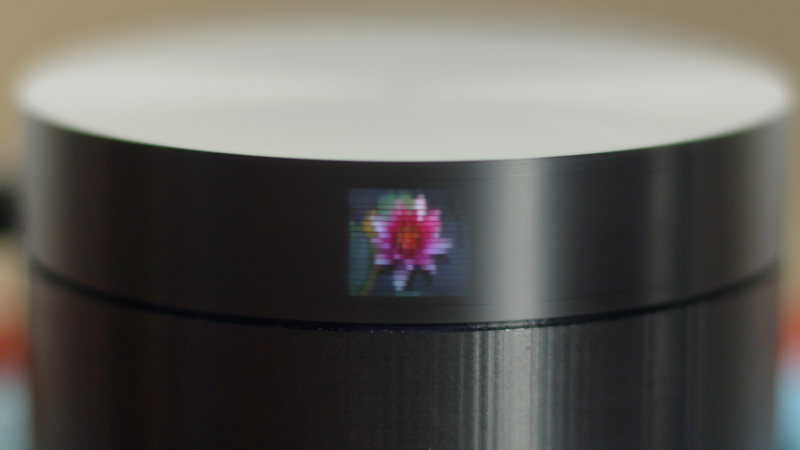
When you hear the word TV, you probably think of a big LED screen, maybe even the old CRT TVs, but in either case it’s something large and fairly complicated. However, thanks to the persistence of vision, it doesn’t have to be. In this handheld-sized project from [Ancient], the Scanwheel is born, a miniature mechanical TV that uses a spinning disk and some LEDs to produce an image.
The electronics of the Scanwheel are pretty straightforward. The smarts come from a Raspberry Pi Pico, an A4988 motor driver, a couple of LEDs, and a small 21-02485 stepper motor. The Raspberry Pi Pico is used to command the motor speed as well as coordinate the LEDs to turn on at the right time. The case is 3D printed; the base includes space for the various support electronics as well as some small light baffles to ensure the LEDs don’t bleed over outside their intended area. The top of the case is a disk that includes 20 small holes spaced evenly around the perimeter at varying heights, allowing light to only leave the disk when one of these holes is in front of the LEDs.
When you put all these pieces together, spin the motor up to roughly 900 RPM, and turn the LEDs on in a precise order, you end up with a really cool result: a miniature TV. And due to the five different LEDs in this build, you actually have a color 20×20 pixel display in the center and, on either side of that, two more 20×20 black-and-white displays capable of showing different images. Thanks [Ancient] for sharing this awesome build that takes advantage of the persistence of vision effect to create a unique display. Be sure to check out the video below as well as the instructions on how to build your own. And if you enjoy this sort of thing, check out some of our other persistence-of-vision projects as well.
Yeast spends its days chewing through sugar and splitting the leftovers into alcohol and carbon dioxide. Most people chasing homemade ethanol treat the second half of that reaction as pure waste and let the gas drift away. One maker decided the gas was too useful to ignore and set out to trap every molecule, dry it, chill it, and pack it into the same kind of high-pressure bottles that drive paintball markers and soda siphons.
The numbers appear almost too clean, since 4 kilograms of ordinary sugar dissolved in 14 liters of water already gives a solution that is nearly 22% sugar. If the yeast performs its job and converts everything, the process should result in little more than 2 kg of CO2. That’s enough liquid to fill nearly four 20-ounce paintball cylinders. The problem is that the gas comes out of the fermenter wet and diluted, making the first job (gathering it) difficult, as does maintaining the pressure up and preventing air from entering the system.
Sale

Airmoto Tire Inflator Portable Air Compressor for Cars, Bikes and Bicycles
- QUICK & ACCURATE: Built with the highest quality materials, Airmoto is a portable tire inflator for car, trucks, SUVs, motorcycles, and bicycles…
- AUTO SHUT OFF: Use the “+” and “-” control buttons on the Airmoto to easily select your desired pressure, simply connect the air hose to your…
- MAIN HIGHLIGHTS: Easily change between PSI, kPa, BAR, and KG/CM pressure units with a push of a button; Easy to read large LCD; Digital Tire Pressure…
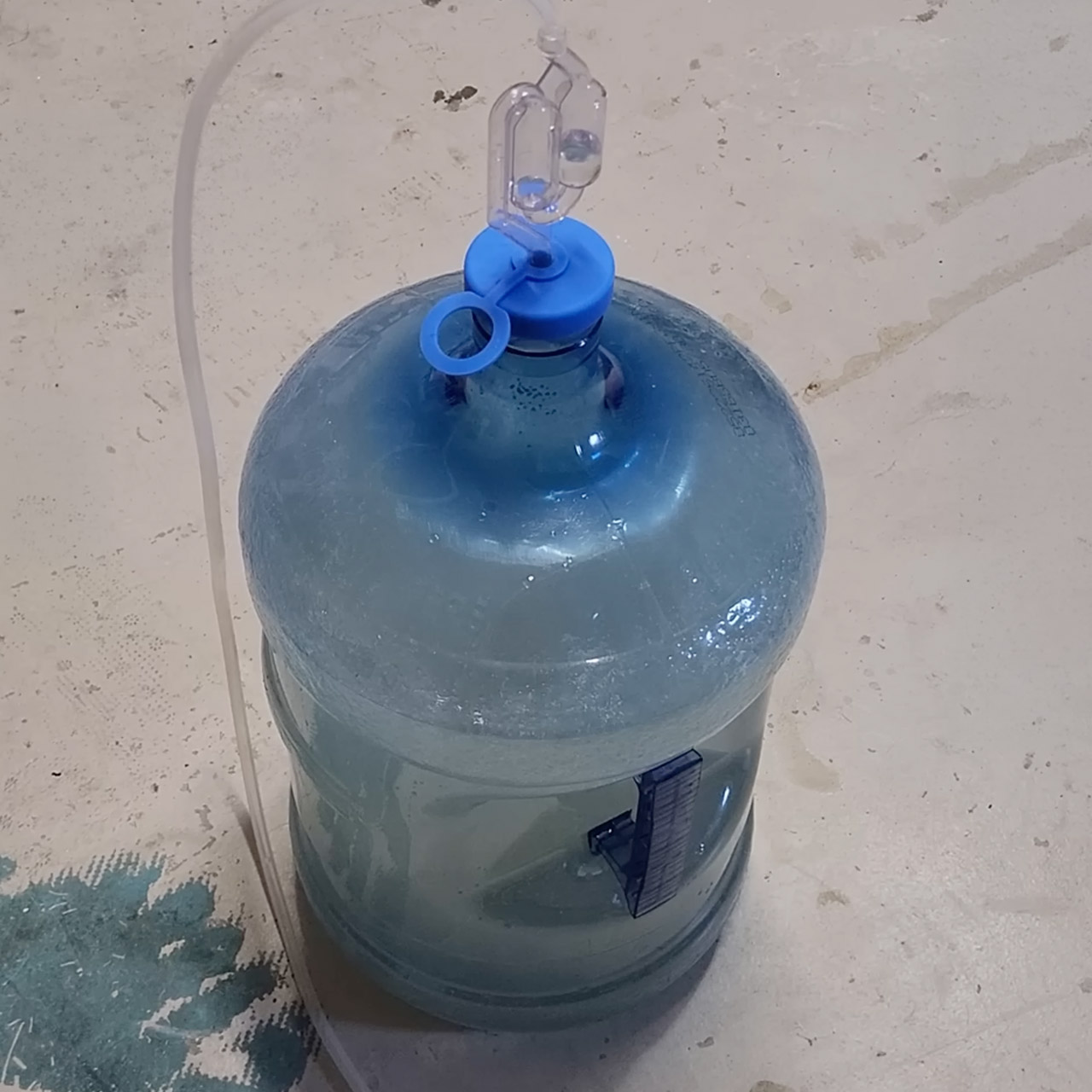
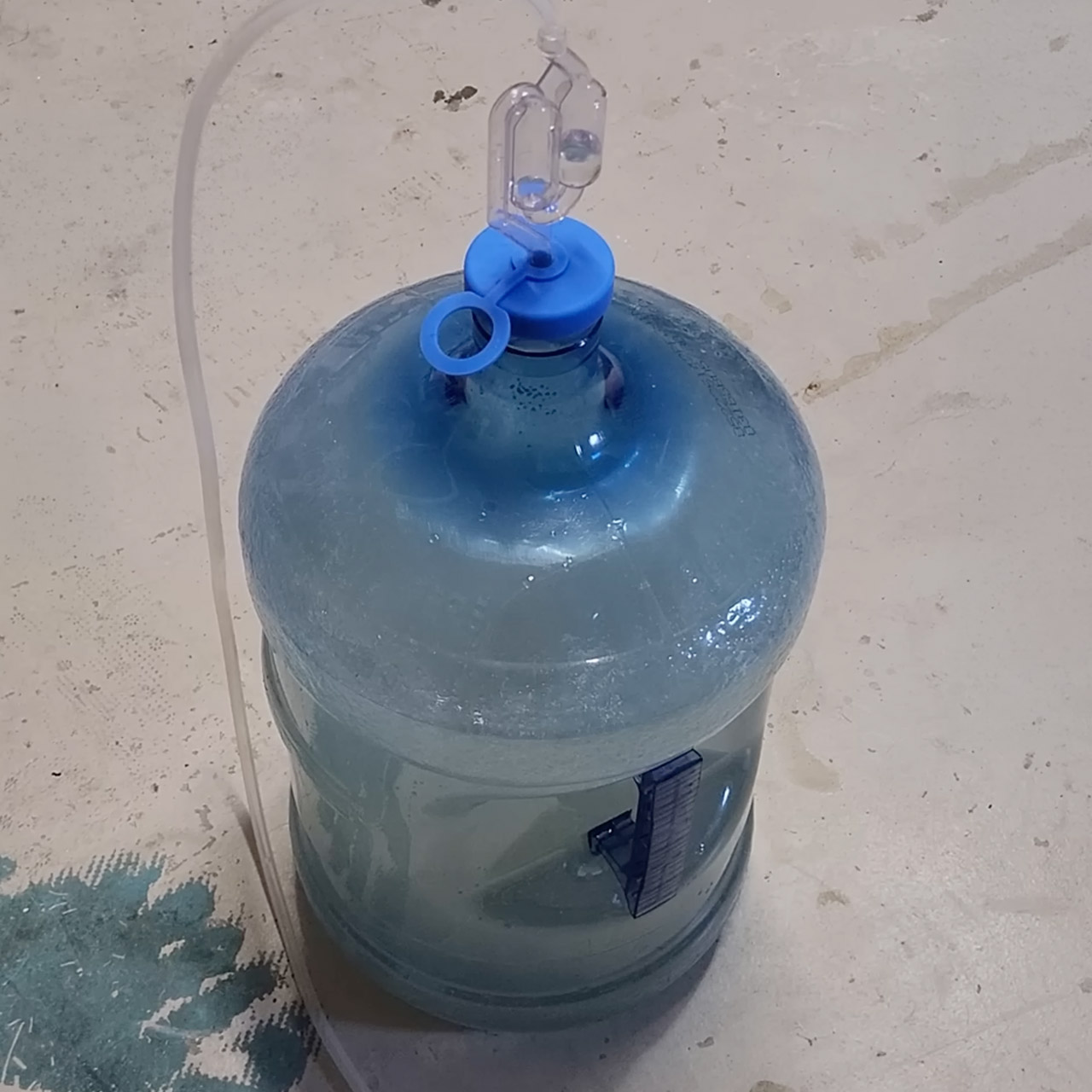
A 5-gallon water jug serves as a fermentation tank. The carbon dioxide is routed out via an airlock tube and into a recycled water-filter canister. The works is stuffed with silica-gel beads, which reduces moisture slightly, but we later discovered that the dew point remains too high, causing ice to form inside the valves. The next step is to transfer the gas to a beach ball. It takes a few days, but the ball eventually fills up with hundreds of gallons of CO2. It serves the purpose of providing some extra room to keep the pressure near the proper level while the yeast is still active.
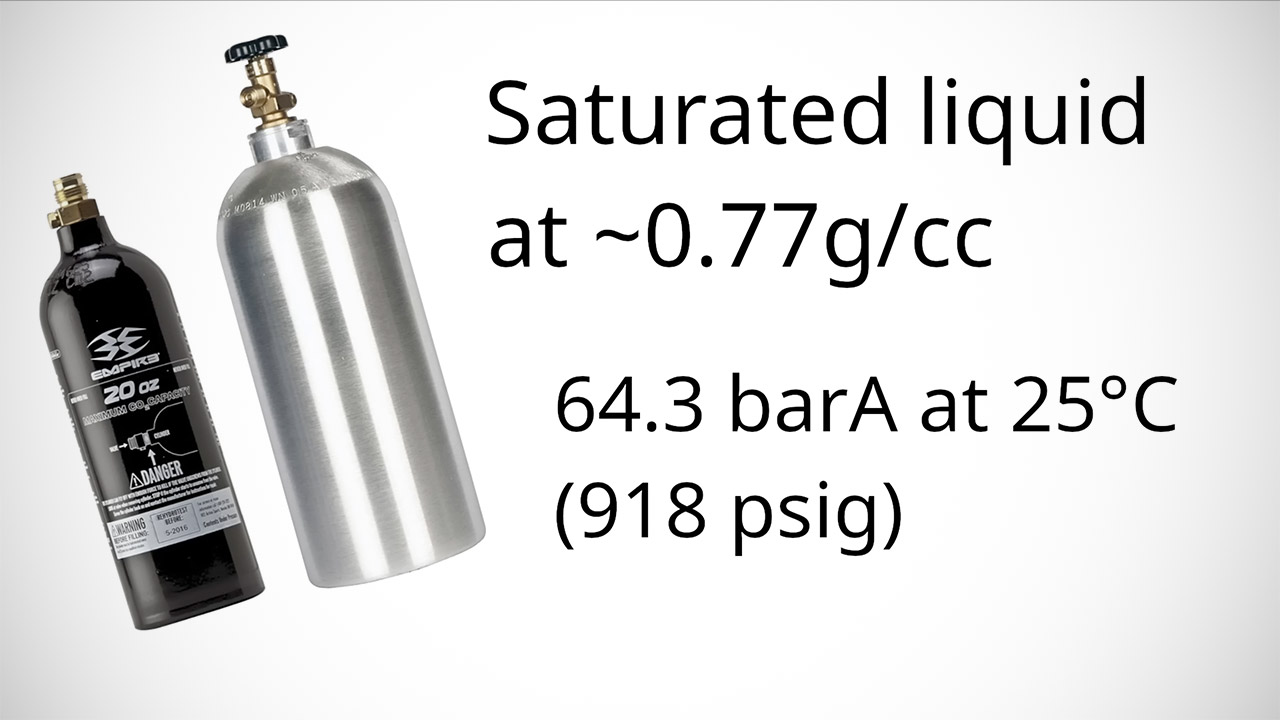
The major issue is turning the squishy substance into liquid. At room temperature, the CO2 must be compressed to roughly 64bar before it can condensate. The problem is that standard shop compressors can only reach a fraction of that capacity. The solution is to simply leave it in the air box. To cool a copper coil, a DIY system makes use of propylene as a refrigerant. This lowers the temperature to roughly -33 degrees Celsius and reduces the condensation pressure to about 13 bar absolute, which is well within the capabilities of a severely modified oil-less air compressor with its over-pressure cut-out switch disabled.
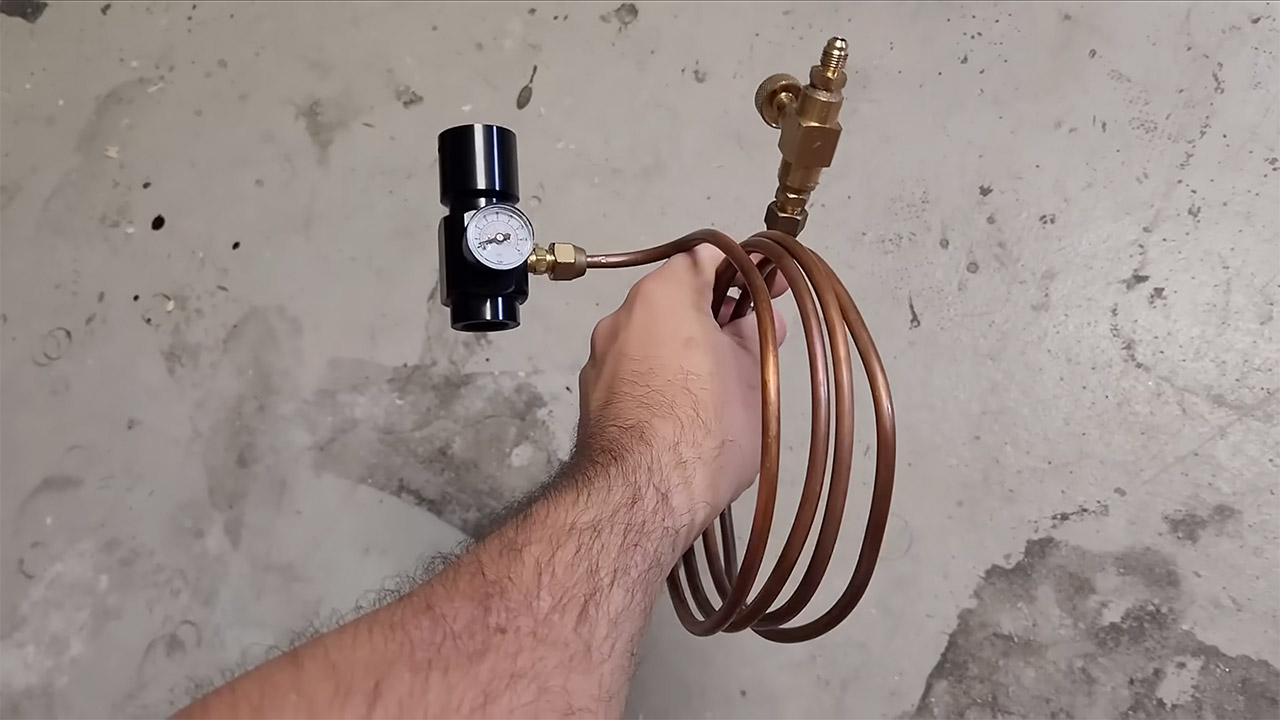
That copper coil is a 2-inch pipe, approximately 2 feet long, with a thinner copper coil within to convey the propylene. The CO2 from the beach ball enters at the top, meets the chilly surface, and condenses into a liquid that gathers at the bottom. A second coil (the same as the first) is housed in a 96% ethanol-lined thermos. A paintball tank sits in that bath, keeping the metal cool. Once some liquid has accumulated in the coil, a valve opens and the liquid flows into the chilled tank.
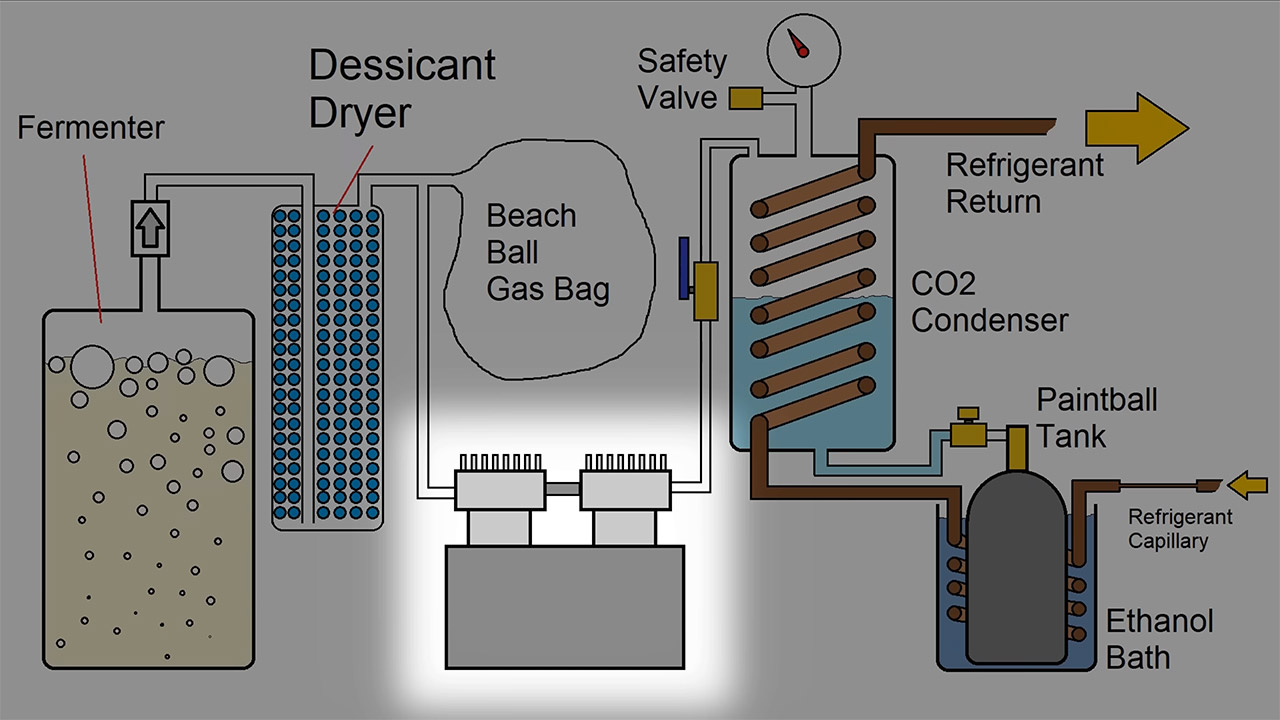
An typical oil-free compressor can move the gas, but only at a very sluggish rate; at 17 bar, it moves like a snail. Switching to a refrigerated compressor provides the necessary pressure, 400 psi or greater, and reduces fill time to 10 or 15 minutes. But now we have a new problem: oil separation. Any lubricant that gets into the tank degrades the purity. Then there’s water, which still freezes inside the tank valve while we pump it out, and this can jam the nozzle until the metal heats up again.
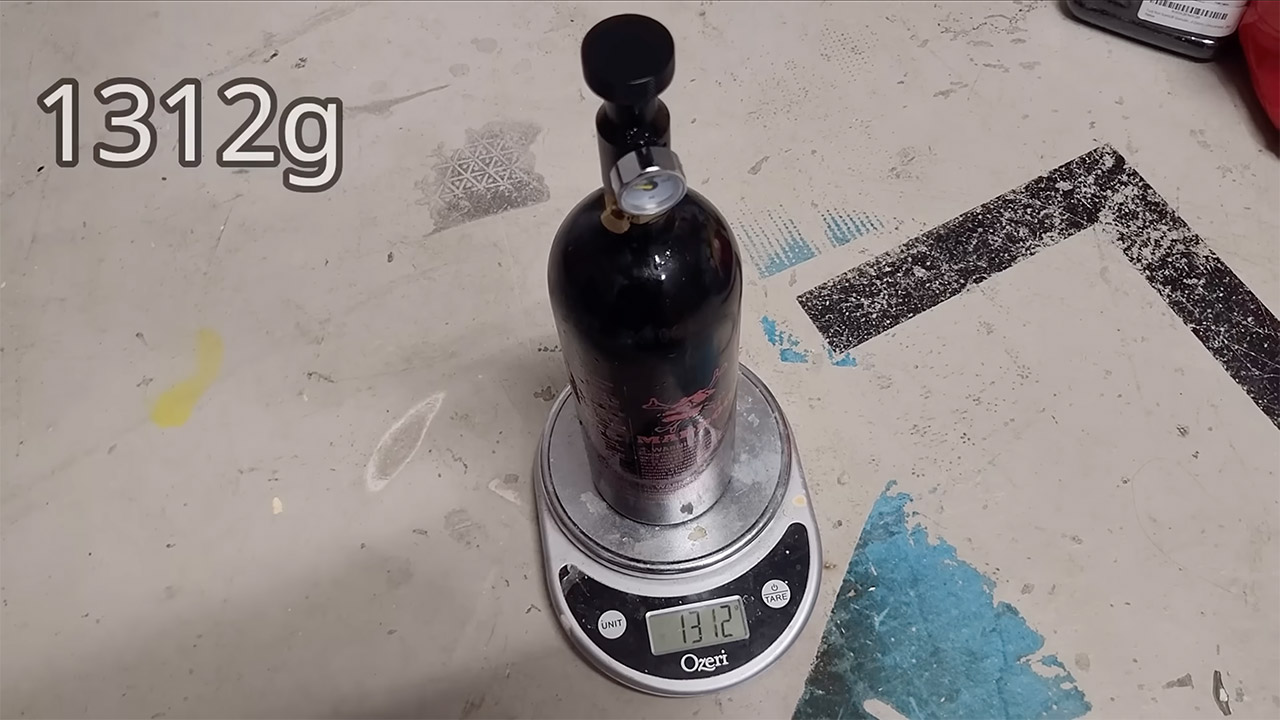
After filling the bottle to capacity, the scales read 1312 grams with the valve still connected. When the contents were drained, 974 grams remained, indicating that 338 grams of liquid carbon dioxide had been trapped inside. The container wasn’t even full to the brim, but that liquid was unmistakable, and when that valve was opened quickly, the temperature of the tank dropped to the point where it iced over. If you discharge it completely and quickly, you could bring it down to the temperature of dry ice.
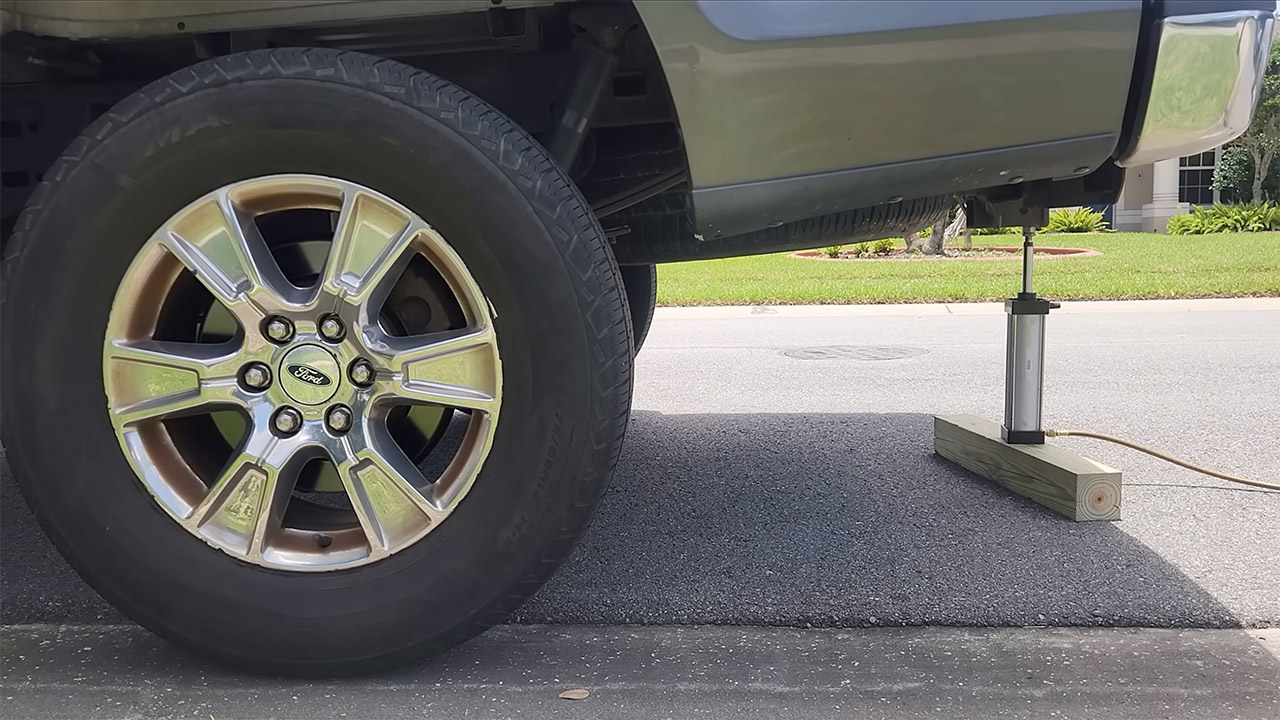
That small charge of ours already has some substantial practical power behind it. By connecting it to a short-stroke pneumatic actuator, he was able to elevate the back end of a full-size pickup approximately 200 millimeters off the ground. The same gas, linked to a vane motor, was able to power a small generator for a few minutes, but you can probably predict where this is going: the intense chill that comes in as the liquid boils away causes the pressure to drop and the motor to turn off.
[Source]

Every accelerator makes a version of the same offer: capital, mentorship, a network, three months of support, and materially better odds of survival. Evidence suggests that little of it actually works.
In April, Youn Baek and Deepak Hegde of NYU Stern published a working paper through the National Bureau of Economic Research examining nearly 750,000 American startups across 329 programs. Between 60 and 80 percent of accelerators, they found, leave the companies that join them worse off than if they had never applied. A smaller group does the opposite, raising funding, growth and exit rates by a wide margin. Among them, Y Combinator, Techstars and Endless Frontier Labs.
The study establishes which programs work, but it does not explain why. For that, we asked founder and product-market fit expert Yann Goarin.
Goarin spent a decade at Google and YouTube, where he launched more than twenty products in Europe and the United States, and has since led product and marketing at several venture-backed startups. He founded Zag Labs in 2023, an advisory firm that has helped more than a hundred early-stage companies go to market and accelerate their path to product-market fit. He developed the “PMF System”, a method that treats product-market fit as a problem-solving process rather than an event or a vibe. He is currently Founder in Residence at AAXIS, where he leads the enterprise technology firm’s venture-building work. He also mentors and judges at five accelerator programs across the US (Techstars, gener8tor, FoundersBoost, Expert Dojo, and USC’s Iovine and Young Academy), which gives him a unique perspective on how different programs support their founders.

The 💜 of EU tech
The latest rumblings from the EU tech scene, a story from our wise ol’ founder Boris, and some questionable AI art. It’s free, every week, in your inbox. Sign up now!
Most accelerators take equity in exchange for a check and three months of support, and their return depends on whether a few companies in each cohort raise at scale or exit. What they offer founders is leverage in several forms: capital, introductions to investors and customers, brand recognition, and knowledge.
Like top universities, the best accelerators attract and select the best founders. Even so, the odds of success are very low. Building a category-defining, venture-backed company is incredibly difficult, and luck and timing decide a great deal of it. But it is not magic. There is a method to the madness, and that method, Goarin claims, is either not taught or not taught well.
Research shows that knowledge is the form of leverage that appears to matter most. Susan Cohen, Benjamin Hallen and Christopher Bingham, who spent years studying the original American accelerator programs, found that where accelerators do improve their companies, the primary driver is what those companies learned inside them. But it is also the hardest to scale.
Goarin remembers one client engagement, a seed-stage AI startup that had built a video production platform. Its founders had come through one of the world’s most selective accelerators. It raised $4 million and within twelve months passed $1.2 million in annual recurring revenue. However, churn was running above 30 percent. The response was to sell harder and build faster, adding features as customers asked for them, and investors supported that on the view that revenue was the number that mattered most.
What the founders failed to realize was that the three segments they were selling to (small marketing agencies, independent video creators, and boutique production companies) were not a cohesive market. While they appeared to need faster and cheaper video production, they differed in how much video they produced, how polished it had to be, how it fit in their workflow, and where it was distributed. The product tried to stretch across all three, and served none of them well. Customers left faster than sales could replace them. After cutting half the team and pivoting, they failed to secure a bridge round and ran out of runway.
Goarin came in near the end, too late to change the outcome. “I assumed that founders coming out of a program like that would be better at testing their assumptions and diagnosing their issues. I was wrong. They were just as clueless as most of the others I advise.”
Around that time he started mentoring at Techstars. That’s where he saw an opportunity to address the problem at scale. From inside a program, it becomes clear how knowledge actually reaches founders, and what never does.
The programs that do teach tend to teach in fragments: a product expert teaches product, a sales executive covers sales, someone who has raised four rounds helps with fundraising. Founders are expected to assemble them into a working company. Most fail. There is something odd in that, viewed from outside. Accelerators and venture funds spend enormous effort on selection, screening thousands of applicants to find the few worth backing, and then just hope they figure it out.
What goes untaught is product-market fit itself, i.e., the correct assembly of these fragmented pieces that ultimately leads to widespread demand for something people badly need, delivered profitably every time. There are two reasons it does not appear on syllabuses. Product-market fit is not understood as a discipline in its own right, so there is no settled body of practice to teach from. And the mentorship model recruits subject matter experts by function, so PMF, which sits between and over the functions, isn’t owned by anybody. Until now.
What Goarin teaches in these programs runs end-to-end, and his objective is straightforward: avoid building something nobody wants.
“Accelerators give founders access and funding, and of course that matters,” says Goarin. “But where they can have an even bigger impact is teaching first-time founders to operate like second-time founders. That means going beyond the surface-level material and breaking down the mechanics of startups.”
User experience went through the same thing. Usability testing, information architecture and interaction design were practiced separately for years before the field recognized them as one discipline and created roles for people who worked across all of them. Naming it is what made it possible to teach.
The case for teaching product-market fit as its own subject is getting stronger. As technology levels the playing field on building and execution, what separates companies is judgment: Is this problem worth solving? Is this the right customer segment? Can I deliver my solution repeatably and profitably? Is it time to pivot? None of those questions can be answered well without knowing what to look at, and that is what Goarin focuses on.
“In the early days only three things matter,” Goarin claims. “Speed of learning, speed of decision-making, speed of execution. A startup is a learning machine before it is anything else, and learning is the part founders struggle with the most. Building is fast and cheap now, so the temptation is to ship something and see if it sticks. But that’s how you end up with a product in search of a problem. That’s how you end up in pivot hell.”
His work has been expanding. He was a Lead Mentor at Techstars for the Spring 2025 and Spring 2026 cohorts and a judge in Mentor Magic, the program’s week of back-to-back mentoring and evaluation sessions. He has advised two gener8tor cohorts and judged USC’s Venture Showcase. He is in discussions with other top programs in the United States and Europe.
Top accelerator entry requirements have been rising. Joshua Lu, who runs Speedrun, told TechCrunch this year that because AI has made building and testing so much faster, the program now expects market validation or early traction before it will admit a company. That created a new market of programs beneath the accelerators. The best of them are focusing on education, and have invested accordingly. FoundersBoost, one of the world’s best pre-accelerators, brought Goarin in to strengthen its programming and asked him to teach its last two cohorts.
The gap is about to matter more. AI is accelerating a trend already underway, in which smaller and smaller teams, working alongside swarms of agents, can perform like much larger companies. That does not reduce the value of knowing what to build. Rather, it concentrates it. Judgment, pattern recognition, knowing what to focus on and when, the confidence to make a decision and move: these have always been the unfair advantage, but are ever more critical in the AI age.
“Fundraising used to be something most founders didn’t understand,” says Goarin. “Now every program teaches it. Product-market fit is more complex, but it is a subject, and I expect it will be taught the same way before long.”
Baek and Hegde could not say what separates the accelerators that work from the ones that do not. If the answer is what they teach, the programs that work it out first will be the ones worth applying to.

Anthony Joshua survives huge scare to stop Kristian Prenga in Jeddah

Brewers continue run of West Coast as they visit Giants

Apple Planning to Launch a New Upgrade Leasing Program Next Week


-

 Fashion3 days ago
Weekend Open Thread: Brooks Brothers
-

 Crypto World6 days ago
Grayscale Files For Worldcoin ETF, WLD Registers Sharp Rise
-

 NewsBeat6 days ago
How a former Blue Peter presenter stunned America’s Got Talent judges
-

 Tech6 days ago
Sail Virtually Aboard The “Itanic” With IA-64 Emulator
-
 Tech6 days ago
Turtle Beach Command Series KB7 review: a nifty screen-equipped gaming keyboard
-

 NewsBeat7 days ago
Unregistered fitter used Gas Safe logo on business flyers
-

 Tech9 hours ago
Intel is reversing course and bringing hyper-threading back to its server chips
-
 Business5 days ago
New Jersey voter registration controversy explained: How 6,600 noncitizens got on the rolls, and what happens next
-
 Entertainment6 days ago
Johnny Depp’s R-Rated Gothic Cult Classic Gets New Release Ahead of Sydney Sweeney Remake
-

 Tech7 days ago
Watch Flock Safety CEO Garrett Langley discuss the future of surveillance at TechCrunch Disrupt 2026
-

 Crypto World4 days ago
Ethics, other provisions in crypto Clarity Act to be further discussed
-
 NewsBeat6 days ago
Shanghai science forum photos show China’s AI and robotics advances in rivalry with US
-

 Crypto World7 days ago
Circle’s President Sold Over 360,000 Shares, The Filings Explain Why
-
 Sports13 hours ago
Commonwealth Games boxing: Jadumani Singh seals dominant 5-0 win over Pakistan’s Sumama Rehman to enter quarter-finals | Commonwealth Games News
-

 News Videos4 days ago
The Peugeot Family: How 200 Years of an “Old Money” Dynasty Died in A Boardroom
-

 Sports3 days ago
2026 3M Open leaderboard: Scottie Scheffler finds putter in Round 1, sits three back
-

 Politics20 hours ago
Spain sweeps the board at 2026 World Cup with individual awards
-

 Fashion3 days ago
16 Dresses for the High Summer Event
-

 Crypto World6 days ago
Andrew Cuomo joins OKX board as crypto exchange expands in U.S.
-

 Tech7 days ago
The 35 Best Board Games for Family Game Night
You must be logged in to post a comment Login