






Connect with us
DAPA Banner
DAPA Coin
DAPA
COIN PAYMENT ASSET
PRIVACY · BLOCKDAG · HOMOMORPHIC ENCRYPTION · RUST
ElGamal Encrypted MINE DAPA
🚫 GENESIS SOLD OUT
DAPAPAY COMING

Business

Retail Sales Jump Nearly 1% in May. High Gas Prices Can’t Keep Consumers Down.

Published

on

Retail Sales Jump Nearly 1% in May. High Gas Prices Can’t Keep Consumers Down.
Continue Reading
Click to comment

You must be logged in to post a comment Login

Leave a Reply

Business

Nutex Health: Good Value But Regulation Reliant

Published

on

Nutex Health: Good Value But Regulation Reliant

Nutex Health: Good Value But Regulation Reliant

Continue Reading

Business

At Close of Business podcast June 19 2026

Published

on

At Close of Business podcast June 19 2026

Nadia Budihardjo speaks with Claire Tyrrell on the success of architecture practice Hames Sharley.

Continue Reading

Business

Australian Beef Hit With 55% China Tariff After Hitting Import Quota in Record Time

Published

on

Australian beef

CANBERRA, Australia — Australian beef exports to China will face an additional 55% tariff starting this weekend, after the country’s shipments hit Beijing’s annual import quota in record time, a development that could significantly disrupt trade flows and push producers to seek out new markets for their red meat.

The tariff comes after Australian exports hit Beijing’s annual quota limit, a development that could impact trade flows and prompt producers to seek new markets for red meat. The Chinese Ministry of Commerce announced that the 205,000-tonne safeguard had been hit as of Thursday, June 18, with the 55% tariff set to take effect at midnight on June 20.

A Quota Hit Faster Than Expected

The speed at which Australian exporters reached the threshold caught much of the industry by surprise. On June 16, 2026, Australia crossed the 205,000-tonne limit set by China for Australian beef imports this year. The news came just two weeks after China’s Ministry of Commerce announced that Australian shipments had already reached 90% of the annual quota as of June 1. The final 10% was consumed quickly, and the threshold was crossed sooner than some in the industry had expected.

Advertisement

Beef exports have hit the Chinese quota in record time.

The Origins of the Quota System

The Chinese government in December imposed a quota of 205,000 tons on beef imports from Australia as part of a range of trade limits on major red meat-producing nations, including Brazil and Argentina, in a push to protect local farmers.

China introduced a three-year beef safeguard system in January 2026, setting import quotas for several major exporting countries, including Australia, Brazil, Argentina, New Zealand, Uruguay, and the United States. The system was introduced to protect China’s domestic beef industry, with Chinese farmers having faced pressure from rising import volumes that pushed down local prices and made it harder for domestic producers to compete.

Advertisement

Beijing introduced the quota system following a safeguard investigation into beef imports. Under the arrangement, a set volume of beef from each country enters China at the standard low or zero tariff rate established under existing trade agreements. Once the quota is surpassed, an extra 55% duty applies automatically. For Australia, the 2026 quota stands at 205,000 tonnes, rising slightly in subsequent years before the policy concludes in 2029.

The Scale of the Cutback

The new quota represents a dramatic reduction compared to the volumes Australian exporters had been shipping to China just one year earlier. Australia exported more than 295,000 tonnes of beef to China in the first 11 months of 2025 alone, highlighting the scale of prior trade volumes. The quota for Australia of 205,000 tonnes for 2026 is significantly lower than the volume Australia shipped to China in 2025.

What Remains Exempt

Advertisement

Not all Australian beef products will be subject to the new tariff. The safeguard restrictions do not apply to beef offal, which remains exempt from tariffs, as negotiated under the China-Australia Free Trade Agreement.

Industry sources also suggest a narrow subset of high-value products may continue moving despite the steep new duty. Industry sources say only a small number of product types might still make financial sense under a 55% tariff. High-end Wagyu beef destined for premium food service customers is one example. A handful of specific cuts, such as brisket and short plate, may still be shipped in very small volumes. For the most part, trade will stop.

Industry Reaction

Australian meat industry representatives described 2026 as an unusually difficult year for the sector, citing a combination of factors weighing on producers and exporters alike. “The combination of external trade barriers and rising domestic costs means 2026 is an exceptionally challenging year for the sector,” an industry representative said, according to reporting from Farm Online. “We will continue to work with our members and partners in the Australian government to advocate for improved trading conditions which facilitate a more stable and reliable trade in Australian beef to China.”

Advertisement

Limited Expected Impact on Domestic Cattle Prices

Despite the significant trade disruption the tariff is expected to cause, analysts have suggested the effects on Australian domestic cattle prices are likely to be modest and short-lived, given strong demand from other export markets. Episode 3 meat industry analyst Matt Dalgleish said the tariff would likely lead to a dip in flows to China until mid-November but should have little impact on local cattle prices. “The broader global picture is one of tight supplies and there are several other destinations that will have demand remaining firm,” he said. “We shouldn’t see too much price weakness locally for cattle.”

A Shifting Competitive Landscape

The tariff’s introduction is also expected to reshape competitive dynamics among beef exporters within the Chinese market, potentially benefiting rival suppliers from other countries whose own quotas have not yet been triggered. While Australian exports will face the significant 55% tariff for the remainder of 2026, this could make expensive U.S. product more price competitive than “Aussie Beef” in Chinese retailers, though the impact on domestic cattle prices is not expected to be notable or to last for long. Beef from New Zealand and Argentina will also be landing in China on a more price competitive footing for the next six months.

Advertisement

Potential Financial Toll for Australian Producers

The broader financial stakes for Australia’s red meat sector are considerable, with some industry estimates pointing to losses well into the billions of dollars if trade volumes to China decline as sharply as expected. Industry groups warn of potential losses exceeding A$1 billion annually if exports to China fall by approximately one-third.

Producers Already Adapting

In anticipation of the quota being reached, Australian producers and exporters had already begun adjusting their strategies in recent weeks. Producers are accelerating shipments, exploring alternative markets in Asia and the Middle East, and investing in value-added products and diversification.

Advertisement

An Equal-Opportunity Safeguard

Australian exporters can take some measure of comfort in the fact that the new tariff regime is not targeted specifically at Australia, but rather applies uniformly across all of China’s major beef trading partners. The safeguard applies equally to Brazil, the United States, Argentina, New Zealand and Uruguay under similar quota arrangements.

What Comes Next

With Australia’s quota now officially exhausted for the remainder of 2026 and the 55% tariff set to take effect at midnight on June 20, the coming months will test how much of the country’s beef trade with China can be sustained through premium product categories and tariff-exempt offal exports. Industry attention will also turn to how quickly producers can pivot toward alternative markets in Asia and the Middle East to offset the expected decline in shipments to what has long been one of Australia’s most important beef export destinations, with the quota system set to remain in place, gradually rising, through 2029.

Advertisement
Continue Reading

Business

UK borrowing in May surges by more than expected

Published

on

UK borrowing in May surges by more than expected

Borrowing is the difference between spending and income from taxes.

Continue Reading

Business

From Concert Pianist to Pharmacy Leader

Published

on

From Concert Pianist to Pharmacy Leader

Success does not always follow a straight line, for Austen Hacker, the path to leadership in pharmacy began behind a piano.

Today, Hacker is a licensed pharmacist in Arkansas with experience leading hospital pharmacies, opening an oncology pharmacy, and managing complex healthcare operations. But years before he stepped into pharmacy leadership, he was studying piano performance at Baylor University and planning a future in music.

That willingness to adapt, learn, and pursue the right opportunity has become a defining theme throughout his career.

“Success depends on how you feel about yourself, rather than how successful you appear to others,” Hacker says.

How Austen Hacker’s Early Years Shaped His Work Ethic

Hacker grew up in Ruston, Louisiana, and Texarkana, Texas. During high school, he balanced academics with music, track, cross-country, church activities, and volunteer work.

Advertisement

His family life also helped shape his perspective. In 2003, his parents adopted two biological siblings from Penza, Russia. The experience exposed him to different challenges and life circumstances at an early age.

He graduated Summa Cum Laude from Texas High School in 2008 before enrolling at Baylor University.

At Baylor, music was his focus. He earned a Bachelor of Music in Piano Performance and spent years developing the discipline required to perform at a high level.

Yet as graduation approached, he faced a difficult realization.

Advertisement

“Before I graduated from Baylor with my Bachelor of Music, I recognized a harsh reality: I was not talented enough to make a decent living as a pianist,” he says. “This realization led me to pursue Pharmacy as a career, which I was a much better fit for.”

That decision would change the direction of his life.

Why Austen Hacker Chose a Career in Pharmacy

After Baylor, Hacker enrolled at the University of Louisiana Monroe, where he earned both a Bachelor of Science in Pharmaceutical Science and a Doctor of Pharmacy degree.

The transition from music to medicine may seem unusual, but many of the same qualities carried over.

Advertisement

Both fields require precision. Both demand constant practice. Both reward preparation and attention to detail.

As Hacker progressed through pharmacy school, he discovered a profession that matched his strengths and offered opportunities to make a meaningful impact.

His career advanced quickly after graduation.

He worked in retail pharmacy before moving into leadership roles within hospital systems. Over time, he helped open and manage an oncology pharmacy, establish a surgery center pharmacy, and oversee operations at multiple hospital pharmacies.

Advertisement

Those experiences gave him a broad understanding of both patient care and healthcare operations.

What Makes an Effective Pharmacy Leader?

For Hacker, leadership starts with engagement.

“I strive to be as engaged as possible in everything I do,” he says. “I feel that my biggest achievements have resulted from being driven, excited for, and committed to tasks.”

That mindset helped him navigate increasingly complex responsibilities throughout his career.

Advertisement

Managing pharmacy operations requires balancing clinical standards, patient needs, regulatory requirements, staffing, and daily logistics. Leaders in healthcare often work behind the scenes, but their decisions can affect countless patients.

Hacker believes excellence comes from maintaining high standards while remaining focused on continuous improvement.

He also understands that setbacks are part of the process.

“In the past, I measured success by outcomes, but more recently, I realized that the best measure of success is how you grow and learn from any experience.”

Advertisement

That perspective has become increasingly important as healthcare continues to evolve.

Overcoming Challenges and Building Resilience

Like many professionals, Hacker’s journey has not been without obstacles.

For years, he lived with undiagnosed ADHD, which made many aspects of daily life more difficult than they appeared from the outside.

“For most of my life, I was somewhat of a social outcast,” he says. “Living a normal life was very challenging for me without understanding why.”

Advertisement

Rather than allowing those challenges to define him, he focused on education and professional development.

His commitment to personal growth helped him build a successful career while developing greater self-awareness along the way.

Today, he credits perseverance, humility, self-discipline, honesty, patience, kindness, and tenacity as the values that have guided him forward.

How Faith, Balance, and Technology Support Success

Outside of work, Hacker remains deeply connected to his faith.

Advertisement

“My relationship with God has been the key to any successes I have achieved,” he says.

He is active in church life and enjoys church music, piano, running, hiking, swimming, technology, movies, and video games.

He also believes long-term success requires balance.

“Not balancing professional and personal life can be disastrous and depressing,” he says. “You should devote no more than 40 percent of your time to achieving professional success.”

Advertisement

To stay organized, Hacker relies on digital tools and planning systems to manage projects and long-term goals. He combines technology with routines that help him stay focused and productive.

Looking back, his career illustrates the value of adaptability.

A young musician became a healthcare professional. A pharmacist became a leader. And throughout each chapter, Hacker continued pursuing growth rather than perfection.

His story is a reminder that successful careers are not always built by following a predetermined plan. Sometimes they are built by recognizing when it is time to change direction—and having the courage to do so.

Advertisement

Continue Reading

Business

We must not overlook the importance of established SMEs to the Welsh economy

Published

on

Business Live

Established SMEs should no longer be treated as the overlooked middle of the economy.

Allica Bank.

For years, the debate about economic growth in Wales has tended to swing between two extremes.

On one side is the long-standing ambition to attract major inward investors, promising large-scale employment and transformational investment, whilst on the other is the growing interest in start-ups, university spinouts and high-growth technology firms, all of which are important parts of any modern economy.

Advertisement

Yet between these two sits a group of businesses that rarely receives the attention it deserves, despite being central to the day-to-day reality of the Welsh economy namely established small and medium-sized enterprises.

A new report by Oxford Economics for Allica Bank makes this point powerfully by focusing on established SMEs, defined as businesses employing between five and 249 people, and it shows that while they represent only a minority of the overall SME population, they account for more than half of SME employment and nearly three-quarters of SME turnover.

In simple terms, these are the firms that do much of the heavy lifting in the small business economy. They are not the very smallest microbusinesses, nor large corporates, but they are often the companies that provide stable employment, invest locally, support supply chains, and anchor economic activity in towns, cities, and rural communities.

For Wales, the findings are particularly significant, and the report shows that established SMEs account for 44% of private sector employment in Wales, compared with a UK average of 35%. Only Northern Ireland has a higher dependence on this group of firms, and that should be a wake-up call for policymakers, because it suggests that the Welsh economy is more reliant than most parts of the UK on businesses that are already trading, already employing and already embedded in their local communities.

Advertisement

This is not an argument against start-up support or inward investment as Wales needs both but if almost half of private sector employment in Wales is tied to established SMEs, then any credible economic strategy has to put their growth, productivity and investment needs at the centre of policy.

Too often, these businesses fall between the cracks as they are too mature to be seen as exciting start-ups, too small to be treated as strategic anchors, and too dispersed to form the kind of single-sector cluster that attracts ministerial attention. Yet collectively, they are one of the most important engines of the Welsh economy.

The report also highlights the importance of access to finance, with Allica Bank estimating a structural SME lending gap of £65bn across the UK relative to historic trends, which equates, all things being equal, to a gap of around £2.6bn in Wales.

That matters because finance is not simply about keeping businesses afloat but about enabling them to invest in new machinery, premises, vehicles, technology, stock, people and export capacity.

Advertisement

When established SMEs cannot access the right finance on the right terms, their growth is delayed, their productivity suffers and their ability to compete is weakened.

This is especially relevant to Wales, where the productivity gap has persisted for decades, and many businesses operate in sectors and places that are not well served by venture capital or equity finance.

The report notes that SME finance remains overwhelmingly dependent on bank lending rather than equity, with UK SME bank lending standing at £68 billion in 2025 compared with £9 billion in equity finance.

It also notes that equity finance is heavily concentrated, with AI companies and London-based SMEs taking a disproportionate share and therefore for most Welsh established SMEs, the key issue is not whether they can raise venture capital, but whether they can secure practical lending that allows them to grow.

Advertisement

That is why the regional findings in the report are so important, as Allica Bank’s lending supported an estimated £8.4bn contribution to UK GDP, 118,000 jobs and £2.1bn in tax revenues in 2025. But the more interesting point is where that impact was felt, and the report shows that Allica Bank’s enabled GDP contribution was equivalent to 0.63% of the Welsh economy, almost double the UK-wide figure of 0.33%.

It also estimates that, as a proportion of regional employment, the largest jobs impact was in Wales, indicating that when lending reaches established SMEs in places like Wales, the relative impact can be greater than in larger, more financially saturated economies.

We know that Wales needs more businesses, but it also needs more of its existing firms with five, ten, twenty or fifty employees to become more productive, more export-oriented and more confident in investing.

It needs family firms, manufacturers, construction businesses, wholesalers, professional services firms, tourism businesses and local employers to have access to the finance and support that allows them to move to the next stage.

Advertisement

This also has implications for public policy as business support in Wales should not be designed only around early-stage entrepreneurship or large inward investment projects and should include a serious, targeted programme for established SMEs with growth potential, linking finance, management capability, innovation support, procurement opportunities and export advice.

In other words, there should be a much stronger focus on helping these firms adopt technology, improve productivity, develop leadership capacity and access the capital they need to expand.

For business leaders, the message is equally important as the firms most likely to benefit from finance are those that can show a clear plan for growth, a strong understanding of their numbers and a credible case for how investment will generate returns. In fact, being finance-ready is now a strategic necessity, not an administrative exercise.

For Wales, the wider conclusion is that established SMEs should no longer be treated as the overlooked middle of the economy. They are not marginal but are central to employment, resilience and local prosperity, and if Wales is serious about closing its productivity gap and building a stronger private sector, then backing established SMEs is one of the most important routes to growth.

Advertisement
Continue Reading

Business

Warsh’s Inflation Focus Weighs on Markets, Sends Treasury Yields Higher

Published

on

Warsh’s Inflation Focus Weighs on Markets, Sends Treasury Yields Higher

Investors are reading Kevin Warsh’s first post-meeting press conference as hawkish, with yields on short-term Treasurys adding to earlier gains.

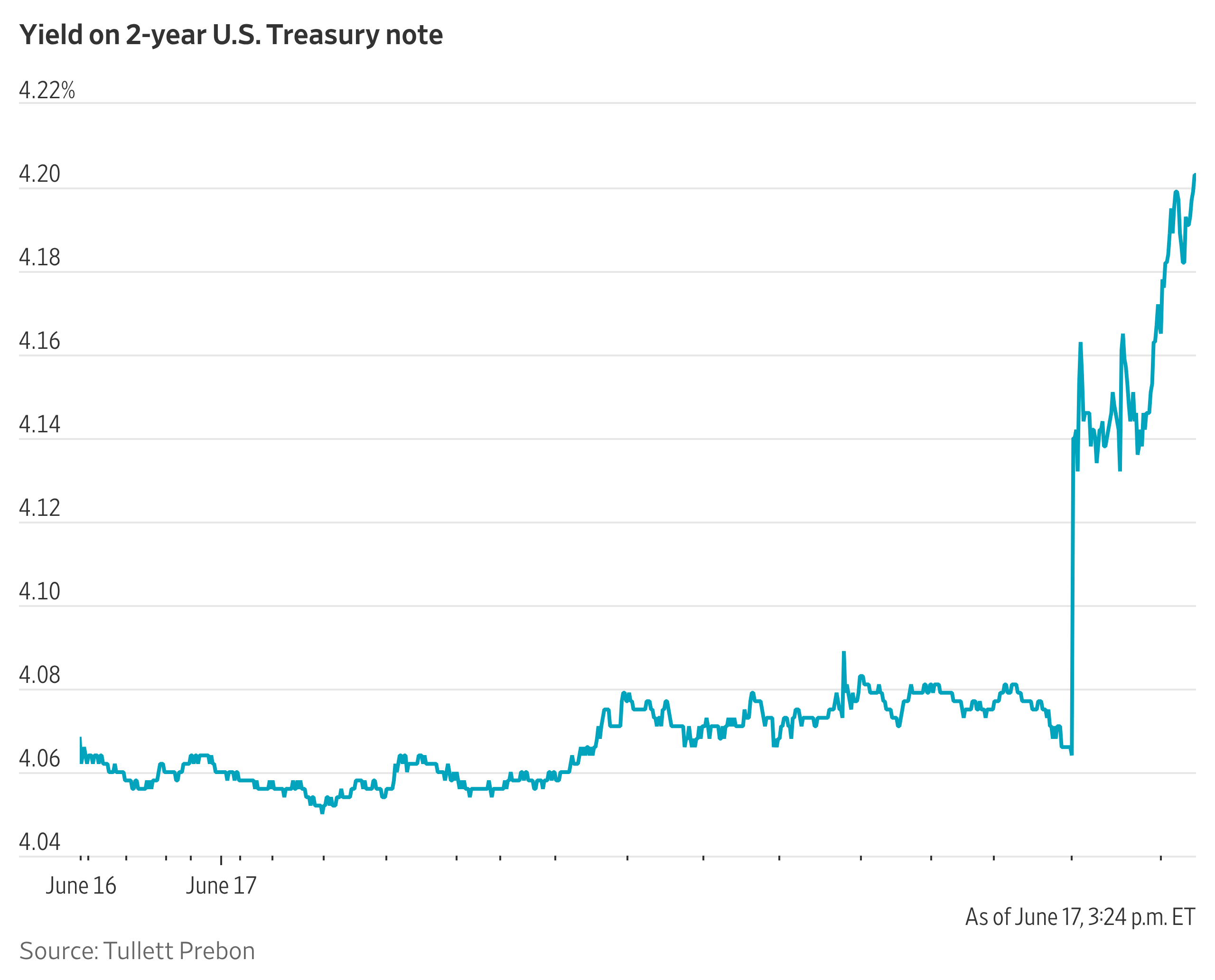
The yield on the 2-year Treasury note, which is particularly sensitive to the outlook for interest rates set by the Federal Reserve, was recently 4.174%, according to Tradeweb, up from 4.060% before the Fed’s policy decision at 2 p.m. ET.

Although Warsh reaffirmed his desire for the Fed to communicate less about the outlook for monetary policy, he was also adamant that the central bank needs to deliver on its 2% inflation target—an emphasis that investors have at least initially taken as a further sign that the central bank might soon raise interest rates.

Continue Reading

Business

Meta lobbies lawmakers for immunity from child harm lawsuits: report

Published

on

Meta lobbies lawmakers for immunity from child harm lawsuits: report

Meta has lobbied U.S. lawmakers for legal immunity from lawsuits alleging child harm from its social media platforms such as Facebook and Instagram, according to a report.

This comes as Meta faces a wave of youth-safety litigation, including thousands of similar claims consolidated in California state courts and separate lawsuits brought by states and school districts. Meta and Google, which owns YouTube, were hit with a combined $6 million in damages after a Los Angeles jury found them negligent in a bellwether case alleging Instagram and YouTube were designed in ways that harmed a young user. Both companies have said they plan to appeal.

Advertisement

If language like Meta’s proposal is adopted by lawmakers and signed into law as part of the Kids Online Safety Act (KOSA) under consideration in the Senate, the provision could undermine pending and future complaints against Meta and other social media platforms regarding child safety.

Lawmakers have not said they would be open to adopting the language, but the lobbying effort shows the kind of legal protections Meta is seeking amid government attempts to regulate online platforms.

FEDERAL APPEALS COURT RULES OHIO CAN REQUIRE PARENTAL CONSENT CHILDREN UNDER 16 ON SOCIAL MEDIA

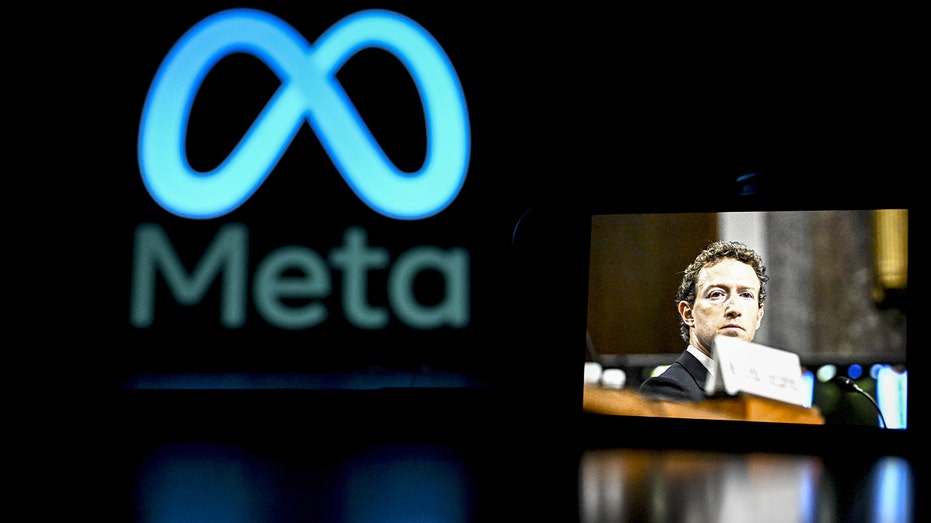
A smartphone showing Mark Zuckerberg’s image is held in front of a computer screen with the Meta logo.

Meta has lobbied U.S. lawmakers for legal immunity from lawsuits alleging child harm from its social media platforms. (Arda Kucukkaya/Anadolu via Getty Images / Getty Images)

The proposed language would make online companies “immune from suit or liability under state law with respect to all claims for loss caused by, arising out of, relating to, or resulting from the safety or privacy of individuals under the age of eighteen online or otherwise related to the provisions” of KOSA, according to Reuters.

Advertisement

The proposal appears alongside language that seeks to have the federal measure overrule state laws on children’s online safety and privacy.

Meta spokesperson Stephanie Otway told Reuters that the provision “does not extinguish existing lawsuits, nor does it represent blanket immunity.”

“Instead, it establishes uniform national standards for online youth safety, ensuring these critical issues are governed by comprehensive federal legislation, not plaintiffs’ lawyers or patchwork state legislation,” she said.

But Julia Duncan of the American Association for Justice, a group that represents trial lawyers, said that if the provision were to be adopted, it would kill any lawsuits pending when the law took effect.

Advertisement
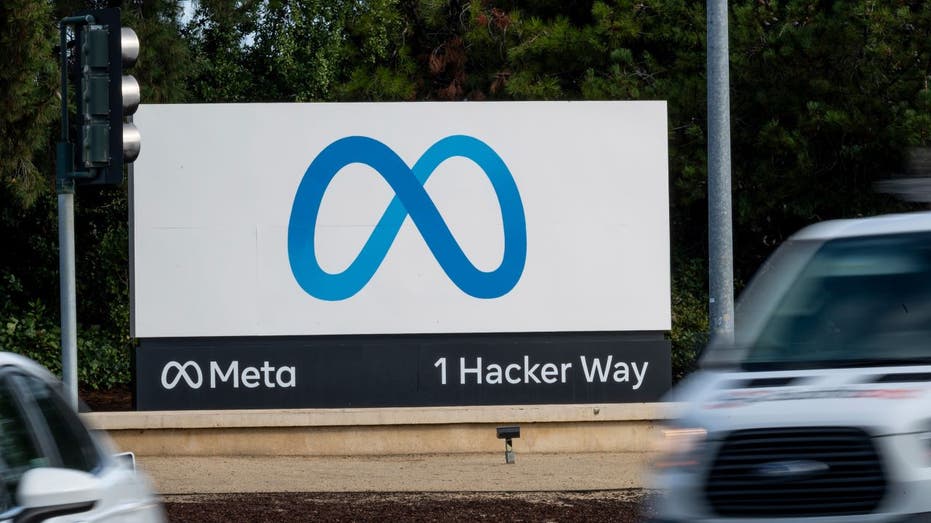
Meta headquarters

The provision could undermine the thousands of complaints against Meta and other social media platforms regarding child safety. (David Paul Morris/Bloomberg via Getty Images / Getty Images)

“The language is pretty clear-cut immunity against every parent, every school district, that is seeking to hold any AI or social media company accountable for harm” to children, Duncan said. “There is no other way to read this language.”

Meta has proposed the language in exchange for dropping its efforts to oppose KOSA, a source told Reuters.

KOSA, sponsored by Sens. Marsha Blackburn, R-Tenn., and Richard Blumenthal, D-Conn., would require social media companies to take steps to prevent certain harms to minors, including compulsive use of their platforms.

The measure is now the subject of negotiations between Blackburn and the White House to package child online safety bills with a provision that would preempt some state laws regarding AI.

Advertisement

META THREATENS TO PULL FACEBOOK AND INSTAGRAM FROM NEW MEXICO OVER CHILD SAFETY TRIAL REQUIREMENTS

Meta

Meta has proposed the language in exchange for dropping its efforts to oppose KOSA. ((Photo Illustration by Onur Dogman/SOPA Images/LightRocket via Getty Images) / Getty Images)

GET FOX BUSINESS ON THE GO BY CLICKING HERE

“We have not seen that proposed language and would never consider it,”  a spokesperson for the GOP senator told Reuters.

Under the bill, tech companies would need to use care in adding specific features such as infinite scrolling, activity notifications and appearance-changing photograph filters. 

Advertisement

A woman won at trial earlier this year against Meta and Google, which owns YouTube, after her lawyers successfully argued the companies were aware these features were addictive and harmful to young people. The tech companies plan to appeal the ruling.

KOSA passed in the Senate in 2024 before failing in the House. The measure was reintroduced this year with support from both Senate Majority Leader John Thune, R-S.D., and Senate Minority Leader Chuck Schumer, D-N.Y.

Reuters contributed to this report.

Advertisement
Continue Reading

Business

(VIDEO) Toy Story 5 Nears Franchise Box Office Record With Massive Thursday Night Preview Haul

Published

on

Toy Story 5 Nears Franchise Box Office Record With Massive

Disney and Pixar’s “Toy Story 5” is positioned to set a new franchise record for opening night previews, with box office sources projecting the animated sequel could pull in between $13 million and $14 million Thursday night — a figure that would mark the best previews performance the franchise has ever recorded.

Box office sources indicate that Disney and Pixar’s “Toy Story 5” is in play for a franchise record Thursday night when it comes to previews, with projections in the range of $13 million to $14 million, possibly more. Anything higher than $12 million represents a record preview night for the franchise — a mark previously set by “Toy Story 4” back in 2019, off previews that began in select theaters at 5 p.m. followed by a wide 6 p.m. release.

A Strong Showing Among 2026’s Biggest Films

If the projected $13 million to $14 million figure holds, it would represent the best preview night any film has posted in 2026 so far, surpassing several other high-profile titles that have opened earlier in the year. That total would top Lionsgate’s “Michael” ($12.6 million), Amazon MGM Studios’ “Project Hail Mary” ($12 million), and Disney/Lucasfilm’s “Star Wars: Mandalorian and Grogu” ($12 million).

Advertisement

It’s worth noting that not every major 2026 release followed the traditional preview-night model. Illumination and Universal did not hold previews for the “Super Mario Galaxy Movie,” which currently owns the best three-day domestic opening of the year so far with $131.7 million.

Strong Reviews and Advance Ticket Sales Build Momentum

Heading into its opening weekend, “Toy Story 5” has benefited from an enthusiastic critical reception that has helped fuel ticket sales in the days leading up to release. The film carries a 94% certified fresh critical score, with no audience score yet available. That strong critical reception followed the film throughout the promotional rollout heading into release.

Advance demand has also outpaced one of the year’s other major animated tentpoles. Heading into the weekend, the Andrew Stanton-directed fifth installment had recorded $25 million in advance ticket sales, putting it ahead of the “Super Mario Galaxy Movie” at the same point in its own release cycle.

Advertisement

Domestic and Global Box Office Projections

Industry trackers are projecting a substantial opening weekend for the Pixar sequel both domestically and overseas. The domestic outlook stands at more than $140 million across 4,425 locations, with additional strength expected from premium large-format and IMAX screens. The global forecast sits at $275 million, with $135 million expected to come from an international footprint covering 87% of overseas markets, including China.

Those figures would place “Toy Story 5” among the year’s most successful theatrical openings, reinforcing the continued box office strength of legacy Pixar properties even as the broader animated film marketplace has grown increasingly competitive.

How It Compares to Pixar’s Biggest Preview Nights

Advertisement

While a $13 million to $14 million preview haul would set a new mark specifically for the Toy Story franchise, it would still fall short of the largest preview night any Pixar film has ever posted. The biggest previews ever for a Pixar movie in the U.S. and Canada belong to 2018’s “Incredibles 2,” which brought in $18.5 million in previews and also holds the all-time opening weekend record for the Emeryville, California-based studio at $182.6 million.

The comparison underscores both how far the Toy Story franchise has come in terms of preview-night performance and how high the bar remains across Pixar’s broader catalog of theatrical releases. For context on how dramatically theatrical release patterns have shifted over the years, 2010’s “Toy Story 3” posted previews of just $4 million, back when showtimes for such releases typically began at midnight rather than in the late afternoon or early evening hours that have since become standard for major studio tentpole releases.

A Star-Studded Voice Cast Returns

The fifth installment in Pixar’s flagship franchise brings back the franchise’s most beloved characters, with Tom Hanks reprising his role as Woody, Tim Allen returning as Buzz Lightyear, and Joan Cusack once again voicing Jessie, continuing a vocal lineup that has anchored the series since its earliest installments in the 1990s. The film is directed by Andrew Stanton, a longtime Pixar veteran whose credits include some of the studio’s most acclaimed and commercially successful releases.

Advertisement

Additional Star Power Behind the Scenes

The film’s cultural footprint has also been amplified by an unexpected celebrity connection in the lead-up to release. Pop superstar Taylor Swift reportedly wrote and recorded an original song for “Toy Story 5” on the same day she saw the film, after experiencing what she described as a burst of inspiration following her screening — a development that generated significant additional media attention and fan excitement heading into the film’s theatrical debut.

A Broader Moment for the Animated Franchise

The strong preview projections for “Toy Story 5” arrive amid a notable year for major franchise releases across the industry, with several other high-profile titles — including new entries in the Star Wars universe and major literary adaptations — also posting strong opening figures throughout 2026. Disney’s continued investment in the Toy Story property, now spanning three decades since the original 1995 film redefined computer animation, reflects the franchise’s enduring commercial appeal even as audience tastes and theatrical viewing habits have shifted dramatically since its debut.

Advertisement

What Comes Next

With Thursday night’s preview figures expected to be finalized in the early morning hours, box office analysts will be closely watching whether “Toy Story 5” can convert its record-setting preview performance into a similarly dominant opening weekend that meets or exceeds the current $140 million domestic projection. A result in that range would mark one of the strongest openings of the year for any film, animated or otherwise, and would further cement the Toy Story franchise’s status as one of the most reliable box office performers in Disney and Pixar’s combined portfolio.

Should the film’s global performance also meet projections near $275 million, it would represent a significant box office event for the international animation market as well, particularly given the substantial contribution expected from Chinese theaters, where Western animated franchises have faced an increasingly competitive landscape in recent years from strong domestic Chinese animated productions.

Box office trackers indicated they would have further updates on the film’s final preview numbers once Thursday night’s complete figures were tallied and confirmed across the full slate of participating theaters nationwide.

Advertisement
Continue Reading

Business

Public housing rate exemptions bite Shire of Broome's bottom line

Published

on

Public housing rate exemptions bite Shire of Broome's bottom line

A Kimberley shire is warning of a $2.8 million rates hit if public housing is allowed to gain exemptions from paying local government rates.

Continue Reading

Trending

Copyright © 2025