

Crypto World
Ireland Considers New Crypto Rules to Address Financial Risks


Ireland has released a national risk assessment on digital assets for the first time in seven years, detailing “very significant” concerns around money laundering and terrorism financing while also warning that crypto can be attractive to fraudsters and may help criminals evade sanctions.
The assessment, published by the Irish Department of Finance as part of the government’s policy priorities, comes as Ireland moves toward implementing industry standards on how crypto-related activities are accepted as a source of funds by the second half of 2027.
Key takeaways
- Ireland’s 2026 national risk assessment describes crypto assets as posing “very significant” risks for money laundering and terrorism financing.
- The government cites increased enforcement pressure, including more prosecutions related to money laundering and fraud incidents in which the use of crypto is “particularly attractive” to criminals.
- The report flags vulnerabilities beyond illicit finance, including potential sanctions evasion and difficulties in tax compliance and enforcement.
- Ireland highlights regulatory inconsistency internationally as a risk for Irish service providers, alongside gaps in oversight for largely unregulated areas such as decentralized finance.
- Political donation concerns remain part of the picture, even as Ireland has already prohibited cryptocurrency donations to political parties for more than four years.
Seven-year gap and a sharper focus on illicit finance
In the risk assessment released Thursday, Ireland said crypto-related activity presents “very significant” risks connected to money laundering and terrorism financing. The Department of Finance framed the assessment as a response to the evolving threat landscape, pointing to higher levels of legal and criminal activity involving digital assets since the last time such a country-specific evaluation was published.
According to the Department of Finance, the period since the previous assessment has included an increase in prosecutions tied to money laundering, along with incidents of fraud where crypto was “particularly attractive” to criminal groups. The government also described how digital assets can be leveraged to exploit compliance and enforcement weaknesses.
Beyond money laundering: sanctions, taxation, and bribery
Ireland’s assessment did not limit itself to illicit finance channels alone. It also warned that crypto assets present vulnerabilities that “may facilitate sanctions evasion.” In parallel, the government highlighted challenges for tax compliance and enforcement, suggesting that the way crypto is used can complicate oversight and detection.
The report further notes risks associated with corruption. Ireland stated that crypto has been used to bribe officials involved in decisions affecting the sector. While the assessment describes vulnerabilities broadly across criminal use cases, it also emphasizes how administrative and regulatory roles can be exploited when oversight is weak or fragmented.
Regulatory patchwork and uneven protections
A central theme in the assessment is the uneven regulatory environment around crypto. Ireland pointed to “inconsistent international regulation” as a vulnerability affecting Irish service providers, implying that companies operating in Ireland may face risks not only from domestic enforcement but also from cross-border standards and gaps.
The government also singled out parts of the ecosystem that remain comparatively less regulated. The risk assessment highlights “largely unregulated areas of the industry such as decentralized finance,” indicating concern that oversight and controls may not be aligned with the same expectations applied to more traditional financial intermediaries.
Ireland’s approach is notable given its relatively high crypto participation compared with some other markets. The report references research from the Central Bank of Ireland published in December, which said about 10% of the population invested in crypto.
Where policy is heading: standards by 2027 and ongoing enforcement
Ireland’s assessment was issued alongside a wider policy direction tied to implementing industry standards relating to the acceptance of crypto-related activities as a source of funds, with a target of the second half of 2027. The framing suggests the government wants to reduce ambiguity around how crypto can be treated within the financial compliance system—particularly in contexts tied to anti-money laundering and related safeguards.
Recent enforcement actions in the country also underscore that the issue is not purely theoretical. In November 2025, the Central Bank of Ireland fined Coinbase Europe Limited about $24 million for Anti-Money Laundering and Countering the Financing of Terrorism violations, citing delayed reporting failures in its transaction monitoring system.
On the political side, the assessment references that concerns about crypto being used to pay corrupt officials are persistent—yet Ireland has already moved to restrict political donations. According to the risk assessment, official cryptocurrency donations to political groups have been banned in Ireland for more than four years. In April 2022, Irish officials proposed that no Irish political parties be allowed to accept cryptocurrencies such as Bitcoin, Ether, privacy coins, and others.
What to watch next
With Ireland targeting implementation of relevant standards by mid-to-late 2027, the immediate question for users, exchanges, and service providers will be how quickly regulatory expectations tighten around acceptance of crypto-related funds, compliance controls, and oversight of riskier parts of the ecosystem. Readers should also monitor how Ireland’s “very significant” risk framing translates into concrete supervisory actions and guidance over the next reporting cycle.

Franklin Templeton has filed to launch two exchange-traded funds that would automatically direct stock dividend income into Bitcoin exposure.
Summary
- Franklin Templeton has filed for two ETFs that would reinvest stock dividends into Bitcoin exposure through a rules based allocation strategy.
- The proposed funds would start with a 95% allocation to U.S. large cap equities and a 5% allocation to Bitcoin linked investments.
- The filing extends Franklin Templeton’s digital asset expansion after recent tokenization partnerships with Kraken, MoonPay, and Ondo Finance.
A registration filing submitted on Thursday shows the asset manager has proposed the Franklin US Equity Bitcoin DRIP Index ETF and the Franklin US Innovation Bitcoin DRIP Index ETF, with an anticipated effective date of Sept. 1, 2026.
The products would track the VettaFi US Large-Cap 500 Bitcoin DRIP Index and a related innovation-focused version. Under the index methodology, dividends generated by the underlying stock portfolios would be reinvested into Bitcoin-linked investments rather than remaining in cash or being distributed to investors.
The filing states that Bitcoin exposure could come through spot Bitcoin exchange-traded products, futures contracts, options, or other investment instruments. The strategy is scheduled to begin with a portfolio allocation of 95% U.S. large-cap equities and 5% Bitcoin exposure.
Quarterly rebalancing rules would reduce Bitcoin allocations above 5% back to 4.5%, while a separate cap would limit Bitcoin exposure to 20% between rebalancing periods, the filing states.
As of April 30, the equity index included approximately 498 securities. The filing states that constituent companies ranged in market capitalization from roughly $7.5 billion to $4.9 trillion.
Franklin expands crypto-linked investment offerings
The proposed ETFs add another product category to Franklin Templeton’s digital asset business, which already includes spot cryptocurrency ETFs, tokenized funds, and blockchain-based investment products.
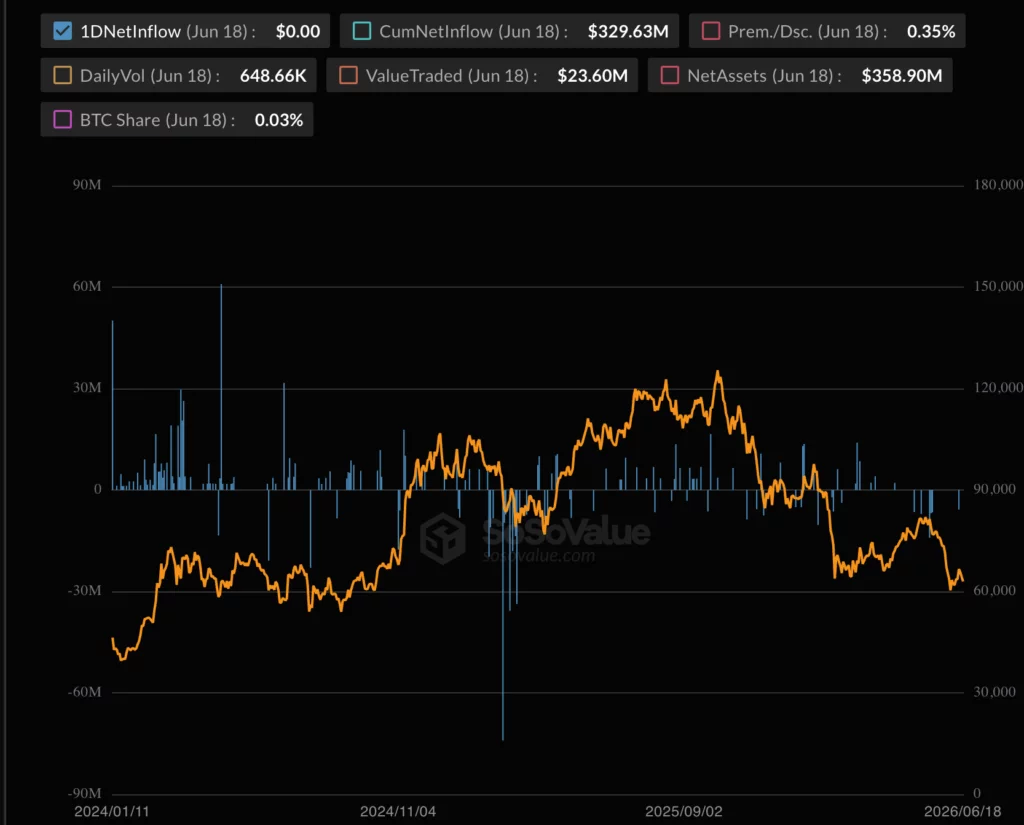
Data from SoSoValue showed Franklin Templeton’s spot Bitcoin ETF, EZBC, held $358.9 million in net assets and had attracted $329.6 million in cumulative net inflows as of Thursday.
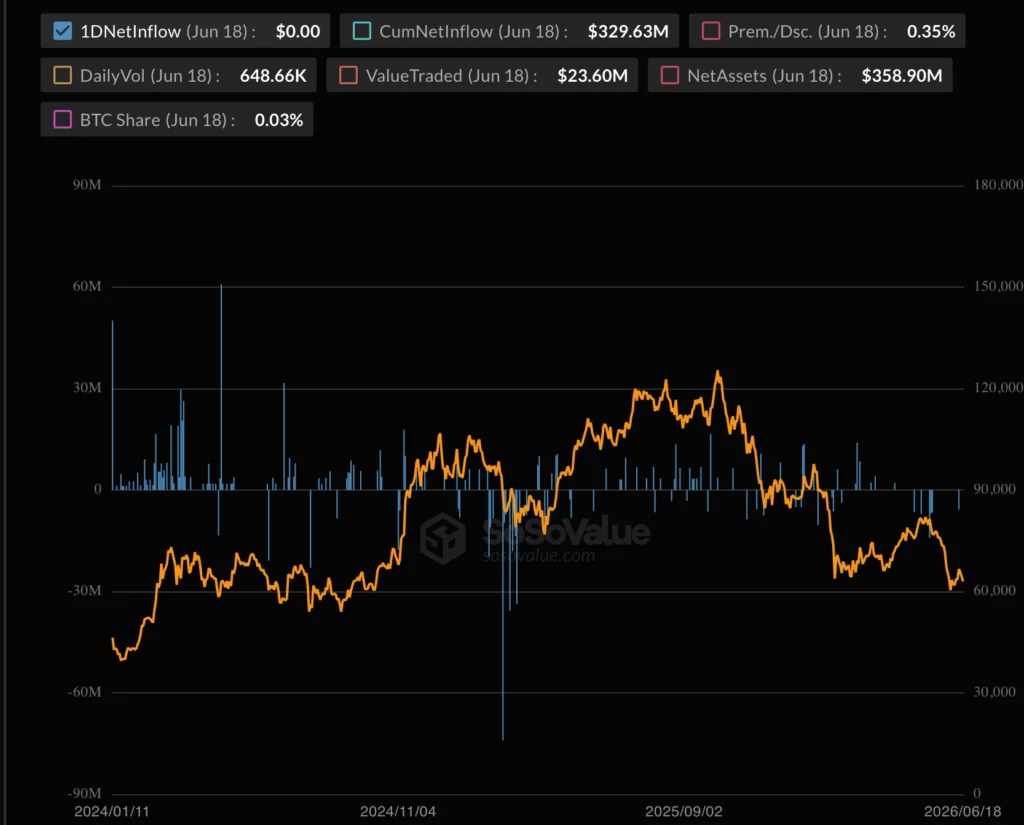
Source: SoSoValue.
The filing follows several digital asset initiatives announced by the firm in recent months. On June 15, Franklin Templeton said it would work with Ondo Finance to offer tokenized versions of its ETFs that can trade directly from crypto wallets on a 24/7 basis. The products target investors outside the United States and include exposure to U.S. equities, fixed income assets, and gold.
Earlier in June, Franklin Templeton integrated its BENJI tokenized money market fund into MoonPay Trade. The partnership allows institutional clients to exchange stablecoins such as USDC and USDT for BENJI through MoonPay’s on-chain trading infrastructure.
In May, Franklin Templeton announced a separate partnership with Payward, the parent company of crypto exchange Kraken. The companies said BENJI would be available on Kraken’s platform as a collateral and cash management product for institutional users. They also disclosed plans to develop additional tokenized investment products through Payward’s xStocks infrastructure.
Crypto World
Crypto News, June 19: Bitcoin at Risk as Strategy STRC Cracks its Peg, Microsoft Warns Windows Crypto Users, Iran Suspends Peace Talks

Bitcoin is not having a good time as Strategy STRC peg finally snapped, Iran peace talks stalled before they even started, and Microsoft just told every Windows user touching crypto to wake up.
Strategy chairman, Saylor, dropped a tweet this morning that felt way too calm for him. There is fire, no shill energy in his tweet, it’s worrying to some degree. At the same time, an old video of him saying he built parts of the Bitcoin Strategy mechanism with ChatGPT is getting another round of attention.
In reality, the STRC peg has been broken since May, and it’s getting ugly because of the Bitcoin current chart. STRC was aggressively buying Bitcoin when it was above par, but now it’s below $100, and the buying pressure is somehow gone. If STRC stops acting like an accumulator, Bitcoin could lose one of its more aggressive buyers. Some analysts even think that we could see forced selling next.
It could be just temporary, and the peg may be back when Bitcoin starts going back up again. But either way, Saylor with his STRC Strategy and Bitcoin is not in a good position. Critics say this is the same movie as the dot-com days. We can feel that STRC fud isn’t going away anytime soon, not before Bitcoin goes up.

Discover: The Best Crypto to Diversify Your Portfolio
Iran Peace Talks Postponed Just 24 Hours After Memorandum Signed: Bitcoin, STRC, and Saylor Are in Danger
Switzerland said today that Friday’s US-Iran meeting will be postponed. Iran reportedly suspended the whole 60-day process less than a day after the initial deal, blaming strikes on Lebanon. JD Vance’s trip has also been quietly canceled. Iran peace deal looks dead in the water right now.
Simultaneously, the Pentagon is now asking for $80 billion to cover Iran war costs after already spending way more than the $29 billion they admitted back in May. But this is also on top of their trillion-dollar budget.
JUST IN: — Watcher.Guru (@WatcherGuru) June 19, 2026

 US Department of War requests $80,000,000,000 to cover Iran war and other costs.
More geopolitical tension means more short-term pain for risk assets and anyone running a leveraged Bitcoin-like strategy.
Discover: The Best Token Presales
Microsoft Warns Windows Users of Crypto Attack
Microsoft Threat Intelligence posted about a crypto clipper that’s been running since February. It swaps wallet addresses in your clipboard, spreads through malicious .lnk files on USB drives, and even runs Tor in the background.
How does it work? Once your computer is infected, there are some backdoors to it, and this is actually bad for Windows users. When you copy an address, the malware changes it and tricks you into transferring funds to the wrong address.
As of now, Microsoft tags it as Trojan:Win32/CryptoBandits.A. If you’re trading crypto, or even just doing stablecoin transactions on Windows, it might be the right time to take precautionary measures. Double-check every address, use a hardware wallet, and stop clicking random shortcuts. It could be an expensive lesson.
Discover: The Best Crypto to Diversify Your Portfolio
Bitcoin and Other Market Updates
Morgan Stanley updated their spot Ethereum and Solana ETF filings with a 0.14% fee, making their offer the cheapest on the table so far. At the same time, Franklin Templeton filed two new products that convert stock dividends and automatically turn them into Bitcoin up to 20% exposure, targeting a September launch.
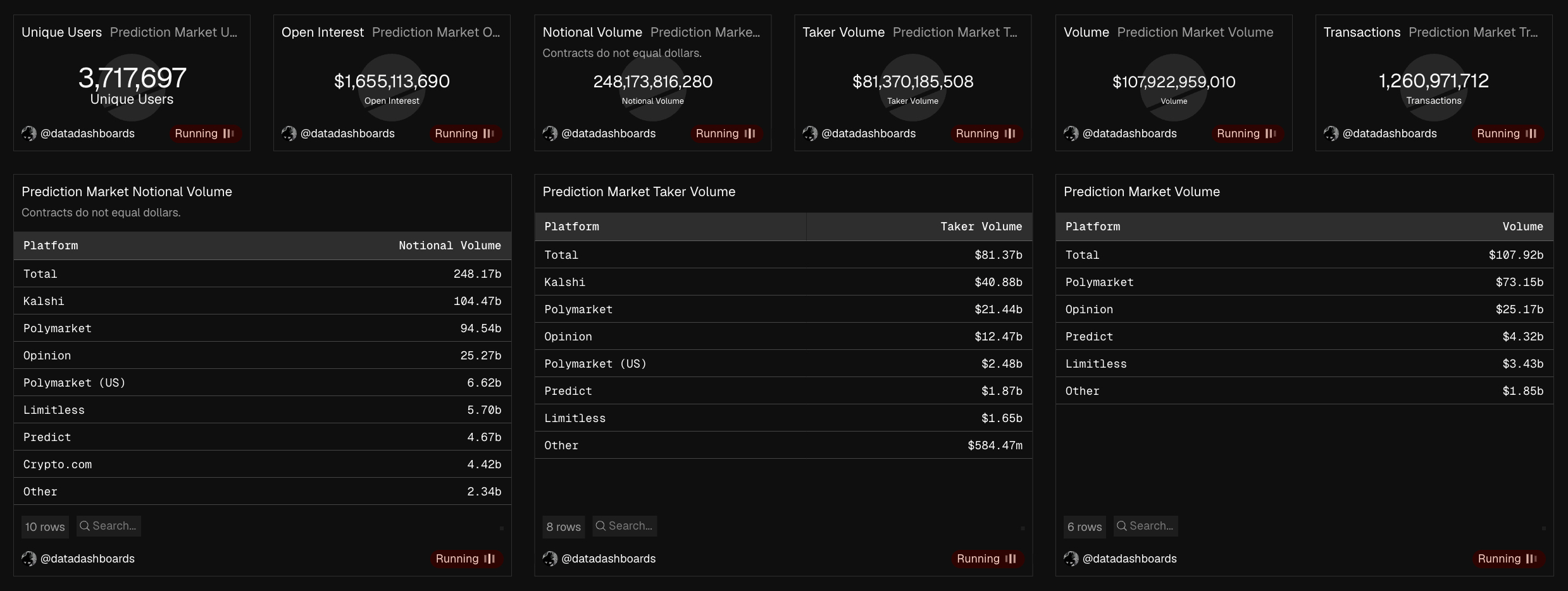
On the prediction market, Polymarket’s rival, Kalshi, is now preparing to go public at a $22 billion valuation with over $2 billion in yearly revenue. The prediction markets platform raised $1B in a Series F round in May, bringing its valuation to $22B. The round was led by Coatue, with participation from Sequoia Capital, Andreessen Horowitz, IVP, Paradigm, Morgan Stanley (MS), and ARK Invest.
For now, it’s true that Bitcoin is not helping STRC, and Iran peace looks like it’s falling apart. Microsoft warnings questions the safety of crypto, too. But the big money isn’t waiting around for perfect conditions. They’re still filing ETFs, raising capital, and building infrastructure. Bitcoin cycle survivors already know how this works.
Discover: The Best Token Presales
The post Crypto News, June 19: Bitcoin at Risk as Strategy STRC Cracks its Peg, Microsoft Warns Windows Crypto Users, Iran Suspends Peace Talks appeared first on Cryptonews.
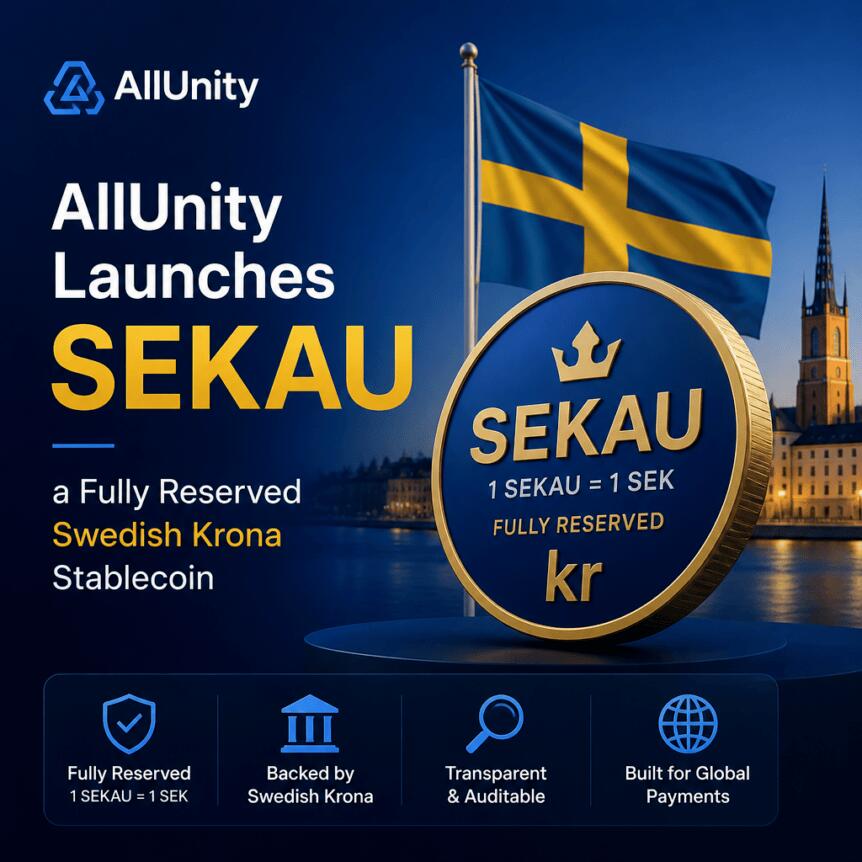
AllUnity is extending its MiCA-regulated stablecoin lineup with SEKAU, a Swedish krona-backed token designed for institutional settlement and cross-border payments. The company said the new stablecoin is issued under the EU’s Markets in Crypto-Assets Regulation (MiCA) as an e-money token, with reserves held in segregated Swedish krona accounts.
The release also highlights how issuers are adapting to MiCA’s framework by moving beyond “early-stage” token concepts and toward bank- and infrastructure-style custody and settlement. AllUnity’s SEKAU follows its earlier Swiss franc stablecoin rollout, reinforcing a multi-currency strategy built for different blockchain ecosystems.
Key takeaways
- SEKAU is a Swedish krona stablecoin issued under MiCA as an e-money token, backed 1:1 by segregated SEK reserves.
- Banking Circle will hold and manage the reserves, with Marginalen Bank supporting the rollout as a banking partner.
- SEKAU launches on five networks—Ethereum, Solana, Base, Tempo, and Polygon—with plans to add more chains later in 2026.
- AllUnity frames SEKAU as the first fully reserved Swedish krona-denominated MiCA-aligned stablecoin, contrasting it with non-public tokenized experiments.
MiCA compliance becomes the product, not just the legal wrapper
In a statement shared with Cointelegraph, AllUnity described SEKAU as the first fully reserved Swedish krona stablecoin aligned with MiCA, issued as a regulated e-money token (“EMT”). The token’s backing is described as 1:1 by Swedish krona reserves held in segregated accounts, an approach intended to distinguish it from fiat-referenced crypto concepts that may not be designed for regulated redemption and governance.
AllUnity also emphasized that “SEK exposure has previously existed mainly through early-stage concepts,” which it said were not confirmed as MiCA-authorized, fully regulated EMTs. That distinction matters for market participants who care less about token branding and more about how fiat reserves are managed, what oversight applies, and whether the stablecoin is designed to operate as regulated private money under EU rules.
Who will hold the reserves and connect the infrastructure
SEKAU’s structure leans heavily on regulated financial infrastructure and integration partners. Banking Circle, a Luxembourg-based business-to-business bank and financial infrastructure firm, will hold and manage the reserves backing the token. Swedish Marginalen Bank is listed as a banking partner supporting the rollout.
For broader ecosystem access, Trust Anchor Group is named as the infrastructure integration provider for SEKAU. Together, these relationships suggest AllUnity is treating stablecoin deployment as a coordinated effort across custody, banking relationships, and technical connectivity—rather than a standalone token launch.
A multi-chain rollout aimed at liquidity across ecosystems
SEKAU is launching on five blockchain networks: Ethereum, Solana, Base, Tempo, and Polygon. AllUnity said the multi-chain approach is intended to improve access, interoperability, and liquidity across major ecosystems.
The company also signaled it does not intend to stop at the initial set of networks, stating it plans to expand SEKAU to additional blockchain networks later in 2026. The contrast with AllUnity’s previous stablecoin deployment is notable: its Swiss franc stablecoin CHFAU initially launched exclusively on Ethereum in February before expanding to Tempo, implying a more staggered chain rollout for the earlier product.
AllUnity also operates EURAU, a euro-backed stablecoin launched in 2025. According to CoinGecko data cited by Cointelegraph, EURAU has reached a market capitalization of $1.4 million and ranks as the 16th largest euro stablecoin among 23 tracked tokens. CoinGecko also shows the euro stablecoin market totals about $883 million in combined value at the time of writing.
SEK stablecoins in Sweden: public tokens vs closed pilots
AllUnity’s messaging around SEKAU also speaks to the broader question of whether Sweden has stablecoin activity beyond regulated, publicly redeemable products. The company pointed to Sweden’s e-krona project run by the Riksbank as a relevant initiative for tokenized payments infrastructure—but stressed it is fundamentally different from a stablecoin.
AllUnity noted that Swedish banking and fintech pilots have explored tokenized deposit money and settlement systems. However, the company characterized these as “closed, experimental infrastructures” rather than publicly redeemable stablecoins.
The company further referenced communication from the Riksbank earlier in 2026 indicating there were no stablecoins in Swedish kronor. While that does not preclude tokenized pilots or related experiments, it frames SEKAU as a distinct category: a regulated, publicly available krona token built under MiCA’s e-money rules.
What investors and users should watch next
With SEKAU now live across multiple chains, the immediate question is how liquidity and usage develop across Ethereum, Solana, Base, Tempo, and Polygon—especially as AllUnity plans additional network expansion later in 2026. Market participants will also want to monitor how reserve management and EMT compliance are handled in practice over time, and whether the SEK stablecoin narrative gains traction alongside other MiCA-regulated fiat tokens.


Representative Bryan Steil introduced the Stop Lawmakers from Predicting Act on June 18. The bill bars members of Congress, their spouses, and dependent children from wagering on government policy and political outcomes through prediction markets.
The Wisconsin Republican chairs the House Administration Committee. His bill responds to mounting concerns surrounding reported insider trading on these platforms.
Steil Seeks to Bar Lawmakers From Betting on US Policy Outcomes
The legislation builds on the Stop Insider Trading Act, which the committee advanced on January 14. Steil framed the new measure as a way to rebuild confidence in elected officials.
“The American people deserve to know their Member of Congress is not profiting off insider information,” Steil said. “Lawmakers should be writing policy, not wagering on its outcome.”
Follow us on X to get the latest news as it happens
The bill bans members, spouses, and dependent children from betting on specific government policies, actions, or political results. Violators must pay $2,000 or 10% of the transaction value, whichever is greater. They also forfeit any net gain.
In addition, the bill proposes that members cannot use their official allowances, Senate expense accounts, or political donations to pay the fine. Those who resign or retire without paying can be referred to the Department of Justice for civil enforcement.
The proposal joins a wider push. In March, Senators Todd Young, Elissa Slotkin, John Curtis, and Adam Schiff introduced the Public Integrity in Financial Prediction Markets Act, targeting nonpublic information trades across any platform. A House companion, the PREDICT Act, extends similar limits to officials’ families.
Whether the measure advances may hinge on bipartisan appetite, given parallel Senate and House efforts already in motion. Meanwhile, prediction market platforms have responded too.
In June, Kalshi rolled out risk scoring, employment checks, and whistleblower channels to deter insiders from acting on privileged information. Polymarket brought in Chainalysis to build an on-chain surveillance system.
Subscribe to our YouTube channel to watch leaders and journalists provide expert insights
The post US Lawmakers May Be Banned From Betting on Kalshi and Polymarket appeared first on BeInCrypto.
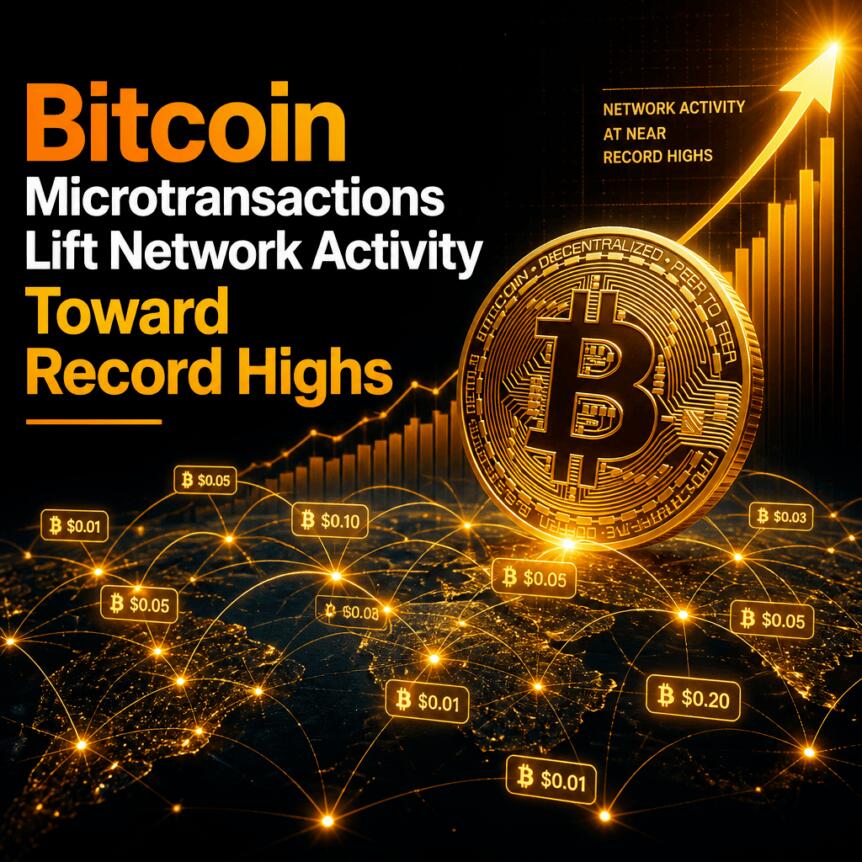
Bitcoin’s day-to-day activity is accelerating again, even as the asset’s price action remains relatively unimpressive. According to CryptoQuant, transactions smaller than 0.01 BTC—often associated with “dust” or data-driven on-chain activity—now make up about 80% of all daily transfers on the network, taking overall network activity close to record levels.
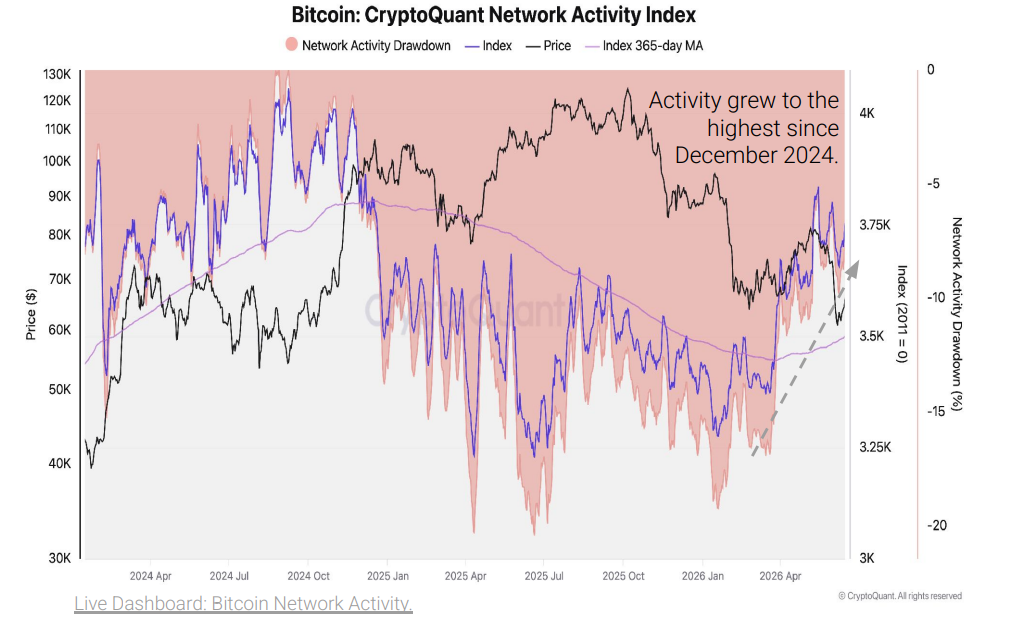
In a report released Thursday, CryptoQuant said its Bitcoin “Network Activity Index” has turned positive for the first time since 2024. The change matters because it signals that block space demand is increasingly being driven by non-financial usage—an environment that can translate into more competition for space and higher fees for users who rely on standard economic transactions.
Key takeaways
- CryptoQuant reports that sub-0.01 BTC transactions represent roughly 80% of daily Bitcoin activity, up sharply from earlier years.
- CryptoQuant’s Network Activity Index has moved into positive territory for the first time since 2024, despite weaker price performance.
- Data-inscription and related protocols—especially Ordinals, Runes, BRC-20 activity, and timestamping services—are cited as major contributors.
- Growing micro-transaction volumes can increase block space competition, potentially pushing up fees for “economic” transactions.
- Bitcoin’s mempool is reported at around 128,000 transactions, the highest level since February 2025.
Microtransactions rebound as share of daily volume grows
The most striking development is the shift in the composition of transactions. CryptoQuant notes that transactions below 0.01 BTC accounted for about 44% of daily transactions in 2023, but their share has nearly doubled since then.
CryptoQuant attributes this acceleration largely to inscription-centric demand and other data-writing approaches. In particular, the report highlights Ordinals and Runes—along with BRC-20 activity and data-timestamping protocols—as major drivers of low-value, high-count transactions. This helps explain why overall network activity can rise even when traders are not broadly chasing price momentum.
Research lead Julio Moreno wrote that sustained growth in non-financial activity could “increase block space competition and raise fees for economic transactions.” He also cautioned that the economic value of these transactions is “disproportionately small,” underscoring a key tension: the network can appear busier while the value per transaction remains low.
From earlier inscription booms to today’s renewed congestion
CryptoQuant’s report places the current wave in context by comparing it to past periods when inscription activity pushed Bitcoin toward congestion. The company says congestion levels today remain below the peaks associated with earlier inscription booms, when users embedded data such as images, text, and token-like information directly in blocks.
According to the report, transaction backlogs surged in 2023 as Ordinals and BRC-20 competed with routine transfers for limited block space. It then points to another spike emerging in late 2024 following the launch of the Runes protocol. The latest increase appears to follow that same pattern: bursts of on-chain data activity generate large numbers of transactions, which can swell network queues and raise the likelihood of fee pressure.
Importantly for readers, congestion is not just an abstract metric. When block space demand concentrates in low-value transactions, it can still alter fee dynamics for everyone—particularly those sending standard payments that depend on timely confirmation.
OP_RETURN usage and the mechanics behind higher transaction counts
Beyond the headline micro-transaction shares, CryptoQuant’s research also points to the specific transaction design choices fueling the trend. The report says Runes, Ordinals, BRC-20 tokens, and data-timestamping services produce large volumes of low-value transactions, helping drive the rise in the smallest cohort.
A central element in this mechanism is OP_RETURN, an opcode that allows users to embed data on-chain without creating spendable outputs. CryptoQuant reports that OP_RETURN usage has climbed to near-record levels in 2026.
That increase ties back to a contentious development within Bitcoin’s infrastructure: in 2025, Bitcoin Core developers removed a long-standing 80-byte relay limit. Critics argued the change would make it easier to use Bitcoin for non-financial data storage, effectively lowering friction for larger data embeddings. CryptoQuant frames OP_RETURN as the standard approach for many Bitcoin data-layer protocols, meaning changes in relay behavior can influence how much data activity the network can absorb.
These protocols generate high volumes of dust-value transactions (as low as 546 satoshis), directly explaining the low-value cohort surge.
Put differently, the “how” of transactions matters as much as the “how many.” Even when users are not transferring large amounts of value, on-chain data operations can still consume block resources—resulting in a higher count of transactions competing for inclusion.
Mempool pressure rises alongside the micro-transaction wave
CryptoQuant’s report also connects micro-transaction growth to observable network conditions. It says Bitcoin’s mempool—where unconfirmed transactions wait—has risen to roughly 128,000 transactions. That figure is described as the highest transaction count since February 2025.
For market participants and users, mempool size is often treated as a practical proxy for near-term congestion. While the report notes that current conditions are still below earlier inscription peaks, the combination of a high share of sub-0.01 BTC transactions and a swollen mempool suggests that fee markets may remain sensitive, especially for transactions that need confirmation during busy periods.
Another important implication is that the network’s “busy” signal may increasingly reflect data-layer usage rather than straightforward economic demand. That distinction can affect how participants interpret on-chain metrics: rising activity may not correspond to higher on-chain settlement value, even if it does correspond to greater resource competition.
Looking ahead, readers should watch whether this micro-transaction-driven activity persists and whether mempool levels remain elevated long enough to translate into sustained fee pressure for standard payments. CryptoQuant’s index turning positive after a multi-year stretch is a meaningful early sign—but the key question is whether non-financial activity continues to outpace demand for economic transactions, reshaping fee dynamics as the cycle progresses.
Microtransactions below 0.01 Bitcoin (BTC) now account for roughly 80% of all daily transactions on the network, pushing transaction activity close to record highs despite weak price performance.
The surge has pushed CryptoQuant’s Bitcoin “Network Activity Index” into positive territory for the first time since 2024, according to a Thursday report by the blockchain data company.
Transactions below 0.01 BTC represented about 44% of all daily Bitcoin transactions in 2023, but their share has nearly doubled since then, fueled largely by Ordinals, Runes and other data-inscription protocols.
The report, authored by CryptoQuant head of research Julio Moreno, said sustained growth in non-financial activity could “increase block space competition and raise fees for economic transactions.”
“The economic value of these transactions is, however, disproportionately small,” Moreno wrote.
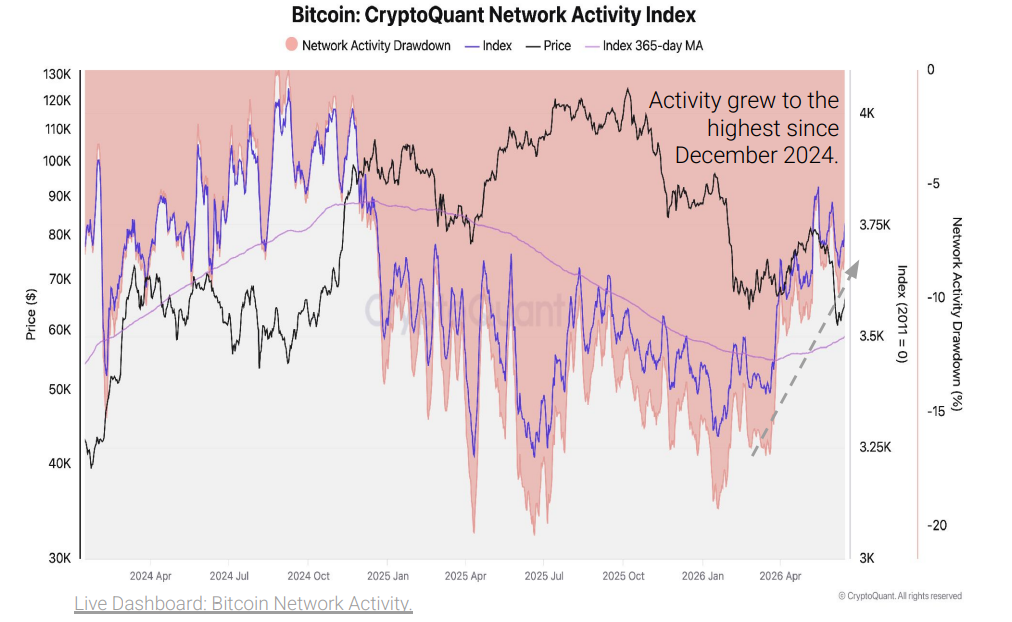
Bitcoin’s network activity is 7% below its all-time high recorded in September 2024. Source: CryptoQuant
Bitcoin sees renewed inscription-driven congestion
The current congestion remains below the peaks seen during previous booms in Bitcoin inscriptions, when users embedded data such as images, text and token information directly on the blockchain.
Transaction backlogs surged in 2023 as Ordinals and BRC-20 activity competed with ordinary transfers for block space, while another spike emerged in late 2024 following the launch of the Runes protocol.
According to the report, Runes, Ordinals, BRC-20 tokens and data-timestamping services generate large volumes of low-value transactions, helping explain the sharp rise in microtransactions.
OP_RETURN, an opcode that allows data to be embedded onchain without creating spendable outputs, has climbed to near-record usage levels in 2026. It split the Bitcoin community in 2025 after Bitcoin Core developers removed a long-standing 80-byte relay limit. Critics argued the change would make it easier to use Bitcoin for non-financial data storage.
“The OP_RETURN opcode embeds up to 100,000 bytes of data onchain without creating spendable outputs, making it the standard mechanism for Bitcoin data-layer protocols,” Moreno wrote.
These protocols generate high volumes of dust-value transactions (as low as 546 satoshis), directly explaining the low-value cohort surge.
The trend has also pushed Bitcoin’s mempool, a holding area for unconfirmed transactions, to roughly 128,000 transactions, its highest transaction count since February 2025.
Crypto World
Stratosphere, Pudgy Penguins and Streamex Host Founders Table VIP Dinner During ETHConf 2026 and NYC Tech Week
[PRESS RELEASE – New York, United States, June 18th, 2026]
Stratosphere, Pudgy Penguins and Streamex hosted a private Founders Table VIP Dinner in New York City during ETHConf 2026 and NYC Tech Week, bringing together leaders across digital assets, tech, AI, traditional finance and institutional capital.
The invite-only dinner took place on June 9th and gathered a curated room of founders, operators, funds, C-level executives and institutional leaders for an intimate evening of dinner and conversation.
Guests in attendance included leaders from Citi, BitMine, BitGo, Mirae Asset Securities USA, Experian, Pyth Network, Space and Time, MegaETH, B3, Stable, Antler, Delphi Digital, Fun, Linera, Vanta Trading, Streamex, PolyData, Horizen Labs, World Foundation, Zipcode, OpenLedger, Onyx, Definitive, Notalone Ventures and more.
The Founders Table format is intentionally simple: a selected guest list, a private room and no stage agenda. The goal is to bring the right people together in a setting where conversations can happen naturally.
The dinner was hosted by Stratosphere with Pudgy Penguins and Streamex. Stratosphere brought its network across founders, operators, investors and institutional teams. Pudgy Penguins added one of the strongest consumer brands and communities in digital assets. Streamex brought the institutional and real-world asset side of the conversation, with its focus on tokenized gold and commodity markets.
The Stratosphere team and its CEO, Hassan Shaikh, have continued to build Founders Table into a private dinner series around major industry conferences. After previous editions during Digital Asset Summit and Consensus, the New York dinner continued the same idea: high-quality rooms, selected attendance and conversations that are hard to recreate on a conference floor.


For Stratosphere, the dinner reinforces the company’s position as an ecosystem partner for leading brands across tech, finance and digital assets. Established projects work with Stratosphere to deepen cultural relevance, strengthen market narratives and connect with founders, investors, institutions and operators across the industry.
“I’m optimistic about the next phase of digital assets, especially around the tokenization of commodities,” said Hassan Shaikh, CEO of Stratosphere. “These dinners give us a way to bring funds, institutions, and founders into the same room to talk about where the market is heading.”
The Founders Table series is expected to continue around major global conferences throughout the year, with future editions focused on bringing together founders, capital, institutions and leading brands in private, relationship-driven rooms.
For those interested in attending or getting involved in future Founders Table editions, reach out to the Stratosphere team.
About Stratosphere
Stratosphere is an ecosystem partner and growth consultancy for industry leaders in tech and finance, building the narratives, ecosystem partnerships, and distribution flywheels that create sustainable, repeatable growth.
Website: www.stratosphere.vip
The post Stratosphere, Pudgy Penguins and Streamex Host Founders Table VIP Dinner During ETHConf 2026 and NYC Tech Week appeared first on CryptoPotato.
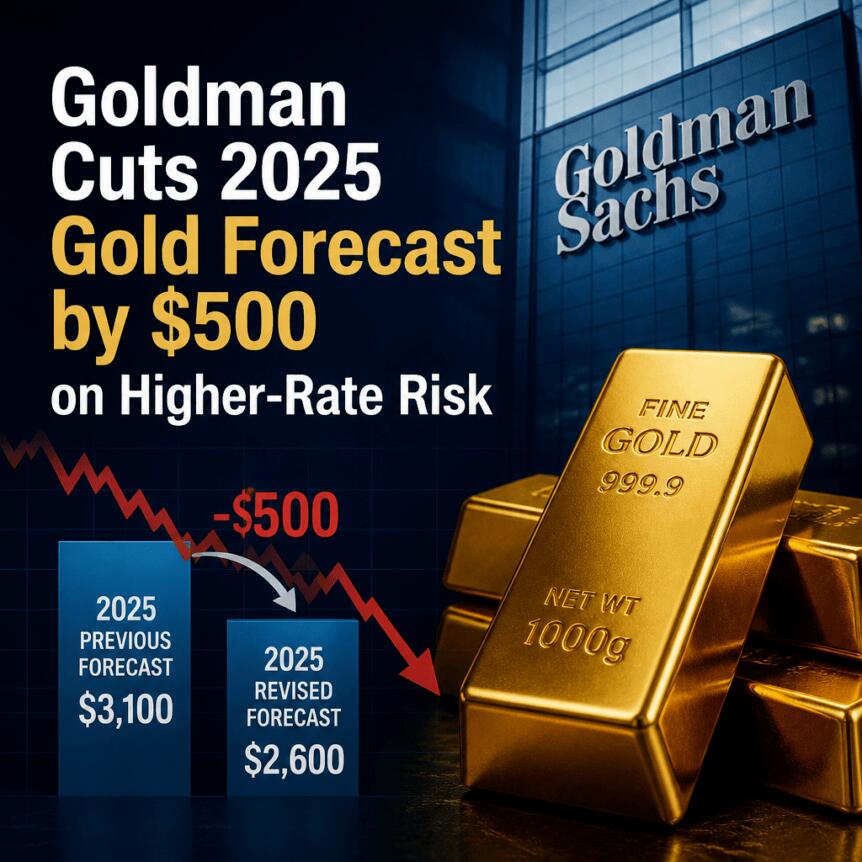
Goldman Sachs has cut its year-end gold forecast by $500 per ounce, citing expectations that the US Federal Reserve will not cut interest rates this year. The revision reflects a broader repricing of “easy money” assumptions—one that could ripple through both traditional safe-haven demand for bullion and the risk appetite that supports cryptocurrencies.
In a note cited by Bloomberg, Goldman Sachs commodity analysts Lina Thomas and Daan Struyven said their view remains “structurally constructive but tactically cautious,” with downside risk in the near term and upside potential over the medium term. The bank’s new target places gold at $4,900, down from an earlier estimate of $5,400.
Key takeaways
- Goldman Sachs lowered its year-end gold forecast to $4,900 per ounce, attributing the change to expectations of no Fed cuts in 2026.
- The downgrade assumes potential rate-cut timing shifts to March 2027 and December 2027.
- Delayed interest-rate cuts can pressure both gold and Bitcoin, since lower rates typically support speculative demand.
- Gold is trading close to key technical territory, with Cointelegraph noting it has fallen more than 22% from its January all-time high.
Gold forecast cut as rate-cut timing slips
The revision is rooted in the macro backdrop. Goldman Sachs is assuming that the next Fed rate cuts could be pushed out to March 2027 and December 2027, a change that can matter because gold does not generate yield. When rates remain higher for longer, cash and bonds become relatively more attractive—raising the opportunity cost of holding bullion.
Goldman’s analysts framed the outlook as a mix of longer-term optimism and short-term caution. While they still see structural support for gold, they warned that tactical pressure could persist as markets price in fewer near-term liquidity tailwinds.
Why higher-for-longer rates matter to crypto
Cryptocurrency investors often treat interest rates as a key driver of liquidity conditions. The article’s underlying thesis is consistent with how the market has historically behaved: when rates fall, the environment tends to improve for high-duration assets and speculative positioning.
Conversely, a delay in US rate cuts can weigh on digital assets. Lower rates typically reduce the cost of capital and can encourage risk-taking, which often benefits assets such as Bitcoin. If expectations for easing are pushed further out, the same “liquidity improves” narrative weakens.
This transmission mechanism is not limited to crypto sentiment. It also connects to gold’s own behavior: as rates stay elevated, bullion may face headwinds even when broader uncertainty keeps demand for a hedge intact. The result can be a period where both gold and cryptocurrencies soften simultaneously, not because the hedge thesis disappears, but because the opportunity-cost argument becomes harder to ignore.
Market pressure builds: CPI prints and Middle East conflict
Gold’s decline has been unfolding against a difficult demand backdrop. Last week, analysts warned that Bitcoin and gold could face additional pressure this year after US inflation data reinforced the idea that policy easing may be delayed. Cointelegraph pointed to a 4.2% year-on-year increase in the US Consumer Price Index in May, alongside ongoing conflict in the Middle East.
In addition to inflation, geopolitical risk can complicate the rate outlook through energy and risk-premium channels. The article notes that the conflict in the Middle East has also taken a toll on both assets. For traders and investors, that matters because it can keep markets focused on macro variables rather than idiosyncratic catalysts.
Approaching psychologically important levels in gold
The downside focus is reinforced by current positioning in gold. Since its January all-time high of $5,327 per ounce, gold has declined by more than 22%, according to the data referenced by Cointelegraph. Bitcoin, meanwhile, is down 28.3% since January, highlighting that the pressure has not been limited to a single asset class.
Gold is now only about $135 away from testing the $4,000 area—an inflection point not seen since November, according to GoldPrice. While forecasts are long-range and markets can overshoot both directions, the proximity to a major round-number level may increase sensitivity to new macro prints, Fed-related expectations, and any changes in geopolitical risk.
The “easy money” story that helped drive gold to record highs earlier this year may be losing some momentum if investors increasingly believe rates will stay restrictive for longer. As the opportunity cost of holding non-yielding assets rises, the market may need a stronger catalyst—such as clearly falling inflation or evidence of improving liquidity—to reverse course.
HashKey Group senior researcher Tim Sun told Cointelegraph: “Only when inflation drops, rate cuts become viable, and liquidity improves alongside lower capital costs, will the overall risk appetite truly reverse.”
What to watch next
With the debate now centered on whether rate cuts are truly off the table for 2026—and on how quickly liquidity expectations can recover—markets will likely monitor incoming inflation data and Fed-related messaging closely. Cointelegraph also referenced CME’s FedWatch tool, which shows a high chance of rates staying the same or rising in the remaining months of 2026 compared with the current target range of 3.5% to 3.75%.
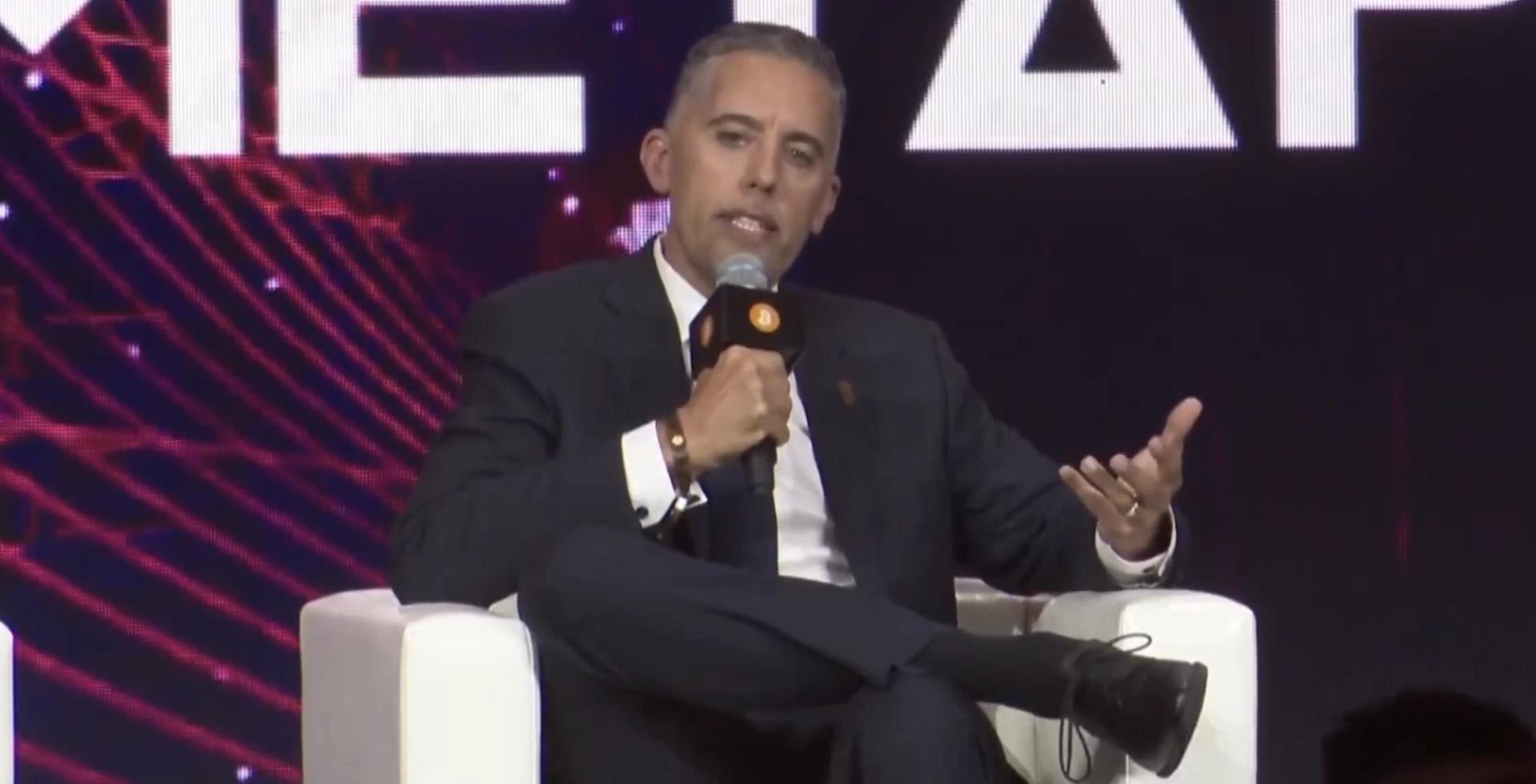
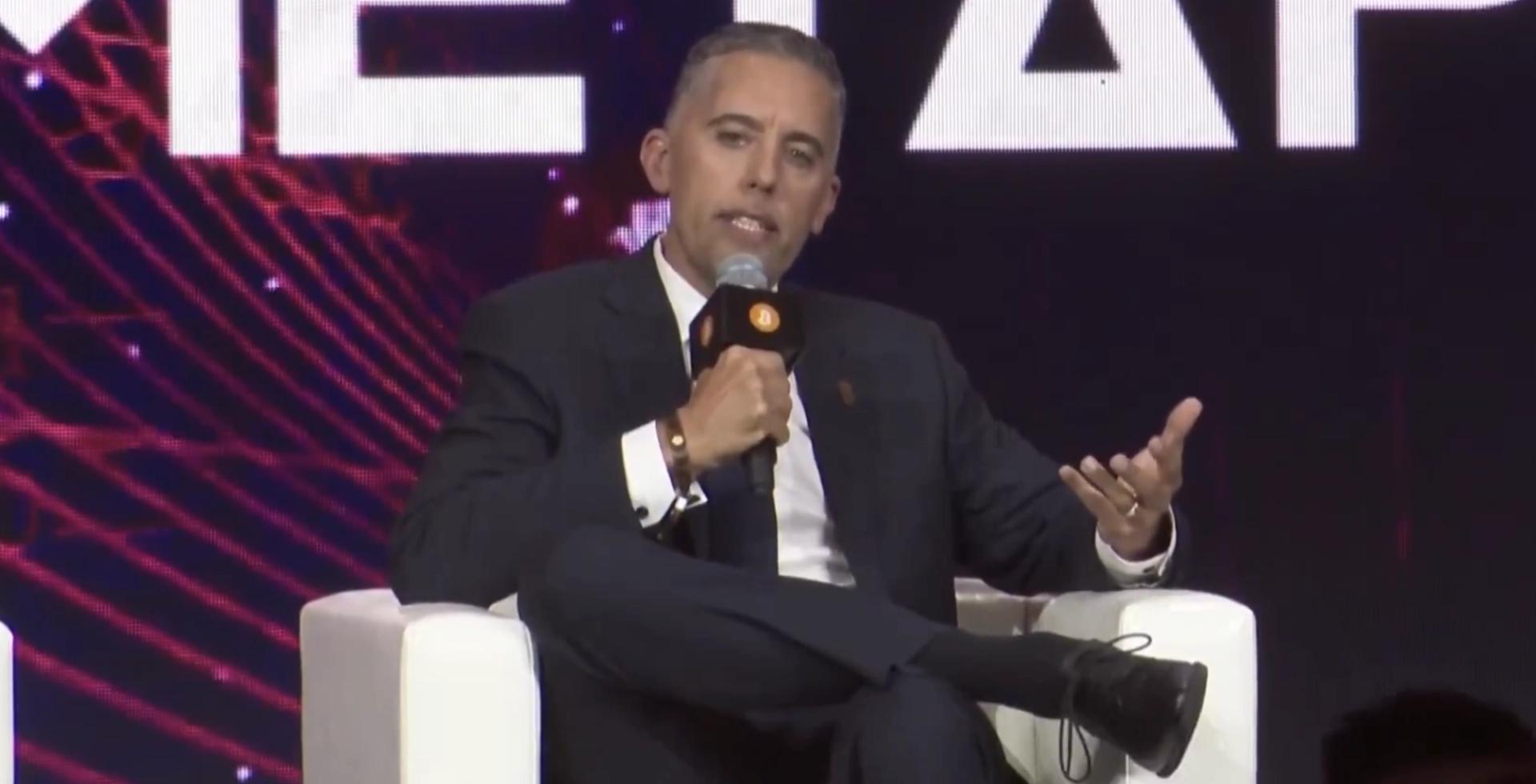
The digital credit market suffered one of its sharpest selloffs to date on Thursday,
with Strive Asset Management CEO Matt Cole describing the move as a leverage-driven liquidation rather than a sign of weakening credit fundamentals.
Cole said it was “the most difficult day in the history of Digital Credit,” in a post on X, as Strategy’s preferred equity STRC fell as low as $82.50 before recovering to $89, while Strive’s SATA dropped from its par value fell below $93 before rebounding to $97. Both products are designed to trade close to their $100 par value
“What happened today was a leverage liquidation event, not a deterioration in underlying credit quality,” Cole wrote.
Investors attracted by the sector’s relatively high yields (both products offer over double digit yields) increasingly used leverage to enhance returns, according to Cole. When prices began falling, margin calls triggered forced selling, creating a self-reinforcing decline detached from the underlying creditworthiness of issuers.
“There is an old saying in income markets that the road to hell is paved with carry,” he said.
At the beginning of June, more than 200 crypto companies and industry groups — including Coinbase, Andreessen Horowitz and Ripple Labs — sent a letter to Senate Majority and Minority Leaders John Thune and Chuck Schumer, urging them to bring the Digital Asset Market Structure Bill (Clarity Act, H.R. 3633) to a vote without delay, according to Bloomberg Government. The bill has already passed the Senate Banking Committee, and its further progress is being viewed by market participants as a potential step towards a clearer regulatory framework for digital assets in the United States, which could further support institutional interest in Ripple.
Technical Picture
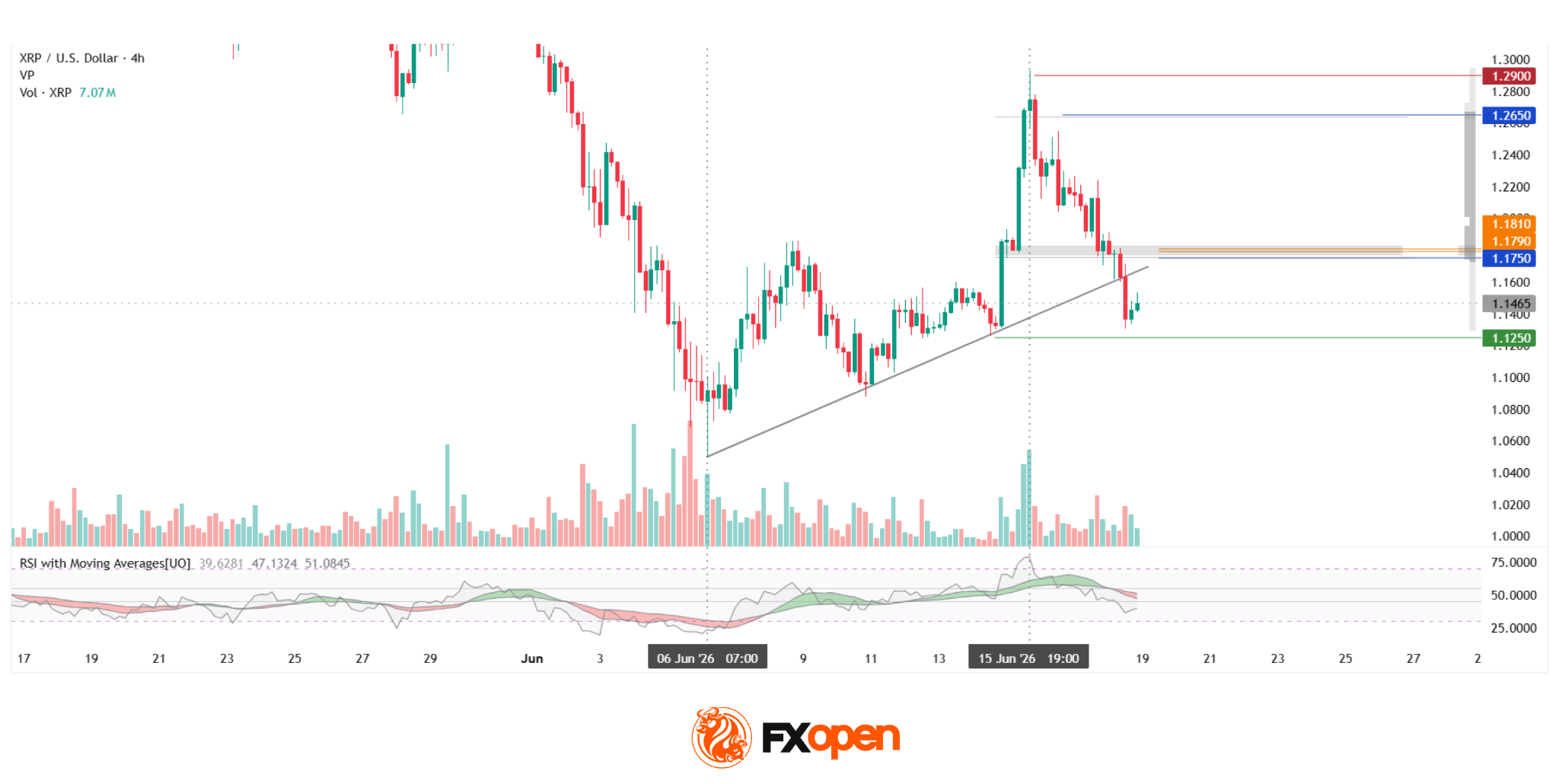
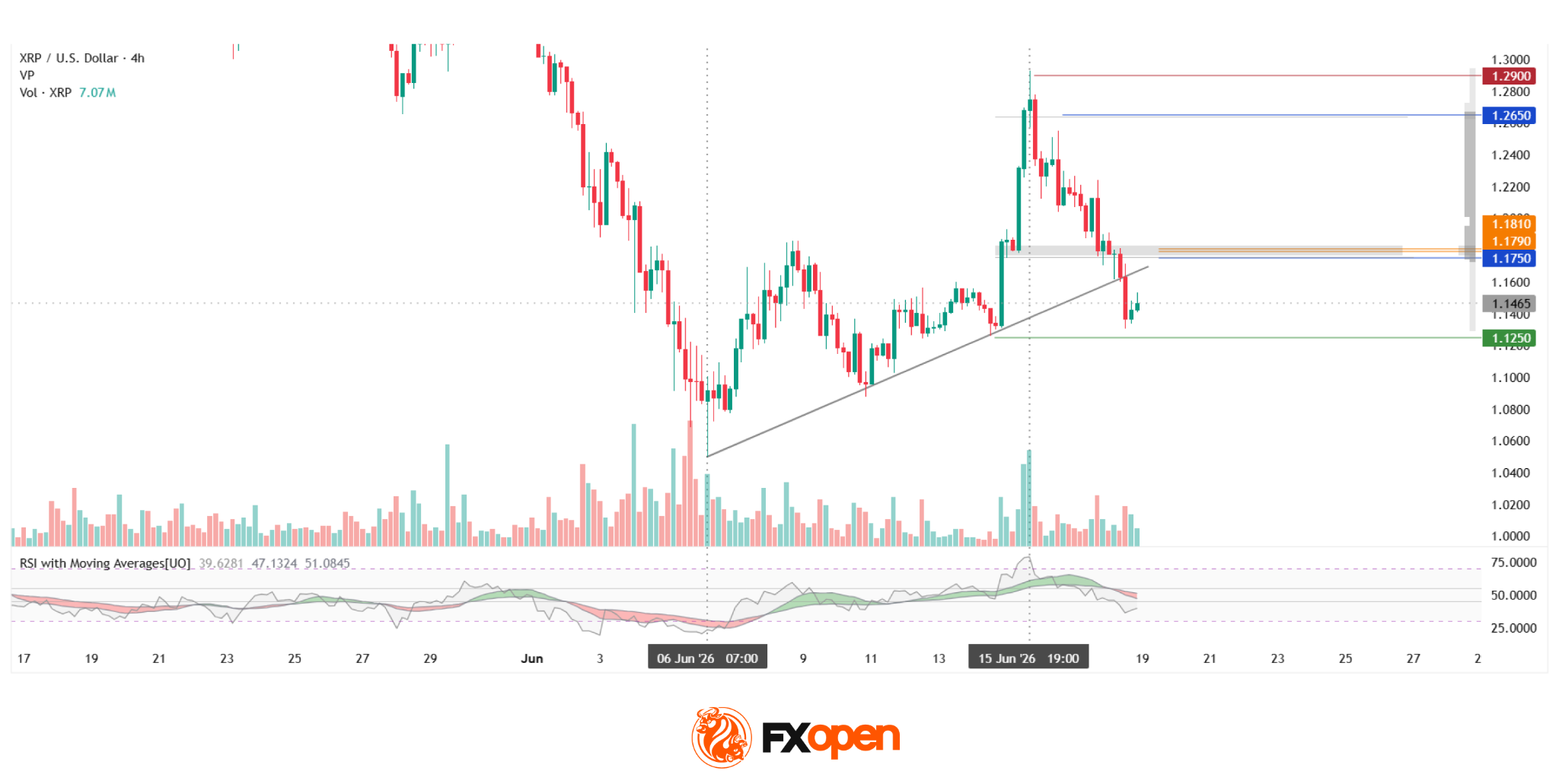
On the H4 chart, Ripple (XRP/USD) has formed a corrective bullish structure, advancing towards the current resistance area where a local peak was established. Following the pullback, the price moved below the POC zone of the current market profile and is attempting to break the trendline of the upward structure. At present, the price has almost reached the nearest support level around $1.125. Above the market lies a fairly significant resistance zone, consisting of the POC area at $1.179–$1.181 and the lower boundary of the profile at $1.175.
Should the price manage to overcome this barrier, it would face another strong resistance area formed by the upper boundary of the profile at $1.265 and the local high at $1.290, where substantial climactic volume was previously recorded. RSI + MAs shows readings of 39, 47 and 51. The indicator does not yet provide clear signals, suggesting that it is still premature to speak of a confirmed trend breakout.
Key Takeaways
Ripple remains at a point of uncertainty, as the fundamental positive sentiment surrounding the Clarity Act has yet to be confirmed by the technical picture. The market is awaiting the Senate’s decision, which could play a major role in determining the asset’s direction in the near future.
FXOpen offers the world’s most popular cryptocurrency CFDs*, including Bitcoin and Ethereum. Floating spreads, 1:2 leverage — at your service (additional fees may apply). Open your trading account now or learn more about crypto CFD trading with FXOpen.
*Important: At FXOpen UK, Cryptocurrency trading via CFDs is only available to our Professional clients. They are not available for trading by Retail clients. To find out more information about how this may affect you, please get in touch with our team.
This article represents the opinion of the Companies operating under the FXOpen brand only. It is not to be construed as an offer, solicitation, or recommendation with respect to products and services provided by the Companies operating under the FXOpen brand, nor is it to be considered financial advice.

Amazon employees file civil rights complaint over company probe into data center testimony

8 worst financial mistakes between 18-25! Escape the Middle-Class Trap Now!

Arsenal FC fixtures after Champions League games as Man City double-header is confirmed

Blockchain.com files with SEC for U.S. IPO

No Jackpot Winner as $257 Million Prize Rolls Over to $269 Million Monday Draw

Israel says it has killed new Hamas military leader in Gaza City airstrikes
8 worst financial mistakes between 18-25! Escape the Middle-Class Trap Now!

Crypto Trading LIVE: BTC Live Trading Bitcoin Analysis | 15 JUNE #crypto #bitcoin #btc

LPG Conversion: Financial Miracle or Engine Killer? #automobile
-
 Business5 days ago
No Jackpot Winner as $257 Million Prize Rolls Over to $269 Million Monday Draw
-

 Fashion7 days ago
Weekend Open Thread: Tuckernuck – Corporette.com
-
 Crypto World4 days ago
Zimbabwe Requires Crypto Businesses to Register Annually Under New FIU Regulations
-

 Crypto World6 days ago
Bitget enters Argentina’s regulated crypto market through PSAV registration
-

 Tech6 days ago
NanoClaw integrates JFrog registries to secure AI agent downloads
-

 Tech7 days ago
This Week In Security: Microsoft On Microsoft, Register Your Domains, Linux On ARM, And FreeBSD Joins The File Cache Club
-

 NewsBeat7 days ago
FBI searches office of Ohio voter registration group
-
 Entertainment5 days ago
Matt Damon’s Viral Sci-Fi Thriller Has Taken Over HBO Max
-

 Business5 days ago
Anthropic staff to meet White House officials next week, Axios reports
-

 Tech5 days ago
As AI companies race to go public, who else is along for the ride?
-
 Crypto World5 days ago
Bitcoin could crash to $48,000, if this historical pattern is triggered
-

 Politics5 days ago
“Israel’s” ban on ICRC visits ruled illegal, but Knesset moves to stop them permanently
-
 NewsBeat5 days ago
Warning of disruption as Cardiff Crossrail works to start
-

 News Videos5 days ago
Financial Accounting | Last Day Revision Strategy and Booster | CMA Inter – June 2026
-
 NewsBeat5 days ago
Tributes to former deputy head teacher at Cambridge school among death and funeral notices
-

 Entertainment5 days ago
Deion Sanders Shares Powerful Post After Viral Advice To Deiondra
-
 Crypto World5 days ago
Market Preview: SpaceX (SPCX) IPO Record, Federal Reserve Meeting, and Iran Nuclear Agreement
-
 NewsBeat5 days ago
what doctors are seeing in ebike crashes
-
 Entertainment5 days ago
Kate Middleton Glare Goes Viral After Kids Booed At Royal Event
-

 Business5 days ago
Invesco Quality Income Fund Q1 2026 Commentary
You must be logged in to post a comment Login