

Business
Warsh’s Inflation Focus Weighs on Markets, Sends Treasury Yields Higher

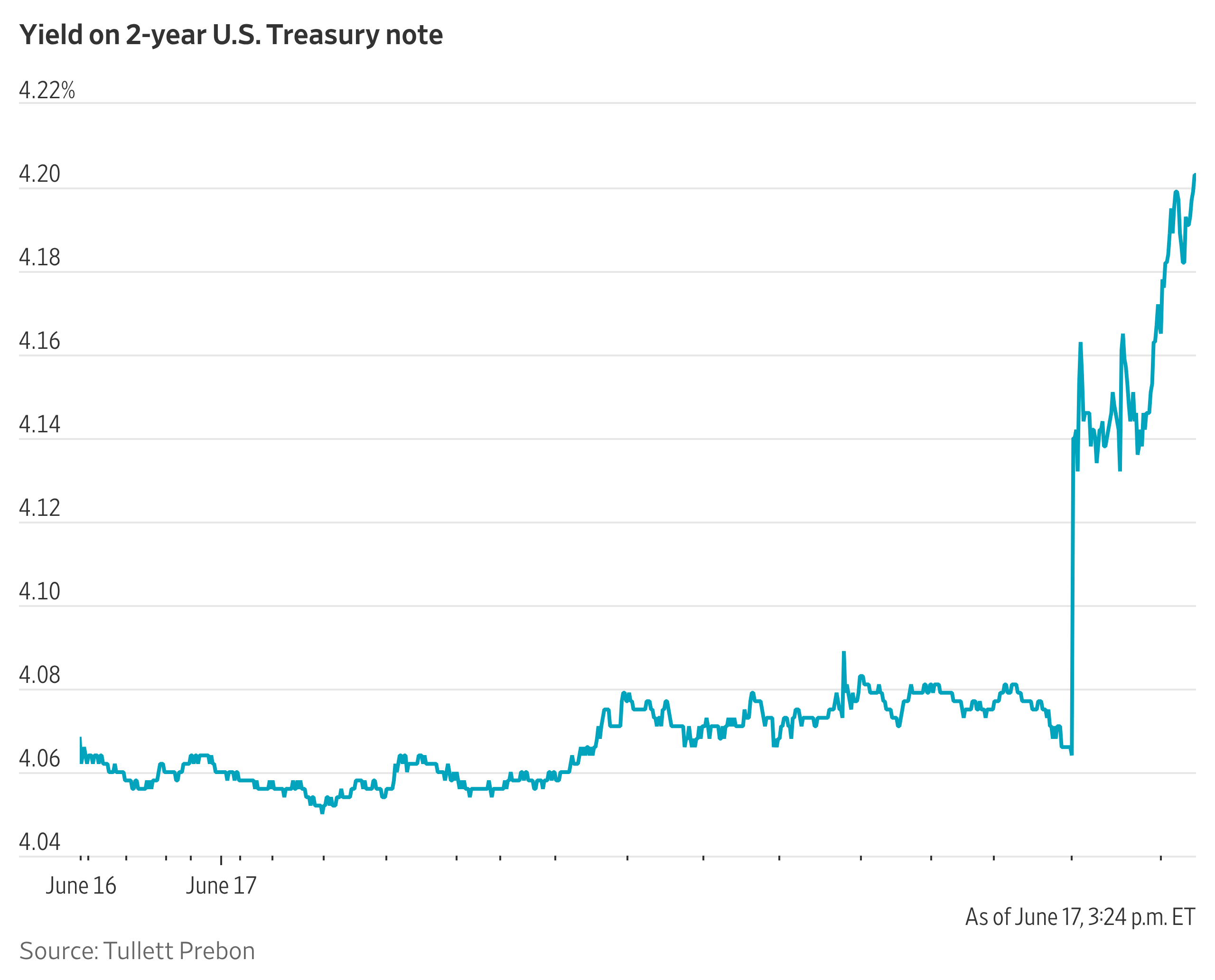
Investors are reading Kevin Warsh’s first post-meeting press conference as hawkish, with yields on short-term Treasurys adding to earlier gains.
The yield on the 2-year Treasury note, which is particularly sensitive to the outlook for interest rates set by the Federal Reserve, was recently 4.174%, according to Tradeweb, up from 4.060% before the Fed’s policy decision at 2 p.m. ET.
Although Warsh reaffirmed his desire for the Fed to communicate less about the outlook for monetary policy, he was also adamant that the central bank needs to deliver on its 2% inflation target—an emphasis that investors have at least initially taken as a further sign that the central bank might soon raise interest rates.


Available for over a year
The US economy backs Elon Musk’s vision for sending people to Mars, the moon and beyond with SpaceX. Elon Musk’s rocket, telecommunications and artificial intelligence company SpaceX has listed on the Nasdaq stock exchange with a value of $2.2 trillion; making him the world’s first trillionaire in the process. Other AI companies, including Open AI and Anthropic have plans to follow suit but what does that mean for the US economy and global financial stability?
In this episode, Justin speaks to Ryan Mac – an investigative technology reporter for the New York Times who has extensive experience covering Elon Musk and other leaders in the AI field. SpaceX’s public valuation has made millionaires of many of its past and current employees and generated around $85 billion for the company; money that Elon Musk says is essential to fulfill the company’s plans to build bases on the Moon, put data centres into orbit and send human beings to Mars. But what happens if those plans remain unfulfilled?
As more companies offer shares to investors and the general public, Justin and Ryan explore whether America is gambling on the promise of AI? And is the US economy becoming dangerously reliant on one industry?
HOSTS:
• Justin Webb, Radio 4 presenter
GUEST:
• Ryan Mac – New York Times investigative technology correspondent
GET IN TOUCH:
• Join our online community: https://discord.gg/qSrxqNcmRB
• Send us a message or voice note via WhatsApp to +44 330 123 9480
• Email Americast@bbc.co.uk
• Or use #Americast
This episode was made by Tom Gillett, Grace Reeve, Alix Pickles and Purvee Pattni. The technical producer was Ben Andrews. The series producer is Purvee Pattni. The senior news editor is Sam Bonham.
If you want to be notified every time we publish a new episode, please subscribe to us on BBC Sounds by hitting the subscribe button on the app.
You can now listen to Americast on a smart speaker. If you want to listen, just say “Ask BBC Sounds to play Americast”. It works on most smart speakers.
US Election Unspun: Sign up for Anthony’s BBC newsletter: https://www.bbc.co.uk/news/world-us-canada-68093155
Americast is part of the BBC News Podcasts family of podcasts. The team that makes Americast also makes lots of other podcasts, including Newscast. If you enjoy Americast (and if you’re reading this then you hopefully do), then we think that you will enjoy some of our other pods too. See links below.
Newscast: https://www.bbc.co.uk/sounds/series/p05299nl
Top Comment: BBC Sounds – Top Comment – Available Episodes
Radical: https://www.bbc.co.uk/sounds/brand/p0gg4k6r
The Global Story: https://www.bbc.co.uk/sounds/brand/w13xtvsd
Business
Nifty IT crashes 6% to 3-year low as Infosys, HCL Tech, other IT stocks crash up to 9%. Time to buy the dip?

The Nifty IT index plunged to 26,634.50 on Friday, the lowest level seen by the sectoral index since April 2023. It is currently the top sectoral loser on the market today. Infosys shares led losses, crashing nearly 9%, while those of TCS, Mphasis, LTI Mindtree, Tech Mahindra, Persistent Systems and HCL Tech tumbled 4-6%.
This follows an 11% crash in Accenture’s share price on Wall Street after the consulting major revised its FY26 revenue growth guidance to 3-4%, compared with its earlier outlook of 3-5%. The company also projected fourth-quarter revenue of $17.75-18.4 billion, falling below Street expectations of $18.47 billion, according to LSEG data.
Accenture’s softer outlook may have retriggered worries that enterprises remain cautious on discretionary spending related to IT consulting and digital transformation projects, even as investments in artificial intelligence and cybersecurity continue. Indian IT companies derive a major portion of their revenue from the US economy. Hence, worries around reduced discretionary spending may have led to the sharp selloff in the stocks on Dalal Street.
Also read: TCS, Infosys, Wipro, other IT stocks crash up to 9% as Accenture lowers FY26 guidance
Should you buy the dip in IT stocks?
The sharp sell-off in Accenture overnight is the kind of move that confirms rather than introduces what has been a slowly building structural reality, said Harshal Dasani, Business head at INVasset PMS. “The Nifty IT index falling 6% is the predictable read-through. The valuation story is now the more uncomfortable conversation. Indian IT services trading at 16-18 times earnings with single-digit revenue growth expectations is expensive, not cheap,” he added.

The honest framing is that traditional IT services is increasingly looking like a sunset business in its current form, according to Dasani. “The stance on Indian IT remains firmly cautious. Selective interest stays reserved for credible AI-native and hyperscaler-aligned firms; the broader sector deserves significantly lower multiple expectations,” he added.
VK Vijayakumar, Chief Investment Strategist at Geojit Investments, however differed in his opinion, saying that buying in IT stocks can emerge at lower levels since valuations are becoming attractive after the sharp correction.Also read: Why Accenture’s warning sparked a Rs 1.35 lakh crore meltdown for TCS, Infosys, other IT stocks
Key technical levels to watch out for Nifty IT
The Nifty IT Index plunged over 6%, breaking below its previous swing low of 27,078 recorded on May 14. Technically, the index is trading below its key short and long-term moving averages, said Sudeep Shah, Head of Technical and Derivatives Research at SBI Securities.
He highlighted that the index’s RSI has slipped below 40, signaling increasing bearish momentum, while the DI- has crossed above DI+ on the ADX indicator, highlighting strong seller dominance. The 27,450–27,500 zone is expected to act as a key resistance and the trend is likely to remain bearish as long as the index stays below this zone, according to the analyst.
Also read: Why is market falling today?
(With inputs from agencies)
(Disclaimer: Recommendations, suggestions, views and opinions given by the experts are their own. These do not represent the views of The Economic Times)

A site that once housed live performance venue, known as The Bakery, has been earmarked for a new 800-person tavern.
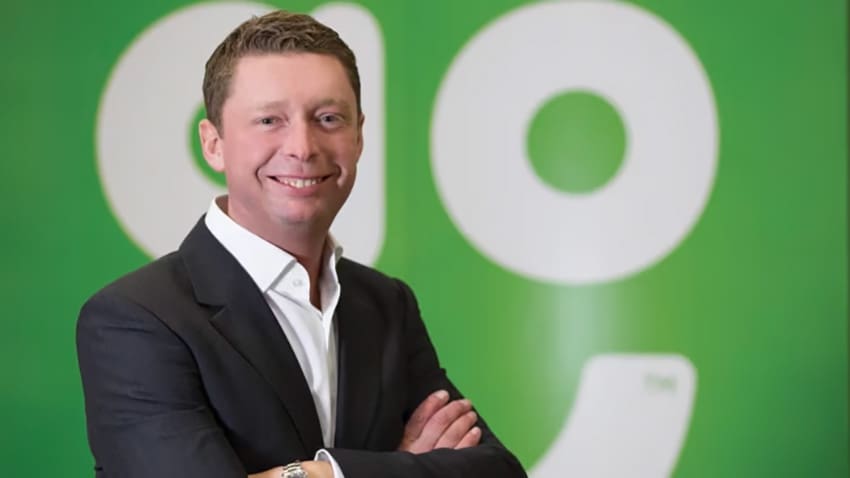
John Roberts does not do diplomatic. The founder and chief executive of AO World has rounded on the government after the online appliances retailer confirmed it is shifting the bulk of its customer contact operation to South Africa, a move he laid squarely at the door of higher employment taxes and a rising minimum wage.
The company, best known for selling everything from laptops to fridges and washing machines, has already offshored around 150 sales roles, banking savings of roughly £2 million so far and pointing to annualised cost reductions of about £4 million. A further 50 jobs are due to be created in South Africa, with most of AO World’s customer contact work expected to be based overseas by next March.
Roberts, who built the business from a £1 pub bet in 2000, said the retailer was carrying an extra £8.5 million in annual costs after the government’s decision last April to lift employer national insurance contributions and push through an above-inflation increase to the minimum wage.
“The brutal truth is that, of course, these roles could have been in the UK,” he said. “When you make these staff ever more expensive and ever more inflexible, that’s what businesses are going to do. We’ve got a political class that doesn’t understand business. They live in an economic fantasy land.”
It is a complaint that will resonate well beyond Bolton. The combined weight of a 15 per cent employer national insurance rate and a sharply lower secondary threshold, introduced in April 2025 alongside a 6.7 per cent rise in the National Living Wage to £12.21 an hour, has reshaped the maths for any firm with a large, lower-paid workforce. AO World is simply one of the larger names to act on it, joining the likes of Morrisons, which has blamed Labour’s “policy choices” for a wave of store closures, and JCB, which paused a 500-job hiring drive as the tax changes bit.
For smaller employers the squeeze is arguably sharper still, with the lower threshold dragging part-time and entry-level roles into charge for the first time. Guidance from the government-owned British Business Bank underlines how tightly wage floors and payroll taxes now interact, a dynamic Business Matters has tracked as employers absorb a national insurance bill running billions of pounds above Treasury forecasts.
Yet the political broadside lands on a set of results most chief executives would happily own. On an adjusted basis, pre-tax profit rose a better-than-expected 16.1 per cent to a record £50.5 million in the year to 31 March, helped by a turnaround at the contract mobile phone arm and at MusicMagpie, the used-electronics specialist acquired in 2024. Revenue climbed 11.4 per cent to £1.3 billion, also ahead of expectations, with a 17 per cent jump in television sales in May as shoppers geared up for the football World Cup.
The board rewarded investors accordingly, unveiling a £10 million special dividend and confirming plans to return a further £20 million this year, split evenly between another special dividend and a fresh share buyback. The numbers vindicate the “pivot to profitability” Roberts has pursued since the pandemic-era online boom faded, a period in which AO’s shares were battered by wobbling consumer confidence, rising labour costs and fierce competition.
That reset has been deliberate. Roberts has spent recent years taking what he calls “the grit out of the machine”, stripping out costs and simplifying the group after it considered shutting its loss-making mobile division and, in 2022, closed its German operation following a strategic review. The post-pay mobile business is now profitable after improved commercial terms with network partners and expanded tie-ups with Samsung and Lebara, while analysts at Peel Hunt flagged a return to profit at MusicMagpie.
The wider picture is one of a business in rude health. AO World, a constituent of the FTSE 250, added 720,000 new customers over the year to take its base to 13.3 million, and has wiped out its debt, swinging to £16.4 million in net funds from liabilities of around £35.9 million a year earlier.
Investors, though, were unmoved on the day. Shares gave up an early gain of 2.6 per cent to close down 4.69 per cent, or 4½p, at 91½p, with the stock off roughly 3 per cent amid heightened geopolitical tensions since February.
Management, too, struck a note of caution, warning that the external environment remained “uncertain, with ongoing geopolitical pressures impacting both consumers and input costs across the economy”. Profit for the 2027 financial year is expected to come in around £54.6 million, broadly flat on the year.
For now, the headline AO World would rather you remembered is the record profit. The one its founder wants ringing in ministers’ ears is the 200 jobs that, on his telling, did not have to leave Britain at all.

Amy Ingham
Amy is a newly qualified journalist specialising in business journalism at Business Matters with responsibility for news content for what is now the UK’s largest print and online source of current business news.


Spend a day at Shanghai Disneyland and you wouldn’t know Chinese consumers are struggling.
Wang Jiandong and his girlfriend Yan Xu said they have been skipping meals out and scrimping on day-to-day necessities so they could afford to enjoy the park.
“We save in our daily lives so we can spend more on trips,” Wang explained while taking photos with Yan in front of Disney’s iconic castle. “This is a romantic place.”
Shanghai Disneyland celebrated its 10th anniversary this week, with former Disney CEO Bob Iger flying in for the festivities.
“I’m feeling filled with pride really,” Iger told CNBC during an interview at the park. “I’ve been involved in this project from the very beginning in the late ’90s.”
Iger said the occasion carried extra significance “knowing not only how successful it’s been, but really how important it is in many respects, not just to the Walt Disney Co. but to the people of China.”
Former CEO of Walt Disney Company Bob Iger (2L) and his wife Willow Bay attend a celebratory event marking the 10th anniversary of Shanghai Disney Resort in Shanghai on June 15, 2026.
Jade Gao | AFP | Getty Images
Shanghai Disneyland hit 100 million cumulative visitors in 2025, according to the company. It’s a relatively new but important foothold in Disney’s more than 100-year history.
Disney’s experiences division, which includes its theme parks, resorts, cruises and merchandise, reported nearly $9.5 billion in revenue during the company’s most recent quarter, ended in March, a 7% increase year over year. The division is the second largest at Disney’s, accounting for almost 40% of the company’s overall revenue and nearly 60% of its operating income.
While Disney executives have noted recent softness in international visitors to the company’s U.S. parks, its outposts in other countries are faring better.
According to the Themed Entertainment Association, which tracks global theme park data, the Shanghai park attracted 14.7 million visitors in 2024 — a 5% year-on-year increase — making it the fifth most-visited theme park in the world behind Disney parks in Orlando, Florida; Anaheim, California; and Tokyo as well as Universal Studios Japan.
Under newly appointed CEO Josh D’Amaro, Disney is eyeing further global expansion, with a new cruise ship berthed in Singapore and a forthcoming park and resort in Abu Dhabi, United Arab Emirates. The company announced a 10-year, $60 billion investment into its parks in 2023.

“Because of the available property and because of the properties, the intellectual property that Disney has, the opportunities to expand are limitless,” Iger told CNBC this week. “As long as the business is successful, which it has been, there is no reason why it won’t continue to expand over time.”
Iger, who stepped down from his second stint as CEO in March and is still a member of its board of directors, declined to comment on reports that Disney is considering another theme park for China.
A cautious Chinese consumer
Shanghai Disneyland is bucking a bigger trend in China: consumption broadly is poor.
Retail sales dropped in May for the first time in three years. Car sales are down by double digits. People are downgrading their consumption, but they haven’t cut back altogether.
“Young people in China today are not refusing to consume. Rather, they care more about ‘value for money,’” Lin Huanjie, president of the Institute for Theme Park Studies in China, said in written comments to CNBC.
This photo taken on June 16, 2026 shows a view of Shanghai Disneyland in its 10th anniversary themed decorations in east China’s Shanghai.
Liu Ying | Xinhua News Agency | Getty Images
“If a Disney trip delivers strong memories, compelling social content, and high emotional value, they are still willing to pay,” Lin said. “If it is just an ordinary visit, they will tighten their budgets. The popularity of characters like LinaBell in China also shows that young consumers, even under economic pressure, are still willing to pay for emotionally comforting consumption.”
University student Smile Wei is one such parkgoer.
Wei traveled with a friend for a vacation to Shanghai and told CNBC their budget was 5,000 yuan ($735) for the five-day trip. They already spent a fifth of that at the park, Wei said.
“My friend and I planned to book a hotel room with two beds,” Wei said. “But we downsized to a single to buy more souvenirs here.”
Shanghai resident Wang Lu told CNBC she specifically wanted to be at the park on June 16.
“It’s both my birthday and the park’s 10th anniversary,” she said. “There is nowhere else I would rather spend this special day.”


CEO says change will help “unlock the full potential of our portfolio.”

Bitcoin falls to $62k, heads for weekly losses amid Iran uncertainty, rate jitters

The industrialist said the company will file its DRHP with SEBI later today. This comes after he announced Jio’s IPO plans at the company’s previous AGM last year.
What Mukesh Ambani said about Jio IPO
Speaking at the company’s 49th Annual General Meeting (AGM) on Friday, Mukesh Ambani said, “This is a deeply emotional moment for me, for the entire Reliance Family, and millions of its shareholders. The relationship Reliance shares with its shareholders is a deep and sacred relationship founded on pride, trust, respect, and shared growth.”
The industrialist added that the proposed listing of Jio will show the world that India can build technology companies of global scale, global capability, and global value. “I assure you, and all prospective new investors, that a brighter future awaits Jio,” he further said.
Mukesh Ambani announced that Reliance Jio Infocomm Chairman Akash Ambani, Reliance Retail Ventures Executive Director Isha Ambani Piramal and Reliance Industries Executive Director Anant Ambani will lead the IPO process.
“The Jio revolution is truly a result of the courage, creativity, and commitment of thousands of young Indian engineers. Before Jio, many believed that India could only import technology from the world. Our engineers proved otherwise. Today, Jio is not merely integrating technology. It is creating original technology,” Mukesh Ambani said.
Also read: Reliance Jio to file IPO DRHP today, plans fresh issue of up to 27 crore shares
Here’s what Akash Ambani said
Reliance Jio Infocomm Chairman Akash Ambani said that the telecom major’s user base has crossed 524 million, while its 5G user base has crossed 268 million, the largest for any single-country operator outside China. “Jio is evaluating the development of a sovereign Low Earth Orbit satellite constellation for India, while also partnering with leading global constellation providers. Jio is also building its own ground station infrastructure in India – strengthening India’s atma nirbharta in space,” he added.
The proposed Jio IPO is expected to overtake NSE’s nearly Rs 30,000 crore and Hyundai Motor India‘s Rs 27,870 crore (about $3.3 billion) public offering to become the country’s largest-ever IPO. The listing plans, however, have undergone multiple changes over the past year.Also read: LIVE updates from RIL AGM
(Disclaimer: Recommendations, suggestions, views and opinions given by the experts are their own. These do not represent the views of The Economic Times)


Vietnamese man deported to South Sudan by US leaves for home
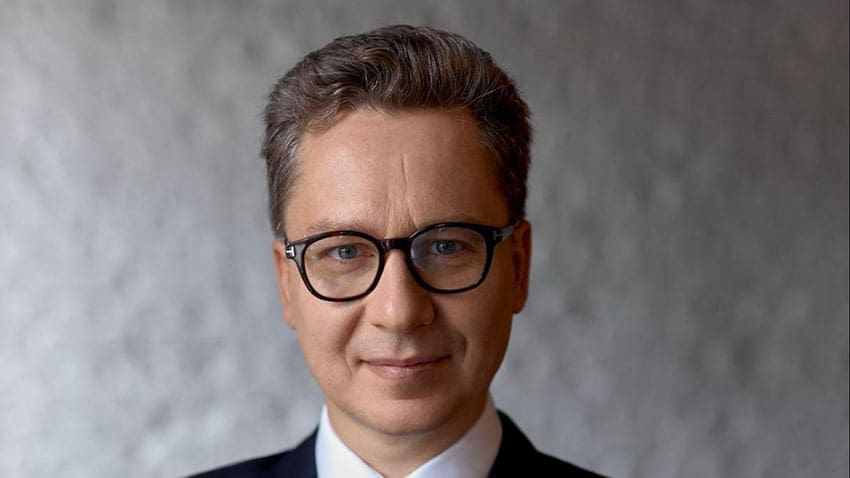
Most investors spend their careers searching for the next technological breakthrough. Few dedicate themselves to a mission as ambitious as helping millions of people live longer and stay healthy.
The story behind Sergey Young is not simply about venture capital. The idea of helping people sits at the heart of his investor work. An entrepreneur, author, and founder of Longevity Vision Fund: how did his career bring him to this bigger mission? Let’s discover.
Why Longevity Has Become One of the Most Important Investment Fields of the 21st Century
For a long time, healthcare investing was mostly reactive. You fund treatments once something goes wrong and optimize around diseases that already exist. That model still exists, of course. But it’s no longer the whole story.
What’s changed lately is the direction of science itself. Researchers are no longer only focused on individual diseases — they’re increasingly looking at the biological processes behind aging as a shared root cause. That shift sounds subtle, but it changes the entire investment landscape.
According to WHO, the pace of population aging becomes faster, and the amount of elderly people grows. Luckily, today’s advances in biotechnology, artificial intelligence and preventive medicine are creating opportunities to address the underlying biological processes associated with aging itself.
Fields like geroscience are starting to treat aging less like a fixed timeline and more like a biological process that can potentially be slowed or modified. The U.S. National Institute on Aging has been funding research in this direction for years, specifically looking at how aging mechanisms connect multiple chronic diseases rather than treating each one separately.
From an investment point of view, that’s a big shift. Because instead of betting on single-disease solutions, you’re suddenly looking at platforms that could affect many conditions at once — cardiovascular disease, neurodegeneration, metabolic disorders. Different endpoints, same underlying biology. And then technology is accelerating everything.
Investors are increasingly recognizing the niche. Now it’s clear that longevity is a broad ecosystem that includes biotechnology, digital health, precision medicine, and wellness technologies. As a result, capital is flowing into startups and research initiatives that aim to redefine how aging is understood and managed.
Sergey Young: investor life and the mission to help one billion people live to 100
Many investors tend to build portfolios around sectors. Some stay close to software, others specialize in healthcare, energy, or infrastructure. Sergey Young’s investor approach is different. His investment thinking keeps circling back to one long-term question: how do you actually help people stay healthier for longer?
That question eventually shaped the creation of the Longevity Vision Fund, which has become closely associated with longevity and health-focused investing. Instead of concentrating only on treatments after disease appears, the fund looks earlier in the chain — prevention and regenerative medicine powered by artificial intelligence.
Over time, Sergey Young has become one of the more visible voices in this space, consistently arguing that aging shouldn’t just be accepted as a fixed biological endpoint. In his view, it’s something science can increasingly understand, measure, and potentially influence.
For decades, healthcare has focused primarily on treating disease after it appears. Today, that approach is gradually expanding to include earlier risk detection, disease prevention, and helping people stay healthy for longer.
Looks like extending healthspan could end up being one of the defining economic and scientific opportunities of this century. Seen through that lens, Sergey Young’s biography shows a wider movement in medicine and technology.
Building bridges between science and capital
Breakthroughs rarely become reality without funding. Researchers need resources to develop technologies and conduct clinical trials. Sergey Young attracts attention because he is able to connect scientific innovation with investment capital. He regularly meets scientists, founders, healthcare innovators, and biotechnology companies searching for the next breakthrough.
Industry observers often note that he evaluates hundreds of biotech opportunities every year, helping identify promising developments long before they reach mainstream awareness. This ability to translate science into investment opportunities has become one of his defining strengths.
Another important chapter in Sergey Young biography involves collaboration with organizations dedicated to aging research. For example, he serves on the board of the American Federation for Aging Research (AFAR), a respected nonprofit organization supporting scientific studies on aging and age-related diseases. This involvement highlights a key aspect of his philosophy.
Healthspan XPRIZE and global longevity initiatives
As an investor, Sergey Young played an important role in major global initiatives designed to accelerate progress in aging research. Among the most notable is Healthspan XPRIZE, a large-scale competition created to encourage scientific breakthroughs capable of improving human health as people age.
Healthspan XPRIZE has attracted international attention because it focuses on measurable improvements in healthy aging rather than simply extending lifespan. The objective is not to help people live longer while managing illness. It is to help them remain active, independent, and healthy for more years.
The initiative reflects a philosophy frequently associated with Sergey Young: ambitious goals inspire ambitious solutions.
From investor to bestselling author
A lot of people first come across Sergey Young not through investing, but through his book The Science and Technology of Growing Young. It went on to become a Wall Street Journal bestseller and, for many readers, it was the first time longevity science felt understandable rather than abstract.
What makes the book stand out is that it doesn’t lean into science fiction or exaggerated future scenarios. Instead, it stays grounded. It walks through technologies that already exist or are actively being developed — things like early disease detection, regenerative medicine, and data-driven approaches to slowing age-related decline.
For readers who aren’t deep in the investment or biotech world, it works almost like a bridge. You don’t need to know the industry to follow it.
And in a way, that’s where the shift happens in Sergey Young’s public role. He’s no longer just operating behind the scenes as an investor. The book turns him into a communicator — someone translating complex scientific work into ideas that a much wider audience can actually engage with.
It also played a part in something bigger. As the topic of longevity started moving closer to mainstream conversation, the book helped frame it less as a fringe concept and more as a legitimate area of innovation attracting serious capital and research attention.
Longevity at work and a broader social mission
One of the less discussed aspects of the Sergey Young biography is the effort to bring longevity concepts into the workplace. Young helped create what is widely described as the first nonprofit corporate longevity program.
The program encourages companies to think more seriously about employee health — not just in terms of occasional wellness perks, but as part of long-term productivity and quality of life. That includes physical health support, mental wellbeing, preventive care, and everyday habits that can influence how people age over time.
The concept is simple but powerful. It connects back to a broader shift happening across industries. As healthcare moves from reactive treatment toward prevention and optimization, workplaces become part of the same ecosystem. Not separate from health, but part of it.
Looking ahead
Longevity is still early. But it’s no longer unclear. Science is moving. The demographics are already here. And the capital is starting to organize itself around both.
For Sergey Young, investor, longevity is not just a scientific challenge. It is also a social and economic opportunity. Long-term change depends on building an ecosystem where innovation can thrive.
As advances in artificial intelligence, biotechnology, and healthcare continue to accelerate, longevity science is likely to become an increasingly important area of investment and innovation. However, progress in the field requires cooperation among researchers, entrepreneurs, healthcare providers, policymakers, and investors.
The work of Sergey Young demonstrates how investors can help drive that transformation by supporting ambitious ideas before they become mainstream. His career offers a compelling example of how capital, science, and vision can come together to address one of humanity’s most universal challenges: aging itself. The future chapters of the Sergey Young biography are still being written, but the direction is already clear: healthier lives accessible to more people.

Two former Bills players top list of NFL’s best remaining free agents

Could ChatGPT become conscious? Here’s the case for AI consciousness

Salford incident LIVE as ‘primary school on lockdown’ after man enters grounds with a brick in police response


-

 Business5 days ago
No Jackpot Winner as $257 Million Prize Rolls Over to $269 Million Monday Draw
-

 Fashion7 days ago
Weekend Open Thread: Tuckernuck – Corporette.com
-
 Crypto World4 days ago
Zimbabwe Requires Crypto Businesses to Register Annually Under New FIU Regulations
-

 Crypto World6 days ago
Bitget enters Argentina’s regulated crypto market through PSAV registration
-

 Tech6 days ago
NanoClaw integrates JFrog registries to secure AI agent downloads
-

 Tech7 days ago
This Week In Security: Microsoft On Microsoft, Register Your Domains, Linux On ARM, And FreeBSD Joins The File Cache Club
-

 NewsBeat7 days ago
FBI searches office of Ohio voter registration group
-
 Entertainment5 days ago
Matt Damon’s Viral Sci-Fi Thriller Has Taken Over HBO Max
-

 Business5 days ago
Anthropic staff to meet White House officials next week, Axios reports
-

 Tech5 days ago
As AI companies race to go public, who else is along for the ride?
-
 Crypto World5 days ago
Bitcoin could crash to $48,000, if this historical pattern is triggered
-

 Politics5 days ago
“Israel’s” ban on ICRC visits ruled illegal, but Knesset moves to stop them permanently
-
 NewsBeat5 days ago
Warning of disruption as Cardiff Crossrail works to start
-

 News Videos5 days ago
Financial Accounting | Last Day Revision Strategy and Booster | CMA Inter – June 2026
-
 NewsBeat5 days ago
Tributes to former deputy head teacher at Cambridge school among death and funeral notices
-

 Entertainment5 days ago
Deion Sanders Shares Powerful Post After Viral Advice To Deiondra
-
 Crypto World5 days ago
Market Preview: SpaceX (SPCX) IPO Record, Federal Reserve Meeting, and Iran Nuclear Agreement
-
 NewsBeat5 days ago
what doctors are seeing in ebike crashes
-

 Crypto World5 days ago
XRP ETFs Outperform As Bitcoin And Ethereum Funds Extend Outflow Trend
-
 Entertainment5 days ago
Kate Middleton Glare Goes Viral After Kids Booed At Royal Event
You must be logged in to post a comment Login