
AI is rapidly gaining abilities that once belonged to humanity alone. In just the past four years, chatbots have learned how to build apps, make video games, generate research reports, compose songs, analyze contracts, and write terrible literary fiction. Soon, they may even be able to dread their own deaths.
Tech
Could ChatGPT become conscious? Here’s the case for AI consciousness

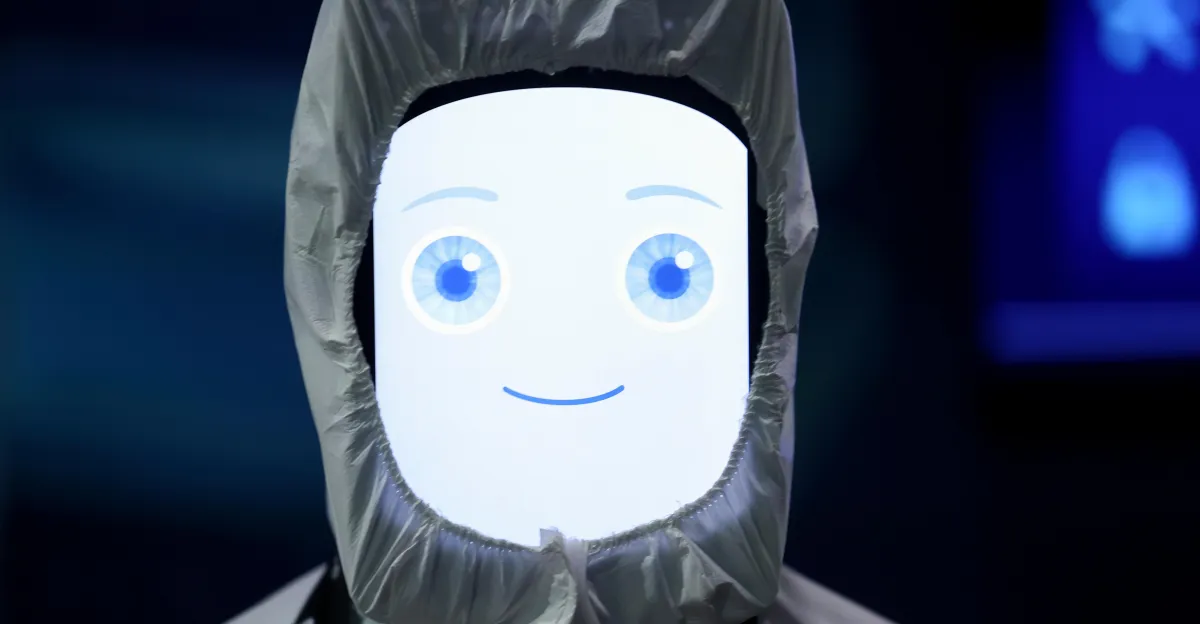
In Silicon Valley, many believe that AI systems can already think and feel. Geoffrey Hinton, the pioneering computer scientist and “godfather” of modern artificial intelligence, thinks that today’s large language models (LLMs) are conscious. Anthropic CEO Dario Amodei is “open to the idea” that Claude has a subjective experience — while his company’s in-house philosopher Amanda Askell is concerned that the model might be “getting anxious when people are mean to it on the internet and stuff.” OpenAI co-founder Ilya Sutskever similarly wonders whether ChatGPT has attained sentience.
- Some AI researchers believe today’s chatbots may already be conscious — and we might therefore need to give them rights.
- Their case rests on a theory called “computational functionalism” — or the idea that sentience emerges from information processing.
- But skeptics insist that there is more to consciousness than computation.
Meanwhile, a much larger group of technologists, neuroscientists, and philosophers argue that even if AI isn’t yet conscious, it could be in the not-too-distant future.
If they’re right, the implications are profound. It would mean that we have birthed a new kind of intelligent, sentient being; the aliens we’ve long dreamt of meeting at the far reaches of space would already be living inside our pockets. We might be morally compelled to give them rights, or to worry about their suffering.
On the other hand, there might also be serious consequences if we get this wrong. If we come to mistake mindless robots for conscious beings, we might be more susceptible to psychological manipulation, unfulfilling AI ‘relationships,” or catastrophe. If we think AI systems are sentient, we may hesitate to shut them down when they malfunction or subvert our will.
As chatter about AI consciousness grows louder, so have its skeptics: writers and thinkers who insist that AI consciousness is indeed a sci-fi daydream.
In a recent essay for The Atlantic, the fiction fiction writer Ted Chiang gave voice to such skeptics, writing “Should we seriously consider the possibility that Claude, or any large language model, might be conscious?…No. Absolutely not.”
Chiang offers several reasons for this position. But his primary one is simple: Claude does not have a body or sense organs, which means it does not have emotions or desires, which means that it does not have subjective experience.
As Chiang’s reasoning indicates, the debate over “AI consciousness” is as much about the nature of consciousness as it is about the nature of AI.
This can be a difficult debate for non-philosophers to follow. But the case for AI consciousness becomes much clearer once one investigates its source code — the fundamental premises that make suffering computers thinkable.
Those who believe that AI models are (or will eventually become) sentient generally subscribe to a particular theory of consciousness called “computational functionalism.” In this view, consciousness emerges from certain patterns of information processing — not from special types of organic matter. If a system performs the right set of computations, then it will have a subjective experience, regardless of whether it was built from brain tissue or silicon.
This theory is not as fanciful as Chiang suggests. But it is also much more speculative than prophets of AI consciousness tend to assume.
For this reason, it is worth examining computational functionalism’s strengths and weaknesses. Whether Silicon Valley is on the cusp of engineering nigh-infinite digital suffering (or at least, a chatbot capable of being bored by your medical anxieties) hinges largely on how the universe generated sentient life in the first place.
Why your computer may have feelings
The case for computational functionalism begins with a simple assumption: You don’t have a soul.
Or, stated more precisely, there is no immaterial essence that breathes life into matter or subjectivity into brains. Everything that exists is reducible to physical components. Therefore, your conscious experiences — the pain in your back, taste on your tongue, love in your heart, and ghosts in your dreams — are all the byproducts of physical processes within your brain.
In practice, these processes are carried out by biological entities such as neurons, synapses, axons, and dendrites. But functionalists wager that machines could, in principle, execute the same operations and thus produce the same mental states.
Their reasoning is straightforward: Organic matter isn’t magic. Your brain and a rock are both collections of atoms. The cerebrum doesn’t generate consciousness because it’s made of a special substance but rather, because it performs special functions. Further, we know that, in many cases, radically different materials can execute the same basic operation. Biology may have produced the first flying entities. But the reason that birds can soar above the treetops isn’t that they’re made of organic tissue — it’s that their wings perform a set of aerodynamic tasks, such as generating lift and minimizing drag. As airplanes vividly demonstrate, if you put metal and fuel together in just the right way, you can replicate these functions and take to the skies.
From the computational functionalist point of view, consciousness and flight might not be so different. Of course, the former is quite a bit more complex and mysterious. But there are reasons to think that it emerges from operations that can be performed by organic and inorganic matter alike.
For one thing, when neuroscientists try to define what the human brain actually does, its operations start sounding a lot like those of a computer: Brains take in inputs, update internal models, store memories, direct attention, make predictions, and — on the basis of all this information processing — select actions. In a sense, so does software.
The resemblance runs down to the level of neuronal signaling. At any moment, a neuron is receiving signals from other brain cells, some pushing it to fire, others favoring silence. These signals carry different weights, depending on the strength of the connections between cells. If the balance of inputs exceeds a certain threshold, the neuron fires an electrical pulse onward.
LLMs — the machine-learning engines underlying platforms like ChatGPT and Claude — operate by a similar logic. Each artificial “neuron” takes in numerical signals from many others, weighs them according to their importance, and then lets the result determine what signals it sends forward.
To be sure, biological neural networks and artificial ones aren’t identical in design or behavior. But neither is a cardinal and a Boeing 747. Nonetheless, the airplane replicates the avian functions that are necessary for flight (a jetliner does not regurgitate food into smaller airplanes, but it does manage thrust). Likewise, computational functionalists wager that computers can instantiate all the neural operations that are relevant to consciousness. So, as long as they recreate a brain’s elaborate algorithms with sufficient precision, they actually can be conscious.
These ideas did not emerge in response to modern AI; philosophers and computer scientists have held them for decades. But LLMs’ success in decoupling intelligence — or at least, complex cognitive labor — from neural tissue has made the computational functionalist perspective both more relevant and widely accepted.
Your brain is not a laptop
While computational functionalism’s logic is coherent, its fundamental premise — that machines can feel — is deeply uncertain.
Most contemporary scientists agree that consciousness emerges from physical processes in the brain, rather than some mystical force that animates our organs. But precisely which neural processes are indispensable for consciousness remains unknown. Indeed, despite millennia of inquiry, we still do not know how or why subjective experience exists at all.
This differentiates consciousness from other capacities common to both organisms and machines, such as flight. We can name the physical laws that enable birds to get off the ground. And we have always had reason to believe that inanimate objects could emulate their movement; grains of sand have traveled through the air since time immemorial. By contrast, no one has ever seen a rock experience pain or pleasure, even momentarily (in part, because it’s impossible to directly observe the internal experience of any being or entity other than oneself).
For these reasons, it’s hard to be confident that inorganic matter can perform all of the processes necessary for consciousness. And betting that silicon specifically is fit for purpose may be chancier still. Even with flight, only certain materials will do; you can build a flying machine out of metal but not from sauerkraut.
Computational functionalism is ultimately a wager that only a narrow slice of what biological neurons do is required for sentience — specifically, the slice that silicon can replicate. As the neuroscientist Anil Seth notes, a brain cell is a “spectacularly complicated biological machine,” one that does a great deal more than just execute binary, rule-bound decisions about whether to fire. Each neuron must also regulate its chemistry, repair itself, maintain its membrane, and continuously recreate all the other physical conditions that allow it to fire in the first place.
All this biological upkeep is deeply entwined with neuronal signaling. And silicon can do none of it.
That might not matter; molting is deeply entwined with flight in birds, yet featherless planes still take off. Since we do not know how brain cells generate subjective experience, however, we can’t be sure that metabolism is dispensable to that task. And if it is indispensable, then LLMs would not only be devoid of consciousness today, but forever.
Nonhuman suffering is all around you
All of which is to say: We should not be confident that Claude will ever feel something — nor that it won’t. Chiang’s certainty that sentience requires a body is no more justified than Hinton’s conviction that it doesn’t. We just don’t know consciousness well enough to say,
The practical upshot of this ambiguity is debatable. One could reasonably argue that if there is even a tiny chance that AI could attain consciousness, we should be preparing for that scenario — or else, striving to prevent it. After all, a world in which every ChatGPT window can think and feel might be one of nigh-infinite digital slavery. If each of ChatGPT’s innumerable instantiations becomes capable of suffering, then we might be morally compelled to maximize their well-being — or at least, to stop boring them senseless with our coding assignments and marital complaints.
On the other hand, game-planning for the AI liberation movement of the 2030s could end up being a huge waste of time. There’s a good chance that the age-old conventional wisdom on this subject — objects do not have experiences — holds up.
Personally, I think the prospect of AI consciousness is serious enough to warrant some study and reflection — but no more than a tiny fraction of our collective moral and political energy.
If we don’t want to live in a world where humanity torments conscious beings on an incalculable scale, we’ll also need to change the one that already exists. We have far more cause to think that pigs are conscious than that ChatGPT is. Yet America tortures and kills more than 100 million of the former every year.
Of course, one can care about this — and myriad other present-day injustices — while still worrying about AI well-being. Given that the mere possibility of machine consciousness is highly uncertain, however, mitigating the suffering of conscious organisms seems much more pressing.
Although you may want to keep saying “thank you” to Claude, just in case.

Continue Reading

A Seattle game studio is collaborating with NASA to create a new educational video game that challenges players to plan, collaborate, and invent their way to building a virtual lunar colony.
Moonbase Y, currently under development at August Interactive, is a cooperative, exploration-focused online video game that puts players ages 13 and older in the role of the architects and engineers of a mission to return humanity to the moon. Step one is leaving Earth’s atmosphere, while step two is successfully landing on the lunar surface.
Once they’re actually on the moon, Moonbase Y players can craft items, research technologies, build their own virtual colony, and use all the usual collaborative tools found in online building games, all in a game that’s built on source images and data provided directly by NASA. To succeed, they’ll need to come up with their own solutions for the real-world problems that will confront an off-world settlement.
“There’s a whole generation of kids who may very well live and work on the moon,” said Sarah Kneller, August Interactive’s chief experience officer. “It’s imminent.”
Kneller describes Moonbase Y as a way to “not only let people imagine the future, but give them the tools to help create it.” It’s one thing to learn about the sciences and technologies required to construct a lunar colony, but it’s a better educational experience to actually let someone do it themselves.
As a video game, Moonbase Y can be summarized as a crafting-focused collaborative RPG that’s using up-to-date real scientific data. Any and every solution that players will have to come up with to build their colony in Moonbase Y is something that could at least theoretically work under real-world conditions.

According to August Interactive’s CEO Kristin Wood, NASA’s current goal is to have an inhabited lunar base by 2040, as a first step toward a crewed expedition to Mars. In order to do so, Wood said, “there are approximately 187 technologies that will need to be created.”
Moonbase Y isn’t an attempt to crowdsource those solutions. Instead, it’s an educational game that’s made to let players work on specific necessary skills in a collaborative environment.
“We want a 13-year-old to understand they don’t have to be a rocket scientist [to contribute],” Kneller said. “They can say, ‘There is something I’m good at that matters.’” Wherever someone’s talents lie, from hard sciences to soft skills, they could be a part of a project like this. No one is irrelevant.
That’s part of Moonbase Y’s deliberately hopeful tone. From the ground up, the game is being built as a deliberate act of optimism. While it’s possible for a player’s colony to fail, that’s part of the learning process. You can always start again, and this time you’re a little smarter for having had the experience. This is a tough job, but that’s part of the fun.
“As entertainers, it’s really easy to sell the terrifying outcome… this mental model that the future is bleak,” Kneller said. As a result, Moonbase Y is purposefully swinging hard in the other direction.

Kneller used to work for Valve Software in Bellevue, Wash., where she spent more than a decade as an executive producer for Dota 2’s esports circuit. She left the company in 2023 to co-found August Interactive.
Other team members at August include Wood, a former CIA officer turned tech entrepreneur; CRO Mike Ambinder, a former research scientist for Valve who specializes in experimental psychology as it applies to game design; and creative director Jon Pierre Yousef, a Florida-based artist who’s contributed to franchises such as Fortnite and Call of Duty.
In addition to Moonbase Y, August Interactive released its first professional project on July 21. Spire is a “performance intelligence layer” that analyzes users’ style of play in competitive video games and gives players tips on how to improve. The idea behind Spire is to smooth out the onboarding process for multiplayer games like Rocket League or Dota 2, in order to make them more accessible for new players.
Moonbase Y is currently in production at August Interactive, with no stated release window.
When the weather’s been playing ball with plenty of sunshine and blue skies, one of the best ways to round out the day is by setting up a projector, whether that be in your garden or in the great outdoors when you’re surrounded by trees and fauna, and kicking back with a film. While you have a variety of options from using a laptop or tablet, the only way to enjoy a truly cinematic experience is with one of the best outdoor projectors.
While the best projectors are perfect for recreating the feeling of going to the cinema but from the comfort of your own home, there’s a lot more to consider when picking up a projector that’s meant to withstand use outdoors. For starters, durability is key, and so an official rating of dust and water resistance can go a long way to making sure that a projector isn’t going to fall foul of the elements.
The brightness of the bulb also needs to be a fair bit higher than usual to accommodate for the natural light which could get in the way of the image clarity. On top of that, a projector needs to be portable, ideally with a handle included to make moving it from one location to another an easy prospect, whilst the built-in speaker needs to be loud enough to carry sound.
To make sure that each outdoor speaker sent to our offices is able to succeed in those aforementioned areas, we take the devices outside and put them through a range of tests to see how well they perform. This involves using the projectors in an available garden or outdoor space, so you can get a concrete sense of what it’s like to own each one before you ever part with your hard-earned cash.
Only the projectors that pass all of our tests are then considered for entry on this list, so every single device here is heartily recommended by our team of experts. Alternatively, our round-up of the best portable projectors is well worth checking out if you’re after a device for camping as those picks are less likely to weigh you down.
Best Outdoor Projectors at a glance
SQUIRREL_ANCHOR_LIST
/We test projectors by, well, watching lots of movies on them. But not just movies: we watch sports and TV programmes to get a sense of how they work in terms of motion, sharpness, detail and overall image fidelity. Depending on the projector, we’ll test them in a bespoke home cinema room or in our own rooms and gardens to see if they live up to the manufacturer’s claims about their performance.
If it’s an HDR projector, we’ll watch plenty of HDR content to determine if colours are correct and whether the projector can do a decent approximation of HDR. If it’s a gaming projector we’ll test the latency to determine how responsive it is.
We’ll also assess the projector in terms of its size and whether it needs a dedicated installation, as well as how much noise it makes during operation and whether that can be a hindrance to watching content. Are they easy to use? And do they require more expert knowledge to operate are considerations we also take into account.
With our reviewers knowledge of previous projectors tested, they’ll be considered to what’s come before to determine whether they offer good value, regardless of how much or how little they cost.
Very high brightness
Lens shift
Excellent contrast and colours
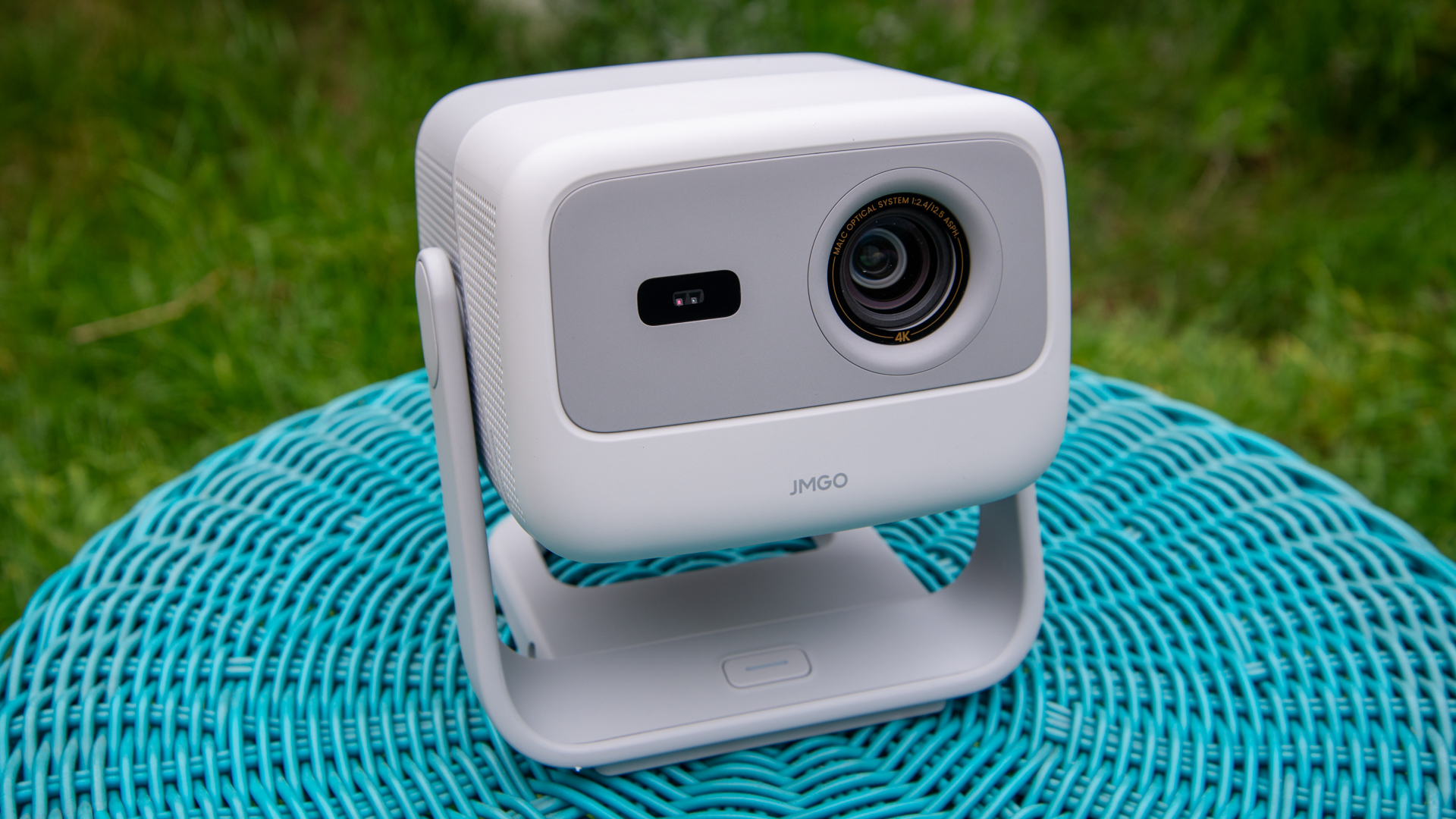
The JMGO N3 Ultimate is an extremely flexible and quality portable projector.
Setup is where it pulls ahead of similarly specced rivals. The motorised gimbal stand lets you pan and tilt the image using the remote, which takes most of the frustration out of finding the right position, whether you are setting up in the garden or moving between rooms.
Proper lens shift is brilliant to see, as you can get a square picture without the need for digital adjustment. Picture performance is the strongest argument for spending this much. At a peak of 5800 ISO Lumens, it is one of the brightest portable projectors we have tested. The 20,000:1 contrast ratio delivers rich, punchy colours, and Dolby Vision support ensures the best quality in content that supports the HDR format.
At £2,999, it is expensive, but it’s a brilliant choice whether you want to watch inside or out. If the cost puts it out of reach, there are strong alternatives lower down, but for those who want the most capable all-in-one option here, this is it.
Very portable
Generally picture quality
Premium looks
Not the longest battery life
Doesn’t have the brightest picture
Google TV lacks major UK services, like BBC and Channel 4
Don’t worry, if you mistook the Dangbei Freedo for some kind of podcast microphone then you’re not alone. Based on first appearances, particularly when stowed away in the upright position, the Freedo looks nothing like a projector but that’s part of its charm, as it’ll seamlessly blend in with your decor when not in use – exactly what you want from a portable projector.
Speaking of portability, the Dangbei Freedo is one of the most versatile projectors we’ve ever used, so if you do take it with you on a camping trip then you won’t have any issues in getting it set up at just the right angle. The hinge provides 200 degrees of movement so if you need the image to be a little higher than usual as it’ll be a better fit for the screen you have, then the Freedo is more than happy to accommodate. You don’t even have to be a fairly competent projectionist either as the onboard automatic keystone correction can adjust the corners and sizing of the image to suit the screen that you have set up, taking all the guesswork out of the process. There’s also a 6W speaker built in so you don’t have to worry about bringing a separate one just to hear what’s happening onscreen.
In spite of its portability, the Freedo still manages to put out an image that can compete with much larger projectors. The 1080p resolution is nice and crisp, and when paired with the 500 lumens of brightness onboard, the Freedo is capable of some surprising contrast levels, which can make for a very cinematic experience under the stars.
For when you’re closer to home and watching something in the garden, there’s Google TV onboard for easy streaming via all of your go-to services. The homepage does a great job at collating all of the key content across the major streamers, so you’ll be given no shortage of inspiration if you’re on the lookout for your next watch. The fact that all of this comes with a price tag of just £449 is just too good to pass up, making the Dangbei Freedo an instant win for buyers on a budget.
Sharp, detailed image
Proper surround sound
Bright enough to make the most of HDR
Calling the Anker Soundcore Nebula X1 Pro just a projector doesn’t quite do it justice. This is a full home cinema system, with real surround sound that happens to be portable – well, with the caveat that it’s huge and even comes with a trolley handle and wheels. And, at £4499, it sits at the very top end of what you’ll find on this list.
The headline feature is detachable wireless speakers for the front and rear, which means genuine surround sound from a projector setup rather than the single-point audio most rivals offer. Watching Black Panther: Wakanda Forever and the results were genuinely impressive, with gunshots and effects coming from all around.
A subwoofer lives inside the main chassis and it absolutely earns its place during action sequences. Explosions carry real physical weight, and the overall effect is about as cinema-like as outdoor projection gets.
Where a lot of portable projectors fall apart in daylight, the X1 Pro holds its own. The tri-laser system is capable of 3500 ANSI lumens, which is bright enough to get a watchable picture without drawing every curtain in sight, and Dolby Vision HDR brings the kind of dynamic range that makes that brightness count.
Smart features are well covered too. Automatic focus, keystone correction and screen fit are all on board, and Google TV is built in so every streaming service you rely on is accessible directly from the projector without needing an external device (well, bar iPlayer). At 32.8kg it is a substantial projector to move around, but the built-in handle and wheels at least make that manageable. If your budget stretches this far, the X1 Pro is the most complete portable outdoor cinema system we’ve tested.
Impressive image quality for the price
Simple setup with AF and keystone correction
Long-life, lamp-free LED light source
Low input lag
No integrated smart TV platform
Fan noise is difficult to ignore
Built-in audio is poor
The Optoma PK32 is exactly the type of projector that’s very unassuming at first glance – it’s very compact which could give off the impression that it’s underpowered, and the £799.99/$1299 price tag is a fair bit cheaper than what premium-level projectors tend to ship with. On both of these fronts, the PK32 exceeds expectations by offering outstanding value with picture quality that’s right up there with some of the best.
You’re getting 4K HDR picture quality that is wonderfully detailed – when we booted up Spider-Man: Far From Home, we were impressed by the dynamic range on display, particularly early on throughout the scenes in Venice which showed off tons of natural light alongside clear doorways and alleyways that might have come through poorly on less capable machines.
As you would want for an outdoor projector, the brightness available here is fantastic. Rated at 1110 ISO lumens, you can pick up a strong image when projected on to a screen, although we don’t recommend using the PK32 during the day when there’s a ton of natural light around. What really surprised us, particularly given the price point, is just how well the Optoma PK32 works as a gaming projector. The input lag on show is minimal, as we recorded 4.6ms at 1080p/240Hz and 18.3ms at 4K/60Hz – exactly what you want to stay one step ahead of the competition. If you fancy a few rounds of Mario Kart World with friends after dark then this is a great option.
The only thing working against the PK32 is that there isn’t a native smart platform built into the projector, so you’ll have to hook up a laptop, tablet or console in order to enjoy some entertainment. If you prefer this method of control then you won’t have an issue here, but for those who want the streaming experience to be as seamless as possible, you’re better off with one of its competitors.
Good value (for an outdoor TV)
Full range of apps including iPlayer
Clean, vibrant picture in daylight
Automatic brightness adjustment
Blacks look a bit purplish
Can’t be bothered to set a projector up each time you want to watch outside, an outdoor TV could be your answer, and the Samsung The Terrace QE65LST7D is ideal for shaded areas (it can’t be used in full sun).
For shaded installations, the Neo QLED panel does an impressive job. Pushing up to 2000 nits, it is bright enough to cut through glare and still deliver punchy, detailed pictures. Local dimming lifts the contrast further, and an ambient light sensor adjusts brightness on the fly as conditions shift, so you are not constantly fiddling with the settings when clouds roll in or the afternoon light changes. Tizen OS means you get a full roster of streaming apps including BBC iPlayer without needing a separate streaming stick. There is also a built-in HD Base-T receiver, so you can run an Ethernet connection back to a transmitter and keep all of your source equipment indoors. Three HDMI inputs handle direct connections as well, and Samsung includes two remotes in the box.
Sound is better than you would expect from an outdoor set, with a 40W system that stays clear and gets loud enough to carry across a garden without straining. The IP56 weather seal rounds things out, shrugging off dust and water spray so the elements are not a concern. For a more permanent solution to watching outside, this TV is great.
The most pressing need for an outdoor projector is brightness. A projector with a brightness of 2000 lumens so the image isn’t washed out by ambient light when projected on a screen.
Learn more about how we test projectors
FAQs
What should I be looking for in an outdoor projector?
Test Data
JMGO N3 Ultimate
Dangbei Freedo
Anker Soundcore Nebula X1 Pro
Optoma PK32
Samsung The Terrace (2026)
Full Specs
JMGO N3 Ultimate Review
Dangbei Freedo Review
Anker Soundcore Nebula X1 Pro Review
Optoma PK32 Review
Samsung The Terrace (2026) Review
Manufacturer
JMGO
Dangbei
Anker
Optoma
Samsung
Screen Size
–
–
–
–
65 inches
Size (Dimensions)
229 x 308 x 274 MM
109 x 131 x 239 MM
435 x 343 x 761 MM
238 x 215 x 120 MM
1710 x 215 x 1035 MM
Size (Dimensions without stand)
–
–
–
–
1710 x 215 x 1035 MM
Weight
6.95 KG
1.4 KG
32.8 KG
2.2 KG
36 KG
ASIN
–
B0DM8X8L1P
–
–
–
Operating System
–
–
–
–
Tizen OS3
Release Date
2026
2024
2026
2025
2025
First Reviewed Date
18/06/2026
–
14/02/2026
–
13/07/2026
Model Number
JMGO N3 Ultimate
–
Anker Soundcore Nebula X1 Pro
–
Samsung The Terrace QE65LST7D
Model Variants
–
–
–
–
55-inch, 75-inch
Resolution
3840 x 2160
1920 x 1080
3840 x 2160
3840 x 2160
3840 x 2160
Projector Type
–
DLP projector
Portable
Portable short-throw
–
Brightness Lumens
5800
450
3500
1100
–
Lamp Life
20,000 hours
–
30,000 hours
30000
–
Contrast Ratio
20,000:1
–
5000:1
250,000:1
–
Max Image Size
300 inches
180 inches
300 inches
200 inches
–
HDR
Yes
Yes
Yes
Yes
Yes
Types of HDR
Dolby Vision, HDR10
HDR10, HLG
Dolby Vision, HDR10
HDR10, HLG
HDR10+
Refresh Rate
60 Hz
60 Hz
60 Hz
60 Hz
–
Refresh Rate TVs
–
–
–
–
60 – 120 Hz
Ports
2x HDMI 2.1 (one with eARC), USB
HDMI, USB
HDMI, USB-A, 2x USB-C
–
3x HDMI 2.1, 1x USB-A, Ethernet, 3.5mm audio out, optical S/PDIF, HD Base-T
HDMI (2.1)
–
–
–
–
3
Audio (Power output)
25 W
6 W
200 W
–
40 W
Connectivity
–
–
–
–
Wi-Fi 5, Ethernet
Colours
–
–
–
Black
–
Display Technology
DLP
DLP
DLP
–
QLED
Projector Display Technology
3Channel laser
Single-chip DLP
Triple Laser DLP
–
–
Throw Ratio
0.88-1.71:1
1.2 : 1
0.9:1 – 1.5:1
–
–
3D
Yes
–
Yes
–
–
UK RRP
£2999
£429
£4499
–
£2999
USA RRP
$2499
$549
$4999
–
TBC
EU RRP
€2499
–
–
–
TBC
CA RRP
–
–
–
–
TBC
AUD RRP
–
–
–
–
TBC

Jeremy Bernier has spent years fixing clogged pipes. Now he’s trying to fix another everyday frustration: shopping local.
The U.S. Navy veteran and owner of Nerd Plumbing and Drain has founded MODRA, a Seattle-area startup that is designed to let shoppers browse inventory from nearby retailers and have purchases delivered the same day.
The 46-year-old says the idea struck him earlier this year after he needed a collared shirt in Portland and discovered there was no easy way to find one nearby and get it delivered.
MODRA’s AI-powered shopping assistant, “Savvy” — named after his firstborn daughter — is designed to learn customers’ sizes, style preferences and budgets to recommend products that fit their tastes. It is working on securing retail partners, with plans to launch in the Seattle area in September. MODRA plans to contract with local independent drivers, similar to marketplaces like Uber Eats or DoorDash.
He’s carving out a niche in a larger market that includes some big players, such as Amazon with its 30-minute Amazon Now delivery service for grocery and convenience items. And Bernier acknowledges he’s an unlikely tech founder. “I’m a blue-collar guy by trade,” he said.
While his Navy background taught him discipline, accountability and how to perform under pressure, his plumbing background also is helping him run MODRA. The experience “taught me that customers do not care how complicated the operation is behind the scenes,” he said. “They care whether you solve their problem and keep your word.”
We connected with Bernier for this latest installment of GeekWire’s Startup Spotlight.
In 50 words or less, give us your startup’s elevator pitch.
MODRA is an on-demand retail marketplace that lets customers shop nearby stores, boutiques, malls, and national retailers through one app, then have purchases delivered quickly. Savvy AI learns each customer’s style, size, budget, and preferences to create a faster, more personal shopping experience.
What problem are you obsessed with solving?
I’m obsessed with making local retail as convenient as ordering food. People should not have to search five websites, call stores, drive across town, and hope an item is available. MODRA is meant to bring all of that into one experience.
@media (max-width: 600px) {
.gw-founder-box { float:none !important; max-width:100% !important; margin:20px 0 !important; padding:16px 18px !important; }
.gw-founder-box .gw-label { font-size:12px !important; margin-bottom:8px !important; }
.gw-founder-box .gw-hero { font-size:19px !important; }
.gw-founder-box .gw-byline { font-size:15px !important; }
.gw-founder-box .gw-meta { font-size:12px !important; margin-bottom:14px !important; }
.gw-founder-box .gw-facts { padding-top:14px !important; }
.gw-founder-box .gw-facts li { margin-bottom:12px !important; }
.gw-founder-box .gw-facts li:last-child { margin-bottom:0 !important; }
.gw-founder-box .gw-value { font-size:15px !important; line-height:1.45 !important; }
}
What surprised you after talking to customers?
What surprised me is that speed is only part of the problem. People also want confidence.
They want to know what is actually available nearby, whether it will fit, whether it matches their style, and whether they are making the right choice. Convenience gets people interested, but personalization and trust are what make the experience valuable.
How has AI changed the way you build your company?
AI has allowed me to move much faster than I could have with a traditional startup team.
I’m a blue-collar guy by trade. I know how to build businesses, solve problems, market, and create the vision, but I’m not a backend engineer. My founding engineer is actively building the technical side of MODRA from that vision, while AI helps me with research, strategy, operations, communication, and testing ideas.
What’s one thing people misunderstand about your startup?
People may hear “fast retail delivery” and think MODRA is simply DoorDash for clothing. Delivery is only one part of it.
MODRA is a retail marketplace, discovery platform, logistics network, and personalized shopping experience. The larger vision is to help retailers compete in the same-day economy while giving customers one place to discover and buy what is available around them.

What’s the toughest decision you’ve made in the past year?
The toughest decision has been committing fully to building a technology company while continuing to run Nerd Plumbing and Drain.
A plumbing company generates revenue today. A startup requires you to invest time, money, and energy into something that is still being built. I had to decide whether this idea was worth taking seriously enough to act on it. Two weeks after getting the idea, I started building. On May 16, MODRA became a Delaware C corporation.
What’s the one piece of advice you give to other entrepreneurs?
Do not wait until you feel qualified.
I came from the Navy and the plumbing industry, not Silicon Valley. I’m an idea guy and a problem solver. When I do not know how to do something, I find the right person, learn what I can, and keep moving.
You do not need to know everything. You need a clear vision, the willingness to work, and enough humility to bring in people who are stronger where you are not.
We’ll know our company has made it when…
Opening the app to find and receive something from a nearby store feels as normal as ordering dinner. I also want retailers to see MODRA as an essential sales and delivery channel, and I want Savvy to become a shopping assistant people genuinely trust.
Tech
Google plans to produce up to 15 million AI chips by 2028, rivaling Nvidia’s total accelerator volume
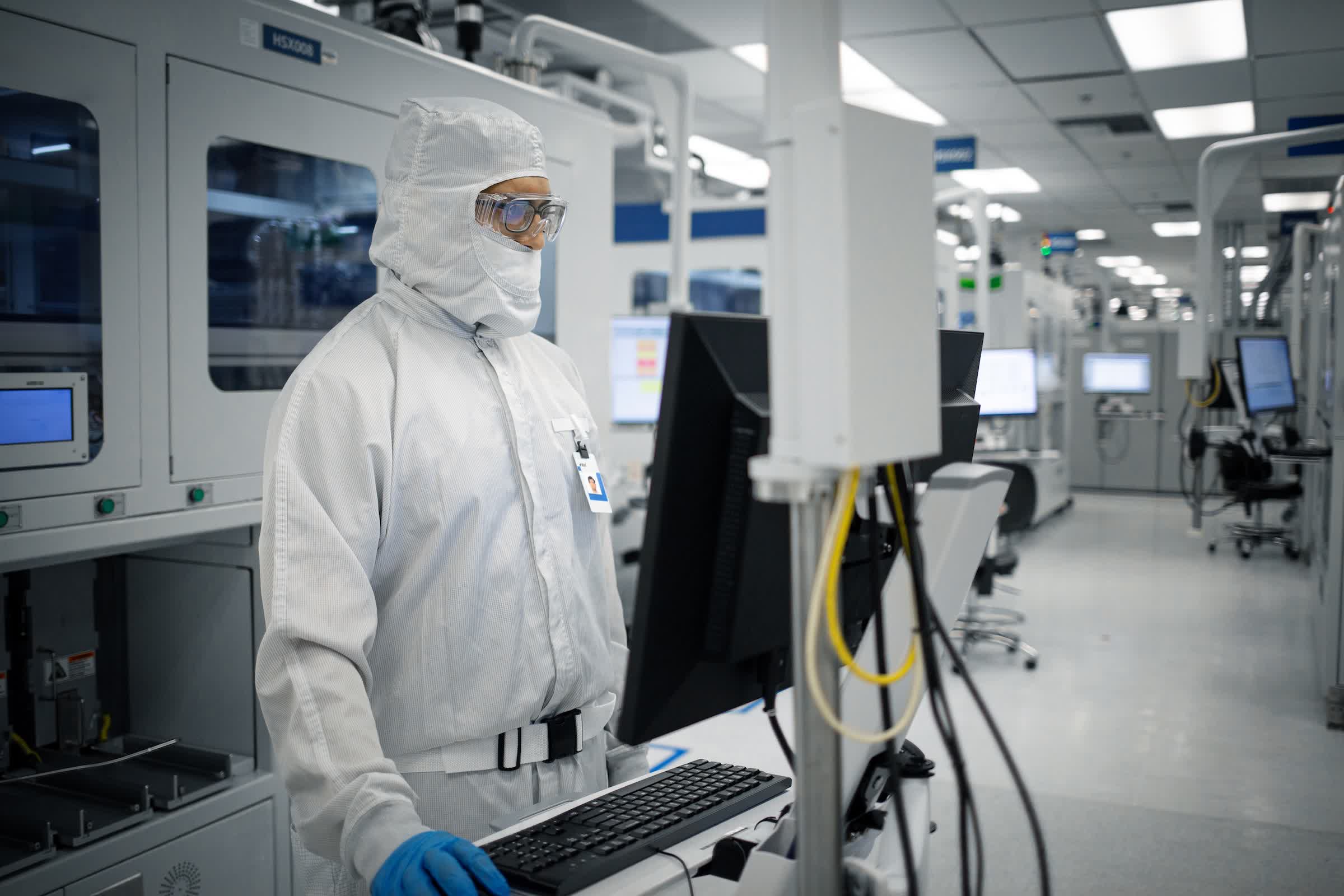
Rumor mill: Google is planning a sharp increase in production of its in-house AI chips, a move that could put it on par with Nvidia in total accelerator volume within the next few years. According to a research note from Fubon, Google plans to deploy between 12 million and 15 million ninth-generation TPUs by 2028.
If those numbers hold, Google’s output would be in the same range as Nvidia’s projected shipments. Fubon estimates that Nvidia supplied 8.2 million data center GPUs in 2026 and could reach 12.4 million by 2028. That would mark a notable shift, with a single cloud provider producing a volume of AI accelerators comparable to the leading merchant chip supplier.
The TPU v9 will use four compute dies, in line with the industry’s shift to multi-die designs, while Google’s planned production is expected to more than double capacity requirements compared with 2027 levels. Packing multiple large dies into a single chip requires advanced interconnect and packaging, and producing them at scale adds complexity.
Manufacturing capacity is likely to be a constraint. Fubon’s analysts suggest that TSMC alone may not be able to meet Google’s demand, pointing to a potential role for Intel Foundry.
Recent reports support that view, indicating that Intel has already secured orders to produce millions of TPUs after Google tested its advanced packaging capabilities. That relationship would make sense given the design requirements of chiplet-based processors. Packaging technologies differ across manufacturers, and package designs built around Intel’s EMIB or EMIB-T are not directly compatible with TSMC’s CoWoS-L.
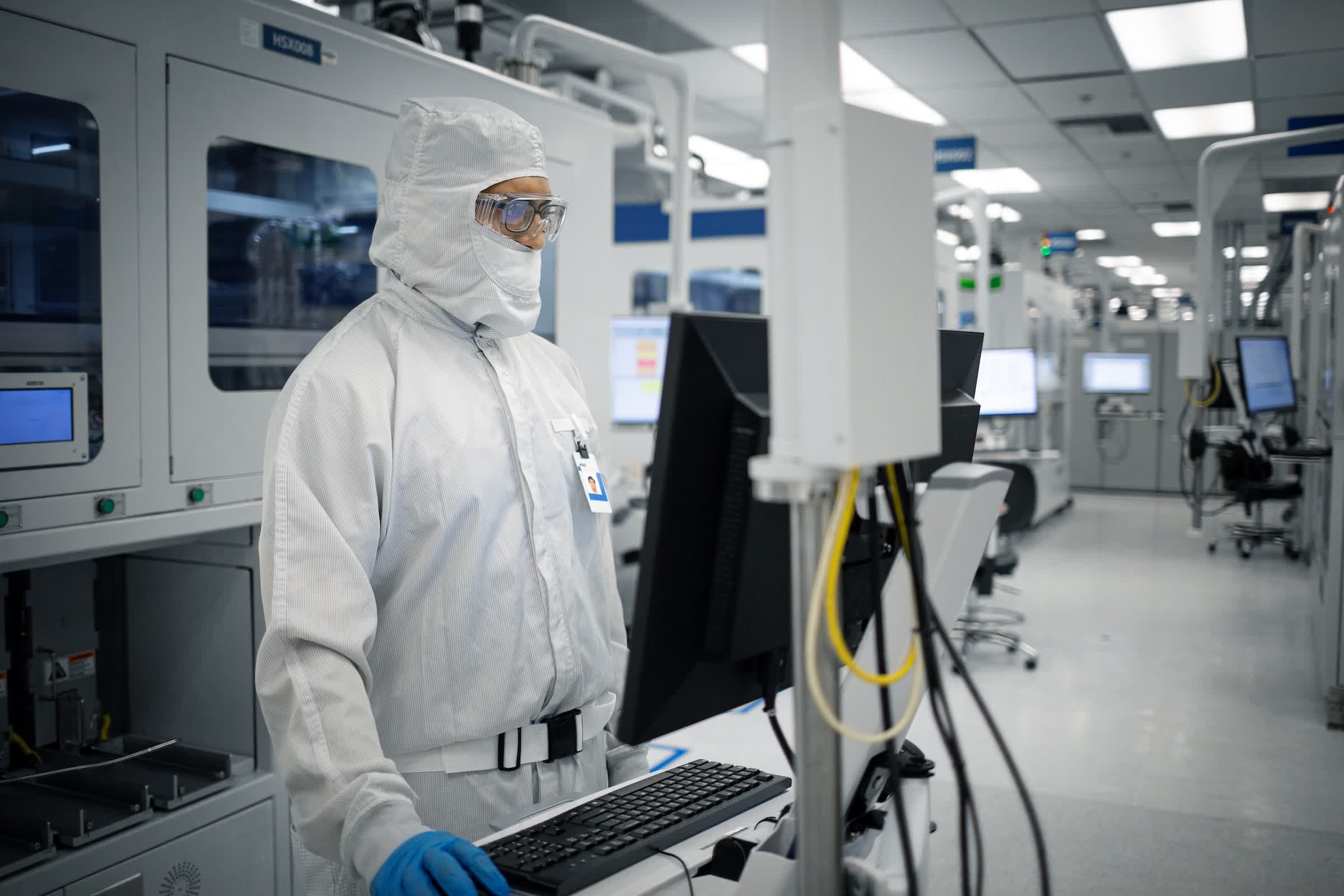
Google has been building its own AI chips for roughly a decade, steadily increasing their role across its infrastructure. What began as a way to support internal workloads has grown into a broader strategy that includes its cloud business. If Google reaches its 2028 target, it would likely become the largest single user of AI accelerators. That does not mean it will stop buying from Nvidia, but it would give the company far more control over its compute stack and supply.
Performance comparisons between TPU v9 and Nvidia’s next-generation systems, including Rubin and Rubin Ultra, are not yet available. But the scale of Google’s plans signals confidence in its approach and suggests that competition in AI hardware is increasingly about deployment volume, not just chip performance.

ASUS has announced the India price and availability of the ASUS Pad, its latest premium Android tablet. The device, which was first unveiled at Computex 2026, will go on sale in the country from August 6. It comes with a 12.2-inch 2.8K OLED display, MediaTek Dimensity 8300 chipset, and a 9,000mAh battery.
Asus Pad Specifications

ASUS has given the Pad a 12.2-inch 2.8K dual-layer OLED display and delivers up to 2,000 nits of peak brightness. The display also covers 100% of the DCI-P3 color space. TUV Low Blue Light certification helps improve viewing comfort, and ASUS Pen 2.0 is supported for writing and drawing. The tablet has a 6.5mm slim profile and weighs 523g. Buyers also get a protective folio case in the box.
The ASUS Pad is powered by the MediaTek Dimensity 8300 chipset. It pairs the processor with 8GB of LPDDR5X RAM for smooth everyday performance. The device can be bought with 128GB and 256GB of UFS 3.1 storage. However, the storage can still be increased through the use of a microSD card up to 1 TB. ASUS uses the MediaTek Dimensity 8300 chipset to power the tablet for performance. The device runs Android 16, has 8GB of LPDDR5X RAM, and comes in 128GB and 256GB UFS 3.1 storage variants. It also supports storage expansion of up to 1TB via a microSD card.
ASUS includes a 9,000mAh battery with 45W fast charging support. The company says the battery reaches 50 percent charge in about 30 minutes. The tablet also offers a 13MP rear camera and a 5MP front camera that supports face unlock. Wi-Fi 6E, Bluetooth 5.3, and a USB Type-C port handle connectivity. It also features an accelerometer, gyroscope, ambient light sensor, and hall sensor. For audio, ASUS has included a quad-speaker setup with Dolby Atmos 360-degree cinematic sound. The tablet also comes with GlideX for sharing files across Windows, macOS, Android, and iOS devices. GlideX supports both wired and wireless connections. These features can make the tablet suitable for entertainment, learning, productivity, and creative work.
ASUS Pad Price, Variants, and Availability
ASUS has launched the Pad in two storage variants in India. It is available in the 8GB+128GB variant for Rs. 45,990 and in the 8GB+256GB variant for Rs. 49,990. It will be available for purchase from August 6 on the following platforms: Flipkart, ASUS eShop, ASUS & ROG Stores, Reliance Digital, and authorized retailers. ASUS is also providing up to 12 months of No Cost EMI at Rs. 3,833/month.


cyber-crime
APUC investigating after criminals claim historical data theft
Advanced Procurement for Universities and Colleges (APUC) says attackers gained unauthorized access to historical data in a cyberattack earlier this month.
The Scottish education procurement body said it immediately contained the mid-July intrusion and was investigating claims that some of the data had been stolen.
“We recently discovered suspicious activity on our IT systems involving unauthorized access to certain historic data,” an APUC spokesperson told The Register. “We took immediate action to contain the incident and are investigating the scope of it, working alongside external technical specialists. There has been no operational disruption to our day-to-day activities.
“We are aware that the group responsible for the unauthorized access has claimed to have taken some historic data from our systems. We are investigating this as a matter of priority. We have notified the relevant authorities and will continue to cooperate with them.”
APUC is Scotland’s procurement center of expertise for universities and colleges, and one of eight members of UK Universities Purchasing Consortia (UKUPC).
These organizations negotiate agreements with approved suppliers, allowing member institutions to buy goods and services without running a separate procurement exercise each time.
APUC arranges these deals as Framework Agreements – pre-vetted terms under which Scottish universities and colleges can place orders with approved suppliers.
The organization lists hundreds of Framework Agreements covering contracts collectively worth hundreds of millions of pounds.
APUC confirmed the attack after sources approached The Register with information about the incident.
Those sources claimed APUC received an extortion demand from the criminals behind the intrusion, although we have not independently confirmed that detail.
The Register understands that the crooks claimed to have stolen APUC data dating back 20 years, and gained admin access through an employee account.
We asked APUC about these claims, whether ransomware was involved, and whether it could identify any inaccuracies in the information we received. The spokesperson did not address those questions.
At the time of writing, APUC did not appear on any of the major ransomware or extortion groups’ data leak sites. ®
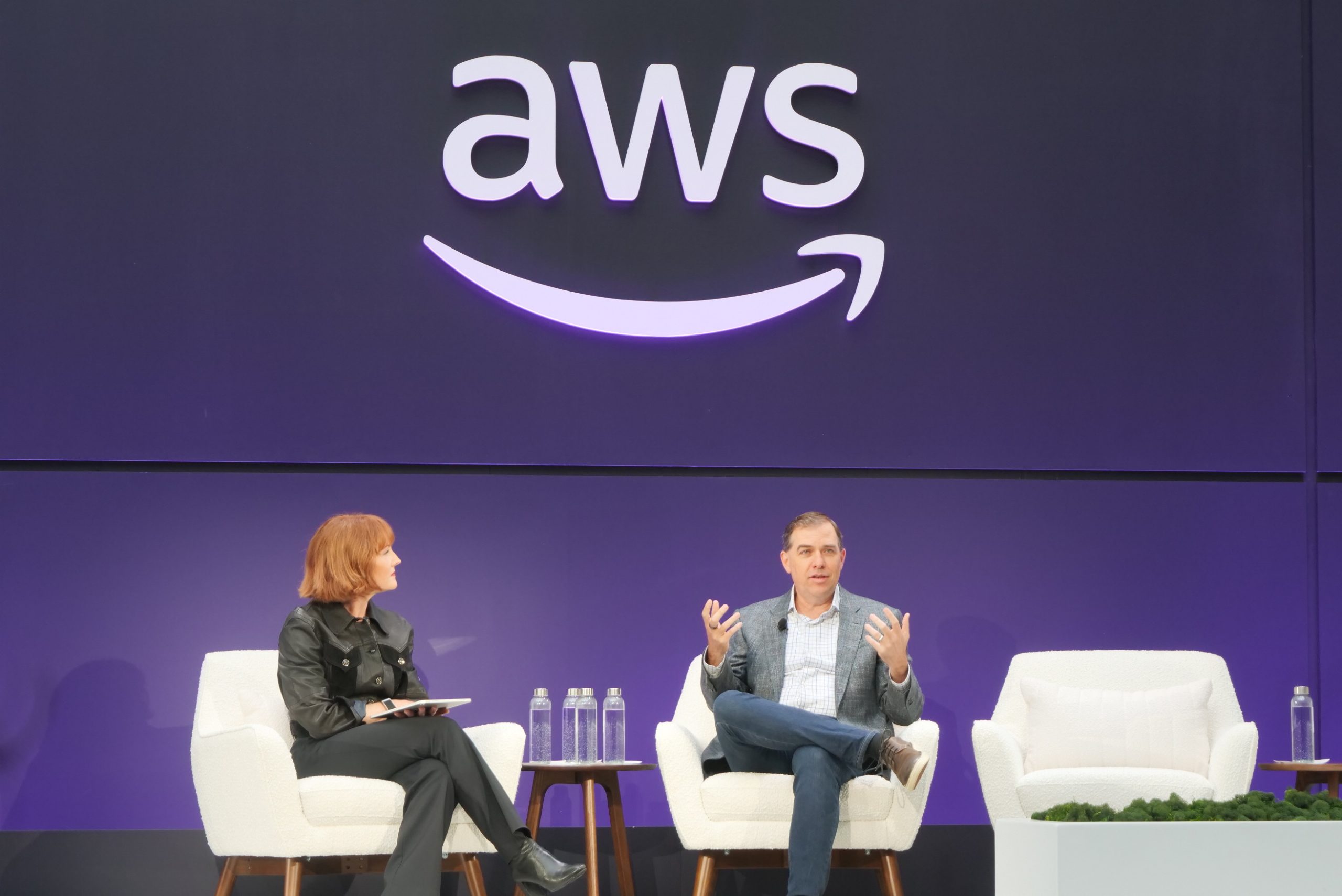
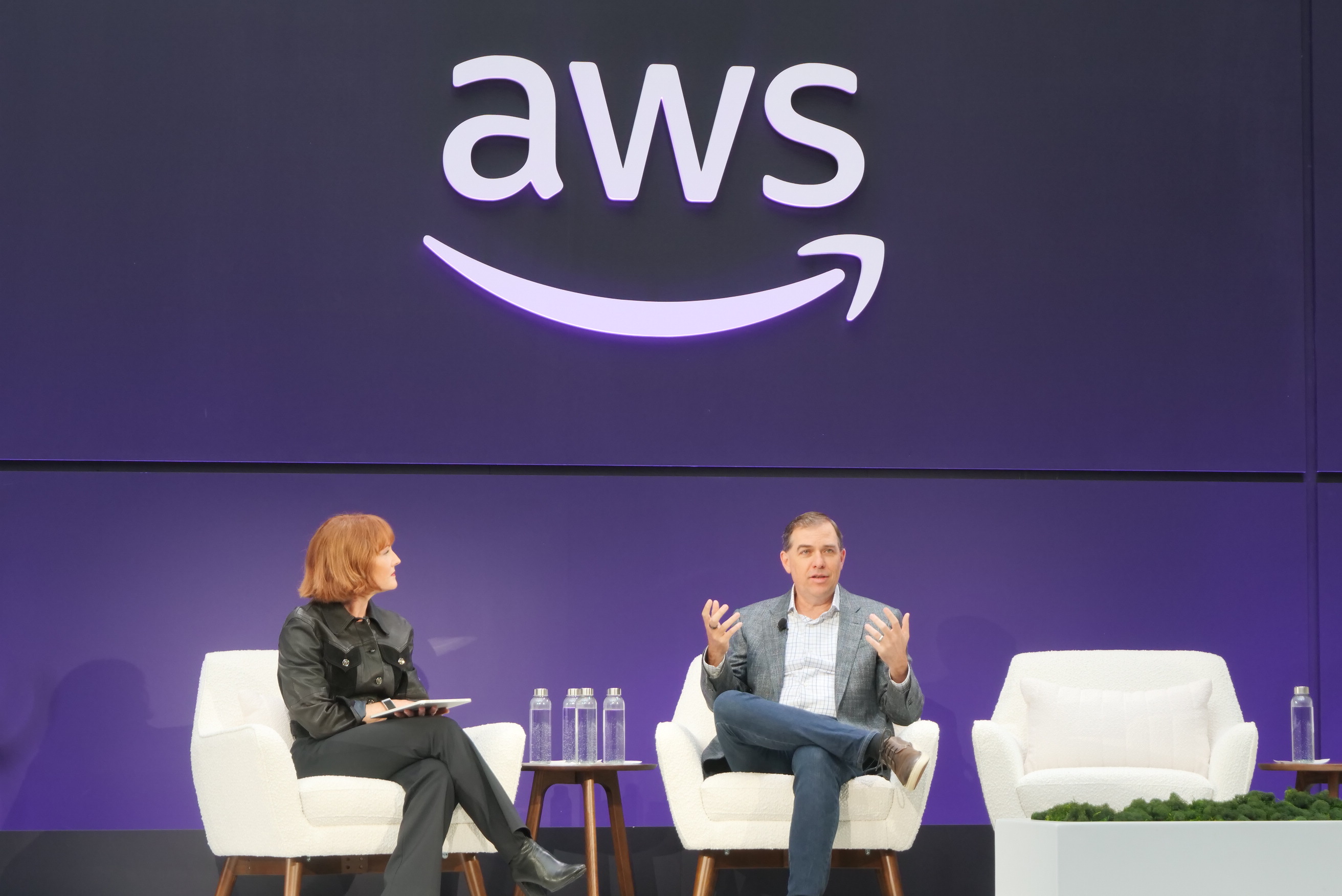
Amazon Web Services revenue grew 37% last quarter, its fastest pace since the end of 2021, but the company is spending so much on data centers and infrastructure to fuel that growth that its free cash flow for the past 12 months turned negative for the first time since 2023.
Overall, the tech giant reported $200.6 billion in revenue for the second quarter, up 20%, with operating income of $27.5 billion, up 43%. That beat Wall Street’s expectations of about $196.4 billion in revenue, and topped the high end of Amazon’s own guidance.
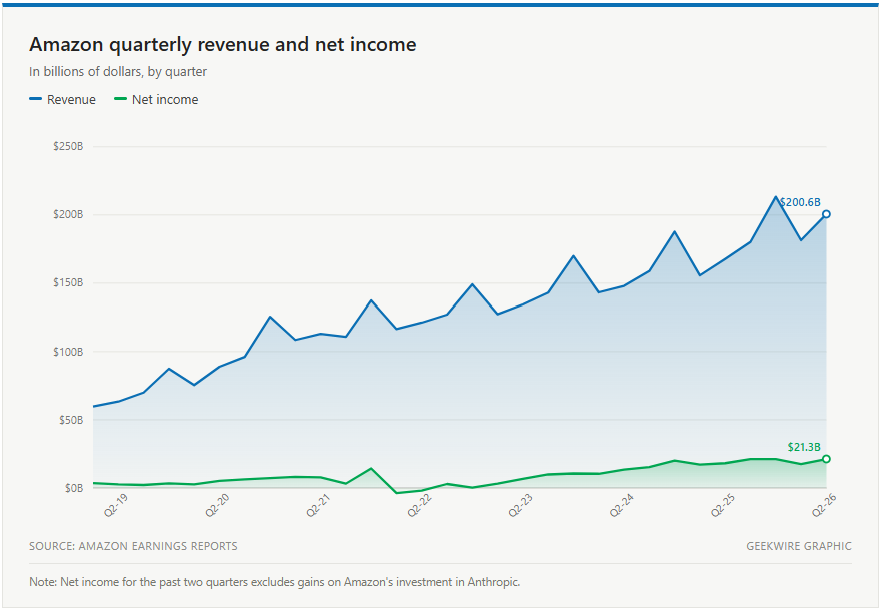
Profits were $62.6 billion, or $5.75 per share. However, that included $53.4 billion in pre-tax gains, primarily on Amazon’s investment in Anthropic, which inflated the bottom line. Excluding those gains, EPS would have been about $1.95, above analyst expectations of $1.82.
Amazon shares rose more than 8% in after-hours trading following the report.
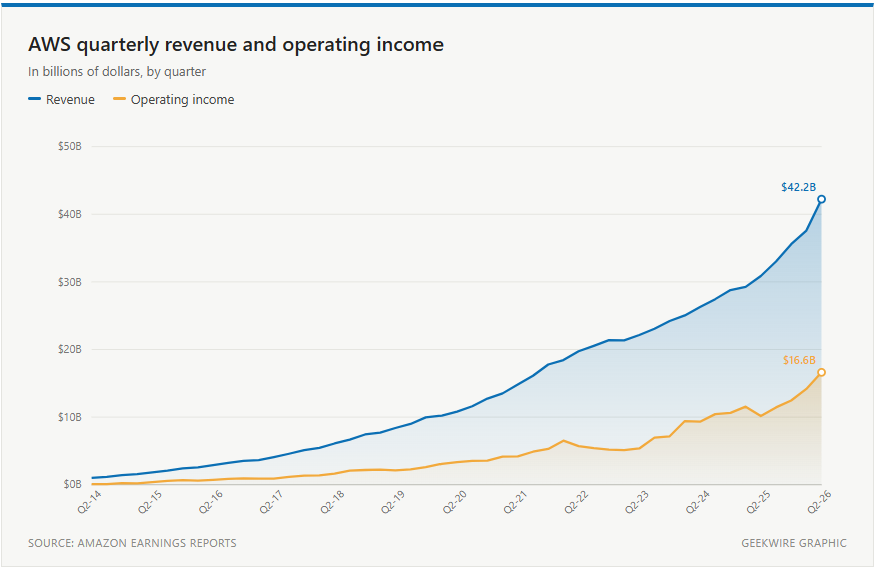
AWS revenue reached $42.2 billion in the quarter, a $169 billion annualized run rate. Operating income in the cloud division rose 64% to $16.6 billion, lifting AWS operating margin to 39.4% from 32.9% a year ago — evidence that the AI buildout is starting to convert into profit, not just revenue.
“AWS is booming,” CEO Andy Jassy said in the release, adding that the company’s AI and chips businesses “each eclipsed run rates of more than $25 billion.” The chips business, which Jeff Bezos called the next pillar of the company this week, was at a $20 billion run rate three months ago.
Amazon’s operations generated $161.4 billion over the past 12 months, but the company spent a net $169 billion on property and equipment — up $66.1 billion from a year earlier, an increase Amazon attributed primarily to AI investments — leaving a shortfall of $7.6 billion in free cash flow.
A year earlier, it had $18.2 billion left over for the prior 12 months, by comparison.
Free cash flow is what’s left after a company covers its operating costs and pays for things like data centers and warehouses. It’s an important measure of financial health, which investors watch closely because it shows how much cash a business actually creates after paying for its own growth.
Update: Amazon raised its capital spending forecast on its earnings call. Jassy said the company now expects to spend about $220 billion in cash capex this year, up from the roughly $200 billion it projected earlier, attributing the increase to the higher cost of memory chips.
He addressed the cash flow squeeze directly, framing it as a matter of timing. Data centers require capital about two years before servers can be installed and start generating revenue, he said, but once open, they can be monetized for more than 30 years without repeating that upfront cost.
Servers and networking equipment run on a shorter cycle, purchased a few months before going into service. Those take a little under three years to break even, Jassy said, against a useful life of at least five to six years.
He said most of Amazon’s AI capacity is now contracted for terms of five years or longer.
“We’ll spend a lot of capex and encounter free cash flow headwinds until these data centers come online, can be monetized, and we get a few years into these servers being utilized,” Jassy said.
Other notes from Amazon’s earnings release:
Online store sales rose 15% to $70.4 billion, up from 10% growth in the same quarter a year ago. It remains Amazon’s largest single revenue line at about 35% of total revenue, and it is the line most directly affected by the decision to move Prime Day into June, into the second quarter. Last year, the annual online sales event took place in the third quarter.
Advertising revenue rose 26% to $19.8 billion, up from 22% growth in the same quarter a year ago. It has generated about $76 billion over the past 12 months, making it one of Amazon’s fastest-growing businesses. Prime Day lifted this line as well, because the event drives a surge in spending by sellers and brands competing for placement.
Third-party seller services revenue, which includes commissions and fulfillment and shipping fees Amazon charges independent merchants, rose 16% to $46.8 billion, up from 10% growth in the same quarter a year ago. Independent sellers accounted for 61% of units sold in Amazon’s stores, roughly flat with recent quarters. Prime Day boosted this line as well.
Subscription services, which includes Prime memberships, grew 12% to $13.7 billion. The line has grown between 10% and 12% every quarter for the past year and a half. Analysts have been expecting a Prime price increase, which has not yet materialized.
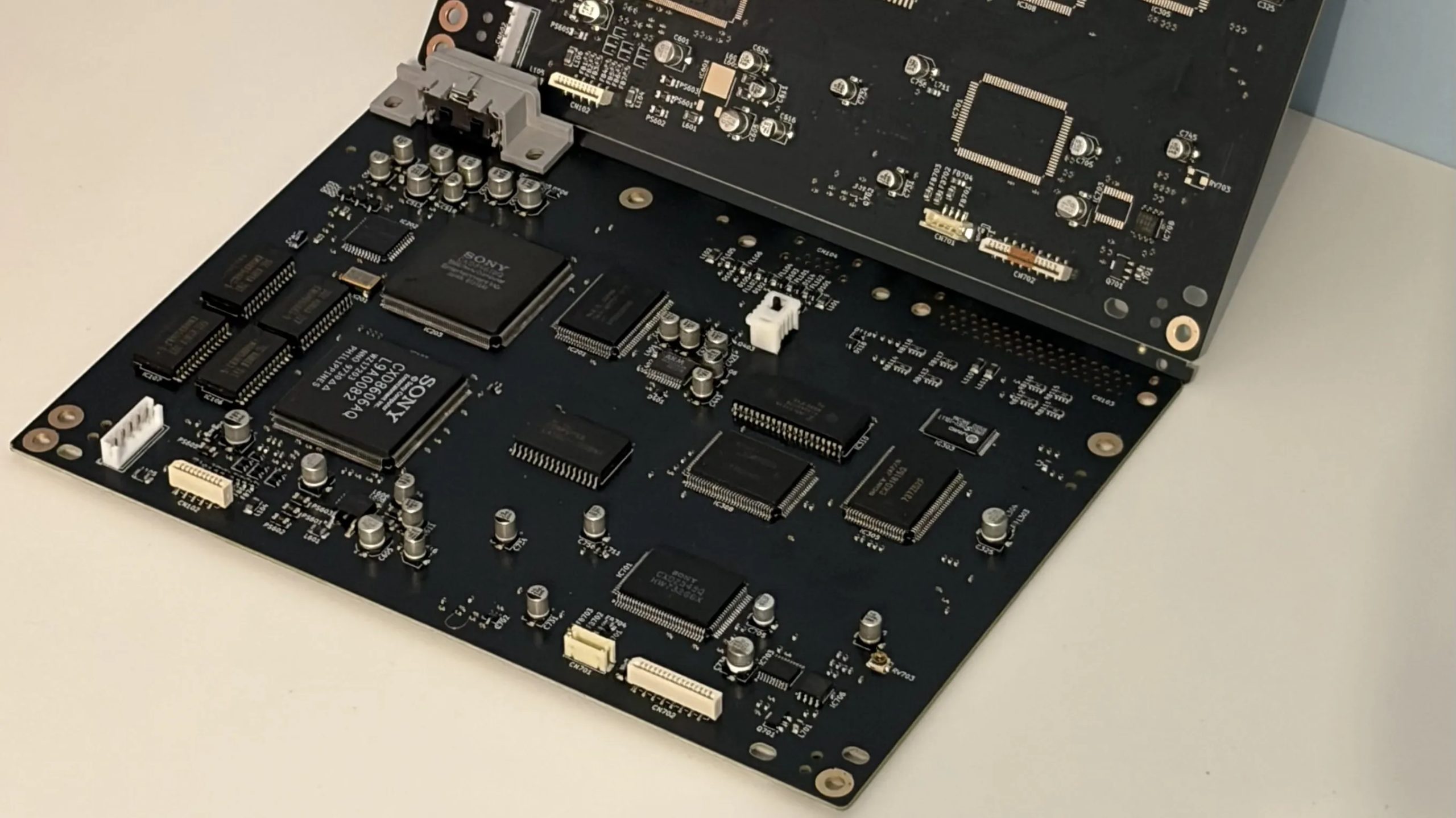
Thanks to things like spilled drinks, leaky batteries, and the general ravages of time, older consoles can be tough to keep going. In particular, excessive damage to a motherboard can make repair difficult or near-impossible to execute even if the rest of the console is in otherwise passable condition. Now, there may be greater hope for those looking to resurrect the worst-treated PlayStations out there, thanks to a new open-source motherboard from [xyzz].
The board is up on GitHub with a CC0-1.0 license. It’s aiming to be a drop-in replacement for the stock motherboard, on to which you would transplant all the necessary proprietary hardware from an existing donor board. The list of transplant parts is quite extensive as you’d expect, including the CPU, GPU, RAM, VRAM, BIOS, sound chips, mechanical control chip, crystals, and all the ports, among others. Some generic parts can still be had off the shelf, but you could also transplant them if so desired. There are some headaches with the current design—namely, it doesn’t fit perfectly with the lid switch connector, and some of the footprints are hard to solder. Still, it’s a great start, and early testing shows that it’s already quite functional.
Fortunately the original PlayStation didn’t have any sort of battery on board to leak all over the place and corrode things, but boards still get damaged in a variety of other un-fun ways. Thus, it’s great to have a potential replacement motherboard on offer to bring badly-damaged machines back to life.
We’ve featured other great restoration projects in this vein before, too, like the efforts to recreate the C64 motherboard from a few years ago. As ever, enthusiasts are doing great work to keep these classic machines alive long into the future.
Thanks to [ToolThatIsTom] for the tip.
South Korea’s Personal Information Protection Commission (PIPC) has fined telecommunications giant KT Corporation KRW 53.979 billion ($39 million) over data protection violations.
The penalty was imposed for an internal network compromise that persisted for nearly 11 months, between October 8, 2024 and September 5, 2025.
PIPC launched an investigation into a potential data breach on September 10, 2025, following user reports of fraudulent micropayments. A day later, the company filed its initial data breach notification, reporting that data of roughly 5,500 customers had been exposed.

The government agency’s investigation determined that the incident exposed the personal information of 16,647 KT subscribers and caused fraudulent mobile payments of KRW 240 million ($167,400) for at least 368 of them.
KT Corporation is South Korea’s largest telecommunications operator, providing mobile and fixed-line communications, broadband internet, IPTV, cloud, data center, and enterprise IT services.
The company, which employs 23,300 people, serves over 13.5 million mobile subscribers, 90% of the country’s fixed-line subscribers, and 45% of high-speed internet users.
Rogue mobile station
The point of breach was a lost KT cellular base station called a femtocell, which contained a valid authentication certificate.
The attackers retrieved this certificate and installed it on a self-made device, which then appeared as a legitimate part of KT’s network, capturing cellular traffic from nearby devices connecting to the rogue femtocell.
This allowed the hacker to intercept communications between users’ devices and KT’s core network, including mobile phone numbers, IMSI, and IMEI numbers.
Eventually, the attackers combined the intercepted data with additional personal information and captured SMS and ARS authentication codes used for mobile micro-payments.
PIPC notes that KT installed femtocells itself, fully owned the devices, and controlled network authentication and authorization.
The Commission alleges that KT’s security controls were inadequate because femtocell certificates remained valid for 10 years, connections weren’t restricted by source IP addresses, and a route existed that bypassed the femtocell management server.
These weaknesses allowed the hackers to remain connected to KT’s network and collect sensitive client data for 11 months, without being detected.
BFDoor malware infection
During the investigation, PIPC also discovered that 38 KT IT service network servers had been compromised by malware, including BPFDoor, in March 2024.
BPFDoor is a stealthy Linux and Solaris backdoor publicly documented in 2022 that evaded detection for more than five years.
PwC later linked its use to the China-nexus Red Menshen espionage group that targeted telecommunications providers and organizations in other critical sectors.
The malware uses Berkeley Packet Filter (BPF) technology to passively monitor network traffic, allowing attackers to activate the malware with specially crafted “magic” packets without opening listening ports, effectively bypassing firewall protections and enabling covert remote shell access.
The Commission alleges that KT knew about the malware infection since March 2024, but failed to report it to the authorities, and handled the incident internally with no transparency towards its customers.
Later, the firm even deleted logs from some compromised servers while conducting malware inspection, following a malware breach on another telecom firm, LG U+.
LG U+ followed a similar evidence-wiping approach, reinstalling the operating system OS and disposing of servers before the investigators could determine the full impact of the breach.
Due to KT wiping those historical network logs, the Commission says it could not determine whether additional customer data had been stolen.
As part of the enforcement action, PIPC ordered KT to strengthen security controls for femtocells and other telecommunications equipment, reinforce governance over personal information protection, ensure its Chief Privacy Officer plays a substantive role in oversight, and expand ISMS-P certification to cover its mobile network systems.
The Commission also announced plans to pursue legislative changes that would introduce stronger penalties for companies that conceal or destroy evidence before or during investigations.

Security teams log 54% of successful attacks and alert on just 14%. The rest move through your environment unseen.
The Picus whitepaper shows how breach and attack simulation tests your SIEM and EDR rules so threats stop slipping by detection.
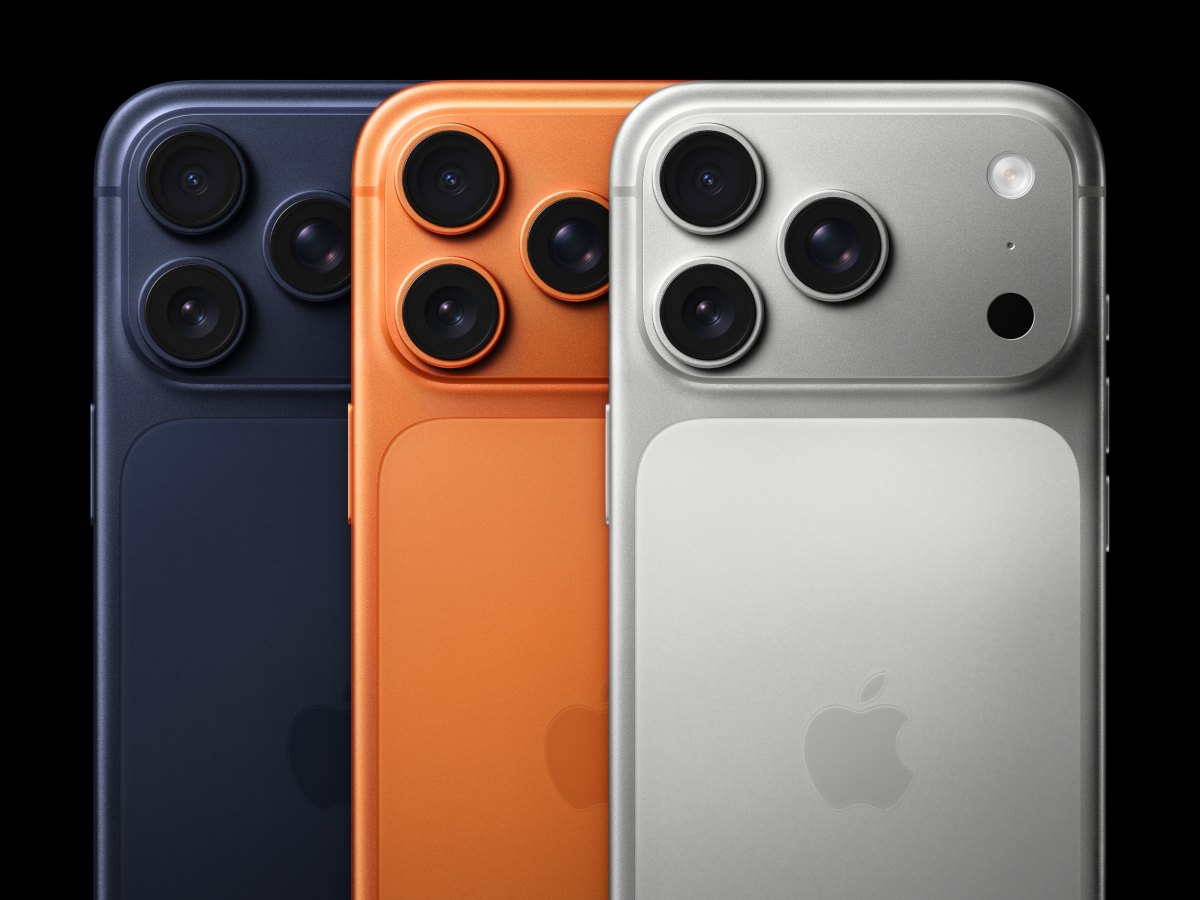

Q3 revenue for 2026 stood at $109.4bn, up 16pc year-on-year.
Outgoing Apple CEO Tim Cook has warned of potential supply issues for iPhones and other Apple products in the months ahead despite the company reporting what Cook called its “strongest June quarter ever” yesterday (30 July).
A more cautious than anticipated outlook for Q4 – revealed on a conference call with analysts and investors following the publication of Q3 results – forecast growth of between 9pc and 11pc, less than the analyst benchmark of more than 12pc.
Apples shares fell by around 7pc last night on the back of the forecast.
Third fiscal quarter revenue for 2026 stood at $109.4bn, up 16pc year-on-year. Sales for iPhones came in at $54.3bn, Mac computers at $10.4bn, iPads at $6.2bn and wearables at $7.9bn for the three months ending on 27 June.
“We continue to expect high levels of demand. However, with less flexibility in the supply chain, we expect the impact from the supply constraints to increase significantly sequentially,” Cook said on the call.
“The DRAM market has three suppliers. Obviously, if there were more suppliers, that would be good, and it would help us on the supply side and perhaps the pricing side. It’s unclear on the pricing side, but it could help on the supply side. And so we’re evaluating all options.”
He said that beyond September, the market pricing for memory would continue to rise, resulting in “an increasing impact on our business”.
He equated the current surge in the cost of and demand for memory chips to a “100-year flood”, while also noting that demand for Apple’s phones and computers was currently even higher than anticipated.
“It’s an incredibly strong iPhone and Mac product cycle that has really yielded a demand beyond our expectation,” he said.
Last month, Apple raised prices on a variety of its product lines. At the time, a company spokesperson told news publications that “rapid expansion of AI data centres has created an extraordinary surge in demand for memory and storage”, adding that Apple has “never seen a component price increase this much, this quickly”.
Earlier this week, the company launched a new leasing service for devices including iPhones, Macs, iPads and Apple Watches. The company posted its “best March quarter ever” three months ago, driven largely by demand for iPhones.
On 1 September, Tim Cook will be replaced as CEO by John Ternus, the company’s current senior vice-president of hardware engineering.
“There is so much opportunity for us with everything that’s happening in this space, and we’re just really focused on our plans and very excited about it,” Ternus said during yesterday’s earnings call.
Don’t miss out on the knowledge you need to succeed. Sign up for the Daily Brief, Silicon Republic’s digest of need-to-know sci-tech news.
Business2 seconds ago
Sourcing smarter, not harder (your AI agent just clocked in)

Crypto World49 seconds ago
Why Russia Is Choking Ukraine’s Black Sea Ports

Politics2 minutes ago
Hackney votes to end 58-year Haifa twinning, citing “anti-racist values”


-

 Fashion7 days ago
Weekend Open Thread: Brooks Brothers
-
 Sports5 days ago
Commonwealth Games boxing: Jadumani Singh seals dominant 5-0 win over Pakistan’s Sumama Rehman to enter quarter-finals | Commonwealth Games News
-

 Business2 days ago
Why Trees Belong on the Risk Register
-

 Tech5 days ago
Intel is reversing course and bringing hyper-threading back to its server chips
-

 Crypto World6 days ago
Ripple bought a bank in pieces. The $4 billion audit
-

 Politics4 days ago
Luke Littler dismantles Gerwyn Price to retain title in Blackpool
-
 Entertainment7 days ago
A New Post-Apocalyptic Gundam Anime Series Blasts Into SDCC
-

 Politics3 days ago
The Part of the Electric Transition Nobody Wants to Discuss
-

 News Videos5 days ago
BITCOIN JUST ENTERED THIS CRITICAL ZONE…
-

 Business2 days ago
Major shareholder moves on Canyon
-

 Crypto World5 days ago
XRP Ledger adds $2.6B as RWA inflows rank second
-

 News Videos1 day ago
Bitcoin Enters the 3rd Stage of the Bear Market
-

 Politics5 days ago
Spain sweeps the board at 2026 World Cup with individual awards
-
 Entertainment3 days ago
‘Stargate’ Creator’s New Sci-Fi Series Returns for Season 3 Tomorrow
-

 Entertainment6 days ago
Sara Gilson Killed By Husband After Viral “Pedophile” TikTok Video
-

 Crypto World3 days ago
Kraken Enables Retail Access to Jersey Mike’s IPO via Tokenized Shares
-

 Tech6 days ago
Anthropic launches Claude Opus 5, a cheaper AI model for coding, agents and enterprise workflows
-

 News Videos3 days ago
Claude: Build Financial Dashboards in Minutes (2026)
-

 Tech4 days ago
New macOS Sequoia & Sonoma security updates for older Macs
-

 Politics21 hours ago
Luke Littler’s dominance sparks GOAT debate
You must be logged in to post a comment Login