

Business
The Superyacht Influencer and Questions Over Mother City Capital


He has been called the “Superyacht Influencer” by Forbes, featured in Bloomberg, GQ, Tatler and Robb Report, and commands a social footprint that reaches more than 100 million people each month.
Jonny Dodge presents himself as one of Britain’s most successful luxury entrepreneurs, with a portfolio of eight companies spanning superyachts, private aviation and Formula One hospitality. But a developer complaint currently dominating the homepage of mothercitycapital.com raises direct questions about the financial practices connected to his network.
The Public Empire
Dodge has spent more than 15 years building what he describes as an ecosystem of luxury businesses, each one feeding the next. His flagship company, MyOcean (my-ocean.com), is a community-driven superyacht platform covering charter, sales and management. YourSky (yoursky.com) extends the model into private aviation, offering jet and helicopter charter alongside bespoke travel itineraries. GP Management handles Formula One hospitality, from yacht parties in Monaco harbour to paddock access and corporate incentive programmes. The Dodgeball Rally, a supercar road trip from Monaco to Croatia running for more than 16 years, draws fleets of Ferraris, Lamborghinis, Bugattis and Koenigseggs on four-day routes each season.
Across these four core brands, and a wider portfolio of eight companies in total, Dodge reports 452,000 Instagram followers, three global offices and a combined monthly social reach exceeding 100 million. His stated approach is asset-light and focused on lifetime client value. As he told SuperYacht Times: “I am used to coming into industries and disrupting them.”
Mother City Capital
Mother City Capital was positioned as the investment layer of this broader ecosystem, described on its own site as wealth management “inspired by African values and global perspectives.” The proposition was straightforward: translate Dodge’s ultra-high-net-worth client base into a capital management product for internationally mobile investors.
What the site now displays is not a company pitch. It is a detailed complaint from a developer identified as rajathuraj, who claims to have built both mothercitycapital.com and a second website, maxhussmann.com, and alleges that $7,000 USD in agreed fees has not been paid. The developer names Bianca Caprozio as the lead contact on the project, and identifies Jonny Dodge and a second individual, Oliver Clarke, as recipients of $10,000 USD in commissions routed through YourSky and a Swiss entity, Cosatravel.
The complaint goes further, alleging that the construction of maxhussmann.com involved identity theft, and stating that the developer intends to report the matter to police unless payment is received. A reference to Caprozio’s association with the United Nations Reham al-Farra Memorial Journalism Fellowship is included in the statement, establishing her public profile as context for the allegations.
The YourSky Connection
The specific mention of YourSky is significant. YourSky is not a peripheral part of Dodge’s portfolio. It is one of his three named flagship companies, prominently featured on his personal website and in his Instagram bio alongside MyOcean and GP Management. The allegation that commission payments were routed through YourSky places the disputed financial flows at the centre of his primary business operations, not at the edges.
Cosatravel, the Swiss entity referenced in the complaint, does not feature in Dodge’s public-facing company listings or in any of his media coverage. Its role, as described in the developer’s statement, appears to be as an intermediary in the commission structure connecting the parties named.
A Pattern Worth Examining
Dodge’s business model, asset-light and built around commissions, referral networks and cross-selling across portfolio companies, creates a structure where financial relationships between entities are not always visible to outside parties. For a network handling significant sums in superyacht bookings, private jet charters and Grand Prix hospitality packages, an unpaid developer invoice of $7,000 is a modest figure. But the specificity of the complaint, naming individuals, amounts, corporate entities and an alleged criminal act, gives it weight beyond its headline number.
The complaint on mothercitycapital.com remains live. Dodge has not issued a public response.
His first investment, it has been noted in interviews, was a nightclub. That unconventional entry point set a tone that has defined his approach across every business since. Whether that same approach now extends to the wealth management arm his network was building is a question that, for the moment, the mothercitycapital.com homepage answers for itself.



Italy’s Meloni says Trump ’totally invented’ story that she begged him for photo
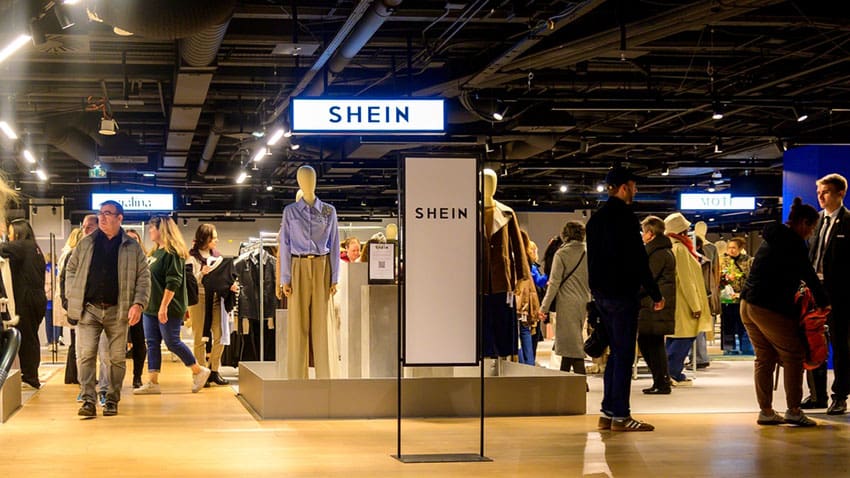
Ministers are weighing up whether parts of a clampdown on the low-value imports that power Shein and Temu could arrive sooner than planned, after sustained lobbying from British retailers who say the current timetable leaves the high street exposed.
The government confirmed last year that reform of the so-called de minimis regime, which lets goods worth less than £135 enter the UK without customs duties, would not be fully in place until 2029 because of the complexity of building a new customs system from scratch. Now, officials are understood to be examining whether elements of that reform can be brought forward while still keeping goods flowing freely at the border.
The consultation on the design of a replacement system closed in early March, and ministers are still working through the responses. For retailers who have spent the better part of two years arguing that the relief tilts the pitch against them, even that assessment period feels too slow.
The de minimis exemption has become one of the defining battlegrounds in the contest between established British retailers and the fast-growing overseas platforms snapping at their heels. Shein and Temu, both founded in China, have expanded rapidly in Britain by shipping low-cost goods directly from manufacturers to shoppers, sidestepping the duties and overheads that domestic firms shoulder when they import through conventional supply chains.
Names including Sainsbury’s, Currys and AO World have argued that the carve-out hands overseas rivals a structural advantage. It is an argument that has steadily gained volume, with UK retailers calling on the government to end China’s tax-free advantage and warning that the playing field has been tilted for too long.
The government has already said it intends to abolish the exemption, a position set out when Rachel Reeves moved to review the import tax loophole in its crackdown on cheap overseas goods. But it has insisted that a phased transition is needed to avoid disruption at ports and customs checkpoints. Officials say a new system for collecting duties on low-value parcels has to be built, in their words, “from the ground up” to cope with the sheer volume of packages arriving in the country, and that businesses moving and selling food will also need time to prepare. The full design is set out in the Treasury’s consultation on reforming the customs treatment of low-value imports.
The timetable has frustrated retailers, who have stepped up their lobbying in recent months. Last week Andrew Murphy, chief executive of toy seller The Entertainer, wrote to the government urging ministers to accelerate the reforms, describing the current schedule as “unacceptable”.
Industry groups have also warned that Britain risks becoming an outlier as other major economies move faster. The United States scrapped its own low-value import exemption last year, while the European Union is preparing to introduce a temporary customs duty on low-value parcels from next month before bringing in wider reforms, a shift confirmed by the European Commission’s taxation and customs directorate. The fear among executives is that, as doors close elsewhere, more low-cost and potentially unsafe goods will simply be redirected towards the UK, a concern that has already prompted warnings that delay risks turning Britain into a ‘dumping ground’.
The Treasury, for its part, is holding the line on both the destination and the pace. “The rapid growth in low-value imports is hurting our high streets and retailers,” it said. “We are removing the customs duty relief for low-value imports and reforming the way these goods are declared into the UK to ensure all goods are appropriately controlled.
“This is a significant reform which backs our businesses to compete and grow, controls safety and flow of goods at our border, and keeps the UK in line with our international partners.”
For Britain’s retailers, the principle is now settled. The fight, increasingly, is over the clock.

Jamie Young
Jamie is Senior Reporter at Business Matters, bringing over a decade of experience in UK SME business reporting.
Jamie holds a degree in Business Administration and regularly participates in industry conferences and workshops.
When not reporting on the latest business developments, Jamie is passionate about mentoring up-and-coming journalists and entrepreneurs to inspire the next generation of business leaders.
Intel: Priced For Perfection Amid Game-Changing Apple Deal

Available for over a year
The US economy backs Elon Musk’s vision for sending people to Mars, the moon and beyond with SpaceX. Elon Musk’s rocket, telecommunications and artificial intelligence company SpaceX has listed on the Nasdaq stock exchange with a value of $2.2 trillion; making him the world’s first trillionaire in the process. Other AI companies, including Open AI and Anthropic have plans to follow suit but what does that mean for the US economy and global financial stability?
In this episode, Justin speaks to Ryan Mac – an investigative technology reporter for the New York Times who has extensive experience covering Elon Musk and other leaders in the AI field. SpaceX’s public valuation has made millionaires of many of its past and current employees and generated around $85 billion for the company; money that Elon Musk says is essential to fulfill the company’s plans to build bases on the Moon, put data centres into orbit and send human beings to Mars. But what happens if those plans remain unfulfilled?
As more companies offer shares to investors and the general public, Justin and Ryan explore whether America is gambling on the promise of AI? And is the US economy becoming dangerously reliant on one industry?
HOSTS:
• Justin Webb, Radio 4 presenter
GUEST:
• Ryan Mac – New York Times investigative technology correspondent
GET IN TOUCH:
• Join our online community: https://discord.gg/qSrxqNcmRB
• Send us a message or voice note via WhatsApp to +44 330 123 9480
• Email Americast@bbc.co.uk
• Or use #Americast
This episode was made by Tom Gillett, Grace Reeve, Alix Pickles and Purvee Pattni. The technical producer was Ben Andrews. The series producer is Purvee Pattni. The senior news editor is Sam Bonham.
If you want to be notified every time we publish a new episode, please subscribe to us on BBC Sounds by hitting the subscribe button on the app.
You can now listen to Americast on a smart speaker. If you want to listen, just say “Ask BBC Sounds to play Americast”. It works on most smart speakers.
US Election Unspun: Sign up for Anthony’s BBC newsletter: https://www.bbc.co.uk/news/world-us-canada-68093155
Americast is part of the BBC News Podcasts family of podcasts. The team that makes Americast also makes lots of other podcasts, including Newscast. If you enjoy Americast (and if you’re reading this then you hopefully do), then we think that you will enjoy some of our other pods too. See links below.
Newscast: https://www.bbc.co.uk/sounds/series/p05299nl
Top Comment: BBC Sounds – Top Comment – Available Episodes
Radical: https://www.bbc.co.uk/sounds/brand/p0gg4k6r
The Global Story: https://www.bbc.co.uk/sounds/brand/w13xtvsd
Business
Nifty IT crashes 6% to 3-year low as Infosys, HCL Tech, other IT stocks crash up to 9%. Time to buy the dip?

The Nifty IT index plunged to 26,634.50 on Friday, the lowest level seen by the sectoral index since April 2023. It is currently the top sectoral loser on the market today. Infosys shares led losses, crashing nearly 9%, while those of TCS, Mphasis, LTI Mindtree, Tech Mahindra, Persistent Systems and HCL Tech tumbled 4-6%.
This follows an 11% crash in Accenture’s share price on Wall Street after the consulting major revised its FY26 revenue growth guidance to 3-4%, compared with its earlier outlook of 3-5%. The company also projected fourth-quarter revenue of $17.75-18.4 billion, falling below Street expectations of $18.47 billion, according to LSEG data.
Accenture’s softer outlook may have retriggered worries that enterprises remain cautious on discretionary spending related to IT consulting and digital transformation projects, even as investments in artificial intelligence and cybersecurity continue. Indian IT companies derive a major portion of their revenue from the US economy. Hence, worries around reduced discretionary spending may have led to the sharp selloff in the stocks on Dalal Street.
Also read: TCS, Infosys, Wipro, other IT stocks crash up to 9% as Accenture lowers FY26 guidance
Should you buy the dip in IT stocks?
The sharp sell-off in Accenture overnight is the kind of move that confirms rather than introduces what has been a slowly building structural reality, said Harshal Dasani, Business head at INVasset PMS. “The Nifty IT index falling 6% is the predictable read-through. The valuation story is now the more uncomfortable conversation. Indian IT services trading at 16-18 times earnings with single-digit revenue growth expectations is expensive, not cheap,” he added.

The honest framing is that traditional IT services is increasingly looking like a sunset business in its current form, according to Dasani. “The stance on Indian IT remains firmly cautious. Selective interest stays reserved for credible AI-native and hyperscaler-aligned firms; the broader sector deserves significantly lower multiple expectations,” he added.
VK Vijayakumar, Chief Investment Strategist at Geojit Investments, however differed in his opinion, saying that buying in IT stocks can emerge at lower levels since valuations are becoming attractive after the sharp correction.Also read: Why Accenture’s warning sparked a Rs 1.35 lakh crore meltdown for TCS, Infosys, other IT stocks
Key technical levels to watch out for Nifty IT
The Nifty IT Index plunged over 6%, breaking below its previous swing low of 27,078 recorded on May 14. Technically, the index is trading below its key short and long-term moving averages, said Sudeep Shah, Head of Technical and Derivatives Research at SBI Securities.
He highlighted that the index’s RSI has slipped below 40, signaling increasing bearish momentum, while the DI- has crossed above DI+ on the ADX indicator, highlighting strong seller dominance. The 27,450–27,500 zone is expected to act as a key resistance and the trend is likely to remain bearish as long as the index stays below this zone, according to the analyst.
Also read: Why is market falling today?
(With inputs from agencies)
(Disclaimer: Recommendations, suggestions, views and opinions given by the experts are their own. These do not represent the views of The Economic Times)

A site that once housed live performance venue, known as The Bakery, has been earmarked for a new 800-person tavern.

John Roberts does not do diplomatic. The founder and chief executive of AO World has rounded on the government after the online appliances retailer confirmed it is shifting the bulk of its customer contact operation to South Africa, a move he laid squarely at the door of higher employment taxes and a rising minimum wage.
The company, best known for selling everything from laptops to fridges and washing machines, has already offshored around 150 sales roles, banking savings of roughly £2 million so far and pointing to annualised cost reductions of about £4 million. A further 50 jobs are due to be created in South Africa, with most of AO World’s customer contact work expected to be based overseas by next March.
Roberts, who built the business from a £1 pub bet in 2000, said the retailer was carrying an extra £8.5 million in annual costs after the government’s decision last April to lift employer national insurance contributions and push through an above-inflation increase to the minimum wage.
“The brutal truth is that, of course, these roles could have been in the UK,” he said. “When you make these staff ever more expensive and ever more inflexible, that’s what businesses are going to do. We’ve got a political class that doesn’t understand business. They live in an economic fantasy land.”
It is a complaint that will resonate well beyond Bolton. The combined weight of a 15 per cent employer national insurance rate and a sharply lower secondary threshold, introduced in April 2025 alongside a 6.7 per cent rise in the National Living Wage to £12.21 an hour, has reshaped the maths for any firm with a large, lower-paid workforce. AO World is simply one of the larger names to act on it, joining the likes of Morrisons, which has blamed Labour’s “policy choices” for a wave of store closures, and JCB, which paused a 500-job hiring drive as the tax changes bit.
For smaller employers the squeeze is arguably sharper still, with the lower threshold dragging part-time and entry-level roles into charge for the first time. Guidance from the government-owned British Business Bank underlines how tightly wage floors and payroll taxes now interact, a dynamic Business Matters has tracked as employers absorb a national insurance bill running billions of pounds above Treasury forecasts.
Yet the political broadside lands on a set of results most chief executives would happily own. On an adjusted basis, pre-tax profit rose a better-than-expected 16.1 per cent to a record £50.5 million in the year to 31 March, helped by a turnaround at the contract mobile phone arm and at MusicMagpie, the used-electronics specialist acquired in 2024. Revenue climbed 11.4 per cent to £1.3 billion, also ahead of expectations, with a 17 per cent jump in television sales in May as shoppers geared up for the football World Cup.
The board rewarded investors accordingly, unveiling a £10 million special dividend and confirming plans to return a further £20 million this year, split evenly between another special dividend and a fresh share buyback. The numbers vindicate the “pivot to profitability” Roberts has pursued since the pandemic-era online boom faded, a period in which AO’s shares were battered by wobbling consumer confidence, rising labour costs and fierce competition.
That reset has been deliberate. Roberts has spent recent years taking what he calls “the grit out of the machine”, stripping out costs and simplifying the group after it considered shutting its loss-making mobile division and, in 2022, closed its German operation following a strategic review. The post-pay mobile business is now profitable after improved commercial terms with network partners and expanded tie-ups with Samsung and Lebara, while analysts at Peel Hunt flagged a return to profit at MusicMagpie.
The wider picture is one of a business in rude health. AO World, a constituent of the FTSE 250, added 720,000 new customers over the year to take its base to 13.3 million, and has wiped out its debt, swinging to £16.4 million in net funds from liabilities of around £35.9 million a year earlier.
Investors, though, were unmoved on the day. Shares gave up an early gain of 2.6 per cent to close down 4.69 per cent, or 4½p, at 91½p, with the stock off roughly 3 per cent amid heightened geopolitical tensions since February.
Management, too, struck a note of caution, warning that the external environment remained “uncertain, with ongoing geopolitical pressures impacting both consumers and input costs across the economy”. Profit for the 2027 financial year is expected to come in around £54.6 million, broadly flat on the year.
For now, the headline AO World would rather you remembered is the record profit. The one its founder wants ringing in ministers’ ears is the 200 jobs that, on his telling, did not have to leave Britain at all.

Amy Ingham
Amy is a newly qualified journalist specialising in business journalism at Business Matters with responsibility for news content for what is now the UK’s largest print and online source of current business news.


Spend a day at Shanghai Disneyland and you wouldn’t know Chinese consumers are struggling.
Wang Jiandong and his girlfriend Yan Xu said they have been skipping meals out and scrimping on day-to-day necessities so they could afford to enjoy the park.
“We save in our daily lives so we can spend more on trips,” Wang explained while taking photos with Yan in front of Disney’s iconic castle. “This is a romantic place.”
Shanghai Disneyland celebrated its 10th anniversary this week, with former Disney CEO Bob Iger flying in for the festivities.
“I’m feeling filled with pride really,” Iger told CNBC during an interview at the park. “I’ve been involved in this project from the very beginning in the late ’90s.”
Iger said the occasion carried extra significance “knowing not only how successful it’s been, but really how important it is in many respects, not just to the Walt Disney Co. but to the people of China.”
Former CEO of Walt Disney Company Bob Iger (2L) and his wife Willow Bay attend a celebratory event marking the 10th anniversary of Shanghai Disney Resort in Shanghai on June 15, 2026.
Jade Gao | AFP | Getty Images
Shanghai Disneyland hit 100 million cumulative visitors in 2025, according to the company. It’s a relatively new but important foothold in Disney’s more than 100-year history.
Disney’s experiences division, which includes its theme parks, resorts, cruises and merchandise, reported nearly $9.5 billion in revenue during the company’s most recent quarter, ended in March, a 7% increase year over year. The division is the second largest at Disney’s, accounting for almost 40% of the company’s overall revenue and nearly 60% of its operating income.
While Disney executives have noted recent softness in international visitors to the company’s U.S. parks, its outposts in other countries are faring better.
According to the Themed Entertainment Association, which tracks global theme park data, the Shanghai park attracted 14.7 million visitors in 2024 — a 5% year-on-year increase — making it the fifth most-visited theme park in the world behind Disney parks in Orlando, Florida; Anaheim, California; and Tokyo as well as Universal Studios Japan.
Under newly appointed CEO Josh D’Amaro, Disney is eyeing further global expansion, with a new cruise ship berthed in Singapore and a forthcoming park and resort in Abu Dhabi, United Arab Emirates. The company announced a 10-year, $60 billion investment into its parks in 2023.

“Because of the available property and because of the properties, the intellectual property that Disney has, the opportunities to expand are limitless,” Iger told CNBC this week. “As long as the business is successful, which it has been, there is no reason why it won’t continue to expand over time.”
Iger, who stepped down from his second stint as CEO in March and is still a member of its board of directors, declined to comment on reports that Disney is considering another theme park for China.
A cautious Chinese consumer
Shanghai Disneyland is bucking a bigger trend in China: consumption broadly is poor.
Retail sales dropped in May for the first time in three years. Car sales are down by double digits. People are downgrading their consumption, but they haven’t cut back altogether.
“Young people in China today are not refusing to consume. Rather, they care more about ‘value for money,’” Lin Huanjie, president of the Institute for Theme Park Studies in China, said in written comments to CNBC.
This photo taken on June 16, 2026 shows a view of Shanghai Disneyland in its 10th anniversary themed decorations in east China’s Shanghai.
Liu Ying | Xinhua News Agency | Getty Images
“If a Disney trip delivers strong memories, compelling social content, and high emotional value, they are still willing to pay,” Lin said. “If it is just an ordinary visit, they will tighten their budgets. The popularity of characters like LinaBell in China also shows that young consumers, even under economic pressure, are still willing to pay for emotionally comforting consumption.”
University student Smile Wei is one such parkgoer.
Wei traveled with a friend for a vacation to Shanghai and told CNBC their budget was 5,000 yuan ($735) for the five-day trip. They already spent a fifth of that at the park, Wei said.
“My friend and I planned to book a hotel room with two beds,” Wei said. “But we downsized to a single to buy more souvenirs here.”
Shanghai resident Wang Lu told CNBC she specifically wanted to be at the park on June 16.
“It’s both my birthday and the park’s 10th anniversary,” she said. “There is nowhere else I would rather spend this special day.”


CEO says change will help “unlock the full potential of our portfolio.”

Bitcoin falls to $62k, heads for weekly losses amid Iran uncertainty, rate jitters

Italy’s Meloni says Trump ’totally invented’ story that she begged him for photo

Bitcoin Price Prediction: Illinois Crypto Transfer Tax Proposal Adds New Regulatory Pressure

Nihancan being readied for 2026 staying races


-

 Business5 days ago
No Jackpot Winner as $257 Million Prize Rolls Over to $269 Million Monday Draw
-

 Fashion7 days ago
Weekend Open Thread: Tuckernuck – Corporette.com
-
 Crypto World5 days ago
Zimbabwe Requires Crypto Businesses to Register Annually Under New FIU Regulations
-

 Crypto World6 days ago
Bitget enters Argentina’s regulated crypto market through PSAV registration
-

 Tech6 days ago
NanoClaw integrates JFrog registries to secure AI agent downloads
-

 Tech7 days ago
This Week In Security: Microsoft On Microsoft, Register Your Domains, Linux On ARM, And FreeBSD Joins The File Cache Club
-

 NewsBeat7 days ago
FBI searches office of Ohio voter registration group
-
 Entertainment5 days ago
Matt Damon’s Viral Sci-Fi Thriller Has Taken Over HBO Max
-

 Business5 days ago
Anthropic staff to meet White House officials next week, Axios reports
-

 Tech5 days ago
As AI companies race to go public, who else is along for the ride?
-
 Crypto World5 days ago
Bitcoin could crash to $48,000, if this historical pattern is triggered
-

 Politics5 days ago
“Israel’s” ban on ICRC visits ruled illegal, but Knesset moves to stop them permanently
-
 NewsBeat5 days ago
Warning of disruption as Cardiff Crossrail works to start
-

 News Videos5 days ago
Financial Accounting | Last Day Revision Strategy and Booster | CMA Inter – June 2026
-
 NewsBeat5 days ago
Tributes to former deputy head teacher at Cambridge school among death and funeral notices
-

 Entertainment5 days ago
Deion Sanders Shares Powerful Post After Viral Advice To Deiondra
-
 Crypto World5 days ago
Market Preview: SpaceX (SPCX) IPO Record, Federal Reserve Meeting, and Iran Nuclear Agreement
-
 NewsBeat5 days ago
what doctors are seeing in ebike crashes
-

 Crypto World5 days ago
XRP ETFs Outperform As Bitcoin And Ethereum Funds Extend Outflow Trend
-
 Entertainment5 days ago
Kate Middleton Glare Goes Viral After Kids Booed At Royal Event
You must be logged in to post a comment Login