

Business
Nifty IT crashes 6% to 3-year low as Infosys, HCL Tech, other IT stocks crash up to 9%. Time to buy the dip?


The Nifty IT index plunged to 26,634.50 on Friday, the lowest level seen by the sectoral index since April 2023. It is currently the top sectoral loser on the market today. Infosys shares led losses, crashing nearly 9%, while those of TCS, Mphasis, LTI Mindtree, Tech Mahindra, Persistent Systems and HCL Tech tumbled 4-6%.
This follows an 11% crash in Accenture’s share price on Wall Street after the consulting major revised its FY26 revenue growth guidance to 3-4%, compared with its earlier outlook of 3-5%. The company also projected fourth-quarter revenue of $17.75-18.4 billion, falling below Street expectations of $18.47 billion, according to LSEG data.
Accenture’s softer outlook may have retriggered worries that enterprises remain cautious on discretionary spending related to IT consulting and digital transformation projects, even as investments in artificial intelligence and cybersecurity continue. Indian IT companies derive a major portion of their revenue from the US economy. Hence, worries around reduced discretionary spending may have led to the sharp selloff in the stocks on Dalal Street.
Also read: TCS, Infosys, Wipro, other IT stocks crash up to 9% as Accenture lowers FY26 guidance
Should you buy the dip in IT stocks?
The sharp sell-off in Accenture overnight is the kind of move that confirms rather than introduces what has been a slowly building structural reality, said Harshal Dasani, Business head at INVasset PMS. “The Nifty IT index falling 6% is the predictable read-through. The valuation story is now the more uncomfortable conversation. Indian IT services trading at 16-18 times earnings with single-digit revenue growth expectations is expensive, not cheap,” he added.

The honest framing is that traditional IT services is increasingly looking like a sunset business in its current form, according to Dasani. “The stance on Indian IT remains firmly cautious. Selective interest stays reserved for credible AI-native and hyperscaler-aligned firms; the broader sector deserves significantly lower multiple expectations,” he added.
VK Vijayakumar, Chief Investment Strategist at Geojit Investments, however differed in his opinion, saying that buying in IT stocks can emerge at lower levels since valuations are becoming attractive after the sharp correction.Also read: Why Accenture’s warning sparked a Rs 1.35 lakh crore meltdown for TCS, Infosys, other IT stocks
Key technical levels to watch out for Nifty IT
The Nifty IT Index plunged over 6%, breaking below its previous swing low of 27,078 recorded on May 14. Technically, the index is trading below its key short and long-term moving averages, said Sudeep Shah, Head of Technical and Derivatives Research at SBI Securities.
He highlighted that the index’s RSI has slipped below 40, signaling increasing bearish momentum, while the DI- has crossed above DI+ on the ADX indicator, highlighting strong seller dominance. The 27,450–27,500 zone is expected to act as a key resistance and the trend is likely to remain bearish as long as the index stays below this zone, according to the analyst.
Also read: Why is market falling today?
(With inputs from agencies)
(Disclaimer: Recommendations, suggestions, views and opinions given by the experts are their own. These do not represent the views of The Economic Times)

Business
Multibagger Paras Defence shares rocket 28% in just 3 sessions. What’s behind the stellar rise?

The stock has emerged as one of the standout performers in the defence space this year, surging a staggering 120% over the last six months and delivering multibagger returns to investors. On Friday, trading activity remained exceptionally strong. Exchange data showed that 68.39 lakh shares changed hands during the session, translating into turnover of nearly Rs 940 crore.
Paras Defence share price rally trigger
The latest rally comes on the back of a strong push in India’s defence manufacturing ecosystem. Earlier this year, the Ministry of Defence announced that indigenous defence production climbed to Rs 1.78 lakh crore in FY26, representing a 15.6% increase from Rs 1.54 lakh crore in the previous financial year. The achievement is even more striking when viewed over a longer period, with production more than doubling from Rs 84,643 crore in FY21, marking growth of 110%.
Also read: Rs 40,000 crore gone in minutes! Why Infosys shares crashed 9% to hit a new 52-week low
Public sector undertakings continued to account for the bulk of production, contributing nearly 76% of the total. At the same time, the private sector’s share rose to 24%, with production touching Rs 42,000 crore in FY26 compared with 22% in FY25.”The growth in defence production over the years has tremendously contributed to achieving the record defence exports of Rs 38,424 crore in FY 2025-26. The achievement reflects the growing momentum of the Government’s push for self-reliance in defence manufacturing under the Aatmanirbhar Bharat initiative, spearheaded by Prime Minister Shri Narendra Modi,” the ministry said in a statement.
The ministry also highlighted on X that India is building one of the world’s strongest security architectures, citing the world’s largest border-guarding force, extensive border fencing, the Sudarshan Chakra, stronger counter-terror capabilities, and rapid growth in indigenous defence manufacturing.
Defence Minister Rajnath Singh said India has undergone a historic transformation in its national security framework under Prime Minister Narendra Modi’s leadership.
“From a policy of zero tolerance against terrorism to decisive actions such as Surgical Strikes, Balakot and Operation Sindoor, India has sent a clear message that its sovereignty is non-negotiable,” Singh said in a post on X.
He further said the government’s commitment to Aatmanirbharta in defence has significantly strengthened domestic capabilities, modernised the armed forces, and enhanced preparedness across land, sea, air, cyber, and space domains.
“The journey of the last 12 years reflects a stronger, safer, self-reliant and more confident India, ready to safeguard its national interests and emerge as a leading global power,” he added.
Read more: NSE IPO: BSE hosts double the listed companies but numbers tell a different story
Where is the defence sector headed?
“We have been bullish on the Indian defence sector, as we were clear that our armed forces, consisting of all three services, had to up their spends to be technologically up-to-date,” said Dinshaw Irani, Chief Executive of Helios Capital India.
He noted that the Russia-Ukraine war prompted NATO countries to significantly increase defence spending, further strengthening the long-term outlook for the sector.
“We were further convinced that India, being a friendly and peace-loving country with a low-cost base, will become a sourcing base for defence products. Small beginnings have been made, and the future holds a fair bit of promise,” he said.
The optimism around the defence theme is also reflected in institutional ownership trends. Despite the broader FII selloff, foreign investors have steadily increased their exposure to Paras Defence. FII holdings in the company have risen from 3.46% to 5.06%, even as the stock has delivered a return of 121%.
(Disclaimer: Recommendations, suggestions, views and opinions given by the experts are their own. These do not represent the views of The Economic Times)
Business
Vedanta Aluminium, other demerged stocks surge up to 5%. Which has been the best performer since market debut?

The four companies made their much-awaited market debut on Monday, concluding the final leg of Vedanta’s mega demerger, which was one of India’s biggest corporate restructurings in the metals and mining sector.
Vedanta Iron and Steel share price
Vedanta Iron and Steel shares jumped 5% to hit the upper circuit at Rs 25.57 apiece on NSE, with its market capitalisation now nearing Rs 10,000 crore. The shares of the company have surged 28% in just five sessions since listing at Rs 20 apiece.
Notably, the stock has hit the 5% upper circuit for the fifth consecutive session today. PI Opportunities AIF V LLP, an investment arm of Premji Invest, which is owned by Indian billionaire businessman and Wipro Chairman Azim Premji, bought nearly 4.84 crore shares worth Rs 101.68 crore at Rs 21.02 apiece through a bulk deal on Monday, boosting investor sentiment for the smallcap stock.
Also read: Why stock market is falling today?
Vedanta Aluminium Metal share price
Vedanta Aluminium Metal shares jumped nearly 3% to trade at Rs 461.04 apiece on NSE. After listing at Rs 522 apiece on Monday, the stock has briefly hit 5% lower circuit in the first four sessions, before paring some losses in the previous two days. Overall the stock has fallen around 12% so far since listing.
The company currently has a market capitalisation of more than Rs 1.7 lakh crore, higher than its parent Vedanta whose market cap currently stands at nearly Rs 1.18 lakh crore.
Also read: Vedanta demerger unlocks 20% value; Aluminium arm becomes most valuable
Vedanta Oil and Gas share price
Vedanta Oil and Gas also jumped 5% to hit the upper circuit at Rs 32.88 apiece today in the morning, pushing the company’s market capitalisation to Rs 12,842 crore. The shares of the company, like those of Vedanta Aluminium, briefly hit 5% lower circuit in each of the four sessions following market debut at Rs 38 apiece on Monday.
The shares of the oil and gas business of the conglomerate have now fallen around 13.5% since listing.
Vedanta Power share price
Vedanta Power shares jumped more than 4% to trade at Rs 42.2 apiece on NSE today. The stock is less than 1% up from its listing price of Rs 41.8 apiece. The company currently has a market capitalisation of more than Rs 16,400 crore.Also read: RIL AGM strategy! How to trade Reliance shares amid hopes of big-bang announcements from Mukesh Ambani
Which Vedanta stock should you buy now?
Amid the post-listing volatility across the new four Vedanta entities, Harshal Dasani, Business Head at INVasset PMS, explained that this is typical of demerger scenarios where price discovery happens in compressed windows and pre-listing positioning unwinds rapidly.
He suggested a framework for investors to evaluate these names based on business quality rather than price action. “Four variables matter: where the underlying commodity sits in its cycle, the balance-sheet position of each entity post-demerger, capex visibility and execution credibility, and the regulatory or pricing environment specific to that sub-sector. A directional view at the sector level is the appropriate framing,” the analyst said.
Dasani then applied this framework to each segment. He noted that the steel cycle has a constructive structural setup with the capex revival, China stabilisation, and domestic capacity discipline supporting margins, which explains the relative outperformance on debut. “Aluminium sits in a balanced setup, where the structural story is intact but a meaningful share of the bull case has been priced in pre-listing; the correction is largely a valuation reset rather than a structural concern,” he added
Power is the most defensive of the four, with regulated returns offering stability but limited upside, and the modest price action fits that profile, according to the analyst. “Oil and gas faces the most challenging setup, with mature fields, a declining production trajectory in domestic blocks, an unsupportive crude price backdrop, and limited reinvestment optionality, which the price action through three lower circuits reflects. The honest read is that the quality and visibility tilt favours the early-cycle commodity exposure and the regulated utility profile over the late-cycle and declining-asset profile,” he concluded.
Also read: Vedanta Aluminium vs Power vs Oil & Gas vs Iron & Steel. Which stock should you buy?
(Disclaimer: Recommendations, suggestions, views and opinions given by the experts are their own. These do not represent the views of The Economic Times)


ICC chief prosecutor Khan suspended by British lawyers’ regulator


MSc in Finance. Long-term horizon investor mostly with 2-5 year horizon. I like to keep investing simple. I believe a portfolio should consist of a mix of growth, value, and dividend-paying stocks but usually end up looking for value more than anything. I also sell options from time to time.
Analyst’s Disclosure: I/we have no stock, option or similar derivative position in any of the companies mentioned, and no plans to initiate any such positions within the next 72 hours. I wrote this article myself, and it expresses my own opinions. I am not receiving compensation for it (other than from Seeking Alpha). I have no business relationship with any company whose stock is mentioned in this article.
Seeking Alpha’s Disclosure: Past performance is no guarantee of future results. No recommendation or advice is being given as to whether any investment is suitable for a particular investor. Any views or opinions expressed above may not reflect those of Seeking Alpha as a whole. Seeking Alpha is not a licensed securities dealer, broker or US investment adviser or investment bank. Our analysts are third party authors that include both professional investors and individual investors who may not be licensed or certified by any institute or regulatory body.
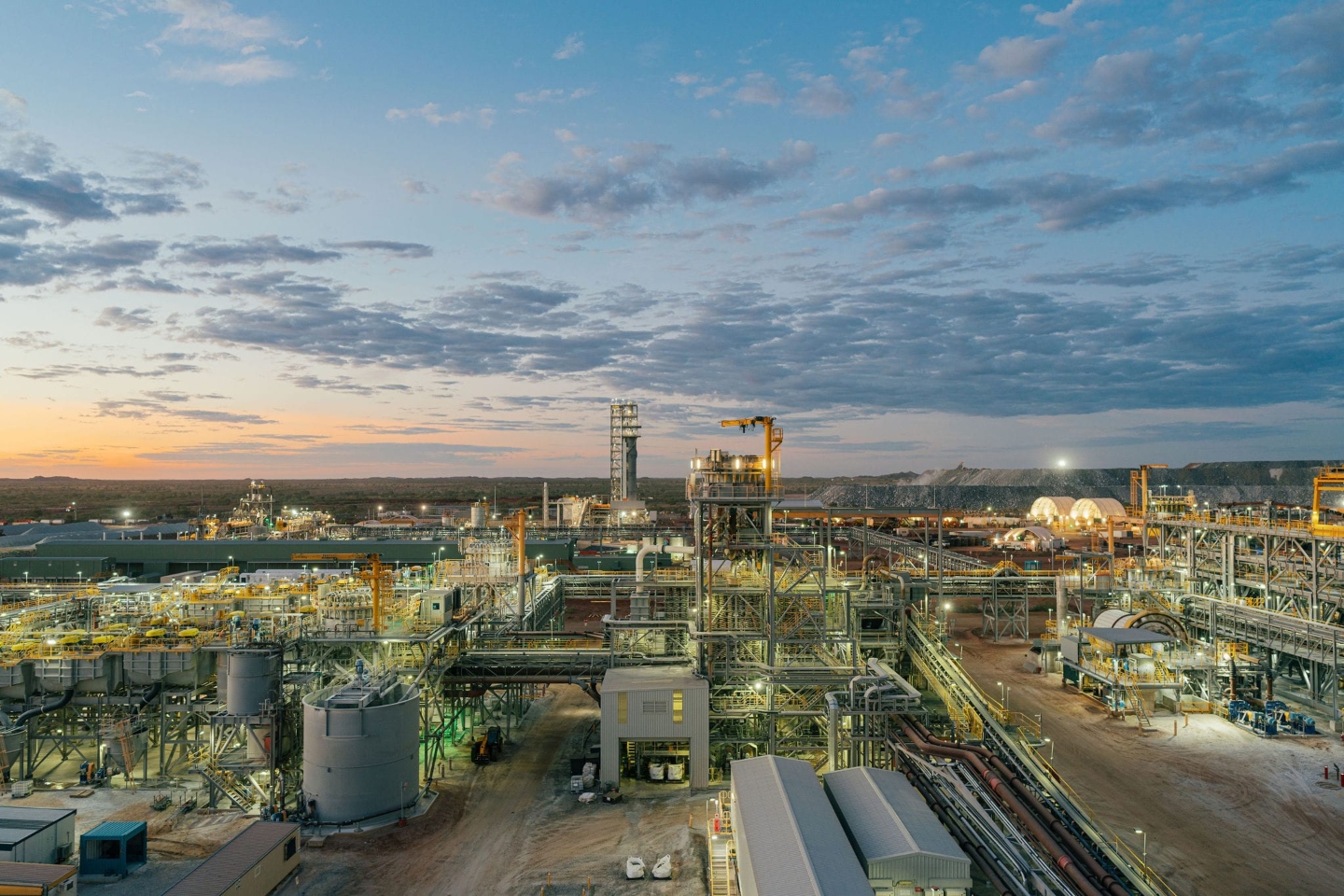
Pilbara lithium miner PLS is paving the way for an expansion of its Pilgangoora operation to 2 million tonnes per annum, after greenlighting a $175 million pre-FID spend.


Sea buckthorn is surging as an ingredient in food and beverages.

SPTL: Reserving Concerns Around Iran Deal Longevity, Eschewing Duration

WA Supreme Court judge reveals trans-continental blue between Africa-focused mining contractor Paul List and his former wife Angela List.

Brent crude was rising slightly Friday after U.S. Vice President JD Vance suspended plans to meet with Iranian representatives, even as more oil tankers passed safely through the critical Strait of Hormuz — a split picture that underscores just how fragile the recently signed U.S.-Iran peace agreement remains.
Brent crude futures, the international standard, were up 0.1% at $79.95 a barrel. West Texas Intermediate futures were rising 0.3% to $76.11 a barrel. The modest gains came even as some analysts argued the underlying trend toward de-escalation in the Middle East remained largely intact.
A Reminder That the Peace Deal Remains Fragile
The latest diplomatic wrinkle serves as a reminder that there are still plenty of obstacles to turning the preliminary U.S.-Iran peace deal into a lasting agreement. Brent crude oil prices rose Thursday after Vice President JD Vance warned Israel against further attacks on Iran-backed Hezbollah in Lebanon, raising doubts about the durability of the U.S.-Iran ceasefire agreement.
“The vice president’s statements about Israel may have put things back on edge,” said John Kilduff, partner with Again Capital. “I think the slightest sort of disturbance is going to register in the market.”
Brent crude futures settled Thursday at $79.85 a barrel, up 30 cents, or 0.38%.
Tankers Crossing the Strait Offer a Counterbalance
Despite the diplomatic uncertainty, tangible evidence on the water has continued to support the case that the broader de-escalation trend remains on track. Any concerns in the oil market might be relieved by tangible signs the vital Strait of Hormuz — which normally carries around 20% of the world’s daily oil traffic — is reopening to traffic. Three Saudi-flagged supertankers carrying more than six million barrels of crude crossed the strait on Thursday, according to Kpler ship-tracking data.
That kind of concrete shipping activity has provided a meaningful counterweight to the verbal sparring between U.S. officials and their counterparts in the region, offering markets at least some reassurance that the physical flow of oil through the world’s most important energy chokepoint continues largely uninterrupted.
A Long, Volatile Road to This Point
Friday’s modest price movements come at the tail end of months of extraordinary volatility in global oil markets, driven by a conflict that disrupted the Strait of Hormuz earlier this year before a series of fragile ceasefires and diplomatic breakthroughs gradually brought prices back down from crisis-era highs.
At the conflict’s peak, international benchmark Brent crude was trading at about $111 per barrel, as fighting in the region effectively halted traffic through the strategic waterway. Oil prices were up roughly 40% since the conflict began at that point, as Tehran forced the effective closure of the narrow waterway through which about a fifth of global energy flows.
A series of conditional ceasefires gradually pulled prices back down from those highs. Oil prices plunged in April after the U.S. and Iran agreed to a two-week conditional ceasefire that included the reopening of the vital Strait of Hormuz waterway, following a last-minute diplomatic intervention by Pakistan. The price of benchmark Brent crude dropped below $100 at that time, falling by about 15.9% to $92.30 a barrel, while U.S.-traded oil fell almost 16.5% to $93.80.
Vance’s Repeated Role in Iran Diplomacy
Vice President Vance has played a recurring and central role in the administration’s efforts to manage the Iran conflict and its economic fallout throughout the year, making his latest cautionary statement on Israel particularly significant for markets parsing the durability of the broader peace framework. Vance led the U.S. negotiating team for peace talks with Iran held in Islamabad, marking the highest-level meeting between the U.S. and Iran since the 1979 Islamic revolution.
Vance has also been directly engaged with the domestic economic consequences of the conflict, meeting repeatedly with industry stakeholders as gasoline prices fluctuated alongside crude oil. Vance and Energy Secretary Chris Wright met with the American Petroleum Institute, the nation’s largest oil trade group, as the Trump administration looked to ease rising gas prices, which had risen 92 cents on average nationwide compared to the prior month at the time, according to travel analyst AAA. Vance acknowledged at the time that there was a “rough road ahead of us for the next few weeks, but it’s temporary.”
A Pattern of Diplomatic Setbacks Followed by Recoveries
The current uncertainty surrounding Vance’s suspended meeting plans fits a broader pattern that has characterized U.S.-Iran relations throughout the conflict’s resolution process, with repeated cycles of diplomatic progress followed by setbacks and renewed tension. Earlier this month, Iranian state media claimed Tehran had suspended talks over Israel’s attacks in Lebanon, even as President Trump insisted negotiations were continuing. “Talks are continuing, at a rapid pace, with the Islamic Republic of Iran,” Trump said on Truth Social at the time.
Trump also addressed tensions tied to Israeli actions in southern Lebanon directly, saying, “There was a little glitch today, but I turned that one around very quickly, as you probably noticed earlier.” He said he had separately deterred Israeli Prime Minister Benjamin Netanyahu from conducting what Trump described as “a major raid of Beirut, Lebanon.”
China’s Shifting Demand Adds Another Variable
Beyond the geopolitical risk tied to the ceasefire’s durability, broader structural shifts in global oil demand have also begun factoring into market pricing. China, the world’s second-largest oil consumer, is forecast to consume 753 million metric tons in 2026, down 4.9% from 2025 amid a pivot to new energy sources and elevated oil prices, according to a report published by PetroChina’s research unit.
That projected decline in Chinese demand, if it materializes, could provide an additional offsetting factor against any near-term price spikes tied to renewed Middle East tensions, tempering the upside pressure that might otherwise result from disruptions to the ceasefire.
With Brent and WTI both holding relatively steady just below the $80 and $76 marks respectively, markets appear to be treating Vance’s suspended meeting as a notable but not yet decisive setback to the broader peace process. Traders will be watching closely for any further statements from U.S., Israeli, or Iranian officials in the coming days, along with continued tanker-tracking data through the Strait of Hormuz, as the clearest available signals of whether the fragile ceasefire holds or unravels further in the weeks ahead.


Strong grain outlook eases supply concerns.

Moroccan star footballer Hakimi to stand trial on rape charge

Man jailed after setting fire to his Radcliffe council flat
Multibagger Paras Defence shares rocket 28% in just 3 sessions. What’s behind the stellar rise?

Blockchain.com files with SEC for U.S. IPO

No Jackpot Winner as $257 Million Prize Rolls Over to $269 Million Monday Draw

Israel says it has killed new Hamas military leader in Gaza City airstrikes

The Invisible Pressure of Money || Financial Confessions #moneyhacks ##finance #wealthbuilding #fyp

JAPAN JUST ANNOUNCED IT! RIPPLE & XRP ARE ABOUT TO WIN BIG!

Tamil Nadu Chief Minister C. Joseph Vijay met with Union Finance Minister Nirmala Sitharaman
-
 Business5 days ago
No Jackpot Winner as $257 Million Prize Rolls Over to $269 Million Monday Draw
-

 Fashion7 days ago
Weekend Open Thread: Tuckernuck – Corporette.com
-
 Crypto World5 days ago
Zimbabwe Requires Crypto Businesses to Register Annually Under New FIU Regulations
-

 Crypto World6 days ago
Bitget enters Argentina’s regulated crypto market through PSAV registration
-

 Tech7 days ago
NanoClaw integrates JFrog registries to secure AI agent downloads
-

 Tech7 days ago
This Week In Security: Microsoft On Microsoft, Register Your Domains, Linux On ARM, And FreeBSD Joins The File Cache Club
-

 NewsBeat7 days ago
FBI searches office of Ohio voter registration group
-
 Entertainment5 days ago
Matt Damon’s Viral Sci-Fi Thriller Has Taken Over HBO Max
-

 Business5 days ago
Anthropic staff to meet White House officials next week, Axios reports
-

 Tech5 days ago
As AI companies race to go public, who else is along for the ride?
-
 Crypto World5 days ago
Bitcoin could crash to $48,000, if this historical pattern is triggered
-

 Politics5 days ago
“Israel’s” ban on ICRC visits ruled illegal, but Knesset moves to stop them permanently
-
 NewsBeat5 days ago
Warning of disruption as Cardiff Crossrail works to start
-

 News Videos5 days ago
Financial Accounting | Last Day Revision Strategy and Booster | CMA Inter – June 2026
-
 NewsBeat5 days ago
Tributes to former deputy head teacher at Cambridge school among death and funeral notices
-
 NewsBeat5 days ago
what doctors are seeing in ebike crashes
-

 Crypto World5 days ago
XRP ETFs Outperform As Bitcoin And Ethereum Funds Extend Outflow Trend
-

 Entertainment6 days ago
Deion Sanders Shares Powerful Post After Viral Advice To Deiondra
-
 Crypto World5 days ago
Market Preview: SpaceX (SPCX) IPO Record, Federal Reserve Meeting, and Iran Nuclear Agreement
-
 Entertainment5 days ago
Kate Middleton Glare Goes Viral After Kids Booed At Royal Event
You must be logged in to post a comment Login