Connect with us
DAPA Banner
DAPA Coin
DAPA
COIN PAYMENT ASSET
PRIVACY · BLOCKDAG · HOMOMORPHIC ENCRYPTION · RUST
ElGamal Encrypted MINE DAPA
🚫 GENESIS SOLD OUT
DAPAPAY COMING

Tech

Day-to-day cyber incidents driving loss for SMEs, finds report

Published

on

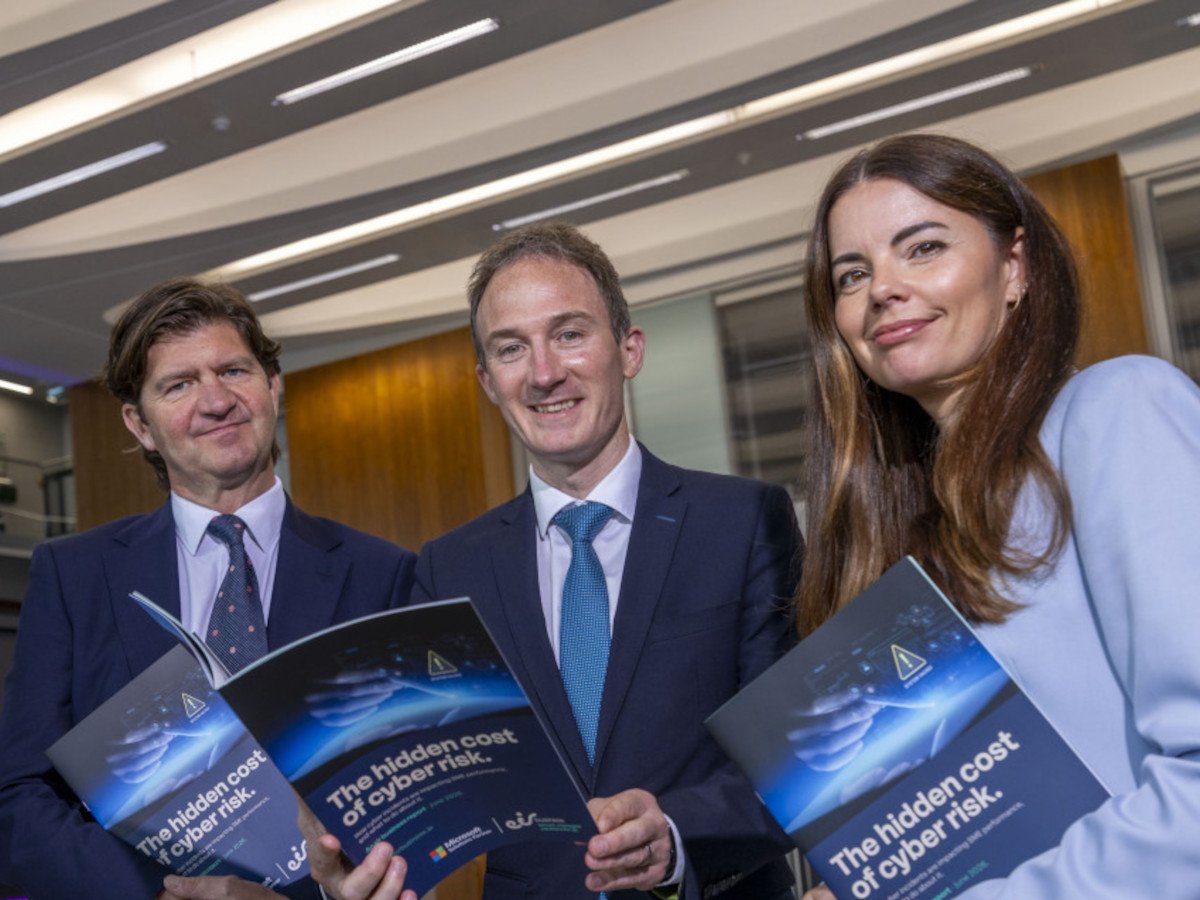
The Hidden Cost of Cyber Risk report, found that often the challenges being faced by companies are as a result of everyday cyber disruption, rather than large scale isolated issues.

The eir business Hidden Cost of Cyber Risk report, which is supported by Microsoft and the Kemmy Business School of the University of Limerick, has found that on average cyber attacks are costing Irish small and medium-sized enterprises (SMEs) up to €3.4bn annually. 

However, the greatest impact is not from large-scale, one-off breaches, but rather frequent, day-to-day cybersecurity-related disruptions, that are in turn, driving losses for many Irish companies. 

Reportedly, SMEs lose more than 7.2m working days every year due to cyber incidents, with affected businesses experiencing multiple incidents annually. For individual firms, this equates to nearly three working weeks lost annually. 

Advertisement

Susan Brady, the managing director at eir business, said: “This report shows that cyber risk is not just about rare, large-scale attacks. 

“For most SMEs, it is the cumulative impact of everyday incidents, from phishing emails and ransomware attempts to service disruptions, that drives significant loss of time and productivity. These risks affect not just individual businesses, but supply chains, customers and the wider business ecosystem.

Challenges big and small

The report noted that, while single events can have significant financial implications, research suggests that the cumulative effect of repeated disruption, downtime, lost productivity and operational interruption creates the greatest economic cost per SME annually. The report also found that “much of this impact is avoidable”, for organisations exhibiting higher ‘cyber preparedness’.   

The report stated that the companies with more cyber preparedness tend to experience fewer incidents, lower overall losses and significantly less disruption. Moreover, the organisations with higher levels of preparedness can reduce annual downtime from more than 30 days to around five days, while structured data management significantly lowers the likelihood of experiencing an attack.

Advertisement

Commenting on the report, the Minister of State at the Department of Enterprise, Tourism and Employment Alan Dillon, TD said, “Small and medium-sized enterprises are central to the Irish economy and ensuring they are resilient in an increasingly digital environment is critical. 

“This research highlights the real and growing impact that cyber risk is having on businesses across the country, not just in financial terms, but in disrupted operations and lost productivity. However, with the right support, guidance and focus on practical measures, businesses can strengthen their resilience and reduce their exposure. “

Dr Mauricio Perez-Alaniz, an assistant prof in the Department of Economics, for the Kemmy Business School welcomed the attention to the issue. He said, “While SMEs are increasingly being reminded about the potential productivity and sustainability gains that can arise from the adoption of digital technologies, the issue of cyber risk, and the associated costs of cyberattacks, require more attention.

“This report seeks to do just that. It provides an intuitive approach to quantify the costs of cyber-attacks in terms of direct economic costs, and more importantly, potential costs associated with downtime. It is important to keep in mind that fully quantifying such costs is difficult. While the estimates presented by the report are necessarily high-level and resting on a set of assumptions, they offer important insights into the scale and nature of the issue.”

Advertisement

In early June, ESET published a similar report, the SMB Cyber Readiness Index 2026, which also indicated that some organisations are neglecting to pay attention to everyday threats, amid a sharper focus on large-scale, one-off cyber incidents. The report found that businesses are risking harm and loss of profits by allowing threats perceived to be smaller, to ‘pass through’.

Previously commenting on the report, Michal Jankech, the vice-president of enterprise, SMB and MSP at ESET, said: “While 78pc of SMBs recognise cybersecurity’s strategic importance, inconsistent understanding of key threats, technology and terminology, including MDR and security posture, suggests there is still room for improvement. Any improvement will have to start with a reality check. 

“We’ve found SMBs’ concerns are often shaped by headlines on emerging threats like AI-driven attacks, while more routine risks, phishing, unpatched vulnerabilities and lack of monitoring, are underestimated. This hints that many respondents misperceive their security posture and resilience.”

Don’t miss out on the knowledge you need to succeed. Sign up for the Daily Brief, Silicon Republic’s digest of need-to-know sci-tech news.


Advertisement

Source link

Continue Reading
Click to comment

You must be logged in to post a comment Login

Leave a Reply

Tech

Siri AI, Snap Spectacles, and iPhone rumors

Published

on

Siri AI is turning out to be absolutely brilliant, except when it isn’t, plus there are now Snap Spectacles, and rumors about the iPhone Fold, on the AppleInsider Podcast.

Of course you haven’t been so foolish and reckless as to install the developer betas of iOS 27 and the rest. These do seem to be remarkably stable, but your two hosts have both had problems, and totally different ones.

They’re not calamitous problems, but these are the same betas, on similar devices, being used in the same way, yet giving completely different difficulties. So, seriously, stay away for now.

Although when Siri AI is at its best, it is superb and you will want to use it. Just be reassured that Siri AI is far from always at its best, and both hosts are hoping for some marked improvements before this is all released publicly.

Advertisement

But speaking of releasing publicly, this week also saw the launch of another set of AR glasses. Snap has released its Snap Specs and from just the right angle, in just the right light, they still look poor.

Lastly, it wouldn’t be a week of Apple news without iPhone rumors, and there have been so many this time. From conflicting reports of delays with the iPhone Fold, to perhaps wishful thinking about an iPhone Air 2, we’ve got it all.

BONUS: Subscribe via Patreon or Apple Podcasts to hear AppleInsider+, the extended edition. This time, it’s about those different beta problems and just how it’s affecting our work.

More AppleInsider podcasts

Tune in to our Smart Home Insider podcast covering the latest news, products, apps, and everything HomeKit related. Subscribe in Apple Podcasts, Overcast, or just search for HomeKit Insider wherever you get your podcasts.

Advertisement

Podcast artwork from Basic Apple Guy. Download the free wallpaper pack here.

Those interested in sponsoring the show can reach out to us at: [email protected].

Subscribe to AppleInsider on:

Keep up with everything Apple in the weekly AppleInsider Podcast. Just say, “Hey, Siri,” to your HomePod mini and ask for these podcasts, and our latest HomeKit Insider episode too. If you want an ad-free main AppleInsider Podcast experience, you can support the AppleInsider podcast by subscribing for $5 per month through Apple’s Podcasts app, or via Patreon if you prefer any other podcast player.

Advertisement

Source link

Continue Reading

Tech

The CEO of Allbirds’ new AI biz has a plan, but no employees

Published

on

Call it a startup with a sole founder and a very large seed round, but what’s next is less clear.

Source link

Continue Reading

Tech

3,900 Waymo robotaxis recalled after new software issue

Published

on

Waymo had to recall a similar number last month after it discovered a bug that allowed AVs to drive onto flooded roads.

A new recall notice shows that Waymo is pulling nearly 3,900 robotaxis from US streets over a software issue that lets autonomous vehicles (AVs) enter and drive in closed freeway construction zones.

This comes just a month after the company had to recall a similar number of cars after it found a different bug that allowed its AVs to drive onto flooded roadways.

“Under certain circumstances”, Waymo’s fifth-generation automated driving system (ADS) software could allow AVs to enter and drive “at speed” in freeway construction zones, according to the safety recall report filed with the US National Highway Traffic Safety Administration (NHTSA) on 17 June.

Advertisement

The ADS in question is unable to recognise construction zones, or “inappropriately” prioritises avoiding other freeway hazards, the document noted. Waymo said it owns all of the 3,871 robotaxis it is recalling.

Mounting safety concerns alongside political roadblocks hindering its rollout plans in the US are bringing into question whether Waymo – or its competitors – might succeed in enabling wider robotaxi adoption.

Waymo said it began monitoring the latest issue after six separate incidents in April where its robotaxis failed to recognise, and drove past, ramp closure signs into pre-planned freeway construction zones in Arizona.

Seven similar incidents in mid-May saw Waymo AVs drive between traffic cones to enter freeway lanes with active construction in the San Francisco Bay Area. The company decided to recall the cars on 8 June.

Advertisement

“We identified an area of improvement regarding performance around freeway construction zones,” the company said in a statement to news publications. “We voluntarily restricted freeway operations last month while making improvements, proactively notified state and federal regulators, and decided to file a voluntary software recall with NHTSA.”

This is the sixth recall Waymo has had to issue for its robotaxis, TechCrunch reported. In December, the company issued a software recall after its AVs drove dangerously around school buses. Other recalls involved low-speed collisions with gates and telephone poles.

Waymo is currently being investigated by the US vehicle safety authority after one of its AVs struck a child near a school in California.

The company also faced major disruption to its services in late December when a massive power outage in San Francisco stalled its AVs, causing disrupted traffic and gridlock conditions.

Advertisement

Don’t miss out on the knowledge you need to succeed. Sign up for the Daily Brief, Silicon Republic’s digest of need-to-know sci-tech news.
Source link

Advertisement
Continue Reading

Tech

Equinix pilots hydrogen power generators in Dublin data centre

Published

on

‘If this pilot delivers what we expect, it adds real momentum to Ireland’s decarbonisation story,’ said Equinix’s Irish head Peter Lantry.

Global data centre giant Equinix is testing its first hydrogen-powered back-up units in Ireland.

The 12-week pilot programme will test two hydrogen power generators developed by UK clean energy company GeoPura situated at Equinix’s DB3 data centre in Dublin’s Blanchardstown. The units are currently being used to support cooling systems within the facility.

The pilot is in conjunction with GeoPura and ESB – which owns one of the units. A similar joint project between ESB and Microsoft was launched in 2024.

Advertisement

The three partners believe that the project could provide solutions for Ireland’s grid constraints, which faces mounting pressure from data centres that consumed 22pc of the country’s total metred electricity in 2024. That figure is only set to rise as more companies situate these massive energy users in Ireland.

Equinix and ESB said they will gain valuable data insights into carbon reduction potential as a result of the project, which could be beneficial to policymakers and universities as they assess Ireland’s renewable needs.

Currently, Ireland has 72 data centre buildings that created more than 850,000 jobs and added more than €100bn in annual gross value to the economy, according to a March report from KPMG. The Government says data centres directly employ only 21,000.

Meanwhile, climate activists say that the rapid expansion of data centres cost the Irish economy €715m between 2015 and 2023. Climate group Friends of the Earth, in a recent report, said that households could face an additional €1.43bn in electricity costs linked to data centre growth between 2026 and 2034.

Advertisement

In January, the Government launched a new plan to attract more investments in highly energy-intensive sectors by offering companies the ability co-locate alongside indigenous renewable energy resources. The companies can still locate developments outside these locations.

“As data demand continues to grow, solutions like hydrogen power units offer a reliable, clean alternative to traditional backup generation,” said Paul Lennon, the head of asset development at ESB generation trading.

Peter Lantry, the managing director of Equinix Ireland said: “If this pilot delivers what we expect, it adds real momentum to Ireland’s decarbonisation story.”

The new hydrogen generators are a first for Equinix’s 280-plus data centre footprint worldwide. The two deployed generators have helped Equinix bring its power use effectiveness (PEU) – a metric used to measure the efficiency of power usage by data centres – to below 1.3, the company said.

Advertisement

A lower PEU means data centres are using a majority of the energy consumed for computing. An ideal PEU is 1, which would mean that all the energy consumed by the facility is used for IT, with no overhead for cooling, lighting or other support.

The units, housed in shipping containers, are powered by green hydrogen and use advanced fuel cell technology that allows the system to produce “clean, silent” energy, Equinix said.

They make “zero” direct onsite emissions, and only produce water and heat as byproducts at the point of use. The back-up generators can also respond in real-time to changes in grid capacity and turn on on its own when needed.

“As demand for digital infrastructure continues to grow, operators are facing increasing pressure to secure reliable power, reduce emissions and minimise the impact on local communities,” said GeoPura CEO Andrew Cunningham.

Advertisement

“This trial shows how hydrogen can help address those challenges today. By combining hydrogen fuel cell technology with battery systems and uninterruptible power capabilities, we’re delivering reliable zero direct onsite-emission power that can respond instantly when required.”

The partners also believe that hydrogen power in this context could offer a viable lower-carbon alternative for construction sites and other temporary power needs traditionally reliant on diesel generation. Hydrogen fuel units such as these are scalable up to 50 MW to support both backup and prime power applications.

According to the trio, the waste heat could also make potential uses for future district heating projects and the water can be recycled into the on-site cooling systems.

Don’t miss out on the knowledge you need to succeed. Sign up for the Daily Brief, Silicon Republic’s digest of need-to-know sci-tech news.

Advertisement

Source link

Continue Reading

Tech

A cyber expert’s advice on the Mythos hype

Published

on

Integrity360’s Richard Ford discusses the unease caused by Anthropic’s advanced cybersecurity AI model, and how cyber teams can prepare for such technology.

In the time since Anthropic first revealed Claude Mythos in April, discourse around the cybersecurity AI model has been unceasing.

Anthropic’s claims that Mythos has seemingly advanced capabilities in finding and exploiting software security vulnerabilities caused a frenzy in public and private sectors around the world – including in Ireland.

“The issue is not that Anthropic has created this. The issue is that Anthropic has demonstrated that this is possible,” said Richard Browne, director of the National Cyber Security Centre, when speaking to the Oireachtas Joint Committee on Artificial Intelligence shortly after the Mythos reveal.

Advertisement

Mythos has not been released to the general public yet, though Anthropic had been granting access to a pool of companies, banks and authorities – that is, before a recent US government order resulted in the company disabling the model for all of its users.

But while institutions and governments panic over the capabilities of this new AI model, Integrity360 CTO Richard Ford says Mythos should be approached with “measured scrutiny rather than hype”.

“Based on the information available so far, the model appears capable as an autonomous attack tool, but there is no clear evidence that it materially outperforms existing large language models in this area,” he tells SiliconRepublic.com.

“The more important point is how it could be used. In the hands of threat actors, Mythos does not need to be revolutionary to be dangerous.

Advertisement

“It would still be highly effective when targeting organisations with weak security postures, particularly those lacking strong access controls, patching discipline and visibility across their environments.”

Hype and disruption

Ford says that much of what is driving both the hype and the concern around Mythos comes from self-reported results, with limited independent validation.

This makes it difficult to separate genuine technical advancement from narrative, he says.

“There is a legitimate question around whether the capabilities are being overstated or simply presented without enough context.

Advertisement

“Early claims of large-scale vulnerability discovery sound significant, but without external benchmarking or reproducibility, it is hard to assess how meaningful those findings are in practice.”

Ford adds that in the light of Anthropic’s previous difficulties with the US government, sceptics could reasonably question whether the Mythos announcement was “partly about shaping perception as much as demonstrating capability”.

But what if the purported sophistication of Mythos is as significant as Anthropic claims?

“If the claims hold true, there is a clear view that models like Mythos could begin to disrupt areas such as bug bounty programmes and the wider ethical hacking market,” says Ford. “The concern is not that human researchers become obsolete overnight, but that AI can significantly accelerate vulnerability discovery, shifting the balance in terms of speed, scale and cost.

Advertisement

“We are already seeing early indicators of this trend. AI-driven platforms are performing strongly in competitive CTF environments, where rapid analysis, pattern recognition and automation provide a clear advantage.

“That raises questions about how traditional bug bounty ecosystems evolve, especially if AI can identify issues faster than human researchers or commoditise parts of the process.”

How can organisations prepare?

Though Mythos has not been fully released to the public yet – and is currently disabled as of last week – Ford has some advice for cybersecurity teams regarding the eventual widespread availability of AI models such as Mythos.

“Cybersecurity teams should treat models like Mythos as an acceleration of existing threats rather than something entirely new,” he says. “The priority is getting the fundamentals right, because AI will exploit weaknesses faster, not differently.

Advertisement

“Strong identity controls, consistent patching and full visibility of assets remain critical. Organisations that lack these basics will be the easiest targets for AI-assisted attacks. In short, the better your fundamentals, the more resilient you will be as AI-driven threats become mainstream.”

Ford says organisations should avoid reacting to Mythos with panic, but should also take its implications seriously.

“The direction of travel is clear: AI is becoming embedded in both attack and defence,” he says.

He believes any organisation that is not building an AI-driven cyber defence will fall behind and “move directly into the crosshairs of attackers”.

Advertisement

“That does not mean chasing hype, but it does mean investing in capabilities that improve speed, scale and decision-making across detection and response,” he explains.

“At the same time, this only works if the fundamentals are in place. The organisations that will succeed will be those that combine solid core controls with intelligent automation, allowing them to keep pace as the threat landscape continues to accelerate.”

The reveal of Mythos has undoubtedly rocked the boat in relation to AI and its place in cybersecurity.

But while many worry about the impact of Mythos’s capacity for cyber exploitation, Ford believes the most significant long-term effect of such AI technology will be “a structural shift” in how quickly and cheaply cyberattacks can be executed – rather than a single breakthrough capability.

Advertisement

“If models like Mythos mature as suggested, they will compress the time between identifying an exposure and exploiting it,” he says. “Tasks that once required skilled researchers and time investment, such as reconnaissance, vulnerability discovery, and initial exploitation, will become increasingly automated and scalable.

“That changes the economics of cyberattacks, allowing threat actors to operate at higher volume and with greater efficiency. All of this depends of course on whether Mythos is indeed just hype or the real deal.”

Don’t miss out on the knowledge you need to succeed. Sign up for the Daily Brief, Silicon Republic’s digest of need-to-know sci-tech news.

Advertisement

Source link

Continue Reading

Tech

Best Mesh Wi-Fi Systems (2026): Netgear, Asus, Amazon, and More

Published

on

Netgear Orbi 970 (2-Pack) for $1,300: There’s no denying that the tri-band Wi-Fi 7 Netgear Orbi 970 is an impressive quad-band mesh. This mesh system is incredibly fast, reliable, and provides expansive coverage with plenty of high-speed Ethernet ports. However, the astronomical price makes it hard to recommend. You can get similar performance for less, and full parental controls now require a separate subscription from the security software. Ultimately, this system is only worth considering if you have a large home, a multi-gig connection, and a generous budget.

More Wi-Fi 6 or 6E Mesh Systems I Liked

2 identical white cylindrical devices on a wooden table. One facing forward showing the logo and the other facing...

TP-Link Deco XE70 Pro

Photograph: Simon Hill

TP-Link Deco XE70 Pro (3-Pack) for $250: Support for Wi-Fi 6E, which operates on the 6-GHz band, is common, but with Wi-Fi 7 rolling out, 6E routers and mesh systems like this are falling in price. A two-pack of this tri-band mesh system is relatively affordable and enough to cover most homes, making this perhaps the best Wi-Fi 6E mesh for most people. I also tested the XE75 ($270 for a three-pack), which is almost identical, but has three Gigabit ports and no multi-Gig. There is also the XE75 Pro ($400 for a three-pack), which features the 2.5-Gbps port and theoretically offers slightly more bandwidth but is far more expensive. Since TP-Link frequently discounts its products, the standard model is the best choice for most people—though multi-gig users should opt for the Pro.

Advertisement

TP-Link Deco X50 Outdoor for $150: This was our previous outdoor pick, and it’s still a good dual-band Wi-Fi 6 router that will form a mesh with any Deco system (I tested with the Deco X50 4G). It’s a solid performer, but with the Wi-Fi 7 BE25 Outdoor coming in around the same price, I’d pick that instead.

TP-Link Deco X55 (3-Pack) for $150: This affordable Wi-Fi 6 mesh delivers decent coverage and performance, with optional parental controls and antivirus protection, making it ideal for a modest family home. This is a dual-band system (2.4 GHz and 5 GHz). There are two gigabit Ethernet ports on each router. Coverage and speeds are solid, falling short of the Asus XT8 but beating systems like the entry-level Eero 6.

Two white round Google Nest mesh wifi router devices one facing front and the other backwards showing the ports

Google Nest Wifi Pro

Photograph: Simon Hill

Google Nest Wifi Pro (3-Pack) for $400: Mesh systems don’t come much simpler than this. Google’s Nest Wifi Pro is a tri-band (2.4, 5, and 6 GHz) Wi-Fi 6E system that works via Google Home, and each router sports two 1-gigabit ports. The setup is super simple, coverage and performance were solid and consistent, and my testing was refreshingly free from glitches and buffering, though WIRED editor Julian Chokkattu had issues that Google’s customer support could not fix. The Nest Wifi Pro came mid-table in raw speed at short, mid, and long range, and settings in the Home app are very bare-bones. Disappointingly, it is not backward compatible with older Nest routers.

Advertisement

TP-Link Deco X20 (3-Pack) for $130: The Deco X20 is an affordable Wi-Fi 6 mesh that delivers decent coverage and performance, with optional parental controls and antivirus protection, making it ideal for an average family home. This dual-band (2.4 GHz and 5 GHz) mesh was our budget pick for a long time, and there are two gigabit Ethernet ports on each router. Coverage and speeds are decent, falling short of the Asus XT8 but beating systems like the entry-level Eero 6. The app is straightforward, and it’s easy to set up a guest network. Originally released with the free HomeCare software, this has since changed to a HomeShield system, so it’s not as good a bargain as it once was.

Linksys Velop Pro 6E routers

Linksys Velop Pro 6E

Courtesy of Linksys

Linksys Velop Pro 6E (2-Pack) for $280: Once up and running, this tri-band (2.4 GHz, 5 GHz, and 6 GHz) Wi-Fi 6E system offers impressive range and decent speeds. It is competitively priced with quite a few dips in cost (don’t pay full price), comes with basic parental controls, and offers handy features like device prioritization and a guest network. But I had a terrible time with the installation. The app continually failed partway through the process, and I had to factory reset the routers. Even then, it took multiple attempts to add the nodes. It’s also not backward compatible with older Velop “Intelligent Mesh” systems, because this is a “Cognitive Mesh” system.

TP-Link XE200 (2-Pack) for $290: This tri-band Wi-Fi 6E mesh system (2.4 GHz, 5 GHz, and 6 GHz) was fast, offered consistently wide coverage, and blew away the Wi-Fi 6 competition at close range. I downloaded a 50-GB game in 20 minutes and didn’t encounter any issues during testing. As it uses the 6 GHz band for backhaul, you have to think about placement and try to keep routers in sight of each other and within 50 feet (or better, connect them via Ethernet cable). While the XE200 is better than the XE70 Pro above, it’s simply too expensive, though it has seen some deep discounts recently, so keep an eye out for deals.

Advertisement

Source link

Continue Reading

Tech

Why AI Fails in ESG Exposure Research without Human Verification

Published

on

ESG Exposure Research: What AI Changes and What It Doesn’t

An analyst researching a company’s fossil-fuel involvement can now ask a large language model (LLM) for the exact share of revenue tied to thermal coal and get an answer in seconds—complete with a precise percentage, a specific source citation, and a perfectly confident tone.

However, that source could be a regulatory filing that never actually existed.

This is the dual reality of artificial intelligence (AI) in environmental, social, and governance (ESG) data research. On one hand, AI tools act as an efficiency superpower, parsing thousands of pages of sustainability reports, corporate disclosures, and news feeds in the blink of an eye. On the other hand, the high-stakes world of ESG investing demands absolute accuracy, a trait that generative AI—built on probabilistic word-matching rather than factual truth—fundamentally lacks.

As asset managers, rating agencies, and index constructors face tightening greenwashing regulations and stricter disclosure mandates, the role of the ESG analyst is undergoing a massive shift. AI assists them by changing the speed, scale, and cost of processing unstructured data. What AI doesn’t change, however, is the fundamental requirement for data integrity, human skepticism, and the deep contextual understanding needed to separate corporate spin from genuine impact.

Advertisement

What is ESG Exposure Data Research?

ESG exposure research measures whether a company earns revenue from sensitive or controversial activities, such as coal mining, tobacco production, gambling, weapons production, and animal testing. Rating agencies and index constructors use this data to build exposure screening platforms, risk scores, and exclusion-based indices.

ESG Exposure Research Is Not Equivalent to Report Summarization

ESG exposure is not just a reading task. It is an attribution task. An AI model may correctly identify a sentence stating that a company is connected to gambling operations, palm oil, or weapons production. But a human researcher still has to answer several questions before that finding becomes usable, activity-based ESG data:

  • Is the company producing the product, distributing it, financing it, transporting it, or only mentioning it as part of a risk disclosure?
  • Is the activity carried out by the parent company, a subsidiary, a joint venture, or a minority-owned business?
  • Is the exposure material enough to cross an index, fund, or screening threshold?
  • Can the revenue share be tied to a source that will withstand review?

These distinctions matter because the answer to “how much of a company’s business is tied to a sensitive activity” is auditable data (a revenue percentage or a yes/no involvement flag). Deducing that revenue percentage or a yes/no flag requires activity-based analysis. For instance, it involves

  • Production versus participation identification: A company that mines coal and a company that ships it for a fee both touch coal, but most exclusion methodologies treat direct production and indirect participation very differently.
  • Revenue attribution: “Involved in gambling” is not a data point; “8% of revenue from gambling operations” is. Getting there means reconciling segment reporting, subsidiaries, joint ventures, and equity stakes into a figure you can defend.

This puts exposure data research closer to forensic accounting than to summarization. It needs controversial activity screening, business involvement screening, source checking, revenue mapping, exclusion principle-based outcome alignment—exactly where large language models are least reliable.

Where AI Helps ESG Analysts: Finding Possible Evidence Faster

AI is useful in the discovery stage of ESG exposure metrics data collection. This is the part where analysts look for possible evidence across large volumes of fragmented information.

AI can scan large volumes of ESG disclosure data (such as complex, multi-page, bundled documents and reports) and flag documents that may contain relevant evidence. For example, it can identify a line in an annual report mentioning thermal power assets, detect a subsidiary involved in defense manufacturing, or surface a foreign-language sustainability filing that references tobacco distribution.

Advertisement

This helps ESG research teams in three ways:

  • Faster Document Review
  • Instead of reading hundreds of pages manually, analysts can start with passages AI has flagged as potentially relevant.
  • Better Language Coverage
  • AI can help identify evidence of exposure in local filings, regional websites, and non-English disclosures that may otherwise be missed.
  • Early Structuring
  • AI can turn unstructured text into well-formatted research leads, including company name, activity type, source document, page reference, and possible exposure categories.

AI improves the speed of document ingestion and scanning and reduces the manual effort needed to collect candidate evidence from hundreds or thousands of documents. But the output should still be treated as a lead, not a final ESG data point.

Where AI Fails in ESG Data Research: Verification and Attribution

The weaknesses appear when AI is asked to decide what the evidence proves. ESG exposure work often requires source hierarchy, accounting logic, and judgment specific to the methodology. Current AI models are not reliable enough to own those steps without review.

1. AI Can Produce Unsupported or Misleading Sources

AI can produce answers that sound well-supported but are not. In high-stakes research, this is a serious problem because the source matters as much as the answer.

Advertisement

Stanford RegLab’s study of legal AI tools found that even specialized tools from LexisNexis and Thomson Reuters hallucinated between 17% and 33% of the time. That matters for ESG because the workflow is similar: a user asks a research question, the model searches a document base, and the answer must be tied to a reliable source.

There is also ESG-specific evidence. The ESGenius benchmark, which tested 50 language models on ESG and sustainability questions, found that state-of-the-art models achieved only moderate zero-shot accuracy, typically around 55% to 70%. The results improved when models were grounded in authoritative sources, which reinforces the same point: AI output in ESG cannot be trusted without source-level grounding.

The same risk appears in financial table work. The FAITH benchmark, built from S&P 500 annual reports, showed that financial LLMs frequently hallucinate on complex financial table tasks. ESG exposure research often depends on the same type of work: extracting segment revenue, calculating percentages, and reconciling figures across notes and subsidiaries.

If the model misreads a table, cites a weak source, or invents a supporting reference, the revenue exposure data becomes unreliable.

Advertisement

2. AI Blurs Important Classification Boundaries

AI often collapses distinctions that matter in ESG exposure screening. For instance, a model may classify a company as “coal involved” if a report mentions coal logistics, a backup power unit, a discontinued coal asset, or a risk note on coal regulation. But these are not the same as direct coal production. Ultimately, a human would have to fix such boundary mistakes (e.g., confirming that a logistics company that merely transports coal via its rail network does not qualify as a thermal coal producer under the exclusion policy).

The same problem can appear in other categories. A retailer selling lottery tickets is not the same as a casino operator. A company supplying packaging to a tobacco firm is not the same as a tobacco manufacturer. A business with a palm oil sourcing policy is not automatically a palm oil producer.

3. AI Fails to Adapt to Client-Specific Exclusion Methodologies

Advertisement

Exclusion policies are not universal; a company that passes a screen for one asset manager might fail it for another. AI struggles here because it treats corporate data as a static set of facts rather than a dynamic input that must be filtered through different client-specific lenses.

For example, an asset manager running a strict faith-based mandate might require a zero-tolerance exclusion of any revenue derived from gambling logistics, while an institutional pension fund might only exclude direct casino operators that generate more than 5% of their revenue from gaming. Similarly, one client may view a company’s palm oil sourcing policy as a positive ESG mitigant, while another client’s strict “zero-deforestation” mandate demands an automatic exclusion if palm oil is present anywhere in the supply chain.

Because AI models are typically trained on generalized compliance definitions, they routinely fail to pivot their logic based on who the data is being collected for. Without highly customized prompting or manual intervention, AI will apply a uniform blanket standard—either over-excluding viable companies or letting flagrant violations slip through because it doesn’t understand the specific client’s shifting threshold for “involvement.”

4. AI Inherits the Bias of Corporate Disclosure

Advertisement

AI can only work with the evidence available to it. If a company discloses little, uses vague language, or buries information in subsidiaries, the model may produce a cleaner answer than the evidence allows.

This is already a known issue in ESG. MIT Sloan’s Aggregate Confusion Project found that ESG ratings from prominent agencies had an average correlation of 0.54, compared with 0.92 for credit ratings from Moody’s and S&P. That gap shows how differently ESG evidence can be interpreted even before AI is introduced.

AI does not remove that uncertainty. If implemented poorly, it can hide uncertainty by turning fragmented ESG risk exposure data into a single confident output.

ESG Exposure Metrics Research Needs More than Just AI in 2026

Incorrect ESG exposure data does not stay inside a spreadsheet. It can affect index inclusion, fund screening, rating decisions, and client reporting. The cost of weak ESG exposure research is rising for two reasons.

Advertisement

 First, ESG rating activity is becoming more regulated. The EU (European Union) ESG Ratings Regulation applies from 2 July 2026, with ESMA (European Securities and Markets Authority) becoming the direct supervisor of ESG rating providers operating in the EU. This increases pressure on providers to show how ratings, methodologies, and data sources are built.

 Second, sustainability reporting rules are changing. The EU’s CSRD (Corporate Sustainability Reporting Directive) simplification raises the reporting threshold to companies with more than 1,000 employees and more than €450 million in net annual turnover. That means fewer companies will be covered by standardized sustainability reporting than under the earlier scope.

For ESG exposure teams, this creates a difficult combination. More scrutiny is being placed on ESG data, while parts of the research may depend more on fragmented, non-standardized sources. Ethical AI can simplify ESG data research by helping teams process disclosures faster, organize evidence, and identify missing data points. But in ESG exposure research, that value holds only when AI outputs are traceable, reviewed by analysts, and supported by source-level documentation.

The Operating Model that Works: AI for Discovery, Humans for Attribution

AI should not be removed from ESG exposure research. It should be placed in the right part of the workflow. A reliable ESG Exposure Research model works like this:

Advertisement

1. AI scans filings, websites, reports, and news sources to identify evidence of possible exposure.

2. Each AI-generated lead is checked against the original source and verified before use.

3. Analysts confirm whether the activity is direct, indirect, current, discontinued, subsidiary-level, or group-level.

4. Revenue exposure is calculated from verified financial data, with assumptions clearly documented.

Advertisement

5. Each final ESG data point includes source details, date, confidence level, and review status.

6. Unverified AI leads are logged, so teams can track tool performance over time.

This model incorporates human-in-the-loop verification in ESG exposure research: AI handles the scale problem and provides speed, and people handle the attribution problem. 

The Bottom Line

The strongest ESG research workflows will not be the ones that use AI to replace analysts. They will use it to reduce search time while keeping humans responsible for verification, attribution, and auditability. As scrutiny of both ESG data and AI tightens through 2026 and beyond, this boundary will decide which datasets can withstand review and which ones cannot. 

Advertisement

Source link

Continue Reading

Tech

Midjourney Builds a Scanner Capable of Delivering Detailed Body Maps During a Relaxing Spa Visit

Published

on

Midjourney Medical Body Scanner MRI Ultrasound Spa
Midjourney once built its reputation on turning short text descriptions into elaborate digital images. The company has now announced a sharp turn toward hardware that produces something far more personal: three-dimensional maps of what lies beneath a person’s skin. The new effort, called Midjourney Medical, centers on an ultrasound scanner designed to gather rich body-composition data in roughly a minute while the user stands in a shallow pool of gently lit water.

Founder David Holz detailed the concept in a lengthy blog post. The system lowers a person onto a platform, which gently descends via a ring of sensors floating in water. As the body moves, hundreds of thousands of small elements emit ultrasonic waves in all directions and capture the echoes that return. Different parts of the body, such as skin, fat, muscle, bone, and organs, have detectable effects on those waves. The massive amount of data that comes in, terabytes per second, is then fed into a cluster of computers, which reconstructs it all into clear 3D images and body maps.

Sale


ScanSnap iX2500 Wireless or USB High-Speed Cloud Enabled Document, Photo & Receipt Scanner with Large…
  • OUR MOST ADVANCED SCANSNAP. Large touchscreen, fast 45ppm double-sided scanning, 100-sheet document feeder, Wi-Fi and USB connectivity, automatic…
  • CUSTOMIZABLE. SHARABLE. Select personalized profiles from the touchscreen. Send to PC, Mac, mobile devices, and clouds. QUICK MENU lets you quickly…
  • STABLE WIRELESS OR USB CONNECTION. Built-in Wi-Fi 6 for the fastest and most secure scanning. Connect to smart devices or cloud services without a…


Some early prototypes have already collected scans from a dozen or more individuals. The technology makes use of miniature ultrasound modules from Butterfly Network, with dozens of them in each scanner. The AI then assists in determining how to convert those raw sound waves into usable images, as well as distinguishing between one part of the body and another. Currently, the output focuses on precise maps of body composition rather than actual medical diagnosis.

Advertisement

Midjourney Medical Body Scanner MRI Ultrasound Spa
The physical experience is far more relaxing than an MRI. There are no large magnets or small tunnels in sight, only a shallow pool of pleasant light. A platform descends, your body passes through the sensor ring, and it’s over in a minute. Midjourney describes the entire experience as moving at a leisurely speed, similar to taking a warm bath. The laid-back atmosphere was all part of the idea. They plan to open a Midjourney Spa in San Francisco by the end of 2027, combining traditional wellness elements such as hot tubs and saunas with pools for the scanners. The idea is that you go there to relax, and as a bonus, you’ll leave with all of this health data that you can review, track, or share with your doctor.

Midjourney Medical Body Scanner MRI Ultrasound Spa
According to Holz, the primary goal is to make the technology fast and simple to use, as well as to provide consumers with a wealth of relevant health information promptly and affordably. The scanner is designed to run roughly a hundred times faster than an MRI and produce images that match or even outperform MRI quality for body composition analysis. Plus, it’s non-ionizing and the entire thing is open water, so there’s no need to worry about the normal sources of discomfort.

Midjourney Medical Body Scanner MRI Ultrasound Spa
They are still in early stages of development. The next year will be spent adjusting the hardware and software, conducting additional research, and developing a second-generation scanner. They want to open the first spa by the end of 2027 before expanding to additional locations in 2028. Longer term, they hope to have 50,000 scanners in place by 2031, with a monthly scan rate of a billion.

Source link

Continue Reading

Tech

Karcher LMO 18-36 Cordless Battery Lawn Mower Review

Published

on

Verdict

The Kärcher LMO 18-36 is a dependable and practical mower. It feels sturdy and the permanently attached handle doesn’t wobble around during use. The wide 36 cm cut width makes short work of smaller lawns, but it’s still narrow enough to fit into corners and through tight gaps. Although it only has four cutting heights, it’s a solid cordless mower option.

  • Well designed and comfortable

  • Easy to change cutting heights

  • Includes a mulching plug

  • Sluggish charging

  • Minimum cut height of 30 mm

Key Features

  • Trusted Reviews IconTrusted Reviews Icon

    Advertisement

    Review Price:
    £299.99

  • Adjustable cutting height

    Advertisement

    Cuts between 30mm and 70mm.

  • Mulching plug

    Advertisement

    Comes with a mulching plug, so cuttings can fertilise the lawn

  • Cordless

    Advertisement

    Runs off Karcher’s 18V batteries

Introduction

Better known for its canary-yellow pressure washers, Karcher also makes a range of garden power tools that run on its reliable 18V battery system, including the Karcher LMO 18-36 Cordless Battery Lawn Mower that I have on review here.

Easy to handle and with some clever features, should this be your next buy for a small- to mid-sized garden? Read on to find out.

Advertisement

Advertisement

Design and Features

  • Comfortable soft grip handle
  • Mulching plug and safety key
  • Only four cutting heights

Something I immediately liked about Karcher LMO 18-36 Cordless Battery Lawn Mower is that the bottom half of the handle is already attached. Compared with many mowers I have reviewed, it feels solid straight out of the box. The top half has an ergonomic handle, curved to make it feel more comfortable. And, it has ambidextrous controls that suit right and left-handed gardeners.

Kärcher LMO 18-36 cordless lawn mower ambidextrous controls and comfortable handleKärcher LMO 18-36 cordless lawn mower ambidextrous controls and comfortable handle
Image Credit (Trusted Reviews)

The battery slots into a neat housing on the front of the mower, also containing the safety key needed to operate the mower. It’s good that the battery itself displays the current charge level, but a shame that this isn’t visible when you’re mowing. Knowing when the battery is about to go flat is a bit of a guessing game.

Kärcher LMO 18-36 battery compartmentKärcher LMO 18-36 battery compartment
Image Credit (Trusted Reviews)

And this mower isn’t ideal if you really want to dial in a specific lawn height. The handsome T-shaped handle works well, and the cutting deck is sprung for easy changing, but there’s just four heights to choose from between 30mm and 70 mm. That’s a little high on the lowest setting if you want more of a bowling-green appearance to your lawn.

Advertisement

Kärcher LMO 18-36 height adjustment handleKärcher LMO 18-36 height adjustment handle
Image Credit (Trusted Reviews)

There are two options for dealing with the grass clippings. You can collect them in the 45 litre fabric box on the back or insert the mulching plug and leave your clippings on the lawn for fertiliser.

Kärcher LMO 18-36 law mower on the grass facing rightKärcher LMO 18-36 law mower on the grass facing right
Image Credit (Trusted Reviews)

Weighing in at a touch over 13 kg, the Karcher LMO 18-36 Cordless Battery Lawn Mower is about right for a mower of this cutting width (36cm). It’s easy enough to carry over obstacles and up a few steps thanks to a big carry handle and decent weight distribution.

Performance

  • Easy to handle
  • Effective grass collection
  • Slow charging

Setting up the LMO 18-36 for its first cut is easy. The bottom half of the handle is already attached, so all I had to do was bolt on the top half before getting on with mowing.

Advertisement

Handling and manoeuvrability are good. The underside of the cutting deck has combs that help to pull grass into the blades, leaving a decent finish on the grass. I managed just under 25 minutes mowing before the battery needed a recharge.

Advertisement

Mowing on the lowest setting, 30mm, is a bit high if you’re aiming for a bowling-green-type finish, but it’s fine for everyday lawns. For something lower, take a look at the Stihl RMA 248.3 that gets all the way down to 20 mm.

The Karcher LMO 18-36 Cordless Lawn Mower is rated to mow up to 350m² on a single charge, enough for a medium-sized lawn. And that’s a good thing too, because charging the 5.0 Ah battery takes just over 90 minutes.

Sluggish charging aside, changing mowing heights is simple and the grass collection box works well. It even has a comfortable handle, and the mulching plug slots in easily. The only thing missing is a collection box full indicator found on a lot of other mowers.

Should you buy it?

Advertisement

You own other Karcher cordless tools

The batteries are interchangeable, so you can always have a fully charged one to hand. If you value build quality over features, this is an excellent choice.

Advertisement

You have a garden much bigger than 350 m²

The 90-minute charging time is a bit sluggish compared to the competition, so avoid this if you don’t like waiting for batteries to recharge.

Advertisement

Advertisement

Final Thoughts

The Karcher LMO 18-36 Cordless Battery Lawn Mower is a solidly built mower that’s made to last. It might lack a charge level indicator or a huge range of cutting heights, but it’s a good choice for small-to-medium-sized gardens. If you have a larger garden or want more cutting height choices, read our guide to the best cordless lawn mowers.

How We Test

We test every lawn mower we review thoroughly over an extended period of time. We use standard tests to compare features properly. We’ll always tell you what we find. We never, ever, accept money to review a product.

Advertisement

Find out more about how we test in our ethics policy.

  • Used as our main lawn mower for the review period
  • Used on a variety of grass lengths to see how well the mower cuts
  • Tested to see how easy the mower is to push, turn and store

FAQs

Is the Karcher LMO 18-36 Cordless Battery Lawn Mower’s battery compatible with other Karcher tools?

Yes, this lawn mower uses the same 18V battery type as the company’s other cordless tools.

Advertisement

Full Specs

  Karcher LMO 18-36 Cordless Battery Lawn Mower Review
Manufacturer
Size (Dimensions) 40 x 131 x 104 CM
Weight 14 KG
Release Date 2021
First Reviewed Date 15/04/2026
Lawn Mower Type Cordless
Adjustable height Yes
Blade Type Rotary
Cutting width 36 cm
Grass catcher box size 45 litres

Advertisement

Source link

Continue Reading

Tech

Midjourney wants to scan your body with half a million ultrasonic sensors, at a spa

Published

on

Looking ahead: Midjourney built its name on AI-generated images. Now, it is talking about something far more ambitious: scanning the human body. In a post this week, the company outlined plans for a body-scanning system built around ultrasonic sensing and large-scale data capture. The idea is to generate detailed, three-dimensional images of the body in under a minute, with performance the company says could rival MRI scans but without the same discomfort.

The concept is still largely theoretical, but the company describes a system built around an enormous number of tiny sensors working in tandem. A person would pass through a scanning chamber where ultrasonic signals are directed at the body from all sides, capturing internal data from multiple angles at once. Midjourney describes the setup as a softly lit, pool-like space where people descend through a ring of sensors that operate on echolocation principles to build a detailed internal image of the body.

At full scale, the company envisions a ring containing roughly half a million sensors, each about the size of a grain of sand. Together, they would generate a constant stream of ultrasonic signals, producing what Midjourney says could amount to terabytes of data every second.

That volume of information is central to the company’s approach. “You want as much data as you can get about your health as quickly and as cheaply as possible,” the company wrote. “In other words, you want a technology optimized for getting as many megabytes per second per dollar of information about your body.”

Advertisement

Collecting that much data, however, is only part of the problem. Turning it into something usable is another matter entirely. Midjourney acknowledges it still has to solve what it calls a ‘major computational task’: turning noisy, overlapping ultrasonic signals into clear, stable images.

That challenge remains unsolved, and the company has not said how close it is to overcoming it.

What makes the proposal more unusual is how Midjourney plans to use the technology. Rather than limiting it to hospitals or diagnostic labs, the company is building a consumer-facing concept around it. Its first location, called the Midjourney Spa, is expected to open in downtown San Francisco before the end of next year.

The setting is meant to feel more like a high-end wellness space than a medical facility, with features like hot tubs, cold plunges, and private rooms. Inside those rooms, the scanning system would operate quietly in the background. Midjourney describes them as “cozy rooms with pools of golden light which softly scan your body.”

Advertisement

“The scans are a side-effect,” the company wrote. “You barely think of them when going to the spa. But suddenly, you have a huge library of data about your health.”

That framing suggests a shift away from one-off scans and toward continuous or repeated imaging that is built into a routine experience. It also raises practical questions about how such data would be handled, particularly given its volume and sensitivity.

Midjourney says it intends to send early test data from the scanner to the FDA, aiming to secure regulatory approval for future devices with increased capabilities. At the same time, it is already looking beyond a single location, with plans to expand to additional cities starting in 2028.

For now, many details remain unclear, including how far along the technology actually is. But the direction is clear enough: Midjourney wants to go from making images for screens to imaging what’s inside people, using dense arrays of sensors and heavy-duty data processing to do it.

Advertisement

Source link

Continue Reading

Trending

Copyright © 2025