Connect with us
DAPA Banner
DAPA Coin
DAPA
COIN PAYMENT ASSET
PRIVACY · BLOCKDAG · HOMOMORPHIC ENCRYPTION · RUST
ElGamal Encrypted MINE DAPA
🚫 GENESIS SOLD OUT
DAPAPAY COMING

Business

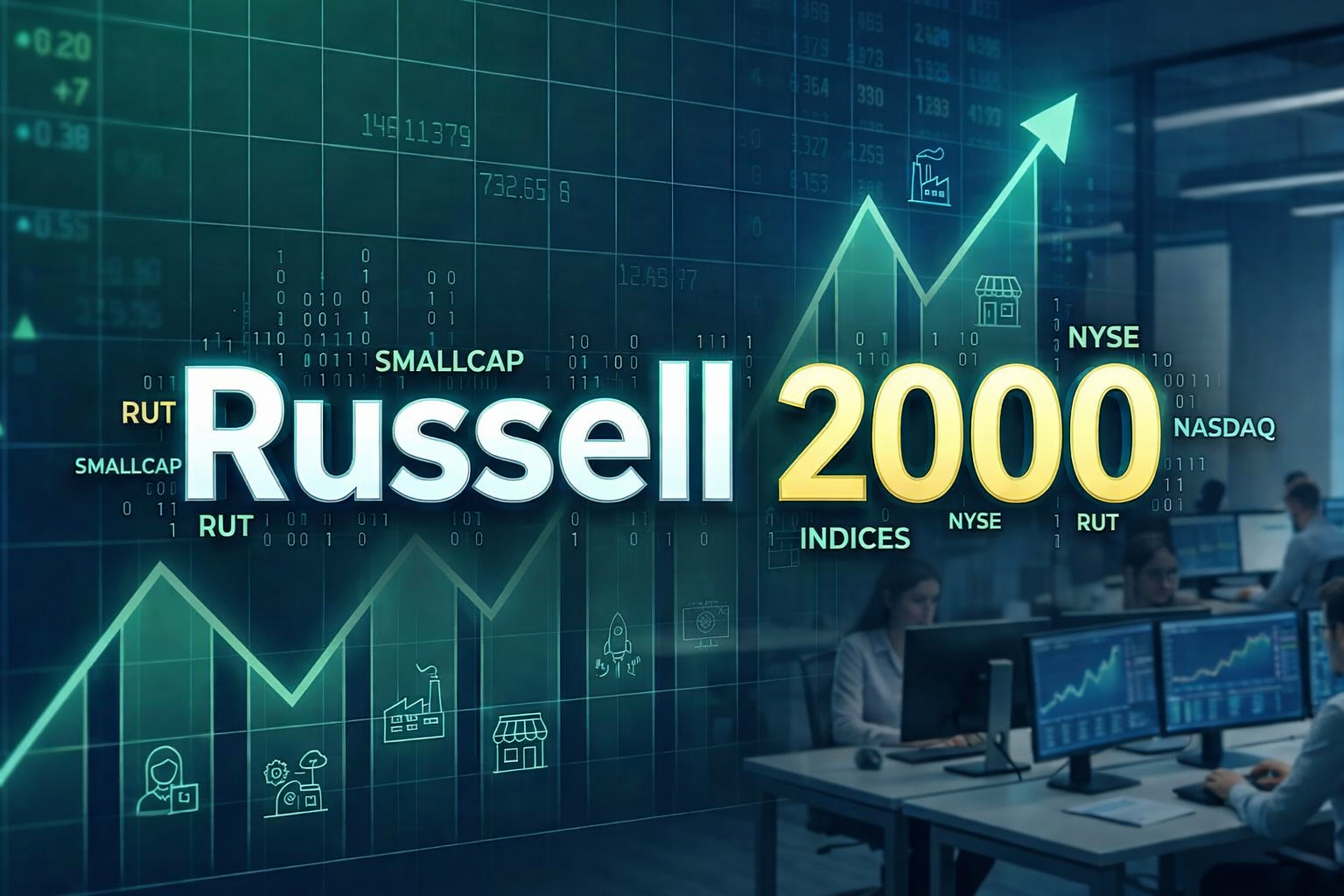
Russell 2000 Jumps 2.12% to Close at 2,979.77, Leading Wall Street’s Rally Before Holiday Weekend

Published

on

FTSE 100 Surges 0.8% Today as Oil Eases and Markets

The Russell 2000, the benchmark index tracking small-capitalization U.S. companies, surged 2.12% on Thursday to close at 2,979.77, up 61.78 points, outpacing every other major U.S. stock index as a wave of positive catalysts lifted markets heading into the three-day Juneteenth holiday weekend.

The small-cap index’s outsized gain reflected a broader rally across Wall Street that was fueled by a surprise semiconductor partnership announcement, easing Middle East tensions following a formal peace agreement, and a sharp reversal of investor anxiety that had built up earlier in the week following a hawkish signal from the Federal Reserve.

A Broad-Based Rally Across U.S. Markets

Thursday’s gains extended across virtually every major U.S. benchmark, though small-cap stocks led the charge by a notable margin. The S&P 500 closed up 1.08% at 7,500.58, while the Nasdaq Composite surged 1.91% to 26,517.93. U.S. equities closed higher Thursday, as tech strength and optimism over the U.S.-Iran deal offset concerns over a hawkish Federal Reserve. The S&P 500 advanced 1% and the Nasdaq 100 gained 1.9%, while the Dow rose by 72 points.

Advertisement

The fact that the Russell 2000 outpaced all three of those larger-cap benchmarks is notable, as small-cap stocks are often viewed by investors as more sensitive to domestic economic conditions and interest rate policy than their larger, more globally diversified counterparts.

Why Small Caps Often Move More on Rate Sentiment

Small-capitalization companies, which make up the Russell 2000 index, tend to carry higher levels of debt relative to their larger peers and rely more heavily on domestic revenue streams, making them particularly sensitive to shifts in Federal Reserve policy and interest rate expectations. That dynamic likely played a meaningful role in Thursday’s outsized gain, as markets recovered from the prior session’s sharp selloff tied to hawkish signals from the central bank.

Equity indexes rose and yields were flat Thursday ahead of the open as investors recovered some of the ground lost after the Federal Reserve, in Kevin Warsh’s first meeting as chair, indicated the possibility of a rate hike this year. The Federal Reserve kept rates steady, with half of officials signaling that at least one rate increase may be warranted this year.

Advertisement

That hawkish dot plot had triggered substantial losses across the market just one day earlier. The Dow Jones Industrial Average had lost more than 500 points Wednesday and the S&P 500 slumped 1.2% as hopes for a more dovish Fed were quickly dashed, with all 11 of its sectors closing in the red. Small-cap stocks, given their typically higher sensitivity to rate expectations, would have likely borne a disproportionate share of that prior session’s selling pressure, setting up a correspondingly larger rebound once sentiment improved.

The Intel-Apple Deal’s Ripple Effect

While the Russell 2000 itself does not include mega-cap technology names like Intel or Apple, the broader market enthusiasm generated by their surprise partnership announcement appeared to lift sentiment across the board, including among smaller companies tied to the domestic manufacturing and technology supply chain. Intel surged 10.6% after President Trump announced that the semiconductor giant would produce chips for Apple in the U.S. The news lifted the broader chip sector, with Nvidia up 2.8% and Micron Technology climbing 8.5%.

That renewed enthusiasm for domestic semiconductor manufacturing carries particular relevance for small-cap investors, given that many smaller industrial and technology companies serve as suppliers within the broader U.S. chip manufacturing ecosystem and stand to benefit from increased onshoring of production capacity.

Advertisement

Easing Geopolitical Tensions Provide Additional Tailwind

Beyond the technology sector catalyst, broader market sentiment also continued to benefit from the formal signing of an interim peace agreement between the United States and Iran, which has helped ease fears of sustained volatility in global energy markets — a factor with direct relevance for smaller, more domestically focused companies that can be particularly sensitive to fluctuating input costs. The interim peace agreement signed by the U.S. and Iran, which includes the reopening of the Strait of Hormuz, raised hopes for an end to the conflict and eased concerns about volatile energy prices.

That improved geopolitical backdrop also lifted travel and transportation-related stocks more broadly. Airlines also saw strong gains, with American Airlines rising 3.3%.

Volatility Drops Sharply

Advertisement

The combination of catalysts driving Thursday’s rally appeared to substantially calm investor anxiety that had built up earlier in the week amid the Fed’s hawkish signaling. The CBOE Volatility Index, often referred to as Wall Street’s fear gauge, fell sharply by 11.06% to 16.40, a notable decline that reflected renewed investor confidence heading into the long holiday weekend — a dynamic that often particularly benefits small-cap stocks, which tend to underperform during periods of heightened market volatility and outperform when investor risk appetite improves.

A Narrow Large-Cap Rally Contrasts With Broader Small-Cap Participation

Interestingly, Thursday’s session showed a notably different breadth pattern between large-cap and small-cap stocks. While analysts noted that gains among blue-chip and mega-cap technology names were relatively concentrated, the Russell 2000’s strong showing suggests broader participation across smaller companies. The primary narrative driving the market on Thursday was the resilience of industrial manufacturing and AI-driven hardware, which managed to offset broader weakness in enterprise software and consumer retail. While the index reached new heights, the narrow breadth of the rally suggested selective investor sentiment as the market digested new economic data.

That contrast — narrow strength among mega-cap names alongside a broader, more decisive rally in the small-cap Russell 2000 — suggests Thursday’s session reflected a genuine, broad-based improvement in risk appetite among investors rather than enthusiasm confined to a handful of high-profile technology stocks.

Advertisement

International Markets Offer a Mixed Picture

The positive sentiment driving U.S. markets Thursday extended to several major international exchanges, though not universally. Japan’s Nikkei 225 climbed 1.65%, Germany’s DAX rose 0.37%, and France’s CAC 40 gained 0.44%. Hong Kong’s Hang Seng Index declined 1.59%, and London’s FTSE 100 fell 1.04%.

That divergence suggests the specific catalysts driving Thursday’s U.S. rally — the Intel-Apple announcement and the formalized Iran peace deal — carried outsized relevance for American markets and domestically focused companies in particular, a dynamic consistent with the Russell 2000’s standout performance among major indexes.

Markets Now Closed for Juneteenth

Advertisement

With Thursday’s strong session now complete, U.S. markets will remain closed for the remainder of the week in observance of a federal holiday. The New York Stock Exchange and the Nasdaq will be closed for trading on June 19, 2026, in observance of the federal holiday of Juneteenth. Both major stock exchanges first closed for the holiday in 2022, after Juneteenth was designated as a federal holiday in 2021.

The stock and bond markets will reopen Monday, June 22, and it will be business as usual on Wall Street for a few days, with the next scheduled market closure coming Friday, July 3, in observance of Independence Day.

Heading into the long holiday weekend, the Russell 2000’s standout performance leaves small-cap investors with reason for cautious optimism as markets prepare to resume trading Monday. Given that smaller companies often respond more sharply to shifts in interest rate expectations than their large-cap counterparts, the index’s trajectory in the coming weeks may serve as a useful barometer for how investors are ultimately interpreting the Federal Reserve’s hawkish signals — whether Thursday’s rally reflected a durable improvement in sentiment toward the prospects for smaller, domestically focused businesses, or a more temporary relief rally tied to a specific set of favorable headlines that could fade once markets reopen and digest the week’s full slate of developments.

Advertisement
Continue Reading
Click to comment

You must be logged in to post a comment Login

Leave a Reply

Business

Johnston takes Freight and Logistics Council role

Published

on

Johnston takes Freight and Logistics Council role

WA Labor stalwart Bill Johnston will helm the Freight and Logistics Council WA, taking the role from Megan McCracken after she spent four years in the job.

Continue Reading

Business

What to Expect in 2026

Published

on

Christina Georgaki is the Founder and Managing Partner of Georgaki and Partners Law Firm based in Athens and Thessaloniki. With over 17 years of experience, she specialises in Foreign Direct Investments and investment Migration. Christina is also a Teaching Fellow at the Alba Graduate Business School and a member of the Political Committee of New Democracy, the governing party of Greece.

In all industries, companies are making efforts to adopt digital solutions, automate processes, migrate to the cloud, and operate with data. Consequently, software development companies are now considered strategic partners rather than mere service providers.

If you need any custom platform, enterprise solution, mobile application, or product modernization, then software development firms in the UK should be your go-to choice owing to their technical skills, compliance practices, and foreign experience.

However, finding the right software developer is about more than evaluating their portfolio and price tags. Knowing exactly what professional software developers can deliver may prove to be useful for forming expectations.

Strategic Guidance Before a Single Line of Code

In many cases, companies initiate software development processes having a certain technical solution in mind. Companies that have years of experience usually start by questioning assumptions and making sure that a certain technical solution fits their goals.

In case you are going to upgrade legacy systems, it would be very beneficial for you to discuss this project with experienced professionals. You can learn more about finding an appropriate company from the following link: https://luminarybrands.co.uk/blog/software-development-companies-uk/.

Advertisement

Instead of rushing into the process of development, UK companies usually hold discovery sessions, meetings with stakeholders, and do a lot of technical analysis.

The Development Process: More Structured Than Many Clients Expect

Another widespread myth is that software development starts right away after signing the contract. However, reputable UK-based companies tend to use an appropriate delivery methodology that aims at minimizing risks and increasing transparency. The typical process could consist of the following stages:

  • Discovery and requirements definition
  • Solution architecture design
  • UX planning
  • Development iterations
  • Testing and quality assurance
  • Delivery and release management
  • Support and optimization

During the development process, the client will have sprint reviews, demos, and progress reports regularly provided. Contemporary IT teams operate within the scope of agile methodologies, which allows evolving requirements without affecting the whole project.

In other words, this way of working enables businesses to validate their assumptions quickly and adapt their priorities based on new market realities. Moreover, it eliminates the need to wait for several months until the end of the project when stakeholders will be able to see how things look.

For big enterprise solutions, the development team might involve a solution architect, business analyst, developers, QA engineers, DevOps specialists, and a project manager.

Advertisement

Technical Expertise Across Modern Technology Stacks

The technology industry in the UK has built up a solid reputation in the realm of engineering. Several software companies are well-versed in multiple technologies, thereby enabling them to make recommendations in accordance with the needs of a specific project. Some examples of contemporary software partners include:

Area Common Technologies
Frontend Development React, Angular, Vue.js
Backend Development .NET, Java, Node.js, Python
Mobile Development Flutter, React Native, Swift, Kotlin
Cloud Infrastructure AWS, Microsoft Azure, Google Cloud
Databases PostgreSQL, MySQL, MongoDB, SQL Server
DevOps Docker, Kubernetes, Terraform

In addition to development frameworks, several UK-based firms have added other competencies such as artificial intelligence, machine learning, cloud native technologies, cybersecurity, and data engineering.

Businesses must anticipate that their software development partner will translate any technology into business-related language. In essence, the most competent organizations should be able to connect architectural considerations to scalability, security, maintenance, and costs.

Communication Becomes a Competitive Advantage

The distinction between a good and bad outcome for an IT project is often defined by communication.

Advertisement

In the UK’s leading companies, transparency is highly valued. Clients usually get access to project management systems, sprint updates, development environment access, and stakeholder meetings.

Think about a project as a voyage on the sea. Without frequent navigation adjustments, even the most high-tech vessel will go astray. Communication ensures that everyone involved understands what direction the vessel takes in terms of business and project objectives. You should be able to rely on:

  • Timelines and milestones
  • Points of contacts
  • Escalation plans
  • Risk management processes
  • Demonstrations of delivered products

All this provides stakeholders with the opportunity to take decisions based on the knowledge gained and eliminates surprises close to project completion.

UK IT companies can be very appealing to international clients because of their excellent English language skills and vast experience with distributed and international projects.

Security, Compliance, and Risk Management

A security vulnerability discovered after launch is often significantly more expensive to fix than one identified during development. Once an application is live, even minor weaknesses can lead to service disruptions, emergency development work, customer dissatisfaction, and regulatory scrutiny.

Advertisement

For this reason, reputable UK software development firms invest considerable effort in security planning throughout the project lifecycle. They evaluate risks before development begins, monitor security during testing, and verify that protective measures remain effective during deployment.

This disciplined approach reduces the likelihood of costly remediation projects while helping businesses maintain compliance and protect valuable customer data. As cyber threats continue to evolve, early security investment has become a practical business decision rather than a purely technical concern.

Modernization Has Become a Business Priority

Current software development projects revolve around the concept of modernization because many large enterprises utilize old platforms plagued by accumulated technical debts. Although these technologies are effective, they often prevent innovation and raise maintenance expenses. In addition, it is not easy to integrate such platforms into modern processes.

Areas of Transformation

Depending on the business needs and available technologies, companies approach modernization differently. For example, some businesses migrate to the cloud. They opt for the decomposition of monolithic applications to enable flexible scaling and easier system updates. Programmers upgrade programming languages, enhance the user interface and develop APIs to establish data exchange between systems.

Advertisement

Why Incremental Change Works Better

The misconception regarding modernization that persists even today is that old systems need to be wholly overhauled. However, practical experience from reputable software development companies in the United Kingdom indicates that it is rare for them to suggest such a complete overhaul. The reason is that most companies opt for implementing changes in phases.

Such an approach enables enterprises to modernize their critical systems without causing any disruption in their functioning. It gives organizations the time to test results, minimize risks, and make changes in their priorities. With businesses investing increasingly in cloud native applications, phased modernization emerges as an excellent option.

Life After Launch

One of the areas which are least considered during software development is the post-deployment stage.

The software cannot be considered an asset that will never change in the future because expectations of customers change, technology develops, and other business needs come up.

Advertisement

UK-based software companies tend to provide a range of services after the software release, including:

  • Monitoring and maintenance
  • Performance tuning
  • Updating for security
  • Managing infrastructure
  • Adding features
  • Support

Sometimes cooperation does not end right after the software launch because many businesses consider the development company a consultant that participates in further decisions on the products and digitalization.

This approach allows companies to stay competitive without burdening their internal resources.

Evaluating Success Beyond Delivery Dates

Launching software on schedule is important, but delivery milestones tell only part of the story. The real measure of success emerges after implementation, when organizations begin to see tangible business outcomes.

Operational impact. Effective software should make everyday work easier. Teams may spend less time on manual tasks, complete processes faster, and gain better access to information needed for decision-making.

Advertisement

Customer value. Successful projects often improve customer interactions through faster services, smoother user experiences, and more reliable digital products. These improvements can strengthen customer satisfaction and retention over time.

Business growth. Technology investments should support broader business objectives. Increased revenue opportunities, improved scalability, and lower maintenance costs are often stronger indicators of success than the number of features delivered.

The most effective software development firms keep these outcomes in focus throughout the project, ensuring that technical decisions contribute directly to measurable business value.

Final Thoughts

What UK software companies deliver besides programming services is strategic advice, technical direction, modernization, security know-how, and operational assistance.

Advertisement

Any business entering into a software development relationship will find processes, transparency, governance, and emphasis on business results as key characteristics. Be it a creation of a brand new piece of software or modernization of existing assets – a competent software development partner may make a difference for your company.

When businesses treat software firms as partners who share their interests, rather than just contractors working on specific projects, more success is possible. It can be particularly important now that the global economy is becoming more and more digitized.

Advertisement
Continue Reading

Business

Ashington manufacturer Raytec upbeat about future following sales growth

Published

on

Business Live

The Wansbeck Business Park firm has issued new accounts showing its performance

Inside the Raytec factory

Inside the Raytec factory(Image: Raytec)

Industrial lighting maker Raytec says the outlook looks “extremely positive” amid an increase in turnover.

The Ashington-based manufacturer, which employs close to 100 people in the town, says there is increasing global demand of its low-energy and low-maintenance LED lighting systems. New accounts for the Japanese-owned business, which specialises in lighting for hazardous areas, lighting for video surveillance, lighting for the transport sector and heavy industrial lighting, show sales grew 8.3% to £18.7m, from £17.3m in 2025.

Operating profits fell slightly from £2.8m to £2.6m as pre-tax profits grew from £3.05m to £3.2m. Ordinary dividends of £1.89m were paid during the year.

Raytec describes itself as a world leader in LED lighting for security and safety, with a focus on smart and connected lighting products fed by ongoing research and development efforts. It supplies products to international markets through a network of distributors, a US subsidiary and directly to other manufacturers with exports accounting for about 67% of sales.

Advertisement

Its main markets are Europe (52%), the Middle East (6%), America (19%) Oceania (11%) and the Far East (12%). The firm said it had grown its product portfolio during 2025 through investment, which is expected to benefit 2026 sales.

In November last year, it was announced Raytec had acquired Finnish portable lighting specialist Atexor. The Espoo-based business brought 21 staff to Raytec’s operation and strengthened its position, with Raytec bosses saying at the time that the move brought enhanced research and development capabilities and a wider support network.

Atexor, which was founded in the early 1980s, provides products used across the oil and gas, petrochemical and manufacturing sectors. It continues to operate as an independent company and brand following the acquisition.

Writing in the 2025 Raytec Limited accounts, managing director David Lambert said: “The company’s sales increased by 8.3% year-on-year and the long-term business outlook remaining extremely positive, with increasing global demand for high performance, low energy, low maintenance LED illuminators across the specialist niche markets in which the business operates.

Advertisement

“Year-on-year, sales have increased to £18.7m (2024: £17.3m) generating profit before tax of £3.2m (2024: £3m). The company has continued to strengthen its product portfolio through 2025 through investment in research and development and expects new products to contribute significantly to sales in 2026.”

Continue Reading

Business

Hitachi Energy to acquire Canduct Group for transformer parts

Published

on


Hitachi Energy to acquire Canduct Group for transformer parts

Continue Reading

Business

SiTime: The Right Company At The Wrong Price (NASDAQ:SITM)

Published

on

SiTime: The Right Company At The Wrong Price (NASDAQ:SITM)

This article was written by

I am a dedicated Finance professional with a Post-Graduate degree in Finance, specializing in independent market analysis and equity trading. My background is rooted in a deep understanding of macroeconomic trends and their direct impact on asset valuation. As an independent trader, I have developed a disciplined approach to the markets, focusing on capital preservation and a strict risk-to-reward ratio (typically 1:2 or higher). My areas of specialization include technical analysis, momentum trading, and fundamental research, particularly within the technology and financial sectors. On Seeking Alpha, I intend to provide readers with actionable, data-driven investment theses that bridge the gap between complex economic data and practical market execution. My sector focus primarily includes global tech and emerging market financials, where I utilize quantitative grounding to identify growth opportunities. My investing approach is a blend of “Growth At A Reasonable Price” (GARP) and momentum-based strategies, ensuring a rigorous margin of safety in every recommendation. I am motivated to write for Seeking Alpha to contribute high-quality, professional-grade analysis to a community of serious investors. By leveraging modern AI-enhanced research tools alongside traditional fundamental analysis, I aim to deliver clarity and strategic insights that help investors navigate volatile market cycles. My goal is to provide a fresh, expert perspective on market dynamics, helping readers make more informed and strategic investment decisions.

Analyst’s Disclosure: I/we have no stock, option or similar derivative position in any of the companies mentioned, and no plans to initiate any such positions within the next 72 hours. I wrote this article myself, and it expresses my own opinions. I am not receiving compensation for it (other than from Seeking Alpha). I have no business relationship with any company whose stock is mentioned in this article.

Seeking Alpha’s Disclosure: Past performance is no guarantee of future results. No recommendation or advice is being given as to whether any investment is suitable for a particular investor. Any views or opinions expressed above may not reflect those of Seeking Alpha as a whole. Seeking Alpha is not a licensed securities dealer, broker or US investment adviser or investment bank. Our analysts are third party authors that include both professional investors and individual investors who may not be licensed or certified by any institute or regulatory body.

Advertisement
Continue Reading

Business

O’Leary extends Ryanair contract to 2032

Published

on

O'Leary extends Ryanair contract to 2032

“I am pleased to report that this process, which included extensive engagement with Ryanair’s largest shareholders, has successfully concluded with Michael agreeing to extend his leadership of the Ryanair Group for the next six years to April 2032, for the benefit of all shareholders,” he added.

Continue Reading

Business

Iran-US sign 14-point deal at Versailles: In 1919, the same place hosted a treaty after World War I that created conditions for World War II

Published

on

Iran-US sign 14-point deal at Versailles: In 1919, the same place hosted a treaty after World War I that created conditions for World War II
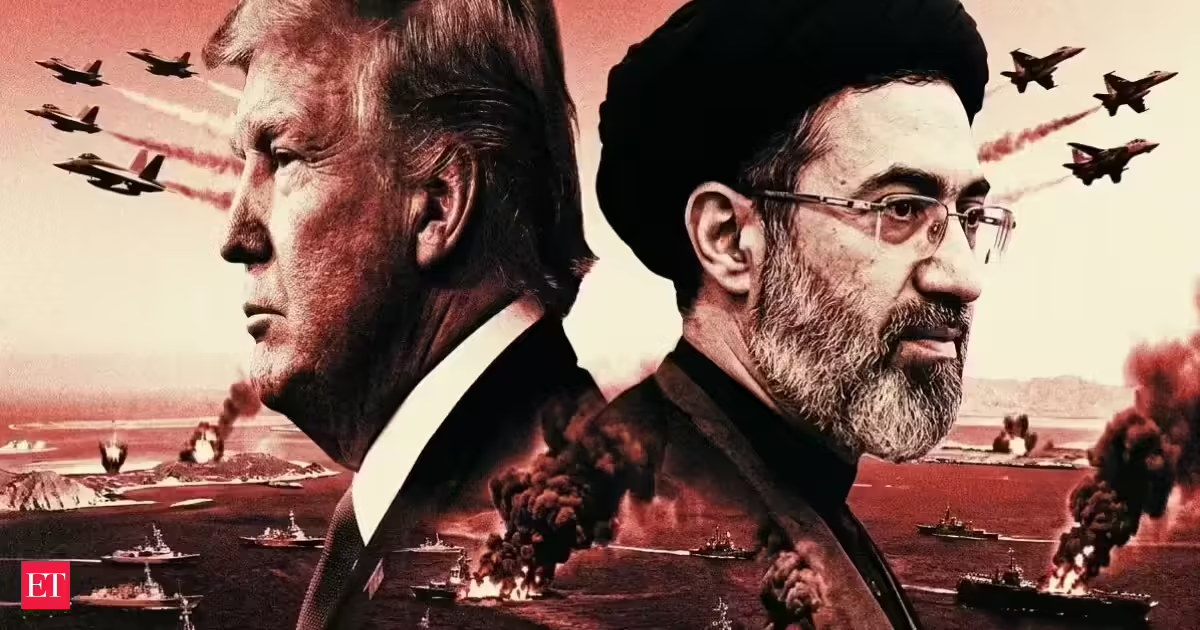
US and Iran digitally signed a 14-point Memorandum of Understanding (MoU) at France’s Palace of Versailles, a venue that has witnessed some of the most important diplomatic moments in modern history. The agreement aims to end hostilities between Washington and Tehran and sets a 60-day timeline for negotiations on a broader settlement.

The Versailles agreement includes commitments related to ending military operations, reopening the Strait of Hormuz, addressing Iran’s nuclear programme and beginning a process for sanctions relief and economic cooperation. The MoU also states that Iran will not pursue nuclear weapons.

The choice of Versailles as the venue has drawn attention because the palace is closely linked with another landmark agreement signed more than a century ago, the 1919 Treaty of Versailles, which formally ended World War I and later became one of the most debated peace settlements in history.

Why Versailles matters in world history

Located near Paris, the Palace of Versailles was once the centre of French royal power before becoming a symbol of diplomacy and international negotiations.

Advertisement

The palace has hosted several agreements that changed the course of global politics. But none is more famous than the Treaty of Versailles signed on June 28, 1919, between Germany and the Allied powers after the end of World War I.


The treaty officially ended the war but imposed strict conditions on Germany, including territorial losses, military restrictions and financial reparations. It also created the League of Nations, an early attempt to build a system to prevent future conflicts.

The Treaty of Versailles and the road to World War II

While the treaty was designed to prevent another major war, many historians argue that its harsh terms contributed to economic and political instability in Germany.The resentment created by the settlement was later exploited by Adolf Hitler and the Nazi Party, helping fuel the rise of extreme nationalism. These developments eventually contributed to the outbreak of World War II in 1939.

Because of this historical legacy, Versailles remains both a symbol of peace negotiations and a reminder of how post-war settlements can influence global politics for generations.

Other major agreements linked to Versailles

The palace has been associated with several other important treaties over the centuries. The Treaty of Versailles of 1757 strengthened the alliance between France and Austria during the Seven Years’ War, reshaping European power politics.

Advertisement

The Treaties of Versailles of 1783 formed part of the settlement after the American Revolutionary War and helped adjust the balance between European powers.

Another agreement signed at Versailles in 1871 followed the Franco-Prussian War and marked a major shift in European power after the emergence of the German Empire.

Iran US Deal

The memorandum of understanding signed by US and Iran is being viewed as an attempt to bring an end to a costly confrontation and restore stability in a region that has faced months of tensions. However, analysts caution that the agreement remains vulnerable, with several major issues still unresolved and the possibility of fresh clashes threatening the progress made so far.

The deal, reportedly facilitated partly through Pakistan’s diplomatic efforts, focuses on immediate confidence-building measures. Under the framework, Iran would allow commercial movement through the Strait of Hormuz, one of the world’s most important energy routes, while the United States would begin steps to withdraw naval pressure and ease restrictions.

Advertisement

What the Iran-US agreement includes

The proposed arrangement includes a phased easing of sanctions, the possible return of Iranian oil exports to international markets, and the release of some frozen Iranian financial assets. It also outlines a withdrawal of US forces operating around Iran within a specified period.

In return, Iran has committed to keeping the Strait of Hormuz open for commercial shipping for an initial period and has reiterated that it will not develop or acquire nuclear weapons. However, questions remain over long-term nuclear monitoring, enforcement mechanisms and how both sides will respond if either party believes the commitments are not being followed.

The agreement’s broad promise of removing sanctions has attracted attention because it appears to offer Tehran significant economic relief. Some analysts believe Washington’s willingness to make concessions reflects its desire to reduce its involvement in a prolonged regional conflict.

Strait of Hormuz holds the key

The reopening of the Strait of Hormuz has immediate global implications. The narrow waterway between Iran and Oman is a critical route for global oil and gas shipments, with a large share of the world’s energy supplies passing through it.

Advertisement

Any disruption in the region has the potential to affect fuel prices, shipping costs and inflation worldwide. The return of commercial vessels through the route has been seen as an early sign that markets may begin stabilising, though traders remain cautious.

The 60-day test

The biggest challenge for the agreement will be the next 60 days, during which Washington and Tehran are expected to negotiate a broader settlement.

Key questions remain unanswered, including how nuclear commitments will be verified, what guarantees will prevent a return to conflict and whether both sides can maintain political support for the deal at home.

Analysts describe the MoU as a starting point rather than a final peace agreement, with its success depending on whether both countries can convert the temporary measures into a lasting arrangement.

Advertisement

Israel’s role remains a major factor

A major uncertainty surrounding the agreement is Israel’s position. While the US and Iran have signed the framework, Israel has not joined the deal and has expressed concerns about Iran’s regional activities.

The agreement calls for an end to military operations across multiple fronts, including Lebanon. But continued Israeli actions against Iran-backed groups could create new tensions and risk triggering responses from Tehran or its allies.

The future of the deal may therefore depend not only on Washington and Tehran but also on whether other regional players accept the framework and avoid steps that could reopen hostilities.

A fragile path towards peace

The agreement has created an opening for diplomacy, but several risks remain. Military incidents, disagreements over sanctions, disputes around nuclear commitments or attacks involving regional allies could quickly derail the process.

Advertisement

The coming negotiations will determine whether the Versailles agreement becomes a historic turning point or another temporary pause in a long-running geopolitical conflict.

A historic venue for a modern geopolitical moment

The Iran-US agreement has now added another chapter to Versailles’ long diplomatic history. Supporters see it as a possible turning point between two long-time rivals, while critics have questioned whether the commitments will translate into a lasting settlement.

More than a century after the 1919 treaty, Versailles once again finds itself at the centre of a global diplomatic moment — carrying both the promise of peace and the lessons of history.

Advertisement
Continue Reading

Business

Rise Baking set to buy Jimmy’s Gourmet Bakery

Published

on

Rise Baking set to buy Jimmy’s Gourmet Bakery

Deal will add Jimmy’s and King Krumb cookie brands plus Ecce Panis breads.

Continue Reading

Business

Slideshow: Foodservice innovation ramps up

Published

on

Slideshow: Foodservice innovation ramps up

A number of operators are expanding their menus with permanent additions.

Continue Reading

Business

SpaceX, OpenAI And Anthropic: The S&P 500 Inclusion Question And Investment Consequences

Published

on

S&P 500 Snapshot: Best Week In 4 Months

SpaceX, OpenAI And Anthropic: The S&P 500 Inclusion Question And Investment Consequences

Continue Reading

Trending

Copyright © 2025