

Sports
The Vikings’ Top 3 UDFAs to Know for the 2026 Season

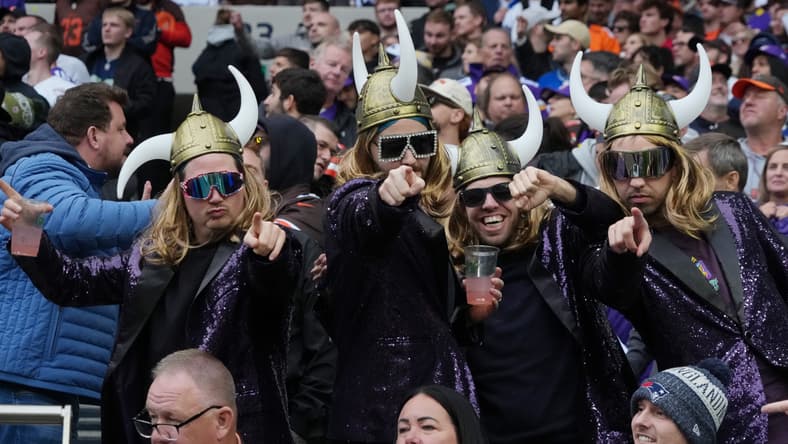
On an annual basis, the Vikings inspire hope for what the batch of UDFA talent is capable of accomplishing. The 2026 haul is no different, but it’s helpful to shrink things down to the Vikings’ top 3 names to know.
Prior to hiring GM Nolan Teasley, Rob Brzezinski was getting the final call on roster decisions. He continued the longstanding pattern of being aggressive once the 7th Round finished off (PurplePTSD offers the full tally of UDFA deals). Check out a trio of youngsters — one for each offense, defense, and specials — to track in the offseason competition.
The Vikings’ Top 3 UDFA Talents to Know
No. 1 — WR Dillon Bell

Already, Mr. Bell has inspired plenty of optimism.
Spending some time watching him at minicamp clarified why there’s so much buzz. The rookie receiver boasts good size and knows how to cut violently. Athletic trainers are going to need more tape to fix up the broken ankles of the poor defensive backs trying to slow Bell down.
Best case for him in 2026 is a job as the WR4. So, too, does he have a shot to play a large role on special teams. The kickoff returner job is wide open and he’s battling with Myles Price to be the PR1 (but appears unlikely to overcome Price).
Expect lots of highlights of Dillon Bell during the offseason. Lots of potential.
No. 2 — P Brett Thorson
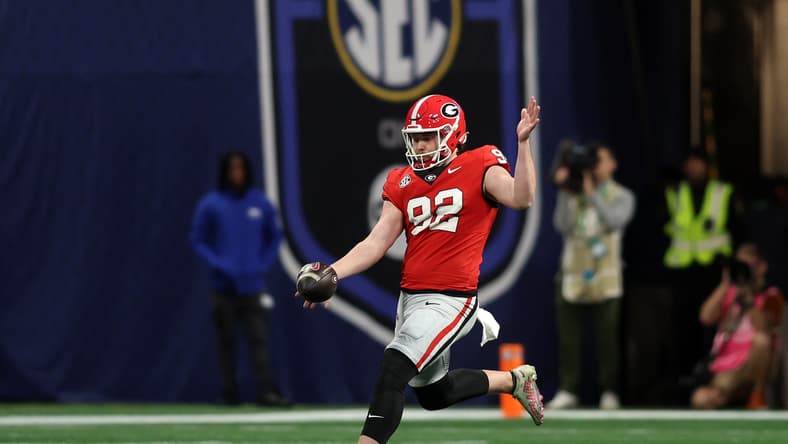
If the only criteria were punting the ball, then Brett Thorson would have a better chance of making the final roster. What’s a touch uncertain, though, is his ability as a holder.
Consider what special teams coordinator Matt Daniels had to say: “I watched over 300 snaps of this guy at practice and there’s no issue with the holding.” More broadly, Daniels did say that Thorson has good hands.
Now, the obvious caveat: practice isn’t a game (cue the Allen Iverson video). Holding becomes much more difficult when there are massive linemen trying to disrupt the play as 65,000 Minnesota fans go berserk in the stands. Can Thorson do well in that environment? What about when the wind is swirling at Soldier Field or when there’s a blizzard at Lambeau?
Thorson offers a booming punt, capable of giving his team healthy field position. He’s operating under a UDFA contract that sees $90,000 guaranteed, per OTC. Not a bad payday for an undrafted punter but not a hindrance for cutting him.
No. 3 — S Jacob Thomas
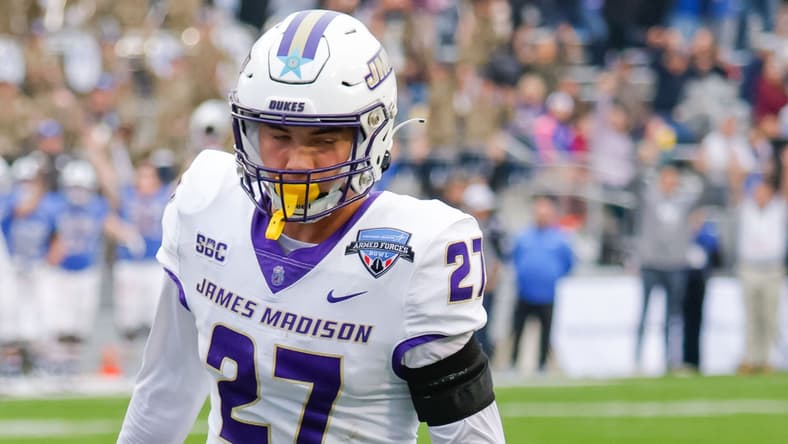
In April, the Vikings added a young safety named Jakoke Thomas in the 3rd Round. He is 22 and is listed as being 6’1″ and 211 pounds. After the draft concluded, there was then a move to add Jacob Thomas. The 22-year-old safety is listed at 6’1″ and 212 pounds.
So, a touch confusing.
The UDFA safety was listed as the 131st overall safety among 937 who qualified for the PFF ranking last year. He boasted a healthy 77.9 grade for James Madison. Most impressive is his 86.3 pass rush grade.
The safety played 320 snaps in the box, 250 as a free safety, 156 in the slot, 57 along the d-line, and 4 as a wide corner. Consider, as well, that he offered his team a pile of snaps on specials, playing a substantial role on kickoff coverage, punt coverage, punt return, and FG/XP block.
Minnesota gave the young lad $160,000 guaranteed to become a Viking.

Senior Editor for Vikings Territory & PurplePTSD . Twitter & Bluesky: @VikingsGazette. Email: k.joudry[at]vikingsterritory[dot]com. Canadian. Jude 1:24-25.

Sports
FIFA WC 2026 Week 1 round-up: Messi and Mbappe shine as Ronaldo’s star dims | FIFA World Cup 2026
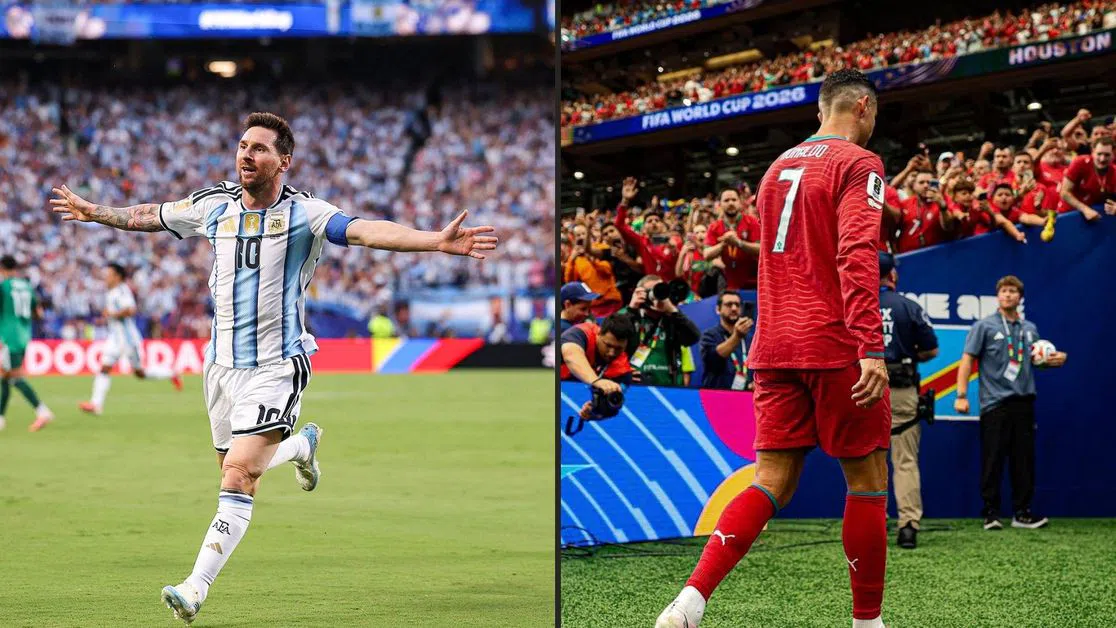
The FIFA World Cup 2026 has completed its first week of action and, in just seven days, fans have witnessed masterclasses in individual performances, memorable upsets, and impressive displays from some of the tournament favourites, not to mention some spirited resistance from lesser-known teams. By the end of the opening week, co-hosts Mexico had also become the first side to secure their place in the round of 32.
Week 1 has been a reminder that football’s old order refuses to go quietly into the night even as a new generation threatens to crash the party. Lionel Messi, Kylian Mbappe, Harry Kane and Erling Haaland lit up the tournament with statement performances, while Cristiano Ronaldo’s much-anticipated return failed to produce the fairytale beginning many had hoped for.
Here is a recap of all the memorable happenings over the first week of the FIFA World Cup 2026 being held across the United States, Canada, and Mexico.
Messi’s magic remains intact
For years, the World Cup had been the stage where Messi’s brilliance was measured against expectations. In 2026, the Argentine captain finally appears to be playing with freedom, likely because, for the first time in his six appearances at the tournament, he is defending the trophy rather than chasing it.
Argentina’s title defence began with a comfortable 3-0 victory over Algeria in Group J and, fittingly, all three goals came from Messi.
Mbappe’s historic night
If Messi reminded the world of his magic, Mbappe once again showcased why he is regarded as the heir to football’s throne.
France’s 3-1 victory over Senegal saw the French captain score twice and overtake Olivier Giroud to become his country’s all-time leading scorer with 58 goals.
The brace also took Mbappe’s World Cup tally to 14 goals, levelling with Germany’s Gerd Muller in fourth place on the all-time list. Only Messi and Klose, with 16 goals each, and Brazil legend Ronaldo Nazario, with 15, are now ahead of the 27-year-old.
Most goals in FIFA World Cup history
|
Rank |
Player |
Country |
Goals |
|
1 |
Lionel Messi |
Argentina |
16 |
|
1 |
Miroslav Klose |
Germany |
16 |
|
3 |
Ronaldo |
Brazil |
15 |
|
4 |
Kylian Mbappe |
France |
14 |
|
4 |
Gerd Muller |
Germany |
14 |
|
6 |
Just Fontaine |
France |
13 |
Norway announce their return
Few teams entered the tournament with as much momentum as Norway, who qualified for the World Cup with a perfect record in the European qualifiers.
But expectations were tempered by the country’s long absence from football’s biggest stage.
Their emphatic 4-1 victory over Iraq confirmed that they are more than just participants in the 48-team event. Star striker Erling Haaland scored twice, while Martin Odegaard dictated the tempo as Norway celebrated their first World Cup appearance since 1998 in style.
Having won all eight qualifying matches and starting the tournament with a convincing victory, Norway are rapidly emerging as one of the teams nobody will want to face.
Ronaldo’s wait grows longer
While Messi, Mbappe, and Haaland dominated the headlines, the storyline for Cristiano Ronaldo during the opening week was considerably less memorable.
Portugal were held to a 1-1 draw by DR Congo in their opening game, with the 41-year-old failing to score despite several opportunities.
It was also the first World Cup since 2014 in which Ronaldo failed to find the net in his opening match. He scored a hat-trick against Spain in Portugal’s first game at the 2018 World Cup and netted against Ghana in the opening match of the 2022 edition.
With what is likely to be his final World Cup underway, the pressure is mounting on the all-time leading scorer in men’s international football.
Controversies arrive early
No World Cup is complete without debate, and the first week provided plenty.
Mandatory hydration breaks, introduced to help players cope with the North American summer, became one of the biggest talking points. Critics argued they disrupted the rhythm of matches and increased commercial interruptions.
Several VAR decisions also came under scrutiny, while players and coaches voiced concerns about scheduling and extreme weather conditions.
The tournament also encountered political complications. Iran captain Mehdi Taremi and head coach Amir Ghalenoei revealed that FIFA had ordered the team to leave the United States immediately after their 2-2 draw against New Zealand in Los Angeles and return to their base in Tijuana, Mexico, denying the squad an overnight stay for recovery.
Mexico strike first
Amid all the drama, co-hosts Mexico became the first team to secure a place in the round of 32.
Mexico defeated South Africa 2-0 in their opening game before edging past South Korea 1-0 to collect six points from two matches.
With South Korea on three points and both Czechia and South Africa on one point each, Mexico became the first side to officially progress to the knockout stage.
Canada secure historic breakthrough
Co-hosts Canada are also enjoying a memorable campaign.
Before the start of the tournament, Canada had never won or drawn a match at the FIFA World Cup. However, just two games into the 2026 edition, they have already earned their first point with a draw against Bosnia and Herzegovina and followed it up with a commanding 6-0 victory over Qatar.
With four points from two games, Canada are now well placed to join Mexico in the round of 32.
Germany turn back the clock
Germany arrived at the tournament with lingering doubts after suffering group-stage exits in both 2018 and 2022.
Those concerns briefly resurfaced when debutants Curacao cancelled out Felix Nmecha’s early opener to level the scores at 1-1.
However, Julian Nagelsmann’s side responded emphatically. Kai Havertz scored twice as Germany ran out 7-1 winners, recreating the scoreline of their famous victory over Brazil in the semi-finals of the 2014 World Cup.
Vozinha steals the show for Cape Verde
In one of the biggest David-versus-Goliath stories of the opening week, debutants Cape Verde held tournament favourites Spain to a goalless draw.
The star of the night was 40-year-old goalkeeper Vozinha, who produced a string of saves to frustrate the European champions.
Spain registered 23 shots and eight efforts on target, but the veteran goalkeeper stood firm to earn Cape Verde their first-ever World Cup point. His heroic display also earned him the Player of the Match award.
Kane continues his purple patch
After finishing as the leading goalscorer at club level during the 2025-26 season, England captain Harry Kane carried his rich vein of form into the FIFA World Cup 2026, scoring twice in England’s commanding 4-2 victory over Croatia in their Group L opener.
Kane put England ahead from the penalty spot in the 12th minute, but Croatia responded through Martin Baturina, who levelled the scores in the 36th minute. The England skipper restored his side’s advantage six minutes later with his second goal of the night, only for Petar Musa to strike in first-half stoppage time and send the teams into the break locked at 2-2.
England regained control soon after the restart as Jude Bellingham found the net in the 47th minute before Marcus Rashford sealed the victory with a late goal in the 85th minute, helping the Three Lions begin their campaign with an impressive win.
FIFA World Cup 2026 Week 1 results
|
Date |
Group |
Match |
Result |
|
12 June |
A |
Mexico vs South Africa |
Mexico 2-0 South Africa |
|
12 June |
A |
South Korea vs Czechia |
South Korea 2-1 Czechia |
|
13 June |
B |
Canada vs Bosnia and Herzegovina |
Canada 1-1 Bosnia and Herzegovina |
|
13 June |
D |
USA vs Paraguay |
USA 4-1 Paraguay |
|
14 June |
B |
Qatar vs Switzerland |
Qatar 1-1 Switzerland |
|
14 June |
C |
Brazil vs Morocco |
Brazil 1-1 Morocco |
|
14 June |
C |
Haiti vs Scotland |
Scotland 1-0 Haiti |
|
14 June |
D |
Australia vs Türkiye |
Australia 2-0 Türkiye |
|
14 June |
E |
Germany vs Curaçao |
Germany 7-1 Curaçao |
|
15 June |
F |
Netherlands vs Japan |
Netherlands 2-2 Japan |
|
15 June |
E |
Ivory Coast vs Ecuador |
Ivory Coast 1-0 Ecuador |
|
15 June |
F |
Sweden vs Tunisia |
Sweden 5-1 Tunisia |
|
15 June |
H |
Spain vs Cabo Verde |
Spain 0-0 Cabo Verde |
|
16 June |
G |
Belgium vs Egypt |
Belgium 1-1 Egypt |
|
16 June |
H |
Saudi Arabia vs Uruguay |
Saudi Arabia 1-1 Uruguay |
|
16 June |
G |
Iran vs New Zealand |
Iran 2-2 New Zealand |
|
17 June |
I |
France vs Senegal |
France 3-1 Senegal |
|
17 June |
I |
Iraq vs Norway |
Norway 4-1 Iraq |
|
17 June |
J |
Argentina vs Algeria |
Argentina 3-0 Algeria |
|
17 June |
J |
Austria vs Jordan |
Austria 3-1 Jordan |
|
17 June |
K |
Portugal vs DR Congo |
Portugal 1-1 DR Congo |
|
18 June |
L |
England vs Croatia |
England 4-2 Croatia |
|
18 June |
L |
Ghana vs Panama |
Ghana 1-0 Panama |
|
18 June |
K |
Uzbekistan vs Colombia |
Colombia 3-1 Uzbekistan |
|
18 June |
A |
Czechia vs South Africa |
Czechia 1-1 South Africa |
|
19 June |
B |
Switzerland vs Bosnia and Herzegovina |
Switzerland 4-1 Bosnia and Herzegovina |
|
19 June |
B |
Canada vs Qatar |
Canada 6-0 Qatar |
|
19 June |
A |
Mexico vs South Korea |
Mexico 1-0 South Korea |
One week into the expanded tournament, familiar stars have once again dominated the headlines, but the opening round of matches has also shown that surprises are never far away. With qualification places at stake and the race for the round of 32 gathering pace, the second week promises even more drama.

Sky is knocking 20% off its entire range of Glass TVs to mark the start of the 2026 FIFA World Cup. Until June 17, shoppers can upgrade to the Sky smart TV that’s ‘designed for football’ from £4.50 per month when taken alongside a Sky TV and Netflix package.
Sports
Lamine Yamal ‘not fully fit’, likely to sit out Spain’s 2nd World Cup game | FIFA World Cup 2026
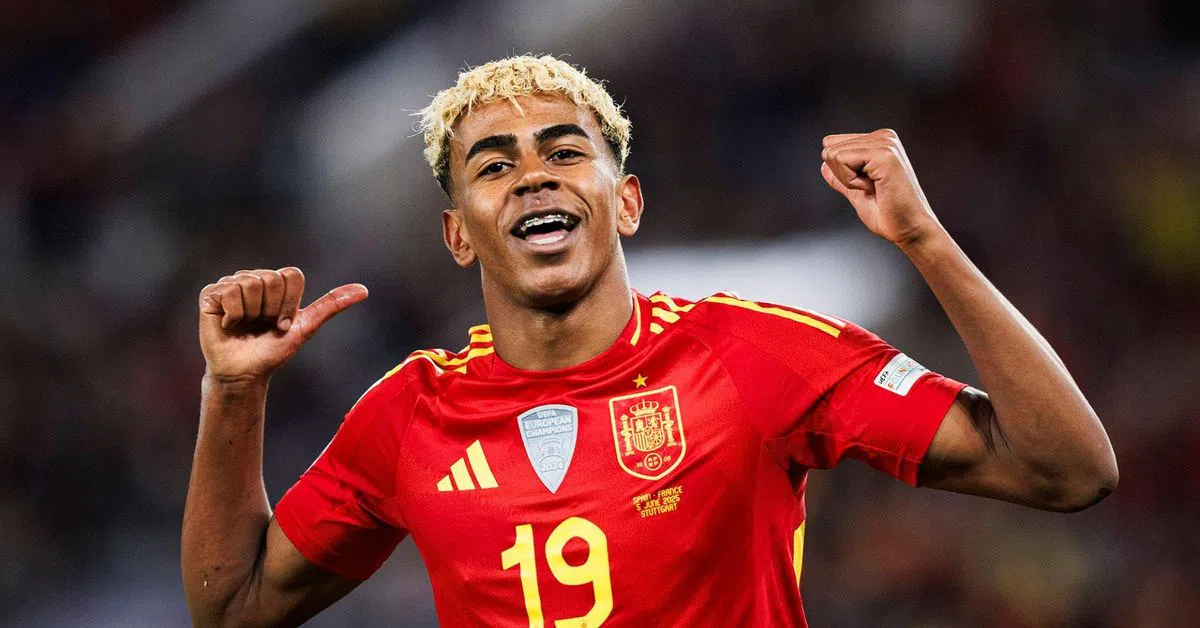
Lamine Yamal is not feeling 100% fit and is not likely to start for Spain in the match against Saudi Arabia on Sunday at the World Cup.
Yamal came into the tournament nursing a left hamstring injury and was only a substitute in the team’s opener on Monday – a disappointing 0-0 draw against Cape Verde.
“I’m fine, I feel good, but it’s still too soon,” Yamal told Spanish network RTVE. “It’s unnecessary (to take risks). I’m going through an adaptation process, it’s not the time to play a full match yet. But I can play as many minutes as the coach wants.”
The 18-year-old Yamal came off the bench in the 71st minute against Cape Verde but was not able to spark La Roja to victory against the nation of about half-million people that was making its debut at soccer’s showcase event.
After facing Saudi Arabia on Sunday in Atlanta, Spain goes to Guadalajara to play Uruguay in the highlight match of Group H. The match may be decisive and having Yamal fully fit could be crucial for Spain.
Yamal said teammate Nico Williams, who also arrived nursing an injury, was ahead of him in the recovery process.
“Physically he’s even better than me,” Yamal said. “We’re not in a rush. We have a great team with top-level players and we have to go step by step.”
Yamal arrived at the World Cup as one of the tournament’s biggest stars despite his young age. He has been thriving with Barcelona and Spain’s national team for a while, having helped La Roja win the European Championship in 2024. He led Barcelona to the Spanish league title this past season.
His popularity in the United States has been evident at the World Cup. An advertisement with his image towers over Mercedes-Benz Stadium in Atlanta, where Spain kicked off its campaign.
“I’m taking it naturally, it’s something I’m used to,” Yamal said about his popularity. “I know what I represent both outside of Spain and in Spain. I try to always give my best, that’s what the fans want. If you have your image on that building, it’s because you can do things on the field that people like, things that excite them when they see you play.
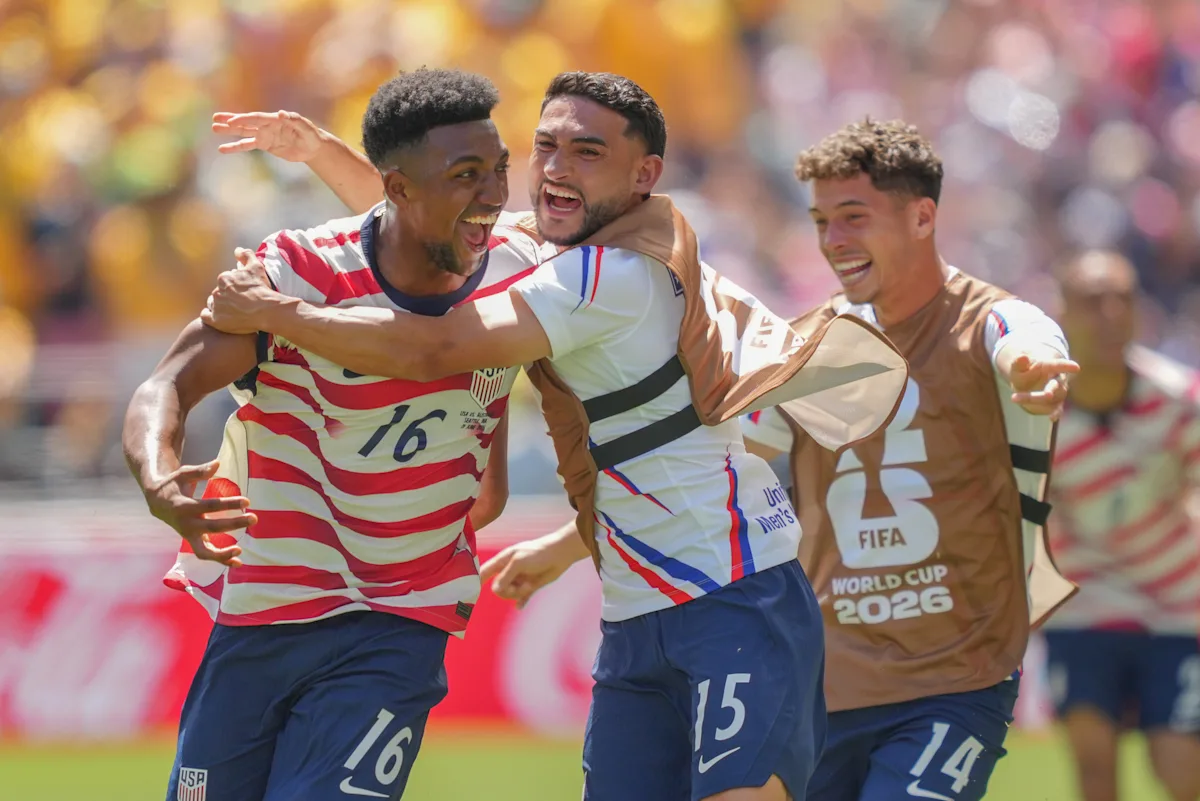
SEATTLE — Alex Freeman spent a few anxious seconds waiting to learn whether the biggest goal of his life would count. By the time video review confirmed the U.S. defender had been onside, his United States teammates were already sprinting toward him.
Freeman’s first World Cup goal ended up being the capper on the United States men’s national team’s 2-0 victory over Australia on Friday. The victory secured a berth in the Round of 32 for the U.S.
Advertisement
Initially, Freeman — who followed through with the header after Sergiño Dest’s shot was blocked by an Australian defender — was called offsides. But review determined Freeman had been onside when Dest made the shot, making it a good goal.
That’s when Freeman and the USMNT reserves ran over to the opposite side of the field, celebrating the young U.S. defender’s goal.
“I was going to run to the side, and Cristian [Roldan] and some of the boys were like, ‘No, no, come to this side, to this side,’” Freeman said of the celebration. “And when [the goal] got accepted I turned back and they were all running at me, I was like, ‘I’m gonna run to the other corner flag.’”
“He was already kind of near us, so we’re just kind of telling him, ‘come, come, come, come, come,’” Auston Trusty confirmed to reporters after the game.
In many ways, Freeman was an unlikely hero. The United States’ first goal was officially credited as an own goal by Australian defender Cameron Burgess after a dangerous run and cross from Folarin Balogun, leaving the 21-year-old defender as the only American credited with a goal in the 2-0 victory.
Advertisement
Freeman is a relative newcomer to the U.S. squad: Friday was just his 19th cap, with the 21-year-old defender only a year or so removed from his first senior call-up. He started his career with the Orlando City academy, debuting for the senior team in 2022 at age 17, but completed a $7 million transfer to La Liga side Villarreal in January.
And at the same time, Freeman has become a key piece of the U.S. back line in a short amount of time. Of his 19 matches, he’s played the full 90 minutes in 10, including both group stage games at this World Cup. Friday’s goal wasn’t Freeman’s first — he scored twice for the USMNT during friendlies last year — but it was his most important to date.
Freeman spoke about his own rapid rise for both club and country, noting that he’s been moving at a “fast pace at such a young age.”
Advertisement
“I think it’s hard for me to kind of take it all in,” he said.
USMNT manager Mauricio Pochettino had high praise for the defender, and attributed some of Freeman’s “evolution” to former Orlando City head coach Oscar Pareja and the rest of their coaching staff. (Pareja and Orlando mutually parted ways in March.)
“If you don’t have the support of the coaches like Oscar Pareja and the coaching staff in Orlando, and if you don’t build that relationship and trust, it’s difficult to make decisions,” Pochettino said. “[Freeman has] an amazing profile. He want to learn, he always listens and he’s a player that you really enjoy being with him, not only coaching, but being with him. He’s a lovely guy and he’s an amazing player for me. [He has] potential to be one of the best players in his position in the world.”
Freeman’s father is former wide receiver and Green Bay Packers great Antonio Freeman, giving some context to the USMNT defender’s ability to thrive at the other football. But Freeman made it clear he wanted to separate himself from his father’s accomplishments.
Advertisement
“That just shows how he can be great, and I can be great in my own way as well,” he said.
That early glimpse at greatness was clear, not only in the goal, but with the rest of his play. Midway through the half, Freeman had an outstanding defensive play to tap the ball out of bounds and keep Australia from getting a very dangerous chance.
Freeman also went down with a knock to the head shortly before his goal, but was able bounce back without issue. That doggedness was on display with his goal, with Freeman saying postgame that he was going to get the rebound on Dest’s shot “any way I can” — a determination that led to glory, after a short break for VAR.
Advertisement
Though the defender is still young, it was the realization of a lifelong goal for Freeman, who got emotional during the national anthem ahead of Friday’s game.
“I think for me, it shows how I’ve made it, kind of in my way. I’ve been working my whole life to be able to go to that moment and hear the national anthem in front of the home crowd,” he said.
Freeman made a point to shout out that home crowd, which had Seattle Stadium shaking after both goals Friday — literally, as the stadium recorded seismic activity following the VAR decision.
Still, Freeman said that he and his teammates didn’t really get a chance to appreciate the fans until after the game was over.
Advertisement
“In a big game, you don’t realize how much support you have in the stands, right? And after the game, we were just able to take it all in, and realize how much of a great support system that we have in the U.S. fans,” Freeman said. “[It] kind of make us calm and make us accept the fact that we’re here and we have such an amazing thing to do, and now we have more stuff to do.”
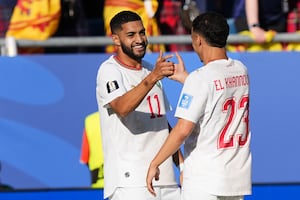
Ismael Saibari scored only 72 seconds into the game and Morocco beat Scotland 1-0 at the World Cup on Friday to keep alive its chances of advancing to its second straight knockout round.
Saibari slipped behind two Scotland defenders and Brahim Diaz dropped the ball over the top to him. Saibari gathered and blasted it into the top left corner of the net, well outside the reach of goalkeeper Angus Gunn.
Advertisement
Morocco, which reached the semifinals at the last World Cup in Qatar, drew 1-1 with Brazil in its Group C opener. Scotland, which hasn’t gotten out of the group stage in its previous eight previous World Cup appearances, beat Haiti 1-0 in its first match.
Saibari also scored Morocco’s goal against Brazil.
Morocco nearly scored another in the 52nd minute when a header by Bilal El Khannouss off Achraf Hakimi’s corner kick was battled down by Gunn.
Scotland had a chance in first-half stoppage time when Andy Robertson sent a cross at John McGinn, who couldn’t get a foot on it near the back post.
As Scotland pressed for an equalizing in the closing minutes, Morocco had a pair of good chances to add to their wide both both missed the target.
Download the FREE Boston 25 News app for breaking news alerts.
Follow Boston 25 News on Facebook and Twitter. | Watch Boston 25 News NOW
Celebrating its 10th anniversary, Elevate has had its busiest show to date, with almost 200 exhibitors, 115 seminars and 200 speakers over two days, with numbers understood to be up by ten per cent over the two days.
Highlights included a partnership with Intelligent Health to bring in a Beat the Streets trail, with boxes placed on the stands of legacy exhibitors who have been with the event since the beginning.
Another high point was a live workout led by 1980s tv fitness legend, Mr Motivator, who is working with Innerva, around engaging older people with exercise. This was clearly a topic which resonated with the audience, as there were no spare seats for Thursday’s panel discussion on the importance of strength training for older people on the Debate stage.
Talking points on panels included technology, AI, gamification, longevity, diversity and inclusion, as well as the underlying pillars of health – breathing, sleeping, nutrition and recovery.
Here are some of HCM’s key takeaways.
Opportunities to widen our welcome
The disability market is being underserved, with opportunities for the sector.
Including invisible disabilities, one in four people have a disability in the UK and this cohort represents an annual spending power of £446 billion. Of the 49 per cent who are active only half of those feel welcome where they train.
Disability consultant, Marina Logacheva, who is researching and campaigning on the subject told HCM that the industry is taking too long to shift the dial on this issue. As a wheelchair user she has been told by multiple fitness professionals that they won’t work with her because they don’t know how to.
She also has to pay for services at her gym that she is unable to access – for example the swimming pool is inaccessible because there is no hoist – but the gym will not give her a discount.
This is not good enough for an industry which talks about lowering barriers, being inclusive and supporting the NHS. There is the continual narrative in the industry that people who don’t go to gyms have the wrong perception of our facilities, but do they?
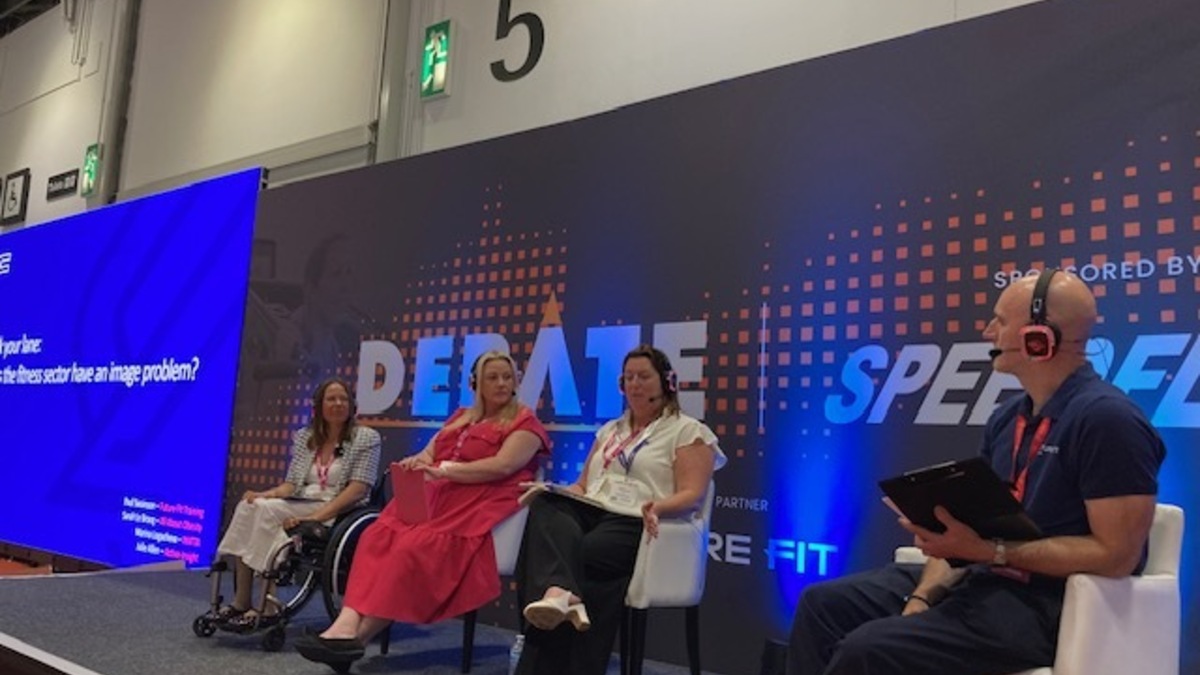
In a panel discussion chaired by Future Fit’s Paul Swainson, entitled Does the industry have an image problem, Logacheva and fellow panelists Sarah LeBrocq, founder of All About Obesity and managing director of Active Insight, Julie Allen, agreed that being more inclusive starts with images used in marketing. The people who aren’t coming to facilities need to see people like themselves represented in order to feel they might have a place there.
“Creating a feeling of belonging starts with the ad. If you don’t see yourself then you feel like you don’t belong there,” said Logacheva. “People with disabilities are only on 2 per cent of ads on social media.”
Allen shared a compelling story from a focus group of a man who suffered a stroke which motivated a lifestyle change. After being prescribed GLP-1 medication by his GP and losing weight, he said he felt able to lift the heaviest weight – the door handle of the leisure centre.
“Confidence is one of the top five barriers among people who don’t go to gyms. They feel a sense that the gym is not the place for them,” says Allen. “The industry is still not doing enough to look through the lens of the consumer.”
Triathlete, distance runner and obesity campaigner, LeBrocq, expressed frustration about being patronised by gym staff and having assumptions made that she has joined the gym to lose weight. “Treat the individual, ask questions and don’t make assumptions based on appearance,” she said.
Logacheva has published a report on Creating Welcoming Fitness Environments based on her research trip to Australia which can be downloaded for free at disabilityinsport.com/report
Mental health – great progress and more work to do
A panel discussion hosted by UK Active’s director of membership and sector development, Marianne Boyle, celebrated the journey that the fitness sector has been on with mental health. Ten years ago it was barely spoken about, now it’s widely observed that people use facilities to improve their state of mind as much as their physical health.
There has been a huge amount of progress and yet there’s still a way to go – only 16 per cent of people living with mental health conditions are meeting WHO activity guidelines. Women, younger adults and those in lower socio-economic groups are the most likely to be losing out. “There is still a significant gap between what we know works and what people are able to access in our facilities,” said Boyle.
Panelists included psychotherapist, Charlotte Braithwaite; Swim England’s head of public affairs, Philip Brownlie; founder of Together We Lift, Liam Baker and Sam Perks physical activity operations manager at mental health charity, Mind.
Key takeaways from the panel were the need to have some upskilling of the sector’s workforce so that fitness professionals are comfortable having big conversations while staying in lane.
Perks said that fitness instructors have told him that clients have spoken to them about having suicidal feelings, which is a lot to take on board. The panel stressed that instructors don’t need to solve the problem, they need to be empathetic, present with the individual and know where to signpost.
Braithwaite spoke about the importance of creating psychological safety in gyms and this can only be done by humans. “Gyms can be a confronting environment,” she said. “They’re full of mirrors and metal and people who look like they know what they’re doing. Simply interacting with weights isn’t wellness. You need people and you need to spell out what to expect and provide human touchpoints to make everyone feel safe.”
She also spoke about neuroaesthetics – providing environments where nervous systems feel safe – which HCM has identified as a trend.
Trauma – more common than you think
Another panel discussed the creation of trauma-informed fitness environments, with Akusile Makawa from Loughborough University; Fiona Roberts, founder of The Movement Charity and Kim Grey, founder of Sattva Trauma Informed Education, which offers a CIMSPA-accredited training course to empower fitness professionals to work this cohort.
Trauma might sound niche, but it’s not. Shelving perceptions of what a person living with trauma looks like is important – it’s very likely to be that high-achieving CEO who appears to have life nailed.
Roberts said that 70 per cent of people have experienced trauma, 25 per cent of women have experienced domestic violence and 20 per cent have experienced some form of child abuse.
“There will be people in your clubs and classes who’ve experienced trauma,” she says. “And if not it’s because they’re not getting through the barriers to your facility.”
Human connection, providing touchpoints, relationship building and empathy are the foundations of addressing this issue.
Roberts says that setting the scene at the start of the class of what to expect creates safety and predictability. She also says it’s important to give the individual an element of choice as often they’ve had choices taken away – this could be leaving the class early with no questions asked and no offence taken. “Tell them that everything is optional, that they are in charge of their own bodies and what they do in the class,” she says.
The Movement Charity takes exercise into the community, including women’s refuges and Roberts talked through some of her experiences, including leaving mats by the door, for people to choose where they put them. She also provided a great example of how an empathetic instructor can build confidence.
“Initially people tend to stay by the door and as far away from me as possible because I present the threat,” she said. “But in time they move closer to me and put me between them and the door because I come to represent safety.”
Grey highlighted a major no-no – asking people in front of the class whether they have any injuries or issues. This might sound basic, yet it still happens.
She also highlighted that trauma gets stored in different parts of the body – for example hips, which can lead to some exercises being triggering. Subtly offering alternatives can be a way to navigate this.
Another important takeaway – check before the start of each class if people are happy with being adjusted. A better way of allowing people to respond than a show of hands is to give them a card or a coin which they can flip according to their preference, which might change from day to day.
Exercise addiction – too much of a good thing
Exercise is medicine, but even medicine can have negative side effects for some people. HCM attended a couple of panel discussions which talked about this important issue.
Exercise addiction is when the individual feels dependent on it and an uncontrollable compulsion to exercise, which gets in the way of other areas of their life, for example their work or relationships.
It affects 8 per cent of general exercisers, 9 per cent of fitness professionals and is 3.5 times more likely in those experiencing eating disorders.
People with high intelligence, a tendency towards perfectionism and possibly some form of neurodivergence are most vulnerable to over-exercise.
This is the same cohort that needs to be careful with tracking data. As wearables and data continue to be more deeply embedded in the industry, it’s very important to acknowledge that not everyone will benefit from using them. For some people, the data will start to control them.
Exercise psychologist, Dr Paula Watson, spoke about her work with clients living with exercise addiction. Often these are people who take sports seriously and their identity becomes caught up with it. Much of her work with clients is around developing self-love and self-compassion.
“There are two distorted beliefs associated with exercise addiction,” she says. “The individual feels that if they’re not strict with their training they’ll lose control, for example get fat, or not get big enough, or not be able to cope with their emotions. And if that happens, they’re not good enough.
“The language unintentionally used in fitness culture can fuel these distorted beliefs,” she says. “For example, ‘you’re a machine’”.
Dr George Mycock, founder of MyoMinds, shared his journey with over-exercise and shared some valuable advice: “More is not always better – don’t celebrate exhaustion, stress the need for rest and recovery when working with clients. Avoid talking about using exercise as a way of earning food. And avoid linking self-identity with exercise – talk to clients about the other areas of their life as well.”
The fundaments of good health and an opportunity for coaches
Thomas Hague, The Breath Coach, has worked in elite sport, including with British Sailing, GB Boxing and British Triathlon, as well as individuals struggling with anxiety. He said that breath is the missing performance skill and wants to normalise breath assessments and breathwork in the industry.
“Super simple changes to breath can make a huge difference to performance,” he said. “Breath underpins all the work an athlete or individuals do. The quickest way to downregulate the nervous system is to change the cadence of the breath, it improves the ability to handle pressure, speeds up recovery, improves sleep and emotional regulation, relaxes muscles and can bring about a 30 per cent increase in range of motion. However, most of us completely ignore the thing that keeps us alive.”
Hague says that a few minutes of deep breathing at end of workout would clear the stress of the workout and set the client up for better recovery.
Fitness professionals who are trained in breathwork could help clients to overcome the common negative breathing patterns – mouth breathing, fast respiratory rate (we should breathe 5.5 times a minute), upper chest breathing, poor lower rib mobility (they should expand by 1 – 2.5 cm on an in-breath), weak breathing muscles and poor breathing mechanics. Building carbon dioxide tolerance can help the delivery of oxygen to muscles.
The Sleep Geek, James Wilson, said there is also the opportunity for fitness professionals to be the experts on sleep – both the number one recovery tool and a growing pain point, with people suffering from poor sleep, insomnia and the quest for the perfect night’s sleep.
He cautioned about reliance on sleep trackers, saying they’re not accurate and that optimisation culture makes us doubt ourselves. If people are told they are sleeping badly, they are likely to have a worse night’s sleep.
Some surprising facts raised by Wilson were that we inherit our sleep patterns. Some people are lucky, others less so. Some people can sleep soundly after drinking a cup of tea before bed, others can’t tolerate any caffeine. Emotional and physical security are crucial for sleep. You sleep better if you sleep next to someone you love and this also works the other way.
Next steps
As the industry looks to broaden its reach to cater for new audiences, work more closely with the health service and attract investment, it was great to see such a broad conference programme. While there is still some way to go to become fully inclusive, it’s heartening to see that the conversations are underway and a growing awareness of the changes the industry needs to make. Hopefully all attendees went back to work brimming with inspiration and with some ideas to implement.
Sports
South Africa’s No-nonsense Coach Who Shut Down Donald Trump Question And Told Critics Back Home To Shut Up
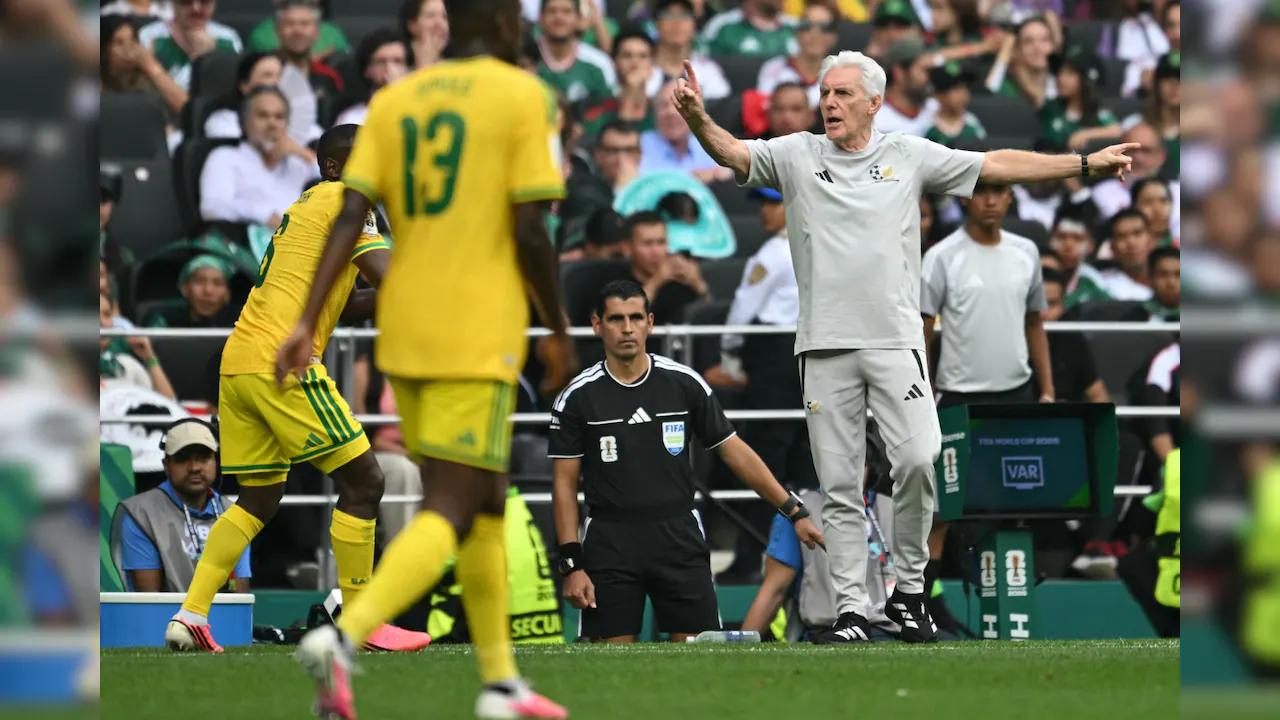
South Africa coach Hugo Broos has fast become an unexpected highlight of this World Cup. At the age of 74, with thick silver hair and a seemingly permanent furrowed brow, the Belgian takes a no-nonsense approach to dealing with the media. Broos has shut down questions about Donald Trump, called out what he saw as the favourable treatment of Lionel Messi, and told critics back in South Africa to “shut up.”
All of that has come within a week of the tournament kicking off.
“For those who still don’t know it, I do it my way,” he said after former South Africa players rounded on his team’s 2-0 loss to Mexico in the opening game.
“I never listen to people who sometimes think that they are important enough to criticise the team. So when I’m going to see what they did before, I think it would be better that they shut up.”
Broos, who has said he will step down at the end of the tournament, led South Africa to its first World Cup since it hosted the event in 2010.
He is one of the oldest coaches ever to take part in a World Cup and, with 40 years of experience, he has no problem speaking his mind. He was, however, astute enough to avoid being drawn into a potential war of words with President Donald Trump.
On Wednesday, he listened intently as one reporter asked him and goalkeeper Ronwen Williams to comment on Trump’s baseless claim that there was a systematic killing of white farmers in South Africa.
“I will answer that question,” he said. “We will not answer that question.”
He was more expansive about Messi’s tackle on Algeria captain Aissa Mandi – especially when his own player Themba Zwane was sent off and subsequently given a three-match suspension after a VAR review of his clash with Mexico’s Roberto Alvarado.
“I think there was not even a VAR with Messi,” Broos said. “I don’t want Messi to get a red card because that player has to be on the pitch … but yeah, what is the difference here?”
A 1-1 draw with the Czech Republic on Thursday kept alive South Africa’s hopes of advancing from the group phase for the first time at a World Cup.
Asked if he was relieved after Teboho Mokoena scored a late penalty, his response was typically blunt.
“Why shouldn’t I be relieved?” he said.
Then came criticism of the Czechs’ long-ball tactics: “I think if you like football, you like the game we played today more than the game of Czechia.”
And then Atlanta Stadium: “If I can be very honest, this is not a football stadium. It’s a nice stadium, a fantastic stadium, everything you want, but only the grass is football. All the rest is not.”
A win against South Korea on Wednesday would likely be enough to see South Africa advance from Group A.
Broos, who is popular among fans, spoke this week of the reaction when he secured qualification for the World Cup:
“There was somebody who came to me and he said, ‘Coach, they have to make a statue for you in South Africa.’
“I said, make it in wood so it will burn more easily when I lose.
Featured Video Of The Day
IPL 2026 News | RCB Outplay CSK For 2nd Win On Trot, Ruturaj Gaikwad & Co Suffer 3rd Loss
Topics mentioned in this article
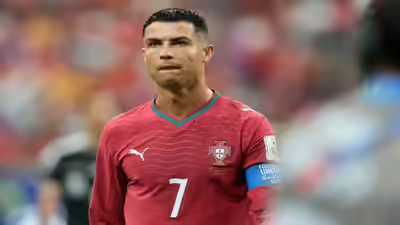
For more than two decades, Cristiano Ronaldo has built a career on proving people wrong.Every time critics questioned him, he responded with goals. Every time doubts surfaced about his longevity, he produced another record. From Manchester to Madrid, Turin to Riyadh, and throughout an extraordinary international career with Portugal, Ronaldo has repeatedly rewritten expectations.But after Portugal’s frustrating 1-1 draw against DR Congo in their opening match of the 2026 FIFA World Cup, a debate that has lingered for years has returned with renewed intensity.At 41, Ronaldo remains Portugal’s captain, leader, and biggest global attraction. The question now is whether he remains Portugal’s most effective weapon on the pitch.The contrast with other football icons during the opening round of matches was striking. Less than a day after Lionel Messi, Kylian Mbappé and Erling Haaland all delivered multiple goals and helped their nations to convincing victories, Ronaldo completed the full 90 minutes against DR Congo without making a decisive impact.Portugal had started brilliantly. João Neves headed home an early opener after a dominant opening spell in which Roberto Martínez’s side controlled possession almost completely. Portugal’s dominance during the opening stages was overwhelming. In the six-minute sequence leading up to Neves’ goal, Martínez’s side completed 84 passes compared to just 12 by DR Congo. Yet what looked like the beginning of a comfortable victory gradually turned into a far more uncomfortable afternoon.DR Congo settled into the contest, grew in confidence and eventually found an equaliser through Yoane Wissa before half-time.
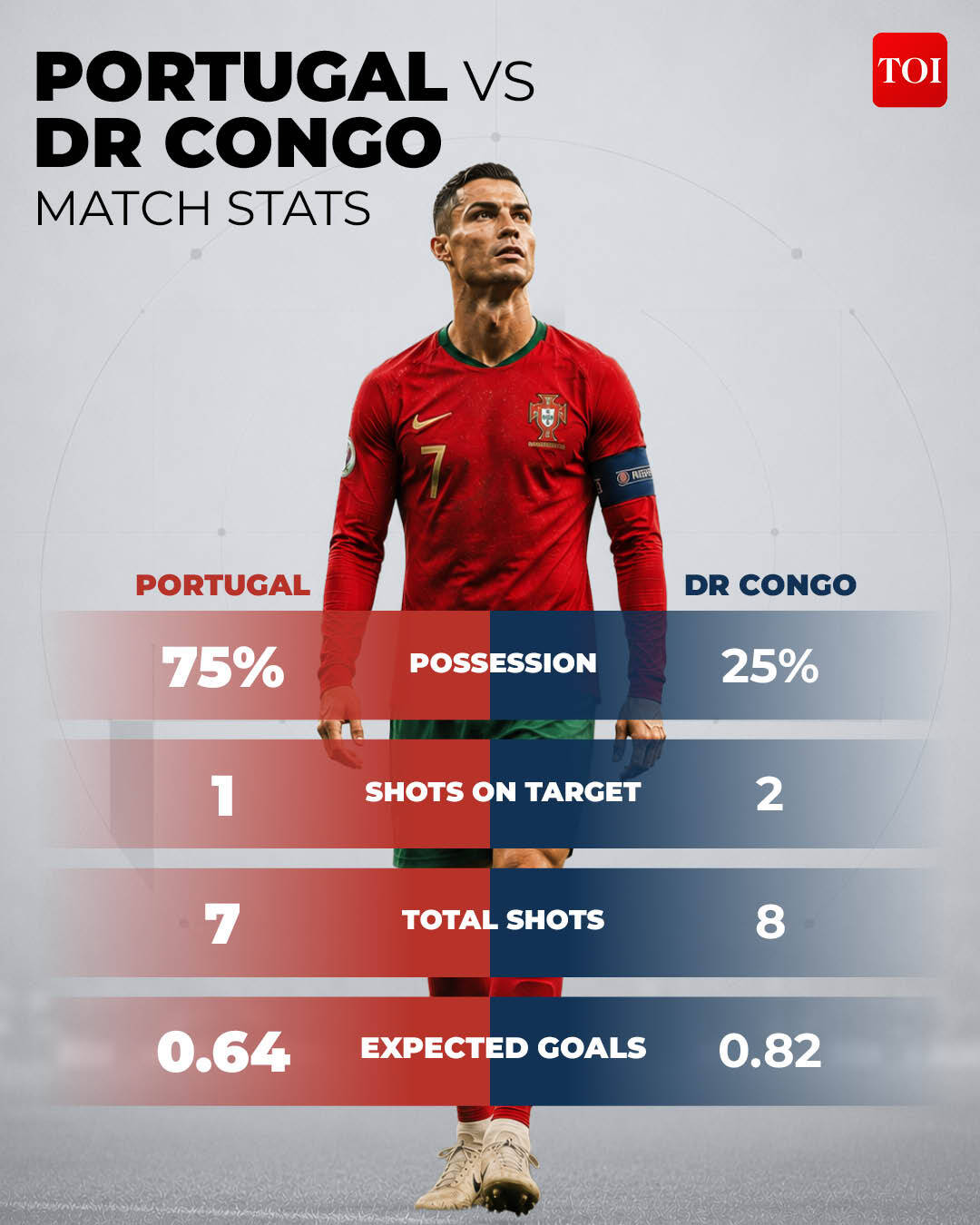
Portugal vs DR Congo match stats
By the final whistle, the statistics painted an uncomfortable picture for one of the tournament favourites. Despite enjoying the majority of possession, Portugal were second best in several key attacking metrics. DR Congo finished with eight shots to Portugal’s seven, produced two efforts on target compared to Portugal’s one and generated 0.82 expected goals against Portugal’s 0.64. For a team expected to challenge deep into the tournament, the numbers raised uncomfortable questions.Ronaldo’s individual numbers reflected that struggle.Making his sixth World Cup appearance, the veteran striker finished with just 25 touches, the second-fewest he has ever recorded in a World Cup start. He managed only three shot attempts, created no chances, completed two progressive carries and two progressive passes, won two aerial duels, attempted no ground duels and made just one ball recovery. He also offered virtually no defensive contribution. It was one of the least influential World Cup performances of his career.
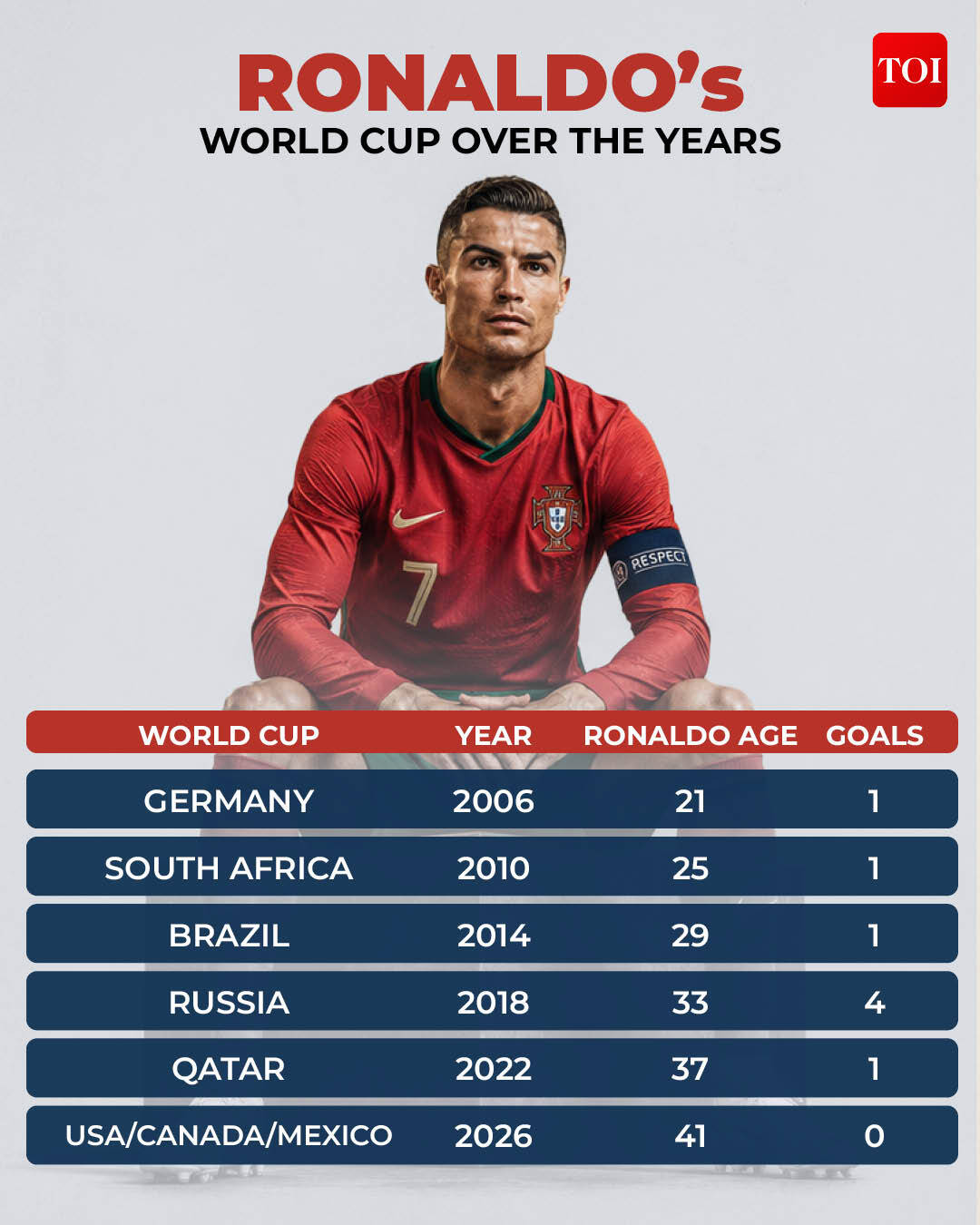
Ronaldo’s World Cup legacy
Perhaps more concerning was how Portugal’s attack functioned around him.Ronaldo repeatedly drifted away from central areas in search of involvement. At times he moved into wide positions looking for space because he could no longer consistently gain physical advantages against younger defenders. The consequence was that Portugal often lacked a natural target inside the penalty area when crosses arrived.His first attempt on goal did not arrive until the 68th minute. Neither of his shots troubled the Congolese defence. Even two of Ronaldo’s three attempts illustrated a broader problem. Rather than threatening centrally inside the penalty area, he was frequently pushed into wider areas in search of space.Former Arsenal and France star Thierry Henry was among those who analysed Portugal’s attacking problems and pointed to a specific moment involving João Cancelo, Bruno Fernandes and Ronaldo.Speaking after the match, Henry stressed that team success must come before personal ambition.“One thing that’s important, people, please at home: the team needs to score, not you need to score,” he said.Henry then broke down a sequence in which he felt Ronaldo’s movement worked against Portugal rather than for them.“So, obviously, we’re going to see here Portugal being on the ball, Cancelo is going to receive the ball. Cristiano Ronaldo has been in this situation multiple times. If you make that run here, you – you make the defender take a decision to crash the six-yard box.”According to Henry, a run towards goal would have dragged defenders deeper and potentially created space for Bruno Fernandes to finish.“But because he wants to score, he goes into the path of Bruno Fernandes. If he goes into that six-yard box, you’ve been in that situation, I’ll see – you would have had to follow him, follow him, and then he would have been a tap-in for Bruno Fernandes. But because he wants to score, he goes into the path of the back pass. You see both players, and it’s easier for you to defend.”The concern was not simply that Ronaldo failed to score. It was how little he influenced Portugal’s attacking rhythm. Too often, attacks appeared designed to find him regardless of whether a better option existed. When he drifted deeper, he frequently occupied spaces that could otherwise have been used by Bruno Fernandes, Bernardo Silva or João Neves. While his movement occasionally created room for teammates, Portugal rarely looked fluid in the final third.The issue becomes even more pronounced because Ronaldo is no longer compensating for those tactical compromises with goals in football’s biggest tournaments.
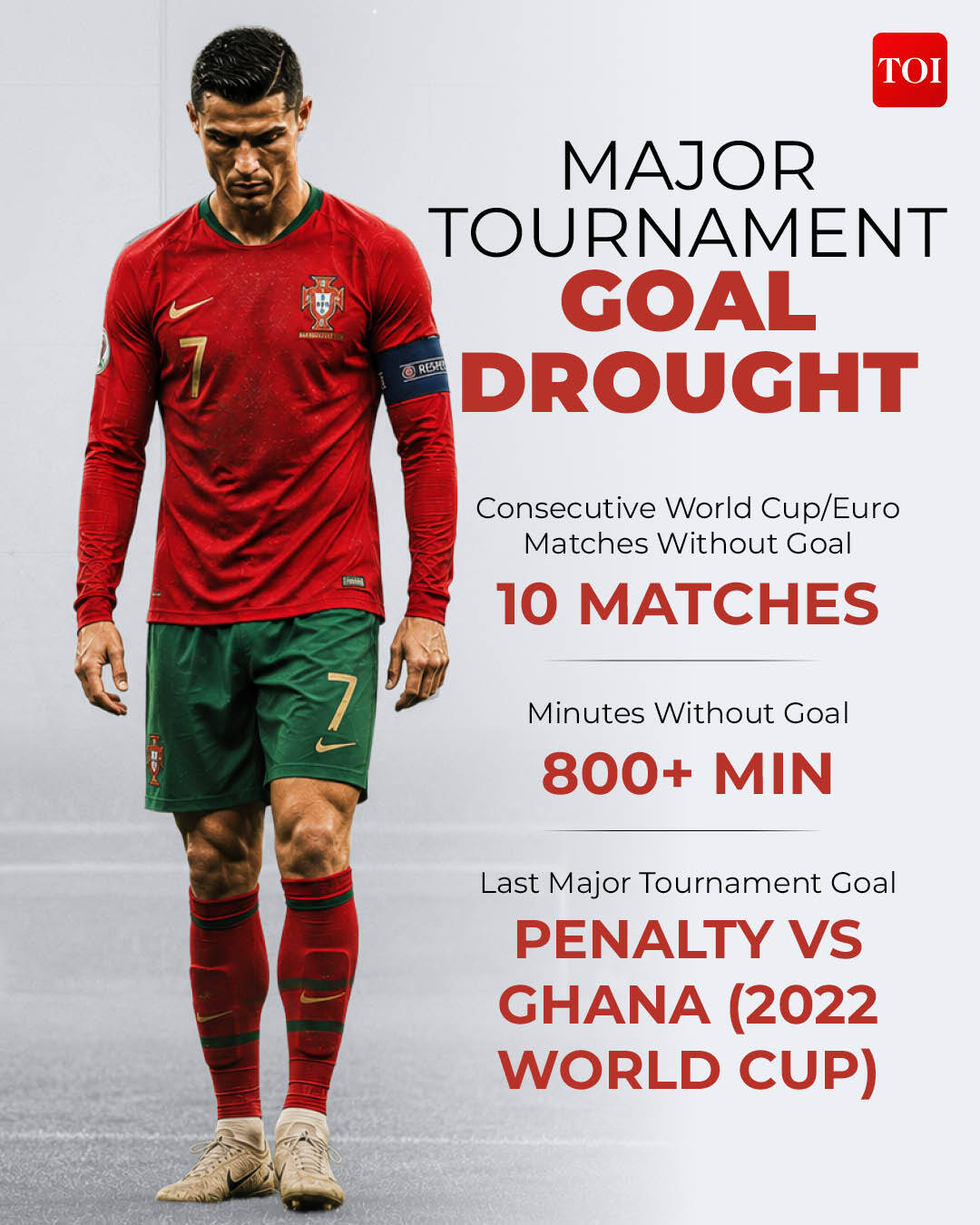
The drought that won’t go away
Since converting a penalty against Ghana during the 2022 World Cup, he has now gone ten consecutive matches across World Cups and European Championships without finding the net. The drought has stretched beyond 800 minutes, and it has been nearly five years since his last open-play goal in either competition.The contrast with his overall record remains striking. Ronaldo scored in both the semi-final and final as Portugal lifted the UEFA Nations League last summer and continues to score regularly in club football and qualifying matches. Yet at the highest international level, the goals have become increasingly difficult to find.There is no questioning what Ronaldo has achieved for Portugal. His influence helped deliver major international trophies and countless memorable moments across two decades.Yet the reality of 2026 is becoming increasingly difficult to ignore.
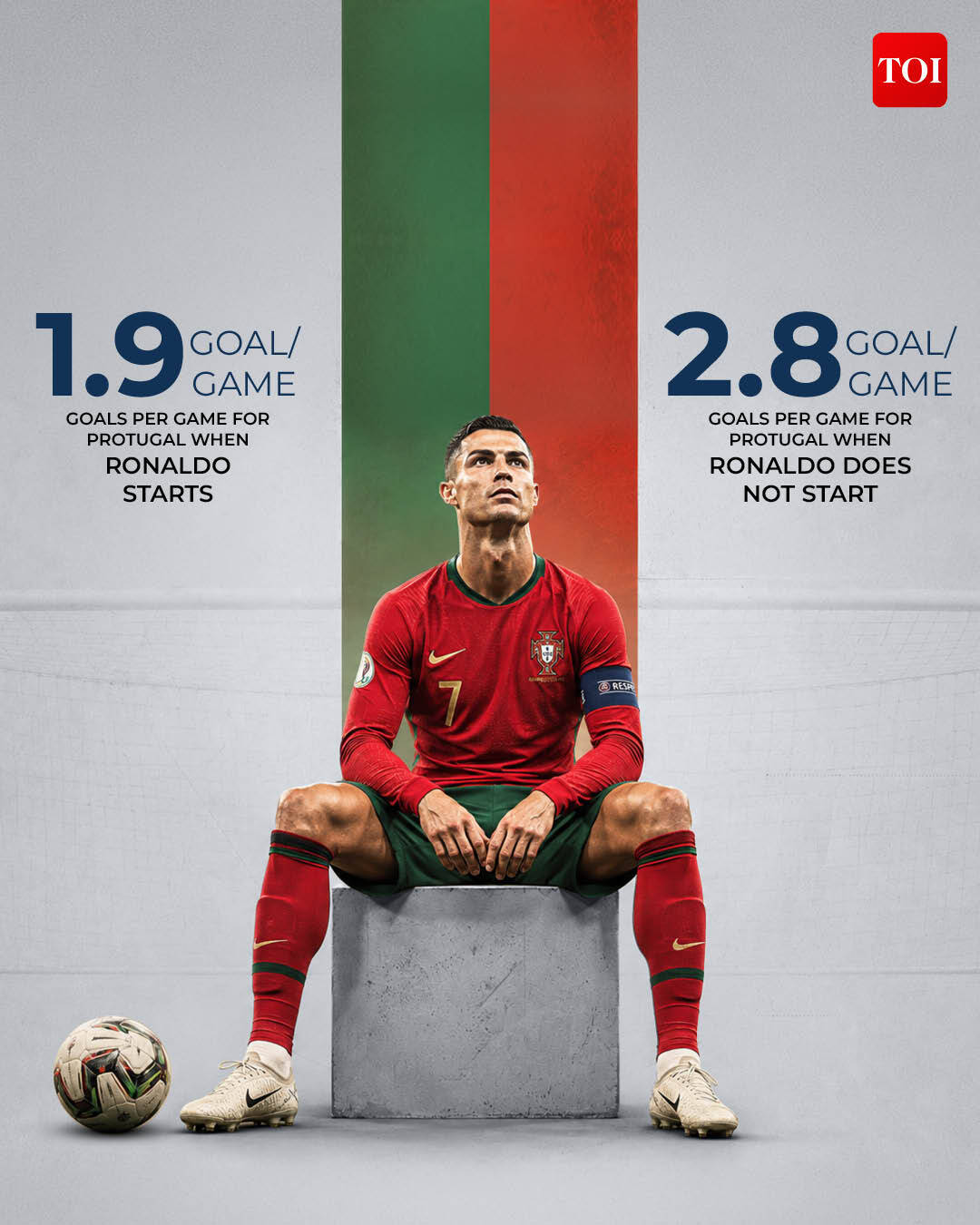
Portugal with vs without Ronaldo
The numbers surrounding Portugal’s attack are equally revealing. Across Portugal’s last four major tournament matches, Ronaldo has played 396 of a possible 420 minutes, yet the team has scored only once. Over the past two years in all competitions, Portugal have averaged 1.9 goals per game when Ronaldo starts compared to 2.8 goals per game when he does not. While one statistic alone does not tell the full story, it inevitably fuels the debate over whether Portugal’s attack functions more effectively without its captain.
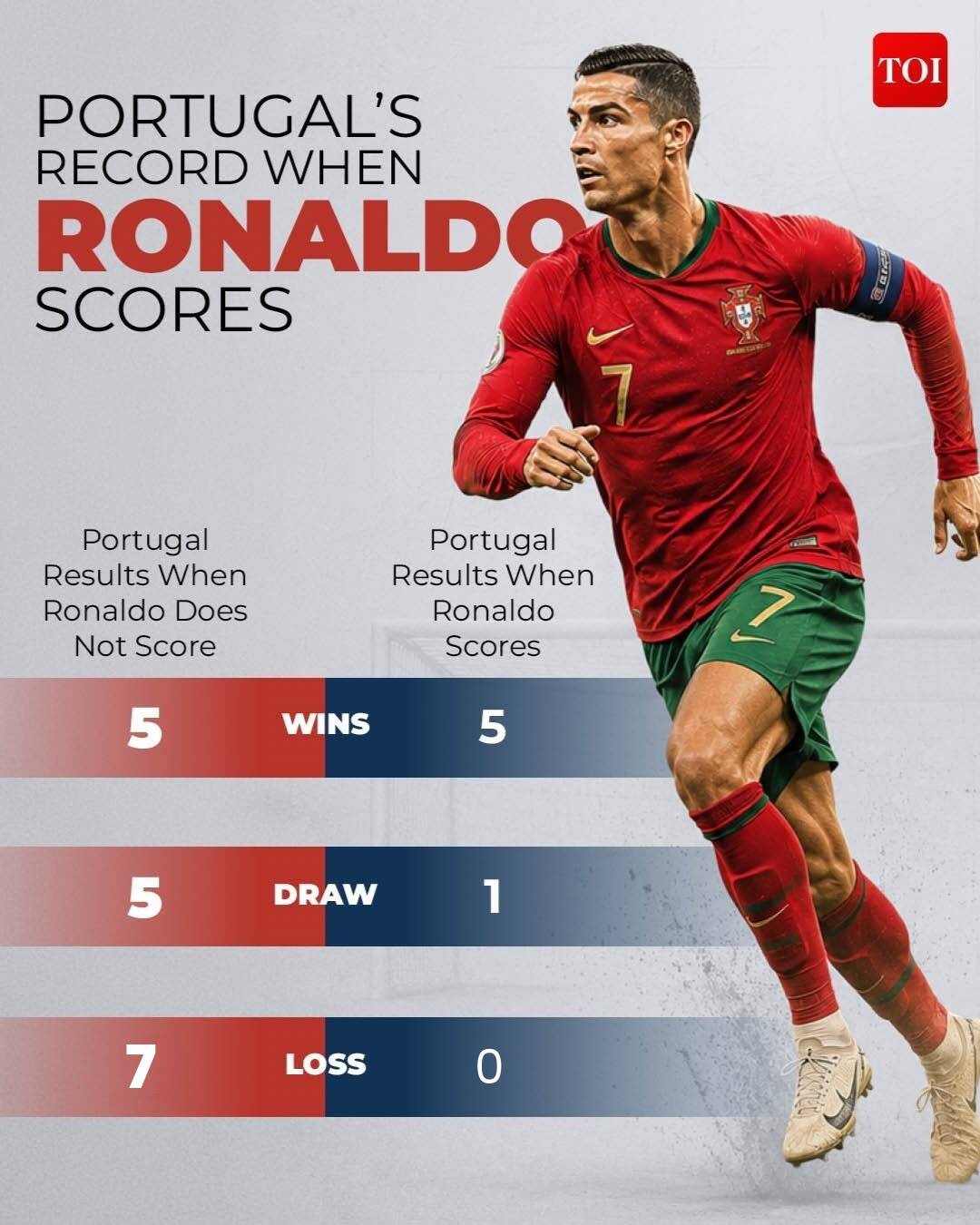
When Ronaldo scores, Portugal rarely lose
Ronaldo’s supporters, however, can point to another compelling statistic. Since his first World Cup appearance in 2006, Portugal have a record of five wins, one draw and no defeats in major tournaments when Ronaldo scores. When he fails to find the net, that record drops to five wins, five draws and seven defeats. Few players in international football history have had such a direct correlation with their team’s success.Yet dropping him is far easier to discuss than to execute.Roberto Martínez faces a delicate balancing act. Gonçalo Ramos remains the obvious alternative but relies heavily on service. A false-nine system involving Bruno Fernandes or João Félix could provide greater fluidity but would introduce new tactical questions.There is also the psychological dimension. Few managers willingly bench one of the greatest footballers in history, particularly a player who still commands enormous respect within the dressing room.Perhaps the answer lies somewhere in the middle.Ronaldo’s experience, leadership and finishing instincts remain valuable assets. However, asking him to carry Portugal’s attack for 90 minutes against elite opposition appears increasingly unrealistic. A more carefully managed role, potentially as an impact substitute against tiring defenders, could allow Portugal to benefit from his strengths while minimising his physical limitations.
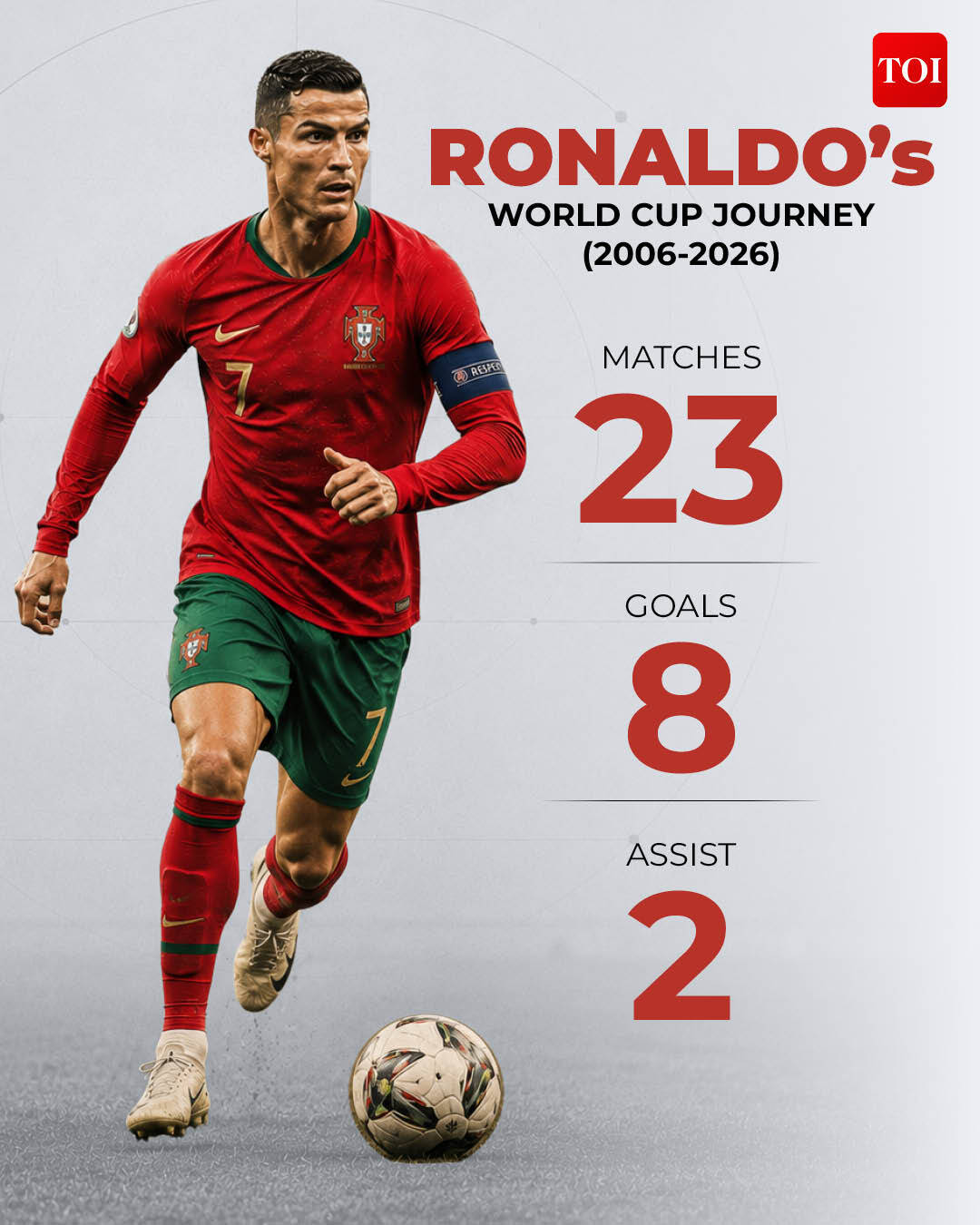
From Germany 2006 to USA 2026
The concern for Portugal is that there appears to be no genuine Plan B. Martínez has consistently backed Ronaldo even as questions over his role have grown louder. During Euro 2024, the Portugal coach substituted him in only one of his five appearances. Against DR Congo, creative players including Bernardo Silva, Pedro Neto, Nuno Mendes and Vitinha were all withdrawn, yet Ronaldo remained on the pitch. Even when Gonçalo Ramos was introduced in the closing stages, it was a midfielder who made way rather than the captain.The upcoming match against Uzbekistan may now define both Portugal’s tournament and Ronaldo’s role within it.A strong performance and a goal could temporarily silence the debate, as Ronaldo has done countless times before. Another ineffective display, however, will only intensify scrutiny of Martínez’s decisions and Portugal’s dependence on a player who remains legendary but no longer appears untouchable.For years, the question surrounding Cristiano Ronaldo was whether Portugal could win because of him.In 2026, the more uncomfortable question may be whether Portugal can afford not to evolve beyond him.
Portugal midfielder Joao Neves is facing heavy backlash after comments many fans believe were disrespectful toward Cristiano Ronaldo.
Speaking about Ronaldo’s role within the Portugal squad, Neves acknowledged the legendary forward’s contributions but made a statement that quickly sparked controversy.
“We know what Cristiano has done for us, for our national team, and for world football,” Neves said.

“But at this moment, he is no different. He is just another player here to help. He is here to contribute, just like all of us.”
While some viewed the comments as an attempt to emphasize team unity, many fans saw the statement very differently.
Why Fans Are Angry
For many supporters, the issue is not whether Ronaldo should still be treated differently on the pitch.
The issue is the wording.
Calling Cristiano Ronaldo “just another player” has been seen by many as disrespectful toward a football icon whose legacy goes far beyond ordinary standards.
Ronaldo is widely regarded as one of the greatest footballers in history alongside Lionel Messi.
He is Portugal’s greatest player ever, the team captain, the all-time leading scorer in international football, and the face of Portuguese football for nearly two decades.
To many fans, reducing that stature to “just another player” crossed a line.
The Messi Comparison
The backlash has also led many fans to compare Portugal’s treatment of Ronaldo with Argentina’s treatment of Lionel Messi.
Even during difficult moments, Argentine players have consistently defended Messi publicly and shown unwavering loyalty to their captain.
Whether Messi plays brilliantly or struggles, his teammates have repeatedly made it clear they will fight for him on the pitch.
Many Ronaldo supporters believe Portugal players should show that same level of loyalty and respect toward their captain.
That is why Neves’ comments have struck such a nerve.
Divided Reactions
Not everyone believes Neves intended to disrespect Ronaldo.
Some supporters argue the midfielder was simply trying to stress that Portugal must function as a collective rather than depend entirely on one player.
But intent and perception are often two different things.
Regardless of what Neves meant, the wording has triggered major backlash online.
For many fans, Cristiano Ronaldo is simply not “just another player.”
And that is exactly why the comments have caused so much controversy.

What Does A Sandy Dust Mean In My Home?

Industry Reaction, Risks & What It Means for Business

Ethereum Core Dev Funding Crisis Could Impact Roadmap, Ex-Contributor Warns

Blockchain.com files with SEC for U.S. IPO

No Jackpot Winner as $257 Million Prize Rolls Over to $269 Million Monday Draw

Israel says it has killed new Hamas military leader in Gaza City airstrikes

Lisa – Money (Lyrics) | aesthetic | slowed | lyrics | #money #lisa

Pi 2day 2026 #PiNetwork #picoin #cryptofuture #crypto #Web3 #cryptocurrency #Launchpad #srmtechinfo

“Aadi Lakshmi Namastubhyam” Mahalakshmi stotram(Stuti)to remove financial obstacles,bring prosperity
-
 Business5 days ago
No Jackpot Winner as $257 Million Prize Rolls Over to $269 Million Monday Draw
-
 Crypto World5 days ago
Zimbabwe Requires Crypto Businesses to Register Annually Under New FIU Regulations
-

 Crypto World7 days ago
Bitget enters Argentina’s regulated crypto market through PSAV registration
-

 Tech7 days ago
NanoClaw integrates JFrog registries to secure AI agent downloads
-
 Entertainment5 days ago
Matt Damon’s Viral Sci-Fi Thriller Has Taken Over HBO Max
-

 Business5 days ago
Anthropic staff to meet White House officials next week, Axios reports
-

 Tech5 days ago
As AI companies race to go public, who else is along for the ride?
-
 Crypto World5 days ago
Bitcoin could crash to $48,000, if this historical pattern is triggered
-
 NewsBeat5 days ago
Warning of disruption as Cardiff Crossrail works to start
-

 Politics5 days ago
“Israel’s” ban on ICRC visits ruled illegal, but Knesset moves to stop them permanently
-

 News Videos5 days ago
Financial Accounting | Last Day Revision Strategy and Booster | CMA Inter – June 2026
-
 NewsBeat5 days ago
Tributes to former deputy head teacher at Cambridge school among death and funeral notices
-

 Entertainment6 days ago
Deion Sanders Shares Powerful Post After Viral Advice To Deiondra
-

 Fashion7 hours ago
Weekend Open Thread: Miami – Corporette.com
-
 NewsBeat5 days ago
what doctors are seeing in ebike crashes
-
 Entertainment5 days ago
Kate Middleton Glare Goes Viral After Kids Booed At Royal Event
-

 Crypto World5 days ago
XRP ETFs Outperform As Bitcoin And Ethereum Funds Extend Outflow Trend
-
 Crypto World5 days ago
Market Preview: SpaceX (SPCX) IPO Record, Federal Reserve Meeting, and Iran Nuclear Agreement
-

 Tech5 days ago
Over 400 Arch Linux packages compromised to push rootkit, infostealer
-

 Business5 days ago
Invesco Quality Income Fund Q1 2026 Commentary
You must be logged in to post a comment Login