Connect with us

Sports

Elevate taps a wide range of critical industry trends

Published

on

Celebrating its 10th anniversary, Elevate has had its busiest show to date, with almost 200 exhibitors, 115 seminars and 200 speakers over two days, with numbers understood to be up by ten per cent over the two days.

Highlights included a partnership with Intelligent Health to bring in a Beat the Streets trail, with boxes placed on the stands of legacy exhibitors who have been with the event since the beginning.

Another high point was a live workout led by 1980s tv fitness legend, Mr Motivator, who is working with Innerva, around engaging older people with exercise. This was clearly a topic which resonated with the audience, as there were no spare seats for Thursday’s panel discussion on the importance of strength training for older people on the Debate stage.

Talking points on panels included technology, AI, gamification, longevity, diversity and inclusion, as well as the underlying pillars of health – breathing, sleeping, nutrition and recovery.

Advertisement

Here are some of HCM’s key takeaways.

Opportunities to widen our welcome

The disability market is being underserved, with opportunities for the sector. 

Including invisible disabilities, one in four people have a disability in the UK and this cohort represents an annual spending power of £446 billion. Of the 49 per cent who are active only half of those feel welcome where they train.

Advertisement

Disability consultant, Marina Logacheva, who is researching and campaigning on the subject told HCM that the industry is taking too long to shift the dial on this issue. As a wheelchair user she has been told by multiple fitness professionals that they won’t work with her because they don’t know how to.

She also has to pay for services at her gym that she is unable to access – for example the swimming pool is inaccessible because there is no hoist – but the gym will not give her a discount.

This is not good enough for an industry which talks about lowering barriers, being inclusive and supporting the NHS. There is the continual narrative in the industry that people who don’t go to gyms have the wrong perception of our facilities, but do they?

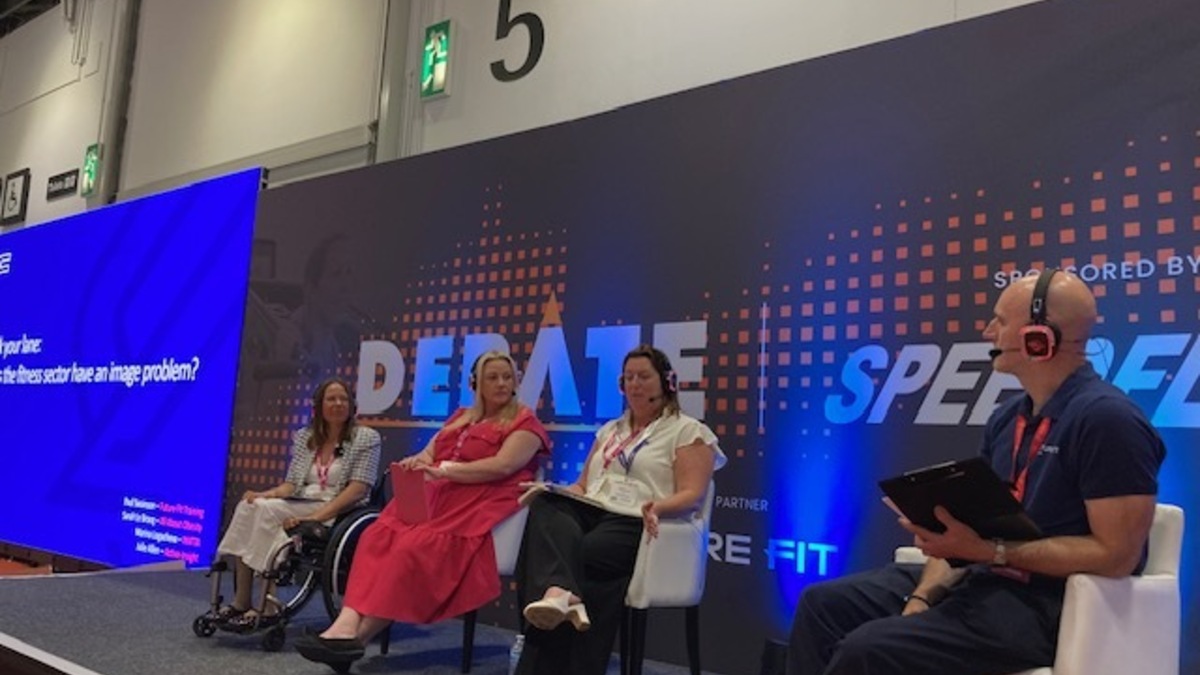
In a panel discussion chaired by Future Fit’s Paul Swainson, entitled Does the industry have an image problem, Logacheva and fellow panelists Sarah LeBrocq, founder of All About Obesity and managing director of Active Insight, Julie Allen, agreed that being more inclusive starts with images used in marketing. The people who aren’t coming to facilities need to see people like themselves represented in order to feel they might have a place there.

Advertisement

“Creating a feeling of belonging starts with the ad. If you don’t see yourself then you feel like you don’t belong there,” said Logacheva. “People with disabilities are only on 2 per cent of ads on social media.”

Allen shared a compelling story from a focus group of a man who suffered a stroke which motivated a lifestyle change. After being prescribed GLP-1 medication by his GP and losing weight, he said he felt able to lift the heaviest weight – the door handle of the leisure centre. 

“Confidence is one of the top five barriers among people who don’t go to gyms. They feel a sense that the gym is not the place for them,” says Allen. “The industry is still not doing enough to look through the lens of the consumer.”

Triathlete, distance runner and obesity campaigner, LeBrocq, expressed frustration about being patronised by gym staff and having assumptions made that she has joined the gym to lose weight. “Treat the individual, ask questions and don’t make assumptions based on appearance,” she said. 

Advertisement

Logacheva has published a report on Creating Welcoming Fitness Environments based on her research trip to Australia which can be downloaded for free at disabilityinsport.com/report

 Mental health – great progress and more work to do

A panel discussion hosted by UK Active’s director of membership and sector development, Marianne Boyle, celebrated the journey that the fitness sector has been on with mental health. Ten years ago it was barely spoken about, now it’s widely observed that people use facilities to improve their state of mind as much as their physical health. 

There has been a huge amount of progress and yet there’s still a way to go – only 16 per cent of people living with mental health conditions are meeting WHO activity guidelines. Women, younger adults and those in lower socio-economic groups are the most likely to be losing out. “There is still a significant gap between what we know works and what people are able to access in our facilities,” said Boyle.

Advertisement

Panelists included psychotherapist, Charlotte Braithwaite; Swim England’s head of public affairs, Philip Brownlie; founder of Together We Lift, Liam Baker and Sam Perks physical activity operations manager at mental health charity, Mind.

Key takeaways from the panel were the need to have some upskilling of the sector’s workforce so that fitness professionals are comfortable having big conversations while staying in lane. 

Perks said that fitness instructors have told him that clients have spoken to them about having suicidal feelings, which is a lot to take on board. The panel stressed that instructors don’t need to solve the problem, they need to be empathetic, present with the individual and know where to signpost.

Braithwaite spoke about the importance of creating psychological safety in gyms and this can only be done by humans. “Gyms can be a confronting environment,” she said. “They’re full of mirrors and metal and people who look like they know what they’re doing. Simply interacting with weights isn’t wellness. You need people and you need to spell out what to expect and provide human touchpoints to make everyone feel safe.”

Advertisement

She also spoke about neuroaesthetics – providing environments where nervous systems feel safe – which HCM has identified as a  trend.

Trauma – more common than you think

Another panel discussed the creation of trauma-informed fitness environments, with Akusile Makawa from Loughborough University; Fiona Roberts, founder of The Movement Charity and Kim Grey, founder of Sattva Trauma Informed Education, which offers a CIMSPA-accredited training course to empower fitness professionals to work this cohort.

Trauma might sound niche, but it’s not. Shelving perceptions of what a person living with trauma looks like is important  – it’s very likely to be that high-achieving CEO who appears to have life nailed.

Advertisement

Roberts said that 70 per cent of people have experienced trauma, 25 per cent of women have experienced domestic violence and 20 per cent have experienced some form of child abuse.

“There will be people in your clubs and classes who’ve experienced trauma,” she says. “And if not it’s because they’re not getting through the barriers to your facility.”

Human connection, providing touchpoints, relationship building and empathy are the foundations of addressing this issue.

Roberts says that setting the scene at the start of the class of what to expect creates safety and predictability. She also says it’s important to give the individual an element of choice as often they’ve had choices taken away – this could be leaving the class early with no questions asked and no offence taken. “Tell them that everything is optional, that they are in charge of their own bodies and what they do in the class,” she says.

Advertisement

The Movement Charity takes exercise into the community, including women’s refuges and Roberts talked through some of her experiences, including leaving mats by the door, for people to choose where they put them. She also provided a great example of how an empathetic instructor can build confidence.

“Initially people tend to stay by the door and as far away from me as possible because I present the threat,” she said. “But in time they move closer to me and put me between them and the door because I come to represent safety.”

Grey highlighted a major no-no – asking people in front of the class whether they have any injuries or issues. This might sound basic, yet it still happens.

She also highlighted that trauma gets stored in different parts of the body – for example hips, which can lead to some exercises being triggering. Subtly offering alternatives can be a way to navigate this.

Advertisement

Another important takeaway – check before the start of each class if people are happy with being adjusted. A better way of allowing people to respond than a show of hands is to give them a card or a coin which they can flip according to their preference, which might change from day to day.

Exercise addiction – too much of a good thing

Exercise is medicine, but even medicine can have negative side effects for some people. HCM attended a couple of panel discussions which talked about this important issue. 

Exercise addiction is when the individual feels dependent on it and an uncontrollable compulsion to exercise, which gets in the way of other areas of their life, for example their work or relationships.

Advertisement

It affects 8 per cent of general exercisers, 9 per cent of fitness professionals and is 3.5 times more likely in those experiencing eating disorders.

People with high intelligence, a tendency towards perfectionism and possibly some form of neurodivergence are most vulnerable to over-exercise. 

This is the same cohort that needs to be careful with tracking data. As wearables and data continue to be more deeply embedded in the industry, it’s very important to acknowledge that not everyone will benefit from using them. For some people, the data will start to control them.

Exercise psychologist, Dr Paula Watson, spoke about her work with clients living with exercise addiction. Often these are people who take sports seriously and their identity becomes caught up with it. Much of her work with clients is around developing self-love and self-compassion. 

Advertisement

“There are two distorted beliefs associated with exercise addiction,” she says. “The individual feels that if they’re not strict with their training they’ll lose control, for example get fat, or not get big enough, or not be able to cope with their emotions. And if that happens, they’re not good enough.

“The language unintentionally used in fitness culture can fuel these distorted beliefs,” she says. “For example, ‘you’re a machine’”.

Dr George Mycock, founder of MyoMinds, shared his journey with over-exercise and shared some valuable advice: “More is not always better – don’t celebrate exhaustion, stress the need for rest and recovery when working with clients. Avoid talking about using exercise as a way of earning food. And avoid linking self-identity with exercise – talk to clients about the other areas of their life as well.”

The fundaments of good health and an opportunity for coaches

Advertisement

Thomas Hague, The Breath Coach, has worked in elite sport, including with British Sailing, GB Boxing and British Triathlon, as well as individuals struggling with anxiety. He said that breath is the missing performance skill and wants to normalise breath assessments and breathwork in the industry.

“Super simple changes to breath can make a huge difference to performance,” he said. “Breath underpins all the work an athlete or individuals do. The quickest way to downregulate the nervous system is to change the cadence of the breath, it improves the ability to handle pressure, speeds up recovery, improves sleep and emotional regulation, relaxes muscles and can bring about a 30 per cent increase in range of motion. However, most of us completely ignore the thing that keeps us alive.”

Hague says that a few minutes of deep breathing at end of workout would clear the stress of the workout and set the client up for better recovery.

Fitness professionals who are trained in breathwork could help clients to overcome the common negative breathing patterns – mouth breathing, fast respiratory rate (we should breathe 5.5 times a minute), upper chest breathing, poor lower rib mobility (they should expand by 1 – 2.5 cm on an in-breath), weak breathing muscles and poor breathing mechanics. Building carbon dioxide tolerance can help the delivery of oxygen to muscles.

Advertisement

The Sleep Geek, James Wilson, said there is also the opportunity for fitness professionals to be the experts on sleep – both the number one recovery tool and a growing pain point, with people suffering from poor sleep, insomnia and the quest for the perfect night’s sleep.

He cautioned about reliance on sleep trackers, saying they’re not accurate and that optimisation culture makes us doubt ourselves. If people are told they are sleeping badly, they are likely to have a worse night’s sleep. 

Some surprising facts raised by Wilson were that we inherit our sleep patterns. Some people are lucky, others less so. Some people can sleep soundly after drinking a cup of tea before bed, others can’t tolerate any caffeine. Emotional and physical security are crucial for sleep. You sleep better if you sleep next to someone you love and this also works the other way. 

Next steps

Advertisement

As the industry looks to broaden its reach to cater for new audiences, work more closely with the health service and attract investment, it was great to see such a broad conference programme. While there is still some way to go to become fully inclusive, it’s heartening to see that the conversations are underway and a growing awareness of the changes the industry needs to make. Hopefully all attendees went back to work brimming with inspiration and with some ideas to implement.

Source link

Advertisement
Continue Reading
Click to comment

You must be logged in to post a comment Login

Leave a Reply

Sports

Trade talk circling as Tigers open series vs. Athletics

Published

on

Jul 5, 2026; Arlington, Texas, USA;  Detroit Tigers manager A.J. Hinch (14) walks of the field after a pitching change during the seventh inning against the Texas Rangers at Globe Life Field. Mandatory Credit: Raymond Carlin III-Imagn ImagesJul 5, 2026; Arlington, Texas, USA; Detroit Tigers manager A.J. Hinch (14) walks of the field after a pitching change during the seventh inning against the Texas Rangers at Globe Life Field. Mandatory Credit: Raymond Carlin III-Imagn Images

The Detroit Tigers are seven games below .500 and rating as big disappointments as the trade deadline nears.

A strong performance against the free-falling Athletics may be a necessity to avoid at least a partial teardown as the Tigers open the three-game set on Friday night at West Sacramento, Calif.

Detroit was part of the playoff field the past two seasons but stands 4 1/2 games behind the Cleveland Guardians, who currently hold the American League’s third wild-card spot. Four other teams are between the Tigers and Guardians.

Detroit ace left-hander Tarik Skubal has been the topic of many trade rumors. The two-time AL Cy Young winner is slated to become a free agent following the season.

Skubal is well aware that his Wednesday outing might have been his final one for the Tigers. He took a 7-0 lead into the seventh inning before tiring, and Detroit ended up losing 10-9 in 12 innings to the Baltimore Orioles.

Advertisement

“It’s been a helluva ride,” said Skubal, sounding as if he expects to be elsewhere by Monday. “I wouldn’t change anything, wouldn’t change one bit of it, just my whole story, my whole life. It made me who I am, and I appreciate that.

“It is a little nostalgic, right? I don’t really like thinking like that. Hopefully there’s a lot more in the future, too. It’s cool nonetheless.”

The Tigers are expected to call up No. 1 prospect Max Clark from Triple-A Toledo prior to the opener. The outfielder is the No. 13 prospect in the big leagues, according to MLB Pipeline.

Clark, the No. 3 overall pick in 2023, was batting .276 with 11 homers and 42 RBIs in 90 games at Toledo.

Advertisement

Detroit traded catcher Jake Rogers to the Orioles on Thursday for minor-league right-hander Zane Barnhart. Rogers had been designated for assignment by the club on Tuesday.

The Athletics have dropped five of six games and 26 of 33 after falling 5-4 to the visiting Boston Red Sox on Thursday.

All-Star first baseman Nick Kurtz (left forearm) was in the lineup after an MRI exam came back clean. He went 0-for-4 with a walk one day after being plunked by Red Sox left-hander Patrick Sandoval on Wednesday night.

Advertisement

“Everything was clean on the MRI,” Athletics manager Mark Kotsay told reporters. “Outside of just the bruising in the area, he feels strong and feels good. We escaped one there.”

Kurtz is in a 1-for-34 slump over his past 11 games.

Right-hander Casey Mize (4-6, 2.70 ERA) takes the mound for the Tigers in the opener. He is winless over his last three starts (0-1).

Mize pitched well against the Kansas City Royals last Saturday when he gave up one run and three hits over six innings.

Advertisement

Mize, 29, is 0-2 with a 10.80 ERA in two career starts against the Athletics. He served up four homers over 8 1/3 innings. Kurtz (2-for-2, one walk) has reached base in all three of his plate appearances against Mize, the No. 1 overall pick in 2018.

Left-hander Jeffrey Springs (3-10, 6.23) is winless over his last 17 starts after winning his first three decisions this season.

Springs lasted just 1 1/3 innings during last Sunday’s 11-8 loss to the Minnesota Twins. He gave up five runs (four earned) and four hits over 1 1/3 innings.

Springs, 33, lost to the Tigers on July 8 when he gave up six runs and six hits over 4 1/3 innings. He served up a three-run homer to Spencer Torkelson and a two-run blast to since-traded Rogers.

Advertisement

Springs is 2-2 with a 2.95 ERA in four career starts against Detroit. Torkelson has taken Springs deep twice and Gleyber Torres also has hit one off him.

–Field Level Media

Source link

Advertisement
Continue Reading

Sports

Ginebra gets back on track with win over depleted Meralco

Published

on

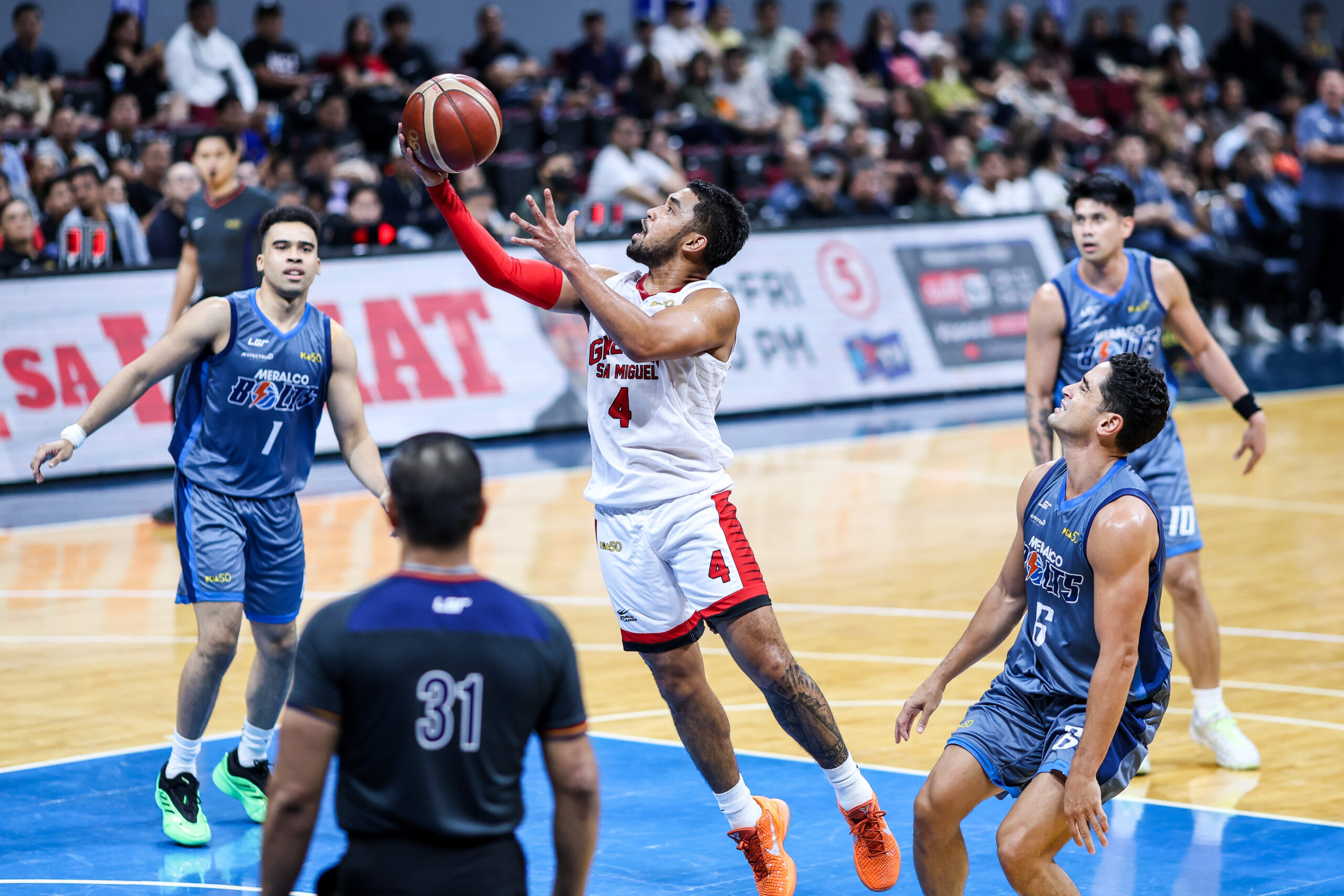
Barangay Ginebra Gin Kings' RJ Abarrientos during a game vs Meralco Bolts in the 2026 PBA Governors' Cup.

Barangay Ginebra Gin Kings’ RJ Abarrientos during a game vs Meralco Bolts in the 2026 PBA Governors’ Cup. –MARLO CUETO/INQUIRER.net

MANILA, Philippines–Barangay Ginebra returned to the win column in the 2026 PBA Governors’ Cup after defeating a depleted Meralco squad, 84-75, at Mall of Asia Arena on Friday night.

The Gin Kings took advantage of a shorthanded Bolts side missing Bong Quinto, CJ Cansino, Jason Brickman and Raymond Almazan to improve to 2-2 in Group B after their previous loss to Rain or Shine.

Article continues after this advertisement
Advertisement

“We just trusted our offensive game plan. We trusted each other and we all got momentum so that’s what’s most important for us,” Ginebra guard RJ Abarrientos said.

“Not having Scottie (Thompson) and JB (Justin Brownlee) is such a big loss for us but we’re still whole. We just need to play our roles because nobody can fill both of their shoes. We just need to step up.”

Barangay Ginebra Gin Kings' Riley Grigsby during a game vs Meralco Bolts in the 2026 PBA Governors' Cup. Barangay Ginebra Gin Kings' Riley Grigsby during a game vs Meralco Bolts in the 2026 PBA Governors' Cup.

Barangay Ginebra Gin Kings’ Riley Grigsby during a game vs Meralco Bolts in the 2026 PBA Governors’ Cup. –MARLO CUETO/INQUIRER.net

The Gin Kings took control early against the Bolts, opening an 18-10 lead after the first quarter and never looked back.

Advertisement

Abarrientos topscored for Ginebra with 27 points, three rebounds, three assists and a steal. Import Riley Grigsby finished just a rebound shy of a double-double with 25 points and nine boards.

Article continues after this advertisement

Antonio Hester dominated for the Bolts with a double-double of 24 points and 18 rebounds in the defeat. Chris Banchero, meanwhile, topped all Meralco locals with 15 points.

The win temporarily lifted Ginebra to third place, while Meralco dropped into a tie for fourth with Blackwater at 2-3.

Advertisement


Your subscription could not be saved. Please try again.


Your subscription has been successful.

Advertisement

Source link

Continue Reading

Sports

How Has Horse Racing Changed in the Digital Age?

Published

on

Horse racing has always combined tradition with innovation.

While the sport still follows long established rules and celebrates historic races, digital technology has changed how fans watch, follow, and engage with it. From live streaming and mobile betting to advanced performance data, technology has made racing more accessible and more informed for casual viewers and experienced followers alike.

Many of these changes have happened over the past two decades as internet access, smartphones, and data analysis have become part of everyday life. Today, fans can watch races from different countries, compare statistics within seconds, and place bets from almost anywhere that local regulations allow. The horse racing at NetBet Sport is just one example.

Live streaming has expanded access

Watching horse racing once depended on attending the track or following television broadcasts. Live streaming has changed that by making races available on computers, tablets, and smartphones.

Advertisement

Many racecourses, broadcasters, and licensed betting operators now provide live coverage of domestic and international events. This wider access allows fans to follow races from multiple jurisdictions without needing dedicated television channels.

Streaming has made it easier to watch replays. Viewers can review races to examine how horses performed, how races developed, and how different track conditions affected the outcome.

Data plays a bigger role

Digital platforms provide much more information than printed racecards once could. Form guides now include detailed records covering previous performances, distances, track surfaces, jockey statistics, trainer records, and recent results.

Some services present sectional timing, speed figures, and historical comparisons where available. These statistics help racing enthusiasts evaluate races using objective information rather than opinion alone.

Advertisement

Professional racing teams have adopted technology to support training and performance analysis. GPS tracking, fitness monitoring, and video review help trainers assess conditioning and identify areas for improvement while keeping horse welfare in focus.

Mobile betting has changed fan habits

The growth of smartphones has transformed how many people place bets. Licensed betting apps and websites allow users to browse racecards, compare odds, and manage their accounts without visiting betting shops.

Many platforms include live odds updates, race notifications, and integrated streaming where permitted. These services make it easier for users to follow racing throughout the day.

Regulated operators are also expected to provide responsible gambling tools. Deposit limits, spending summaries, time reminders, and self exclusion options are commonly available to help customers manage their betting activity.

Advertisement

Social media keeps racing connected

Social media has become an important communication channel for racecourses, trainers, jockeys, and racing organizations. Fans can receive updates about declarations, race results, weather conditions, and major announcements in real time.

Behind the scenes content has also become more common. Training videos, interviews, and stable updates give followers a closer look at the preparation involved before race day.

For racing organizations, social media provides a direct way to promote events and engage with audiences without relying solely on traditional media coverage.

Technology supports integrity and welfare

HD race footage, electronic timing systems, and improved data collection help racing officials review races accurately and apply regulations consistently.

Advertisement

Horse welfare has benefited from advances in veterinary technology, diagnostic imaging, and health monitoring. These developments allow medical teams to identify certain health issues earlier and make more informed decisions about treatment and recovery.

Many racing authorities have also introduced digital record keeping for veterinary checks, registrations, and compliance processes, helping improve transparency across the industry.

What the future may bring

Traditional race meetings remain at the heart of the sport, but digital services have changed how people experience them. Whether someone is watching a live stream, reviewing performance statistics, or following updates on their phone, technology has become a practical part of modern horse racing while preserving the competition that has attracted audiences for generations.


Advertisement


LiveScores Now Available at IrishScores.com

Source link

Continue Reading

Sports

Rickie Fowler mourns Rocket Classic’s demise while in contention

Published

on

Source link

Advertisement
Continue Reading

Sports

End of baseball or fair trade from a serious role-model team?

Published

on

Detroit Tigers ace Tarik Skubal is arguably the hottest commodity ahead of this year’s trade deadline. The speculation around Skubal’s future in Detroit started last season when he had one year left on his contract.

The speculation intensified earlier this year before his historic arbitration case, where the two-time Cy Young winner negotiated a record-shattering $32 million salary for the season.

With Skubal reportedly on the table in his final year of contract, the Los Angeles Dodgers have emerged as the strongest suitor. The Dodgers’ interest in Skubal has once again sparked the controversial narrative about the two-time defending World Series winners “ruining” baseball.

The Dodgers’ interest in one of the best players in the league has become a norm over the years. The NL West team has acquired several high-profile names, including two-way phenom Shohei Ohtani on a record-breaking $700 million deal, over the last few years.

Ohtani’s massive deferred contract also raised questions about the Dodgers bending the rules in their favor. However, the Dodgers have been shrewd with their contract deals and have utilised the massive local revenue to build a star-studded team.

The Dodgers’ massive contracts, including a four-year, $240 million deal for Kyle Tucker in January, have the fans asking for a salary cap. While the league proposed a salary cap, the Major League Baseball Players Association has opposed the hard cap.

Will a trade for Skubal make the Dodgers the favorites for athree-peat? Yes. But will it guarantee success? No. Despite their star-studded roster, the Dodgers were pushed to the limits by the Toronto Blue Jays in the World Series last year.

Advertisement

The Dodgers’ model might seem unfair to smaller market teams, but their schemes should only encourage other team owners to spend more money for a competitive roster.

Dodgers emerge as favorites for Tarik Skubal ahead of trade deadline

The Dodgers’ aren’t the only team interested in Tarik Skubal but they are front-runners to land the two-time Cy Young winner because of their deep and talented farm systems.

Despite the narrative that the Dodgers are competing only because of their big signings, their talented prospects allow them to move for a high-profile players who is set to become a free agent after the season.

While the Tigers will lose their best player after failed extension negotiations, they will shed his remaining $9.5 million salary and drop below the $244 million competitive balance tax line.

Advertisement