

Business
CME Sues U.S. Regulator to Stop Kalshi From Offering Popular ‘Perp’ Futures


CME Group sued the top U.S. derivatives regulator Thursday to thwart Kalshi, an upstart prediction-markets platform, from encroaching on its turf as the nation’s leading futures exchange.
The Commodity Futures Trading Commission recently approved Kalshi’s plan to list perpetual futures contracts, known as “perps,” a trendy flavor of derivative that never expires and trades 24/7. In its suit, filed in federal court in Washington, CME argued that the CFTC violated U.S. law by classifying Kalshi’s perps as futures and not swaps. In doing so, the CFTC decision allows Kalshi to sidestep rules intended to protect the economy from the “special dangers that unregulated swaps posed,” lawyers for the exchange operator wrote.
Copyright ©2026 Dow Jones & Company, Inc. All Rights Reserved. 87990cbe856818d5eddac44c7b1cdeb8


BWG: Deep Discount But Potentially Better Alternatives

Moderna shares rose 3.5% Thursday after an advisory committee voted to recommend the U.S. Food and Drug Administration approve the biotech’s proposed new flu shot for people 50 and older.
The FDA had initially declined to consider Moderna’s application for the shot’s approval, but then agreed to review it after Moderna amended it. The advisory committee vote in favor of the vaccine isn’t binding, but the FDA generally follows such recommendations. A decision is expected by early August.
Shares of Moderna, which is trying to expand beyond Covid-19 vaccines, closed at their highest level since September 2024. The stock is up 39% over the past six trading days.
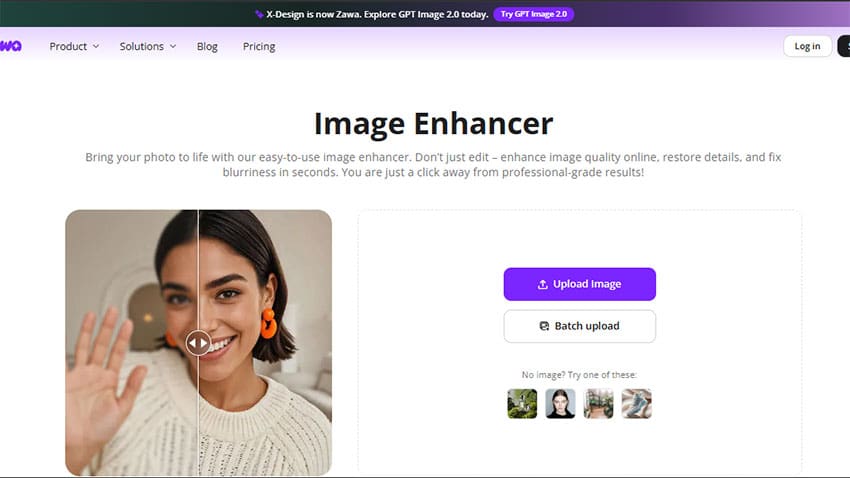
Family pictures are evergreen with memories of both the young and the old. From big moments to special events, they showcase relations. And on some occasions, you can reopen the catalogue to revisit the happenings. Going through these photos is more relatable when the visuals are bold and clear, as if they were recent.
Gone are the days when images could only be viewed at their default quality, whether soft or hard copies. Media files storage and editing have evolved. The evolution extends to the restoration of old pictures for modern usage. Even if they have aged several years before reviewing.
With AI technology, you can restore details of family photos with more clarity. Zawa is one of these game-changers, with an image enhancer tool that suits the purpose.
The Zawa Image Enhancer
The Image Enhancer is one of the editing tools on the Zawa workspace. As the name suggests, the enhancer upscale image quality. It is powered by AI technology that fixes low-resolution appearance and traditional editing. Whether a single or multiple images, the image enhancer auto-processes photo uploads for high-resolution results.
Zawa brings old photos to life with a comprehensive brush. For damaged images, the AI easily restores details and fixes blur. As a user, you can make customisations and select your preferred new image resolution, such as HD or Ultra HD. The AI sharpens and enhances images for professional-quality results – up to 4K resolution.
Can I Restore Old Photos for Free?
Yes, you can restore the quality of old photos at no cost. You do not need to hire a designer or scroll through the web endlessly for paid tools to fix the basics. Various apps and online software support free image restoration features. Some offer a few trial periods to test the tool. And enhance old photos to modern resolutions.
Zawa allows users to upscale and restore old photos for free, even without signing up. With the free trial, you can restore up to 20 images daily at a time. In addition, the image enhancer tool allows export to devices in HD quality. If you intend to access advanced Zawa features, the premium mode offers more.
How Can I Restore Old or Damaged Family Photos with Zawa?
Restoring old or damaged family photos with Zawa does not require going back and forth. You can perform the process in a few minutes. With these steps below, you can easily restore images to a more standard quality.
Open the Zawa Webpage
Open the Zawa AI website to upload the old or damaged family photo from your device. The user interface is intuitive and easy to understand for first-time users. It is a layout without ads that could distort viewing experiences.
Upload the Photo(s)
If you want to restore an old family photo as a hard copy, you need a camera to capture it and save it on your device. The online image enhancer does not support direct camera access. You can only upload saved images in your folder. Even better, Zawa supports batch upload; you can refine a collage of images at once, saving users more time.
Select Image Mode
For accurate editing and precise restoration, Zawa AI outlines scenes for different types of images that users upload that they want to fix. It is not a one-scene-all fix technology, unlike other software.
From product to portrait mode, the editing process is customizable. It comes with a range of enhancements – HD or UHD – before starting the restoration. In addition to these modes, you can edit the background of damaged family photos or erase unwanted elements.
Enhance the Photo(s)
After selecting the scenario to be processed, click on the image enhancer on the screen to restore the affected images. Depending on the photo size, the image processing takes only a few seconds to provide results. However, the AI overall restoration time does not keep users waiting.
Review the Result
Once processing is complete, the AI produces image results separated by a vertical pane. This showcases the “before and after” results. And you can swipe the pane left or right to evaluate the damaged and restored copies. Reviewing the pictures before downloading allows you to make your choices or re-enhance the images.
Zawa AI Features for Old Family Pictures
Scenario-Based Optimisation
Zawa AI comes with various modes for scenario-based optimisation. The AI optimises these scenes based on the category of your image upload. For instance, a damaged family portrait picture and faded texts in an old picture. It handles scenarios to transform your uploads into a more visible output.
The text mode makes the text in images sharper and easier to read after upscaling. Enhancing images in the portrait mode provides more detail and a natural feel. The AI technology fixes the scenes for more precision after edits.
Ultra HD Editing
The perks of image restoration are results that align with current-day resolution; Zawa delivers just that. The image enhancer does not only upscale images. You can brighten family images with the online enhancer. The AI sharpens every image detail for professional-quality results.
With the 4K image enhancer, Zawa erases blurs and distortions that mar your image. The high-resolution output makes them more refined for re-sharing on social media. And collated as a collage of pictures.
Bulk Uploads
Restoring a collection of old family photos one by one can be tiring. It is a typical back-and-forth that you can grow tired of midway. Zawa AI makes the process effortless with bulk uploads. You can enhance up to 20 family photos at once with the free Image Enhancer. And get the result instantly.
Zawa incorporates a smart AI technology and editor for handling bulk images. In addition to saving time, the AI sharpens every visual and refines every detail just like it processes an image. Get your family images done at once and print the memories.

Selling a business is often viewed as the finishing line. For many SME owners, it represents years of work, risk, reinvestment and personal commitment finally being converted into value.
But the sale process itself can create risks that are easy to underestimate.
Most owners focus heavily on valuation, finding the right buyer and negotiating the headline price. Those are important, but they are only part of the picture. The detail behind the deal can have just as much impact on the final outcome, especially when due diligence, warranties, indemnities, deferred consideration and post-completion claims come into play.
For owners preparing to sell, the question is not only ‘what is my business worth?’ It is also ‘what could come back to affect me after the deal is signed?’
Completion does not always mean the end of risk
A common misconception is that once a sale completes, the seller can simply walk away. In practice, many business sales include ongoing obligations for the seller.
The buyer will usually expect a detailed set of warranties in the Sale and Purchase Agreement. These are statements about the condition of the business, its finances, contracts, employees, assets, liabilities, tax position and other key areas. If a warranty later proves to be inaccurate, the buyer may have grounds to bring a claim.
For SME owners, understanding their personal liability risk after selling a business is an important part of preparing for a cleaner exit. Even where a deal appears straightforward, the wording of the agreement, the accuracy of disclosures and the scope of warranties can all affect the seller’s position after completion.
As John Goodson, Client Director at Macbeths, explains: “Many owners assume the risk ends when the deal completes. In reality, the warranties and statements made during a sale can leave sellers exposed if issues are discovered later. That is why preparation, disclosure and specialist advice matter before terms are agreed.”
This is where owners can be caught out. Even if there is no intention to mislead, a historic issue, missing record or poorly disclosed problem can create friction after completion. The risk is often higher in owner-managed businesses, where key information may sit with a small number of people rather than in a formalised reporting structure.
A buyer does not want surprises after paying for a business. If they discover something that affects the value of what they have bought, they may look for a route to recover that loss.
The risks SME owners often overlook
Every transaction is different, but there are several areas where SME owners often underestimate their exposure.
1. Incomplete or rushed disclosure
Disclosure is one of the seller’s main protections during a business sale. If a known issue is properly disclosed to the buyer before completion, it can reduce the chance of that issue forming the basis of a later warranty claim.
The problem is that disclosure is often rushed. Owners may be balancing the transaction with the day-to-day running of the business, while also dealing with advisers, buyers, employees and confidentiality concerns.
Examples of issues that may need careful disclosure include:
- Customer disputes
- Supplier contract issues
- Late payments or bad debt
- Employment grievances
- Health and safety incidents
- Regulatory concerns
- Pending tax queries
- Lease or property issues
- Data protection breaches
- Software licensing gaps
None of these automatically prevents a sale, but failing to identify and disclose them clearly can create unnecessary risk.
2. Overconfidence in financial records
Many SME owners know their numbers well, but buyer due diligence will often go deeper than management accounts or year-end figures.
Buyers may test revenue quality, customer concentration, recurring income, margins, stock value, debtor recoverability, working capital and normalised profit. They may also look for unusual adjustments, related-party transactions or dependencies on the current owner.
If the buyer finds inconsistencies late in the process, the result may be a reduced valuation, delayed completion, a demand for additional warranties or a larger retention.
Strong financial preparation is not just about presenting the business well. It is about reducing the chance of the deal being renegotiated when momentum should be building.
3. Contract and customer risks
For many SMEs, value is tied closely to customer relationships and key contracts. That creates risk if those contracts are informal, poorly documented or dependent on the current owner.
Owners should pay particular attention to:
- Change-of-control clauses
- Termination rights
- Exclusivity provisions
- Personal guarantees
- Long-term pricing commitments
- Verbal or informal agreements
- Contracts due for renewal shortly after completion
A buyer may be concerned if significant revenue could disappear after the sale. Even where there is no immediate problem, unclear contract terms can weaken the seller’s position during negotiation.
4. Employment and people issues
People risks are often underestimated, especially in smaller businesses where HR processes may have developed informally over time.
Potential issues include unclear employment contracts, undocumented bonus arrangements, unresolved grievances, restrictive covenant concerns, holiday pay issues, contractor status questions and key-person dependency.
A buyer will want to understand whether the business can continue to operate effectively after the owner exits. If knowledge, client relationships or operational control sit too heavily with one person, the buyer may seek additional protections or reduce the price.
For this reason, succession planning and management structure can be just as important as financial performance.
5. Tax, VAT and historic liabilities
Tax and VAT issues can be particularly sensitive because they may relate to periods before the buyer owned the business. Buyers will often seek warranties or indemnities to protect themselves from historic liabilities.
This does not mean every business needs to have a perfect tax history before going to market. But it does mean sellers should understand any areas of uncertainty and take appropriate tax advice before they become buyer concerns.
Waiting until due diligence is underway can leave the seller with less control over the narrative.
6. Data, cyber and systems risk
Cyber and data protection risks are now part of mainstream transaction due diligence. Buyers may want to know how customer data is held, whether systems are secure, whether there have been historic breaches and whether software licences are valid and transferable.
For SMEs, this can be a weak spot. Systems may have been built gradually over many years, with old platforms, shared logins, informal processes or unclear ownership of digital assets.
A buyer does not just want the trading business. They want confidence that the infrastructure supporting it is stable, compliant and transferable.
7. Deferred consideration and earn-outs
Not every sale is paid entirely on completion. Some deals include deferred consideration, earn-outs or performance-based payments. These structures can help bridge a valuation gap, but they also create risk for the seller.
If future payments depend on performance after completion, the seller needs to understand how that performance will be measured and who controls the factors that influence it.
Common points of dispute include:
- Revenue recognition
- Cost allocation
- Management control
- Customer retention
- Integration decisions
- Accounting treatment
- Targets that are not clearly defined
A headline price can look attractive, but the certainty of payment matters just as much.
How owners can reduce risk before going to market
The strongest position is usually built before the business is formally marketed. Once a buyer is engaged and due diligence has started, the seller has less time and less control.
Owners considering a sale should take practical steps early.
Get the business sale-ready
This means organising financial records, contracts, policies, employee documentation, supplier agreements, leases, licences and corporate records before they are requested.
A clean data room can give buyers confidence and reduce delays. It also helps advisers identify issues before they become deal obstacles.
Review the likely warranties in advance
Owners should not wait until late in the process to think about warranties. Reviewing the likely warranty areas early can help identify where information is missing, where disclosures may be needed and where advice should be taken.
This can also prevent sellers from agreeing to statements they cannot properly verify.
Resolve obvious issues where possible
Some issues cannot be fixed before sale, but many can be improved.
For example, expired contracts can be renewed, informal employee arrangements can be documented, customer disputes can be resolved, software licences can be checked and governance records can be updated.
These actions may seem administrative, but they can support buyer confidence and reduce negotiation pressure.
Take advice early
A business sale is not the time to rely on assumptions. Legal, tax, accounting and corporate finance advice should be brought in early enough to shape the transaction, not just react to it.
For some transactions, insurance advice is also worth including in the conversation before terms are finalised. Alongside legal, tax and financial input, specialist mergers and acquisitions insurancecan help address certain risks connected to warranties, indemnities and post-completion claims. The suitability of this type of cover will depend on the structure of the deal, the size of the transaction and the specific risks being transferred, and any cover will be subject to policy terms, conditions and exclusions.
The important point is timing. Insurance should not be treated as a last-minute consideration once the deal is already advanced. If it may be relevant, it is better to explore it early.
The value of a cleaner sale process
A well-prepared sale process does not only reduce risk. It can also protect value.
Buyers are more likely to challenge price or seek additional protections when they find uncertainty. By contrast, a seller who can provide clear records, sensible disclosures and a well-organised due diligence process is usually in a stronger negotiating position.
This does not mean hiding weaknesses. It means understanding them, addressing them where possible and disclosing them properly where needed.
For SME owners, this can make the difference between a sale that proceeds smoothly and one that becomes slower, more expensive and more stressful than expected.
A final checklist for SME owners preparing to sell
Before going to market, owners should ask themselves:
- Are our financial records complete, consistent and easy to explain?
- Are key customer and supplier contracts properly documented?
- Do any contracts include change-of-control clauses?
- Are employee contracts, policies and records up to date?
- Are there any unresolved disputes, claims or complaints?
- Have we reviewed tax, VAT and historic liabilities?
- Are software, data and cyber risks properly understood?
- Could the buyer ask for deferred consideration, retention or escrow?
- Are we clear on what warranties we may be asked to give?
- Have we taken advice on how to reduce post-completion exposure?
Selling a business is one of the most important commercial decisions an owner can make. The most successful exits are rarely built at the negotiation table alone. They are built through preparation, clear records, early advice and a realistic understanding of where risk may sit after completion.
For owners thinking about a sale, the best time to address these issues is before the buyer starts asking difficult questions.

Heavy SpaceX Options Trading Driven by New Weekly Contracts

Iran says ready for diplomacy if U.S. ensures Israel complies with ceasefire


Over fifteen years of experience making contrarian bets based on my macro view and stock-specific turnaround stories to garner outsized returns with a favorable risk/reward profile. If you want me to cover a specific stock or have a question for an article, just let me know!
Analyst’s Disclosure: I/we have no stock, option or similar derivative position in any of the companies mentioned, and no plans to initiate any such positions within the next 72 hours. I wrote this article myself, and it expresses my own opinions. I am not receiving compensation for it (other than from Seeking Alpha). I have no business relationship with any company whose stock is mentioned in this article.
Seeking Alpha’s Disclosure: Past performance is no guarantee of future results. No recommendation or advice is being given as to whether any investment is suitable for a particular investor. Any views or opinions expressed above may not reflect those of Seeking Alpha as a whole. Seeking Alpha is not a licensed securities dealer, broker or US investment adviser or investment bank. Our analysts are third party authors that include both professional investors and individual investors who may not be licensed or certified by any institute or regulatory body.

Britain’s night-time economy has rarely been short of warnings about its own mortality. What is new is the willingness of its trade body to name a politician it believes can do something about it.
The Night Time Industries Association (NTIA) has publicly backed Andy Burnham’s call for a cut to VAT across hospitality and the wider night-time economy, arguing that the sector cannot withstand three more years of rising taxation, fragile consumer confidence and what it describes as a failure of political will. It is an unusually pointed intervention from an organisation that is careful to stress it remains apolitical, and it lands at a moment when the campaign to lower hospitality’s tax burden has acquired real momentum.
The association’s central contention is straightforward. Nightclubs, bars, pubs, restaurants, live music venues, festivals, event organisers and cultural institutions are being squeezed simultaneously by VAT, employer National Insurance contributions, business rates and stubbornly high energy costs. The result, the NTIA argues, has been a steady attrition of venues, cancelled events and retreating investment across what it calls one of the country’s most important cultural and employment sectors. The trade body has long called for a VAT cut to halt a string of nightclub closures, and its language has hardened as the closures have continued.
Why Burnham, and why now? The Greater Manchester mayor put himself at the centre of the debate at this year’s Night Time Economy Summit in Liverpool, where, speaking alongside former Deputy Prime Minister Angela Rayner, he told an audience of operators and national media that he would “argue for a VAT rate more consistent with what you find in Europe because of the social value that your businesses bring to places and towns.” For an industry that has spent years lobbying with little to show for it, a senior political figure putting VAT explicitly on the table was a moment worth seizing.
Michael Kill, chief executive of the NTIA, framed the endorsement as a matter of survival rather than party allegiance. “We are apolitical as an organisation, but we are not neutral when it comes to the survival of our industry,” he said. “The hospitality and night-time economy sectors are under more pressure than at any point in recent memory. Businesses are being crippled by taxation at a time when margins have been eroded, consumer confidence remains fragile and operating costs continue to rise.”
Kill was blunt about the choice he believes operators now face. “The reality is that our industry cannot survive three more years of the current approach. Businesses are closing, investment is drying up and confidence has collapsed,” he said. “What many operators now see is a stark choice: three more years of economic uncertainty and additional pressure on already struggling businesses, or a change in leadership and direction that finally recognises the value of hospitality, nightlife, festivals, events and culture to the UK economy.”
His sharpest warning concerned the prospect of further tax rises. “What worries us most is that, while businesses are already struggling under unprecedented pressure, there are now discussions about increasing taxes even further. For many operators, there is simply nothing left to give.” Hospitality and nightlife, he argued, should be treated as economic drivers and major employers rather than “a convenient source of revenue.”
The NTIA’s intervention does not exist in a vacuum. The wider trade has coalesced around the #VATsTheProblem campaign, fronted by chef and publican Tom Kerridge and backed by UKHospitality, the British Beer and Pub Association and others, which is pressing for a reduction in hospitality VAT from 20 per cent. The accompanying petition passed 200,000 signatures within days of launching, a measure of how raw the issue has become. Sentiment was hardly improved by the summer’s “Great British Summer Savings” package, which cut VAT to 5 per cent on family attractions but conspicuously snubbed the night-time economy, a slight the NTIA has not forgotten.
The case for relief rests on a simple proposition: that a lower VAT rate would protect jobs, stimulate consumer spending and safeguard the venues, festivals and cultural spaces that anchor town and city centres. The case against — that the Treasury can ill afford to forgo the revenue when the public finances are stretched — is equally familiar, and it is the argument the sector has run up against for the better part of a decade.
For now, the NTIA is betting that one of the few politicians willing to engage on its terms also happens to be among the most plausible future occupants of Downing Street. Burnham is not in government, and three years of this Parliament remain. But in backing him so openly, the association has made a calculated wager that a change of direction is more likely to come from championing an outside contender than from continued, unrewarded loyalty to the status quo. Whether that bet pays off will depend less on the strength of the industry’s case, which is well rehearsed, than on the political arithmetic of the next three years.

Jamie Young
Jamie is Senior Reporter at Business Matters, bringing over a decade of experience in UK SME business reporting.
Jamie holds a degree in Business Administration and regularly participates in industry conferences and workshops.
When not reporting on the latest business developments, Jamie is passionate about mentoring up-and-coming journalists and entrepreneurs to inspire the next generation of business leaders.

Britain risks losing yet more high street shops, and becoming a dumping ground for unsafe imports, unless ministers move faster to close a tax loophole being exploited by overseas sellers, retailers have warned.
Andrew Murphy, chief executive of The Entertainer, the toy chain that trades from more than 150 stores, has voiced “grave concern and profound frustration” at the government’s plan to wait until 2029 before scrapping the £135 “de minimis” customs threshold.
The rule lets overseas sellers, among them the Chinese ecommerce giants Temu and Shein, ship parcels worth less than £135 into the UK without paying customs duties. British retailers importing goods in bulk, by contrast, must pay duties, VAT and compliance costs on every consignment. It is a structural disadvantage that domestic players have been pressing the government to end for months.
In a letter to ministers seen by The Times, Murphy branded the timetable an “unacceptable delay to reform”, arguing that it “extends by years the existence of an uneven playing field with respect to foreign marketplace sellers”. The postponement, he wrote, was “wholly indefensible and deeply damaging to UK retailers in an era already characterised by extreme economic challenge for the sector”.
The intervention lands shortly after Temu was fined €200 million by the European Commission, which found the platform had allowed the sale of illegal and unsafe products, including dangerous baby toys and defective phone chargers. The penalty, the largest yet handed down under the EU’s Digital Services Act, followed regulators’ conclusion that Temu had failed to properly assess the systemic risks its marketplace posed to consumers. The Commission set out its findings in detail, noting that a mystery-shopping exercise found phone chargers failing basic electrical safety standards and baby toys carrying medium-to-high safety risks. Temu has rejected the assessment.
Platforms such as Shein and Temu have expanded rapidly in Britain by selling very cheap products shipped directly from manufacturers. Their rise has drawn complaints from domestic retailers, among them Sainsbury’s, Currys and AO World, who argue the tax treatment hands overseas rivals an unfair advantage. The growing pressure prompted the Chancellor to order a review of the loophole last year.
The government confirmed last year that it would abolish the de minimis exemption, but not until 2029. Ministers say a gradual transition is needed to avoid the border disruption and customs delays seen in the United States after it removed its own exemption for low-value imports.
Murphy pointed out that the US abolished its $800 exemption last August, and that the European Union will introduce a temporary customs duty on low-value parcels from next month ahead of wider reforms. “The UK, by contrast, will not even begin imposing duties until some time in 2029,” he wrote, warning that Britain risked becoming an “ecommerce dumping ground” as sellers diverted goods away from markets where tighter rules were taking hold.
He cited research by the British Toy and Hobby Association (BTHA), which has been buying and testing toys from online marketplaces since 2018. In its latest investigation, 86 per cent of around 90 toys bought from seven marketplaces, including Temu, Shein, Amazon, eBay and TikTok Shop, failed safety tests, with a further 4 per cent breaching UK labelling standards. Murphy said the loophole had become a “route by which unsafe goods can and do enter the UK” and reach the public.
Geoff Sheffield, chairman of the Toy Retailer Association, said non-compliant products were “a major concern for all our members, from the largest multinationals to the smallest independent shops”. Such toys, he added, “not only put children at risk of harm and damage the reputation of the entire industry, but they undercut genuine UK toy retailers”. The government, he said, needed to “accelerate the legislation to prevent more of our members disappearing from the UK high street”.
The warning comes against a grim run for big toy retailers. Toys R Us closed more than 100 shops after collapsing into administration, while Hamleys, Woolworths and Mothercare have all shut stores over the years, part of a longer roll-call of familiar names that have vanished from the high street.
Helen Dickinson, chief executive of the British Retail Consortium, said faster reform was needed to protect more businesses. “Every day the government delays introducing a new customs system for low-value imports is another day that harms British businesses,” she said. “With the US and EU already moving quickly to close this loophole, the UK stands alone, increasing the risk that even more goods could be dumped on our market.”
A Treasury spokesman said: “The rapid growth in low-value imports is hurting our high streets and retailers. We are removing the customs duty relief for low-value imports and reforming the way these goods are declared into the UK to ensure all goods are appropriately controlled.” The reform, he added, “backs our businesses to compete and grow, controls safety and flow of goods at our border, and keeps the UK in line with our international partners”.

Amy Ingham
Amy is a newly qualified journalist specialising in business journalism at Business Matters with responsibility for news content for what is now the UK’s largest print and online source of current business news.


Australia vows to rein in any H5N1 birdflu after confirming first case

Freedman ponders Tatakai Uta’s path forward in 2026

How Beatbot’s AI-Powered Pool Robots Are Changing Pool Care This Prime Day

How Norman Doors Work #money


-

 Business6 days ago
No Jackpot Winner as $257 Million Prize Rolls Over to $269 Million Monday Draw
-
 Crypto World5 days ago
Zimbabwe Requires Crypto Businesses to Register Annually Under New FIU Regulations
-

 Crypto World7 days ago
Bitget enters Argentina’s regulated crypto market through PSAV registration
-

 Fashion10 hours ago
Weekend Open Thread: Miami – Corporette.com
-
 Entertainment5 days ago
Matt Damon’s Viral Sci-Fi Thriller Has Taken Over HBO Max
-

 Business5 days ago
Anthropic staff to meet White House officials next week, Axios reports
-

 Tech5 days ago
As AI companies race to go public, who else is along for the ride?
-
 Crypto World5 days ago
Bitcoin could crash to $48,000, if this historical pattern is triggered
-
 NewsBeat5 days ago
Warning of disruption as Cardiff Crossrail works to start
-

 Politics5 days ago
“Israel’s” ban on ICRC visits ruled illegal, but Knesset moves to stop them permanently
-

 Entertainment6 days ago
Deion Sanders Shares Powerful Post After Viral Advice To Deiondra
-

 News Videos5 days ago
Financial Accounting | Last Day Revision Strategy and Booster | CMA Inter – June 2026
-
 NewsBeat5 days ago
Tributes to former deputy head teacher at Cambridge school among death and funeral notices
-
 NewsBeat5 days ago
what doctors are seeing in ebike crashes
-
 Entertainment5 days ago
Kate Middleton Glare Goes Viral After Kids Booed At Royal Event
-

 Crypto World5 days ago
XRP ETFs Outperform As Bitcoin And Ethereum Funds Extend Outflow Trend
-
 Crypto World6 days ago
Market Preview: SpaceX (SPCX) IPO Record, Federal Reserve Meeting, and Iran Nuclear Agreement
-

 Tech5 days ago
Over 400 Arch Linux packages compromised to push rootkit, infostealer
-

 Business5 days ago
Invesco Quality Income Fund Q1 2026 Commentary
-
 Entertainment7 days ago
44 Years Later, This Is the Greatest Star Trek Quote in Sci-Fi History
You must be logged in to post a comment Login