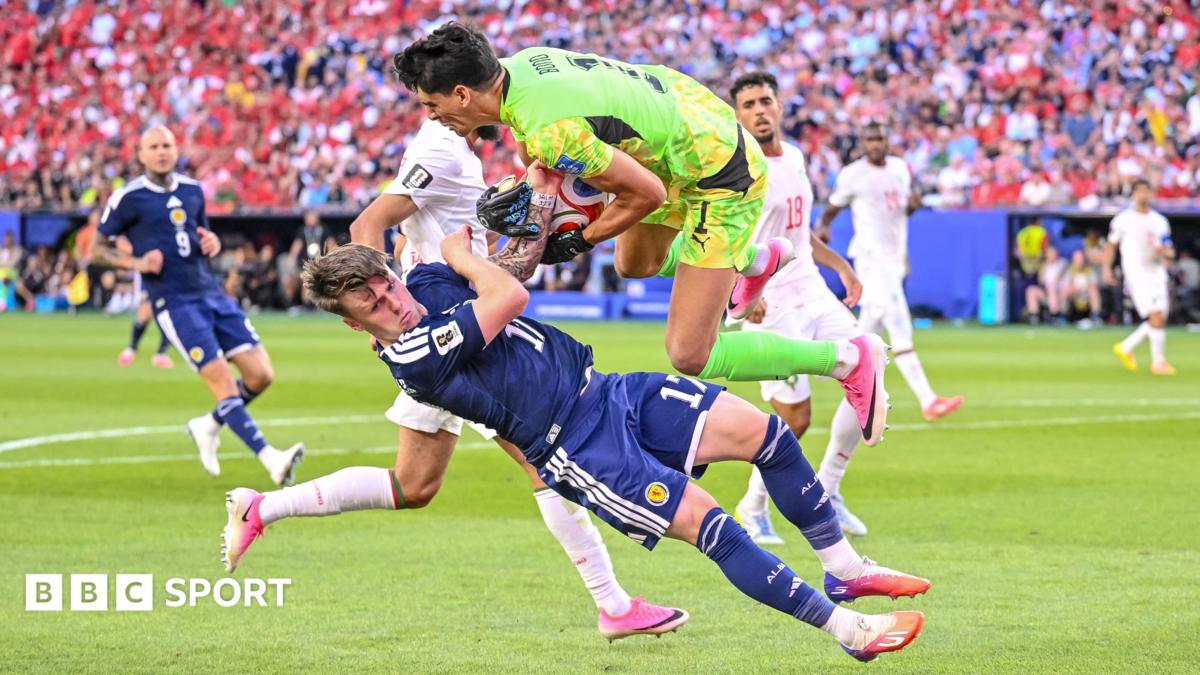
Clarke’s masterplan, so to speak, was playing Kieran Tierney ahead of Robertson on the left, two vastly experienced operators to deal with the threat of Hakimi and Brahim Diaz.
A risk, for sure. And so much for the thinking behind it. Just over a minute gone – Diaz assist, Ismael Saibari goal, the nightmare scenario come true.
The traffic cone guys weren’t letting such trifling issues dampen their day.
Everybody else had a haunted look about them, their noise and passion reduced to soft groans, the lusty pride they all displayed with another thumping rendition of Flower of Scotland now replaced with shrieks as Morocco ran amok.
Advertisement
Or threatened to run amok. Seventy seconds it took them to score. For much of the opening half they were like a cultured fighter, boxing the ears off an over-matched rival, bamboozling their punchbag with their movement before what felt like an inevitable knockout.
Scotland were on the ropes, covering up and praying that the punishment would stop. And minute by minute, it did.
Morocco’s intensity was wonderful for half an hour and they could have been two or three ahead by then, but they weren’t. They’re terrific footballers, very easy on the eye, but they’re not ruthless, not killers. Scotland’s resilience kept them in it.
When Morocco’s energy started to dissipate, it became a contest.
Advertisement
Scotland finished the opening half strongly, their confidence rising, those worried stares on the faces of their supporters giving way to blessed hope.
The bookmaker has launched a consultation over the closures, which will affect more than a tenth of its UK betting shops
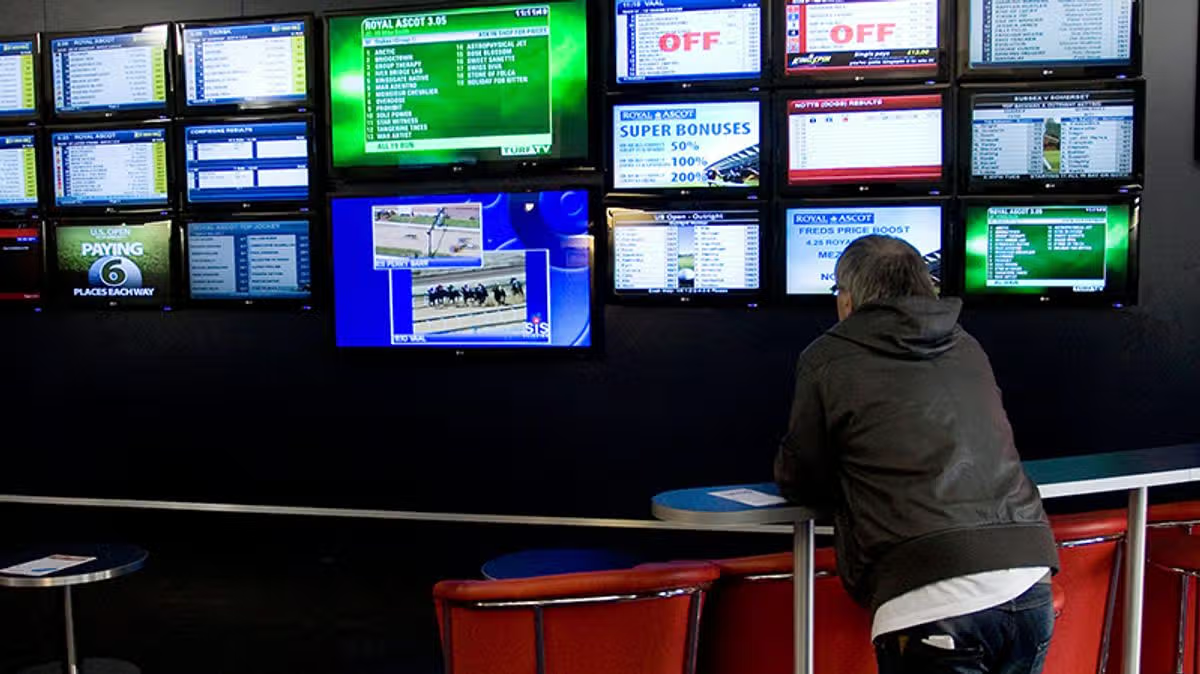
Betfred is preparing to close 132 betting shops and cut more than 600 jobs, as the bookmaker warns that rising taxes and a deteriorating economic climate have made parts of its retail estate unsustainable.
Advertisement
The company has begun a formal consultation on the closures, which will affect more than a tenth of its UK shops and reduce its footprint to around 1,100 sites.
Founded in Warrington in 1967 by brothers Fred and Peter Done, whose combined wealth is estimated at £3.61 billion, Betfred said the fiscal pressures facing the industry had become impossible to absorb.
Jo Whittaker, chief executive of Betfred, said: “We have tried hard to protect all our sites and the colleagues who work in them, but the combined impact of higher employer national insurance contributions, wage inflation, increases in gambling taxes and wider economic uncertainty has left us with no choice.
Advertisement
“These are well-run shops, staffed by dedicated colleagues, and it is incredibly hard to see any of them close, but the current fiscal and regulatory environment has made it impossible to keep trading all our shops.
“Our priority now is to support the colleagues affected, and to continue serving customers and communities across the rest of our estate.”
Competing gambling firms Paddy Power and William Hill have similarly shuttered dozens of outlets over the last 12 months. Back in January, William Hill and 888 owner Evoke revealed it acted “quickly and decisively” to counter recent budget changes to gambling taxes by implementing shop closures and cost-cutting measures.
Last October, Paddy Power announced intentions to close 57 betting shops throughout the UK and Ireland, placing 250 employees’ jobs in jeopardy. The shutdown proposals follow tax hikes unveiled by the former chancellor.
Advertisement
Measures outlined in last year’s autumn budget saw remote gaming duty rise from 21% to 40%, while a new online sports betting duty of 25% will be introduced, covering all sports excluding horse racing, from 2027.
Betfred also pointed to additional financial strain from other tax rises including the increase in National Insurance contributions and alterations to thresholds.
Ensure our latest stories always appear at the top of your Google Search by making us a Preferred Source. Click here to activate or add us as your Preferred Source in your Google search settings.
Gleeful migrants filmed themselves arriving in the Spanish territory of Ceuta, with one man seen reaching the shore clinging to a bicycle, while another took videos with a selfie stick as he swam across the African coast.
Thousands of migrants have been pouring into Ceuta over the last two days, some by land and others by sea.
Spain‘s Prime Minister Pedro Sanchez has condemned the breach of the border with Morocco as ‘a violation of Spain’s territorial integrity.’
But as security forces struggle to hold back the influx of migrants, incoming North Africans took to social media to share videos of them celebrating their arrival in Ceuta.
Advertisement
Meanwhile, separate footage captured the bizarre ways in which they managed to cross the sea.
Other clips showed migrant children playing in Spanish parks, while groups of men were seen throwing peace signs and shouting ‘Long live Pedro Sanchez.’
One social media video showed a migrant swimming from Morocco to Ceuta while hauling a bicycle across the water.
As he reaches the shore, he is seen pushing the bike along the beach.
Advertisement
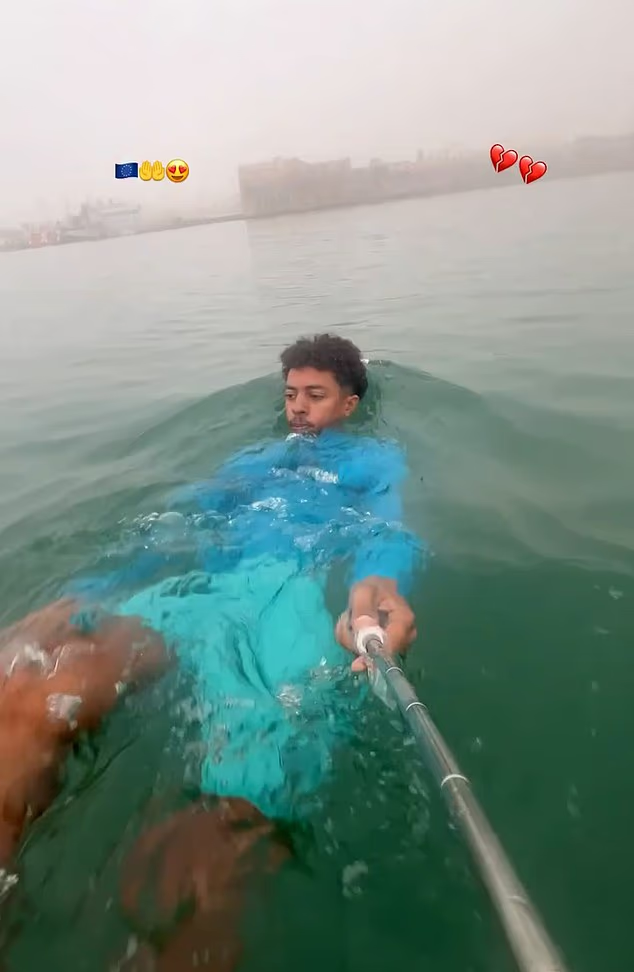
A migrant films himself swimming with a selfie stick as music plays in the background
One social media video showed a migrant swimming from Morocco to Ceuta while hauling a bicycle across the water
A young woman celebrates as she walks along a beach promenade after arriving in Ceuta
Advertisement
In another video that has gone viral, a migrant films himself swimming with a selfie stick as music plays in the background.
Other scenes show a water-soaked young woman celebrating as she walks along a beach promenade after arriving on the Spanish territory.
The same woman appears in a separate video walking along the streets of Ceuta with a group of other young people as she brandishes a Fendi phone case in her hand.
Videos shared by Spanish locals showed scores of unaccompanied migrant children playing in parks.
Advertisement
Live footage of the Spain-Morocco border showed hundreds of migrants gathered on a hill overlooking Ceuta being dispersed with tear gas by Moroccan forces, while others continued to swim to the Spanish enclave.
At the same time, large groups of migrants walked back from Ceuta toward Morocco to return home.
Rachid Sbihi, who leads a local workers association representing Civil Guard officers, called the situation a ‘serious humanitarian crisis,’ saying thousands of migrants, including unaccompanied children, were left sleeping in parks and on sidewalks, while others roamed the streets aimlessly.
‘People are still entering. The reinforcements, including Spanish military troops, that have arrived are only helping the injured and other humanitarian efforts,’ he said. ‘It’s chaotic.’
Advertisement
Migrants are seen playing in Ceuta’s parks after their arrival
Among the 18 who died, many drowned, Sbihi said, but some were also killed in a stampede to cross the breakwater fence at Tarajal beach, an urban beach near a border checkpoint with Morocco.
On Friday morning, the waters near the border fence were littered with buoys, shoes and other belongings left behind.
Moroccan police deployed additional personnel, used water cannons and fired warning shots into the air to prevent migrants from crossing into Ceuta, according to rights groups in Morocco.
Advertisement
Authorities in Ceuta and Madrid have blamed the situation on a recent decision by Spain’s Supreme Court that ruled migrants arriving by sea could not be summarily deported, unlike those who cross by land or climb the border fence.
Sanchez said migrant smugglers misinterpreted the ruling, but acknowledged that it may have played a role in sowing chaos.
‘It appears that this interpretation of the Supreme Court’s ruling spread like wildfire over the past few hours through the networks of human trafficking organisations, triggering the kind of mass surge we witnessed yesterday,’ Sanchez said.
Spain is a main point of arrival into Europe for migrants seeking better economic opportunities or an escape from violence in their home countries.
Advertisement
To reach Ceuta, located on the northern African coast, migrants often swim from the Moroccan town of Fnideq, covering about three miles to reach Spanish territory. Others attempt the crossing from the nearby town of Belyounech, where the distance is shorter.
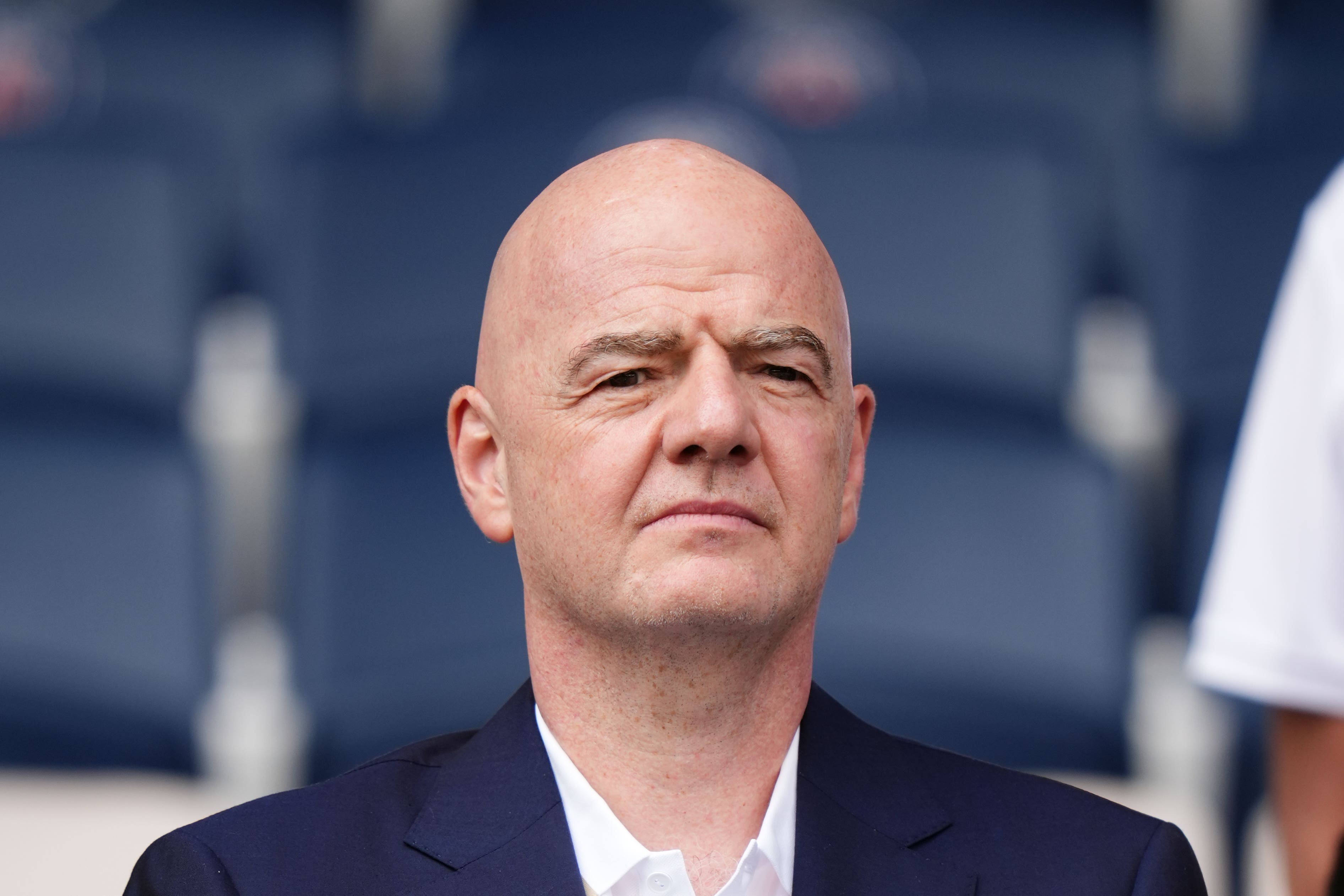
Football chiefs will consider whether to push for a vote of no confidence on Gianni Infantino following another day of drastic developments surrounding the embattled Fifa president.
But Infantino’s game-breaking Fifa Forward Enterprise plan is described as “not dead yet”, with the Swiss official still pushing on with his controversial plans after the global governing body issued another round of “clarifications” overnight.
Sources have even spoken of Infantino continuing on in the office as normal. Meanwhile, many outside his small circle are highly curious as to what he is “feeling” right now, as a previously invulnerable position has been left so exposed in a matter of days.
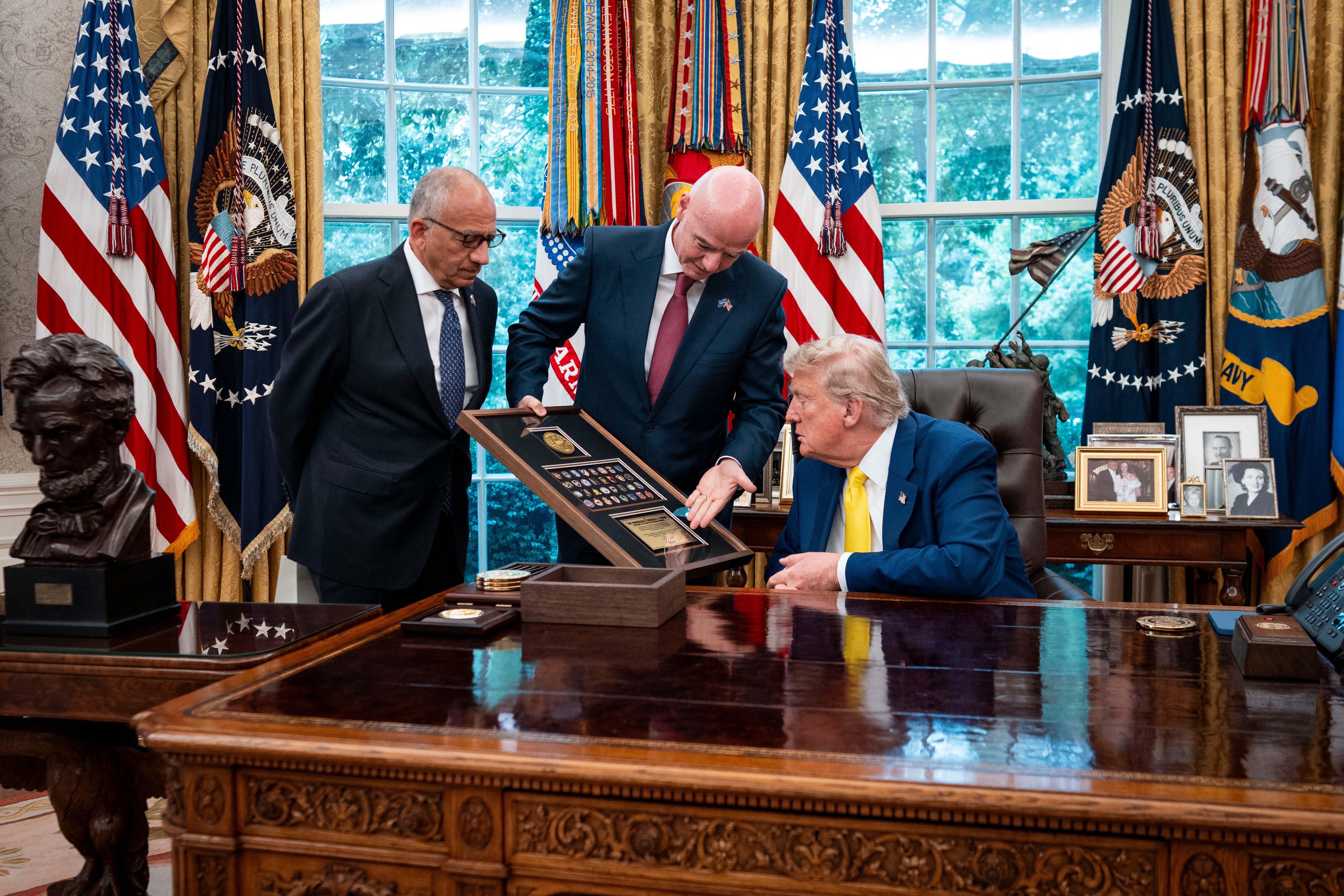
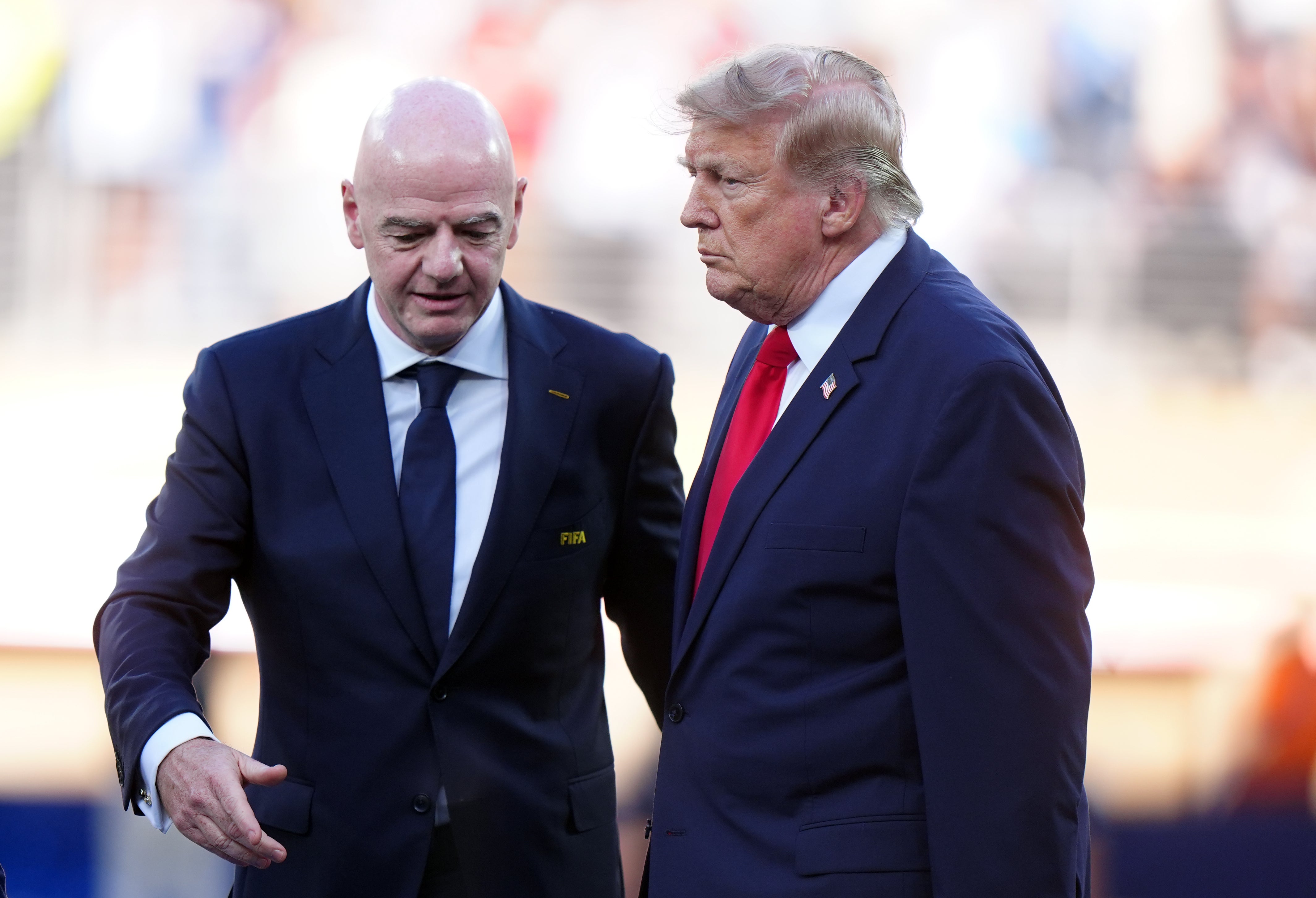
FIFA president Gianni Infantino and US president Donald Trump with the World Cup trophy (Bradley Collyer/PA) (PA Wire)
Federation chiefs have already started talking about the process of a vote of no confidence, which would first necessitate a meeting of the Fifa Council and then 43 member associations – a quarter of the 211 – to push for an Extraordinary Congress.
Before that, though, everyone is waiting to see how the dust settles. Football chiefs have even felt it’s all been happening too fast to even properly register.
Amid all of that, Cordeiro’s statement was still clear enough to sum up the main problems with this plan. He wrote of how Fifa “sits on billions of dollars in reserves and no debt”, ensuring that “selling a permanent stake in football’s most valuable asset to raise $4.2bn makes little sense”.
“Why this deal? Why now?”
Advertisement
The JP Morgan deck for the plan is indeed said to have been “the final straw” for many member associations, including how it seemed to undervalue something as precious as the World Cup – let alone the principle of selling it off. They also pointed to contradictions in how Fifa is now bleating about consultations, but their very documents say terms have been agreed. As one involved figure said, “who agreed them?”
The exclusion of Cordeiro from the process is one of many elements that has only further baffled football.
Cordeiro (left) was a key figure within Fifa as Infantino’s right-hand man (AFP/Getty)
While the former US Soccer president has been a divisive figure himself, he is seen as one of “the world’s top bankers” given his decades of work at Goldman Sachs.
It would surely have been obvious for Infantino to include him in formulating an idea like this, not least given their proximity. But he didn’t.
Among another key question being asked – of many – is how and why the arbitrary deadline of 19 September was picked.
Advertisement
Sources were wryly laughing at how Fifa’s “clarification” email complained at how their “planned consultation process was disrupted by incorrect media reports” only to then plough ahead with this deadline of 19 September. What would have changed if the consultation process hadn’t been “disrupted” by the media?
Sports industry figures have pointed to how a comparable deal between CVC Capital Partners and the Six Nations took two years to go through. Fifa were instead insisting on seven weeks with 211 countries, and that covering a period when most senior federation people are on holiday after a gruelling World Cup.
The pressure is mounting on Fifa president Gianni Infantino (PA Archive)
If a radical shift like this plan was being taken in normal circumstances, it would come after a strategy department had been suggesting change over a period of time, before going through the board, the finance office and legal.
Except, nothing about this is normal.
Advertisement
The 19 September is otherwise seen by finance figures as a standard attempt to have hard milestones in place before the plan can evolve to formal financial due diligence. It also happens to fit with key Fifa dates, given that there’s an Extraordinary Congress scheduled for 23 November – by which point the presidential nominations are due for the March 2027 election – and the deadline for that agenda is 23 September.
Many figures naturally feel more time is essential, before even considering all the other concerns.
Ultimately, though, there was one major factor putting most voters off.
As a number of sources have said, ‘the association with the Trumps was just never going to fly”.
Advertisement
So much more of the story at least makes sense once it is viewed through the prism of the world around Donald Trump.
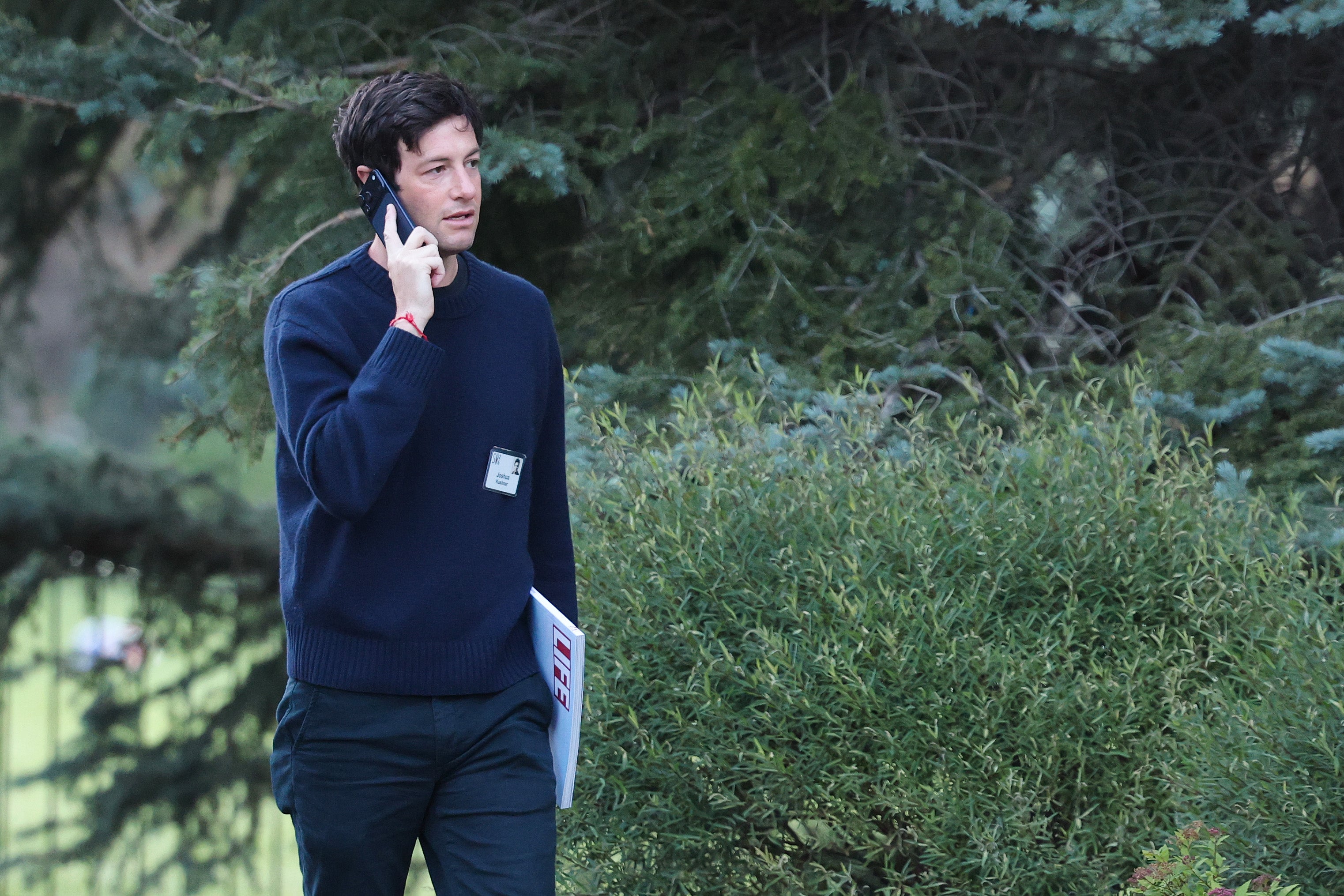
Infantino’s long association with a notoriously transactional US president played into a situation where he is suddenly announcing a plan that centrally involves the brother of Trump’s son-in-law – through Josh Kushner’s Thrive Capital – after a year-long plan that very few people apparently knew about.
Josh Kushner is the founder and CEO of Thrive Capital, which has emerged as a proposed lead investor in Infantino’s proposals (Getty)
That element is said to have infuriated big hitters in the financial community, too. Here was “the most secure, most revenue-generating, most global asset” coming on the market and firms from Silverlake to CVC were not even at the table. That alone could cause awkward discussions at the next round of investor conversations.
And yet it is apparently going to Thrive Capital, which is seen in that sphere as an internet/software venture capital fund.
So, why Kushner?
Advertisement
Many are also seeing Trump’s long flattery of Infantino with a different perspective. As one source puts it, “he talks about him in a way he doesn’t even talk about Benjamin Netanyahu”.
Infantino has had longer and deeper access to the White House than almost anyone outside politics, and stayed close to Trump longer after the type of timescale where relationships with other comparable figures are burned. Look at Elon Musk, for example.
Was it connected to this plan?
The Trump connection could also dictate where this goes next.
Advertisement
As well as a vote of no confidence, federation chiefs have been weighing up potential challengers to be announced in November – from Concacaf’s Victor Montigliani to Paris Saint-Germain president Nasser Al-Khelaifi – but they do still see a path to survival for Infantino.
Gianni Infantino cultivated a relationship with Donald Trump before the staging of the 2026 World Cup (PA Wire)
If he says he understands the views of the many dissenters and goes in another direction, he could stay.
That direction could even be to still create Fifa Forward Enterprises but without the private equity element, as Uefa have done with Uefa Events SA. The record World Cup profits could then be distributed to member associations at $20m each and everyone moves with a contrite but weakened Infantino.
But will he do that given this connection to the Trumps? What has actually been discussed in the secret negotiations that led to this? Can he unmoor himself from this specific plan in that way, or will he press on and try and get it to a vote?
The next steps could decide more than Infantino’s future.
The Total Eclipse of the Heart Singer died in Portugal earlier this month
17:58, 31 Jul 2026Updated 17:59, 31 Jul 2026
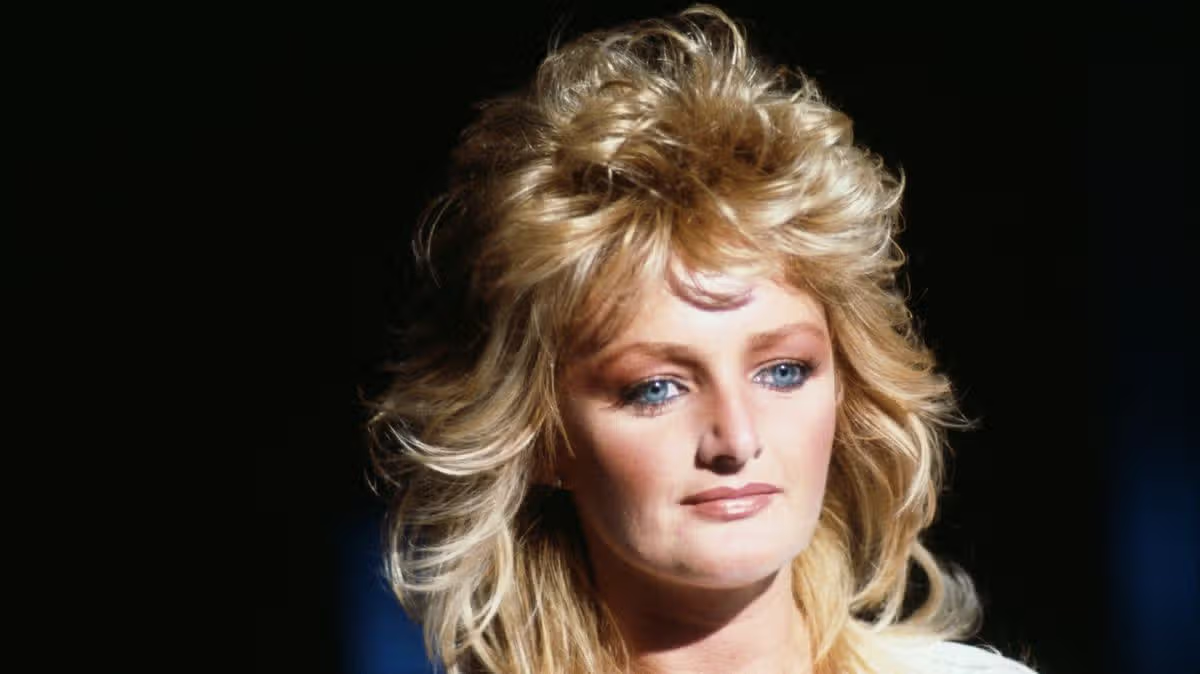
A book of condolence for Welsh icon Bonnie Tyler is being opened in Swansea. The Total Eclipse of the Heart Singer, who was born Gaynor Hopkins, died in hospital in Portugal on July 8 at the age of 75.
People can pay a personal tribute to the iconic singer in a book of condolence that’s being opened at Y Storfa in Swansea city centre on August 3. The book, organised by Swansea Council, is available for members of the public to sign during regular opening hours at the community hub in Oxford Street. An online Book of Condolence has also been opened and can be found here.
As a mark of respect, the Welsh flag is being flown at half-mast on the Rotunda at Swansea’s Guildhall, while the Lord Mayor has written to Bonnie Tyler’s family to offer condolences on behalf of the people of the city. Never miss a Swansea story by signing up to our newsletter here.
Advertisement
Bonnie’s family have announced details of her funeral through a notice published in the South Wales Evening Post. It said a celebration of her life will be held in Swansea and members of the public were invited to line the streets to pay their respects.
The singer is resting at William Pressdee Funeralcare on Stanley Street in Mumbles before she returns to her home in Fernhill on Saturday, August 15, at 3.30pm. Those who wish to pay their respects are invited to line Newton Road, Mumbles from 3.15pm that day.
The Lord Mayor of Swansea, councillor Penny Matthews, who has signed the book of condolence, said: “I was deeply saddened to hear of Bonnie Tyler’s passing.
Advertisement
“Bonnie’s journey from south Wales to international stardom inspired generations and brought enormous pride to Swansea and Wales. Her music touched millions of people around the world, but she never lost sight of her roots.
“I have written to Bonnie’s family to express condolences on behalf of the people of Swansea and to let them know how much she meant to so many people here.
“I hope residents who admired her music and achievements will take the opportunity to leave a message and celebrate a truly remarkable life.”
Council Leader Cllr Rob Stewart, who has also signed the book, said: “Bonnie Tyler was one of Wales’ great musical ambassadors and one of the most recognisable voices in popular music.
“From South Wales clubs to worldwide success, she achieved extraordinary things while remaining a source of pride for communities across our region.
“Her songs became the soundtrack to countless lives and her legacy will continue to inspire future generations.”
Bonnie Tyler rose to worldwide fame with a string of hit records including It’s a Heartache, Total Eclipse of the Heart and Holding Out for a Hero.
Advertisement
As one of the UK’s most celebrated performers, Bonnie’s death has attracted tributes from musicians and fans across the world.
Where and when you can sign the book of condolence:
Y Storfa, 277-278 Oxford Street, Swansea, from Monday, August 3, to Friday, August, 21.
Opening times: Monday, Tuesday, Thursday and Friday: 9am-5.30pm
Wednesday: 9am-7pm
Saturday and Sunday: 10am-4pm
The celebration of life service is on Monday, August 17, at St Mary’s Church. It is described as a “public service” which is due to start at 12pm, with the church doors being open from 11am.
Within the church, seating will be prioritised for the family and invited guests but it is anticipated that there will be a limited number of seats available for the general public. For those unable to get into the church, the service will be broadcast outside on television screens.
It will also be shown online at www.bonnietyler.com for fans across the world.
Advertisement
Get daily breaking news updates on your phone by joining our WhatsApp community here. We occasionally treat members to special offers, promotions and ads from us and our partners. See our Privacy Notice.
This reworking of Rein Me In, from Fender’s third studio album, the Mercury Prize-winning People Watching, features an extra verse about the breakdown of a relationship from a female perspective, from Dean.
“[It’s] very personal and reminded us of home, but when Olivia put her touch on it, it became a much more universal track,” he told Radio 1, adding “that’s what made it so huge and so beautiful”.
He said he wanted to “personally thank” Dean, who helped him achieve his first ever number one single, adding: “It wouldn’t have happened without Olivia obviously, but now I feel like it belongs to the fans, they’ve made it what it is”.
When asked how he’d be celebrating the achievement, Fender joked “I think I’m just gonna have a really big sandwich”.
Advertisement
It hasn’t been a straightforward ascent to the top for Rein Me In – originally released as a solo Fender track and repurposed as a duet in June 2025, it took eight months to reach number one in February this year.
Dean said when the track came out, external that the original version of Rein Me In was her “favourite song on Sam’s album” and it was “a pleasure to write a new verse from a female perspective”.
A lot of the song’s success as a duet comes from its authenticity, with the lyrics exploring the fallout from the end of a relationship and the difficulties faced by both parties as they try to move on from each other.
Whilst Fender’s verses feel full of anger and regret at not being able to open up and be the partner he wanted to be, they are complimented by the softer and more reflective tone of Dean’s, in which she encourages him to try again to make it work.
Advertisement
It has been described by Blunt Magazine’s Jake Fitzpatrick, external as “stormy, tender and anthemic” and a “love letter to the kind of songwriting that knows when to burn slow”.
The song has also received praise amongst many critics and bloggers, including Cult Following’s Ewan Gleadow, external, who says that Dean’s addition helps it to find “a new depth”, noting “charm is a big part of it too, with all those reflections on where you come from and where you’re headed”.
Ricky Swindells died last week. An Independent Office for Police Conduct (IOPC) probe is underway.
17:55, 31 Jul 2026Updated 18:02, 31 Jul 2026
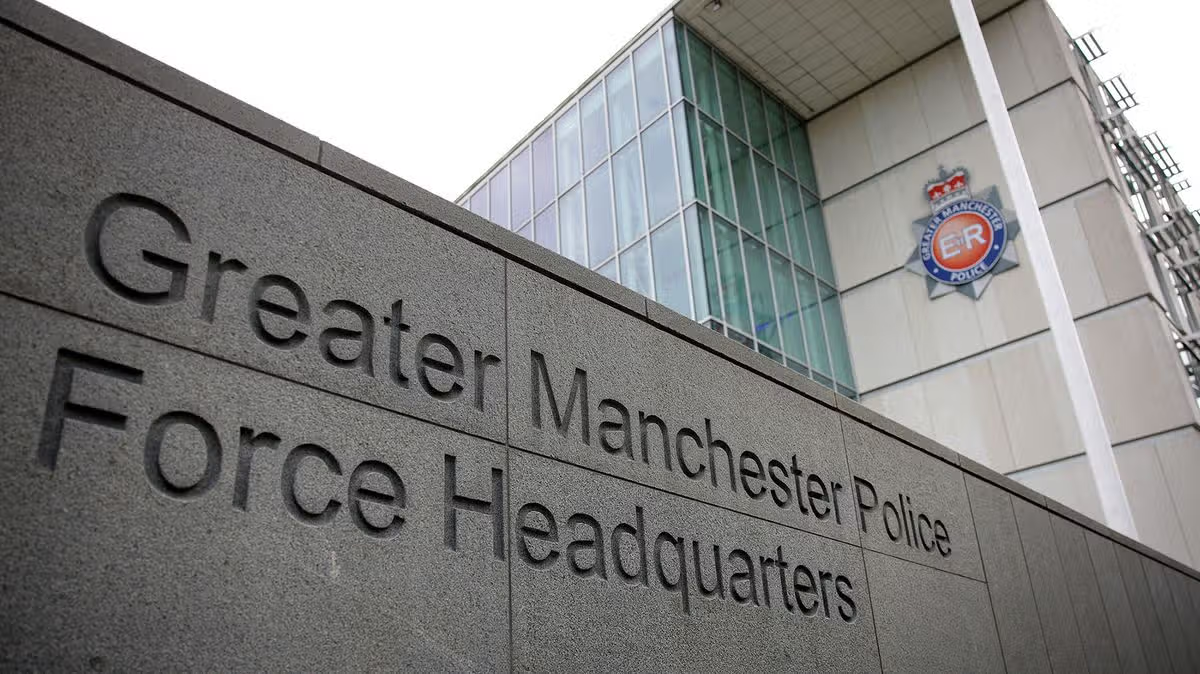
The death of a man arrested in Salford is being investigated by the police watchdog. Ricky Swindells, 28, was detained by officers last Friday (July 24) after they attended a property on Duchy Road following a 999 call.
A report of concern for Mr Swindells’ welfare was made, the Independent Office for Police Conduct (IOPC) said. During the call, at around 7.40pm, his family said he was autistic and in ‘significant distress’.
Police handcuffed Mr Swindells to restrain him, the IOPC added. Body worn camera footage shows officers saying that was done for his own safety, the watchdog said.
Advertisement
Click here to get the biggest stories straight to your inbox in our Daily Newsletter
Mr Swindells then became unresponsive, the IOPC said, before receiving treatment at the scene. Officers began CPR at 8pm and paramedics arrived seven minutes later, the watchdog added. Officers gave CPR before North West Ambulance Service personnel took over, the IOPC said.
Mr Swindells was taken to hospital, where he died the next day, Saturday, July 25. Greater Manchester Police said it is supporting the investigation. The force said Mr Swindells was ‘restrained by officers responding to a report by family members of a man in crisis’.
“The information provided to responding officers was that a man was having potential mental health episode, had been violent and that the family needed assistance to restrain him,” GMP added.
Advertisement
“Officers arrived at 7.49pm and were at the scene for 10 minutes where they attempted to work with the family to deescalate the situation. A 28-year-old man was presenting as in crisis on the floor, and appeared to be in distress, agitated and a potential risk to himself.
“While detained, officers continued to try and bring calm to the incident. They became concerned for the man’s breathing at 7.59pm. Officers identified he was breathing but unresponsive, through the provision of first aid.
“They began to commence CPR at 8pm. Officers continued with CPR for 14 minutes, during which time paramedics arrived at 8.07pm to begin to assist the officers.
“He was later taken to hospital by paramedics where he remained over the weekend. He sadly passed away in the early hours of Saturday morning.”
The results of a post mortem were inconclusive. Further forensic investigations – including toxicology tests – continue, GMP said.
Due to police contact with Mr Swindells prior to his death, a mandatory referral was made to the IOPC. “Our Professional Standards Directorate have made initial enquiries including reviewing all available body-worn video and other available footage,” GMP added.
The IOPC added: “From an initial review of the available body-worn video footage, we have established that relatives were on the phone to the ambulance service at the point police arrived.
Advertisement
“As part of our investigation, we will consider the actions and decision-making of the officers, including the necessity, proportionality and rationale for the decision to handcuff Mr Swindells,” a statement added.
The probe will look at the ‘full circumstances’ surrounding the incident, the IOPC said, ‘including the use of restraint, the police response and medical intervention once it became apparent he had become unresponsive’.
IOPC director of engagement Amanda Rowe added: “Our thoughts are with Mr Swindells’ family and loved ones, as well as all those affected by his death.
“Our investigation will be entirely independent of the police and ensure we understand events surrounding his detention. We will carefully examine the actions and decision making of officers involved – including the restraint used in this case.
Advertisement
“This was clearly an extremely distressing incident and our investigation will be thorough to help establish the facts and get answers to the family’s questions. Our findings will be shared with the coroner in due course.”
Assistant Chief Constable Steph Parker said: “This is a really distressing time for all concerned – particularly the family of the man who has sadly passed away after this incident. We are doing what we can to establish what happened to answer any questions they will have.
“Our officers attended to try to help what was a complex and challenging circumstance. We are ensuring they are getting the support they need at this time.
“It is vital that this a proper investigation, independent of the police, is able to be carried out. We are fully assisting with the IOPC’s enquiries and are committed to accountability to help ensure the facts are established.”
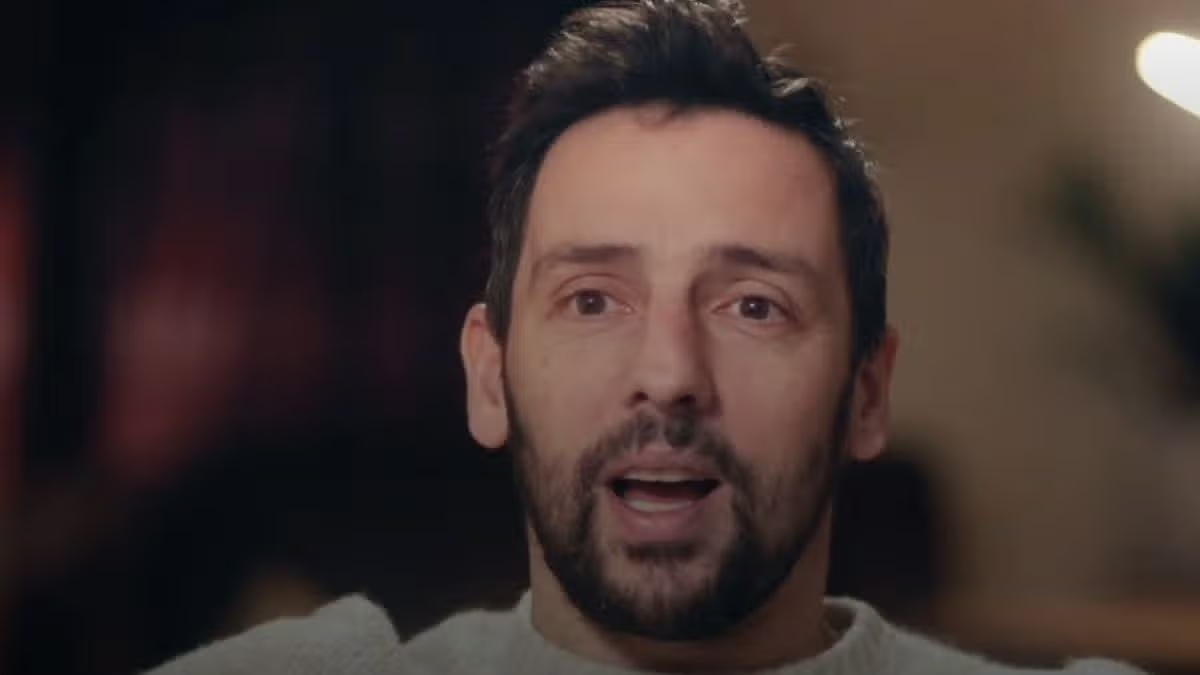
Death in Paradise star Ralf Little started his career in the BBC sitcom Royle Family back in the late 1990s.
The BBC sitcom remains popular with viewers over 20 years later.
Advertisement
In 1998, the likes of Sue Johnston and Ricky Tomlinson joined forces for The Royle Family, which was created by their on-screen daughter Caroline Aherne, who played Denise and Craig Cash, who starred as Denise’s fiance Dave.
Recently, Ralf Little shared a clip from his 2020 travel show with Ricky Tomlinson as the pair travelled the North of England together.
During their trip, the 46-year-old reflected on one scene they had together which left him less than impressed, reports the Express.
He said: “You opened these pork scratchings and rested them on your belly. You were eating them, I say this with the greatest respect, it was disgusting!”, reports the Express.
Ricky erupted with laughter as Ralf recounted the memorable scene, gleefully re-enacting the moment himself, adding: “I really think that’s when Jim Royle was truly born, just the grossness of him.”
People were quick to comment on the pair together on-screen once again, with many calling for either The Royle Family or their travel series to return.
One person said: “Absolutley LOVED that scene. Wished The Royal Family returned.” Someone else wrote: “Just watched your tour of the north again with my parents, we loved it! Hope you and Rick do something together again soon.”
Another commented: “Absolute quality…… The Royal Family…. They don’t make them like that any more.”
One person added: “One of the best tv series ever made, pitch perfect in every way.”
While another shared: “Just watched The Royle Family for the first time. What a timeless classic! Comedy at its finest!”
Ricky & Ralf’s Very Northern Road Trip is available to watch on Channel 4.
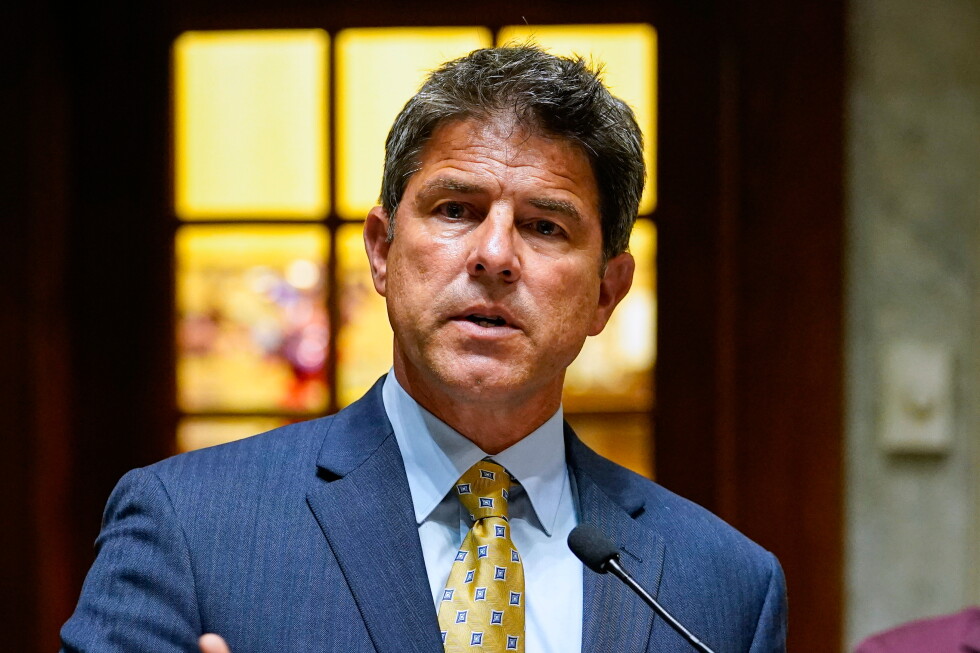
INDIANAPOLIS (AP) — The Republican leader of the Indiana Senate announced Friday that he would give up his position after six GOP incumbents who opposed President Donald Trump on his congressional redistricting push in the state lost their primaries.
Indiana Senate President Pro Tem Rodric Bray drew the ire of Trump in December when he voted against the redistricting plan after saying for weeks that it didn’t have enough support to pass. The rejection came after intense lobbying from Trump, Vice President JD Vance, national conservative groups and others.
Bray, who has held his leadership position since 2018, said in a statement Friday that he would not seek reelection to the post when Senate Republicans choose their leaders in November. His current Senate term runs through 2028 and he will remain in office, albeit not as the Republican Senate leader.
Trump reacted to the news in a social media post by saying Bray had “foolishly led,” the state Senate, noting the May primary defeats of those who defied him on the redistricting plan.
Advertisement
Bray did not mention Trump or the redistricting fight in his statement announcing his position to step down from the leadership position. Bray said holding the job “has been among the most significant honors of my life, but it’s time for the Senate to choose another leader.”
It’s not particularly fun to tell people you had an eating disorder. There’s not a cultural framework for talking about them, and societal perceptions of them are often very outdated.
Saying ‘yeah I had an eating disorder’ in polite company, even around people you might know well enough to not be weird about it, usually produces the same physical response as saying something like ‘yeah I used to train puppies for dog fights’ or ‘I funded my degree by selling my underwear to old men on the internet.’ Not quite disgust, not quite pity, more a sort of embarrassment that you’d bring up something so unsavoury. Mentioning eating disorders forces people to confront both shame and bodily fluids, and we hate that.
I couldn’t tell you when I first actually made myself sick, I have never been a particularly consistent diarist. But I can tell you the thought process that led to it started in early 2012. I was 16, I’d just been to Australia with my family over Christmas to visit family and while we were there, I came down with a very bad case of food poisoning.
Advertisement
I couldn’t keep any food or water down for the best part of a week, and when I got back after the school holidays, gaunt and sallow from having to stay inside and not eat, people would not stop telling me how good I looked.
I had been a very chubby kid, and I could still feel that in high school, both on my body and reputation. Even though I look back at photos of myself from that time and I can see that some of the puppy fat had started to drop a little bit, I still carried the literal and metaphorical weight of being one of the school’s fat kids around with me.
So, when people told me that I suddenly looked amazing, something switched in my brain. I knew that I’d been sick every day for a week, and that had produced results, so I just carried on. It’s obviously a sign of an unwell mind to associate something harmful with success, but that’s the way my brain worked at the time.
Born in the late 90s, I’m technically the youngest it’s possible to be and still be a millennial, and while I’m of the opinion that terms like ‘Millennial’ and ‘Gen Z’ are generally shorthand for older right wing journalists to call young people annoying and stupid, there is something to be said for the Millennial-Gen Z cusp adults who were children in the 2000s and teens in the 2010s.
Advertisement
What this means is that we were children for the explosion of diet culture propaganda of the 2000s, teenagers for the sharp pivot into body positivity of the 2010s, and now young adults as we slip into the uncanny valley territory of the GLP-1 era. It’s a lot of twists and turns for one mind to handle. You have to be thin, but even if you’re not thin you have to love yourself exactly as you are as you desperately try to attain thinness.
This isn’t the sole reason I ended up in Eating Disorder therapy, but it’s fairly important cultural context.
Between the praise for losing weight and the constant pressures from all forms of visual media since time immemorial, I was desperate to keep getting smaller.
I stopped eating breakfast before school. I’d make excuses at lunch. At home I’d eat dinner with my family, then say I was going upstairs for a shower, and while the water was running I’d force two fingers down my throat to purge the dinner from my body. This was a pattern that continued for the best part of a decade, ebbing and flowing in its intensity – feeling like I was doing something positive, whilst my skin worsened, and my teeth loosened.
Advertisement
It was the pandemic that eventually forced me to tell my family how bad things had gotten. Locked in close proximity, it was difficult to hide how unwell I was.
When I first started making myself sick, I genuinely didn’t know what I was doing was bad, it felt like a shortcut rather than self-harm. When I told my mother, she was very upset, as you would be if you found out your child had hated themselves to the point of ritualistically vomiting for a decade. She urged me to go to a doctor, and the doctor referred me to a specialist clinic.
As we know, the NHS is operating under a huge financial and physical strain, so I spent a long time on the waiting list to be seen for treatment. But eventually I was put into an Eating Disorder group therapy unit, with a Specialist Cognitive Behavioural Therapist.
An Eating Disorder group therapy unit is actually a lot funnier than you might expect. Gallows humour abounds. I felt a deep kinship with the women in the group. I was, however, the only man there.
Advertisement
Statistically this tracks; 25% of those with Eating Disorders in the UK are men, but there’s an undeniable difference in the ways men and women are socialised to scrutinise their bodies. This is not a hard and fast rule, an eating disorder is not a single disease, nor are those suffering a monolith. It’s more about trying to control something in your life when you feel out of control in other ways.
This is certainly my experience as a man with an eating disorder. I’m not exactly the most masculine of men – sitting somewhere between Nathan Lane and Graham Norton on the catty homosexual scale – but I did go to an all-boys school, and have been socialised as a man.
It’s undeniable that a part of being raised as a boy involves competition, being tasked with being bigger, better, stronger. In this era of information delivered by extreme short form video, we’re served 45 second snippets of ‘protein’, ‘diet advice’, ‘weekly training splits’, personal trainers advising you how to hit shoulders and back with one simple exercise. When you’re gay you’re coupling that with your burgeoning sexuality, unsure whether you are attracted to men, or just want to look like them. You’re both object and objectifier when it comes to the male gaze.
I think for men it’s difficult to talk about, because of the misconception that eating disorders solely affect women. I don’t think this was true for me, but I certainly didn’t realise what I was doing to myself was an eating disorder for a long time because I thought an eating disorder was just starving yourself. This isn’t to say that in order to release men trapped in cycles of disordered eating is to pitch them against women suffering from comparable situations.
Advertisement
It’s to interrogate why we feel the need to strive towards a goal that is unattainable. It’s not necessarily about body image, if you had asked me when I was in the throes of bulimia what I wanted to look like, the goal would have been nebulous. It’s always boiled down to ‘something else.’
I don’t think that you can ‘think yourself better,’ therapy takes a lot of work, practice, and challenges your preconceived notions about what kind of person you are. But at some point you also have to decide that you want to get better, and that you can. And part of that comes from accepting that you have a problem. If you think you might, tell someone, you never know what could happen. You could turn a corner, or, like me, you could end up doing a one man show about it in Edinburgh. Who’s to say?
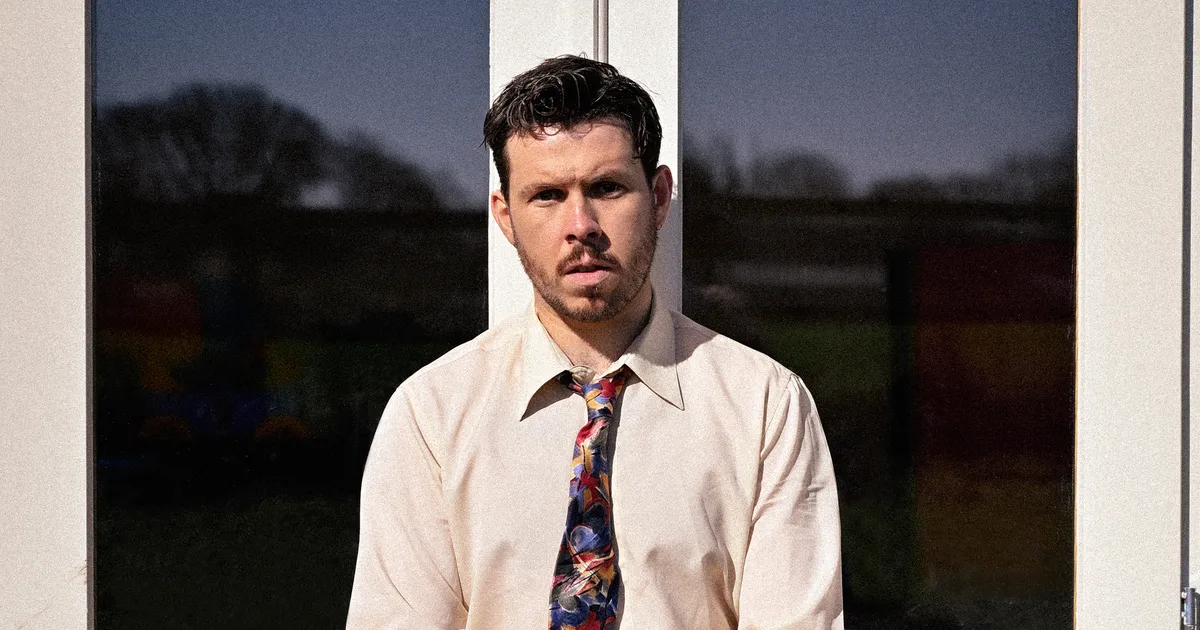
Dom McGovern: Prize Hog will be performed at 8:30pm in Pleasance Courtyard from 5th-30th August at the Edinburgh Fringe
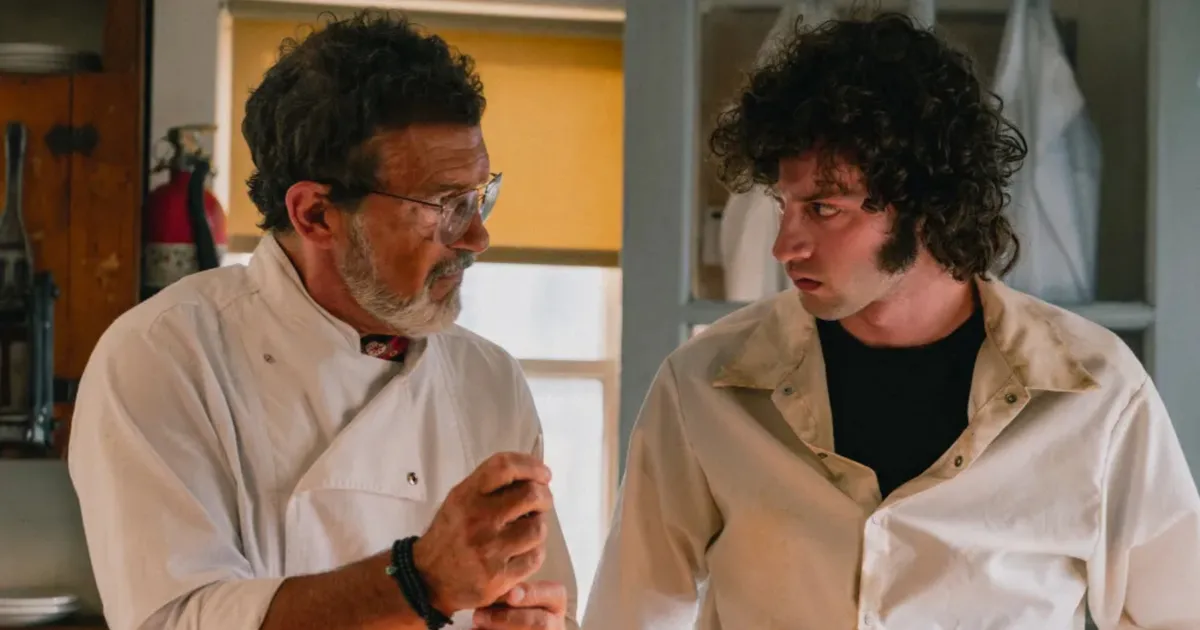
A24’s Anthony Bourdain film, Tony, is set to come out of 14 August in the UK.
But the biopic, starring Dominic Sassa as a young Tony, Antonio Banderas as his Chef, Emilia Jones as love interest Nancy, and Leo Woodall as fellow restaurant worker Sal, has already received verdicts from multiple critics.
“A 19-year-old Anthony Bourdain travels to Provincetown and stumbles into the chaotic world of a restaurant kitchen, setting off a summer that will shape the course of his life,” the movie’s synopsis reads.
Here’s what reviewers think so far:
Advertisement
What do critics think of 2026’s Tony?
Reviews are generally good – it has already earned an outstanding 97% on review aggregation site Rotten Tomatoes. But some critics think Nancy’s storyline is a bit thin, while others say the unavoidable shadow of Bourdain’s real-life suicide can’t help but colour the film for fans.
“This is a strange film in some ways. It is watchable and entertaining, but its feel-good trajectory is compromised by what we know of the author… In a way, Tony is the author, the narrator who just bleakly sees it all, but for a writer he sometimes doesn’t have much to say about the situation in which he finds himself.”
“[Director Matthew] Johnson recognises how this, at heart, is a coming-of-age story about a rising star who’s learning to be unburdened by a future that’s better than he could ever imagine – a kid who’s learning that no one can become the person they pretend to be without being the person they actually are along the way. Tony struggles for an ending, but it doesn’t really need one; the real fun here lies in paving the way to parts unknown.”
Advertisement
“Sessa adds such depth and texture to his Caulfield riff that it feels ultimately unnecessary for Johnson to add any explicit reference to the darker, sadder shades of Bourdain’s psyche. It’s already there… The audience knows who Bourdain was and part of that was what a wonderful storyteller he was. And this is a wonderful story to tell.”
“It would be easy to write Tony off as something Bourdain would despise on principle. But after the documentary Roadrunner ended on such a bitter note, using an AI-generated version of Bourdain’s voice and pointing fingers over who was to blame for his suicide, Tony returns, refreshingly, to the beginning of his story.”
“[Its] central plot thread is like a blueprint for the behind-the-scenes access to restaurant life in Bourdain’s bestselling first book, Kitchen Confidential — hazardous, intense, messy and a magnet for misfits… The relatively weak link in the script is Nancy.”
Advertisement
“As Tony’s troubled soul comes to the fore, acted out in ways both big and small, what’s revealed is that though he wants to be a writer, he believes in nothing. Tony is about how he finds himself by crawling out of himself. The kitchen wounds him, heals him, and becomes his crucible of faith.”
“Zeroing in on this one chequered summer in Bourdain’s life feels like an odd decision that Johnson and his co-writers (Matthew Miller, Todd Bartels and Lou Howe) compound by giving us little to root for in their surly antihero. Even his redemptive moment rings hollow… Tony is a bland dish.”
“If a viewer doesn’t know Bourdain from Pepin, Tony plays as a highly entertaining, heart-tugging and fictional boy-to-man vacation flick, like The Way Way Back. For the food celeb’s fans, the movie still mostly does, even if, like coming across an old photograph from a breezier time, there is the unavoidable occasional pang of sadness.”
“Despite having a poorly realised love interest, Tony, as both a film and a character, has a lot to recommend [it]… In a lot of ways, the movie itself is a lot like the kitchen that Tony primarily takes place in. It’s crass, it’s loud, it’s messy, and yet, you end up with something profound, beautiful, and exciting on your plate.”
Advertisement
“A hangout movie is perhaps the most fitting way for Bourdain to be brought to the screen. Though its ambitions never quite match its subject, it depicts a summer you’ll be hard-pressed not to be charmed by.”
Tony will be available in UK and Irish cinemas from August 14.

















































You must be logged in to post a comment Login