

Business
Industry Reaction, Risks & What It Means for Business


Ministers have set the UK on course to bar under-16s from mainstream social media, but the business and technology figures who will have to live with the policy are far from convinced it will work.
The government confirmed on Monday that platforms including TikTok, Instagram, Snapchat, YouTube, Facebook and X will be required to keep under-16s off their services, with messaging apps such as WhatsApp and the standalone YouTube Kids carved out. The measures, which follow the path already taken by Australia, are expected to come into force by spring 2027, and platforms that fail to take reasonable steps to exclude younger users face fines running into millions of pounds. Nine in ten parents who responded to the official consultation backed a ban.
It is, by any measure, one of the boldest interventions yet in the relationship between children, business and the internet. It is also one of the most contested. The reaction from across the regulatory, fact-checking and age-assurance worlds ranged from outright opposition to heavily qualified support, with a common thread: age limits alone will not fix online harm, and may create fresh problems of their own.
‘Reminiscent of attempts to ban the printing press’
The sharpest criticism came from the free-market Institute of Economic Affairs. Dr Christopher Snowdon, the think tank’s head of lifestyle economics, warned against judging legislation by the good intentions of its champions rather than its likely consequences.
“We know from Australia that most teenagers will get around the ban and that those who are not able to do so will suffer from social isolation,” he said. “There are legitimate concerns about screen addiction among both children and adults, but parents are already able to restrict what their children see online and limit the number of hours they can use a smartphone. These guardrails are removed when kids log in via VPNs or sign up to platforms as adults.”
His verdict was blunt. “What the government is trying to do is reminiscent of attempts to ban the printing press. It is similarly impractical, illiberal and ultimately undesirable.”
‘No silver bullet’
Leanne Proctor, regulatory lead at the Online Responsibility Network, struck a more conciliatory note but reached a similar conclusion, cautioning that the policy “risks letting down the very families it seeks to protect”.
“We understand why so many parents welcome this policy, and we share their concern for children’s safety online,” she said. “The UK would do well to reflect carefully on the experiences of Australia, who identified significant challenges with this approach. Evidence from social media restrictions around the world suggests that age limits alone are unlikely to be a silver bullet in protecting children from online harms, and parents deserve a solution that truly delivers.”
For Proctor, the answer lies in shared responsibility rather than a blanket cut-off. “Every brand and platform has a responsibility in making the internet safer. Our research found the majority of Gen Z firmly believe the responsibility lies with platforms themselves to improve online safety.” The route forward, she argued, is a “multi-stakeholder” model in which platforms deploy effective content monitoring and controls while being regulated quickly and effectively under the Online Safety Act.
A clenched fist, but parents wanted tough measures
Not everyone in the age-assurance industry was hostile. Andy Lulham, chief operating officer at age-verification provider Verifymy, described the announcement as “the government finally showing its hand on social media, and it’s a clenched fist”.
A ban for under-16s, demands that platforms close existing accounts, and restrictions reaching into chatbots and gaming platforms amounted to an approach he called “both bold and blunt”. Yet he acknowledged the political reality. “Parents clearly want tough measures; nine in ten who responded to the official consultation backed a ban, with the UK now joining Australia and a growing number of other countries heading in the same direction.”
Lulham argued the technology is now mature enough to do the job. “While not the approach I would have recommended, lessons will have been learnt from Australia and age-check technology is ready to enforce the new legislation,” he said, pointing to the work platforms have already done keeping children off adult websites since age-assurance duties took effect last July. But he warned that hardware and software alone would fall short: “To reduce harm, the ban needs to be backed by real accountability for platforms, proper support for parents, and education that prepares young people for the online world they’ll eventually rejoin.”
‘A free pass for social media companies’
The most fundamental objection came from the fact-checking charity Full Fact, which framed the ban as a retreat rather than a step forward. Mark Frankel, its head of public affairs, called the announcement “neither bold nor decisive” and “a de facto surrender in the fight against harmful online misinformation”.
Rather than locking under-16s out, Frankel said, ministers should be applying far greater regulatory pressure on technology companies to dismantle addictive design features and placing a statutory duty on them to help users tell fact from fiction. He also flagged an awkward contradiction at the heart of the government’s wider agenda: “If the government is serious about extending participation in our democratic process to 16 and 17-year-olds, restricting their access to these platforms is unlikely to help them become better informed.”
His closing charge was that the policy lets the platforms off the hook entirely. “It’s not the technology itself that is harmful, but the way it’s designed and marketed to all users of these platforms. Far from protecting young people from online harms, this ban fails to address current weaknesses in online safety legislation and gives social media companies a free pass.”
What it means for business
For platform operators, brands and the fast-growing age-assurance sector, the direction of travel is now clear even if the detail is not. Further measures, including possible overnight curfews and limits on infinite scrolling for under-18s, are expected to be set out in July, and the practical burden of compliance will land on businesses, not Whitehall.
The government’s own Online Safety Act explainer and the House of Commons Library briefing on proposals to ban social media for children set out the legislative backdrop against which firms will have to plan. What this week’s reaction makes plain is that even the companies building the tools to enforce the ban doubt it can succeed on its own. The consensus emerging from the industry is that age limits are the easy part; meaningful accountability, parental support and digital education are the hard, unglamorous work that will actually determine whether children are any safer.

Jamie Young
Jamie is Senior Reporter at Business Matters, bringing over a decade of experience in UK SME business reporting.
Jamie holds a degree in Business Administration and regularly participates in industry conferences and workshops.
When not reporting on the latest business developments, Jamie is passionate about mentoring up-and-coming journalists and entrepreneurs to inspire the next generation of business leaders.


Take ReserveOne Inc., a cryptocurrency asset manager that had prominent associates, including private equity magnate and former US Commerce Secretary Wilbur Ross.
ReserveOne had agreed to combine with M3-Brigade Acquisition V Corp., a special-purpose acquisition company, or SPAC, whose sole purpose is to find another entity to buy, taking it public in the process. Ross did not back the deal financially, but after it closed, he was slated to join ReserveOne’s board. Other promoters of the effort are a who’s who of big names in finance and crypto.However, the $1 billion transaction collapsed after at least two large investors in ReserveOne demanded the sale be terminated, according to people familiar with the matter.
Those investors believed ReserveOne’s shares would inevitably trade at a discount to its net asset value if they listed because of how far Bitcoin and other tokens have fallen since the tie-up was announced nearly a year ago, said the people, who were not authorized to discuss details publicly. Combined with fees that would’ve been owed to bankers and sponsors for completing the deal, it simply wasn’t worth it, the people said.

Ultimately the two firms agreed to bid each other farewell, according to a June 12 filing.
A spokesperson for M3 declined to comment. ReserveOne didn’t respond to requests for comment.The scuttled ReserveOne-M3 transaction is emblematic of problems with trying to introduce a digital-asset treasury company, or DAT, through a SPAC these days. Others with similar plans have either failed or flopped, reflecting the market’s deterioration.
 Bloomberg
For instance, Avalanche Treasury Corp., which combined with a SPAC called Mountain Lake Acquisition Corp. on June 11, has been mercilessly pummeled since its debut.
Avalanche Treasury shares have tumbled almost 90% since shareholders approved the combination, with the price dropping to around 85 cents on Thursday. A spokesperson for Avalanche Treasury directed Bloomberg to a press release about its Nasdaq debut, but declined further comment.
The DAT trade effectively stopped working when it became dilutive for companies to raise money through equity markets to buy crypto, said Jan-Philip Grabs, a partner at the digital-asset advisory firm Areta. DATs have sometimes characterized their long-term plans as being not just crypto accumulators, but companies that facilitate payments or perform other, more important work.
“We expect this bear market to be a decisive filter for the category: some of these companies will use it to build a genuine operating model and make accretive acquisitions, while others will remain capital-markets vehicles with no underlying business and struggle to survive as token prices stay depressed,” he said.
DAT Plunge
Michael Saylor engineered the idea of DATs in 2020, turning his software company MicroStrategy into one focused on buying Bitcoin instead. The market took off: shares of the company, now called Strategy Inc., hit a high above $500 by 2024. A number of companies including Metaplanet, BitMine, Twenty One Capital and SharpLink followed in its footsteps that year or the next.
Strategy’s stock closed at $112.53. Bitcoin itself is down roughly half since hitting a high last October, which has left some firms that sought to replicate Saylor’s idea out of luck.
Those still waiting in the wings include BSTR Holdings Inc., whose initials stand for Bitcoin Standard Treasury Company. A blank-check entity sponsored by an affiliate of Cantor Fitzgerald agreed to combine with BSTR in a deal with as much as $1.5 billion in equity financing last July, but its fate is now in question.
The Cantor-linked SPAC has scheduled a vote on June 26 about whether to proceed with the merger, according to a recent filing. Its board is unanimously in favor of the deal going through and recommends a “yes” vote, but it’s not clear that will happen.
BSTR is led by Adam Back, co-founder and chief executive officer of Bitcoin infrastructure firm Blockstream Corp. The British cryptographer was recently in the news after the New York Times portrayed him as Satoshi Nakamoto, a pseudonym used by the inventor of Bitcoin, a claim he denies.
Investment firm Meteora Capital was involved in both the BSTR and ReserveOne deals through a strategy known as private investment in public equity, or PIPE, according to the people. That means it put up capital to participate after privately negotiating terms with sponsors.
But because PIPE investors have less sway in the outcome than sponsors, who are the key decision makers, Meteora also decided to build up positions in the two related SPACs in the public market, they said. Meteora had been pushing for the deals not to close given the fundamentals, said the people.
BloombergRepresentatives for Meteora and Cantor Fitzgerald declined to comment. BSTR didn’t respond to requests for comment.
Other crypto treasury firms that were pursuing SPAC deals remain in limbo as the financials for doing so have turned upside down. DATs that already trade publicly shed some $62 billion in market value between Bitcoin’s peak in October and early June, Bloomberg previously reported, citing Artemis data.
“Only real operating companies in the digital-asset industry will succeed long-term,” said Alexander Blume, CEO of crypto asset manager Two Prime. “DATs aiming to just follow the Saylor playbook will have a hard time going forward.”
Costly Bet
Up until fairly recently, crypto accumulation seemed like a winning bet.
Public companies that did everything from operate hotels to facilitate sports gambling decided to pursue the DAT idea instead. Others that launched as private crypto buyers agreed to be absorbed by SPACs, ultimately creating hundreds of publicly traded DATs.
The frenzy created lots of wealth for founders, investors and sponsors, sometimes at the expense of retail investors who have cumulatively lost tens of billions of dollars investing in the idea.
Though pursuing a SPAC-quisition has become unpopular, canceling a planned deal can also be costly, as The Ether Machine Inc. and Dynamix Corp. learned.
In April, the two agreed scrap a $1.5 billion pact that would have created an Ether-focused accumulator. That meant Dynamix was entitled to $50 million because of a termination agreement, according to a filing.
“Current market conditions make it impractical to move forward with the transaction,” Andrew Keys, co-founder of The Ether Machine, told investors in an email obtained by Bloomberg.

This is the forum for daily political discussion on Seeking Alpha. A new version is published every market day.
Please don’t leave political comments on other articles or posts on the site.
The comments below are not regulated with the same rigor as the rest of the site, and this is an ‘enter at your own risk’ area as discussion can get very heated. If you can’t stand the heat… you know what they say…
More on Today’s Markets:
Moderation Guidelines:
We remove comments under the following categories:
- Personal attacks on another user account
- Anti-Vaxxer or covid related misinformation
- Stereotyping, prejudiced or racist language about individuals or the topic under discussion.
- Inciting violence messages, encouraging hate groups and political violence.
Regardless of which side of the political divide you find yourself, please be courteous and don’t direct abuse at other users.
For any issue with regards to comments please email us at : moderation@seekingalpha.com.
Seeking Alpha’s Disclosure: Past performance is no guarantee of future results. No recommendation or advice is being given as to whether any investment is suitable for a particular investor. Any views or opinions expressed above may not reflect those of Seeking Alpha as a whole. Seeking Alpha is not a licensed securities dealer, broker or US investment adviser or investment bank. Our analysts are third party authors that include both professional investors and individual investors who may not be licensed or certified by any institute or regulatory body.

Swaps tied to policy-meeting dates imply 25 basis points of hikes, up from 23 basis points on Thursday and eight basis points earlier in the week. The move came during thin trading volumes with US markets closed for a public holiday.
Investors are pricing in tighter policy from the Fed after new Chair Kevin Warsh said the central bank won’t tolerate high inflation at his first meeting this week, sending yields higher on Wednesday. Oil has climbed by around 4% from a three-month low on Thursday as doubts linger around the recently signed peace deal between the US and Iran.
“We’re now at a point where it wouldn’t take much to tip the balance in favor of a hike,” said Matthew Ryan, head of market strategy at Ebury, pointing to the rhetoric at this week’s Fed decision. “Multiple references to the Fed missing its inflation target for five years running, all support the narrative that higher rates may not be too far away.”
Investors hadn’t expected Warsh to strike such a hawkish tone. US President Donald Trump elevated him to the central bank post after repeatedly lashing out at his predecessor, Jerome Powell, for not slashing borrowing costs enough.
Meanwhile, Brent crude steadied after topping $80 a barrel earlier in the session. Israel and Hezbollah reportedly agreed to a ceasefire starting Friday.

Irina Ciochiu is a Romanian entrepreneur and legal professional best known as the Founder and CEO of FlightHelp, a company focused on passenger rights and flight compensation across Europe.
With a legal background from the University of Craiova, she has built her career at the intersection of aviation, regulation, and consumer advocacy.
Ciochiu entered the passenger rights industry after recognising a major gap between legal protections and the average traveller’s ability to use them. While regulations such as EU261 provide strong protections for passengers affected by delays, cancellations, and overbookings, many people still struggle to understand the claims process or challenge airline decisions effectively.
Through FlightHelp, she has worked to simplify that process by creating systems that help passengers navigate complex airline regulations and compensation procedures. Her work focuses on combining legal understanding with operational efficiency, particularly in cases where airlines cite extraordinary circumstances or provide limited information about the real cause of disruptions.
Over the years, Ciochiu has expanded her work across several European markets, including Romania, the United Kingdom, Italy, Spain, and Germany. She is recognised for her practical, results-driven approach and her focus on turning complex legal frameworks into accessible solutions for everyday travellers.
Today, Irina Ciochiu continues to advocate for greater transparency, accountability, and passenger awareness within the European aviation industry.
Q&A with Irina Ciochiu
Q: What first led you towards the aviation and passenger rights industry?
Irina Ciochiu:
My background is in law, and during my studies at the University of Craiova I became very interested in how regulations work in practice. I noticed that many industries had strong legal protections on paper, but ordinary people often struggled to use them effectively. Aviation stood out because passengers were frequently left confused after delays or cancellations, even when regulations like EU261 existed to protect them.
That gap between the law and the real-world experience is what pushed me towards this industry.
Q: Was there a specific moment when you realised this could become a business opportunity?
Irina Ciochiu:
Yes. I realised that most passengers simply did not know what they were entitled to or how to challenge airline decisions. Many accepted a rejection immediately, especially when airlines mentioned extraordinary circumstances.
At the same time, airlines rarely provide the actual operational reason for a disruption in writing. That creates a situation where passengers are trying to navigate a highly technical process without access to the necessary information.
I saw an opportunity to build systems that could simplify that process and provide proper support.
Q: What were the early challenges of building FlightHelp?
Irina Ciochiu:
The aviation industry is extremely complex. You are dealing with multiple countries, different regulations, airline procedures, and operational issues all at once.
One of the biggest challenges was navigating regulatory complexity across multiple jurisdictions while still building something scalable. Early operational problems actually helped improve our systems because they forced us to refine processes very quickly.
Those experiences made the business much more resilient over time.
Q: What do you think passengers misunderstand most about EU261?
Irina Ciochiu:
A lot of passengers believe that if an airline rejects a claim, that is the end of the process. That is often not true.
Even when airlines cite extraordinary circumstances, passengers may still qualify for compensation depending on the actual details behind the disruption. The problem is that most travellers do not have access to that information or know how to assess it properly.
That is why professional support can be very important during the claims process.
Q: How does FlightHelp approach these situations differently?
Irina Ciochiu:
We focus on simplifying the process for passengers. Most people do not want to spend hours studying regulations or dealing with complicated airline communication.
Our role is to help bridge that gap. We combine legal understanding with operational systems designed to review claims properly and guide passengers through the process.
The goal is not just filing claims. It is helping people understand their rights and their options.
Q: Your work spans several European markets. Has that shaped your perspective on the industry?
Irina Ciochiu:
Definitely. Working across countries like Romania, the United Kingdom, Italy, Spain, and Germany shows you how different passenger experiences can be, even under the same regulations.
It also highlights how important consistency and transparency are. Travellers should not need legal expertise just to understand whether they may qualify for compensation after a disrupted flight.
The more accessible these systems become, the better the experience is for passengers overall.
Q: What is your leadership style like?
Irina Ciochiu:
I am very structured and focused on execution. I like breaking large problems into smaller, measurable steps.
I also believe strongly in iteration. Every challenge, good result, or failure gives feedback that helps improve the system.
In industries like aviation, where things constantly change, adaptability is extremely important.
Q: What keeps you motivated in this industry?
Irina Ciochiu:
I think it comes back to solving real-world problems. Passenger rights are important, but they only matter if people can actually access them.
That is what motivates me. Building systems that make complicated processes easier for ordinary travellers and helping people feel less powerless during stressful situations.
Q: What do you think the future of passenger rights looks like in Europe?
Irina Ciochiu:
I think awareness will continue to grow. More passengers are starting to understand that they have rights and that airline decisions are not always final.
At the same time, the aviation industry will continue evolving, which means regulations and operational processes will also change. Transparency and accountability will become even more important.
My focus is continuing to improve systems that help passengers navigate that environment more effectively.

The three major credit ratings companies pointed to SpaceX’s SPCX -3.56%decrease; down pointing triangle competitive edge in its space and connectivity businesses in their initial ratings after the company made its stock market debut last week.
S&P Global Ratings, Moody’s Ratings and Fitch Ratings also noted risks tied to SpaceX’s capital needs and nascent artificial intelligence business in their initial ratings, which they disclosed on Thursday.
Copyright ©2026 Dow Jones & Company, Inc. All Rights Reserved. 87990cbe856818d5eddac44c7b1cdeb8

“There’s been a lot of momentum here recently,” said Andy Pratt, director of investment strategy at Burney Company. “This AI trend is something that’s continued, and honestly, what we see with this revenue surprise signal that we monitor is there’s still a lot of juice.” Apple has agreed to partner with Intel to design and manufacture chips in the U.S., which could significantly boost the chipmaker’s turnaround efforts. That helped to lift the S&P 500 nearly 1% so far this week, on pace for a second weekly gain. Meanwhile, the Philadelphia SE Semiconductor index hit a record high and was last up 7% for the week.
LOOKING FOR REINFORCEMENTS
The stakes are high. Micron’s earnings come at a time when valuations are elevated and investors are questioning whether the rally is overextended. Any indication of underlying demand and continued AI-related spending strength could give investors confidence to keep stoking the rally. Micron’s earnings are “setting up as a classic positive feedback loop,” said Steve Kolano, chief investment officer at Integrated Partners. “That really seems to be kind of the only game in town. … If you look at the book to bill of semiconductor companies right now and the backlog, the demand is just through the roof in relation to chip capacity.” Big Tech has signaled that AI spending is not slowing, set to rise past $700 billion this year from $400 billion in 2025.
MACRO BACKDROP STILL LOOMS Although the AI narrative has dominated markets, underlying macroeconomic concerns remain. The Federal Reserve’s preferred inflation measure is due next week. So, too, is a final reading on first-quarter GDP. Both reports will provide checks on the health of the U.S. consumer and economic growth. Second-quarter earnings growth for the S&P 500 is estimated at 22.9%, down from 29.3% in the first quarter, according to data provided by Tajinder Dhillon, head of earnings research at LSEG. Drew Matus, chief market strategist at MetLife Investment Management, said strong equity markets have been one of the main supports for consumers, and anything that challenges the AI trade or the continued rise in stocks is being closely watched.
“It has not just been market effects but macroeconomic effects at this point,” he said. “We’re definitely worried about the wealth effect going away and what that might mean.” For now, the consensus is that the AI trade remains intact, with little sign of slowing. Newly public SpaceX has reinforced that momentum, and Nasdaq’s inclusion of more AI and chip infrastructure names like Astera Labs and CoreWeave will force index funds to buy in.
“The way I would view this is,” said Burney’s Pratt, “you could continue betting on these companies kind of until proven otherwise.”

BWG: Deep Discount But Potentially Better Alternatives

Moderna shares rose 3.5% Thursday after an advisory committee voted to recommend the U.S. Food and Drug Administration approve the biotech’s proposed new flu shot for people 50 and older.
The FDA had initially declined to consider Moderna’s application for the shot’s approval, but then agreed to review it after Moderna amended it. The advisory committee vote in favor of the vaccine isn’t binding, but the FDA generally follows such recommendations. A decision is expected by early August.
Shares of Moderna, which is trying to expand beyond Covid-19 vaccines, closed at their highest level since September 2024. The stock is up 39% over the past six trading days.
Family pictures are evergreen with memories of both the young and the old. From big moments to special events, they showcase relations. And on some occasions, you can reopen the catalogue to revisit the happenings. Going through these photos is more relatable when the visuals are bold and clear, as if they were recent.
Gone are the days when images could only be viewed at their default quality, whether soft or hard copies. Media files storage and editing have evolved. The evolution extends to the restoration of old pictures for modern usage. Even if they have aged several years before reviewing.
With AI technology, you can restore details of family photos with more clarity. Zawa is one of these game-changers, with an image enhancer tool that suits the purpose.
The Zawa Image Enhancer
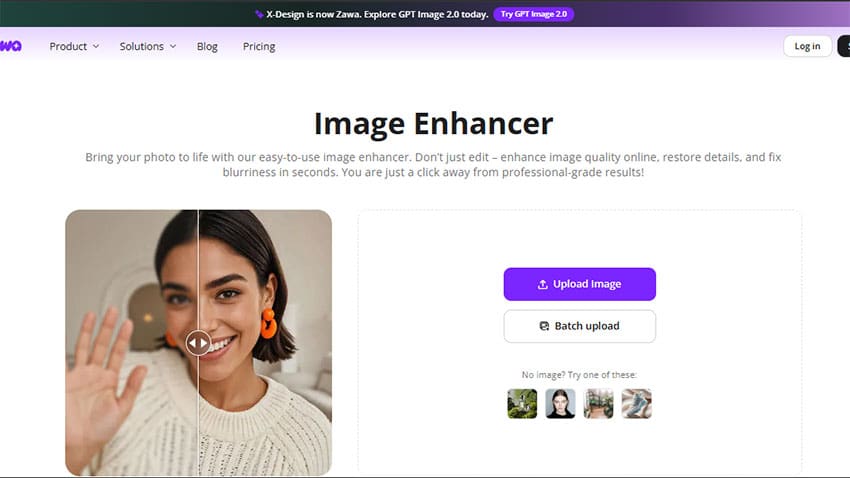
The Image Enhancer is one of the editing tools on the Zawa workspace. As the name suggests, the enhancer upscale image quality. It is powered by AI technology that fixes low-resolution appearance and traditional editing. Whether a single or multiple images, the image enhancer auto-processes photo uploads for high-resolution results.
Zawa brings old photos to life with a comprehensive brush. For damaged images, the AI easily restores details and fixes blur. As a user, you can make customisations and select your preferred new image resolution, such as HD or Ultra HD. The AI sharpens and enhances images for professional-quality results – up to 4K resolution.
Can I Restore Old Photos for Free?
Yes, you can restore the quality of old photos at no cost. You do not need to hire a designer or scroll through the web endlessly for paid tools to fix the basics. Various apps and online software support free image restoration features. Some offer a few trial periods to test the tool. And enhance old photos to modern resolutions.
Zawa allows users to upscale and restore old photos for free, even without signing up. With the free trial, you can restore up to 20 images daily at a time. In addition, the image enhancer tool allows export to devices in HD quality. If you intend to access advanced Zawa features, the premium mode offers more.
How Can I Restore Old or Damaged Family Photos with Zawa?
Restoring old or damaged family photos with Zawa does not require going back and forth. You can perform the process in a few minutes. With these steps below, you can easily restore images to a more standard quality.
Open the Zawa Webpage
Open the Zawa AI website to upload the old or damaged family photo from your device. The user interface is intuitive and easy to understand for first-time users. It is a layout without ads that could distort viewing experiences.
Upload the Photo(s)
If you want to restore an old family photo as a hard copy, you need a camera to capture it and save it on your device. The online image enhancer does not support direct camera access. You can only upload saved images in your folder. Even better, Zawa supports batch upload; you can refine a collage of images at once, saving users more time.
Select Image Mode
For accurate editing and precise restoration, Zawa AI outlines scenes for different types of images that users upload that they want to fix. It is not a one-scene-all fix technology, unlike other software.
From product to portrait mode, the editing process is customizable. It comes with a range of enhancements – HD or UHD – before starting the restoration. In addition to these modes, you can edit the background of damaged family photos or erase unwanted elements.
Enhance the Photo(s)
After selecting the scenario to be processed, click on the image enhancer on the screen to restore the affected images. Depending on the photo size, the image processing takes only a few seconds to provide results. However, the AI overall restoration time does not keep users waiting.
Review the Result
Once processing is complete, the AI produces image results separated by a vertical pane. This showcases the “before and after” results. And you can swipe the pane left or right to evaluate the damaged and restored copies. Reviewing the pictures before downloading allows you to make your choices or re-enhance the images.
Zawa AI Features for Old Family Pictures
Scenario-Based Optimisation
Zawa AI comes with various modes for scenario-based optimisation. The AI optimises these scenes based on the category of your image upload. For instance, a damaged family portrait picture and faded texts in an old picture. It handles scenarios to transform your uploads into a more visible output.
The text mode makes the text in images sharper and easier to read after upscaling. Enhancing images in the portrait mode provides more detail and a natural feel. The AI technology fixes the scenes for more precision after edits.
Ultra HD Editing
The perks of image restoration are results that align with current-day resolution; Zawa delivers just that. The image enhancer does not only upscale images. You can brighten family images with the online enhancer. The AI sharpens every image detail for professional-quality results.
With the 4K image enhancer, Zawa erases blurs and distortions that mar your image. The high-resolution output makes them more refined for re-sharing on social media. And collated as a collage of pictures.
Bulk Uploads
Restoring a collection of old family photos one by one can be tiring. It is a typical back-and-forth that you can grow tired of midway. Zawa AI makes the process effortless with bulk uploads. You can enhance up to 20 family photos at once with the free Image Enhancer. And get the result instantly.
Zawa incorporates a smart AI technology and editor for handling bulk images. In addition to saving time, the AI sharpens every visual and refines every detail just like it processes an image. Get your family images done at once and print the memories.

Selling a business is often viewed as the finishing line. For many SME owners, it represents years of work, risk, reinvestment and personal commitment finally being converted into value.
But the sale process itself can create risks that are easy to underestimate.
Most owners focus heavily on valuation, finding the right buyer and negotiating the headline price. Those are important, but they are only part of the picture. The detail behind the deal can have just as much impact on the final outcome, especially when due diligence, warranties, indemnities, deferred consideration and post-completion claims come into play.
For owners preparing to sell, the question is not only ‘what is my business worth?’ It is also ‘what could come back to affect me after the deal is signed?’
Completion does not always mean the end of risk
A common misconception is that once a sale completes, the seller can simply walk away. In practice, many business sales include ongoing obligations for the seller.
The buyer will usually expect a detailed set of warranties in the Sale and Purchase Agreement. These are statements about the condition of the business, its finances, contracts, employees, assets, liabilities, tax position and other key areas. If a warranty later proves to be inaccurate, the buyer may have grounds to bring a claim.
For SME owners, understanding their personal liability risk after selling a business is an important part of preparing for a cleaner exit. Even where a deal appears straightforward, the wording of the agreement, the accuracy of disclosures and the scope of warranties can all affect the seller’s position after completion.
As John Goodson, Client Director at Macbeths, explains: “Many owners assume the risk ends when the deal completes. In reality, the warranties and statements made during a sale can leave sellers exposed if issues are discovered later. That is why preparation, disclosure and specialist advice matter before terms are agreed.”
This is where owners can be caught out. Even if there is no intention to mislead, a historic issue, missing record or poorly disclosed problem can create friction after completion. The risk is often higher in owner-managed businesses, where key information may sit with a small number of people rather than in a formalised reporting structure.
A buyer does not want surprises after paying for a business. If they discover something that affects the value of what they have bought, they may look for a route to recover that loss.
The risks SME owners often overlook
Every transaction is different, but there are several areas where SME owners often underestimate their exposure.
1. Incomplete or rushed disclosure
Disclosure is one of the seller’s main protections during a business sale. If a known issue is properly disclosed to the buyer before completion, it can reduce the chance of that issue forming the basis of a later warranty claim.
The problem is that disclosure is often rushed. Owners may be balancing the transaction with the day-to-day running of the business, while also dealing with advisers, buyers, employees and confidentiality concerns.
Examples of issues that may need careful disclosure include:
- Customer disputes
- Supplier contract issues
- Late payments or bad debt
- Employment grievances
- Health and safety incidents
- Regulatory concerns
- Pending tax queries
- Lease or property issues
- Data protection breaches
- Software licensing gaps
None of these automatically prevents a sale, but failing to identify and disclose them clearly can create unnecessary risk.
2. Overconfidence in financial records
Many SME owners know their numbers well, but buyer due diligence will often go deeper than management accounts or year-end figures.
Buyers may test revenue quality, customer concentration, recurring income, margins, stock value, debtor recoverability, working capital and normalised profit. They may also look for unusual adjustments, related-party transactions or dependencies on the current owner.
If the buyer finds inconsistencies late in the process, the result may be a reduced valuation, delayed completion, a demand for additional warranties or a larger retention.
Strong financial preparation is not just about presenting the business well. It is about reducing the chance of the deal being renegotiated when momentum should be building.
3. Contract and customer risks
For many SMEs, value is tied closely to customer relationships and key contracts. That creates risk if those contracts are informal, poorly documented or dependent on the current owner.
Owners should pay particular attention to:
- Change-of-control clauses
- Termination rights
- Exclusivity provisions
- Personal guarantees
- Long-term pricing commitments
- Verbal or informal agreements
- Contracts due for renewal shortly after completion
A buyer may be concerned if significant revenue could disappear after the sale. Even where there is no immediate problem, unclear contract terms can weaken the seller’s position during negotiation.
4. Employment and people issues
People risks are often underestimated, especially in smaller businesses where HR processes may have developed informally over time.
Potential issues include unclear employment contracts, undocumented bonus arrangements, unresolved grievances, restrictive covenant concerns, holiday pay issues, contractor status questions and key-person dependency.
A buyer will want to understand whether the business can continue to operate effectively after the owner exits. If knowledge, client relationships or operational control sit too heavily with one person, the buyer may seek additional protections or reduce the price.
For this reason, succession planning and management structure can be just as important as financial performance.
5. Tax, VAT and historic liabilities
Tax and VAT issues can be particularly sensitive because they may relate to periods before the buyer owned the business. Buyers will often seek warranties or indemnities to protect themselves from historic liabilities.
This does not mean every business needs to have a perfect tax history before going to market. But it does mean sellers should understand any areas of uncertainty and take appropriate tax advice before they become buyer concerns.
Waiting until due diligence is underway can leave the seller with less control over the narrative.
6. Data, cyber and systems risk
Cyber and data protection risks are now part of mainstream transaction due diligence. Buyers may want to know how customer data is held, whether systems are secure, whether there have been historic breaches and whether software licences are valid and transferable.
For SMEs, this can be a weak spot. Systems may have been built gradually over many years, with old platforms, shared logins, informal processes or unclear ownership of digital assets.
A buyer does not just want the trading business. They want confidence that the infrastructure supporting it is stable, compliant and transferable.
7. Deferred consideration and earn-outs
Not every sale is paid entirely on completion. Some deals include deferred consideration, earn-outs or performance-based payments. These structures can help bridge a valuation gap, but they also create risk for the seller.
If future payments depend on performance after completion, the seller needs to understand how that performance will be measured and who controls the factors that influence it.
Common points of dispute include:
- Revenue recognition
- Cost allocation
- Management control
- Customer retention
- Integration decisions
- Accounting treatment
- Targets that are not clearly defined
A headline price can look attractive, but the certainty of payment matters just as much.
How owners can reduce risk before going to market
The strongest position is usually built before the business is formally marketed. Once a buyer is engaged and due diligence has started, the seller has less time and less control.
Owners considering a sale should take practical steps early.
Get the business sale-ready
This means organising financial records, contracts, policies, employee documentation, supplier agreements, leases, licences and corporate records before they are requested.
A clean data room can give buyers confidence and reduce delays. It also helps advisers identify issues before they become deal obstacles.
Review the likely warranties in advance
Owners should not wait until late in the process to think about warranties. Reviewing the likely warranty areas early can help identify where information is missing, where disclosures may be needed and where advice should be taken.
This can also prevent sellers from agreeing to statements they cannot properly verify.
Resolve obvious issues where possible
Some issues cannot be fixed before sale, but many can be improved.
For example, expired contracts can be renewed, informal employee arrangements can be documented, customer disputes can be resolved, software licences can be checked and governance records can be updated.
These actions may seem administrative, but they can support buyer confidence and reduce negotiation pressure.
Take advice early
A business sale is not the time to rely on assumptions. Legal, tax, accounting and corporate finance advice should be brought in early enough to shape the transaction, not just react to it.
For some transactions, insurance advice is also worth including in the conversation before terms are finalised. Alongside legal, tax and financial input, specialist mergers and acquisitions insurancecan help address certain risks connected to warranties, indemnities and post-completion claims. The suitability of this type of cover will depend on the structure of the deal, the size of the transaction and the specific risks being transferred, and any cover will be subject to policy terms, conditions and exclusions.
The important point is timing. Insurance should not be treated as a last-minute consideration once the deal is already advanced. If it may be relevant, it is better to explore it early.
The value of a cleaner sale process
A well-prepared sale process does not only reduce risk. It can also protect value.
Buyers are more likely to challenge price or seek additional protections when they find uncertainty. By contrast, a seller who can provide clear records, sensible disclosures and a well-organised due diligence process is usually in a stronger negotiating position.
This does not mean hiding weaknesses. It means understanding them, addressing them where possible and disclosing them properly where needed.
For SME owners, this can make the difference between a sale that proceeds smoothly and one that becomes slower, more expensive and more stressful than expected.
A final checklist for SME owners preparing to sell
Before going to market, owners should ask themselves:
- Are our financial records complete, consistent and easy to explain?
- Are key customer and supplier contracts properly documented?
- Do any contracts include change-of-control clauses?
- Are employee contracts, policies and records up to date?
- Are there any unresolved disputes, claims or complaints?
- Have we reviewed tax, VAT and historic liabilities?
- Are software, data and cyber risks properly understood?
- Could the buyer ask for deferred consideration, retention or escrow?
- Are we clear on what warranties we may be asked to give?
- Have we taken advice on how to reduce post-completion exposure?
Selling a business is one of the most important commercial decisions an owner can make. The most successful exits are rarely built at the negotiation table alone. They are built through preparation, clear records, early advice and a realistic understanding of where risk may sit after completion.
For owners thinking about a sale, the best time to address these issues is before the buyer starts asking difficult questions.
The crypto-treasury dream unravels after a 90% stock plunge

10 Fantasy Books That Will Keep You Hooked From Start to Finish

From super-sub to history-maker: How every Tottenham star has fared at World Cup so far


-

 Business6 days ago
No Jackpot Winner as $257 Million Prize Rolls Over to $269 Million Monday Draw
-
 Crypto World5 days ago
Zimbabwe Requires Crypto Businesses to Register Annually Under New FIU Regulations
-

 Crypto World7 days ago
Bitget enters Argentina’s regulated crypto market through PSAV registration
-

 Fashion10 hours ago
Weekend Open Thread: Miami – Corporette.com
-
 Entertainment5 days ago
Matt Damon’s Viral Sci-Fi Thriller Has Taken Over HBO Max
-

 Business5 days ago
Anthropic staff to meet White House officials next week, Axios reports
-

 Tech5 days ago
As AI companies race to go public, who else is along for the ride?
-
 Crypto World5 days ago
Bitcoin could crash to $48,000, if this historical pattern is triggered
-
 NewsBeat5 days ago
Warning of disruption as Cardiff Crossrail works to start
-

 Politics5 days ago
“Israel’s” ban on ICRC visits ruled illegal, but Knesset moves to stop them permanently
-

 Entertainment6 days ago
Deion Sanders Shares Powerful Post After Viral Advice To Deiondra
-

 News Videos5 days ago
Financial Accounting | Last Day Revision Strategy and Booster | CMA Inter – June 2026
-
 NewsBeat5 days ago
Tributes to former deputy head teacher at Cambridge school among death and funeral notices
-
 NewsBeat5 days ago
what doctors are seeing in ebike crashes
-
 Entertainment5 days ago
Kate Middleton Glare Goes Viral After Kids Booed At Royal Event
-

 Crypto World5 days ago
XRP ETFs Outperform As Bitcoin And Ethereum Funds Extend Outflow Trend
-
 Crypto World6 days ago
Market Preview: SpaceX (SPCX) IPO Record, Federal Reserve Meeting, and Iran Nuclear Agreement
-

 Tech5 days ago
Over 400 Arch Linux packages compromised to push rootkit, infostealer
-

 Business5 days ago
Invesco Quality Income Fund Q1 2026 Commentary
-
 Entertainment7 days ago
44 Years Later, This Is the Greatest Star Trek Quote in Sci-Fi History
You must be logged in to post a comment Login